Best Medium SUVs

Gallery 1
Contenders
Denza B5
GWM Tank 300
Subaru Forester
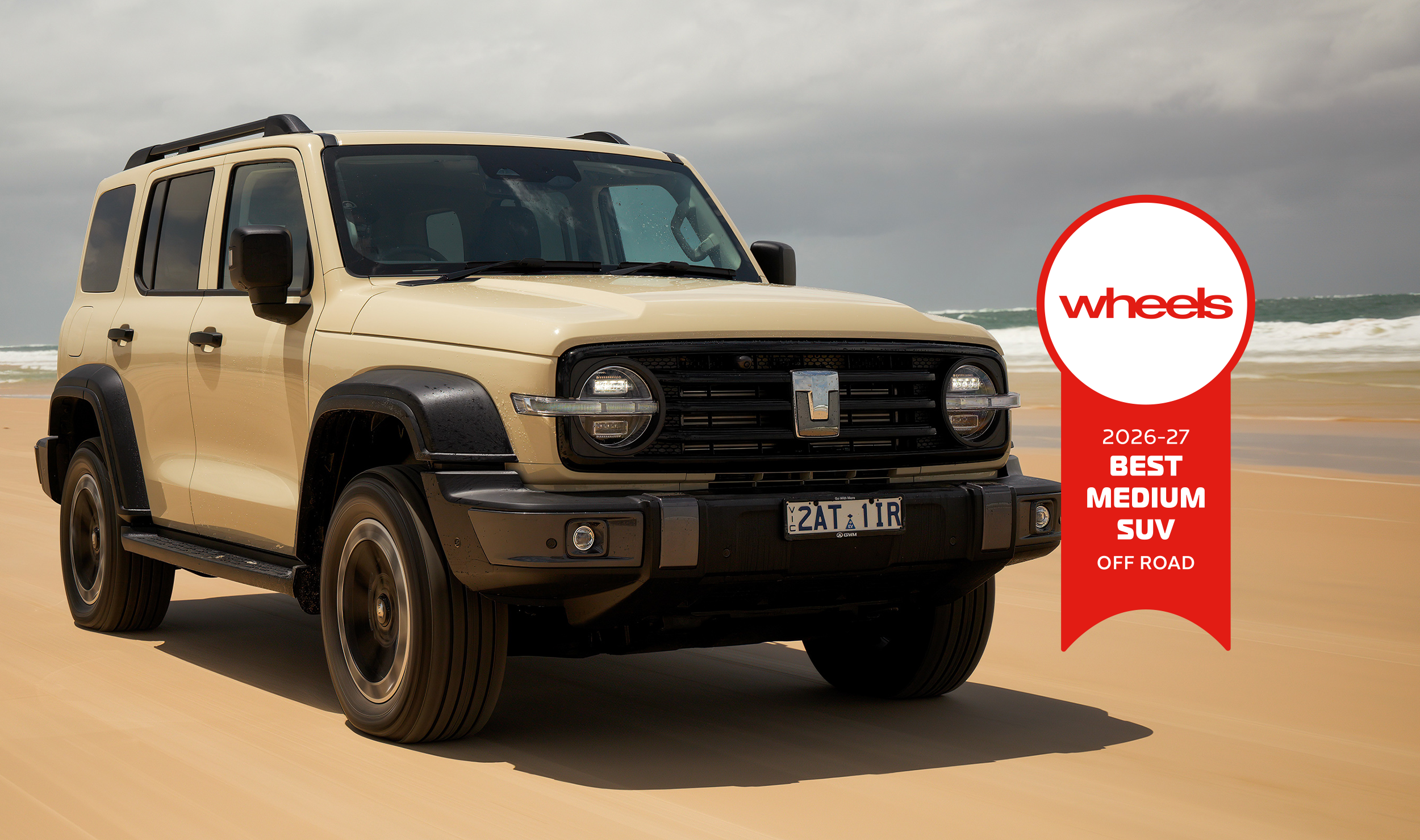
Winner: GWM Tank 300
9
Price: $55,990 drive-away (Lux); $59,990 drive-away (Ultra)
Drivetrain: 2.0-litre turbo four-cylinder PHEV, electric motor, nine-speed automatic, part-time 4WD
Outputs: 300kW/750Nm combined
Combined fuel economy: 1.9L/100km (charged); 8.3L/100km (low battery)
Warranty: Seven-year/unlimited-kilometre
Five-year service cost: $2610
| Driving | |
| Interior | |
| Practicality | |
| Overall value | |
Strengths
- Potent and mostly refined PHEV drivetrain
- Genuine low-range off-road ability and locking differentials
- Excellent equipment and value for money
Weaknesses
- Intrusive driver-assistance systems
- Heavy PHEV drivetrain compromises payload and luggage space
- No full-time four-wheel-drive mode
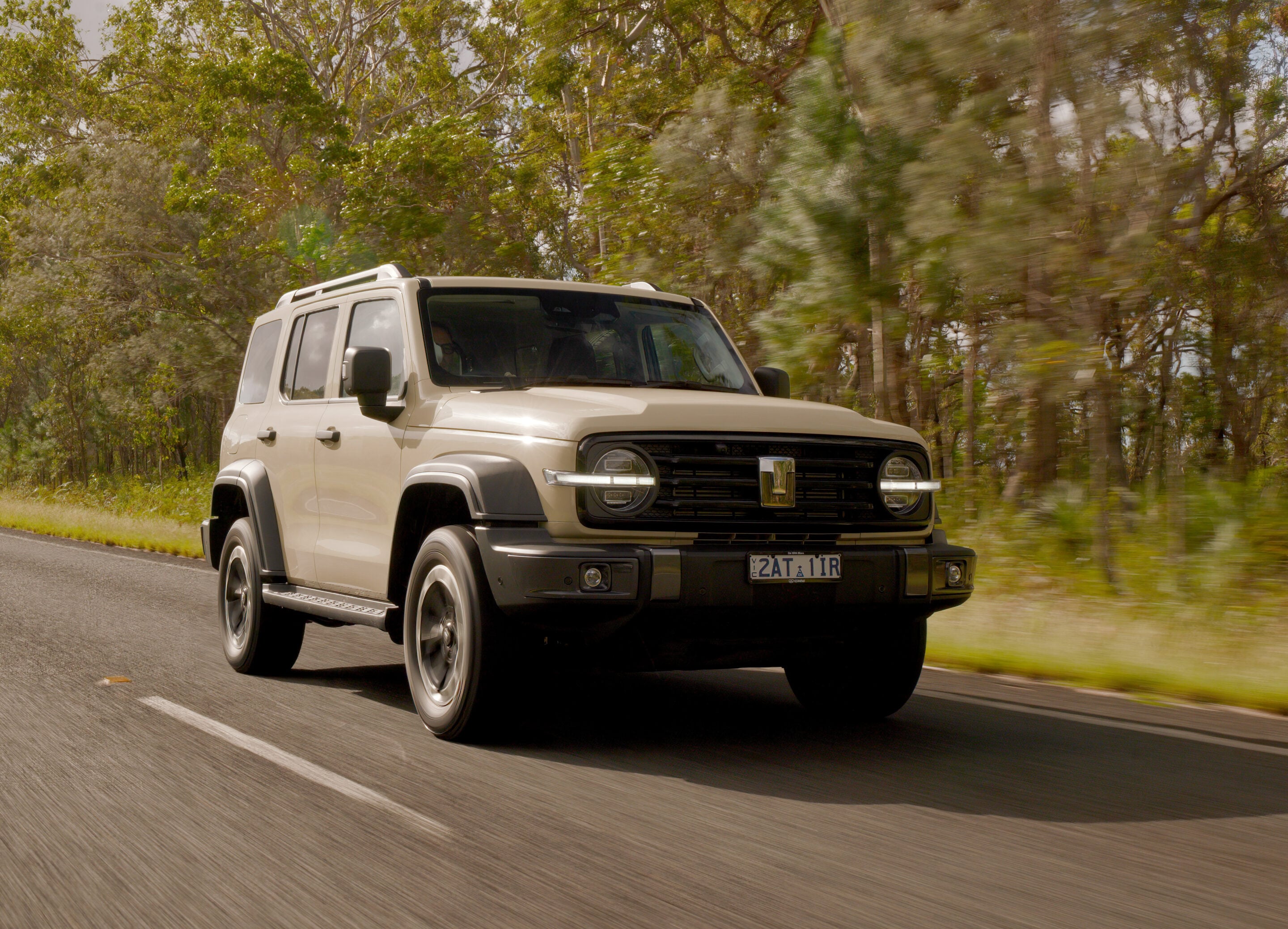
The GWM Tank 300 has already established itself as an affordable alternative to traditional off-roaders, but the arrival of the Hi4-T plug-in hybrid adds serious performance and the ability to tackle everyday driving on electric power.
Two PHEV grades are offered. The Lux costs $55,990 drive-away, while the better-equipped Ultra is $59,990. Both combine a 2.0-litre turbo-petrol four-cylinder with a 120kW electric motor and nine-speed automatic, producing a muscular 300kW and 750Nm. GWM claims 0-100km/h in 6.3 seconds.
A 37.1kWh NMC battery provides up to 115km of claimed NEDC electric range, although we achieved a more realistic 70-75km during testing. DC charging peaks at 50kW, with 30-80 per cent taking a claimed 24 minutes. We found that figure achievable during our charging test.
On-road performance is punchy and EV running is smooth and quiet, although the petrol engine can be slow to respond when suddenly called upon for maximum acceleration. More frustrating are the overly intrusive driver-assistance systems, which detract from an otherwise comfortable and refined experience.
Where the Tank earns its place here is off-road. Its ladder-frame chassis is backed by a proper dual-range transfer case, 222mm of ground clearance and a rear differential lock, with the Ultra adding a front locker. There’s 3000kg braked towing capacity, too. The lack of a full-time 4WD setting is a notable omission, particularly on wet bitumen and loose gravel.
Inside, the Tank is spacious and impressively equipped, particularly in Ultra form, with twin 12.3-inch displays, leather trim and heated, ventilated and massaging front seats. The PHEV battery does compromise luggage space, however, while its hefty 2615kg kerb weight is always lurking in the background.
Despite those drawbacks, the Tank 300 PHEV offers an unusual combination of electric commuting, muscular performance and genuine off-road hardware for around $60,000. Add generous equipment and a seven-year/unlimited-kilometre warranty, and few electrified 4WDs offer as much capability for the money.
Denza B5
9
Price: $74,990 plus on-road costs (B5); $79,990 plus on-road costs (Leopard)
Drivetrain: 1.5-litre turbo four-cylinder PHEV, dual electric motors, single-speed transmission, 4WD
Outputs: 400kW/760Nm combined
Combined fuel economy: 1.9L/100km (charged); 9.5L/100km (low battery)
Warranty: Six-year/150,000km
Five-year service cost: $3542
| Driving | |
| Interior | |
| Practicality | |
| Overall value | |
Strengths
- Exceptionally powerful and smooth plug-in hybrid drivetrain
- Genuine off-road ability, particularly in Leopard specification
- Luxurious, spacious cabin with extensive standard equipment
Weaknesses
- Expensive compared with newer Chinese PHEV off-roaders
- Heavy kerb weight and relatively modest luggage capacity
- Intrusive driver-assistance systems and limited physical controls
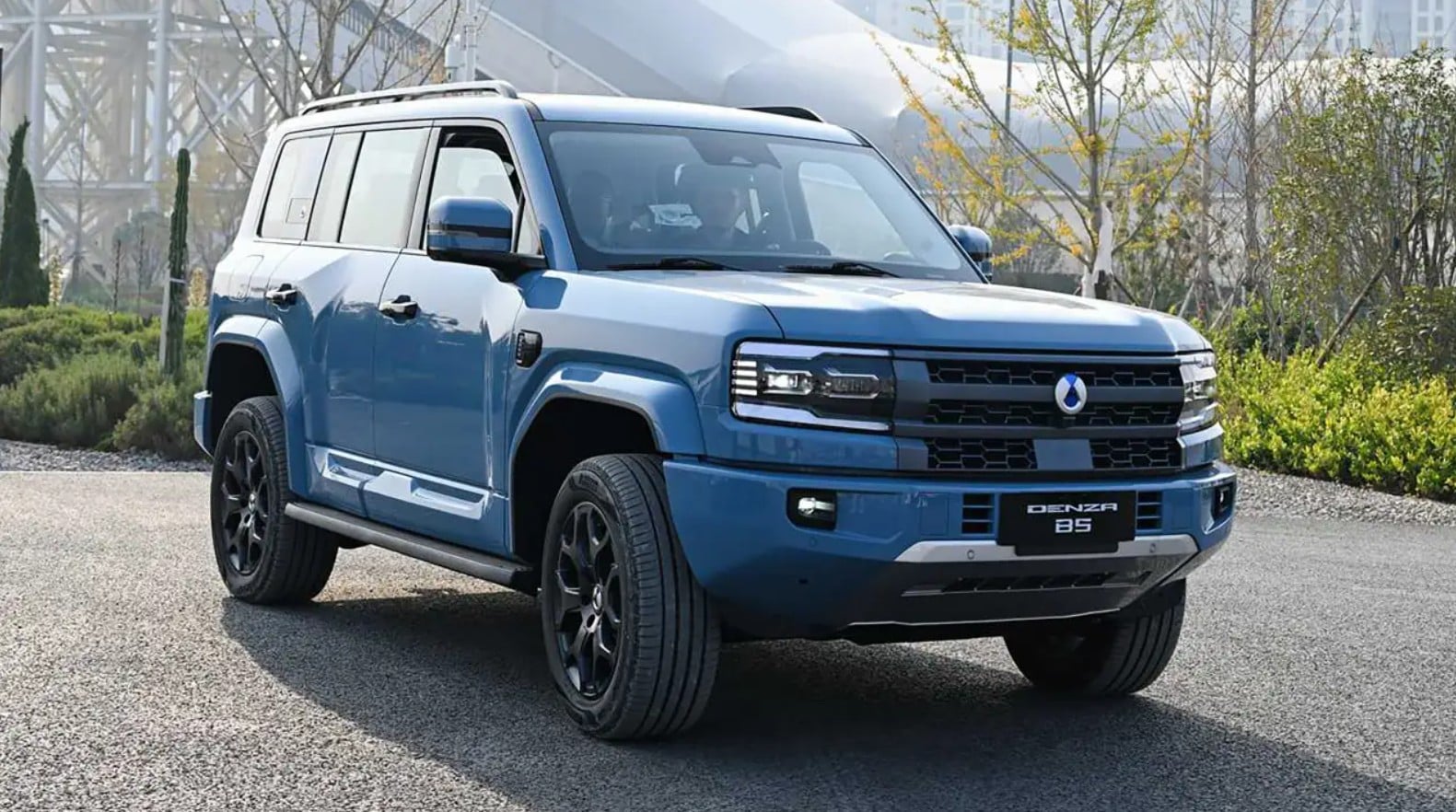
The Denza B5 represents an ambitious move upmarket for BYD’s luxury division, combining genuine off-road hardware with a powerful plug-in hybrid drivetrain and an equipment list designed to challenge established premium 4WDs.
Two variants are available, with the entry-level B5 priced at $74,990 plus on-road costs and the better-equipped Leopard costing $79,990. Both use a turbocharged 1.5-litre petrol engine and dual electric motors, producing an enormous 400kW and 760Nm. Despite weighing almost three tonnes, the B5 can accelerate from 0-100km/h in a claimed 4.8 seconds.
A 31.8kWh LFP battery provides up to 90km of claimed WLTC electric range, although we achieved 78km in mixed driving. DC charging peaks at 100kW, allowing a 10-80 per cent recharge in approximately 20 minutes.
On-road refinement is impressive, with smooth electric propulsion, effortless acceleration and a comfortable ride. However, some driver-assistance systems are intrusive, while the substantial kerb weight is difficult to disguise.
Off-road credentials are equally serious. Body-on-frame construction, dual-motor four-wheel drive and locking differentials provide genuine rough-terrain ability, while the Leopard adds sophisticated DiSus-P hydraulic suspension with adjustable ride height. Ground clearance reaches 310mm in its highest setting, and braked towing capacity is 3000kg.
Inside, the B5 impresses with high-quality materials, a 15.6-inch touchscreen, leather upholstery and extensive comfort features. Passenger accommodation is generous, although the 470-litre boot is modest for such a large vehicle.
Ownership costs are less appealing, with five-year servicing totalling $3542.
An updated B5 offering greater electric driving range is also on the way, although Australian arrival timing remains unconfirmed.
The Denza isn’t cheap, but its combination of enormous performance, genuine off-road capability and luxury equipment makes it a distinctive alternative to traditional diesel-powered 4WDs.
Subaru Forester
6
Price: $43,490 plus on-road costs (AWD); $46,490 (Premium/Hybrid); $48,490 (Sport); $50,990 (Touring); $54,990 (Hybrid Sport); $55,990 (Hybrid Touring)
Drivetrain: 2.5-litre naturally aspirated boxer four-cylinder petrol or 2.5-litre e-Boxer hybrid, automatic transmission, permanent AWD
Outputs: 136kW/247Nm (petrol); 145kW combined (hybrid)
Combined fuel economy: 7.9L/100km (petrol); 6.2L/100km (hybrid)
Warranty: Five-year/unlimited-kilometre
Five-year service cost: $2299 (petrol and hybrid)
| Driving | |
| Interior | |
| Practicality | |
| Overall value | |
Strengths
- Permanent AWD, 220mm ground clearance
- Excellent visibility, spacious cabin and practical design
- Much-improved hybrid drivetrain
Weaknesses
- Petrol engine and CVT can be noisy under acceleration
- Hybrid fuel economy trails some key rivals
- Hybrid has reduced towing capacity
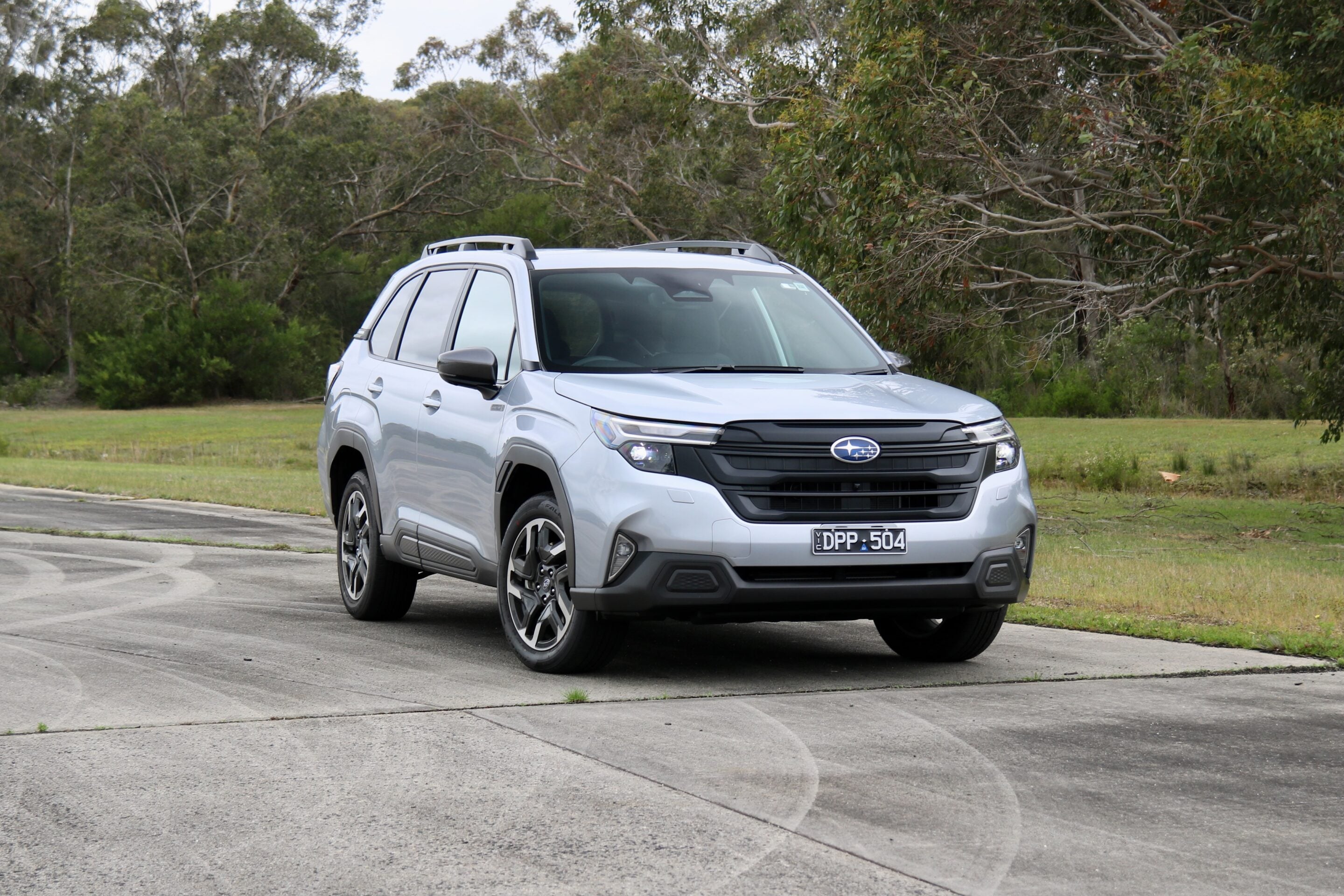
The Subaru Forester has long occupied a distinctive position in the medium SUV segment, combining family-friendly practicality with genuine ability on unsealed roads. The sixth-generation model builds on those strengths with improved technology, greater refinement and a substantially more capable hybrid drivetrain.
Prices start at $43,490 plus on-road costs for the entry-level petrol AWD, rising to $50,990 for the Touring. Hybrid variants begin at $46,490, with the Sport costing $54,990 and flagship Touring $55,990.
The familiar naturally aspirated 2.5-litre boxer engine produces 136kW and 247Nm, driving all four wheels through a continuously variable transmission. Its performance is adequate rather than exciting, while the engine can become vocal under hard acceleration.
The new e-Boxer hybrid is a more convincing proposition than its predecessor, combining a 2.5-litre petrol engine with a substantially stronger electric motor. Combined output rises to 145kW, while claimed fuel consumption falls from 7.9L/100km to 6.2L/100km. It’s smoother around town, although some competitors offer better efficiency.
Where the Forester distinguishes itself is beyond the bitumen. Permanent mechanical AWD, 220mm of ground clearance and Subaru’s X-Mode traction system provide impressive capability on gravel roads, muddy tracks and slippery surfaces. It’s no replacement for a low-range 4WD, but offers considerably more versatility than many conventional family SUVs.
Inside, excellent visibility, generous passenger space and straightforward ergonomics remain highlights. An 11.6-inch touchscreen and comprehensive EyeSight safety technology are standard, while the 496-litre petrol boot is practical and includes a full-size spare.
Hybrid luggage capacity falls slightly to 484 litres, and its lack of a spare wheel is disappointing for adventurous buyers. Hybrid towing capacity is also limited to 1200kg, against 1800kg for petrol versions.
The Forester isn’t the cheapest or most economical medium SUV, but its combination of everyday comfort, useful off-road ability and thoughtful practicality makes it an appealing choice for families who regularly venture beyond sealed roads.
Follow WhichCar/Wheels on Google
Click the button below to make WhichCar by Wheels a preferred source for your news.