Features

Gallery 1
Australians love to tinker. It doesn’t matter how good the base product is, there’ll be people out there – blokes mostly, let’s be honest – that think they can build a better mouse trap.
Sometimes, they can. Here is our list of the Top 10 Australian Modified Cars but it’s important to put that in context. We’re not talking Summernats-style one-off art pieces here; the cars on this list were effectively low-volume production cars (or intended to be) but based on a mass-produced model. Optimised, let’s call them.
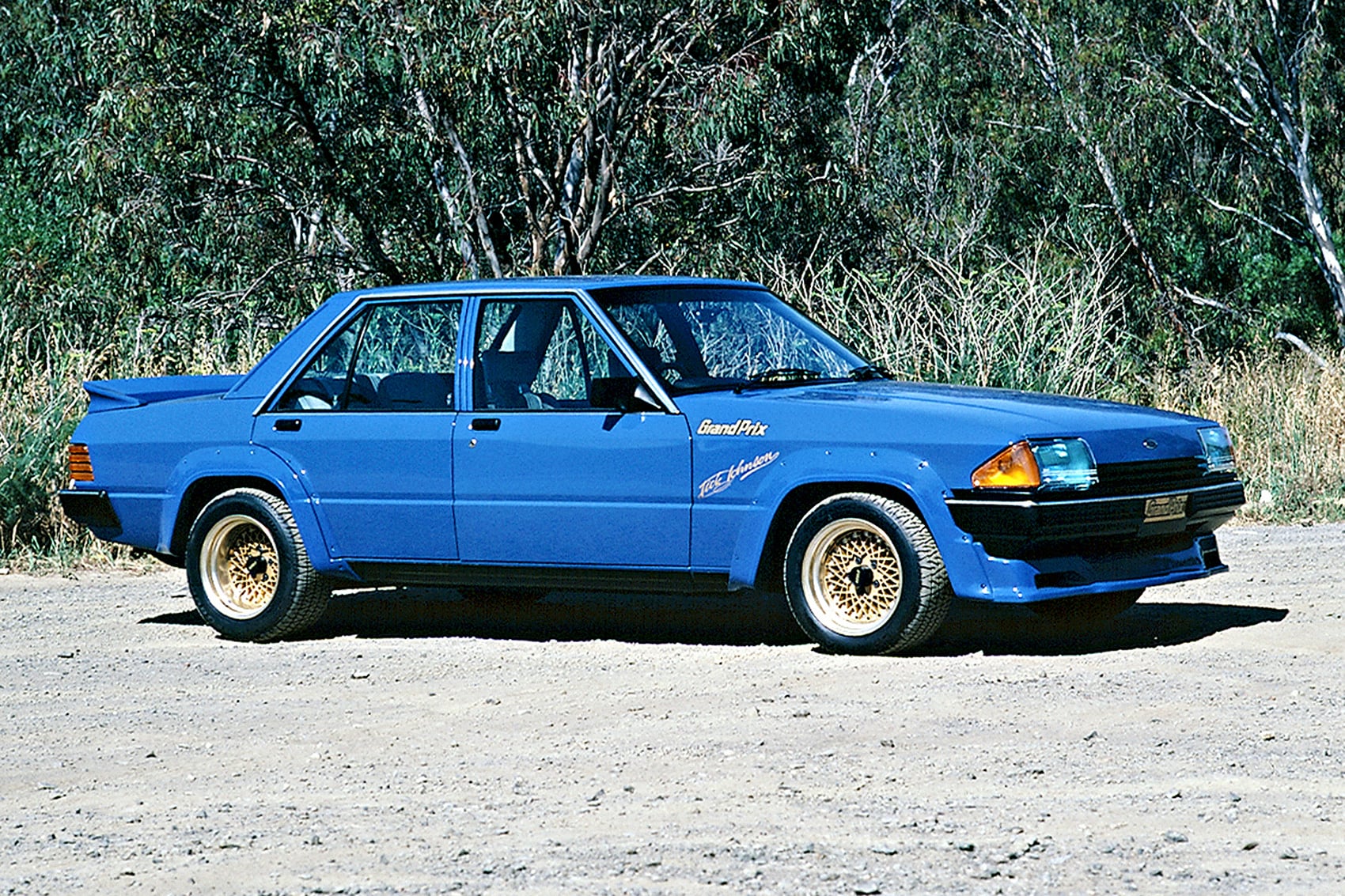
1982 Ford Falcon Dick Johnson Grand Prix
1
Following Ford’s decision to can the V8 there was a scramble to fill the fast Falcon void. A number of projects never made it past the prototype stage – such as the wild twin-turbo, all-wheel drive AAT XF – but one that did was the Dick Johnson Grand Prix.
It was originally intended to be offered in official showrooms – potentially with a view to homologating the car for touring car racing – before Ford pulled the pin due to warranty concerns, but reportedly 43 examples were finally sold.
All had the body kit, but only some cars got the full treatment, the 4.1-litre inline-six boosted to 190kW thanks to a Garrett turbocharger. It gave the world a look at an XR6 Turbo 20 years before it would eventually be introduced as a series production car.
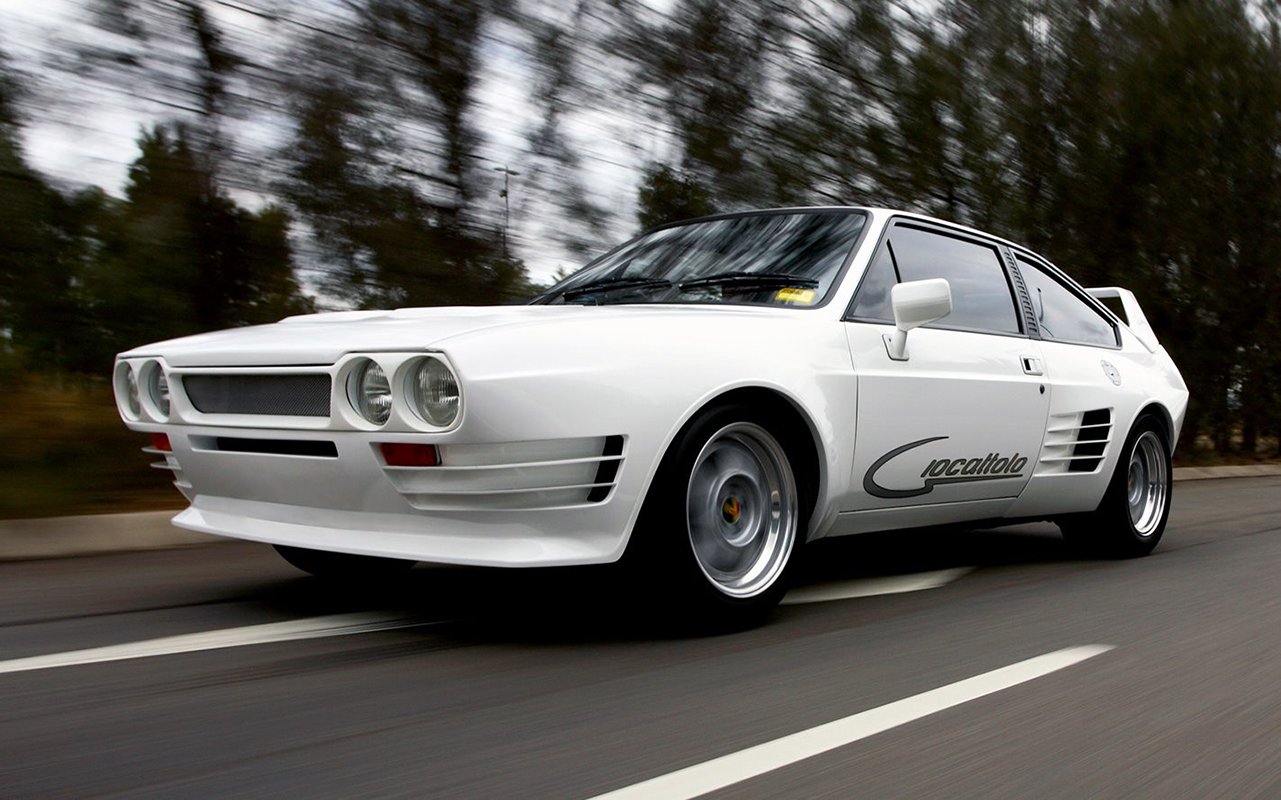
1985 Giacattolo Group B
1
Australian businessman Paul Halstead loved the DeTomaso Pantera. Having become an exotic car dealer with the local distribution rights to the Pantera, he decided to have a go at creating his own fusion of Italian sporting elegance and muscle car brawn.
Originally, the Giocattolo was to mirror the tillborn Alfa Romeo 6C, with a mid-mounted Busso V6, but despite Alfa making sourcing engines (and cars) almost impossible, Halstead was undeterred.
Importing fully built Sprints from New Zealand, Halstead turned to HSV and tuned 5.0-litre V8s were soon nestled in the back of the Giocattolo, supported by a ZF transaxle and custom rear suspension.
Only 15 were built (and three prototypes), but with 220kW pushing just 1100kg it offered proper supercar speed by the standards of the late-1980s.
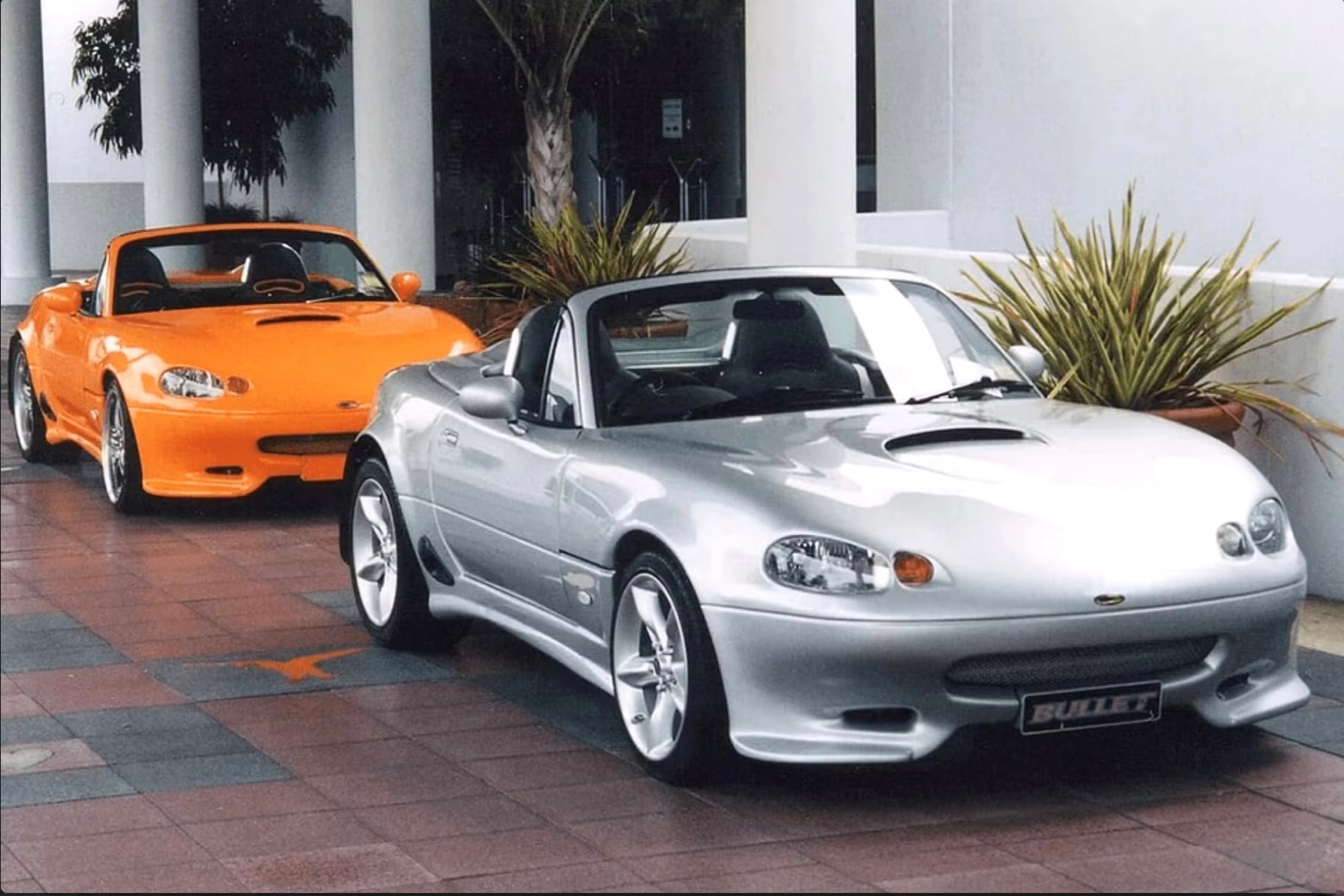
2000 Bullet Roadster
2
Of all the cars to wedge a V8 into, not many would have a Mazda MX-5 high on the list. The first Bullet Roadster was appropriately Mazda-powered – a 13B rotary – but from then on, the Toyota-Lexus 1UZ-FE 4.0-litre V8 quickly became the engine of choice.
Despite its looks, however, there is virtually no MX-5 in a Bullet. The chassis is a custom space frame with only the doors and boot lid shared with Mazda’s sports car – all other panels are made from fibreglass reinforced plastic.
By the time the Bullet became a fully compliant production car there was a 320kW supercharged SS version, which at $118,000 was perfect for the sports car enthusiast who found a Porsche Boxster a bit dull.
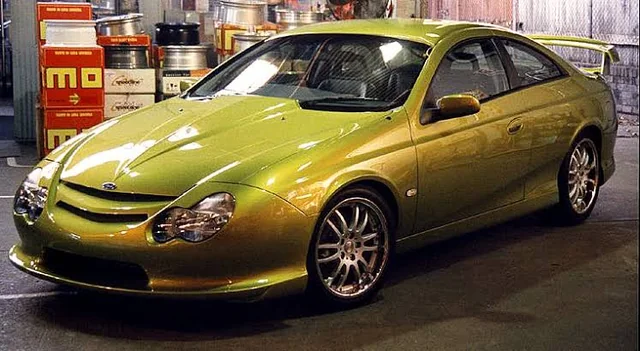
2002 Ford AU Falcon Coupe
2
In the early 2000s there was constant speculation Ford would produce a two-door AU Falcon to match the new Monaro that was going gangbusters. And if you wanted a two-door AU, you turned to the hearse-building Hillier brothers.
Having built a six-cylinder AU Coupe for Summernats 2000, Troy and Clayton Hillier then helped their apprentice Mark Rovera build a red XR8-based coupe. Their original car then became Ford’s official 300+ concept, unveiled at the 2001 Melbourne Motor Show.
The final example was the Arrow, which took the styling to the extreme and with a 370kW/610Nm 6.4-litre V8 and six-speed Tremec manual, had the performance to match.
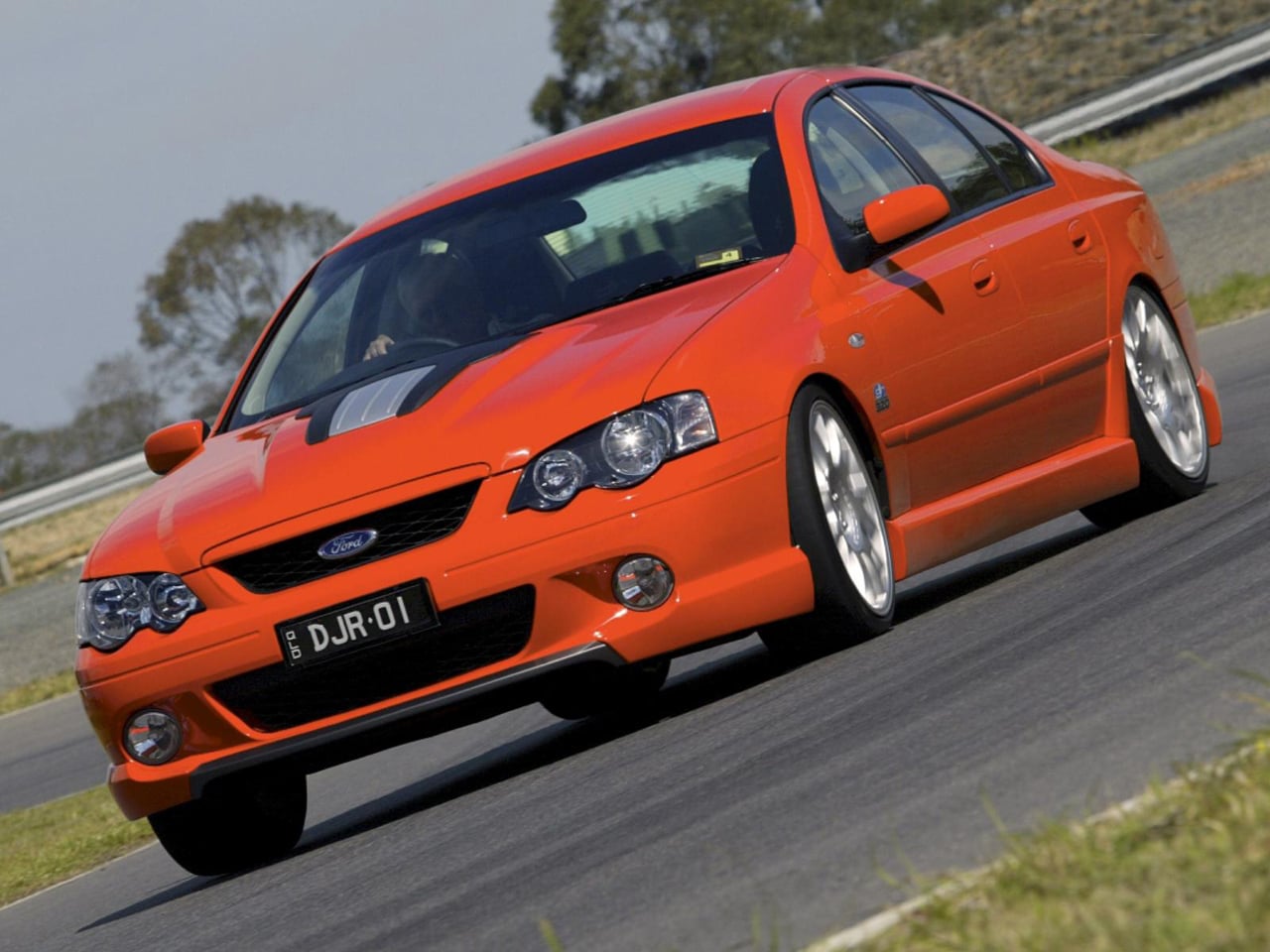
2004 Ford BA Falcon DJR 320
2
Great minds think alike, so when it transpired that both Dick Johnson and Rob Herrod had plans to create a hotter version of the new BA XR8 it made sense that they joined forces.
The result was the DJR 320, a relatively subtle machine that hid FPV-plus levels of performance under the skin. New cams, intake and exhaust lifted the Boss 5.4 from 260kW/500Nm to 320kW/540Nm but the whole car scored an overhaul.
Adjustable Koni dampers, progressive-rate springs, wider low-profile tyres and enormous Alcon brakes completed a package that was designed to be as happy on track at the weekend as on the road of a weekday.
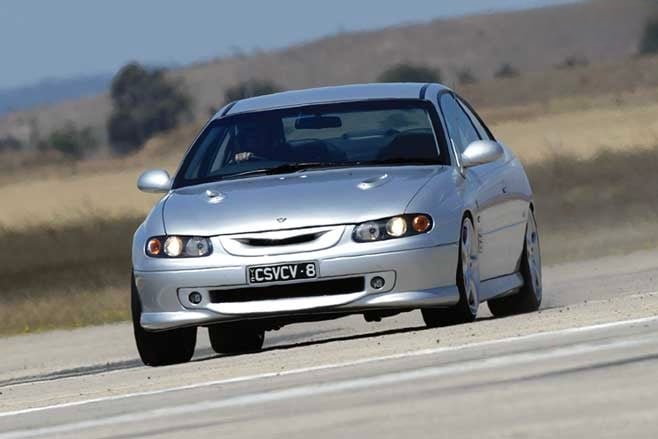
2004 CSV Mondo GT
2
Peter Dichiera’s Corsa Specialised Vehicles was a staple of the modern muscle car scene throughout the 1990s and early-2000s. CSV quickly became renowned for offering ADR-compliant cars that could give the equivalent HSVs a bloody nose in a fair fight.
Power outputs swelled over the years but the peak of Dichiera’s ambition and efforts was the wild Mondo GT, a Monaro-based monster with a 370kW/580Nm 6.5-litre V8 capable of vaporising the rear tyres at will.
At MOTOR’s 2004 Performance Car of the Year it clocked 282km/h, which was only 62km/h off the clock (the speedo stopped at 220), and scared the pants off everyone who drove it. As relaxing as swimming with sharks but just as exhilarating.
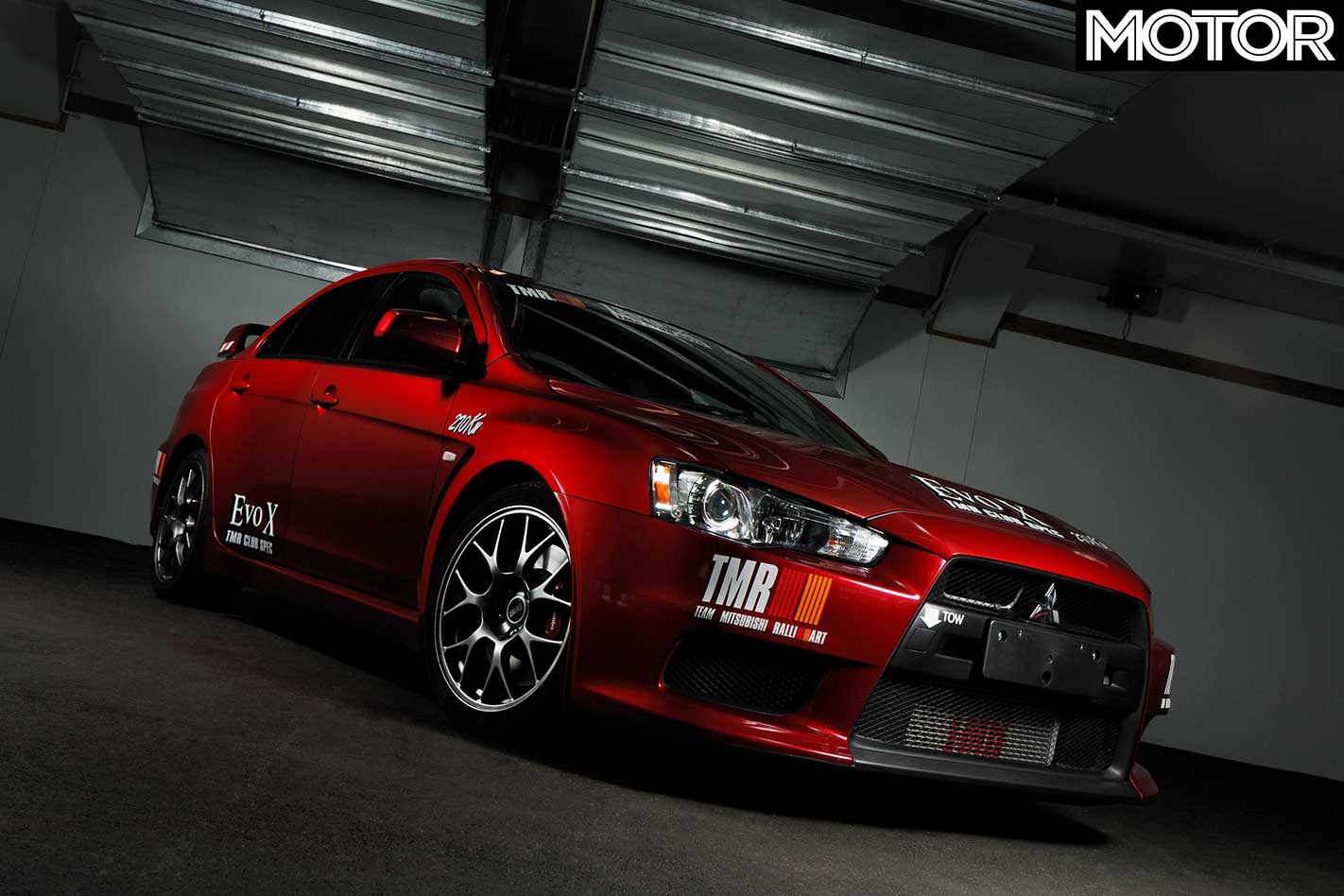
2010 Mitsubishi Lancer Evolution X TMR Bathurst Edition
2
Alan Heaphy might not be a household name in Australian performance circles, but he should be. Heaphy was an integral part of Nissan Europe’s Touring Car, WRC and Le Mans programs before returning Australia to manage the GT-R touring car program.
Eventually he jumped from Nissan to Mitsubishi and created turn-key go-faster packages for the Lancer Evolution. The Evo IX TMR 220 was the first fruit, scoring an upgraded engine, bigger brakes and wheels and plenty of aero, but due to most of it being sourced from the Ralliart parts catalogue, the car retained the full factory warranty.
It was a similar story with the Evo X Bathurst Edition, built to celebrate back-to-back victories in the Bathurst 12-Hour. The upgrades didn’t go as far this time, but 247kW/436Nm – increases of 30kW/70Nm – and new progressive-rate springs made it one of the fastest things on four wheels.
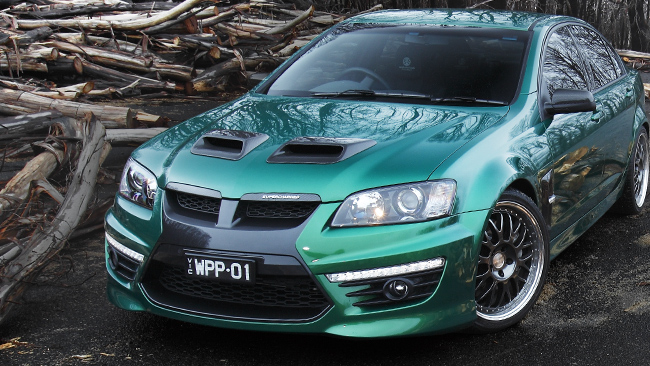
2010 Walkinshaw E2 Supercar
1
Walkinshaw Performance had a long history of tweaking Holden Commodores and did it better than most thanks to its close relationship with the factory, turning up the wick for customers who found even HSV’s offerings a little tame.
Over the years it bolted together some impressive packages, but the stars really aligned with the HSV E2 GTS-based Walkinshaw E2 Supercar. A supercharger on the 6.2-litre LS3 V8 boosted outputs to 480kW/803Nm, but unlike many mega-power modified cars it could exploit the grunt.
Recorded figures were 4.25sec to 100km/h and a 12.48sec quarter mile but thanks to the standard Magnetic Ride Control suspension (with Walkinshaw’s own springs), HSV’s big brakes (with Walkinshaw calipers) and wider rear wheels and tyres it did corners as well as straights. It even came with the balance of new car warranty.
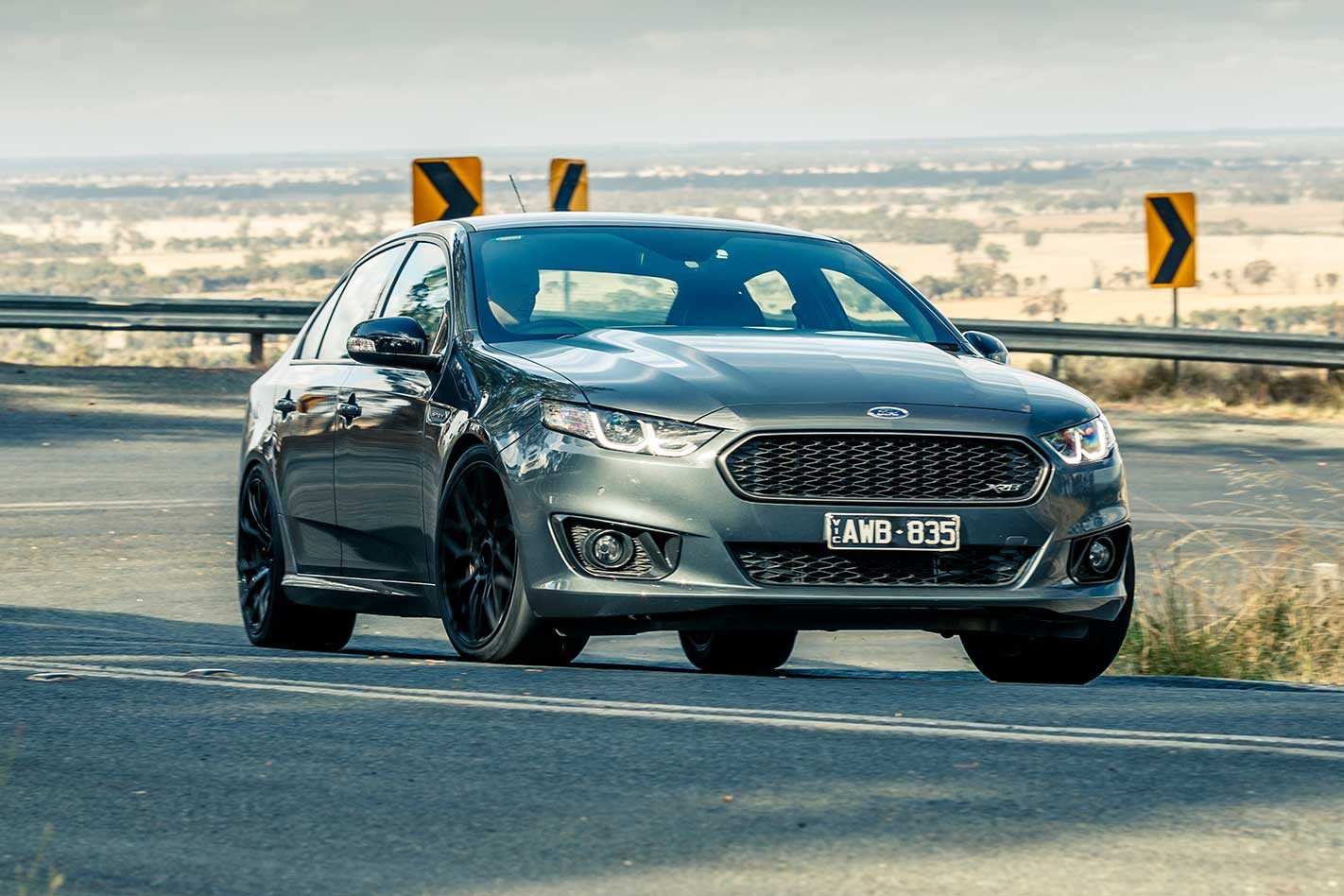
2019 Premcar Holy Grail
1
If Ford had built a modern-day GT-HO, the Premcar Holy Grail would be it. Premcar was the ideal outfit to hot-rod the supercharged Miami engine, as it developed the thing in the first place.
Adding an intercooler and lifting the rev limit to 7000rpm liberated 483kW/753Nm, but the true beauty of the engine – and the reason the upgrade cost $25K – was it was OE-spec in terms of its development and certification.
Adjustable Shockworks coilovers and wider wheels wearing Michelin Cup 2 tyres helped make the Holy Grail 10sec a lap quicker around Winton than a stock FPV GT, according to Premcar.
While 100 examples were planned, just 45 ended up being created, the arrival of COVID not exactly helping demand. Critics often point out that similar power can be had much cheaper, but if you want the ultimate OE-level modern Falcon, this is it.
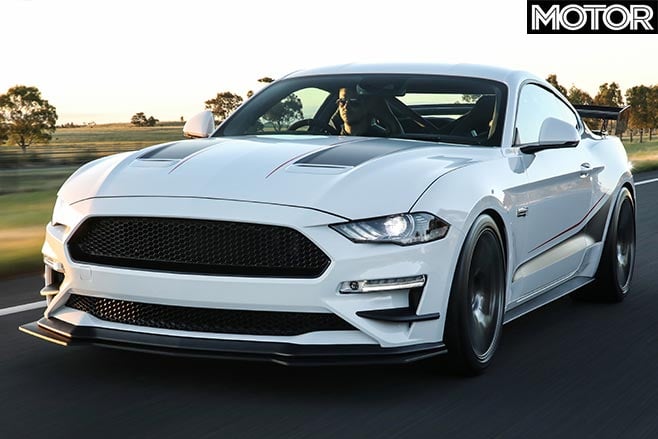
2020 Ford Mustang Dick Johnson Edition
1
There’s a bit of a Dick Johnson theme to this list, but then that makes sense when you consider he has been a Ford hero for almost 50 years. His most recent collaboration with Herrod Performance was the Mustang Dick Johnson Edition, which didn’t so much have the kitchen sink thrown at it as the entire ground floor.
Herrod had just finished the factory-backed R-Spec, so the DJE was a chance to unleash the Mustang’s full potential. A 3.0-litre Whipple supercharger was installed atop the 5.0-litre V8, stronger internals required to handle the 635kW/949Nm produced.
It was a full package, with a bigger radiator and coolers for the diff and transmission, stronger driveshafts, a carbon fibre tail shaft, a complete suspension overhaul and monster wheels and brakes. Your author was lucky enough to briefly drive one and the 30 owners have an absolute weapon.
Follow WhichCar/Wheels on Google
Click the button below to make WhichCar by Wheels a preferred source for your news.

We recommend
-
 Features
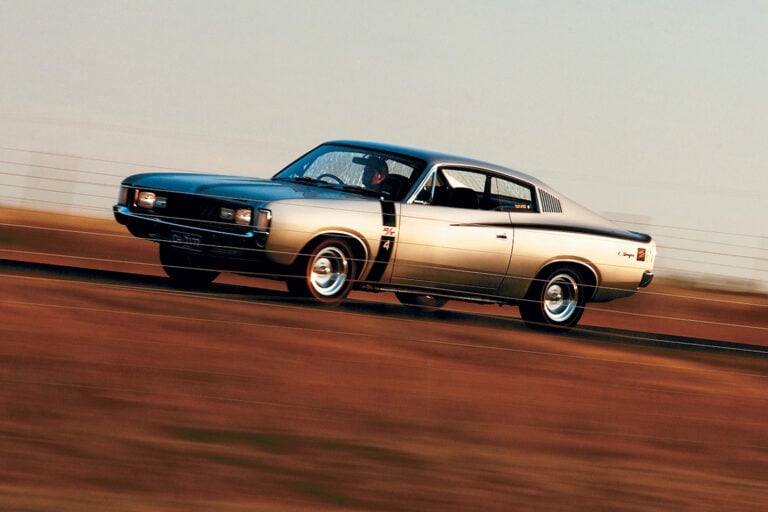
Top 10 classic Australian muscle cars
Australia’s golden era of V8 thunder and Bathurst glory lives on with our definitive Top 10 classic muscle cars from 1967 to 1986 — legends, all.
-
 Features
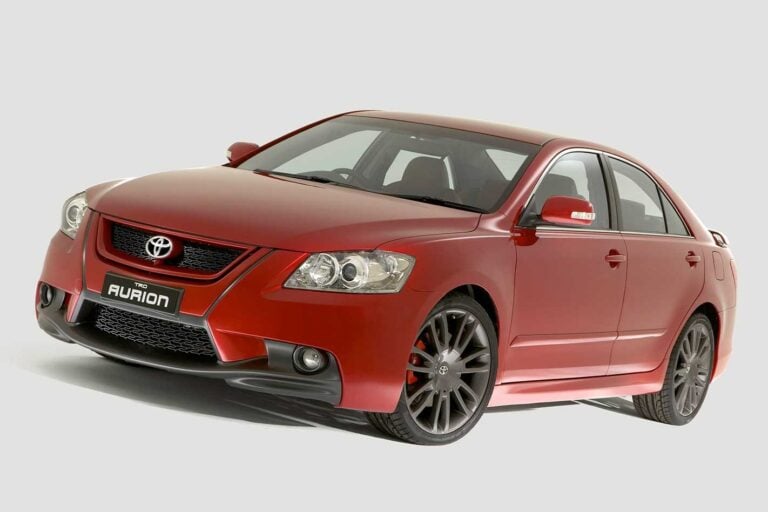
Top 10 Australia-only special editions
The best of special editions created especially for the Australian market by some of the most famous marques on the planet.