Comparisons

Gallery 1
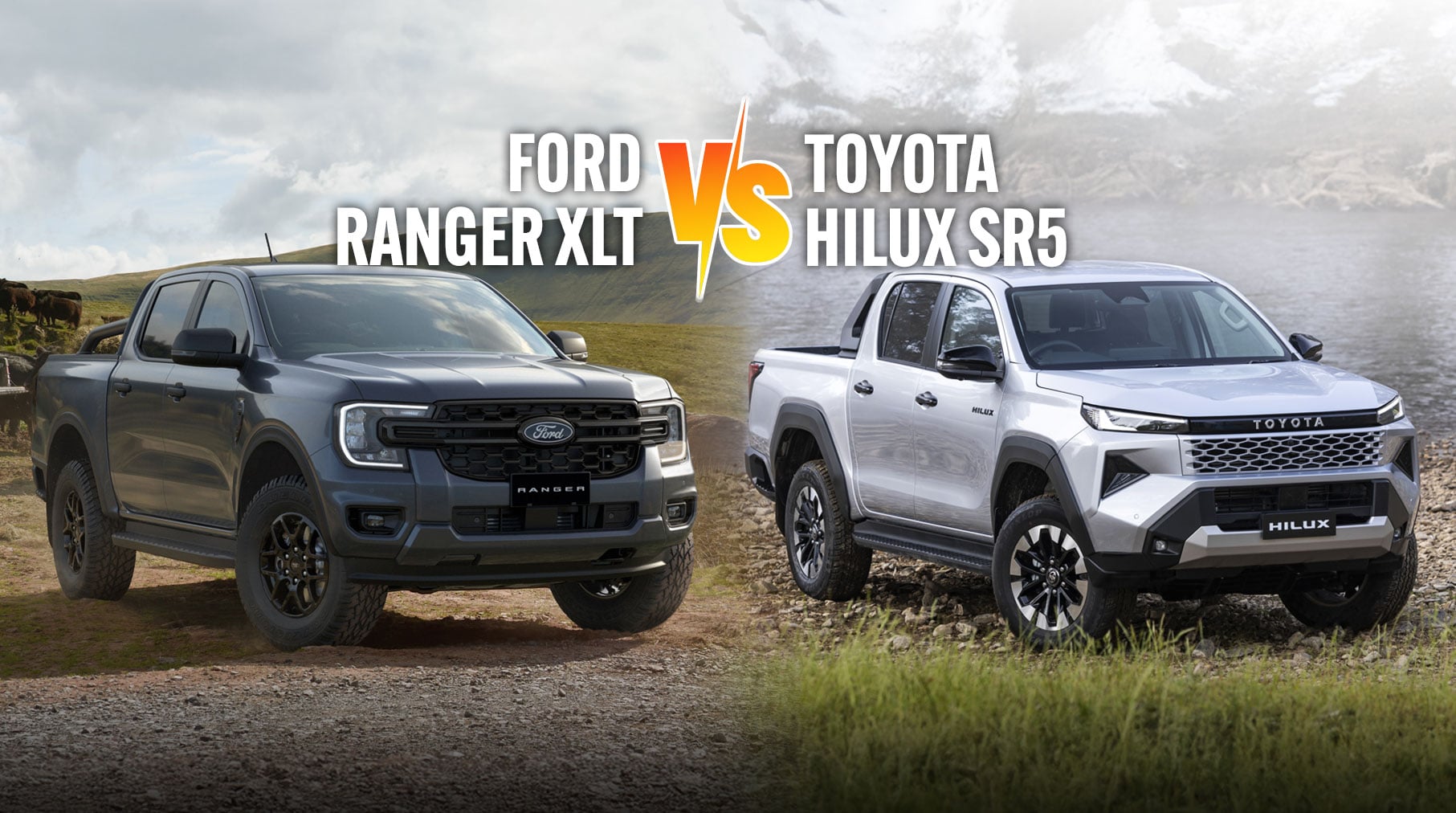
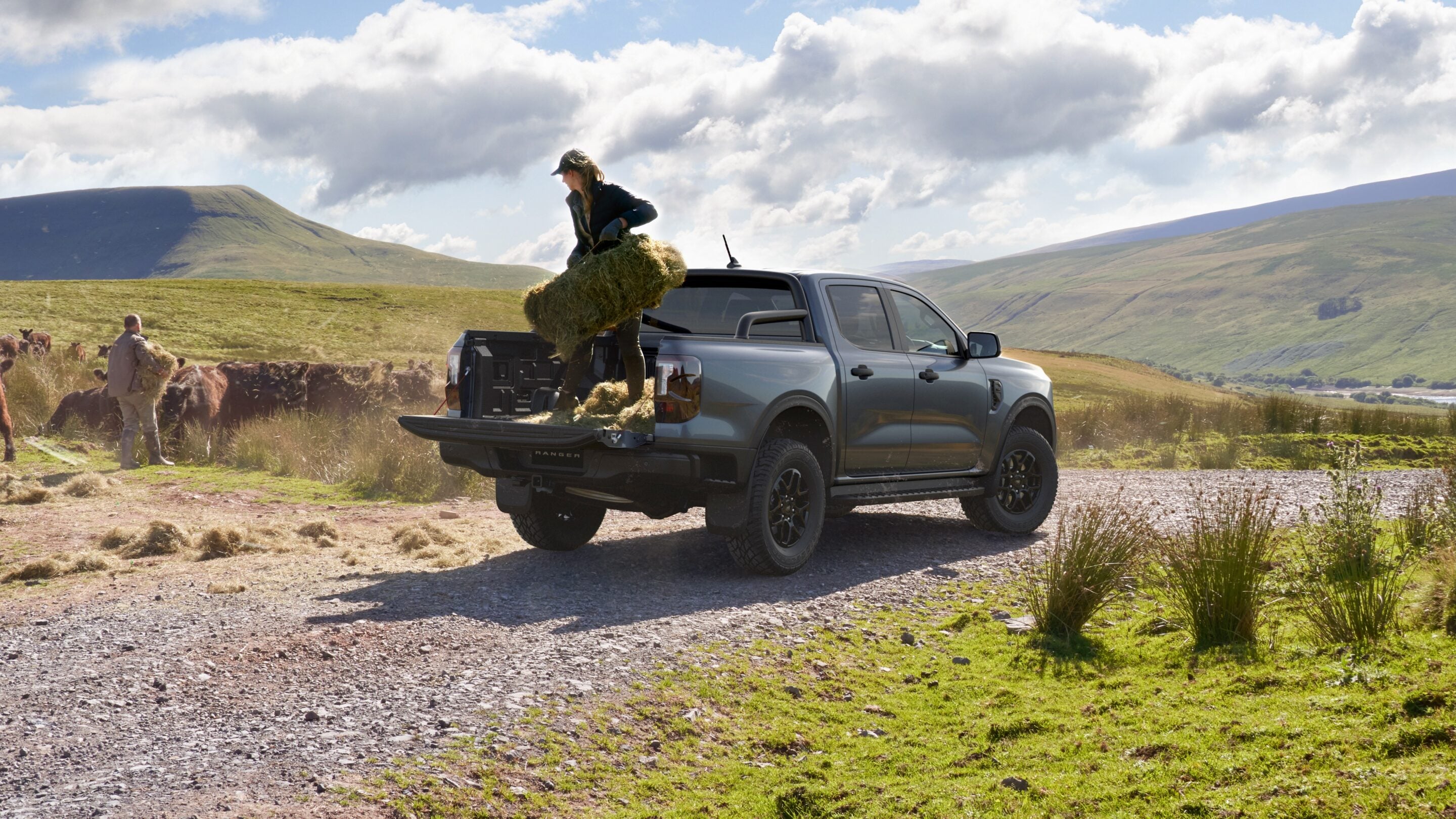
For years now the Toyota HiLux and the Ford Ranger have been fighting a ding-dong battle for local sales supremacy with neither manufacturer willing to give an inch.
This fight will continue in 2026 with the Ranger receiving a substantial update for MY26.5, while the new generation of the venerable HiLux will also hit showrooms.
Before we put the two head-to-head in the metal, here’s how the mid-spec Ford Ranger XLT and Toyota HiLux SR5 measure up on paper.
Pricing and Features
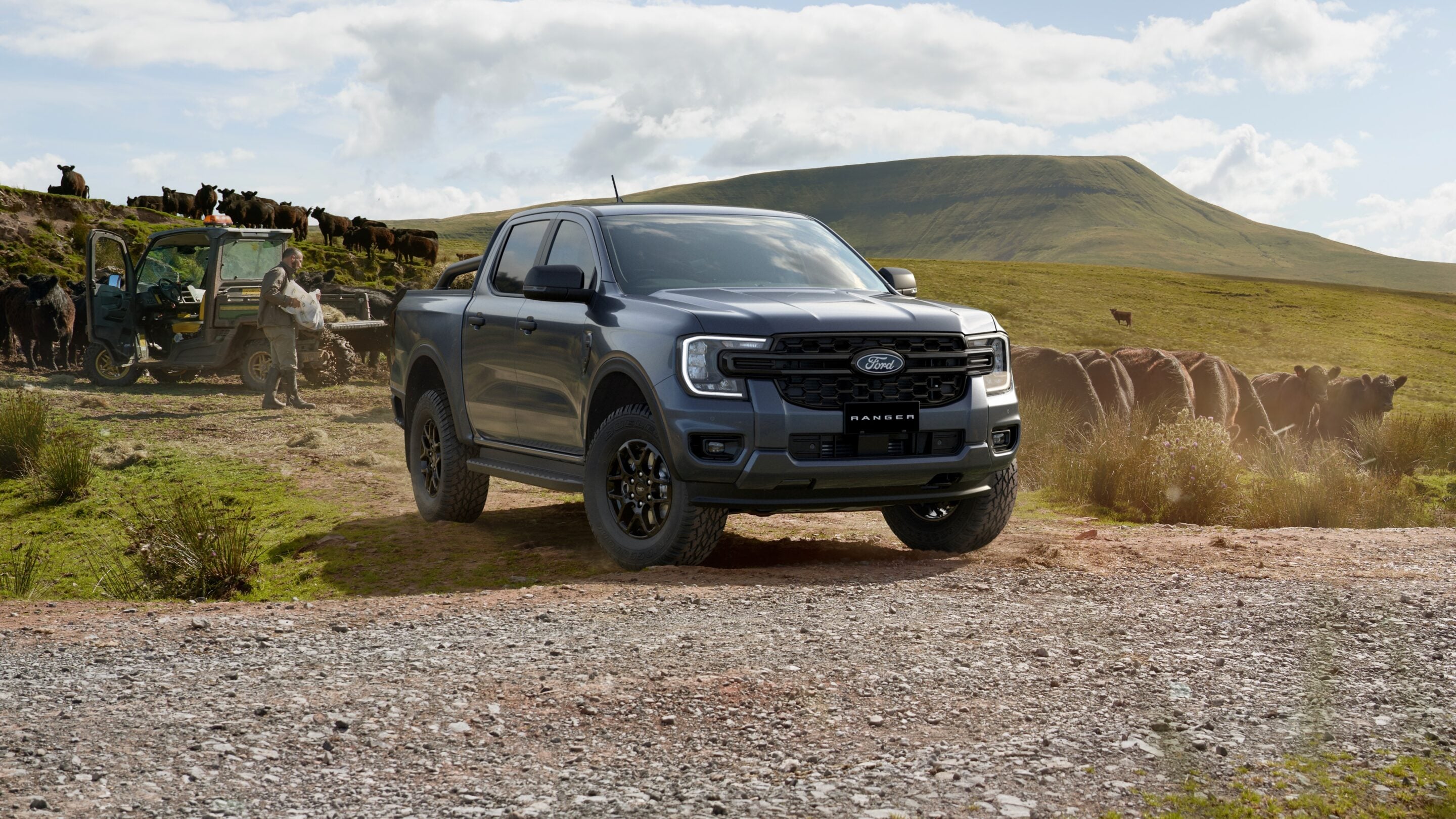
Shock, horror, here we have an updated model that’s actually gone DOWN in price. Ford’s deletion of the 2.0-litre bi-turbo four-cylinder engine means the 3.0-litre V6 turbodiesel is now the default powertrain and the price has been sharpened accordingly, the $67,990 ask representing an $1100 saving despite scoring more equipment, which will be detailed later in this article.
This appears to give the $63,990 HiLux SR5 a decisive price advantage, but it’s not quite that simple. Adding the six-speed automatic transmission to match the Ranger increases the price by $2000 while the Premium Interior Package, which includes leather-accented upholstery, an eight-way power-adjustable driver’s seat and a nine-speaker JBL stereo, is another $2500 for a total of $68,490 plus on-road costs.
1
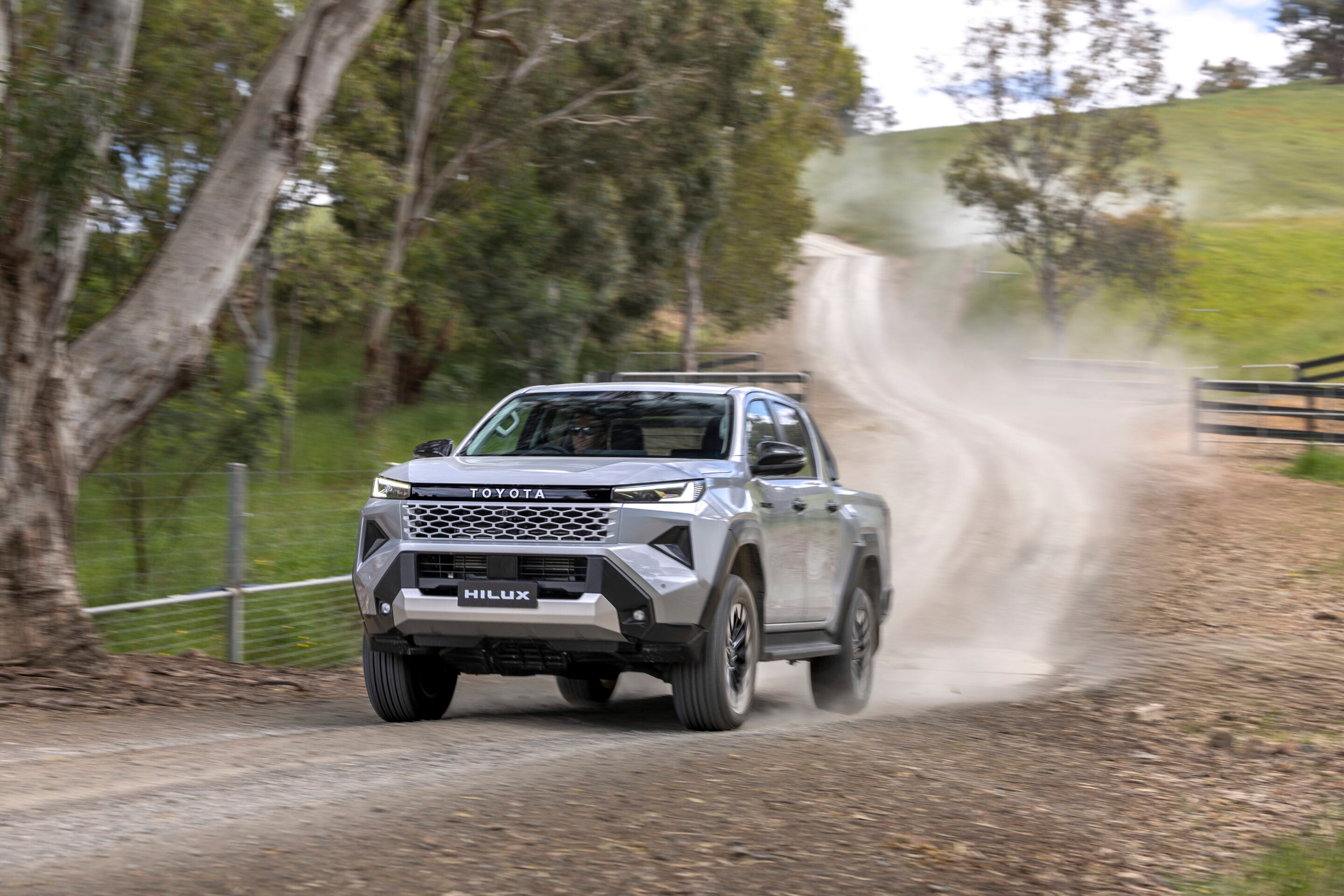
Toyota offers seven paint colours, with solid white being standard and metallic white, silver, grey, black, red and yellow an extra $675. Solid white is also the only standard colour on the Ford, but options are limited to silver, grey, black and blue and they cost $750.
The Ranger can also be specified with a $1500 Touring Pack, which is reasonable value given it adds a cargo management system, auxiliary switch bank, 360-degree camera, puddle lamps, zone lighting and Pro Trailer Back-Up Assist.
Ford offers a five-year/unlimited kilometre warranty and up to seven years of roadside assistance, topped up by 12 months with each service, which are required every 12 months or 15,000km. The first five visits will cost you $1596.
1
Toyota is sticking with its six-month/10,000km service intervals, so attention is required twice as often as the Ranger with each visit costing $395, which will be $3950 over the first five years.
Its vehicle warranty is the same five years/unlimited kilometres, but service with Toyota and the engine and driveline will receive an extra two years’ coverage. Roadside assistance is available for $99/year for the standard program and $139/year for the premium program.
| Ford Ranger XLT | Toyota HiLux SR5 | |
|---|---|---|
| Wheels | 17-inch alloy | 18-inch alloy |
| Headlights | LED | LED |
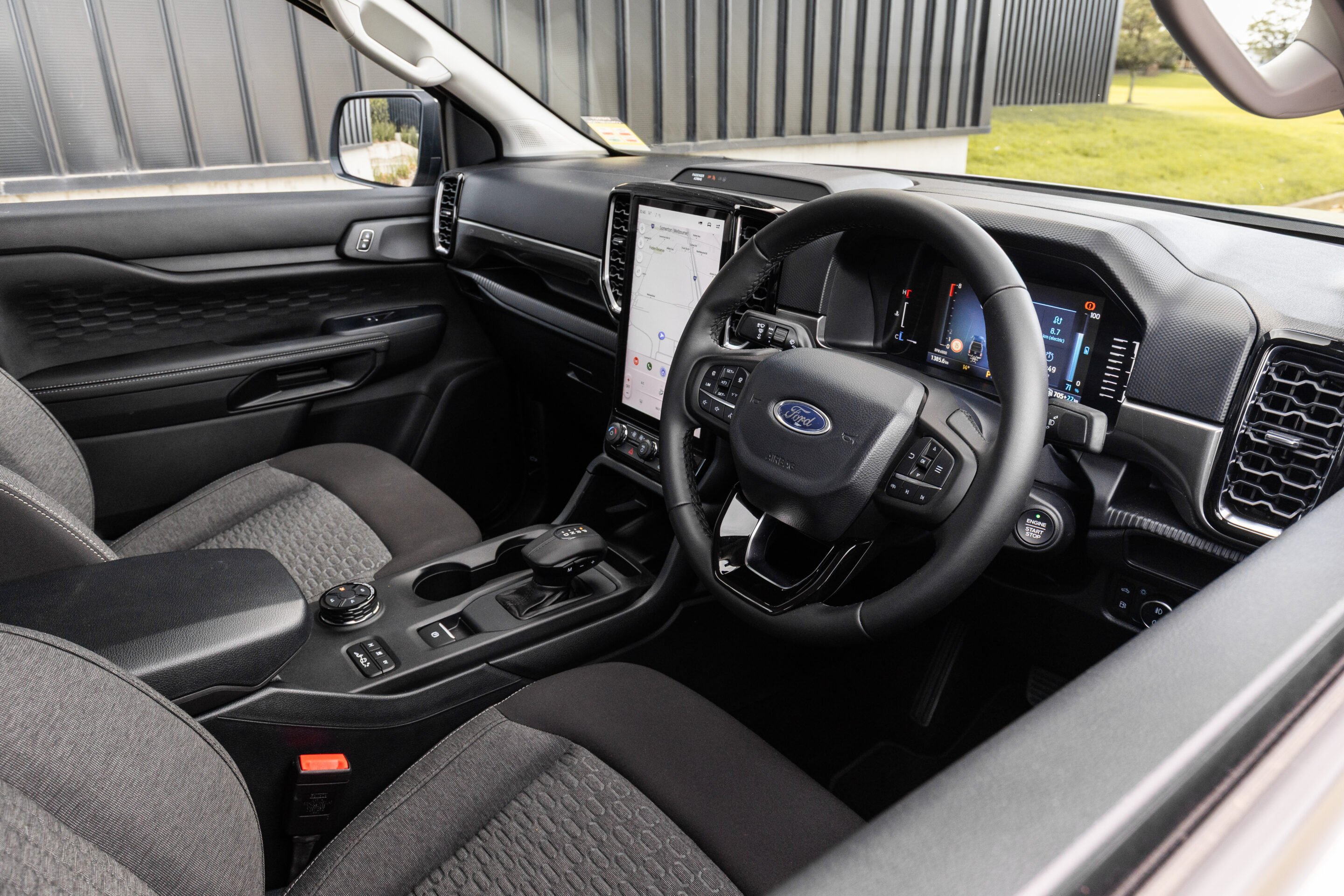
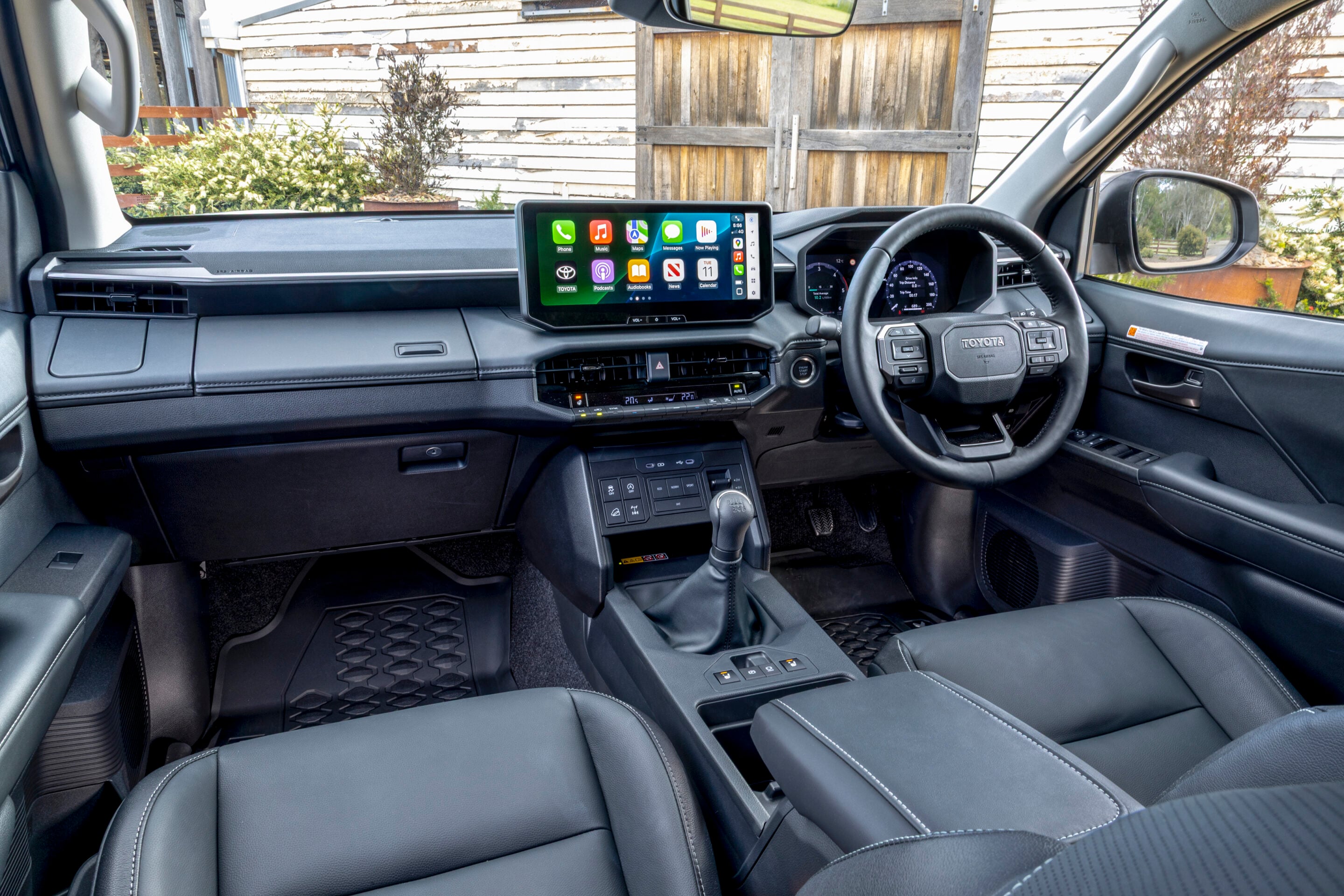
| Seat adjustment | Eight-way manual driver; four-way manual passenger | Eight-way powered driver; four-way manual passenger |
| Upholstery | Cloth | Leather accented |
| Heated seats | No | Yes |
| Heated steering wheel | No | Yes |
| Keyless start | Yes | Yes |
| Climate control | Dual-zone | Dual-zone |
| Dual glovebox | No | Yes |
| Cooled glovebox | No | Yes |
| Stereo | Six-speaker | Nine-speaker |
| USB ports | 1 x USB-A, 1 x USB-C | 2 X USB-C front and rear |
| 12v outlets | Two interior | Two interior |
| AC outlet | One in rear, one in tray | One in rear |
| Rear air vents | Yes | Yes |
1
3
Dimensions
Given it’s so heavily based on its predecessor, it should be no surprise the new Toyota HiLux is very similar in size, growing 55mm in length and 30mm in width. The wheelbase remains at 3085mm, 185mm shorter than the Ranger and it’s 130mm narrower, too.
Toyota is yet to confirm tray dimensions for the new generation car, but they are believed to be very similar to the previous model, which makes the tub longer and wider than the Ranger’s but not as deep, nor as wide between the wheelarches. The HiLux also lacks any sort of tub liner as standard.
| Vehicle Dimensions | Ford Ranger Wildtrak | Toyota HiLux SR5 |
|---|---|---|
| Length | 5370mm | 5320mm |
| Width | 2015mm | 1885mm |
| Height | 1886mm | 1865mm |
| Wheelbase | 3270mm | 3085mm |
| Tracks (f/r) | 1620/1620mm | 1530/1555mm |
| Tray Dimensions | ||
| Length | 1464mm | 1555mm |
| Width | 1520mm | 1540mm |
| Depth | 525mm | 480mm |
| Width between wheelarches | 1217mm | TBC |
| Bedliner | Yes – drop-in | No |
Powertrains
Unusually, when one of our pairing is a new-generation model, there isn’t much to talk about when it comes to powertrains. With 184kW/600Nm, Ford’s refined and grunty V6 turbodiesel has a clear power advantage over the HiLux’s carryover four-cylinder turbodiesel and its 150kW/500Nm, or 420Nm in manual guise.
Where the tables turn is when it comes to fuel economy. Thanks to not only its smaller engine, but also its lighter weight and mild-hybrid assistance, the auto HiLux claims 7.2L/100km on the combined cycle to the Ford’s 8.4L/100km and that’s going to add up if you do plenty of kilometres.
Given both have 80-litre fuel tanks, it also gives the Toyota a handy touring range advantage, with a maximum of 1176km to the Ford’s 1066km based on their claimed highway consumption numbers.
| Ford Ranger XLT | Toyota HiLux SR5 | |
|---|---|---|
| Engine | 3.0-litre V6 turbo-diesel | 2.8-litre four-cylinder turbo-diesel (auto: mild-hybrid) |
| Power | 184kW @ 3250rpm | 150kW @ 3000-3400rpm |
| Torque | 600Nm @ 1750-2250rpm | 500Nm @ 1600-2800rpm (420Nm manual) |
| Gearbox | 10-speed automatic | Six-speed automatic |
| Fuel consumption* | 8.4L/100km | 7.2L/100km |
| Fuel tank | 80 litres | 80 litres |
Chassis and Towing
There isn’t much to split the 2026 Ford Ranger and Toyota HiLux when it comes to lugging heavy loads. Despite a heavy kerb weight, the Ranger’s impressive Gross Vehicle Mass (GVM) and Gross Combined Mass (GCM) mean it offers more than a tonne of payload capability in XLT guise as well as a decent amount of payload headroom when towing.
The Ranger also continues to offer convenient features like the lighting check and active safety features that can recognise and account for the presence of a trailer, while Pro Trailer Back-Up Assist is an optional extra.
1
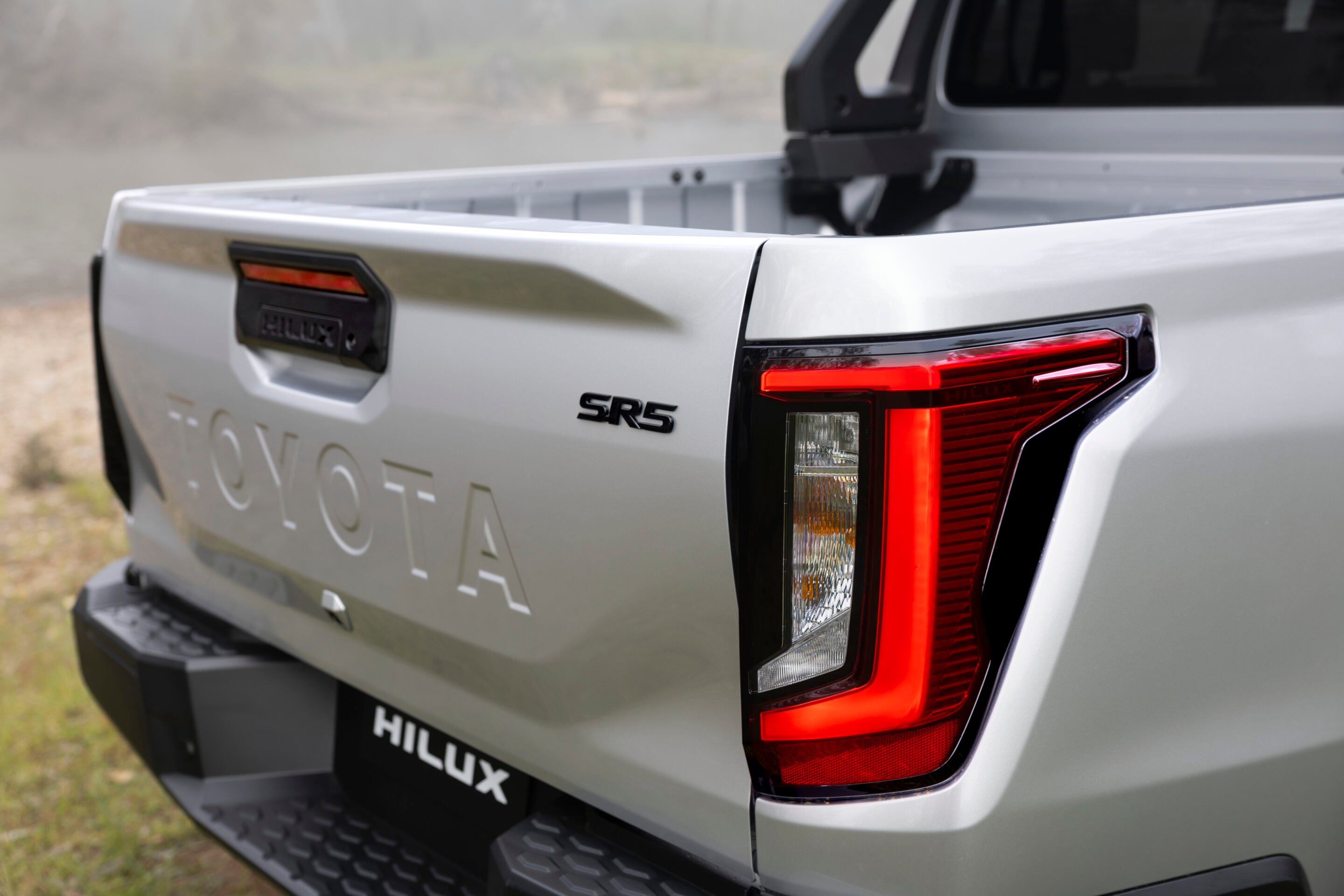
Over in Toyota-land the big news is the HiLux’s increased GCM, up from 5850kg to 6300kg. This gives far greater payload flexibility when towing heavy loads, whereas in some prior variants payload capacity was essentially nonexistent when towing at or near maximum capacity.
| Ford Ranger XLT | Toyota HiLux SR5 | |
|---|---|---|
| Kerb Weight | 2349kg | 2180kg |
| Gross Vehicle Mass | 3280kg | 3120kg |
| Max Payload | 1047kg | 940kg |
| Max Towing | 3500kg | 3500kg |
| Gross Combined Mass | 6400kg | 6300kg |
| Payload at max towing | 551kg | 620kg |
1
Off Road
When it comes to capability in the rough stuff, the previous Toyota HiLux and Ford Ranger are two of the best in the business in showroom guise and it’s unlikely the new HiLux will take a step backwards.
Its traction control is first-class and it now benefits from an improved Multi-Terrain Select system with different driving modes for mud, sand, dirt and rocks and a multi-terrain monitor. Its raw stats can’t match the Ranger’s (though there’s little in it), but with an appropriate set of tyres there should be few places the new HiLux can’t go.
What it doesn’t have is any sort of all-wheel drive capability, being limited to 2H, 4H and 4L. V6 Rangers can drive all four wheels even on dry tarmac thanks to the 4A setting and it can be useful in slippery conditions. Both cars have standard locking rear diffs.
| Ford Ranger XLT | Toyota HiLux SR5 | |
|---|---|---|
| Approach angle | 30 degrees | 29 degrees |
| Departure angle | 23 degrees | 26 degrees |
| Rampover angle | 21 degrees | TBC |
| Ground clearance | 234mm | 224mm |
| Wading depth | 800mm | 700mm |
| Underbody protection | Yes | Fuel tank |
Safety
The Ford Ranger set new standards for dual-cab safety when it was launched which is backed up by its five-star ANCAP rating from 2022 with scores of 84 per cent for adult occupant protection, 93 per cent for child occupant protection, 74 per cent for vulnerable road user protection and 83 per cent for safety assist.
ANCAP wasted no time in tested the new Toyota HiLux and has awarded it a five-star rating, with 84 per cent for adult occupant protection, 89 per cent for child occupant protection, 82 per cent for vulnerable road user protection and 82 per cent for safety assist – scores virtually lineball with the Ranger.
It’s similarly lineball in terms of features, the Ford offering an extra airbag, while the HiLux has a surround-view camera as standard, the Ranger requiring the optional $1500 Touring Pack to include it.
| Ford Ranger XLT | Toyota HiLux SR5 | |
|---|---|---|
| Airbags | Nine | Eight |
| Autonomous emergency braking | Yes, with pedestrian and cyclist detection | Yes, with daytime pedestrian and cyclist detection |
| Adaptive cruise control | Yes | Yes |
| Blind-spot monitoring | Yes | Yes |
| Lane keep assist | Yes | Yes |
| Rear cross-traffic alert | Yes | Yes |
| Road sign assist | Yes | Speed signs |
| Parking sensors | Front and rear | Front and rear |
| Surround-view camera | No | Yes |
| ISOFIX | Rear outboard | Rear outboard |
| Tyre pressure monitoring | Yes | Yes |
Technology
Given its vintage, the previous Toyota HiLux actually had a pretty competitive technology offering, but the new generation has given it the presentation lift it badly needed. There’s now a 12.3-inch widescreen infotainment display with wireless smartphone mirroring, digital radio and app connectivity.
A new 12.3-inch widescreen digital instrument display also replaces the old analogue dials and tiny TFT screen.
Certain Connected Services functions are included for the life of the 4G network, including SOS emergency call, automatic collision notification and vehicle insights, viewable through the Toyota app.
One year’s complimentary access is also provided to stolen vehicle tracking, remote climate control, connected navigation, connected voice assistance and more, after which these become paid services.
The Ranger XLT now scores the full-size 12.0-inch portrait infotainment screen, which features wireless smartphone mirroring, digital radio, app connectivity with one year of complimentary connected navigation services and an embedded modem, but the digital instrument cluster is the smaller 8.0-inch display.
| Ford Ranger XLT | Toyota HiLux SR5 | |
|---|---|---|
| Screen size | 12.0-inch | 12.3-inch |
| Digital instruments | 8.0-inch | 12.3-inch |
| Apple CarPlay | Wireless | Wireless |
| Android Auto | Wireless | Wireless |
| Digital radio | Yes | Yes |
| Wireless charging | No | Yes |
| App connectivity | Yes | Yes |
Conclusion
These two are close enough on paper that brand allegiance is likely to be the determining factor in any purchase. The price cut and extra equipment for the MY26.5 Ford Ranger XLT only makes it an even more enticing proposition, especially as the powerful and refined V6 turbodiesel is now the default engine.
But don’t discount the Toyota HiLux. It may be copping criticism for not being new enough, but it’s unclear whether many customers were clamouring for revolution. In SR5 guise, it’s better equipped than the equivalent Ranger and the GCM increase will be helpful for those who tow. Only the expensive servicing really stands out as a weakness.
In short, there’s little to suggest the popularity of either will wane, but as for which is best, we’ll have to put them head-to-head on- and off-road.
Follow WhichCar/Wheels on Google
Click the button below to make WhichCar by Wheels a preferred source for your news.

We recommend
-
 Comparisons
Toyota Corolla vs Hyundai i30 spec battle: Which hybrid small sedan is best?
They're some of the cheapest cars to run but which hybrid small sedan is the best buy? Let's find out.
-
 Comparisons
Hyundai Tucson vs Kia Sportage spec battle: Which medium SUV comes out on top?
Genetic twins under the skin, can a closer look separate these two mid-size SUV siblings?