Comparisons

Gallery 1
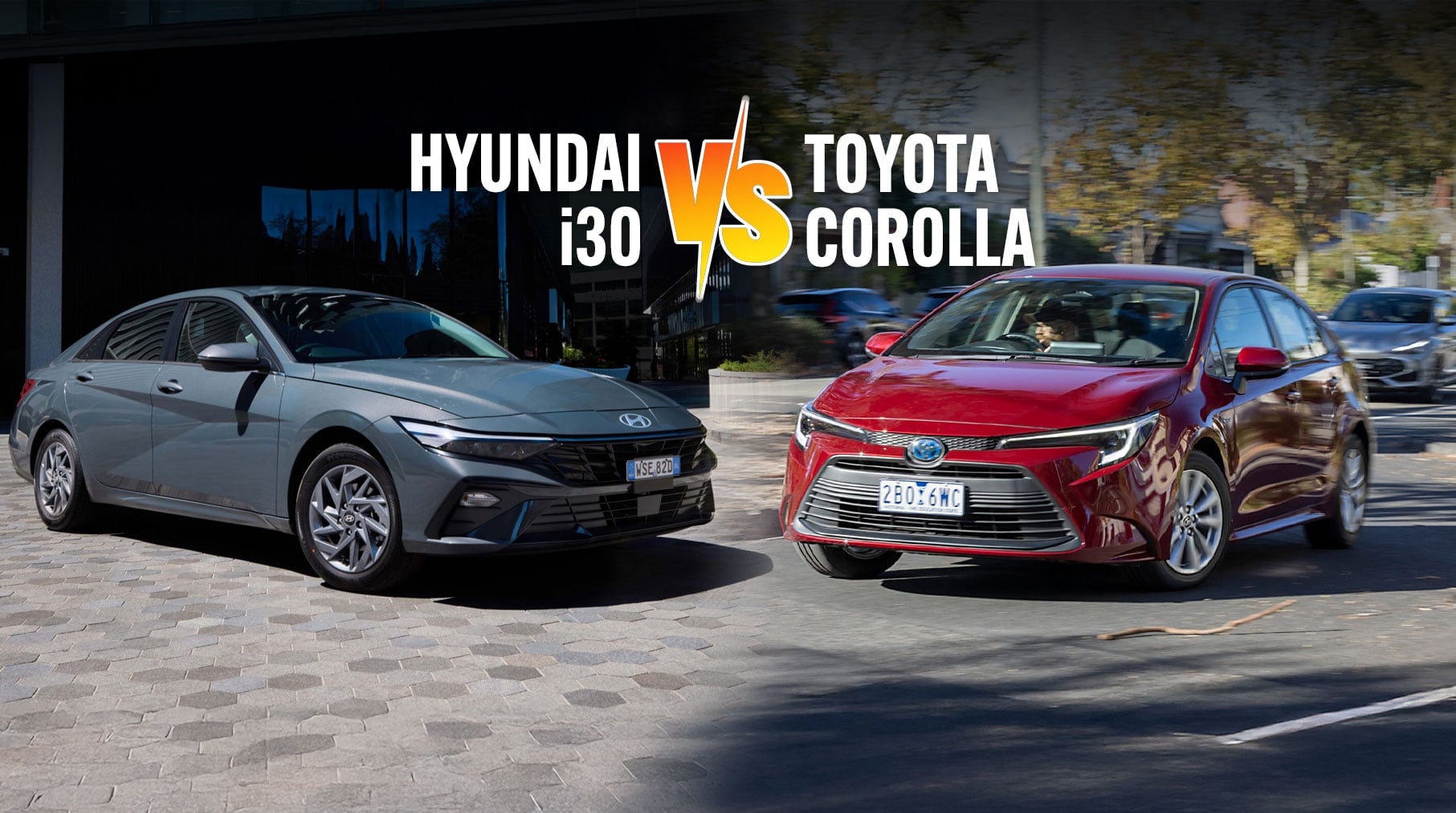
While most of the attention in the new car market goes towards SUVs of various sizes, if you’re searching for a practical, efficient and good value-for-money runabout, a small sedan is still a viable option.
The pluses? They’re good to drive, easy to park, spacious and – if you choose one of the hybrid models here – cost efficient to run. So which small sedan is best to buy: the Toyota Corolla Ascent Sport sedan hybrid or the Hyundai i30 Sedan hybrid?
Pricing
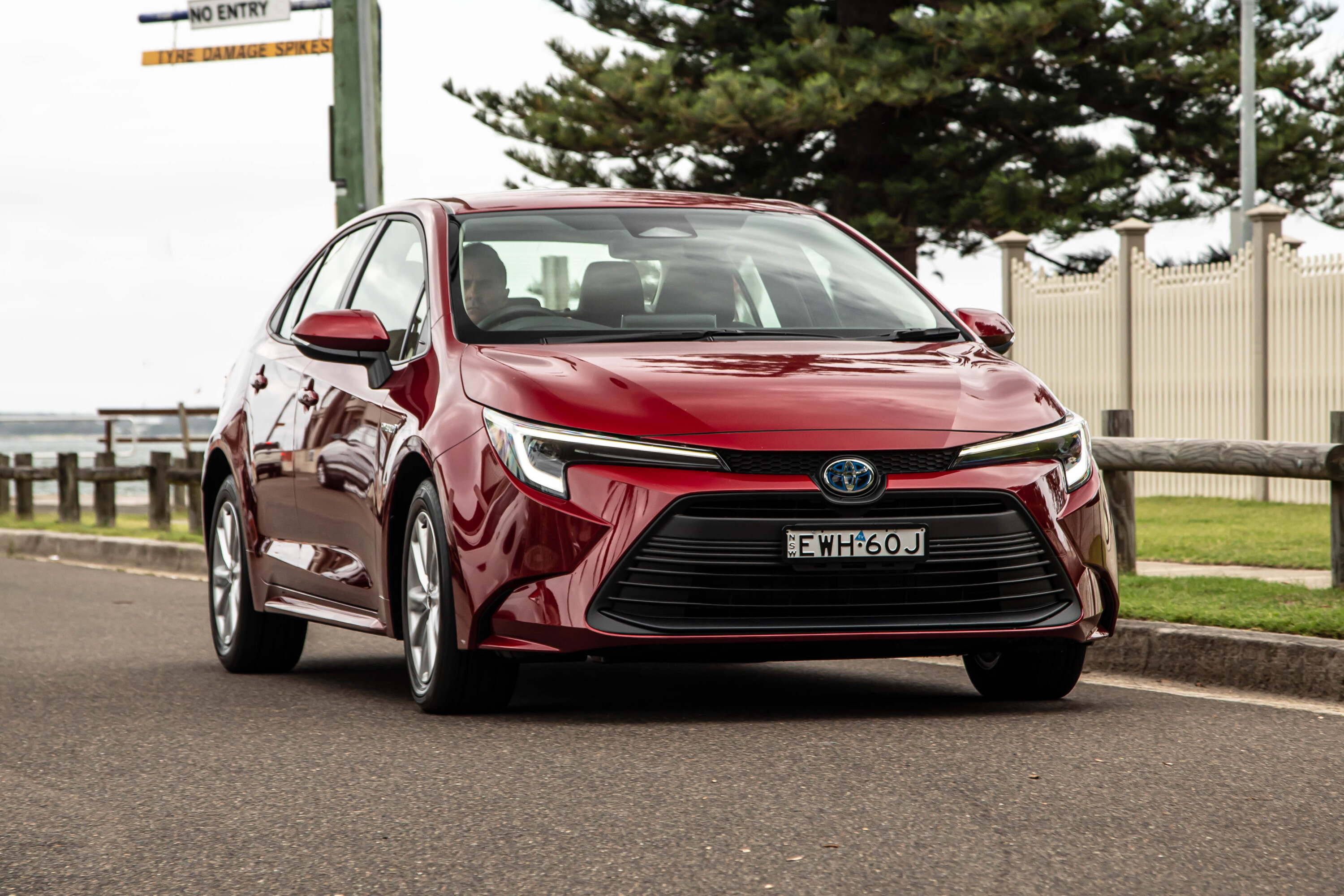
The Corolla Ascent Sport hybrid sedan gets off to an immediately good start because its $32,585 plus on-road costs starting price is $665 less than the entry-level i30 Sedan hybrid ($33,250 +ORC). Premium paint is $20 cheaper for the Corolla at $575, while both Toyota and Hyundai offer a five-year/unlimited km that can be extended with dealer servicing through the warranty period (Toyota gifts you an extra two years of mechanical warranty if done so, while Hyundai gives you another two years of full vehicle warranty).
4
Both the Corolla and i30 Sedan feature annual/15,000km service intervals, but the Corolla’s servicing is almost half the price of the i30 Sedan’s at just $1250 for five years. The i30 Sedan features 12 months of roadside assistance as standard that’s extended by another 12 months with each dealer service, whereas Toyota disappointingly gives you none at all – buyers must pay a minimum of $99 annually if they want it.
| Toyota Corolla Ascent Sport sedan hybrid | Hyundai i30 Sedan hybrid | |
|---|---|---|
| Starting price | $32,585 plus on-road costs | $33,250 plus on-road costs |
| Premium paint | + $575 | + $595 |
| Warranty | Five-year/unlimited km (+ two extra years of mechanical warranty if serviced at a Toyota dealer) | Five-year/unlimited km (+ two extra years if serviced at Hyundai) |
| Service intervals | Annually/every 15,000km | Annual/every 15,000km |
| Five-year service cost | $1250 ($250 per year) | $2426 ($485 per year) |
| Roadside assistance | None ($99+ per year) | 12 months, extended another 12 months with each dealer service |
Dimensions
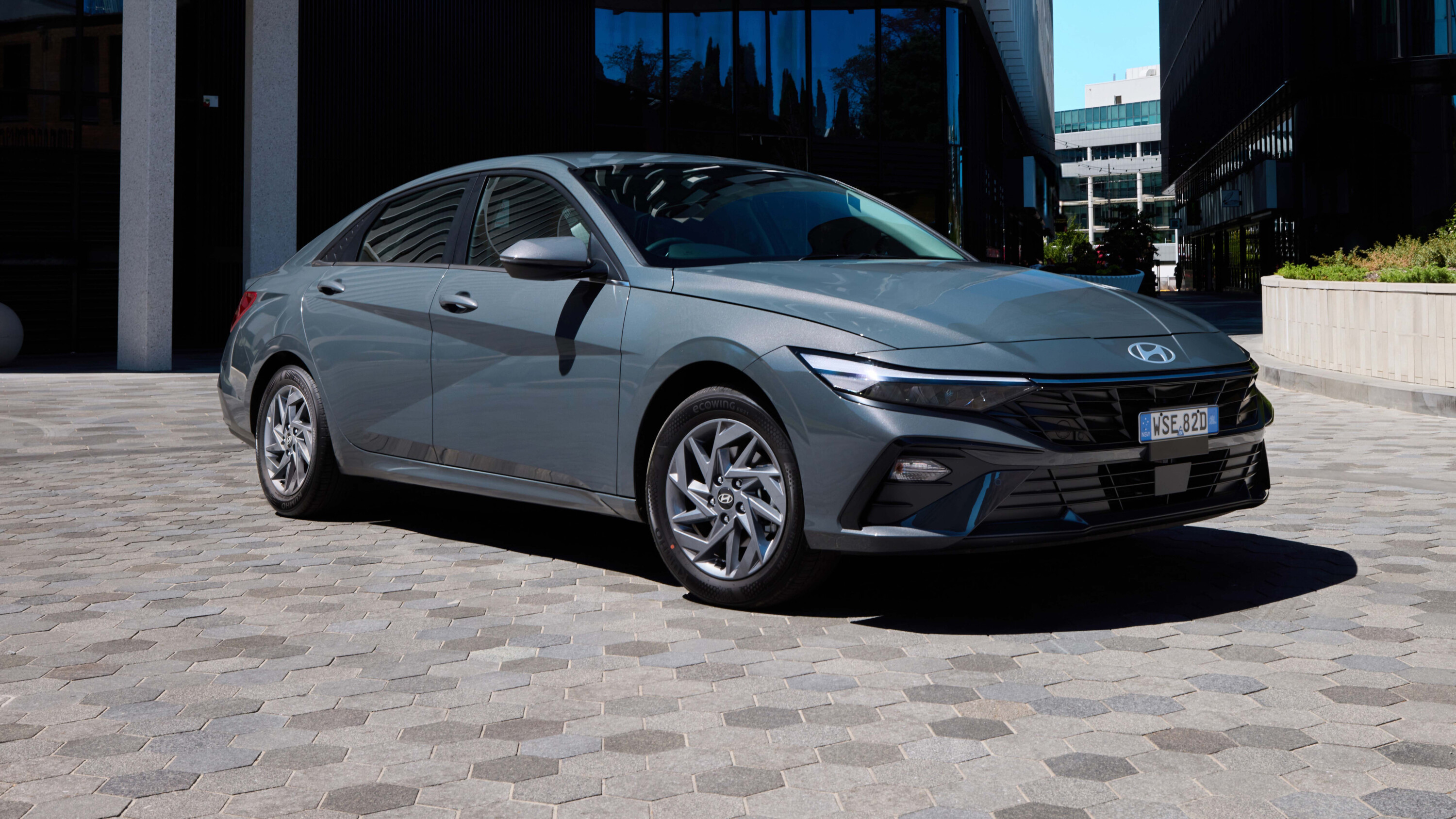
In a tale quite common with pretty much all modern cars, both small sedan offerings are much larger than their predecessors and are even larger than most medium cars were in the early 2000s. That means that both the Corolla and i30 Sedan are practical, but the Hyundai’s extra 80mm of length affords it a genuinely roomy rear cabin that even taller folks will be comfortable sitting in.
For boot space, it’s a very close call with the Toyota trailing the Hyundai by just four litres. Both boots are really just big boxes with little in the way of extra storage or hooks to hang bags off. Both cars also feature 60:40-split folding rear seats if more space is needed.
| Toyota Corolla Ascent Sport sedan hybrid | Hyundai i30 Sedan hybrid | |
|---|---|---|
| Length | 4630mm | 4710mm |
| Width | 1780mm | 1825mm |
| Height | 1435mm | 1420mm |
| Wheelbase | 2700mm | 2720mm |
| Weight | 1430kg | 1360kg |
| Luggage space | 470 litres | 474 litres |
Standard features
Despite both the Corolla Ascent Sport and i30 Sedan being entry level models in their respective line-ups, they are well featured for the money. Shared features include 16-inch alloy wheels, automatic LED headlights, heated mirrors, automatic climate control, 8.0-inch touchscreens, wireless smartphone mirroring and six-speaker sound systems.
4
Over the i30 Sedan, the Corolla adds cloud-based sat-nav, DAB+ digital radio reception, keyless entry with push button start and a 12.3-inch digital driver’s display. But the i30 adds rain-sensing automatic wipers, parking sensors, a leather-wrapped steering wheel, an extra zone of climate control, rear air vents, a wireless phone charger and two USB-C charging ports for the rear seat.
| Toyota Corolla Ascent Sport sedan hybrid | Hyundai i30 Sedan hybrid | |
|---|---|---|
| Wheels | 16-inch alloy | 16-inch alloy |
| Headlights | LED projector | LED reflector |
| Wipers | Manual | Rain-sensing automatic |
| Seat adjustment | Six-way manual driver, four-way manual passenger | Six-way manual driver, four-way manual passenger |
| Upholstery | Cloth | Cloth |
| Steering wheel | Urethane | Leather |
| Push button start | Yes | No |
| Climate control | Single-zone automatic | Dual-zone automatic with rear vents |
| Stereo | Six-speaker | Six-speaker |
| In-car charging | 1 x USB-C (front) | 1 x USB-C (front), wireless charger (front), 2 x USB-C (rear) |
Performance and fuel economy
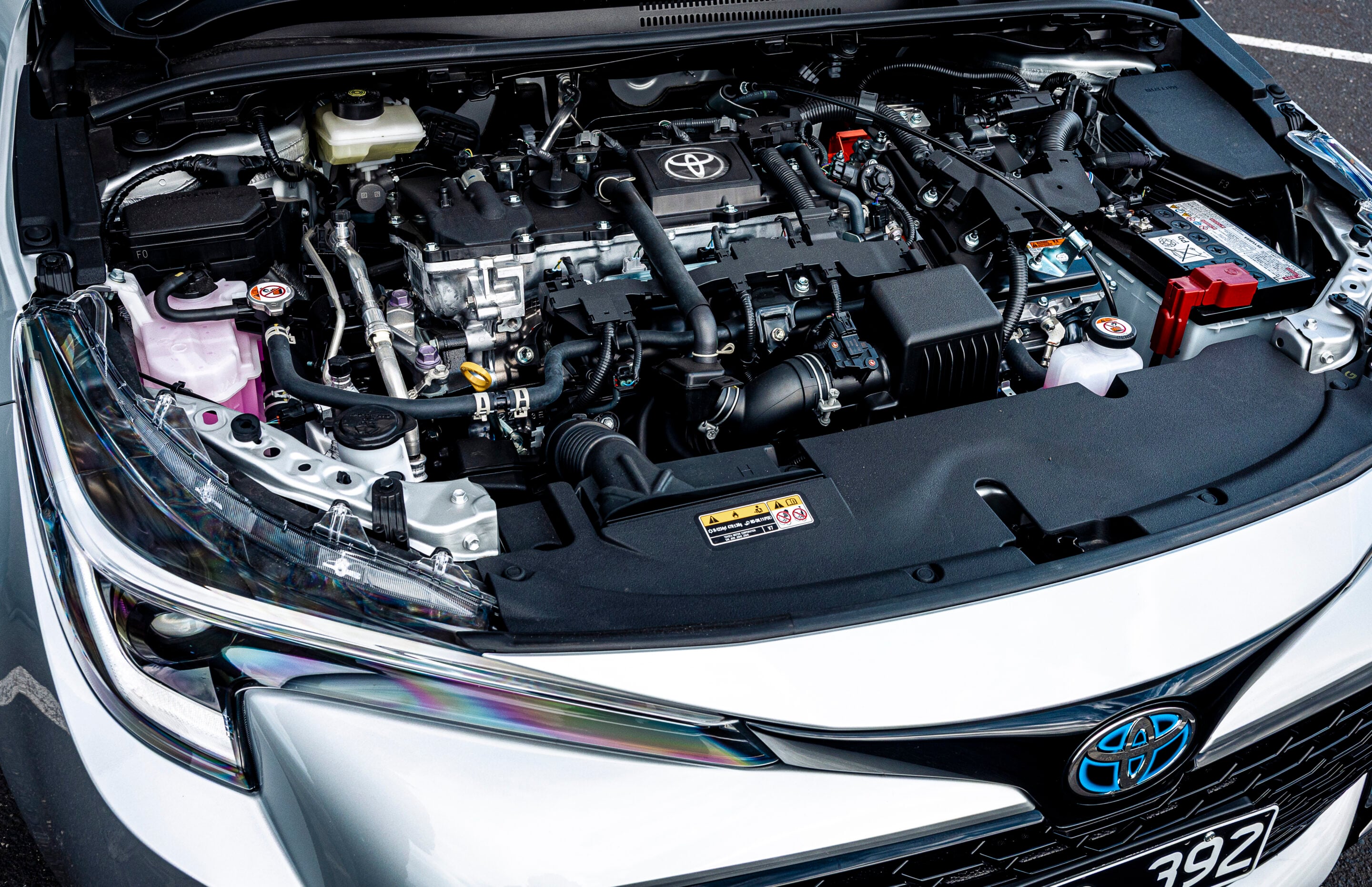
Both the Corolla Ascent Sport hybrid and i30 Sedan hybrid use four-cylinder petrol engines combined with electric motors and small batteries to provide low emissions driving. The Corolla’s 1.8-litre engine is 200cc larger than the Hyundai’s, but remarkably, they both achieve 3.9L/100km on the combined cycle for fuel consumption.
The i30 Sedan produces 1kW more power than the Corolla (104kW versus 103kW), and it also uses a six-speed dual-clutch transmission that feels more normal to drive than the Corolla’s eCVT. Based on their combined fuel consumption, Corolla drivers will eke slightly more out of a tank of fuel – the i30 Sedan hybrid’s is one litre smaller – though that will depend on what sort of driving they’re doing.
| Toyota Corolla Ascent Sport sedan hybrid | Hyundai i30 Sedan hybrid | |
|---|---|---|
| Engine | 1.8-litre four-cylinder hybrid | 1.6-litre four-cylinder hybrid |
| Peak power | 103kW | 104kW |
| Combined fuel consumption | 3.9L/100km | 3.9L/100km |
| Transmission | eCVT | Six-speed dual-clutch |
| Claimed emissions | 90g/km | 92g/km |
| Fuel type/tank size | 43 litres/91RON regular unleaded | 42 litres/91RON regular unleaded |
Safety
These small sedan rivals will be bought by a whole range of customers, so safety is an important issue to consider. The i30 Sedan was tested by Australia’s safety authority ANCAP and received a three-star rating, but the Corolla is actually currently unrated by ANCAP because it was tested so long ago (it received a five-star rating in 2018). Therefore, it’s difficult to know how they compare in crash testing, but they are both well equipped when it comes to safety.
5
Shared safety features between the two include autonomous emergency braking, adaptive cruise control, lane keeping assistance, driver attention monitoring and a reversing camera. However, neither feature blind-spot monitoring with rear cross-traffic alert as standard – they are available as part of a $1000 Convenience Package on the Corolla, but i30 Sedan buyers must step up to the upper-spec Elite to get them. The Corolla has seven airbags to the i30 Sedan’s six, but the i30 Sedan features front and rear parking sensors.
| Safety | Toyota Corolla Ascent Sport sedan hybrid | Hyundai i30 Sedan hybrid |
|---|---|---|
| Airbags | Seven | Six |
| Adaptive cruise control | Yes (all speed) | Yes (with stop and go) |
| Autonomous emergency braking | Yes (with pedestrian and daytime cyclist assistance) | Yes (with pedestrian, cyclist, motorcycle and intersection assistance) |
| Lane-keep assist | Yes (with adaptive lane guidance) | Yes (with adaptive lane guidance) |
| Blind-spot monitoring | No (available as part of $1000 Convenience Package) | No |
| Rear cross-traffic alert | No (available as part of $1000 Convenience Package) | No |
| Driver attention monitoring | Yes | Yes |
| Parking sensors | No | Front and rear |
| Reversing camera | Yes | Yes |
| ISOFIX | Outboard rear seats | Outboard rear seats |
Technology
Thanks to its most recent updates, the Corolla edges out the i30 Sedan on the tech front thanks to its impressive 12.3-inch digital driver’s display and 8.0-inch touchscreen with live services, including cloud-based sat-nav with live traffic. The i30 Sedan also features an 8.0-inch touchscreen, but with no live services in the entry-level model. Both feature wireless smartphone mirroring, while the Corolla only features one USB port – the i30 Sedan has three and a wireless phone charger too.
| Toyota Corolla Ascent Sport sedan hybrid | Hyundai i30 Sedan hybrid | |
|---|---|---|
| Driver’s display | 12.3-inch digital | 4.2-inch with analogue gauges |
| Touchscreen | 8.0-inches | 8.0-inches |
| Satellite navigation | Yes (cloud based with live traffic) | No |
| Radio | AM/FM/DAB+ | AM/FM |
| Smartphone mirroring | Wireless and wired Apple CarPlay and Android Auto | Wireless and wired Apple CarPlay and Android Auto |
Conclusion: Corolla or i30 hybrid?
Those wanting something smaller and more fuel efficient than an SUV will be a winner with either of our small sedan battlers: the Toyota Corolla Ascent Sport hybrid sedan or Hyundai i30 Sedan hybrid. They’re not only more practical than vehicles like their Kona and Corolla Cross siblings, but better to drive, better value for money, more efficient and better looking.
The Corolla is priced less than the i30, and offers some equipment advantages like a fully digital driver’s display, keyless entry with push button start and inbuilt sat-nav. But the i30 Sedan is better equipped overall, including more family/ride share-friendly features like rear air vents and charging ports. It’s also more spacious than the Corolla and better to drive because of its proper transmission. There’s no wrong choice here, but our small sedan money would be going to the i30 Sedan hybrid.
Follow WhichCar/Wheels on Google
Click the button below to make WhichCar by Wheels a preferred source for your news.

We recommend
-
 Reviews
Hyundai i30 Sedan: What you need to know about the full range
One of the few remaining small sedans on the new car market, the Hyundai i30 Sedan offers a wide range of powerplants, strong value for money and lots of standard technology. Here’s the WhichCar guide to the i30 Sedan range.
-
 Reviews
Toyota GR Corolla: Where does it rank among remaining hot hatch options?
The Toyota GR Corolla now has an automatic transmission option. That adds to its appeal but how does it measure up against its rivals?
-
 News
NewsHyundai i20 N to end for Australia in current form... but a new generation awaits
The Hyundai i20 N small hot hatch will end production for Australia in March 2026, though a next-gen model is not far away.