Comparisons

Gallery 1
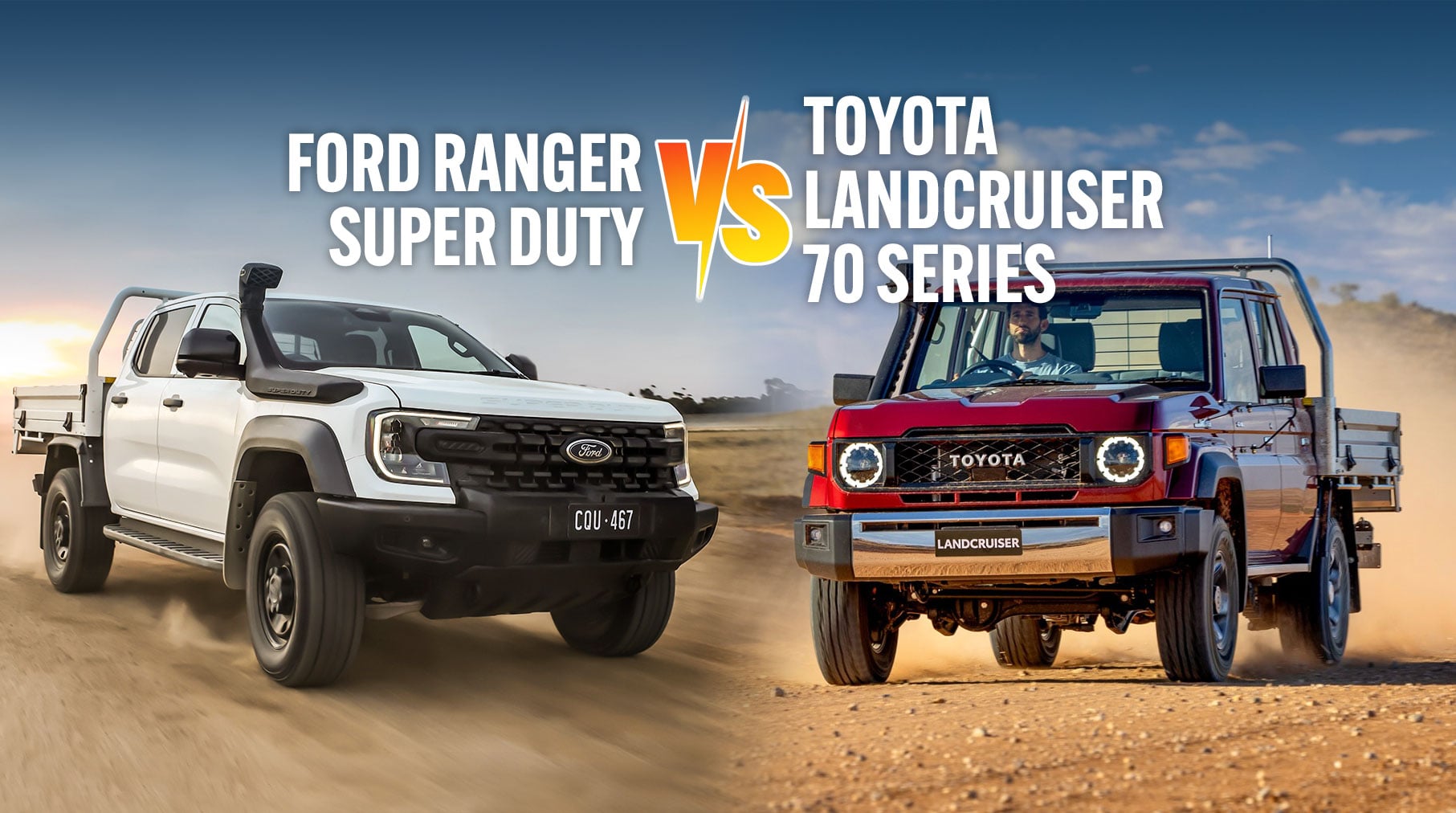
The Toyota LandCruiser 70-Series is like an automotive crocodile. Ancient in its DNA, it has nevertheless evolved sufficiently to not just survive in modern times but thrive, its popularity leading to length wait times.
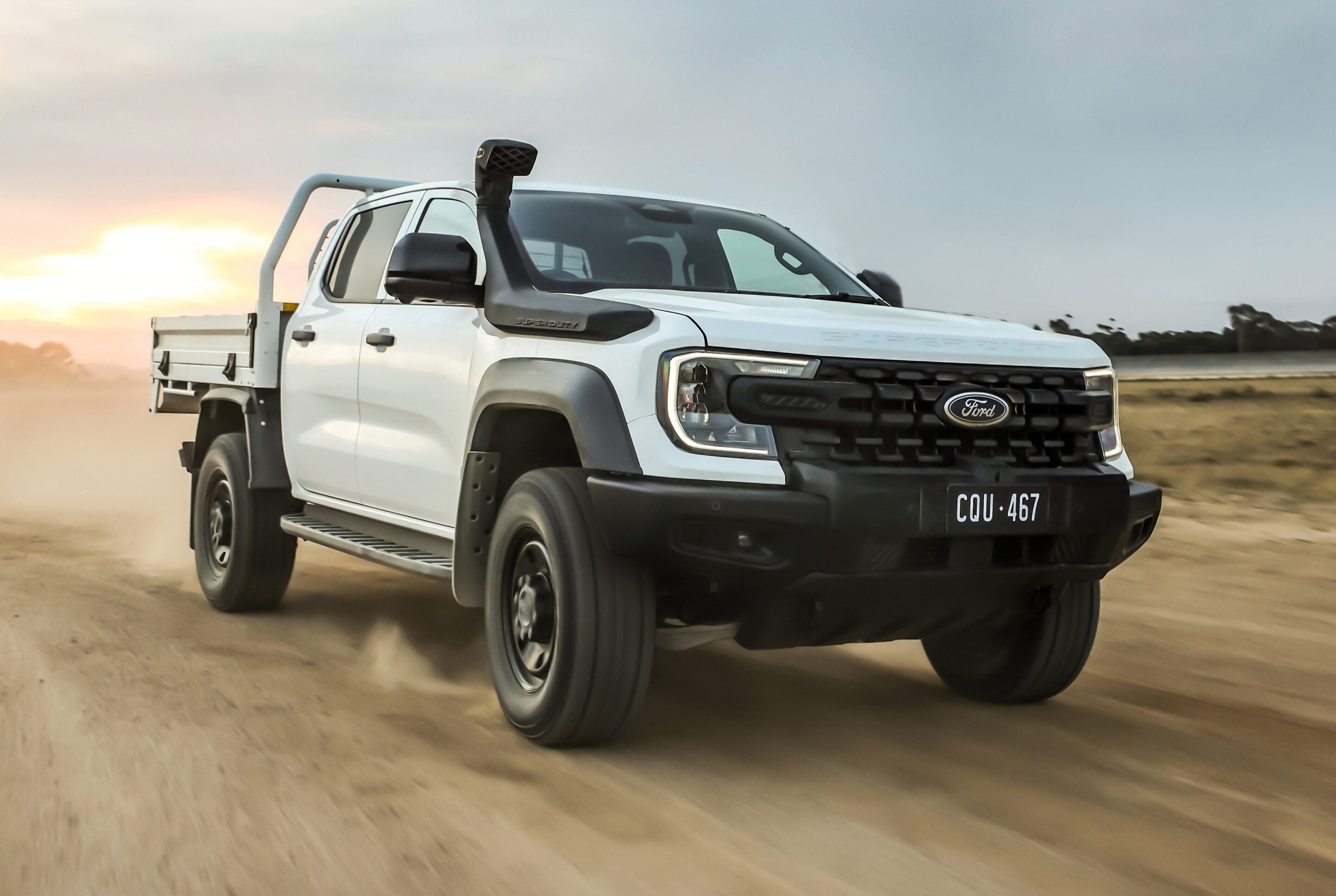
But Ford thinks there is a better way. By beefing up its Ranger to Super Duty spec, it wants to make significant inroads into the fleet market including mining, emergency services and councils, as well as anyone who needs to tow or carry Really Big Heavy Stuff.
While we’ve only seen the Super Duty in pre-production prototype guise so far, this is how it stacks up on paper against Toyota’s venerable 70-Series.
Pricing
Ruggedness doesn’t come cheap with both the Ford Ranger Super Duty and Toyota LandCruiser 70-Series nudging (or breaching) the $100,000 mark on road, depending on which variant you select.
The Ford is offered in one specification but three body styles and the price is exclusive of a tray, which adds between $5966-$8166 to the final price, while any colour other than white (grey, silver, tan or black) adds $750. Other options include rock sliders and a dual battery system ($1850 each) or carpeted floors ($1500), vinyl mats being standard.
1
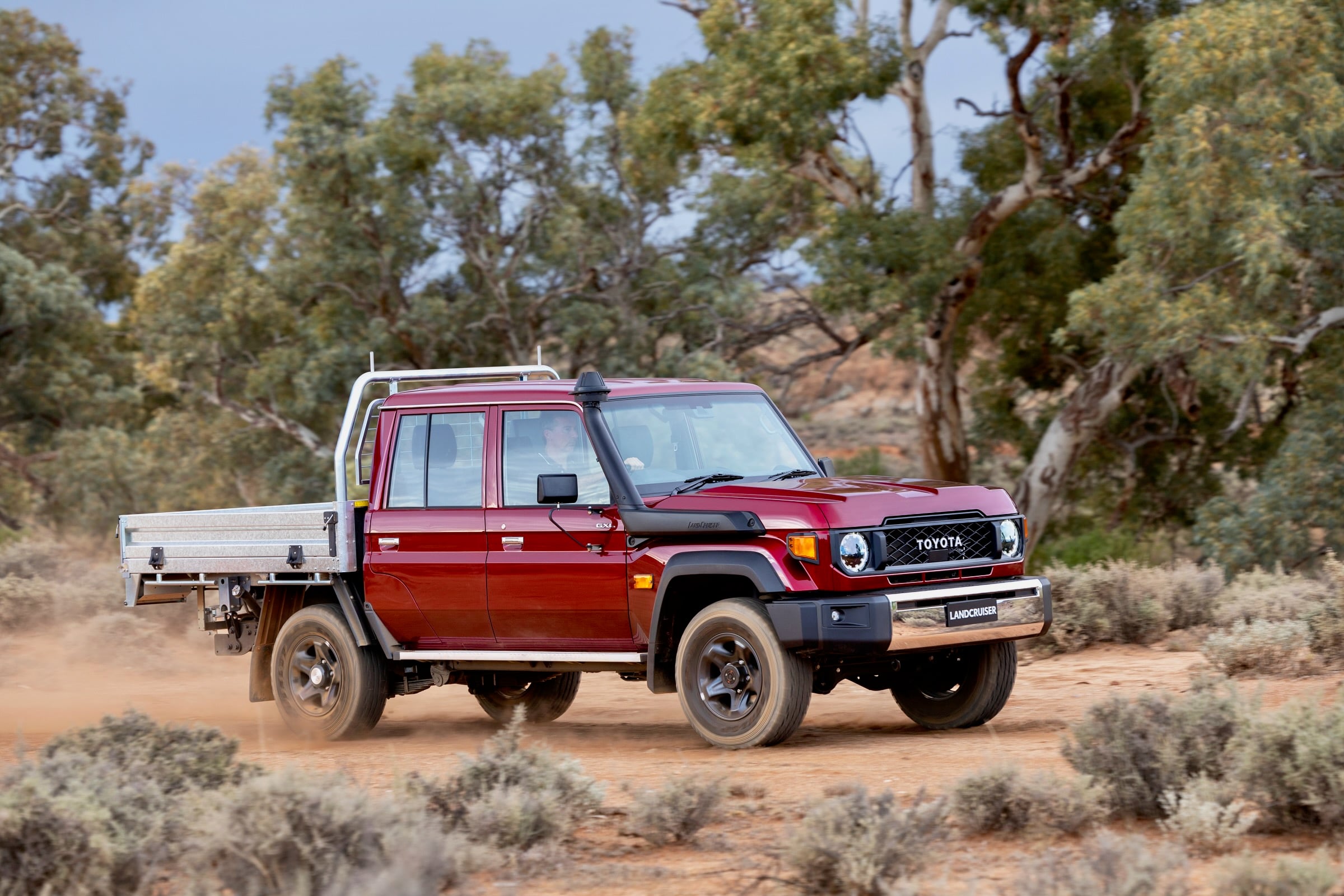
In ute guise the 70-Series can be had as a Workmate in single- or dual-cab and manual or auto, as a single-cab automatic GX, or GXL once again in single- or dual-cab and manual or auto.
Prices include a heavy-duty steel tray, locking diffs are standard on the GXL but optional on other variants and while white and tan are standard, all other colours (red, blue, black and silver) are another $675.
The LC70 is also available as a Troop Carrier and Wagon, but for the purposes of this article we’ll focus on the tray-back variants.
1
| Variant | Price |
|---|---|
| Ford Ranger Super Duty Single Cab | $82,990 |
| Ford Ranger Super Duty Super Cab | $86,490 |
| Ford Ranger Super Duty Double Cab | $89,990 |
| Toyota LC70 Workmate Double Cab | $77,300 (m)/$79,300 (a) |
| Toyota LC70 GX Single Cab | $78,800 |
| Toyota LC70 GXL Double Cab | $81,500 (m)/$83,500 (a) |
Equipment
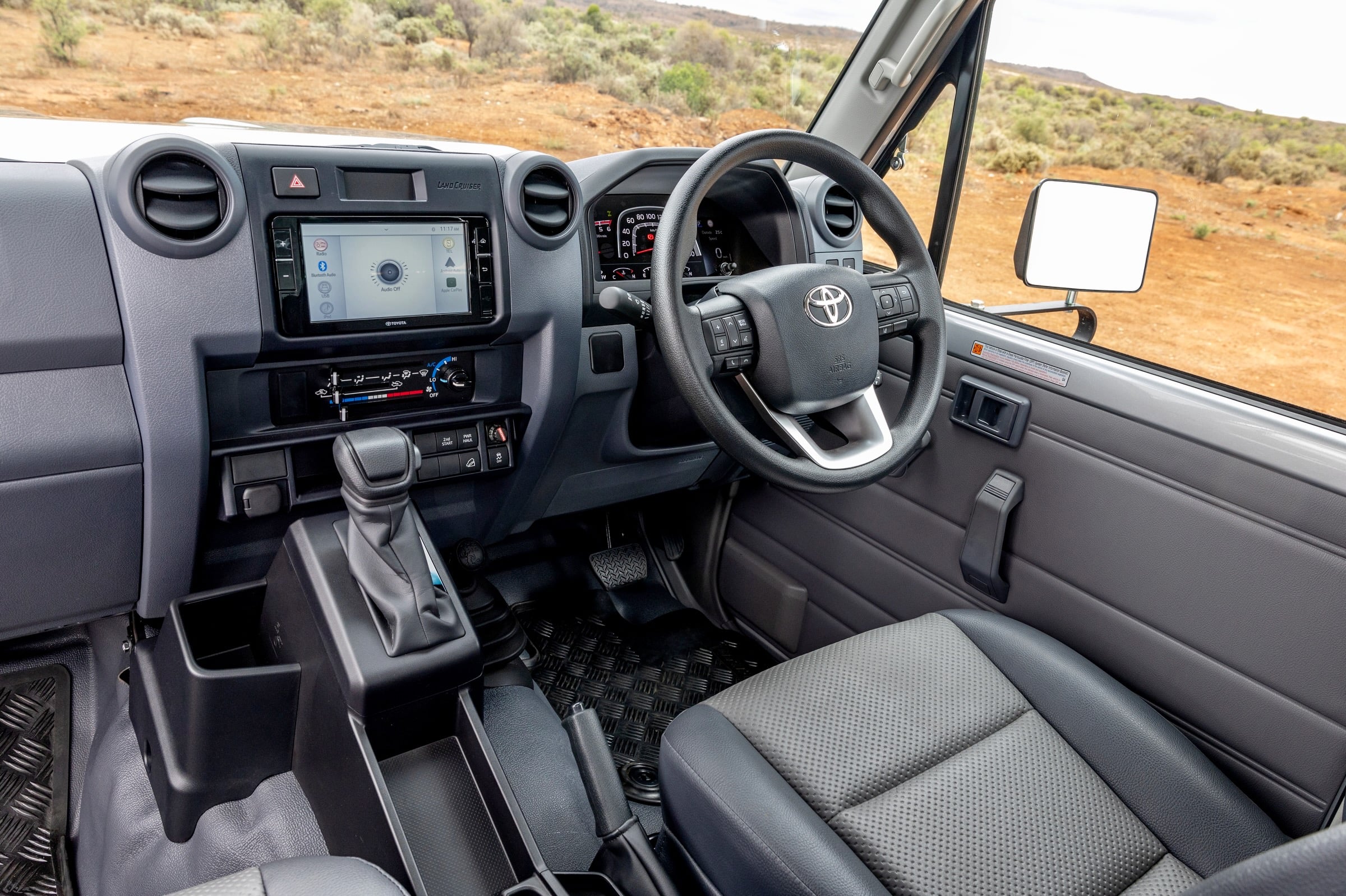
It’s fair to say the Toyota LandCruiser 70-Series subscribes to the minimalist philosophy of interior design. Seats in vinyl (WorkMate) or cloth (GXL) trim, air conditioning and all-weather floor mats is about it, though the GXL does get carpeted floors.
There’s now a 6.7-inch touchscreen infotainment system with USB charging ports, AM/FM radio, Bluetooth and wired smartphone mirroring (Apple CarPlay and Android Auto) available, though only a two-speaker stereo for your entertainment.
1
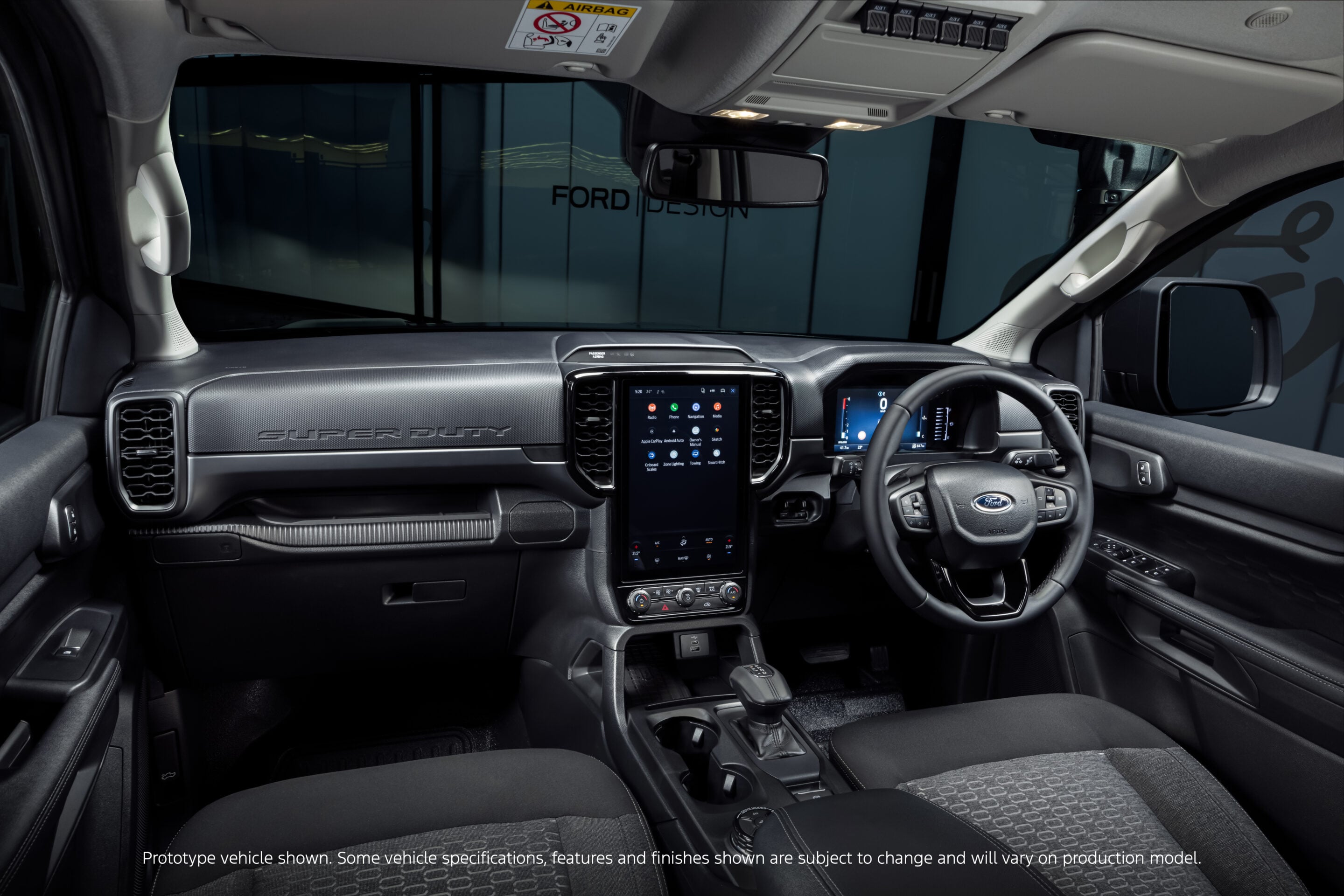
Ford will offer the usual SYNC4 infotainment system on a large portrait touchscreen with its wireless smartphone mirroring, though it’s not yet clear what regular Ranger spec level the Super Duty will align with in terms of satellite navigation, digital radio and the like.
By most standards the rest of the cabin is fairly basic, with vinyl floor mats and manually adjustable cloth seats (eight-way driver, four-way passenger). The XLT that arrives later will have a few more frills, but the Super Duty, like the LC70, is primarily aimed at work, not play.
1
Towing and Payload
This is why the Ford Ranger Super Duty and Toyota LandCruiser LC70 exist, to carry and tow heavy stuff across all manner of terrain. It’s also here that Ford has decided to comprehensively one-up Toyota.
The LC70 can tow a max of 3500kg braked and its Gross Combined Mass (GCM) is such that its maximum payload remains unaffected even when hauling.
The same can’t be said of the Ranger, partly because its maximum braked towing capacity is a whopping 4500kg. At this maximum the payload is reduced to under a tonne, but when driving unhitched the Super Duty’s payload approaches almost two tonnes thanks to the 4500kg GVM.
One bit of tech you won’t find in the Toyota is onboard scales, accessed through the infotainment screen to estimate payload weight as items are added. For the LC70, you’ll need to find a weighbridge.
| Ford Ranger Super Duty | Toyota LandCruiser LC70 | |
|---|---|---|
| Kerb Weight | 2518-2675kg | 2130-2185kg |
| Gross Vehicle Mass | 4500kg | 3510kg |
| Max Payload | 1825-1982kg | 1325-1380kg |
| Max Braked Towing | 4500kg | 3500kg |
| Gross Combined Mass | 8000kg | 7010kg |
| Payload at Max Towing | 825-982kg | 1325-1380kg |
1
Powertrains
Plenty lamented the loss of the 4.5-litre V8 turbodiesel in the Toyota LandCruiser LC70, but the reality is the four-cylinder is a superior engine in all respects bar perhaps soundtrack. Available with either a six-speed automatic or five-speed manual, it produces 150kW/500Nm, though the manual is limited to 450Nm.
Making the Ford Ranger Super Duty’s EU6-compliant has cost it some 30kW (dropping to 154kW), but torque remains at 600Nm with a 10-speed automatic the only available gearbox. Extra cooling has also been added.
Both cars use a 130-litre fuel tank for extra range but while the LandCruiser claims 9.6L/100km on the combined cycle for the LC70, Ford has yet to provide a claim for the Ranger and isn’t duty bound – pardon the pun – to do so as it’s classified as a light truck.
| Ford Ranger Super Duty | Toyota LandCruiser LC70 | |
|---|---|---|
| Engine | 3.0-litre V6 turbodiesel | 2.8-litre four-cylinder turbodiesel |
| Outputs | 154kW/600Nm | 150kW/500Nm (manual 450Nm) |
| Gearbox | 10-speed automatic | Six-speed automatic/five-speed manual |
| Fuel consumption | N/A | 9.6L/100km |
| Fuel tank | 130 litres | 130 litres |
Safety
You might not know to look at it, but the Toyota LandCruiser LC70 is fitted with Toyota’s latest active safety equipment including autonomous emergency braking with pedestrian and cyclist (daytime only) detection, speed sign assist and lane departure warning.
However, while the dual-cab has front driver and passenger airbags, only the single-cab has curtain and driver’s knee airbags in order for it to pass the safety requirements of its predominantly fleet customer base.
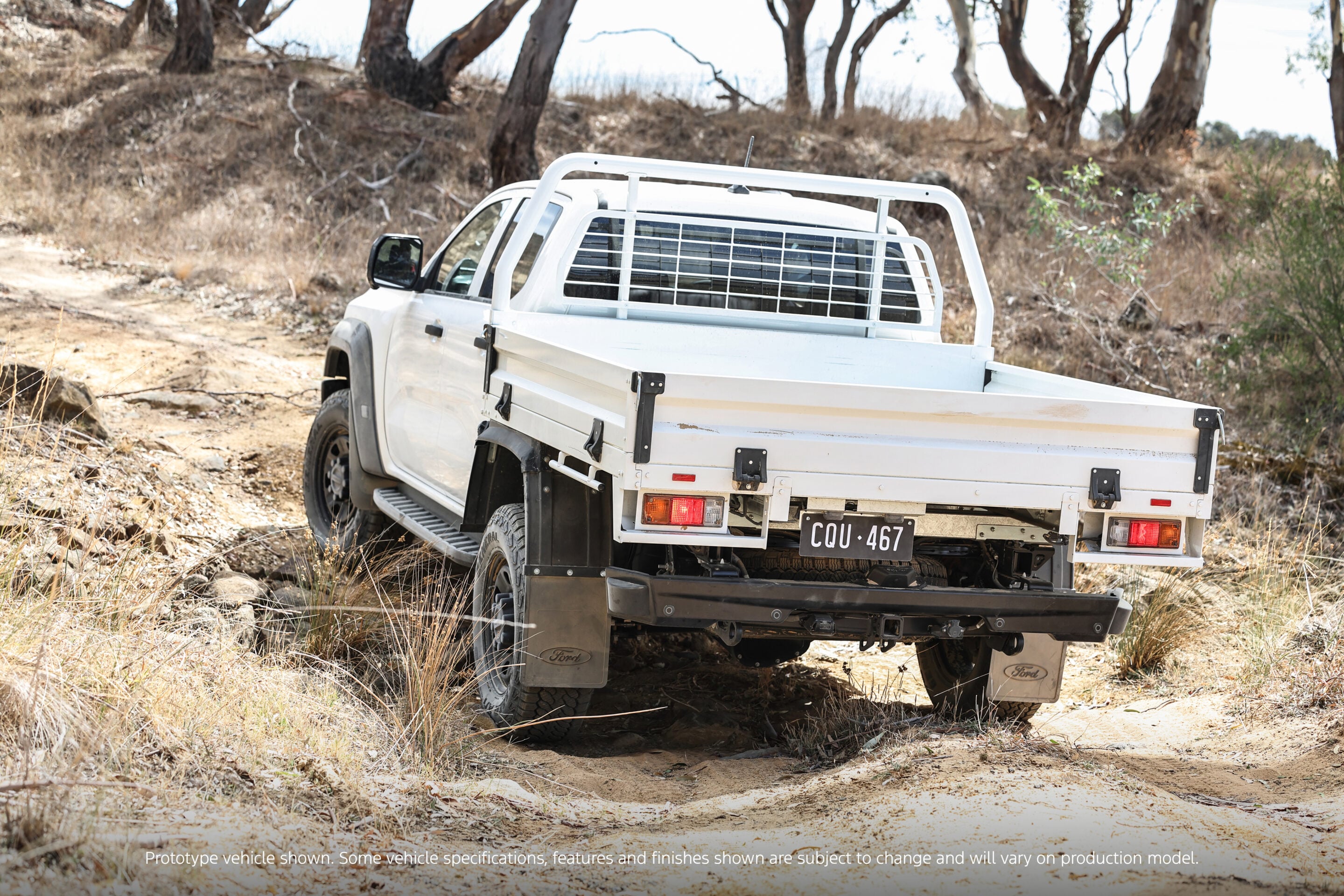
Ford has not yet confirmed safety specifications for the Ranger Super Duty but we expect that it will feature the full complement of airbags – nine in total – as well as all the active safety equipment including adaptive cruise control, autonomous emergency braking, lane keep and departure warning, blind-spot monitoring and much more.
1
Driving
There are some questions here as we haven’t yet driven the Ford Ranger Super Duty, though it’s not a huge stretch to imagine it’ll drive in a relatively similar manner to the standard Ranger V6.
However, will its dynamics hold up with the substantial increase in weight? Will the steering suffer controlling 33-inch tyres? Perhaps more important than its dynamics for the target market, how will the 3.0-litre V6 turbodiesel cope hauling up to eight tonnes?
It’s still likely to drive better than the Toyota LandCruiser LC70, with its sluggish performance, slow steering, ponderous handling and choppy ride. That all sounds harsh, but on-road refinement isn’t the 70-Series’ strongpoint and given its popularity, it seems that’s just how its customers like it.
Off road
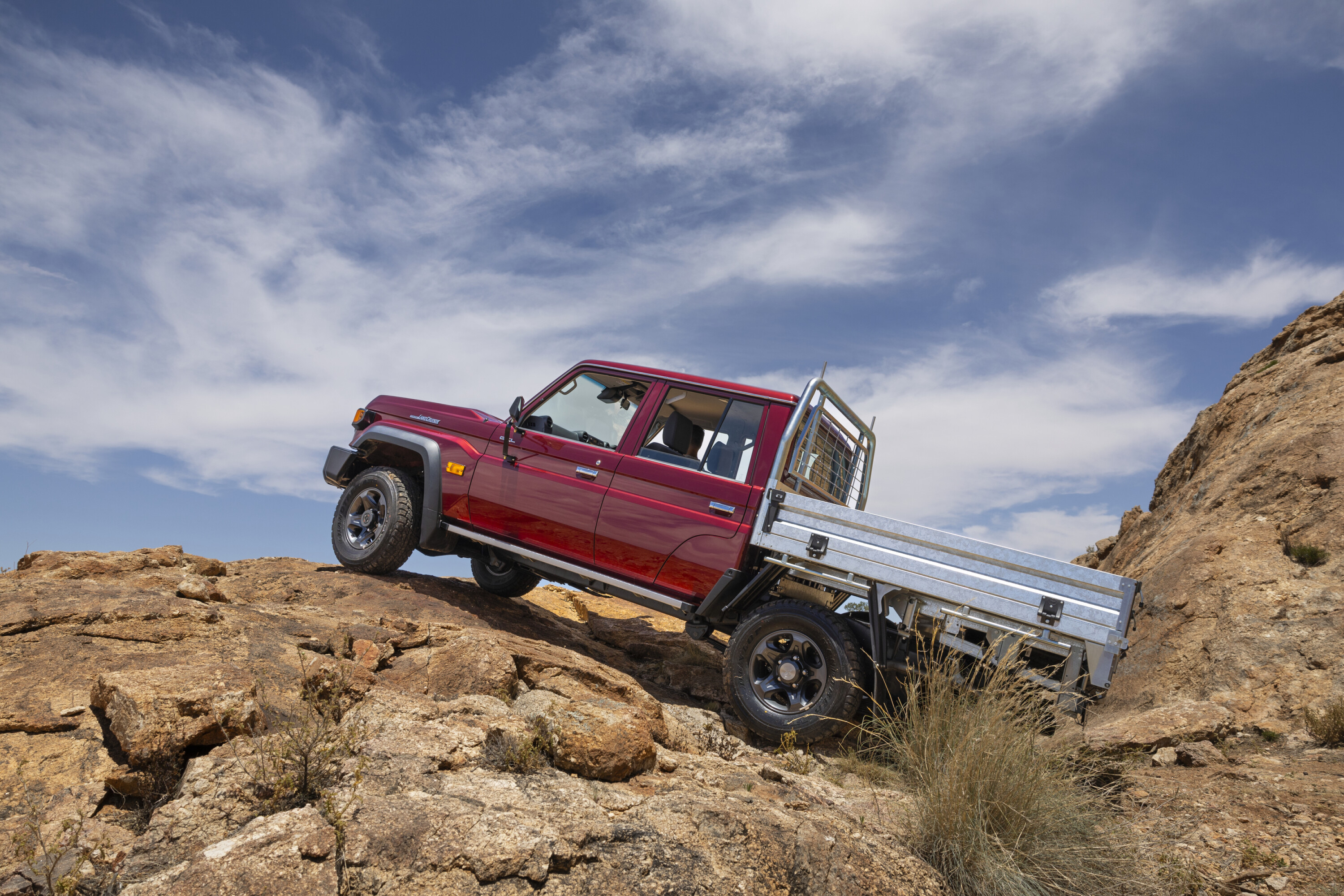
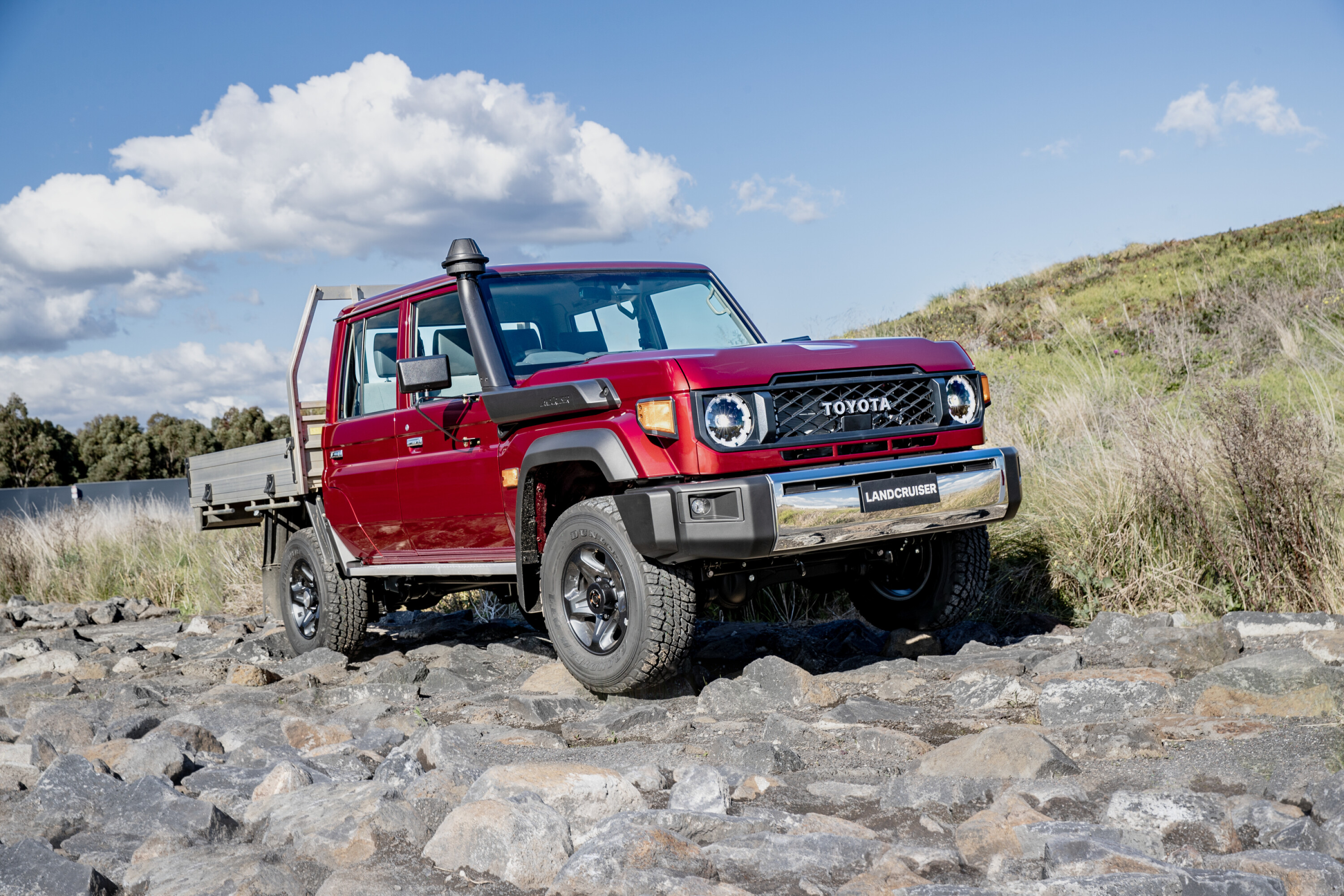
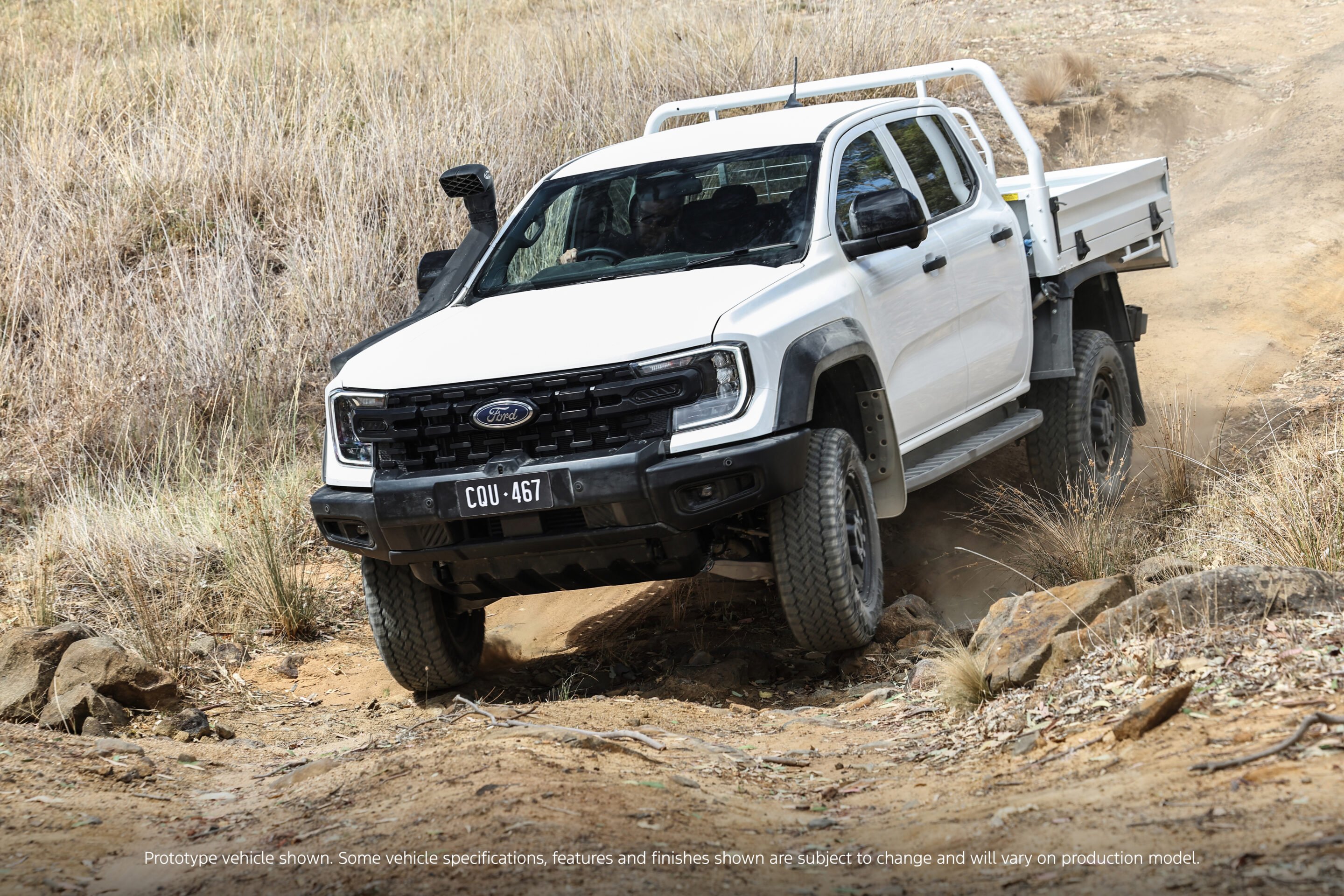
With standard snorkels, dual diff locks and around 300mm of ground clearance, there aren’t too many places the Ford Ranger Super Duty and Toyota LandCruiser LC70 will fail to take you.
The Ranger offers 299mm ground clearance as a single cab, 297mm as a super cab and 295mm as a double cab, though an 850mm wading depth maximum is common to all and there is stronger underbody protection, upgraded axles and thicker driveshafts.
Toyota doesn’t claim a wading depth for the LC70, but the WorkMate has 317mm of ground clearance and the GXL 302mm. One potential hurdle for the LandCruiser is the rear track is around 100mm narrower than the front, so won’t always happily follow the same wheel ruts.
1
The take-outs
The Toyota LandCruiser LC70 will continue to remain extremely popular. Its loyal customer base love it for its rugged simplicity and no-frills charm, so to criticise for lacking X and Y is to miss the point somewhat.
However, the volume of pre-orders received suggests the Ford Ranger Super Duty will soon have a substantial fan club of its own. It’s a unique offering in the market thanks to its uprated towing and hauling capabilities while retaining modern conveniences.
We’ll find out for sure how the two compare when the Ford launches in early-2026.
1
Follow WhichCar/Wheels on Google
Click the button below to make WhichCar by Wheels a preferred source for your news.