Features

Gallery 1
If ever there was a pivotal decade for BMW, then the late 1950s was it. Bowed and cowed by the ravages of World War II, the Bavarian carmaker had seemingly missed Germany’s Wirtschaftswunder (the economic miracle) that was in full swing and brought not only economic stability, but outright prosperity, to a country recovering from having lost two world wars in the space of three decades.
BMW was especially hit hard following the end of World War II. As a major supplier of aircraft engines to Germany’s Luftwaffe, BMW was banned from producing aircraft and motorised vehicles, both cars and motorbikes, immediately after the war. To survive, the once-proud Bavarian manufacturer resorted to making bicycles, household hardware, and kitchen utensils.
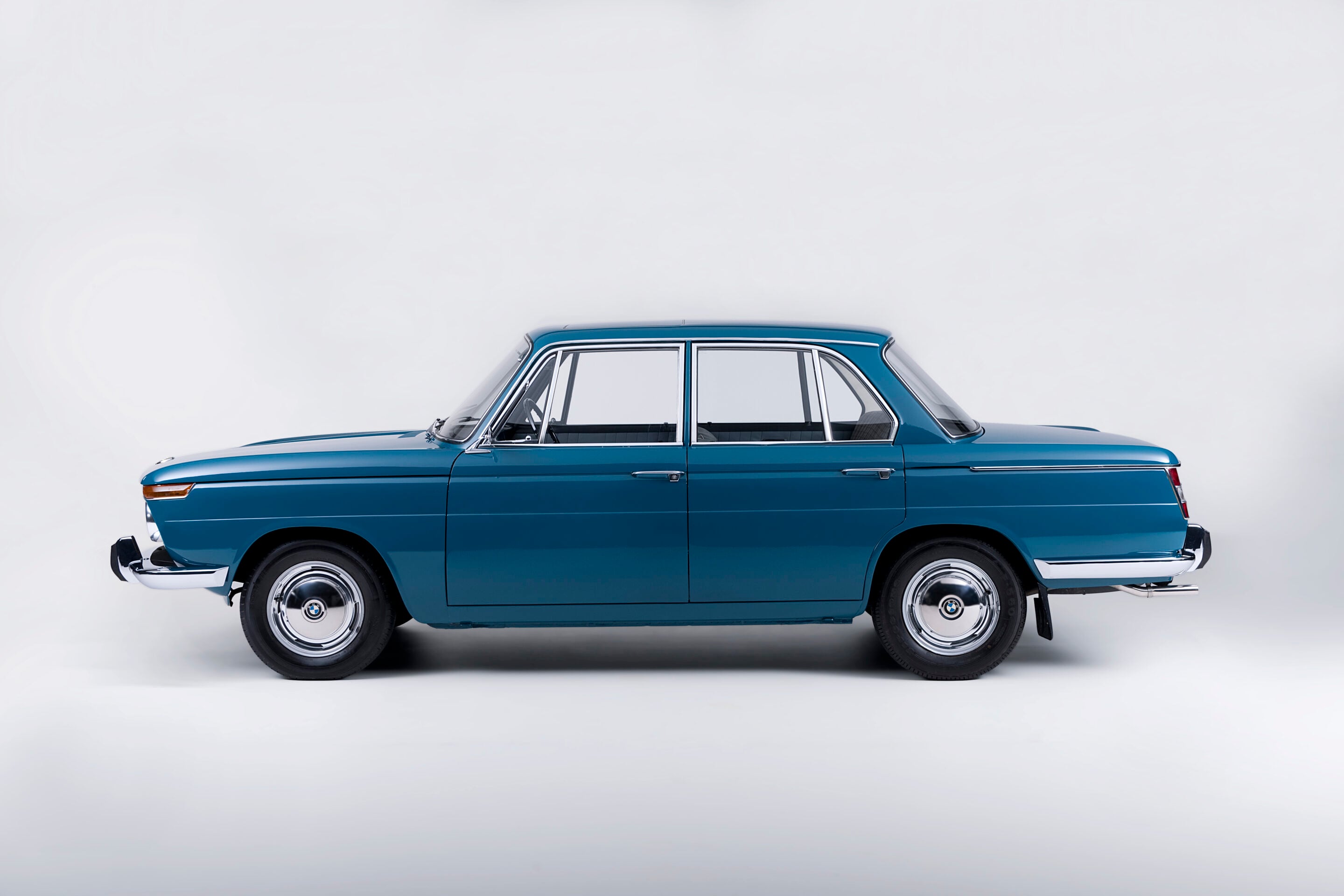
The ban on motorised vehicles was lifted by 1948 and BMW was once again manufacturing motorbikes. Cars followed in 1952, the first post-war model the BMW 501, a series of luxury saloons, coupes and convertibles with dated styling and an expensive price tag.
2
Cheaper cars followed in 1955, including the quirky – but affordable – BMW Isetta microcar, built under license from the Italian brand. The stunning 507 roadster was launched – primarily for the US market – in 1956 with a price tag of close to DM30,000. Even then, with the 507’s meticulous construction, high production costs saw BMW lose money on every 507 sold, and in 1959 the German automaker was facing financial ruin after posting an annual loss of DM15 million.
That forced the company, at the behest of its creditors, to agree to a deal in principle for Daimler Benz, parent company of Mercedes-Benz, to take over the ailing Bavarian.
As BMW revealed years later, “Sales problems in the automobile and motorcycle business had put the company in serious difficulties.
“At the Annual General Meeting in December 1959, the sale of the company to Daimler Benz AG appeared to be already a foregone conclusion. However, it failed with a last-minute reprieve as a result of committed small shareholders putting up spirited resistance to the restructuring plan that was part of the takeover.”
Among those “small share holders”, Herbert Quandt and his half-brother Harald took a majority stake in the ailing company and under their leadership, saved the proud Bavarian company from the ignominity of falling into Stuttgart’s hands.
2
The Quandts’ investment bought the company time to reshape its future while the BMW 700, launched in 1959, provided an unlikely saviour, the small rear-engined compact selling in steady if unspectacular numbers.
But behind the scenes, a shift was taking place as the company sought to tap into the increasingly lucrative market for mid-size cars, a shift driven by West Germany’s growing prosperity.
Work had already begun on the car that would define BMW’s future – and present – when the Quandts took over the reins. But under Herbert Quandt’s leadership, an injection of fresh engineering and management talent would pay dividends that set the company on a path to its present-day success.
A new engineering team, led by Fritz Fiedler, began working on what would become the BMW 1500. Eberhard Wolff was in charge of chassis design while Wilhelm Hofmeister led the styling and design team and Alex von Falkenhausen went to work on the 1.5-litre, four-cylinder engine that would go on to
become the M10, the legendary cornerstone of BMW’s line-up for decades.
BMW didn’t seek to redefine the automotive world with the 1500, opting instead for a conventional approach and focusing its energies instead on quality, reliability and most importantly, saleability. Wolff favoured a unibody construction – which had debuted on the BMW 700 – for the 1500 with front disc brakes and a MacPherson strut suspension setup up front. Out back, he opted for a less conventional independent rear suspension with coil springs and semi-trailing wishbones that pivoted from a cross beam that also hosted the diff housing.
2
Von Falkenhausen’s M10 1.5-litre wasn’t groundbreaking either but slanting it at a 30-degree angle to the right of vertical was. That allowed the design team the freedom to play with the 1500’s shape and here Hoffmeister had the presence of mind to bring in Giovanni Michelotti, the Italian who had earlier penned the 700 for the German manufacturer.
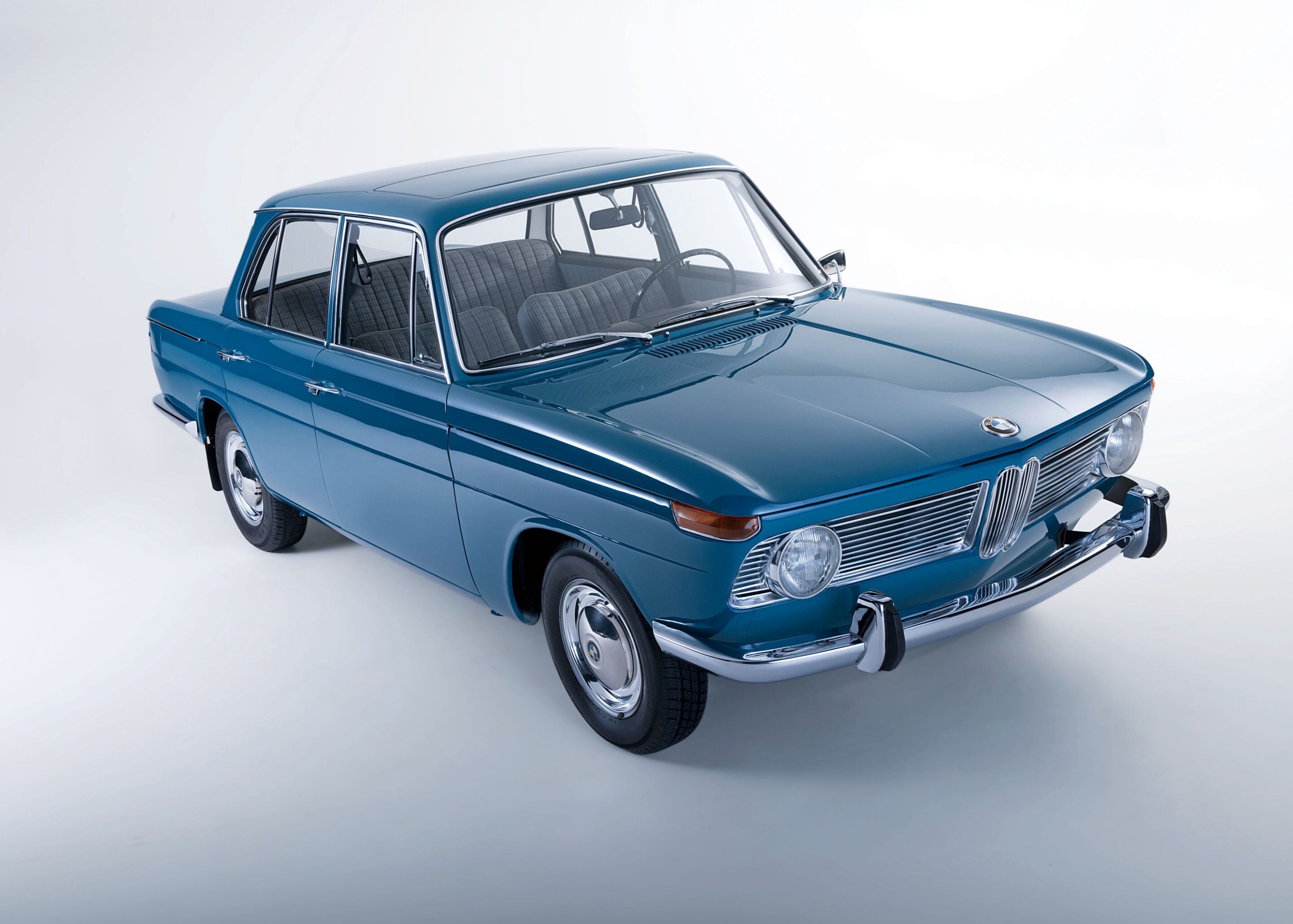
While Hofmeister is credited as the designer of the 1500, it was Michelotti’s work that shaped BMW’s newest sedan including what would go on to define every BMW for decades, the ‘shark nose’ front with twin grilles flanking the brand’s signature, nieren (kidneys). So immediately enduring were those elements, they remained firmly in place on nearly every BMW well into the 1990s.
Hofmeister, for his part, contributed another design element that has passed into legendary status and not only underpinned every BMW since, but has also been widely copied by nearly every manufacturer – the ‘Hofmeister Kink’ – a forward-angled rake at the base of the C-pillar that added strength and rigidity, as well as aesthetic harmony.
To be fair, the Hofmeister Kink had been around for years, featuring on several American cars from the 1940s and ’50s, but it was the German who inspired its name, a name that has stuck to this day.
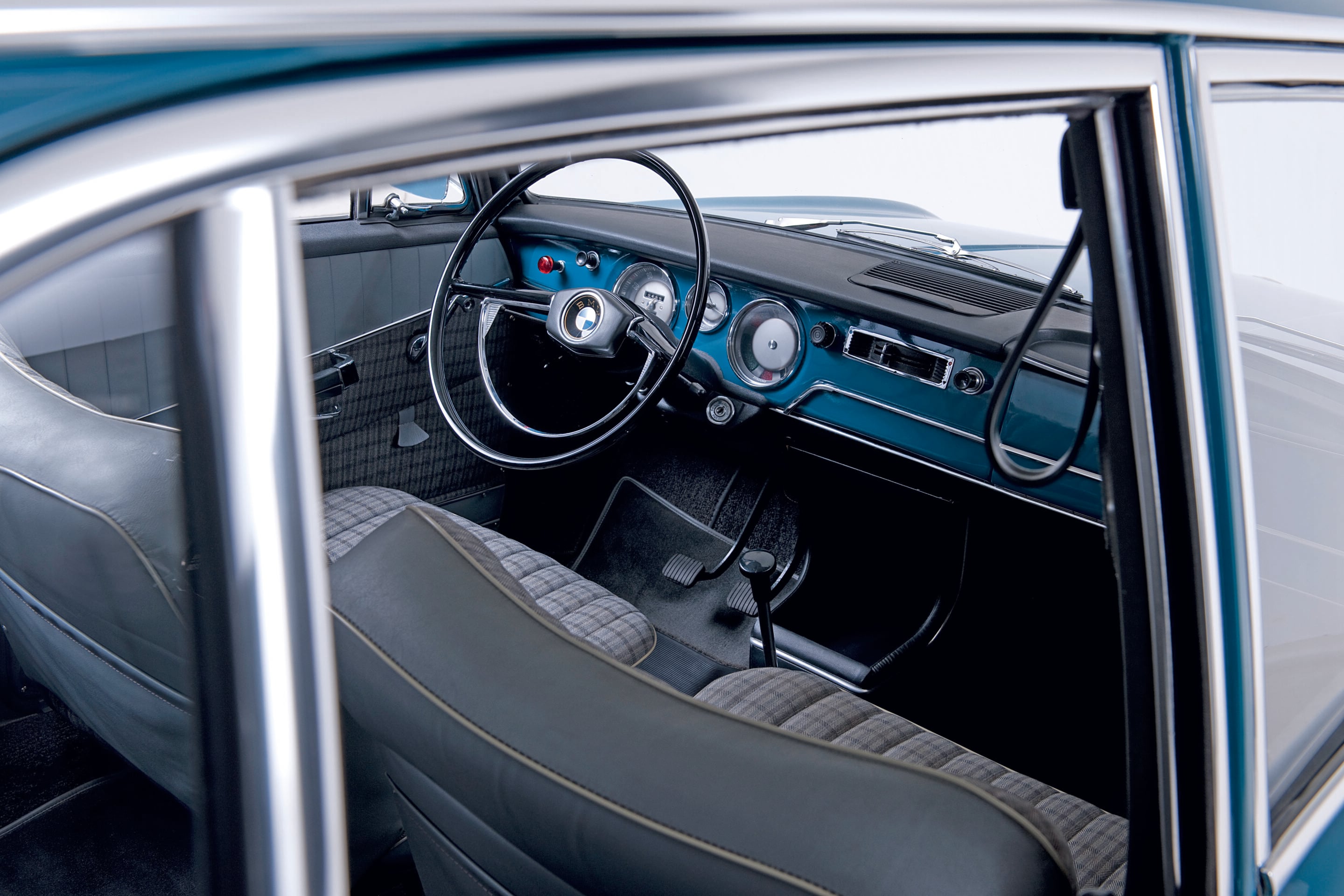
Inside, BMW had opted for plush modernity, with herringbone cloth trimmed individual bucket seats and a clean body-coloured painted dash with chrome accents. A slender two-spoke steering wheel featured a chromed horn push while the dials (also ringed in chrome) played into the 1500’s sporting aspirations.
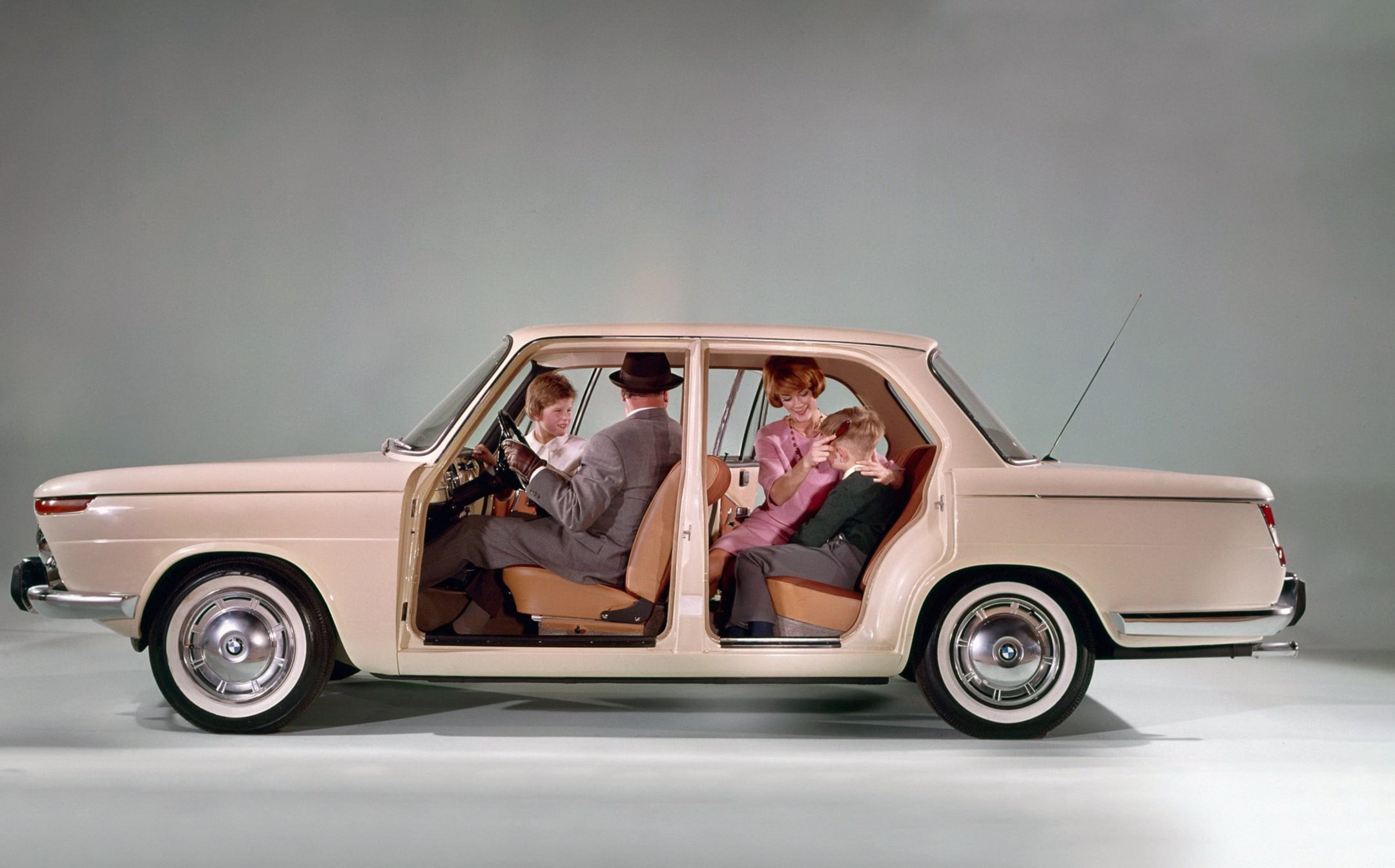
Cabin proportions were generous, adding to the premium air BMW was looking for, while the 1500’s big glasshouse afforded decent visibility all round. A massive boot offered more than enough space for a family of five’s luggage.
2
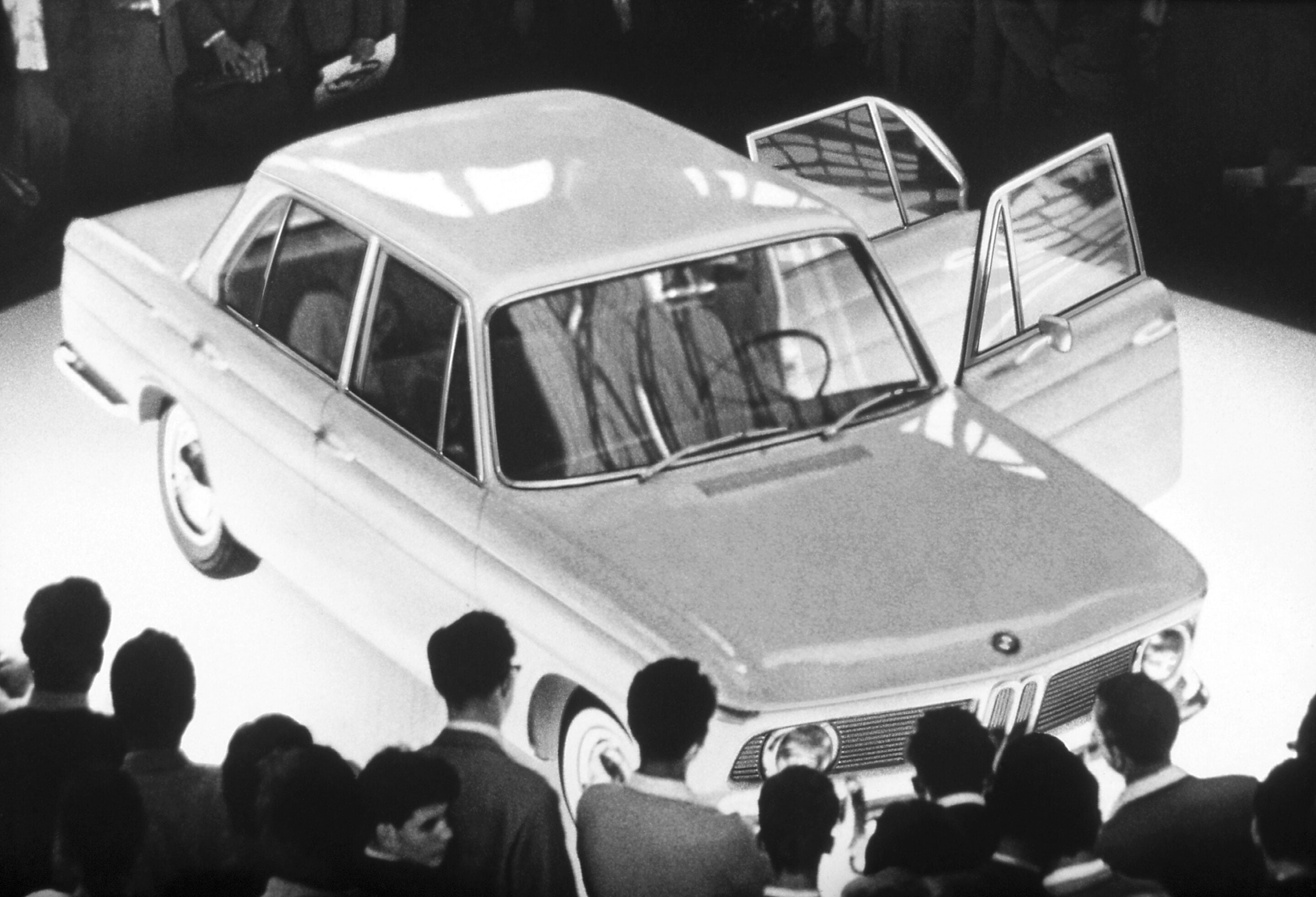
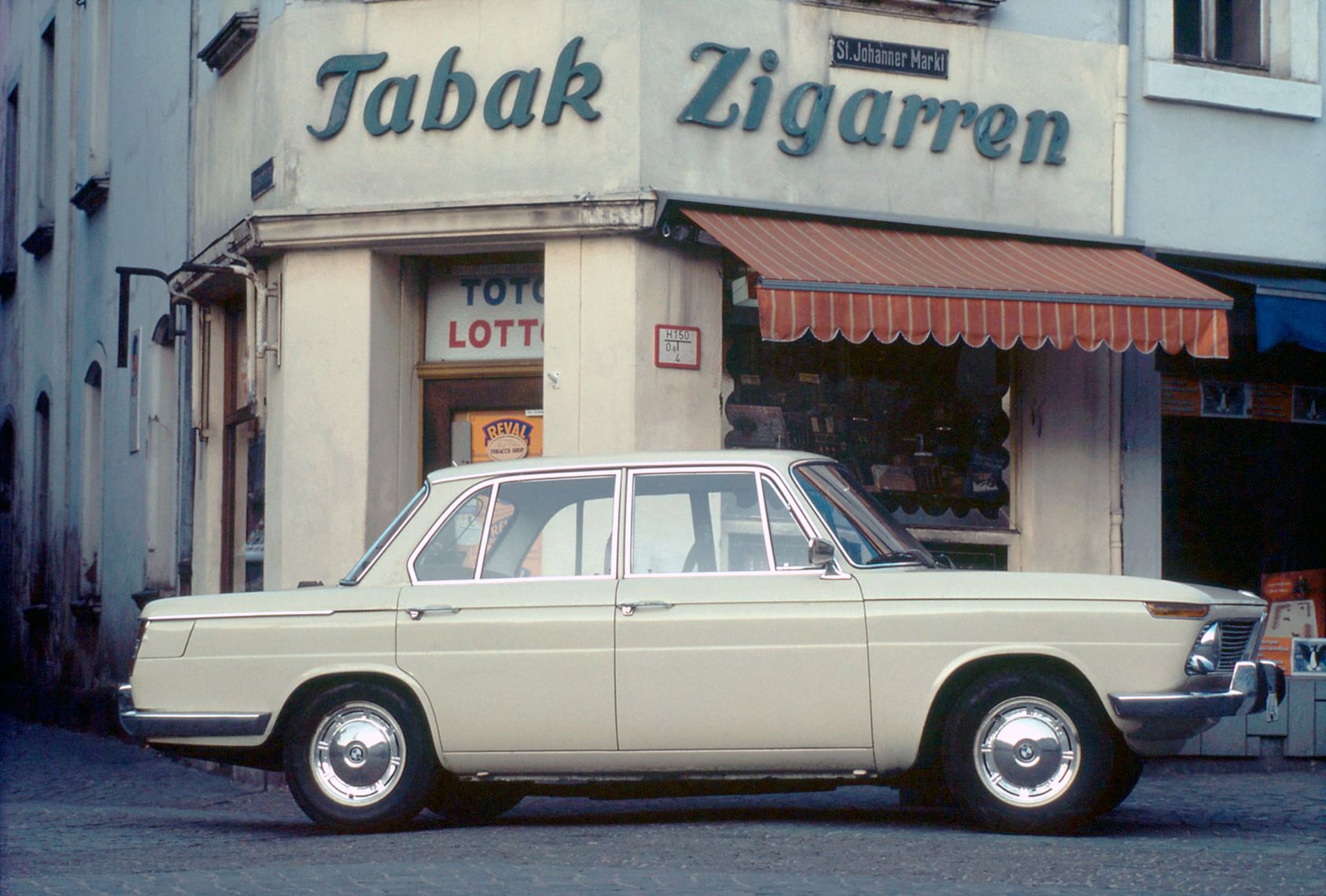
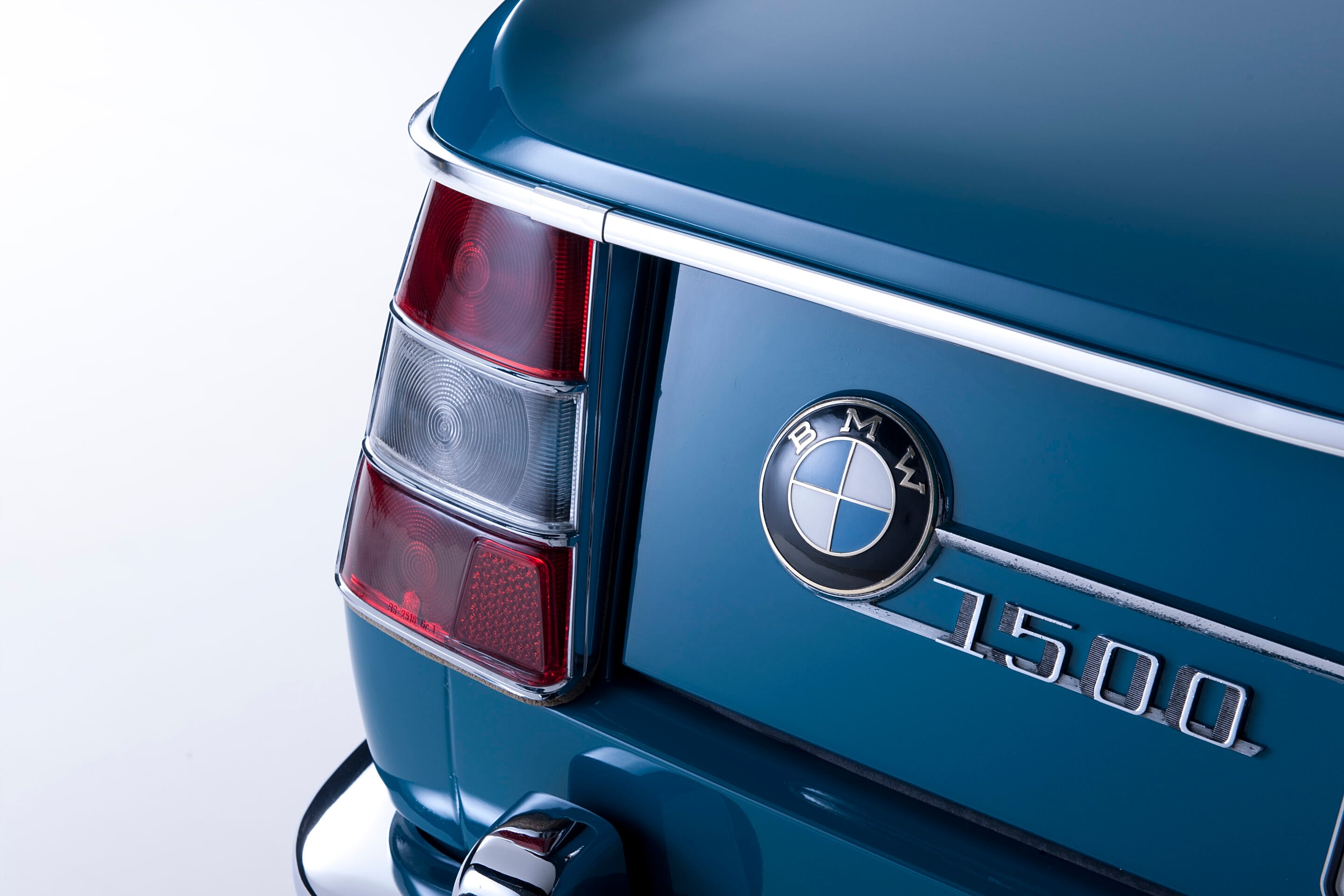
The covers came off at the 1961 Frankfurt motor show and the response from the public was immediate. Priced at DM9000 at launch, BMW was soon tripling production – from the initial 50 cars per day – for the svelte four-door.
It garnered rave reviews from the motoring press too, who praised its performance and handling as well its modern design.
Wheels’ 1963 review was effusive in its praise: “In design… the sleek lines manage to be contemporary without copying the corvair mode. The car looks modern yet is easily and immediately identifiable and should wear well thanks to a minimum of gee-gaws and maximum of pure styling. Also, the
stylists managed to incorporate the traditional twin-oval grille into a modern horizontal pattern.”
BMW’s new 1.5-litre came in for praise too, as did its sporty handling: “This powerplant is one of the most pleasant things about the BMW 1500… two hours of virtual full-bore action down an autobahn resulted in nothing but 150 miles of ground covered with no fuss or bother.
“Underway, the BMW likes fast bends better than tight ones and will track sweeping curves with the same on-rails feeling it displays along the straight; side winds be damned. It leans on really tight turns if pushed very hard and will, finally, skip a bit at the rear if you insist, but that only comes with a driving style BMW has not planned.”
With a winner on its hands, BMW broke even in 1963 before turning a profit the following year, paying its shareholders dividends for the first time in 20 years.
3
But one thing missing in this story to date was the term Neue Klasse (New Class) as a noun for BMW’s series of new cars. While it’s true that brochures and literature referred to ‘a new class of car’, it was not until 1964 when BMW’s marketing department capitalised the two-word slogan for use in advertising that the Neue Klasse as we know it today, was born.
Simply, BMW was spruiking its ‘new class’ of car to a buying public clamouring for a touch of premium flair wrapped in a sleek body and with the go to match the show.
Von Falkenhaus had not been resting on his laurels either, and in 1963 BMW added the sportier 1800 to the Neue Klasse range, featuring an uprated and larger 1.8-litre inline-four based on his M10 building blocks.
Power and torque had increased to 67kW and 144Nm (up from the 1500’s 59kW and 118Nm) resulting in a top speed in excess of 160kmh.
The brawnier 1.8-litre wasn’t the only new mill in the Neue Klasse range, with a 1.6-litre making its debut in 1964 in the BMW 1600, the replacement for the 1500.
The Neue Klasse model onslaught continued in 1966, BMW releasing the 1600-2 (later shortened to just 1602), a two-door version of the 1600 sedan. That same year, the new luxury flagship BMW 2000 made its debut and promised 74kW and 157Nm from its newly worked M10 2.0-litre unit.
That led to the launch of what is now the legendary 2002Tii in 1968, almost by accident. BMW’s product planning chief Helmut Bönsch and M10 godfather von Falkenhausen had both – independently – crammed the 2.0-litre from the 2000 into their personal BMW 1602 two-door company cars. A good idea turned into a great one when both realised what the other had done and hatched a plan to present the progenitors of what would become the 2002 to BMW’s board of directors. Greenlit, the 2002 was an instant hit, and in Tii form, gave the first inklings of what would eventually become the M sub-brand.
1
As Wheels wrote of the pocket-rocket, “If you said you’d driven the world’s top 10 cars, then we’d ask if they included the BMW 2002… and if you said ‘no’, then we’d have to suggest that your list was incomplete.
“This incredible little two-door Bavarian, with its no-nonsense styling, V-bomb performance and mono-rail handling, is exactly what true motoring is all about.”
The Neue Klasse line was nearing the end of its useful life by the mid-1970s and BMW’s new product lines including the 5 Series (in 1972) and subsequently 3 Series (1975) set the brand on the road to becoming a global luxury car powerhouse, in stark contrast to the abyss the company faced at the start of the 1960s.
The Neue Klasse might have been hastily born out of necessity, but its lasting legacy on not just BMW, but the automotive world, cannot be underestimated.
The neue Neue Klasse
1
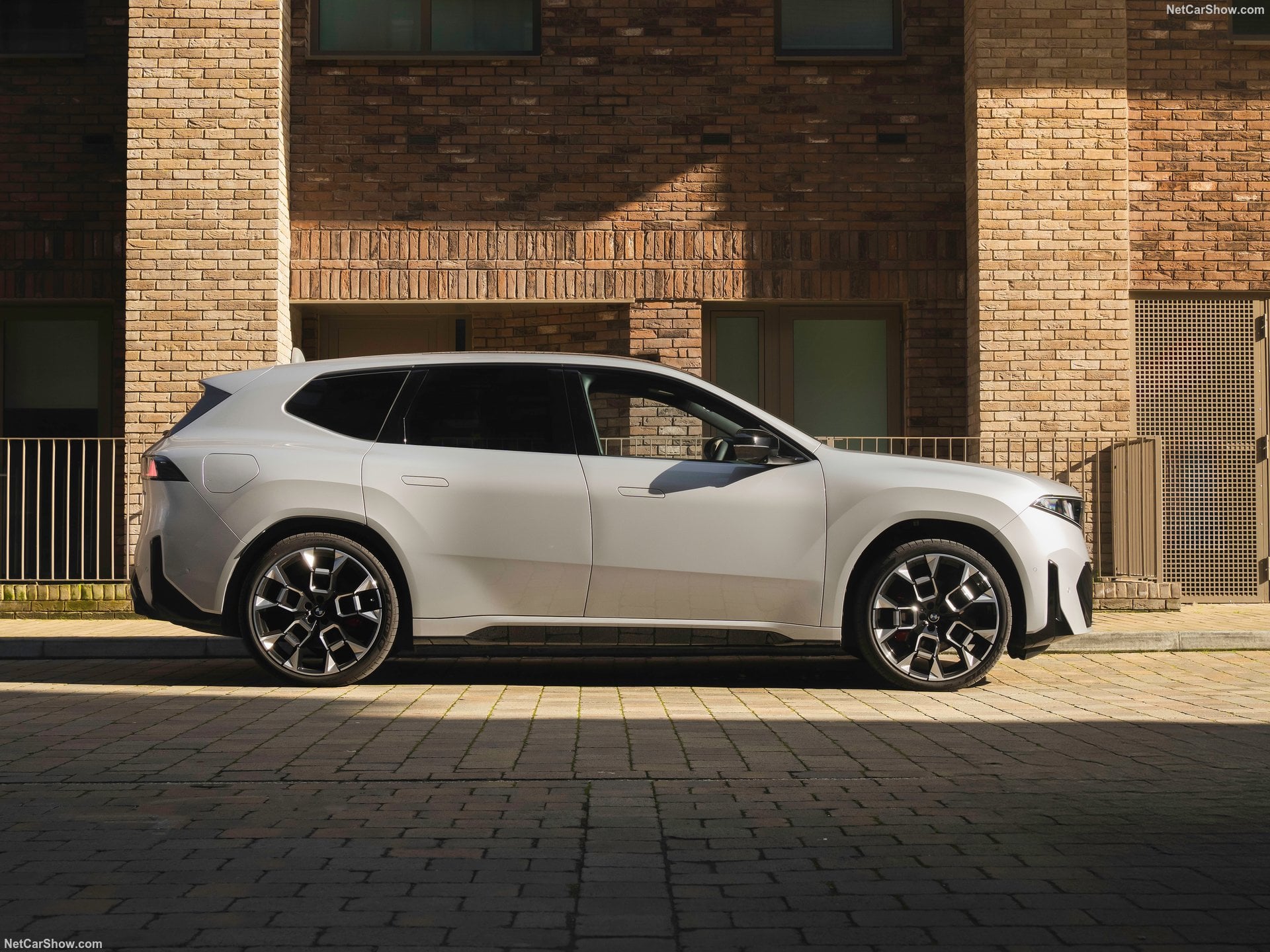
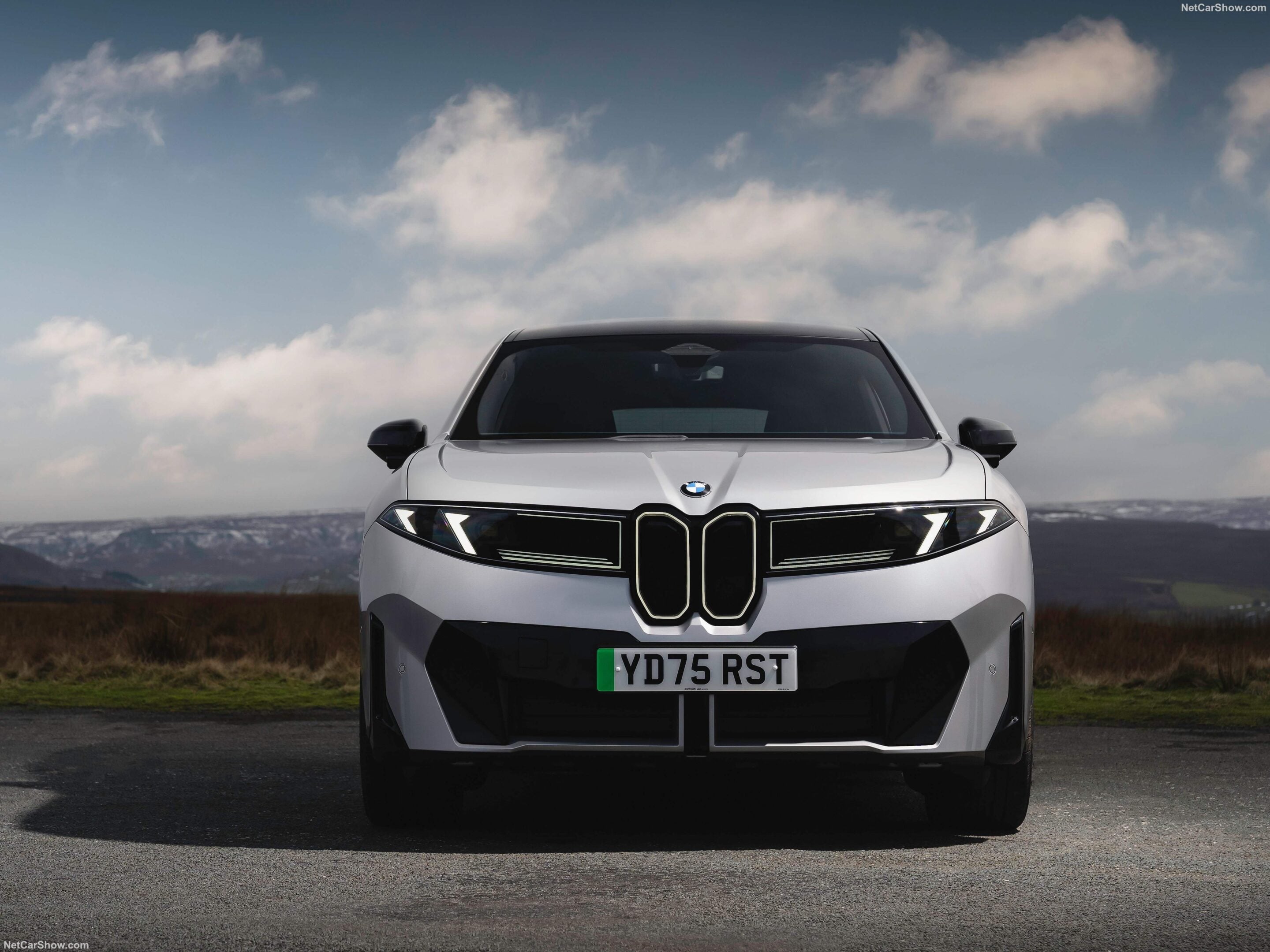
Looking to the past to guide the future is a double-edged sword. But that’s exactly what BMW has done with its modern-day interpretation of Neue Klasse, the name underpinning the brand’s electric future.
BMW makes no apologies for borrowing from its rich heritage. In its own words: “The Neue Klasse is not just a new car. It represents the redefinition of the BMW brand and thereby the whole new model generation being launched with the new BMW iX3. The Neue Klasse is the logical dawn of a new era of individual mobility for the BMW Group.”
BMW is promising around 40 new, or updated, electrified models by the end of 2027, an astonishing number in two years.
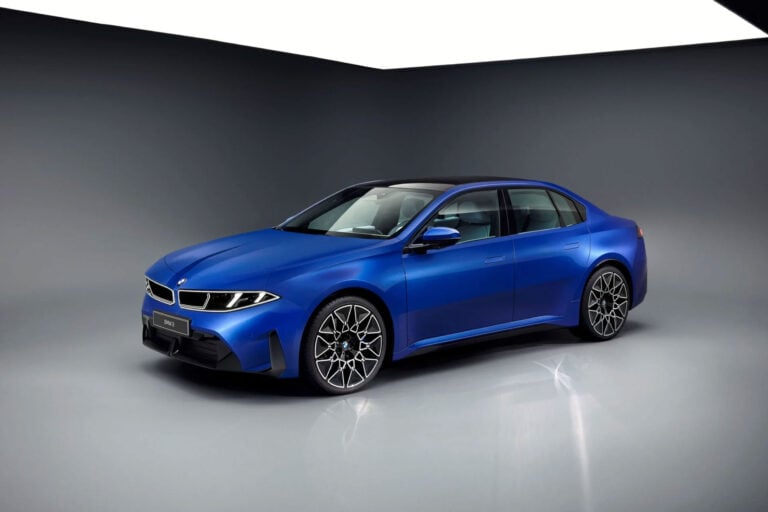
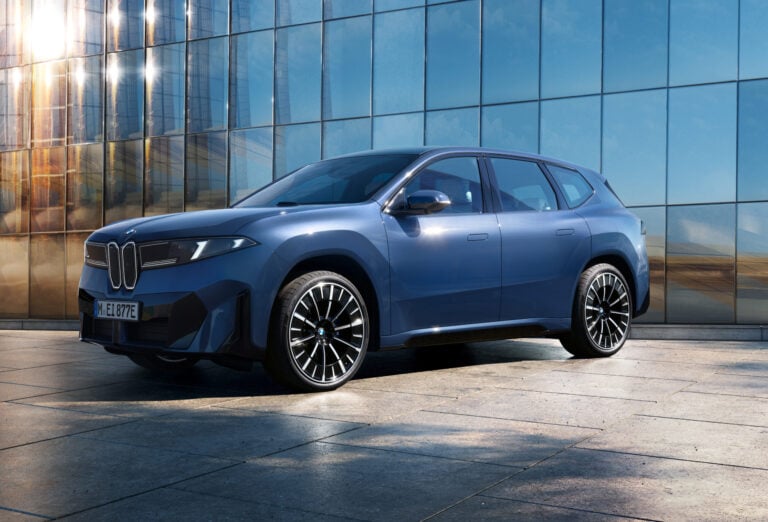
The BMW iX3 SUV got the new Neue Klasse (Neue Neue Klasse?) ball rolling in 2025 (mid-2026 in Australia) but the headline-grabber will undoubtedly be the i3 sedan, an electric version of the brand’s halo 3 Series range that will go on sale in late 2026 globally before landing in Australian dealerships in early 2027. It will be sold alongside petrol 3 Series models.
1
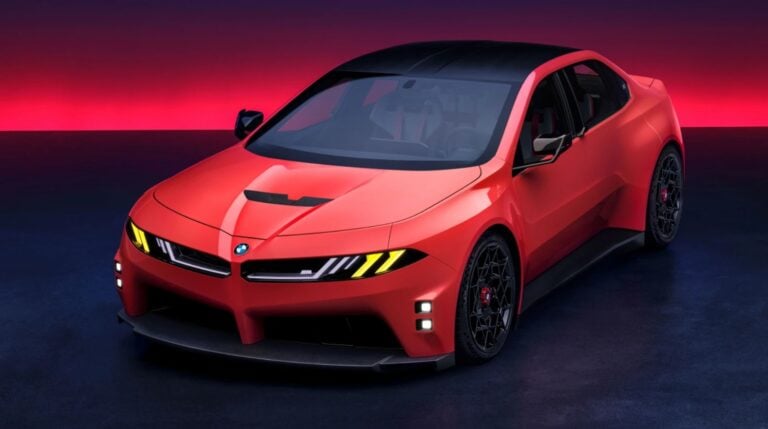
An electric M3, likely called i3 M is set to follow in 2027 and while BMW has remained tight-lipped about final specifications, it has promised to scale new heights in power and torque, setting a “new benchmark in the high performance vehicle segment”.
BMW is not just rebirthing a name that served it so well over 60 years ago, however. Instead, the new Neue Klasse range is an overhaul of how the German brand builds its cars, with electrification at the forefront.
It’s a significant rethink, one that will shape BMW’s future for the next decades. Just like the original Neue Klasse, then.
This story first appeared in the June 2026 issue of Wheels magazine, now on sale. Subscribe here and gain access to 12 issues for $109 plus online access to every Wheels issue since 1953.
Follow WhichCar/Wheels on Google
Click the button below to make WhichCar by Wheels a preferred source for your news.

We recommend
-
 News
NewsBMW unveils electric M3 Neue Klasse super sedan
Neue Klasse concept previews BMW M's first all-electric super sedan, complete with four motors, radical styling and more power than any M3 before it.
-
 News
NewsBMW reveals electric 3 Series with long range and fast charging
Neue Klasse-based BMW i3 sedan debuts with up to 900km range, 400kW charging capability and production locked in for Munich from 2026.
-
 News
NewsBMW iX3 launches Neue Klasse Era with 800km range and radical tech
All-new SUV debuts sixth-generation eDrive, 400kW charging and digital “superbrains” ahead of 2026 Australian arrival.