
Best Medium SUVs

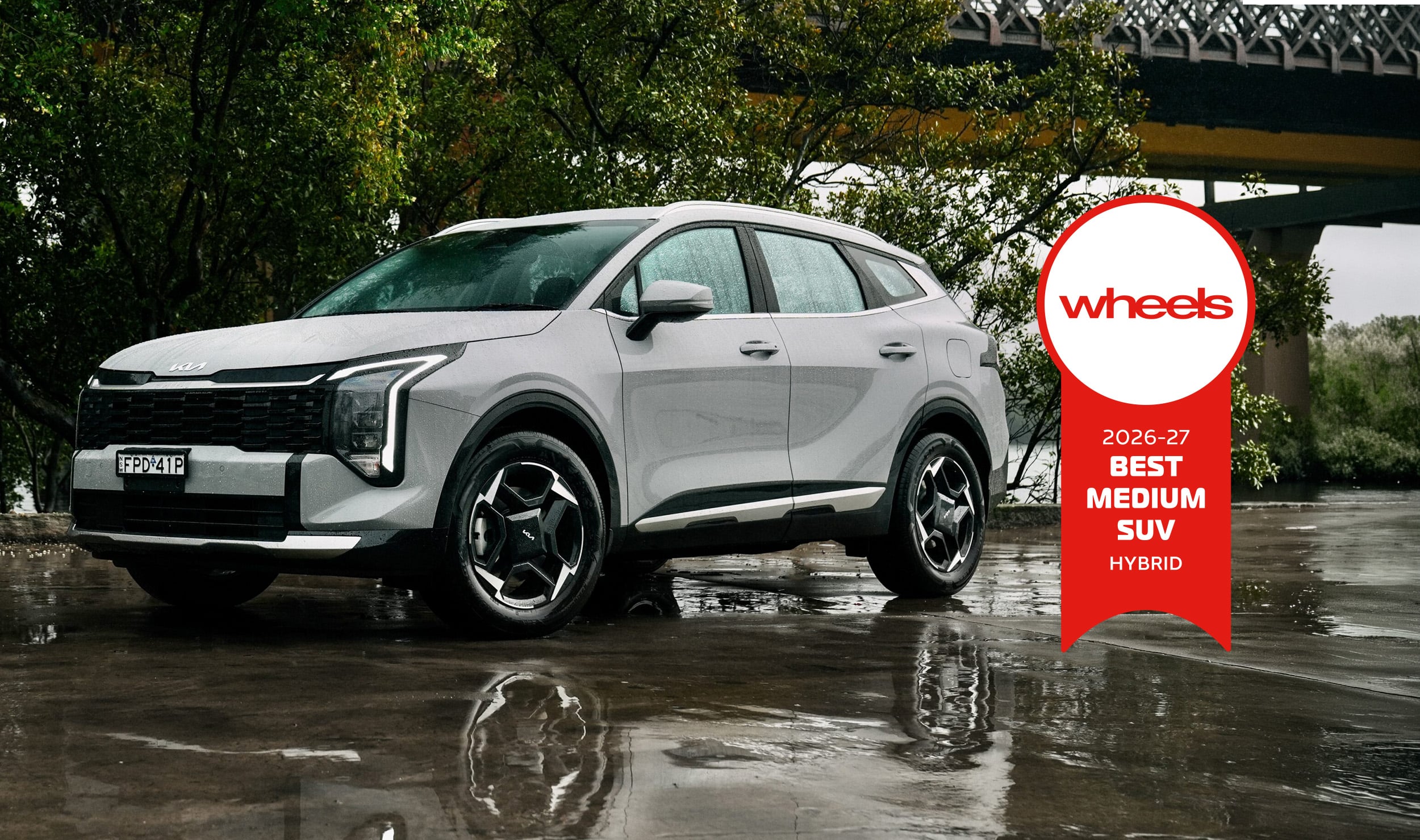
Gallery 1
Contenders
- BYD Sealion 6
- Chery Tiggo 7 Super Hybrid
- Geely Starray EM-i
- Honda CR-V e:HEV
- Hyundai Tucson
- Kia Sportage Hybrid
- Jaecoo J7 SHS-P
- MG HS Hybrid+ and Super Hybrid
- Mitsubishi Outlander PHEV
- Nissan X-Trail e-Power
- Toyota RAV4
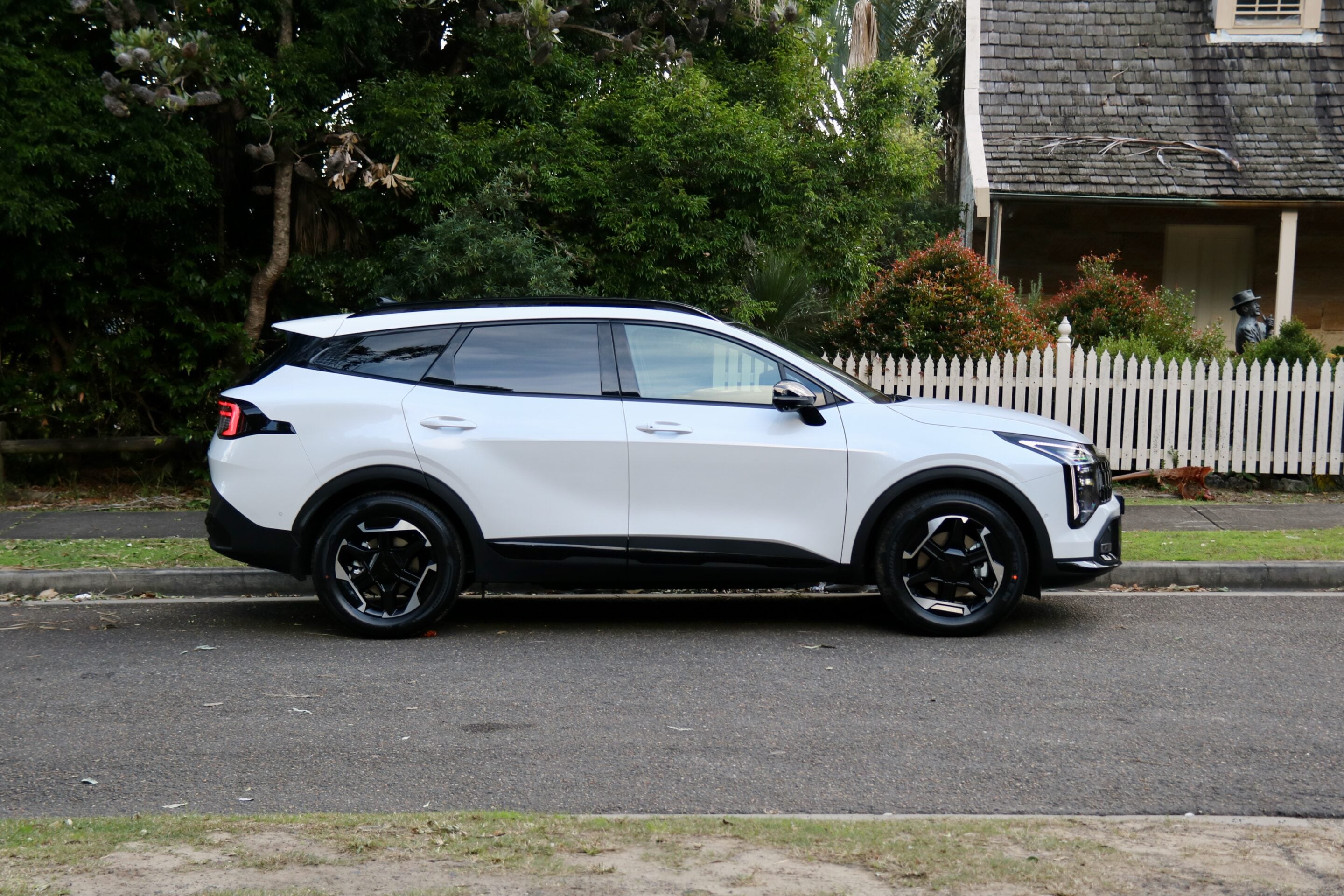
Kia Sportage Hybrid
16
Price: From $44,450 plus on-road costs
Drivetrains: 1.6-litre four-cylinder turbo-hybrid, six-speed automatic, 2WD or AWD
Outputs: 173kW/367Nm
Claimed combined fuel consumption: 4.9-5.3L/100km
Warranty: 7-year/unlimited km (car), 7-year/150,000km (EV battery)
Five-year service cost: $2613 (2WD) -$2666 (AWD)
| Driving | |
| Interior | |
| Practicality | |
| Overall value | |
Strengths
- Excellent ride and handling balance
- Big range of variants
- Practical and spacious inside
Weaknesses
- Expensive service costs
- Short service intervals
- Top-spec GT-Line is expensive
There was little wrong with the Kia Sportage before its recent facelift, but the updated model makes an already convincing package even stronger. Sharper styling and improved technology are welcome additions, although the most significant change is the expanded availability of hybrid power, giving buyers greater choice in one of the medium SUV segment’s best all-rounders.
The Sportage Hybrid range starts with the S FWD at $44,450 plus on-road costs, followed by the SX FWD at $46,450 and flagship GT-Line from $57,370. Equipment levels are generous throughout, with even the entry-level S including a 12.3-inch infotainment touchscreen, wireless Apple CarPlay and Android Auto, dual-zone climate control and a comprehensive suite of active safety technology.
It’s not the cheapest hybrid medium SUV, particularly against increasingly competitive Chinese rivals, but the Sportage counters with strong resale credentials and a polished driving experience. Kia Australia’s local suspension tuning delivers an excellent balance between ride comfort and body control, while nicely weighted steering makes it reassuring to drive around town and on winding roads.
Under the bonnet, Kia’s familiar 1.6-litre turbocharged four-cylinder petrol engine works alongside an electric motor and six-speed automatic transmission. Combined outputs of 173kW and 367Nm provide stronger performance than many competitors, including the 143kW Toyota RAV4 Hybrid.
Efficiency is equally impressive. Front-wheel-drive versions consume a claimed 4.9L/100km, rising to 5.3L/100km for all-wheel-drive variants. There’s no need for external charging, with the hybrid system automatically managing petrol and electric power and frequently switching off the combustion engine during urban driving.
Practicality remains a major strength. The 2755mm wheelbase provides generous rear legroom and headroom, while the broad cabin comfortably accommodates adults in both rows. Material quality is solid, with plenty of soft-touch surfaces, and the facelifted dashboard brings a more contemporary feel, particularly in higher grades.
Hybrid buyers don’t sacrifice luggage space, either. The 586-litre boot expands to an excellent 1872 litres with the rear seats folded. As with the closely related Hyundai Tucson, that’s actually more cargo capacity than the equivalent non-hybrid model provides.
Ownership coverage is reassuring, with Kia’s seven-year/unlimited-kilometre warranty complemented by seven years of capped-price servicing. Roadside assistance can also be renewed for up to eight years through eligible dealer servicing. Maintenance costs are less appealing, however, totalling $2613 over five years for front-wheel-drive models or $2666 for AWD versions. Service intervals are also relatively short at 12 months or 10,000km.
The Sportage Hybrid isn’t competing on price alone. Instead, it combines excellent fuel efficiency, strong performance, a spacious and practical cabin, mature road manners and comprehensive warranty coverage. Servicing costs are a drawback, but the facelift has further refined an already accomplished package, making it one of the most complete hybrid medium SUVs on sale.
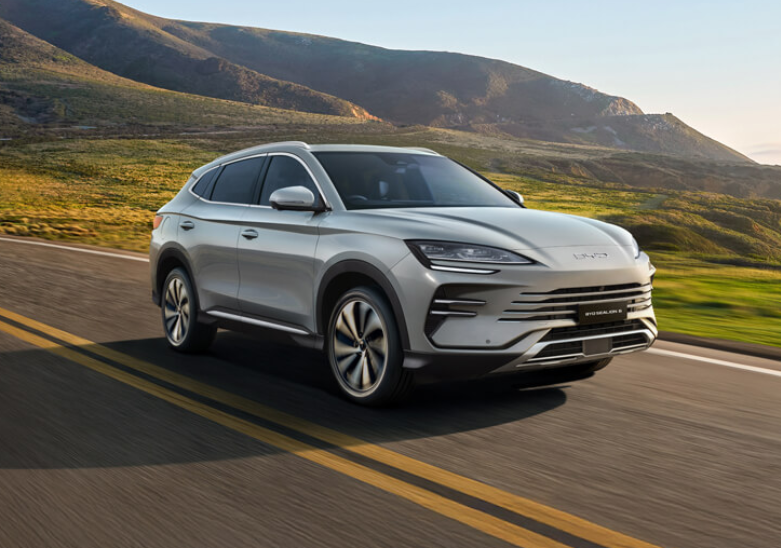
BYD Sealion 6
3
Price: From $42,990 plus on-road costs
Drivetrains: 1.5-litre turbocharged plug-in hybrid + 18.3kWh (Essential, Dynamic) or 26.6kWh
battery (Premium), one-speed automatic, front-wheel drive
Outputs: 160kW/300Nm (Essential, Dynamic), 253kW/550Nm (Premium)
Claimed combined fuel consumption: 1.1L/100km (with full battery)
EV range (WLTP, claimed): 92km (18.3kWh battery) -140km (Premium)
Warranty: 6-year/150,000km
Five-year service cost: $1648
| Driving | |
| Interior | |
| Practicality | |
| Overall value | |
Strengths
- Refined and relaxing to drive
- Well equipped but also well priced
- Spacious and practical inside
Weaknesses
- Boot could be larger
- Dynamic revision needed
- Slow peak charging speed
For evidence of just how much Australia’s new-car market has changed, look no further than the BYD Sealion 6. When it arrived in 2024, its combination of a sub-$50,000 starting price, generous equipment and genuine electric driving capability made it something of a revelation. Two years later, competition has intensified considerably, but the Sealion 6 remains a convincing plug-in hybrid medium SUV.
The range now starts at $42,990 plus on-road costs for the Essential, followed by the Dynamic Extended Range at $46,990 and flagship Premium Extended Range AWD at $52,990. Newer Chinese rivals have eroded some of the BYD’s original price advantage, although it still offers plenty for the money.
Even the entry-level Essential includes 19-inch alloy wheels, a 12.8-inch infotainment touchscreen, wireless Apple CarPlay and Android Auto, synthetic leather upholstery, dual-zone climate control and a comprehensive suite of active safety technology. Higher grades add further conveniences, including a larger 15.6-inch display.
The Sealion 6’s biggest attraction, however, remains BYD’s DM-i plug-in hybrid system. The front-wheel-drive Essential combines a 1.5-litre petrol engine with an electric motor to produce 160kW, while its 18.3kWh battery provides up to 92km of claimed electric driving range. That’s sufficient to cover many owners’ daily journeys without using petrol.
Extended Range variants increase battery capacity to 26.6kWh, stretching the claimed electric range to as much as 140km. For buyers able to charge at home, that creates the potential to drive predominantly on electricity during the working week while retaining petrol power for longer trips.
Home charging is particularly relevant because the Sealion 6’s maximum DC charging rate is a modest 18kW, well below the capabilities of several newer competitors.
Measuring 4775mm long and 1890mm wide, the BYD sits towards the larger end of the medium SUV class. Those dimensions translate into generous passenger accommodation, particularly in the second row, while attractive materials and a well-presented dashboard give the cabin a more upmarket feel than its price might suggest.
Luggage space is less impressive. The 425-litre boot trails several key rivals, although folding the rear seats expands capacity to a more useful 1440 litres.
Ownership coverage is competitive without being class-leading. BYD provides a six-year/150,000km vehicle warranty and eight-year/160,000km coverage for the high-voltage battery. Servicing is required every 12 months or 20,000km, with the first five scheduled services costing a reasonable $1648.
The Sealion 6 no longer has the affordable plug-in hybrid SUV market largely to itself. Newer rivals offer more advanced technology, faster charging and, in some cases, more polished driving dynamics. Nevertheless, its combination of useful electric range, generous equipment, a spacious cabin and accessible pricing remains appealing.
The benchmark may have moved, but the BYD that helped establish it is still well worth considering.
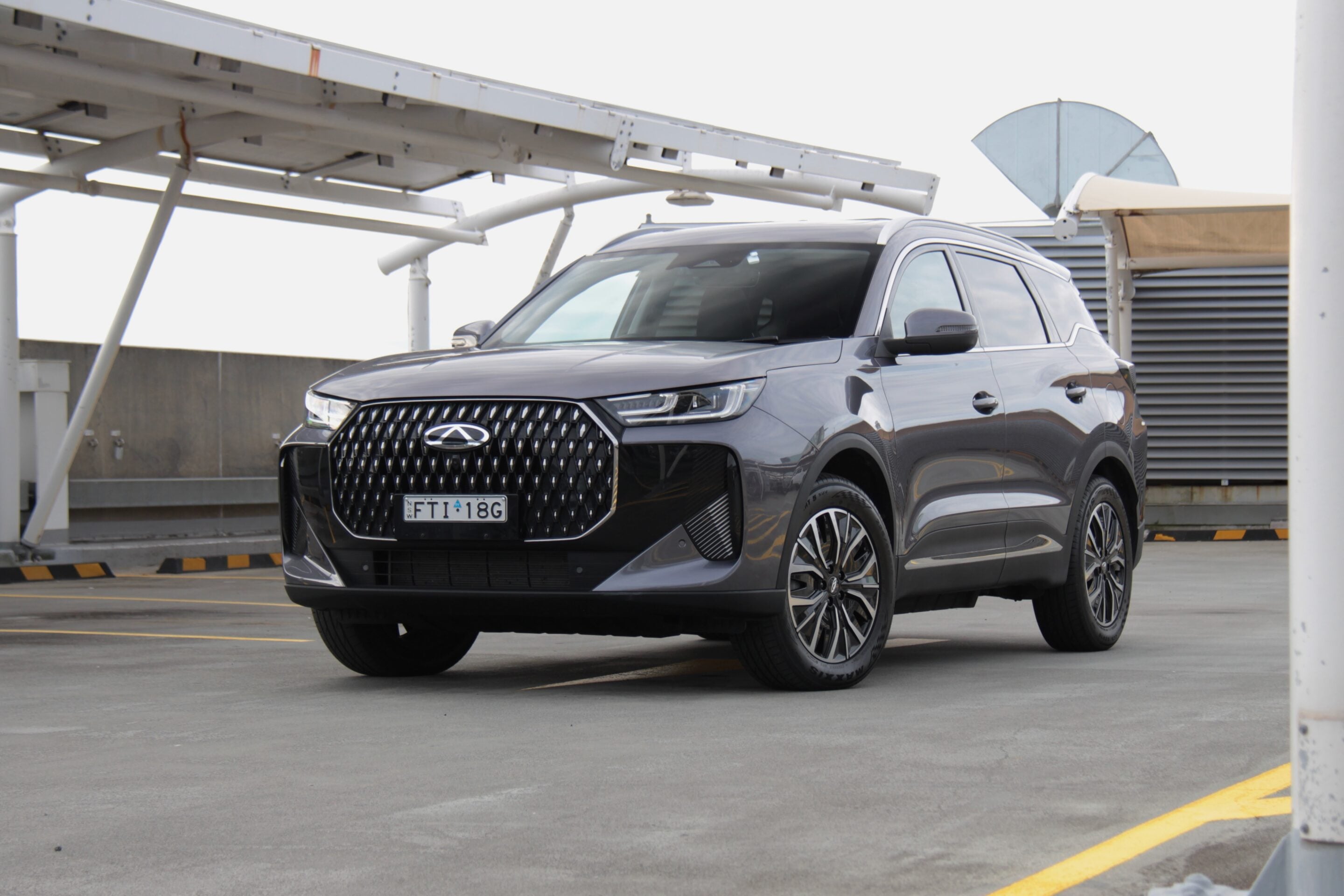
Chery Tiggo 7 Super Hybrid
11
Price: From $34,990 driveaway
Drivetrains: 1.5-litre four-cylinder plug-in hybrid + 18.4kWh battery
Outputs: 105kW/215Nm (engine), 150kW/310Nm (e-motor)
EV range (claimed): 93km (NEDC)
Claimed combined fuel consumption: 1.4L/100km (with a full battery)
Warranty: 7-year/unlimited km
Five-year service cost: $1595
| Driving | |
| Interior | |
| Practicality | |
| Overall value | |
Strengths
- Bargain pricing, but also well equipped
- Excellent drivetrain
- Solid electric driving range
Weaknesses
- Not a dynamic superstar
- Not many physical controls inside
- Overactive safety features
Plug-in hybrids were once relatively expensive, but Australia’s new-car market is changing rapidly, and the Chery Tiggo 7 Super Hybrid is a prime example. Priced from just $34,990 drive-away for the entry-level Urban, it combines generous equipment, a spacious cabin and a punchy drivetrain with up to 93km of claimed electric driving range. As Australia’s most affordable plug-in hybrid SUV, it offers an impressive amount of car for the money.
Under the bonnet, Chery’s Super Hybrid system pairs a 1.5-litre turbocharged petrol engine with a 150kW/310Nm electric motor and dedicated hybrid transmission. An 18.4kWh lithium iron phosphate (LFP) battery provides up to 93km of electric range on the NEDC cycle, while claimed combined fuel consumption is just 1.4L/100km.
More importantly, there’s enough battery capacity for many owners to complete their daily commute without using petrol. In our testing, the Tiggo 7 managed 69km of electric-only highway driving, while the combustion engine provides the flexibility to undertake longer journeys without relying on charging infrastructure. Chery claims a combined driving range of up to 1200km.
The driving experience is less convincing, however. Ride comfort and handling lack the polish of the segment’s best, while overly sensitive active safety systems can become frustrating in everyday use.
Inside, the Tiggo 7 feels surprisingly upmarket for the price, with plenty of soft-touch materials and dual 12.3-inch displays dominating the dashboard. The presentation is modern and attractive, although more physical controls would make frequently used functions easier to operate.
Cabin storage is plentiful, and there’s sufficient rear legroom and headroom for adults, even if larger medium SUVs provide more generous second-row accommodation.
Boot capacity is a useful 470 litres, expanding to 1305 litres with the rear seats folded. Both figures trail roomier competitors such as the Hyundai Tucson, but should prove adequate for most families, particularly given the Chery’s relatively compact exterior dimensions. One compromise of the hybrid packaging is the absence of a spare wheel.
Ownership coverage is another strength. Chery backs the Tiggo 7 Super Hybrid with a seven-year/unlimited-kilometre vehicle warranty and eight-year/unlimited-kilometre coverage for the high-voltage battery. Servicing is required every 12 months or 15,000km, with the first five scheduled services costing just $1595, or an average of $319 annually.
The Tiggo 7 Super Hybrid isn’t the most dynamically accomplished medium SUV, and its intrusive safety systems detract from an otherwise pleasant cabin. Nevertheless, its combination of useful electric range, generous equipment, family-friendly practicality and affordable ownership costs makes it a compelling proposition.
For buyers seeking an accessible entry into plug-in hybrid motoring, the Chery makes a strong case for inclusion in the 2026 Wheels Best Medium Hybrid SUV field.
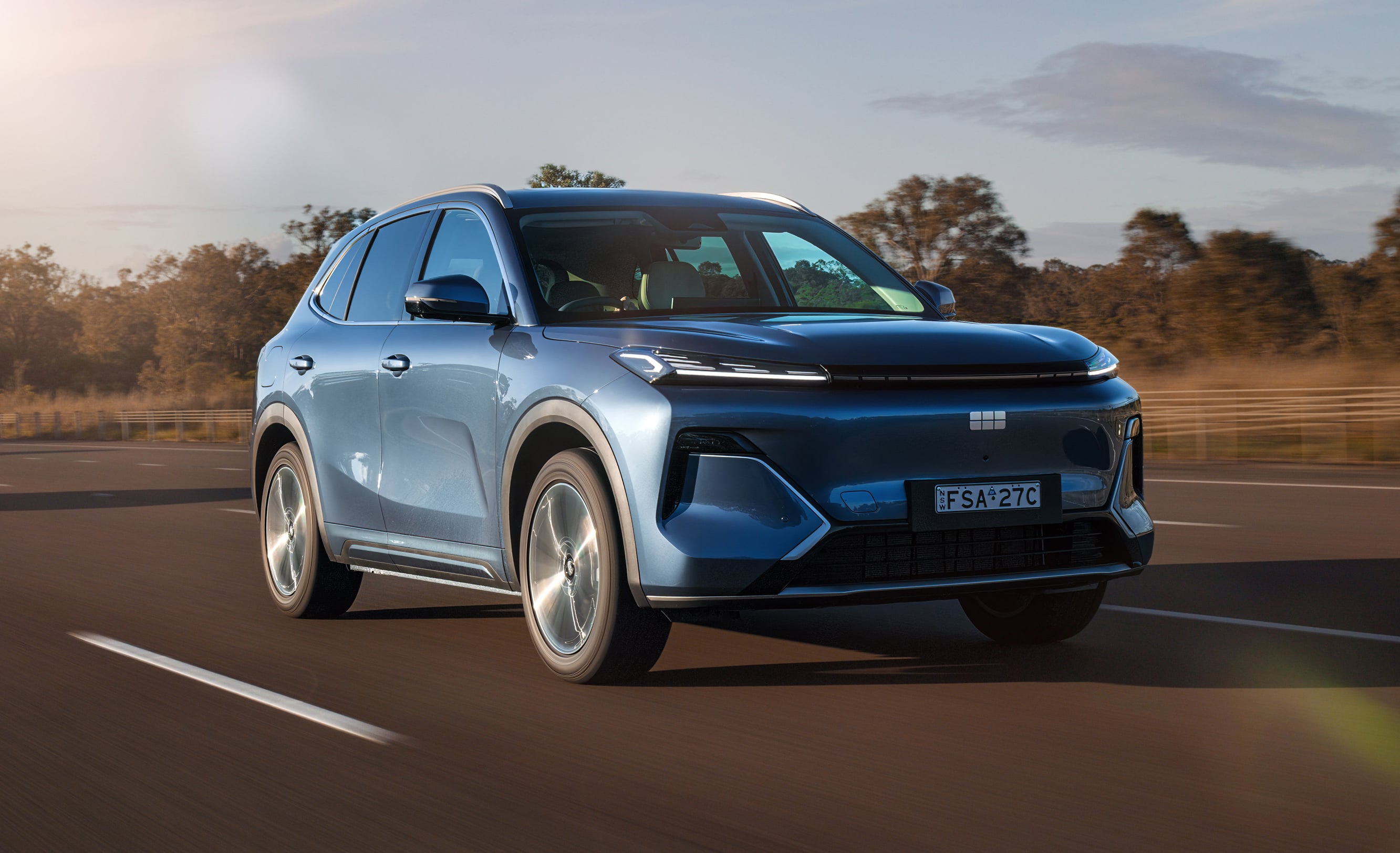
Geely Starray EM-i
10
Price: From $37,490 plus on-road costs
Drivetrains: 1.5-litre four-cylinder plug-in hybrid + 18.4kWh or 29.8kWh battery, single-speed hybrid
transmission, front- or all-wheel drive
Outputs: 193kW (Complete and Inspire), 220kW (Inspire AWD)
Claimed combined fuel consumption:
EV range (claimed, WLTP): 1.4L/100km (Inspire), 1.7L/100km (Inspire AWD), 2.4L/100km
(Complete)
Warranty: 7-year/unlimited km (car), 8-year/unlimited km (EV battery)
Five-year service cost: $1932
| Driving | |
| Interior | |
| Practicality | |
| Overall value | |
Strengths
- Classy and good quality cabin
- Great value for money
- Wide range of drivetrains, including new AWD model
Weaknesses
- Boot space isn’t massive without accessing the under-floor storage
- Almost every feature is controlled by the touchscreen
- Soft body control could be improved
Geely hasn’t taken long to make an impression in Australia. Following the launch of the EX5 electric SUV, the Starray EM-i arrived with a straightforward proposition: combine the space, equipment and technology expected of a modern medium SUV with a plug-in hybrid drivetrain, all at a price that undercuts many established rivals.
Affordability remains one of its strongest selling points. The range starts at $37,490 plus on-road costs for the Complete, rising to $41,490 for the Inspire Extended Range. A new Inspire AWD tops the line-up at $44,990, meaning even the flagship remains comfortably within reach of buyers with a $50,000 budget.
Equipment levels are generous throughout. The Complete includes a large 15.4-inch infotainment touchscreen, 10.2-inch digital instrument display, wireless Apple CarPlay and Android Auto, synthetic leather upholstery, heated front seats and a comprehensive suite of active safety technology. The Inspire adds further luxuries, including 19-inch alloy wheels, ventilated and massaging front seats, a panoramic glass roof, head-up display and 16-speaker audio system.
Underneath, Geely’s EM-i plug-in hybrid system combines a 1.5-litre petrol engine with electric propulsion. Front-wheel-drive variants produce a healthy 193kW, while the new AWD adds a second electric motor at the rear axle, increasing total output to 220kW. The driving experience is reasonably accomplished and better controlled than that of the overly soft EX5, although there’s still room for improvement in its ride and handling balance.
The entry-level Complete uses an 18.4kWh battery, providing up to 83km of claimed electric range on the WLTP cycle. The Inspire Extended Range upgrades to a larger 29.8kWh unit, stretching that figure to an impressive 136km in front-wheel-drive form, while the AWD manages 130km.
That’s enough electric-only range to cover the daily driving needs of most Australians. For longer journeys, the petrol engine provides the flexibility of conventional hybrid operation once the available battery charge has been depleted.
Practicality is another major strength. Measuring 4740mm long and 1905mm wide, the Starray sits towards the larger end of the medium SUV class, translating into excellent passenger accommodation. Headroom, legroom and knee room are generous in both rows, while the broad cabin makes carrying three rear passengers easier than in smaller competitors.
Interior presentation also exceeds expectations at this price, with an uncluttered design, attractive materials and plenty of soft-touch surfaces contributing to a more upmarket feel.
Boot capacity is a useful 528 litres with the rear seats upright, expanding to a substantial 2065 litres when folded. However, those figures include the considerable underfloor storage area, so it’s worth lifting the boot floor to appreciate the full available space. As with many plug-in hybrids, there’s no spare wheel, which is a disappointing omission.
Geely backs the Starray with a seven-year/unlimited-kilometre vehicle warranty and eight-year/unlimited-kilometre coverage for the high-voltage battery. The first five years of scheduled servicing cost $1932, averaging approximately $386 annually.
With generous equipment, excellent passenger space, substantial electric driving range and highly competitive pricing, the Starray EM-i gets the fundamentals of a family SUV right. Geely may be a newcomer to Australia, but the Starray feels like a product from a far more established brand.
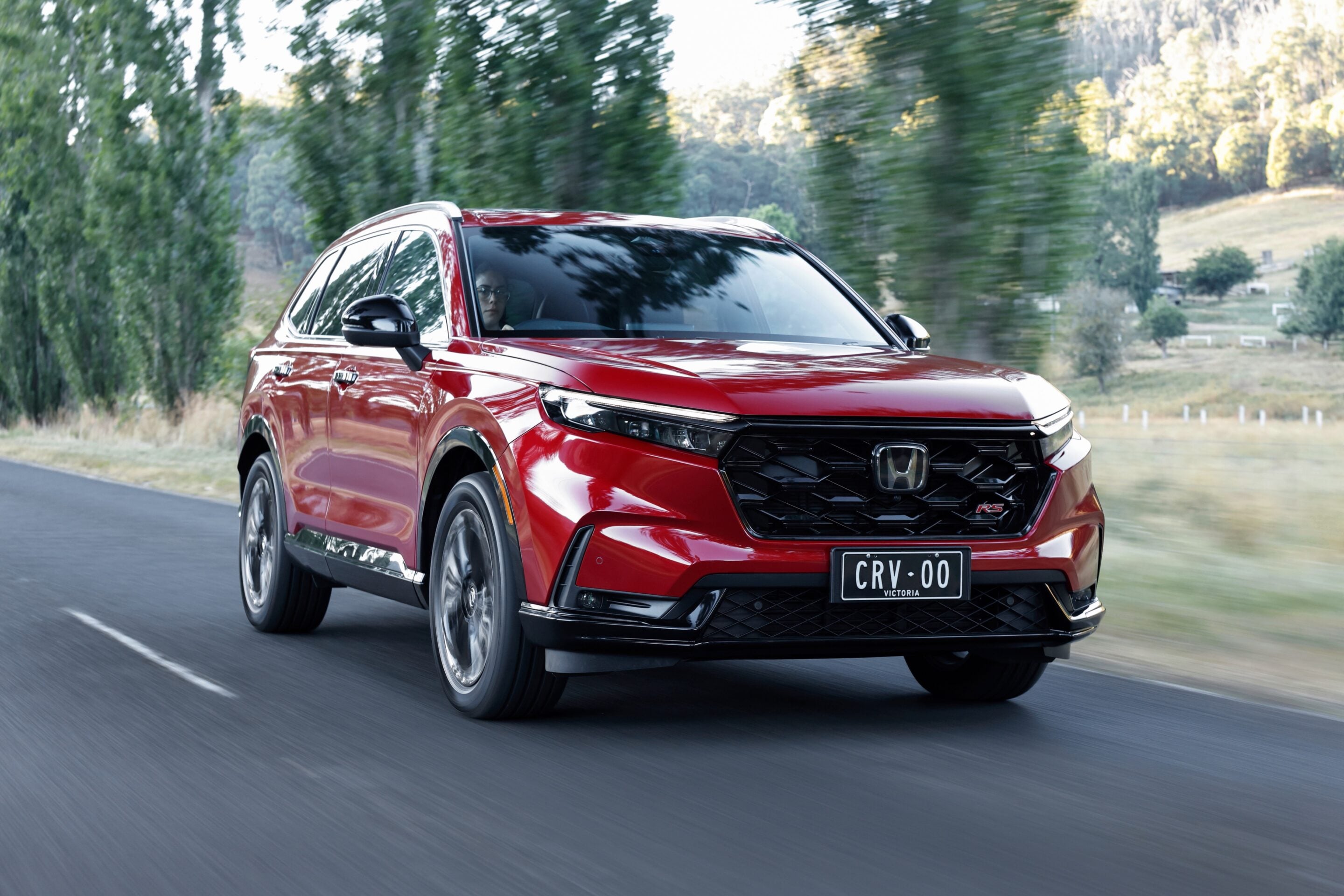
Honda CR-V e:HEV
12
Price: From $49,900 driveaway
Drivetrains: 2.0-litre four-cylinder hybrid, e-CVT, front- or all-wheel drive
Outputs: 135kW/335Nm
Claimed combined fuel consumption: 5.5L/100km (FWD) – 5.7L/100km (AWD)
Warranty: 5-year/unlimited km (extendable to eight years with dealer servicing)
Five-year service cost: $995
| Driving | |
| Interior | |
| Practicality | |
| Overall value | |
Strengths
- A strong all-rounder
- Cheaper hybrid models now available
- Spacious and clean interior
Weaknesses
- Top-spec models aren’t cheap
- No plug-in hybrid available in Australia
- No spare wheel for hybrid models
The Honda CR-V has long been one of the most polished all-rounders in the medium SUV segment, but its hybrid drivetrain previously came with a significant drawback: price. Available only at the top of the range, it required buyers to spend almost $60,000. For 2026, Honda Australia has addressed that weakness by expanding the hybrid line-up and substantially lowering the cost of entry.
The new CR-V e X starts at $49,900 drive-away, making it considerably more affordable than the cheapest hybrid variant offered in 2025. Importantly, it doesn’t feel like a stripped-out entry-level model, with standard equipment including 18-inch alloy wheels, a 9.0-inch infotainment touchscreen with Google built-in, a 10.2-inch digital instrument display, dual-zone climate control with rear air vents and a comprehensive suite of active safety technology.
Buyers seeking more equipment can step up to the $53,900 e L, while hybrid all-wheel drive is now available in the $58,900 e LX AWD and $64,400 e RS AWD. It’s a much broader and more appealing line-up than before, although those wanting seven seats must still choose a petrol-powered CR-V.
Power comes from Honda’s excellent e system, which combines a naturally aspirated 2.0-litre four-cylinder petrol engine with electric assistance. Combined outputs are 135kW and 335Nm, while claimed fuel consumption is just 5.5L/100km for front-wheel-drive versions and 5.7L/100km with all-wheel drive.
It’s an impressively refined drivetrain, with electric propulsion handling much of the work around town to deliver smooth, quiet progress at lower speeds. The petrol engine cuts in seamlessly when required, while the CR-V’s well-sorted chassis provides an excellent balance of ride comfort, composure and driver engagement. For a family-focused SUV, it’s surprisingly enjoyable to drive.
Practicality is another major strength. Measuring 4704mm long, the CR-V sits towards the larger end of the medium SUV class, and Honda makes excellent use of its dimensions. Rear-seat accommodation is particularly generous, with ample legroom and plenty of space for adults. The cabin is also thoughtfully designed and solidly constructed, combining useful storage with physical controls for frequently accessed functions.
Luggage capacity is equally impressive. Front-wheel-drive hybrid variants offer a generous 589-litre boot, expanding to 1671 litres with the rear seats folded, making the CR-V well suited to family duties.
Ownership costs are another attraction. Honda charges just $199 for each of the first five scheduled services, totalling an exceptionally affordable $995. The standard five-year/unlimited-kilometre warranty can also be extended to eight years, provided eligible vehicles meet Honda’s servicing requirements.
The CR-V was already spacious, well engineered, refined and rewarding to drive. By making its excellent hybrid drivetrain considerably more accessible, Honda has removed one of the few obstacles to recommending it. The result is an even more compelling family SUV and one of the most complete hybrid offerings in the segment.
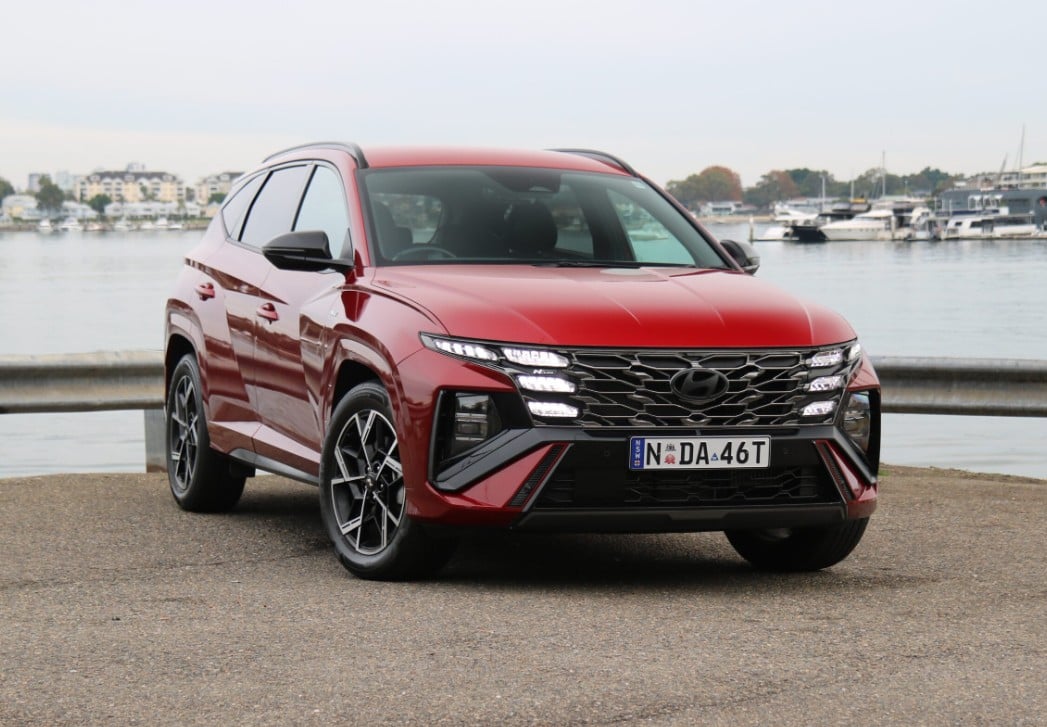
Hyundai Tucson
9
Price: From $42,850 plus on-road costs (hybrid)
Drivetrains: 1.6-litre four-cylinder turbo hybrid, six-speed automatic transmission, 2WD or AWD
Outputs: 172kW/367Nm
Claimed combined fuel consumption: 4.9L/100km-5.3L/100km
Warranty: 5-year/unlimited km (car, extendable to seven years with dealer servicing), 8-
year/160,000km (EV battery)
Five-year service cost: $2290
| Driving | |
| Interior | |
| Practicality | |
| Overall value | |
Strengths
- Excellent all-rounder
- Practical and high quality cabin
- Gutsy hybrid system is also efficient
Weaknesses
- Short 10,000km service intervals
- Speed limit buzzer annoying
- Plug-in hybrid not offered in Australia
The medium SUV segment is overflowing with hybrid options, but the Hyundai Tucson remains one of the easiest to recommend. Although it lacks the electric-only range of a plug-in hybrid – the Tucson PHEV isn’t offered in Australia – it delivers an excellent combination of efficiency, space, refinement and everyday usability.
Pricing starts at $42,850 plus on-road costs for the entry-level Tucson Hybrid, while the better-equipped Elite costs $48,350 in front-wheel-drive form or $50,850 with all-wheel drive. The flagship Premium Hybrid AWD tops the range at $58,350.
That makes the entry-level model particularly appealing. Although it costs $3750 more than the conventional 2.0-litre petrol Tucson, it brings a considerably stronger and more economical drivetrain without sacrificing equipment. Even the base model includes a 12.3-inch infotainment touchscreen, wireless Apple CarPlay and Android Auto, dual-zone climate control, keyless entry and start, and a comprehensive suite of active safety technology.
Under the bonnet, a 1.6-litre turbocharged four-cylinder petrol engine works alongside an electric motor and compact 1.49kWh battery. Combined outputs are a healthy 172kW and 367Nm, delivered through a conventional six-speed automatic transmission. Front- and all-wheel-drive configurations are available, depending on the variant.
Claimed fuel consumption ranges from 4.9L/100km to 5.3L/100km, but efficiency is only part of the appeal. The electric motor provides useful assistance at low speeds, making the Tucson smooth and responsive around town, while the turbocharged engine delivers plenty of punch for overtaking and freeway driving.
Hyundai has also struck an excellent balance between ride comfort and handling. Light steering makes urban manoeuvring effortless, while the composed suspension and reassuring road manners ensure the Tucson remains comfortable and enjoyable to drive beyond the city.
Practicality is another major strength. The 2755mm wheelbase translates into generous rear legroom, while ample headroom and a broad cabin provide comfortable accommodation for adults in both rows. Interior presentation is modern and well finished, with plentiful storage and straightforward ergonomics helped by the welcome retention of physical controls.
Better still, the hybrid offers one of the largest boots in the medium SUV class. Its 582-litre capacity actually exceeds the petrol Tucson’s 539 litres, expanding to an enormous 1903 litres with the rear seats folded.
Hyundai’s ownership package has improved, too. Vehicles first registered from June 2025 can qualify for a seven-year/unlimited-kilometre warranty when scheduled servicing is completed through Hyundai’s dealer network, compared with the standard five-year/unlimited-kilometre coverage. The hybrid battery is separately warranted for eight years or 160,000km.
Servicing costs $2290 over the first five years, although the relatively short 12-month/10,000km intervals are a drawback for higher-mileage drivers.
The Tucson Hybrid gets almost everything that matters right. It’s spacious, economical, comfortable, well equipped and impressively responsive, with the sort of polished driving experience that makes it easy to live with.
Those qualities helped it claim the Wheels Best Medium SUV title in 2025, and a year later, the Tucson remains a formidable contender in an increasingly competitive segment.
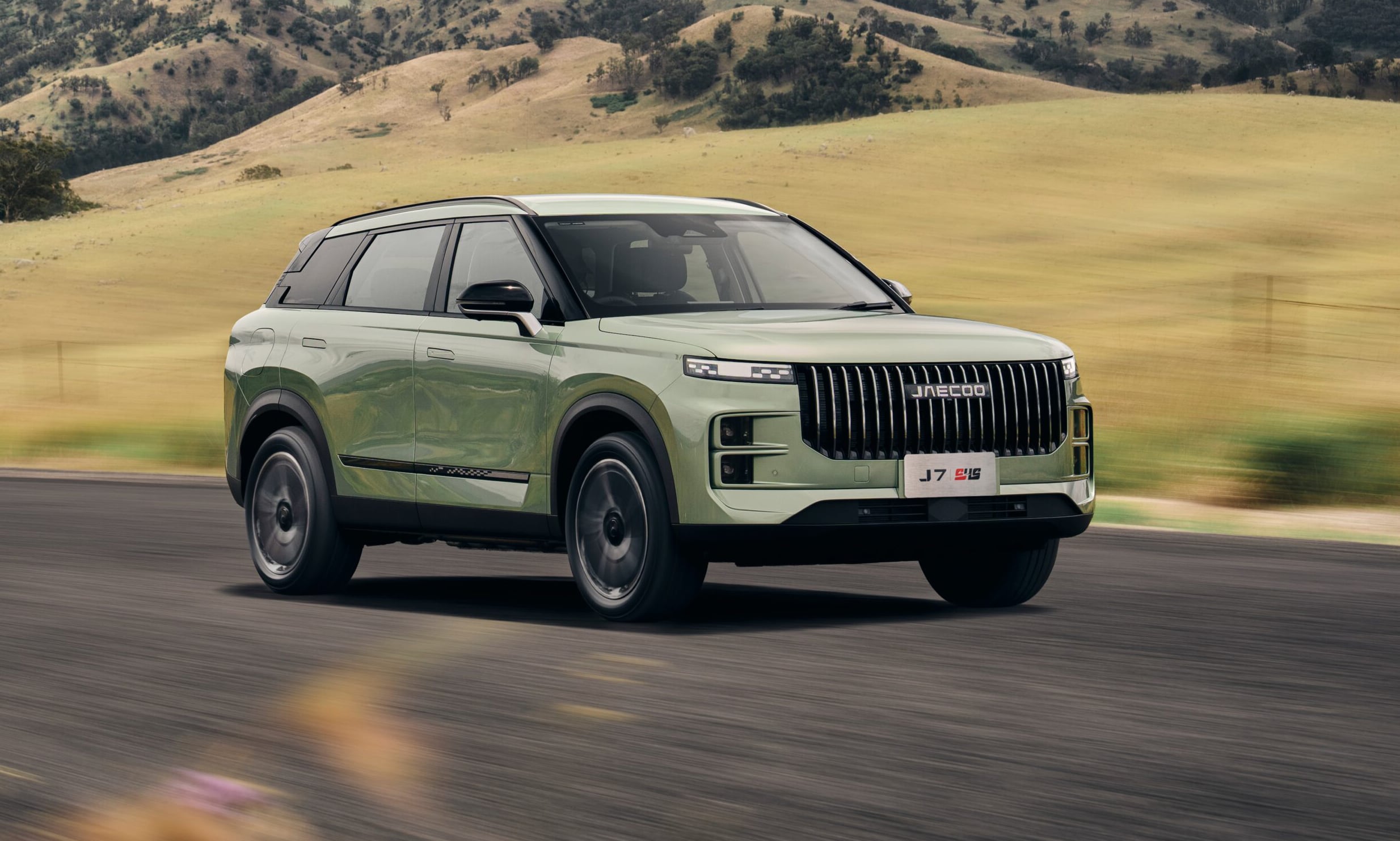
Jaecoo J7 SHS-P
6
Price: From $39,990 driveaway
Drivetrains: 1.5-litre turbocharged four-cylinder plug-in hybrid + 18.4kWh battery, one-speed hybrid
transmission, 2WD or ADW
Outputs: 205kW/365Nm (2WD), 260kW/490Nm (AWD)
Claimed combined fuel consumption: 1.3L/100km (2WD) – 1.9L/100km (AWD)
EV range (claimed, NEDC): 80km (AWD) – 100km (2WD)
Warranty: 8-year/unlimited km (both car and EV battery)
Five-year service cost: $2375
| Driving | |
| Interior | |
| Practicality | |
| Overall value | |
Strengths
- Bargain basement pricing
- Newly punchier plug-in hybrid drivetrain
- Solid electric driving capability
Weaknesses
- Needs a dynamic revision
- Almost no physical buttons inside
- Boot capacity lags behind larger rivals
The Jaecoo J7 SHS-P was already one of the more appealing newcomers to Australia’s increasingly crowded plug-in hybrid SUV market, but its latest update has strengthened the proposition considerably. More power, lower prices and the addition of an all-wheel-drive variant build on an already competitive package offering generous equipment and useful electric driving range.
The MY27 line-up now starts at just $39,990 drive-away for the Track SHS-P 2WD, while the better-equipped Summit 2WD costs $44,990, a reduction of $3000. A new Summit AWD tops the range at $47,990 drive-away, adding performance and traction while still undercutting many established rivals.
Equipment levels are generous throughout. Even the entry-level Track includes 19-inch alloy wheels, dual-zone climate control, a 10.25-inch digital instrument display and a 13.2-inch infotainment touchscreen with wireless Apple CarPlay and Android Auto. The Summit adds a larger 14.8-inch display, Sony audio system, head-up display, heated and ventilated powered front seats, panoramic sunroof, 360-degree camera and powered tailgate.
Underneath, Jaecoo’s SHS-P plug-in hybrid system combines a 1.5-litre turbocharged petrol engine with electric propulsion and an 18.4kWh battery. Front-wheel-drive versions produce a substantial 205kW and 365Nm, while the new dual-motor AWD increases combined outputs to an impressive 260kW and 490Nm.
The 2WD can travel up to a claimed 100km on electricity alone, although that figure is measured on the more lenient NEDC cycle. Nevertheless, there’s sufficient electric range for many owners to complete their daily commute without using petrol.
DC fast charging at up to 40kW is another advantage, allowing the battery to be replenished from 30 to 80 per cent in approximately 20 minutes. Jaecoo also claims a combined petrol-electric driving range of up to 1200km, providing flexibility for longer journeys.
Passenger accommodation is respectable, too. Measuring 4500mm long and 1865mm wide, the J7 sits towards the smaller end of the medium SUV class, but its 2672mm wheelbase provides adequate space in both rows. Interior presentation also exceeds expectations at this price, particularly in Summit specification, with plenty of soft-touch materials and an impressive array of technology. The heavy reliance on touchscreen controls is less appealing, however, with very few physical buttons for frequently used functions.
Practicality is more of a compromise. Plug-in hybrid variants offer just 340 litres of luggage space beneath the cargo cover, expanding to 1265 litres with the rear seats folded. Both figures trail several key competitors, making boot capacity one of the J7’s more obvious weaknesses.
On the upside, its relatively compact dimensions make it easier to manoeuvre and park in urban environments. The driving experience is less convincing, however, with suspension tuning that lacks the refinement and composure of the segment’s best.
Jaecoo regains ground with an excellent ownership package. Both the vehicle and high-voltage battery are covered by eight-year/unlimited-kilometre warranties, complemented by eight years of capped-price servicing and up to eight years of roadside assistance. Maintenance is required every 12 months or 15,000km, with the first five scheduled services costing $2375.
The J7 SHS-P isn’t the roomiest or most dynamically polished medium SUV, but its combination of affordability, equipment and performance is difficult to overlook. With up to 100km of claimed electric range, a comprehensive warranty and pricing from just $39,990 drive-away, the MY27 update makes this already competitive plug-in hybrid an even stronger contender.
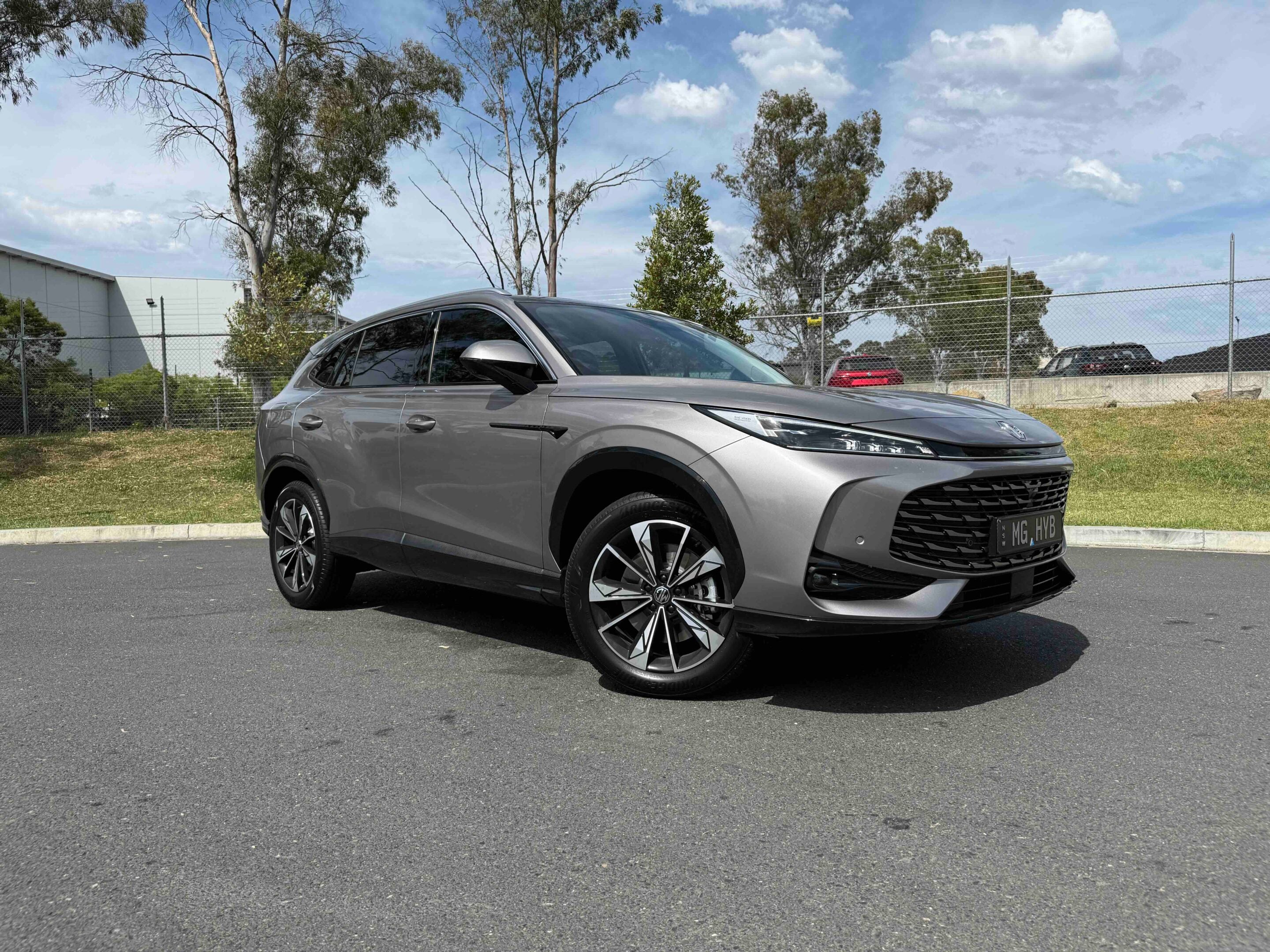
MG HS Hybrid+ and Super Hybrid
10
Price: From $40,990 driveaway (Excite)
Drivetrains: 1.5-litre turbocharged four-cylinder hybrid or 1.5-litre turbocharged four-cylinder plug-in
hybrid + 24.7kWh battery, three-speed hybrid transmission, front-wheel drive
Outputs: 165kW/340Nm
Claimed combined fuel consumption: 0.7L/100km (PHEV), 5.2L/100km (hybrid)
EV range (PHEV, claimed WLTP): 120km
Warranty: 7-year/unlimited km (extendable to 10 years/250,000km with dealer servicing)
Five-year service cost: $2166
| Driving | |
| Interior | |
| Practicality | |
| Overall value | |
Strengths
- Great value for money
- Attractive, well made cabin
- Punchy but efficient hybrid systems
Weaknesses
- Back seat and boot not massive
- No all-wheel drive availability
- Slow charging capability for the PHEV
The MG HS has long made sense as a value-focused medium SUV, but its expanding electrified line-up has strengthened its appeal considerably. Buyers can now choose between the conventional Hybrid+, which requires no external charging, and the more powerful Super Hybrid plug-in, with both offering generous equipment, family-friendly practicality and competitive pricing.
The Hybrid+ is the more affordable option, with the Excite starting at $39,990 drive-away and the better-equipped Essence costing $44,990. Stepping up to the plug-in Super Hybrid increases prices to $48,990 for the Excite and $52,990 for the Essence. Neither is particularly expensive given the performance, technology and space on offer.
The Hybrid+ combines a 1.5-litre turbocharged petrol engine with an electric motor and 1.83kWh battery, producing combined outputs of 165kW and 340Nm. Unlike a plug-in hybrid, there’s no need to connect it to a charger, with the battery replenished automatically during driving. The system manages petrol and electric power to maximise efficiency, delivering claimed fuel consumption of 5.2L/100km – a respectable figure that should be achievable in everyday conditions.
The Super Hybrid takes electrification considerably further. Its larger 24.7kWh battery supplies a 154kW/340Nm electric motor, while combined system outputs climb to a substantial 220kW and 350Nm.
More importantly, it can travel up to 120km on electricity alone according to the WLTP cycle, giving owners with access to home charging the potential to complete most daily journeys without using petrol. MG quotes combined fuel consumption of just 0.7L/100km with a charged battery and a total driving range exceeding 1000km.
There are compromises, however. The Super Hybrid doesn’t support DC fast charging, limiting its convenience on longer journeys, while the absence of an all-wheel-drive option is disappointing. Additional traction could also help make better use of the plug-in model’s substantial outputs.
Regardless of drivetrain, the HS makes a convincing family SUV. Measuring 4670mm long and 1890mm wide, it provides generous passenger accommodation, with ample legroom and headroom in both rows.
The latest-generation interior is also a significant improvement over its predecessor. Soft-touch materials, twin 12.3-inch displays and a clean, contemporary dashboard give the cabin a more upmarket appearance than its pricing suggests.
Boot capacity is a useful 507 litres with the rear seats upright, expanding to 1484 litres when folded. Although it isn’t the largest load area in the medium SUV class, there’s sufficient space for most family duties. The absence of a spare wheel is a less welcome compromise.
Equipment levels are another strength, with wireless Apple CarPlay and Android Auto available alongside a comprehensive suite of active safety technology. Higher-specification Essence variants add further conveniences, including a panoramic sunroof and 360-degree camera.
Ownership coverage is reassuring, too. MG provides a seven-year/unlimited-kilometre warranty, which can be extended to 10 years for eligible vehicles that meet its servicing requirements. Maintenance costs are also reasonable, starting at $2166 over the first five years.
Ultimately, the HS’s greatest strength is the choice it offers buyers. The Hybrid+ delivers strong performance and excellent efficiency without the need to plug in, while the Super Hybrid adds considerably more electric driving capability and enough range to operate much like an EV during the working week.
Neither is perfect, but both combine generous equipment, a spacious cabin and competitive ownership costs with attractive pricing. For families seeking an affordable electrified medium SUV, the MG HS makes a strong case for itself.
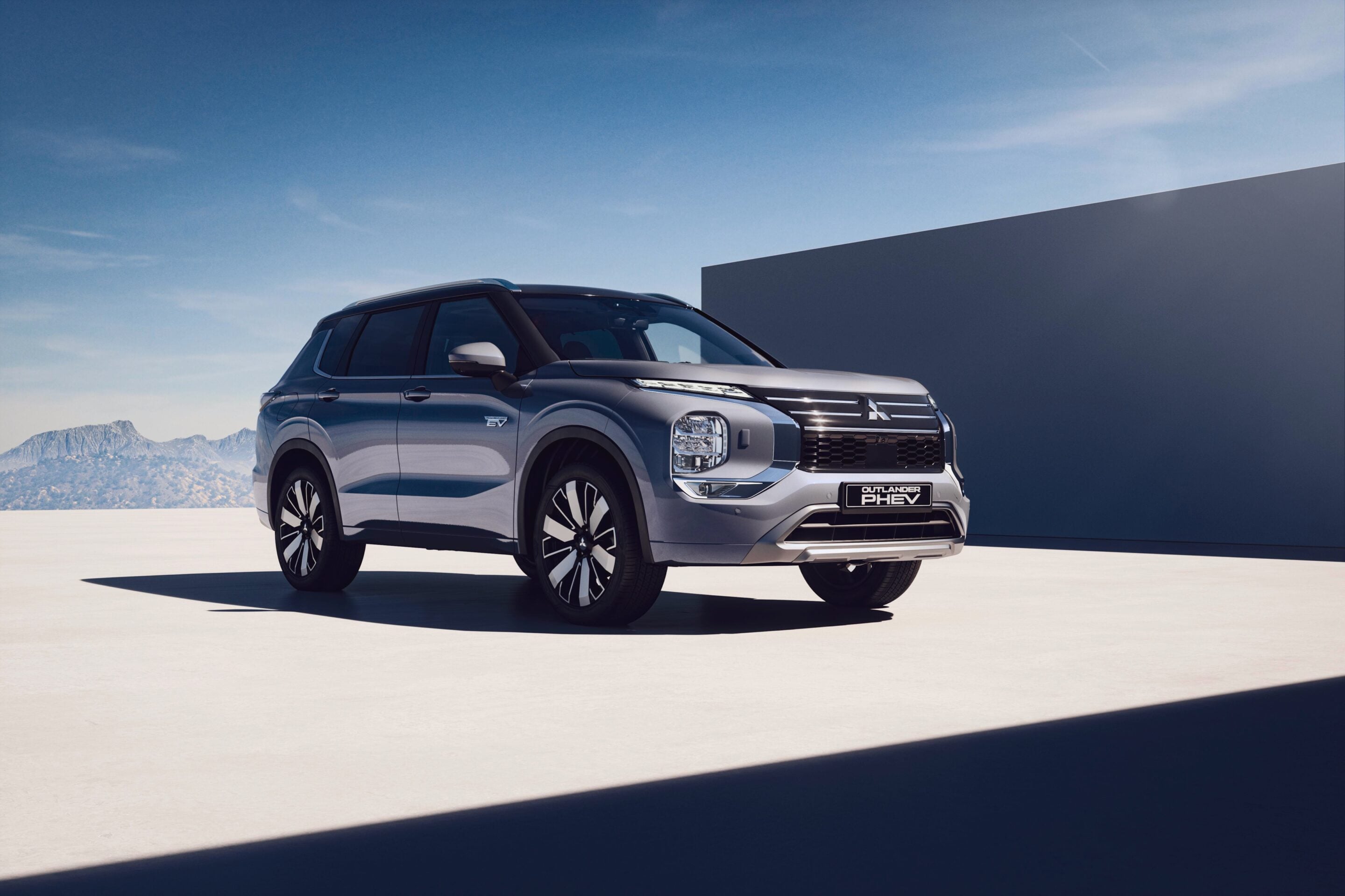
Mitsubishi Outlander PHEV
6
Price: From $58,990 plus on-road costs
Drivetrains: 2.4-litre naturally aspirated four-cylinder plug-in hybrid + 21.7kWh battery, e-CVT
transmission, AWD
Outputs: 221kW (no claimed peak torque output)
Claimed combined fuel consumption: 1.2L/100km (with a full battery)
EV range (claimed): 86km (WLTP)
Warranty: 5-year/100,000km (extendable to 10 years/200,000km with dealer servicing)
Five-year service cost: $2123
| Driving | |
| Interior | |
| Practicality | |
| Overall value | |
Strengths
- Recent update brought more performance and EV range
- Spacious, good quality interior
- Rockin’ Yamaha sound systems
Weaknesses
- Not as cheap as Chinese competition
- Minuscule third row space
- CHAdeMO fast charging isn’t easy to find
Mitsubishi was building plug-in hybrid SUVs long before they became fashionable, having introduced the original Outlander PHEV back in 2013. That experience shows in the latest model, which has been updated for 2026 with greater electric range, improved performance, upgraded technology and locally tuned suspension. The result is one of the most mature and well-rounded plug-in hybrids in the medium SUV class.
The problem is that experience comes at a price. The range now starts at $58,990 plus on-road costs for the five-seat ES, rising to $66,790 for the seven-seat Aspire, $71,640 for the Exceed and $74,490 for the flagship Exceed Tourer.
That makes the Outlander considerably more expensive than newer plug-in hybrid rivals such as the BYD Sealion 6, Geely Starray EM-i and Chery Tiggo 7 Super Hybrid. Mitsubishi counters with a well-developed drivetrain, standard all-wheel drive and comprehensive ownership coverage, although the substantial price premium is becoming harder to overlook.
Its plug-in hybrid system combines a naturally aspirated 2.4-litre petrol engine with electric motors on both axles. Mitsubishi’s Super-All Wheel Control (S-AWC) system is standard, while the drivetrain automatically switches between electric, series-hybrid and parallel-hybrid operation depending on driving conditions.
One of the most significant improvements for 2026 is a larger 22.7kWh battery, extending the claimed WLTP electric driving range to 86km. That’s sufficient for many owners to complete their daily commute without using petrol, while the inclusion of DC fast charging provides additional flexibility when charging away from home.
Mitsubishi has also focused on improving the driving experience. Australian-specific suspension and steering tuning has delivered a more composed balance between ride comfort and handling, giving the Outlander a noticeable advantage over some less polished competitors.
The twin electric motors provide strong, smooth acceleration, making the Mitsubishi refined and effortless to drive around town. Its standard AWD system also offers useful traction on unsealed roads and in slippery conditions, adding versatility for families who occasionally venture beyond the bitumen or head to the snow.
Inside, the Outlander continues to impress with its solid build quality, intuitive technology and welcome retention of physical controls. There’s generous accommodation in the first two rows, good outward visibility and plenty of practical storage throughout the cabin.
Selected variants also offer seven seats, something relatively few plug-in hybrid medium SUVs can match. The third row is cramped and best reserved for occasional use by children, but its availability gives the Outlander an important point of difference for larger families.
Luggage capacity is respectable rather than outstanding, with up to 478 litres available behind the second row and a maximum of 1473 litres with those seats folded.
Ownership coverage is another major strength. Mitsubishi offers a warranty of up to 10 years or 200,000km when the vehicle is serviced through its authorised dealer network, while the high-voltage battery is covered for eight years or 160,000km. Buyers also receive access to 10 years of capped-price servicing, with the first five years costing $2123, and up to 10 years of roadside assistance.
The Outlander PHEV is no longer the value proposition it once was, particularly when newer rivals offer greater electric range for substantially less money. Nevertheless, its refined hybrid drivetrain, polished road manners, standard AWD and practical cabin demonstrate the benefits of Mitsubishi’s long experience with plug-in hybrid technology.
Factor in its excellent ownership package and the availability of a third row of seats, and the Outlander remains a compelling choice for families willing to pay more for a mature, versatile and well-engineered medium SUV.
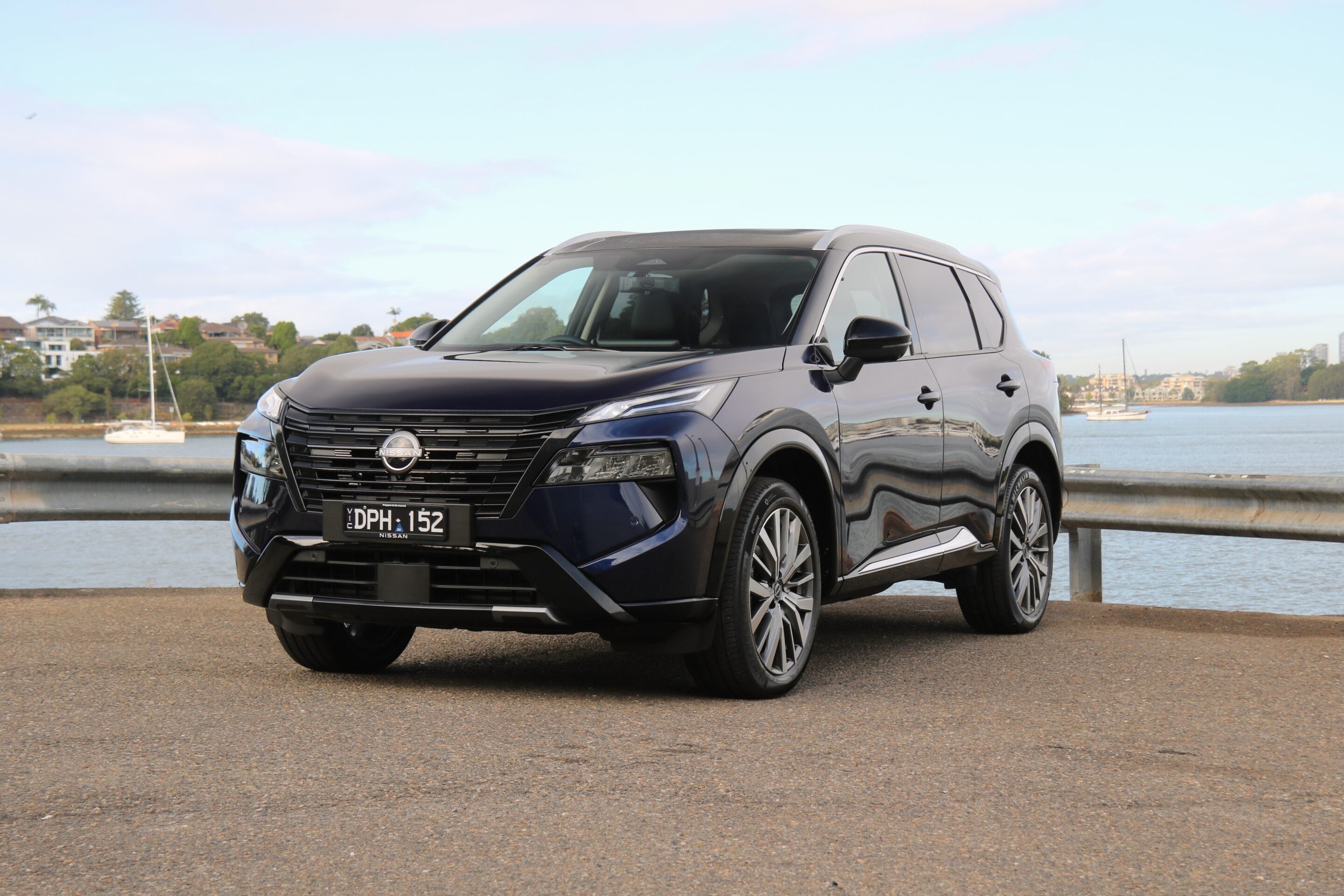
Nissan X-Trail e-Power
8
Price: From $45,990 plus on-road costs
Drivetrains: 1.5-litre turbocharged three-cylinder hybrid, e-CVT transmission, 2WD or AWD
Outputs: 150kW/330Nm
Claimed combined fuel consumption: 5.4L/100km (2WD) – 6.1L/100km (AWD)
Warranty: 5-year/unlimited km (extendable to 10 years/300,000km with dealer servicing)
Five-year service cost: $1995
| Driving | |
| Interior | |
| Practicality | |
| Overall value | |
Strengths
- Innovative and smooth hybrid system
- New 2WD hybrid variants lessen cost
- Excellent family credentials
Weaknesses
- Hybrid not offered with seven seats in Australia
- No spare wheel
- Not terribly exciting to drive
The Nissan X-Trail e-Power takes a different approach to electrification from most of its hybrid rivals. There’s no need to plug it in, and unlike conventional Toyota or Hyundai hybrids, its petrol engine doesn’t directly drive the wheels. Instead, it generates electricity for the battery, leaving electric motors to provide propulsion and giving the X-Trail a distinctive, EV-like driving character.
For 2026, the e-Power range starts with the ST-L at $45,990 plus on-road costs, followed by the better-equipped Ti at $50,915 and flagship Ti-L at $54,715. That’s not particularly cheap when several newer plug-in hybrid competitors start below $40,000, but the Nissan counters with generous equipment, impressive refinement and improved ownership coverage.
Even the entry-level ST-L includes a 12.3-inch infotainment touchscreen with wireless Apple CarPlay and Android Auto, dual-zone climate control, keyless entry and start, 18-inch alloy wheels and a comprehensive suite of active safety technology. Higher grades add more luxurious touches, including quilted leather upholstery, giving the cabin a suitably upmarket feel.
The e-Power drivetrain is what really sets the Nissan apart. A 1.5-litre turbocharged three-cylinder petrol engine acts primarily as a generator, supplying electricity to the battery and electric drive system. Because propulsion is provided entirely by electric motors, acceleration from a standstill is smooth and immediate, without the conventional transmission behaviour associated with many other hybrids.
For 2026, Nissan has broadened the line-up with the addition of front-wheel-drive variants, which consume a claimed 5.4L/100km compared with 6.1L/100km for the all-wheel-drive models. The latter use electric motors on both axles, producing 150kW and 330Nm at the front and 100kW and 195Nm at the rear.
The result is one of the most enjoyable hybrid medium SUVs to drive. Acceleration is responsive, urban refinement is excellent and the electric drivetrain delivers an impressive sense of effortless performance. It feels more like an EV with an onboard petrol generator than a traditional hybrid, lending the X-Trail a character few competitors can match.
Practicality is another strength. Measuring 4690mm long, the X-Trail provides generous passenger accommodation, particularly in the second row, where legroom and headroom are plentiful. Wide-opening rear doors also make fitting child seats and loading younger passengers considerably easier.
Boot capacity is a useful 575 litres, only slightly less than the 585 litres available in five-seat petrol variants. Unlike some conventional X-Trails, however, e-Power models are exclusively five-seaters. Given the petrol model’s cramped third row, that’s unlikely to trouble most buyers, although having the option of occasional seven-seat accommodation would be welcome.
Nissan’s ownership package has also become more competitive. The standard five-year/unlimited-kilometre warranty can be extended to 10 years or 300,000km when the vehicle is serviced through Nissan’s dealer network. Roadside assistance can similarly be extended to 10 years, while the first five scheduled services are priced at $399 each, totalling $1995.
The X-Trail e-Power isn’t the cheapest or most economical hybrid in this increasingly competitive segment, but its appeal extends well beyond running costs. It’s spacious, comfortable, well equipped and genuinely rewarding to drive, with an innovative powertrain that delivers much of the smoothness and responsiveness of an electric vehicle without requiring external charging.
Despite the financial challenges facing Nissan globally, the X-Trail demonstrates that the company still knows how to produce a thoroughly accomplished family SUV. The e-Power, in particular, remains one of its most convincing offerings.
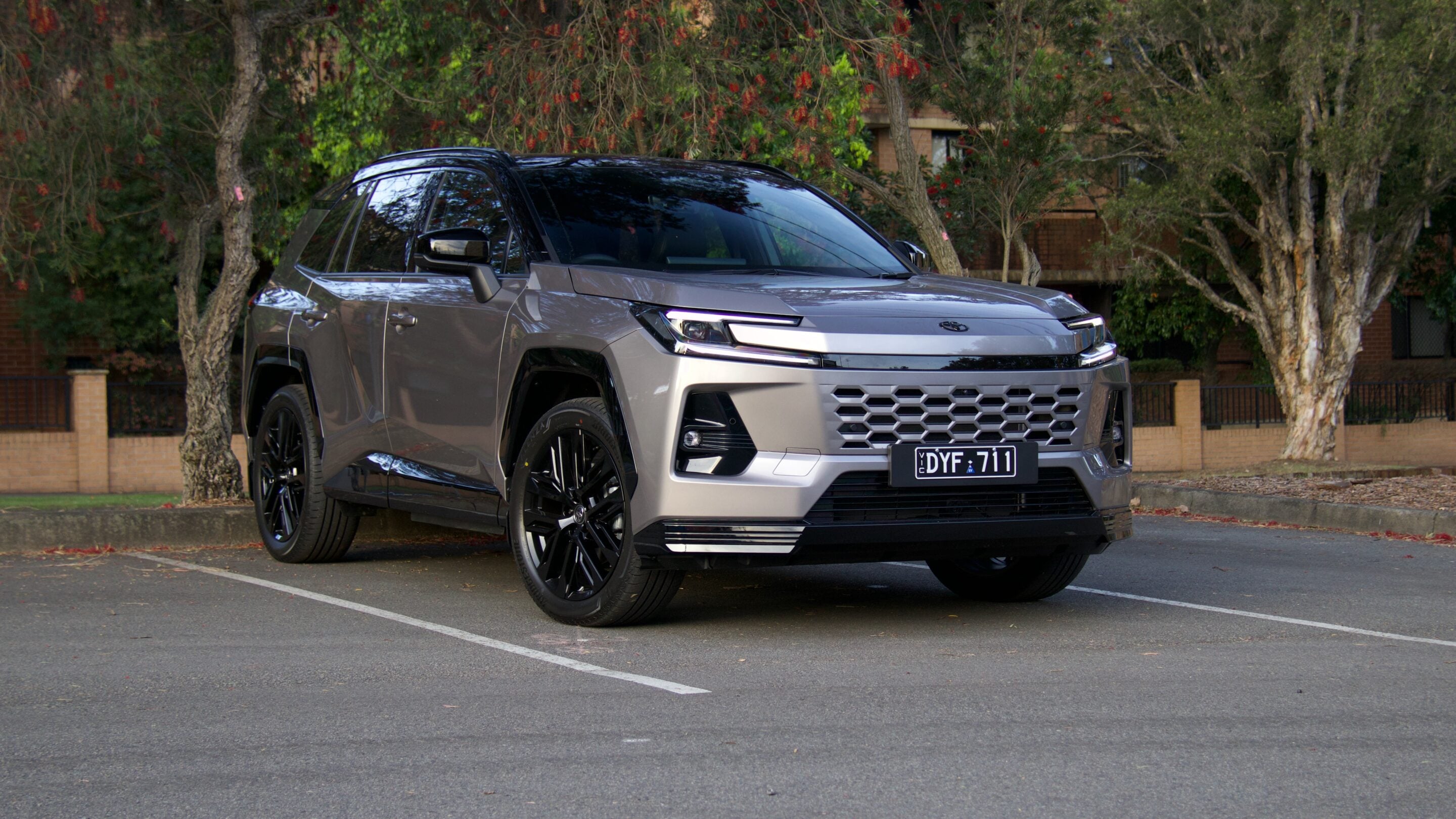
Toyota RAV4
9
Price: From $45,990 plus on-road costs
Drivetrains: 2.5-litre four-cylinder hybrid or 2.5-litre four-cylinder plug-in hybrid + 22.7kWh battery
Outputs: 143kW (hybrid),
EV range (PHEV, claimed): 113km (AWD, WLTP), 121km (2WD, WLTP)
Claimed combined fuel consumption: 4.5-4.6L/100km (hybrid), 0.7L/100km (PHEV, with full
battery)
Warranty: 5-year/unlimited km
Five-year service cost: $1625
| Driving | |
| Interior | |
| Practicality | |
| Overall value | |
Strengths
- New PHEV drivetrain adds more go
- Big upgrade with in-car tech
- Still a practical and spacious family SUV
Weaknesses
- Expensive across the range
- Some interior parts feel cheap
- Cheapest PHEV is over $60k
Few medium SUVs arrive with expectations as high as the Toyota RAV4. Its predecessor became a runaway success in Australia, helping transform hybrid power from a niche alternative into the preferred choice for many family SUV buyers. Now an all-new generation has arrived, and although competition has never been fiercer, Toyota’s familiar formula remains highly convincing.
The biggest sticking point is price. The range now starts at $45,990 plus on-road costs for the GX Hybrid 2WD, an increase of $3730 over its predecessor. The GXL begins at $48,990, while the Cruiser stretches to $60,340 with all-wheel drive. Those increases make the RAV4 considerably less affordable than before, particularly alongside aggressively priced Chinese hybrid and plug-in hybrid competitors.
At least standard equipment has improved. Even the entry-level GX includes a 10.5-inch infotainment touchscreen with wireless Apple CarPlay and Android Auto, a 12.3-inch digital instrument display, dual-zone climate control, five USB-C ports and a comprehensive suite of active safety technology. The upgraded cabin technology, in particular, represents a significant step forward over the previous generation.
Toyota has also made hybrid power standard across the regular RAV4 range. Its fifth-generation system combines a naturally aspirated 2.5-litre four-cylinder petrol engine with electric assistance, producing 143kW in both front- and all-wheel-drive configurations. That doesn’t make it the most powerful drivetrain in the segment, but outright performance has never been the RAV4 Hybrid’s primary attraction.
Instead, efficiency remains a standout strength. Claimed fuel consumption is as low as 4.5L/100km, with no need for external charging to achieve excellent economy. Around town, the hybrid system frequently relies on electric assistance or shuts down the petrol engine altogether, delivering smooth, quiet progress that’s particularly well suited to urban driving.
The new model also builds on the RAV4’s reputation for being comfortable and reassuring behind the wheel. Steering is light and predictable, while improvements to refinement and body control contribute to a more polished driving experience. It might not be the sportiest medium SUV, but its relaxed, easy-going character makes it an appealing everyday companion.
Practicality remains another major strength. There’s generous accommodation for adults in both rows, with ample rear legroom and headroom, while the relatively boxy body creates an airy, family-friendly cabin. Luggage capacity is equally impressive, with up to 705 litres available depending on the variant, making the RAV4 particularly well suited to family duties.
Toyota backs the RAV4 with a five-year/unlimited-kilometre warranty, while scheduled servicing is required every 12 months or 15,000km. The first five services are capped at $325 each, bringing the total to a reasonable $1625 over five years.
The RAV4 is no longer the obvious value proposition it once was, and its higher pricing gives buyers more reason to consider the growing number of affordable alternatives. Nevertheless, the fundamentals remain difficult to fault.
Excellent fuel efficiency, generous practicality, well-developed hybrid technology and an effortless driving experience ensure Toyota’s hugely popular medium SUV remains one of the benchmarks its increasingly accomplished rivals must measure themselves against.
Follow WhichCar/Wheels on Google
Click the button below to make WhichCar by Wheels a preferred source for your news.

We recommend
-
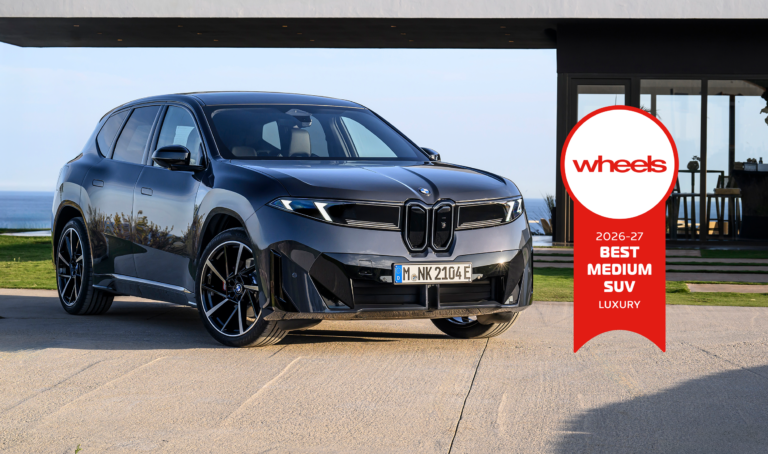 Best Medium SUVs
 2026: Luxury
Our contenders in the Luxury segment range from European benchmarks to ambitious newcomers, but all bring an enticing blend of premium comfort, performance and advanced technology.
-
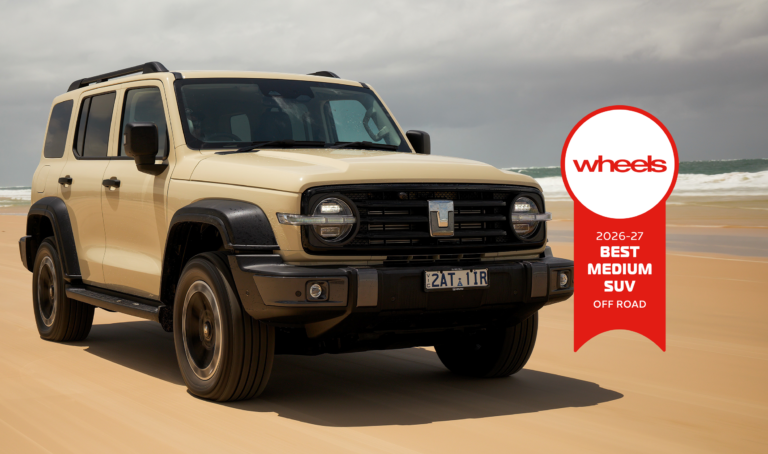 Best Medium SUVs
 2026: Off-road
Rugged plug-in hybrids and versatile all-wheel drives, these SUVs are our pick for combining everyday practicality with off-road adventure.
