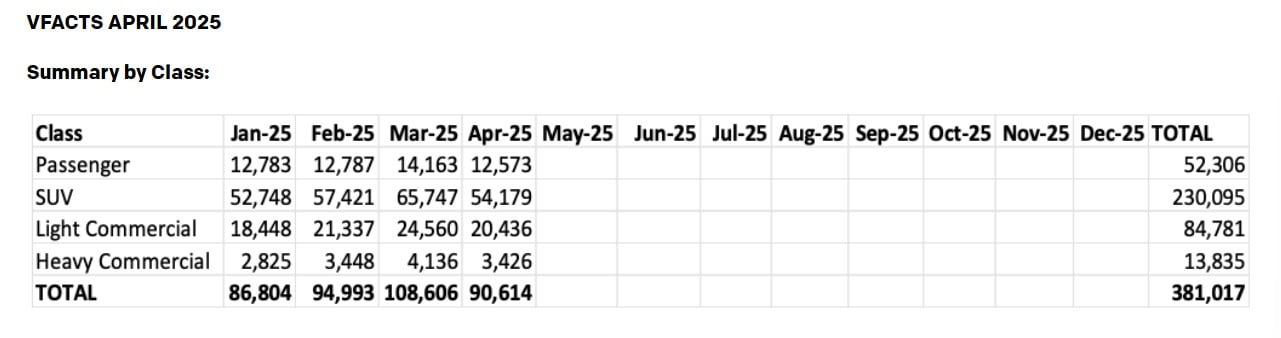
Australians bought 90,614 new vehicles in April 2025, marking a 6.8 per cent decline compared to the same month last year, according to the latest VFACTS data released by the Federal Chamber of Automotive Industries (FCAI).
The downturn was most pronounced in the plug-in hybrid electric vehicle (PHEV) segment, which saw a sharp drop following the end of the fringe benefits tax (FBT) exemption on March 31.
PHEV sales for April totalled 2,601 units, accounting for just 2.9 per cent of the market. This is a notable slide from the 4.7 per cent share recorded in the first quarter of 2025. FCAI Chief Executive Tony Weber attributed the decline to the withdrawal of tax incentives, underscoring the sensitivity of the automotive market to government policy.
“The earlier inclusion of PHEVs in the FBT exemption played a critical role in making these vehicles accessible to more Australians. Removing that support has led to an immediate and disappointing drop in demand in a price-sensitive vehicle market,” Mr Weber said.
Battery electric vehicles (BEVs) accounted for 5.9 per cent of sales in April—a modest figure that, according to Weber, highlights the challenges Australia faces in meeting its emissions reduction goals under the New Vehicle Efficiency Standard (NVES).
“For NVES to succeed, it must be supported by holistic policy settings that assist consumers to move to zero and low-emission technologies, including continued investment in recharging infrastructure,” he added.
Toyota maintained its position as the top-selling brand with 19,380 sales in April, ahead of Ford (7,334), Mazda (6,573), Kia (6,303), and Hyundai (5,547). The Toyota HiLux led individual vehicle sales with 4,121 units, narrowly beating the Ford Ranger at 4,031.
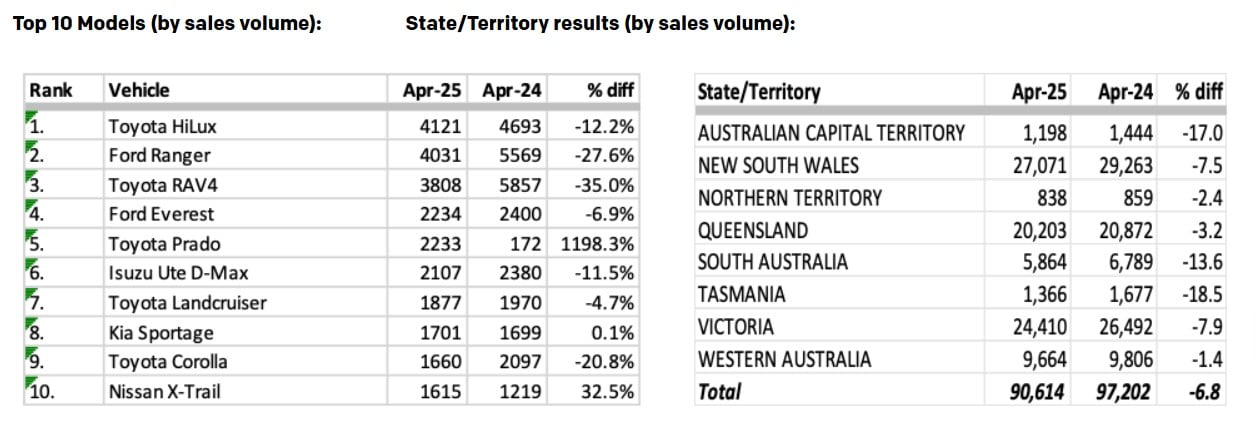
Every state and territory recorded year-on-year sales declines, with Tasmania and the ACT experiencing the steepest drops at 18.5 per cent and 17 per cent respectively, while Western Australia posted the smallest decrease at 1.4 per cent.
Things we like
- Lots of room and configurability with seating arrangements
Not so much
- Not particularly dynamic or engaging to drive
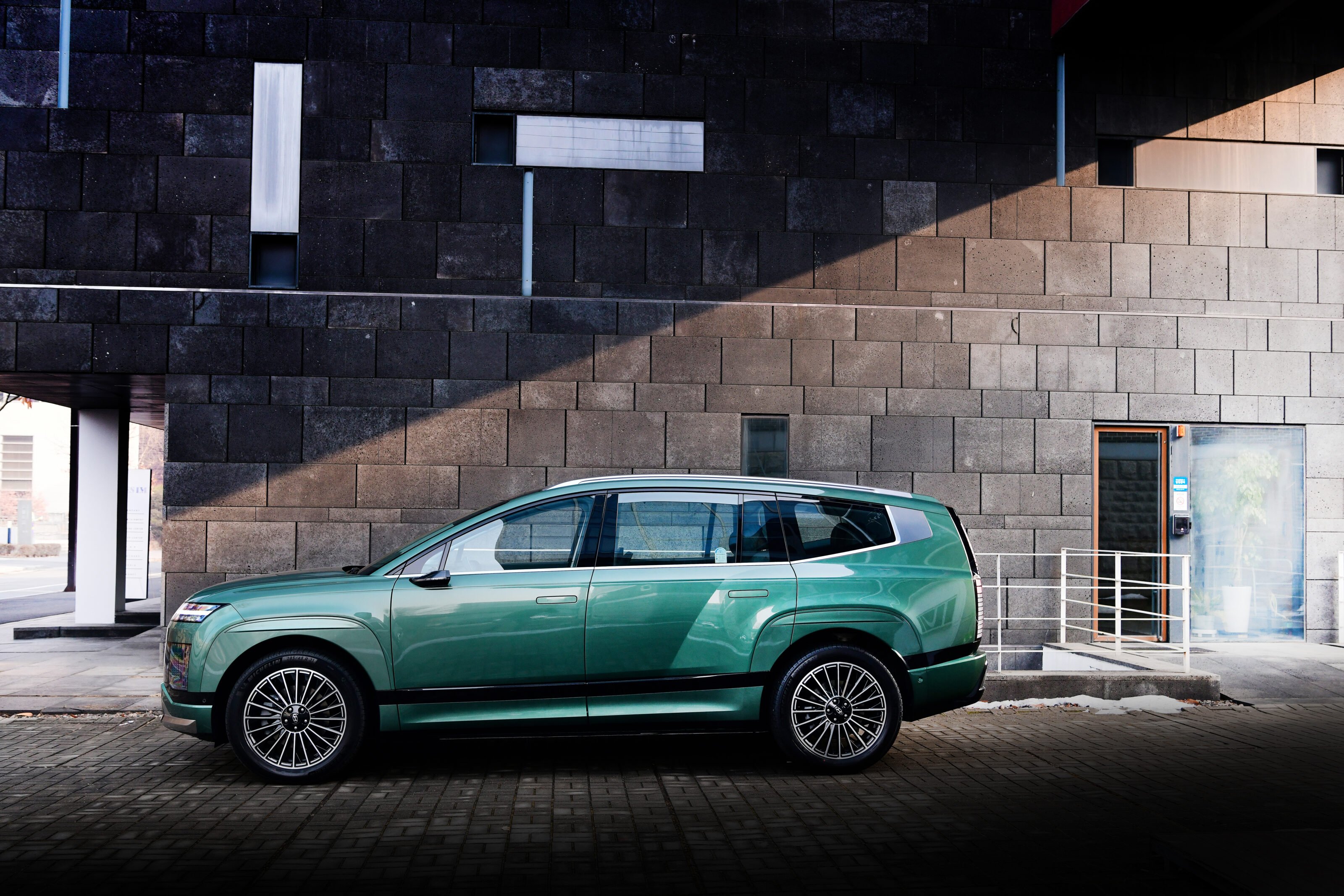
Between being unveiled in concept form in 2021 and reaching production, Hyundai’s newest SUV grew. Not literally but figuratively: the Ioniq 7 became the Ioniq 9, an adjustment intended to crown the large six- or seven-seater as the flagship of the Korean firm’s electric range, and possibly to ensure parity with sister brand Kia’s related EV9.
Given how many car makers have stumbled on nomenclature when trying to add EVs into their already bulging line-ups, credit to Hyundai for the pre-emptive minor course adjustment. And in its size, ambition and lashings of premium splendour, this car feels every inch the king of Hyundai’s ‘chess piece’ Ioniq family.
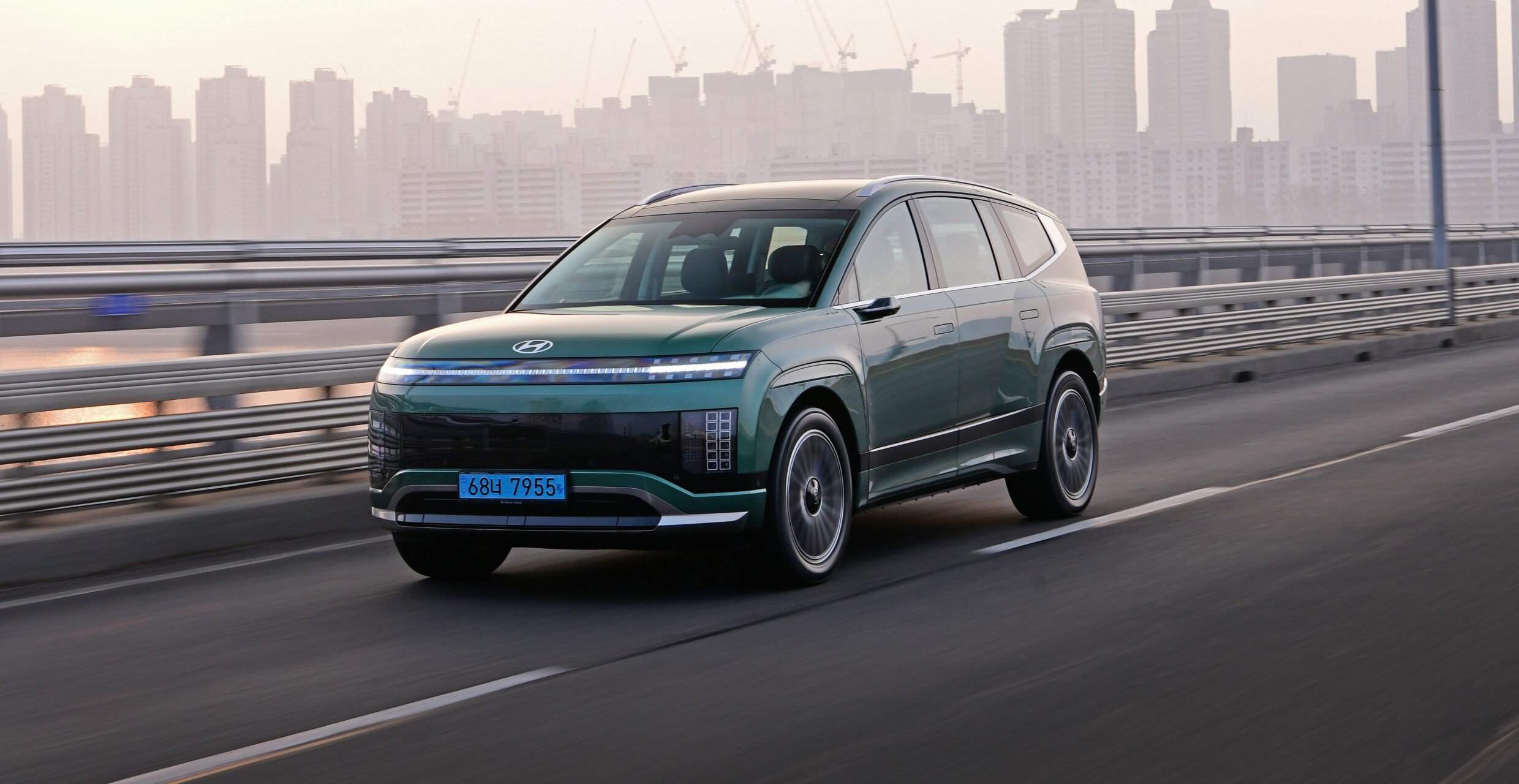
That approach refers to Hyundai’s determination to give each Ioniq model a distinct character. Sure enough, park the 9 next to the 5 and 6 and only the badge and details such as the pixel light graphics would give away how closely related they are.
Hyundai’s design team has aimed to both maximise interior space and make a 2.6-tonne, 5m-long SUV as aerodynamic as it can possibly be. With a drag coefficient of 0.26 (0.27 if you opt for door mirrors rather than digital items), it’s even more aerodynamic than both the smaller Ioniq 5 (0.29) and equivalent EV9 (0.28).
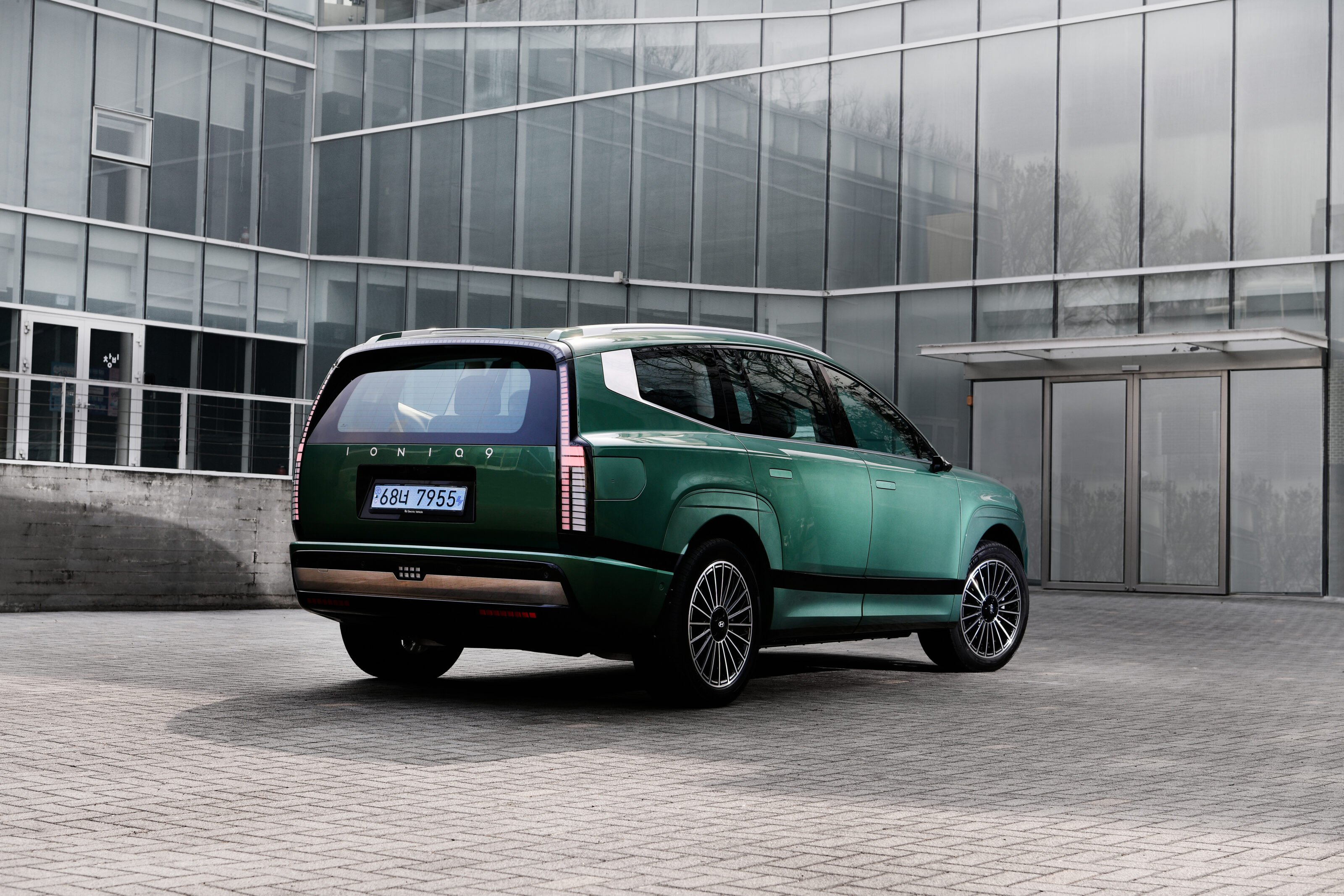
The Ioniq 9 is based on Hyundai’s E-GMP platform, and while there will be three powertrain options at launch, all will be fitted with the same 110.3kWh battery (whose total and usable capacities are slightly bigger than the EV9’s). Because the platform has an 800V electrical architecture, the battery can be charged at speeds of up to 350kW, and there’s a vehicle-to-load outlet in the boot.
The entry-level Long Range RWD model uses a single 160kW motor on the rear axle and offers a headline-grabbing official range of 620km. The Long Range AWD adds a 70kW motor on the front axle, while the range-topping Performance AWD tested here uses a pair of 160kW motors, giving maximum system outputs of 329kW and 700Nm, for a 0-100km/h time of 5.2sec and a range of around 507km.
Australian specifications and pricing have yet to be finalised, but expect entry-level models to start from above $100,000, rising to around $140,000 for the Performance AWD. There are likely to be two trim levels, Ultimate and Calligraphy (Ultimate as the base spec? I know, but let’s just roll with it).
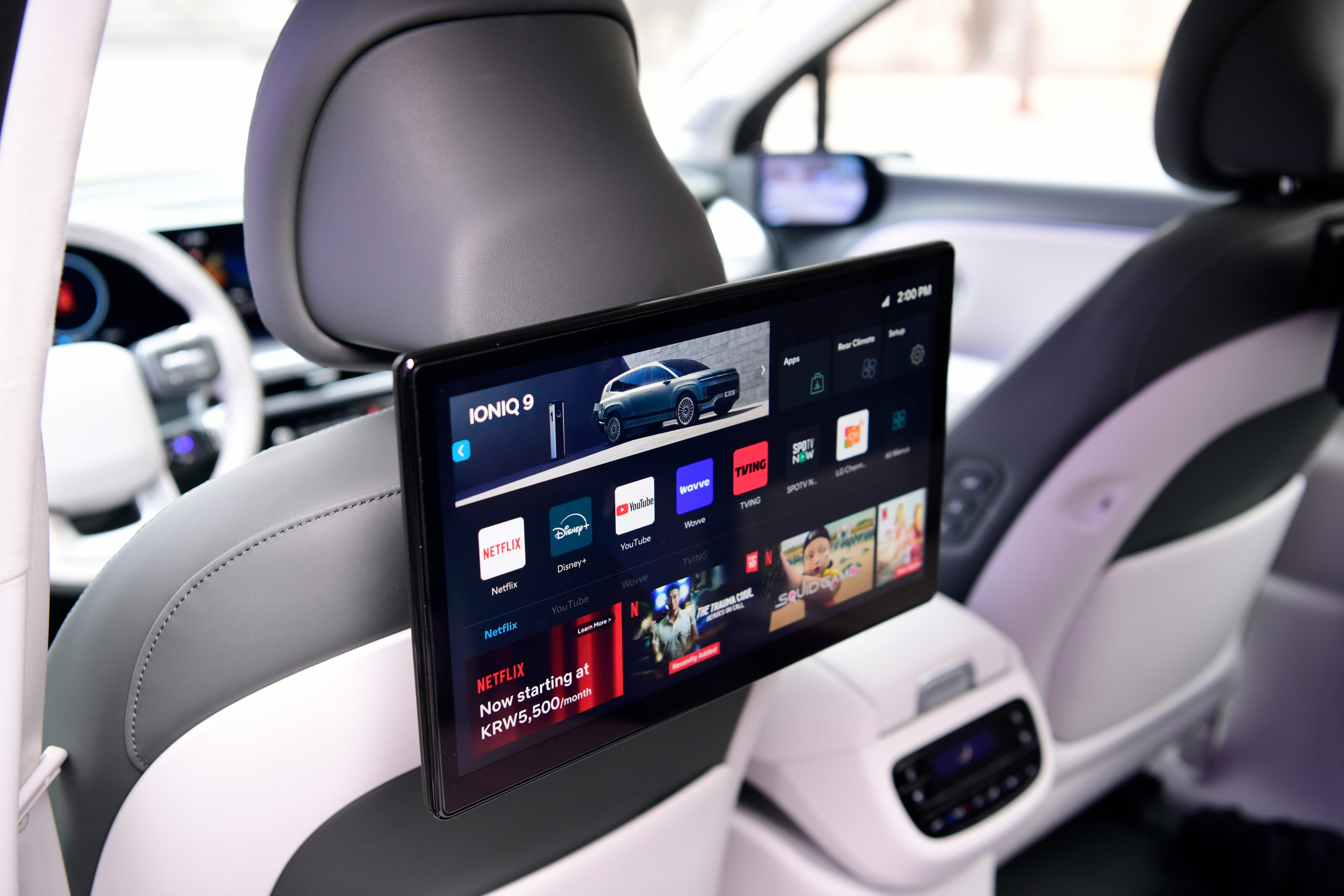
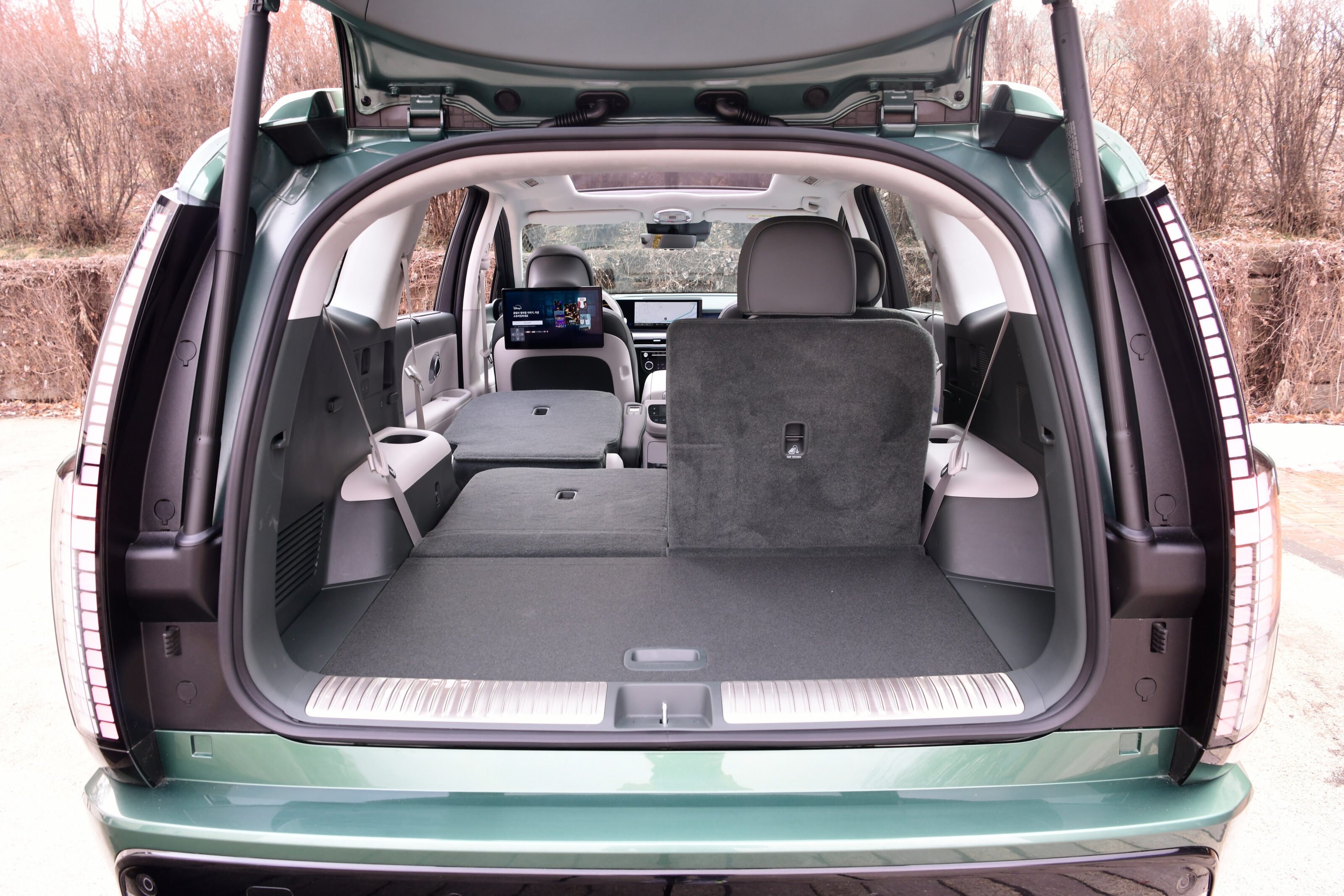
Seven seats will be standard, but in Calligraphy trim you can opt to turn the Ioniq 9 into a six-seater by swapping the second-row bench for a pair of plush seats that can swivel 180 degrees when stationary to turn the rear into a proper mobile lounge. Thanks to that elongated roofline it’s properly vast in there, especially with the large panoramic roof letting in so much light. My test car came in six-seat form and there was plentiful head and leg room in both the second and third rows. It also had large touchscreens for the second-row seats. Even with the rearmost seats in place, there’s a large 620-litre boot; fold them down and there’s 1323 litres of cargo capacity.
The dashboard will be familiar to anyone who has driven a new Hyundai recently, with the touchscreen and digital instrument display complemented by a decent array of physical buttons and steering wheel controls. The infotainment system is the latest version of that offered on other Ioniqs, and it’s well thought through: particularly pleasing was the remaining range indicator, which showed average but also best- and worst-case scenarios.
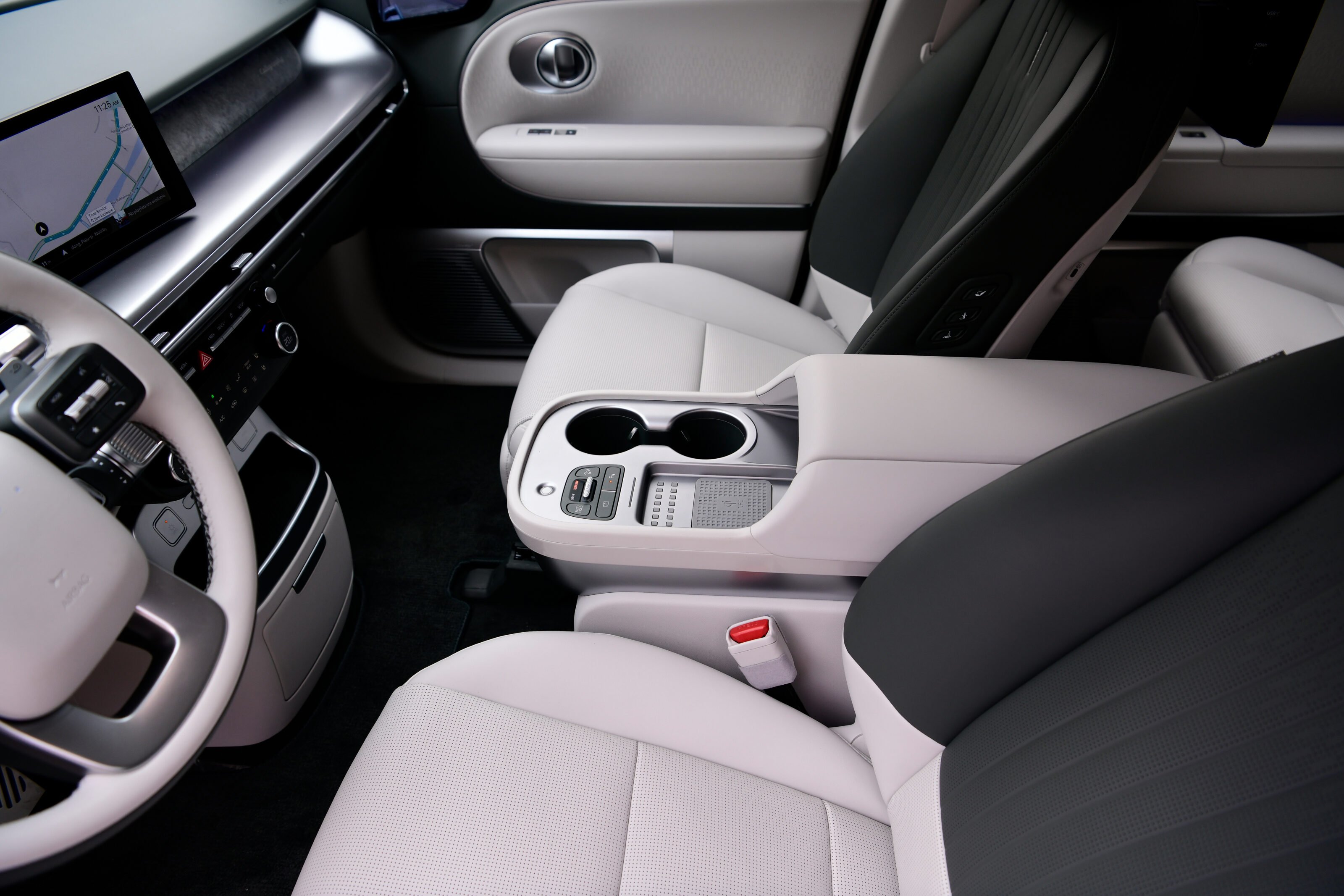
There’s a large centre console between the front seats and plenty of storage space. The materials used for the interior trim all feel good quality and there’s a decent Bose stereo system. Much like the EV9, you can see the Ioniq 9 turning some heads among potential buyers of more prestigiously badged SUVs.
The Ioniq 9 has a MacPherson-strut front and a multi-link rear, with the suspension tuned for the extra EV weight. There are also self-levelling dampers and a chassis control system featuring dynamic torque vectoring and wind stability control to help smooth the ride. Hyundai says the intent was to deliver a “luxurious and refined” drive, and it delivers on that score. The Performance powertrain enables it to accelerate faster than expected of a 2.6-tonne car and the power delivery is calm and linear.
This isn’t a particularly dynamic car to drive, but it’s not really intended to be: the king is far from the most dynamic piece on a chess board, after all. The ride is notably calm and unflustered, although I was driving a Korean-spec car on relatively smooth Korean roads. Past experience suggests it will face a tougher test to maintain similar composure when it reaches Australia. Towing? A reasonable 2500kg – just don’t watch the available range indicator.
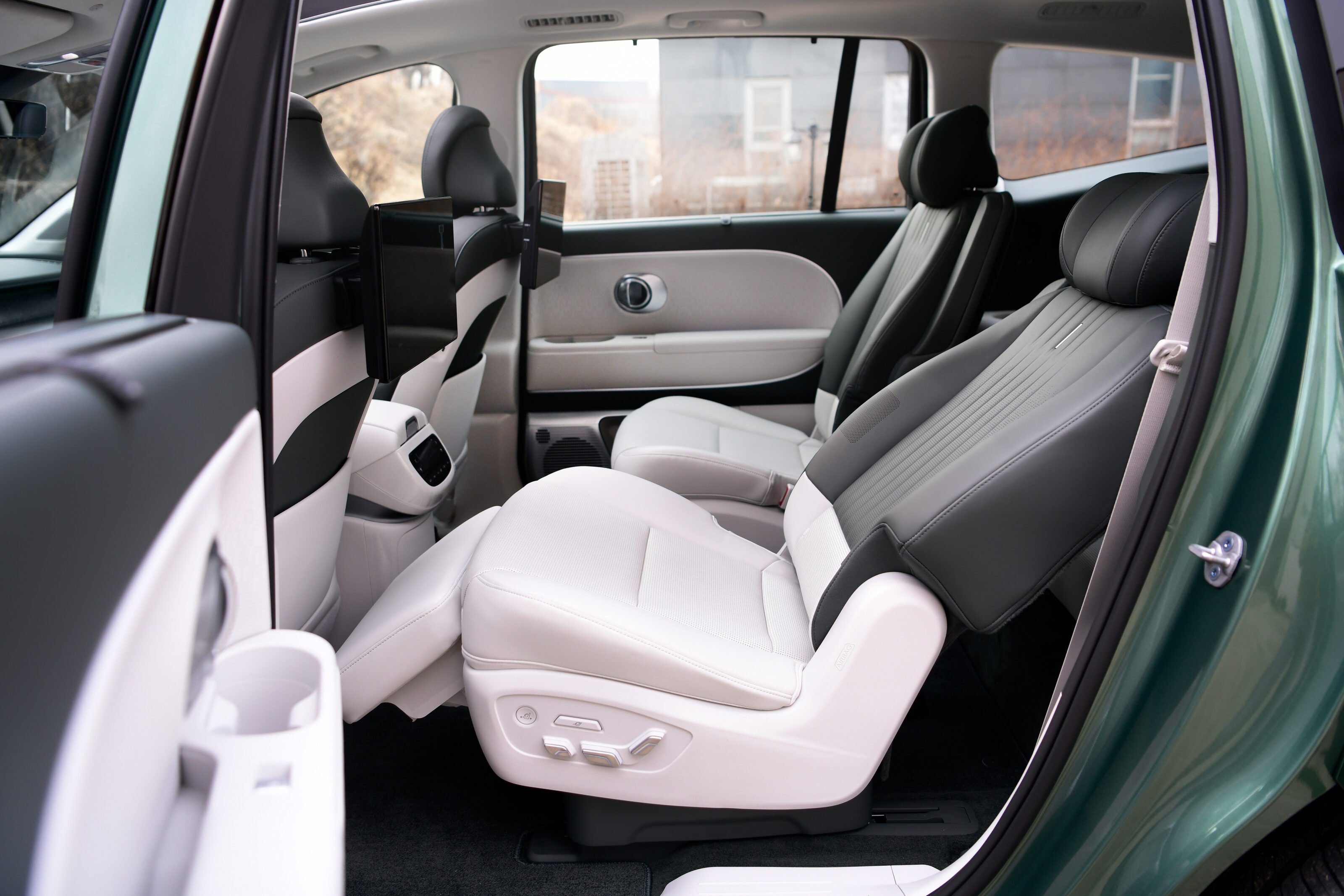
The steering is light and direct but not tremendously engaging. When I found a faster flowing road, the Ioniq 9 didn’t lose all composure when being chucked into corners, but that’s clearly not what it’s designed for. Still, given its size it was impressively easy to thread down the narrow, hilly streets of urban Busan. Particularly impressive was the isolation of the cabin, thanks to active noise-cancelling, sound-absorbing tyres and acoustic glass.
There’s still a dearth of options in the market for seven-seat electric SUVs, and the Ioniq 9 certainly feels a strong contender. It’s set to undercut both the EV9 (by a bit) and the Volvo EX90 (by quite a lot) while offering a fresh take on a premium-leaning formula.
| Model | Hyundai Ioniq 9 Performance AWD |
|---|---|
| Motor | Two permanent magnetic synchronous |
| Battery | 110.3kWh (net) |
| Max power | 329kW |
| Max torque | 700Nm |
| Transmission | Single-speed reduction gear |
| Weight | 2600kg |
| Economy | 21kWh/100km (est) |
| 0-100km/h | 5.2sec |
| Price | $140,000 (est) |
| On sale | Q3 2025 |
The May 2025 edition of Wheels is now on sale, packed with in-depth reviews of new cars on the Australian market as well as our famous Buyer’s Guide section with essential data on every car on sale.
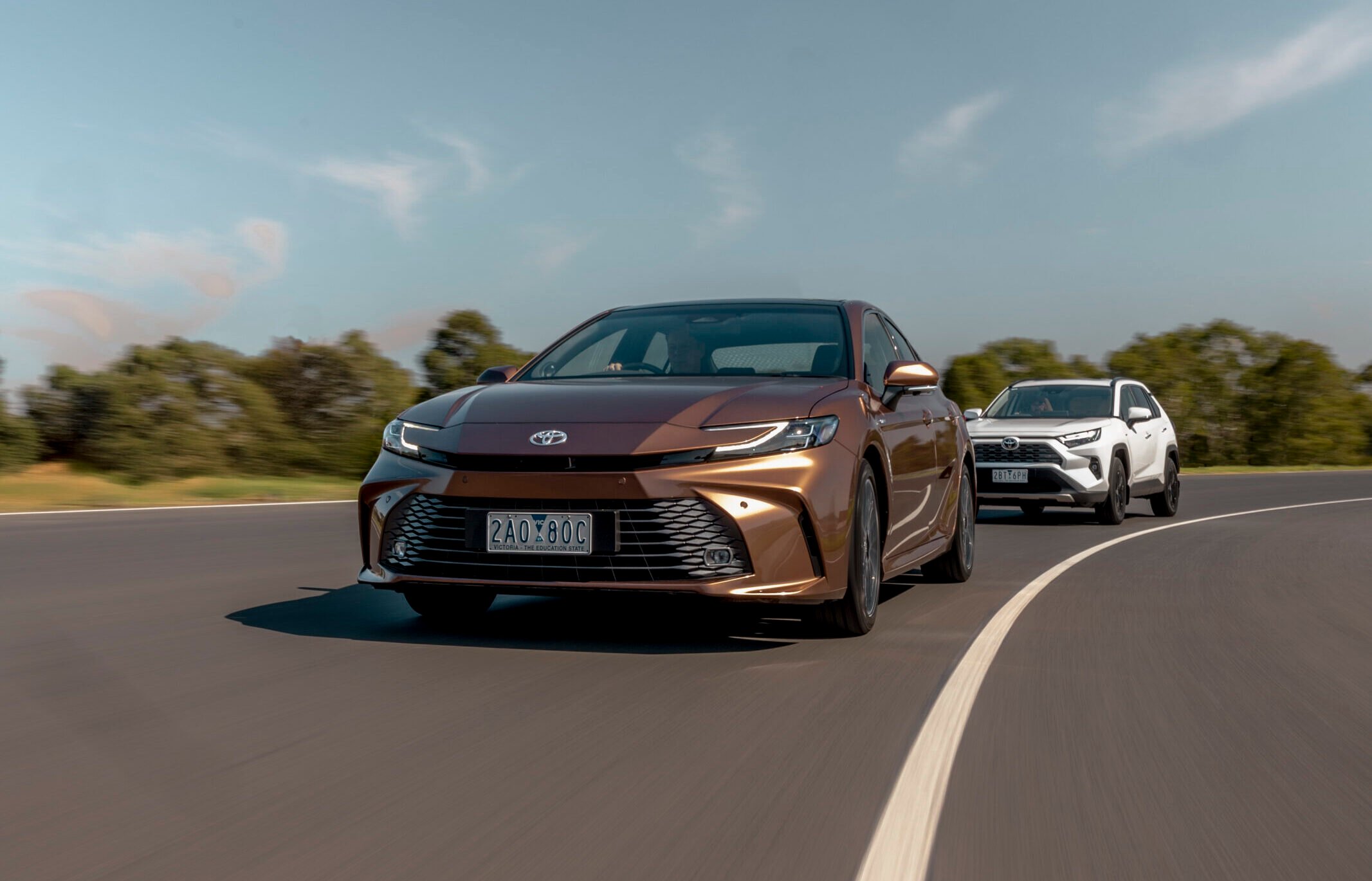
This month’s cover story sees Road Test Editor Andy Enright do his darndest to assess the competing values of a sedan and an SUV with similar specifications. And while SUVs have fast become the dominant passenger vehicle in Australia, Enright makes some damn persuasive arguments for the enduring appeal of the sedan.
Up front we take a first look at the all-terrain, all rugged Ford Super Duty, a truck built for serious service.
Check out first drives of the Kia EV3, the Genesis GV70 premium mid-size SUV, the fourth generation BMW X3, the Porsche 911 Carrera’s mid-life update, the 992.2, the Hyundai Ioniq 9, Haval H6GT PHEV Hybrid power and lSmart #1 Premium SUV.
In our regular Car vs Road test, Wheels takes the Hyundai Santa Fe Calligraphy Hybrid with XRT Peak option out into the remote back country from Warburton to Woods Point in Victoria.
Paul Gover meets Kees Weel, the Dutch migrant whose way with a radiator created a $150m-a-year company, PWR, that supplies half the F1 grid.
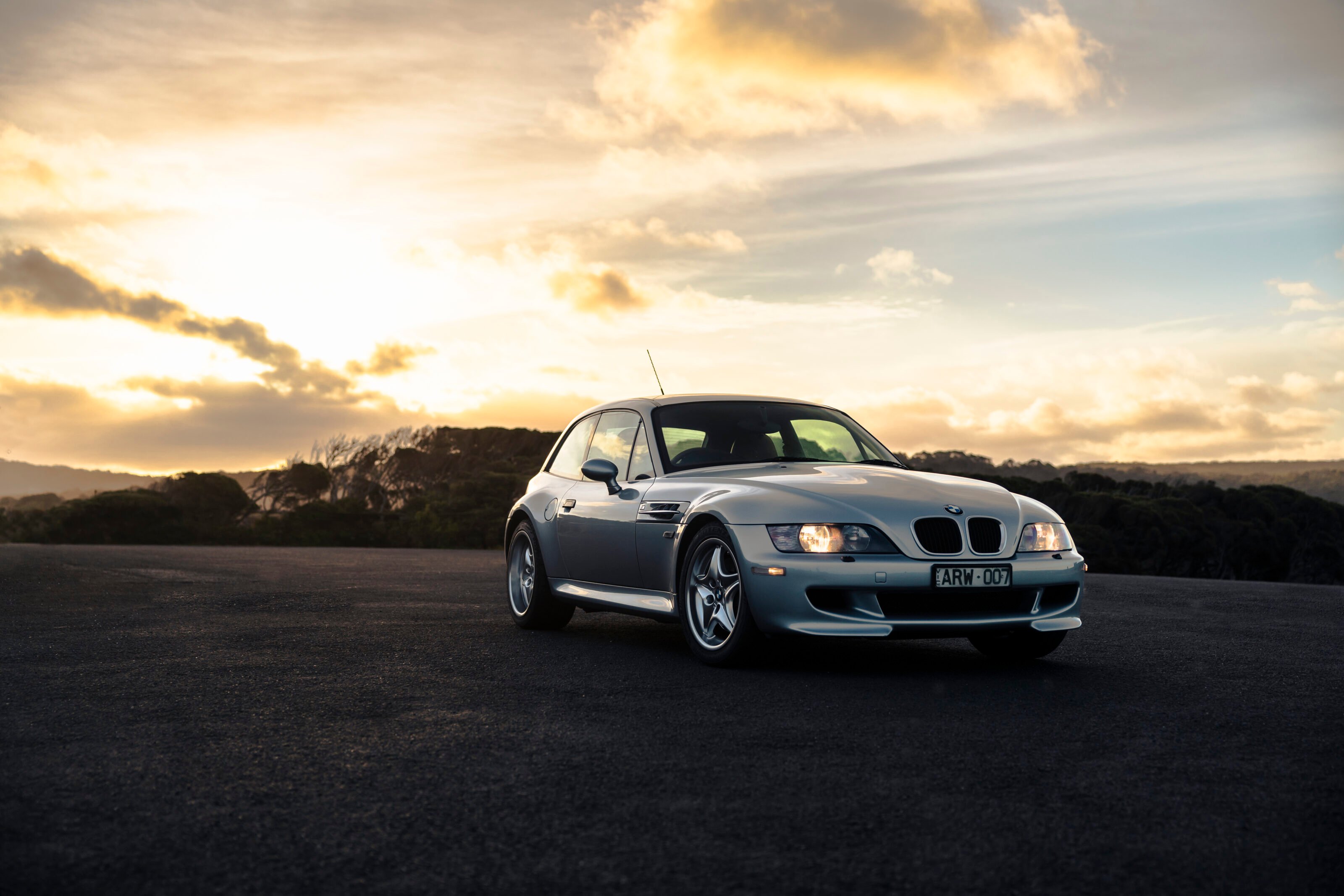
Our renovated Buyer’s Guide covers 1900 vehicle prices, specs and reviews every month, while the popular Modern Classic section pays tribute to the BMW M Coupe (above). It’s attracted cruel nicknames over the years – ‘bread van’, ‘clown shoe’ and even a ‘bullfrog with a damaged hip’, but Wheels knew the M Coupe was a unique car when it first encountered it way back in 1998.
Plus there’s much more in the new issue. Wheels May edition – a value-packed classic. You can also subscribe to the magazine here.
Things we like
- Lovely interior feels truly luxurious
- Awesome colour range
- Strong overall value equation
Not so much
- Quite thirsty, no matter how or where it’s driven
- Short 10,000km service intervals
- Sensitive and shouty driver attention alert
Ever since its local release in 2021, the Genesis GV70 premium mid-size SUV has impressed with its luxury feel. And while it’s the backbone of the brand’s global sales, in Australia Genesis’ sales have been modest so far. Now it’s embarked on a period of new or refreshed product over the next few years, with the refreshed GV70 premium mid-size SUV one of the first.
Pricing starts at $78,700 plus on-road costs for the entry-level model and three models are available: base Advanced (2.5T only), mid-spec Signature and top-spec Signature Sport. The least expensive V6 asks $98,200 +ORC and the top-spec 3.5T Signature Sport we tested is $100,200 +ORC.
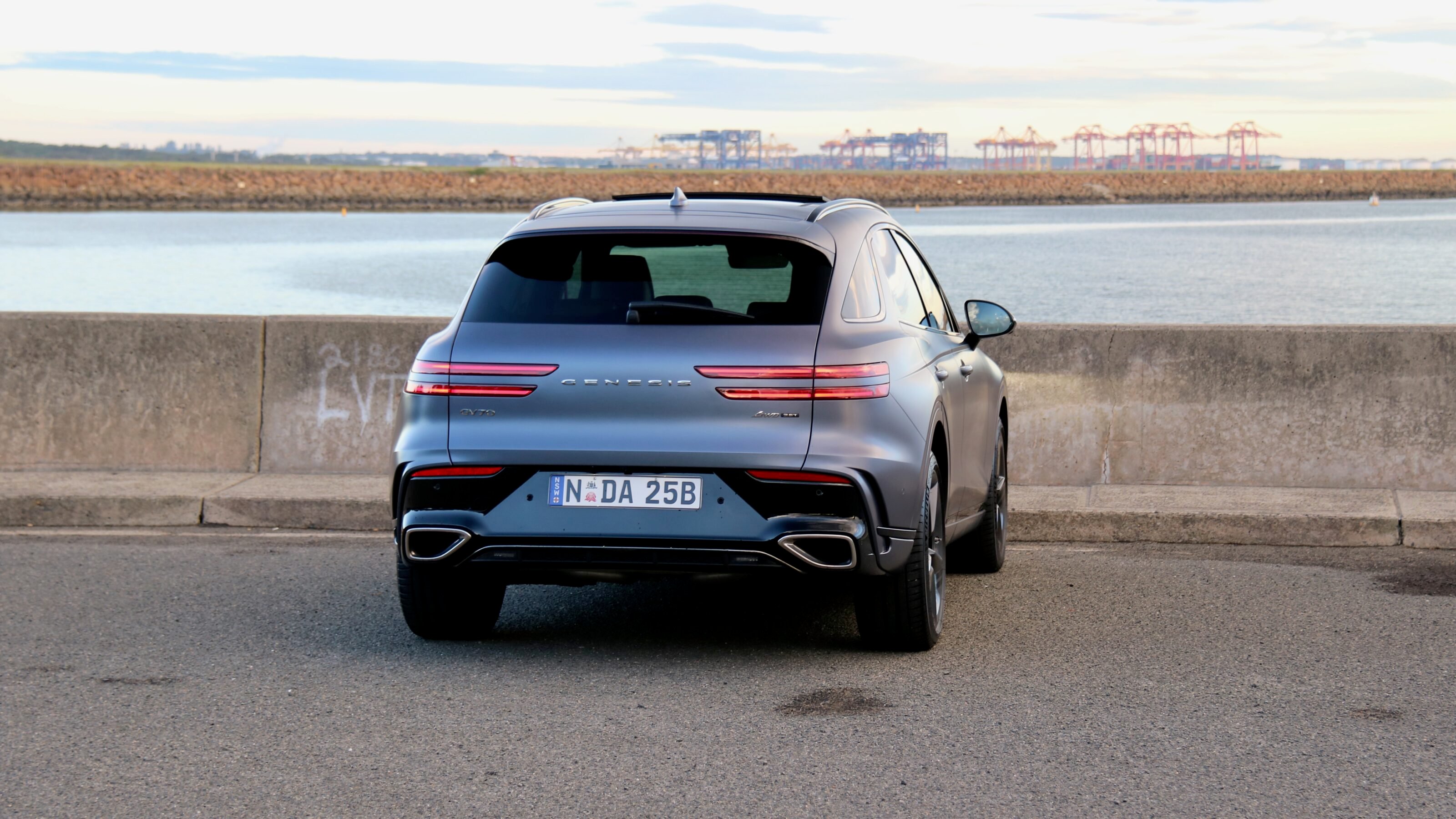
While that’s not cheap, the GV70’s value is obvious: the BMW X3 M50 it competes against asks $128,900 +ORC and then you still have to option $4000 leather trim to match the Genesis for equipment. That’s an almost $33,000 difference, and that’s not even considering the GV70’s included five years’ servicing.
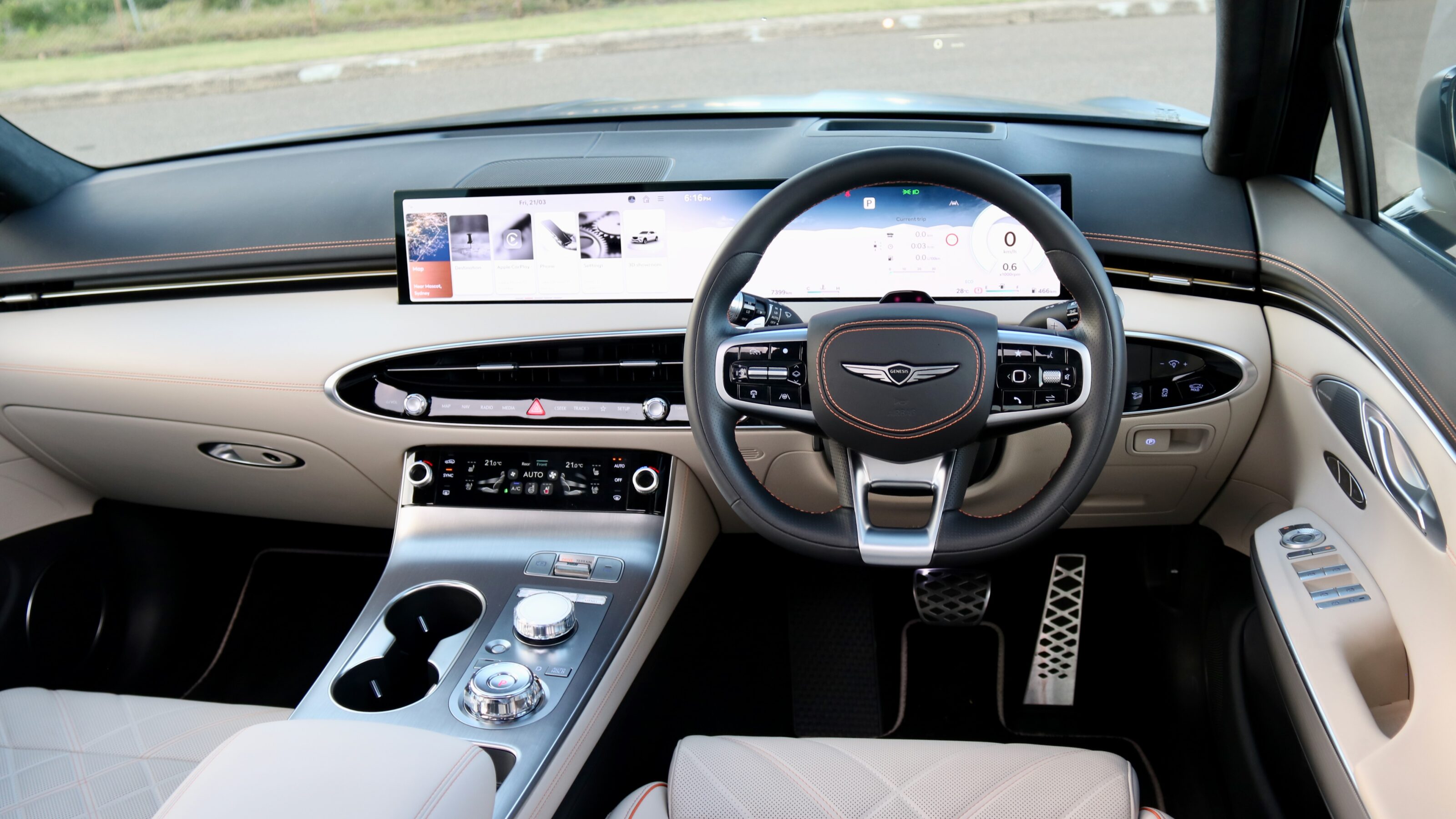
Regardless of model, every GV70 is generously equipped with even the entry model featuring a 27-inch interior display, panoramic sunroof, heated electric front seats and a full suite of active safety features.
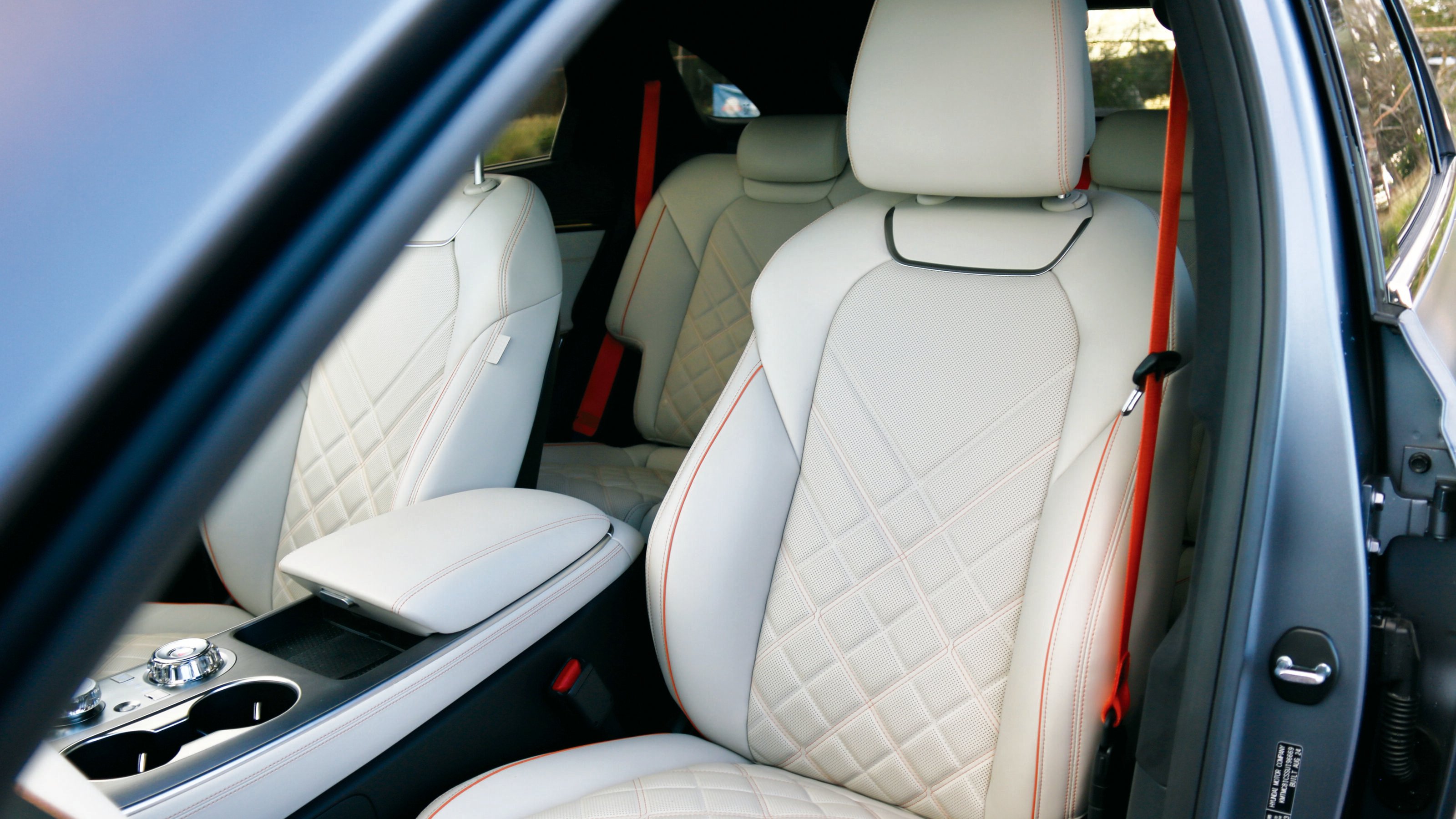
The Signature Sport then adds large 21-inch wheels, Nappa leather trim, ventilated and massaging front seats, a 16-speaker Bang & Olufsen sound system, a sporty flat-bottomed steering wheel and sportier exterior styling.
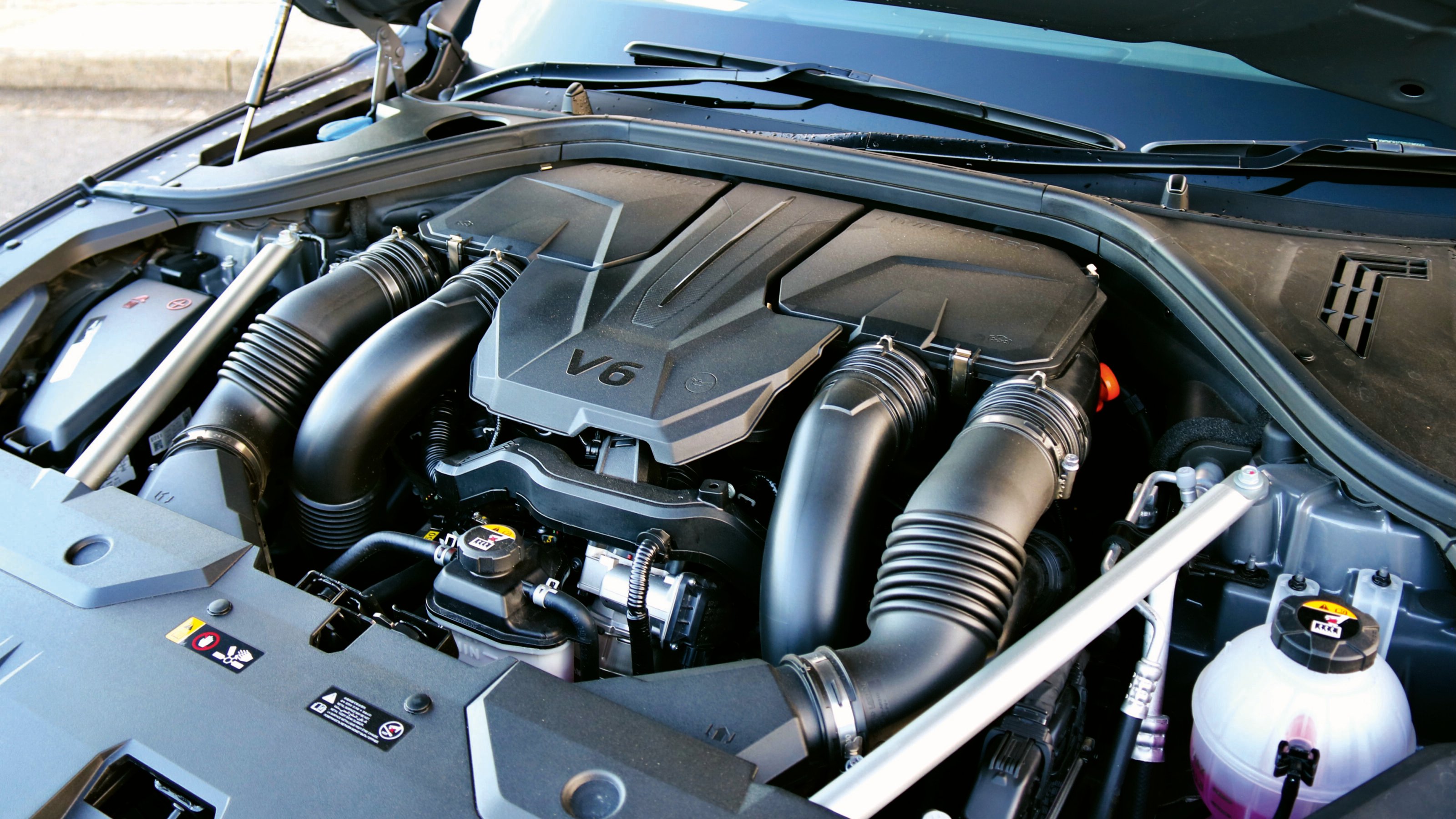
Making 279kW of power (@ 5800rpm) and 530Nm of torque, the 3.5-litre twin-turbo petrol V6 engine is strong and sounds suitably snarly as well, though in a refined way. Its 5.2-second 0-100km/h sprint time is quick and it hits a 250km/h top end – that’s only 0.6 seconds slower than the X3 M50. Peak torque hits at just 1300rpm and stays until 4500rpm, making swift progress effortless. The eight-speed auto is also fairly seamless too.
What could use improvement, however, is the fuel consumption. Even the lesser 2.5-litre turbo engine is thirsty but you’d need your own oil company to run the 3.5-litre V6 – its claim is 11.3L/100km but even for mainly motorway driving, we ended up on a figure of 12.6L/100km during our week with the vehicle. In urban driving, expect figures upward of 15L/100km. The aforementioned X3 M50, makes slightly more power and torque, yet uses 3.1L/100km less on the combined cycle, proving that a turbo six can be efficient.
Otherwise, driving the GV70 is great. It’s quiet, refined and very comfortable. The ride is nicely soft and well damped – it firms up in sport mode for sportier driving – despite the huge wheels, and is a relaxing car to drive. It’s extremely quiet at speed as well, and a 1000km drive would fly by. It’s also a real driver’s car thanks to keen handling.
The active safety features in the GV70 are comprehensive and cover almost everything from AEB to adaptive cruise control that knows when to slow down based on GPS data, to effective adaptive high beam headlights. Only the active speed warning – which can thankfully be defeated with a long press of the mute button on the steering wheel – and sensitive driver monitoring are annoying.
The updates to the GV70’s exterior are quite subtle, but there are more meaningful changes inside. There’s a new centre console layout that’s more practical than before, while the materials are still wonderful. The Nappa leather in the Signature Sport is lovely and is available in many colour options, including a cool navy blue with orange stitching or a fetching dark red with black.
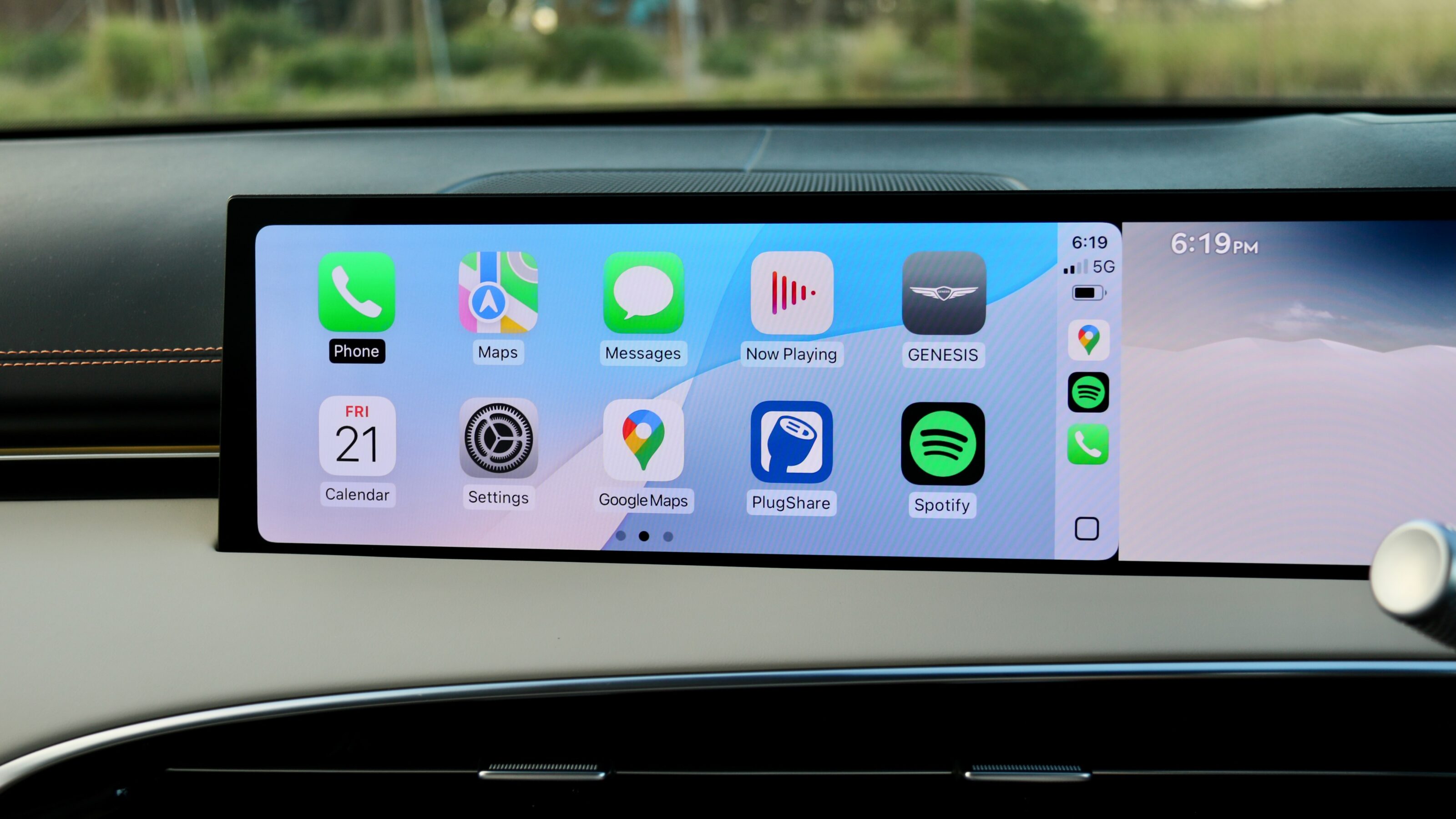
But while Genesis has made a number of changes to the interior of the GV70, the most noticeable difference is the new 27-inch infotainment and driver’s display. Unlike most other brands that fuse two screens together or have them laid out separately, Genesis has implemented one giant screen and it looks and feels fantastic. It now also features over-the-air updates to keep it all current.
If you’re using Google Maps in Android Auto or Apple Maps in CarPlay, the map impressively covers both sides of the screen in front of the driver as well as in the centre. The new Bang & Olufsen sound system is a massive improvement on the older Infinity unit too. With 16 speakers, there’s plenty of aural punch and the options to make it even more vibrant.
The screen itself is bright and uses soothing colours and fonts, while it’s also featured with sat-nav, digital radio and wireless Apple CarPlay and Android Auto. One glitch emerged in that CarPlay would refuse to wirelessly connect each time the car was started in our time with it and then wouldn’t let you re-pair your phone to the car. Hopefully a future update fixes that, but until then, best to connect via cable.
The GV70’s cabin is comfortable and practical, with a lot of storage space, while the multi-way electrically adjustable front seats are seemingly infinitely adjustable. Their massaging capability could be better however – we suggest driving a modern Peugeot and trying the sublime cat’s paw option, Genesis engineers.
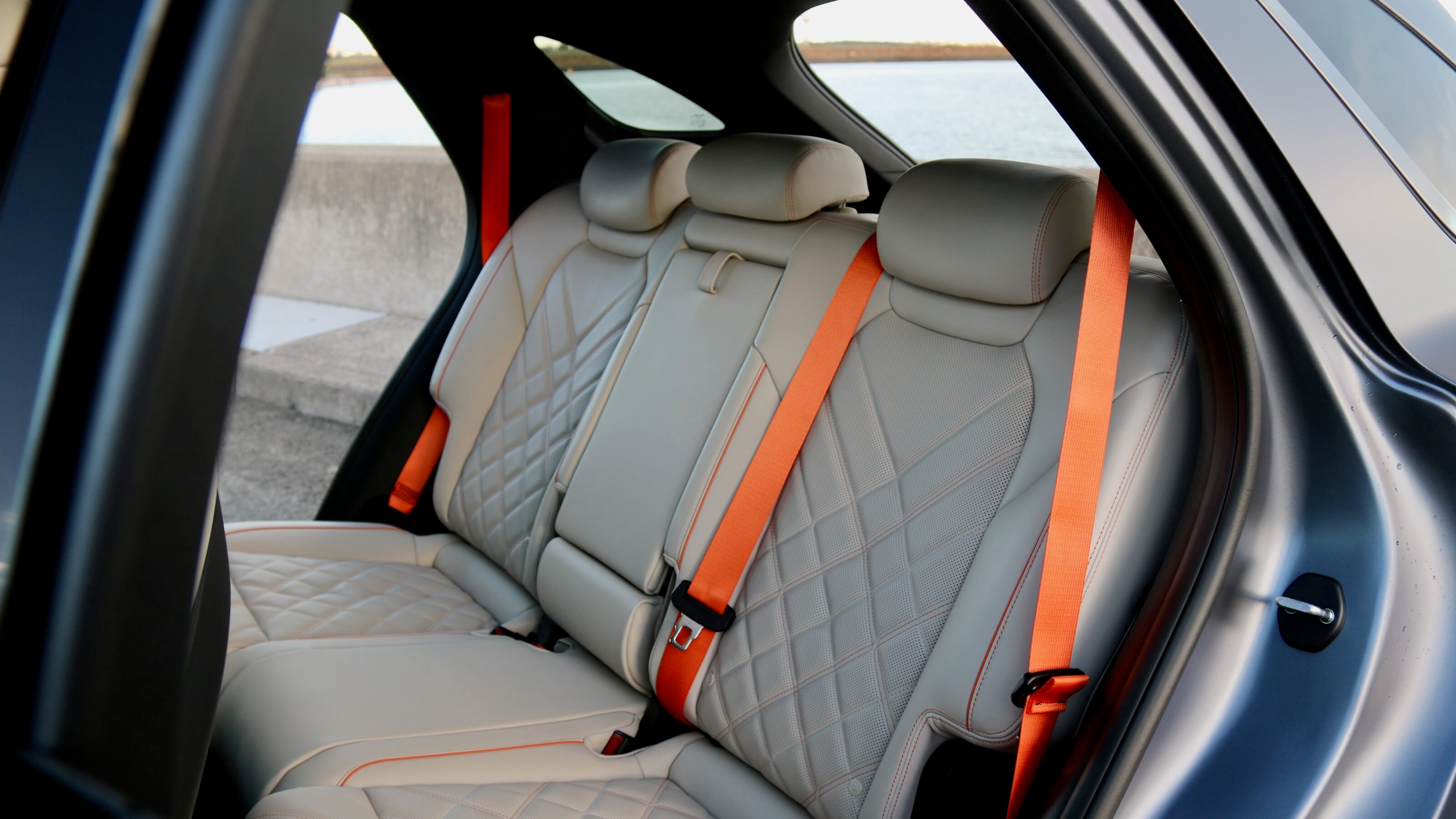
The rear seat of the GV70 is, like the front, comfortable and feature rich: a separate zone of climate control, heated outboard seats, map and door pockets, window shades and two USB-C charging ports are all standard. However, it’s not the most spacious rear seat and two six-foot adults will be good for headroom – legroom might be cozier. Thankfully, the seats slide and recline for extra room or cargo space.
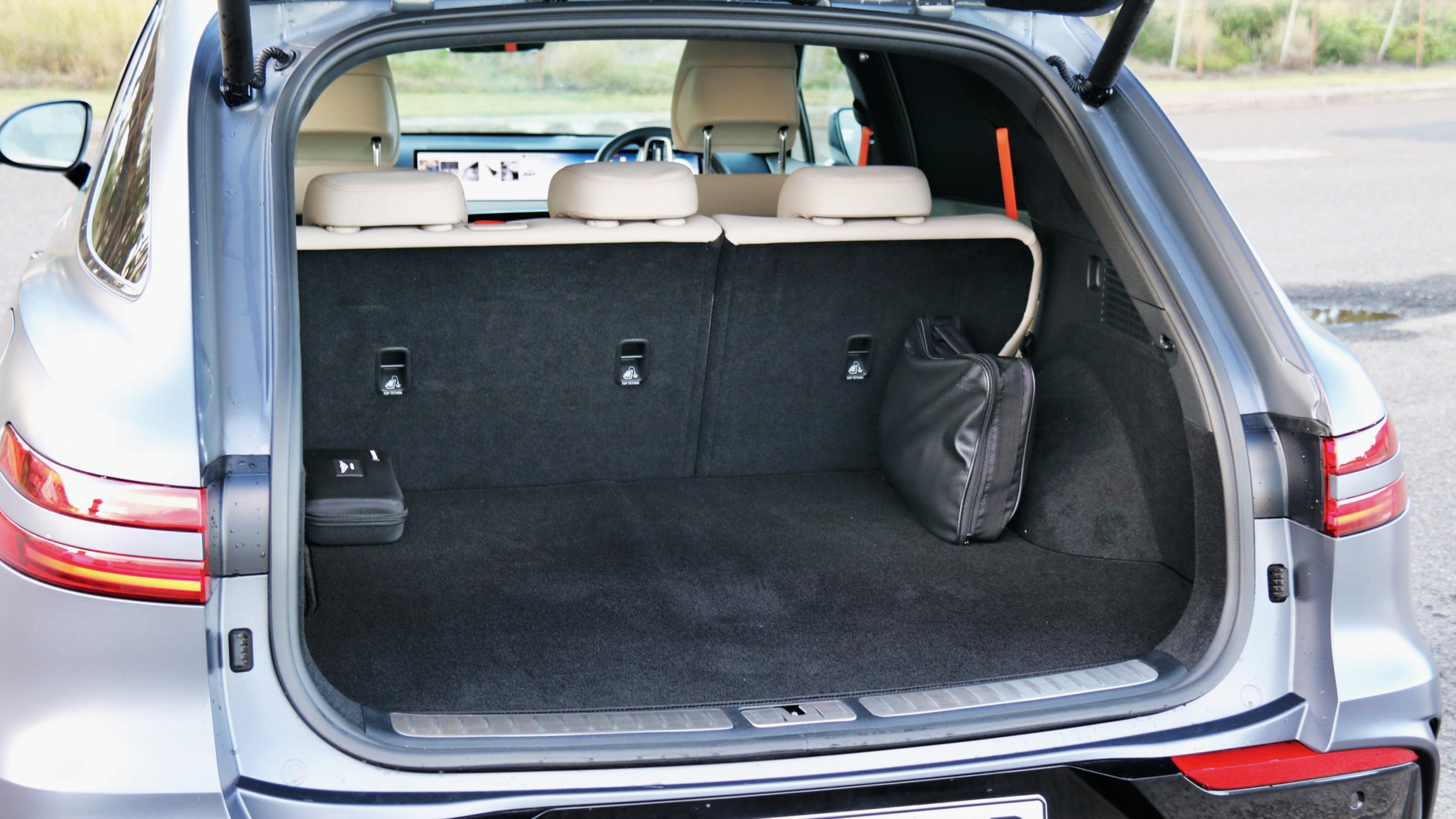
The boot of the GV70 measures 542 litres, which is healthy in the segment, and a large 1678L with the rear seats folded. The foot also features a full-size alloy spare wheel, side and under-floor storage, a 12V socket and remote releases for the rear seats.
Even though pricing rose with the update, the Genesis GV70 Signature Sport 3.5T still plays the premium mid-size SUV segment quite well
It’s not cheap, but it’s over $30,000 less expensive than its main rival and that’s before you consider the included servicing for the first five years. While it’s not quite as practical or anywhere near as fuel efficient as the X3 M50, it feels even more luxurious inside and it’s even better equipped. Like the BMW, the Genesis is also practical, lovely to drive and punchy. Because of products like the GV70, Genesis’ remains a serious contender in this space of the market.
| Model | GV70 3.5T Signature Sport |
|---|---|
| Price as tested | $100,200 plus on-road costs |
| Engine | 3.5-litre twin-turbo V6 |
| Power | 279kW @ 5,800rpm |
| Torque | 530Nm between 1,300rpm and 4,500rpm |
| Transmission | 8-speed auto, all-wheel drive |
| Claimed fuel consumption and CO2 | 11.3L/100km and 257g/km |
| 0-100km/h | 5.2 seconds |
If you’re getting simultaneously bored with your stock Porsche 964-series 911 and your seven-figure petty cash account, here’s the best possible news: Singer Vehicle Design has launched its latest drool-worthy suite of restoration services, the Porsche 911 Carrera Coupe Reimagined by Singer.
The Carrera Coupe “services” – Singer doesn’t talk in terms of models or series – arguably takes reimagination to new lengths, with a 4.0-litre, variable valve-timing engine developed in conjunction with Cosworth Engineering, and chassis reinforcement input from Red Bull Advanced Technologies.
Only 100 commissions are open for this “big-hearted, naturally aspirated sports car” restoration, which picks up the theme of the Super Sport Equipment option that was available on the Porsche 911 Carrera 3.2 from 1983-’89.
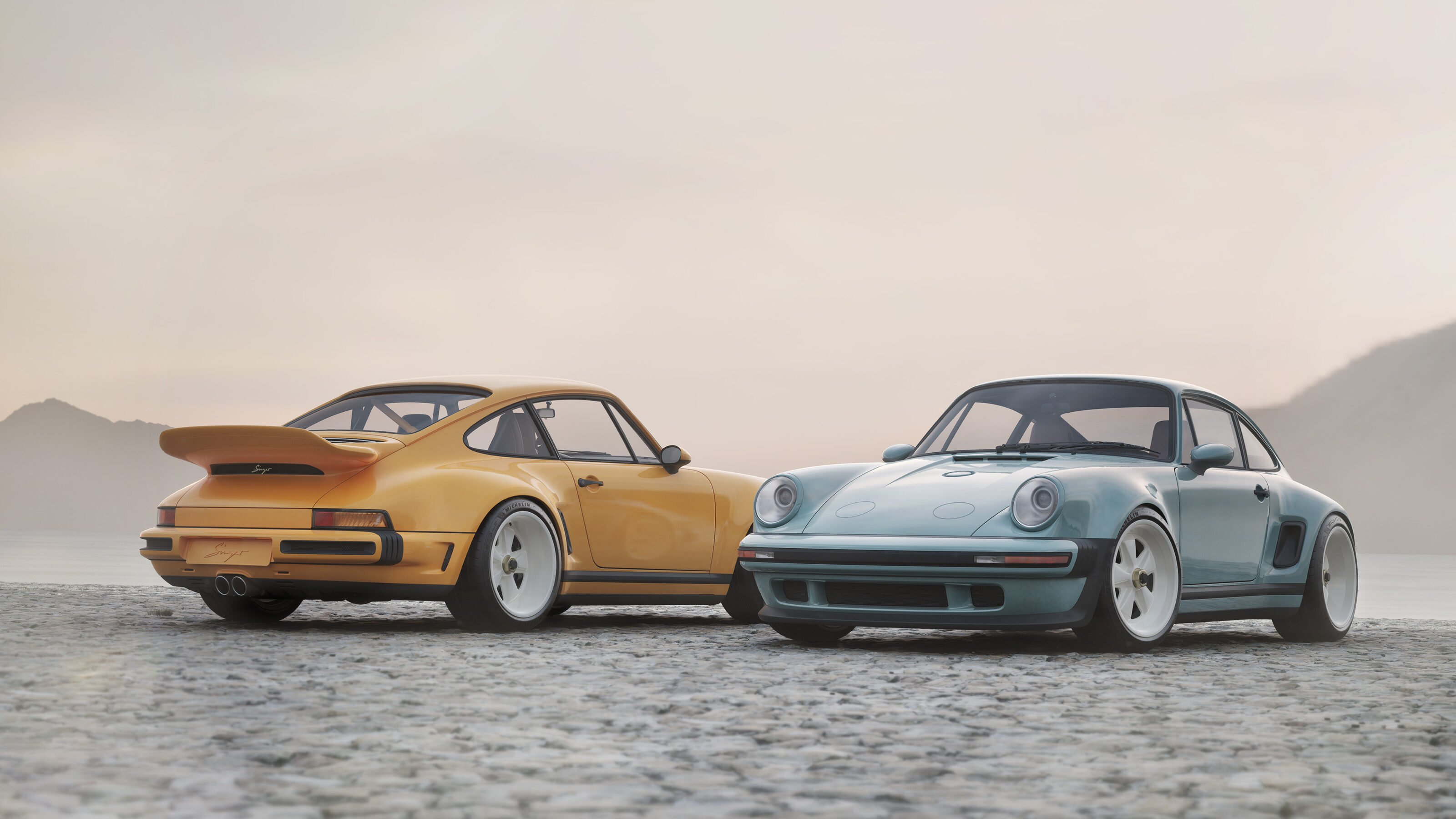
Otherwise known as the Turbo look, the Super Sport mated the aspirated Carrera 3.2 engine to the 911 Turbo’s option M491 wide body, wheels and upgraded brakes and suspension.
While we’re fussing about designations, let’s get the Singer boilerplate out of the way: yes, the official name for what you’re looking at is the Porsche 911 Carrera Coupe Reimagined by Singer. Like Singer’s earlier Classic and DLS and the Turbo variants of each, the latest services commence with a customer’s existing Porsche 964.
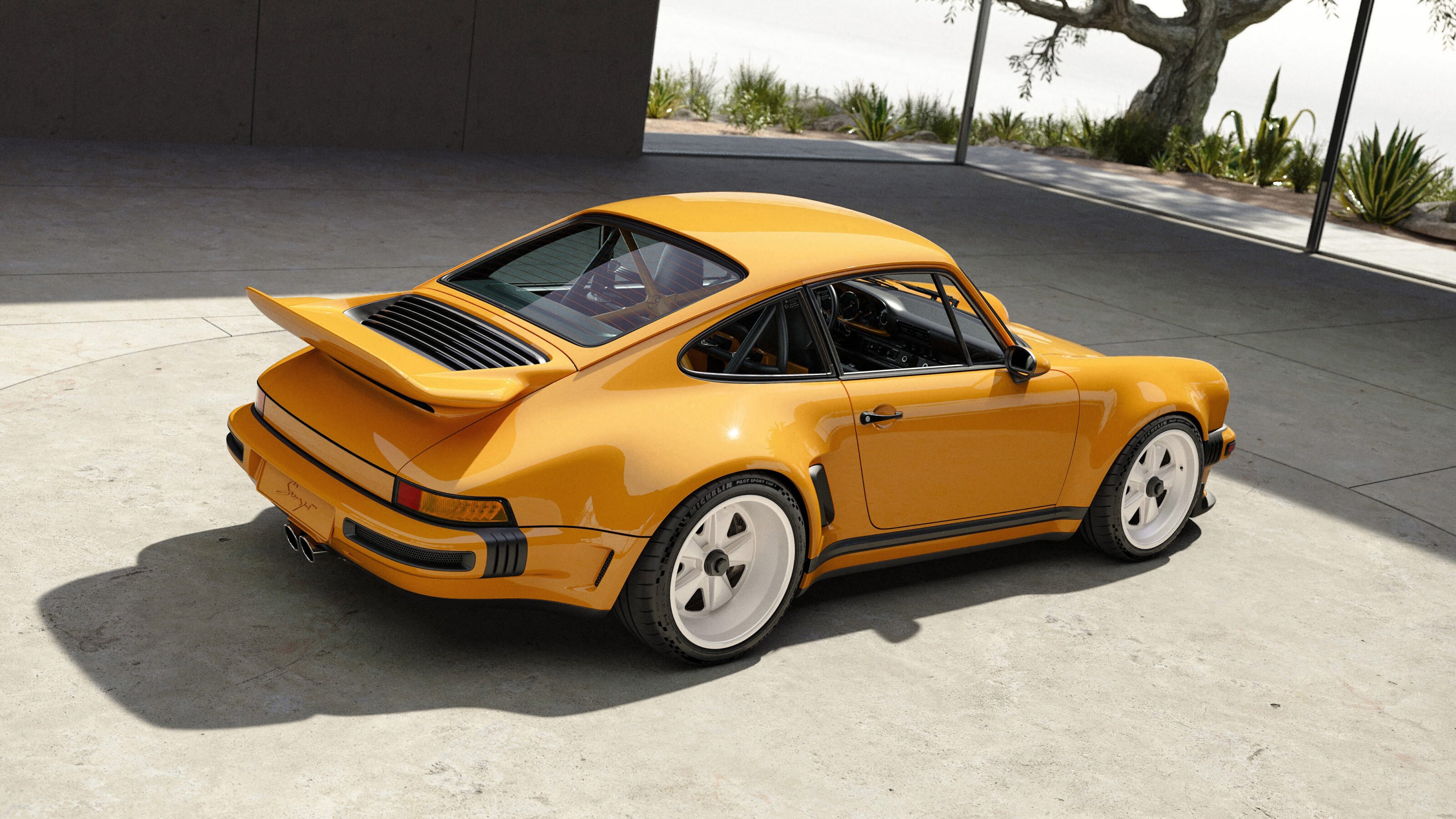
Just over 60,000 of the 964 generation were built from 1989-’94, though it’s not this comparative rarity but a “Singer effect” that has caused 964 values to quadruple in recent years. For its earlier DLS commissions, Singer worked with Williams (F1) Advanced Engineering on an extensively redesigned, air-cooled 4.0-litre flat-six package that introduced four-valve cylinder heads. The no-holds-barred DLS engine mods claimed around 370kW at 9000rpm.
This time around, Cosworth collaborated in the development of a variable valve timing system and revisions to the four-valve heads, along with refinement of combustion chambers and inlet and exhaust. Again displacing 4.0-litres, the new variable-valve engine package is aimed at delivering greater tractability (and complying with more countries’ regulations) while producing a muscular 313kW power output. Singer claims it will rev to “over 8000rpm”.
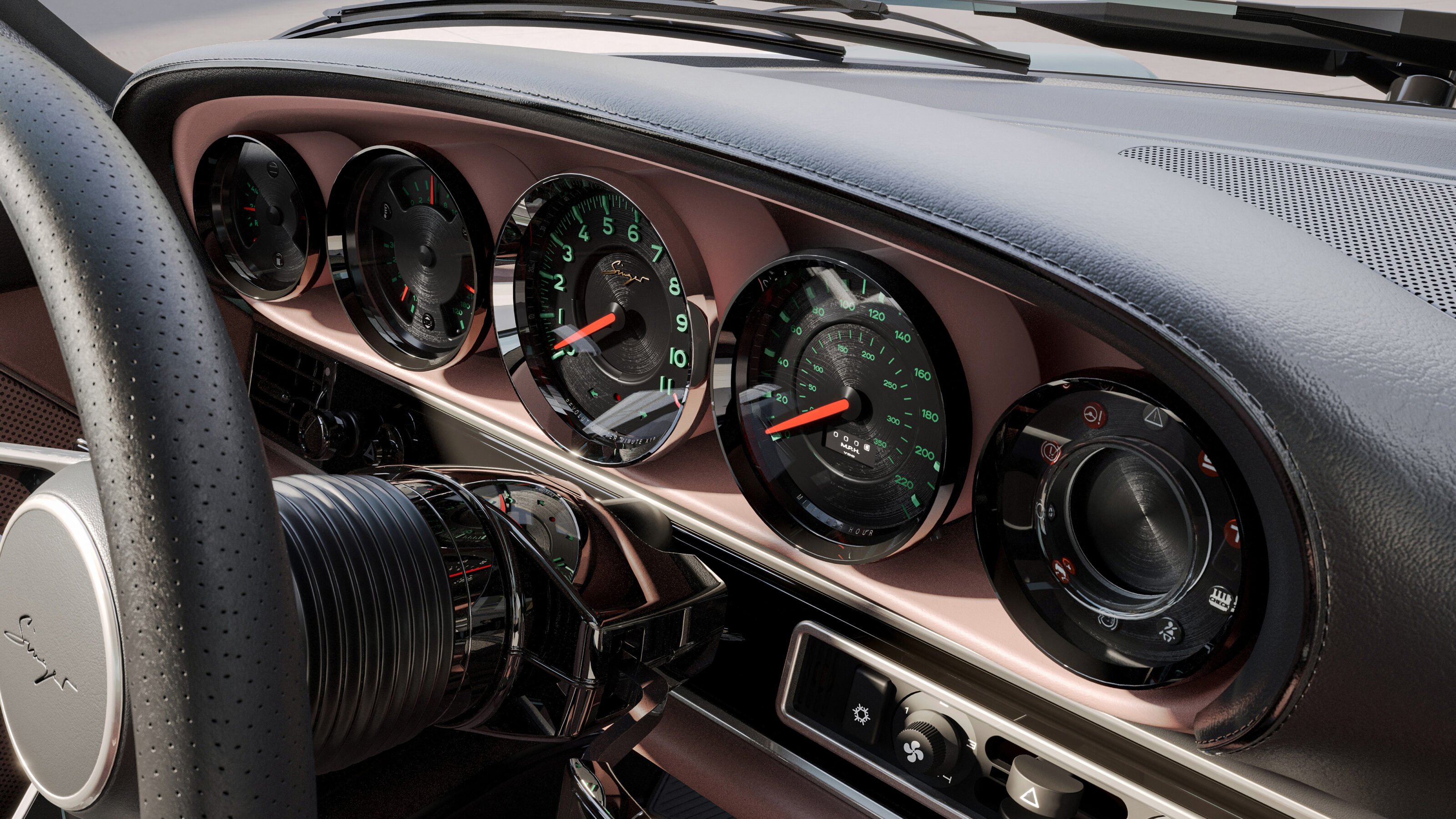
Latest-generation ABS and five-mode traction and stability control systems are appropriate to this rear-drive, six-speed manual’s thoroughly modern performance and dynamic ability. Singer’s oft-quoted mantra that “everything is important” is borne out in obsessive detail throughout the restoration process.
I’ve observed this vicariously over the past two years while a close mate’s car undergoes
Singer’s 450th and final Classic restoration.
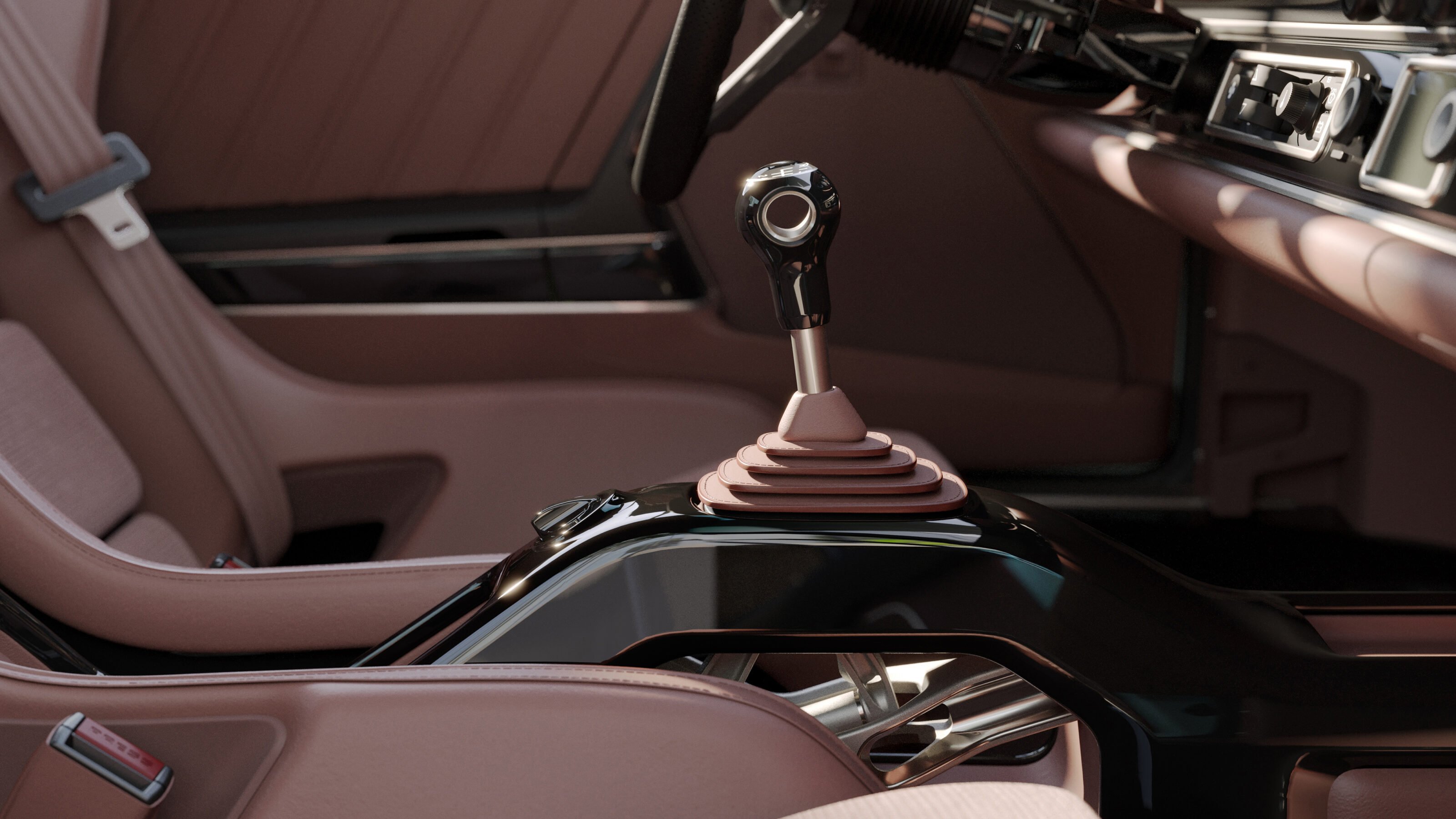
A car bound for Carrera Coupe reimagining is stripped and cleaned to the bare shell and, as a first in this new guise, structurally augmented with a composite and steel chassis reinforcement system developed by Red Bull Technologies. This provides the foundation for the reinvention of suspension and brakes; the former introducing dampers with four-way electronic damping adjustment and electric nose lift, the latter a carbon-ceramic package, behind 18-inch centre lock wheels. The carbon fibre body panels that give girth to the narrow-body 964 shell further contribute to structural stiffness, while saving and centring mass.
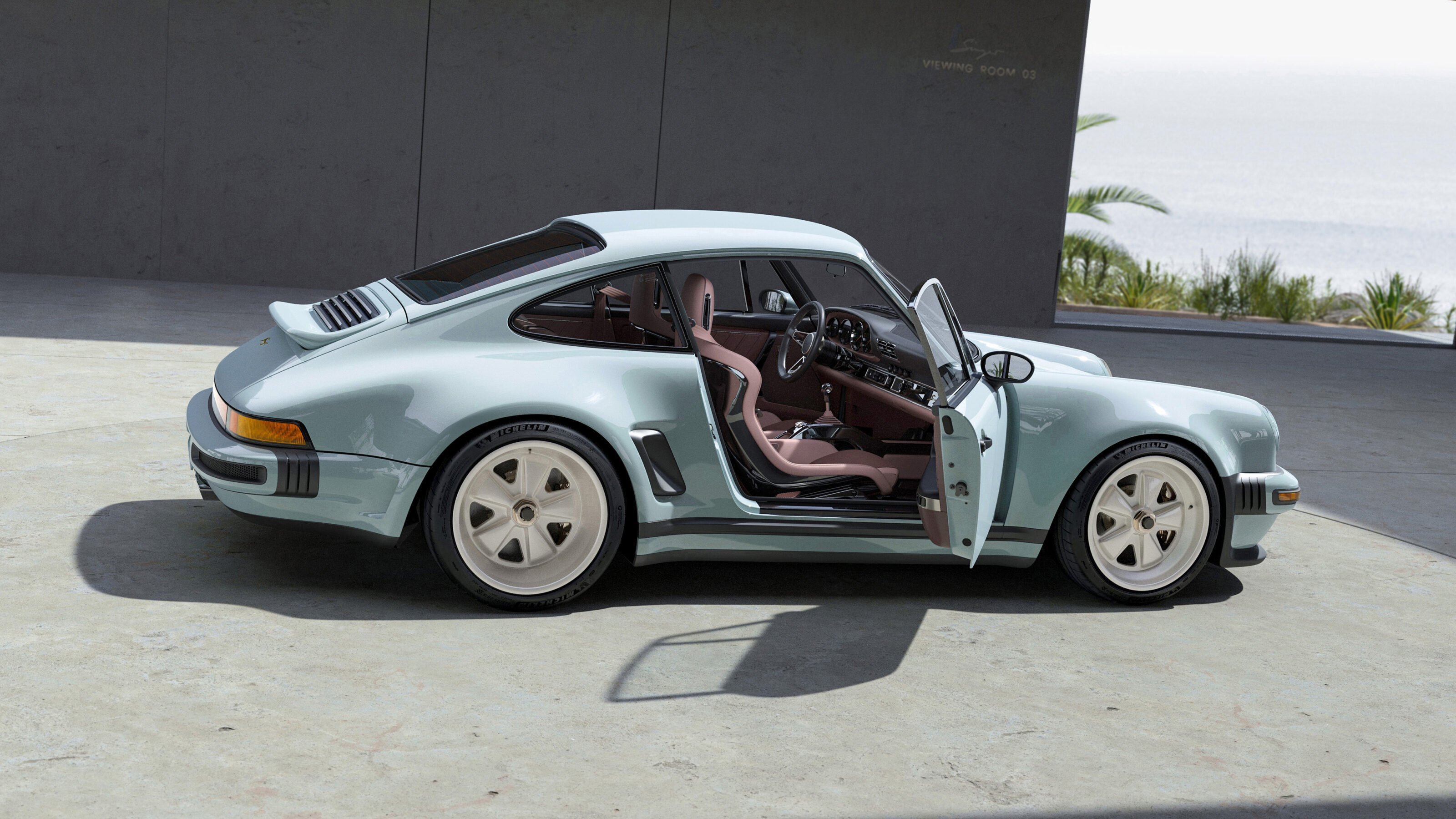
Customers can specify pretty much anything they want, but among the obvious is the choice of either an overt whale tail teamed with a 934-inspired front air dam, or a speed-activated rear wing and comparatively subtle front splitter. Or both, with a bespoke flight case to store the spare.
Singer’s interior options, while driven by customers’ personal wishes, no less cleverly augment and amplify the period charm of the G-series Porsche 911. As with the exterior, owners are likely to veer towards either road sports or classic racing themes.
- Price: $42,990 drive away
- Engine: 1598cc 4-cyl turbo DOHC petrol, 137kW/275Nm
- Transmission: 7-speed dual-clutch automatic, AWD
- Fuel consumption (claimed/on test): 7.8L/100km / 7.7L/100km
- L/W/H/WB: 4500/1865/1680/2672mm
- Tare weight: 1628kg
- Boot: 340L (rear seats up to parcel shelf)/1265L (rear seats folded, to roof)
- 0-100km/h: 9.5 seconds (est)
| Rating |
|---|
Things we like
- Distinctive and characterful design
- Value pricing, loaded with kit
- Surprisingly capable off-road
Not so much
- Not a true mid-size SUV, cozy rear seat and boot
- Cumbersome touchscreen, few physical buttons
- Inconsistent cruise control
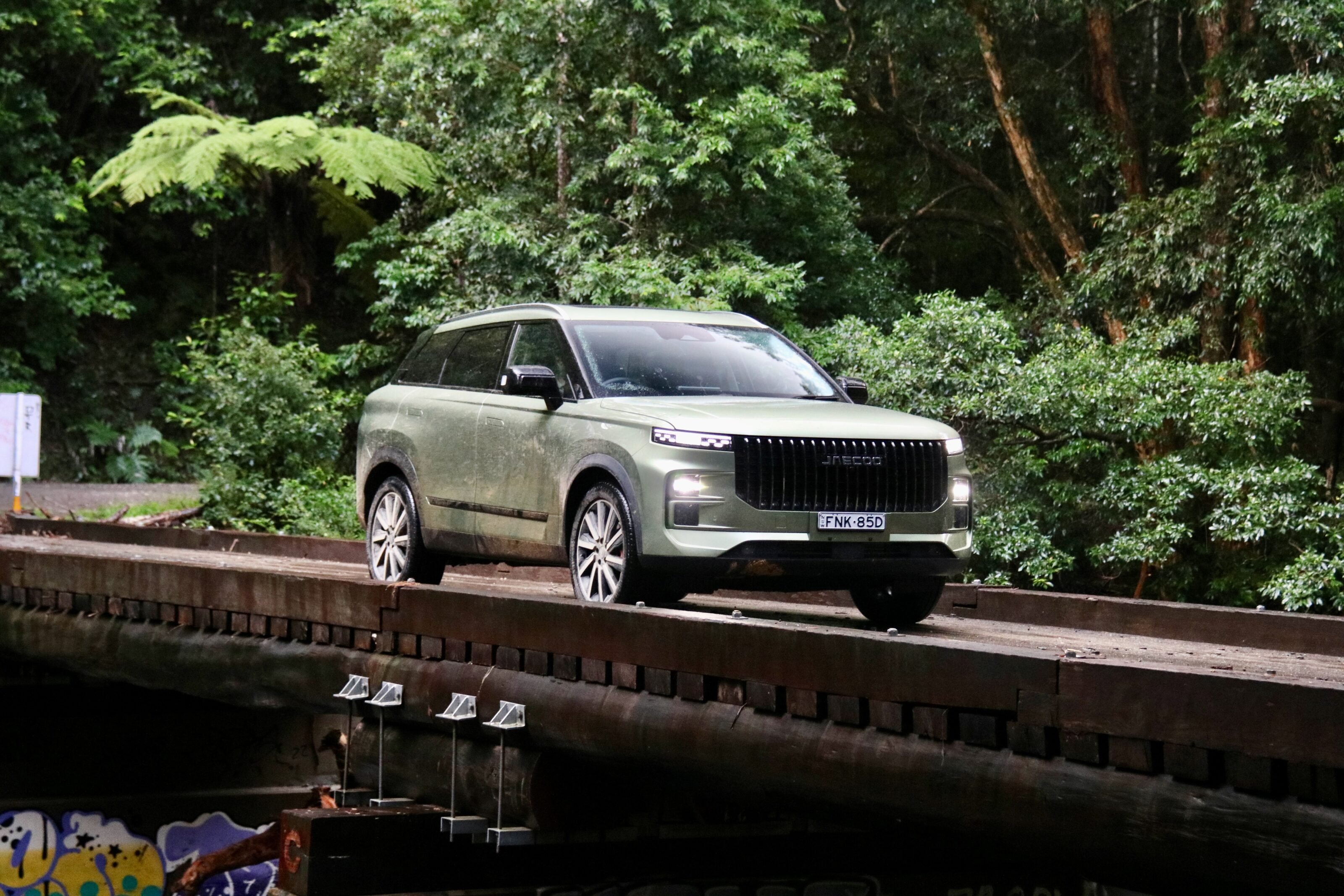
While some car enthusiasts may disagree, the Australian new car market is at a fascinating crosssroads at the moment with a seemingly endless list of mostly Chinese brands launching onto our shores.
Chery was one of the better known names when it relaunched here in 2023 and now it’s launched another brand of its own: Jaecoo. Its first cab off its rank, the J7 small-to-mid-sized SUV, is right with the times and available with both petrol and plug-in hybrid drivetrains.
Jaecoo is Chery’s more premium arm, much like Audi is to the Volkswagen Group, and like the German giant uses mechanicals from its parent: in this case, the J7 uses its platform and drivetrain from the Chery Tiggo 7 Pro. Of course, Jaecoo isn’t positioned to be an Audi rival but it does sit above Chery. Priced from just $34,990 drive away – $5,000 more than the Tiggo 7 Pro – the J7 offers strong value for money across the range, and here we’re testing the all-wheel drive Ridge.
Price and equipment
The Jaecoo J7 is available in four versions in Australia:
| Core 2WD | $34,990 |
|---|---|
| Track 2WD | $37,990 |
| Ridge AWD | $42,990 |
| Summit PHEV 2WD | $47,990 |
The Jaecoo J7 Ridge AWD is equipped with:
- 19-inch alloy wheels
- Dusk-sensing automatic LED exterior lighting
- Rain-sensing automatic wipers
- Roof rails
- Rear privacy glass
- Keyless entry with push button start and remote start
- Heated and auto-folding mirrors that drop in reverse
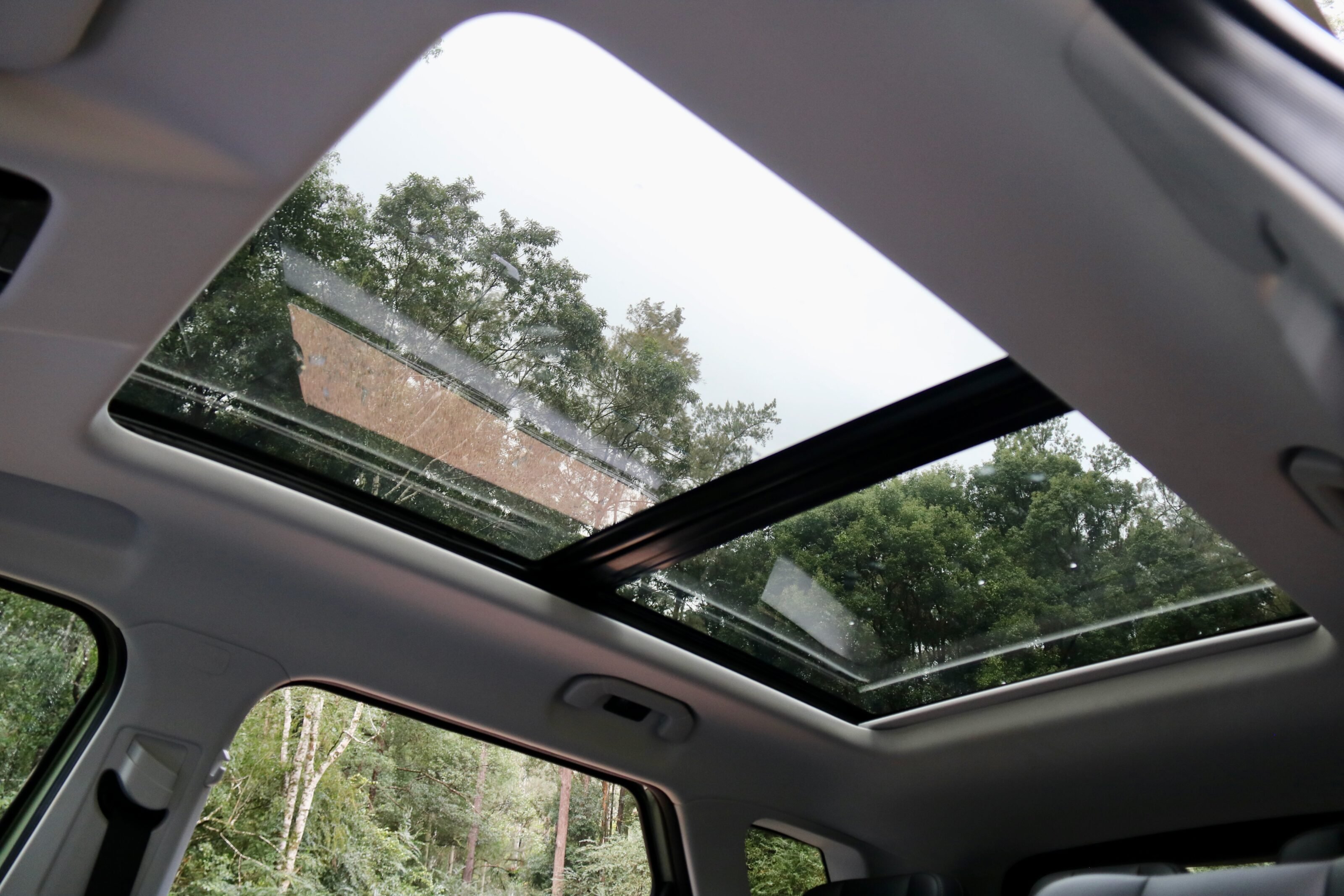
- Panoramic sunroofs
- Power tailgate
- 10.25-inch digital driver’s display
- 14.8-inch touchscreen
- Wired/wireless Apple CarPlay and Android Auto
- Satelite navigation
- 8-speaker Sony sound system
- Synthetic leather upholstery
- Heated, ventilated and electrically adjustable front seats with driver’s memory
- Dual-zone automatic climate control with a rear air vent
- Heated synthetic leather steering wheel with paddle shifters
- 4x USB ports
- Wireless phone charger
- Head-up display
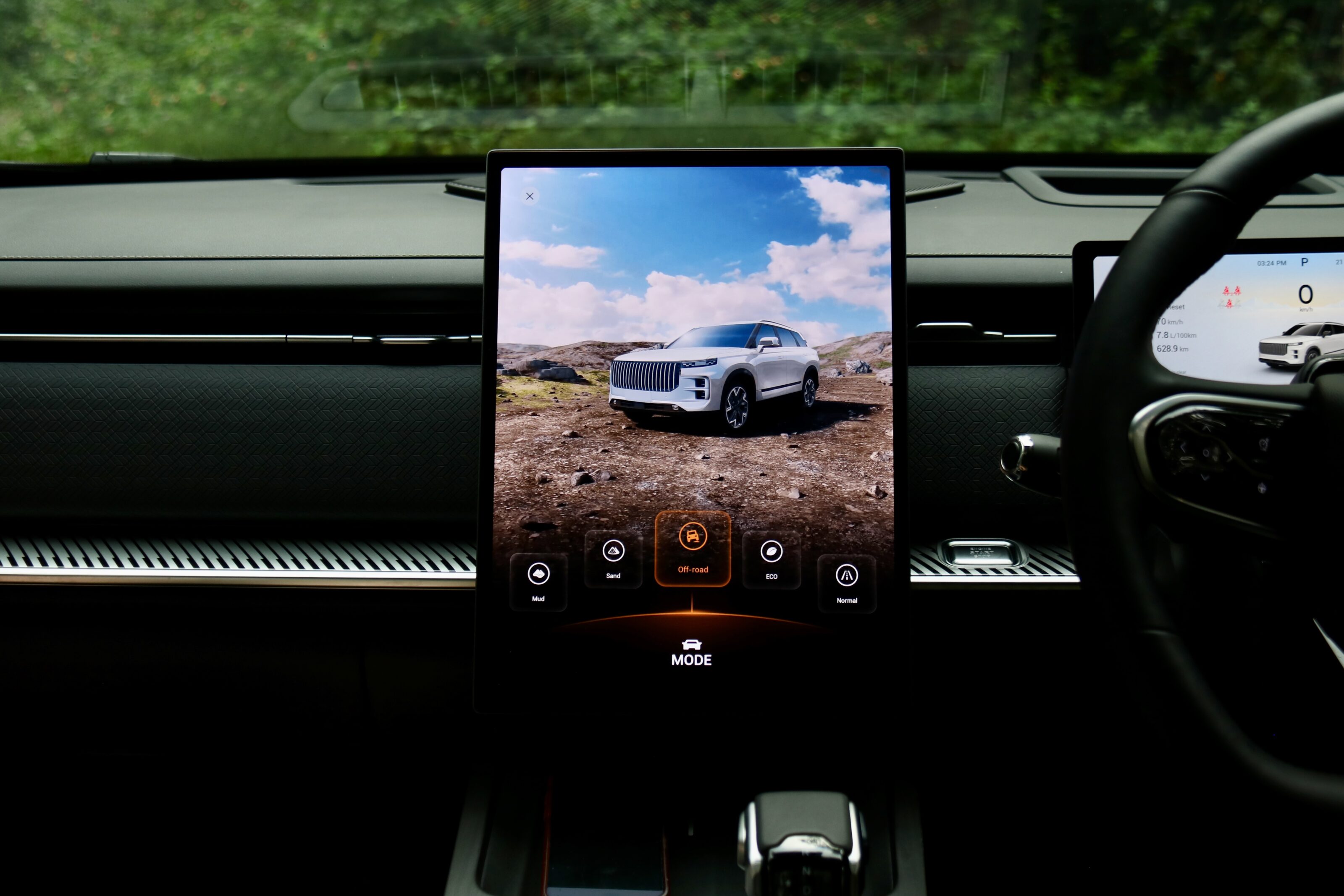
- Multiple off-road and driving modes
- Configurable ambient lighting
- Inbuilt dashcam
J7 Ridge AWD safety features:
- 8 airbags (including a front centre unit)
- Autonomous emergency braking (AEB)
- Lane keeping assistance with adaptive lane guidance
- Adaptive cruise control with traffic jam assist
- Intelligent speed limit assist
- Driver attention monitoring
- Safe exit warning with safe exit assist
- Auto high beam
- Blind-spot monitoring with a camera feed when indicating (with braking)
- Rear cross-traffic alert (with braking)
- 360-degree camera
- Front and rear parking sensors
The Jaecoo J7 was recently awarded a five-star safety rating by ANCAP, with scores of 81 percent in adult protection, 85 percent in child protection, 80 percent in road user protection and 84 percent in safety assistance.
Performance and economy
The J7 uses the same 1.6-litre turbocharged four-cylinder petrol engine as its Chery Tiggo 7 Pro
cousin, making 137kW of power (at 5500rpm) and 275Nm of torque (between 2000rpm and
4000rpm). That’s mated to a seven-speed dual-clutch transmission and either front-wheel drive, or
in the case of this Ridge model, a reactive all-wheel drive system. A plug-in hybrid sits above.
Chery claims combined fuel consumption of 7.8L/100km with CO2 emissions of 181g/km for the
Ridge, which is an increase of 0.8L/100km and 18g/km on front-drive models. The entire J7 range
uses minimum 95RON premium unleaded fuel and the Ridge features a larger 57L fuel tank. We averaged 7.7L/100km in our 1280km with the J7, a lot of which was motorway driving (we saw as low as 6.6L/100km in that environment) but also urban commuting.
Interior comfort, practicality and boot space
On the inside of the Jaecoo J7 is an interior with very little in the way of shape: steering wheel and
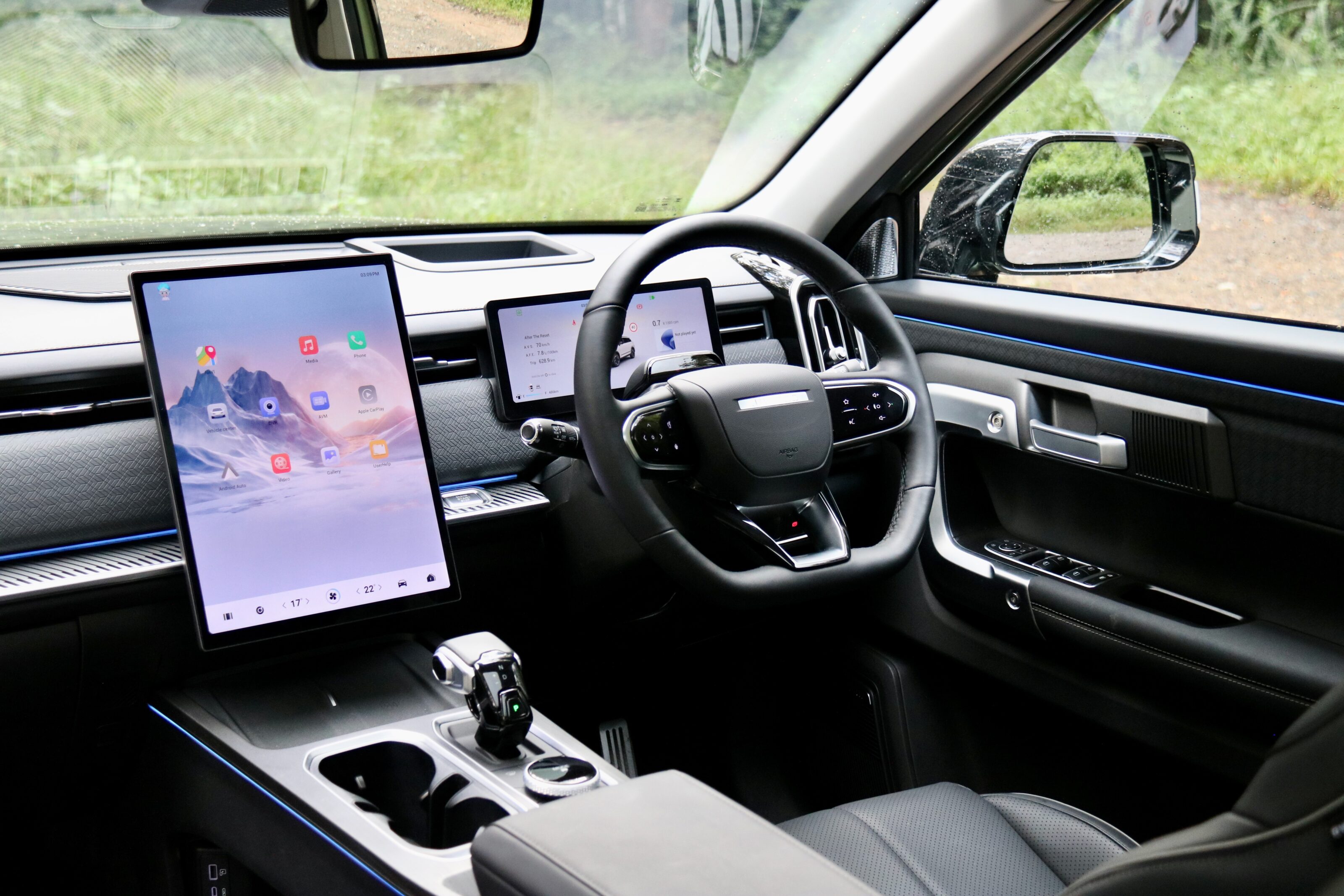
drive mode selector aside, it’s a very rectangular cabin. Despite that sounding pretty unimaginative, it’s a genuinely interesting and quality place to spend time. Compared to most other Chinese vehicles, there’s an extra layer of finishing inside the J7 – higher quality materials and character in the design, such as the big and masculine door handles and crosshatched synthetic leather trim on the dashboard fascia.
It’s also a practical cabin with big door bins, a useful and effective wireless charger on the centre
console bridge – though, why not have two there? – with a big tray underneath the bridge and a
large box underneath the central armrest with a handy tissue slot.
Front seat comfort is generally sound, though like pretty much every other Chinese car we’ve
driven, there’s no under-thigh angle adjustment that would make the driving position even better.
Thankfully, there is lumbar adjustment for the driver, and while the belt line is high, visibility is
otherwise decent thanks to the largely square dimensions. The driver’s mirror wouldn’t adjust far
enough right for taller folk, however, and we thought that Chery had killed the strange fisheye
centre mirror but apparently not because it’s now in the J7.
Centre of the cabin is a huge 14.8-inch touchscreen with features such as wireless smartphone
mirroring and satellite navigation. It’s quick to use and quite bright, but it needs an extra layer of
shortcuts as – for example – going from smartphone mirroring to adjust the driver assist settings
takes too many screen touches and can be distracting.
The bar at the bottom of the screen that adjusts the temperature should sit there permanently and
not disappear with CarPlay connected as that would make it a lot easier to use – as would physical
buttons, including a volume knob.
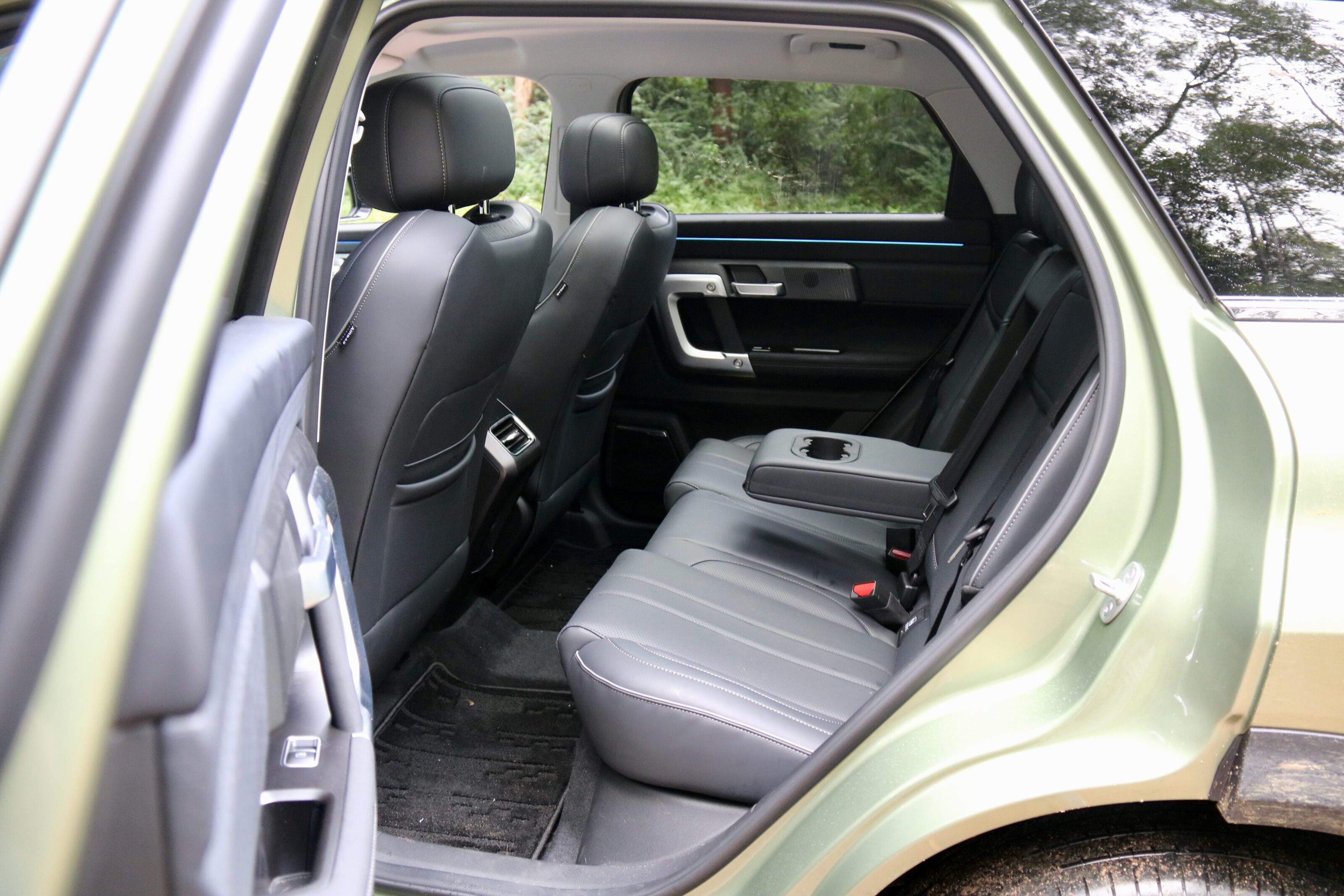
Move to the rear seat and things aren’t great for the J7. Jaecoo officially brands this as as a mid-
size SUV but in reality, it sits in the mid-way point like a Nissan Qashqai or Honda ZR-V. At
4500mm long, a proper mid-sizer like a Hyundai Tucson is a full 150mm longer and it shows in the
rear legroom and boot: they’re both tight. Two six-foot adults will fit fine in the rear seat, but
legroom will be tight – headroom will be great, however.
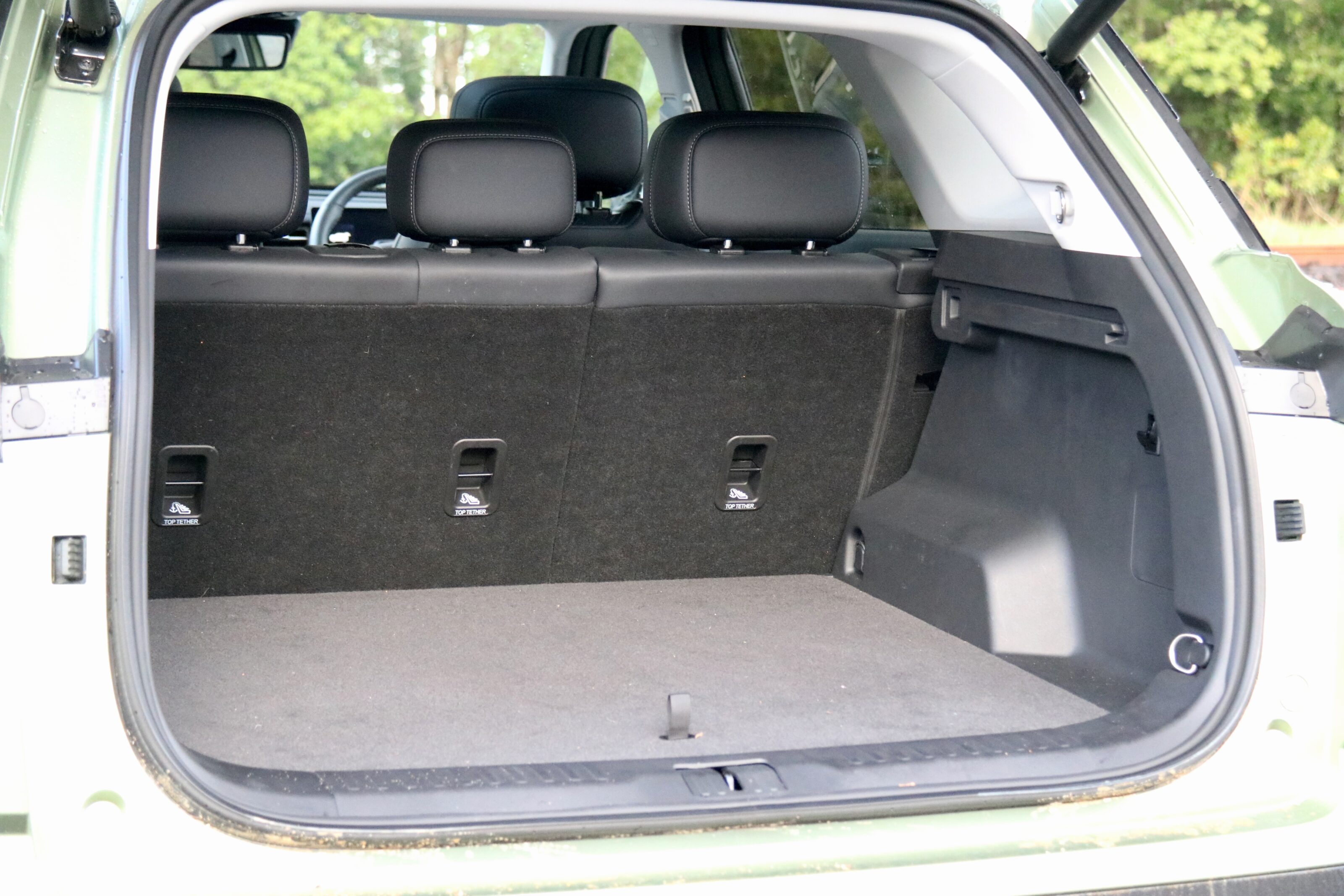
It’s the same story with the boot because at just 349 litres, the J7’s boot is smaller than that of a
Volkswagen Polo – the front-drive models have an 84L larger boot but also a space saver spare
wheel if you want more space. It also has a high boot lip, though its actual bootspace is flat and
square. Under the boot floor is a full-sized alloy spare wheel (bravo, Jaecoo!) and it also features a
few hooks and a quick electric tailgate.
On the road
Like the Chery Tiggo 7 Pro that it shares almost everything mechanically with, the Jaecoo J7 is a
fairly solid car to drive. It likes to roll in corners – not that its maker says that it’s sporty in any way,
so that’s understood – and the steering doesn’t offer much feel, but it’s otherwise quite comfortable and refined. It found the very wet Sydney to Coffs Harbour trip we did in it easy and thanks to its good frontal visibility and great wipers, it was no chore. The engine is punchy enough and handles highways well, though the dual-clutch transmission’s low speed behaviour needs altering because it’s too hesitant.
What also needs refinement are the active safety systems as they can be sensitive and overreactive, for example on motorways when the lane keeping assistance likes to take over a bit too much. The inconsistent cruise control also proved to be annoying as it would be set to 110km/h but show anywhere from 105km/h to 116km/h with nobody else around. In speed camera-obsessed Australia, we think it should be more precise.
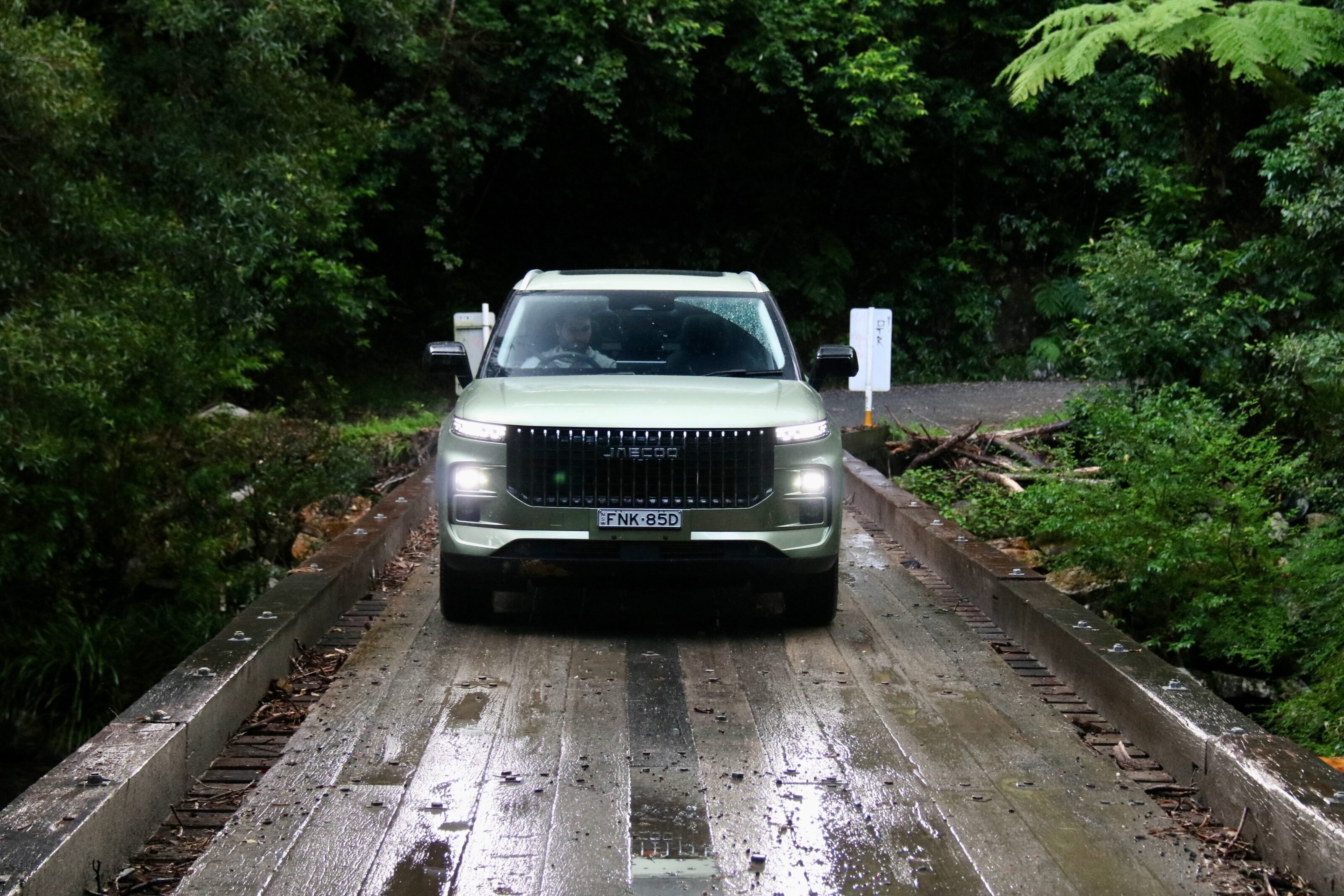
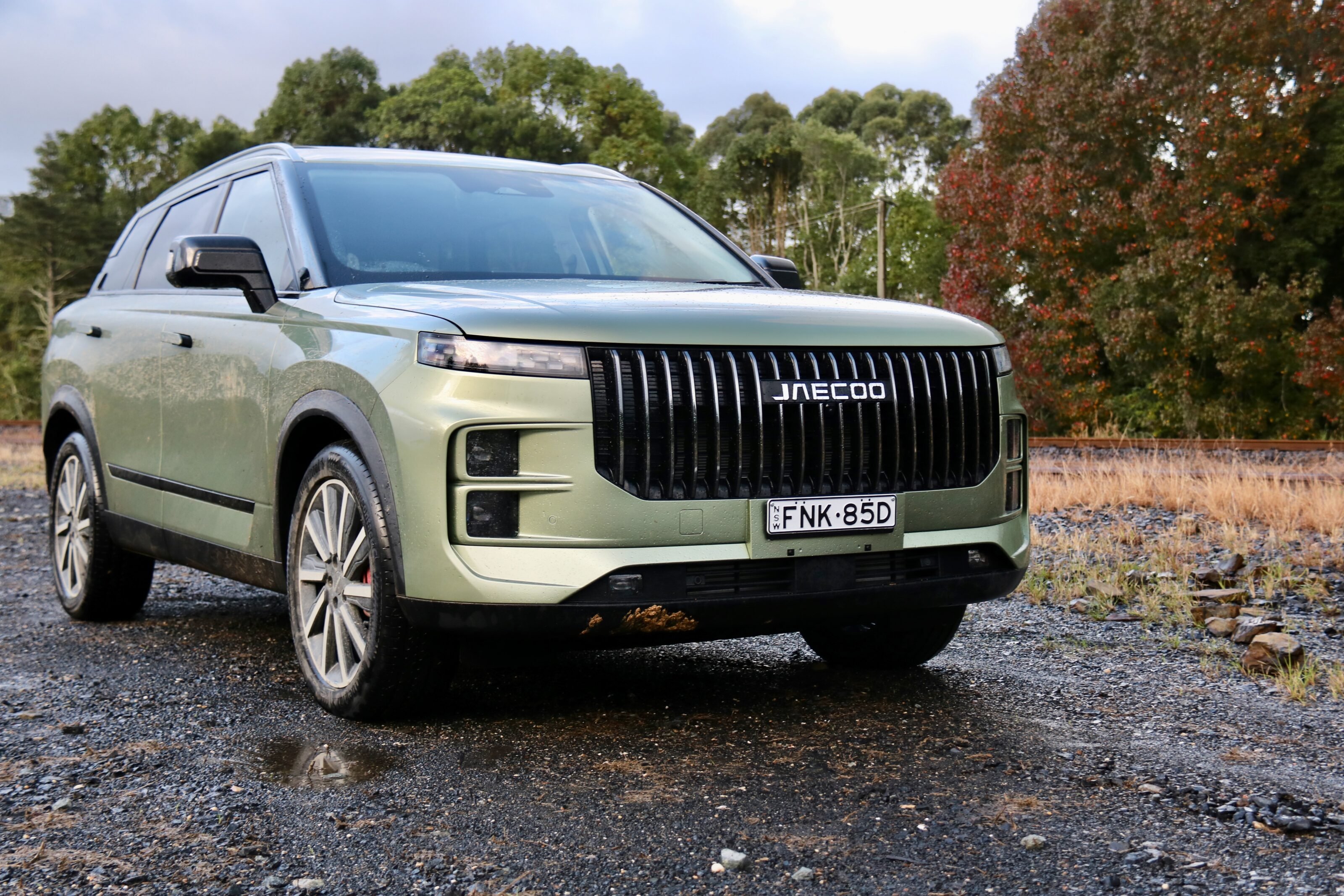
At the J7 AWD’s local launch earlier this year the company was keen to show off its off-road credentials. Nobody is claiming that it’s able to cross the Simpson Desert, but we would surprised at how well it handled the muddy roads we took it on in the Promised Lands near Coffs Harbour. It even helped rescue a P-plater in a Mk6 VW Golf that really shouldn’t have been out there.
The J7 features various off-road modes like mud and snow that adapt the all-wheel drive system and traction control to the terrain and they work well. There were a few tough sections that it got itself out of quite well and even though it’s front-drive most of the time and reacts to slip by engaging the rear wheels, you can feel it doing so off-road. There’s even a handy display you can use to see to see which wheel is doing what. Only the 200mm of ground clearance gave us slight concern. Of course, nobody will buy a J7 to take it off-road, but it went much further than a lot of the cars it competes with would be able to manage.
Service and warranty
The Jaecoo range is covered by an excellent eight-year/unlimited km warranty with 12 months of roadside assistance that can be extended up to eight years in total if serviced at a Jaecoo dealership.
The J7 uses annual/15,000km service intervals (whichever comes first) and the first five years/75,000km of servicing costs a reasonable $1,925 ($385 per year).
Verdict: Should I buy a 2025 Jaecoo J7 Ridge?
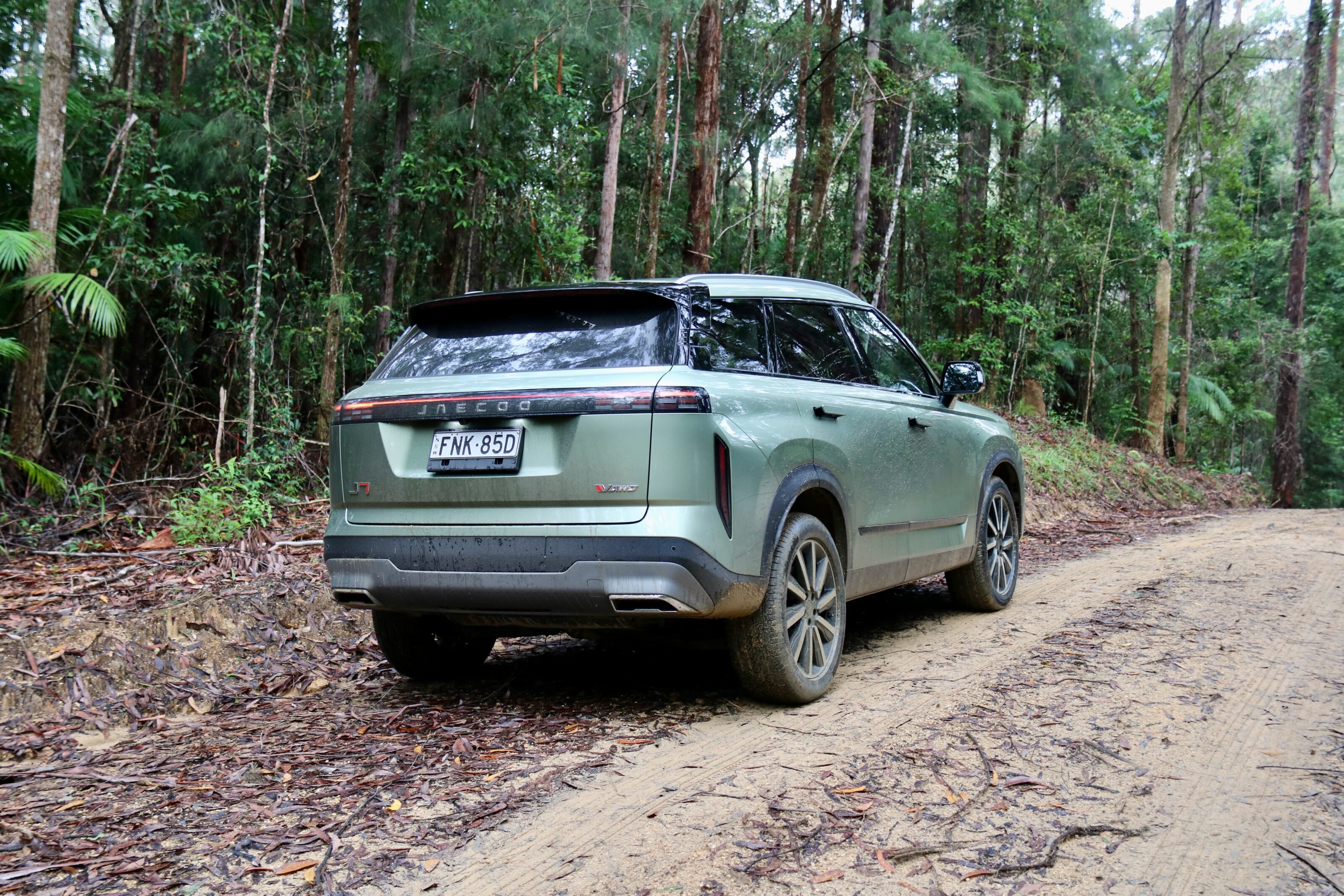
Overall, we were pleasantly surprised by the Jaecoo J7 Ridge in our week with it. It manages to stand out from the crowd thanks to its character and its off-road ability – the styling is smart, while the interior uses good quality materials as well. It’s also fairly loaded with standard equipment and it’s very good value for money too, topping out at a pricepoint that a mid-spec Qashqai starts at. Finally, its eight-year warranty is long and its service pricing is reasonably priced as well.
There does need to be some more refinements made to the J7 however, with its inconsistent
cruise control and overactive safety features – plus its cumbersome touchscreen software –
needing more work to be more useful and safer. The boot and rear seat are not big, and the transmission could be better at lower speeds. These issues aside, however, the J7 makes a strong first impression on its arrival and strikes Jaecoo as a brand to watch.
Jaecoo J7 rivals
Nissan Qashqai
Honda ZR-V
Skoda Karoq
- Price: $76,630 plus on-road costs
- Engine: 1598cc 4-cyl turbo DOHC petrol, 132kW/265Nm
- Electric motor: front permanent magnet synchronous, 54kW/304Nm
- Battery: 1.49kWh
- Combined outputs: 180kW/366Nm
- Transmission: 6-speed automatic, FWD
- Fuel consumption (claimed/on test): 5.8L/100km / 6.7L/100km
- L/W/H/WB: 5155/1995/1785/3090mm
- Tare weight: 2288kg
- Boot: 627L (8-seat)/2827L (5-seat)
- 0-100km/h: 9 seconds (est)
| Rating |
|---|
Things we like
- Finally a reasonably priced hybrid people mover
- Humungous inside and insanely practical
- Good to drive, despite its size
Not so much
- Big price premium for the hybrid
- Middle row of seats can’t be easily removed
- No spare wheel for the hybrid
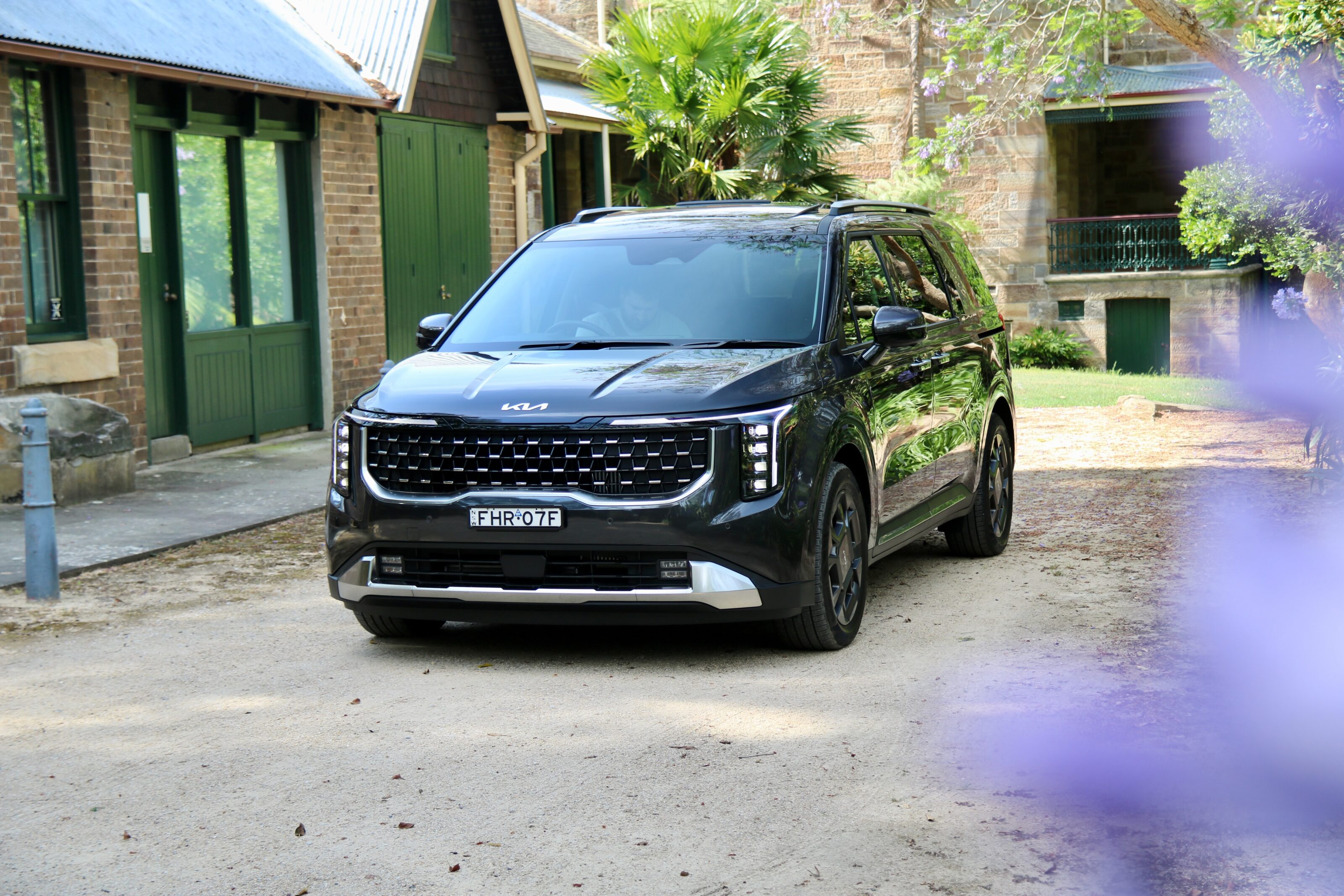
The Kia Carnival is the undisputed sales king of the people mover segment in Australia. Whereas the Toyota Tarago used to be the default in this class, the Carnival slowly ate up its sales and now remains one of the few available in our market, with over 10,000 vehicles sold in 2024.
Until last year, the Carnival was only available with either V6 petrol or four-cylinder diesel drivetrains but the brand added a new hybrid along with its mid-life facelift. Has the hybrid added appeal to the Kia Carnival and will it continue its sales dominance?
Price and equipment
The Kia Carnival is available in a number of versions in Australia and we tested the most expensive model available, though the company recently added new lower-spec hybrid variants for the base S and mid-spec Sport+ for those with more modest budgets.
2025 Kia Carnival pricing:
| Carnival S petrol | $50,570 |
| Carnival S diesel | $52,800 |
| Carnival S hybrid | $56,100 |
| Carnival Sport petrol | $56,470 |
| Carnival Sport diesel | $58,700 |
| Carnival Sport+ petrol | $62,800 |
| Carnival Sport+ diesel | $65,030 |
| Carnival Sport+ hybrid | $68,330 |
| Carnival GT-Line Lite petrol | $66,770 |
| Carnival GT-Line Lite diesel | $69,000 |
| Carnival GT-Line petrol | $71,100 |
| Carnival GT-Line diesel | $73,330 |
| Carnival GT-Line hybrid | $76,630 |
The Carnival GT-Line hybrid is equipped with:
- 19-inch alloy wheels
- Dusk-sensing automatic LED exterior lighting
- Rain-sensing automatic wipers
- Roof rails
- Rear privacy glass
- Keyless entry with push button start
- Remote start and remote smart park assist
- Heated and auto-folding mirrors
- Dual sunroofs
- Power side doors and tailgate
- 12.3-inch digital driver’s display
- 12.3-inch touchscreen with live services and over-the-air updates
- Wired/wireless Apple CarPlay and Android Auto
- Satelite navigation
- AM/FM/DAB+ digital radio
- 12-speaker Bose sound system
- Synthetic leather upholstery
- Heated, ventilated and electrically adjustable front seats with driver’s memory
- Heated outboard middle seats
- Tri-zone automatic climate control
- Heated synthetic leather steering wheel with paddle shifters
- 6x USB-C charging ports
- Head-up display
- Digital rear mirror
- Rear window sunshades
- Eco, sport and smart driving modes
- Interior ambient lighting
Performance and economy
Like its Sorento Hybrid sibling, the Kia Carnival Hybrid uses a turbocharged 1.6-litre four-cylinder petrol engine that’s combined with an electric motor, sending power only to the front wheels via a six-speed automatic transmission. The electric motor draws power from a 1.49kWh battery and total system outputs are 180kW of power and 366Nm of torque – more than the Sorento’s 169kW/350Nm outputs thanks to a beefed up electric motor.
Kia claims combined fuel consumption of 5.8L/100km with combined CO2 emissions of 132g/km, and we achieved 6.7L/100km in our week with it in mixed driving. Importantly, its 4.2L/100km urban claim is less than one third of the thirsty V6 (13.2L/100km) and you’d likely see an even bigger difference in the real world. The Carnival Hybrid features a big 72-litre fuel tank and runs on 91RON regular unleaded fuel.
Interior comfort, practicality and boot space
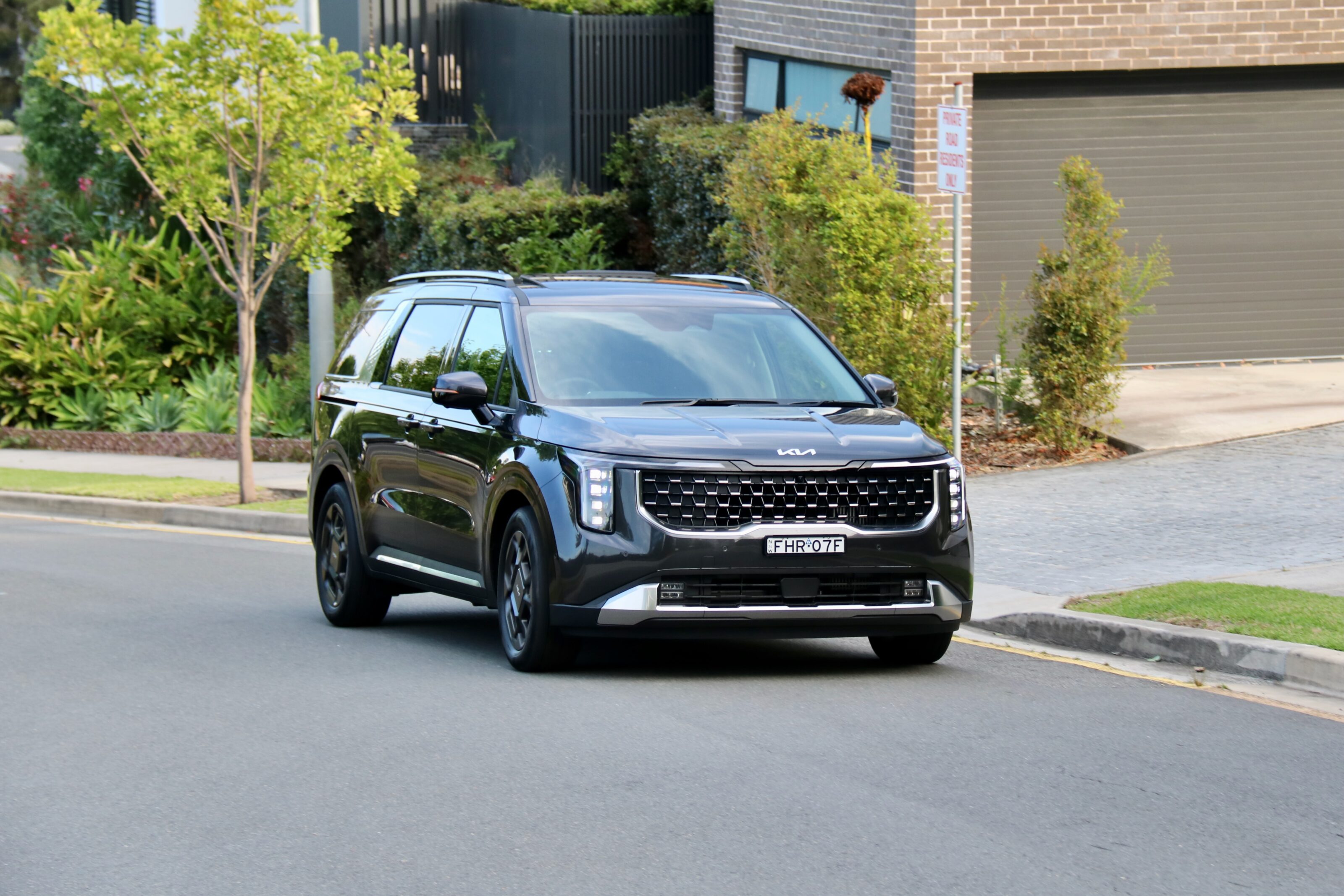
If you’re buying a people mover, chances are that you’re already well aware of just how practical they are and the Carnival is a great example of that. Sure, a Hyundai Staria is even more practical for storage but that’s an even larger vehicle – probably too large for many buyers. The Carnival’s front cabin is great for storage with a big open centre console, central box and door bins, while material quality is good as well with lots of soft touch plastics throughout.
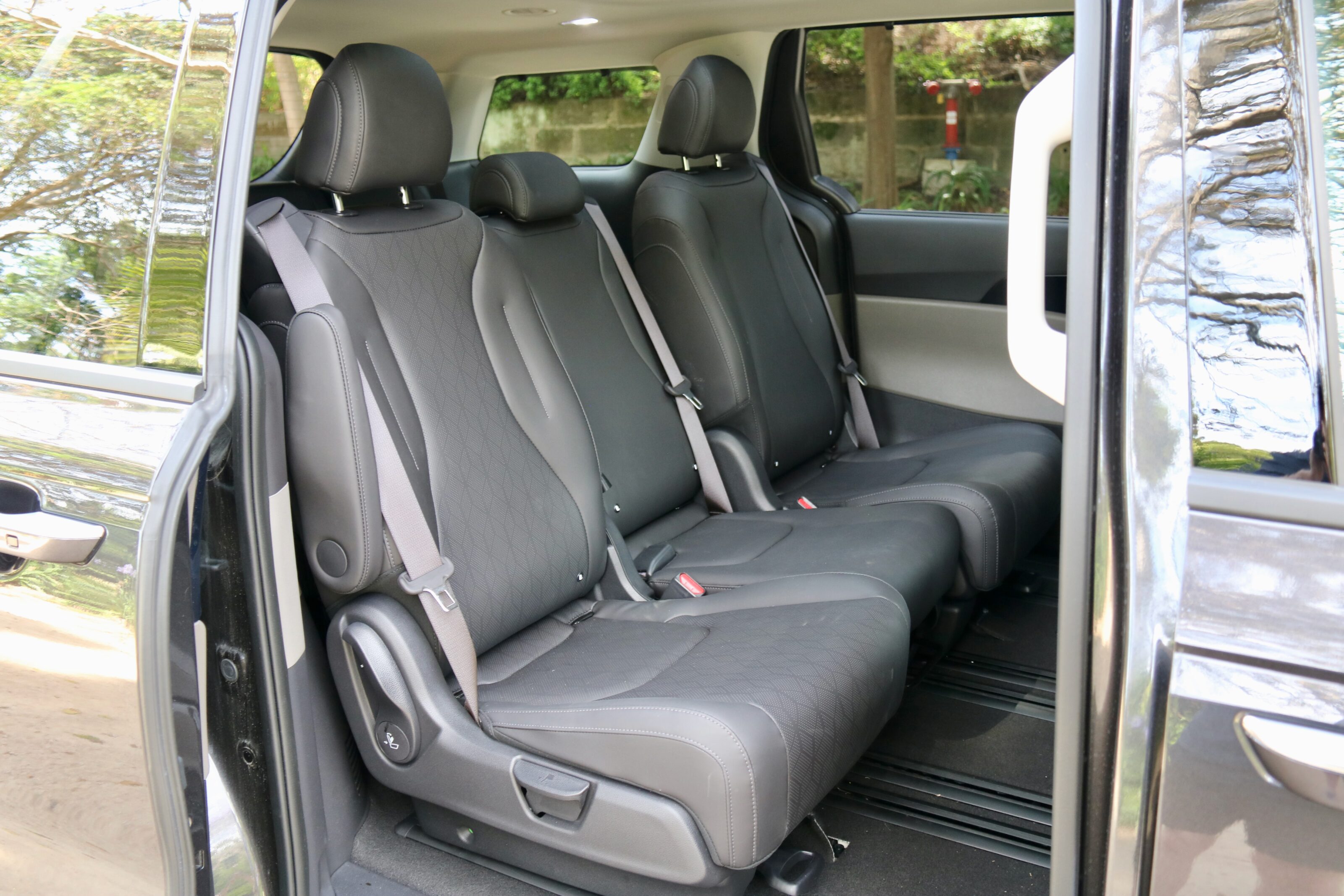
The middle row of the Carnival is huge and three taller adults will be more than comfortable. Amenities include a separate zone of climate, USB-C ports in the back of the front seats, heated outboard seats, blinds in the door, bottle holders and – with the middle seat folded – a huge arm rest. The middle row slides and reclines easily, and getting into the third row is very easy.
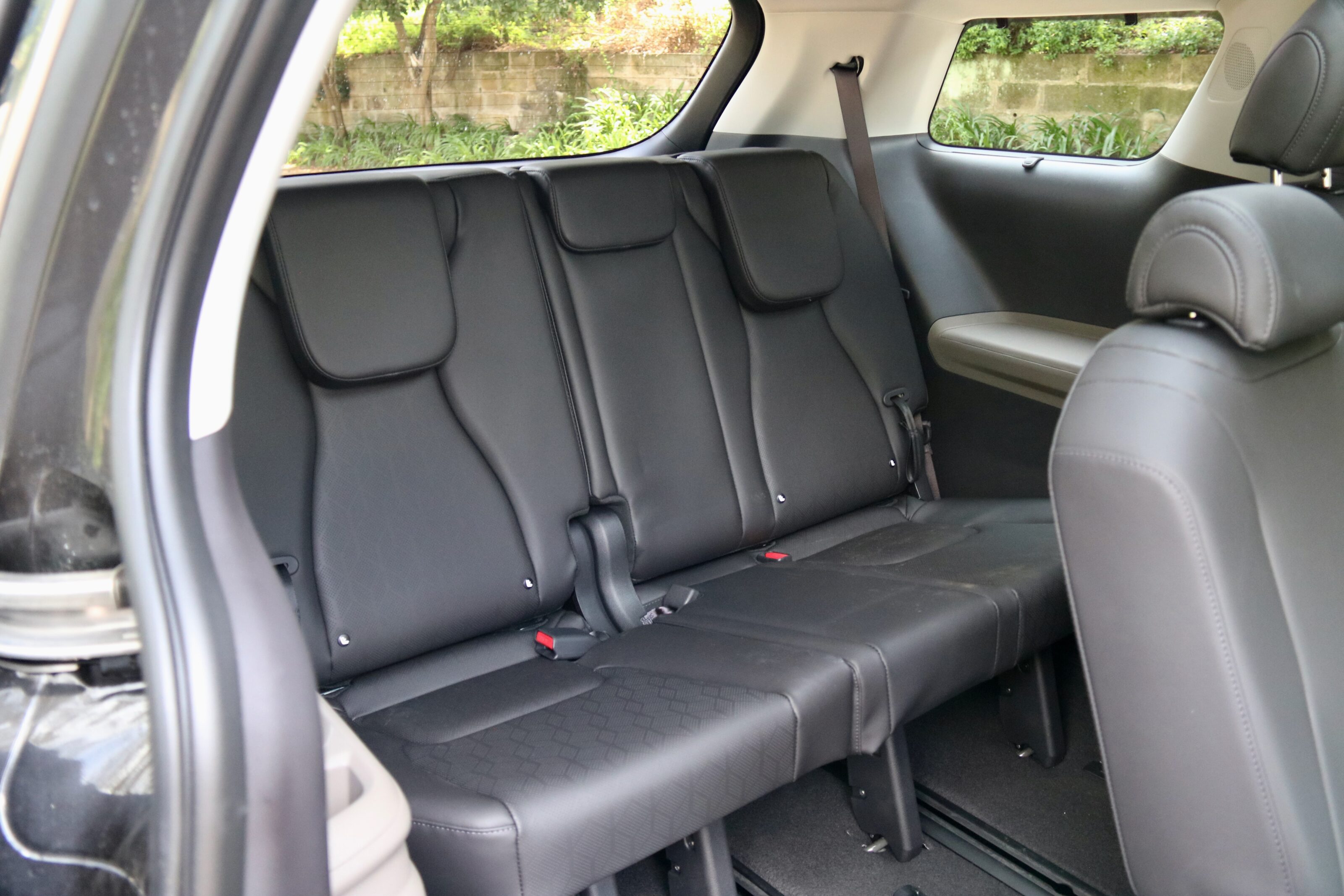
While the third row of a lot of SUVs is largely kids-only, the Carnival says no and welcomes even taller adults with open arms. It’s more spacious in there than the second row of a lot of mid-size SUVs and with a separate glass roof panel, air vents, USB-C ports and cup holders, there are more features too. Importantly for child seats, both the second and third rows of seating feature both ISOFIX and top-tether points.
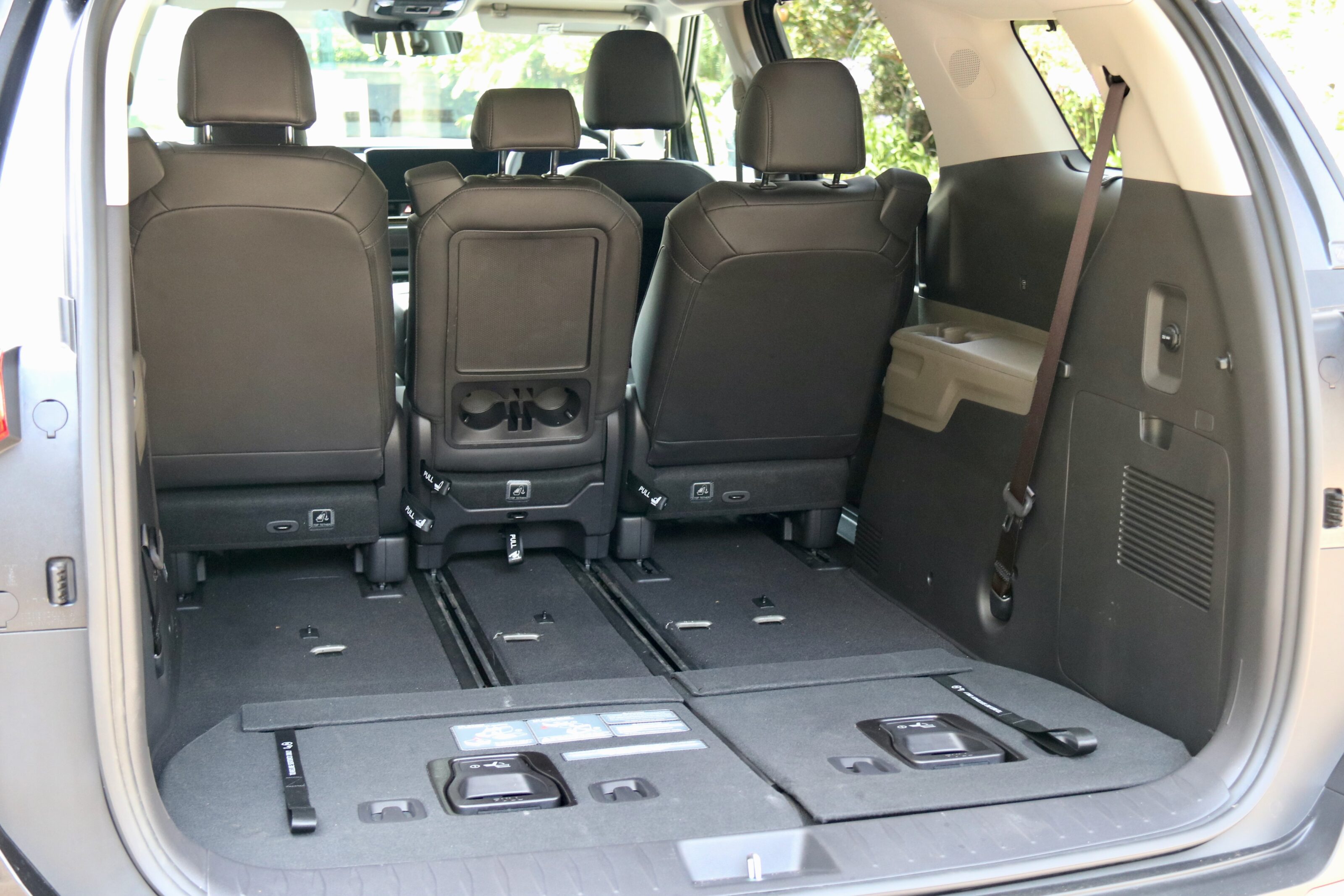
Behind the third row of seats is a huge 627 litres of space and the third row of seats can be easily folded in to the floor to create a flat load bay. Doing so opens up a huge 2827L of space – or more than double that of something like a Mazda CX-5, yet still with five seats in use. Kia doesn’t quote a middle row folded figure, but it’s probably something over the 4000L mark. You just know that Kia had a picture of an Ikea showroom as inspiration for when this Carnival was designed.
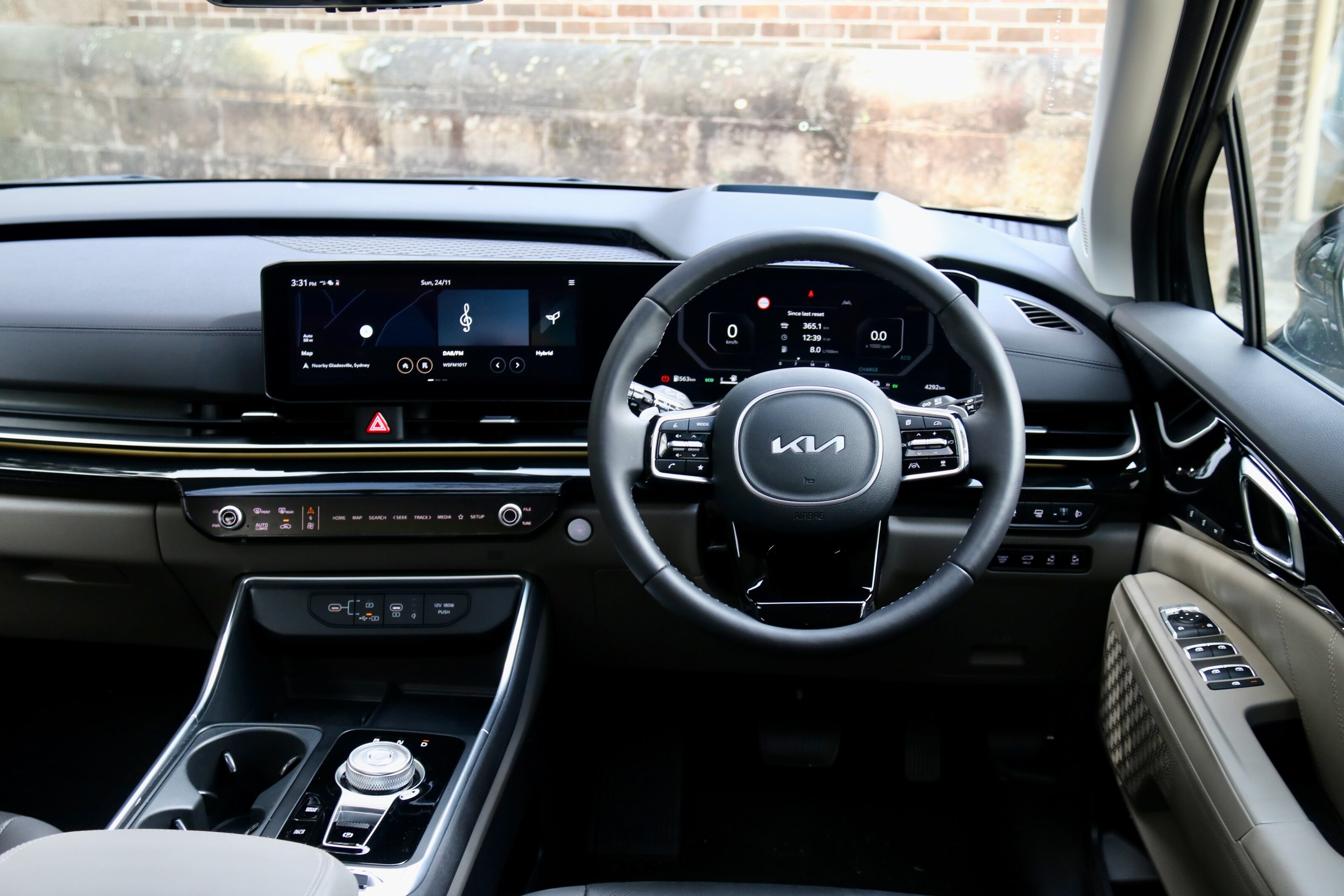
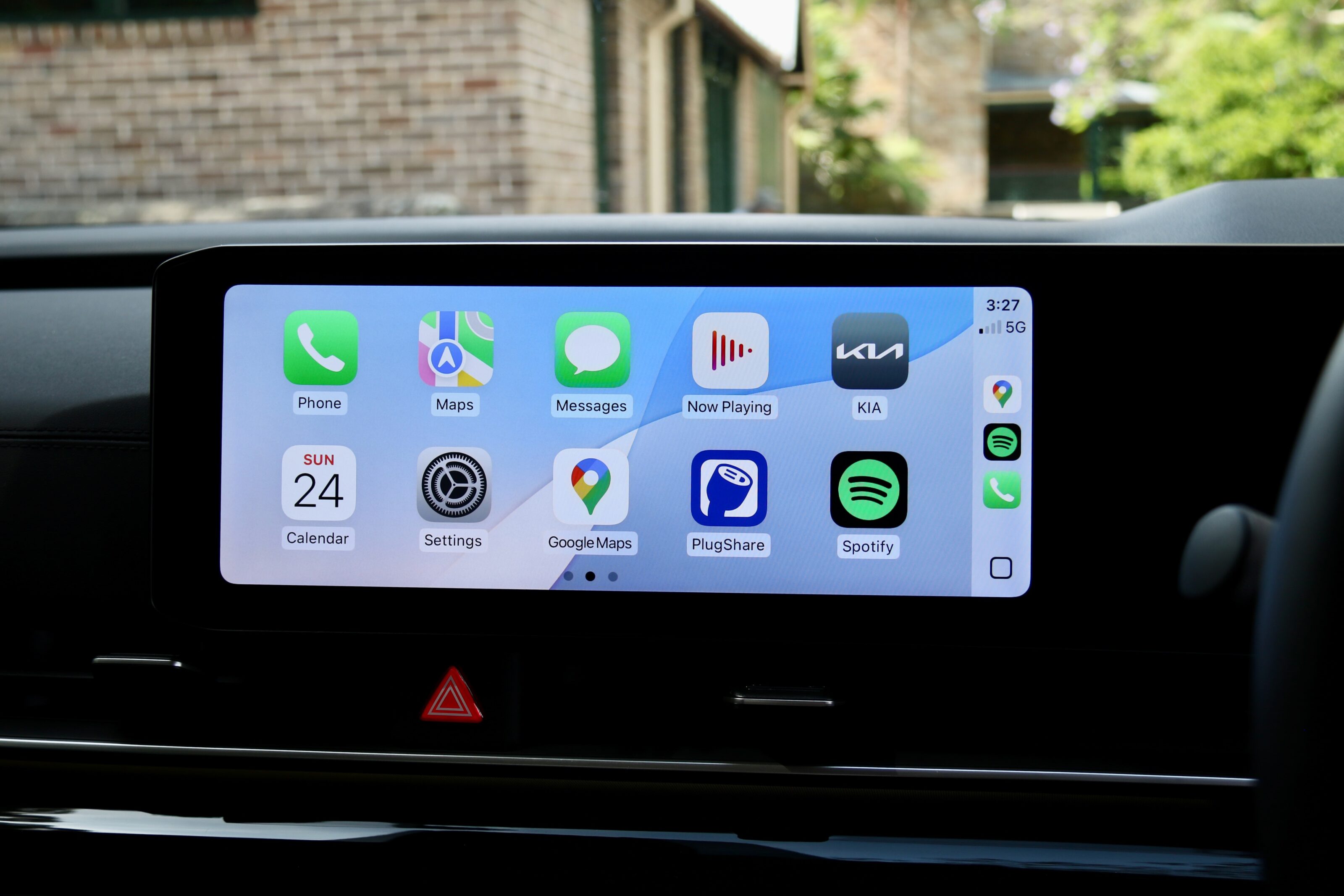
Back at the front, the new 12.3-inch touchscreen uses the brand’s new ‘ccNc’ software and it’s a breeze to use, while also being well featured with wireless and wired smartphone mirroring, satellite navigation and digital radio. The screen is a bit dark, but the screen quality is excellent and overall, there’s very little wrong with the Carnival’s cabin.
On the road
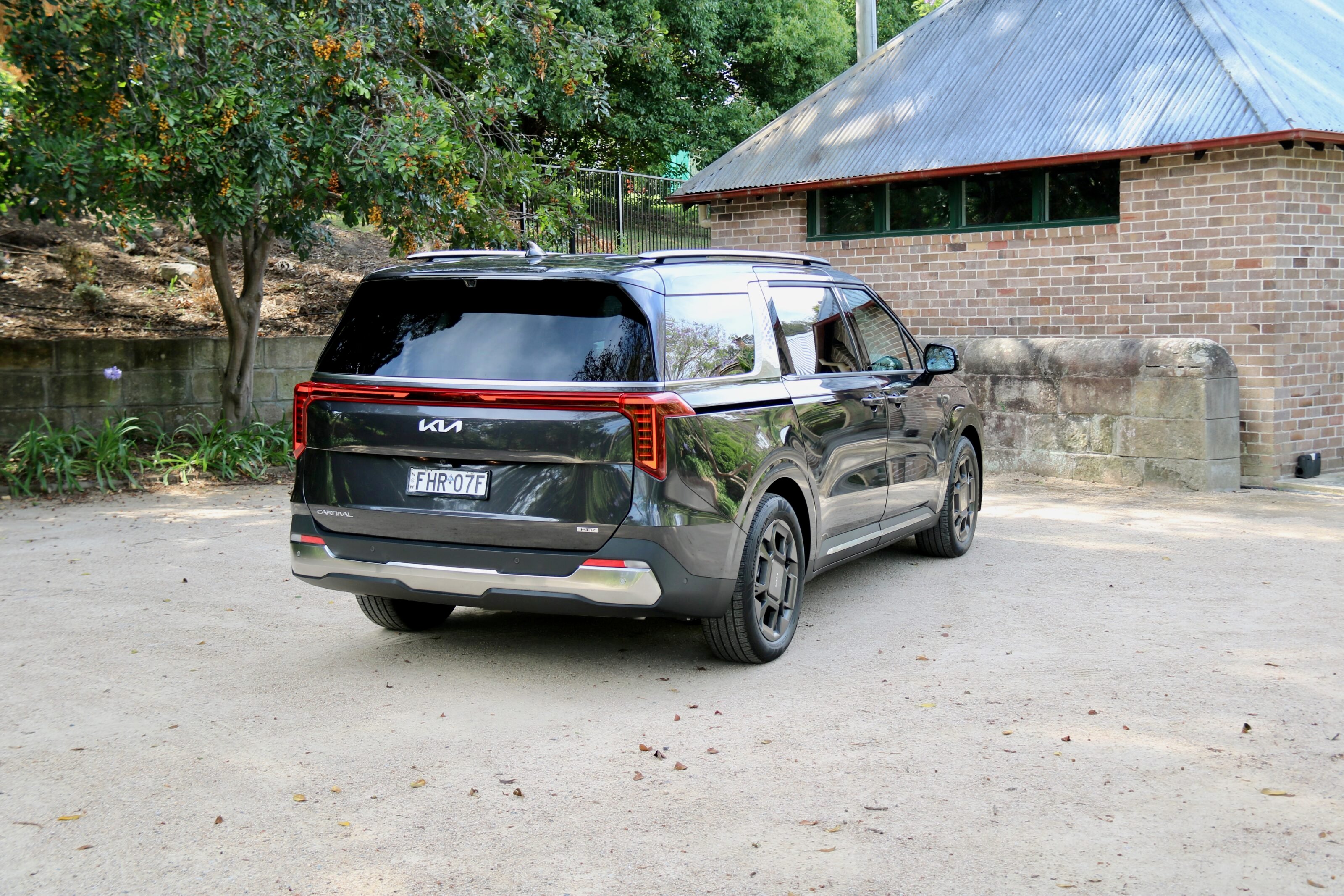
In its current generation, the Kia Carnival has always impressed on the road thanks to an excellent ride quality that was honed by Kia’s local engineers, and the new hybrid is no different. Weighing 93kg more than the diesel and 128kg more than the V6 petrol variants, the Carnival Hybrid’s extra weight can be felt a bit in corners but the reality is that no Carnival is a sports car, and with that in mind, it drives quite well.
The ride is soft and comfortable, the handling is reasonable and noise suppression is largely excellent. It also hides its size well, with light steering weighting at lower speeds and a very useful surround view camera system to help with parking.
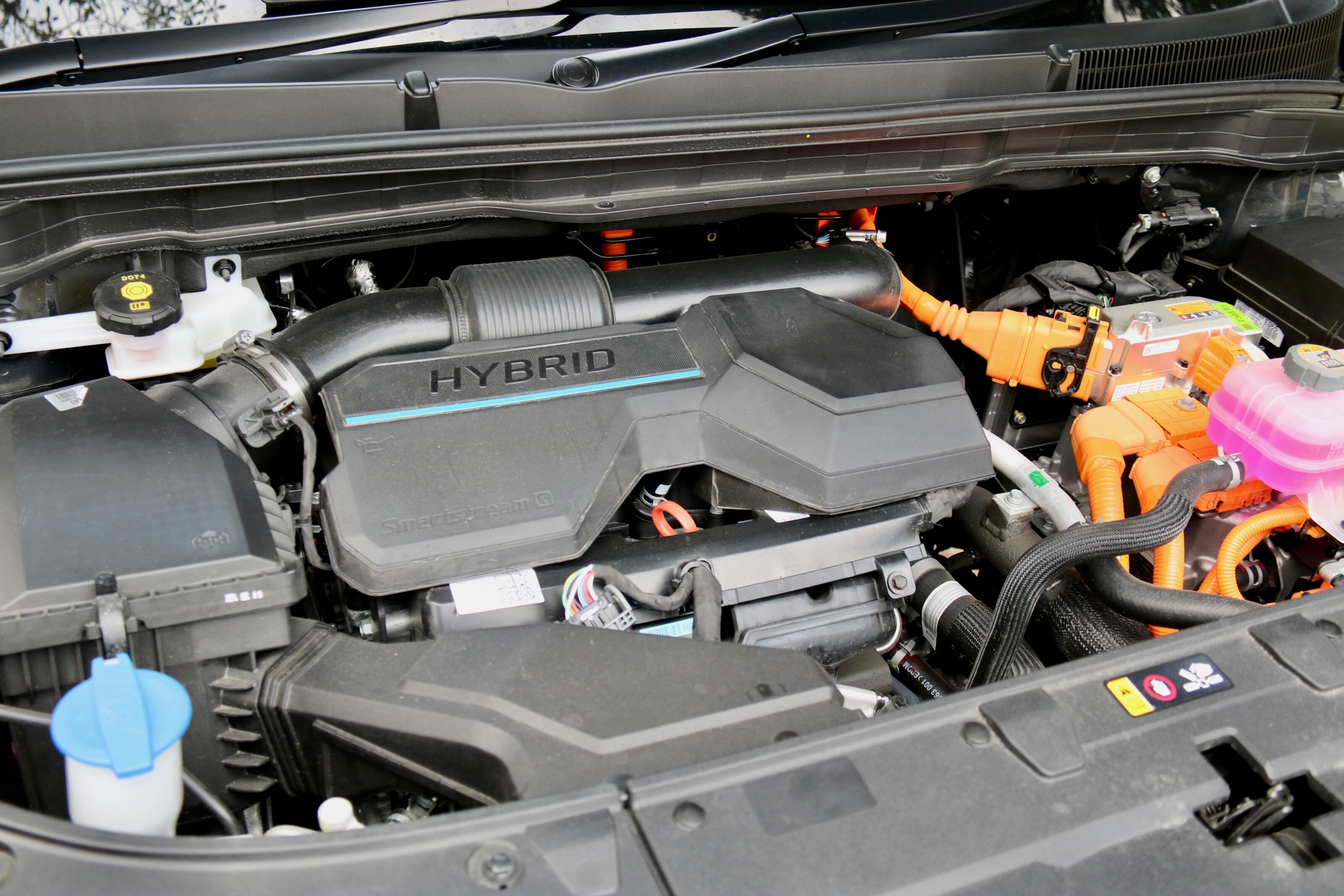
The hybrid drivetrain is smooth and is an excellent urban companion. Whereas the diesel has turbo lag and the V6 doesn’t make its peak torque until 5500rpm, the hybrid electric motor’s 304Nm peak torque is available from 0rpm and it feels much quicker off the mark as a result.
At higher speeds, it doesn’t feel quite as fast as it’s the petrol engine doing most of the work, but it’s still got more than enough grunt and is still able to drive electrically at that speed for short bursts.
Service and warranty
Like other new Kia models, the Carnival GT-Line Hybrid is covered by a seven-year/unlimited km warranty with up to eight years of roadside assistance if serviced through a Kia dealership. A seven-year/150,000km warranty covers the hybrid battery.
The Carnival Hybrid’s annual service intervals are a short 10,000km, and five years/50,000km of servicing costs $2967 or $596 annually. For those considering the diesel Carnival, its five-year service cost is slightly better at $2851 ($570 annually) but its 15,000km intervals mean that it can travel 5000km further annually before needing a service.
Safety
Carnival GT-Line safety features:
- 8 airbags (including a front centre unit)
- Autonomous emergency braking (AEB) with pedestrian, cyclist, oncoming lane change and intersection detection
- Lane keeping assistance with adaptive lane guidance
- Adaptive cruise control with highway drive assist with lane change assist
- Intelligent speed limit assist
- Driver attention monitoring
- Safe exit warning with safe exit assist
- Auto high beam
- Blind-spot monitoring with a camera feed when indicating (with braking)
- Rear cross-traffic alert (with braking)
- 360-degree camera
- Front, side and rear parking sensors
- eCall SOS button in overhead console
- Rear low-speed automatic braking
The Carnival received a five-seat ANCAP safety rating in 2021, and the company has added more safety features since then, like an upgraded AEB system.
Verdict: Should I buy a 2025 Kia Carnival GT-Line Hybrid?
Firstly, if you’re considering a people mover: well done, they’re much more practical and efficient than an equivalent SUV like a Sorento that shares showroom space with the Carnival. Secondly, if you are considering one, chances are that the Carnival is high on your shortlist and deservedly so, because in our opinion, this is a product that does so much correctly and it’s no surprise to see why it’s so popular in Australia.
Is the hybrid variant worth it over the other Carnival drivetrains? That depends on your driving. If you do a lot of highway miles, we’d suggest the diesel as it costs less to buy and can travel further before needing a service. But against the thirsty and $5530-cheaper V6? We’d say that it’s a no-brainer as it’s significantly more fuel efficient in the real world and you would likely make the considerable cost difference back within five years. While it isn’t for every buyer, the new hybrid drivetrain adds more appeal to the Kia Carnival for likely even more market domination.
Kia Carnival rivals
MG Motor Australia has announced a round of specials on MY24 stock as part of its end
of financial year sales. Customers will be able to secure great savings from May 1 while stocks
last on some of MG Australia’s most popular models, such as the MG3 hatchback and MG4 EV.
Available on MY24 cars already in stock, the $1000 factory bonus lowers pricing on a range of MG
products, including the MG3 Excite to $22,888 drive away and the MG4 Excite 51kWh to $36,990
drive away.
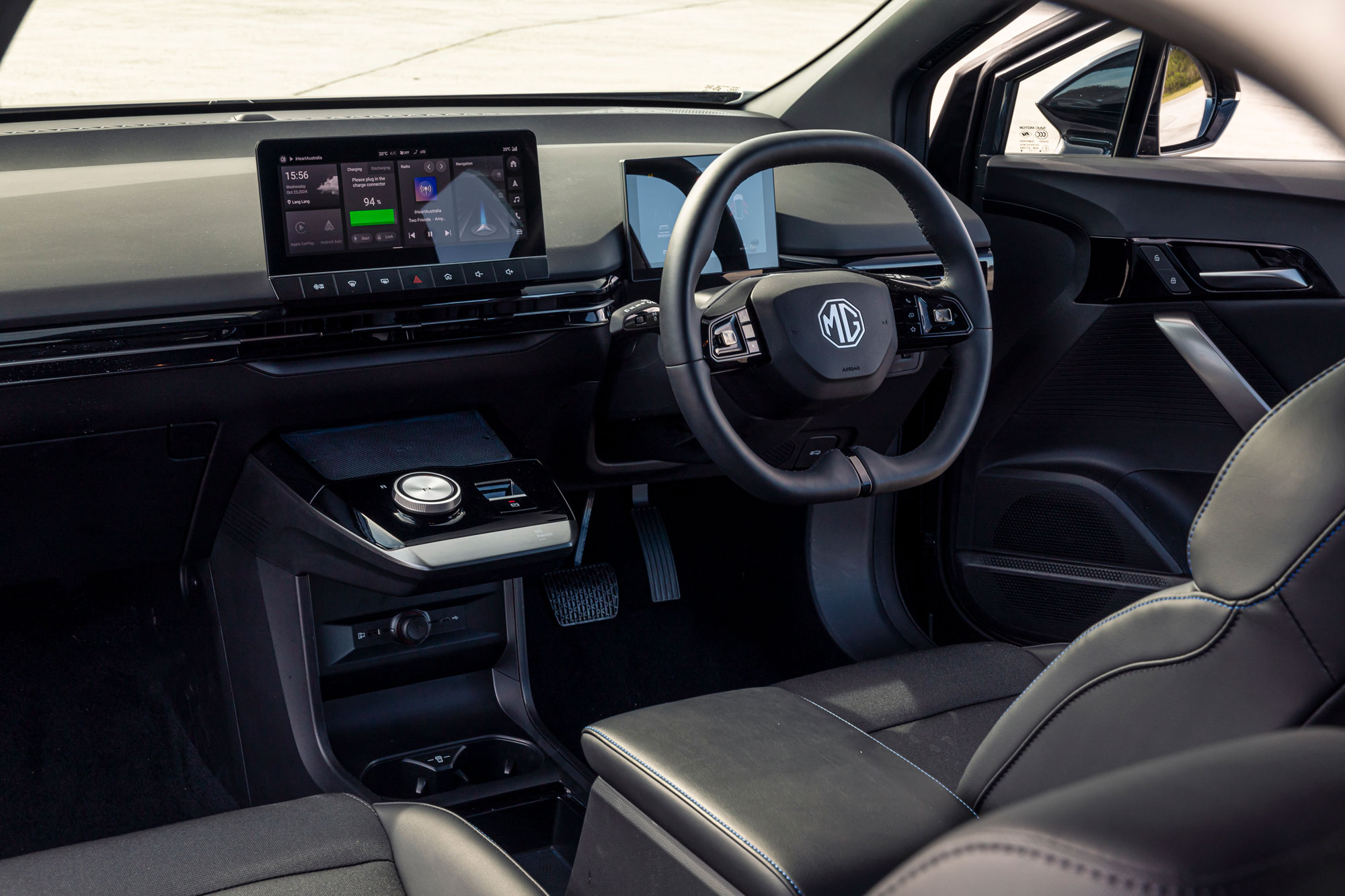
Buyers looking to get into a value-packed mid-size SUV will be pleased to know that the HS Vibe is
now just $35,888 drive away, and the MG5 small sedan is now available from just $23,888 drive
away.
MG Motor Australia’s Chief Executive Officer, Peter Ciao, commented, “It is exciting to announce
our EOFY 25 sale for Australian motorists. This is a great opportunity to get behind the wheel of a
new vehicle with our $1000 factory bonus across MY24 stock. This is a perfect time to test drive
and take home a new car before the end of the financial year.”
The whole MG range is covered by a 10-year/250,000km warranty.
MG EOFY sale pricing (drive away):
- MG3 Excite petrol: $22,888
- MG3 Essence petrol: $24,990
- MG3 Excite hybrid: $27,888
- MG3 Essence hybrid: $30,990
- MG4 51kWh Excite: $36,990
- MG4 64kWh Excite: $40,990
- MG4 Essence: $42,990
- MG4 Long Range: $49,990
- MG4 XPower: $55,990
- MG5 Vibe: $23,888
- MG5 Essence: $28,990
- HS Vibe: $35,888
- HS Excite: $37,990
- HS Essence: $39,990
- ZST Vibe: $23,888
- ZS EV Long Range: $36,888
The MG EOFY bonus is now available on a range of MY24 MG models in stock.
MG Motor Australia has launched the new MG3 Vibe, which is the new entry point to the MG range in Australia. Priced from $21,990 drive away, the small hatchback eschews some equipment to the now-mid-spec Excite like alloy wheels and blind-spot monitoring.
However, it’s still well equipped with features such as autonomous emergency braking, adaptive cruise control and lane keeping assistance retained as standard equipment. A front centre airbag has been added to the Vibe – but according to the spec sheet on MG’s website, curiously not the Excite or top-spec Essence.

The MG3 Vibe is powered by the same 1.5-litre four-cylinder petrol engine as the other petrol
models in the range, making 81kW of power and 142Nm of torque. That sends power to the front
wheels via a CVT automatic transmission. It uses a claimed 6.0L/100km of fuel on the combined
cycle, features a 40-litre fuel tank and can run on 91RON regular unleaded fuel. The Vibe is not yet
available with the 158kW MG3 Hybrid+, which is rated at just 4.3L/100km.
2025 MG3 pricing (drive away):
| Vibe petrol | $21,990 |
|---|---|
| Excite petrol | $22,888 |
| Essence petrol | $24,990 |
| Excite hybrid | $27,888 |
| Essence hybrid | $30,990 |
MG3 Vibe standard equipment:
- 15-inch steel wheels with hubcaps
- Dusk-sensing automatic halogen headlights
- Air-conditioning
- Electric mirrors and auto-down windows
- Alarm
- 7.0-inch digital driver’s display
- 10.25-inch touchscreen
- Wired Apple CarPlay and Android Auto
- AM/FM radio
- 4x USB ports
- Six-speaker sound system
- Seven airbags (including a front centre unit)
- Autonomous emergency braking
- Adaptive cruise control with traffic jam assist
- Lane keeping assistance
- Auto high beam
- Driver attention monitoring
- Rear parking sensors
MG3 Excite model adds:
- 16-inch alloy wheels
- Rear air vent
- Auto-folding mirrors with heating
- Blind-spot monitoring
- Rear cross-traffic alert
- Unsteady driving warning
- Push button start
- Hybrid adds single-zone automatic climate control and rotary dial transmission selector
MG3 Essence model adds:
- Synthetic leather upholstery
- Leather steering wheel
- Projector LED headlights
- DAB+ digital radio
- Satellite navigation
- 12 months of ‘iSmart’ remote services access
- Smart keyless entry
- Rain-sensing automatic wipers
- Sunroof
- 360-degree camera
The MG3 Vibe will enter local MG showrooms this week, with deliveries due to commence soon.
- Price: from $41,990 drive away – $46,990 drive away
- Engine: 2.2L four-cylinder turbo-diesel
- Power/torque: 129kW/400Nm
- Transmission: 6-speed auto, 4WD
- Fuel consumption: 7.2L/100km
- CO2 emissions: 190g/km
Indian giant Mahindra’s reliable, good value vehicles have quickly established a foothold in the Australian market, primarily via the XUV700 and its heavier-duty Scorpio sibling tested here.
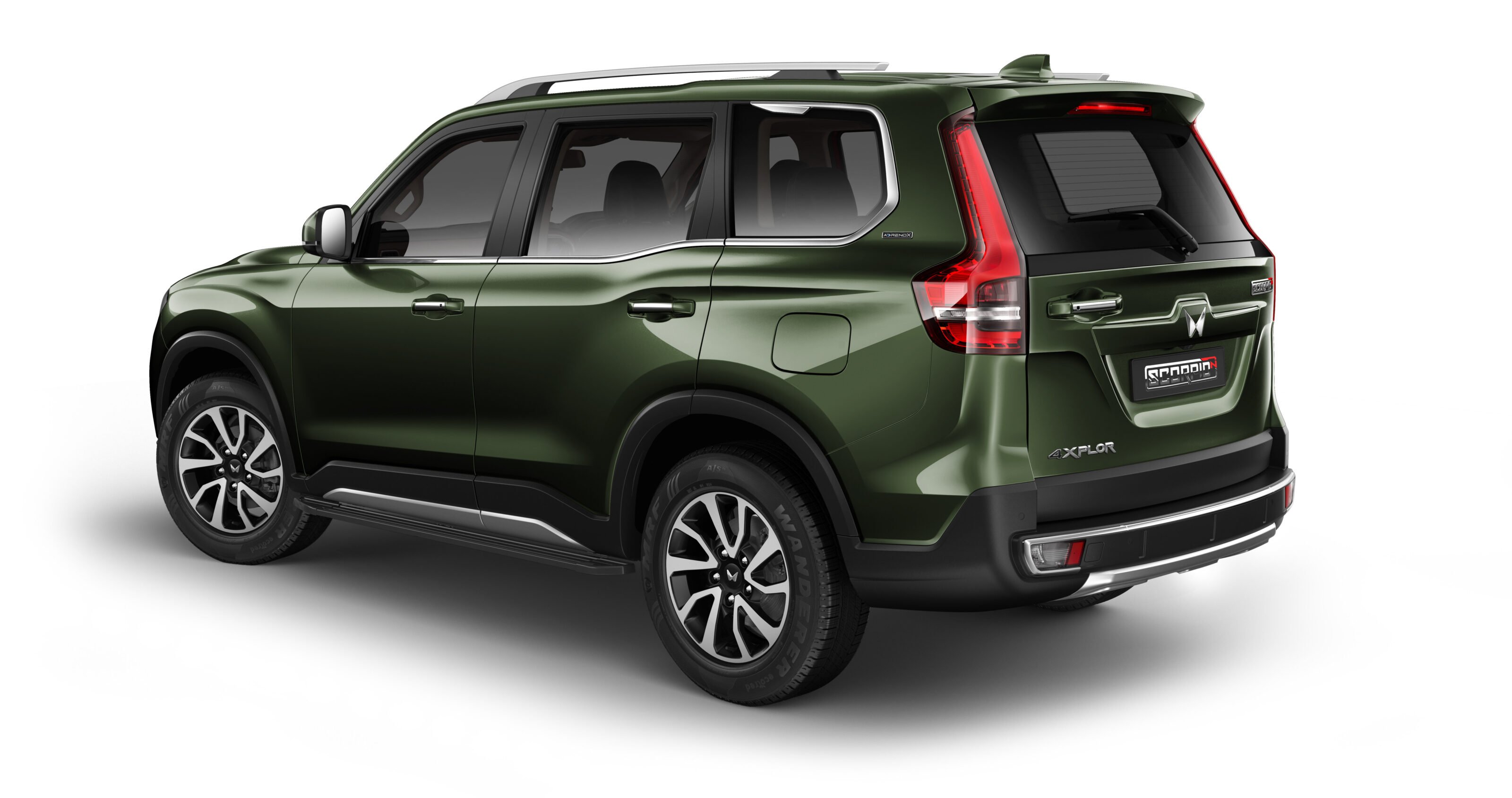
Competing against cars such as the Mitsubishi Pajero Sport and Isuzu MU-X, the Mahindra Scorpio is a heavy-duty off-road SUV that seats up to seven people. But priced from just $41,990 drive away for the entry-level Z8, the Scorpio is at least $10,000 less expensive than its main rivals and the positives don’t end there.
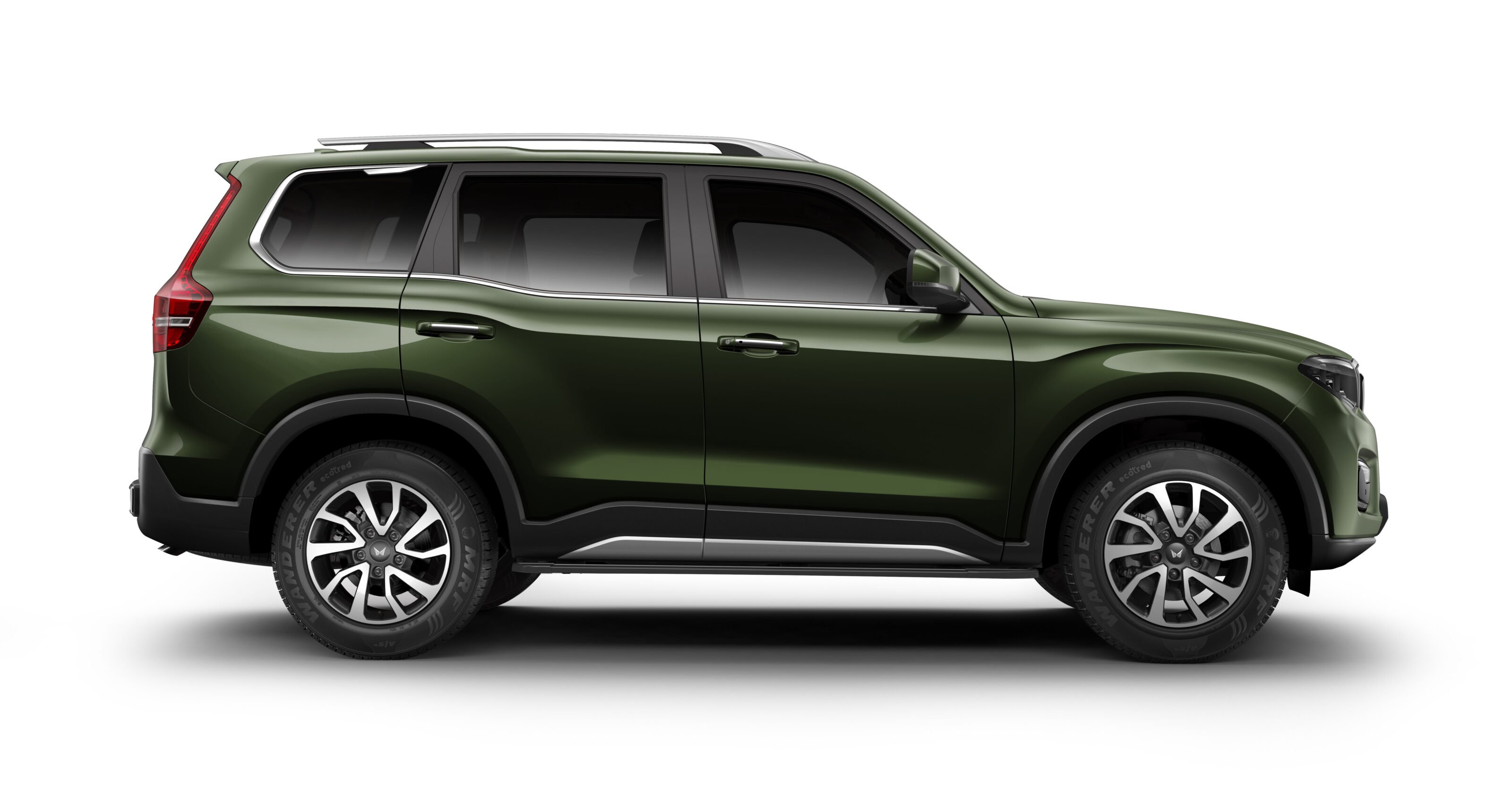
Standard equipment on the entry-level Scorpio Z8 includes 18-inch alloy wheels, a sunroof, dusk-sensing LED headlights, rain-sensing automatic wipers, power-folding mirrors, a leather steering wheel and gearknob, synthetic leather upholstery, cruise control, an 8.0-inch touchscreen with Apple CarPlay and Android Auto, dual-zone climate control and keyless entry with push button start.
The four-wheel drive system includes a mechanical rear diff lock, low range, selectable terrain modes like snow, mud and ruts and sand, while safety kit includes six airbags, stability control and a reversing camera with rear parking sensors.
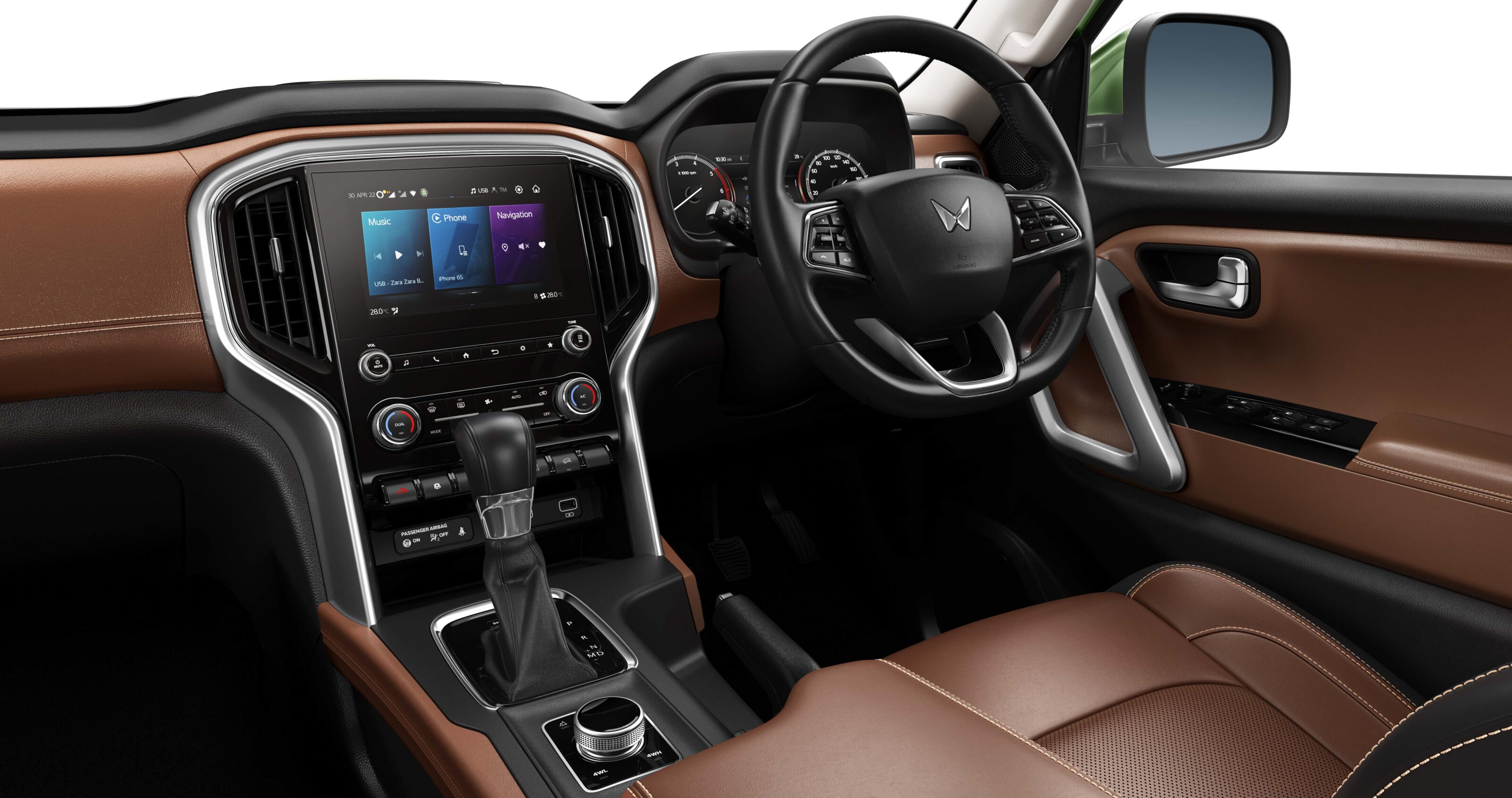
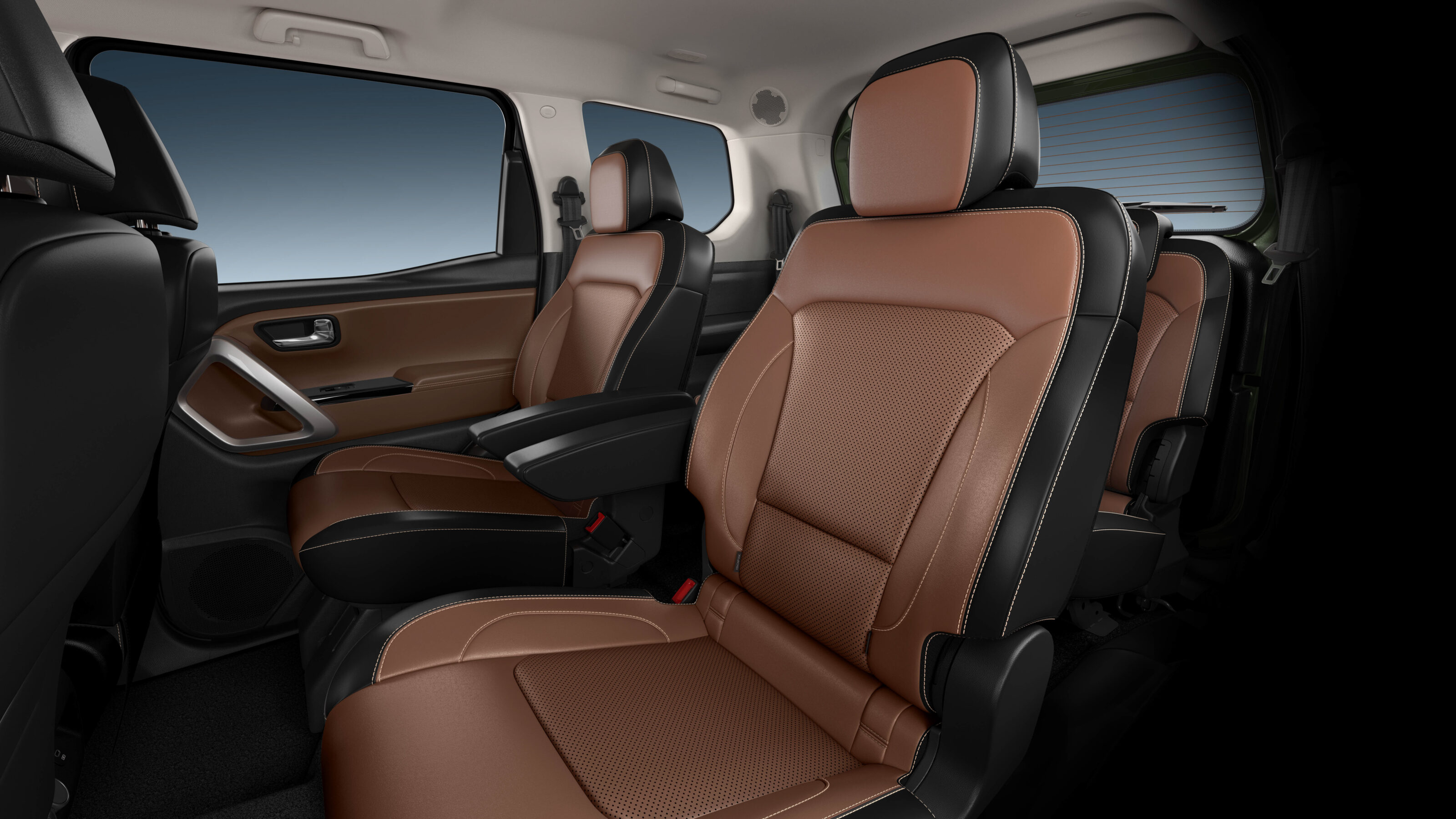
The upper-spec Scorpio Z8L ($46,990 drive away) adds seven seats, side steps, a 12-speaker Sony sound system, a six-way electric driver’s seat, a 7.0-inch digital display for the driver and a front camera with front parking sensors.
Under the bonnet of the Scorpio is a 2.2-litre four-cylinder turbo-diesel making 129kW of power (at 3,500rpm) and 400Nm of torque (between 1,750rpm and 2,750rpm), mated to a six-speed torque converter automatic transmission sending power to all four wheels. Combined fuel consumption is rated at just 7.2L/100km, which is efficient for a large SUV.
The cabin of the Scorpio is practical and well equipped. While the Z8 features a six-seat layout with a walk-through section where a middle seat would usually be, the Z8L adds an extra seat for better practicality. Front and middle seat space is healthy – we particularly like the elevated middle row – while the third row is best described as kids only, the Scorpio is hardly alone in that regard.
The dashboard features an 8.0-inch touchscreen that’s easy to use and features Apple CarPlay and Android Auto smartphone mirroring, though not native satellite navigation or digital radio. There’s a good amount of storage in the cabin too, and the driving position is easy to adjust.
On the road, the Scorpio impresses with a comfortable driving experience – the ride is well damped, the steering gives reasonable feel and its visibility is good too. The diesel engine isn’t the punchiest in the segment, but like the Pajero Sport, it happily gets the job done with no fuss. Like its rivals, the Scorpio features impressive off-road capability thanks to its four-wheel drive system, which features low range and features like an auto-locking rear differential and selectable off-road modes like snow and mud to adapt to the terrain it’s being driven over.
The Scorpio is covered by a seven-year/150,000km warranty with seven years of roadside assistance and five years of capped price servicing costs a reasonable $2,358 – not bad for a heavy-duty off-road SUV.
Overall, the Mahindra Scorpio presents a great value and interesting alternative to the usual large SUV suspects. Its pricing is low, it’s well equipped, it drives well for the segment, its engine is punchy and it’s covered by a great warranty. Based on it, we think that Mahindra’s expansion beyond commercial products in Australia will be successful.