
In spite of its age, the humble Suzuki Swift remains a key player in the light hatch segment, and one of the core pillars of Suzuki’s local lineup.
Over eight thousand new Swifts found homes in 2016, putting Suzuki’s stalwart hatch in a comfortable fourth place within its segment and earning it top-seller status in Suzuki’s Australian showrooms. Its importance to Suzuki is huge.
Which is why the impending arrival of its all-new replacement is big news. The third-generation Swift (fourth generation, if you count the last Suzuki Ignis that was sold overseas as a Swift) went on sale in its home market of Japan last week, debuting an all-new platform and, for the first time, a range of turbocharged and mild hybrid powertrains.
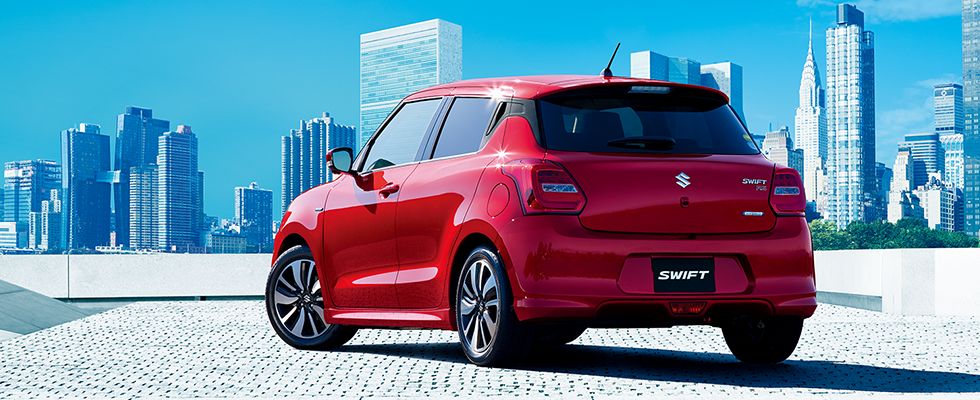
Built atop Suzuki’s stiffer and lightweight “Heartect” architecture, the 2017 Suzuki Swift also promises to pack more technology.
Alongside improvements to infotainment equipment, the new Swift is also offered in Japan with an autonomous emergency braking system, lane-departure warning, adaptive cruise control and high-beam assist, all of which use an integrated camera and laser sensor to detect objects in front of the car.
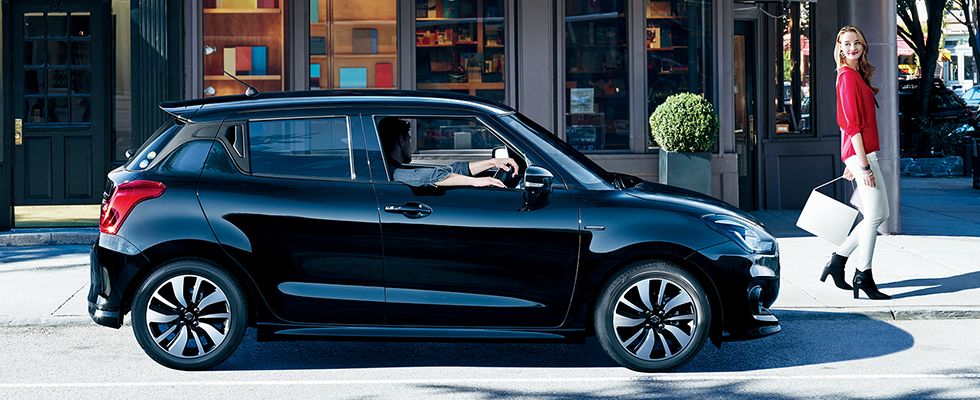
LED headlamps are also available, with integrated LED daytime running lamps.
The technology story continues under the bonnet. Alongside the 1.2-litre “DualJet” port and direct-injected engine that carries over from the existing model (albeit with tweaks to improve fuel economy and torque), Japanese Swift buyers can also opt for the turbocharged 1.0-litre BoosterJet engine.
The latter is similar to the 1.0-litre three-pot employed by the Suzuki Baleno GLX Turbo, but in Japanese trim produces 7kW and 10Nm less for a total of 75kW of power and 150Nm of torque. A six-speed automatic is the only transmission available for that engine.
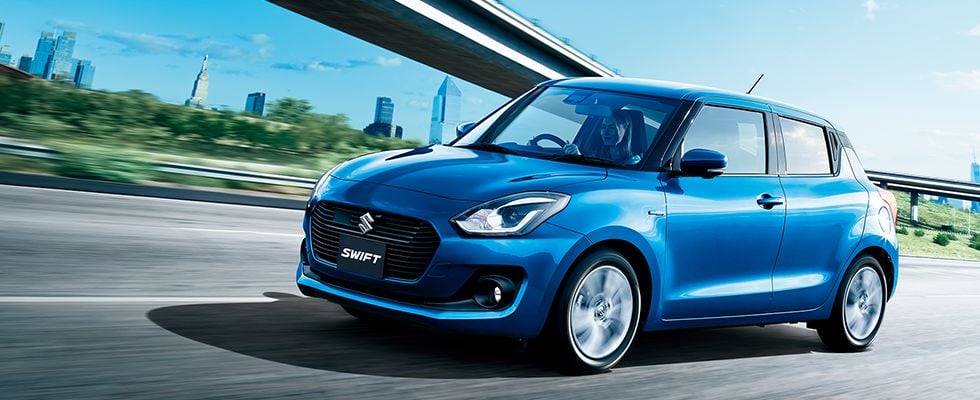
1.2-litre models generate 67kW and 118Nm, and can be paired with a five-speed manual or CVT automatic. An AWD drivetrain is also available for the 1.2, albeit only with the CVT. The “hybrid“ makes identical power and torque figures and is CVT-only, but achieves lower fuel consumption thanks to engine start-stop.
In Japan, RS and turbocharged RSt specifications receive a firmer suspension setup designed to emulate European rivals – though a performance-focused successor to the Swift Sport has yet to be announced.
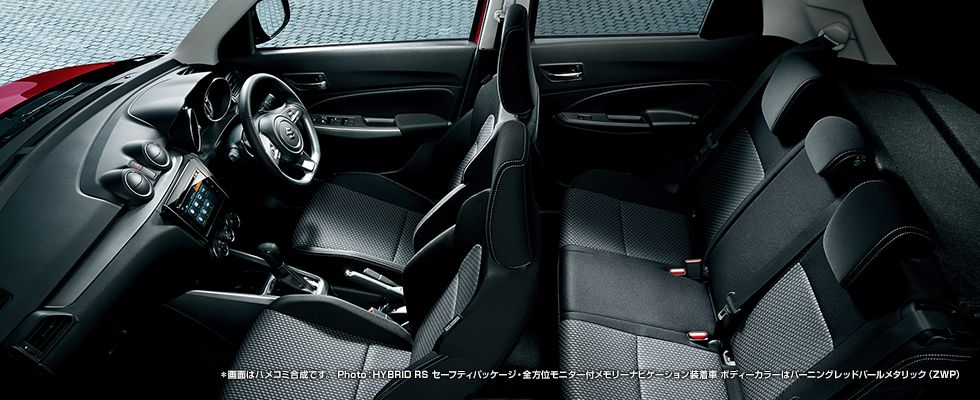
Meanwhile, door apertures have been enlarged to help passengers enter and exit, while the loading lip for the hatch has been brought 80mm lower to make it easier to pack the boot. A 20mm wheelbase stretch liberates more legroom for passengers and the boot measures in at 265 litres, 55 litres bigger than the current model.
Styling builds on the familiar lines of the current model, but sands down the edges in favour of more organic sheetmetal surfacing.
Blacked-out A- and B-pillars remain, though a new C-pillar graphic gives the roof a floating effect. In Japan, the RS-badged variants receive a bodykit and red trim accents to impart a sportier style.
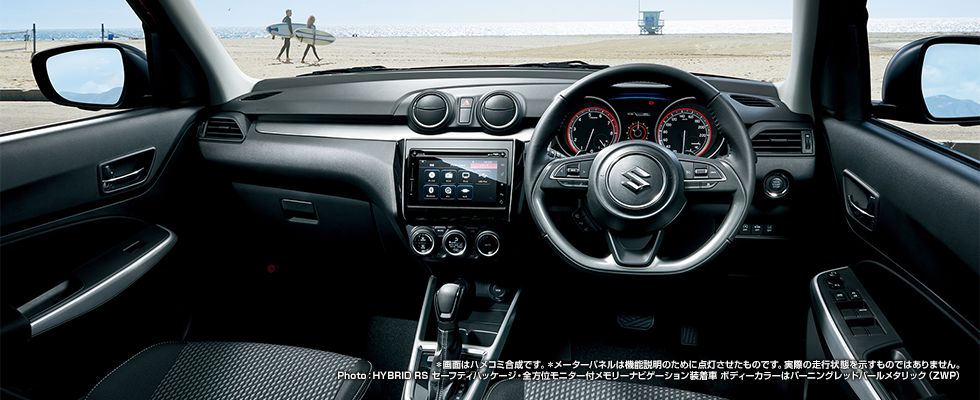
Inside, Suzuki has aimed the Swift in a more upmarket direction. Clear dials, a large touchscreen infotainment display and a premium-looking steering wheel are design highlights, while climate control is available.
Though already on sale in Japan, the international-market Suzuki Swift will have to wait until March to make its debut at the Geneva Motor Show. A local on-sale date is tipped for the second quarter of this year.
Launching a car is a stressful experience, especially when it is for your first ever vehicle, at the biggest tech expo in the world.
That is what the Chinese electric vehicle startup Faraday Future was facing when it unveiled its production car, the FF91 at the 2017 Consumer Electronics Show (CES) in Las Vegas.
Faraday Future has faced intense scrutiny from the media, with reports of high-level executives leaving en-masse, and financial troubles.
However, all of that was put into the background at CES, with the reveal of their very first production car, the FF91.
But all the hard work put into getting the car ready for the show was undone, with just over a minute of painfully awkward failure.
As the company’s senior vice president of R&D and engineering, Nick Sampson, and the company’s main financier, Jia Yueting, attempted to showcase the car’s impressive autonomous parking features, it all went horribly wrong.
A button was pressed, the audience waited in anticipation, and…nothing happened. Instead, Sampson and Yueting were forced to stand in agonising, awkward, silence while the car just sat where it was.
“It seems like it’s a little… lazy tonight,” Sampson added to break the silence.
A second attempt later in Sampson’s presentation didn’t go much better, with the car simply rolling approximately six metres before coming to a stop.
Sampson later responded to media enquiries about why the system may have failed.
“Outside, it was working perfectly, that’s why we made that demonstration outside cause we knew there were technical challenges,” he said. “If we look up at the roof of this building there’s a lot of steel structure up there that’d [prohibit] some of the signals.”
A self-parking feature that can be foiled by steel might not be great in parking towers or under high-rise apartments.
Regardless, Faraday Future has some teething issues to sort out before they debut the technology in the production FF91.
It was another record year for the Australian new-car market in 2016, though there was another notable feat as Australian-built cars were outsold by German vehicles for the first time.
Locally made models slipped 11-percent to 87,096 sales last year, allowing German-built cars to move ahead despite a total of 87,392 sales falling a few-hundred units short of 2015 numbers (87,894).
Ford Australia inevitably posted the biggest decline – minus 23 per cent compared with 2015 – as production of the Ford Falcon sedan (down 25-percent) and Territory SUV (down 22-percent) came to an end in October.
The Holden Cruze – down 15 per cent year on year – also ceased rolling off assembly lines in Elizabeth, Adelaide, at the same time. Sales of the Commodore large car, which will be replaced by a European-sourced Opel model in 2018, dropped seven-percent, though the model still finished in the top 10 best-selling models for 2016.
Toyota was again the dominant brand in Australia last year, once again surpassing 200,000 annual sales, yet there were still negative results for the Camry and Aurion twins – declines of four- and 11-percent, respectively.
A decade ago, Australian-made cars outsold German vehicles by 201,623 to 32,829 units, and even five years ago they were almost double: 141,939 v 75,901.
In recent years, locally built cars have also been surpassed by vehicles manufactured in South Korea and Thailand.
Holden is the only member of the local trio that will be disappointed with 2016’s sales results, though.
The company dropped to fourth overall in the best-selling brands table after sales slipped eight per cent.
In contrast, Toyota’s position as the nation’s favourite car brand remains seemingly impregnable, while Ford increased its market share from 6.1- to 6.9-percent after selling more than 10,000 additional vehicles in 2016 compared with 2015 (81,207 v 70,454).
Thailand’s rise in the market’s Vehicle of Origin table can be largely attributed to the ever-increasing popularity of utes, which are built in the Asian country in significant numbers.
In a year that the Toyota HiLux became the first ute to claim the title of Australia’s best-selling vehicle – see separate story – ute sales overall improved nine-percent, to close in on the 200,000 mark (190,768).
Every SUV segment posted growth, with small SUVs and large SUVs rising by a small margin of two per cent but medium-sized SUVs and upper-large SUVs jumping more notably – by 16.5- and 27-percent, respectively.
People-movers (up eight-percent) and sports cars (up 20-percent) were the only passenger-car segments to record positive results in 2016.
The small-car segment contracted only slightly, by four-percent, and still maintains a healthy advantage over the next-best segment, mid-sized SUVs: 224,450 v 172,194.
An extra 12,817 4×4 utes were shifted in 2016 as they overtook large SUVs to become the third most popular vehicle segment in Australia.
Australians bought more German-made cars in 2016 than they did locally-produced ones, reflecting shifts away from large cars and towards imported vehicles, especially luxury models.
According to figures supplied by the Federal Chamber of Automotive Industries (FCAI), of the 1,178,333 new vehicles sold in 2016, , 87,392 were sourced from Germany, just ahead of the 87,096 Australian-made cars.
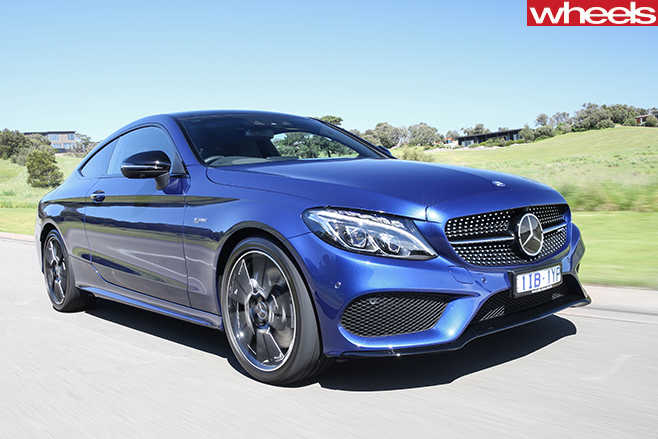
Mercedes-Benz, Audi, BMW and Porsche all posted record sales in Australia, with growth ranging from 5.1 percent to 13.3 percent. It comes off the back of a record year for luxury brands in which almost all posted growth ahead of the 2.0 percent growth experienced by the overall market.
Not all cars from those brands are built in Germany* but there are more than enough to pump sales to record levels, cementing Germany as the fourth-largest source of vehicles sold in Australia, behind Japan (325,689), Thailand (285,465) and Korea (162,642).
Volkswagen was the most prominent German brand to experience a sales drop, off the back of the runout for its Tiguan mid-sized SUV; sales of 56,571 meant it was Australia’s best-selling German brand, but VW’s tally for the year was down 6.1 percent compared to 2015.
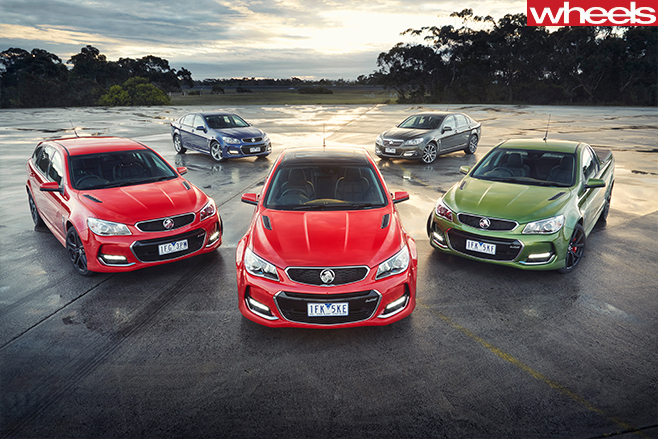
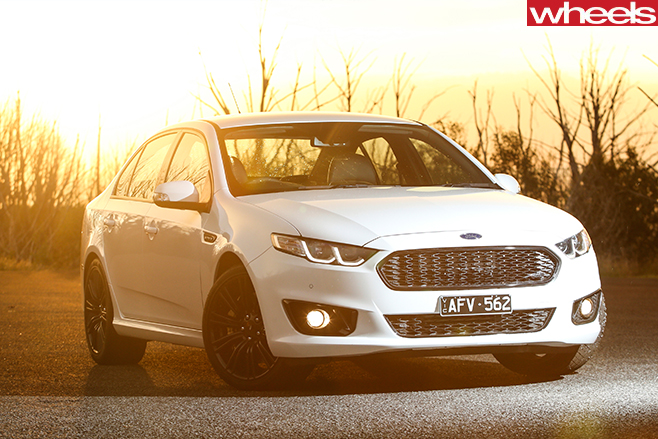
Of course, a large part of the reason for German cars overtaking Australian ones is the demise of the Australian car industry. Ford closed its manufacturing facilities late last year, while Toyota and Holden will shut theirs later this year.
While the Holden Commodore and Toyota Camry were still in the list of top 10 selling vehicles, each saw a drop in sales – and sales of every Australian-made car slid in 2016 too.
But there’s no doubt luxury is booming.
The chief executive of the FCAI, Tony Weber, puts it down to a number of factors, including general economic prosperity and a broader range of luxury models on offer.
“Luxury brands have more affordable vehicles in the market than they had in the past,” said Weber. “It’s also got to do with the wealth of people in the nation; we’re now in our 25th year of economic growth.”
Weber also pointed to the personalisation available on luxury models, which allows people to customise a car to their tastes.
Clearly the growth in German vehicles was driven by demand for luxury models, something not limited to one country.
Other luxury brands also experienced impressive sales growth in 2016; Bentley was up 20.3 percent, Ferrari up 12.6 percent, Jaguar up 132.8 percent, Land Rover up 14.4 percent, Lexus up 3.9 percent, Lamborghini up 51.2 percent, McLaren up 158.3 percent, Rolls-Royce up 23.3 percent and Volvo up 18.9 percent.
Only a handful of luxury brands experienced sales drops in 2016. Maserati was down 6.9 percent, Aston Martin down 11.5 percent, Lotus down 35.4 percent and Alfa Romeo down 54.9 percent,
Sales of German brands in 2016*
Audi – 24,258 +5.1%
BMW – 28,028 +12.0%
Mercedes-Benz – 41,226 +13.3%
Porsche – 4434 +8.4%
Volkswagen – 56,571 -6.1%
Sales of luxury models in 2016
Alfa Romeo – 711 -54.9%
Audi – 24,258 +5.1%
Bentley – 190 +20.3%
BMW – 28,028 +12.0%
Ferrari – 188 +12.6%
Jaguar – 3008 +132.8%
Lamborghini – 127 +51.2%
Land Rover – 13,597 +14.4%
Lexus – 9027 +3.9%
Lotus – 31 -35.4%
Maserati – 483 -6.9%
McLaren – 93 +158.3%
Mercedes-Benz – 41,226 +13.3%
Mini – 3765 +12.7%
Porsche – 4434 +8.4%
Rolls-Royce – 37 +23.3%
Volvo – 5878 +18.9%
Source: Federal Chamber of Automotive Industries
* Many German car makers source vehicles from countries outside Germany
As holiday makers begin their journey home across Australia’s road network, a new report has identified the 10 most dangerous stretches of highway in the country.
The research, conducted by the Australian Automobile Association, looks at which roads pose the most risk based on traffic volume and the number of crashes resulting in injury and death between 2010 and 2014.
The survey is confined to stretches of road within the National Land Transport Network with speed limits above 90km/h.
All but one of the roads mentioned in research are in Queensland, New South Wales or Tasmania, with Sydney’s M4 Western motorway, between Parramatta Road, Concord and M7 Westlink, topping the list.
The 24km stretch of freeway experienced 788 casualty crashes between 2010 and 2014 including six fatalities.
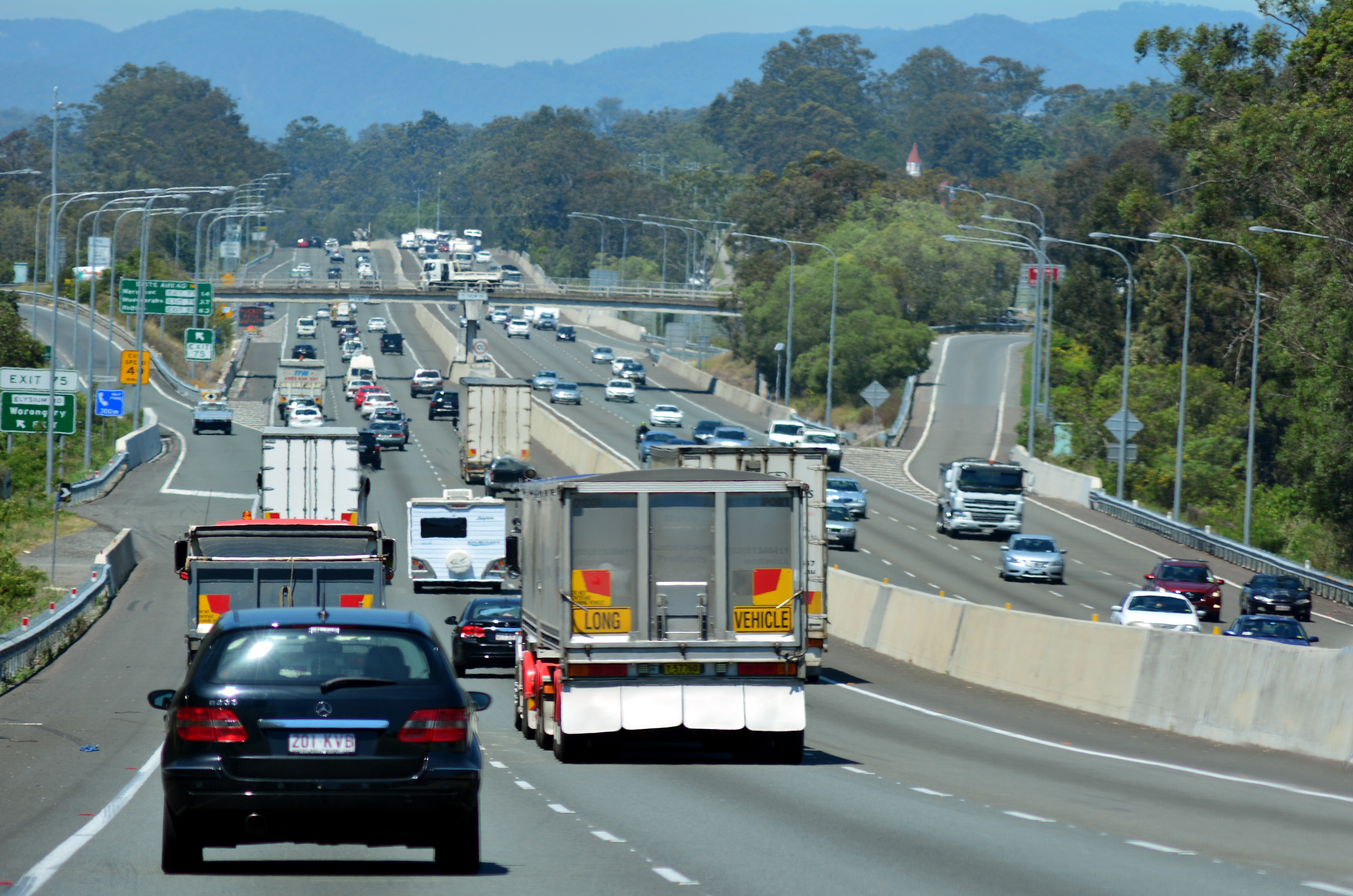
Second on the list was a 7km stretch of Tasmania’s Bass Highway, between Nine Mile Road and Stowport Road, which had 67 casualty crashes in 2010-2014 with one fatality.
While these numbers are significantly lower than the M4 it’s worth noting the short stretch of Tasmanian road averaged 14,700 vehicles per day compared to the M4’s 94,050.
Overall, Queensland’s M1 Pacific Motorway fares very poorly, with multiple stretches identified as black spots in the top 10, which also includes:
- M31 Hume Freeway, M5 to Narellan Road, Campbelltown, NSW
- M1 Pacific Motorway, Gateway Motorway to Logan Motorway, Qld
- A8 East Tamar Highway, Alanvale Connector to Dalrymple Road, Tas
- M1 Pacific Motorway, Smith Street Freeway to NSW border, Qld
- M1 Midland Highway, Evandale Main Road to Howick Street, Tas
- M1 Pacific Motorway, Logan Street to Smith Street Freeway, Qld
- A1 Bruce Highway, Sarina to Mackay, Qld
- M1 Great Northern/Victoria Highway, Kununnurra turnoff to NT border, WA
- M1 Princes Freeway, Hoppers Crossing and the Western Ring Road, Vic
- Stuart Highway, Coober Pedy and NT border, SA
- Stuart Highway, Livingstone to Pine Creek, NT
The organisation points out that after 40 years of continual improvement, Australia’s national road toll is increasing dramatically, with 1273 Australians killed on our roads in the year to September 2016: an annual increase of 86.
AAA Chief Executive Michael Bradley said: “Governments are rightly focussed on how to address the worsening road toll and this report highlights the areas of highway most in need of further investment in order to save lives.”
The full report features maps showing Australia’s highways, and features quick links to send messages to local MPs in affected areas to demand better road infrastructure.
The Toyota HiLux has become the first ute to be crowned Australia’s best-selling vehicle, as the Australian new car market set yet another sales record.
Toyota’s utility beat its showroom cousin, the Toyota Corolla small car, by 42,104 units to 40,330 in 2016 – a comfortable margin in the end after a tight battle all year long between the two Japanese models.
The HiLux extended a narrow gap in December after registering 4086 sales compared with the Corolla’s 2927. Another Toyota, the Camry, topped sales for the month, however – with 4850.
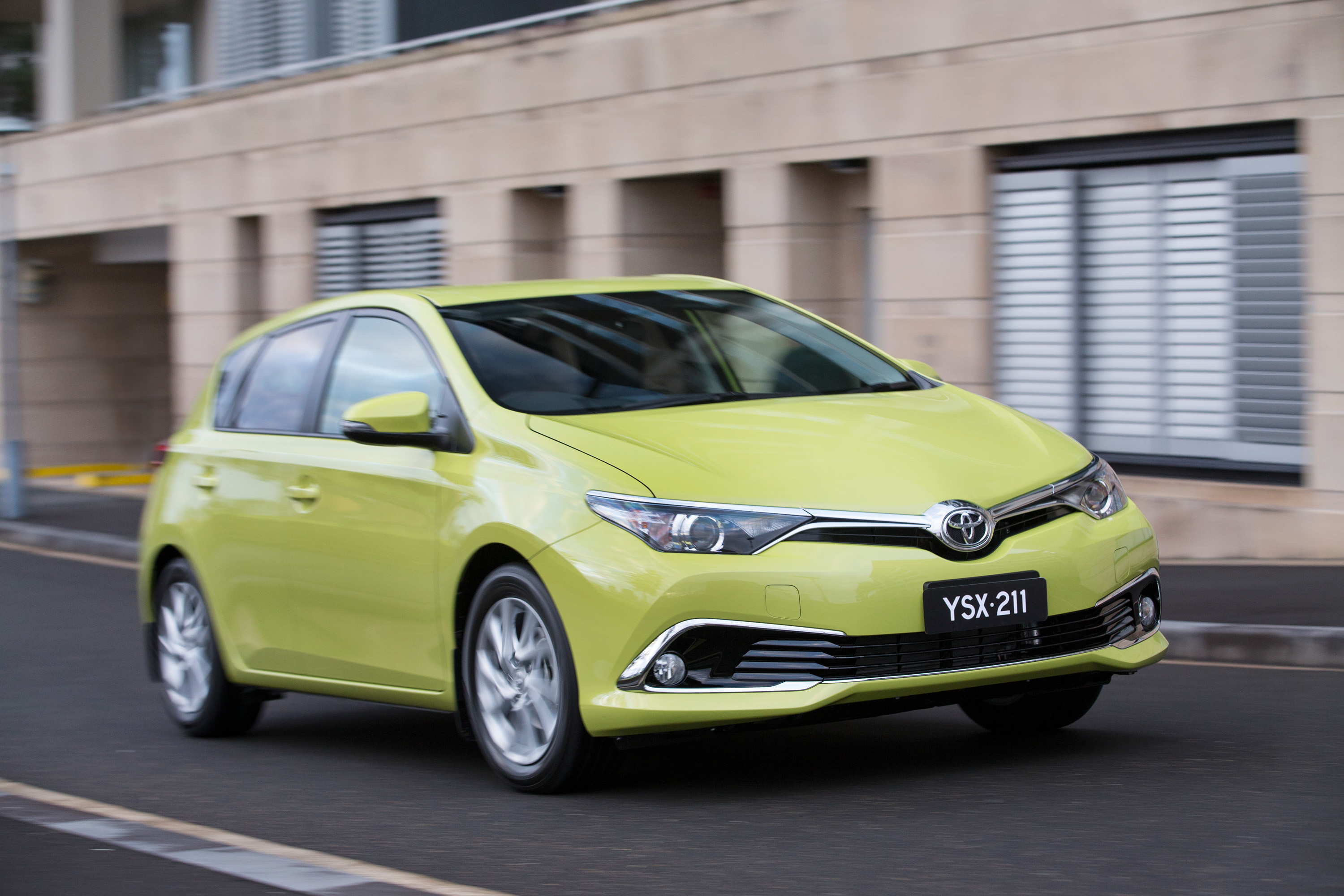
The result is actually the HiLux’s second best in the nameplate’s history, having registered 42,956 sales in 2008 (a year when the Holden Commodore was still the nation’s favourite).
Hyundai’s i30 hatchback had been an early front-runner for the 2016 sales title, courtesy of some generous driveaway pricing deals, and ended with a highly respectable podium finish behind the HiLux and Corolla.
2016 was a particularly strong year for utes as well, with the segment growing nearly 10 per cent. The Ford Ranger cemented a fourth place finish with 36,934 sales, and the Mitsubishi Triton took ninth with a figure of 21,897.
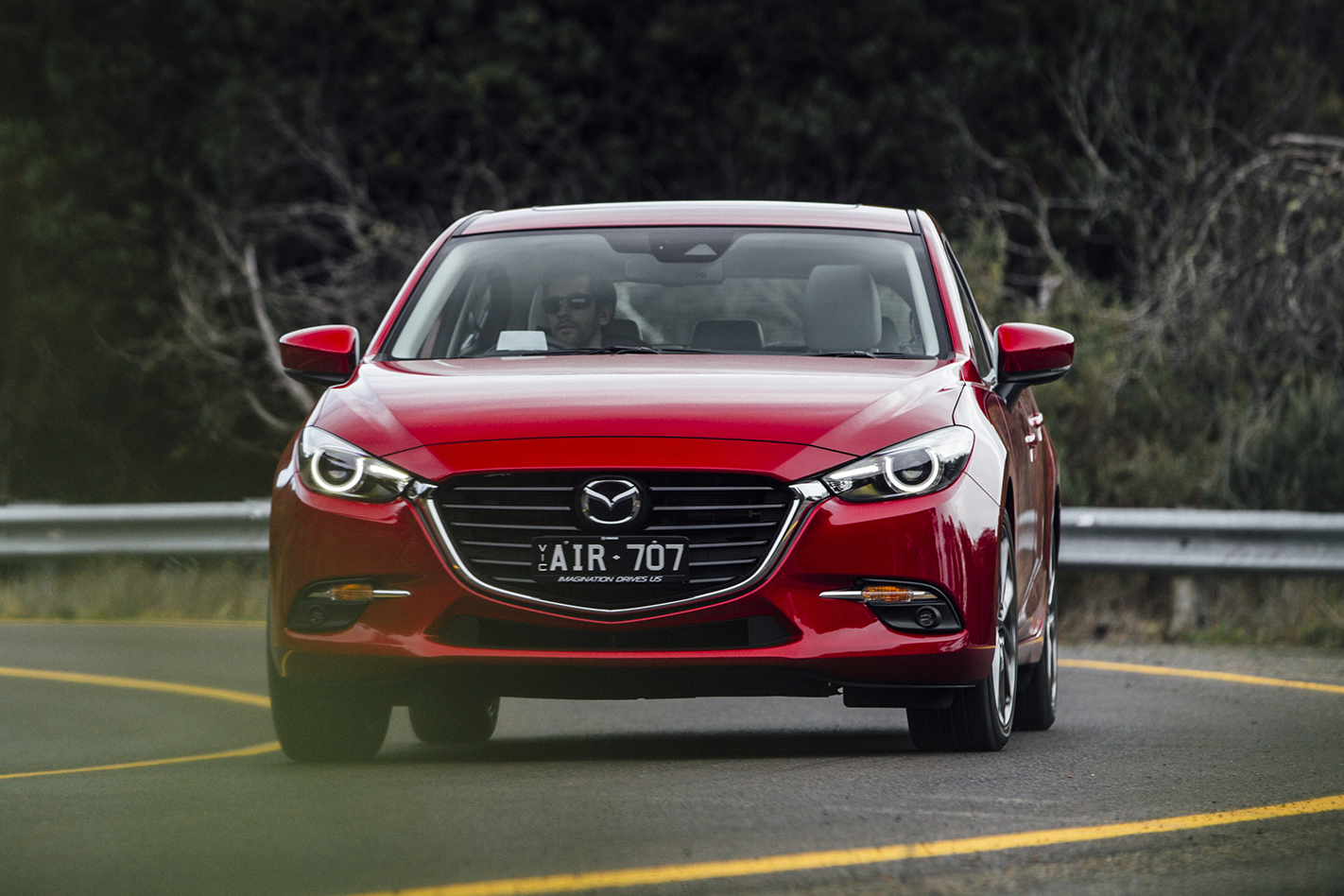
The Mazda3 (below) and Holden Commodore joined the Corolla, i30 and Camry as five passenger cars to fill the top 10, despite the segment dropping six per cent – or 29,426 vehicles – compared with 2015 year-end figures.
The Mazda CX-5 and Hyundai Tucson were the only SUVs to feature in the top ten, though sports utility vehicles continue to close the gap to passenger cars with eight per cent growth.
While 45,250 units separated passenger cars and SUVs in 2016, the gap was 107,212 at the end of 2015.
December sales were down a fraction on December 2015, though that didn’t prevent 2016 from setting another new-car record for Australia. A total of 1,178,133 beat the previous record set in 2015 by 22,725 vehicles – or two per cent.
It’s the seventh successive year the Australian car market has sold in excess of one million vehicles.
Toyota was again the country’s most popular brand – and again by a remarkable margin. Mazda’s own record of 118,217 sales was good enough for runner-up, yet was still 91,393 units shy of Toyota’s 209,610 sales.
2016: Top 10 Vehicle Sales
- Toyota HiLux 42,104
- Toyota Corolla 40,330
- Hyundai i30 37,772
- Ford Ranger 36,934
- Mazda 3 36,107
- Toyota Camry 26,485
- Holden Commodore 25,860
- Mazda CX-5 24,564
- Mitsubishi Triton 21,897
- Hyundai Tucson 20,132
HOLDEN has slumped to its worst ever sales result in a calendar year just as it is gearing up to shut down local manufacturing and shift to an import-only brand by 2018.
For the first time ever, the quintessential Australian car maker that started proudly in 1948 finished outside the top three brands in the sales race, with just 94,308 cars sold and its lowest ever market share of just 8.0 percent – less than one-tenth of a market it once dominated with one in every two sales.
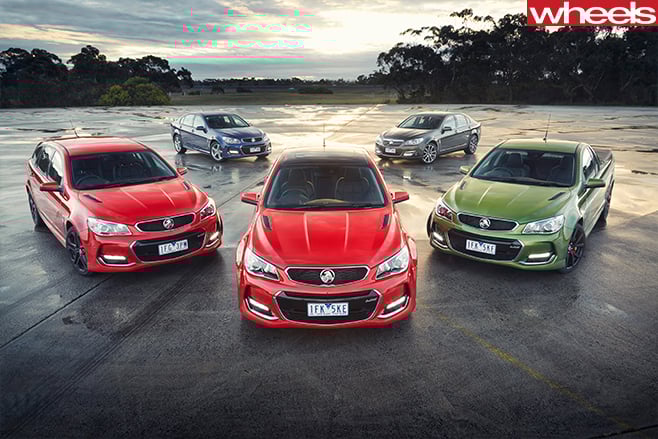
Despite the much publicised drop in large car sales, the Commodore was easily Holden’s top seller, accounting for more than one-in-four sales from the brand.
Commodore sales dropped 6.9 percent, but the nu,bers remained strong enough to ensure it was the seventh most popular car among a sea of fast-growing SUVs and utes.
However, that drop in sales was enough to see the Commodore trumped by the rival Toyota Camry, a car that will prove a bigger competitor from 2018 when the first imported Commodore (below) will be closer to it in size, and come with a choice of four-cylinder engines. It is the first time the Camry has outsold the Commodore.
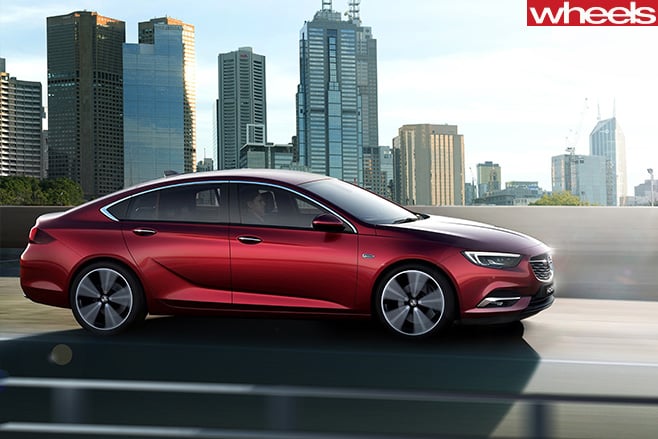
Elsewhere in the Holden range there was red ink, with sales dropping for the Commodore Ute, Barina, Caprice, Cascada, Colorado, Cruze and the recently dumped Malibu.
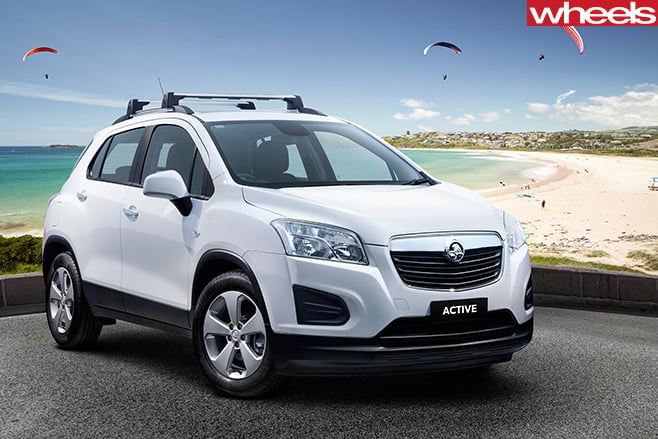
The Trax small SUV – which gets updated in the next couple of months – provided some good news, increasing sales 25.6 percent in what is a booming SUV segment, while the Insignia, Astra and Colorado 7/Trailblazer also posted modest growth.
Holden will close its Elizabeth production line late in 2017, ending an illustrious 69 years of local manufacturing that has created some of the country’s most famous automotive nameplates, including Monaro, Kingswood, Torana and Commodore.
UPDATE: 12:46PM
Holden responded to our request for comment, pointing towards a strong final month of sales as a highlight of what it said was a “difficult” year.
“2016 has been a challenging year. Despite difficult conditions, Holden has shown growth in key market segments and we finished the year strongly with a third placing in December sales,” a spokesperson said.
“We have the plans, the people and the product to ensure Holden is successful long into the future, and continue to deliver on our 2015 commitment to launch 24 new vehicles by the end of 2020.”
UTES and SUVs are the darlings of a record 2016 market that saw 1,178,133 new vehicles sold.
Utes accounted for 16.2 percent of the new-vehicle market with 190,768 sold, making them the second biggest category behind small cars (224,450), which dropped 3.7 percent in an ongoing trend away from traditional hatches, sedans and wagons.
The ute charge was led by the Toyota Hilux, which topped the charts with 42,104 sales, almost 700 more than its showroom stablemate, the Corolla.
It’s the first time a ute has led the sales race, with the Hilux eclipsing its previous best second place in 2012.
Of the top 10 selling vehicles, three were utes, two were SUVs, and the remaining five traditional passenger cars (sedans, wagons and hatchbacks).
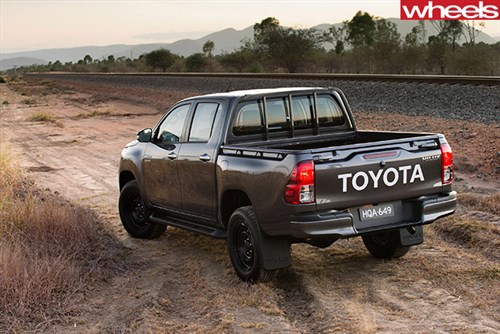
Toyota Australia executive director sales and marketing, Tony Cramb, said the Hilux’s rise to sales leadership was a result of a significant shift in the ute segment.
“The buyer profile has changed dramatically in recent years, with Hilux progressively offering the upmarket features and comfort demanded by families while maintaining its traditional popularity among tradespeople as the consummate workhorse,” said Cramb.
Reinforcing the shift to top-of-the-line dual-cab 4×4 models it was the flagship SR5 that was the top selling Hilux, trumping models less than half its price.
“As recently as 2011, the biggest-selling variant was the 4×2 single cab-chassis in tough-as-nails Workmate trim – a vehicle where ‘air-conditioning’ meant you opened the windows,” Cramb said.
“While demand for that variant has not diminished, and air-conditioning has been made standard, we now sell almost twice as many top-of-the-range 4×4 SR5 double cabs.”

But the Hilux wasn’t without its pressures, with Ford’s Ranger (above) hot on its heels all year. Having led most of the year in the 4×4 segment Toyota pipped its Ford rival with a big sales push in December.
But it wasn’t just utes changing the shape of the Australian car market.
Making life increasingly tougher for passenger cars – including the small ones – is the boom in SUV sales, which saw the high riding wagons post 441,017 sales accounting for a record 37.4 percent of the market.
The chief executive of the Federal Chamber of Automotive Industries, Tony Weber, said it was indicative of major market shifts.
“It’s an intriguing and exciting time for industry watchers as there’s little doubt we are observing a significant and dynamic transition in consumer preference,” he said.
“While buyer demand for traditional passenger cars remains healthy, it’s clear consumers are gradually transitioning into other segments.”
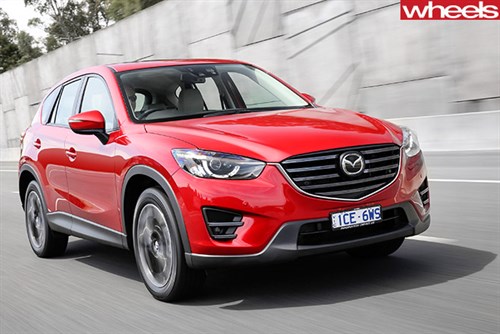
For the first time two SUVs finished in the list of top 10 sellers for the year.
While it was only eighth outright on the sales charts the CX-5 (24,564) was the best-selling SUV, trumping the Hyundai Tucson (20,132) in 10th overall.
The once dominant top seller, the Holden Commodore, posted a respectable tally of 25,860 vehicles, enough to keep it in seventh spot on the sales charts.
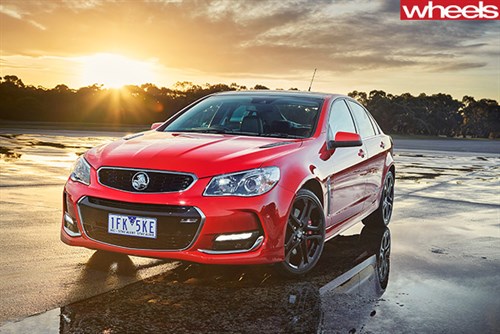
However, the Commodore was beaten for the first time by the Toyota Camry, a car dominant in the mid-size four-cylinder market – a market Holden is hoping to capitalise on with its first imported Commodore, arriving in February 2018.
In its final year on sale, the Ford Falcon sold just 4434 units, a 25.3 percent drop on 2015.
Top 10 selling brands for 2016
- Toyota – 209,610
- Mazda – 118,217
- Hyundai – 101,555
- Holden – 94,308
- Ford – 81,207
- Mitsubishi – 73,368
- Nissan – 66,826
- Volkswagen – 56,571
- Subaru – 47,018
- Kia – 42,668
Top 10 selling cars for 2016
- Toyota Hilux – 42,104
- Toyota Corolla – 40,330
- Hyundai i30 – 37,772
- Ford Ranger – 36,934
- Mazda3 – 36,107
- Toyota Camry – 26,485
- Holden Commodore – 25,860
- Mazda CX-5 – 24,564
- Mitsubishi Triton – 21,987
- Hyundai Tucson – 20,132
TOYOTA’S Hilux will today be crowned the top selling vehicle in the country for 2016 in a record new car market where almost 1.2 million vehicles have been sold.
It is the first time a ute has topped the sales chart ahead of traditional passenger cars and represents the further fragmentation of a market that is seeing the domination of small cars eroded by SUVs and pick-up trucks – in much the same way as sales of large cars dropped over more than a decade.
A sales surge late in the year saw the workhorse Hilux ute beat the Toyota Corolla to the top selling spot, giving the Japanese brand a historic sales win as it prepares to shut down its Australian manufacturing facilities (for Camry and Aurion) late this year.
The news – which was forecast by Wheels when the current Hilux arrived late in 2015 – will be welcome for Toyota, which has spent four years fending off a charge from the Ford Ranger (below), the Hilux’s closest rival.
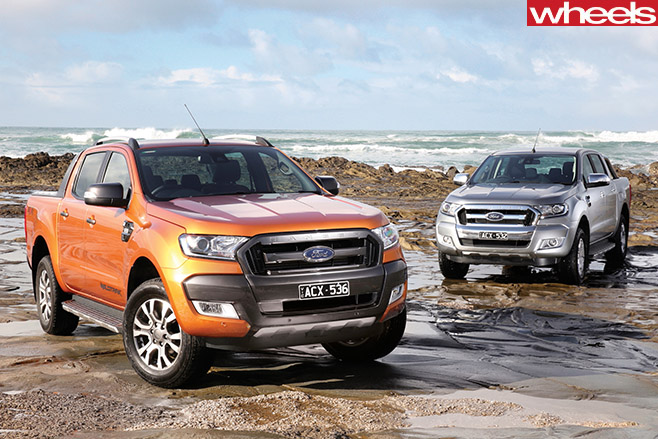
The Hilux has dominated ute sales for 18 years, and finished second in the overall sales race (behind the Mazda 3) in 2012.
But its share has been eroded in recent years – most noticeably throughout 2016 – by the Ranger, which has enjoyed impressive success, especially with its flagship Wildtrak model and the XLT that sits below it.
The Ranger has outsold the Hilux for most of the year in off-road-focused 4×4 models – with dual-cab versions leading the charge – but the Hilux’s strength in the lower, more affordable end of the market saw it pull a clear lead over its arch rival.
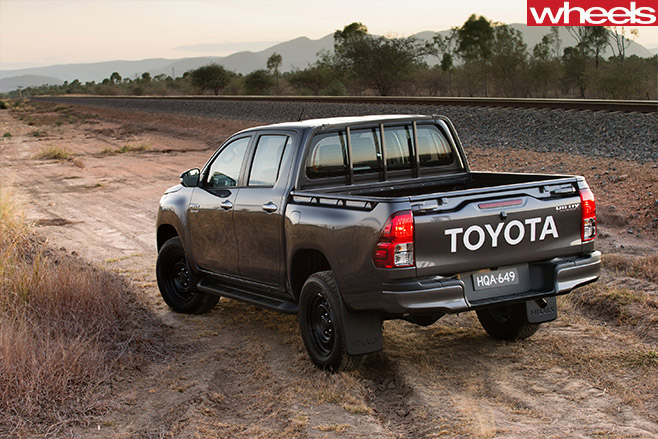
Sales of utes have more than doubled since 2001 to the point where they now account for more than 16 percent of the Australian market, or almost one in six new-vehicle sales.
Improved comfort, safety features and driveability are behind the shift to dual-cab utes, which are still popular with tradies but have gained traction with grey nomads, families and off-road adventurers.
The Federal Chamber of Automotive Industries will release full details on the new car sales figures at noon EST today.
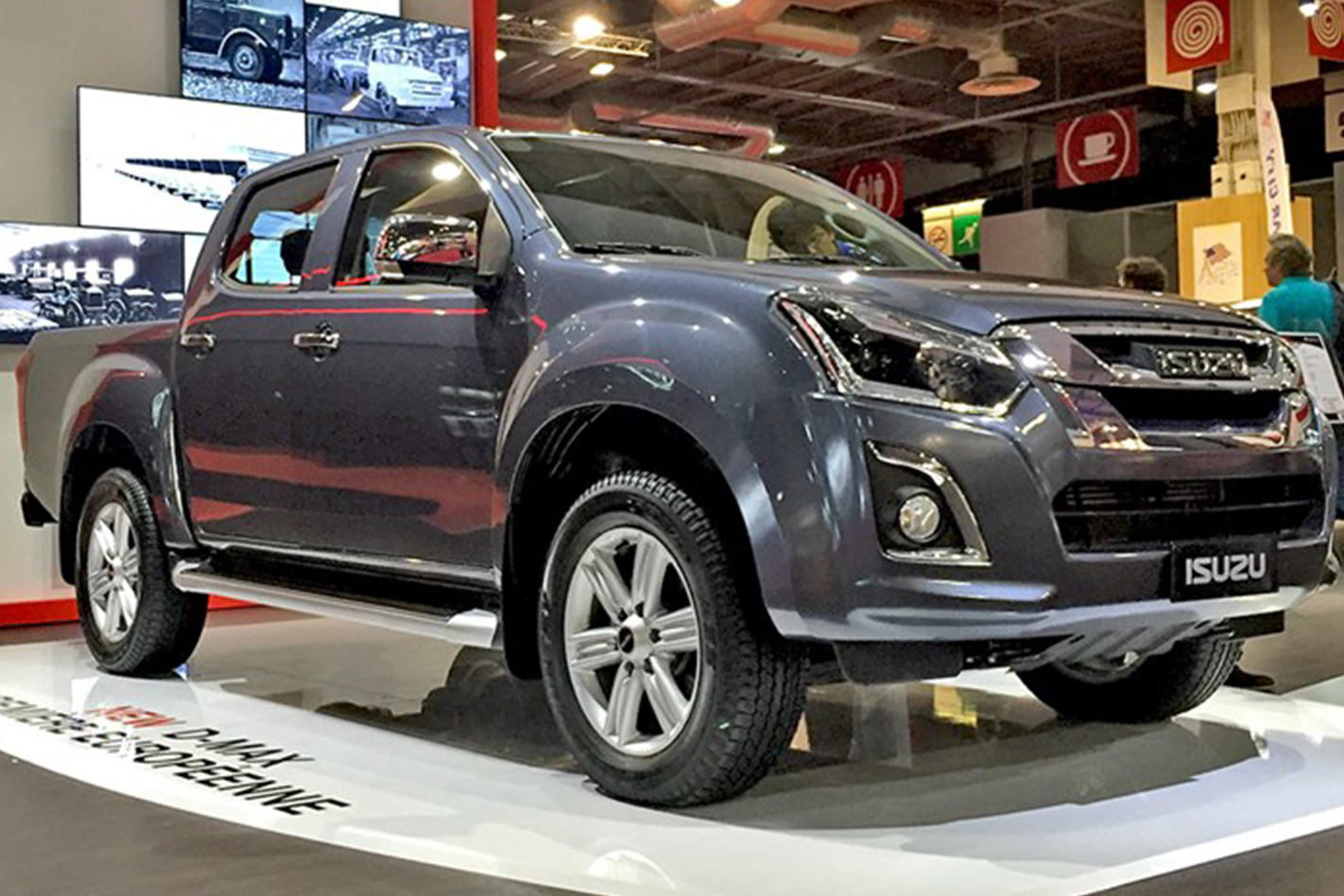
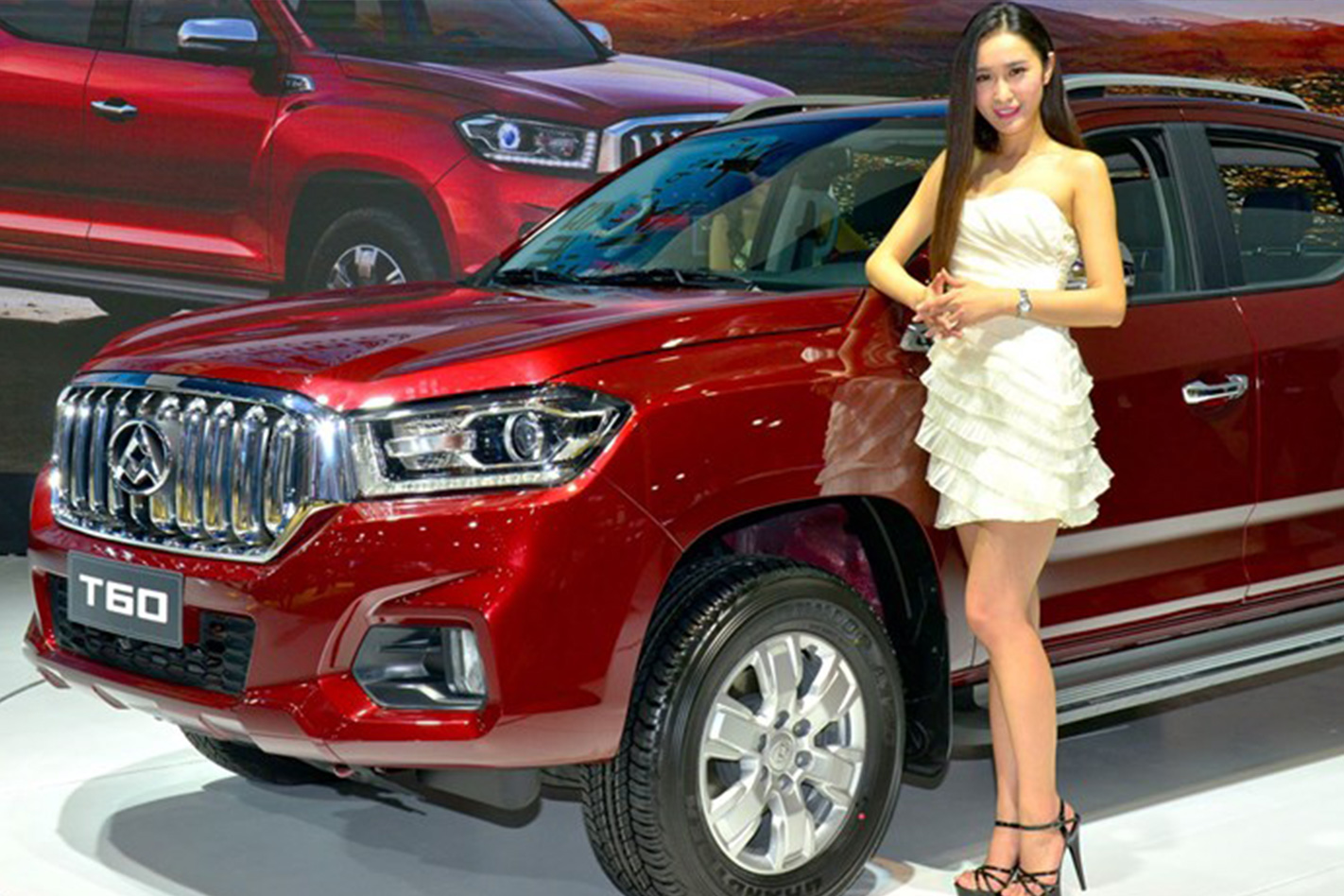
THE world of trade utes will take on a more international flavour in 2017 as brands vie for sales in a part of Australia’s new-car market that accounted for about one in every five sales in 2016. Here are WhichCar’s picks of the utes that will have a big load to carry when they arrive.
RENAULT ALASKAN France makes a rare entry into the world of utes in 2017 with a Renault that’s based on the long-running Navara as part of the Nissan-Renault alliance. As with its Japanese twin, the Alaskan will offer multiple variants in 4×2 (rear-wheel drive) and 4×4 (all-wheel drive) forms, with family-friendly dual-cab models featuring a car-like interior and a multi-link rather than leaf-sprung rear suspension for better on-road manners. Two different tray lengths will be available depending on market and there’s a one-tonne-plus payload promised. A lockable rear differential to aid off-road driving and a 3500kg braked towing capacity are also part of the package. Some engines will also be shared with the Navara, though Renault also brings a unique powerplant to the Alaskan with a 2.3-litre four-cylinder twin-turbo diesel borrowed from the brand’s Master van.
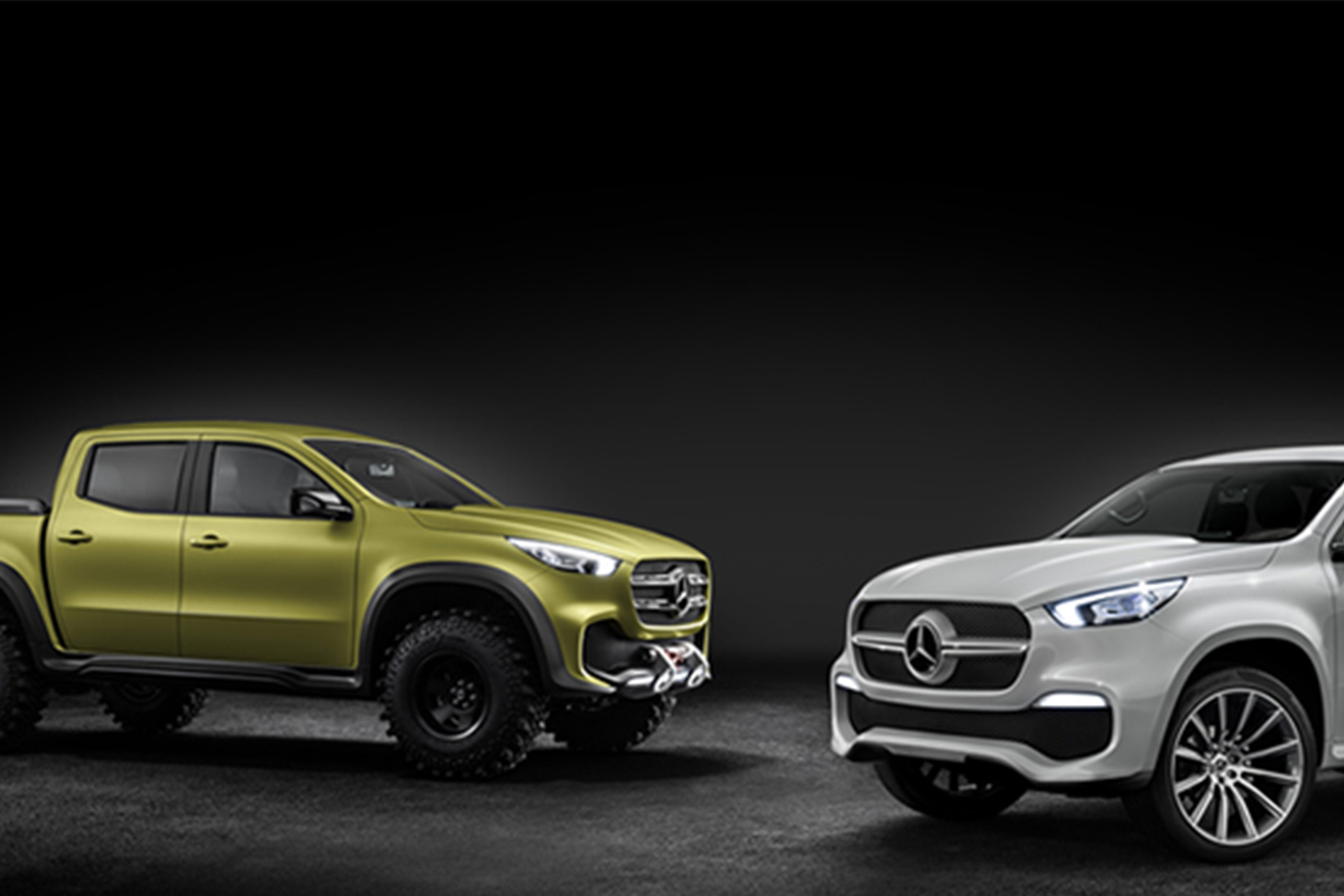
Volkswagen’s Amarok brought Germany into the ute segment, and now Mercedes-Benz aims to provide the most luxurious – with the X-Class that will debut in late 2017 (though possibly not reach Australia until early 2018). This ute is also related to the Navara as part of a Nissan-Infiniti partnership with Daimler, though there’s plenty of Benz-exclusive features. They include the 4Matic all-wheel-drive system and a “torquey” six-cylinder diesel for higher-end versions. Two concept utes showcased how Mercedes plans to offer both a luxury-focused ute and a more conventional workhorse-style variant. A five-seater interior with iPad-style display and Comand controller system will make the X-Class look similar inside to other Benzes. A 1.1-tonne payload capacity and 3500kg braked towing capacity will ensure there’s toughness to go with the smarts.
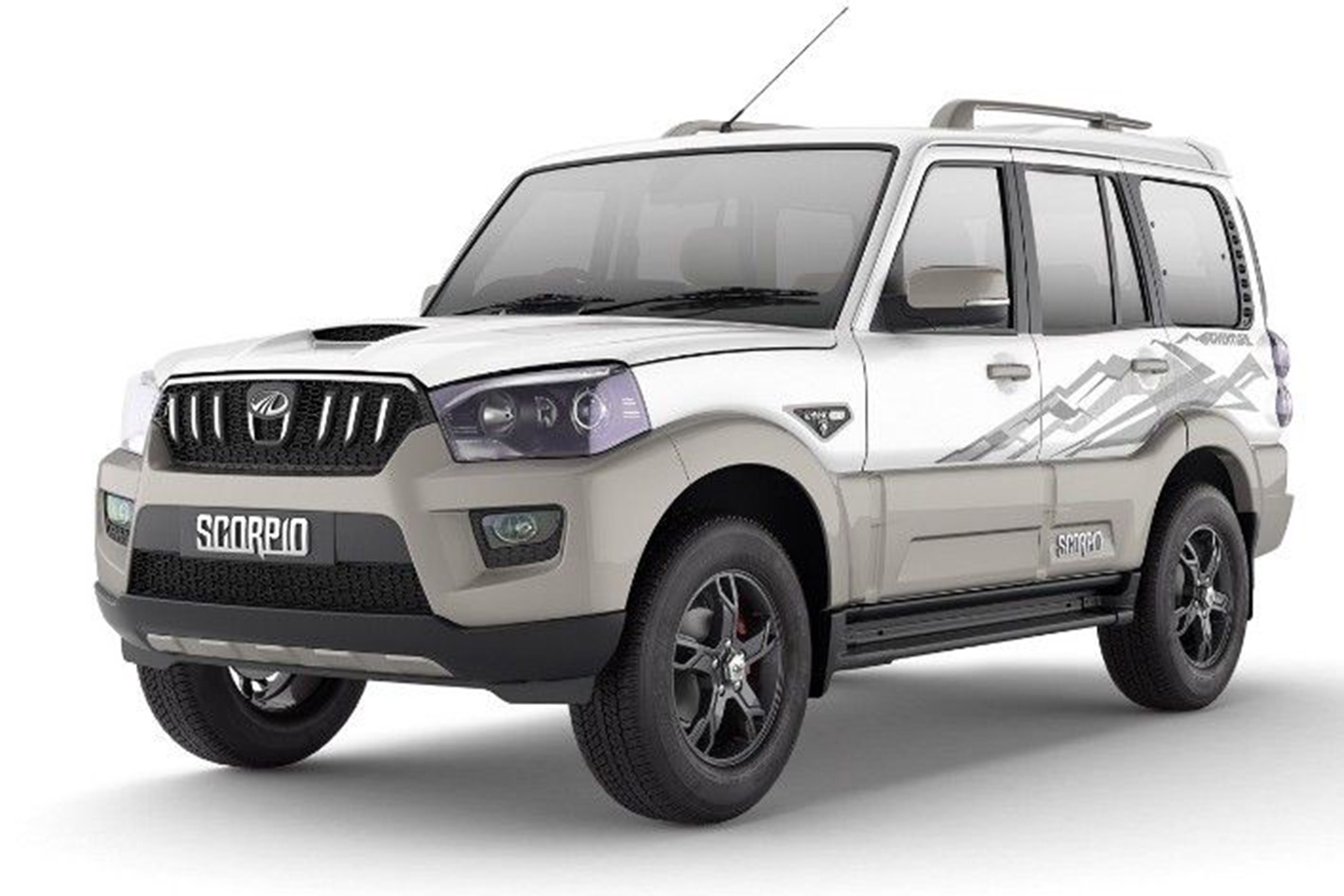
MAHINDRA PIK-UP
2017 Top Trade Utes
| Renault Alaskan | $ TBC |
| Mercedes-Benz X-Class | $ TBC |
| Mahindra Pik-ip | $23,490 |
| Isuzu D-Max | $27,400 |
| LDV T60 | $ TBC |
