
Audi’s next RS4 is going to be a right animal if its newly-unveiled baby brother S4 Avant is any indication.
With a 3.0-litre single-turbo V6 producing 260kW, and 500Nm from 1400-4500rpm, the new S4 Avant bolts to 100km/h in a claimed 4.9 seconds – just 0.2sec slower than the old, screaming V8 RS4.
Its supercharged 3.0-litre V6 predecessor is also pipped, 245kW and 450Nm only good enough for 5.0sec.
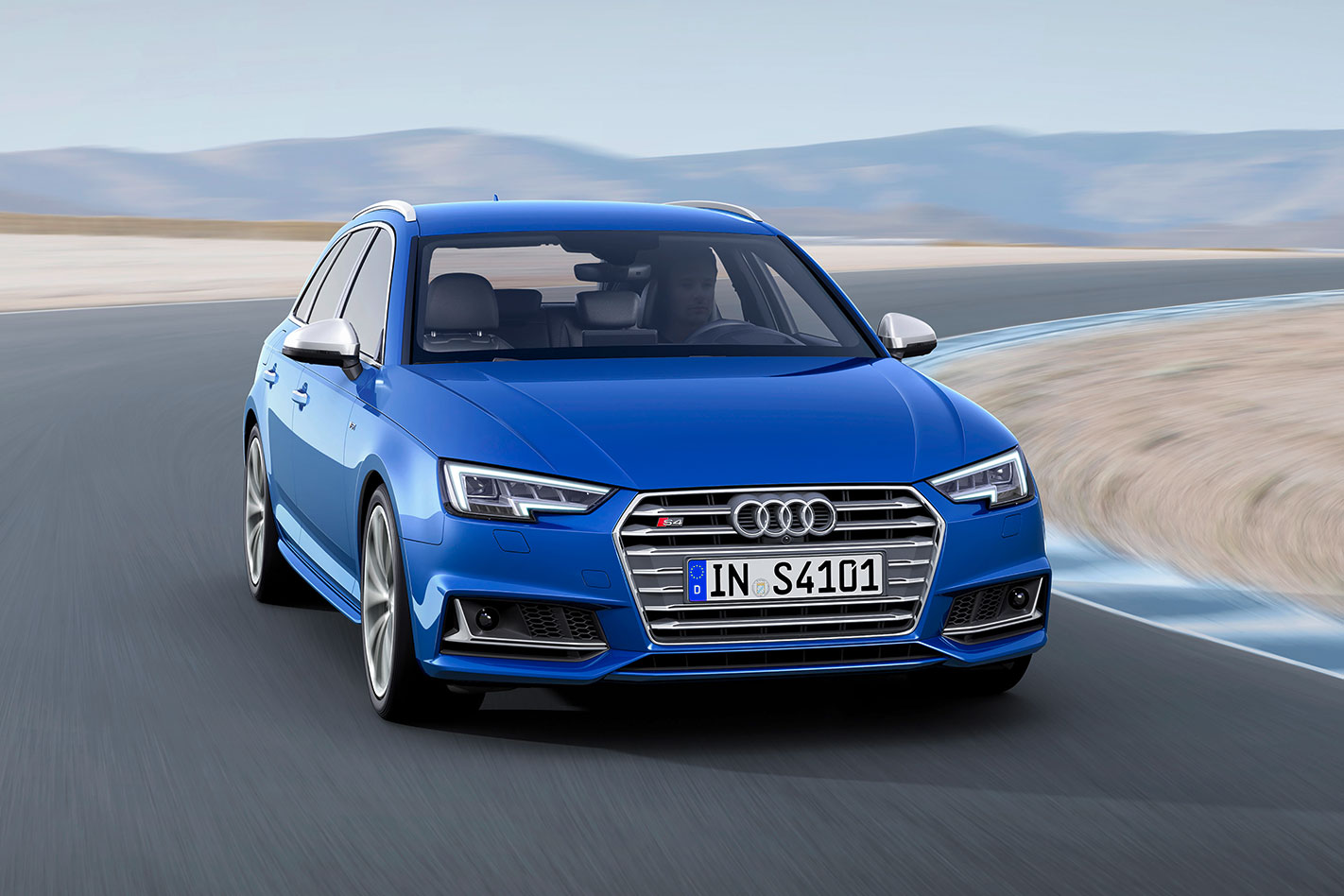
Audi has ditched the old car’s S-tronic twin-clutch transmission in favour of a new eight-speed torque converter auto, power reaching all four wheels via a rear-biased quattro system. A rear limited slip “Sport Differential” will be offered optional.
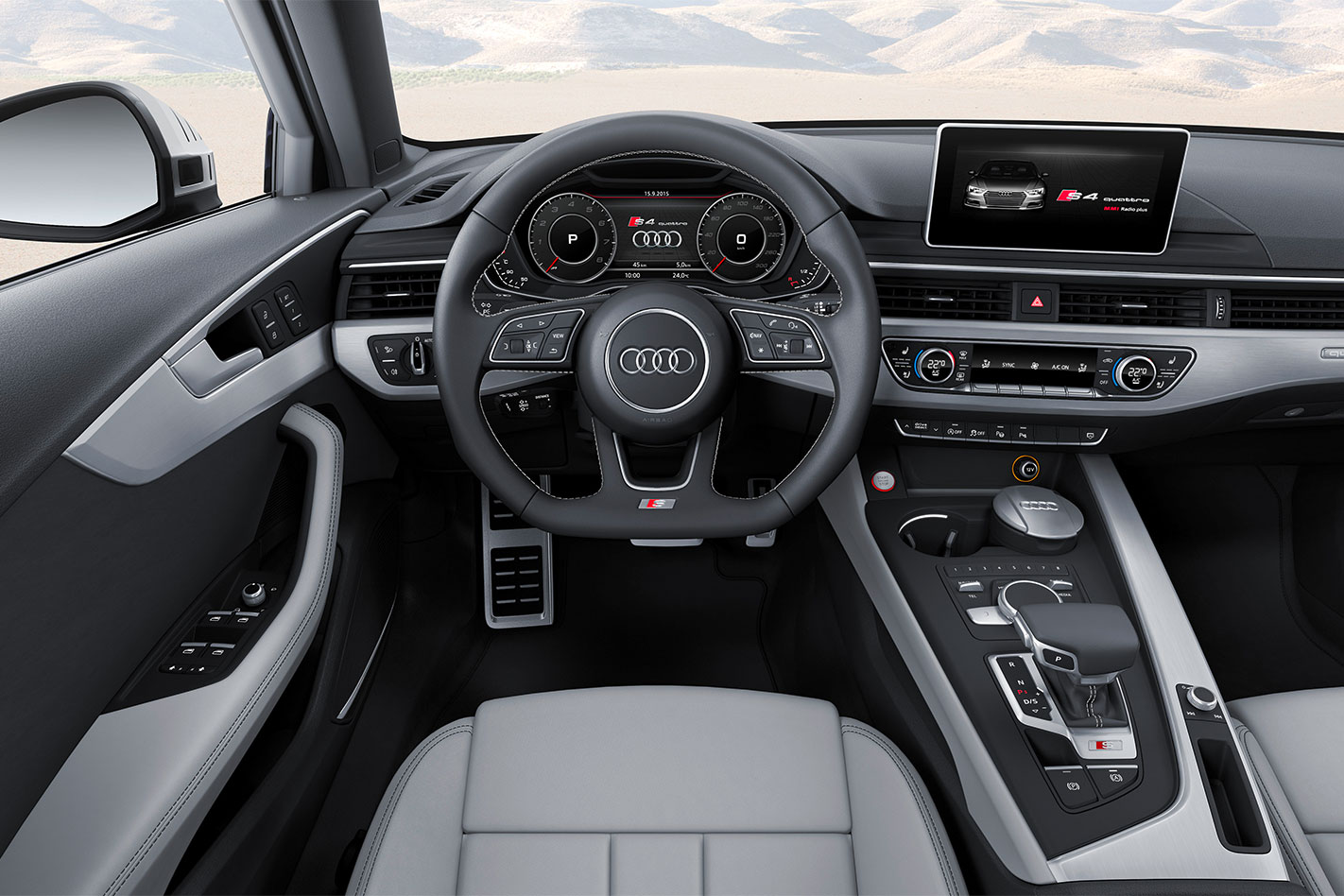
Inside the seats score the suave diamond-pattern stitching, or again aggressive sport buckets with integrated headrests are a box you can tick.
First seen on TT and R8 and making its way to other models, S4 Avant owners can now option the tachometer and speedometer on TFT screens with the “Virtual Cockpit”.

A V6 is reportedly in the works with either a twin-turbo set-up or possibly an electric “turbocharger” dishing out up to 360kW. With the S4 Avant hitting 100km/h in high fours it’s reasonable to speculate its brooding RS4 big brother could do the same in the very low fours, keeping up with its nemesis the Mercedes-AMG C63 S Estate.
Along with the S4 sedan the new S4 Avant is expected in Australia later this year. But those waiting for the RS4 shouldn’t hold their breath with a reveal not expected until at least next year.
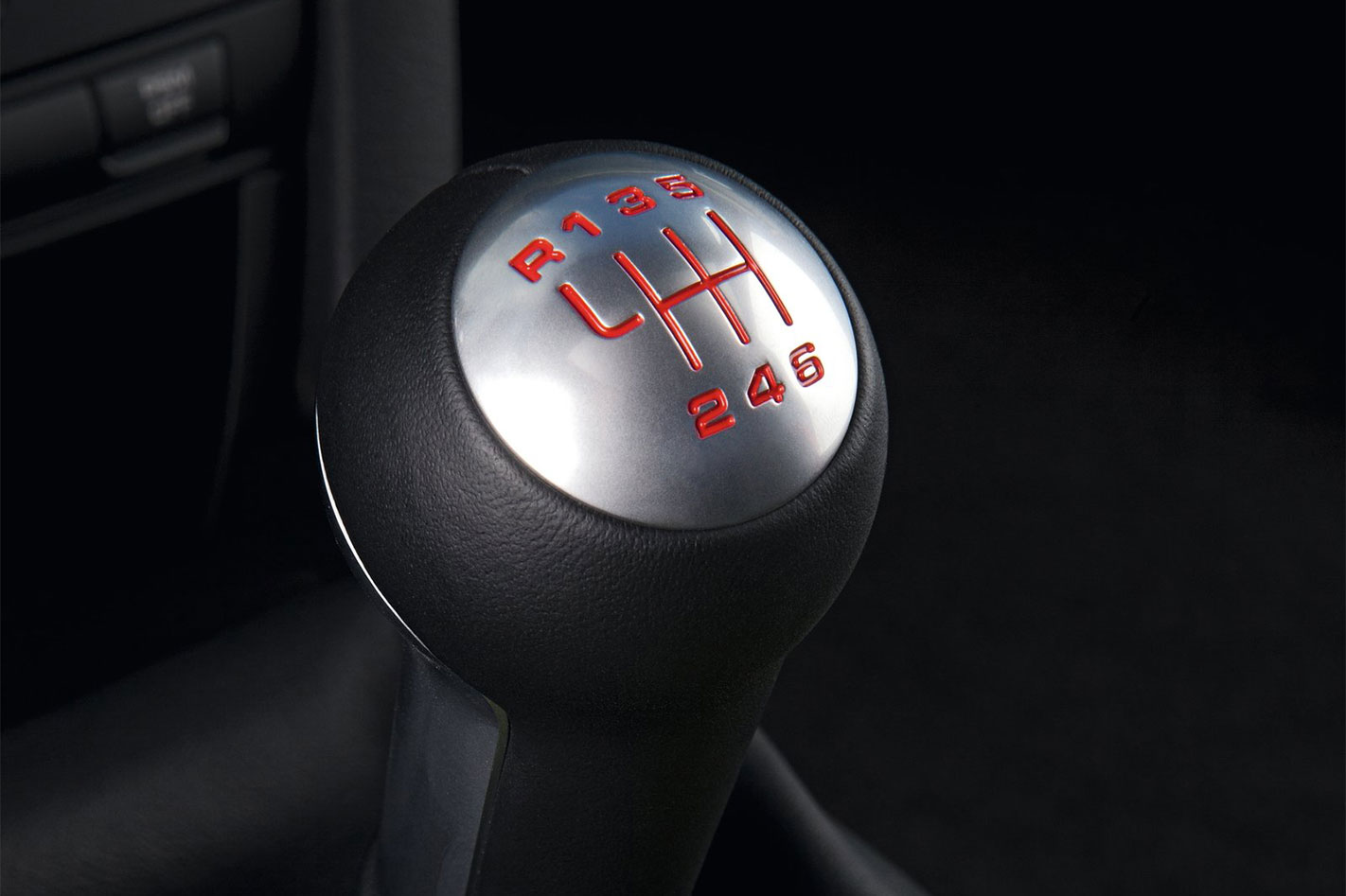
In music to the ears of enthusiasts everywhere, Porsche will reintroduce a manual gearbox to its 991.2 GT3.
While sales of Porsche’s hardcore 911 models have exploded since they switched to a dual-clutch only format, many enthusiasts have been dismayed at the loss of a DIY option, leading to soaring demand for manual-only GT cars like the Cayman GT4 and previous 911 GT3 models.
MOTOR’s European correspondent, Georg Kacher, reports ZF has been tasked with developing a bespoke six-speed manual gearbox, unrelated to the seven-speed unit found in the new turbocharged 991.2 Carrera models, which is a manually-operated version of Porsche’s PDK dual-clutch ’box.
Following the release of the 718-series Boxster and Cayman, these hardcore 911s will be the only naturally-aspirated models left in Porsche’s model range, with the possible exception of future Boxster or Cayman-based GT models.
At this stage, the 991.2 GT3 is tentatively expected to appear in 2017 with the GT3 RS following approximately 12 months after that.
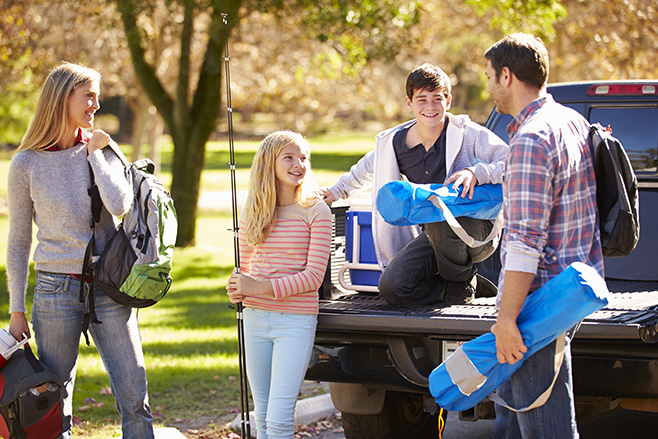
The transformation from packhorse to glossy show pony has been a quick one for the dual-cab ute; what was a tradie’s alternative a decade ago has become a white-collar worker’s chariot of choice for all manner of sports and hobbies, as well as work. With four doors, five seats and a huge ‘boot’, it is fast becoming a popular family car alternative over the SUV or wagon.
Sales of dual-cab utes have reached new heights in the past few years, with models including Toyota’s HiLux topping the charts several times as Australia’s best-selling passenger vehicle.
So, what makes a dual-cab ute the choice for adventurous clans, and what should you look for if a dual-cab is on your family transport list? We take a look at the reasons you may consider a dual-cab ute, and what the top sellers are offering.
YOU’RE GOING TO NEED A TRAY
For starters, one must be certain the ute will be used regularly as a ute to justify a tray and load-carrying suspension over a covered boot and more luxurious ride. How often will large, bulky or otherwise unsuitable items be hauled around? If the answer is ‘not often’, the purchase or hire of a box trailer could be far easier to justify, given the softer ride and handling superiority (generally speaking) of myriad 4WD/SUV offerings and large family sedans. Sure, the dual-cab has come a long way, but some of the standard SUV second row options like extra power outlets, cubbies and even curtain airbags may be missing from various specifications of the dual-cab. The ride can also be quite bumpy on hardcore rear suspension, particularly with an empty tray.
If the weekend hobby is a dirty one, or needs height or weight-carrying abilities – think motorbikes, horse paraphernalia, camping, and anything involving dirt – the ability to not only access a tray easily but also simply hose the thing out is certainly appealing, if not necessary.
LOCK IT IN
Does the payload need to be secured from possible theft, and will this restrict what you need to use the tray for?
Anyone with kids knows the boot area usually becomes a treasure trove for toys, transport devices and a veritable wardrobe of spare clothes, but if you have a trayback this is not really an option.
Ute covers can be either a soft or hard tonneau, but there are disadvantages of both. A soft tonneau cover is simple and easy, keeping the load covered or removed altogether when bulky items are carried; however, the contents are always susceptible to thieving fingers. Lockable ute boxes are a fantastic option, and can be hidden under the tonneau; but, it reduces the usable area for bulky items. Then there are hard tonneaus: they look great, are lockable with easy lifting gas struts, and are less fiddly to access. However, if you need to carry a bulky item like a washing machine, you have to remove it first. A hard tonneau is only for those who rarely carry anything higher than the sides of the tray.
TOP-SHELF TASTE
Does the dual-cab budget stretch to the kind of luxury an SUV can offer. Dual-cab utes have come a long way, and the features on offer these days are on par with some of the nicer passenger vehicles. Yet some of the base-model cars are still bare-bone workhorses.
The Volkswagen Amarok, which is arguably the most refined and car-like of the dual-cabs on the market, still has a plastic hose-out floor in the base car. While this is perfect for the tradies, and some may jest it’s a great solution to the inevitable mess of children, it really isn’t suitable for kidlets, particularly given the lack of conveniences in the cabin.
Therefore, mid-spec and up should be the focus – and top-shelf is best – when accommodating the family and the spouse who expects more from the family carriage. This averages out to about $50K for a new dual-cab with decent spec.
Reversing sensors and preferably a camera should also be on your tick list – even the best of us can hesitate when backing up a dual-cab. And check for curtain airbags for the kids.
THE USUAL SUSPECTS
If the boxes are ticked, it’s down to the selection. Australia’s biggest sellers are listed below in alphabetical order. All but the D-Max and Amarok have recently undergone overhauls – from mild updates through to full revisions – and all can be optioned with automatic transmissions (some at no cost), making them even more family-friendly. We’ve picked out the major pros and cons for you, but for a more detailed analysis please check out our WhichCar Match Maker and reviews.
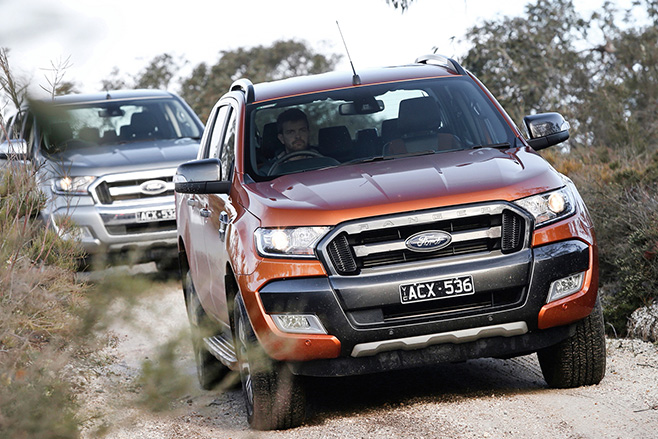
Ford Ranger
The recently revised Ranger is a pearler of a car. Local testing means the suspension is well tuned to Australian roads, and it’s less harsh than some of its competitors. It hauls well, drives well, steers well, and servicing is affordable; however, it’s getting up there price-wise as you’d want the top-shelf spec. Its American truck-styling also isn’t for everyone – check out the Mazda BT-50 for an equal alternative.
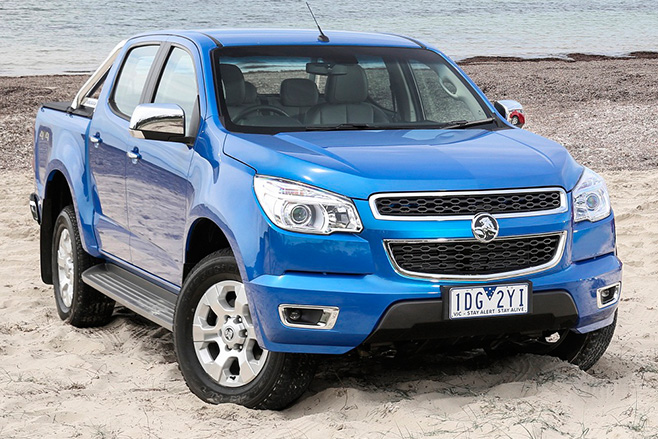
Holden Colorado
After a recent facelift, Holden’s Colorado is becoming a more rounded vehicle. It definitely feels like more of a workhorse than some, but offers good clearance with a low, easy-to-access tray. While the cabin is fairly utilitarian, it’s roomy and there are enough features to not leave you wanting.
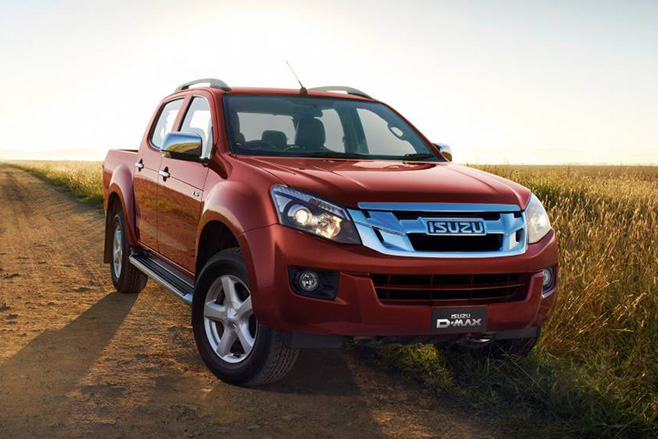
Isuzu D-MAX
The D-MAX is getting a little long in the tooth in car terms, having been launched in 2012 and still to receive a reworking. Thus it feels a little dated inside, and it lets a bit more engine and drivetrain noise in than its rivals. It is, however, a capable hauler with a good payload rating. And while the ride height is low (those wanting a bit of weekend rock-crawling, take note), the tray is also low to the ground, making moving gear in and out far easier for the vertically-challenged among us. It’s also at the more affordable end of the scale.
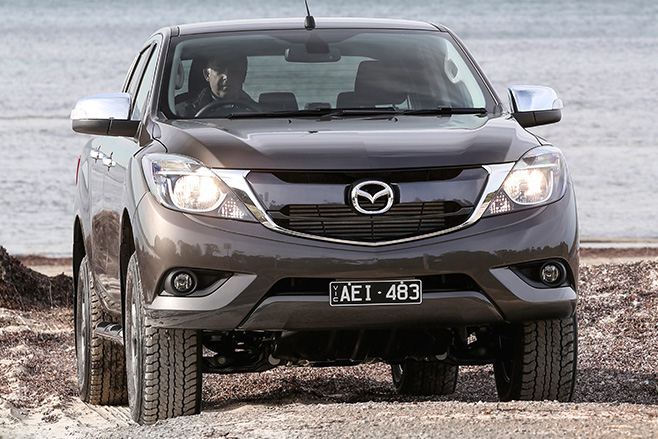
Mazda BT-50
An update last year unfortunately did nothing for the polarising looks of the BT-50, which actually sends some buyers away with its sly yet startled headlights and huge grinning grille. But it is an excellent, super-capable vehicle and it tows beautifully – it actually shares most of its body and bits with the Ford Ranger.
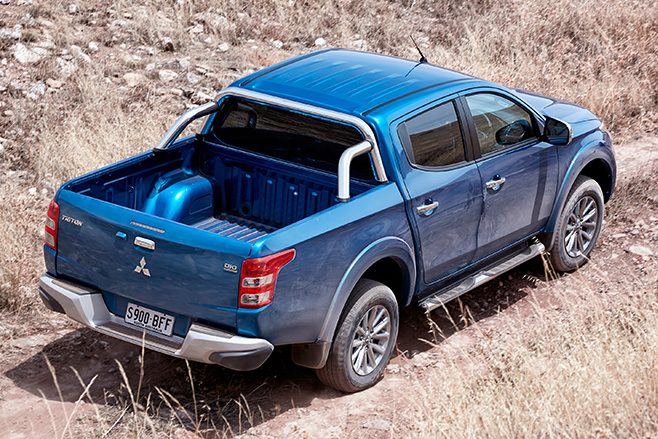
Mitsubishi Triton
After almost 10 years with the same aging skeleton and muscle, the Triton had a long-overdue overhaul last year and finally offers some must-have conveniences including full multimedia and climate control features. The drivetrain is still a grunty worker, but the rear end is finally less saggy. Overall, the vehicle is a much more pleasant drive.
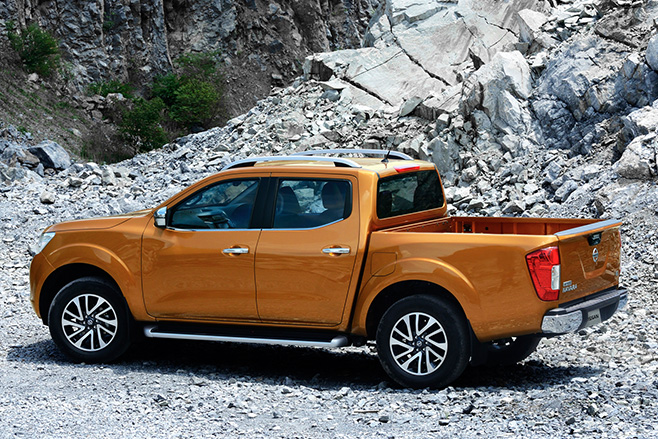
Nissan Navara
The Navara has seen some huge improvements, particularly to its steering which was once compared to a tractor. Previously a strong, sturdy but agricultural ute, the new Navara offers levels of refinement and new tech long needed. This brings it back into the picture for many dual-cab buyers.
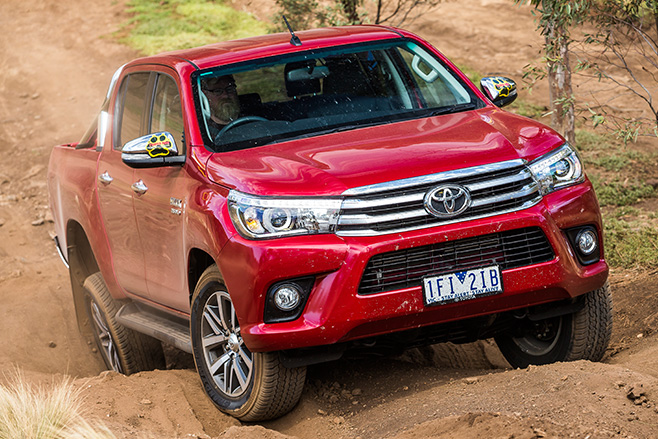
Toyota HiLux
After years in the top-sellers lists – even topping Australia’s best-selling cars scale several times in the past few years – the HiLux maintains its sales with an all-new offering from 2015. Resale and servicing are excellent, and the new car offers the full complement of tech. It’s more expensive, but you get what you pay for.
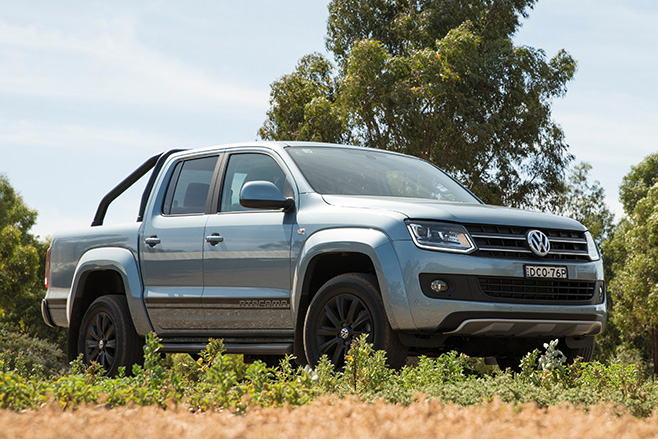
Volkswagen Amarok
The Amarok is the most car-like dual-cab on the market. It has a mega tray to fit wider loads and a lovely engine and drivetrain. Super capable, well-specced (in the higher levels) and good looking to boot. It is one of the dearest as a result, but watch out for expensive servicing and maintenance – it is a Euro vehicle after all.
Manufacturers have been drip feeding details about new models and important concept cars in the lead up to the Geneva Motor Show. With the doors opening in the next few hours, here are the models we can’t wait to get up close to and a few we’re anxious to know more about.
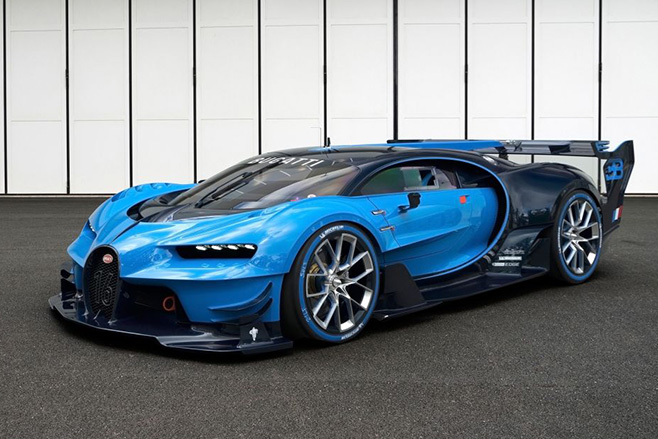
BUGATTI CHIRON
We all know the legend of the Bugatti Veyron. The world’s most insane hypercar has had a decade-long run with multiple special editions released over that time. Today, Veyron is no more, replaced by the Bugatti Chiron which we’re expecting to see for the first time at Geneva. It’s expected to look a bit like the Vision Gran Turismo concept, pictured below. Given the enormous shoes it has to fill, we expect the Chiron will reset the benchmark for what a car can do.
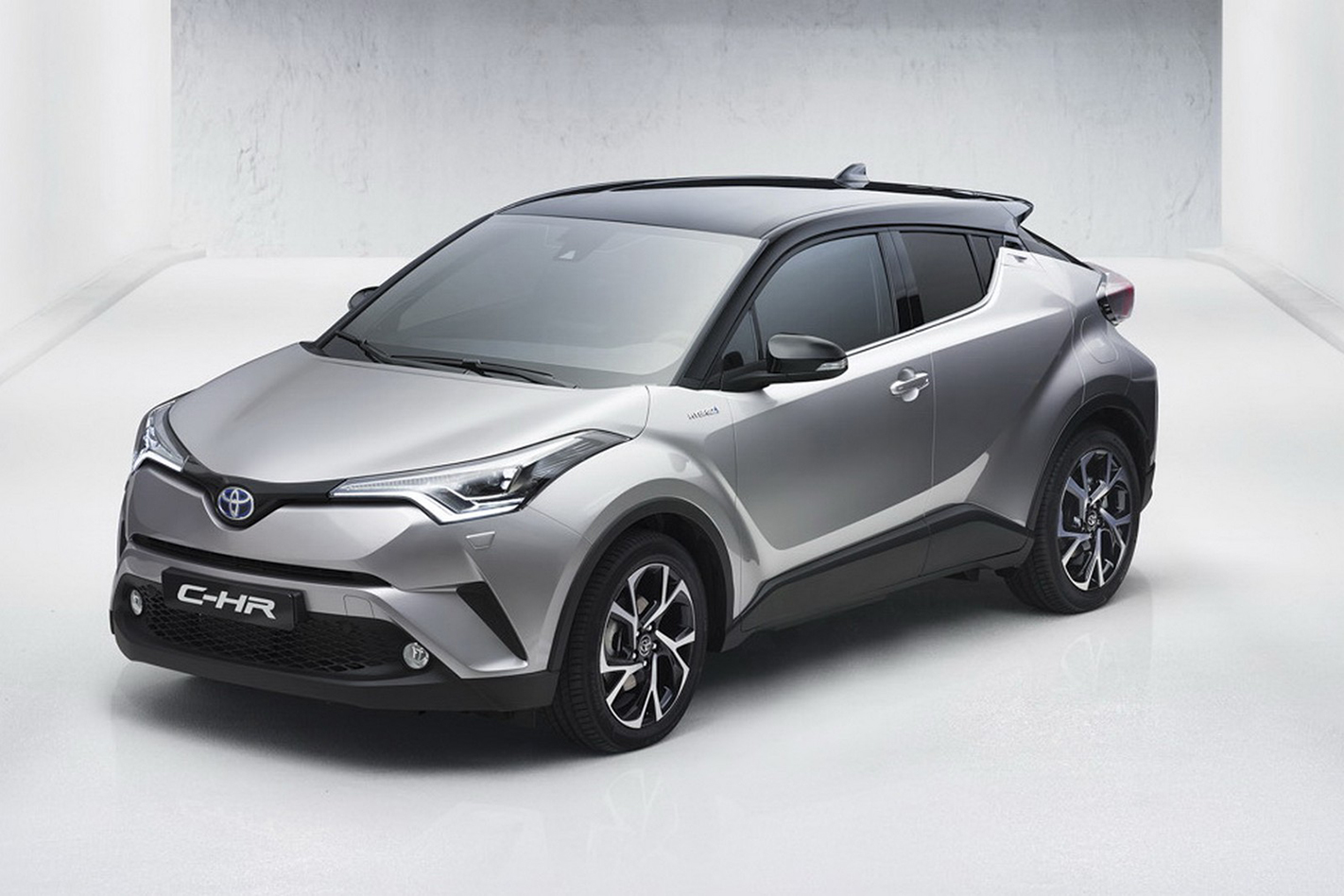
TOYOTA C-HR
We’ve been able to catch a glimpse of the Toyota C-HR SUV just hours before its official debut at Geneva and are happy to see lots of the concept car’s quirky details have carried over to this production version. Full details are being kept under wraps until the show which we will be sure to update you on as soon as we can.
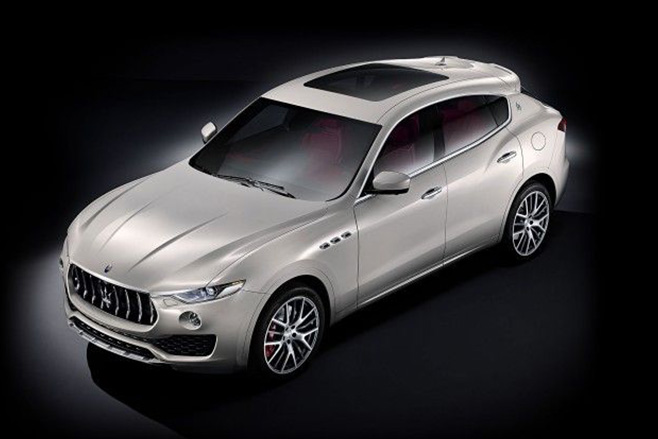
MASERATI LEVANTE
Maserati’s first SUV promises to carry the same performance and luxury credentials the brand has become famous for. There’s potential for the Levante to become Maserati’s most popular model.
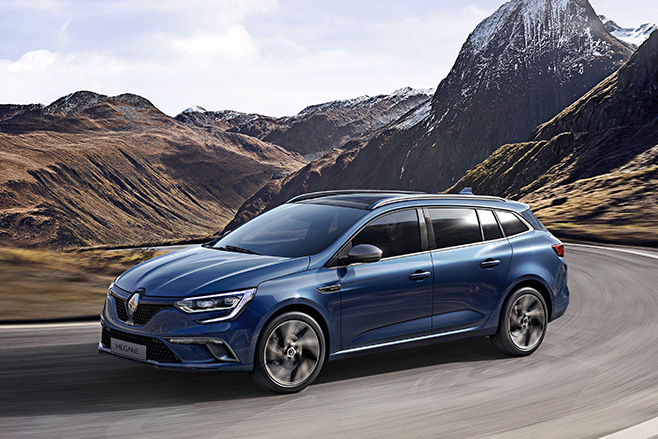
RENAULT MEGANE ESTATE GT
Renault’s Megane platform has grown a bigger boot and become the Megane Estate. A GT version has been shown in photos already but there’s a whole range set arrive in dealerships and we want to see more at Geneva.
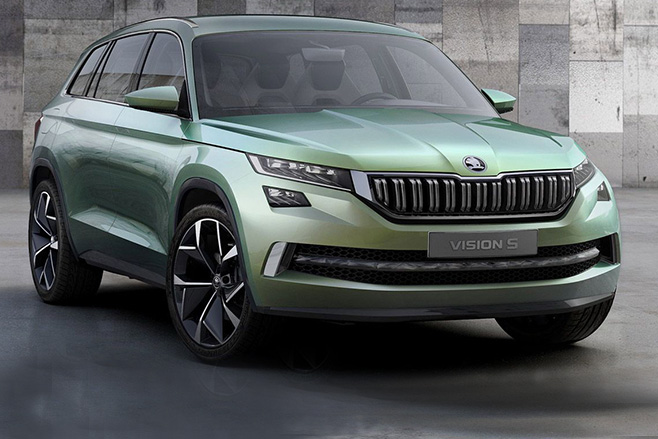
SKODA VISION S
Skoda teased us with images of its Vision S concept car recently. It previews the Czech brand’s impending mid-size production SUV and we like what we’re seeing so far! The concept car built for the show features a hybrid powertrain with an electric motor driving the rear wheels.
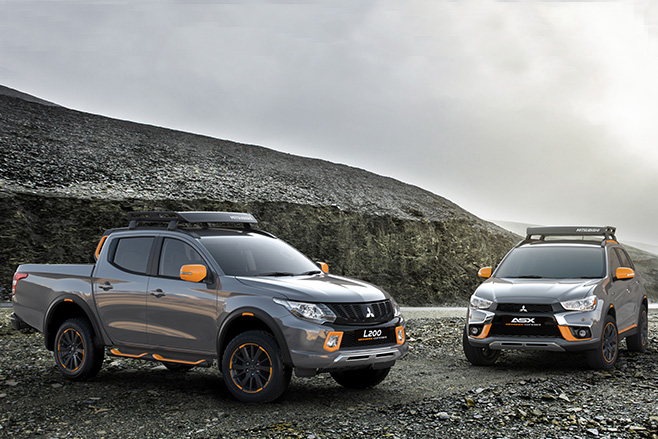
MITSUBISHI ASX & TRITON GEOSEEK
Mitsubishi has revised its Triton and ASX models with a handful of eye-catching upgrades and called them the Geoseek concepts. The added equipment is designed to appeal to off-road enthusiasts. Mitsubishi hasn’t released images of the interior yet, so Geneva will allow us to jump inside and take a look.
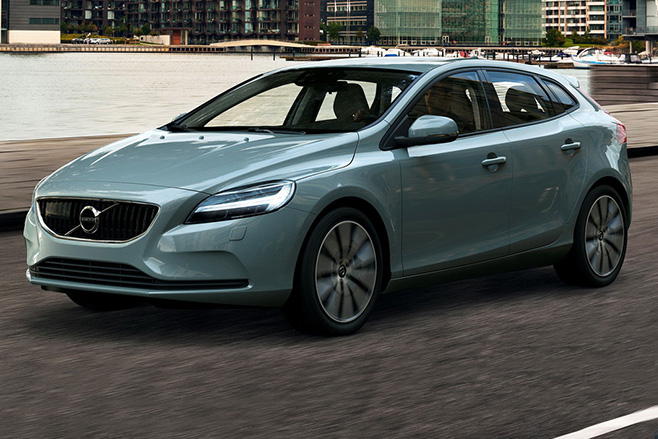
VOLVO V40
Volvo has updated its V40 hatchback and it’s coming to Geneva. Styling updates bring the V40 up to date with its bigger Swedish siblings and new tech inside adds to the appeal.
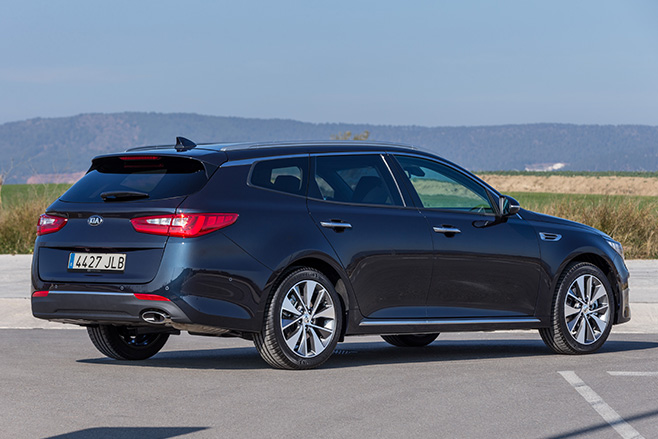
KIA OPTIMA SPORTSWAGON
Kia is big on practicality which is what its Optima Sportswagon is all about. It has way more cargo space than the sedan, all within the same footprint. Clever packaging extends to the smart seats and interior design.
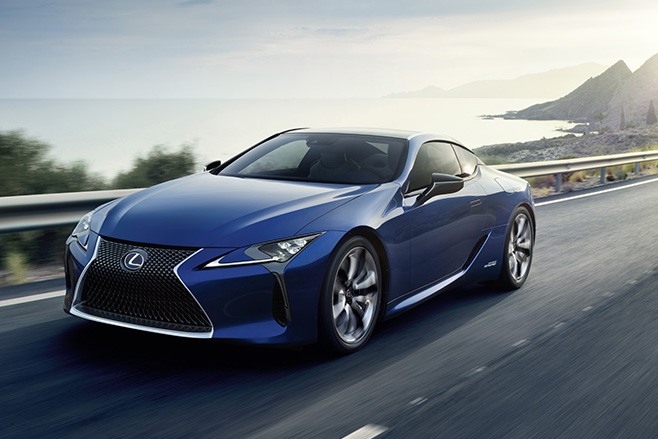
LEXUS LC500H
This beautiful coupe is the hybrid version of the Lexus LC500 revealed late last year at the Detroit Motor Show. We love the way it looks, but we don’t know much about what powers it. We’ll find out pretty soon.
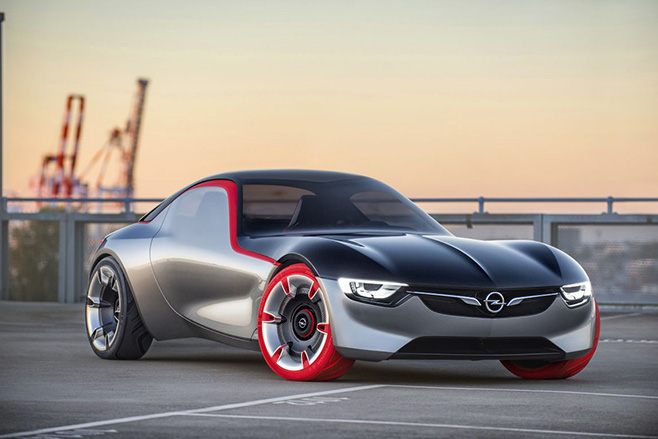
OPEL GT
The Opel GT concept grabbed headlines thanks to its futuristic interior. Most interesting to us is the fact the concept car was built here in Australia. We can’t wait to check it out in the metal.
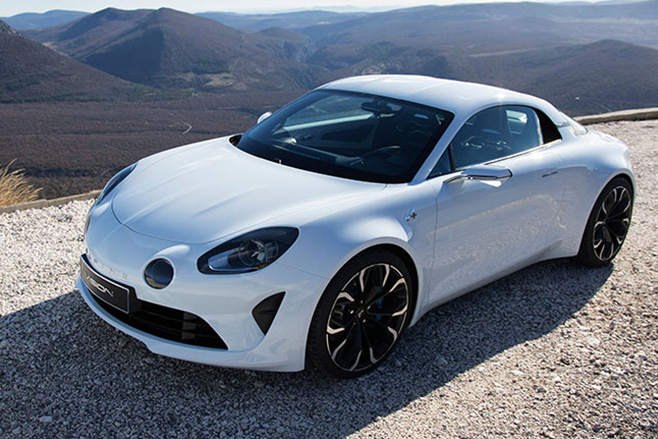
RENAULT ALPINE VISION
The Alpine brand returns with another concept, this one closer than ever to genuine production potential. The mid-engine coupe is aimed at the Alfa Romeo 4C and Porsche Cayman, and is could be landing in European showrooms as early as next year. We love the way it looks and desperately want to drive one!
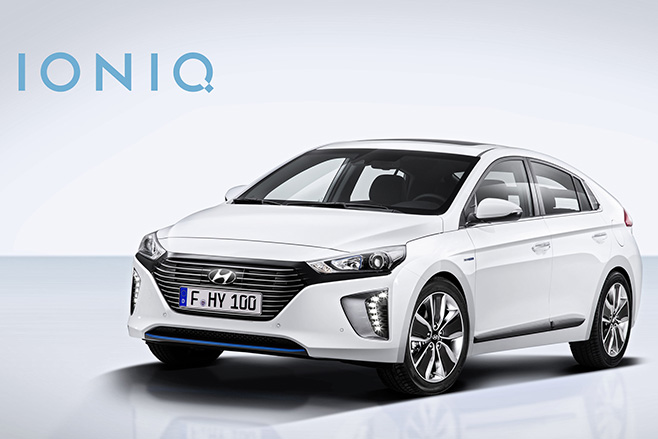
HYUNDAI IONIQ
Electric cars and hybrids are the name of the concept car game these days. Hyundai knows this and is bringing its Ioniq electric car to Geneva. Previous concepts under the Ioniq name looked and sounded a bit fanciful, but the technology is ready to go into a typically accessible Hyundai production car, and that’s what we’re ready to see.
VOLKSWAGEN SUV
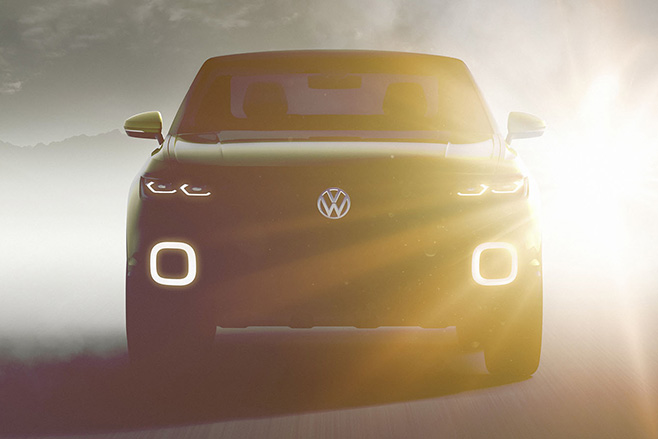
We still don’t know much (or anything, really) about Volkswagen’s new small SUV. A couple of teaser images that keep most of the details a secret are all we have to go on. If it is what it seems to be, this will be a big development in a hotly contested market segment.
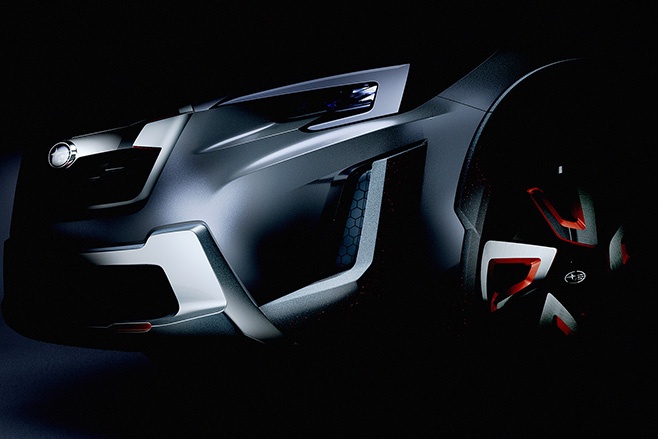
SUBARU XV
A new Subaru XV is set to be previewed at Geneva, but at this stage that is all we know! Thankfully the wait is almost over.
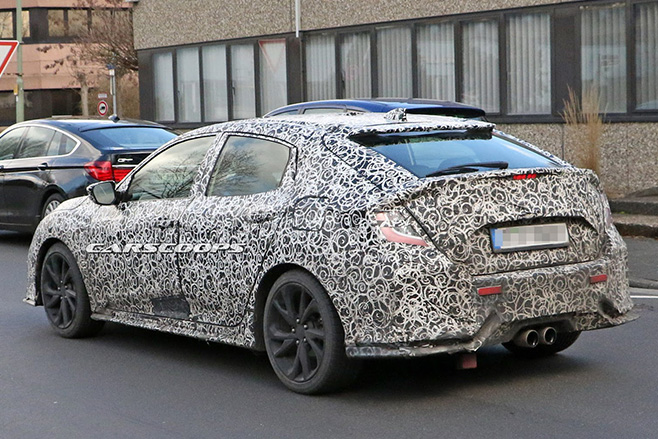
HONDA CIVIC HATCH
Spied while testing ahead of its concept car reveal at Geneva, the Honda Civic hatchback is an important one and we’re keen to take a look with all that camo taken off!
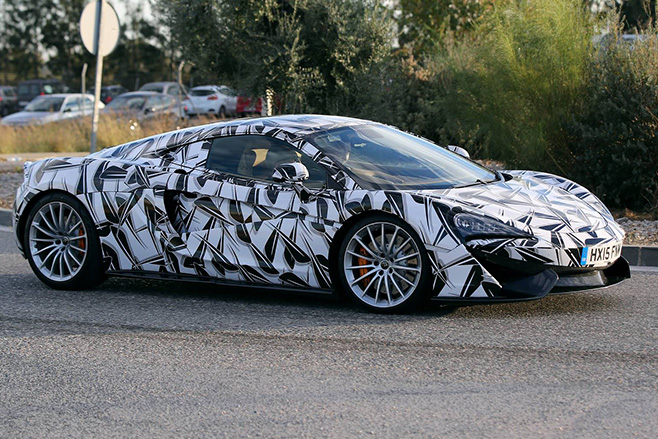
MCLAREN 570GT
A new McLaren coming to Geneva is something to get excited about. The McLaren 570GT is likely to be the marque’s most easy to live with model. That is if you can say that of a two seater supercar. It’s much less race car, much more on-road luxury, but no doubt it will still be brutally fast.
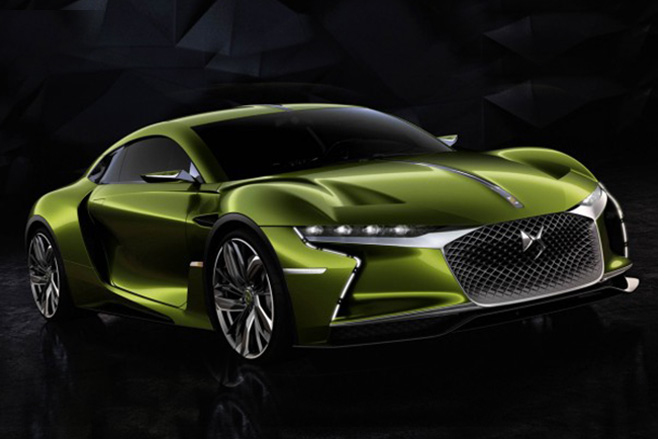
CITROEN DS E-TENSE
Citroen has caused a stir with leaked images of its DS E-Tense concept car ahead of the Geneva show. It’s a beautifully extravagant electric super car with nods to the brand’s heritage, though sadly Citroen says there are no plans to produce it. Still, we want a closer look.
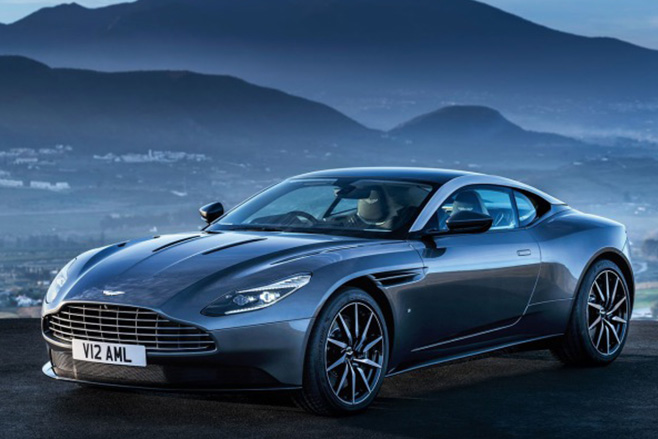
ASTON MARTIN DB11
Could this be an official photo? It sure looks like it. Aston Martin is scheduled to reveal the new DB11 at Geneva but with mere hours to go, it looks like the thunder has been stolen by a handful of photos that appeared on the web. We’re yet to see the interior which featured digital dials in earlier concepts and prototypes. Will they still be there in the production version?
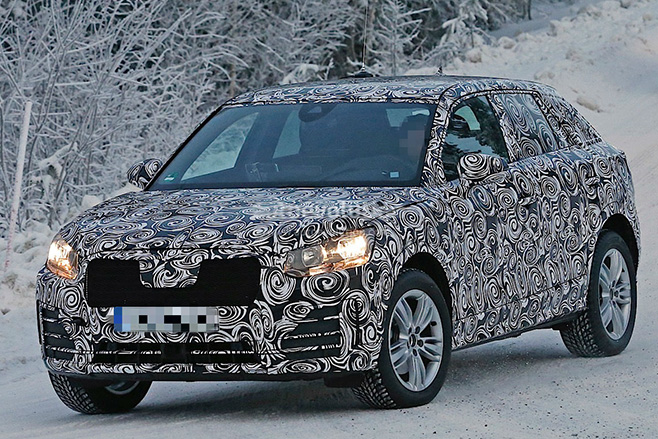
AUDI Q2
A new baby SUV from Audi sounds like a great idea to us, and the Audi Q2 is just that. We’ll get our first good look at it when the Geneva show gets going. Details are thin on the ground with Audi continuing to build suspense right up until its official reveal.
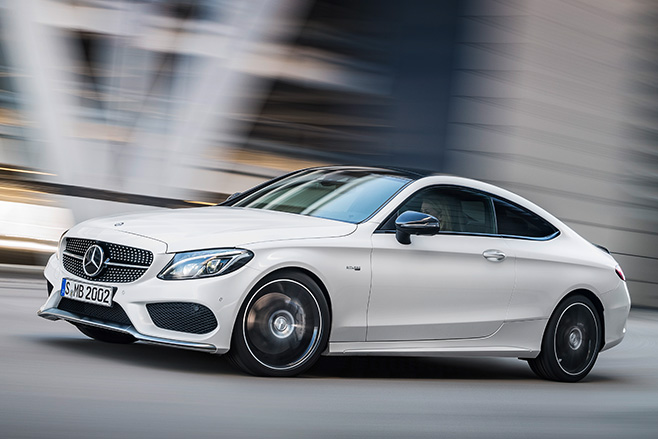
MERCEDES-AMG C43 COUPE
The C43 Coupe is the second AMG model in the Mercedes C-Class range and a car that we reckon Aussies will have a big appetite for. We’ll have ourselves a proper look at Geneva then wait patiently for it to arrive Down Under.
There’s a new Batmobile in town, with Jeep releasing the Renegade “Dawn of Justice” Special Edition.
Whether you’re team Batman or Superman, we’re guessing fanatics of the movie will be excited to drive a car just like Bruce Wayne. Well, either that or they’ll be trolling the YouTube comments section.
But with a partnership between FCA and Warner Brothers, we’re not surprised to see a compact crossover appear in the new Batman v Superman: Dawn of Justice movie. In fact, it’s rumoured the entire movie features various cars from FCA including Chryslers, Dodges, Fiats and Alfa Romeos. Not bad product placement if you ask us.
So, when we heard Bruce Wayne (played by Ben Affleck) is seen driving around in a Jeep Renegade throughout the movie, the Special Edition release by Jeep came as no major surprise.
The Special Edition Jeep gets a blacked-out paint job, 18-inch wheels, black trim and a special logo that merges Batman and Superman – which will either excite or aggravate fans.
On the inside, the Batman colour-code continues with black cloth seats and trim, with metal diamond accents on the handles and the gearshift.
The major changes add US$995 (AU$1400 approx.) price tag to the Renegade.
It’s already on sale in the US, but there are no plans to release the model in Australia.
Check out the Jeep TV commercial below titled “Into The Storm”.
What do you think?
Bentley’s boosted the exclusivity of its Mulsanne range with a new longer ultra-luxury limo.
Unimaginatively named the Mulsanne Extended Wheelbase, Bentley’s placed an extra 250mm in between the axles of its flagship, taking the car’s wheelbase to 3516mm and length to 5825mm.
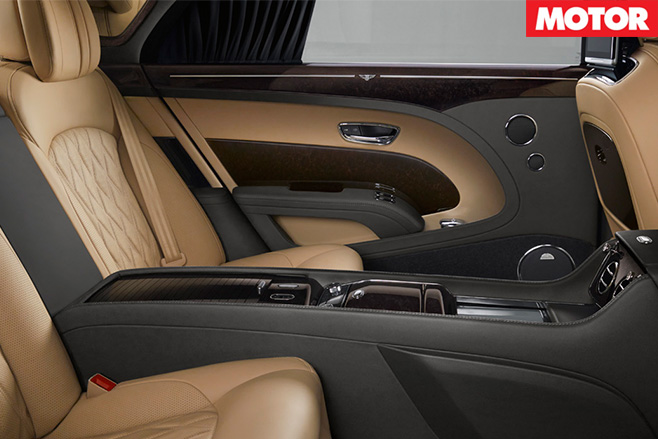
Of course, the new girth also affords the Mulsanne heightened levels of luxury. The firm claims every millimetre of new wheelbase doubles as new rear legroom. Meanwhile, new optional ‘airline-style’ reclining rear seats offer “the most supportive footrests in the industry”.
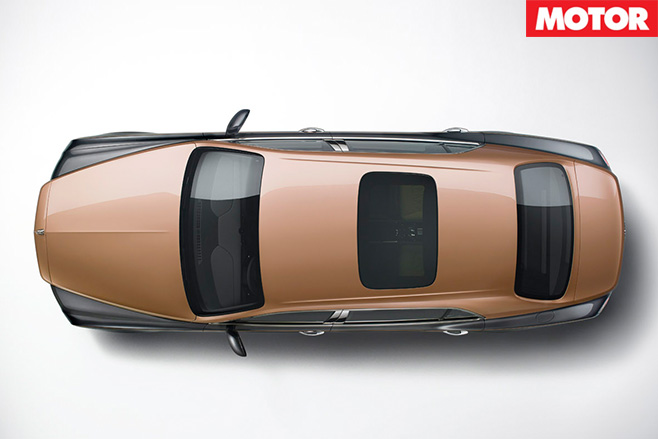
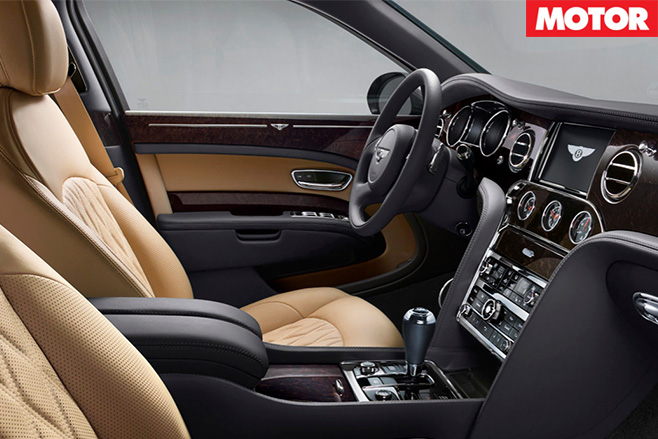
As usual with stalwarts like Bentley, there’s more leather inside than a furniture showroom, while a panoramic sunroof, electric curtains, and fridge beef up its luxurious appeal. The interior leather can also be splashed in 24 different colours and 13 different types of wood panelling.
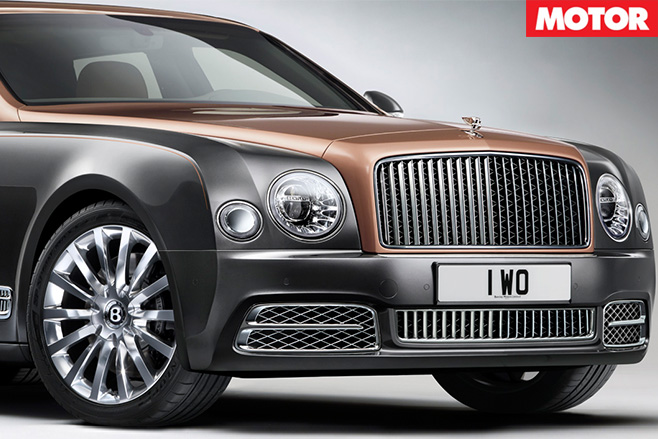
Bentley makes a reach for Rolls-Royce with the Extended Wheelbase, as the new Mulsanne is only slightly shorter than a Phantom. Whether it’ll clear under the Phantom’s $855K (AU) remains to be seen until it lands in Australia later this year.
In the lead-up to the release of the Falcon Sprints, there was plenty of media speculation – including from us at MOTOR – about just how far Ford would go for these last hurrahs.
On paper, the answer is not very. After all, the XR8 Sprint offers just 10kW/5Nm more than the car on which it’s based, while the XR6 Sprint makes 15kW/11Nm more than the old FPV F6; useful increases, but hardly game-changing stuff.
Start to dig under the skin, however, and you’ll find that, particularly in the case of the XR6, there is more going on here than initially meets the eye.
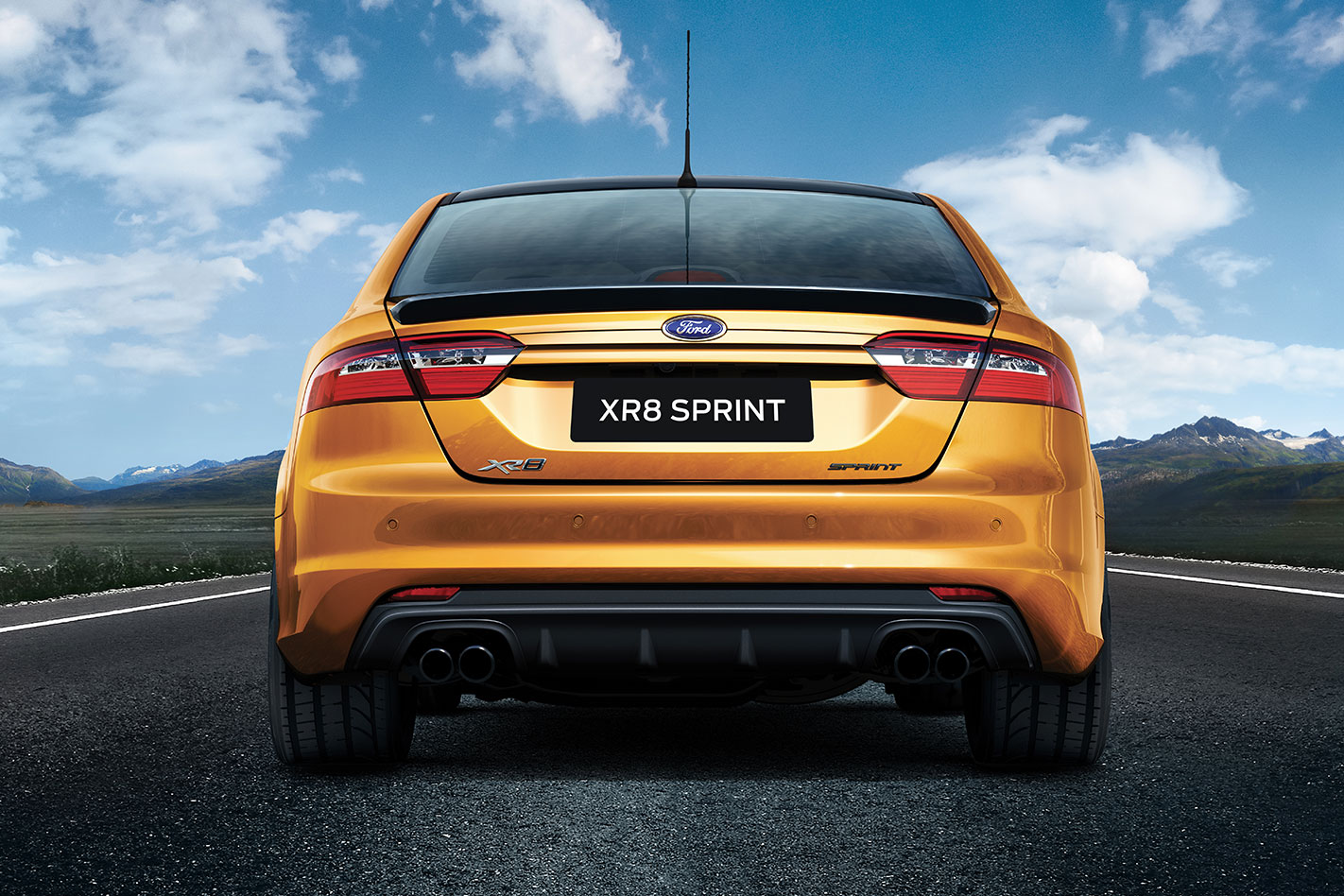
Under the bonnet is the locally-built and developed 5.0-litre supercharged ‘Miami’ engine that was introduced with FG Mk II FPVs in late 2010. While power and torque have increased only slightly, the Sprint engineering team installed a number of measures from the 351kW FPV GT F.
Most of these measures are aimed at improving drivability, like the twin pedal map, which adjusts the throttle blade angle independent of accelerator pedal position. Sprint Program Manager Justin Capicchiano: “There’s a lot that’s gone into [the XR8 Sprint] just to make it drive nicer; if you drove the cars back-to-back, you’d notice the difference.”
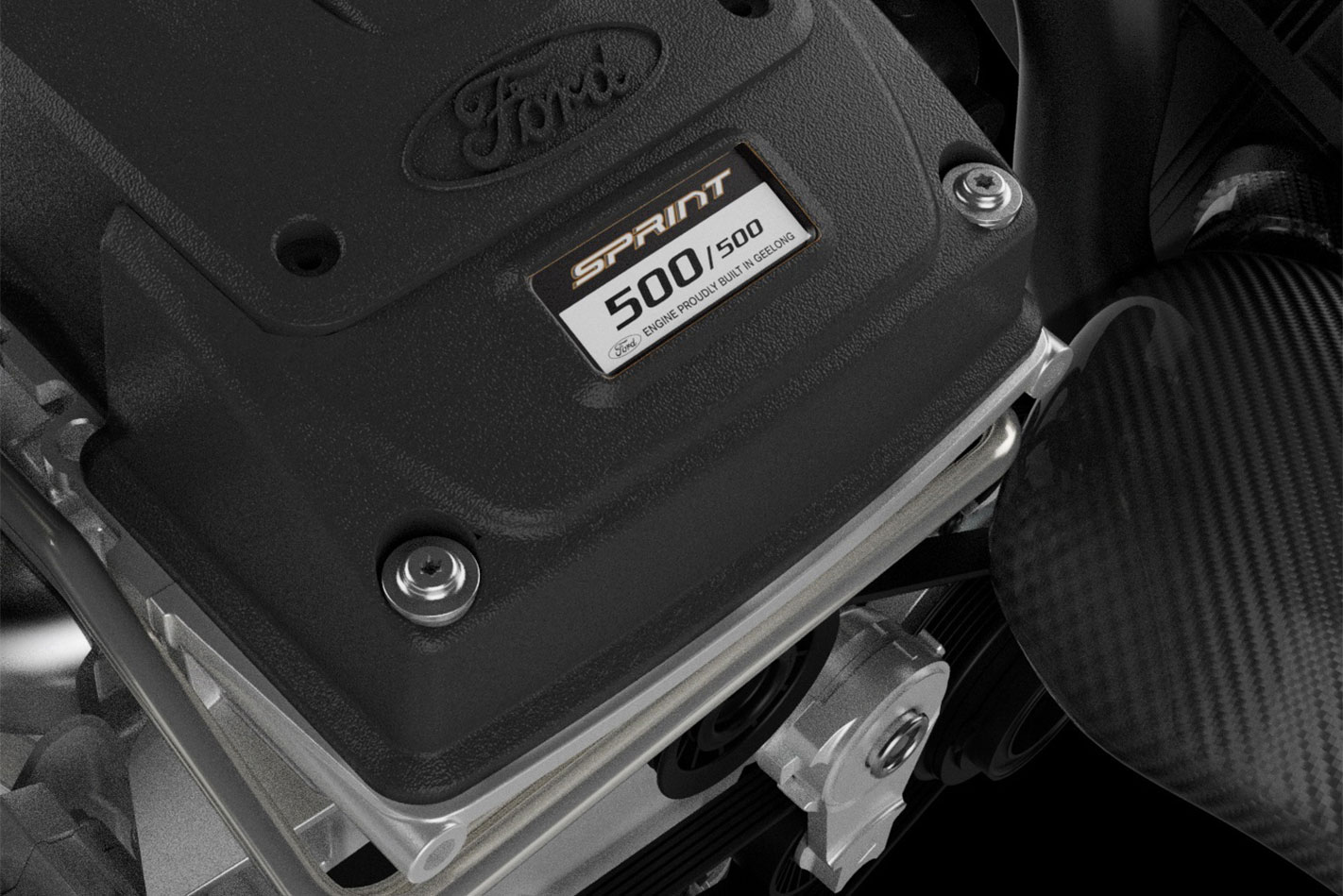
The overboost function lasts for 10 seconds, however it resets on every gear change so as long as temperatures are under control – i.e. you haven’t just done 10 laps of a racetrack – your Sprint will be making maximum power from rest all the way to the limited top speed of 230km/h.
“When we were doing GT F we said 15 per cent [extra power]; in reality, it was a little bit more than that,” explains Capicchiano. The same overboost function in the XR6 Turbo Sprint lifts outputs from 325kW/576Nm to 370kW/650Nm, making it the most powerful six-cylinder engine Australia has ever produced by some margin.
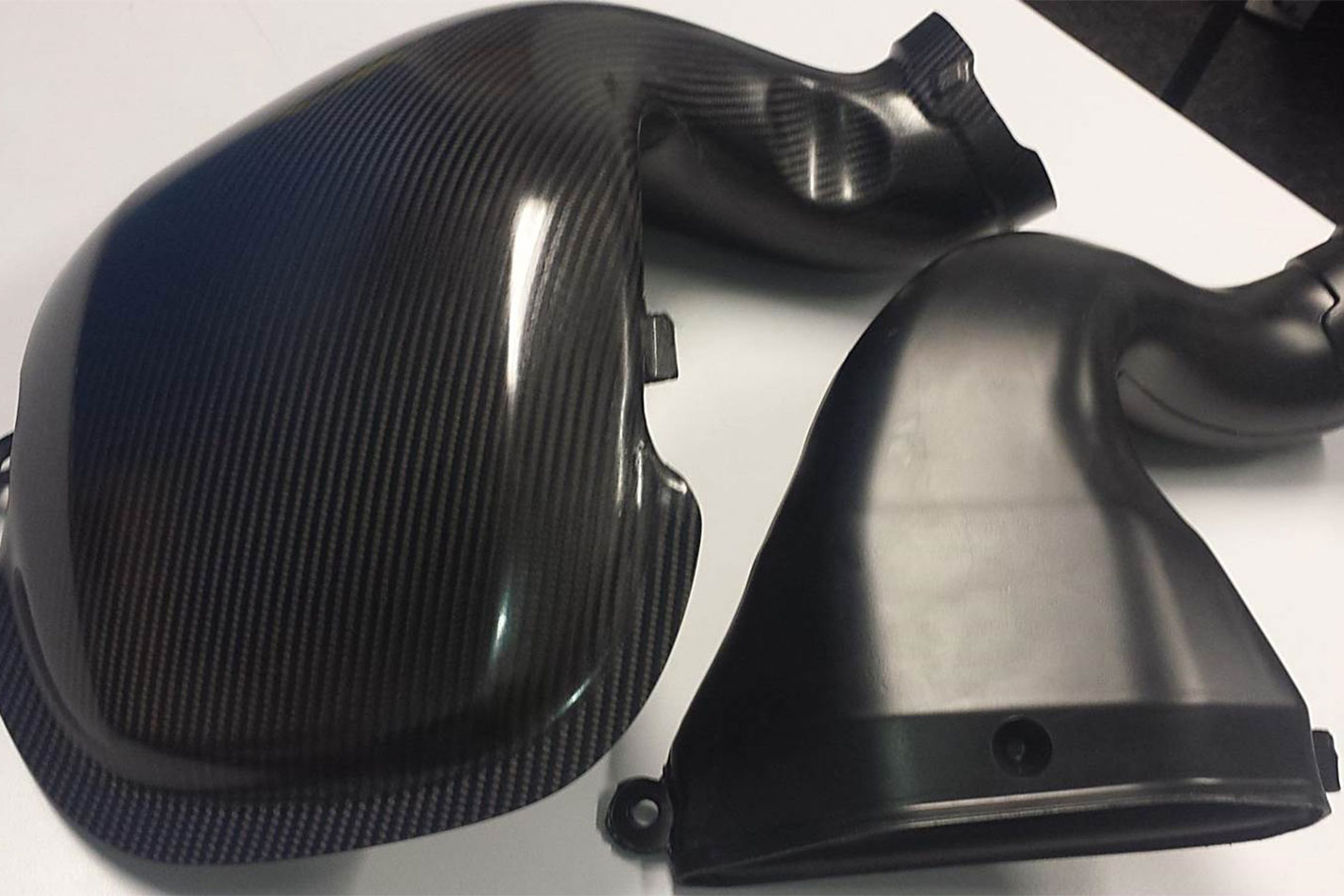
The XR6T engine was chosen for its higher compression ratio, which in conjunction with the Aussie-made carbon fibre air intake and free-flow exhaust essentially means there is more power, everywhere.
“[The Sprint] is making a lot more boost earlier [than the F6],” says Capicchiano. “More boost in the mid-range – at 3000rpm it’s making 3psi more than the F6 was – and more of it at the top end.” Little wonder Capicchiano is happy to go on the record as saying the Sprint’s engine is “the best in-line six we’ve ever done”.
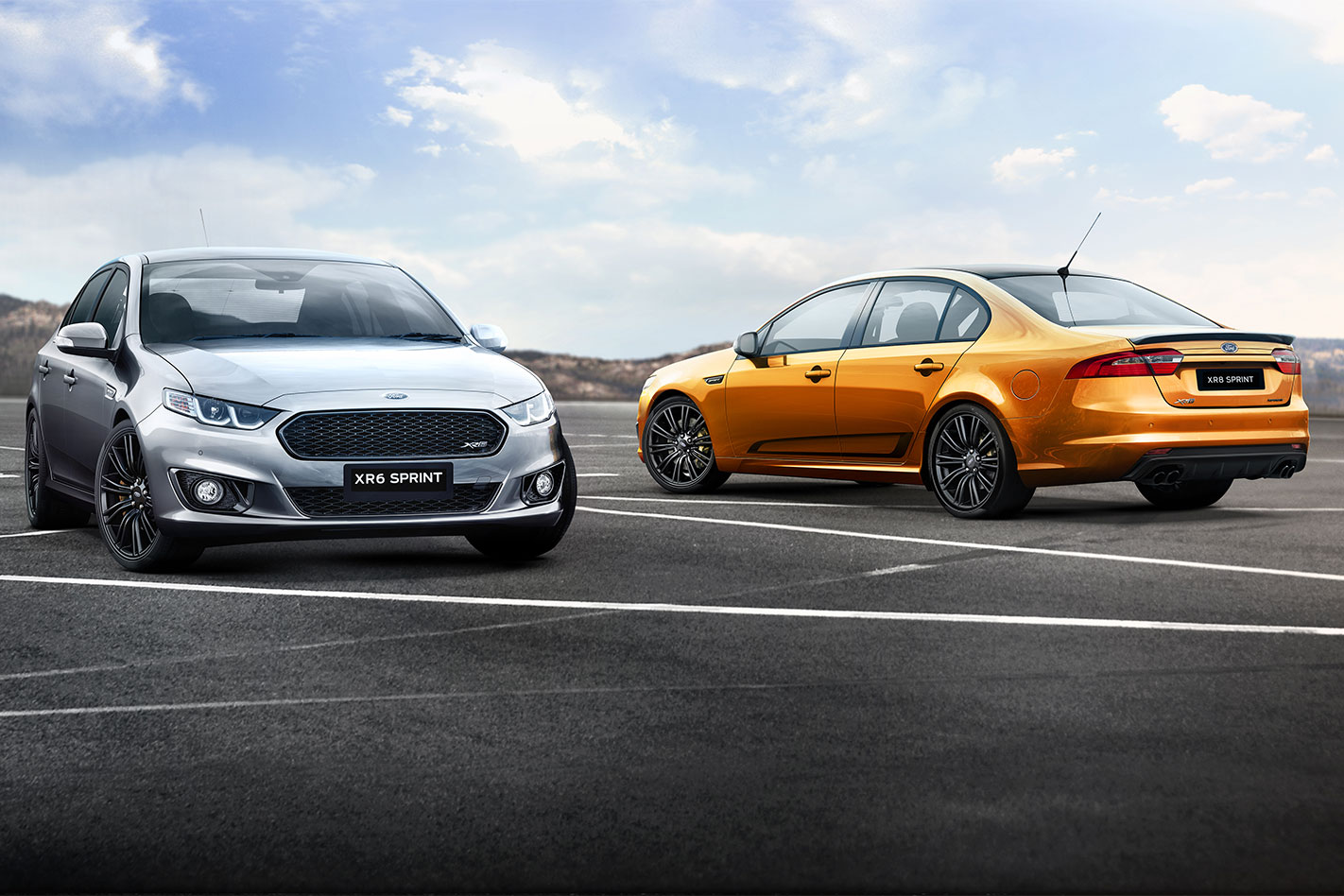
All this should make the XR6 Sprint the fastest Aussie Ford ever produced, though it’ll have to battle its eight-cylinder sibling for the title.
While there will always be critics saying Ford could and should have done more, you have to say the engineering team has done an impressive amount with the resources available.
Just how good a job, we’ll find out shortly when we drive the Sprints.
When it’s time to reheat an existing model it’s odd for a car company not to bump power up even a few token kilowatts, but the new Mercedes-AMG SL63 is probably the one car that could get away with it.
It more or less carries over its 5.5-litre twin-turbo V8 with the same outputs as before, few customers apparently complaining that 430kW and 900Nm weren’t enough.
Instead the changes to Merc’s timeless SL are mostly cosmetic, the front end completely restyled, grafting on a version of the new corporate face.
A new rear bar with diffuser is about the extent of rear styling changes, the interior also copping more software than hardware tweaks.
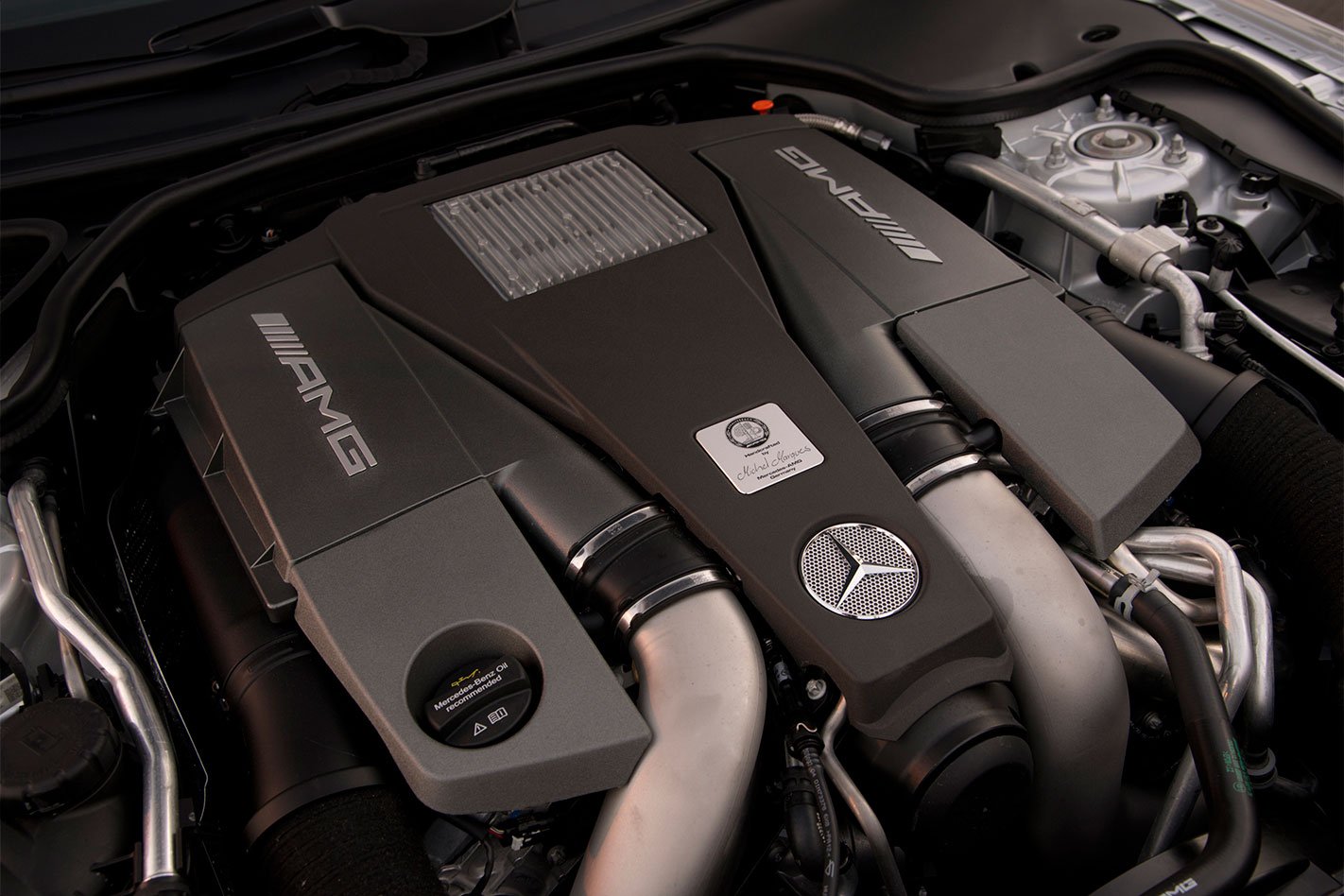
The SL63 misses out on the new 9-speed gearbox adopted by SL400 and 500, it not being able to take the torque. But instead AMG insists the 7-speed wet clutch automatic now shifts noticeably faster than the previous model.
Active suspension is the big news in the chassis department, the SL getting something called Active Body Control, effectively replacing conventional sway-bars with computer-controlled dampers working against dive, squat and roll.
The plushly-sprung SL63 probably needs it, particularly given it’ll do 0-100km/h in 4.1 seconds with launch control. With an engine very much about torque than revs, the SL63 slams you back from even low in the rpm band with enormous levels of turbocharged shove. And charges past 100km/h like it’s in a hurry to hit its 300km/h limiter.
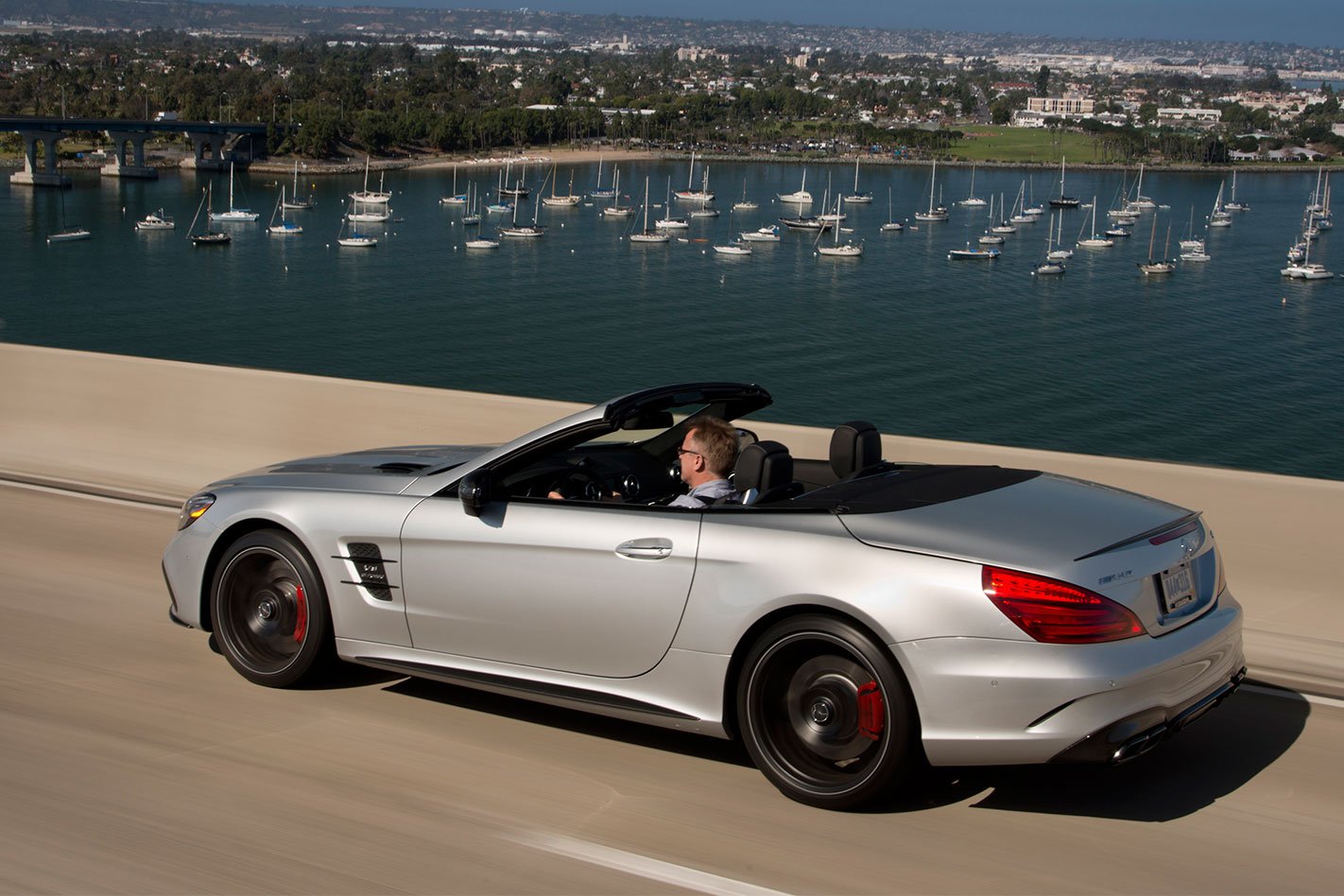
Behind the wheel you sit fairly rearward in the SL and peer over a long, wide bonnet. It feels like two thirds of the car is in front of you rather than behind – partly confirmed by 51.2/48.8 front-rear weight distribution – a sensation of forward mass that can make setting the SL’s trajectory difficult to judge for the first two dozen corners at least.
There are more intuitive front-ends around but with time you and the SL start to gel and it becomes less of an issue. And the 63 in particular is only too eager to cast aside its luxury cruiser personality with the press of a few buttons.
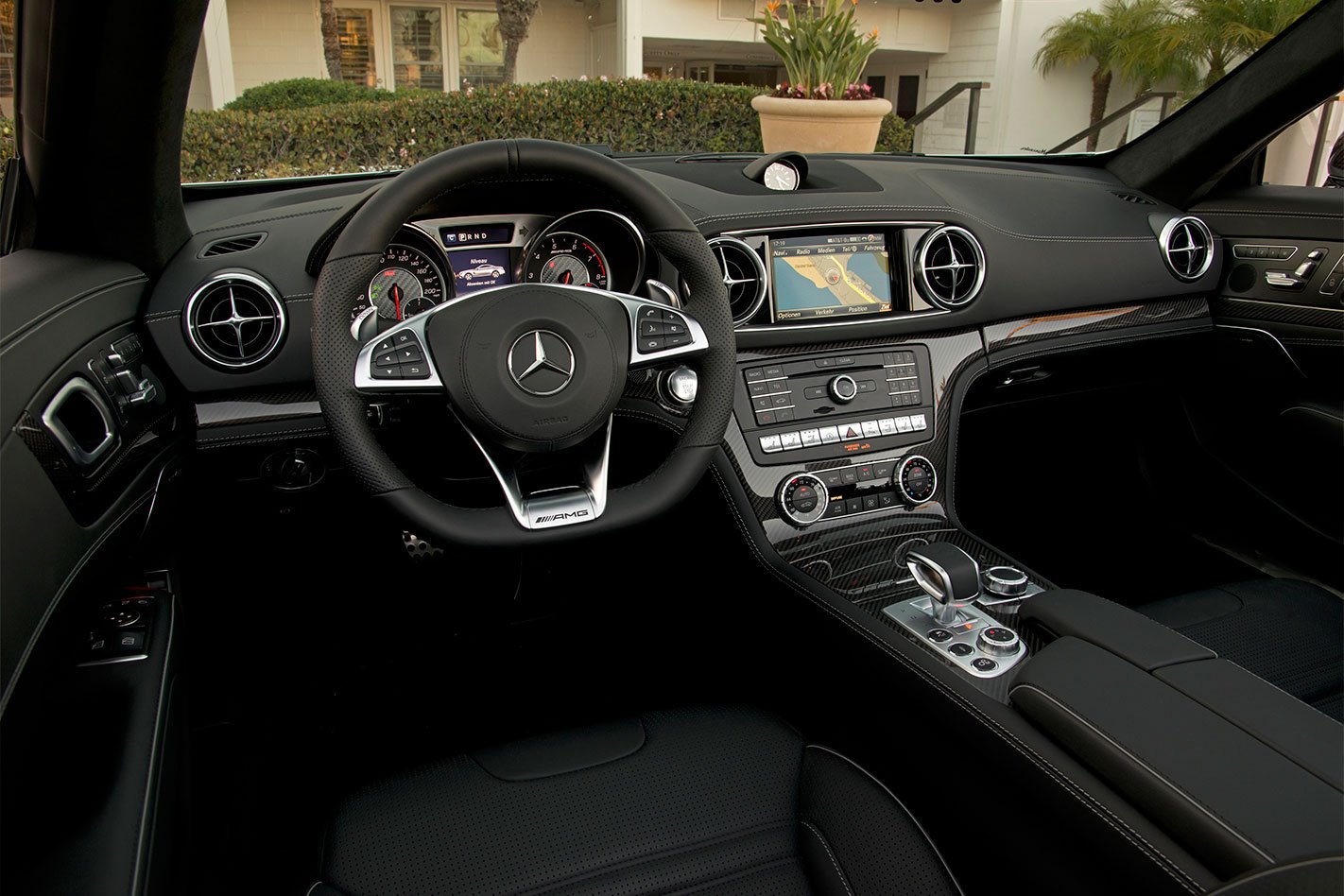
Luxury-tuned steering (now with a “constant and more direct ratio”) isolates against vibration around town but the trade-off is very little steering feel, understeer felt more through the seat of the pants than the hands if you push too hard.
Out back, two rear 285/30ZR20 tyres transmit the teutonic 900Nm to tarmac with notable effectiveness. But on corner exits, thanks to a mechanical limited slip diff the rear is only too willing to wag and lay big black lines with a provocatively-applied throttle, even in the satisfyingly lenient Sport ESP setting.
The SL63 has tonnes of lateral grip and conceals its 1770kg well, probably no small thanks to the imperceptible workings of the Active Body Control.
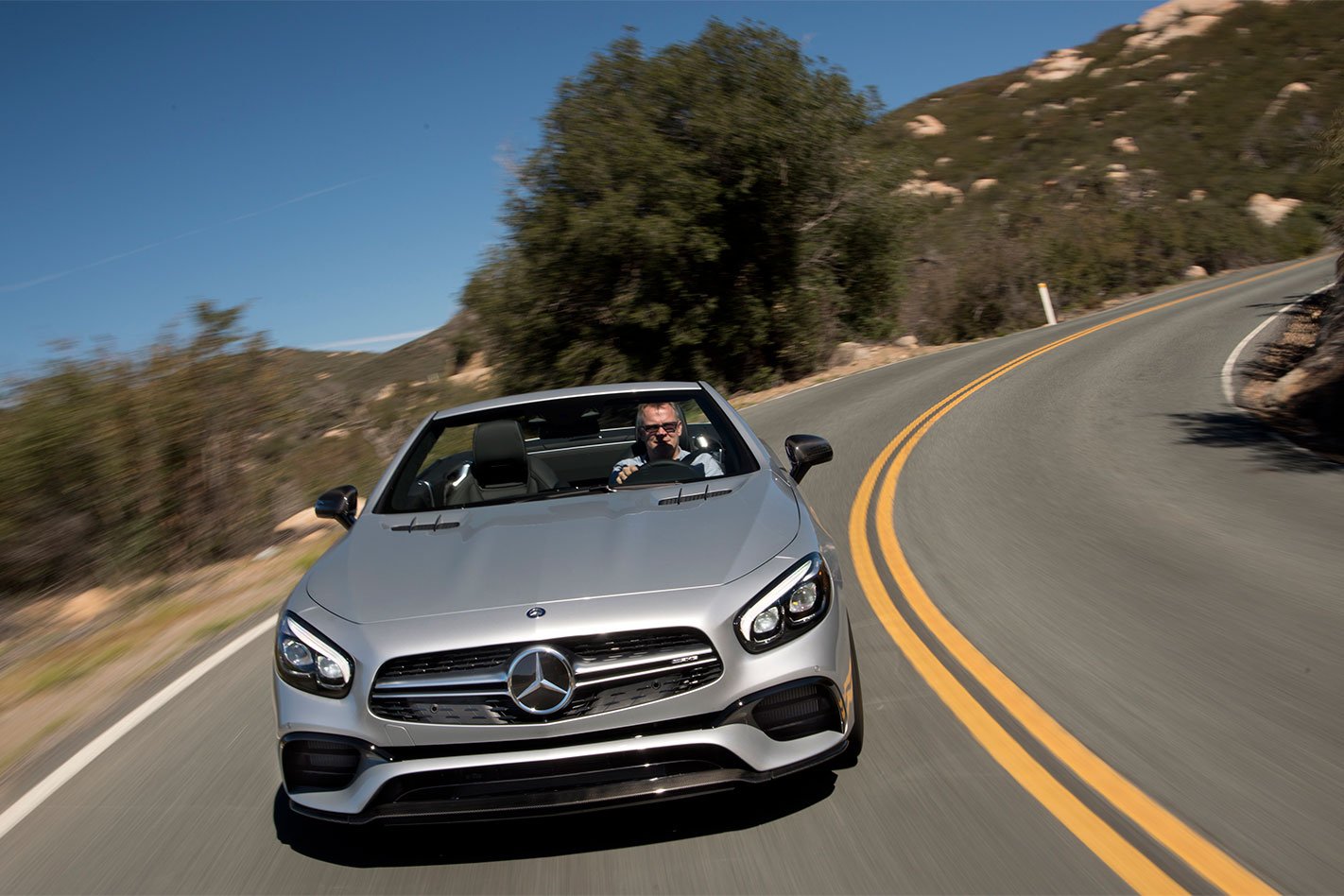
Switch the settings back to Comfort, though, and the SL63’s personality turns instantly to lazy cruiser with incredible ride for 30-profile tyres and a serene, breezy interior even with the roof down at highway speeds.
For all AMG’s tweaks, the SL63 is plainly one of its more sensible models, deliberately avoiding most of the attention-seeking ostentatiousness of its stablemates and shunning even an active exhaust button.
That said the engine is still loud enough with a lower-frequency V8 burble and the occasional crackle with downchanges.

While there are convertible sports cars more intuitive and precise than the SL63 they won’t “cruise” anywhere near as sublimely and AMG is the first to admit the SL63 is not made for the track. They know most SL63 customers will have another car for that.
Mercedes-Benz Australia says the facelifted SL63 will come in under the current car’s $399K when it goes on sale in Australia in July.
4 out of 5 stars
Specifications
Engine: 5461cc V8, DOHC, 32v, twin-turbo Power: 430kW @ 5500rpm Torque: 900Nm @ 2250-3750rpm Weight: 1770kg 0-100km/h: 4.1sec (claimed) Price: $385,000 (estimate)
We don’t know who designed the Phillip Island circuit, but we wouldn’t be surprised if they were the sort of person who watches car crash compilations on YouTube for fun.
It’s the kind of place where, if you fall off, you close your eyes, bend the brake pedal and do Hail Marys. Not the ideal venue, you’d think, to let a bunch of Aussie motoring hacks loose in the fastest and most expensive road-going Porsche ever.
Even on the oceanic tarmac at Dubai airport it would’ve been brave of Porsche to unleash journos in its $1.5m 918 Spyder, let alone a track with gravel traps the size of Olympic long-jump pits, with a secondary line of old tyres filled with mosquito larvae.
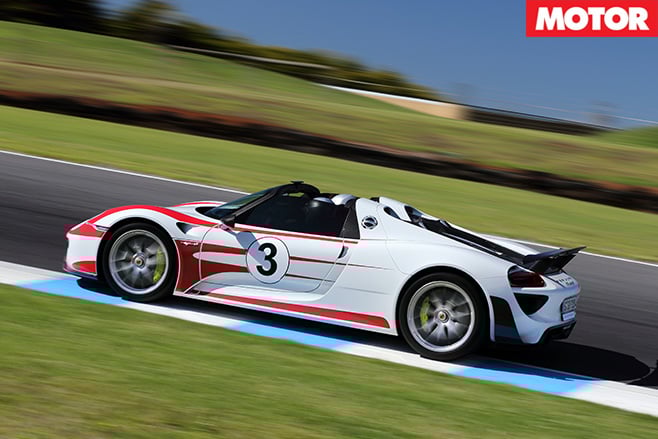
But, ah, those folks at Porsche aren’t so silly. They organised a pacecar: Craig Baird. In a Carrera Cup car. Which has MOTOR tasting fingernails. And puts into perspective just how fast the 918 – a car that seeks to distill Porsche at its engineering mightiest – really is.
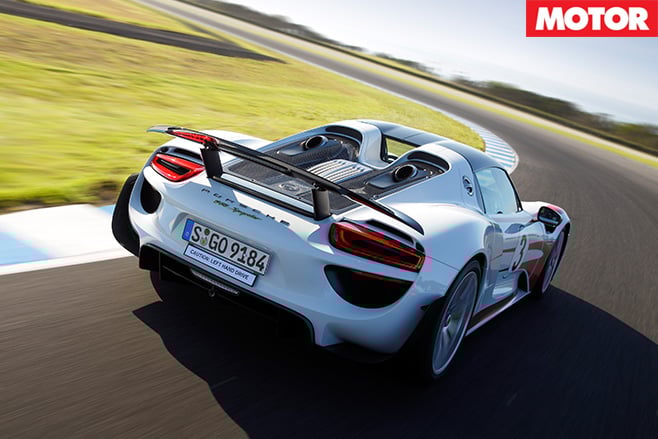
Oh, yes, a Clubsport makes more torque than that, you chortle. But a Clubsport doesn’t have an extra 210kW and 585Nm of electric motors. One at each end, fore and aft, work the 918’s lower revs like hum-quiet rockets.
The 585Nm is all yours from 1rpm. Together the V8 and electric motors make 652kW at 8500rpm and “between” 917Nm and 1280Nm, because to unleash such torque in the lower gears would be tyre-frying madness. The torque figure alone is enough to make you arch your head backwards and cackle. It’s plain silly in a car that weighs 1634kg.
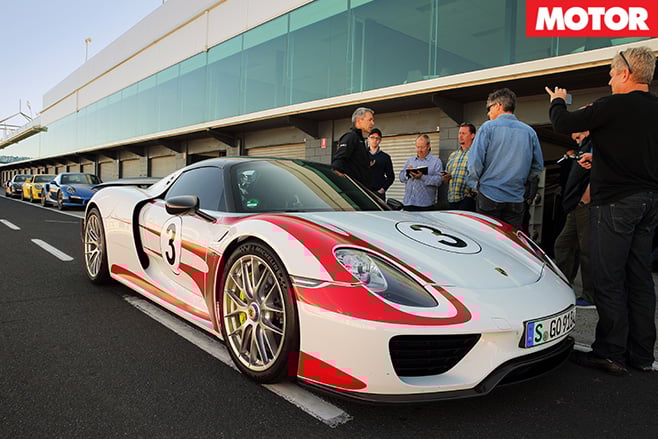
In its all-electric E-Power mode the 918 moves silently and can do around 30 kilometres on batteries alone. With 240V power the 918 will fully recharge in less than four hours. Plugged into a quick charging socket, 25 minutes.
And even in electric-only mode you’ll embarrass hot hatches at the lights – the 918 will do 0-100km/h in just over seven silent seconds. It feels fast, too, because there’s no engine roaring as it pulls through gears – it’s just silent, eerie thrust, the building of tyre noise and a subtle but cool electric motor whine.
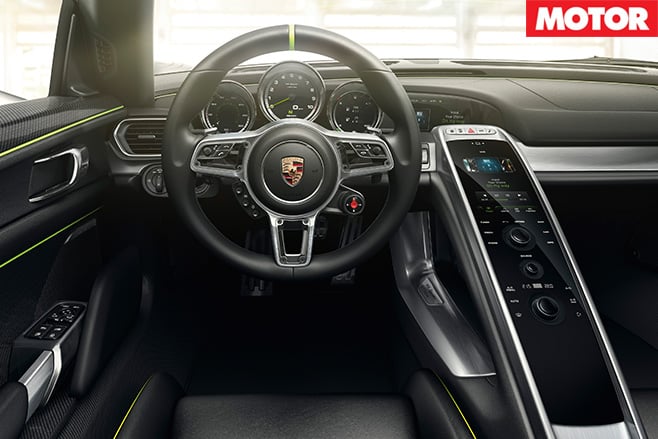
Sunk into the low, recessed seat, in a nest of glossy carbon fibre, the 918 is like sitting in a giant street luge. You feel 5mm off the deck. Two headlights menacingly bulge at the bottom corners of the windscreen.
We have just three laps to acclimatise to left-hand drive, a man in the passenger seat trying to shout over a 9000rpm V8 in a thick German accent, and four driving modes to sample. The 918 will do 290-odd km/h on the front straight, too, we’re told.
Fractions of a second later, it feels like all the blood from my eyeballs has sloshed to the back of my skull. I’m only just able to keep my vision on the suddenly-rapidly-approaching horizon. The thrust is just severe. Gnngghhll, I groan, as my chin presses into my chest. It’s disorientating, almost uncomfortable, borderline violent.
It sounds fast, too, rising in volume and menace as you roar through that giant tacho. At 7000rpm it feels like the noise and intensity have reached their climax. Yet there’s still two numbers to go on the tacho. At 9000rpm the thing is howling with rage, the distinctive sound of a flat-plane crank V8. In fact, it sounds similar to a 458 Italia, whose not-so-different engine uses the same crank configuration.
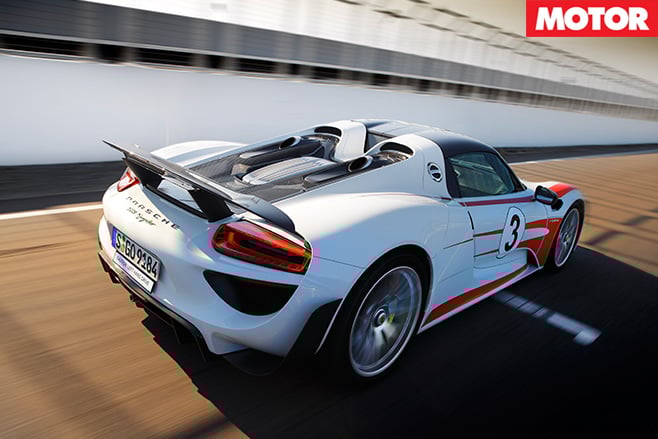
It takes both flat whites I had that morning to be able to mentally record every sensation of my three laps for later playback. And three laps, even at Phillip Island, doesn’t last long in something this quick.
A few corners later, the first thing I notice, perhaps obviously, is the steering. It’s meaty yet, at 2.3 turns lock-to-lock, lithe. It’s heavy in your hands, even if the information from the front tyres is coming to you through copper cable more than fibre-optic.
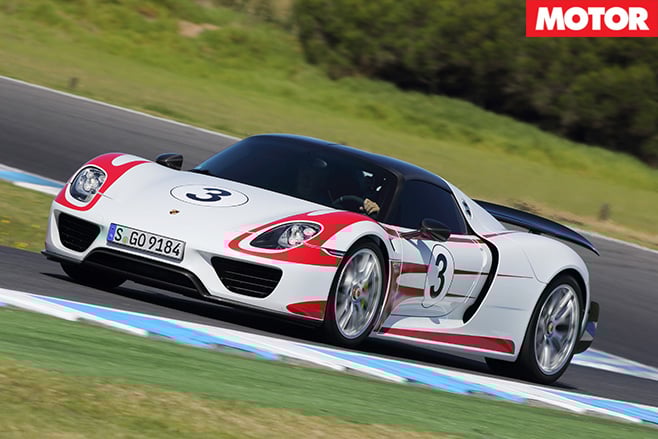
The brakes are truly otherworldly. Some cars’ brakes are too good for the tyres and headbutt the ABS. Others, the brakes won’t bother the ABS, there’s too much rubber. In the 918, the thing holding the brakes back is the fact you routinely miss leg day at the gym.
It feels like no matter how hard your input – and we’re talking trying-to-crack-a-marble-with-your-foot hard – the pedal is down there laughing at you. You press harder, harder, harder, expecting to feel a flutter of ABS, but instead it feels like the rear wheels are going to become airborne. The brakes are almighty.
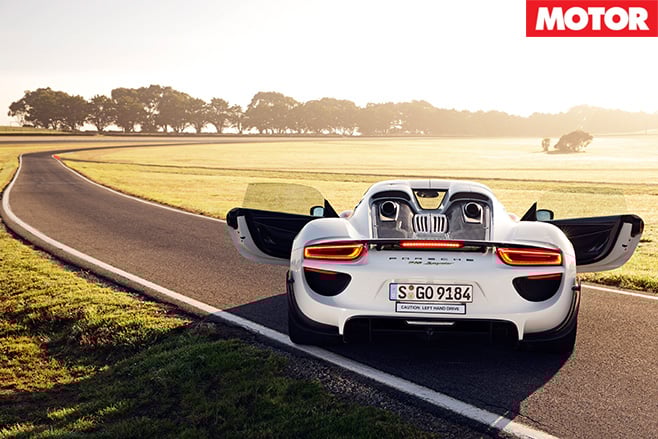
With the centre of gravity so low, body roll is almost non-existent; if the 918 had an aviation horizon gauge it’d barely budge. It corners so flat it would surely win the World Slalom Championship. Centrifugal cornering force feels like it’s channelled right into the tyre, permitting huge mid-corner speeds.
It’s easy to drive fast, too. Brake hard and late as you dare, or merely as much as your hamstring can muster. Tip in with that lithe steering, feel the immense lateral grip available, and if you balls-up your entry speed, there’ll be predictable, natural understeer, felt pretty easily through that gorgeous steering wheel.
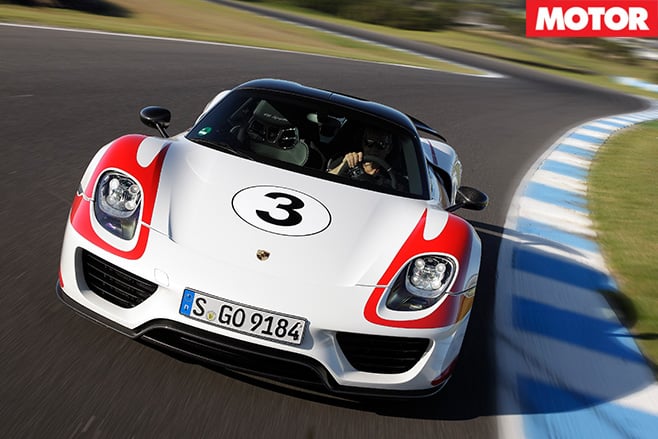
Towards the end of my three laps I discover, in fact, the stunning acceleration means it’s easy to barrel into the next corner too fast. I catapult out of the Island’s tight, right-hand Turn 10, only to arrive at the long, left-hand Turn 11 quicker than expected.
I turn the car expecting understeer, but in fact get oversteer, as the rear runs out of grip. It’s a little sudden, but still friendly, and makes me mentally thank the subtle but effective ESP calibration.
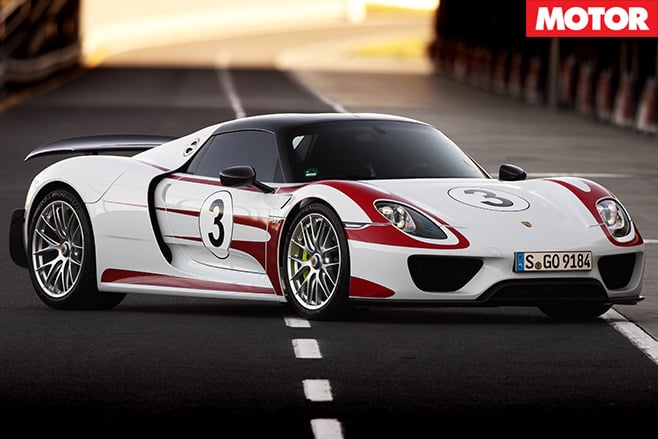
That’s not even considering it can wear numerplates overseas, can drive to the shops in silence using no fuel, yet would also make mincemeat of any PCOTY winner. Our time with it was maddeningly brief, yet we’re grateful it happened. And that we didn’t attempt any Phillip Island long jump.
5 out of 5 stars
Porsche 918 Spyder Weissach Pack Body: 2-door, 2-seat convertible Drive: all-wheel Engine: 4593cc V8, DOHC, 32v Bore/stroke: 95.0 x 81.0mm Compression: 13.5:1 Power: 652kW @ 8500rpm (combined) Torque: 917-1280Nm (overall system) Power-to-weight: 395kW/tonne 0-100km/h: 2.6sec (claimed) Top Speed: 345km/h (claimed) Consumption: 3.1L/100km (claimed) Emissions: 72g/km CO2 (claimed) Transmission: 7-speed dual-clutch Weight: 1634kg Suspension: double wishbones, coil springs, adaptive dampers, anti-roll bar (f) multi-links, coil springs, adaptive dampers, anti-roll bar (r) L/W/H: 4643/1940/1167mm Wheelbase: 2730mm Tracks: 1664/1612mm (f/r) Steering: electrically-assisted rack-and-pinion Brakes: 410mm ventilated/drilled ceramic discs, 6-piston calipers (f); 390mm ventilated/ drilled ceramic discs, 4-piston calipers (r) Wheels: 20 x 9.5-inch (f); 21 x 12.5-inch (r) Tyres: 265/35 ZR20 (f); 325/30 ZR21 (r) Michelin Pilot Sport Cup 2 Price: A$1,500,000 (approx) Positives: Stunning acceleration, the noise it makes at 9150rpm, handling, brakes… Everything Negatives: You need to be loaded to own one, even then they’re all sold out and never came in right-hand drive
POLITICS: V8 Supercars rises above KL street race kerfuffle
DISPUTES over the ownership of the street race in Kuala Lumpur won’t derail the mooted off-shore championship round for V8 Supercars in August, insists the category chief executive James Warburton.
A group backed by the Malaysian Government has taken control of the organisation of the street race, held on a tight 3.2km layout which runs past the landmark Petronas Towers in the capital.
Planned for August 12-14 are four 100km V8 Supercars championship races.
V8 Supercars has a four-year agreement with the Malaysian organisers of the KL City Grand Prix, which after legal threats has been renamed the KL City 400. (Formula One claims to hold ownership of the grand prix nomenclature, although try telling that to international speedway, tennis and snooker bodies…)
The fight over ownership has taken place out of the public eye, but there are a few signs of turmoil and change – the KL event’s original website has suddenly disappeared and its Twitter and Facebook accounts neutralised.
The ownership fracas hasn’t thrilled V8 Supercars, but Warburton is confident the event is still on track, with the right people in charge.
Warburton told Wheels: “We’ve been aware of some shareholding issues since the last event. We have commitments going forward and believe the shareholders are close to resolution and the event will proceed.”
Agreements were locked and loaded around the time of last year’s inaugural street race – effectively an exhibition. But in the world of Asian business and politics, permanency of agreements is a matter of interpretation.
More positively, the new KL race stakeholders were represented in Sydney at a V8 Supercars sponsorship forum recently and will also be at the Clipsal 500 in Adelaide this weekend.
Five V8 Supercars “raced” on the KL street layout last year in a raucous demo to help rev up interest.
Two Boeing cargo planes will fly the 26 racecars and equipment to KL in August.
F1: Pre-season testing springs no surprises but a little hope
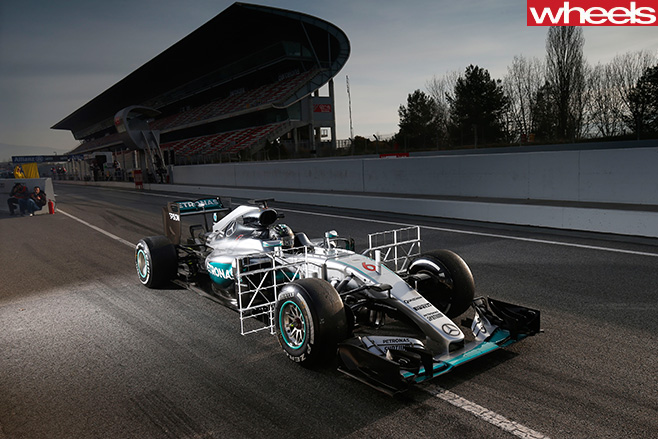
But testing in Spain ultimately brought us little more than that awful feeling that 2016 may be much like last year, which in turn was a whole lot like 2014.
The Silver Arrows were quick and reliable at Catalunya; the signs are that Mercedes has improved on an already fast car. The Mercs also did lots of laps, 700 laps, without issues. Also impressively fast were the cars from the red team, which historically likes to give supporters hope by uncorking some flash lap times. They did just that with Pirelli’s new ultra-soft tyres. “What I feel is that it is a very good step forward,” Sebastian Vettel raved after his first day in the car in Spain. Kimi Raikkonen was less ebullient, pulling up short of executing a few cartwheels…
Only a brave man would use the pre-season testing times to forecast a pecking order in the championship proper.
Teams have different schedules, targets, fuel loads and tyre compounds. Some used their regular drivers; others put their test pilots to work. And all guard their true potential like Bill Shorten hides a sense of humour.
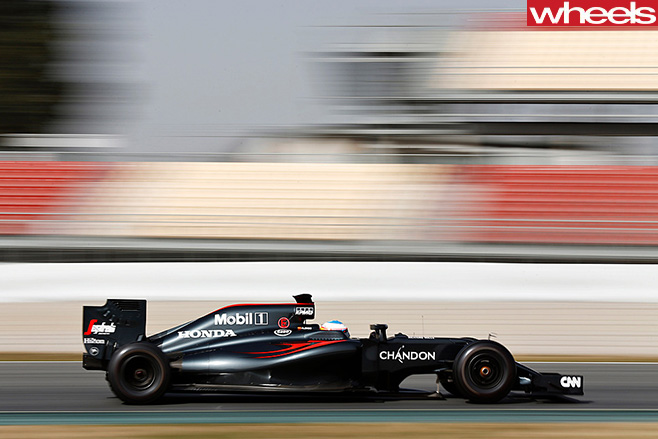
But McLaren Honda showed a deep commitment to saving the earth’s non-renewable resources. The team aimed at completing 4000km but managed a little more than a quarter of that distance. Reliability issues have not yet been sorted, conceded Honda’s new F1 chief Yusuke Hasegawa.
And what of our Daniel Ricciardo and Red Bull Racing?
After a 2015 of poor reliability and endless squabbles with engine supplier Renault, the signs for this year are more positive.
The Bulls are still powered by a Renault donor power unit, but rebadged as TAG Heuers. The name change may have wrought a minor miracle: the cars have been running without worrying signs of mechanical fragility.
“The team is positive; we’re all feeling like we’re in a good place,” declared the Australian Dental Association’s poster boy.
But that place will be well behind the Mercs, apparently, at least in the opening four flyaway GPs. Ricciardo concedes: “I don’t expect to be on their level at the first few races”.
“I’m 100 per cent not going to be surprised if they get a one-two, not only in Melbourne but for the first four races,” Ricciardo said.
Ricciardo predicts he’ll be fighting with Williams, Force India and Toro Rosso early in the season for the lower points-paying positions, but is confident Red Bull will be more competitive when the circus returns to Europe.
Four crucial days of the final pre-season test start tomorrow at Catayunya.
But we’ll be waiting until qualifying at Albert Park to better know who might kick butt in 2016. Or do we know already?
WORLD SUPERBIKES: Rea takes two from two while Westie shakes up Supersport
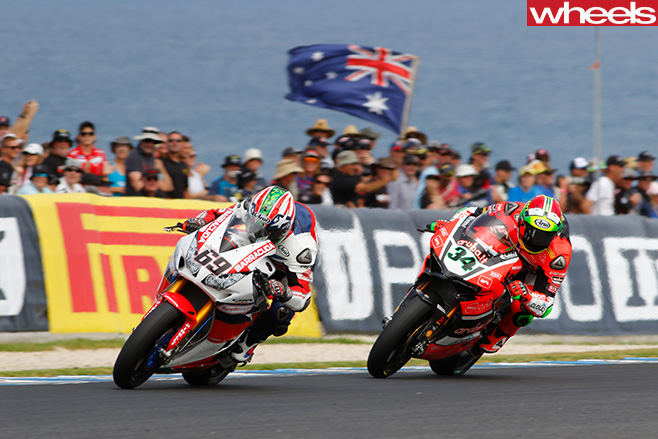
Both heat races were thrillers with up to seven riders in the mix for much of the journey.
But the Kawasaki star from Northern Ireland proved he will again be a fierce contender, while his team-mate and rival Tom Sykes clearly has work to do.
Ducati, Honda and the new Yamaha were at the pointy end too.
Series runner-up last year, Chaz Davies, pushed hard to claim second in the Saturday race, but dropped his Ducati on the final lap of the Sunday contest.
Holland’s Michael Van Der Mark plucked an enterprising third out of Saturday’s race and followed up with second the following day aboard his Honda. A win can’t be far off.
His new teammate, ex world MotoGP champ Nicky Hayden, put his experience to fine use to run towards the front at the Island. He was a possibility for a podium on Sunday but was pipped in the run to the line by Ducati’s Davide Giugliano.
The highlights of the World Supersport race included Swiss rookie Randy Krummenacher taking a surprise victory, beating another new face, Italian Federico Caricasulo, and Queensland wildcard Anthony West to the top step of the podium.
“It was such a good result for a small team we threw together at the last minute,” said West, who is hoping the performance might secure him a full-time ride. He was relentless in his charge from 12th, though it was obvious his Yamaha lacked the straight-line urge of the Kawasaki and Honda that beat him to the line.
An exploding tyre decked reigning champion Kenan Sofuoglu in the closing stages when he looked set to give the race a huge shake.
GT: Walkinshaw names its drivers for championship and endurance season
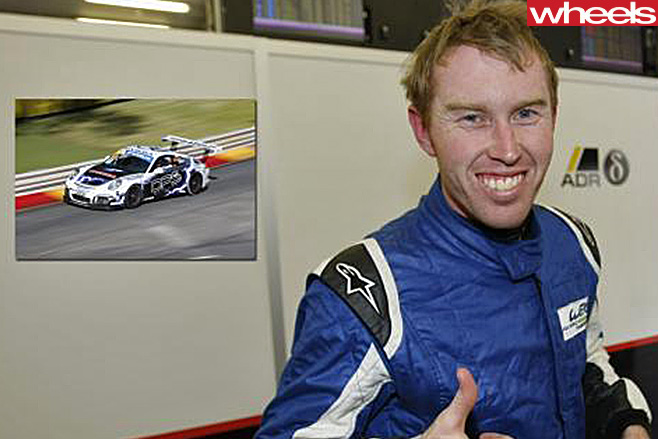
The fast and experienced Martin returned home in 2015 eight years of racing open wheelers and prototype sportscars in England and Europe and is looking forward to joining the Melbourne-based Walkinshaw outfit steering the new Porsche 911 GT3 R.
“We spoke to Adrian (Burgess) quite a bit through last year, about V8s and other options,” said Martin. “But when the Australian GT opportunity came up, we knew it was the way to go.
Martin is aware of the Walkinshaw name’s amazing history in international sportscar racing all the way to Le Mans.
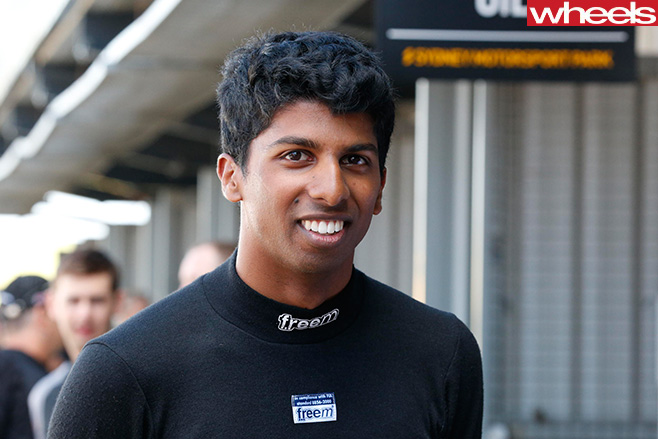
Martin will also take up full-time driving duties in Australian GT sprint series with a yet-to-be-announced co-driver. Walkinshaw GT3 will debut the Porsche from round three at Perth’s Barbagallo Raceway in May.
F1: New elimination-style qualifying delayed
Plans for a new elimination-style qualifying this season to replace the old elimination-style qualifying have been farcically delayed due to issues with Formula One’s computer programming.
The confusing new format was set to be introduced in Melbourne, despite criticism from some drivers and bewilderment from fans.
Bernie Ecclestone has confirmed the delay because his technical boffins cannot get the software and graphics tuned and ready in the tight time frame. The word is the new system won’t be ready until the Spanish Grand Prix in May at the earliest.
This will force F1 to stick with the old format for the first four races at least before switching over.
The new format is based around drivers being eliminated at 90-second intervals in each of the three qualifying sessions. In the current system, bunches of seven are sent to the pits at the end of each of the first two sessions.
F1 teams are usually resistant to changing the rules mid-season, and it won’t surprise if the World Motor Sport Council decides to delay the introduction of the new system until 2017.
By then they may have decided it’s a pretty dumb idea and that there are more pressing innovations to bring to F1.
Now, for those who don’t fear brain damage, here’s my attempt to explain how the new format, if it ever happens, is supposed to work…
Three qualifying phases remain, as before. Q1, Q2, Q3.
Broadly, after a settling-in phase in each session, the slowest driver is eliminated at 90-second intervals during the three qualifying segments, eventually leaving two drivers to battle it out for pole position in Q3.
Specifically, Q1 is 16 minutes long and for all 22 cars (provided the McLarens have made it out of the pits). After seven minutes, the slowest driver is eliminated, with this process continuing every 90 seconds until the chequered flag. So seven drivers are out, with 15 progressing to Q2.
Q2 is of 15 minutes duration. After six minutes, the slowest is flicked. And so it continues with the slowest afield sent to the pits every 90 seconds. This reduces the qualifiers to eight for the final 14-minute shootout.
Five minutes into Q3, the culling continues. Yep, after every 90 seconds the slowest on track is dispatched until two drivers – quite possibly Lewis Hamilton and Nico Rosberg – are left to fight for pole in the last 90 seconds.
INDYCAR: F1 door slams and another opens – Alexander Rossi crosses to IndyCar
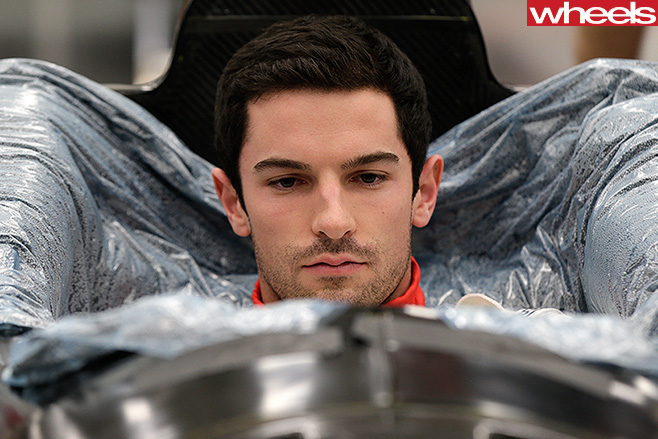
The 24-year old Californian didn’t do much wrong in limited opportunities with the Marussia team in F1 towards the end of last year, where he started in five grands prix. He was hoping for a deal with the new American F1 team, Haas, but the phone didn’t ring.
Opting for Indy Cars is a massive gamble for a young driver with dreams of locking down a solid career in F1. Even though Indy Car racing arguably demands serious versatility with its ovals long and short, street races, and road courses, very few drivers are plucked from American open wheeler racing to F1. Fewer still make a memorable go of it. Not Sebastien Bourdais, Scott Speed, Michael Andretti…
With his strong background in formula cars in Europe including finishing second in the 2015 GP2 Championship, Rossi could be an asset for Andretti, although his lack of oval racing experience is an obvious deficiency.
“As a racer through and through, I cannot wait to get started; our goal is to be competitive immediately at the first race in St. Petersburg,” said the confident Rossi.
