
It takes about as long to say Mini John Cooper Works Convertible as this latest-gen drop-top needs to sprint from standstill to 100km/h – 6.1 seconds exactly.
Of course it was only a matter of time before we saw the fastest version of the new F56-generation Mini go topless and wild. The fully electric rag-top can drop in 18 seconds and at speeds of up to 30km/h, though the mechanism still sits awkwardly on the top of the tail-gate.
Alternatively a 40cm-long front section of the roof can slide open at any speed, just like a sunroof, but that would wrinkle-up the (thankfully optional) Union Jack printed on the fabric lid.

Whipping the top off the Mini also means adding kilograms, however. In addition to the weight of the electric roof mechanism, there’s extra bracing to maintain body rigidity and twin high-strength aluminium bars that trigger within 150 milliseconds to protect occupants in a rollover.
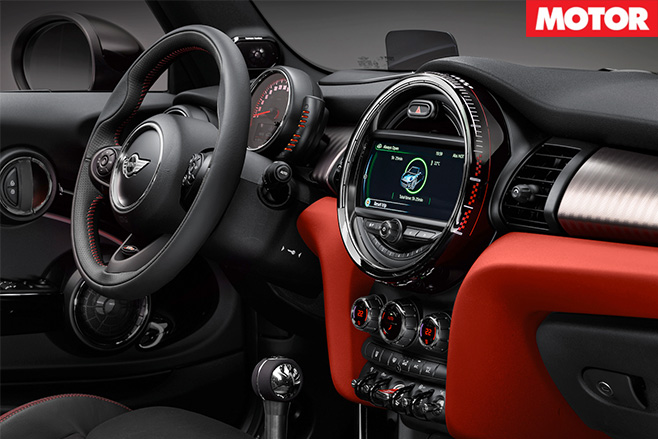
For toupee-wearers living on the edge, top speed is reduced only slightly from 246km/h to 242km/h.
The JCW models otherwise share specification including exterior dimensions, standard 17-inch alloy wheels (optional 18s), sports suspension (adaptive optional) and Brembo brakes.
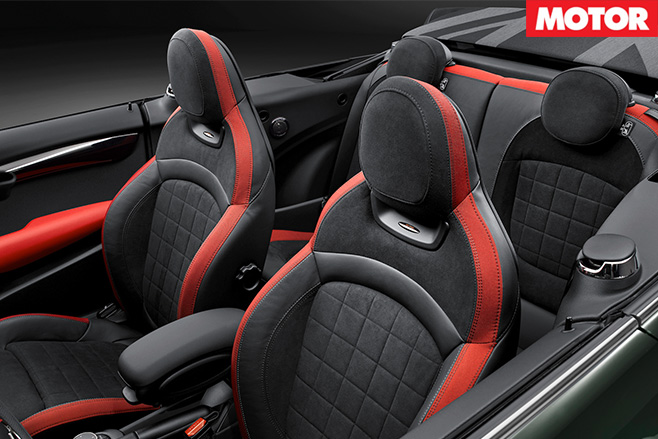
The latest JCW hatchback dropped $3000 in price compared with the previous generation, and the JCW Convertible is expected to likewise drop digits when it arrives locally in the second half of 2016.
Expect a $5K premium for the roofless version, making it a $52K-plus proposition and a smaller, faster, sportier alternative to Audi A3 and BMW 2 Series drop-tops.
So, what is it?
In the past, Mercedes-Benz’s C63 was Liam Neeson. It had a bit of older man about it and looked serious and a little bit reserved, but if you dared to take it on you’d find that it was, surprisingly, pretty goddamn hard. You certainly wouldn’t want to kidnap its daughter.
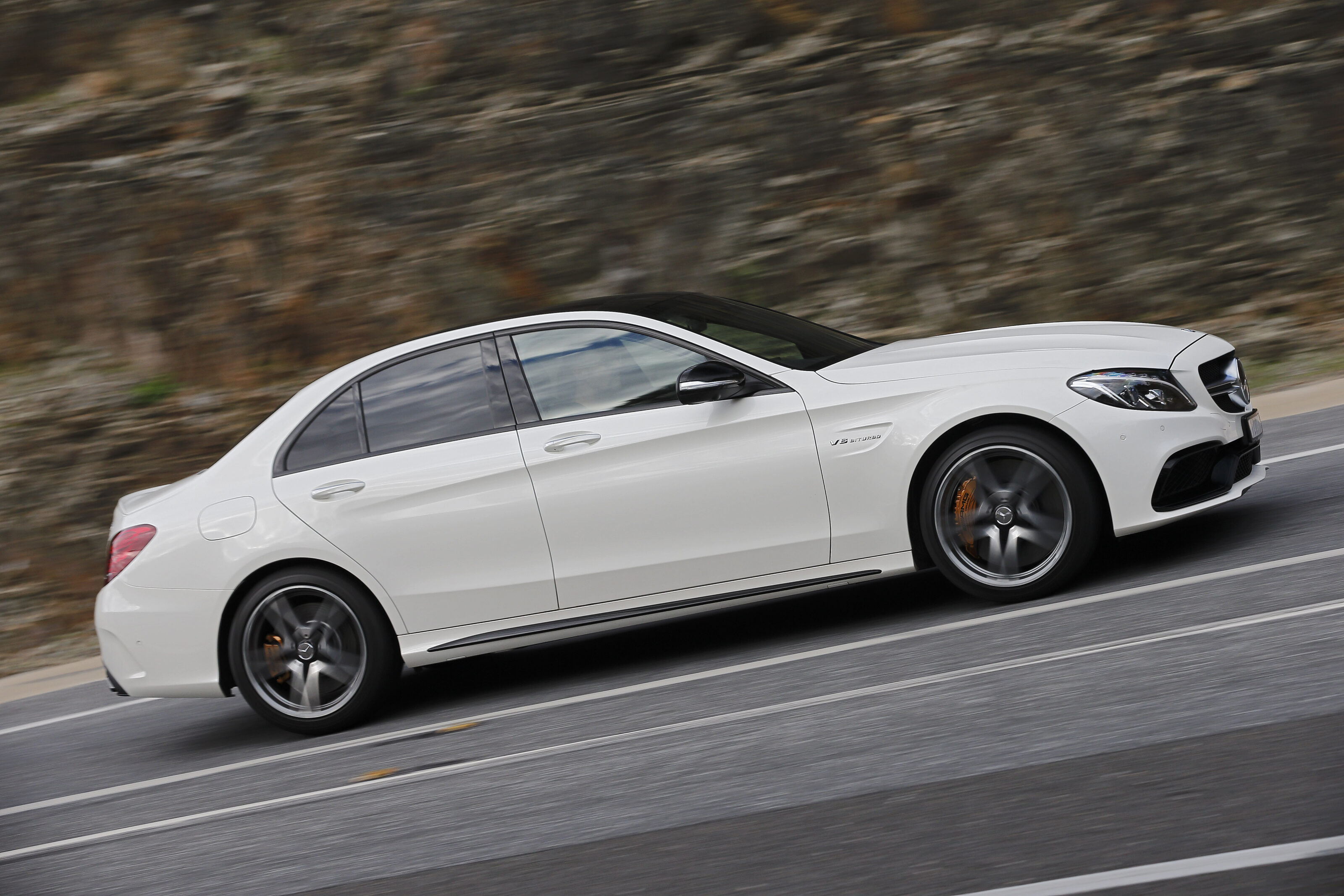
Now there’s a new one and, much like the latest version of its dear old enemy, BMW’s M3, any semblance of subtlety – its former Q car-ness – is gone, and someone appears to have been shovelling steroids into the fuel tank.
Why should I care?
The new C63 S – the range-topping, even harder-core version which is the only one we’ll be offered locally, because Aussie AMG buyers are all mental – is more like Chris Hemsworth. Or, considering it’s still aimed at the slightly older, slightly richer man, Arnold Schwarzenegger.
What’s new about it?
The styling is now more in your face, more pumped up, and undeniably sexier, with an F1-aping chin, go-faster strakes down the sides and a neat rear end with cool quad pipes.
That’s all fine, what’s it like to drive fast?
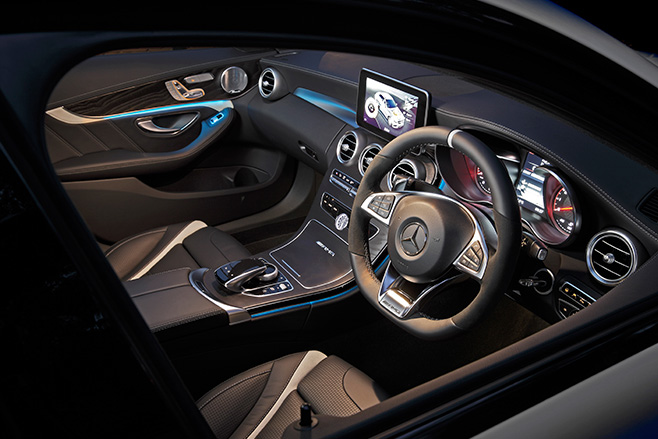
That sporting, track-day-special intent carries over to the interior as well, which gets the no-nonsense – and very little padding – sports seats from the awesome A45, as well as a racing-car steering wheel, giant, colour head-up display and splashings of carbon fibre everywhere.
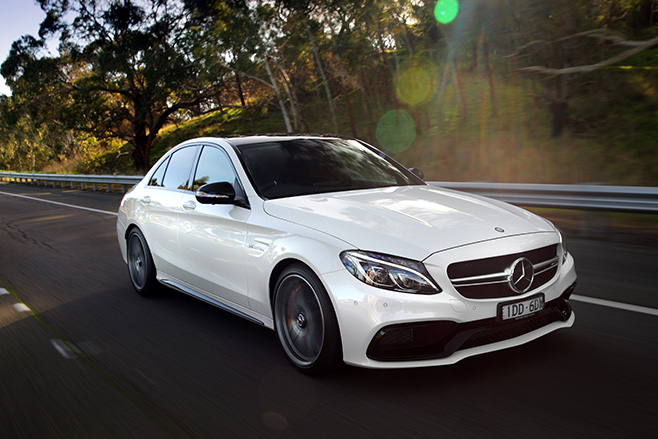
The intent, as Christian Enderle, AMG’s director of engine and power train development told us, was to create “a seriously tough C63” that reflects his brand’s mad passion for motorsport.
It was Herr Enderle’s department that had to cope with the move away from its predecessor’s vast and sonorous 6.3-litre naturally aspirated V8 to something smaller, turbocharged and more fuel efficient.
What they’ve created is an engine that’s theoretically too small to perform like a proper V8, at a mere 4.0-litres, yet produces 50kW and 25Nm more than the old swords-and-anvils version. That adds up to a HSV-humbling 375kW and a monstrous 700Nm of torque, all of which is yours for the plundering from just 1750rpm, resulting in a 0 to 100km/h time of just four seconds flat.
Those numbers look slightly intimidating on paper, but in practice they’re borderline frightening. Forget any fears about bottom-end lag, because the biturbo system the boffins have come up with spools up with all the sudden shoveiness of those gas-propulsion systems that hurl fighter jets off aircraft carriers.
The first few times you put your foot down it’s impossible not to laugh out loud – partly through nerves and partly joy – and then you realise there’s a little detente at the bottom of the throttle pedal travel, and if you stamp through that it goes even faster. And you cackle some more.
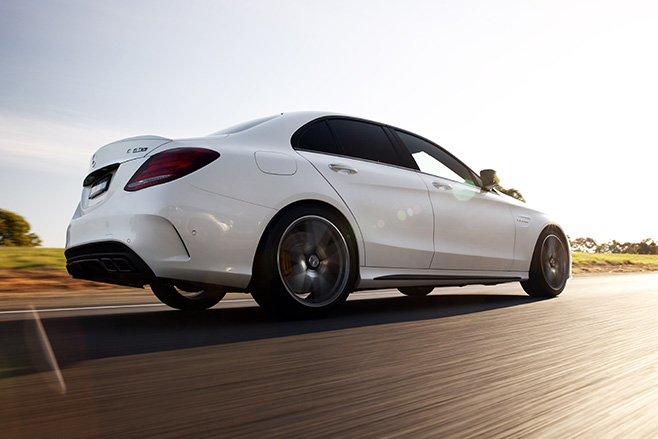
The sheer heady temptation of doing this, over and over again, is why no owner will ever get near the impressive claimed economy figure of 8.6 litres per 100km. Benz can describe it as the world’s most economical high-performance V8 in the world all it likes, but in the real world it’s still going to drink like Oliver Reed.
One big concern about the switch to turbocharging was that the C63 would lose its devilish, belly-wobbling growl, but it seems the engineers have, if anything, over compensated. The new S version comes with an exhaust button that opens up a series of flaps to increase the orchestral bellowing from behind you – so much so that we were convinced some of the noise must be fake and amplified through the car’s speakers, as is so often the case these days, but apparently it’s all real.
The percussive bangs and coughs it makes on the overrun are, if anything, almost too loud, and to hear a few of them going down the straight at the Autódromo Internacional do Algarve in Portugal where the car was launched was like being strafed by the Luftwaffe.
As you’d expect for such a hard-charging, focused car, the C63 S was superb on the track, smashing into the limiter at 250km/h down the straight and exploding – metaphorically and aurally – out of the corners.
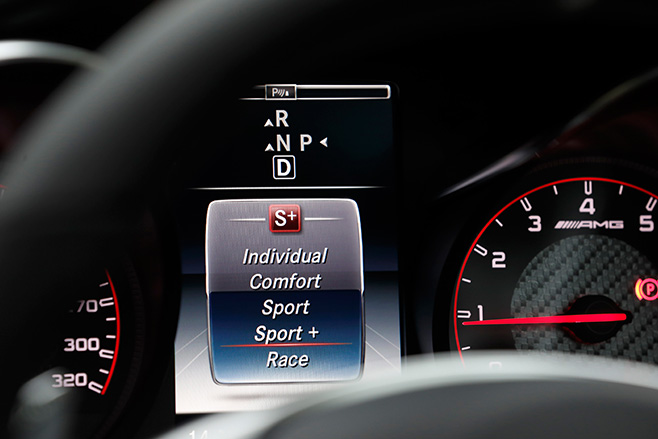
The steering is sharp and precise but could possibly do with some more weight, even in its Sport + or Race modes, and the chassis is superb. It feels, and sounds, more like a bespoke race car than a four-door sedan with ample room for your children in the back.
And driving home from the city?
Out on the road, however, this is perhaps the new C63’s one failing. Even in the Comfort setting, the car is so tied down and rides so firmly that we came to fear big bumps, and found ourselves getting alarmingly airborne on more than a few occasions.
It’s not the kind of ride that rearranges your teeth, not quite, but it’s certainly hard enough that you’re always aware that this is, primarily, a performance car. The dual nature this ultimate C -Class used to possess has been hit for six.
BMW’s M3, and M4, offer a significantly more compliant ride in their more cruisy suspension settings.
Anything bad about it?
Your spine might need rebuilding every few years, because the ride was firm on European roads and could be damn near brutal here, steering just a teensy bit too light in feedback terms.
How much would I have to pay? And is it worth it?
Mercedes-Benz Australia has made this extremely popular car even more attractive by rolling back the pricing to the same level as its ancestor, the C36, which was launched here 20 years ago. At $154,900, the sedan is $15,000 cheaper than the last C63 was at launch.
Australian AMG buyers have a particular love for the harder, faster, stronger approach – making us one of the skunkworks’ best markets, on a per capita basis – and they’re going to seriously love this seriously tough C63.
Would you take the C63 or BMW M3?
What BMW doesn’t offer you is a station wagon version, and the C63 S Estate is an absolutely fantastic load hauler, which loses very little against the sedan and would be my pick, even over an Audi RS6 Avant. It also seems like a comparative bargain at just $157,400.
Click here to find out more about the Mercedes-AMG C63 S.
Our Fiesta ST is currently on holiday in Broadmeadows. Not that anything broke, but a couple of things meant it had to have a little rest back at Ford’s HQ.
The first thing was the odometer clicked over 15,000km after my second week behind the wheel, so it needed a service.
The second thing was less predictable, but no less cause for a little lie-down. On my way to Lake Gairdner for an outback sojourn, I stopped for fuel at a little town in western Victoria called Wycheproof. This would have been fine had the bloke next to me, towing a big, enclosed trailer, taken a normal left out of the servo – and not a tight one.
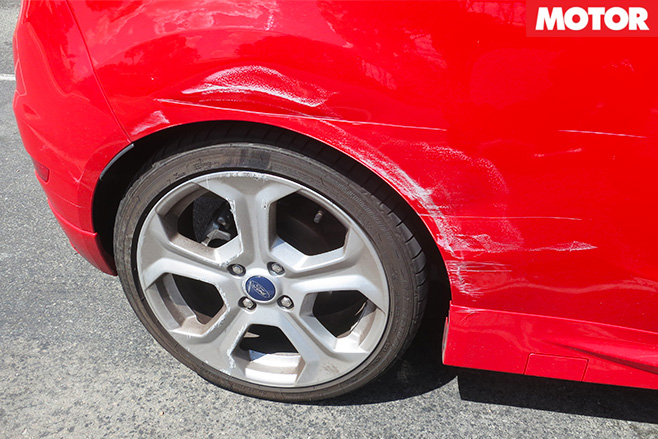
The back of the trailer pivoted off the tandem axles and the rear corner of the thing grabbed the Fiesta’s driver’s-side rear quarter. In the process, the sharp edge of the trailer also carved a few grooves into the ST’s alloy wheel.
Okay, the ride was pretty firm but if I had to drive a Fiesta ST through the outback every week, I wouldn’t be complaining. A big car might have more interior space (we were two-up with a full load of camping gear, food and drinks for a week), but to even suggest the ST was out of its depth in the wide, brown yonder is just wrong. And shifting back a gear or two to overtake is not necessary.
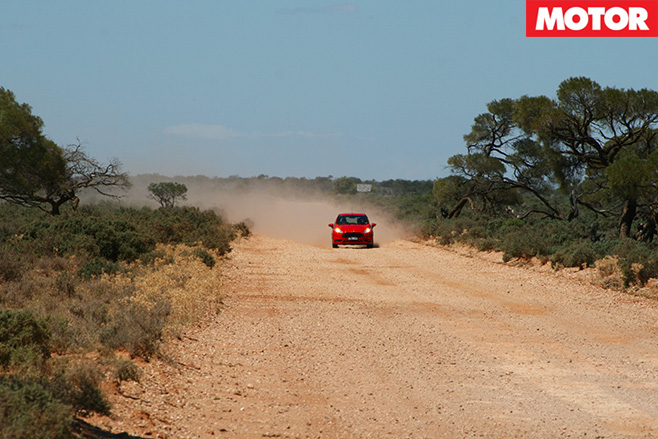
As it is, you’re constantly skipping one gear (straight from fourth to sixth is a popular dance move) which kind of negates the point of all them ratios. But, of course, fuel economy is the explanation for so many cogs.
Speaking of which, all up – over 3000km – the Fiesta averaged 7.1 litres per 100km, that included some slogging through bulldust and over corrugations on the fairly marginal 150km that leads from Iron Knob to Lake Gairdner itself.
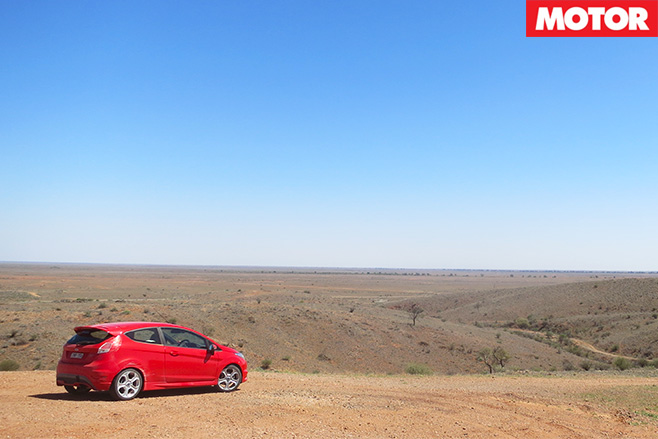
That said, it’s a digital bar-graph read-out, so I’d imagine there’s a fair bit of temp change needed to make it illuminate the next bar.
But we do need to talk about the air-con. Frankly, it’s not very good. Even turned up to 11, it just doesn’t create the gales of chilled air we’ve become accustomed to. Maybe it’d be fine in Europe (and no doubt it is) but in the Aussie outback, it’s outgunned by the climate.
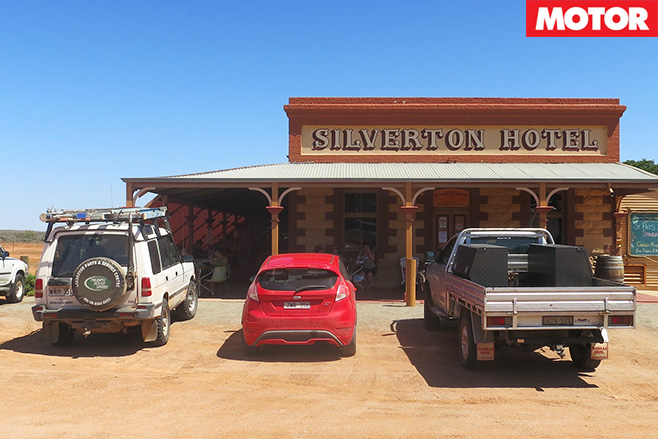
And wouldn’t you know it, the week after I return from the mulga and the rough-arse tracks that cross it, the loaner is a Ranger (loan Ranger, geddit?) complete with four-wheel-drive, long-travel suspension and a turbo-diesel.
Perfect for a run to Lake Gairdner. Typical.
Check out part 1 of the Ford Fiesta ST long term test.
What is it?
Currently BMW’s warmest compact hatch, and one built around a rare layout – front engine, rear drive. This brings dynamic benefits, which we’ll get to in a second, but does take a toll on packaging and cabin space as the transmission tunnel divides the rear into two compartments, limiting its usefulness as a rear three-seater.
What’s new about it?
The M135i had its most recent update in June 2015, with cosmetic changes in the form of new bumpers, grille, tail-lights and LED headlights. A classy Alcantara roof lining was made standard, and the navigation system was upgraded to the previously optional Pro version with 8.8in multimedia screen.
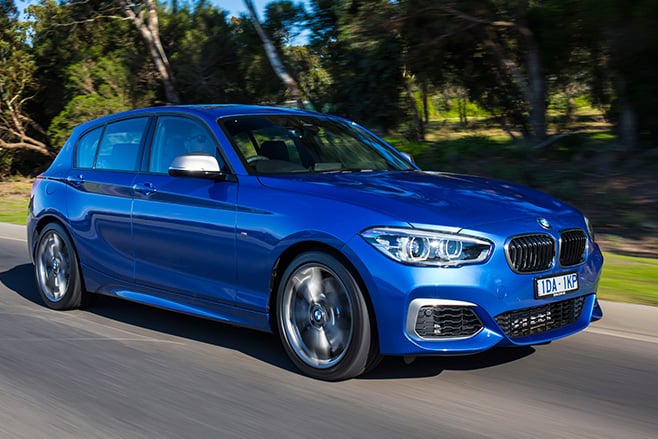
Extra connectivity and functionality were also added to the multimedia system, bringing functions like real-time traffic info and intelligent emergency call – this is when the car knows it’s been in an accident and can call for assistance. There were also tweaks to the engine management software that coaxed a token 5kW more from the turbocharged 3.0-litre six-cylinder, lifting the total to 240kW. Torque remained unchanged at 450Nm, and the 0-100km/h claim similarly stayed a rapid 4.9sec.
What’s it like to drive fast?
Extracting serious straight-line speed is easy – the boosted engine delivers plenty of torque from low revs, so it digs in and bolts from anything beyond jogging pace. The eight-speed automatic serves up gears as quickly as the engine can consume them, and there’s a sweet layer of smoothness and mechanical polish that comes from a six-cylinder engine with its pots in a line rather than a V. Keep it pinned and it revs hard for a turbo engine; that 4.9sec 0-100km/h claim feels entirely credible.
Few drivers will have a bad word to say about the way the M135i gets through corners, as it has plenty of grip from its 19-inch rubber and resolute body control, while adhering to front-engine/rear-drive layout has advantages in terms of balance and feedback.
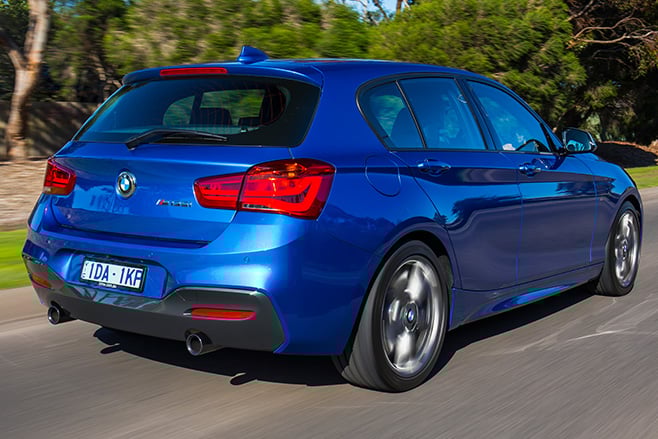
Only really extreme cornering on the road – more likely at a track day – will reveal a weakness in the BMW’s dynamic make-up. It doesn’t come standard with a clever differential to send torque to the wheel with the most grip (known as a limited-slip diff or LSD), so the unloaded inside wheel is prone to spinning, which detracts from the handling balance in the hands of a skilled driver. Only by paying your BMW dealer $4400 – plus installation! – can owners upgrade to the LSD from the M-Performance accessory catalogue.
Brakes are upgraded over lesser models and withstand hard road driving but again, a track day will make them wilt.
What about the commute home?
No issues here, at least in terms of ride comfort, cabin accommodation and the engine and transmission’s ability to mooch along in traffic.
The seats are excellent, with adjustable under-thigh support that makes long hauls a breeze. The fat-rimmed sports steering wheel can make you feel as if you’re grasping a kransky but it does point the nose of the car quickly and faithfully.

What’s lacking inside is any real sense of occasion or ‘premiumness’. The dash and door trims are a bit dour and it all feels a bit dated compared not only to rivals but also some more recently refreshed BMWs. You also miss out on great audio unless you stump up for the premium system. But sure, the ergonomic fundamentals are sound, road and wind noise are well supressed, and there are no transmission lurches or mechanical issues to get on your nerves. It’s just that you expect a bit more aesthetic attention from a brand like a BMW, and from a car at this price point.
What’s it cost? And is it worth the coin?
Given the facelift and increased equipment came with a small price drop – $62,900 from $63,800 – you could mount a case that the M135i is trying to be good value. But really, for that money we’d expect a higher level of attention to interior details such as the unlined door bins – even a base Golf provides lined bins, and better finishes generally. In terms of cabin presentation, Audi’s S3 trounces it, even if that car’s 210kW and 380Nm outputs are appreciably down on the BMW.
Click here to find out more about the BMW M135i.
It’s the “drive on two wheels” bit that stopped Skipper Campbell’s request in its tracks.
“Great,” I said, lying. Great, perhaps, that my bucket list just got carjacked with unforeseen spice and adventure. But also ‘great’ dripped in the sort of sarcasm best reserved for editorial plots laced with the worst of comedic and tragic endings.
Not to worry, I thought. Two-wheeled frivolity is showbiz. It’s Hollywood. I’ve watched Discovery Channel. The OH&S nannies will ensure gun instruction, want-for-nothing big-dollar equipment and, of course, some suitably exotic Tom Cruise-approved location.
A week later, I’m met by the Toyo Tires Isuzu Team D-Max Precision Driving Team, complete with the full cavalcade that, in various guises past, has toured the length and breadth of Australia nearly constantly for almost half a century. We are on the infield of Fairfield Showground in Western Sydney. Well, two out of three ain’t bad, right Meatloaf?
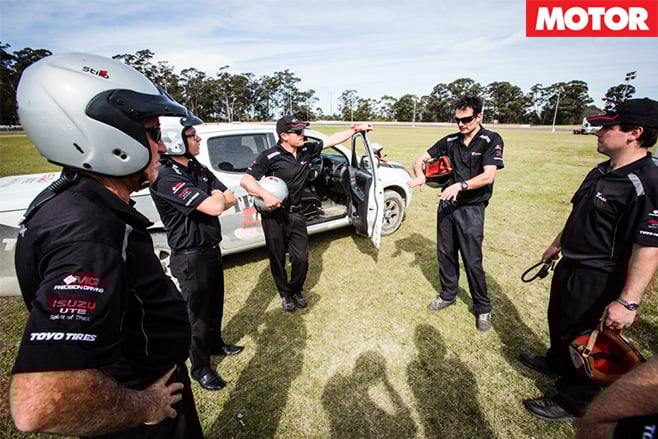
I’m also greeted by the D-Max quartet’s other two drivers: rally and motorkhana exponent Michael Long, and Dave Shannon, arguably Oz’s most seasoned and experienced stunt driver who is to two-wheeled driving what Yoda is to Jedi.
“There’s your car over there,” gestures team principal Wayne Boatright beyond Boston’s freshly detailed Isuzu twin-cab. All I see is an open field of green beyond a pile of rubbish. This must be some sort of rookie test, I figure. But before I’m pranked with “fetching a left-handed screwdriver” from the team rig, I wander over for a closer look.
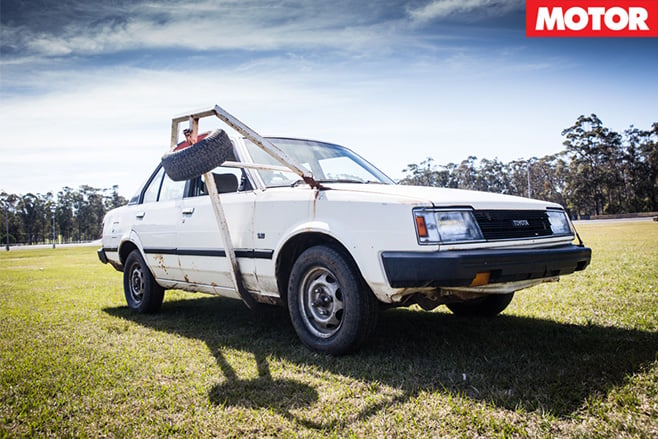
“Shit,” I say, not even attempting to suspend disbelief with some courteous ‘great’. I imagine this KE70 Corolla, of early ’80s vintage, once lived a charmed and family-doted life, perhaps offering some Nanna reliable bowling club conveyance in the twilight of its road-worthy years.
It looks to have recently been dredged from a paddock, sitting before me in a condition best described as ‘classic’, if indeed the term befits a time it was dragged by its rusty dignity across the Nullarbor a few dozen times.
I nickname the ’Rolla ‘Noah’, in homage of the ark, because I suspect it has two of every living creature currently living inside it. “Well, off you go,” Boatright commands, handing me a team shirt – a token safety blanket? – and motioning towards Noah. And in the best of fight or flight decisions, I instead dive into the safe haven that is the passenger seat of Boston’s D-Max, tail firmly between my legs.
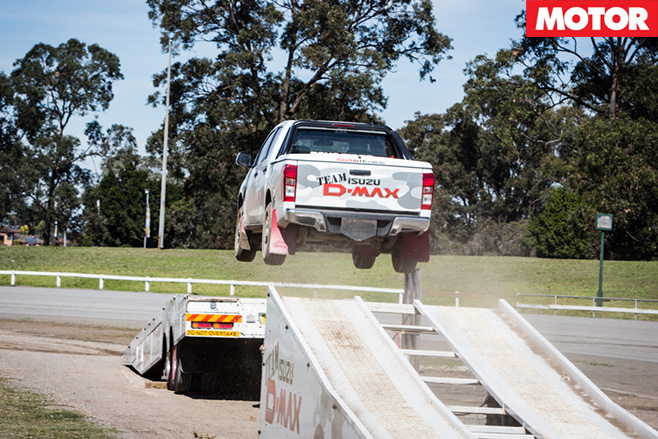
Even straightforward moves look far more challenging in-car than they do from the sidelines. And, of course, Boz has that otherworldly knack bred into pro drivers where the most challenging and complex techniques are made to appear off-handed, easy and as casual as you like.
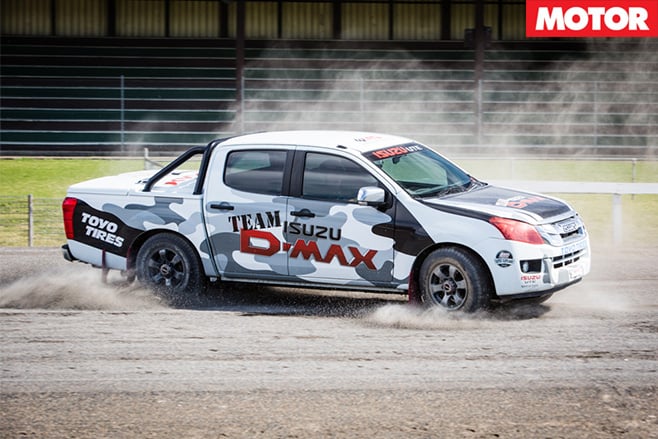
The actual movements? Turn in with the right hand, handbrake pinch with the left hand, dip the clutch (left foot), lock all wheels with the brake pedal (right foot) and engage reverse in the mid-slide, then release the clutch and countersteer once the 180 is complete. All perfectly synchronised in the time it takes to say “Holy crap!”
Next we swap seats, Boz sets up a basic slalom and I get to cut some rooster tails in his D-Max. They’re quite standard in spec beside a locker rear diff, a roll-cage, safety harnesses, a rally-style ‘momentary’ hydraulic handbrake and a set of meaty Toyo Open Country H/T rubber.
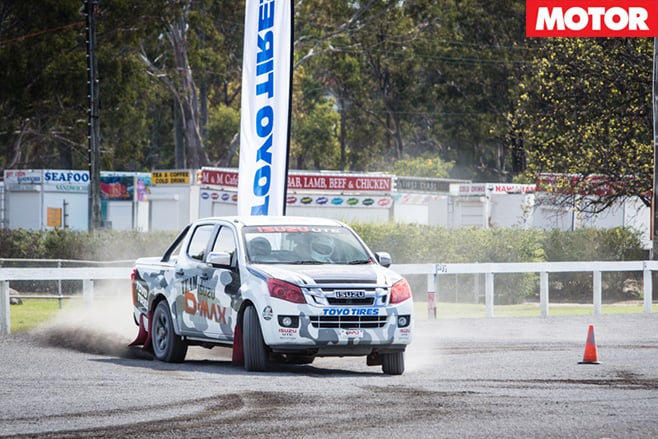
Still gun-shy to Noah, I weasel a shotgun seat in a full show rehearsal. I ask Boz if the team practises often. He says the last time they had a day of practice was two years ago!
In short, practice takes place in show. And conditions – weather, surface, available real estate, nominated show duration, randomly positioned obstacles – vary dramatically from show-to-show and from venue-to-venue, making the team’s polished precision all the more remarkable.
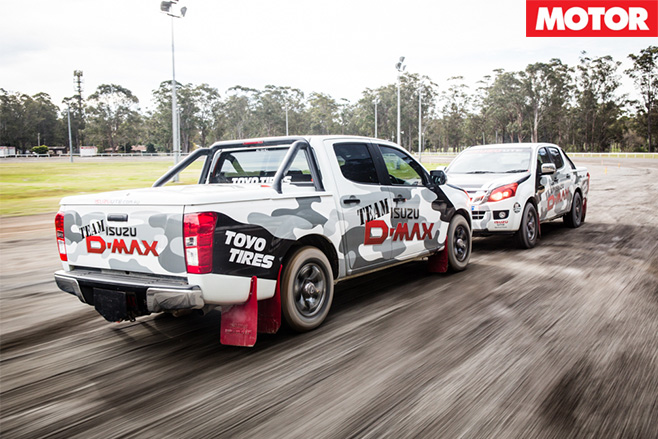
“Jack’s the conductor,” Boz yells across at me. “He does most of the show one-handed, the other hand on the radio.”
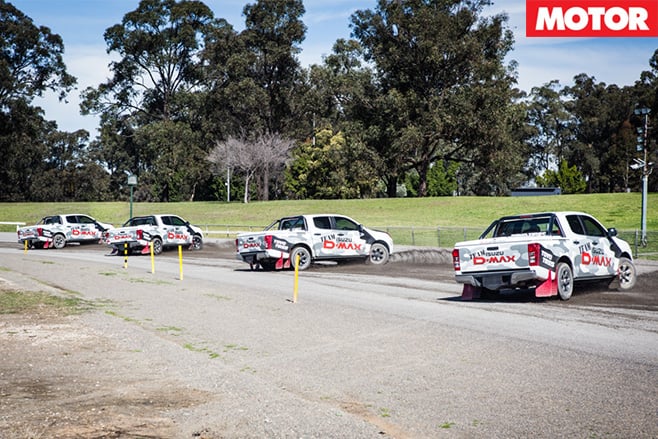
I sit silently, getting shaken around like a Bond martini, as Jack blasts instructions to the crew via the intercom. “Plus two and plus four spin”, “presenting”, “breakaway”, “propping”, “crossover”, “turn on” and “zipper”.
“Well, off you go,” commands Boatright. Again. I doubt his patience will endure a third request. Checking for redbacks, I climb into Noah, its cabin not so much gutted but obliterated. At least the steering wheel’s centred…
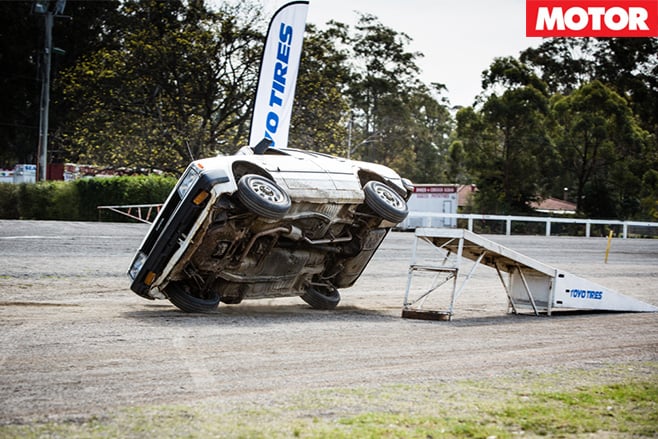
“Turn left a bit as you leave the ramp,” I’m instructed. So I try, CRASH, again and, CRASH, once more the world goes, CRASH, light and airy once, CRASH, the car lifts on its right-hand, CRASH, tyres. Over and, CRASH, over again.
Here’s the situation. In any performance driving scenario you adjust your inputs – especially steering – in response to the forces on your body. Attempting to balance a car on two wheels, there are no forces. You balance the car on sight alone. The whole experience is numb. Like playing a video game. All except the CRASH bit.
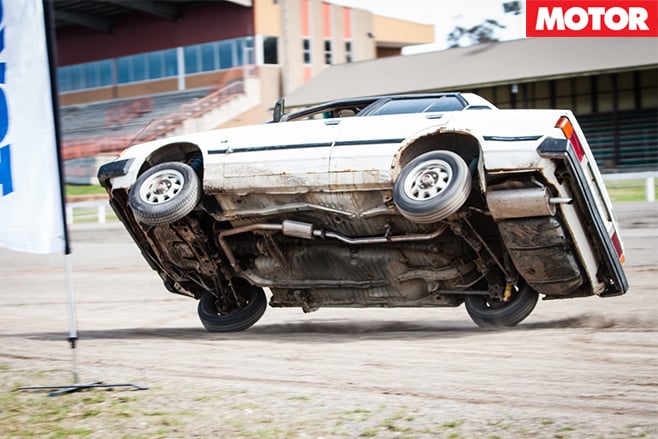
Sure enough, on the eighth, 12th or 27th attempt – it’s all a bit of blur, frankly – I prop Noah up nicely on the balance point and head off towards something solid and immovable.
Then, like a rookie, I plant my right foot. In a vain attempt to milk the two-wheel ride, I perch Noah neatly on the training wheel strapped to the right-side of its bodywork. I’m stuck.
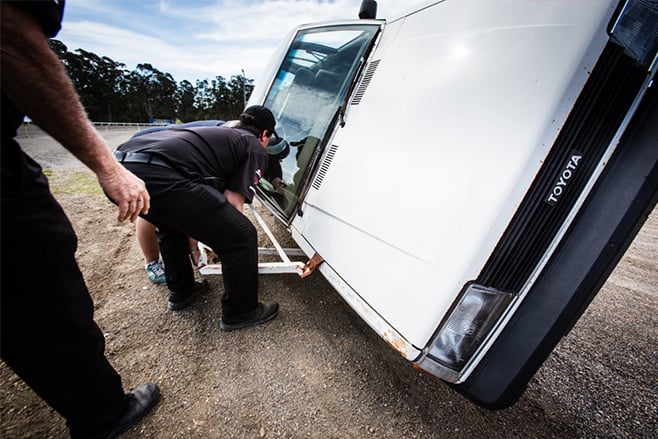
CRASH! I lose count of how many, CRASH, times I attempt the, CRASH, stunt but by the, CRASH, time my body starts getting fatigued from all the CRASH-ing the engine is beginning to stall constantly and, CRASH, the steering wheel is 90 degrees off-centre. With a couple of clumsy though lengthy successful runs in the bag, I call it a day.
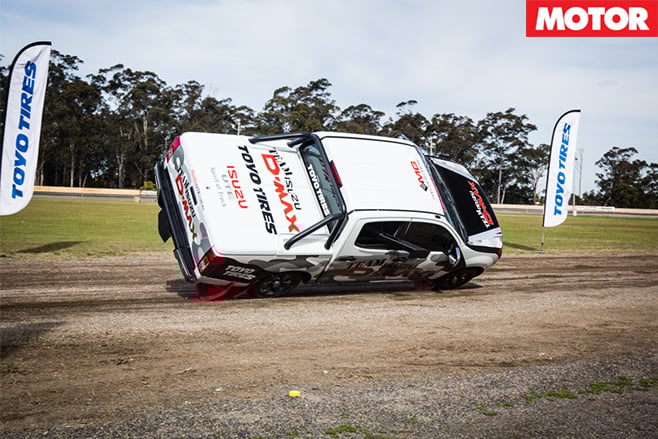
He hits the kicker ramp harder and faster and the floating sensation from the passenger seat – the most elevated seat – is glorious. Zen-like even. Even the landing, THUMP, from sitting on the high side of the cabin feels relatively gentle and composed.
“How was it?” Skipper Dylan Campbell would later ask. “Really, really… great.” I’d respond.
Grizzled veterans met two fresher faces on this year’s panel of eight.
Glenn Butler
John Carey
Nathan Ponchard
Byron Mathioudakis
Sally Dominguez
Toby Hagon
Damion Smy
Alex Inwood
SO, YOU’VE assessed the five People’s Choice groups for Car of the Year and chosen the best from each. Now it’s time to vote in the poll below for the overall winner.
Some of the group contests were close; in others a clear favourite emerged.
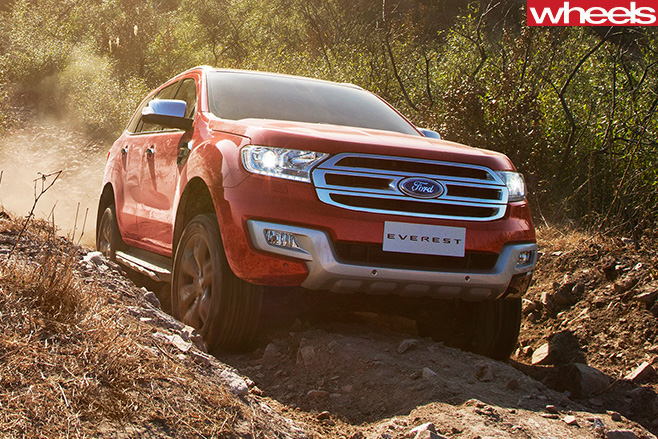
The Ford Everest won Group 1, with just 32 percent of the vote.
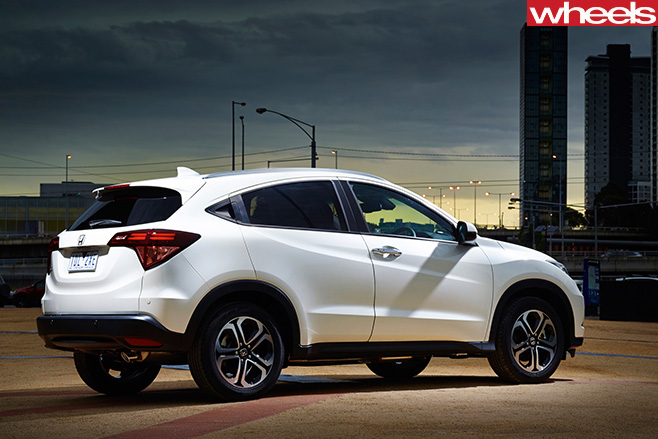
The Honda HR-V led at the line in Group 2 with 43 per cent – edging out the Mazda CX-3 on 37 percent.
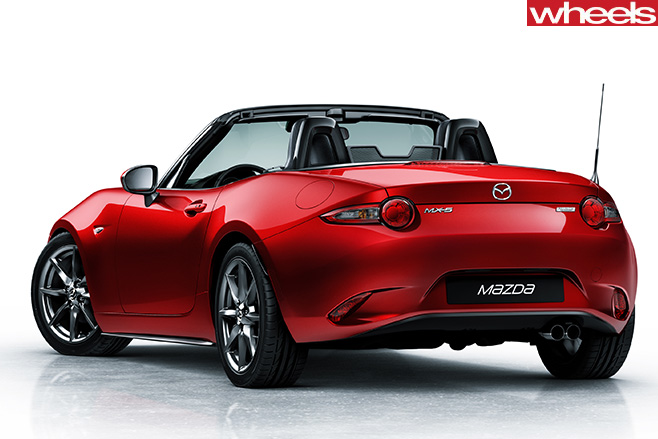
It was the Mazda MX-5 and then lots of daylight in Group 3.
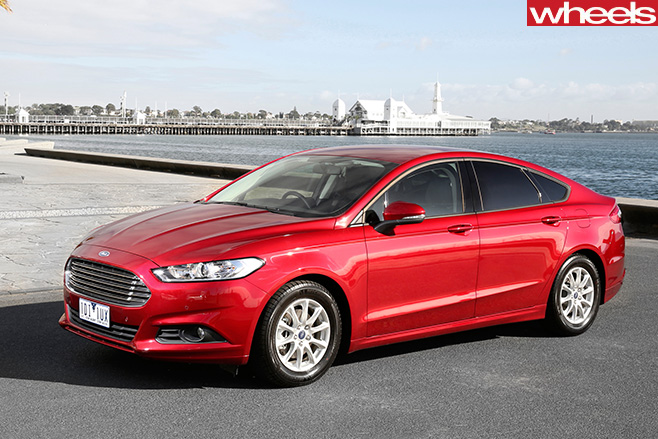
The Ford Mondeo became the second Ford in the final with a narrow victory in Group 4, defeating the Kia Optima 43 percent to 39.
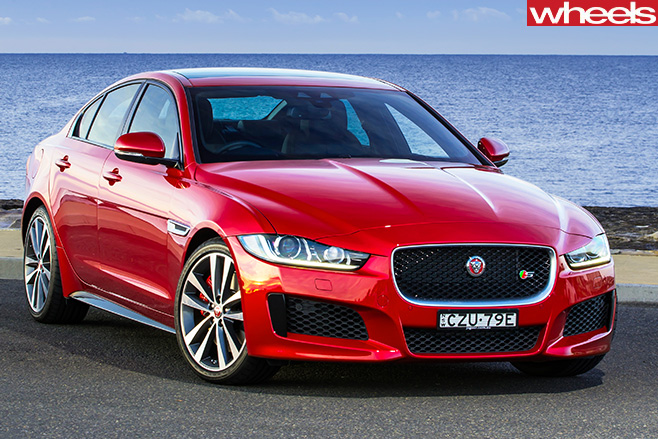
And the Jaguar XE won Group 5 comfortably with 50 percent, more than doubling the support for its nearest rival, the Mercedes-Benz S-Class Coupe.
That’s the line-up, then, for the final poll. Cast your vote for the overall winner!
Remember, this is not a beauty contest. Wheels judges the contestants under five strict criteria, refined over half a century:
Function – how well a car does what it is intended to do. Efficiency – in all aspects. Use of resources in producing the car and in running it. Value – both against its rivals and against the wider new car market. Technology – does it offer a tangible advantage over its rivals? Safety – We’re talking passive and active.
If you need more help, scroll below the poll and you will find the full citation on each group winner from our introduction to the 25 contenders.
Thank you for voting, the poll has now closed. Stay tuned as we announce the winner.

NO AUSTRALIAN-MADE vehicle will greet the judges at COTY. The Australian-developed, Thailand-built Ford Everest is the closest this year’s field comes, and gives us a good insight to Australia’s future as a local engineering and design hub. Separate chassis vehicles seldom do well at COTY, partly because their immense off-road skills come at a cost to on-road competence and dynamics – two attributes Wheels prizes highly. But the Everest’s unquestionable competence as a rugged seven-seat people-mover adds a very COTY-friendly string to its big bow.
Honda HR-V
HONDA has a hit on its hands with the HR-V. The pretty, compact SUV combines astounding rear-seat versatility with the Civic’s punchy atmo 1.8, at a price that makes many rivals seem greedy. Can this likeable city-slicking front-drive crossover make it seven wins for the re-energised Japanese brand?
Mazda MX-5
ALREADY a two-time COTY winner – 1989’s original NA and 2005’s NC – the MX-5 is a chance to make it an award treble. Simply put, it is the answer to all our wishes and desires, and then some. Not only is the entry price now almost $15K cheaper, the front-engine, rear-drive, two-seat roadster is lighter, sharper, roomier and even more fun to drive than ever.
Ford Mondeo
THE EVEREST isn’t Ford’s only play for COTY glory this year. The Mondeo mid-sizer will soon step into the legendary Falcon’s shoes, facing a daunting challenge in winning over Ford diehards, but even a brief stint behind the wheel should convince most that the European-developed Mondeo is a worthy replacement.
Jaguar XE
AFTER THE largely forgotten X-Type of 15 years ago, Jaguar’s return to C-Class territory could have been another embarrassment. But the hunky XE grows real claws at last, smashing preconceptions about the British brand more effectively than any model since the 1968 XJ, and redefining luxury compact sports-sedan parameters with breathtaking confidence. If you love driving, this Leaping Cat will not only make you take the long way home, it will become your home.
PORSCHE CAYENNE TURBO Price: $232,900
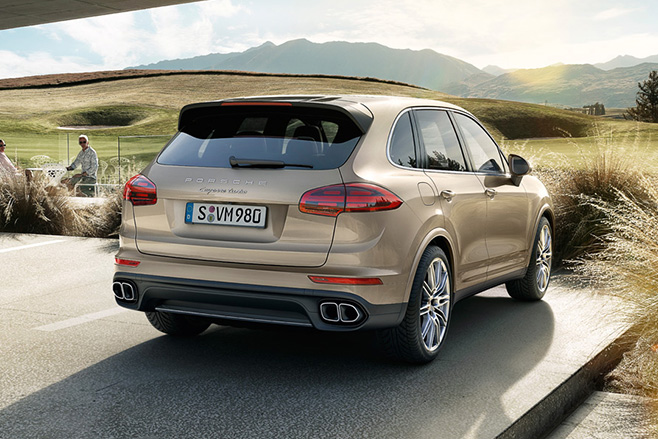
Porsche purists despise it, but there’s no doubt Stuttgart’s biggest, baddest SUV is brutally quick. Slams 0-100km/h in 4.4 seconds thanks to its twin-turbo V8 churning out 382kW/750Nm.
BMW X5 M Price: $185,510
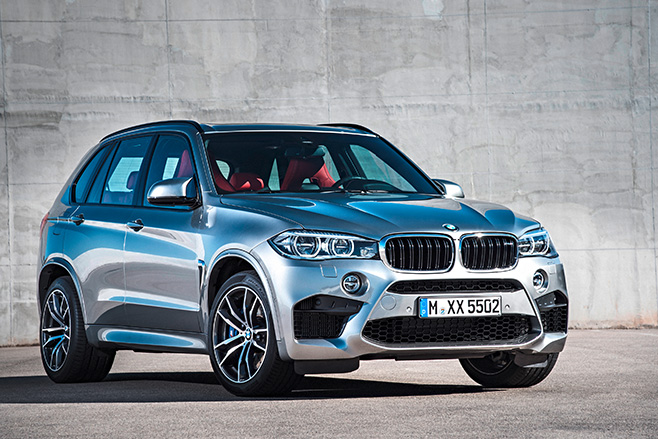
The second–most powerful and equal fastest SUV here, with its 4.4-litre twin-turbo V8 punching out 423kW/750Nm. That means 0-100km/h in a Porsche-beating 4.2sec.
MERCEDES-BENZ GLE63 S AMG Price: $189,900
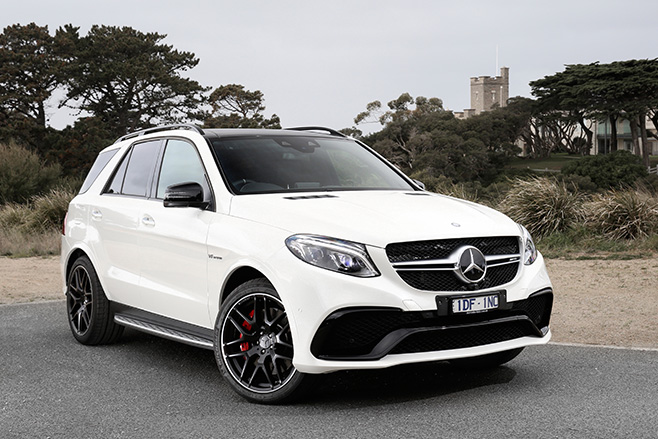
It’s the heaviest of the group, but the GLE is equal fastest to 100km/h, with its 5.5-litre 430kW/760Nm twin-turbo V8 making the sprint in 4.2sec.
JEEP GRAND CHEROKEE SRT8 Price: $82,000
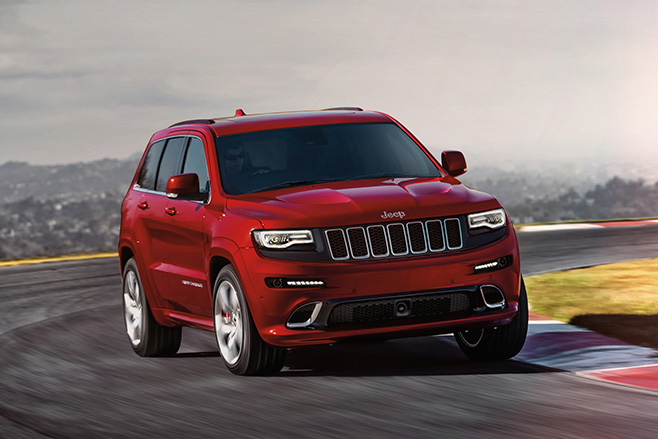
Talk about bang for your buck – for a third of the Porsche’s price you get a naturally aspirated 6.4-litre 344kW/624Nm V8 and a 0-100km/h sprint time of 4.8sec.
AUDI SQ5 Price: $91,700
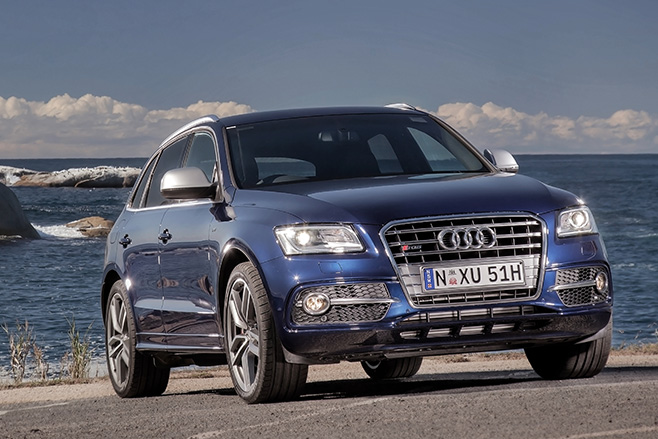
It’s a small fry in a world of big hitters, but Audi’s mid-size 3.0-litre twin-turbo diesel V6 can still hustle to 100km/h in 5.1sec.
BY NOW, you may have seen Max Verstappen tearing up an Austrian ski slope in a Red Bull Formula 1 car.
The F1 prodigy drifts and rips donuts in an F1 car shod with snow chains. If you haven’t seen it, hit play on the video above. It’s mesmerising.

Sorry Max, your video is cool. Ricciardo’s is just cooler.
Since the birth of civilisation ghosts have scared the religious witless.
But for the spiritually cynical who think that, when you cark it, you have a big nap and get eaten by worms, ghosts are less terrifying than nothing on the TV other than The Bachelor.
Rolls-Royce names its cars after the ghosts and ghouls of people’s nightmares but it’s never really had a car that could properly frighten you. That is, of course, until now – until Wraith.
While there’s not much scary about a Ghost with two doors, a wider rear track and shorter wheelbase, there’s a few startling stats hidden in the spec sheet. Rolls has taken the Ghost’s 6.6-litre, twin-turbo V12 – related to that in the BMW 760Li – and given it a few extra ’erbs. Power is up from 420kW to 465 and there’s 800Nm to feast upon from (as we’re starting to grow accustomed to in this new turbo era) just 1800rpm.
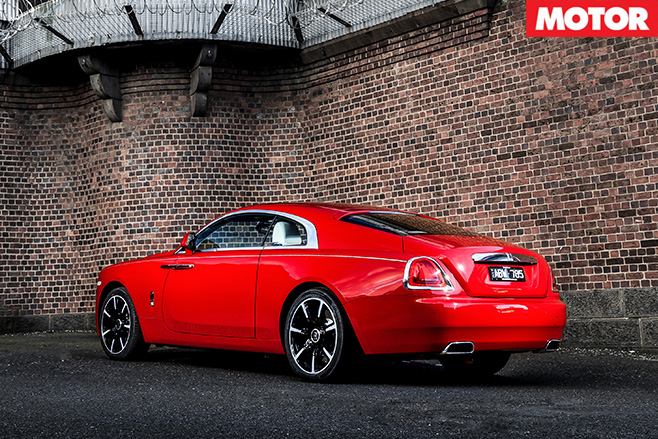
More rationally-minded readers might argue, if you want something plush and fast with two doors, why not dabble in, for example’s sake, a bit of Mercedes S63 Coupe? It has 430kW and 900Nm and will nail 100km/h in 4.1 seconds. That beats the Wraith’s 4.6sec, and you’ll pocket around $250,000 to boot. You could buy a base 911 with that, or one of Clive Palmer’s cufflinks.
And if you must have a twin-turbo V12, the S65 Coupe is coming with 463kW, 1000Nm and still a $100K saving or thereabouts.

Once seated, press a button and the door swings shut, concealing you in a tomb-quiet, airy pit of buttery leathers and glossy woodgrains. The seats are firm and cosseting but cushion your backside so tenderly it’s like being wedged in a cloud. And then you look up.
Stitched into the headlining are 1340 fibre-optic LEDs. And they’re not placed at some peasant’s whim: Rolls has reproduced the exact night sky as seen above its Goodwood factory just past midnight on January 1, 2003 – the day the first car rolled out of this factory. Not kidding. It takes someone up to 10 hours to stitch it all together.

Of course, if the fact the Wraith comes in 45,000 colours wasn’t impressive enough, there’s one man who does the pinstriping on every Rolls using paint brushes made from the hair of squirrels. Mark Court has painted the “coach lines” on more than 2000 Rollers and is training his son to succeed him. Each pinstripe takes three hours to paint which means this red car here has spent 12 hours in his company.
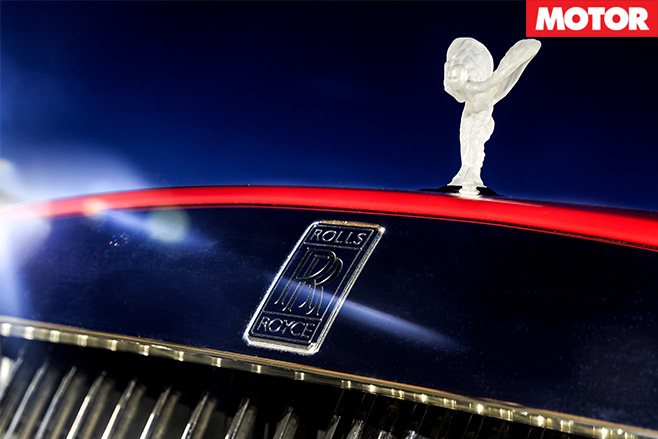
But there’s more. On the Wraith the Spirit of Ecstasy is sat further forward than other Rollers and at a unique-for-Wraith angle of attack. Then there are the Rolls-Royce emblems in the centre of the wheels which stay level and don’t rotate.
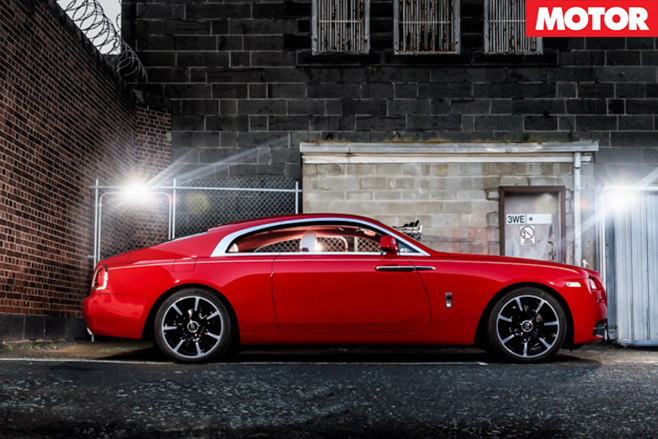
There’s a head-up display, night vision, full 360-degree parking camera, radar cruise control and a sound system that’ll give you more than tinnitus. It doesn’t feel like it’s all been nicked directly from a 5-Series, either – it’s familiar technology dipped in Rolls luxury.
From the driver’s seat, the first thing you notice is the Wraith’s sheer size. You almost feel like you need binoculars to see the Spirit of Ecstasy poking up at the end of the bonnet. Looking through the rear vision mirror you need to squint to see where the car ends. The captain of the Queen Mary 2 would feel at home in the Wraith’s driver’s seat. She’s big.

The ride, meanwhile, is sublime. For a car with 40-profile tyres on 21-inch wheels, the way the Wraith rides like it’s suspended on a cushion of goose feathers is impressive. It compresses into long undulations like the shocks are each a metre long and filled with caramel. High-tempo bumps are nibbled away.
It’s just as well the government is unaware cars can ride like the Wraith, lest it cancels all funding for road maintenance and forces all new cars to be fitted with Rolls-Royce air suspension.
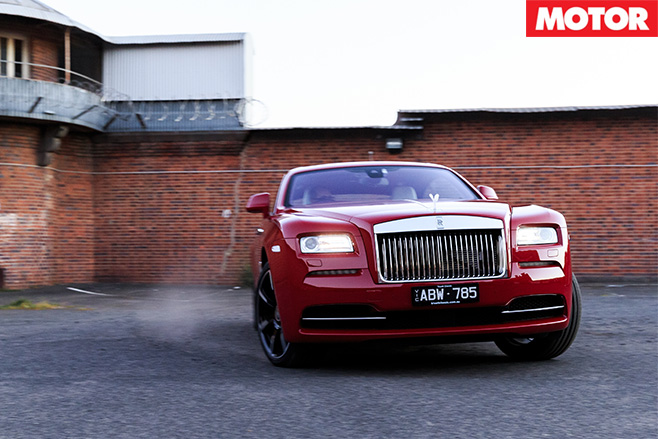
With 465kW it doesn’t punch you in the back like a car with launch control. Rather, it’s like getting hit in the boot by a ghostly tsunami, or like the way thrust builds in a jet on take-off. During full throttle the Wraith squats over its rear axle so hard that, at night, the self-levelling headlights have to tilt down so you can see where you’re going.
But the Wraith’s mid-range punch is its party trick. At 80km/h, full throttle is like lighting a pair of afterburners. Through the seamless eight-speed auto (which borrows its personality from BMW, surprise surprise) the thrust is relentless. By the time you hit 110km/h it’s only just starting to boogie. It makes you sad there are no autobahns in Oz.
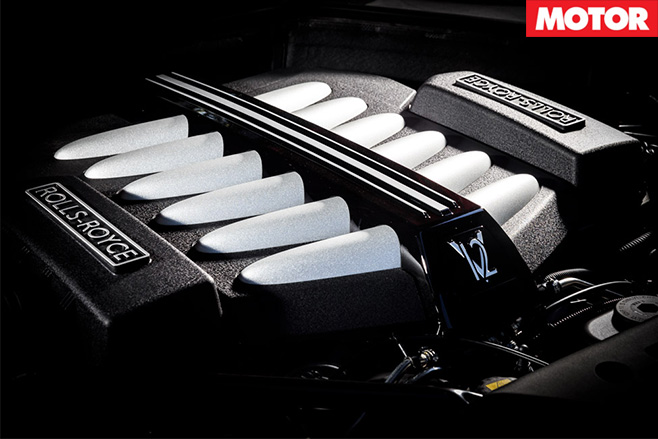
Having wafted your way to your favourite road (invariably a bumpy back road in the middle of nowhere) you notice the Wraith has no sport button, which means those hovercraft-spec air suspension must handle 2.4 tonnes of cornering car all on its own.
There aren’t any steering wheel gear paddles, either, and just as well, because there isn’t a tacho. Instead, the Wraith comes with something called a Satellite Aided Transmission, which uses the navigation system to read the corner ahead and predict which gear will be most appropriate and hold a gear if it thinks it’ll need it for the next corner.
Although the suspension is unfussed by the bumpiest backroad, on the long, fast stuff the Wraith is immensely satisfying once you find your rhythm of braking hard, settling the car, turning gently, allowing the suspension to load, then getting back into the throttle and blasting to the next corner. You get used to the dive, roll and squat and it’s all easily manageable with nice, slow steering and pedal inputs.
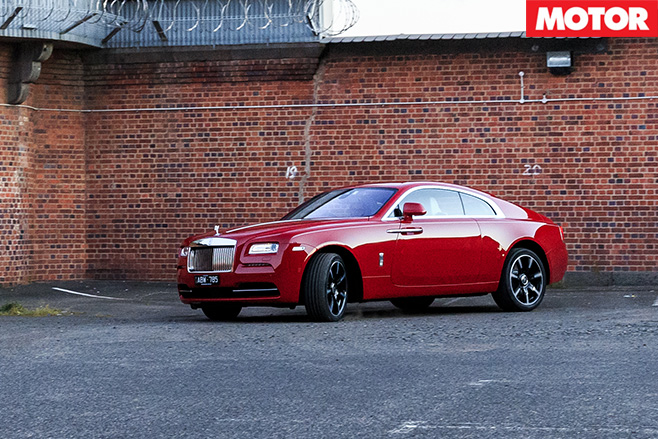
That said, we can’t help but feel a pair of steering wheel paddles and a classy tacho in the head-up display could turn the Wraith from swift and satisfying to laugh-out-loud fun. But, then again, going fast is a capability of the Wraith – not its point.
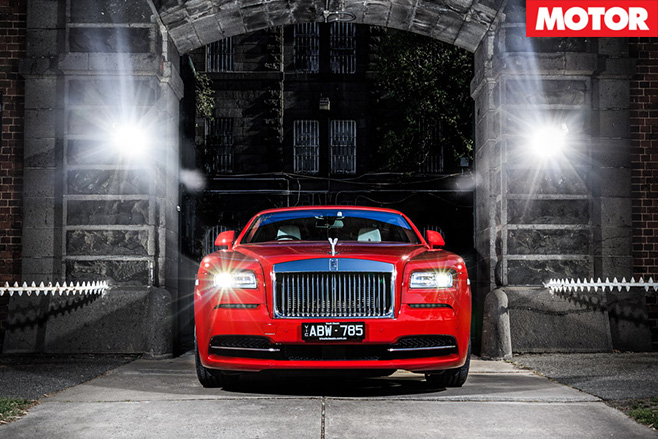
It’s one of those cars you’ll remember in 50 years’ time. While its performance won’t frighten you speechless, you try going full throttle and counting to 10, then telling us there isn’t a ghost that gives you the willies.
ROLLS-ROYCE WRAITH
| Body | u00a0 | 2-door, 4-seat coupe |
| Drive | u00a0 | rear-wheel |
| Engine | u00a0 | 6592cc V12, DOHC, 48v, twin-turbo |
| Bore/stroke | u00a0 | 89.0 x 88.3mm |
| Compression | u00a0 | 10.0:1 |
| Power | u00a0 | 465kW @ 5600rpm |
| Torque | u00a0 | 800Nm @ 1500rpm |
| Power/weight | u00a0 | 197kW/tonne |
| 0-100km/h | u00a0 | 4.6sec (claimed) |
| Top Speed | u00a0 | 250km/h (limited) |
| Consumption | u00a0 | 14.0L/100km (claimed) |
| CO2 Emissions | u00a0 | 327g/km (claimed) |
| Transmission | u00a0 | 8-speed auto |
| Weight | u00a0 | 2360kg |
| Suspension | u00a0 | A-arms, air dampers, anti-roll bar (f); multi-links, air dampers, anti-roll bar (r)u00a0 |
| L/W/H | u00a0 | 5269/1947/1507mm |
| Wheelbase | u00a0 | 3112mm |
| Tracks | u00a0 | 1622/1668mm (f/r) |
| Steering | u00a0 | hydraulically-assisted rack-and-pinion |
| Brakes | u00a0 | 374mm ventilated discs, fixed calipers (f); 370mm ventilated discs, fixed calipers (r)u00a0 |
| Wheels | u00a0 | 21 x 8.5-inch (f); 21 x 9.5-inch (r) |
| Tyres | u00a0 | 255/40 R21 102Y (f); 285/35 R21 105Y (r)u00a0Continental ContiSportContact |
| Price | u00a0 | $645,000 |
| Price as tested | u00a0 | $753,423* *Twin coach line silver; 360-degree camera system; illuminated Spirit of Ecstasy; adaptive headlights; starlight headliner; seat piping in Consort Red; SoE inlays to monitor lid; front ventilated seats; R-R monogram to all headrests in Consort Red; comfort entryu00a0 |
| Positives | u00a0 | Unparalleled luxury; hairy-chested V12 power; unbelievable ride |
| Negatives | u00a0 | Driveru2019s Rolls Royce still far off being a u2018driveru2019s caru2019u00a0 |
