
You might have heard that the V8 in the new Ford Mustang GT350 and GT350R features a flat-plane crankshaft.
Some of you will nod sagely, others will silently mouth WTF. The concept is actually not too bizarre, but the technology does have a big effect on how engines feel and sound. So let’s start with the basics.
Almost every production V8 engine ever made has a cross-plane crankshaft. That is, if you looked along the length of the crank, you’d see that the big-end journals (where the bottom of the conrod attaches to the crank) are offset at 90 degrees to each other. There are four of them and they visually form a cross shape (hence, cross-plane, depending who you talk to).
With this set-up, you get each bank of four cylinders balancing each other, but an uneven firing pulse on each bank. It’s this unevenness that gives a traditional V8 that rollicking, rhythmic soundtrack.
But a flat-plane crank has all four journals staggered at 180-degrees from each other, so they all line up on a single plane. In this scenario, you get the two banks of cylinders balancing each other, but without the unevenness on each bank. The big clue for bystanders on the footpath is the noise. Unlike the conventional V8 noise, you get a less tuneful note – more like two four-cylinder engines rather than one V8.
So why do it? Essentially, a flat-plane crank will, pound for pound, make more power.
That’s mainly because the different firing order makes for better cylinder scavenging on the exhaust side. Think of it as passive supercharging. And it can do that without complex (and heavy) exhaust systems with cross-over pipes and what-not. Also, the flat-plane crank doesn’t need such big, heavy counterweights to smooth out the engine’s primary vibrations, so it can spin up faster and rev harder.
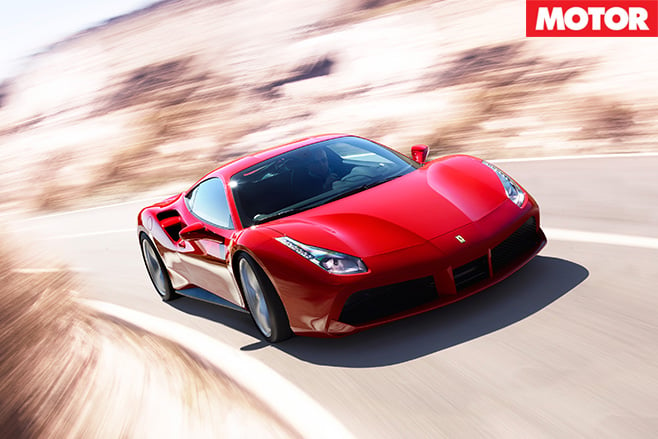
Flat-plane cranks have been around for a long, long time, mainly in racing applications where the vibes are less important than the outright power of the thing. But some very famous engines have featured a flat-plane crank, including luminaries such as the Cosworth DFV, Ferrari V8s (even road-going ones) and the V8 Lotus Esprit.
It’s not just V8s that can have a flat-plane crank, either. Most four-cylinder donks use a flat-plane crank and so do engines like the boxer four or six as seen in VW Beetles, Suby WRXs and Porsche 911s. The thing is, the inherent vibration in a flat-plane design only starts to show up as capacities rise, so a smaller engine has less to lose in the first place.
Cranking it up
Flat-planes in V8 Supercars
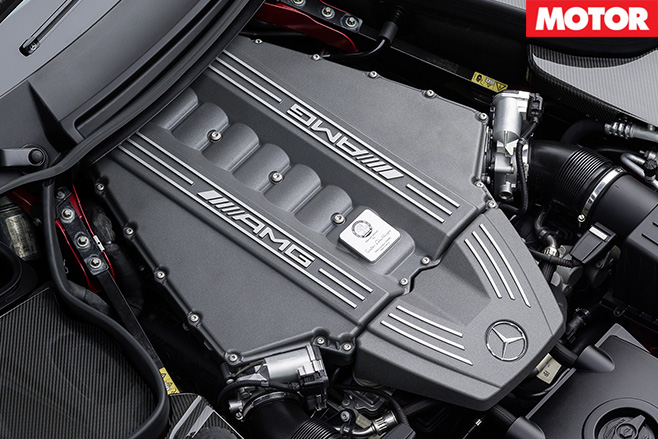
Turns out, since AMG had to reduce the capacity to 5.0 litres (from 6.2) it required a new crankshaft, and there was no development-cost penalty in going for a flat-plane design.
Of course, starting with more or less the V8 from the SLS AMG GT3 racecar, the unit was already dry-sumped. And whaddaya know? When Polestar developed the V8 Supercar engine for the GRM Volvo team, it went for a flat-plane crank, too.
Plane & Simple
Optimising an engine
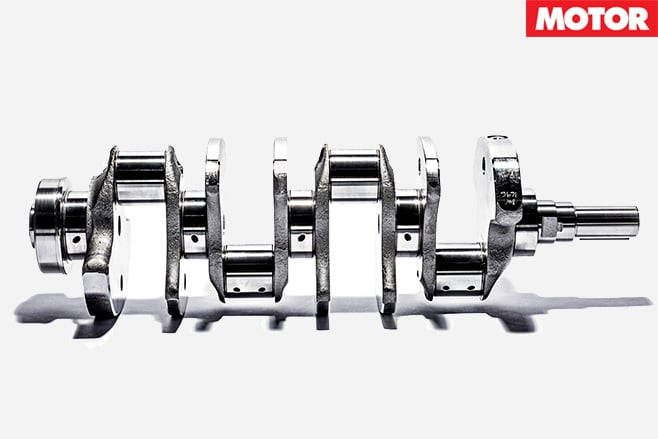
2 Smaller big-ends Another way to keep an engine compact is to reduce the size of the conrod big-ends. This can mean a smaller crankcase, but it also calls for smaller bearings and, therefore, less bearing surface area. Smaller bearings also means less friction, though.
3 Bent out of shape Some race and motorcycle engines use roller crankshafts which, instead of being cast in one piece, are pressed together in sections using many tonnes of pressure. These allow the use of caged roller bearings for low friction, but they can also become – literally – twisted out of phase.
4 Getting tricky The blueprinting process involves making nth-degree changes to make sure the engine in question is exactly to the specs the designer had in mind. In the case of a crankshaft, this process can include grinding of the big-end journals to align the crank to bring the journals into the precise plane.
5 Staying cross-plane If you do stick with a cross-plane V8, the best way to improve efficiency is to run an exhaust that links the two exhaust manifolds before any collector for improved scavenging. But this is bulky and calls for running super-hot pipework over the top of the motor. Not ideal.
So, what is it?
You might remember it as the Opel Astra GTC OPC, last seen here in mid-2013. But given Holden has picked the performance eyes out of the former Aussie Opel range, having an Opel Performance Centre (OPC) derivative as your hero Astra variant isn’t exactly on.
So a call to the UK has led to the addition of Vauxhall’s performance-focused VXR badge to the rear door of this 2.0-litre turbo screamer. It’s still made by Opel, and tuned by OPC boffins, but now it’s a Holden Astra VXR.
Why should I care?
This is a genuine hot hatch, with no less than 400Nm punching through the front wheels, and more than 200kW ready to take over at the top end.
It’s also $3,000 cheaper than the version Opel had on its books before the brand’s sudden selection of reverse gear on the Australian market a couple of years ago.
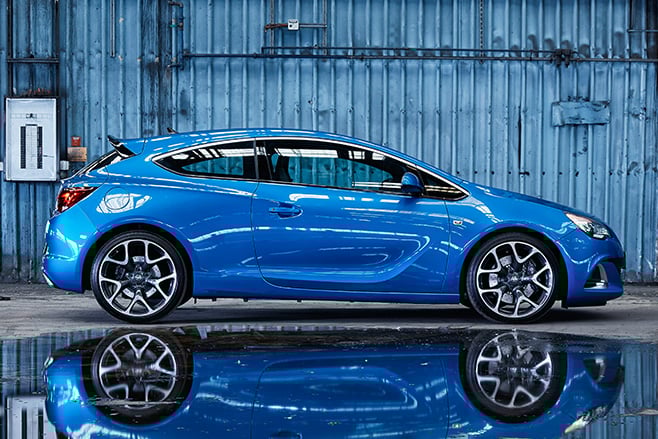
Relative to the Astra GTC it’s based on, the VXR is upgraded with not only the bigger, gruntier engine but a revised tune for the ‘FlexRide’ suspension, more direct steering, and beefy Brembo front brake calipers sitting behind 20-inch alloy rims, shod with top-shelf (245/35) Michelin Pilot Super Sport rubber.
It also picks up a more macho body kit, leather sports seats, a unique leather-trimmed steering wheel, and flash alloy accented pedals.
What’s new about it?
Like the Astra GTC, the VXR is more or less a carbon copy of its 2013 Opel equivalent; the biggest change being the addition of Holden badges front and rear.
That’s all fine, what’s it like to drive fast?
The only taste we’ve had of the car so far is on a closed circuit, which is appropriate, yet limiting in terms of a well-rounded first drive appraisal. So any calls made here are provisional until the real world enters the equation.
The Performance Driving Centre at Norwell on Queensland’s Gold Coast is a tight, twisting, two kay track where the front wheels are rarely in line with the rears. Even the back ‘straight’ is a long, sweeping right-hander, and the Astra VXR was in its element.
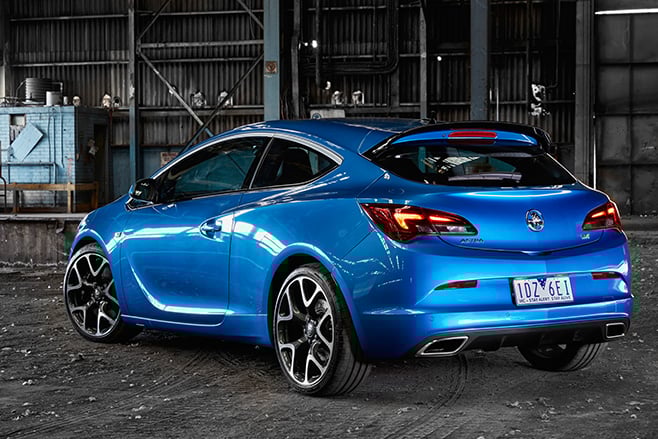
Balanced, fast and fun, the VXR is a worthy competitor for the likes of Renault’s Megane RS and the VW Scirocco R. The mid-range is strong (max torque is available from 2400-4800rpm), torque steer is minimal and cornering grip is tenacious.
Around the limit of adhesion the car responds quickly and calmly to throttle inputs and braking is impressive, although after half dozen hot laps the pedal started to lengthen slightly.
The six-speed manual only VXR features a lower gear set and final drive than the GTC, and the Generation II (LDK) direct-injection 2.0-litre sounds nice and rorty as it spins aggressively towards its 6500rpm redline. Steering feel and response are excellent, and the leather trimmed sports seats grip hard, without compromising comfort.
Anything bad about it?
Interior design conforms to Cool Euro 101, and the quality of fit and finish is good (the car’s built in Poland), although the plastics are universally dark, and the centre console is all buttons.
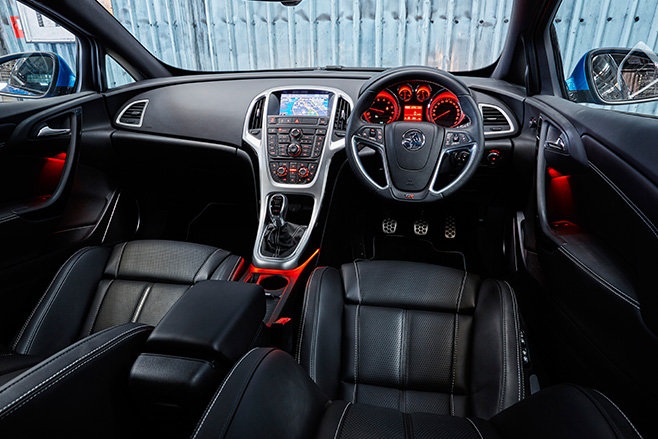
The multi-function trip computer is a telling sign of this fourth-gen Astra’s age (it was launched globally in 2009), using old-school orange/red LED graphics that are hard to read, and look out of place next to the 7-inch centre-dash screen running the MyLink infotainment system (including digital radio).
The A-pillars are also monstrous; despite inclusion of a small window near their base, they compromise forward vision, to the right particularly. And on the small annoying niggles register, although it wears a thin veneer of padding, the door armrest is as hard as granite.
How much would I have to pay? And is it worth it?
Scraping in under $40k the Astra VXR picks up a healthy basket of fruit as standard, the highlights being: the 20-inch rims, Brembo front calipers, tyre pressure monitoring, auto headlights, LED tail lamps, a roof spoiler, eight-way adjustable, heated and (Nappa) leather trimmed sports front seats, sat-nav, dual zone climate control air, and MyLink Infotainment (with 7-inch colour screen).
Would you take the Holden Astra VXR or Renault Megane RS 265 Cup?
Too early to make a definitive call, but Renault’s class leader is again under pressure from a quality, not to mention four grand cheaper, hot hatch challenger.
Click here to find out more about the Holden Astra VXR.
Hangovers from New Year’s Eve may be just subsiding, but premium and sports car manufacturers have more celebrating to do following an overwhelming upswing in sales.
Australians purchased a record 1.55 million new vehicles in 2015, 3.8 per cent above 2014. Only a single premium manufacturer recorded backward growth – Rolls Royce sold 30 cars, down from 39 last year – while 13 others soared by a minimum of 10 per cent.
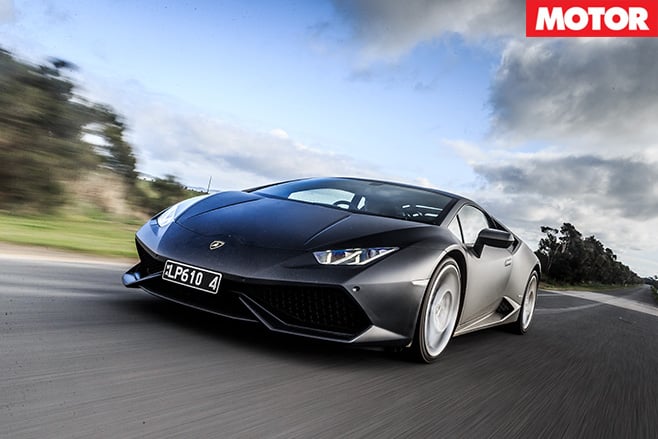
Comparing 2014 to 2015, Ferrari moved 47.8 per cent, from 113 to 167 cars. Lamborghini tripled its total, from 27 to 84 vehicles. Even McLaren moved from 26 to 36 units for a 38.5 per cent increase. We have a feeling fresh ‘entry’ models – California T, Huracan, 570S – may have helped things along.
Porsche secured the biggest yearly increase, moving from 2812 to 4090 sales, a boost of 45.4 per cent.
The reason is obvious: the Macan compact SUV tallied 2004 sales for the year to become the brand’s top seller ahead of Cayenne (1263, up 12.3 per cent). In fact, in a sign of the times, the 911 (377) is only up 3.0 per cent, while Boxster (191) and Cayman (199) went backwards by around 10 per cent (almost pipped by the Alfa Romeo 4C’s 149-unit tally).
Cousin Audi (a record 23,088 units, up 21.5 per cent) is posing a bigger threat to BMW (25,022 sales, up 10.1 per cent) behind an unbeatable Mercedes-Benz – its 36,374 tally is up 14.0 per cent.
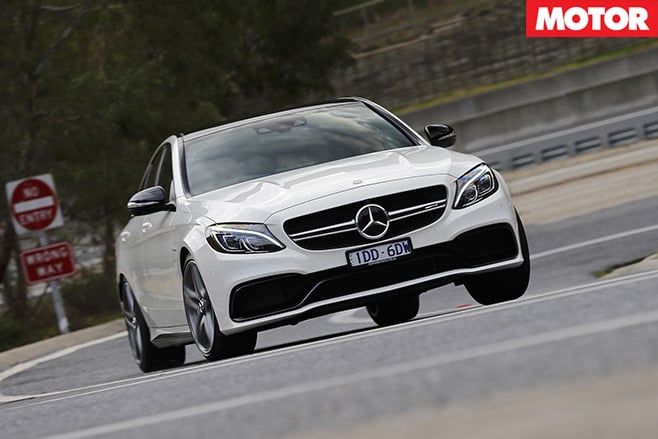
Special mention to Lexus RC coupe with its decent 587-unit tally not far behind the Audi A5 (651) if not the C-Class coupe (1409) and 4 Series (1921). Likewise to the new C-Class (9373) and CLA-Class (3659) that dominated 3 Series (4166) and 2 Series (1902) respectively.

Despite only being on-sale for the latter months of the year, the Mazda MX-5 flaunted a seven-fold increase on the year prior, posting 917 sales. It’s enough to pip a surprise performer in the revived Holden Astra GTC/VXR (763) and also the 86’s twin, the Subaru BRZ (607 sales, down 45.4 per cent).
We may have shed a tear over the loss of the Kia Proceed GT, however it still notched up 378 sales ahead of a tightly bunched sporting-elite crew of Volkswagen Scirocco (367) and Renault Sport Megane (362).
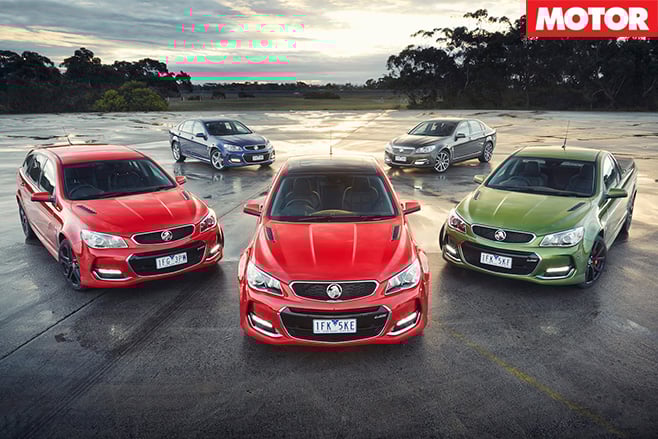
Light certainly shines brightest at the top end of town these days.
Volkswagen has smartened up its genre-creating Transporter range, with better diesels and updated cabins. But the competition has also improved lately.
WHAT IS IT?
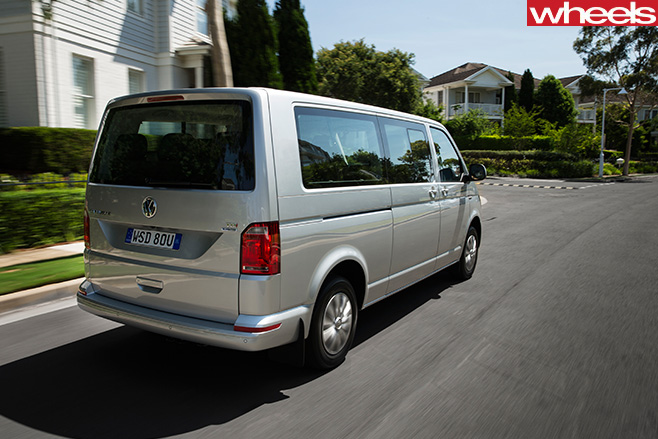
The Volkswagen T6 range of Transporter vans and cab chassis commercial vehicles, as well as the 6/7-seater Multivan and nine-seater Caravelle people movers, have long been at the pointy end of their segments, offering leading safety, practicality, and quality. But is a thorough overhaul rather than complete redesign enough?
WHY WE’RE TESTING IT
The Volkswagen T5 Transporter, Multivan and Caravelle have long been leaders in their respective van/cab-chassis and people mover markets. Instead of pushing out the bar with the T6, Wolfsburg has elected to facelift the old favourites. Can they still match their increasingly strong competitors?
MAIN RIVALS
Ford Transit, Hyundai iLoad, LDV G10, Mercedes-Benz Vito, Renault Trafic, Toyota HiAce
THE WHEELS VERDICT
AN all-new range of Volkswagen commercial vehicles comes but once every decade-and-a-bit – so why are we stuck with a new T6 Transporter range based heavily on the 2004-vintage T5? Except for the slightly more car-like dashboard and cabin trim, the gains over the first, 2010-vintage, GP facelift are incremental at best across the board, while newer-generation rivals such as the Ford Transit and even the Renault Trafic (also an overhaul of a mid-2000s design) show how car-like a commercial vehicle can be to drive. The T6s are still near the top of their class in many respects, but the competition is upon them.

THE WHEELS REVIEW
VOLKSWAGEN launched its new T6 Transporter range just before Star Wars: The Force Awakens (also known as Christmas 2015) struck – and by George, the similarities are striking.
Like the film, the T6 comes from an at-times innovative, genre-creating, era-defining, and also occasionally dull but always high-quality franchise with a fierce fan base.
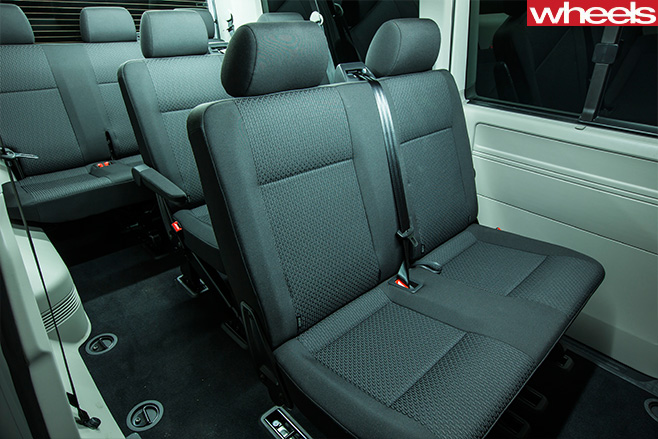
Striking back against the resurging Ford Transit, Renault Trafic and Mercedes Vito rebel forces, are the reskinned T6’s refreshed nose and tail-light treatments, lower pricing, improved dashboard, and optional driver-assist tech. Between three lengths and heights of van (including a five-seat Crewvan wagon), single and dual cab chassis, and 6/7/9-seater people-mover combos, there are 26 models and counting.
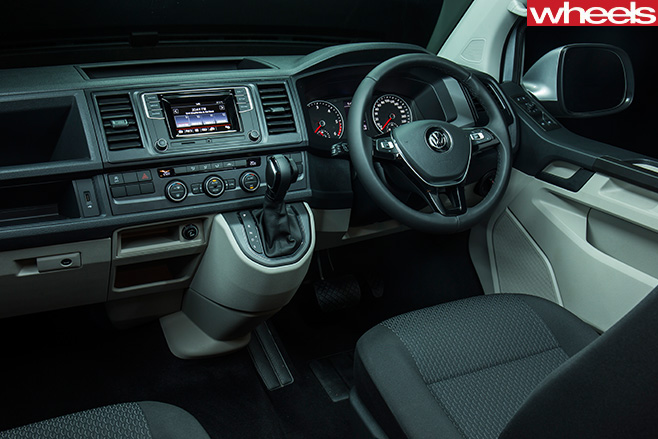
Behind the shiny baubles you’ll find a trio of 2010-era 2.0-litre turbo-diesel powertrains (103kW TDI340, 132kW TDI400, and 150kW TDI450 Biturbo, in six-speed manual or seven-speed DSG guises). All shift smoothly, pull promptly, and offer up to 0.5L/100km less fuel consumption, aided by stop-start tech. They are bolted to the 2004 T5 architecture, featuring struts up front and a semi-trailing arm rear, which brings breezy steering that’s tight and handling that’s surprisingly surefooted, even if the ride errs on the hard side.
But here’s the rub. While such traits put the original T5 in a distant galaxy, far, far ahead of rivals a dozen years ago or so, nowadays they’re rudimentary – especially against the terrifically dynamic Transit – except on the expensive models offering blind-spot monitoring, adaptive cruise control, and AEB safety. The ’60s hippy Kombi’s descendants are now just like the clones they’re attacking.
Why The Emperor’s New Clothes rehash? VW reckons retaining the T5 dimensions means current owners can swap over existing fit-outs, saving big bucks. A true tale too this is, as Yoda might say. Van capacities range from 5.8 to 9.3 square metres, payloads vary from 1014-1236kg, and the towing max is 3000kg.
Prices tumble by $1700 in the $36,990 TDI340 manual front-driver, and extend to the $49,090 TDI400 long-wheelbase DSG 4MOTION AWD, although a base 75kW TDI250 Runner stripper for circa-$32K driveaway is also due any day now.
Meanwhile, the Multivan TDI340 SWB DSG seven-seater and Caravelle TDI340 LWB DSG nine-seater start from $50K apiece, stretching to $80K for the hotel/airport-run Multivan LWB Executive TDI450 DSG – its torque-monster Biturbo can just about tow a Death Star.
Finally, four airbags, touchscreen with available reverse camera and apps connectivity, better storage, and less van-like dash materials for people-mover versions complete the T5 sequel… err, new T6 blockbuster. Let the van wars begin!
SPECS
Model: Volkswagen T6 Transporter TDI340 Engine: 1968cc 4cyl, dohc, 16v, turbo-diesel Max power: 103kW @ 3500rpm Max torque: 340Nm @ 1750-2500rpm Transmission: 6-speed manual Weight: 1630kg 0-100km/h: N/A Fuel economy: 7.2L/100km Price: $36,990 On sale: Now
The late 1990s was a golden era for Japanese tuners, with most of the major manufacturers producing models begging for some aftermarket enhancement.
No car was more tuneable than mighty Nissan R32 GT-R. With its venerable RB26DETT engine capable of soaring past 1000kW and ATTESA all-wheel drive system capable of putting most of that to the ground, it dominated almost every form of motorsport.
This included the drag strip. It might not have been conceived with the 400m in mind, but GT-Rs were soon capable of blistering quarter mile times.
Competition amongst tuners was fierce and led to what became as the ‘RH9’ club, with companies clamouring to join this elite band of cars capable of running nine-second quarters on street tyres.
Hanging on to these weapons, however, was another matter entirely. Without the clever transmissions and electronics of today’s cars, drivers were left wrestling with clutches and H-pattern gearboxes as the cars bucked and bounced for the entire length of the strip.
Sadly, today Japan’s drag racing scene is a shadow of its former self, with the country no longer having a dedicated drag strip following the closure of Sendai (where this video was filmed).
A while back I wrote in my editorial, “bring on the electronics in performance cars!”
If I had dribbled more twaddle I would have needed a bib. In fact, I should run for parliament.
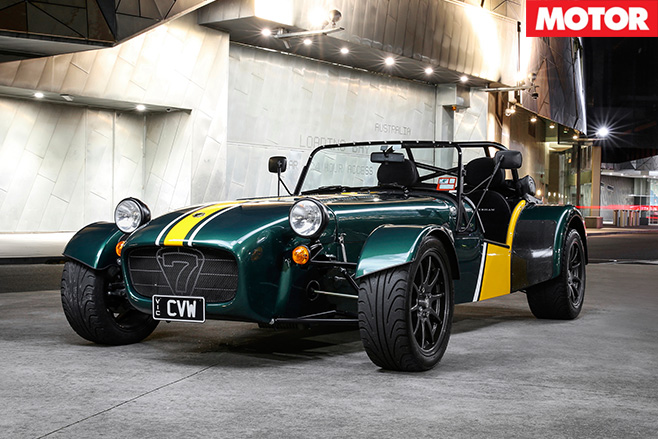
It took just 20 minutes in the Caterham CSR 175 – my first Caterham experience – for me to pull over and swiftly clobber myself over the back of the head. And after seven hours belting the little Caterham, with no ABS, no ESP, no power steering, not even power-assisted brakes, not only did I feel like I’d just been through an SAS training camp, but I felt enlightened to the world devoid of electronics.
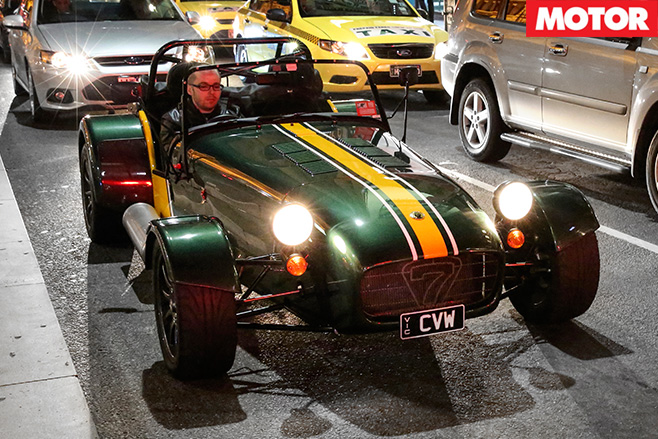
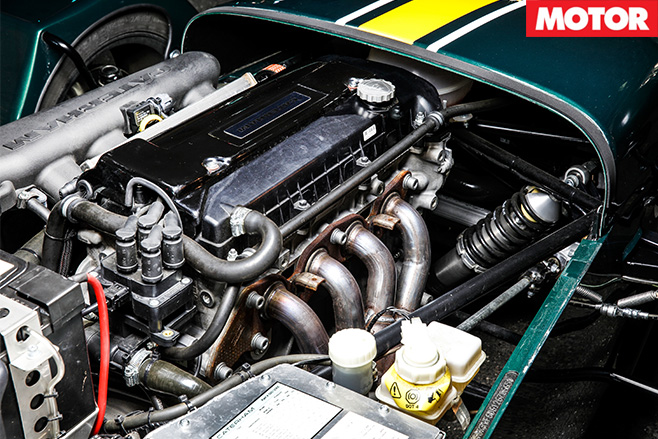
The car you see here, the CSR 175, comes with Ford’s 2.0-litre Duratec naturally-aspirated four-pot donk. It’s got 127kW and 177Nm, which doesn’t sound much but, then again, this thing weighs 625kg. Good enough for 0-100km/h in a claimed 4.5 seconds.
Of course, if you look over to the corner of the room, behind the lampshade you’ll see an elephant trying to hide: the price, $89,990 in the CSR 175’s case. Sorry if we startled you, but you might even get upset, like us, when you consider in the UK, you can wriggle yourself into the simply mad 620R, the halo model, for A$90,150 (directly converted).
Think 232kW, 297Nm, 495kg, a power-to-weight ratio more than a Bugatti Veyron or McLaren F1, in a car that looks like a shoe and really should be locked in a room with padded walls.
So why is the Caterham so expensive in Australia? We’ll come back to that. For now, let’s sink throttle into firewall.
But don’t be misled by the pics, we’re not using Melbourne’s CBD as a giant motorkhana, as fun as that would be. We shot the Caterham in Melbourne in the middle of the night, in the middle of winter, but saved the driving impressions for a blat in the hills to Melbourne’s east.
And thank god for that because, frankly, the Caterham is suited to the city like Clive Palmer is suited to bikinis. We’ll speculate you’ll have better odds of survival going base jumping than driving a Caterham around in the city. Being about as tall as a skateboard, you feel like you need a fluoro flag on a bendy pole so that even Commodore drivers don’t merge into you. Got a Caterham? Keep away from CBDs.
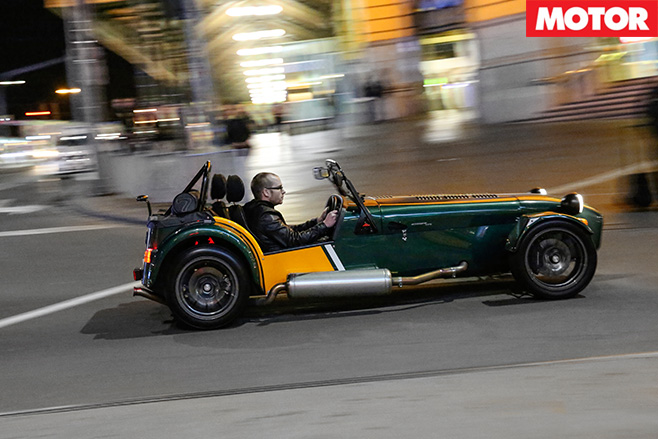
The Caterham has all the NVH of a Spitfire; two hours on a coarse-chip Aussie road in the Caterham is equivalent to six in a Toyota 86. It wears you out.
Fortunately, though, evaluating the Caterham for its city sensibilities and long-haul comfort is like complaining your mountain bike is a horrendous coffee table.
The interior is merely an interface to driving fast. You climb into the Caterham with a motion that wouldn’t look out of place on a yoga curriculum. And when you’re in it, one thing is for sure: it’s not for big blokes. Even for me, an average-sized chap, sitting in the Caterham you feel like a foot in a tightly-laced shoe.
Everything in the interior is miniaturised like it’s come from a scale model. The steering wheel is so small it’s like steering with a bagel. Storage space? You’ll find more nooks and crannies for stashing things in a pair of jeans.
The pedals, meanwhile, feel arranged like piano keys under your feet and have pads the size of postage stamps. I dip the heavy clutch, which feels like it has about five centimetres of travel, and turn the Caterham over. It starts and settles to a fizzing idle.
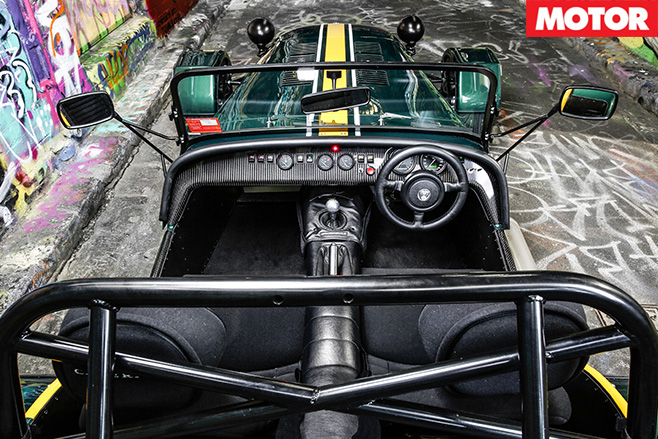
All the controls are super heavy, which takes some getting used to in a car that weighs the same as your average American labrador. The steering is around 2.4 turns lock-to-lock which means, with that toy steering wheel, you’re gonna get forearms like thighs cranking those front 195s.
Time to boot it. Throttle pinned, the Caterham shreds its cold rear Avon 245s easily, the optional LSD feeling nice and tight. One skill you’ll certainly become an expert at even in the 127kW Caterham is throttle modulation.
The Caterham shreds first gear and booms a Honda-VTEC-meets-BDA-Escort, four-cylinder roar as it charges towards its 7500rpm limiter. Kiss the clutch, slot second gear in one quick, mechanical flash. A second later, redline. Third gear. Two seconds later, fourth gear. Wind noise fights the engine for attention, even with those insanely close gears keeping it in its roaring power band like a sportsbike. The diff whines like there’s a dogbox in the boot. Speed? We didn’t look down, but it was a lot, and quickly.
Although its power output ain’t much, this thing hauls. Hard. It doesn’t have the sheer mid-range of something with a turbo – as we’re starting to get used to – but it also doesn’t run out of lungs as you wind towards redline. Just a linear, progressive thrust available the entire tacho and sounding more and more glorious the further clockwise you wind.
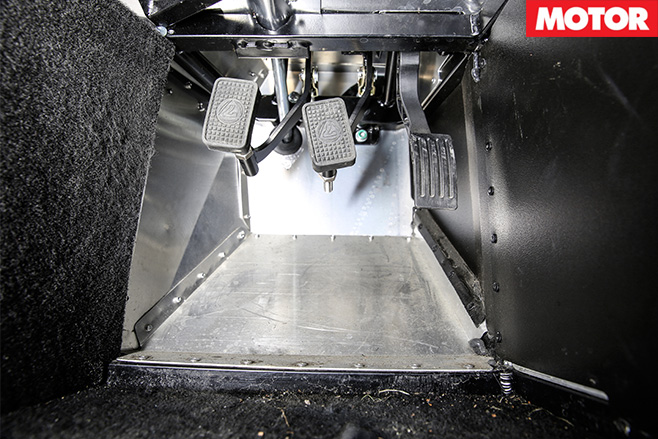
And after you’ve become acclimatised to the lack of assistance, the feel through the pedal is tremendous and beautifully communicative.
In fact, the only thing stopping you, pardon the pun, from big stop after big stop are the muscles in your right leg. It’s hard work. With its heavy steering, heavy clutch and heavy gearchange, the Caterham would be a physical experience on a track.
Braking over, time to tip in. Turn the tiny steering wheel and the Caterham goes where you point it with insect accuracy. The steering is heavy, particularly when loaded up mid-corner, and just the sheer physical exertion makes it tricky at first to also feel what the front wheels are doing. But like the brakes, once acclimatised, the feel – and weighting – is sublime.
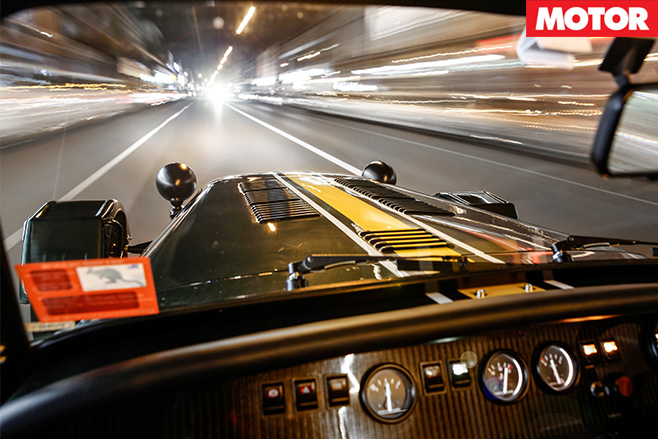
But driving the Caterham was like doing complex mathematics – without a calculator. There’s a certain thrill and satisfaction to solving complex algebraic equations using merely the sinews of your brain (or maybe that’s just me). Driving the Caterham was a similar sensation: connecting with the raw basics of driving all over again.
The revelation for me was relearning throttle modulation, a skill that had atrophied in my mind. Modern traction controls are becoming so good, you just leave it on, pin the throttle and it does all the work. Not in the Caterham.
At first I was extremely cautious feeding in throttle, aware there was no ESP to rescue me if I very likely stuffed it all up. But as I got more and more confident, feeding in throttle more aggressively, I was pleased to find impressive rear traction from the Avon rubber – and, depending on how much lateral load you’re carrying, the exact point of throttle travel at which you could unstick the rears.
When I discovered this point it was epiphanic, like I had seen the light (although that might have been the dashboard reflecting the sun straight into my eyes). I felt like a hero, hanging the arse out after every apex in addictive mini-drifts in all of first, the top of second and even third if you’re brave enough (I rarely was). The diff locks quickly and predictably, boosting confidence to get stuck into the throttle. It will cause out-loud laughing, guaranteed.
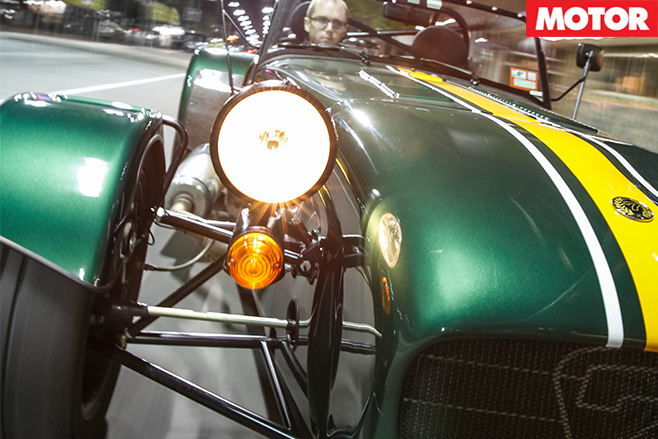
Something else worth mentioning is the ride. Unfortunately with solid-mounted suspension you feel every single bump, but it’s not as bad as you might first think. From the driver’s seat you have a brilliant view of the front wheels working the bumps – the high-speed damping, even loaded-up mid-corner, is just awesome.
Although the Caterham deals surprisingly well with Australia’s bumpy mountain roads, I did have more fun when I found smoother bitumen that made me feel more confident trying to find where the grip ran out. Sure, there’s shitloads of it, but when you feel like you’ve got the testes to push beyond the limit, you’ll encounter gentle mid-corner understeer easily transferable to oversteer with a dollop of gas.
The Caterham punishes poor driving, too, but not in a scary way. Pick up the throttle too early and oops, gentle understeer. Pick it up too hard and oversteer, again. Oops…
Basically, I haven’t had this much fun in a car in a long time. After my first drive in the Caterham through the city, I couldn’t wait to get out of it. After my first drive through the hills, I didn’t want to get out of it. In fact, I reckon I learnt more about driving in the seven hours I drove the Caterham than I did in 90-odd laps of Winton in 22 cars as a judge at Bang For Your Bucks this month.
It’s hard work but satisfyingly mechanical and a real challenge to drive; even if I got nowhere near driving it “well”.
So, back to the elephant behind the lampshade: the price. We said earlier the CSR 175 costs $89,990. Unfortunately, in fact it’s $106,360 as-tested. Or a lot for a car with a missile switch for an indicator stalk.
Why so much? In the UK compliance regulations are more relaxed, which has helped small vehicle manufacturers survive. In Australia, they’re much tighter, meaning compliance gets expensive.
Then there’s freight, and tax. A lot of tax. Cars over 1.6 litres cop five per cent import duty. Then there’s 33 per cent luxury car tax. Aussie Caterhams come with the full weather kit (the tent Caterham calls a roof) and heater standard, too – optional in England, bizarrely.
Then you have to factor in other costs of Caterham ownership. If your partner merely tolerates your car hobby, they’ll despise the noisy, rough-riding Caterham. And it’s true only those destined for the asylum would use a Caterham for commuting. So you’ll need a second car. And a garage to put the Caterham in, let’s be honest.
Suddenly the Caterham has become one frighteningly expensive toy. But by golly, take it for a decent blat and you’ll be grinning like a loon. I was. And I promise to never egg on electronics again.
Specs:
Body: 2-door, 2-seat roadster Drive: rear-wheel Engine: 1999cc inline-4, DOHC, 16v Bore/stroke: 87.5 x 83.1mm Compression: 13.0:1 Power: 127kW @ 8500rpm Torque: 177Nm @ 6300rpm Power/weight: 203kW/tonne Consumption: 7.7L/100km (claimed) CO2 Emissions: 182g/km (claimed) Transmission: 6-speed manual Weight: 625kg Suspension: A-arms, pushrods, coilovers, anti-roll bar (f); A-arms, coilovers (r) L/W/H: 4988/1685/1115mm Wheelbase: 2305mm Tracks: 1473mm (f/r) Steering: rack and pinion Brakes: 254mm ventilated discs, four-piston calipers (f); 254mm solid discs, single-piston calipers (r) Wheels: 15 x 6.0-inch (f); 15 x 9.0-inch (r) Tyres: 195/45 VR15 (f); 245/40 VR15 (r) Avon CR500 Price: $89,990 Price as tested: $106,360* 6-speed manual ($6865), LSD ($2860), carbon fibre dash ($645), carbon front wings ($890). front wings painted ($260), track day battery ($630), battery master switch ($395), Metallic paint F1 livery ($3860), 12-volt power socket ($230), Push button ($120) Positives: Drives like an extension of yourself… Negatives: …which can be taxing, and annoying
Wheels Car of the Year is Australia’s senior and most coveted motoring award, and each year there is only one winner. Here are nine fast facts to put you in the picture.
1. Wheels Car of the Year is the world’s longest running motoring award for excellence: this is its 53rd year.
2. The first Car of the Year was awarded to Renault in 1963 for the R8.
3. The most successful manufacturer over the history of Car of the Year has been Holden, with 10 wins. Ford, Honda and Mazda have won six each, while Volkswagen has five.
4. There were three years in which Wheels refrained from anointing a Car of the Year, judging that none of the contenders in that year deserved the accolade: 1972, 1979 and 1986.
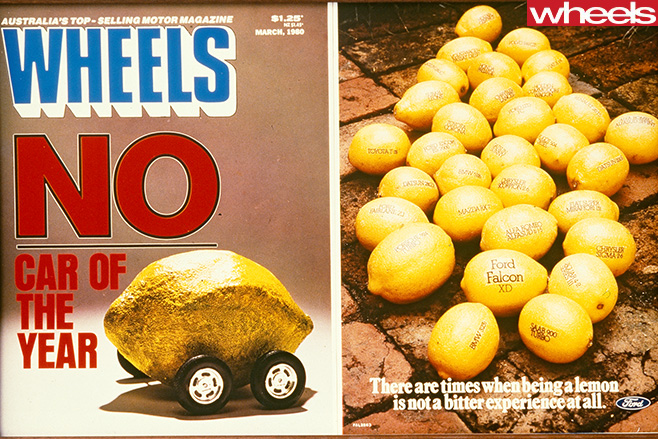
6. The field of nominees for Car of the Year 2016 is one of the biggest in the award’s history, with 25 models and 55 individual cars making the long list.
7. Each Car of the Year nominee is assessed under five categories: Function; Efficiency; Value; Technology; and Safety. Nominated cars must be new or significantly revised models introduced in the previous year.
8. All nominees for Car of the Year are gathered for three days of testing, this time at the Holden proving ground at Lang Lang, south-east of Melbourne. Nominees shortlisted after the first three days move onto the second stage of testing, comprising four days of driving on public roads.
9. The retirement of Peter Robinson after 43 years on the panel has left European Editor John Carey as the most experienced Wheels Car of the Year judge. This year’s award is the 22nd for which Carey has worn his judging cap.
Supercars aren’t intended to cross water streams, but recent footage from California shows that doesn’t mean they can’t.
A weather system well known to Australians, the cross-pacific El Nino has recently dropped unprecedented rain on San Diego and other Californian cities, besieging roads in flood.
While a glaring reason to leave a sports car in the garage, one Lamborghini driver wasn’t going to let anything disrupt his journey about town.
Greeted at an intersection with a small lake, the driver takes what seems like the deepest route through the hazard, despite being dwarfed by other cars, to make it out unscathed.
Having air intakes handily located atop the car’s rear haunches deliver the car its saving grace, meaning it can ford through with its V10’s mouth safely above water.
Whether pure genius or stupidity, it proves some supercars don’t mind getting their hair wet after all.
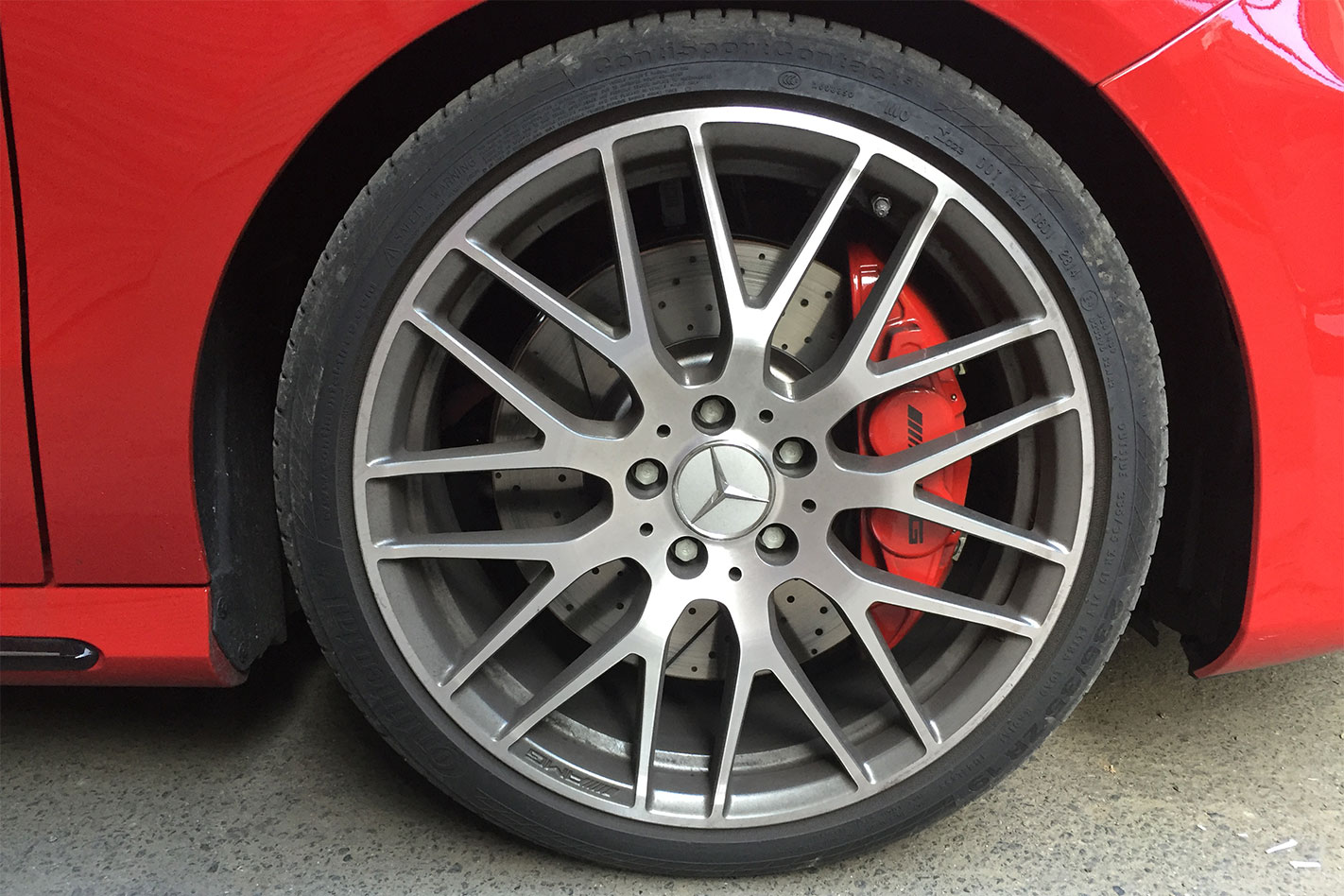
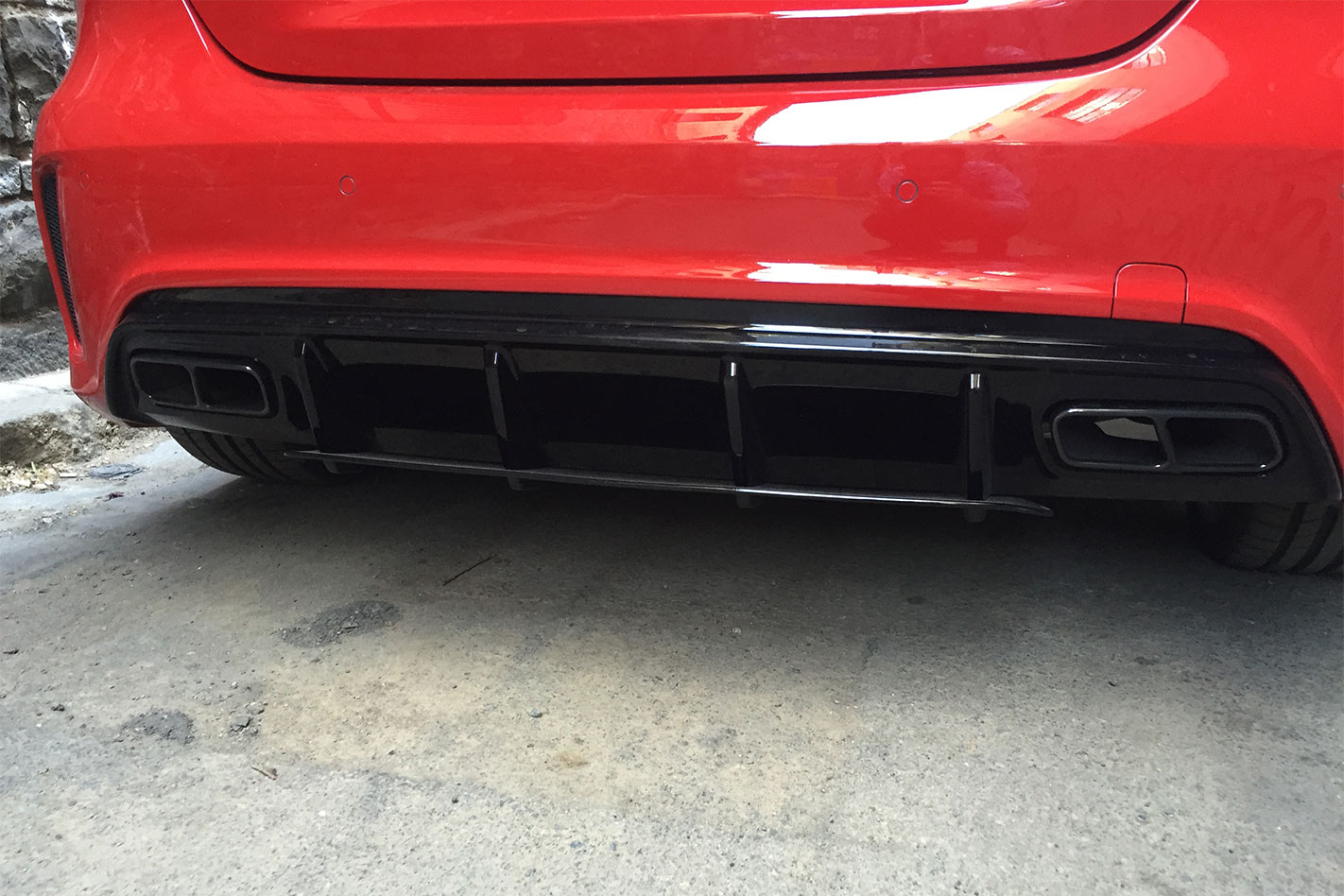
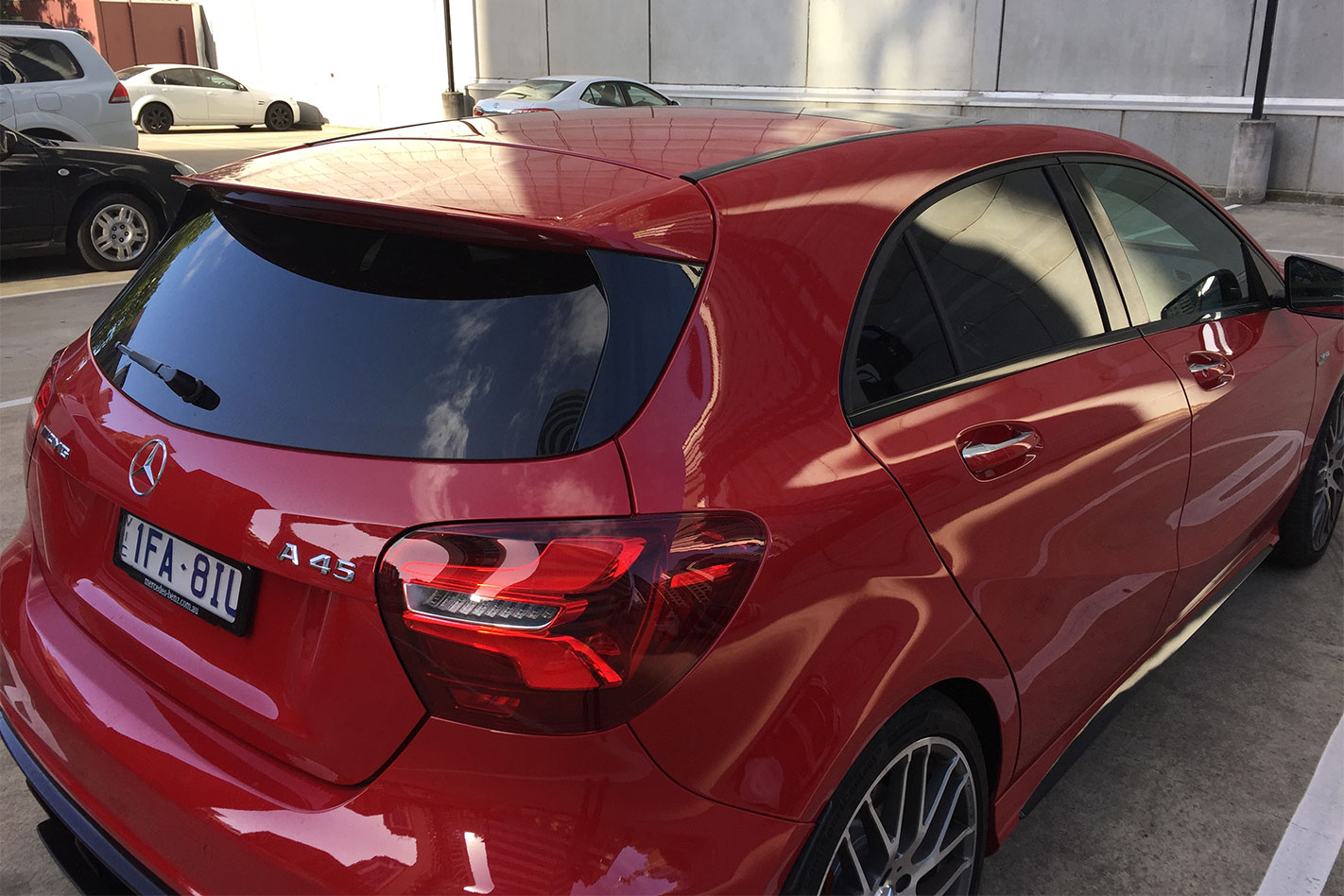
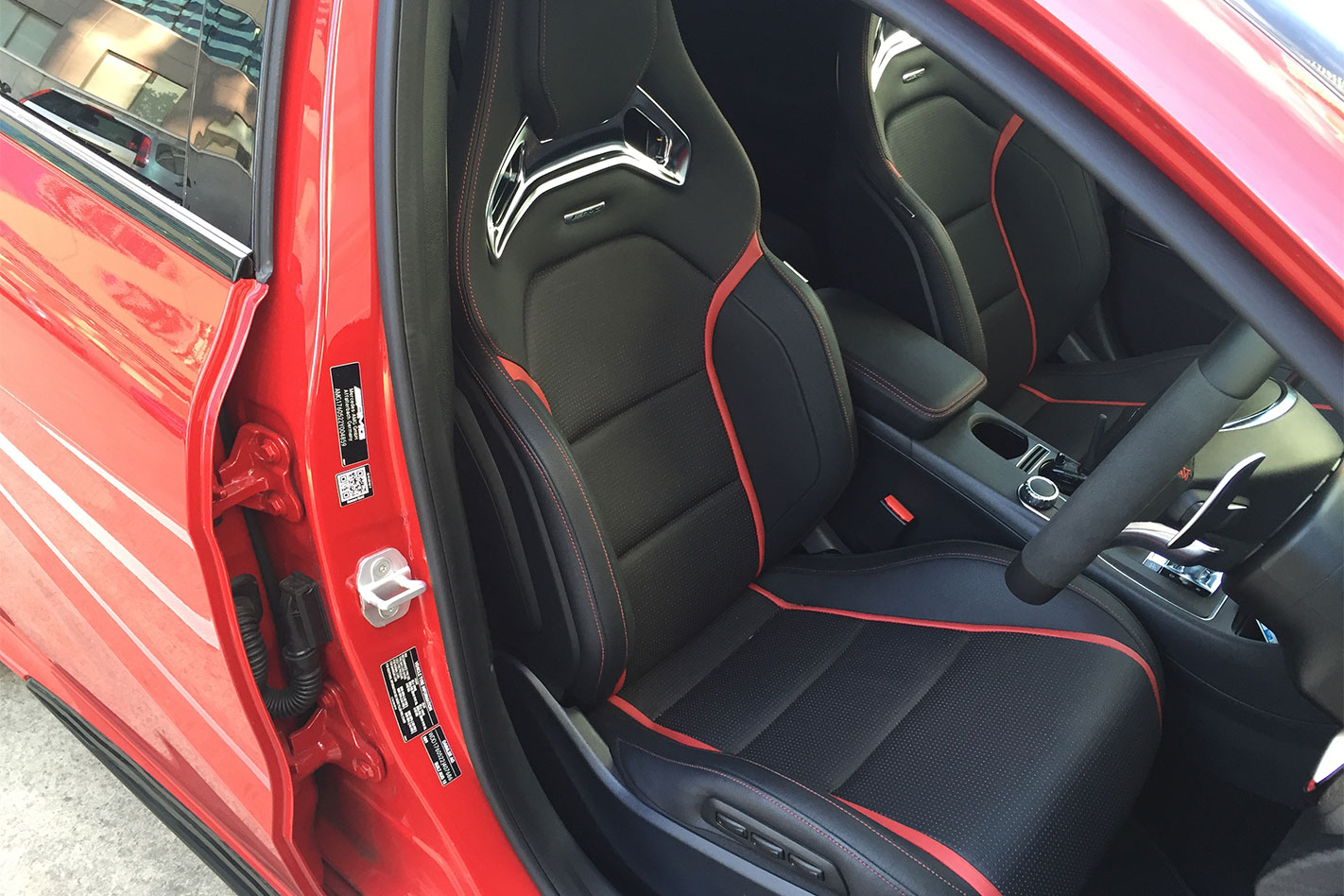
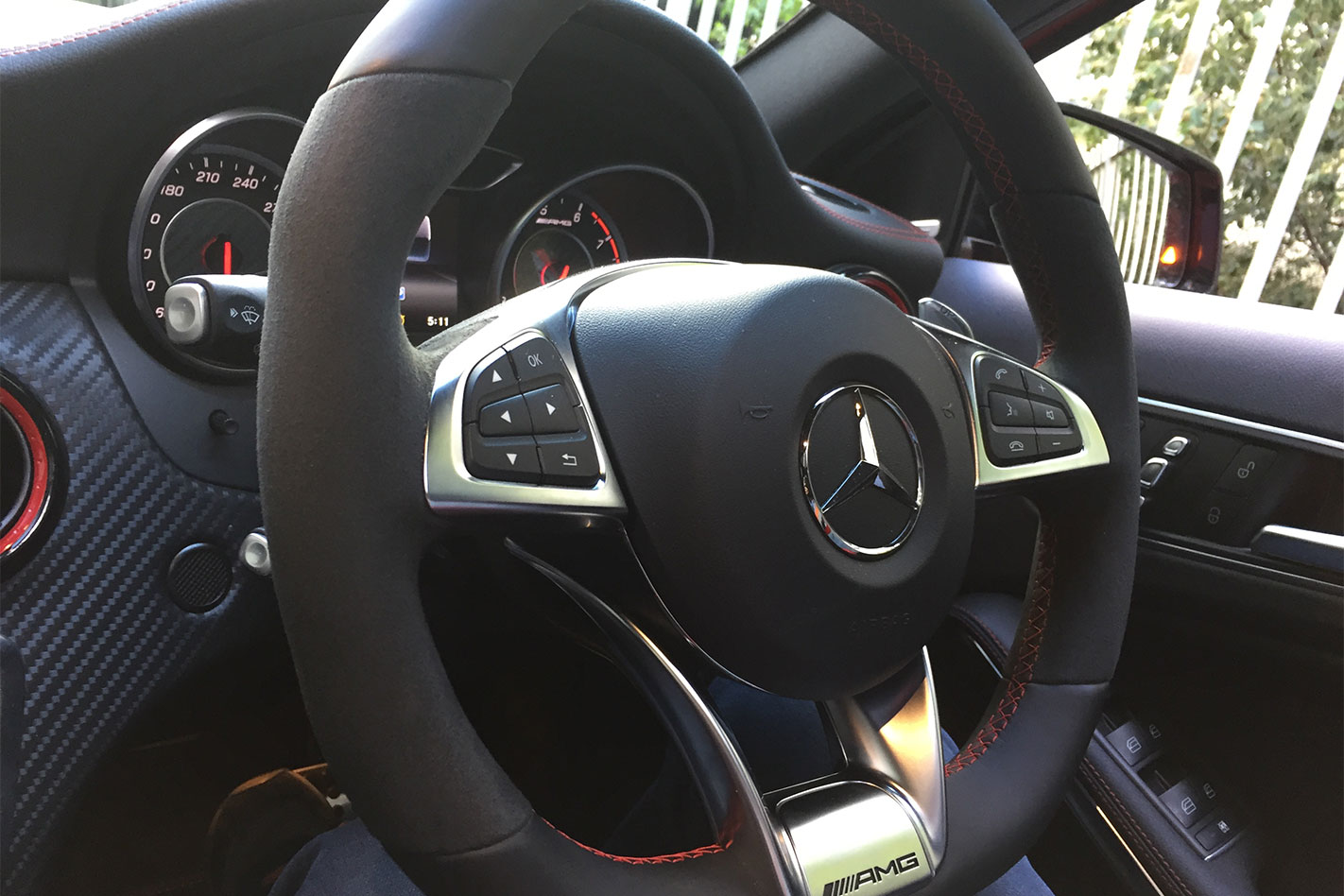
Mercedes recently updated its A45 AMG, adding more power, more equipment and a fairly decent overhaul of the chassis, too.
We’ve run it down the drag strip, where we found it ballistically quick – if not quite as quick as Audi’s new RS3 – and we’ve also compared it to Ingolstadt’s equivalent hyper-hatch in our latest issue.
Overall we’re pretty impressed, however here are a few quick likes and dislikes.
Likes
Adjustable dampers – Arguably the biggest improvement the update A45 displays is its ride quality thanks to the new standard-fit adjustable dampers. It’s still pretty firm, but now has enough absorbency that it’s perfectly acceptable for everyday use.
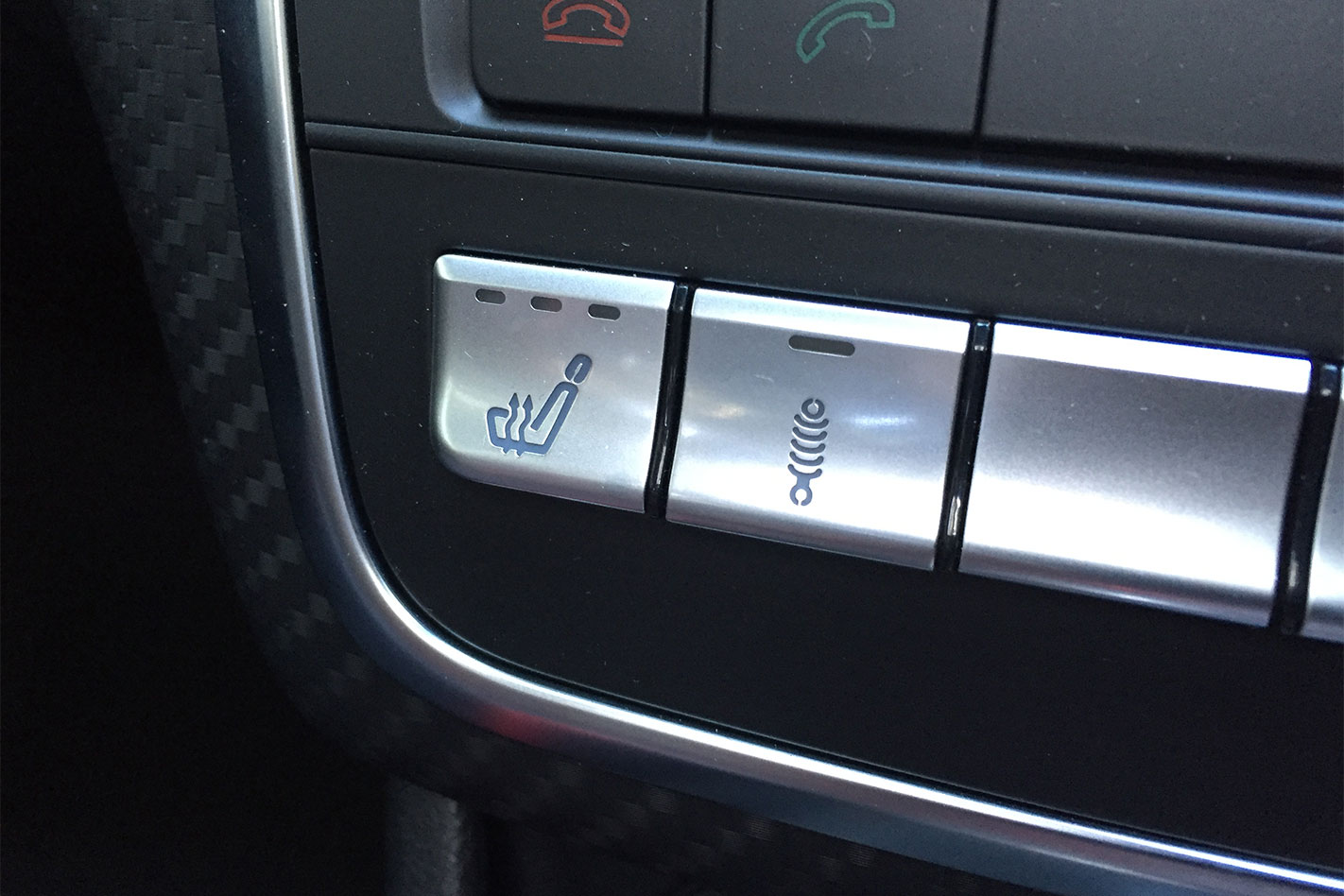
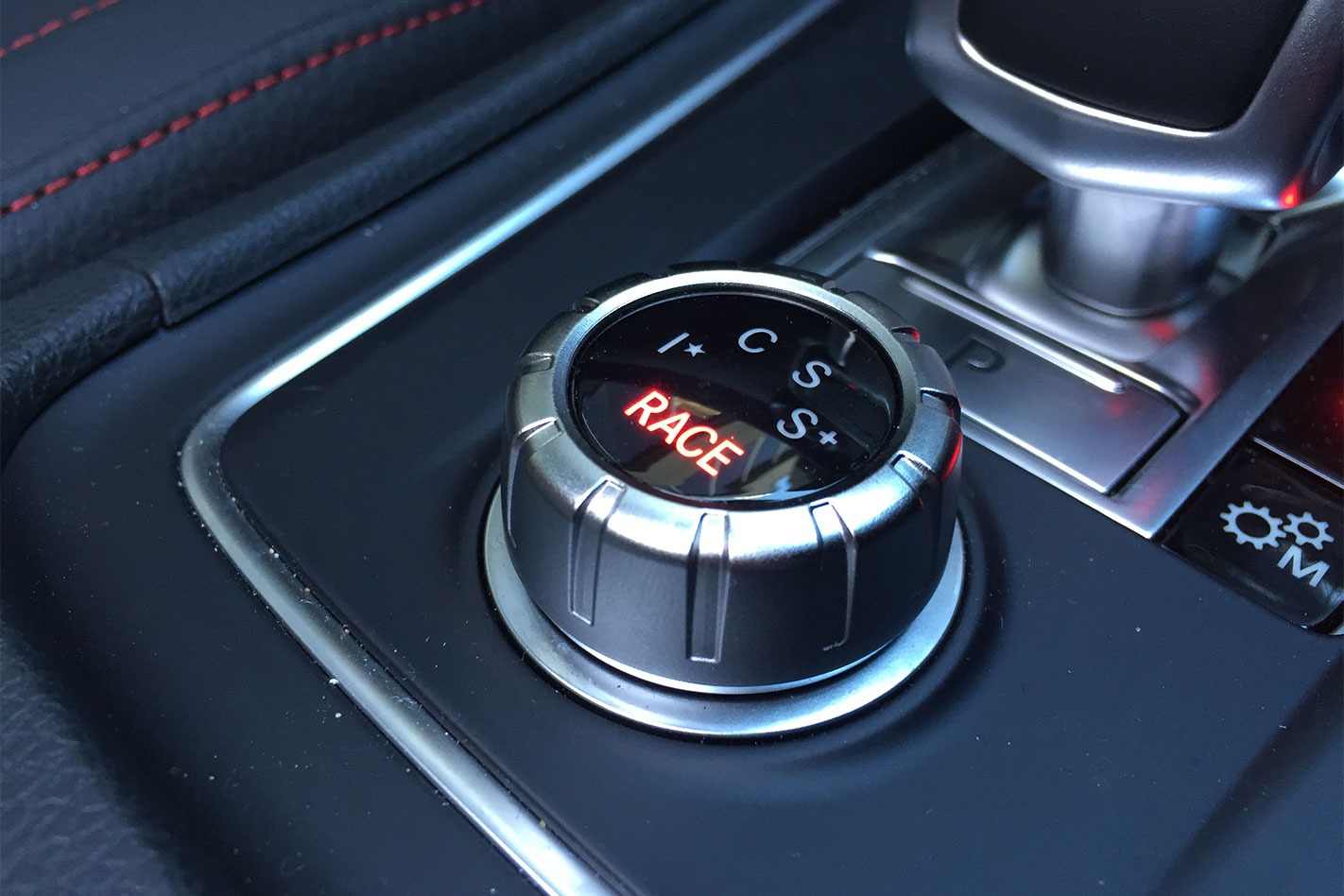
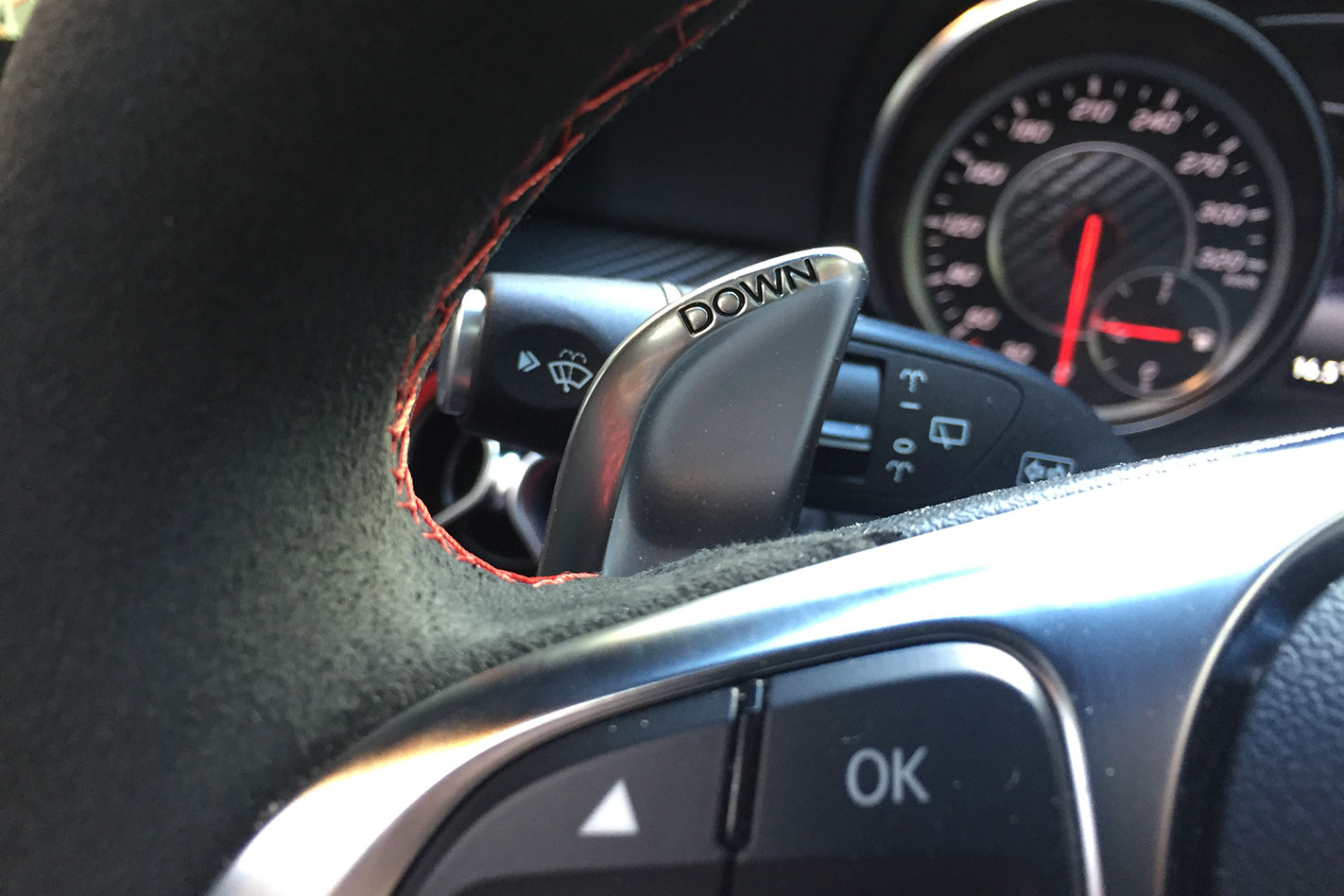
Gearbox – The A45’s Achilles heel continues to be its transmission. The seven-speed dual-clutch ‘box just can’t match its competitors for responsiveness or shift speed. It’s not too bad left to make its own choices in Sport, but needs improving, especially on downshifts.
US buyers of the new Mazda MX-5 can option Brembo brakes, Bilstein suspension and forged BBS wheels. Should we envy them?
WHAT IS IT? A honed version of the much lauded Mazda MX-5. This is the US Club spec with uprated suspension and brakes, and with the option box for weight-saving BBS forged alloys ticked, too.
WHY WE’RE DRIVING IT The pack is offered on US-spec MX-5s (the MX-5 is called Miata there), as a factory option. Mazda Oz has a history of offering Bilstein packs and similar upgrades for previous MX-5s. While not confirmed, you wouldn’t be foolish to bet on this pack coming here once the box-fresh MX-5 has been on sale for a few years.
MAIN RIVALS Toyota 86 Blackline Edition, Subaru BRZ
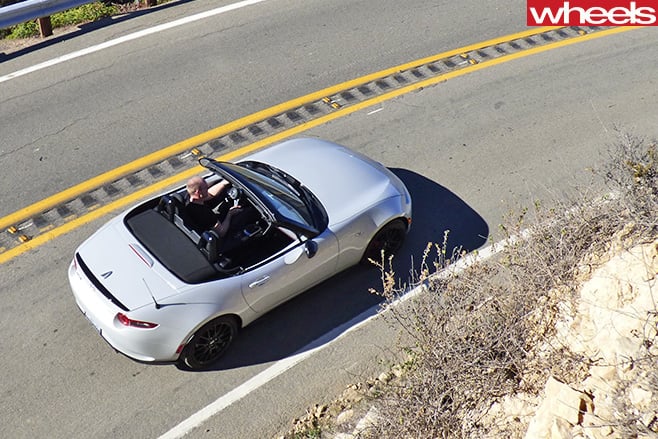
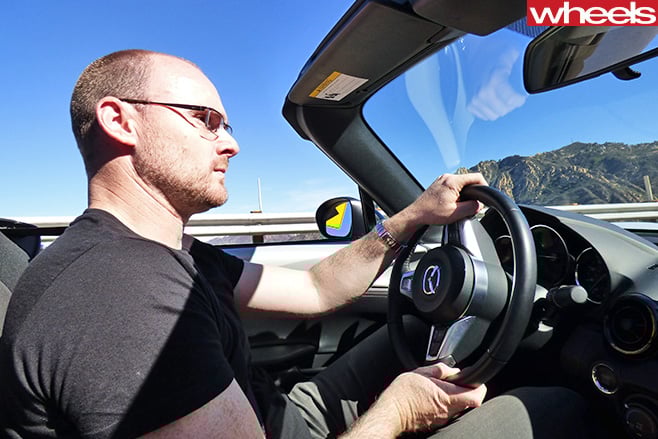
The US market misses out on the 1.5-litre engine that we get here, instead starting off with 16-inch wheels on the 2.0-litre entry-model, making the 17-inch alloys on the Club worth the step up on their own for US buyers. The BBS package goes further, swapping those 17s for lighter, stronger, forged versions of the German wheel-maker’s classical mesh design. They’re wrapped in 245/45 Bridgestone Potenza SE001 rubber, the same as the boots fitted on Australian market models. And they house bigger brakes, in the form of Brembo 290mm, four-piston units up front, with a single piston squeezing 279mm rotors at the rear.
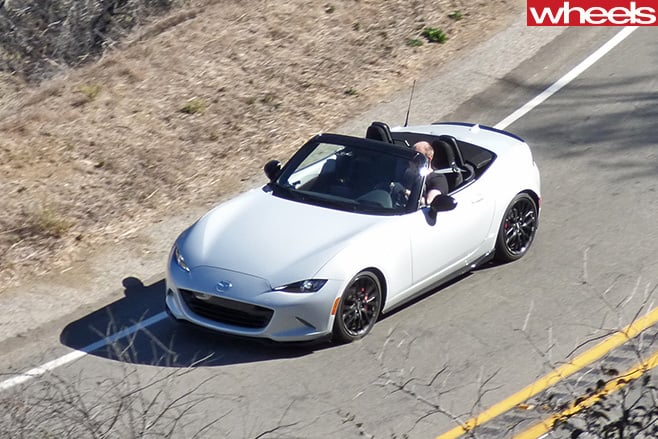
On road, the changes allow you to push the MX-5 – and yourself – even further. The increased stiffness allows you to exploit the crisp turn-in on those 17-inch wheels, which already have an (ever so slight) edge when compared with the 16-inch versions. That precise, honed attitude – with dive and squat under hard braking and acceleration, and roll during festive cornering, even better controlled – lets you lean on the tyres more, and make more use of the Bridgestones’ shoulders on a spaghetti-like winding road.
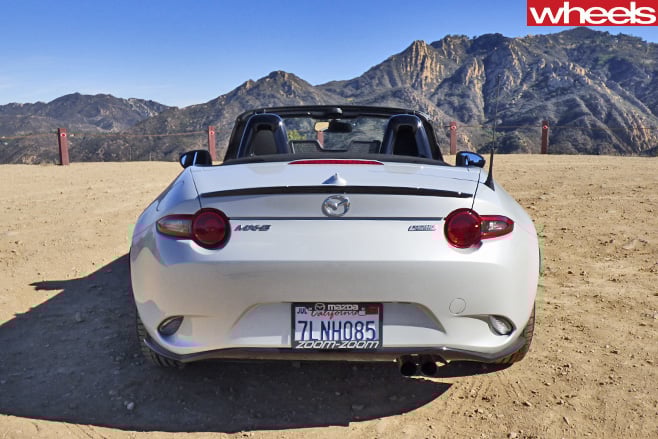
The alacrity and precision of the front end brings stunning poise, with the Bilstein shocks sharpening the MX-5 yet not pushing its ride over the edge into a brittle oblivion. There’s still suppleness and compliance over bumps, ruts and surface changes that means this remains a liveable, comfortable daily driver, and yet it unlocks another level of the roadster’s already abundant chassis talent.
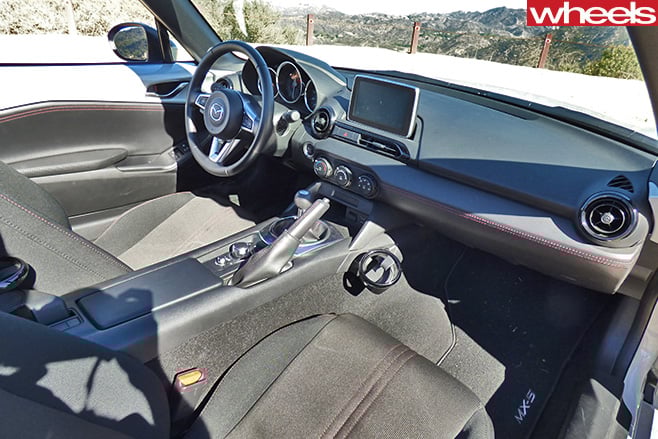
SPECS Model: Mazda MX-5 Club BBS Pack Engine: 1998cc 4cyl, dohc, 16v Max power: 118kW @ 6000rpm Max torque: 200Nm @ 4600rpm Transmission: 6-speed manual Weight: 1047kg 0-100km/h: 7.3sec (claimed) Fuel economy: 6.9L/100km Price: $32,820 (US) On sale: N/A
