
V8 SUPERCARS: Frosty takes 2015 title with mix of brilliance, discipline
THE working class boy from Sydney’s western ’burbs has finally done it – after 13 years of trying. The sacrifices, the crushing disappointments, the frustrations and the false hopes were all sept away in the delight of Mark Winterbottom landing his first V8 Supercars Championship at the weekend.
A safety-first third place in the second of three races of the Sydney 500 at Homebush on Saturday put Winterbottom, 34, in an unassailable position over Craig Lowndes, his only challenger in the title chase. And, yes, Jamie Whincup, that man who has been part of his motorsport life since he was a kid, won the race that gave Frosty the championship.
Emphasising an intense rivalry that extends back to karting days, Winterbottom, has taken over the #1 from his frequent nemesis.
“It’s awesome boys… I’ve got a few tears under this visor… I’m speechless,” an emotional Winterbottom said as he crossed the line. “I’m so proud of the boys … I wish my mum was here.”
Winterbottom’s mother, June, died of cancer in 2011 but she was with her son during his greatest moments in the sport. His helmet carried an image of her.
Whincup was generous in acknowledging Winterbottom’s right to the crown, as was rival team boss Roland Dane of Triple Eight.
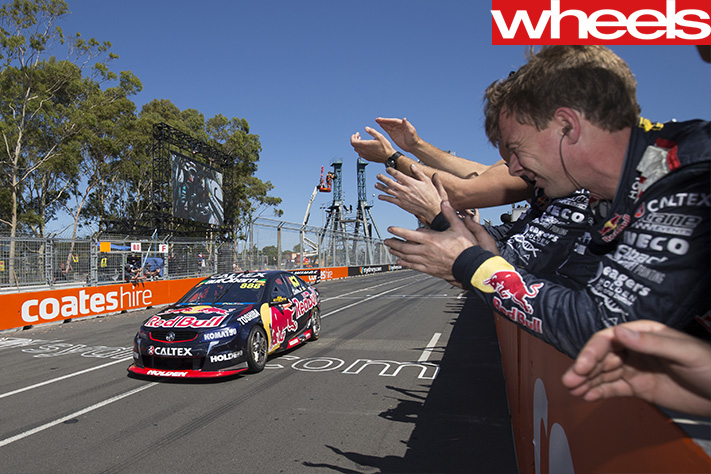
After finishing runner-up to Whincup in the national Formula Ford championship, Winterbottom made his start in V8 Supercars in 2003 when he was conscripted by Stone Brothers for the enduros. Mark Larkham then signed him on full time for 2004 and 2005, after which he began his lengthy and successful relationship with the Ford factory squad, FPR (later Prodrive).
Larkham said he always knew Winterbottom was a potential champion. “It just took a bit longer than then we thought.”
Over the years, Winterbottom proved remarkably consistent in the championship, once the runner-up and third five times in an era when Whincup and Triple Eight were a steamrolling combo. FPR also made errors under pressure.
Even this year there were a few stumbles late in the campaign – the unsafe release during the Gold Coast weekend was a doozy – but even during a late season surge by Lowndes and Triple Eight, the boys in blue held firm. Losing his quick teammate Chaz Mostert to injury after a huge shunt at Bathurst also left Winterbottom down a competitive defender against the Holden hordes.
Adopting a sensible, risk-averse approach, Frosty wrapped it up on Saturday on the narrow, bumpy streets of his home town. It took him 383 race starts in the V8 series to achieve his goal.
He was aided and abetted by a dreadful mistake in race one qualifying by fan favourite Lowndes. While Winterbottom grabbed, Lowndes’ Red Bull Holden slid into the barriers on his quick lap, meaning he would start dead last.
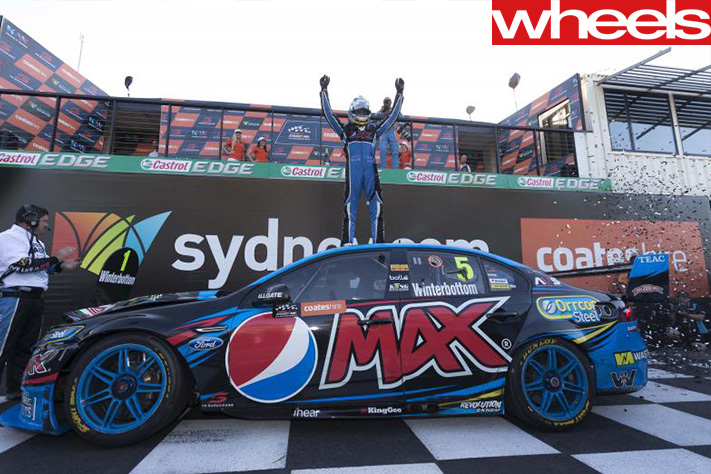
Indisputably, Winterbottom is a very worthy champion. He won more races than anyone else this season – nine – and was a podium resident 16 times. Along the way too, there were three poles. Two weekends stand out where he rebounded from adversity. At Bathurst, the Falcon was struck with electrical gremlins, and yet he fought back to take second and minimise the points damage to race winner Lowndes. At Pukekohe, he was victim of a chain reaction started by his inexperienced stand-in teammate Cam Waters. He recovered from the spin and drove from last to 11th to snare more crucial points.
Heading to Homebush, where it counted, he stayed calm and disciplined. Methodically, Frosty did what was needed to realise his long-held ambition in front of a legion of Sydney friends and family (and Ford fans).
He nailed it.
There was a third, longer race at Homebush on Sunday, and the mayhem and searing cockpit temperatures surely served as a salient reminder to Winterbottom that he was indeed fortunate have the championship resolved a day earlier.
Pole went to HRT’s James Courtney but the race was still young when Shane van Gisbergen nudged him into the wall, and from that moment, the race became harder work.
Tim Slade’s farewell drive from Walkinshaw Racing could have been better, a jammed throttle brutally sending him into the wall.
Van Gisbergen went on to an impressive win over Whincup, with Nissan’s Rick Kelly giving his long-time sponsor Jack Daniel’s a pleasing farewell podium.
Final championship points: 1. Mark Winterbottom, 3246; 2. Craig Lowndes, 3008; 3. David Reynolds, 2910; 4. Shane Van Gisbergen, 2712; 5. Jamie Whincup, 2647.
INDY 500: Another Brabham to tackle the Brickyard with an Aussie team
HOW good is this? Matthew Brabham, of the family of racing royalty, is set to race in the 100th edition of the Indianapolis 500.
The third-generation Brabham is the key to an exciting project created by Australian motorsport personality, Brett “Crusher” Murray, a close family friend.
Murray has also used his strong US ties to secure prominent IndyCar team KV Racing Technology to supply the car and manpower for the 500 campaign. KV Racing, co-owned by Australian Kevin Kalkhoven and ex-racer Jimmy Vasser, won the 2013 Indy 500 with Tony Kanaan.
Racing in the Indianapolis 500 is the third-generation Brabham’s destiny, his dream. His father Geoff raced there 10 times for a best of fourth. Grandfather Jack started the rear-engined revolution at the Brickyard in 1961.
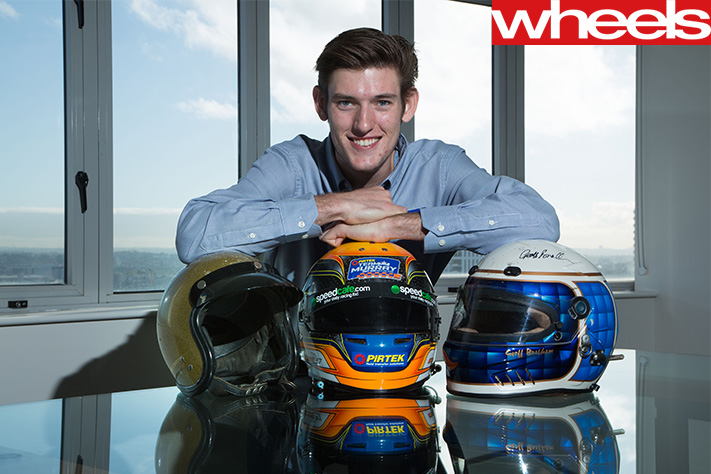
Brabham has spent the last four years forging his open-wheel career in the US. He won the USF2000 and Pro Mazda Championships before progressing to Indy Lights.
The Indy entry will be known as Pirtek Team Murray. The plan is that Brabham will compete in the road course race at Indianapolis on May 14 and then the biggie, the 100th running of the Indy 500, on May 29.
Brabham, 21, is poised to be the ninth Australian to qualify for the Indianapolis 500. Other than the two other Brabhams, notables include Vern Schuppan, Ryan Briscoe, and Will Power, who was second there last year.
SPEEDWAY: American sedan hero Gene Welch dies
GENE Welch, the American who had a huge influence on the way Australian competitors built their speedway sedan cars, has died at his home in California after a long illness.
Welch was 90.
In the early 1970s, Welch started a new trend here with a more sophisticated, lighter and more agile machine – a Camaro sedan body plonked over a sprintcar-inspired chassis.
Whilst not immediately accepted by the locals, who thought Welch enjoyed an unfair advantage during that 1972-73 season – and there was some joy when Sydney’s Peter Graham beat the glitzy Camaro in a supercharged Mini half the size and a quarter of the cost – change was on the way.
Bruce Maxwell, the colourful former Australian racer, one-time rival and long-time friend of the American, said this week: “Without doubt Gene completely changed the face of speedway and in particular sedan cars in Australia.
“Until he got here with his revolutionary Camaro, we had more bar-work on the outside of our cars than inside.”
The American’s minimalistic approach was quickly adopted by Welch’s local competition, who started to understand that carrying extra kilos was an unnecessary burden.
The crew-cut Welch was a regular tourist to Australia across many summers, when he and later his US Sedan Team raced at tracks including Liverpool, Claremont, Tralee (Canberra), Rowley Park (Adelaide), Bunbury and Newcastle.
In 1974, Welch captained the US team against the Aussies in front of a capacity crowd at Liverpool at a meeting attended by the then prime minister Gough Whitlam.
Welch was never as flamboyant as the likes of countrymen Gary Patterson, Ed Wilbur or Jack Hewitt. But he was a thorough professional and fan favourite.
In January 2015, Welch made one last visit to Australia to celebrate his 90th birthday with good mate Jeff Pickering. A photo taken by speedway historian Tony Loxley shows a remarkable chipper Welch posing with a poster by Mat Burton illustrating all the cars the Californian raced in Australia.
The final word goes, as usual, to Bruce Maxwell: “Gene was always a gentleman. I’ll miss him.”
WORLD SUPERBIKES: Australia’s Josh Brookes on 2016 grid
FRESH from winning the British Superbike title, Australia’s Josh Brookes will line up in the 2016 instalment of the Superbike World Championship, starting at Victoria’s Phillip Island Grand Prix circuit from February 26-28.
The Sydneysider will take to the world stage in 2016 with the same team (Shaun Muir Racing) and sponsorship (Milwaukee) that saw him dominate in the UK this season, but the hardware will be different as he switches from a Yamaha to the BMW Motorrad S 1000 RR — a bike he hasn’t ridden before.
Brookes’ team-mate in the two-bike squad will be the Czech Republic’s former MotoGP rider, Karel Abraham.
“I’m excited to be back in world superbike and to go there with the same team I won the British superbike title with is perfect,” said Brookes. “I haven’t raced a BMW before, but the bike and factory are proven and I am certain it will be competitive.
“We looked at options from a number of manufacturers, but we felt for world superbikes BMW offered the best bike to cater for the current rules of world championship.”
The Milwaukee team will test the BMW for the first time in January in Spain, before heading to Australia for the final pre-season test in mid-February and then its championship debut at a track Brookes knows well.
WRC: Hyundai readies fire-spitting i20 WRC machine
DEVELOPMENT of Hyundai Motorsport’s new-generation i20 WRC challenger is almost completed as the team prepares to unveil the car at an event in Alzenau, Germany on Wednesday.
After more than 8000km of testing on both gravel and tarmac during an intensive 2015 programme across Germany, France, Finland and Spain, the all-new car is almost ready for New Zealander Hayden Paddon, Belgian Thierry Neuville and Spaniard Dani Sordo who will campaign the car next season.
The team has been satisfied with progress and has recently submitted the necessary documentation to the FIA for homologation of the car.
Team principal Michel Nandan said: “We have covered different types of terrain and rally conditions in testing so far, but we haven’t yet run the car on snow, so that’s something we will carry out later this month, both as part of the car development but also as a pre-event test for Rally Sweden.
“These are exciting times for Hyundai Motorsport as we conclude final preparations for the debut of the new-generation i20 WRC in Rallye Monte-Carlo next month.”
This is the final Monday Motorsport Report for 2015. The report will return in February.
So, what is it?
BMW doesn’t do facelifts. It prefers a spectacular piece of corporate double-speak, Life Cycle Impulse, to describe one of its cars undergoing a mid-life makeover and spec upgrade.
Sounds more like a 40-something bloke throwing his leg over an obscenely expensive pushie in a Lycra-clad attempt to stave off the inevitable ravages of time, but that’s how this Bavarian maker rolls.
So the entry-level 1 Series has copped the LCI treatment. And about time, given the current generation was unveiled back in 2011.
Why should I care?
BMW admits to being in third position in this part of the market, behind its traditional Deutsch rivals Audi and Merc, and has added some much-need premium-ness to the 1 Series line-up, plus extra equipment, and even sharper pricing.
What’s new about it?
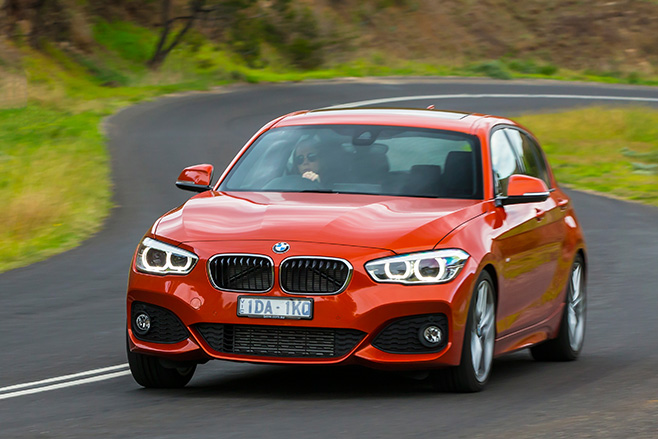
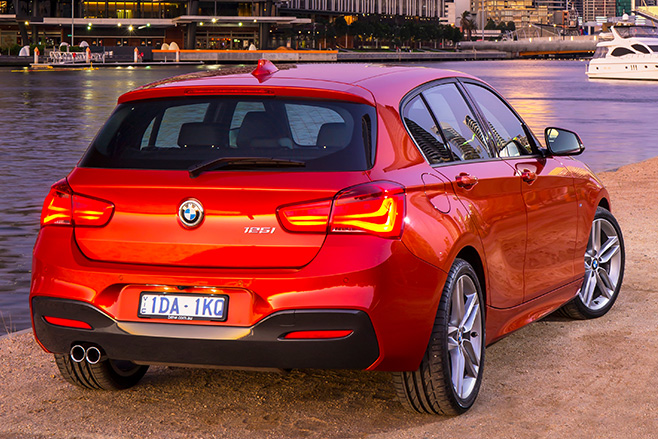
Sydney’s own Calvin Luk, now a member of BMW’s exterior design studio in Munich, was responsible for the key cosmetic changes; at the front, trimming the headlights down, making the kidney grille wider, and enlarging the lower intake. At the rear, the tail lights have morphed into a two-piece design, making the car look wider and more substantial. A subjective call, but we think these tweaks make a massive (positive) difference to the car’s presence.
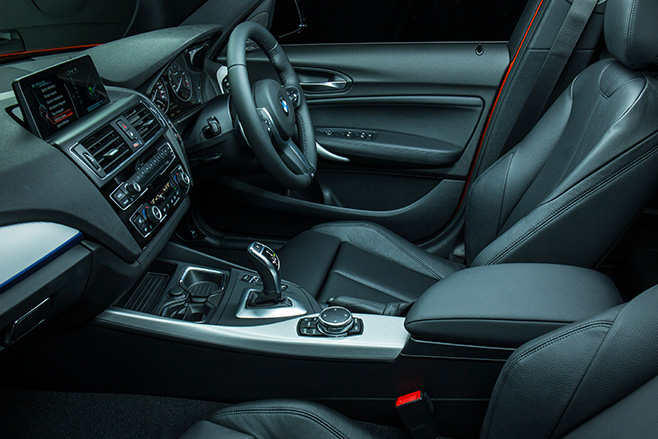
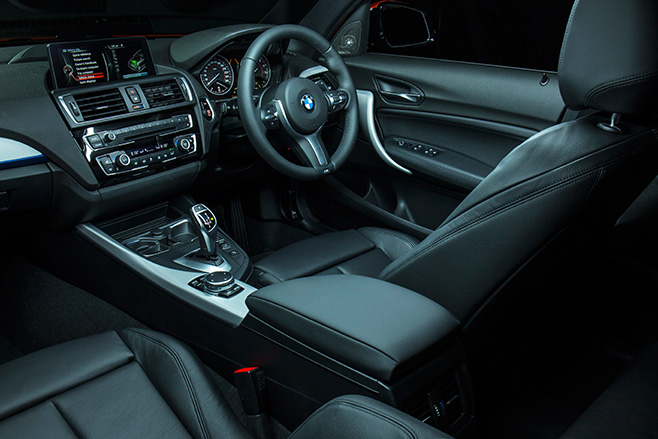
Inside, entry and mid-range models (118i, 118d, 120i) have been given a lift with high-gloss piano black surfaces around the cabin, accentuated by red highlights, with aluminium trim and blue highlight elements on the primo 125i and M135i.
That’s all fine, what’s it like to drive fast?
The range now starts with the 118i, running the same 100kW/220Nm 1.6-litre turbo petrol four as the 116i it replaces. But that’s set to change later in the year, when a 1.5-litre in-line turbo triple (borrowed from the 218i Active Tourer) starts appearing in the engine bay, with exactly the same outputs, yet better claimed fuel economy.
In the meantime, the four-pot 118i is a sweet package. Comfortable and quiet, it lacks straight line grunt (claimed 0-100km/h is 8.7secs) but makes up for it in refinement and sharp dynamic responses. The ‘Driving Experience Control’ facilitates the switch between Eco, Comfort and Sport settings, with rapid changes to gearshift points and throttle response.
The interior feels way more premium, the front seats are comfy, and more than adequate room in the rear marks it as a great city car.
The 118d arrives a month or so after the petrol models, so next step for now is into the 120i. Powered by the same 1.6-litre engine as the 118i, warmed up with some ECU and turbo boost trickery, the gruntier 120i (130kW/250Nm) takes greater advantage of the 1 Series’ excellent chassis balance. Maximum torque is available from just 1,500rpm all the way up to 4,500, with peak power taking over from 4,800 to 6,450 revs, the engine singing towards its 7,000rpm ceiling.
Huge fun to push aggressively, rear-wheel drive feel is one thing the 120i Sport’s FWD Audi A1 and Merc A-Class rivals can’t match.
Step up to the 125i and you enter a world of M Sport suspension (lowered 10mm, specific spring and damper rates), M brakes (four piston front calipers), LED headlights, ‘Variable Sport’ steering, and eight speed ‘Sport Automatic’ transmission. Both 125i’s on the launch program were also tweaked up with the optional ‘Adaptive M suspension’ (what a way to spend $1,420).
Hitting B-roads hard in the 125i is extremely satisfying. With 160kW/310Nm flowing to the rear wheels it feels planted, predictable and fast. Body control is impressive, braking strong, and shifts via the Sport version of the eight-speed auto’s wheel paddles are quick.
Then for the truly committed, there’s the M135i. A closed session at Queensland’s Lakeside race circuit showcased the flexibility of this firecracker’s 240kW/450Nm 3.0-litre turbo in-line six, and the quality of the current generation M Sport dynamic package.
Past track experience with this car had unearthed some twitchiness under hard braking, but this time around the M135i is beautifully behaved. With all of its torque on tap from 1,300-4,500rpm the meaty mid-range underpins the car simply lighting up as max power comes on stream from 5,800-6,000 revs. Claimed 0-100km/h time is a super rapid 4.9secs.
And driving home from the city?
As enjoyable as they are to hustle quickly, all 1 Series models quickly pull in their claws and settle into a more civilised and comfortable touring mode.
The front sports seats match support with long-distance comfort, and noise levels from the road, wind or drivetrain are low at cruising speeds.
Base audio is a six-speaker system, with a 205W seven-speaker set-up, including analogue amp and digital radio, standard in the M135i. Bluetooth, USB and other auxiliary connections are standard on all models.
Anything bad about it?
The electric power steering is a weak point, lacking the road feel that should be on hand to compliment such a capable chassis. Variable sport steering with active ‘Servotronic’ is fitted to the 125i and M135i, and could be a useful ($870) option box to tick on other models.
How much would I have to pay? And is it worth it?
A starting price of $36,900 (plus on-roads) will slot a 118i in your driveway (118d $40,300), and standard equipment across all models now includes eight-speed auto transmission, rear-view camera, climate-control air and auto rain-sensing wipers. Plus ‘ConnectedDrive’ providing real-time traffic info and ‘Lifestyle’ services (news, weather, Google search, Office apps), as well as ‘TeleServices’ (battery replacement, breakdown assist), ‘RemoteServices’ (remote door lock/unlock, vehicle finder function) and ‘Intelligent Emergency Call’ (call-centre SOS).
The 120i will set you back $41,900 and adds, 17-inch alloys (up from 16s), anti-dazzle interior mirror, fog lights, dual-zone climate control, and interior lights package, extended smartphone connectivity, ‘Driving Assistant’, an extended instrument cluster and more premium upholstery.
Shell out $48,900 for the 125i and the following fruit is tipped into your BMW basket: 18-inch M alloy rims, sport auto transmission, M Sport suspension and brakes, variable sport steering, exterior mirrors with anti-dazzle and fold function, LED headlights, front and rear ‘Park Distance Control’, plus combination Alcantara/cloth trim.
Then the piping hot, $62,900 M135i dials up adaptive M suspension, adaptive LED headlights, ‘Navigation Professional’, DAB+ digital radio, hi-fi audio and leather upholstery.
Big numbers for a small car, but super-sharp in the context of Audi and Merc competition.
Would you take the BMW 125i or Mercedes-Benz A250 Sport?
Both brilliant, with lofty spec and impressive tech oozing out of their wheel wells. The BMW’s cheaper, faster and a fraction more frugal. BMW over Merc by a hair’s breadth.
Click here to find out more about the BMW 1 Series.
Fiat has brought Italian style to the SUV baby boom with the 500X. Is its appeal more than skin deep?
WHAT IS IT? The 500X is Fiat’s foray into the booming compact SUV class and the latest addition to the expanding 500 family. Think of it as a trendier, Italian version of the all-American Jeep Renegade, whose underpinnings it shares.
WHY WE’RE TESTING IT The Fiat 500X is a potential goldmine. The compact SUV class is booming and Fiat expects the 500X will be its most popular model. Will buyers be happy?
MAIN RIVALS Mini Countryman, Renault Captur, Jeep Renegade, Mazda CX-3, Nissan Qashqai, Nissan Juke, Honda HR-V, Suzuki Grand Vitara
THE WHEELS VERDICT Fiat needs the 500X to be good, and it is. Stylish looks, Italian flair and fluid handling virtually guarantee sales success. But it’s far from perfect.
PLUS: stylish exterior; quality interior; fluid dynamics; optional safety tech MINUS: stiff-legged ride; absentminded 9-speed auto; all that style isn’t cheap
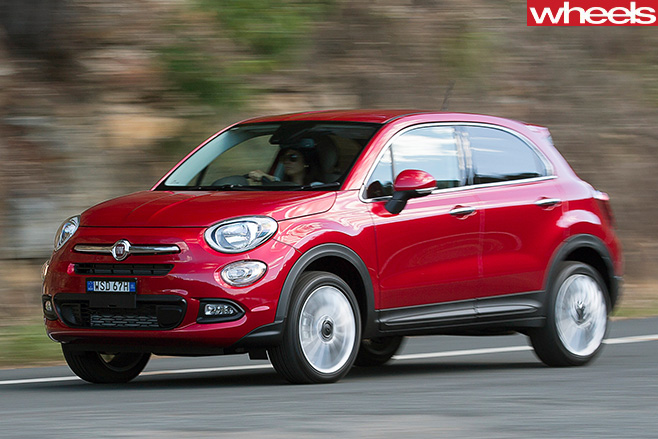
The 500X is the latest addition to the expanding 500 family (the first was the elephantine 500L that thankfully isn’t sold here), and promises to be a sales boon for Fiat Oz. Company boffins predict it will easily be the brand’s most popular model, such is Australia’s insatiable thirst for the small SUV.
It needs to be good, then, and for the most part, it is. Stylish, well-built and well-specced, the 500X adds a dash of Italian flair and individuality to the compact SUV segment. But while it’s cheerful, it definitely isn’t cheap.
Starting at $28,000 for the entry-level Pop manual, the range taps out at $39,000 for the off-road focused Cross Plus, positioning the 500X at the expensive end of the compact SUV class.
Don’t let the 500 badge fool you, either, because underneath, this isn’t a Fiat 500 at all. It’s a Jeep Renegade, wearing a chic Italian suit. The two share the same underpinnings, gearboxes and 1.4-litre MultiAir engine, but the Fiat’s independent suspension is tuned differently to suit its hipper, inner-city image.
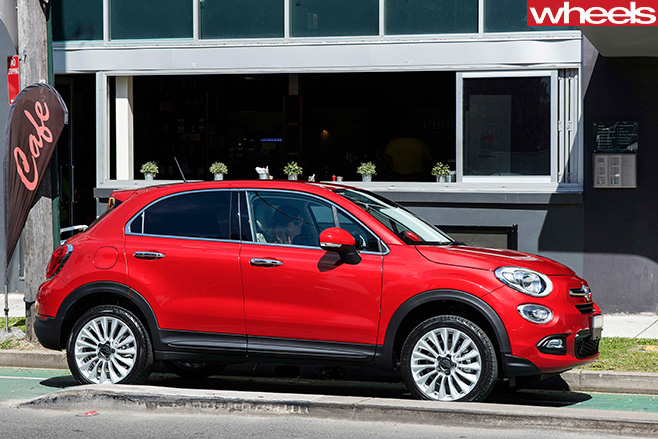
Inside the cabin is cheery and well-finished with heaps of funky, 500-inspired touches. It’s roomy too, with space enough in the back for two tall adults on the high rear bench, and a decent 350-litre boot.
There’s also plenty of equipment, with every model boasting cruise control, reverse camera, rear park assist, Bluetooth, tyre pressure monitoring and a flat-bottomed, leather-wrapped steering wheel with paddle shifters. Safety gear includes seven airbags and blind spot monitoring, while upper spec Lounge and Cross Plus variants add forward collision and lane departure warnings. Audiophiles will appreciate the option of a 9-speaker Beats by Dre hi-fi, which is standard on Lounge and above.
Dynamics are another positive due to sharp steering and honest handling, but the trade off is a firm ride that lacks the suppleness you expect in a high-riding SUV. Our test cars rolled on 17 and 18-inch wheels and jarred over sharp-edged bumps. If you prefer ride quality over style, opt for the base 16-inch hoops.
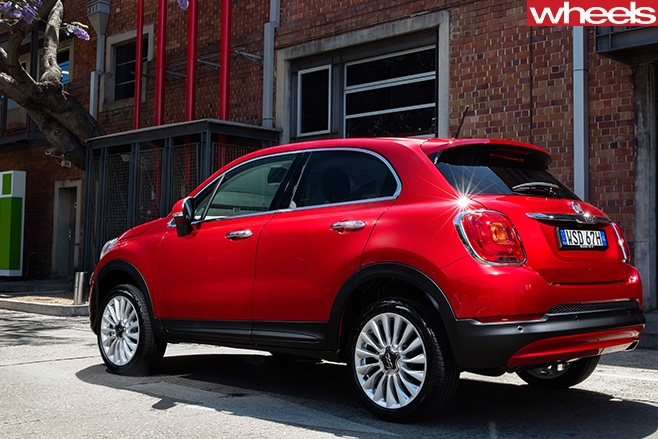
So does all this mean the 500X delivers on its on paper promise? Yes and no. While it’s oozing in character and offers decent dynamics and space, the 500X’s firm ride, dopey nine-speed auto and steep price tag mean it is less complete than some of its compact SUV rivals. So it’s form over function, and style over substance, but in a lovable, Italian way.
SPECS Model: Fiat 500X Lounge Engine: 1368cc 4cyl , dohc, 16v, turbo Max power: 125kW @ 5500rpm Max torque: 250Nm @2500rpm Transmission: 9-speed automatic Weight: 1405kg 0-100km/h: 8.0sec (estimate) Fuel economy: 6.7L/100km Price: $38,000 On sale: now
Bragging rights are an important part of sports car ownership for many buyers and nothing says power quite like a figure beyond 300kW.
Although locally the VT Series II HSV GTS spearheaded relatively affordable access to a power digit beginning with ‘3’ in the late nineties, the period between 2003 and 2008 saw the real boost of models accessing that sort of power figure.
Here the rules are: cars either side of a decade old, in good and original condition (based on the classifieds ad and photos) with around 150,000km.
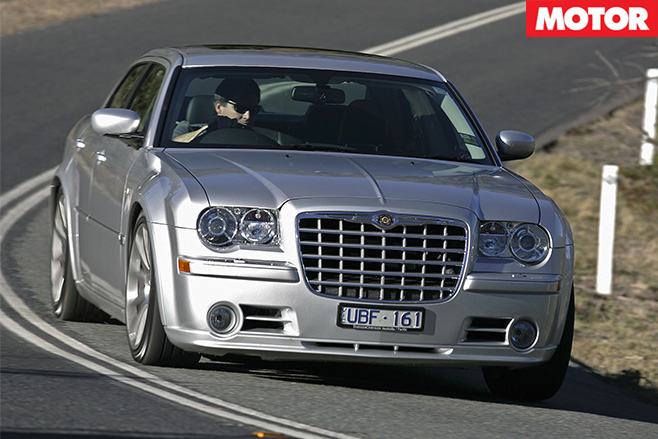
2006 Chrysler 300C SRT8
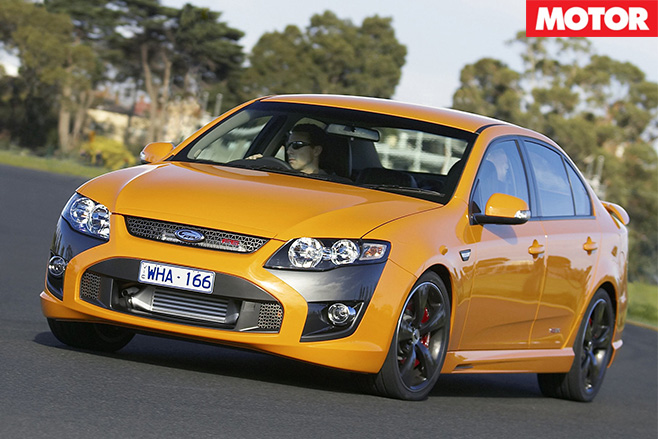
2007 HSV Clubsport R8 or 2008 FPV F6

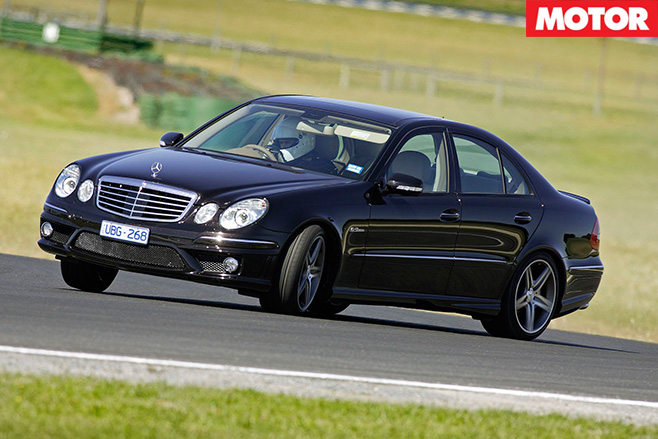
2004 Mercedes-Benz E55 AMG
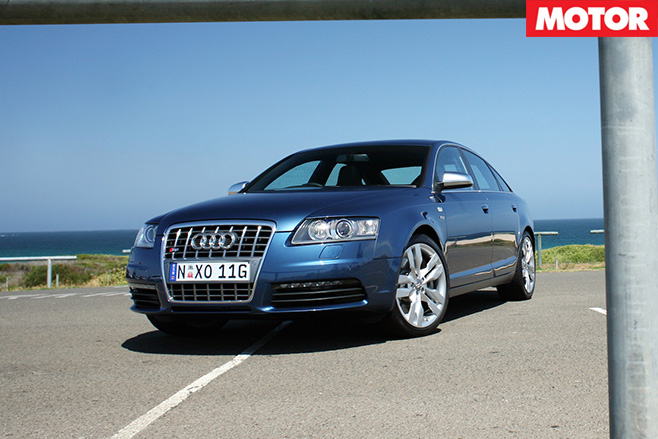
2007 Audi S6
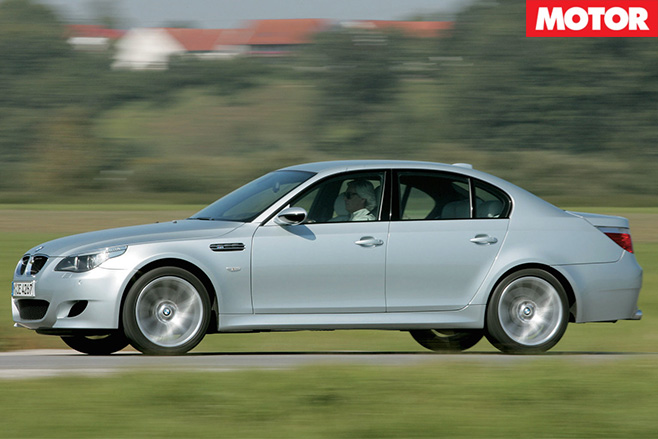
2006 BMW M5
Packing for a family road trip is akin to moving house – it takes forever, it’s exhausting, no one wants to do it, and you always feel like something has been left behind. Unfortunately, you can’t pay some burly blokes to do it either, which makes moving house better than packing a car for a trip with kids. Take a deep breath; WhichCar is here to help with a what-to-pack checklist.
INFANTS
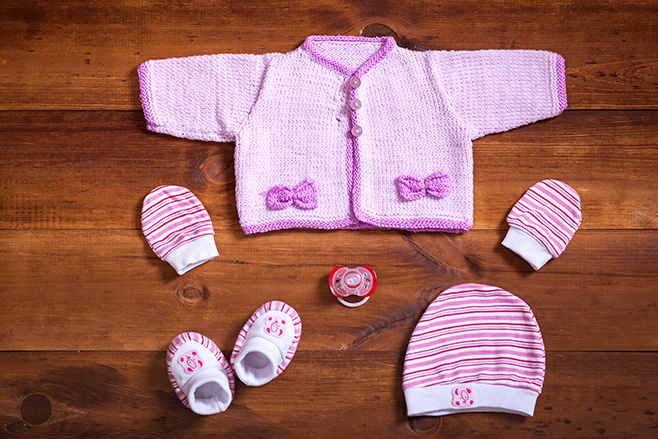
While a daunting thought at first, travelling with an infant is actually pretty easy. They sleep a lot, their cries aren’t at fever pitch (yet), and you can feed them almost anywhere. But they need so much stuff.

An easy way to ensure you remember everything to pack is to whack a sheet of paper on the fridge a week before you leave, and then write down the vital must-haves you use during that week. Rookies will forget the Panadol, the spare wipes and the (not one but two) spare changes of clothes for the first driving leg.
You will also need the following within arm’s reach (not in your suitcase):
- Nappies and wipes;
- nappy rash cream;
- throwaway nappy bags;
- a changing mat;
- and a first-aid kit including a thermometer and medications like Panadol and wind/colic meds. If a kid is going to get sick, bet on it happening when you’re away.
- At least two clothing outfits;
- toys;
- teethers and soothers;
- bottles;
- travel steriliser kit;
- and formula milk or breastmilk for a faster feed on the go, with a bottle warmer ($20 from most auto and camping stores) that can operate using the cigarette lighter.
Babies shouldn’t be in capsules and car seats for more than a couple of hours at a time, and, for those stops, bring shade and rain protection. The good old golf umbrella will do just fine, whether rain or shine, to protect your baby when you stop.
If you use a baby monitor with sounds to lull the little one to sleep at night, don’t forget to pack it. The sounds, plus the night lights that typically come with them, are a godsend at your destination.
However, if you forget, scan the apps available on your phone for familiar sounds that match, and there are also ‘candle’ apps that provide a comforting soft nightlight. This can also be used in the car as you travel.
If possible, pack your own cot sheets (whether you take a Portacot or not) – preferably ones that your baby has already slept in. The familiar smell of home can be comforting when everything else has changed.
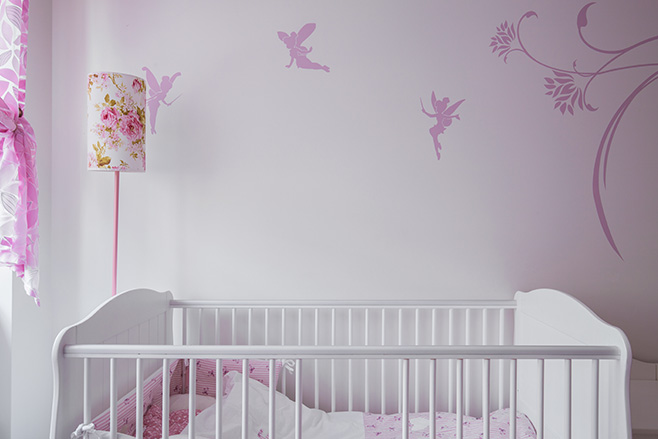
Finally, try to leave one of the rear seats (relatively) free. You will probably end up sitting next to your baby at some point, dangling shiny objects and trying to sing them back to sleep.
TODDLERS TO THREENAGERS
Older kids can make travel seem like time has stopped. Two hours feels like two days with a bored toddler in the back, so pack for entertainment as well as practicality.
When preparing for the trip, ask your wee one to pick a few of their favourite toys for the trip. But monitor them closely – a ‘few’ toys can turn into the entire contingent.
Invest in a boot organiser and a rear seat organiser with pockets – the ones that hang from the back seats to keep all toys, bottles and paraphernalia within reach and off the floor where it can roll under pedals.
Reading books, colouring books and pencils are good short-term amusements, but some kids get carsick far too quickly for this option. If you don’t want to resort to the iPad or mind-numbing movies playing for hours, see how they go with an audiobook. Classic tales voiced by known actors can keep the car eerily quiet for hours, and they can still watch the world go past while the story entertains them.

Here’s the killer when it comes to food: You shouldn’t pack lollies, sweets, or sugar. Not unless you want to stop every 90 minutes to let the kids scream around the nearest playground. Even high-sugar fruits and juice boxes should be avoided for the more fidgety kids – a certain writer had her parents do this every trip – otherwise the child cannot bear the confinement of the car. High-fibre snacks are best, as they are filling and can help the problem some kids have with their bodies packing up after prolonged inactivity and not enough fresh air.
Yet again, you will be stopping frequently, but this time to alleviate boredom as well as sore backsides. So plan ahead and make it interesting, and check out places to stop along the way. Kids love exploring, and trips can become memorable and fun instead of a routine A-to-B journey.
Lastly, pack a cheap kid-proof digital camera, or sacrifice an old one. They go for nothing these days (and are much cheaper than your phone). Kids will take photos of everything and anything they see, and it becomes a journal of the trip. One in a hundred will be a good picture, but it’ll be a keeper.
THE man who made the Volkswagen Golf the benchmark for small cars has resigned his position on the Volkswagen Supervisory Board.
Dr Ulrich Hackenberg, who joined Audi in 1985, was suspended from the position more than two months ago at the height of the Dieselgate emissions scandal.
He has now relinquished his roles as Audi technical chief and Member of the Board of Management for Technical Development, in a huge loss for the VW Group.
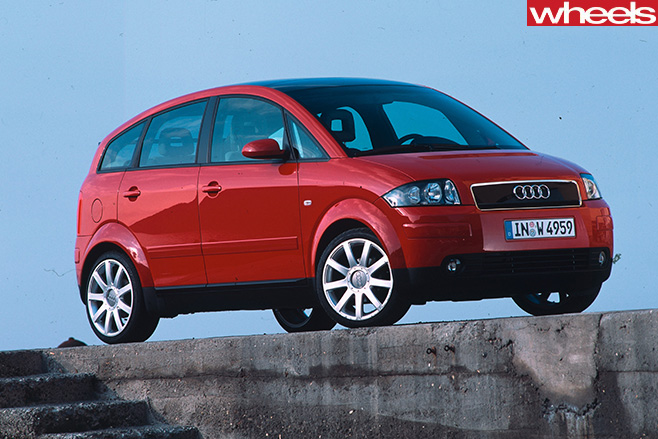
He was technical leader on the Audi 80, and also on the Audi A8 – which was the first aluminium space frame production Audi.
More recently, he developed the modular longitudinal toolkit as head of the Concept Development, Body Development, Electrics and Electronics departments.
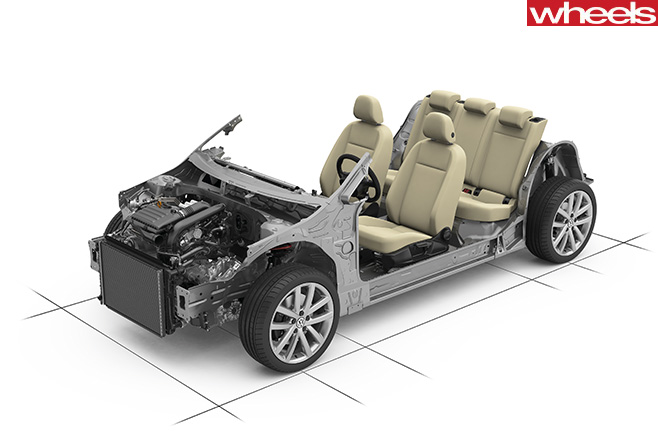
Hackenberg also worked to produce the company’s ‘one-litre car’, the XL1, with a claimed fuel consumption of 0.9L/100km.
He will be replaced by Dr Stefan Kirsch. Kirsch has been head of Audi powertrain since May 2013, with previous roles including head of quality at VW-owned Porsche.
VW Group CEO Matthias Mueller, who replaced Martin Winterkorn, in early October as Dieselgate began to claim scalps, praised Hackenberg’s contribution to the company.
“Above all, the modular toolkit system is inseparably connected with the name of Ulrich Hackenberg. He had that idea already in the early nineties at Audi. Today, the entire Group profits from it, Mueller said.”
Toyota has amped up interest in its S-FR coupe by revealing a meaner racing-style concept.
Due to be shown at Tokyo Auto Salon next January, the S-FR Racing Concept throws away the perky looks of the original concept, which debuted only months ago, and replaces them with a theme more familiar with track machinery.
With the job given to Gazoo Racing, one of Toyota’s racing and tuning arms, the S-FR will appear in January with a bevy of aerodynamic additions, hinting at the enthusiasm Toyota has for the S-FR idea.
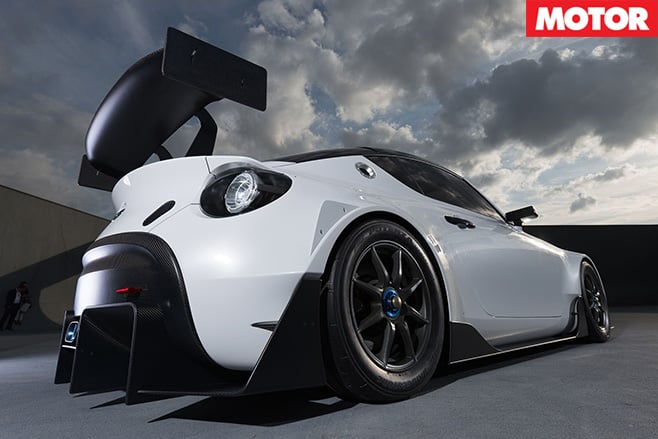
Carbon-fibre skirts bridge the bodywork between its rolling stock, and match the aggressive front bumper, canards, and extremely detailed racing-spec diffuser at the Racing Concept’s rear.
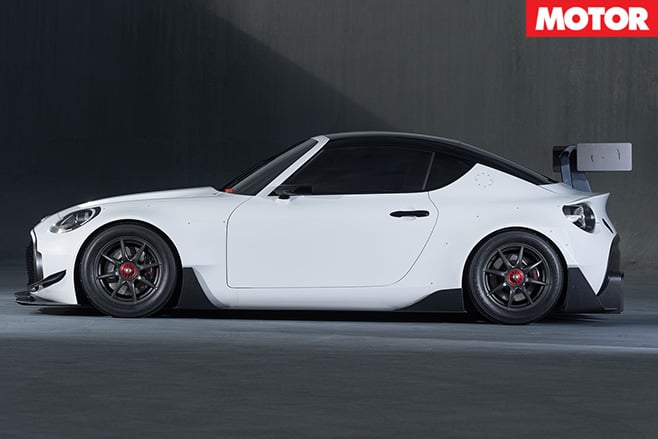
Toyota didn’t reveal what engine was mated to the road concept’s six-speed manual, but the scrubbing-board sized intercooler lurking behind the Racing Concept front grille suggests turbocharging is involved here.
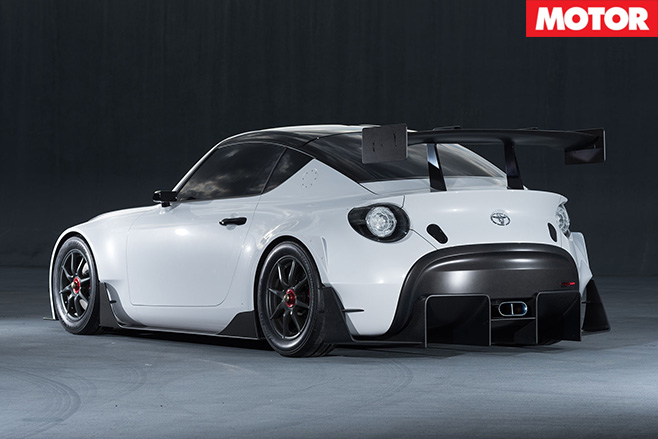
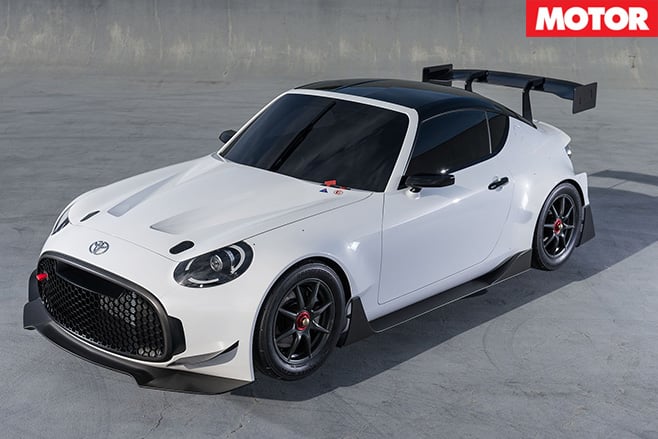
None the less, it looks fantastic, and we should be treated to more information come January when the Racing Concept is officially revealed at the 2016 Tokyo Auto Salon.
WHAT IT’S MADE FOR
While the top spec ST-X has 4WD capabilities putting it ahead of some of its competitors, its space-saver spare confirms its city-car reputation. It’s like the urban camper – made for those who love the metropolitan lifestyle, but don’t mind a few rutted out tracks.
STAND OUT FEATURES
The Vitara’s stand out features come in the form of its standard features. Sat nav, reverse camera, touchscreen, Bluetooth, cruise control, LED daytime lights, seven airbags and the handy speed limiter are standard at all levels. And calculating in at a decent price, this Suzuki has come to play in the value game.
WE LOVE
There’s a lot to love about the Vitara. Aside from being one of the quietest cabins in its class, it also boasts comfort, value, economy, decent steering control and space.
It’s good-looking in an androgynous kind of way and the roomy and airy interior is stylish and generous.
The 375L boot is large enough to fit a couple of large suitcases, and there’s plenty of nooks and crannys to store other items.
THINGS WE’D LIKE TO CHANGE
But as always, it’s not all good news. The new Suzuki could do with a bit more torque and occasionally it’s a bit hesitant on the accelerator in the automatic.
The analogue speedo is a bit archaic, and the absence of driver-assist technology is surprising. With emergency braking fast becoming a standard, it’s perplexing as to why Suzuki would leave this off a new model.
WHO WILL IT SUIT?
So who will we see driving the Suzuki Vitara. Well those who are in the early phases of starting a family, to those who need a second-car with space and occasional off-road capabilities, are likely to enjoy the Grand Vitara’s baby brother.
Click here to find out more about the Suzuki Vitara.
Renault will return to Formula 1 as a full works manufacturer in 2016 following its buyout of the struggling Lotus team.
While Renault has had a continual presence as an engine supplier, most notably with Red Bull Racing, this marks its first entry as a constructor since 2009.
Ironically, this latest takover will result in Renault buying back the team it originally sold to Genii Capital following its 2009 pull-out.
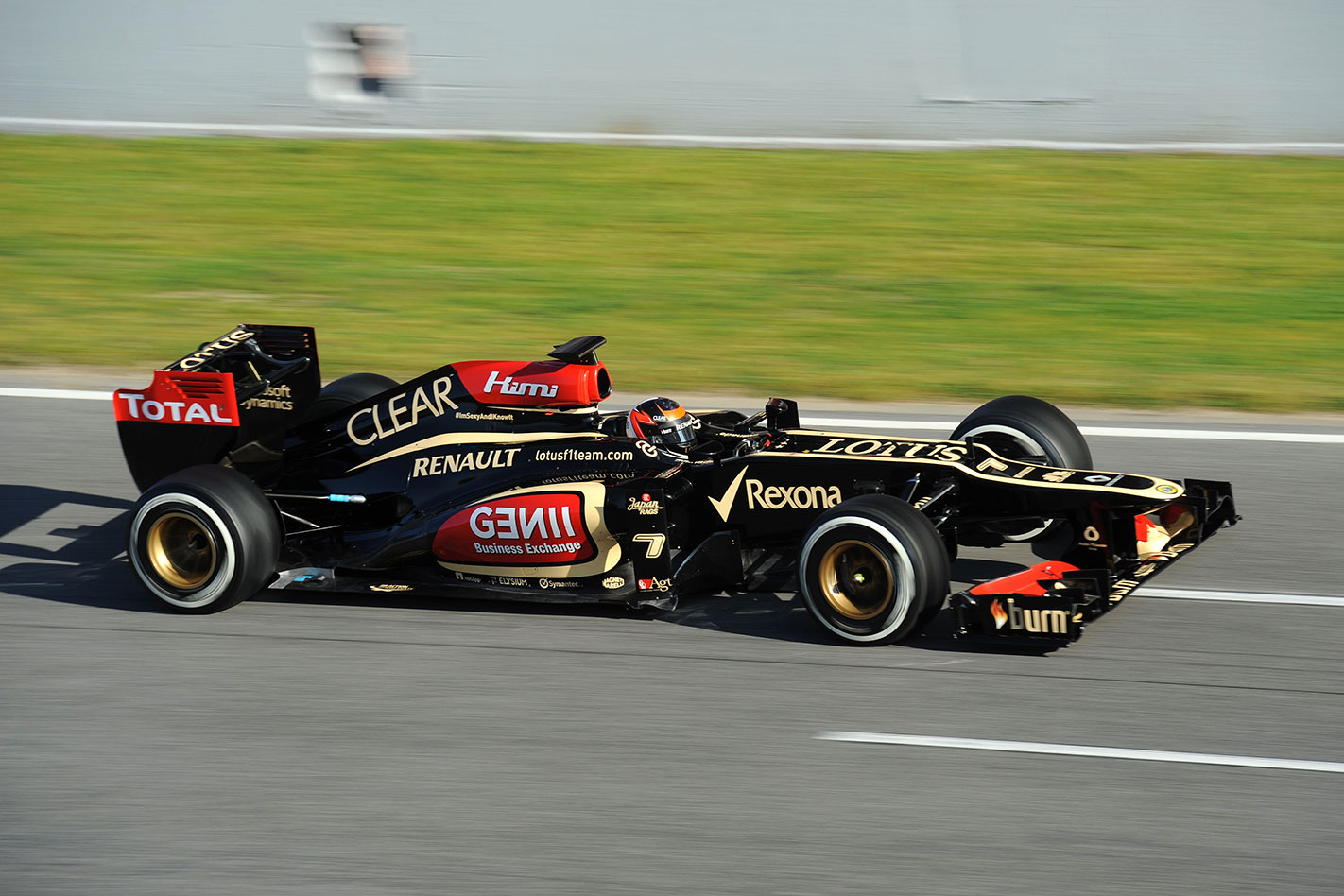
“After a detailed study, I have decided that Renault will be in Formula 1…our ambition is to win, even if it will take some time.”
Renault has enjoyed considerable success as an engine supplier, most notably four straight titles with Red Bull Racing, however it discovered that the benefit it received from such victories was limited.
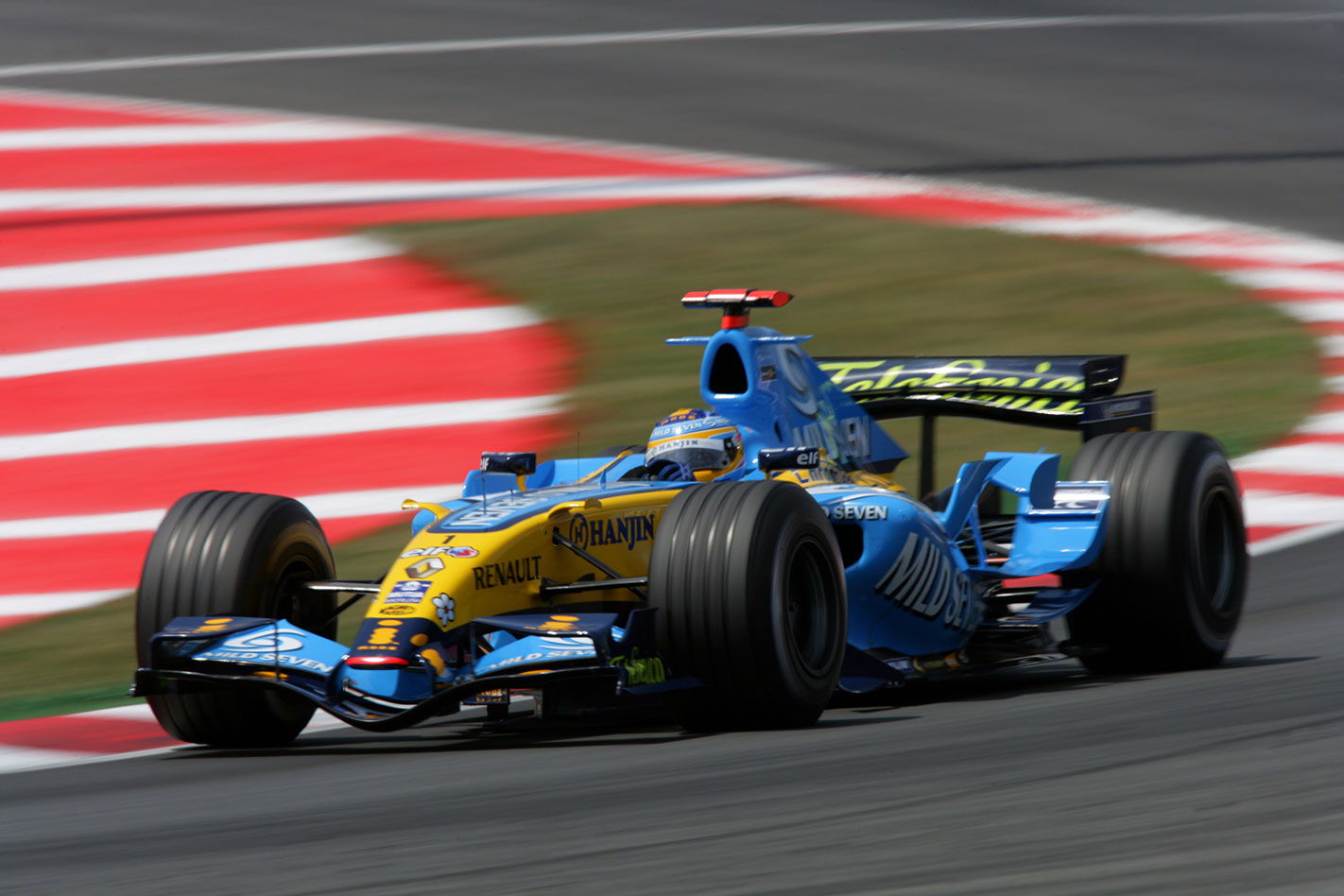
Renault has a mountain to climb in order to catch up to Mercedes and Ferrari, 2015 marking the first season since 2007 a Renault-engined car has failed to win a race.
The 2016 F1 season kicks off in Melbourne on March 20.
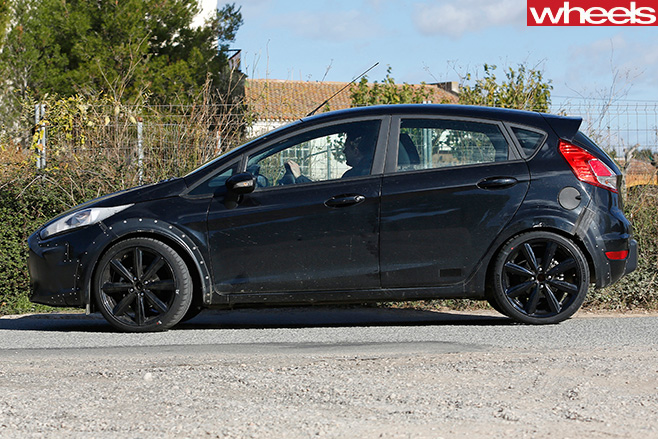
FORD is likely to unveil its all-new Fiesta as soon as next September at the Paris Motor Show, though when the Euro supermini surfaces in Australia is another matter.
Spotted in mule guise, wearing the same body as the current car but sporting a significantly wider track (leading some observers to incorrectly call it an RS flagship), the fifth-generation Fiesta appears to have grown compared with the eight-year-old model it replaces, hopefully addressing the tight rear-seat and cargo area space issues.
Dimensionally the existing hatch is 3969mm long and 1722mm wide, with front and rear tracks measuring in at 1477mm and 1466mm respectively.
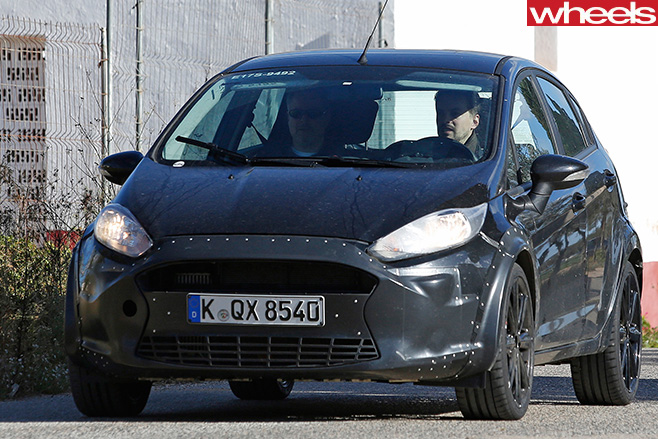
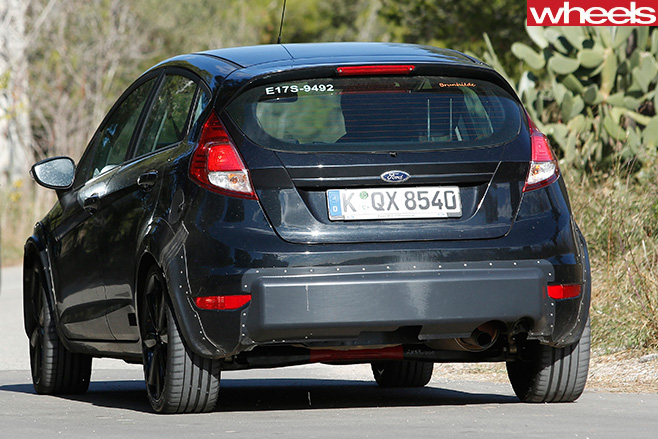
Of note, the unexpectedly strong reception enjoyed by the ST flagship means another one – with Volkswagen Polo GTI-beating power and torque – is all but a done deal.
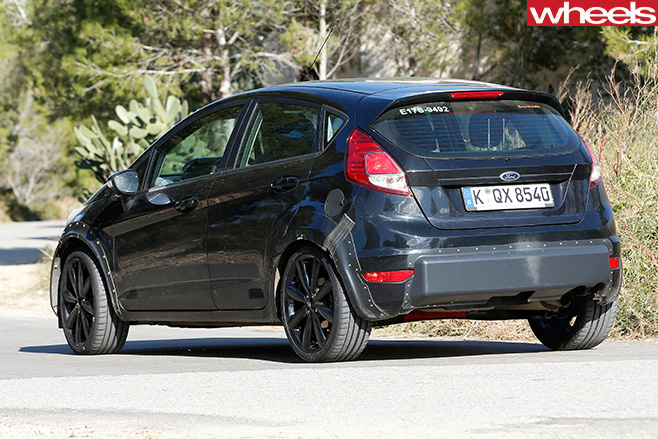
German-built ST-aside, Thailand will most probably continue to build cars bound for Australia.
Have spy pics of your own? We’d love to see them. Just email them to [email protected]
