
FORMULA 1: that’s all for 2015, folks!
IF ONLY all of the season-ending Abu Dhabi Grand Prix would have been as spectacular and as crazy and the spirited opening lap.
But after it settled down, the race quickly became too much of a staple of modern Formula One – an orderly high-speed procession led by two Mercedes up front, with Ferrari, Red Bull and Williams fighting over the scraps. Oh, wait, there’s someone who didn’t read and digest the script; Sergio Perez in the Force India…
Nico Rosberg turned in another dominant performance under floodlights to crush his world champion teammate Lewis Hamilton for the third grand prix in a row, with Kimi Raikkonen grabbing the final spot on the podium for Ferrari.
Rosberg had never before won three on the trot. He’d like the 2016 season to start next weekend…
So much of the chat lately has been on the question of what has happened to Lewis’s pace since he won the title in Austin. Some defenders say he no longer had anything to fight for, the championship secure. But that’s not Hamilton. He likes to win every time the lights go out. His massive ego has a voracious appetite. Others say he has simply partied too hard lately. But more likely, Rosberg, has upped his game, worked harder and become more assertive.
Hamilton certainly went into Sunday’s race in a reflective frame of mind after the purposeful Rosberg raced to yet another pole – his sixth consecutively and by a comfortable margin.
An overworked word amongst the media was “momentum” and who would take it into 2016.

“I’m thinking of the long game today,” Hamilton declared, waving off suggestions that an advantage at the start would be crucial.
Heading the second row was a more competitive Raikkonen in third for his best qualifying result of the season, ahead of the impressive Perez in the Force India. The shock was that Sebastian Vettel was a victim to a Prancing Horse stuff-up which meant he didn’t make it beyond Q1. He started 15th.
Fifth fastest was Daniel Ricciardo in the Red Bull Renault, marginally faster than Valtteri Bottas, dealing with an outrageously wagging Williams tail.
With the sun setting over the desert on Sunday evening, Rosberg made another strong start, from Hamilton, Raikkonen, Perez, Nico Hulkenberg and our Daniel.
There was some brutal stuff going on in the mid-field around the Toro Rosso babies and Daniil Kyvat, while Vettel made up several places from further back.
Lotus’ Pastor Maldonado was sidelined on the mad first lap, after contact which earned McLaren’s Fernando Alonso a penalty.
Hamilton couldn’t land a blow on Rosberg as the German, in his most commanding performance of the year, powered to victory.
To emphasise Mercedes’ supremacy this season, Hamilton and Rosberg collected 80 per cent of all the available points.
“This is the perfect ending to the season for me – something I hoped for so much after a tough year,” said the delighted championship runner-up.
“To finish with six poles and three wins in a row is awesome. I am so happy that I found some performance at the end of the season. I also made my peace with this track after the toughest moment of my career here last year, which is a nice feeling.
“Today was really a perfect race. The start, the pit stops and the tyre management were all really good and I felt like I had it all under control.”
There was little else of importance to report, apart from Ricciardo’s beautifully controlled late braking overtake on The Hunk on his way to a sixth-place finish, and some spirited driving from Jenson Button.
Commendations go out to Vettel, who climbed to fourth, Perez who would not be budged from fifth at the finish, and Grosjean who stole ninth (up from 18th) in his farewell drive for Lotus.
“Parts of it were fun,” said Ricciardo of his race. “I would have liked more battles, though, but it looked quite spread out.
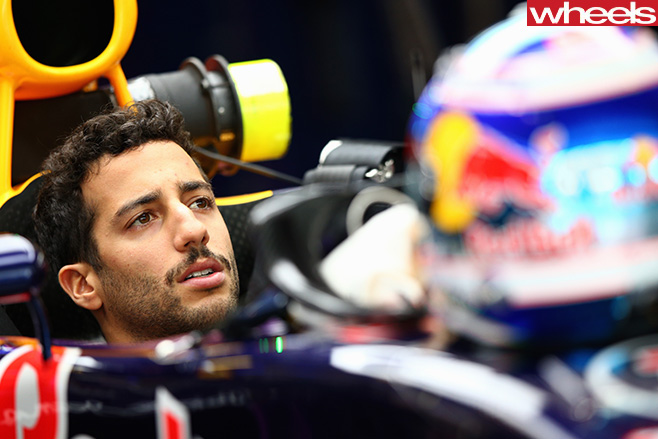
“Sixth is probably not that representative of how good our weekend was, but I’m pretty pleased. I would love to go racing next weekend but at the same time I’m happy the season is over and I’m optimistic that next year will be better,” he said.
“I think we ended the season with a lot more feeling and confidence in the chassis.”
And a final observation from the world champion: “That was a very difficult race. My tyres were done at the end of the first stint sitting behind Nico. The second stint was very good, but I don’t really know what happened strategy-wise at the end.
“I haven’t finished the season as strongly as I started it – but what an incredible year it’s been. I’ll go away now for the winter aiming to come back stronger, fitter and straight on top of our new car for 2016.”
FORMULA 1: Renault prevaricates on future
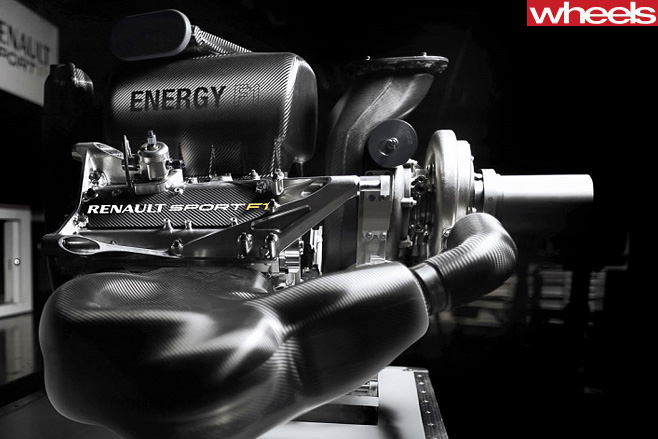
According to insiders, Renault had concluded a deal to buy a majority share of the Lotus team, which it would rebrand. There was also an on-off-on arrangement to supply engines to Red Bull next season.
Why Ecclestone and Renault have struggled to agree on the financial terms of the manufacturer’s return next year is not public, but the BBC believes there is confusion over Renault’s deal to continue to supply Red Bull in parallel with the buy-out of Lotus, which is facing the threat of insolvency if the big cheque doesn’t arrive by December 7.
When this latest deal with Ecclestone fell over, a miffed Renault immediately threatened to walk away.
A crisis meeting was called for last Friday to try to resolve the problem.
Renault Sport boss Cyril Abiteboul told BBC Sport the discussion was constructive: “We will report the result to our CEO but I am pretty sure we will have a positive result.”
However, Abiteboul also declared that while it was Renault’s intent to take over Lotus it had “no obligation” to do so.

But Lotus staff are certainly behaving as if Renault will save the team from falling into administration. They’re working co-operatively with the manufacturer on a car with a Renault engine for 2016.
The Renault boardroom must be a strange place, perhaps fitted with a springboard for back flips, remembering that the French manufacturer won championships in the mid Noughties (with Fernando Alonso) before then selling its team to investment group Genii Capital at the end of the 2009, and downsizing to a role of engine supplier.
That worked wonderfully with Red Bull roaring to four consecutive championships between 2010 and 2013.
The new hybrid formula introduced last year hasn’t been good for the once happy partnership; Red Bull initially announcing mid-year, after some frustrating power and reliability issues, that it intended to secure another power unit supplier.
At the same time Genii, similar to other venture capitalists, found motorsport a strange beast and agreed to flog Lotus back to Renault.
When Red Bull struck out in its search to find another engine source, a meal of humble pie had to be consumed as team principal Christian Horner went back to Renault and renegotiated an amended deal for 2016.
Rather than just take what Renault provides, it appears the engine will be further developed by Ilmor, the engine design company that in the past supplied Mercedes with a winning F1 engine.
GT: Two-car Cayman GT4 team for Bathurst 12 Hour
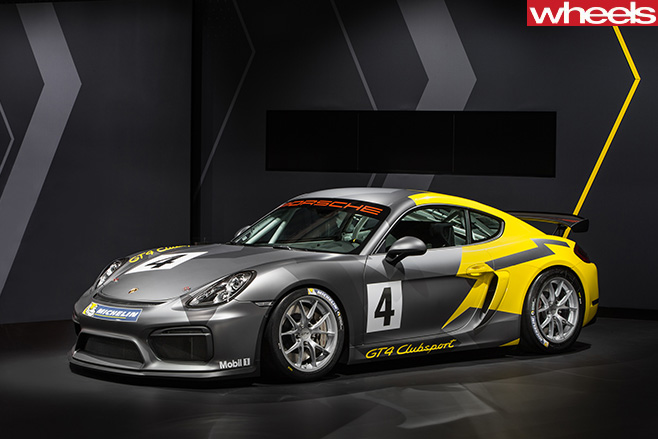
It’s a commitment the team hopes will build the profile of the GT4 class, until now always viewed as a baby class to the outright GT3 category. GT4 features more production-based vehicles with limited modifications from the showroom.
The Pro Sport Performance team, based in the town of Herschbroich inside the Nurburgring circuit, is a noted Porsche racing specialist. Pro Sport has a long record of success at the famous German circuit, notching up six outright wins and more than 100 class victories in the Nurburgring-based VLN endurance series.
The team was the first ever to compete with Porsche’s Cayman model in the VLN series.
As well as scoring several class victories in the Nurburgring 24 Hour, the team has also won a GT4 series title using a Porsche 911, and sored several class victories in GT4 competition using their Bathurst-bound Caymans.
While yet to confirm its full driving squad, the team is excited to be heading ‘down under’ for the first time to take part in a race that just keeps growing in stature internationally.
“If you have to name the big endurance races worldwide, it will be Le Mans, Daytona, Nurburgring and Bathurst,” team manager Steve Buschmann said.
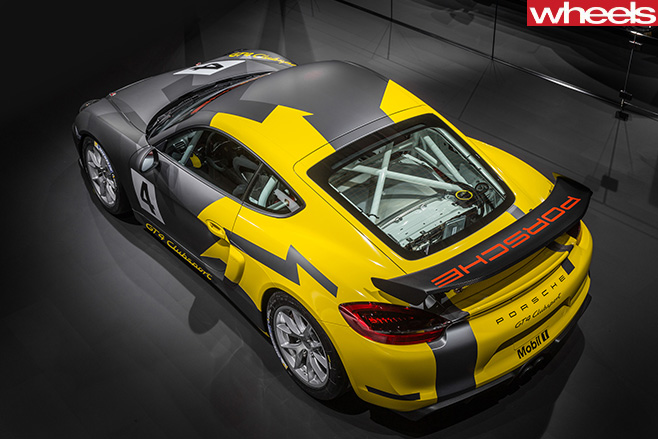
With his team so prominent in the burgeoning GT4 class, Buschmann hopes Pro Sport’s addition to the Bathurst 12-Hour grid will also help grow the baby GT class in Australia.
“Our focus is on GT4 class as it is in Europe. We hope to push this class with our entry. It is a growing market and will become more and more important, in our opinion.”
The target for the Germans is to topple the defending class winner, Tony Alford’s Lotus Exige Cup R.
Additional entries are expected in the GT4 class prior to them closing in mid-December.
Alongside the Pro Sport Performance Porsche Caymans and Lotus’ Exige and Evora models, other successful GT4 vehicles include the Aston Martin Vantage V8, BMW M3 GT4, Chevrolet Camaro GT4, Maserati Grand Turismo MC and the KTM X-Bow GTR.
WEC: Webber retains seat at cost-cutting Porsche
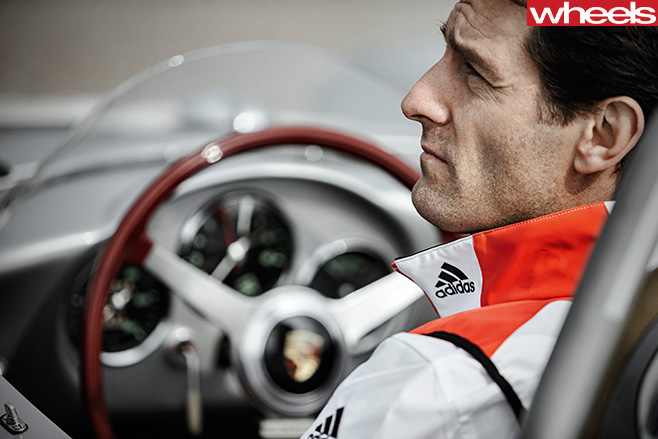
Porsche, and sister brand Audi, announced they would both cut the number of cars campaigning the Le Mans enduro next year from three each to just two.
Porsche said German Timo Bernhard, Kiwi Brendon Hartley and Webber would share one of the Le Mans class one prototypes for the third consecutive year, with Romain Dumas, Neel Jani and Marc Lieb racing with the sister car.
FORMULA E: the arrival of the automaton
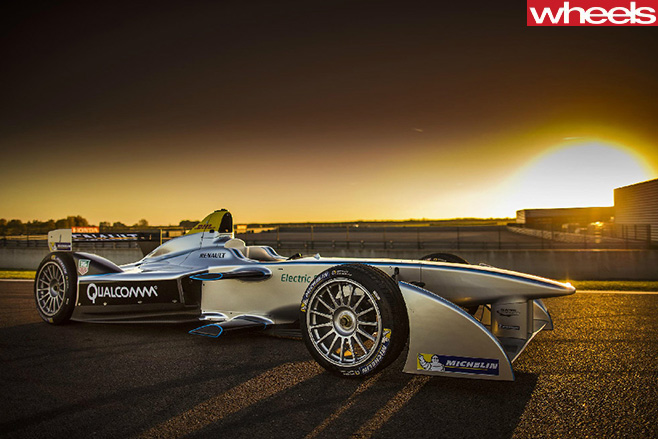
Called Roborace, the intended global race series for driverless electric cars will provide a competitive platform for the autonomous driving solutions developed by car manufacturers and industrial automotive and technology players.
Ten teams, each with two driverless cars, will compete in one-hour races over the full championship season. All the teams will have the same cars, however, will compete using real-time computing algorithms and AI technologies.
The plan is for Roborace to be a key part of the support package of the FIA Formula E Championship, with the first race for the driverless machines planned to take place during the 2016-17 season.
“Roborace is an open challenge to the most innovative scientific and technology-focused companies in the world,” said Formula E chief executive Alejandro Agag.
Denis Sverdlov, founder of Kinetik, which is a partner in the initiative, said: “We passionately believe that, in the future, all of the world’s vehicles will be assisted by AI and powered by electricity, thus improving the environment and road safety.”
For eons, motor racing writers have taken the mickey out of a space-age future where the race cars are controlled by robots.
But, really, hasn’t the world already had driveless electric machines for decades? They’re called slot cars.
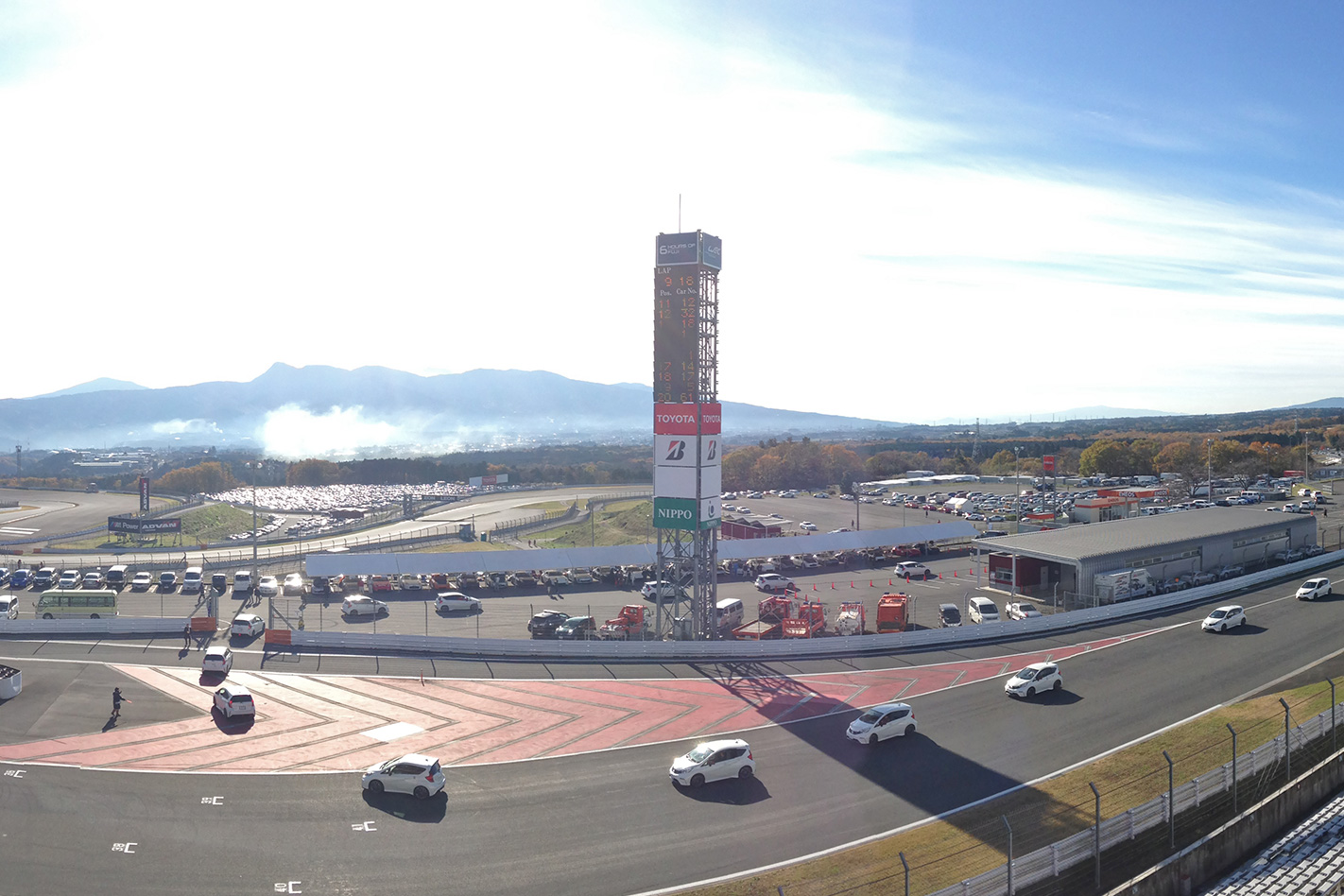
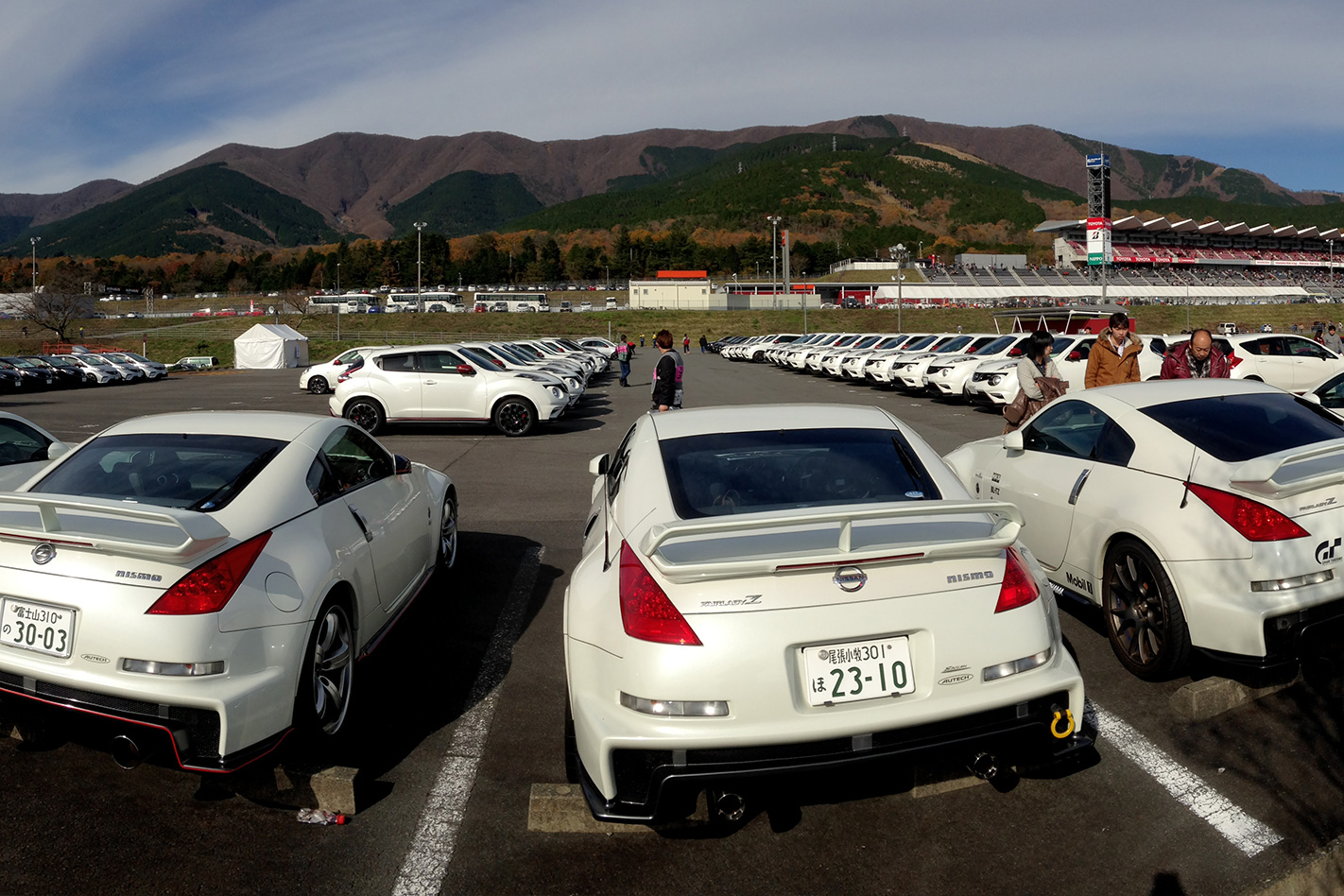
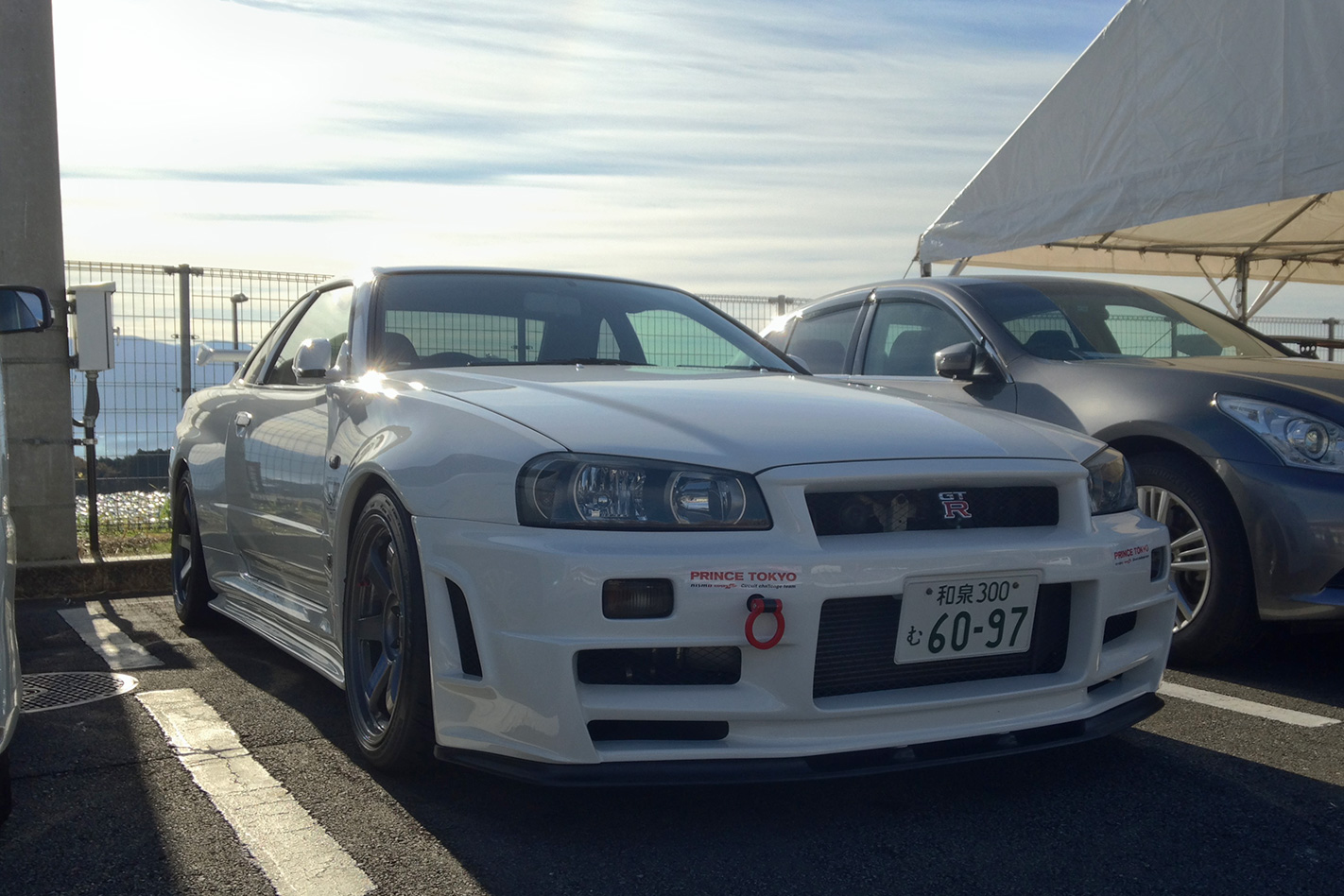
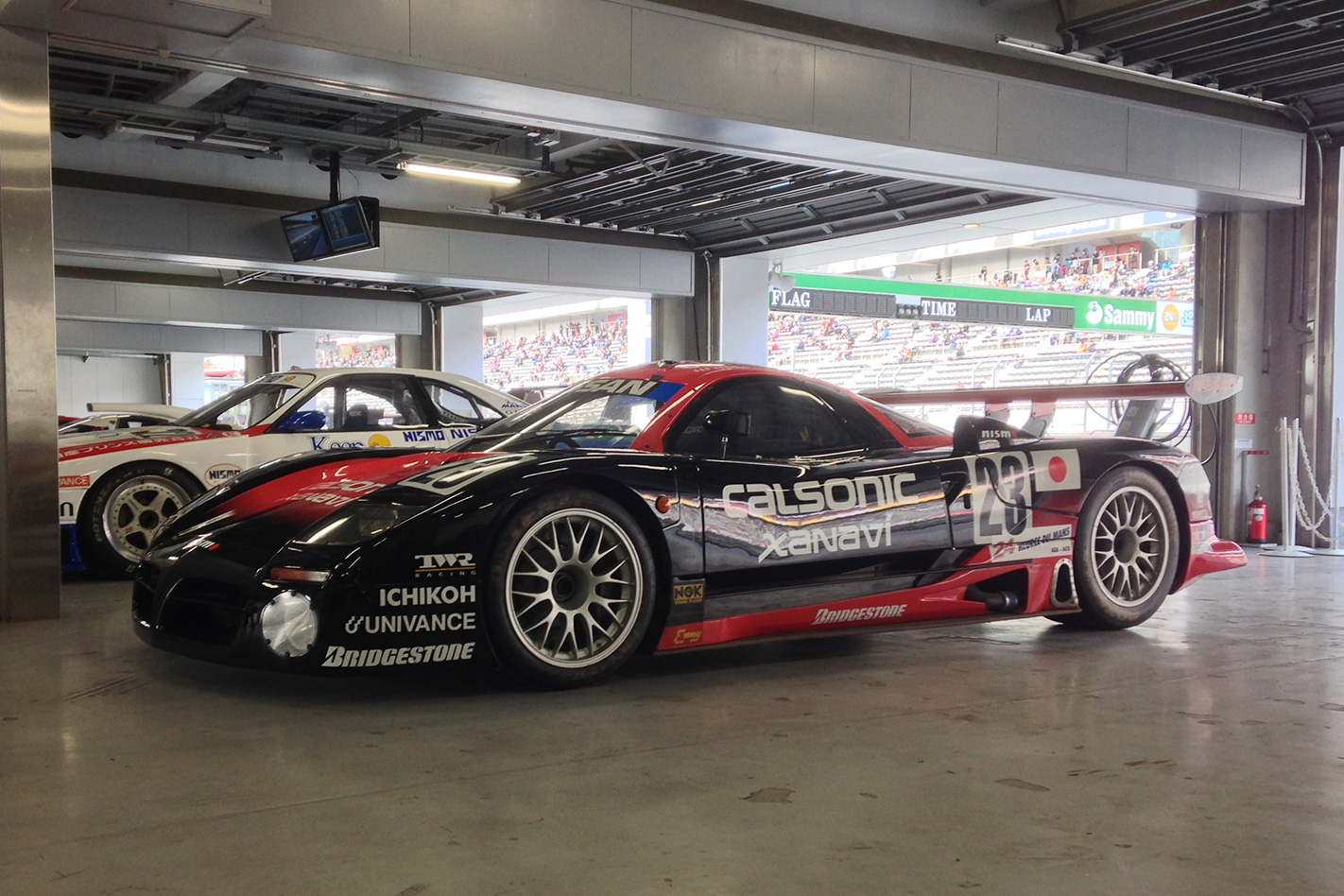
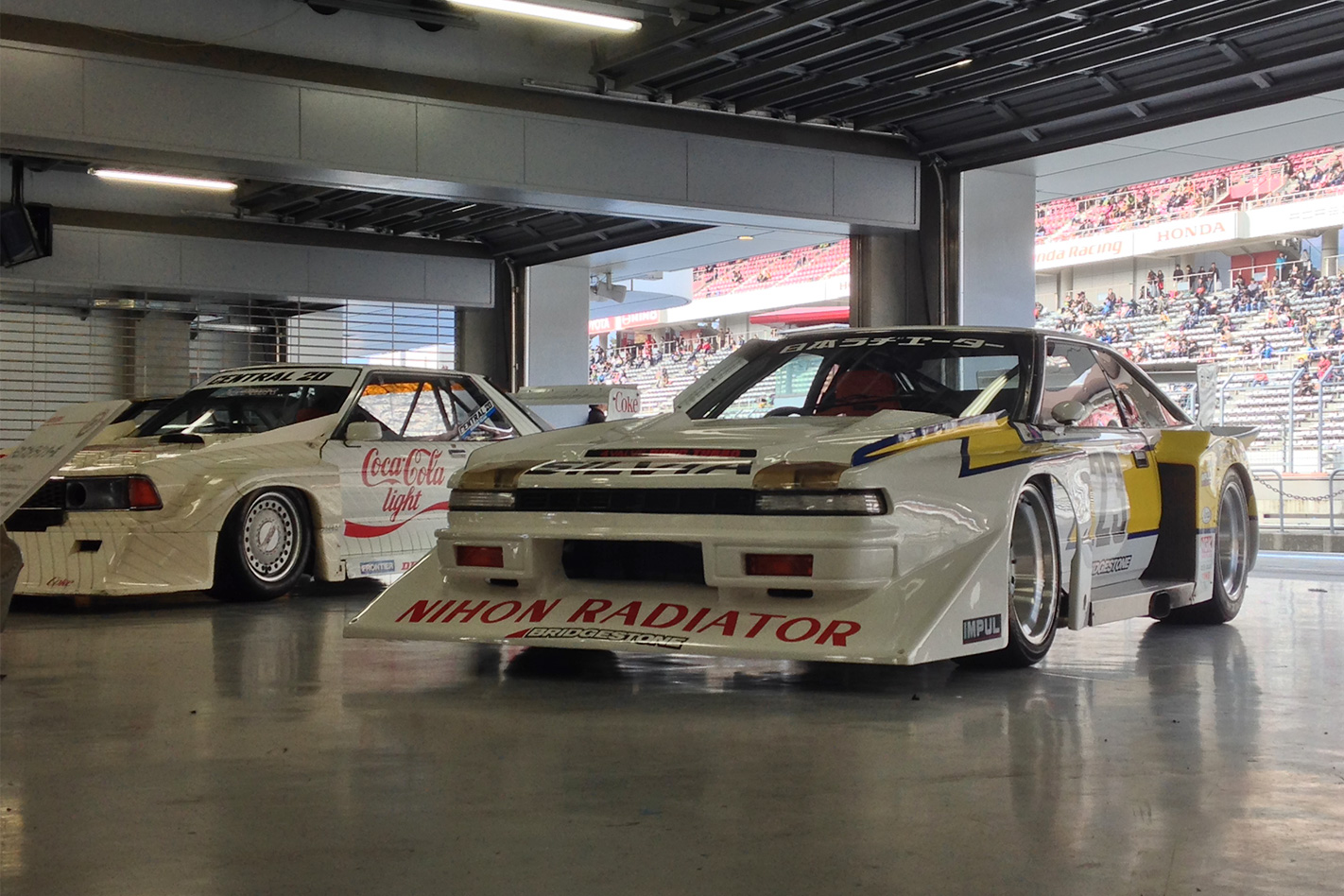
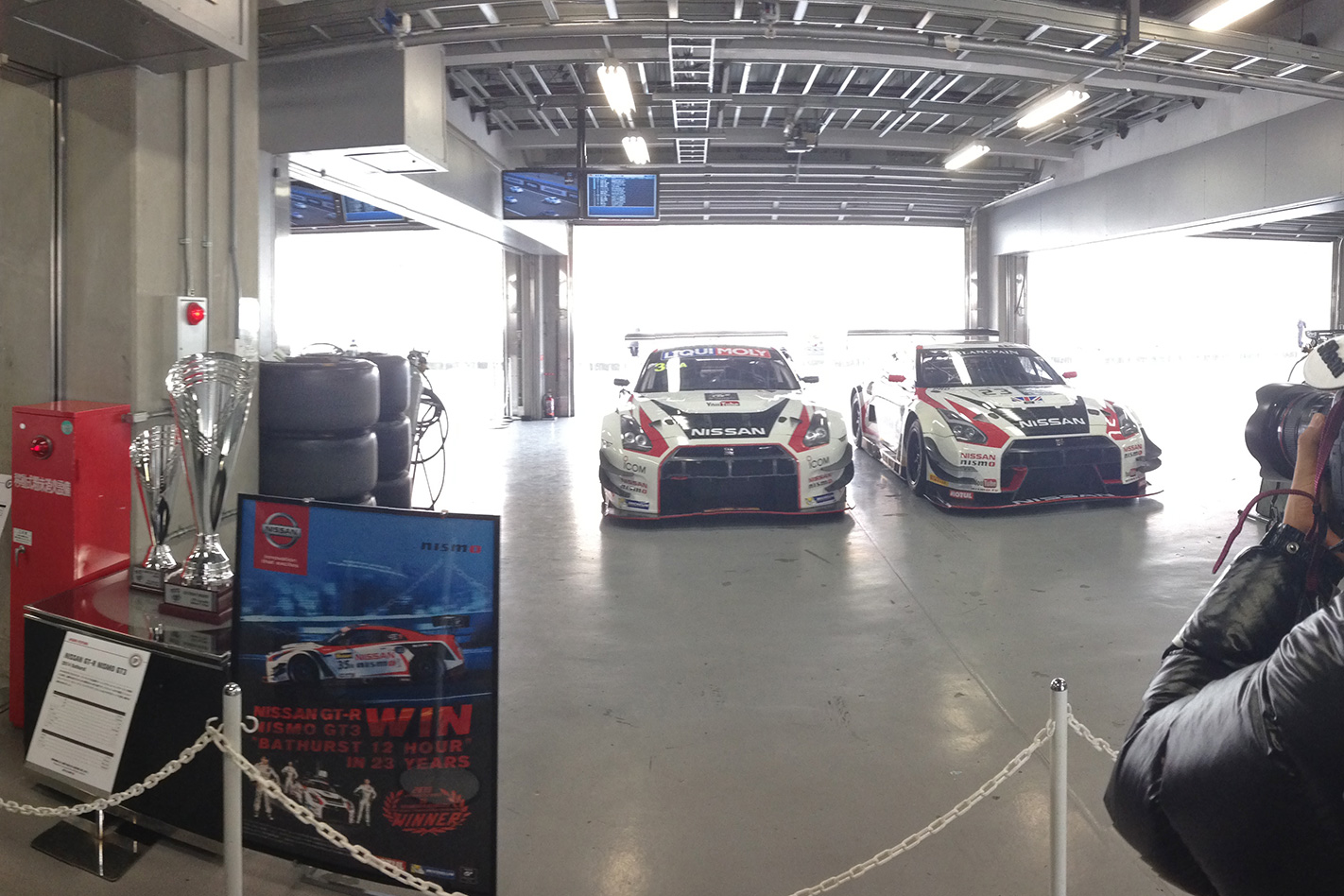
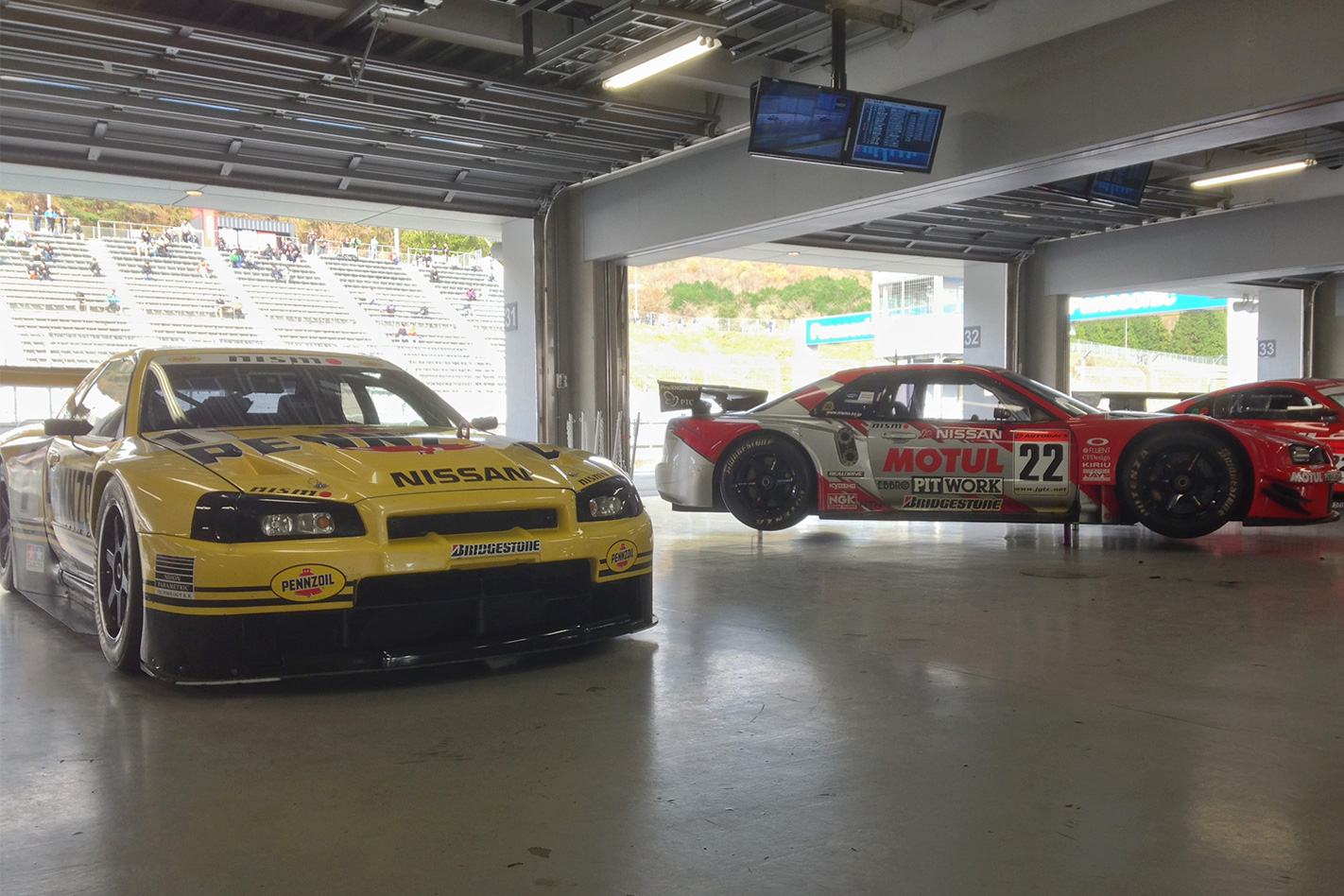
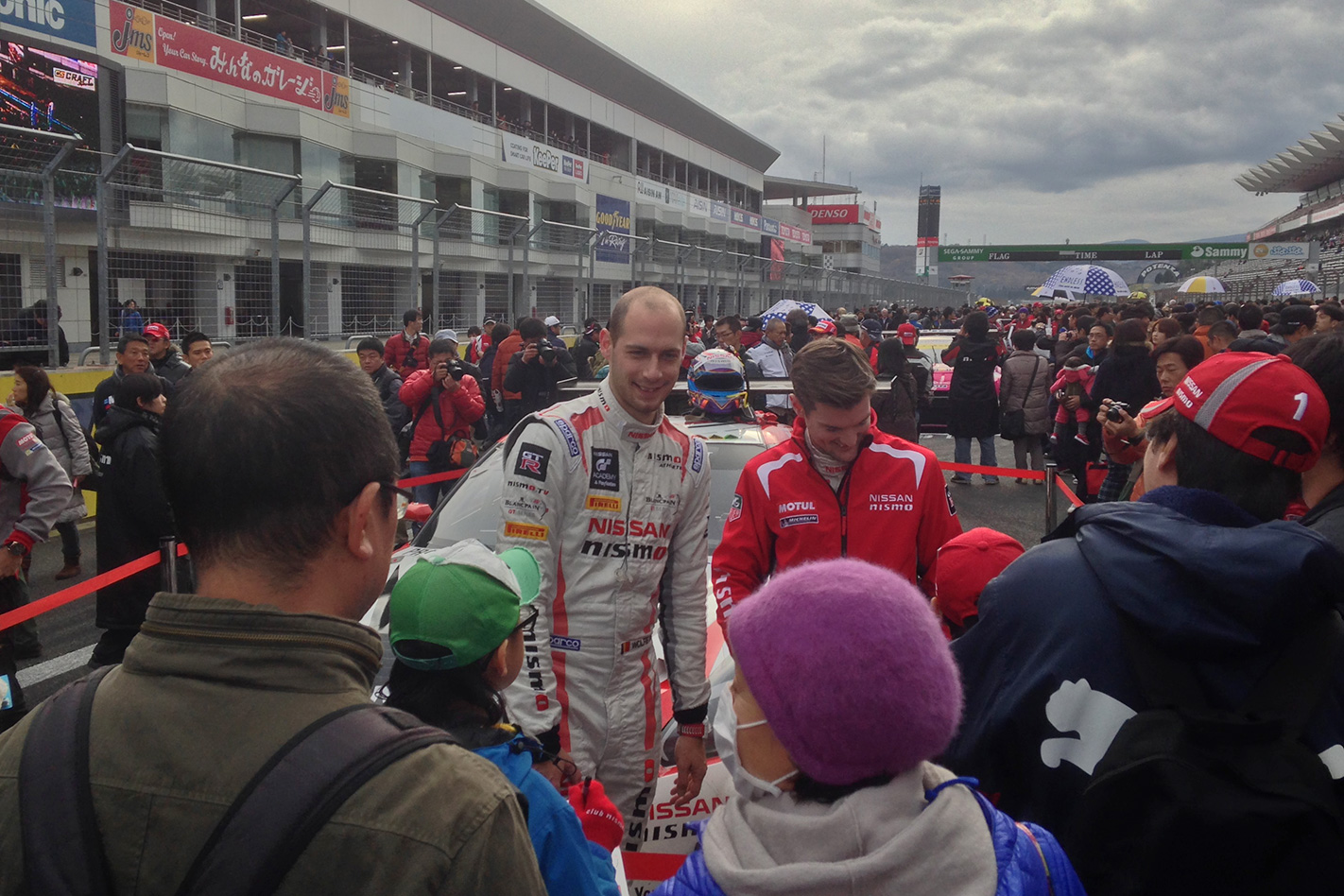
Every autumn since 1997 Nissan has been throwing its loyal petrolheads a party called the Nismo Festival.
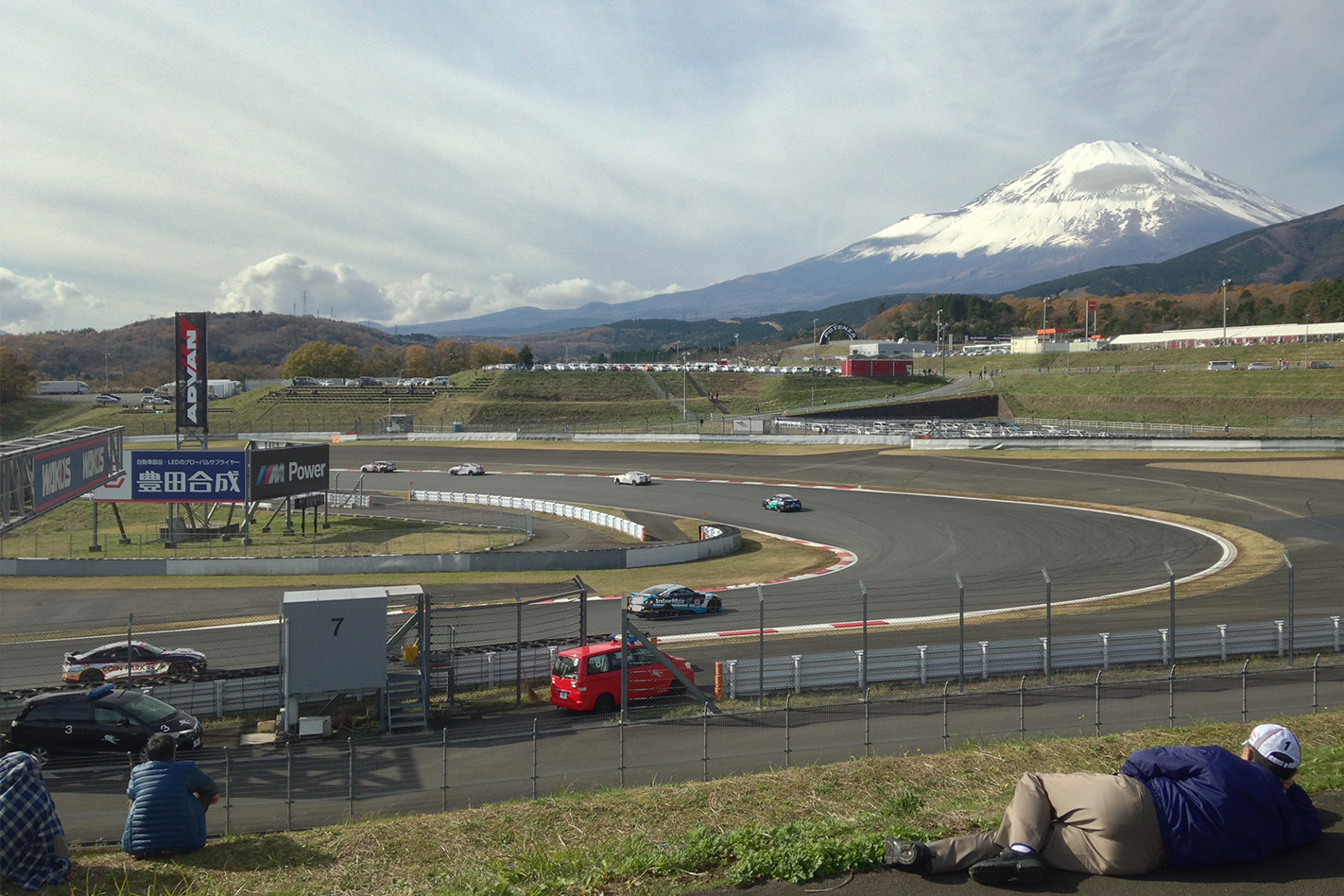
Located two hours from Tokyo, over 35,000 stomped Fuji Speedway’s pavement at last year’s event, and yesterday’s gathering is estimated to have matched that number.
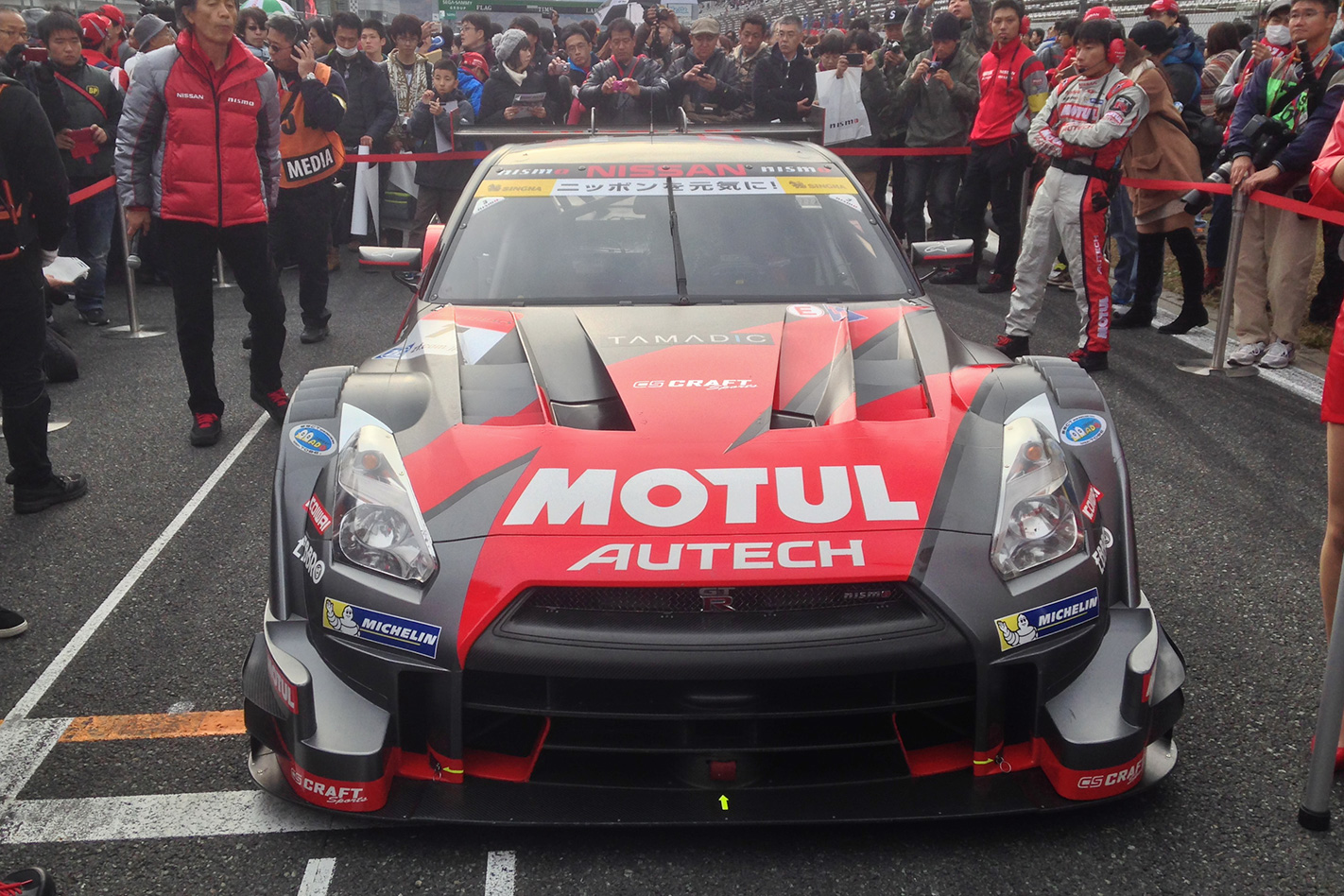
What attracts pilgrims from far and wide is hallowed race machinery Nissan Motorsport both have on display and hustle around the 4.563km circuit.
Activities and the circuit are not restricted to works vehicles either. Club-racers with classic and contemporary Nissans were given the chance to trade paint in one of three single-make races throughout the day.
The day culminated with the Nismo GP, a ‘friendly’ race that sees various factory Nismo vehicles, driven by Super GT celebrities like Ronnie Quintarelli and Micheal Krumm this year, fight to prove who’s quickest in their category.
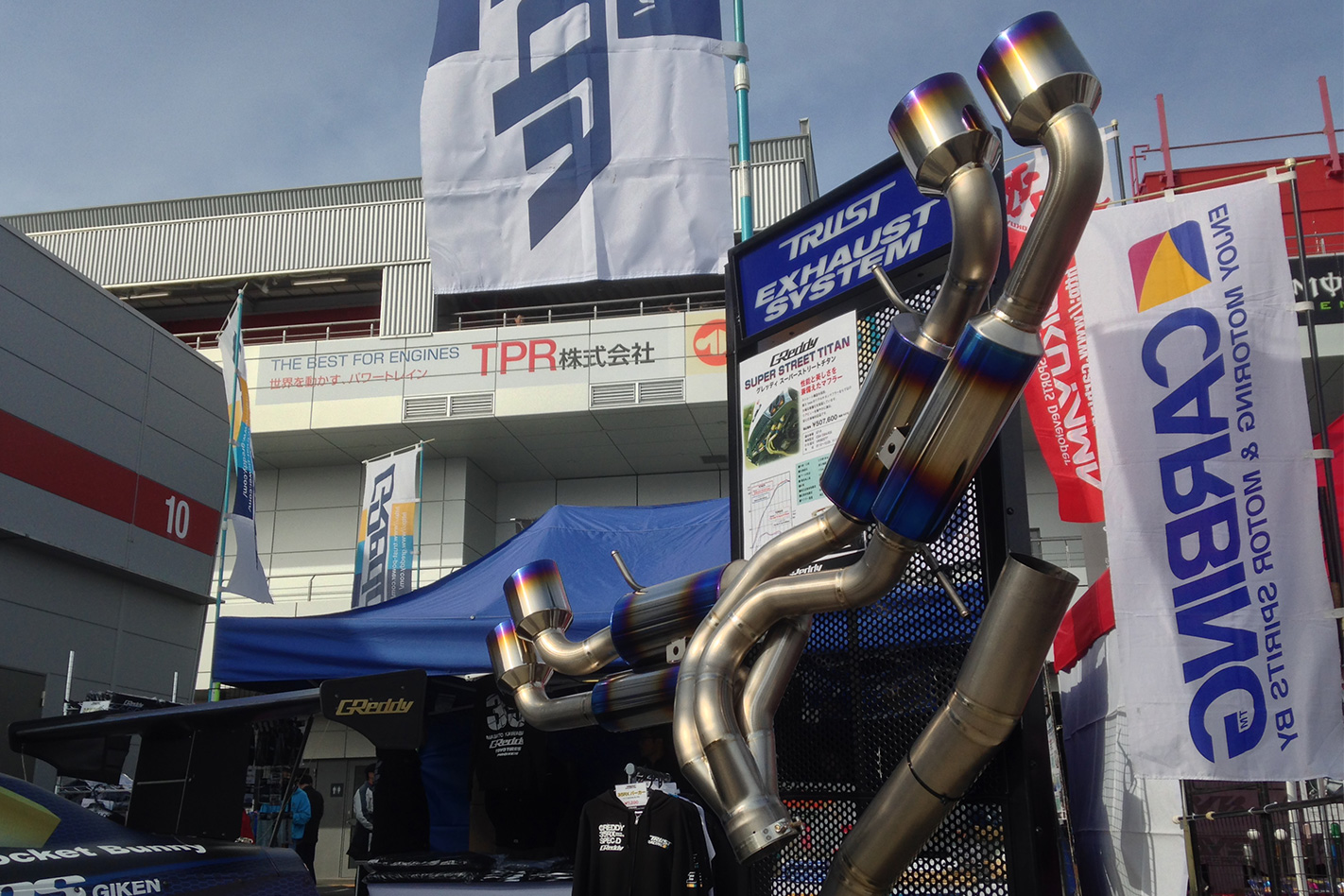
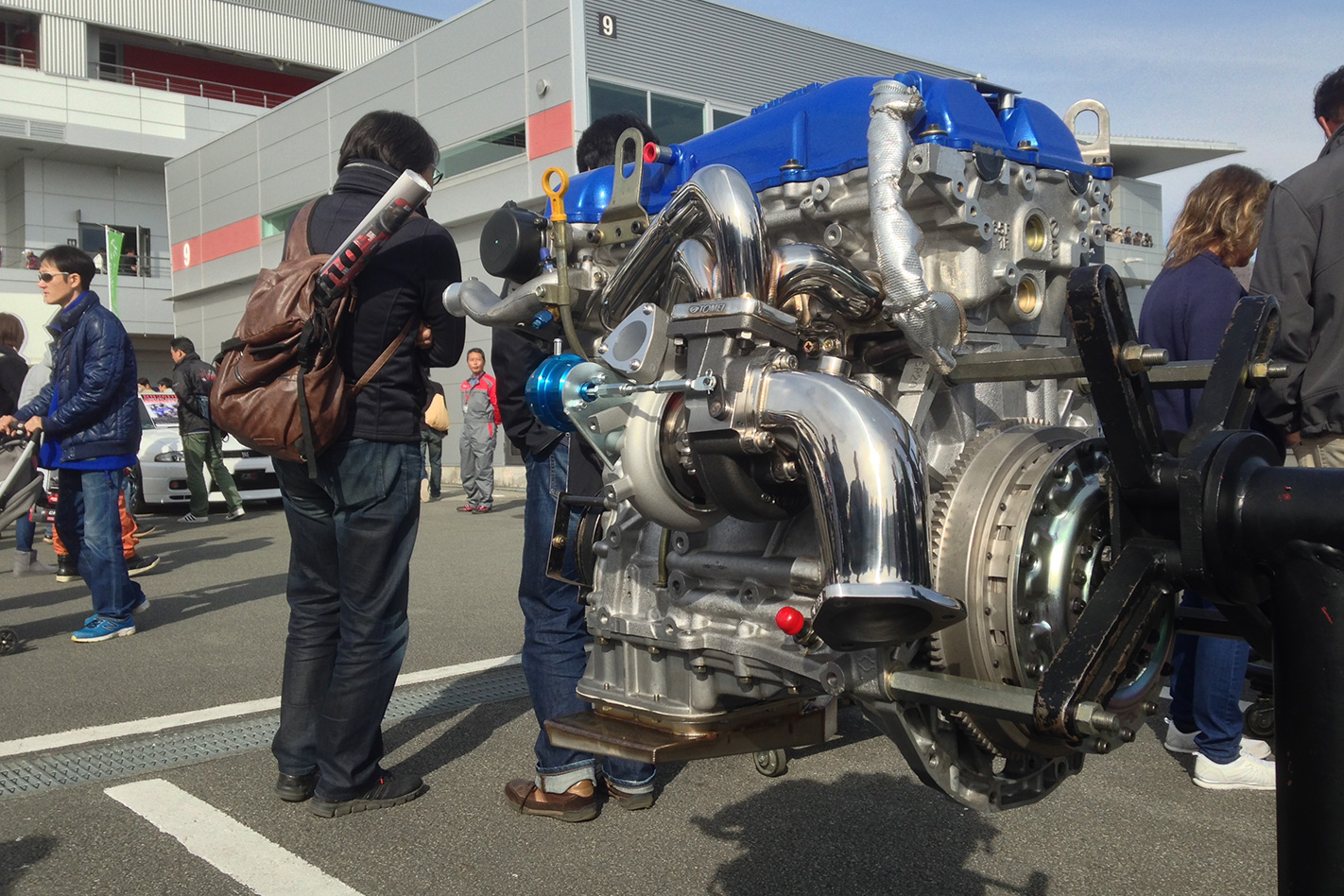
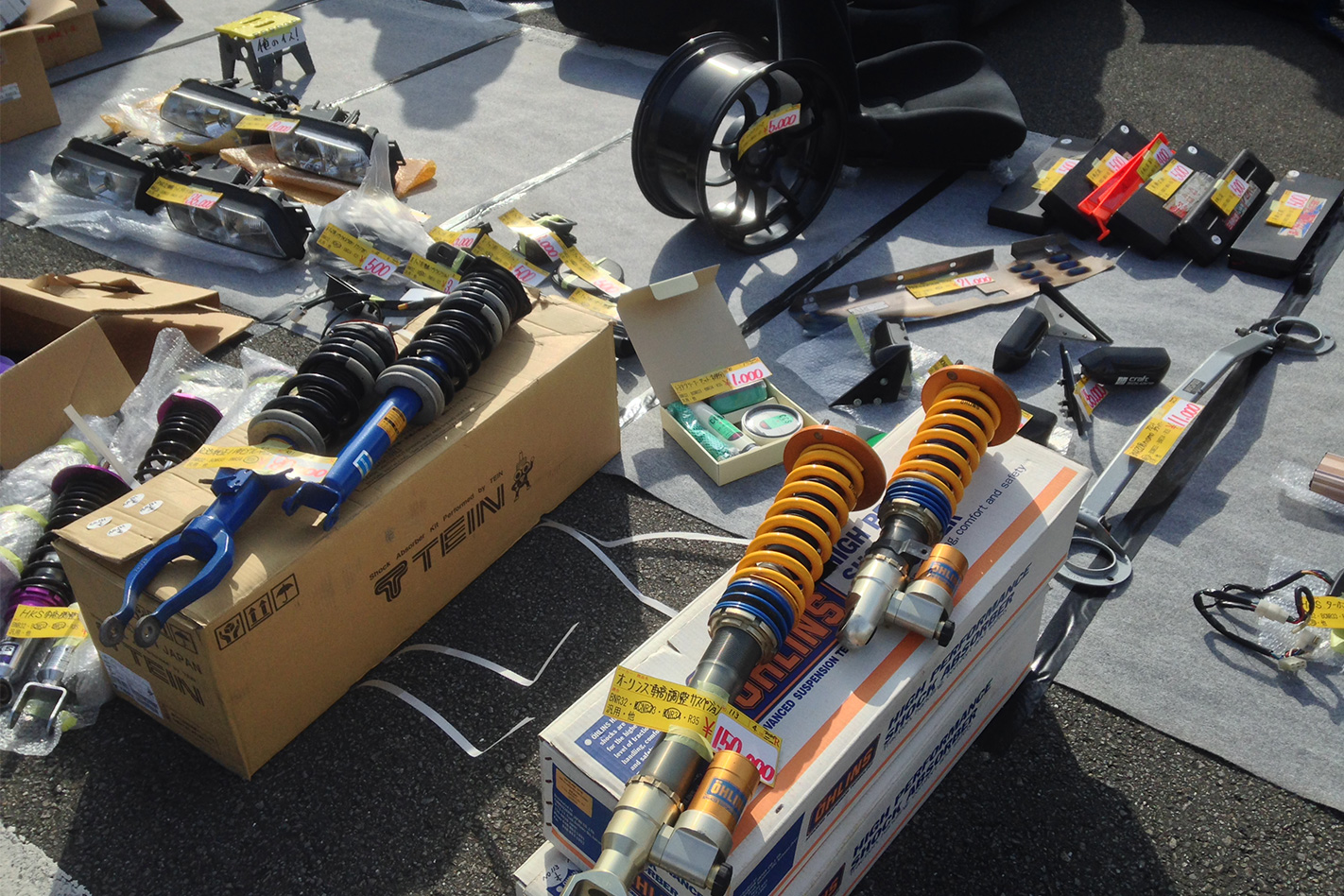
But the great thing is it’s entertaining for everyone, not only for Nissan tragics. And despite an iPhone’s shonky quality, the tasty collection of photo morsels below prove the Nismo festival is not one to miss.
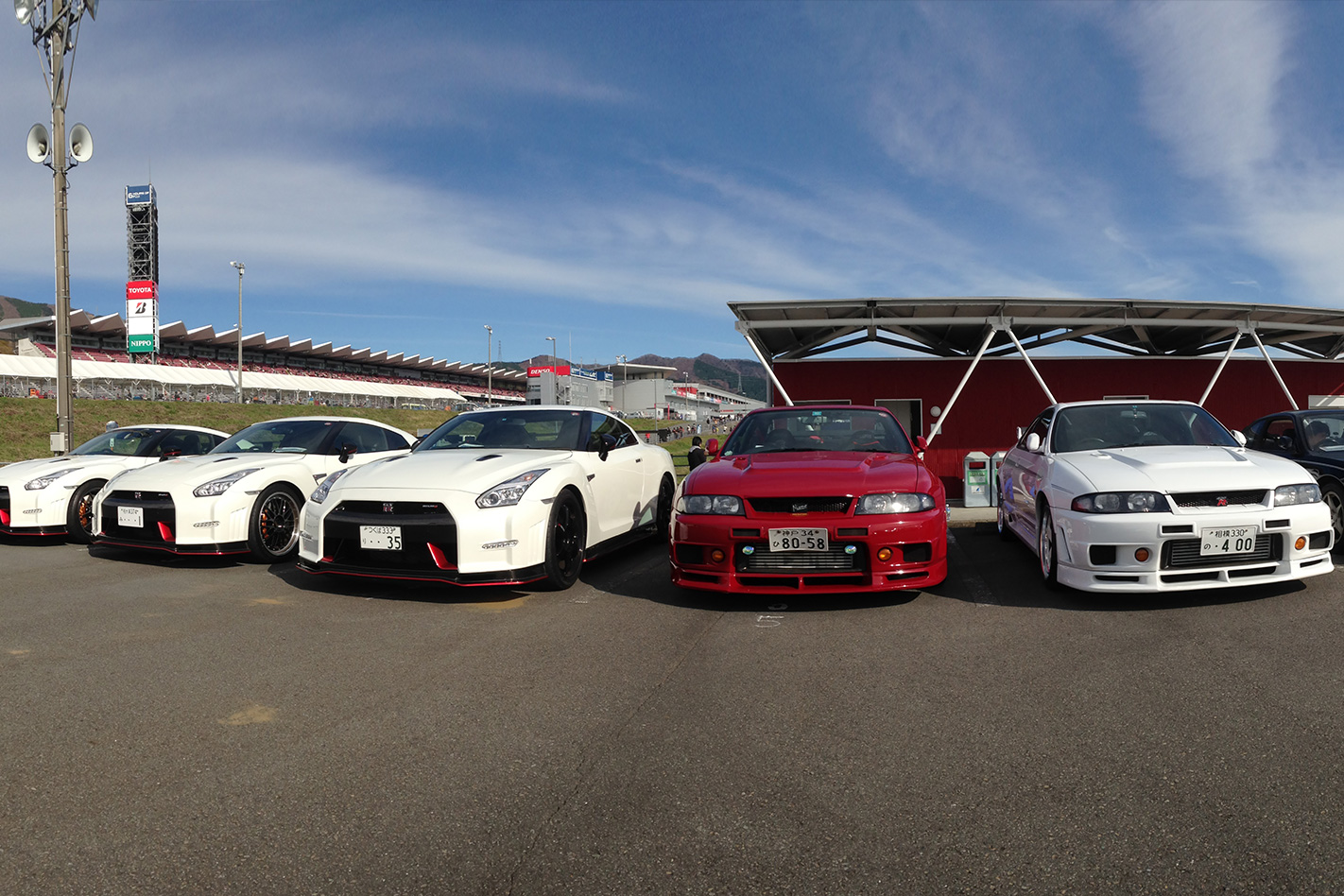
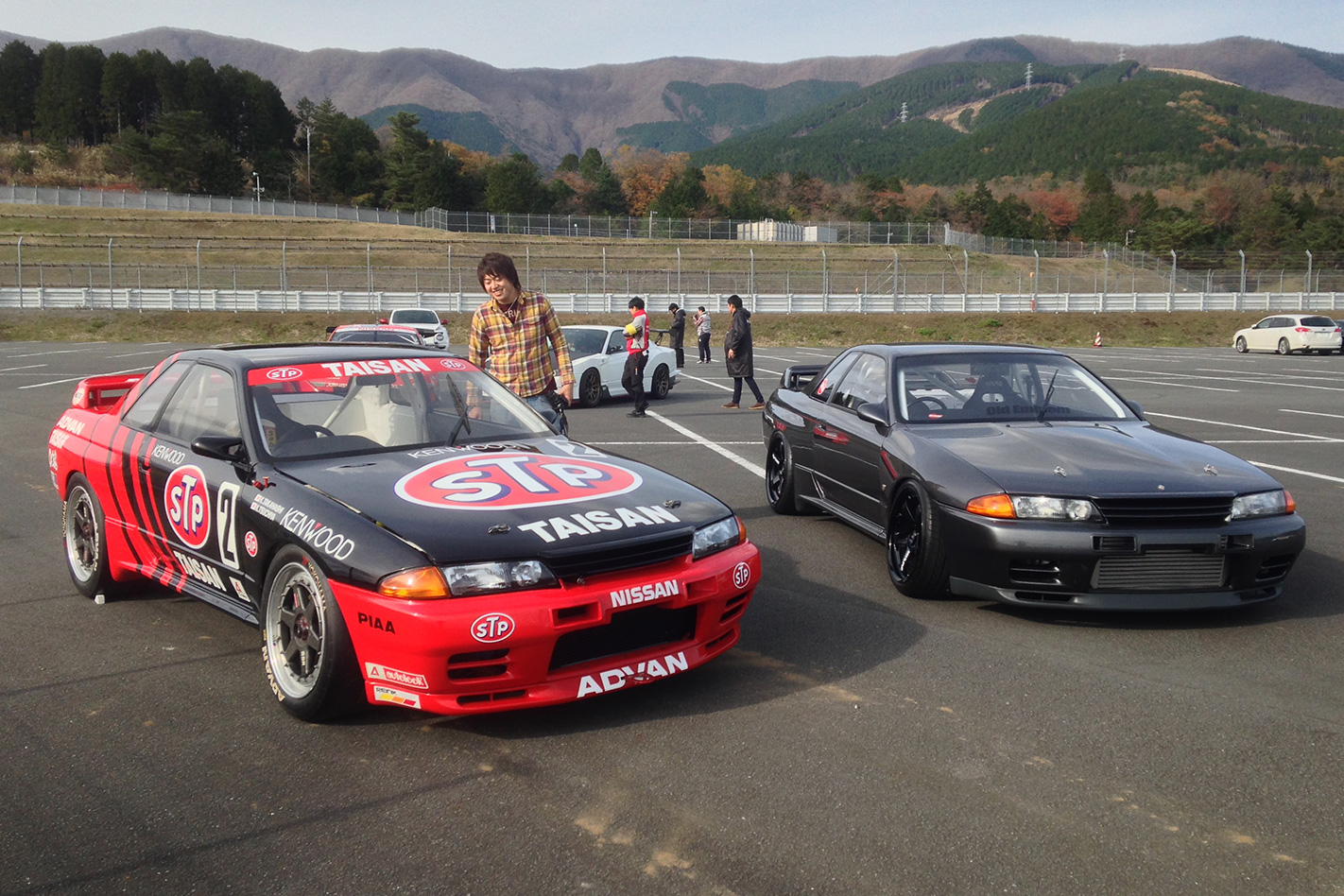
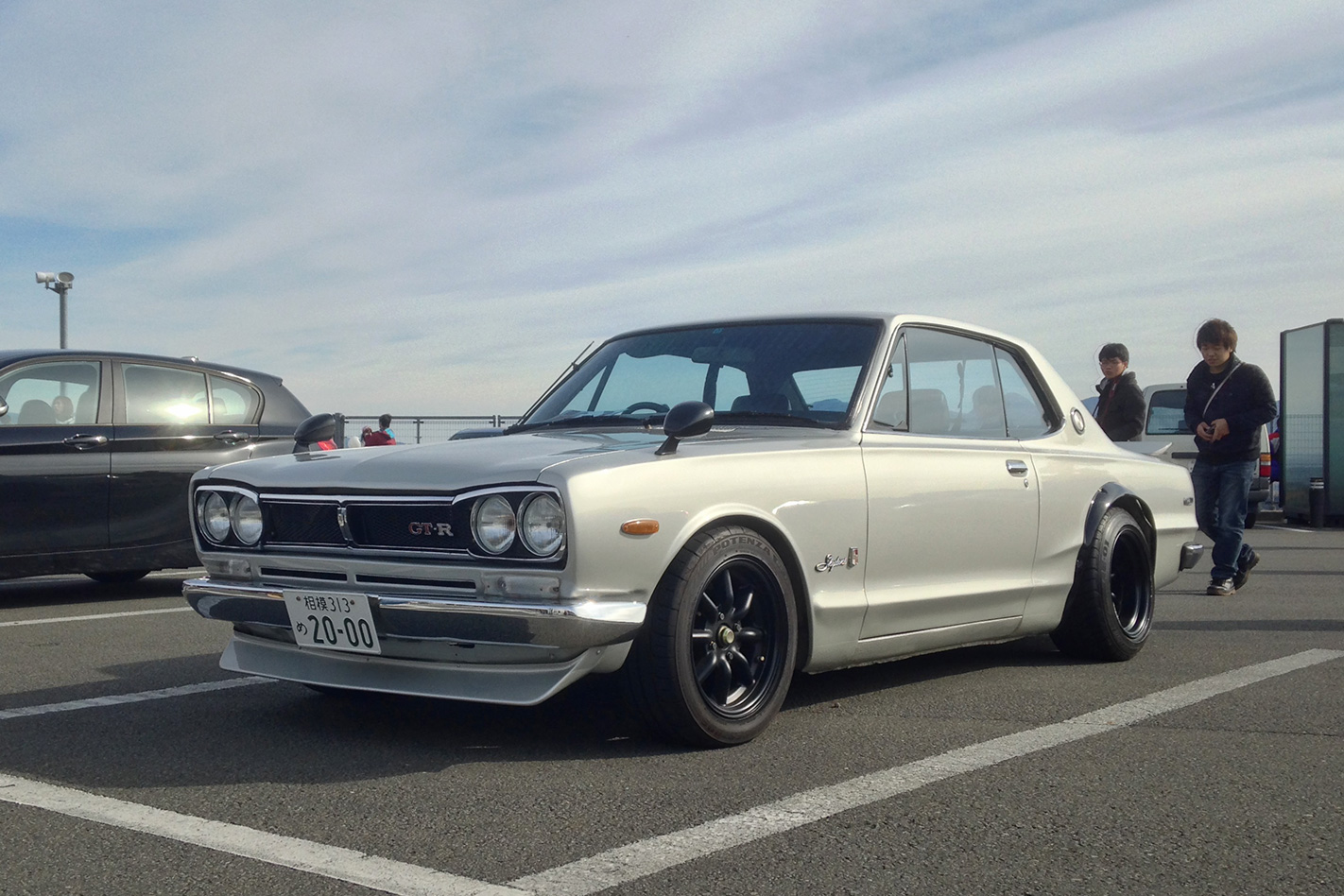
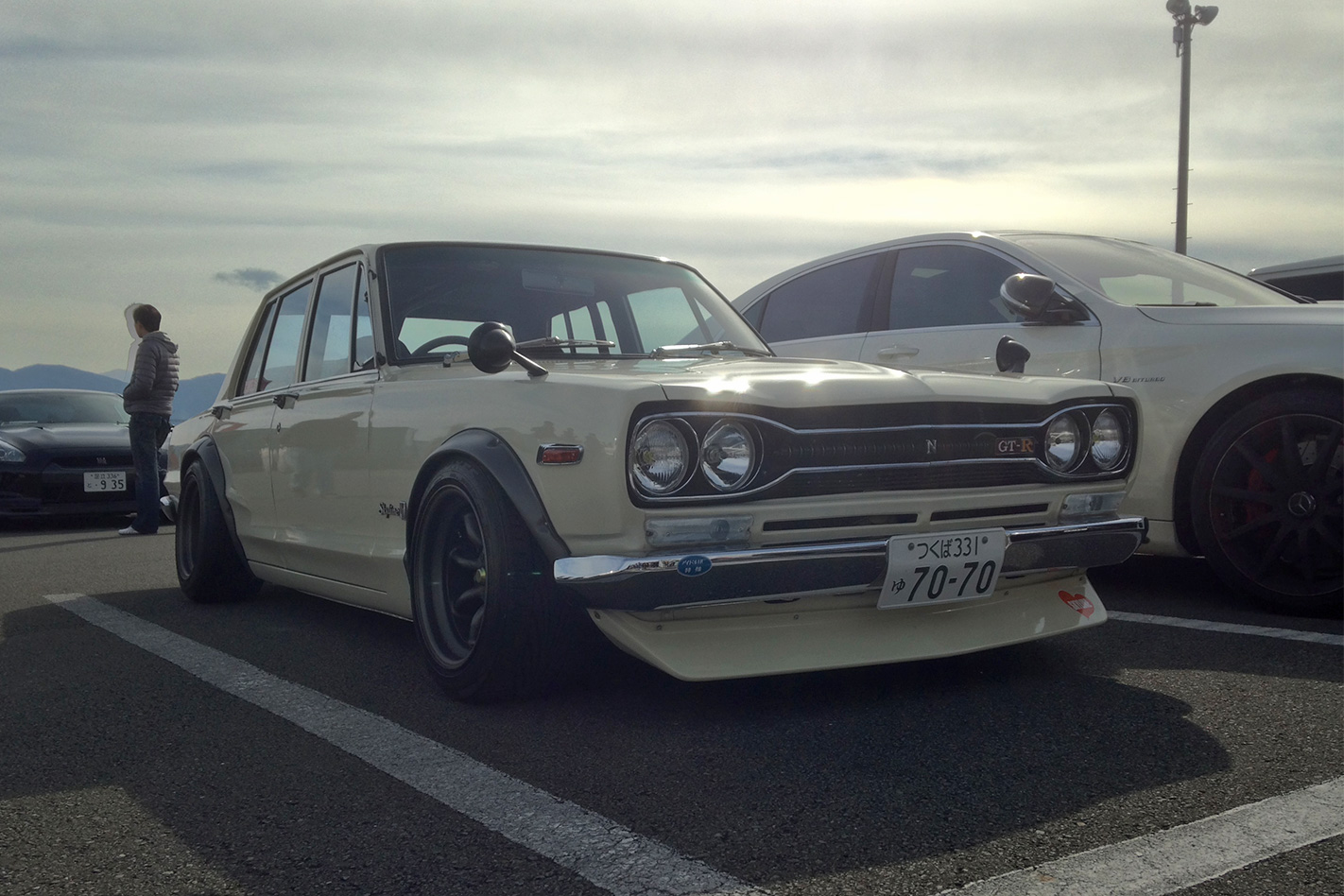
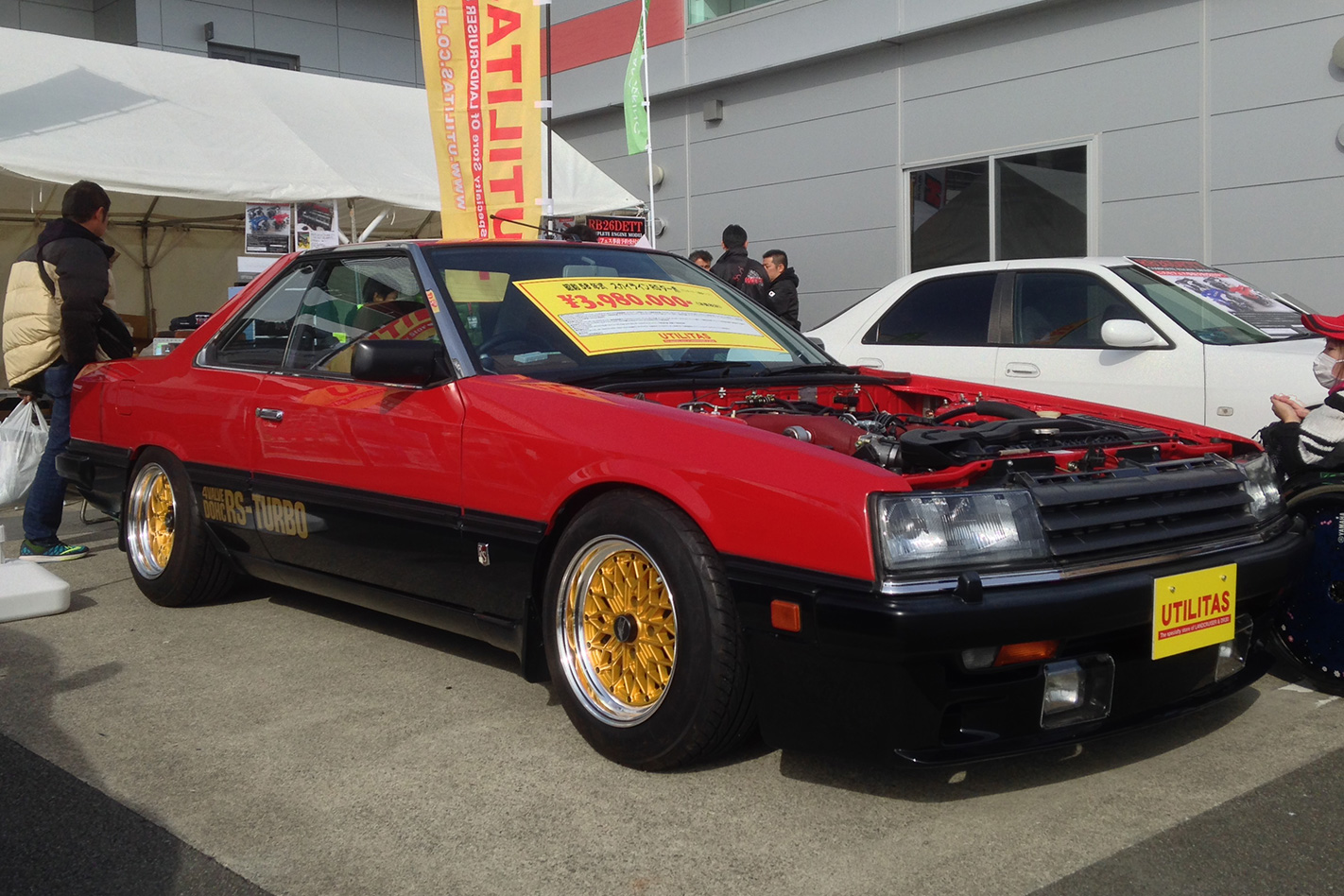
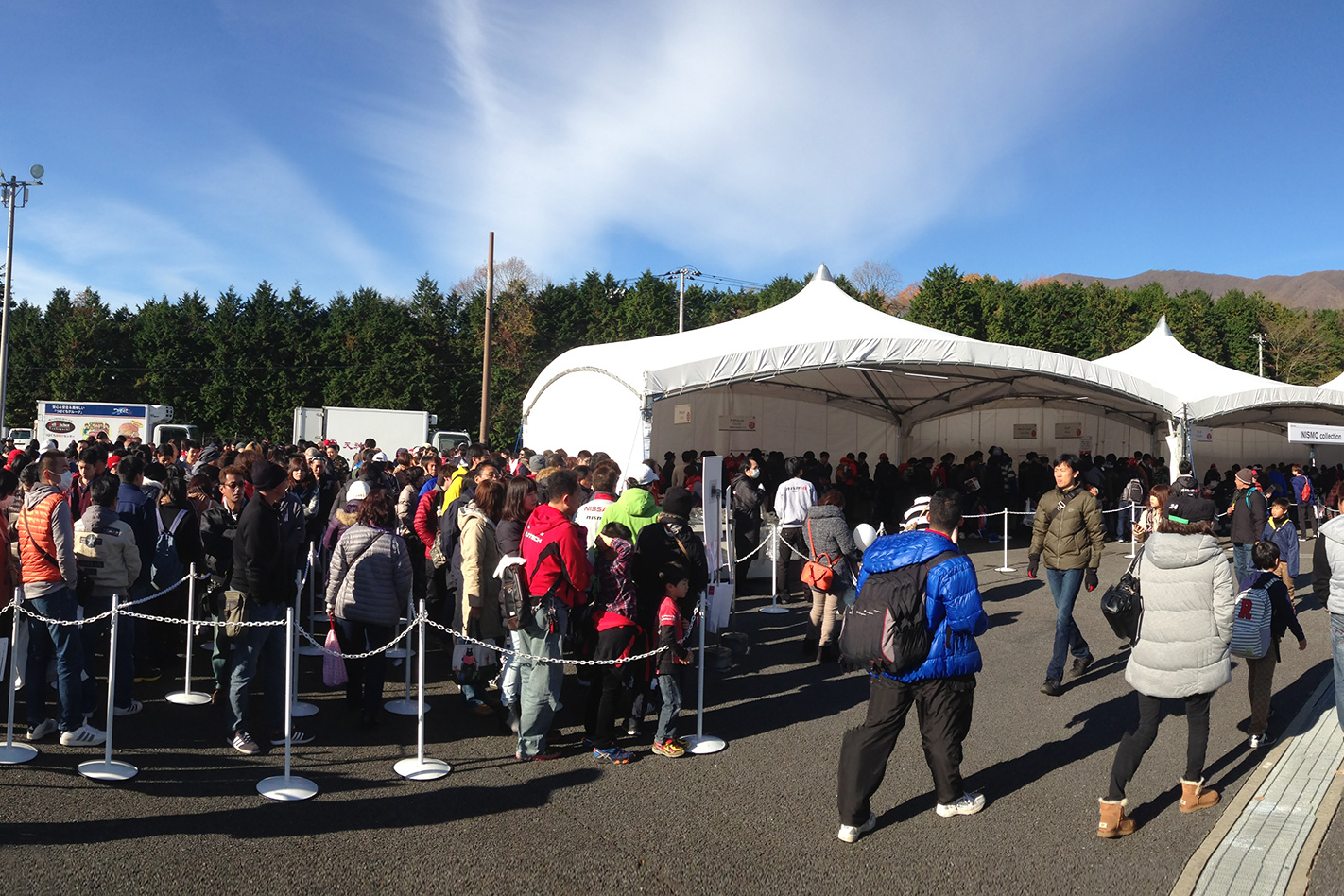
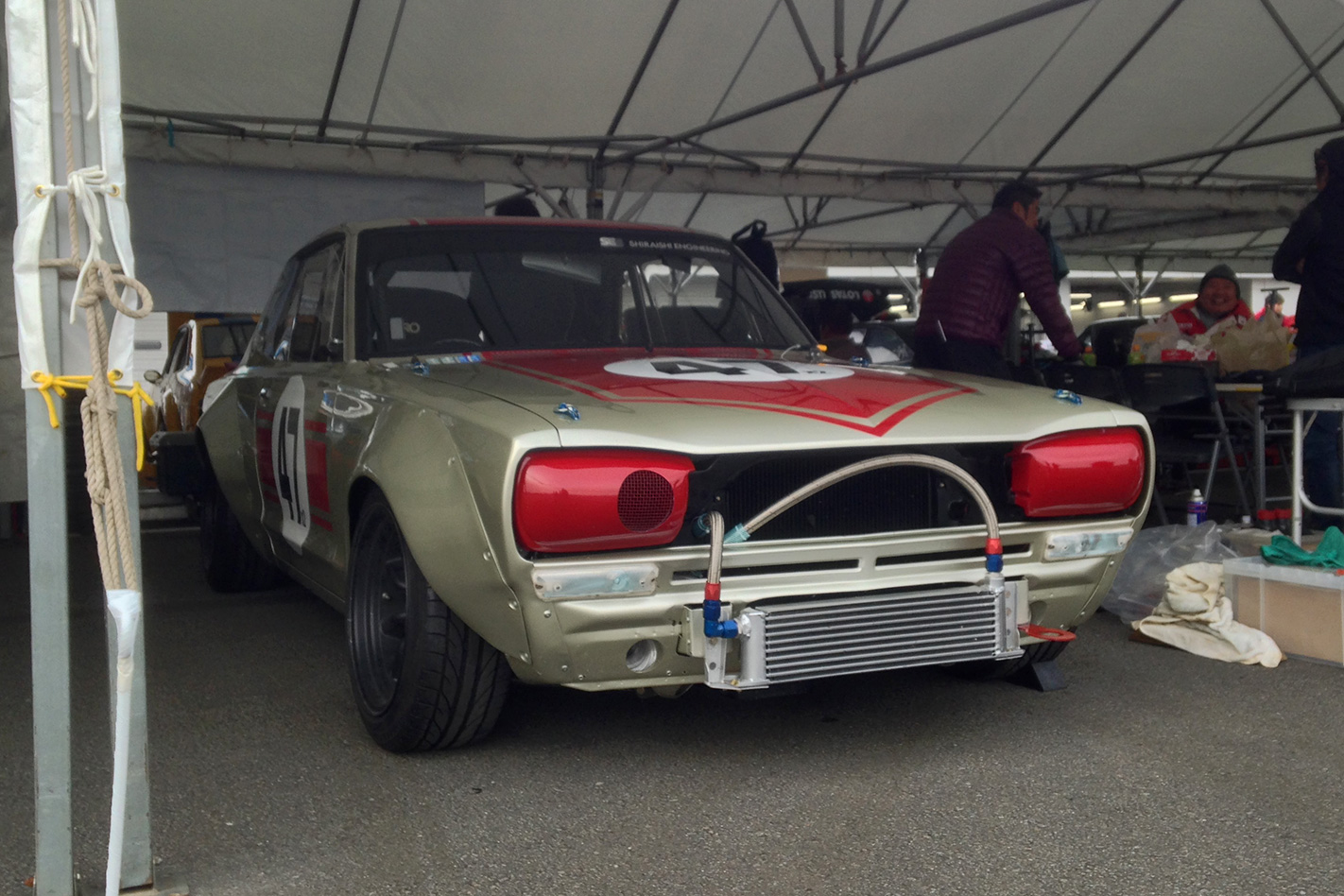
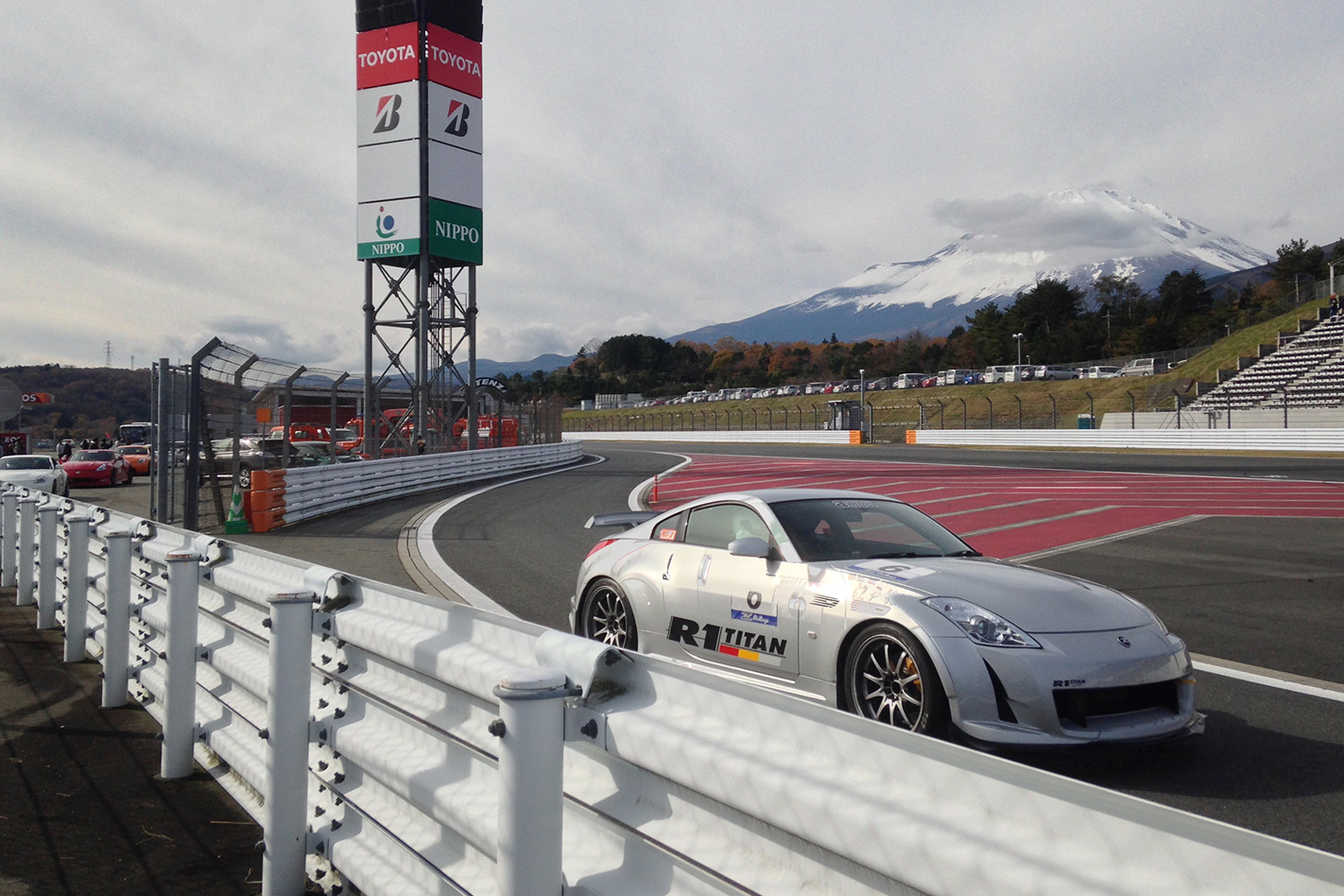
It’s time to reap the rewards of the mistakes of others, as we tally among the fastest-falling performance cars of the past three years.
The rule is simple: no later than 2012 model. Let us be clear from the beginning – these depreciation disasters may not yet have plateaued. Some automotive oddities or orphans could still have a lot to lose. Keep them, because we won’t select them unless they’re first good, fast cars.
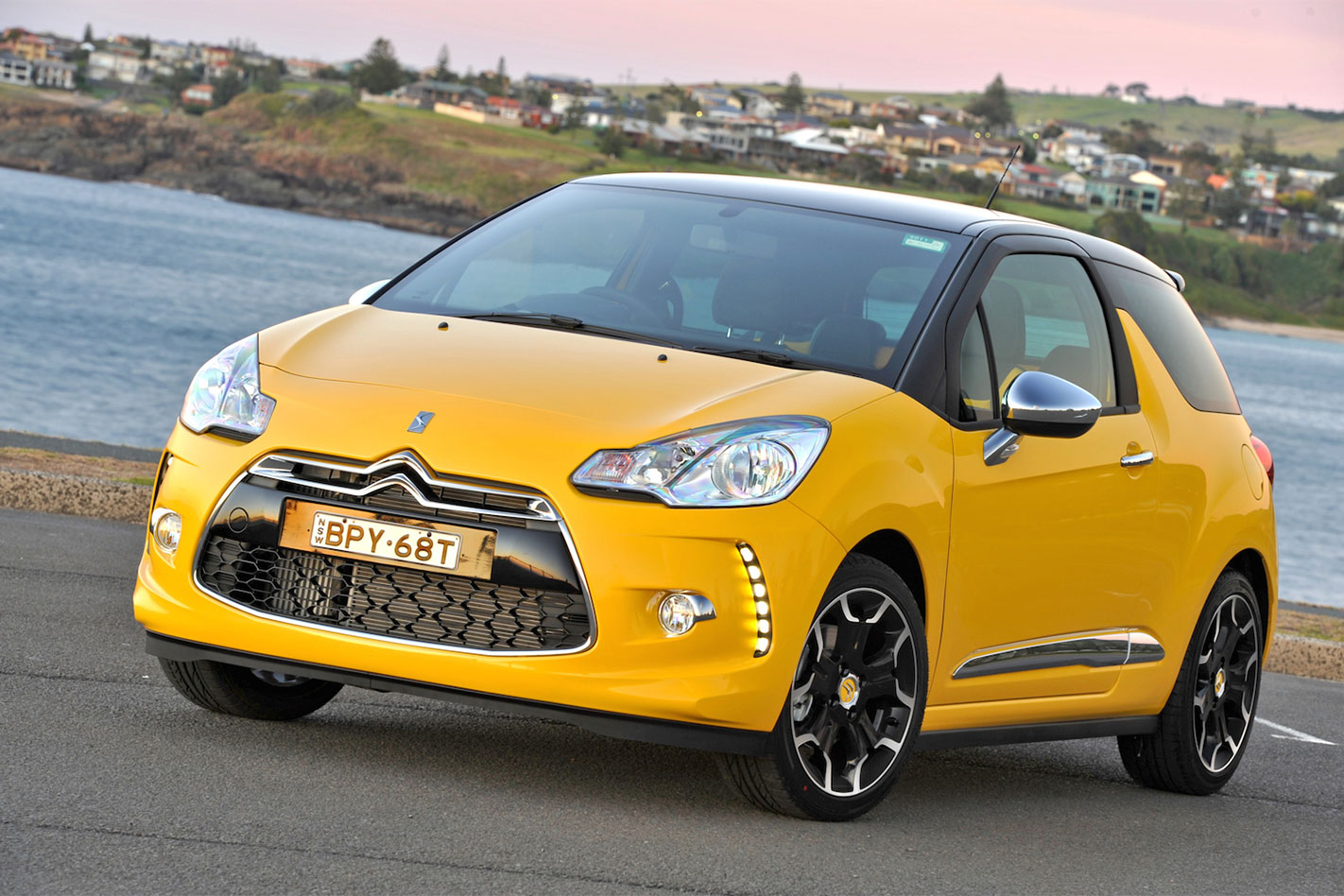
Citroen DS3 D Sport
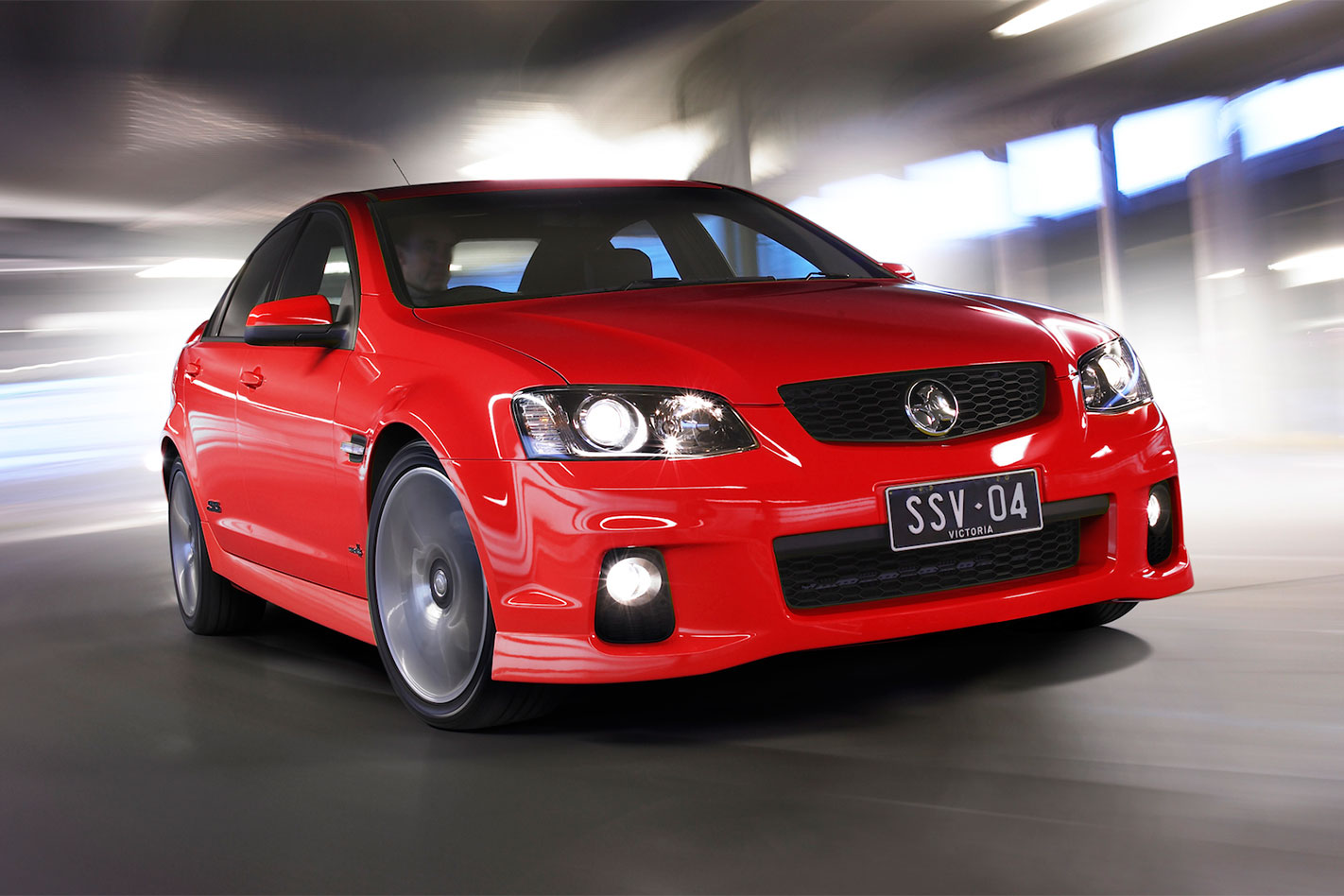
Holden VE Commodore SS
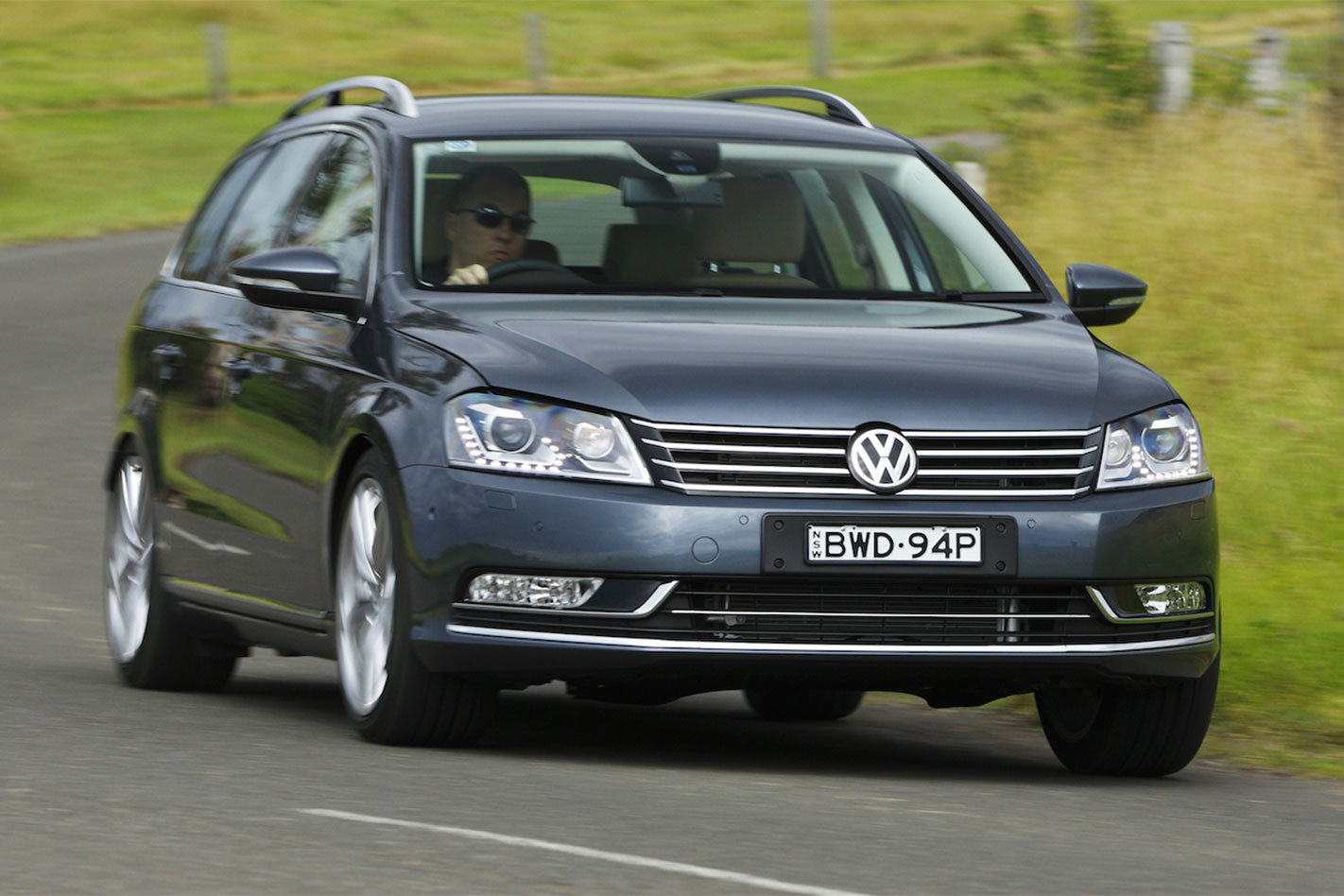
Volkswagen Passat V6 FSI
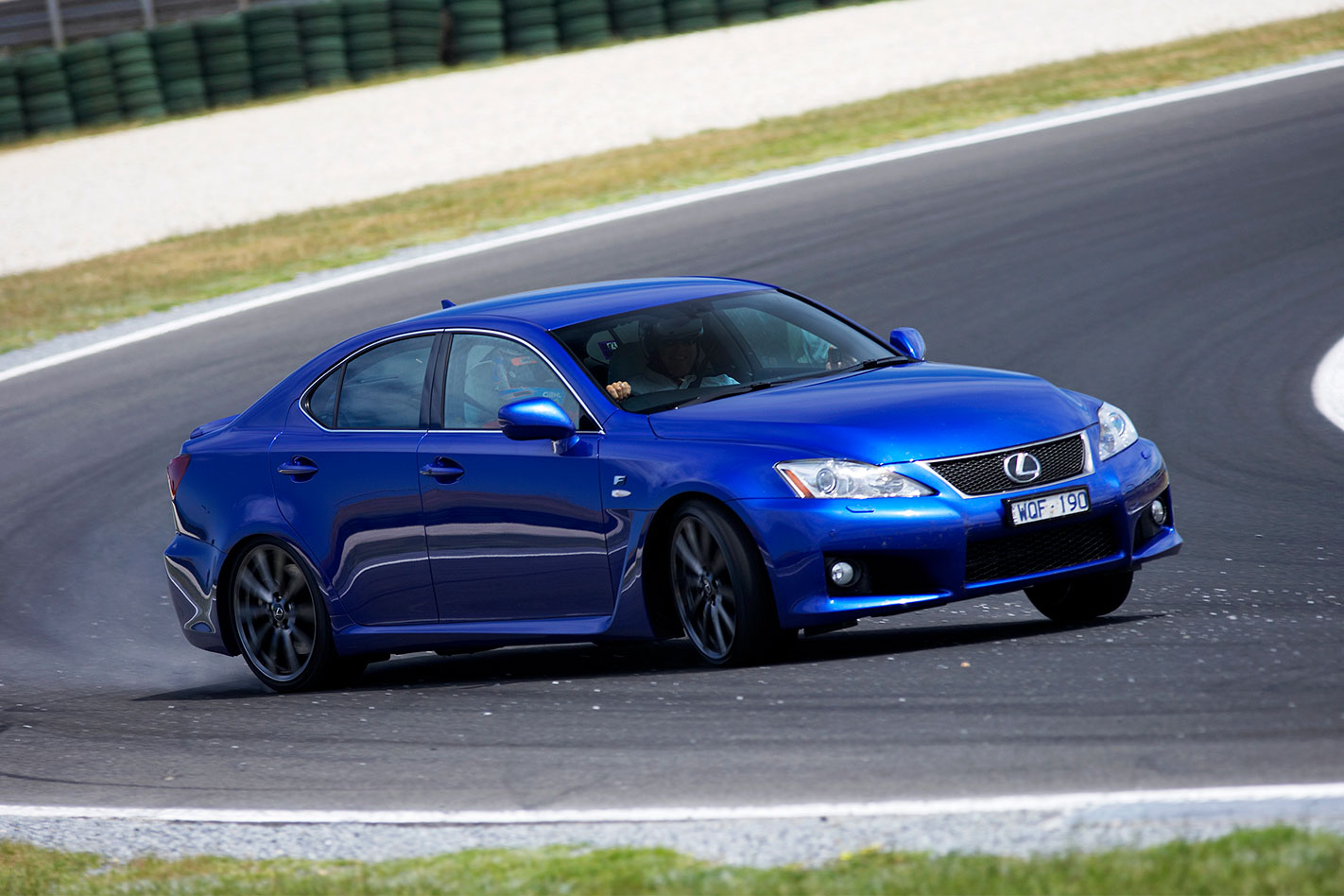
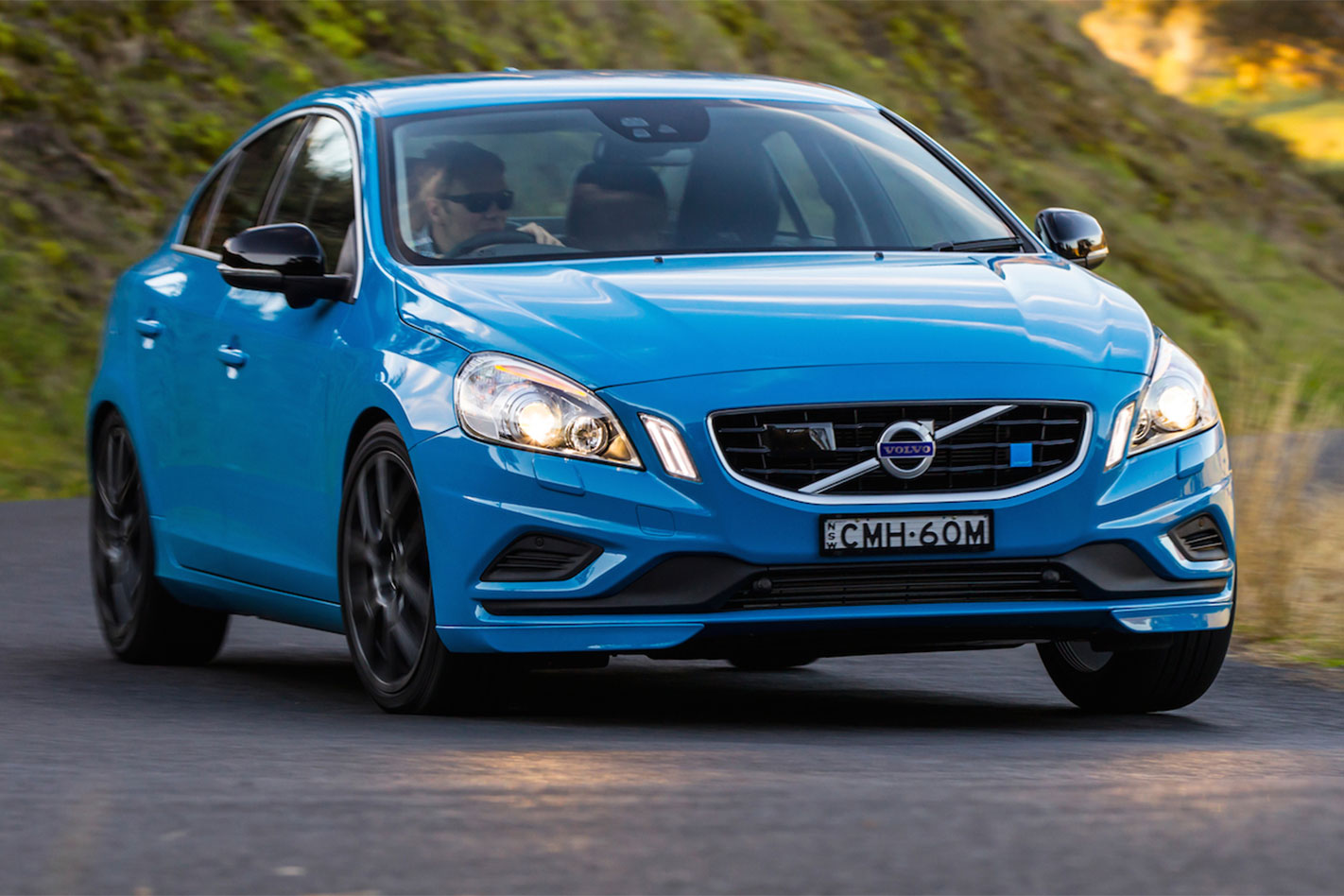
Lexus IS F/Volvo S60 Polestar
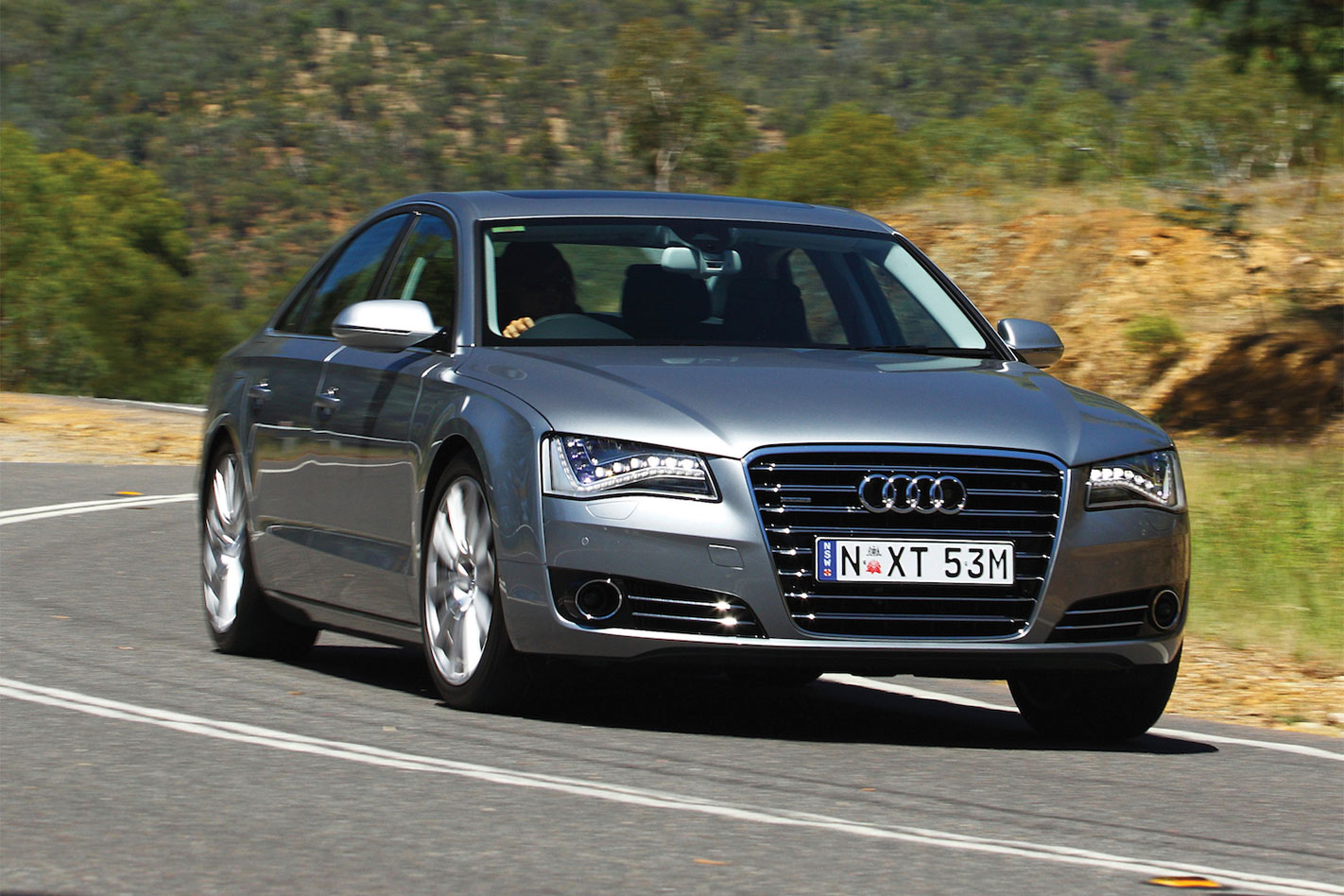
Audi A8 4.2 TDI quattro
So, what is it?
After 25 years, and close to a million MX-5 sales world-wide, Mazda has launched a new fourth gen (ND) version. The result of a development recipe designed to recapture the purity of the 1989 original.
Not that the iconic roadster had pulled an Elvis and lost its mojo. It’s more the compact two seater and Mazda’s ‘Skyactiv’ focus on aero refinement, engine efficiency and light-weight is a match made in sports car heaven.
The new car will launch locally in mid-August with a 96kW/150Nm 1.5-litre naturally aspirated petrol engine, matched with either a six-speed manual or six-speed auto transmission. A 118kW/200Nm 2.0litre version arrives later in the year.
Why should I care?
The new MX-5 is not only shorter than its (NC) predecessor, it measures 60mm less than the ‘89 NA. And despite the inclusion of all the safety tech required in the 21st century, plus a higher level of standard equipment, it only weighs 59 kegs more (91 kg less than the NC), dipping close to the magic tonne in entry-level spec.
And kerb weight isn’t the only thing that’s shrunk. A base price of $31,990 is a throw-back to the early ‘90s, despite the fact things like power steering, air-con, ABS/ESP, traction control, cruise control and airbags are now part of the standard spec.
What’s new about it?
This is an all-new car, sitting on a specifically developed monocoque chassis, reinforced by a central backbone section bolting directly to the end of the gearbox in true Colin Chapman/Lotus Elan style.
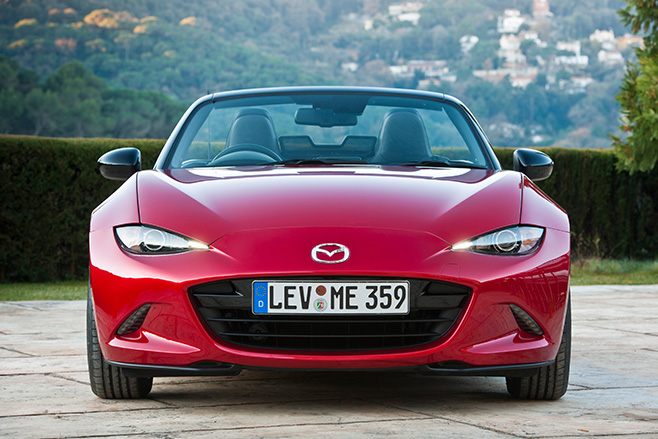
The distinctive exterior design follows Mazda’s now well-established ‘Kodo – Soul of Motion’ form, with smooth curves and subtle transitions linking it to the original car as well as its contemporary stablemates.
Although the base 1.5-litre engine is also used in the Mazda 2 and 3 it’s been tweaked for this application with a custom steel crankshaft and revised cam timing, raising the rev ceiling to 7,500 rpm and boosting peak power. Similarly, the top-spec 2.0-litre is also used (transversely-mounted) in the Mazda 3, 6 and CX-5.
That’s all fine, what’s it like to drive fast?
MX-5 program manager and 42 year Mazda veteran, Nobuhiro Yamamoto told us he remains in touch with members of the original MX-5 development team, and like them, his aim was to build a lightweight car that connects on a gut level; it had to be “fun to drive.” And we’re happy to confirm Yamamoto-san has hit that nail squarely on the head.
With a low centre of gravity, 50:50 weight distribution, and superb double wishbone front and multi-link rear suspension set-up, the MX-5 is a pure and simple pleasure to drive.
With just 96kW and 150Nm on board it’s no surprise the 1.5 takes 8.3 seconds to hit 100km/h. But as with the Lotus Elan that inspired the concept, it’s the overall driving experience that makes the MX-5 so enjoyable.
Mazda uses the term Jinba ittai, a Japanese phrase meaning horse and rider as one, to describe the relationship between the MX-5 and its driver. And despite rusty equestrian skills we totally got the connection on a UK-based global launch drive combining urban running, open highway sections and a closed session on the historic Goodwood circuit in West Sussex.
The perfectly weighted, electrically-assisted steering delivers rapid, yet linear response and great road feel. The six-speed manual, complete with stubby, short-throw lever, is a delight, and the pedals are well placed for heal-and-toe on down-changes.
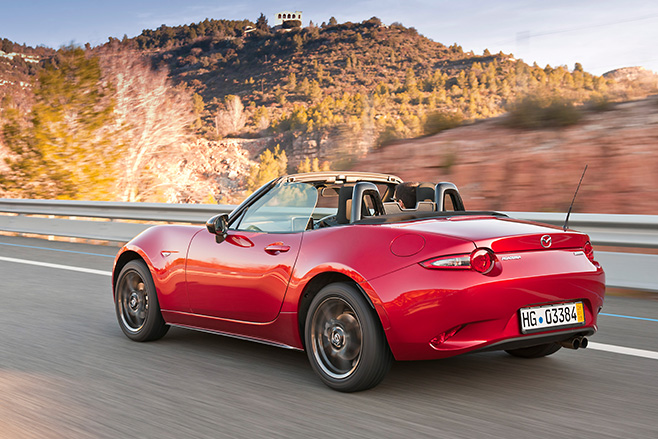
The 1.5 sounds uncannily like the original car’s 1.6, rising to an energetic rasp at high revs, and a quick shift from sixth to fourth (or third) is all that’s required for rapid open road overtaking.
Standard Yokohama Advan Sport rubber (195/50) on 16-inch rims grips hard, while the chassis and steering accurately telegraph the car’s movements in quick cornering. Brakes are progressive and strong. Jinba ittai to the max!
But one of the biggest stand-outs is ride comfort. Mazda’s suspension gurus have used a combination of technical expertise and black magic to pull off an amazing double act. Lightness and nimbleness combined with impressive composure even on ordinary b-road surfaces. Over swooping undulations it feels like the MX-5’s wheelbase is much longer than its 2.3 metres.
The 2.0-litre car is quicker in a straight line (7.3secs 0-100km/h) and a punchier mid-range is definitely there, but somehow the 1.5’s a sweeter drive.
The bigger engine’s induction noise is relatively loud and coarse, the exhaust note is less engaging, the drivetrain isn’t as refined in terms of throttle response and clutch action, and ride quality suffers slightly from the shift to 17-inch wheels (shod with 205/45 Bridgestone Potenzas.)
And driving home from the city?
One of the MX-5’s outstanding features is its manually folding roof. While others are busy installing multiple electric motors to control convertible tops, Mazda simply put its Skyactiv hat on and refined the process.
The result is a single latch and an easy, one-handed movement (from the driver’s seat) to raise and lower the lightweight soft hood. It makes the switch from closed to open motoring a breeze, even at surprisingly high road speeds.
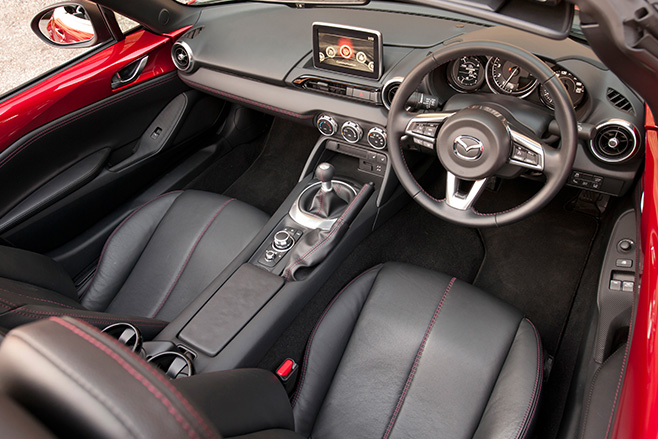
The interior design stays true to the less is more philosophy with body colour door panels and dash details on premium variants echoing classic roadster style. The seven-inch, tablet style ‘MZD Connect’ infotainment screen on the dash is the only overtly modern addition.
The seats are minimalist but comfortable with plenty of lateral support (although some will find the backrest narrow), the traditional white-on-black instruments are clear, and speakers in the headrest on all models is a nice touch. Boot space is also surprisingly generous, especially in terms of depth.
Anything bad about it?
Marks in the negative column include a height but not reach adjustable steering column, no storage in the doors, a glovebox placed awkwardly on the bulkhead between the seats, and cup holders at the rear of the centre console only Houdini could find easy to use.
How much would I have to pay? And is it worth it?
At $31,990 pricing for the entry-level 1.5-litre manual, that’s a more than 15 grand reduction on the outgoing car. It’s totally worth it.
Would you take the Mazda MX-5 or Toyota 86?
Built on the same premise of back-to-basics simplicity and fun, they’re both brilliant sports cars. But the Mazda’s a step ahead now on dynamic depth and engineering maturity.
Click here to read the full review on the Mazda MX-5.
The world’s hottest hypercars are popping up everywhere in Victoria!
Only days after we posted a story regarding Melbourne’s mystery Bugatti Veyron, the good folk at Melbourne Exotic Car Spotting have done it again with a McLaren P1 snapped in action on the Monash Freeway.
Unlike the Bugatti, the P1 is available in right-hand drive so is theoretically less contentious, however to the best of our knowledge the car hasn’t been homologated for use in Australia.
Mclaren P1 on Melbourne Roads!One of our members spotted something a little special on the road in Melbourne.Its amazing that the LaFerrari, Mclaren P1 and Porsche 918 Spyder are all illegal to be driven on Melbourne roads but here we are with all three !!Posted by Otium Club on Thursday, 26 November 2015
We’re reliably informed that the owner of the Veyron and the P1 are in fact the same person, a car nut who’s keen to exercise his amazing collection at every opportunity.
And you know what? Good on them. Dubious legality aside, if we had such machinery parked in our garage we’d want to use it as much as possible, too.
If anyone spots a LaFerrari or Porsche 918 Spyder on Aussie roads, we’ll share it as soon as we see it.
Anna: I’m a firm believer in further education. There’s no such thing as too much learning. But when it comes to advanced driving skills, I’ve often wondered the true value. There’s no doubt our young drivers need more professional driver training, and up-skilling has endless benefits. But when we throw overconfidence into the mix, and the hazards this often leads to on the roads, I wonder if this is the reality of advanced courses, particularly in performance drives. Then we have to consider the types of courses, defensive driving courses versus performance driving – one teaches how to cope with everyday driving situations, the others teaches the skills of elite drivers. Reality versus racing.
Ryan: Driver training is important. There’s no doubt about it. It doesn’t matter how many hours were spent next to a parent or older sibling while learning to drive, those sheltered lessons won’t necessarily deliver the broad range of conditions that can be condensed into one advanced driver program. Sadly, lots of drivers who have racked up a few years behind the wheel think those courses are beneath them. One lap riding shotgun with an experienced driver on a race track will show anyone there is always something new to learn, and that driving a car on the road barely scratches the surface of ultimate car control. That’s why I think a track driving experience is irreplaceable.
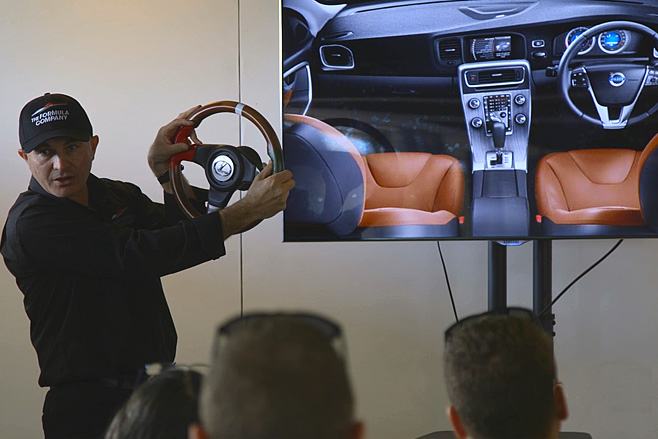
WHAT ADVANCED DRIVING COURSE DO YOU BELIEVE WILL BE MOST BENEFICIAL FOR PEOPLE?
Ryan: Any driving course is better than no driving course. If you’re unfamiliar with the way a car reacts in an emergency stop, or you want to feel like you know how to dodge an obstacle in the wet, then most advanced driver courses will suit you. Having said that, lots of people have encountered those things on the road and sometimes think they know it all. A decade or so of driving and many drivers, especially blokes, think they’re Michael Schumacher. But there is always more to master. Nothing will open your eyes to that like driving on a race track, and doing it with a driving coach is an incredible learning experience.
Anna: For the everyday driver, I think a defensive driving course is invaluable. The reality is that on road, most of us won’t be driving at racetrack speeds, and there is a lot more unpredictability and distraction on the urban-commute than a circuit. So for those looking to really improve their skills, a defensive course is a priority. I still see performance courses as a bit of fun, something to tick off the bucket list… like skydiving, or swimming with the sharks… only, not as terrifying.
WHY?
Ryan: Track driving requires a totally different level of car control to do it well, and it not only stretches your ability, it helps you realise your limits and teaches you to respect the car and the consequences of speed. You gain new appreciation for the job your tyres do in maintaining traction when really pushed, not to mention how subtle differences in your inputs can upset or complement a car’s willingness to go where you want it to. Track driving also works as a way to let off some steam. If you own a performance car and want to see what it will do without breaking the law and putting yourself at risk, this is the way to do it.
Anna: Like I said, I think defensive driving is more suitable training for the real world of driving. You learn skills that you are more likely to put to use on our roads – like the braking capabilities of your car, and how to set yourself up in the driver’s seat.
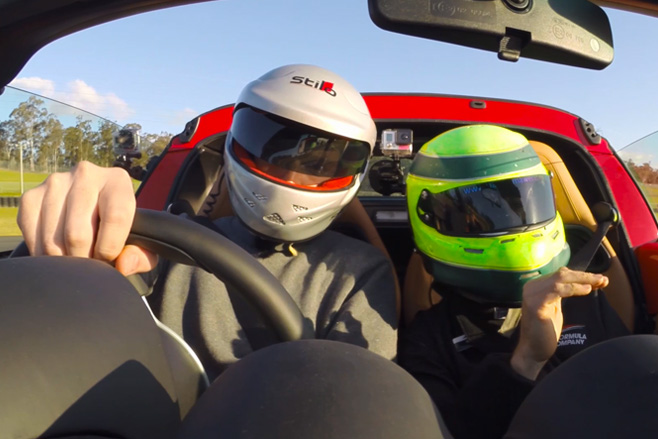
WHAT DID YOU LEARN AT YOUR COURSE?
Anna: Oh gosh, there was so much to learn. I think the defensive driving course I did gave a lot of information most drivers already know in theory, or at least they should. But what it did was put it into practice and gave students a hands-on example of the applications. The day started with theory; watching videos of real accidents to demonstrate what happens if you fall into bad habits like tailgating, driving with one hand, and speeding.
Then we moved on to a skidpan to get a visual understanding of things like braking distance, the value of seating positions, ABS, steering control – it put it into perspective, in a controlled environment, which sure beats learning it the hard way in ‘real life’. It really confirmed the bad habits that creep into our everyday driving – we don’t give them a second thought until someone points them out and explains why they are ‘bad’ habits. It’s quite frightening really.
Ryan: Admittedly, I have been lucky enough to do some track driving with instructors before, so a lot of my day on the circuit was about reinforcing the techniques I had learned in the past. I had never driven at this particular track, so the very fast and intimidating first corner required some building up to. I had to learn to trust the car – in particular the amount of grip from the tyres – in order to push through there at speed. I did learn a lot about proper braking technique for best turn-in. How quickly you let off the brake as you approach a corner can drastically affect how well the front of the car will steer through a corner.
ARE THERE ANY DOWNSIDES?
Ryan: Obviously you can’t drive at track speeds on the road, so relating the experience to the real world is not as easy as your typical driver training exercises. But if we assume the course will mostly be taken by people who have a firm grasp on the necessary techniques for safe driving on the road, I don’t think there’s a downside. Oh, except that you’ll definitely want to do it again for another hit of adrenaline!
Anna: I don’t know if there are any downsides. I still have some concerns about younger drivers becoming cocky after learning a few skills and all of a sudden considering themselves to be experts, but at the end of the course, I actually think the reality is more eye opening than anything else.
Cost is a big one, though. Advanced driving courses don’t come cheap, even though they’re worth it – you can’t put a price on a life. In fact, I actually think they should be compulsory and enforced by the law – in which case, the government should subsidize the course. Surely up-skilling our drivers will ultimately result in fewer collisions on our roads, meaning less road-toll spend and more importantly, less fatalities.
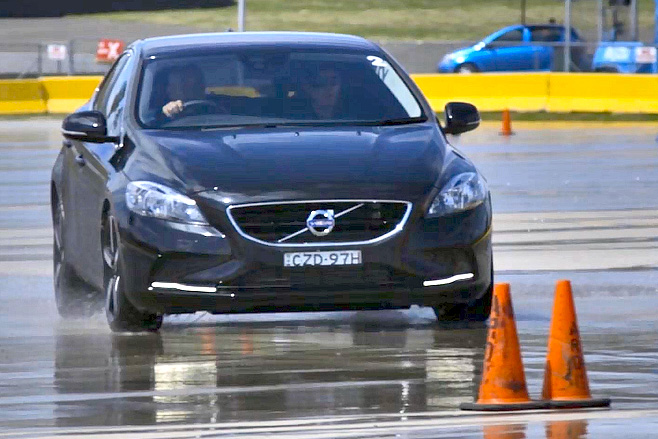
CAN YOU SEE ANNA/RYAN’S POINT OF VIEW NOW?
Ryan: Definitely. Young drivers or people lacking in confidence would be out of their depth on a race track. The advanced driver training course Anna took part in is a great way for most people to get to grips with a car and feel more prepared for the unexpected.
Anna: Sure. I think performance driving is a fun way for people to learn that there’s always something to learn. When it comes to driving, techniques and safety, there’s no such thing as a perfect expert. Even the greatest drivers are constantly learning new things, especially in the ever-changing automotive space. But I do think everyone should complete a defensive driving course as a priority, before up-skilling further in the more advanced courses.
VERDICT?
Ryan: Anything you do behind the wheel of a car with a professional sitting next to you is worth doing. But everyone starts at a different level. Organisations like The Formula Company offer a range of courses for that very reason, so it’s worth being honest about your abilities and working your way up. The main point is there is always more you can do to improve your driving, and that’s why we encourage everyone to get out there and give it a go. It may just save a life.
Anna: I agree with Ryan. At the end of the day, any time someone sets out to improve their driving skills and learn from a professional, particularly in a safe and controlled environment, is invaluable. It’s like my Dad always used to say when he was teaching me to drive: “Cars aren’t toys. They’re machines. And every time you get behind the wheel, it’s one of, if not the, most dangerous thing you’ll do that day.”
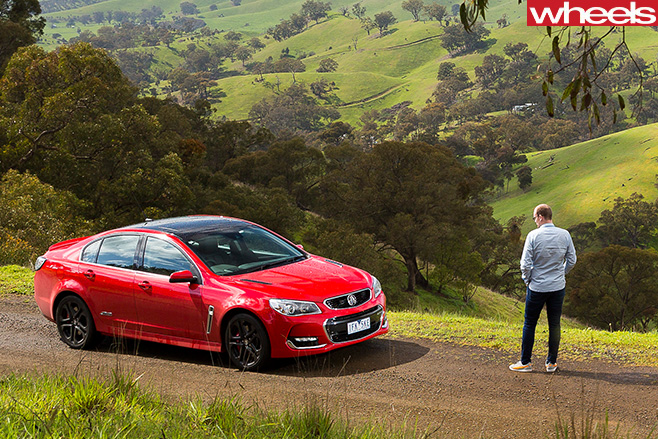
It’s a bittersweet day as we belt Holden’s greatest-ever V8 sports sedan from Fishermans Bend back to its birthplace at Lang Lang. Spoiler alert – this may end in tears…
THERE’S a problem with this car; a huge one. Only days before we collect this VF Series II – the final Commodore engineered and built in Australia – General Motors’ VP Stefan Jacoby dropped a bombshell. Not only will this be the final Australian-built car – something we already knew – but Jacoby confirmed that when the VFII V8 dies in 2017, the Chevrolet SS goes with it, thus ending any hope that the Americans might pick up the four-door V8 rear-drive baton and develop one for us as well.
There’s no chance of a John Farnham-style comeback for the Commodore V8. So if you want an affordable rear-drive V8 sports sedan, ladies and gentlemen, this is it.
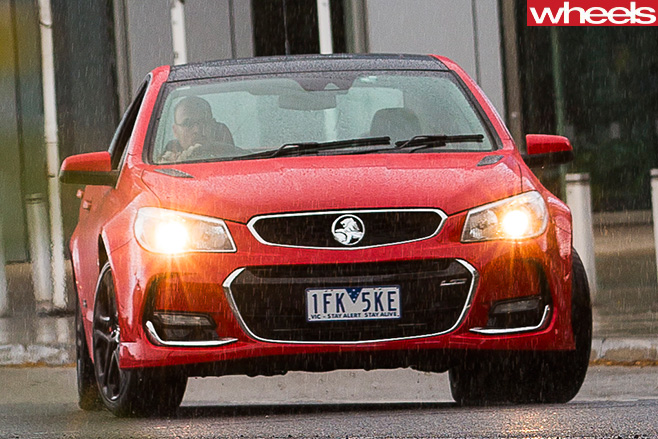
Today’s Commodore shows its depth of talent and engineering better than ever. This is a car that has been built to hammer over tram tracks in Melbourne, tear up the Adelaide Hills, and have its big V8 reverberate between skyscrapers at 2am in Sydney’s CBD.
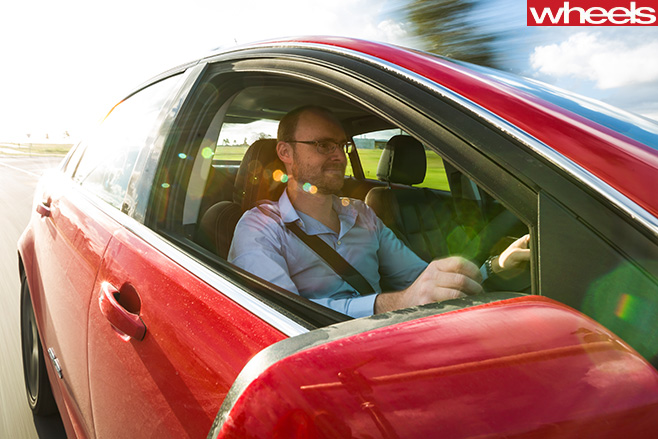
Heart starter
That demand for the V8 Commodore has remained so robust over the last decade makes this VFII SS-V Redline a beacon. We’re driving it from Holden’s HQ in Salmon Street, Port Melbourne, across Victoria and south-east to Holden’s Lang Lang proving ground, the place where the dozens of Holden models have been developed over decades – more than 3.13 million of them wearing Commodore badges.
The VFII Redline is one of those cars we willingly wipe the crust from our morning eyes for. After exiting Holden’s HQ in the spotlessly prepared sedan, our first priority is coffee. That’s where it begins.
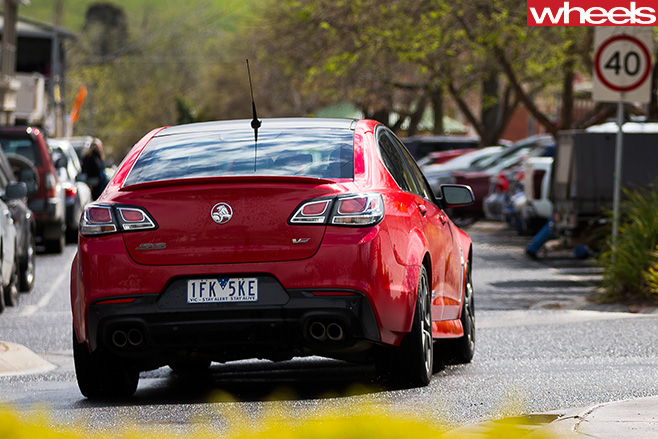
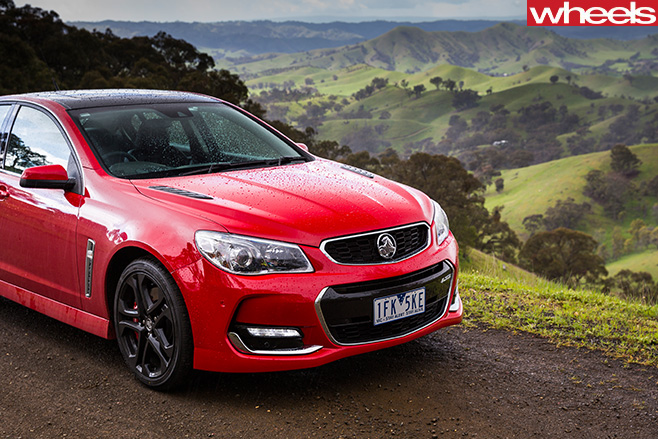
The visuals that caught the coffee-drinker are subtle, but strong. Take that front end, one that’s been carefully massaged by Holden designers Richard Ferlazzo and Peter Hughes. It’s clearly still a VF, but there are wider apertures, a middle section that gulps more air, and side ducts that feed more through to slots in the wheelarches. They’re surrounded by lashings of chrome, which thankfully isn’t overdone but carefully portioned across the nose, contrasting with the black upper and lower front grilles.
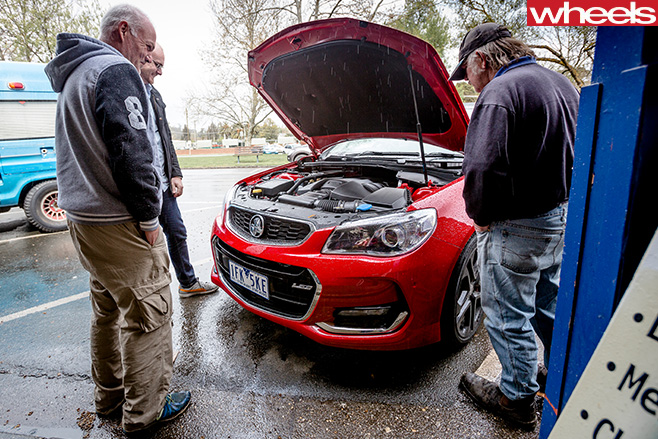
Subtle, too, are the engine-bay vents. They rest on VFII’s bonnet creases, and if you look closely, they actually work. The first three slots are wider than the final two, letting air out while keeping water and other intruders away from what lies beneath. And you know what’s under bonnet via the badge in the gloss black bumper insert up front: the 6.2-litre LS3 V8.
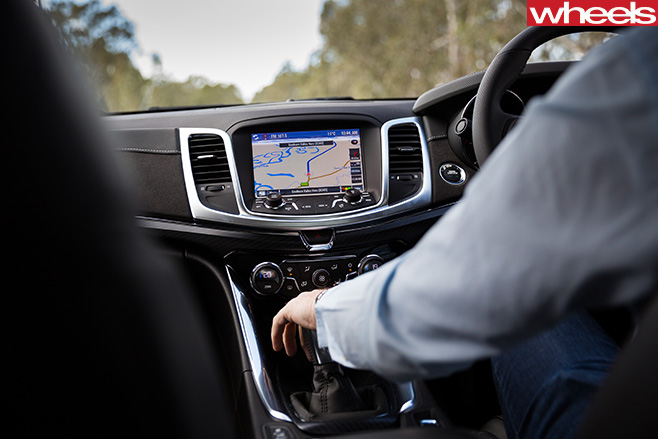
C’mon, feed the noise
Up the Hume, the SS proves comfy with plenty of space in the cabin, which is unchanged for this final edition, and its long legs are shown by the V8 ticking over at a mere 1600rpm at 100km/h in sixth gear. We turn off at Broadford and onto an undulating, winding section that’s made up of sweepers and the odd hairpin.
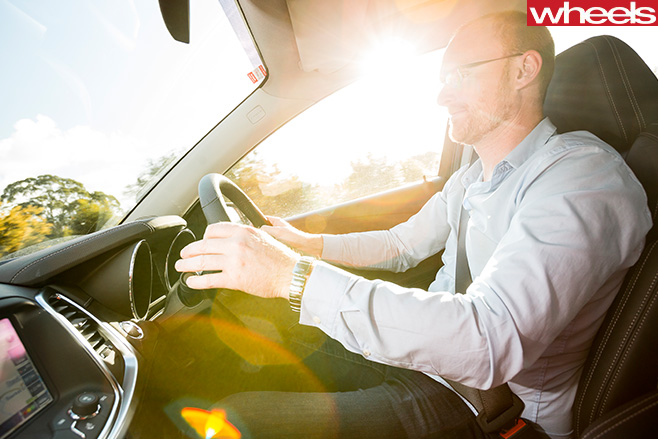
It really does sound like a race V8, and its song has depth and variety. Squeeze gently at low revs and it responds with a warm burble, but at full noise it’s a roar layered with a shriek that’s boisterous, delicious and addictive.
The VFII’s acceleration is rapid, but it’s not neck-snapping. You’re clearly in control, the composure and demeanour of the SS explosive yet predictable. You can feel the road surface through the wheel, yet the chassis won’t bump or skip off line and it’s more a chatter of what we’re steamrolling rather than a panicked shout of the road below.
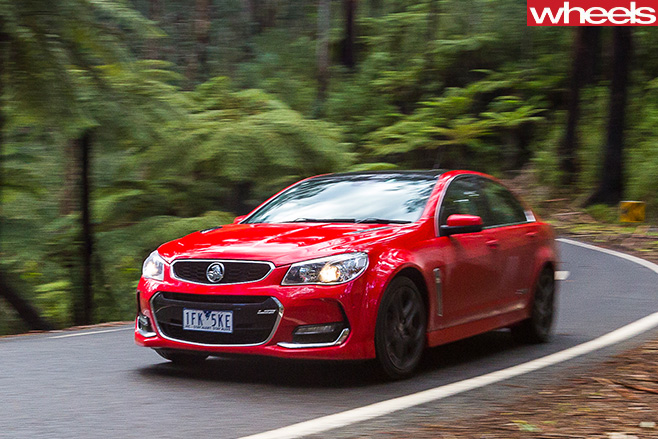
Aussie greatness
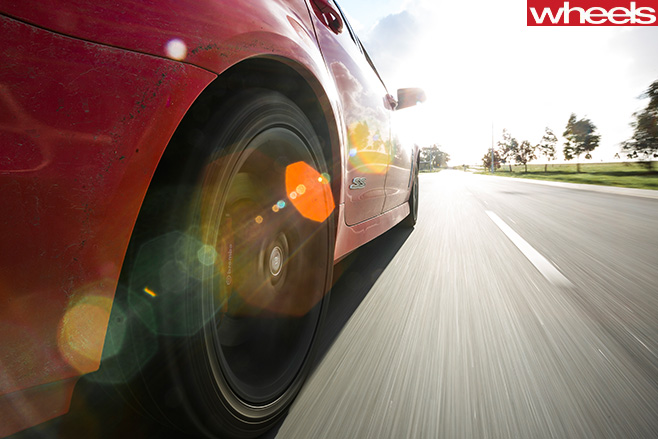
As a driver, you’re part of this car: a crucial part of the circuitry that gets that wondrous V8 through the transmission and out to the rear wheels, anchored by supreme front-end grip and stellar Brembo brakes. The roads we’re on are wet, dry, and at one point showered in hail, yet the Redline has such capable road-holding that we’re hardly adjusting our attacking style for the slippery stuff. And the extra revs of new 6.2 mean that this seemingly minor upgrade has, in fact, elevated the SS-V Redline to true Aussie sports-sedan greatness.
That means that Ross, who we find pondering the SS with a mate as we leave the pie shop in Yea, has it on his shopping list. “I had a VT SS,” he says, when he realises that we’re happy to show him Holden’s latest and greatest sports sedan. “Can I have a look at the engine?” he asks, so we pop that vented bonnet. I show him the plain engine cover, and point out the sound enhancer that has bathed the cabin in V8 richness all morning. “Why do you need a sound enhancer when you’ve got a V8!” he laughs. Regardless, it’s on his 2016 shopping list.
Last drinks
Jacoby reckons that post-Aussie production, would-be V8 Commodore buyers will get the same buzz from “another technology”. No we won’t, Mr Jacoby. That’s like replacing Cold Chisel with Nickelback, or Porsche’s flat six with a V6. It’s just not the same. And it’s proof that the rest of the world doesn’t get why the V8 has its place in the Aussie motoring psyche.
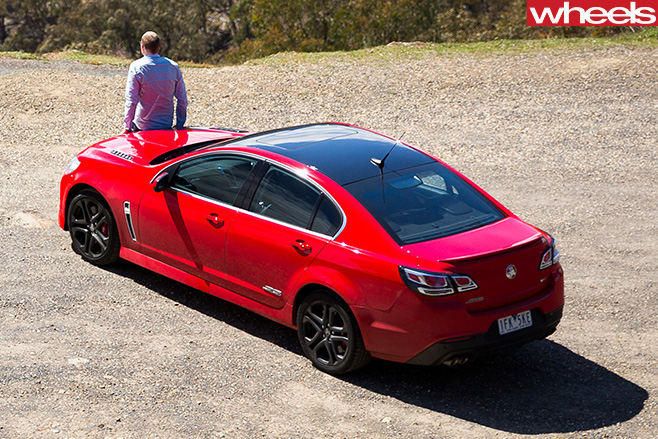
Someone at Holden will soon press the last Commodore bonnet closed, the last batch of paint will be sprayed, the final steering wheel will have a badge placed on it. The hard hats will be hung up, overalls no longer needed. There will be farewell beers and reminiscing about what this group of people has accomplished. Then, one person will have to switch off the lights for the last time.
That moment will be in 2017. And that will spell the end of the greatest-value sports sedan Australia has ever produced, with no replacement in sight. That’s the problem with this car. And why Stefan Jacoby isn’t welcome at my next barbecue.
Raising (and stretching) the bar
The old 260kW 6.0-litre auto felt docile, like it’s a gear too tall, without the punch to subtly kick the tail out to dissolve understeer. The 304kW 6.2-litre, on the other hand, felt like it had been given a shot of adrenalin straight to the heart. Its combination of more power, shorter gearing and a greater rev range transforms the car’s feeling of liveliness. And the MY16 suspension changes, particularly at the rear end, combine with the grunt increase to really raise the Redline’s dynamics.
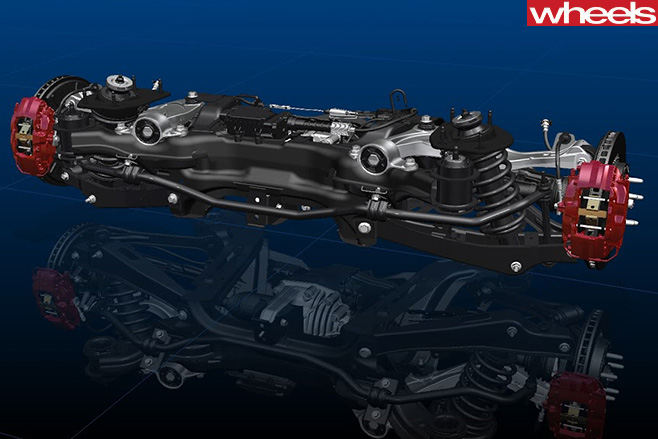
Out on the road, the difference in suspension tune is even more apparent. Fitting sliding Brembo calipers to the Redline’s rear brake set-up enabled fitment of a new rear anti-roll half a metre wider, meaning the Redline could run softer rear springs to achieve a far more sophisticated ride/handling mix.
Where the previous anti-roll bar (still fitted to the FE2-suspended SV6, SS and SS-V) was as stiff as possible, mounting the new bar close to the centre of the rear wheels introduces a much greater degree of subtlety. Holden sorted the Redline sedan first, then tried to replicate the improvement in Sportwagon and Ute. As a result, they share the same front struts but get unique rear dampers.
You can instantly feel the more nuanced balance of the Redline’s chassis. It squats more readily onto its outside rear wheel, which really points the nose into a corner, yet it’s also more supple, allowing it to cop mid-corner bumps effortlessly.
Where the MY15 FE3 tune felt quite firm, yet still very effective at tackling corners with balanced conviction, the MY16 tune with new rear anti-roll bar adds a tangible layer of extra polish to the way the Redline drives. It’s without a doubt the best-handling Holden-badged Commodore ever, by some margin.
By Nathan Ponchard
V-max
PLANNING a trip to the Territory? The new VF II SS-V Redline is speed-limited to 240km/h as a manual, or 10km/h shy of many European cars. SS-Vs fitted with the six-speed auto top out at 230km/h. The difference is due to the auto’s use in the Sportwagon (which is not available as a manual, despite those within Holden looking for a company car with more attitude). Without the speed limiter fitted, a VFII sedan should nudge 280km/h. Given we clocked 263 in a VY Commodore SV8 in 2002, you’d think so!
Doctor Dave’s legacy: the ‘Baillie’ tip
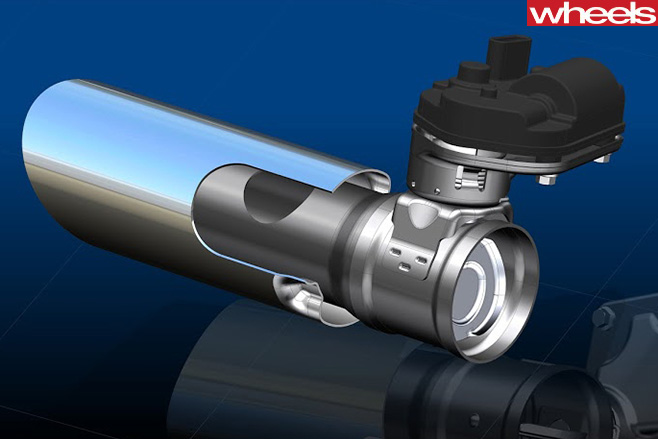
The engineers he worked with will never forget his efforts and his commitment, though – nor how well he fitted into the Holden team. And they want customers to remember the legacy Baillie had on their cars.
The exhaust tip he engineered for the VF Series II is now known as the Baillie Tip, and in true Aussie style, it’s a relatively simple concept – drilling a hole in the side of the exhaust tip to direct some of the noise up towards the boot floor. It then reverberates the sound throughout the cabin, effectively amplifying the V8’s roar under throttle.
“The guy was a genius, it’s a tragedy that we lost him,” says Holden chief engineer Andrew Holmes. “This is a little bit of genius … and it’s astounding how much difference it makes.”
His work, though, is a large part of the reason the Commodore V8 VF Series II sounds the way it does.
It could also be used on various General Motors products, with Holden lodging a patent to protect the clever engineering solution.
Holden Commodore SS-V Redline Engine: 6162cc V8 (90°), ohv, 16v Max power: 304kW @ 6000rpm Max torque: 570Nm @ 4400rpm Transmission: 6-speed manual Weight: 1775kg (estimated) 0-100km/h: 4.9sec (claimed) 0-400m: 13.0sec (claimed) Fuel economy: 12.9L/100km Price: $53,990 On sale: Now
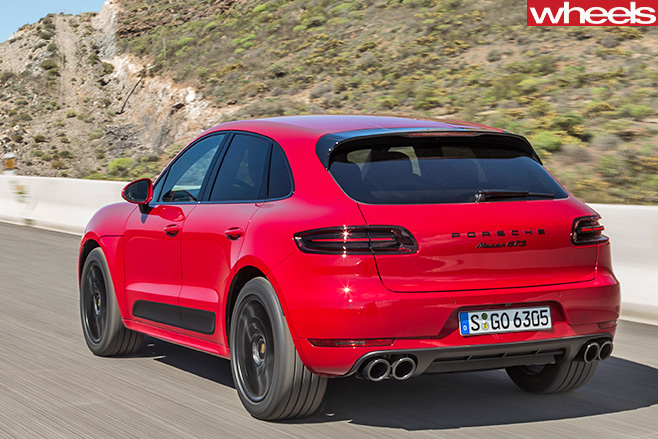
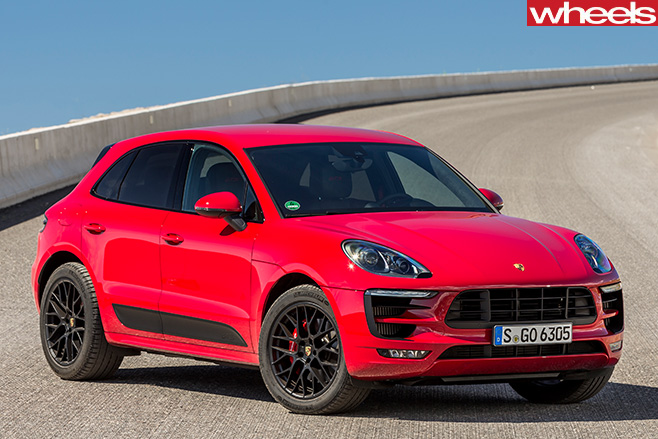
The 2016 Porsche Macan GTS will slide into the German brand’s medium SUV line-up between S and Turbo. It’s the sportiest Macan of all, according to Porsche.
WHAT IS IT?
Medium-size, five-seat, high-performance SUV manufactured in Germany and based on the same Volkswagen Group MLB component matrix as the Q5 and other larger Audi models.
WHY WE’RE TESTING IT
Porsche recently introduced the Macan GTS to world media alongside the updated 911 Carrera and Carrera S, but its Australian intro isn’t until April 2016.
MAIN RIVALS
The Macan GTS is priced like one-size-larger SUVs from other A-grade German brands. Mercedes-Benz GLE400, with its feisty and refined twin-turbo 3.0-litre V6 is the closest match. Same-size quasi competitors such as the Audi SQ5 and Volvo XC60 T6 are less powerful and less costly.
THE WHEELS VERDICT
While fearsomely fast on the right (perfectly surfaced) road, the Macan GTS lacks the ride comfort appropriate in an SUV and is costly for its size.
PLUS: Smooth road grip, handling; thrusty twin-turbo V6; front seats; attractive exterior MINUS: Rough road ride; price to size relationship; expensive (often desirable) options
THE WHEELS REVIEW
THE sporty SUV is where the immutable laws of Newtonian physics collide head-on with a car maker’s understandable desire to profit from satisfying the misguided desires of an ever-swelling cohort of customers. It’s self-evident that height and heaviness are serious impediments to the achievement of handling agility and accelerative ability. Still, some companies do make a better job than others of taking clumsy SUV material and turning it into something almost elegantly athletic. Which brings us to the Macan GTS…
This latest addition to Porsche’s medium-size SUV line-up, due to reach Australia next April wearing a $109,800 price-tag, can be eye-wideningly rapid. One of the exercises on the program at the international launch is chasing a well-driven 911 pace car up and down a snaky and silky smooth 4.2km stretch of blacktop on the island of Tenerife.
As well as giving us the chance to hear the over-run cackle and pop of the optional sports exhaust of the new Carrera S ahead, the experience confirms Porsche’s claim that the GTS is the sportiest Macan of them all. It corners without too much roll or any hint of skittishness, the broad tyres on its dark-painted 19-inch wheels deliver ample grip, the steering is swift and accurate, and the brakes are strong.
The GTS is rapid, even though it doesn’t have the power to match the Turbo with its 294kW twin-turbo 3.6-litre V6. Instead, the GTS has a 265kW version of the twin-turbo 3.0-litre V6 from the Porsche Macan S, teamed with the seven-speed dual-clutch transmission and all-wheel-drive hardware used in all Macan models. The GTS engine’s small increase in boost yields a modest 15kW increase.
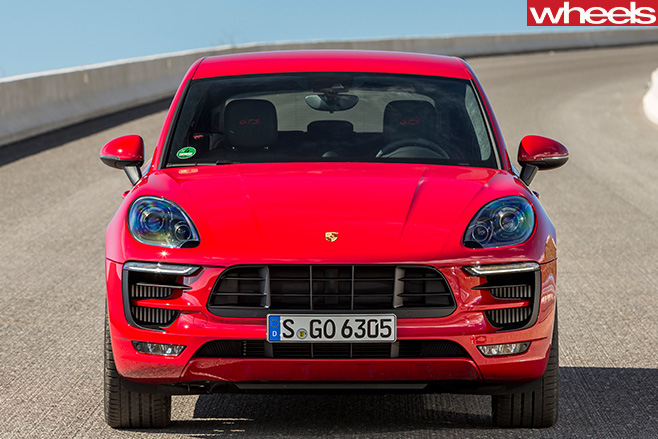
Porsche concentrated more on boosting the GTS’s curve-carving credentials. Its suspension is 15mm lower and the setting of its standard adaptive damping system is sportier.
While effective on a flawless road surface, the suspension of the Macan GTS isn’t happy elsewhere. The PASM – Porsche Active Suspension Management – system has three basic settings, none of them right for roughness. ‘Comfort’ is busy on small irregularities, but exerts inadequate control of the body motions caused by heaves and humps. ‘Sport’ fails to completely quell this floatiness, while increasing jiggliness. ‘Sport Plus’ sorts the handling, but makes the ride annoyingly brittle. In a five-seat passenger-carrier such as a Macan, such a range of choice is difficult to forgive.
Speaking of choice, wouldn’t it be smarter to pick something with attributes and abilities similar to the Macan GTS, but without its handicaps of heft and height? The lower, much lighter and sportily entertaining new Volkswagen Golf R wagon, for example, has the same number of seats, equivalent cargo space, all-wheel-drive and similar performance… and is, in round figures, $50,000 less costly.
SPECS
Model: Porsche Macan GTS Engine: 2997cc V6 (90°), dohc, 24v, twin turbos Max power: 265kW at 6000rpm Max torque: 500Nm at 1650 to 4000rpm Transmission: 7-speed dual-clutch Kerb weight: 1895kg 0-100km/h: 5.2sec (claimed) Fuel economy: 9.2L/100km (European combined cycle) Price: $109,800 On sale: April 2016
A REPAIR agreed to yesterday in Europe for polluting Volkswagen diesels should quell fears that Australian cars will lose value, the head of VW Group in Australia has said.
His comments came after Volkswagen in Germany said it had agreed with European regulators on fixes for the offending type EA189 diesel engines, a response to the multi-billion dollar emissions scandal that engulfed the brand in September.
The agreed modifications would meet relevant emissions standards, Volkswagen AG said in a statement released yesterday, and were expected to maintain the original vehicles’ performance and fuel efficiency.
But the statement cautioned that “as all model variants first have to be measured, the achievement of these targets cannot yet be finally confirmed”.
The agreed repair did not apply to the US market, where the scandal was exposed. The US has stricter emissions regulations than Europe and Australia.
Volkswagen Group has admitted that up to 11 million vehicles it built with EA189 diesel ngines since 2008 were delivered with engine control software that cheated emissions tests.
Volkswagen said a reprogramming of the engine control computer would be the only change required for the 2.0-litre version of the engine, which was fitted to most of the 99,678 affected cars sold in Australia (78,445 Volkswagens, 16,085 Audis and 5148 Skodas).
A recall program would not begin installing the update in Europe until January 2016 at the earliest, and could take a year or more to complete.
Affected cars include the Polo, Golf, Jetta, Eos, Passat, Passat CC, Caddy, Amarok and Tiguan as well as the Audi A1, A3, A4, A5, A6, TT, Q3 and Q5, and Skoda Yeti, Octavia and Superb. Most are not current models, and VW has withdrawn the remainder from sale pending rectification.
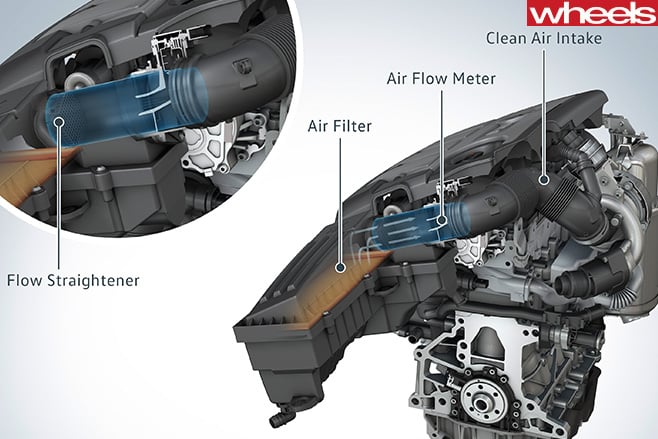
Volkswagen has released a video (top) explaining how the device will be fitted.
“Following an intensive examination, these measures have been ratified by the Federal Motor Transport Authority,” the Volkswagen AG statement said.
“Thanks to advances in engine development and improved simulation of currents inside complex air intake systems, in combination with software optimisation geared towards this, it has been possible to produce a relatively simple and customer-friendly measure.”
Recently appointed VW Group Australia managing director Michael Bartsch told Wheels he was awaiting exact timing on when the Australian cars could be updated, but he believed fears that they would run less well afterwards – and therefore be worth less money – could be put to rest.
He said he was confident all cars would be fixed and customers would not be disadvantaged.
“The fix is nothing intrusive … the fix is quite simple; the fix is completely out of proportion with what the inappropriate behaviour is,” Bartsch said.
“This whole discussion on loss suffered from residual value drop can be put to rest.
“When these fixes are done there is simply no reason to believe there is any consequent impact that should mid-term or post-fix adversely affect the residual values of these cars.”
Bartsch said he was awaiting confirmation from Germany on when the Australian fixes could be rolled out.
“As soon as we know what we have in capacities, where the cars are and how many VAS [diagnostics] machines – the machines that do the reflashing – then we’ll be able to work out a timeline,” he said.
And that’s only for cars fitted with the 2.0-litre engine. “The 1.6 will be later in the year [2016],” he said.
Bartsch said Volkswagen Australia was “absolutely” committed to diesel, which he said still brought consumer advantages.
However he acknowledged work needed to be done – particularly on Volkswagen diesels – to rebuild trust.
He said customers were the priority in the lengthy process of updating cars and rebuilding trust in the brand.
“We’ll be tailoring a program that is suitable for the Australian market and doesn’t take our customers for granted,” he said.
Also yesterday, Volkswagen Australia was warned by a Federal Court judge to act sensibly at it faced class actions brought on behalf of disgruntled owners of VW diesels.
Lawyers for VW Australia reportedly had declined to accept court documents on behalf of the parent company in Germany, which had also been named in class action proceedings brought by law firm Maurice Blackburn.
At a hearing in Sydney, Justice Lindsay Foster was reported as saying the decision exposed VW to serious cost orders, and the company had to participate in a sensible way.
Translating the sledgehammer performance of the modern TDi engine to the road has proven difficult for manufacturers.
Not that making bucket-loads of power and torque is the issue with high performance diesels, but rather doing so and remaining within ever-tightening emissions standards is. This may see the diesel engine’s current flame burn brightly, but soon fizzle out in commercial use over the next decade.
Diesel engines are already being pushed hard and stuffed with high-end technology to counter the inherent flexibility of petrol competitors. In the past decade we have seen high pressure (30,000psi plus) Common Rail Injection, variable geometry turbochargers, and complex exhaust emission control systems to mask the lack of power at higher rpm that modern performance drivers have become used to.
The problem with the current state of diesel engineering is it’s not only extremely costly to integrate into mass production, it also adds weight to the overall powertrain (heavier and stronger engine components need to be used). It also requires specialised technicians, which in turn leads to general servicing costs being higher than for a similarly performing petrol equivalent.
A final potential nail in the performance diesel coffin is that the allowable emissions levels of NOx (Oxides of Nitrogen) and CO2 (Carbon Dioxide) – which diesels produce far more of than petrols – are being reduced with upcoming Euro 6.2+ emission standards.
With ever more fuel efficient petrol-engined hybrids near-matching the fuel economy of diesels, and lacking nothing in the way of torque and power, the stage is set for passenger car performance diesels to slowly fade into oblivion, possibly as early as 2020.
Performance diesel advocates, though, can point to a future for these engines that, although somewhat diminished, is still bright. Money is being spent on tailpipe emission control systems (such as the French PSA-designed Selective Catalyst Reduction) that can reduce NOx by up to 90 per cent and CO2 by 5 per cent.
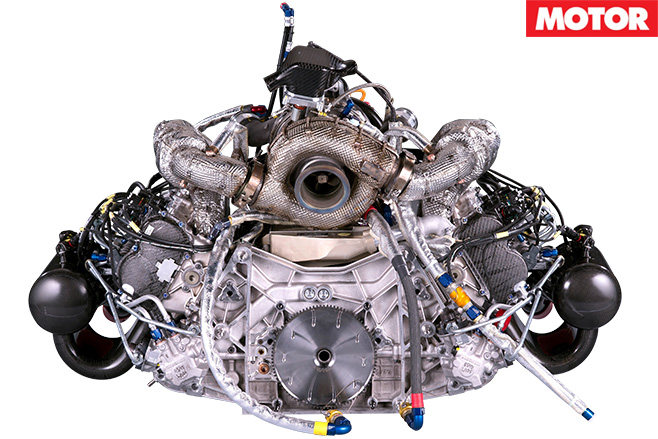
1. Turbo diesel Audi’s 3.7-litre Mono Turbo diesel engine is small, light, and packaged neatly alongside the hybrid drive electric assist system. Despite being 100cc smaller than a Nissan GT-R engine, the Audi’s engine produces 375kW/850Nm when tuned in endurance running mode. Try getting 24 hours flat out from a petrol burning GT-R producing those numbers!
2. Energy return Turbocharger boost runs to 2.8 bar (down from a previous rule-imposed 3.0 bar). The inlet size of the turbocharger is restricted down to a tiny 45.8mm and the fuel capacity is set at 58 litres. Without these artificial restrictions in place the compact diesel could generate upwards of 500kW.
3. Aero package The R18 platform, even without the superb powertrain, is a race-winner on its own. The challenge for engineers was to incorporate increased cooling airflow through the car for the hybrid system whilst reducing overall aerodynamic drag. This challenge was met very effectively.
4. Smarty Pants The processing and computing power in the R18 e-tron contains possibly the most sophisticated and advanced control algorithms of any race car in existence. So much interfacing and component networking exists to ensure a seamless operation that it simply boggles the mind.
5. Energy return Bosch helped integrate the hybrid Motor Generator Unit into the front axle of the R18 e-tron to provide 500kJ of energy between braking phases. This means the e-tron can power each front wheel independently with plenty of electrical force when exiting corners at over 120km/h.
6. Carbon Cogs All LMP1 gearboxes are pretty trick pieces of kit but the R18 e-tron takes this a level further by featuring a complete carbonfibre housing, This makes it extremely light and strong, but best not to ask about the cost…
TDi: The Good It’s possible to power heavy cars effectively with rather small-displacement TDi engines. That’s why diesel engine sizes of 2.5-3.5 litres are common.
Fuel efficiency is also better. Similarly performing petrol engines will use about 30-40% more fuel. Some of the current crop can easily run 1000km between fill-ups.
Traditionally diesel engines have had greater durability than petrol engines due to higher-rated engine internals to cope with large boost and torque loads.
Also, high performance turbo diesels run cooler than petrol engines. And diesel fuel doesn’t vapour lock like petrol.
TDi: The Bad Emission control systems are hurting the reputation of diesel engines, and with the complexity of emission control systems and high strength manufacturing, the costs will rise.
In a market where vehicles are steadily becoming cheaper, the diesel engine is becoming an increasingly expensive option.
Service costs are also higher on a diesel engine than a comparable petrol engine. Diesel engines normally hold more engine oil, use a higher grade long life oil, and require ongoing maintenance of their emission systems which can see service bills skyrocket long term.
Last but not least, diesel engines sound like rubbish.
