
Someone in the BMW UK press office knows the MOTOR audience well.
With plenty of power, an electronically-locking differential and balanced rear-drive handling, BMW’s M cars tend to be natural drifters, and this teaser video shows that the new M2 will be no different.
Full details on the boosted baby Beemer can be found here, but with 272kW/465Nm, a standard six-speed manual gearbox and a raft of M gear for around $100,000 it’s set to be one of the most hotly anticipated cars of 2016.
BMW’s latest round of M cars are all mightily impressive, but haven’t always hit the mark in terms of driver satisfaction. We’re optimistic, however, that the new M2 could be the best of the bunch.
No one paid much attention to the single-car Renault entry at the 1977 British Grand Prix.
This story was originally published in our March 2014 issue
Resplendent in Renault’s corporate yellow, white and black and driven by Jean-Pierre Jabouille (who, incidentally, also designed the car) Renault’s RS01 made history at Silverstone that day as the first turbocharged car to race in F1.
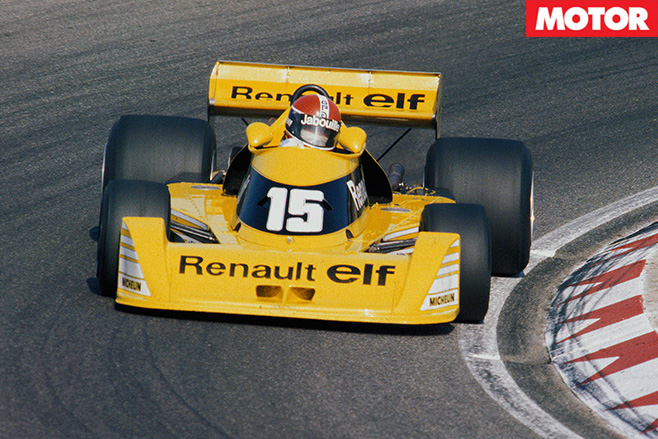
In the hands of Jabouille the RS01 failed to finish every race in 1977 and barely made it to the finish line in all but one race in 1978 (Jabouille scoring the first points for a turbocharged car with a fourth place in the US grand prix).
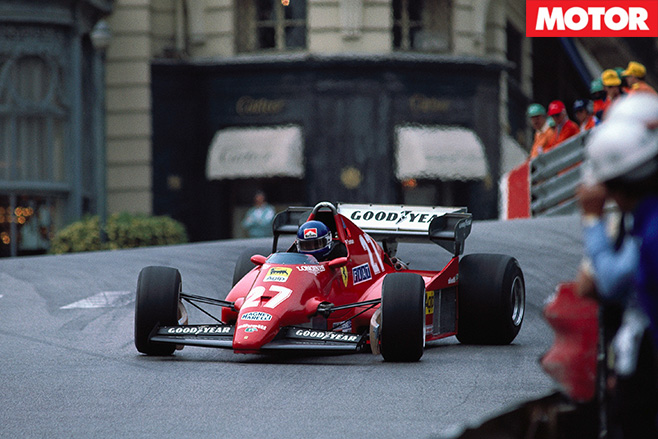
The RS01 raced until the 1979 Belgian Grand Prix before Renault retired the real-world test mule and rolled out its successor, the RE10, at the following race in Monaco.
Jabouille won easily, a first win for himself, for Renault and for turbocharging. It was an historic victory, overshadowed somewhat by the epic battle for second between Gilles Villeneuve and Rene Arnoux (YouTube ‘Villeneuve Arnoux Dijon’ if you haven’t seen it).
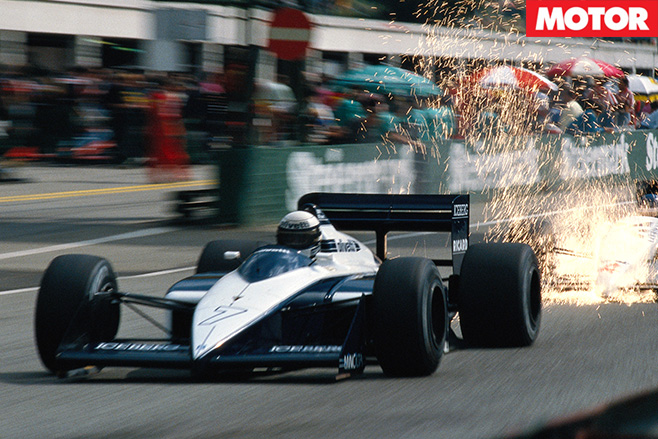
The Glory Years Following Renault’s success, it didn’t take long for the world’s major car manufacturers to come knocking on F1’s door. In quick succession, Porsche, BMW and Honda all entered the fray as engine suppliers while Ferrari too knew it had no option but to ditch its beloved V12 in favour of race-winning turbo tech.
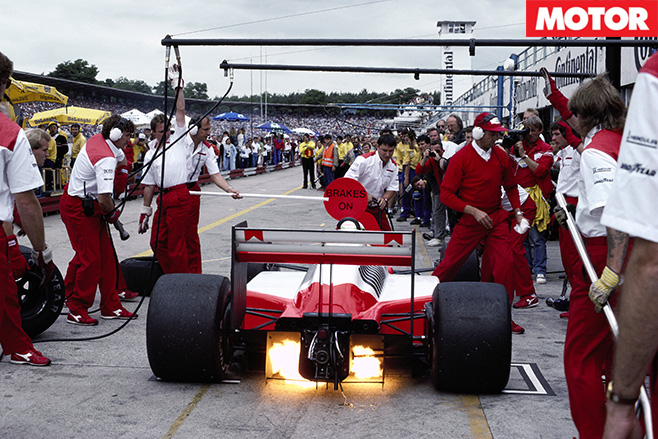
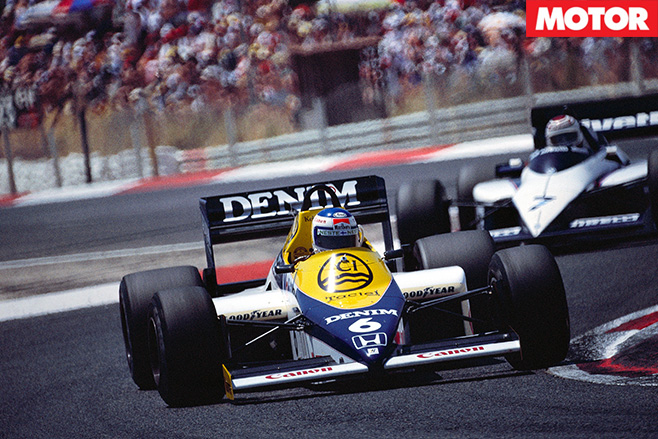
Keke Rosberg won the title in his Cosworth-powered Williams, but he only won one race and was helped, in part at least, by turbo unreliability (those fiery detonations continued unabated) and the tragic (separate) accidents that claimed Gilles Villeneuve’s life and ended Ferrari teammate Didier Pironi’s career. Until then, Ferrari had been on track to claim the first world championship for a turbo car.
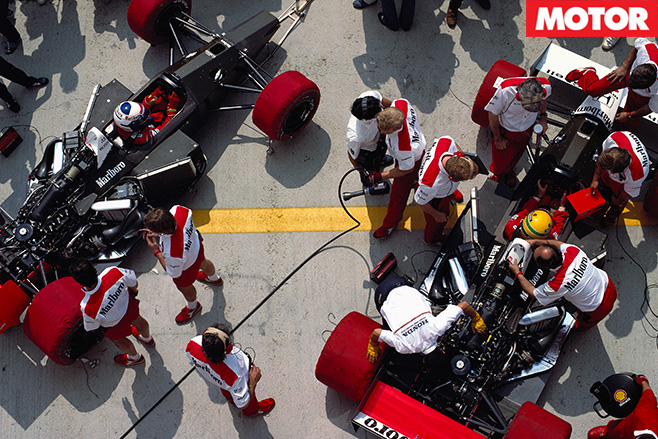
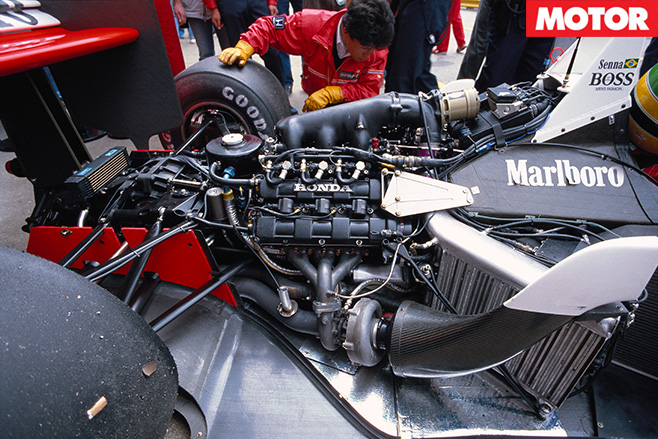
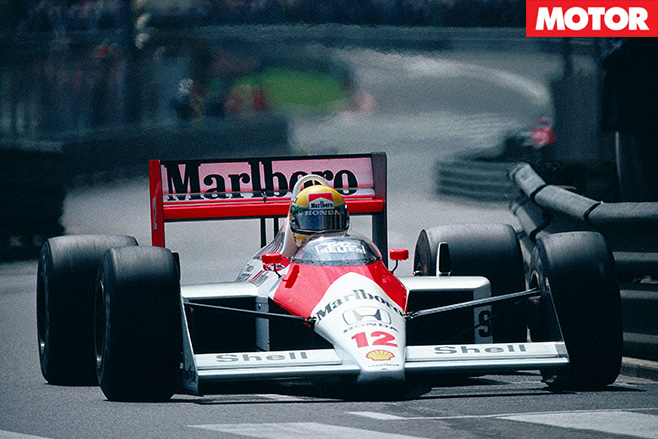
But behind closed doors, McLaren’s wily boss Ron Dennis was wooing Honda and when 1988 rolled around, a potent partnership – McLaren, Honda, Ayrton Senna and Alain Prost – executed a near-perfect season, the team winning 15 of that year’s 16 grands prix. It was as near to perfection as any team has come in F1 but it was also turbocharging’s swansong.
If dashboard-mounted cameras had been around when I was a P-plater, my parents would have surely revoked my car privileges. For life. Hard evidence of schoolgirls piled up in the car, distracted, singing, hollering out the windows, and the odd bit of driving stupidity would have been used against me until the end of days. I would, of course, have presented my own arguments over the unfairness of it all, citing my parents’ spying dash cam as an invasion of privacy.
It’s definitely a lot harder to be a teenage driver – or indeed a driver of any age – in these camera-centric times. Dash cams are increasingly being employed to record the idiocy of other people on the road, as well as those behind the wheel. They’ve been used to prove who is at fault in an accident, as well as to monitor driving skills and standards by employers, fleets and parents. The flipside of such in-car surveillance is the risk of having the blame for an accident firmly planted at your feet; feeling like your privacy has been violated; becoming a laughing stock on YouTube; or all of the above.
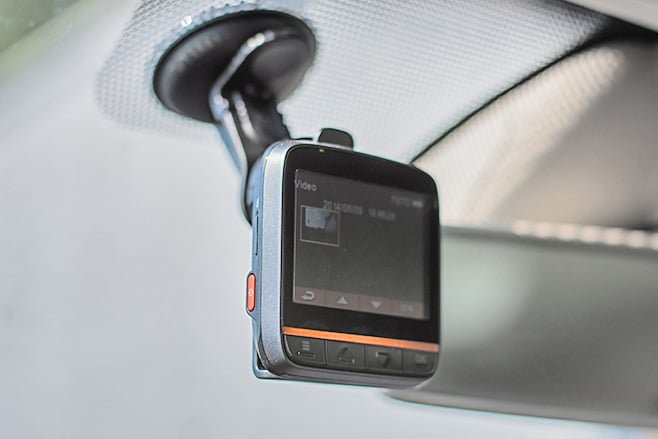
So, does the good outweigh the bad, and is it worthwhile to have a dash cam in your car?
Technology continues to get smaller, cheaper and better, and this is certainly the case with dash cams. They can be had for as little as $25 for stick-on cameras of dubious quality and effectiveness, right up to about $400 or more for the HD jobbies. The top-shelf versions have two cameras to record both inside and outside the car, wide-angle lenses, Wi-Fi and Bluetooth connectivity, and GPS tracking ability.
The more you spend, the better the picture, and the more likely the dash cam can be used as a virtual insurance policy. And like any form of insurance, you only need something to happen once to have it pay for itself. Say you are involved in a hit-and-run – the highest-quality dash camera will be able to grab that number plate nice and clear, absolving you of blame and possible financial loss. Even if it’s a minor bingle where the at-fault driver is in question, if the video proves you’re in the right, you can save yourself that nasty insurance excess and a strike against your name for making a claim. People have evaded more serious charges in court, thanks to dash cam footage being used to help clear them of responsibility in road incidents.
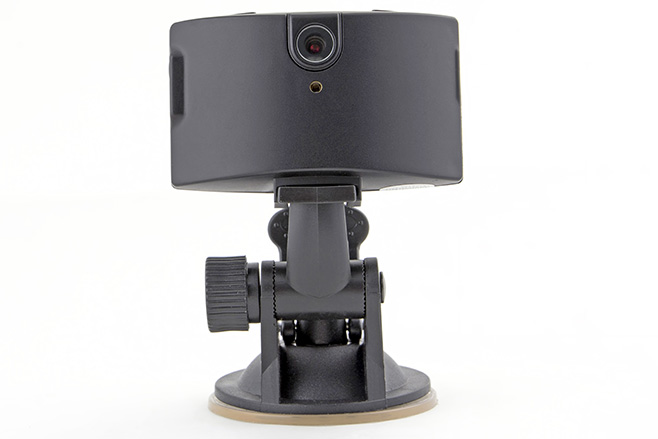
And a dash cam is easy to use. It’s typically a set-and-forget system that begins recording to an SD card when the car either fires up or starts moving, and stops once the ignition is switched off. You can then transfer the SD card footage to your computer (or YouTube); the more expensive ones have Bluetooth or Wi-Fi to transfer files without lifting more than a finger.
Here’s where things get a bit iffy – with these more expensive cameras, you can not only track a vehicle with GPS, but also live-stream the footage. All you need is a smartphone or computer and you can control the dash cam from anywhere. This is bad news for people joyriding in your car – your child and their mates on a night out, for example – and it also raises issues of privacy and trust.
Despite such ethical grey areas, the risk of incrimination, and the initial cost of purchasing a decent unit, dash cams are still a pretty good idea for all of the abovementioned reasons. Sure, I would have screamed blue murder had my parents employed such a device to spy on my driving escapades, but when I imagine my son in years to come on his provisional licence, it’s hard to deny the peace of mind that would come with being able to monitor his driving (and the behaviour of his mates) and make sure he is doing the right thing.
THE best grand prix of the year, or perhaps the finest of the decade. That’s how yesterday’s enthralling 2015 Pramac Australian Motorcycle Grand Prix was labelled by more than one expert, and with no hint of hyperbolic overload.
After it was over and we all got back into our seats, resumed breathing and took a stiff drink, the social media accolades started to fly.
“Holly {sic] shit!!! @MotoGP What a race!!!!!” tweeted Mark Webber aka @AussieGrit , echoing what many felt.
Nico Rosberg chimed in too with: “Wow. Mega racing.”
Fred O’Frog wrote: “I wonder if the #F1 head honchos ever watch the bikes? Noise, speed, drama, passing…no KERS, eco based crap!”
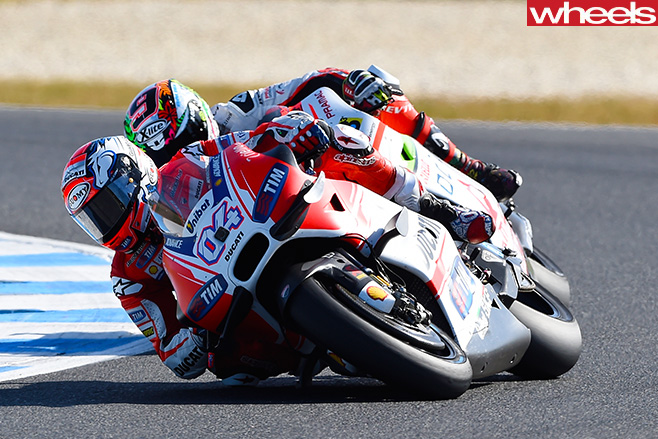
In a tense championship scenario where the two Yamaha team-mates Valentino Rossi and Jorge Lorenzo went to Phillip Island locked in a tense duel for the title, the Spaniard trailed the Italian megastar by 18 points with three races remaining.
Lorenzo urgently needed to grab back some points.
Rossi, the winner of the Australian race last year, was no less determined, while defending champ Marc Marquez had no title at stake.
Qualifying suggested it was a race amongst these three champions.
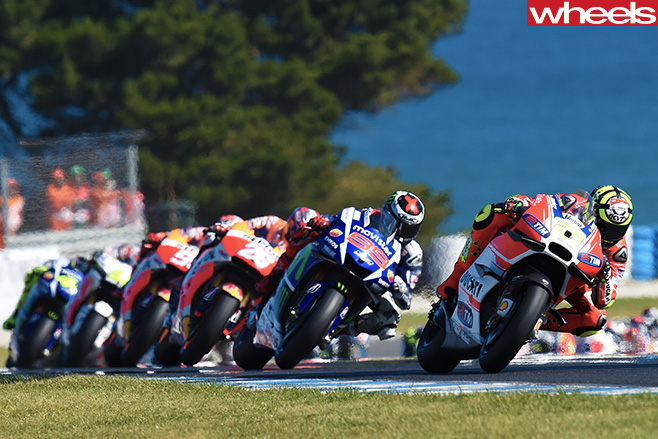
The smooth, calculating Lorenzo did his usual trick of trying to skedaddle, leaving Rossi to deal with Marquez and Iannoe, who just would not go away.
Despite brawling amongst themselves, Marquez, Rossi and Iannone towed each other back up to Lorenzo and on lap 18 the Honda rider took the lead, but only for five minutes laps…
The brutally hard but fair scrapping continued and Marquez looked gone when he slipped to fourth with just two laps remaining. But he pounced past Rossi on the penultimate lap into third. And with a marvellous final lap, the reigning champ got Iannone and then swept past the startled Lorenzo to the lead while recording the fastest lap of the race.
The top four riders crossed the line covered by barely one second.
Watched on by heroes of others sports, among them Craig Lowndes, Wayne Carey, Travis Cloke and Sally Pearson, Marquez’s GP win was his 50th in his career and his first in the MotoGP class at Phillip Island.
Lorenzo did claw back seven precious points, but box-office supremo Rossi still leads by 11 heading to Malaysia next weekend. He wasn’t unhappy. “I think this was the most exciting race of the season and for sure one of the best in the last few years,” declared Lorenzo. “To have four of the fastest riders fighting for victory in all the corners for the whole race is unbelievable.”
No-one who watched will forget this AGP.
No contrived pit stops for fuel or tyres were required; just pure, improbably tight, racing from flag to flag.
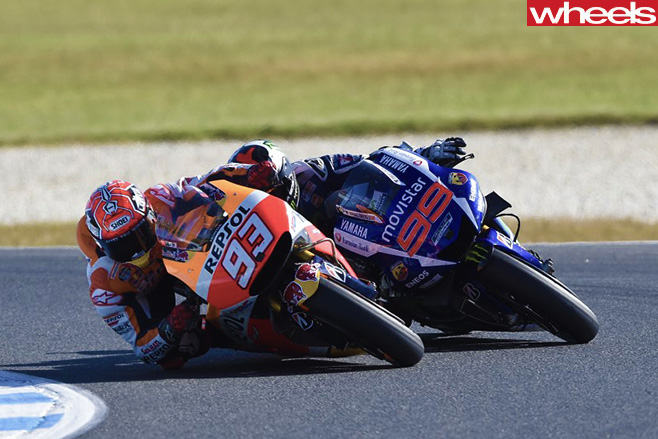
“However, I overheated the front tyre and had to slow my pace. At the end I overtook Iannone and Valentino and I had a great last lap; I don’t know where I pulled that time out from, but it was what made the difference for us!”
Australia’s MotoGP rookie, Jack Miller, also distinguished himself with a fine ride to 10th and first open-class rider home, his best result in the premier class.
Earlier, Miguel Oliveira scored a great win in Moto3 while crowd favourite Remy Gardner, son of you-know-who, rode his way from 26th on the grid to an incredible 10th – his best ever GP finish.
Another Aussie, Josh Hook, subbing at Technomag Racing Interwetten, climbed to 20th in the Moto2 GP, won by Alex Rins.
V8 SUPERCARS: Russell Ingall changes sides…again…to Ford
THOSE true blue (and true red) V8 Supercar followers must be a tad confused, and maybe even a little angry about the flexible brand loyalties of drivers in a category founded on Red versus Blue.
A couple of weeks ago Russell Ingall was the wily super-sub for the battered James Courtney in a Holden Racing Team Commodore at Bathurst.
Now we learn that Ingall has been grabbed by the Prodrive Racing Australia squad to fill-in for the injured Chaz Mostert at the Gold Coast 600.
Okay, this is not the first time Ingall has switched allegiances. He started in V8 Supercars with Holden, jumped to Stone Brothers Ford, and then rebounded to Holden again where he stayed until his retirement last year.
Showing either an ecumenical brand blindness, a passion for racing or perhaps following the money (maybe all three), Ingall happily relinquished Foxtel commentary duties to grid up for Sandown and Bathurst for HRT, and now the Gold Coast for Ford.
Ingall brushes away suggestions that he “betrayed” those at HRT by leaping to the Prodrive Ford enemy for the Gold Coast cameo.
“My commitment (to HRT) was always only for Sandown and Bathurst and not for the Gold Coast race so at the end of the day there is nothing untoward there,” Ingall told Fox Sports.
Maybe we shouldn’t be too harsh on Ingall. Jumping sides in Australian touring car racing is hardly new.
Jamie Whincup and Craig Lowndes have done it. Peter Brock went from Austin to Holden to BMW to Ford and back to Holden (even jamming in a spell driving Volvos in 1994) but still managed to retain the affection of the Lion supporters.
Allan Moffat, one of the great Ford legends of the past decades, was forced to take up with Mazda by the Blue Oval’s corporate policy on motorsport. Later he linked up with Brock in one of the most memorable joining of forces by former arch rivals. Moff is still regarded as a Ford man.
V8 SUPERCARS: Coulthard joins DJR Team Penske
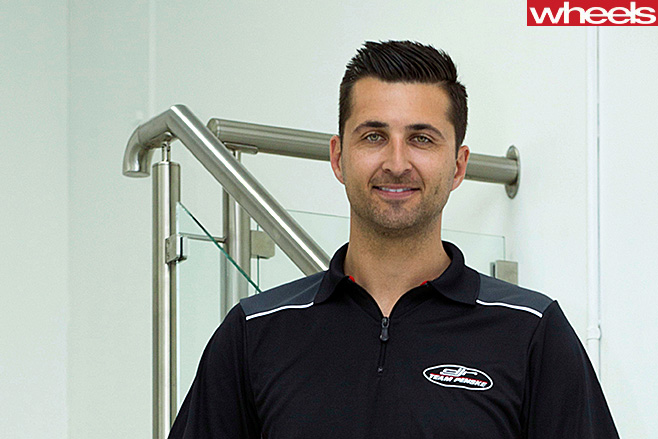
But unexpectedly, we’ve heard that Scott Pye will stay as part of an expanded two-Falcon assault on the 2016 championship, meaning that Marcos Ambrose has no ongoing full-time driving role with the team.
“Expanding to two cars has always been a priority of ours, and with Fabian on board, gives us the opportunity to add another car capable of running at the front,” said Tim Cindric, the president of Team Penske.
The 33-year-old Coulthard has been enjoying a strong season and is currently fifth in the title standings driving for Brad Jones Racing.
But in the bitchy world of V8 Supercars, there has been some speculation that Coulthard’s success owes more to the car and team than to the driver.
Coulthard himself has no such doubts about his own powerful contribution to the competitiveness of his Freightliner Commodore this season.
The English-born Kiwi has happily made the move from a team that has given him race wins for each of the last three seasons to one that has struggled at times but now seems to be making steady progress.
Two massive names in motorsport – Dick Johnson and Roger Penske – also have seductive powers. His BJR engineer Phil Keed is also moving across with him. That will help the transition although the pair does have its differences.
Tim Slade seems set to take Coulthard’s seat at Brad Jones Racing, after spending two years with modest returns in Walkinshaw Racing’s Supercheap Commodore. He’s better than results suggest.
Slade could be the first to know if Coulthard’s success at BJR lately is more about the driver or the car and team.
As for Ambrose, his future seems welded to his family and Launceston. After years of the NASCAR grind, he is clearly over motor racing.
GT3: Full-race and free Bathurst 12 Hour coverage
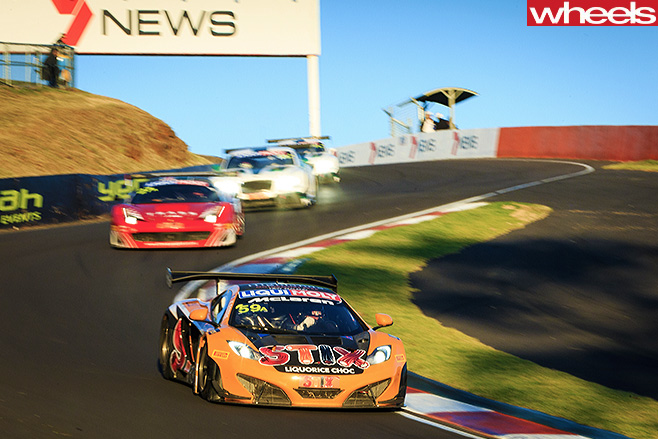
Seven will show all 12 hours of the race live and free around Australia and live on any connected device, making it one of Australia’s longest continuous single-day sporting broadcasts of any major national or international event.
The Seven hierarchy is clearly happy with the strong ratings it garnered during this year’s race across the network.
Seven says that across more than 12 hours of coverage, an average audience of almost 400,000 tuned in to Seven and its sister channel, 7mate.
Seven’s head of sport Saul Shtein says he is expecting the 12 Hour success to continue to build.
The 12 Hour is now a property of V8 Supercars Australia, which also predicts the international GT enduro will grow quickly. Liqui-Moly Bathurst 12-Hour event director John Casey said Seven’s commitment to the race was recognition of its status as a major event on the Australian motor racing calendar.
Closer to the February 2016 event date, Seven will announce the 12 Hour’s commentary team and details of the split of the coverage between Seven’s primary channel and 7mate.
Free live streaming via the Bathurst 12 Hour website will keep international fans in touch with all of the action.
Dear Italian friends, I am lost in translation.
This story was originally published in our April 2014 issue
Help me with a word or phrase per favore, a word beyond forza and bellisimo and closer to perfecto.Feel free to substitute this word to the title of this story, a word worthy of Ferrari’s F12 Berlinetta.
As the word fails me, how about a suitable numero. Here are a few of relevance: 7.30, 840,000, 911, 28, 8700 and 8.3.
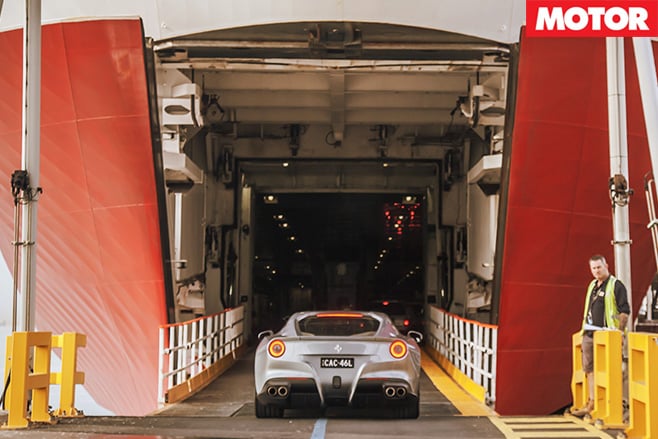
Allow me to explain. Editor Campbell has me fetching a Prancing Horse from its Richmond stable in Victoria for a 7.30am rendezvous to load-up onto the Spirit of Tasmania ferry bound for the twisties of the Apple Isle.
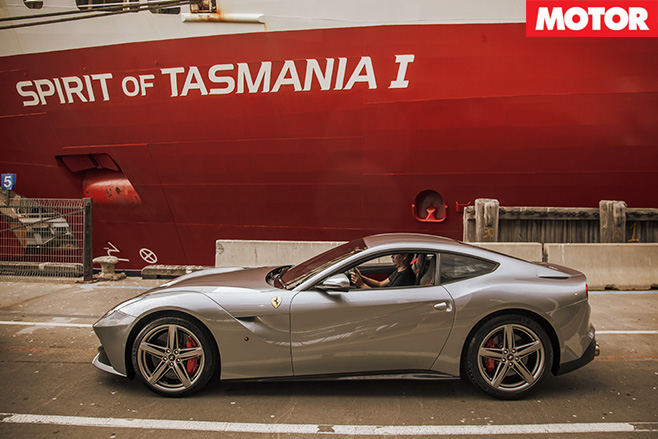
Because this Grigio Titanio (silver) example lists for a cool $690,745, though it burbles down Swan Street, wedged in amongst the taxis and tradie utes, optioned up to $825,245.
The Ferrari King is already seducing me, slowly and gently, by how easily and effortlessly it dispatches the slow commute to Port Melbourne. Graceful styling, which owes as much to 250 hours of wind tunnel testing as it does Pininfarina’s design savvy, has the captivating presence you’d expect from the tree-topping Italian exotic, sans the ostentatious pretensions of – how do I put this nicely – brash rosso-soaked Prancing Horse cliché.
It’s too dignified a device to be hung off its redline in first gear along a South Melbourne café strip.
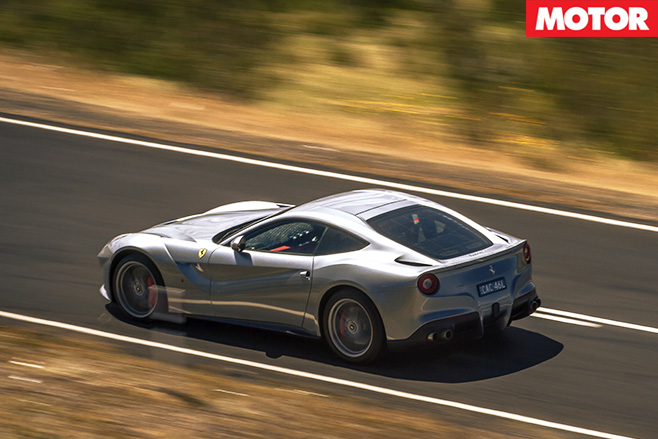
My mind starts to drift to Stuttgart, of all places. The only other certifiably bonkers car I’ve driven with this much inherent comfort and silken low-speed discipline has had a 911 badge on it. And I remind myself, short of LaFerrari, I’m negotiating the Monday morning tradie crush in the most powerful Ferrari road car ever devised.
Then there’s ride comfort. It’s as supple as a base Carrera. And that’s despite the F12 not so much as offering a switchable Comfort drive mode, per se. Its ‘Bumpy Road’ active magnetic damper setting isn’t necessary around town, while the signature Ferrari ‘manettino’ steering wheel dial – governing the calibration of the powertrain, suspension, E-Diff, F1-Trac traction and ESC smarts – has Sport as its default ‘normal’ setting. And while the F12 drives nothing like a Camry, it’s certainly as easy to commute around town in.
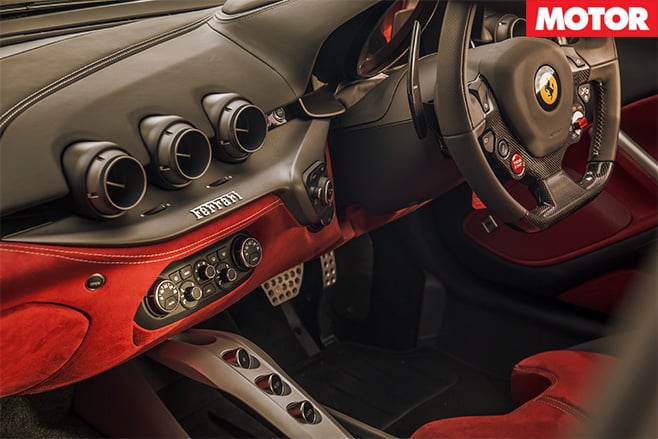
But it’s the near-perfect ergonomics of the seating and touch points that demonstrates how much design thought has gone into getting the F12 right. It’s a personal godsend, too, because, at (well) over 28, I’m the only Gen X among MOTOR’s motley crew of Tassie-bound Y-genners and, thus, I’m the only bloke allowed to drive the F12 over the next four days.
Of course, once I arrive at Port Melbourne for load up, I ask who else wants a drive. Just to rub it in.
HOOLLLEEEEECRAAAAAAP!! A lot can happen in five seconds. Five seconds of blurry physical and sonic ferocity. A few things stand out, mostly the violence of the shove and the sensations, through my spine, of the F12’s tail shimmying about as those 315mm rear Michelins strain against the F1-Trac leash. That I see more than one red shiftlight blink from the tiller rim suggests I get within coo-ee of its 8700rpm cut-out.
And as the Berlinetta can stride to 100km/h in 3.1sec and 200km/h in 8.3sec (from a standstill), a full five seconds of white noise would, of course, mandate a firm squeeze of those monstrous carbon-ceramic brakes. Believe me, when you uncork 6262cc of V12 fury, you’re not watching the speedo, but rather, in this case, the fast looming motorway merge junction.
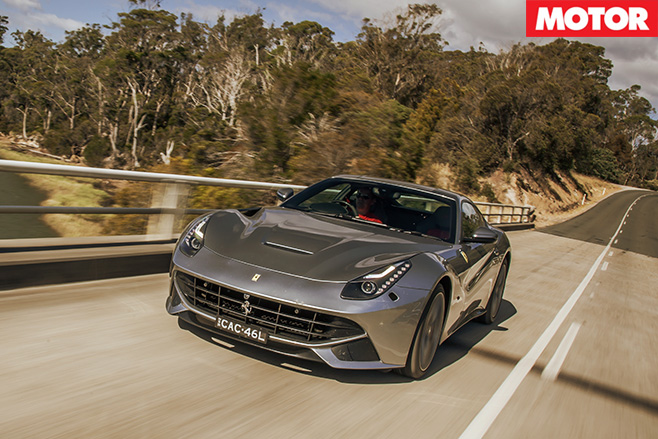
I dial up 110km/h on the “Pit Lane Limiter” (cruise control to us proles) and the F12 slips into seventh, my mind racing for go-faster reference points. Murcielago? Turbo 911s? GT-R? None are as ferocious as the F12. Its F599 predecessor? Not in its successor’s league. Radicals? Nope. McLaren MP12-4C? Not driven one, but I’d seriously doubt it. Lexus LF-A? Too slow. Aventador…
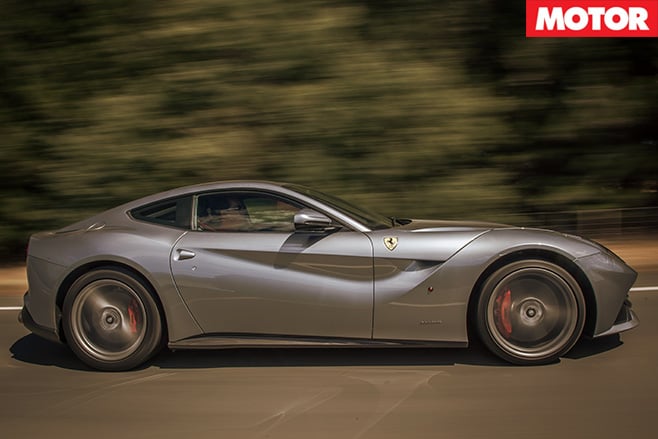
Ferrari calls its F12 both a grand tourer and sports car. The enormous breadth of its Jekyll and Hyde talents is the true measure of the sheer magnitude of this Italian masterpiece. This depth of talent comes to light as I point the Berlinetta south-west into Tassie’s interior, towards Cradle Mountain.
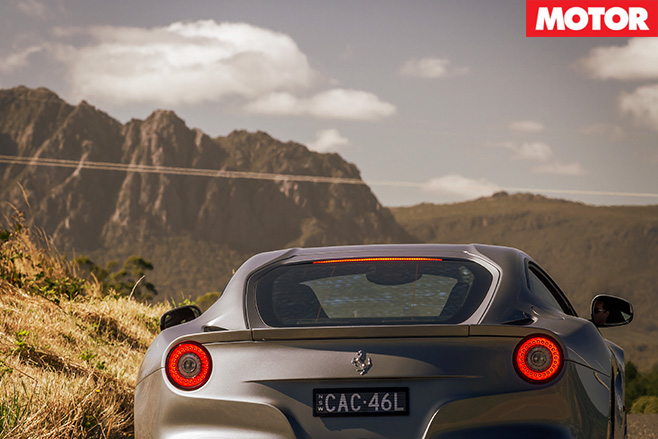
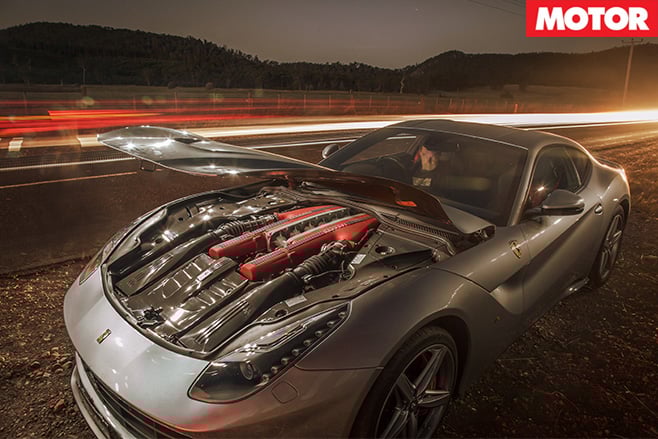
That last 1000rpm of this lightened, reworked, FF-derived bent twelve, with its insane 13.5:1 compression ratio, is absolute nirvana.And at once it bridges Ferrari’s deepest history, from the marque’s very first 12-cylinder 125 S (1947) through to its heady Formula One engines, with which the F12 roughly matches with its outrageous 545-kilowatt count.
Any flinch of the right foot can lift road speed a good 10 or 15km/h above the posted speed limit. All of this makes the low-rpm response feel dull, yet it’s all relative – the V12 makes 80 per cent of its 690Nm peak at 2500rpm. So it’s super tractable, yet benign enough for the bumper-to-bumper grind. And it does it all without the “drive-mode” swapping seen in in many pricey German cars.
The F12 dual-clutch self-shifts smoother and upshifts more quickly and cleanly than anything else on the market. Its refinement and calibration is such that it instantly transitions from buttery cruise to racetrack ‘kill’. Hover in ‘kill’ mode just long enough, and it always seems to know exactly which shift program is needed.
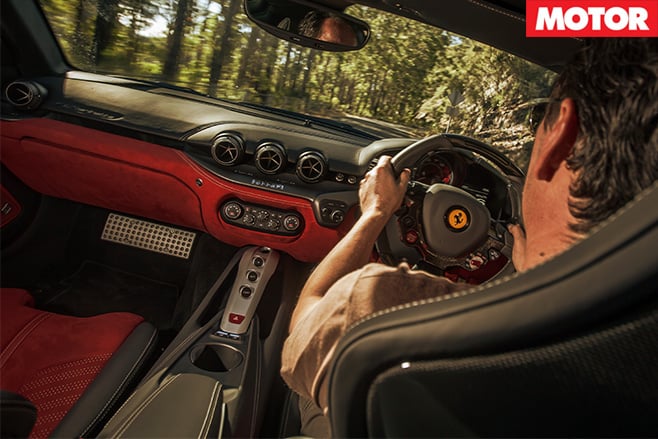
Sure, a click of the manettino dial to ‘Race’ flexes and firms up the F12’s muscles. But be careful as its potency in Frankly, readers, I’m again lost for words – I’ve used all the usual high-watermarking superlatives for many great cars in my time, but the F12 tops everything. And I mean everything! It’s a super-quick two turns lock-to-lock and it’s electrically assisted with varying assistance according to speed. Simply put, the F12’s steering is perfect.
There’s no sneeze factor off centre and hallelujah for that. Because you discover very quickly the F1’s chassis is so fizzy and agile, yet the car is so confident and comfortable at piling on shocking speed, that its ultra-reactive, incredibly detailed steering helps keep the driver focused.
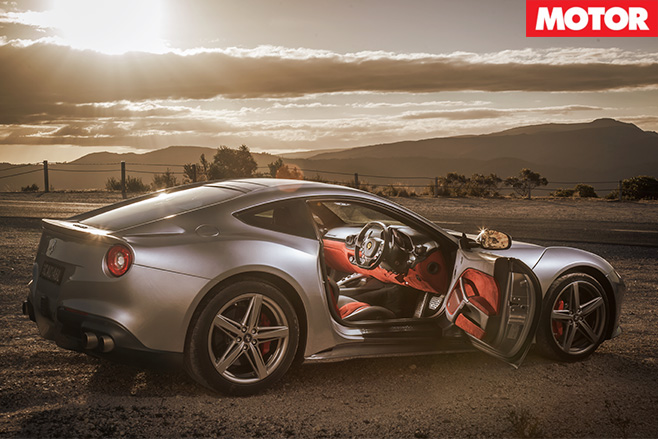
And thus, the Ferrari responds amazingly once you dig deep and push on at a red-misted pace. The handling package is edgy and aggressive enough to keep you utterly engaged – to feel like a proper hypercar – yet it’s so predictable and almost benign in its balance on the fringes of lateral grip. And it never seems to get overly flustered or too ragged when doing so.
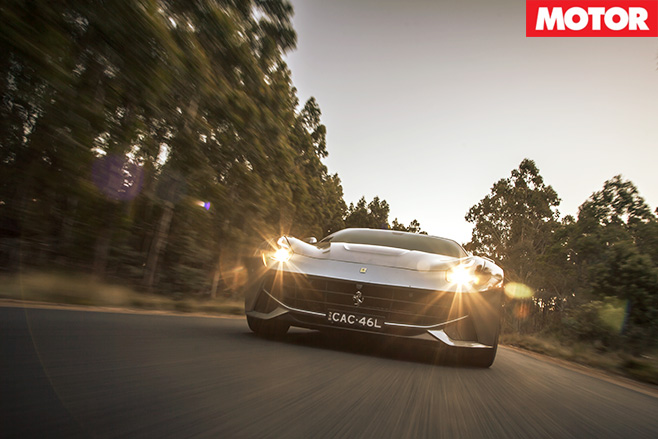
And even after having my bum welded to red Alcantara for a good 24 hours and sampling its myriad talents, I didn’t expect the F12 to be quite as handy in these parts as I’d expected.
Blasting steep climbs between rock face and Armco, separated by impossibly tight hairpin corners, the F12’s front end is unflappable.
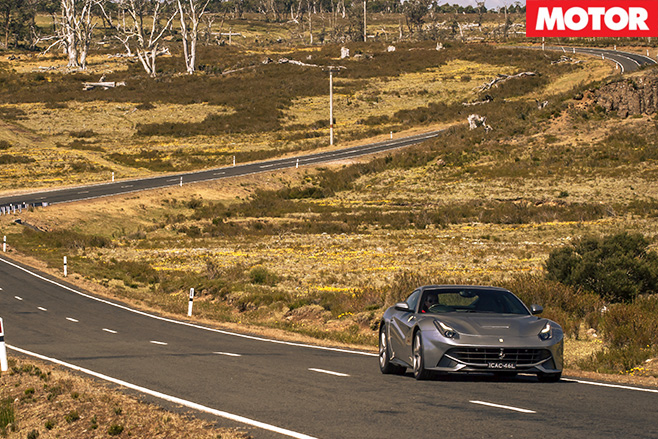
I suggest to Dep Ed Newman that if I could punt any car in Targa Tassie, it’d be an F12 Berlinetta. He suggests in return that I’d lose. Perhaps, but I guarantee that I’d be the happiest bloke of the whole circus when it came time to pop the champers at the finish line. Driving the F12 to and from the event would be a pleasure of equal measure.
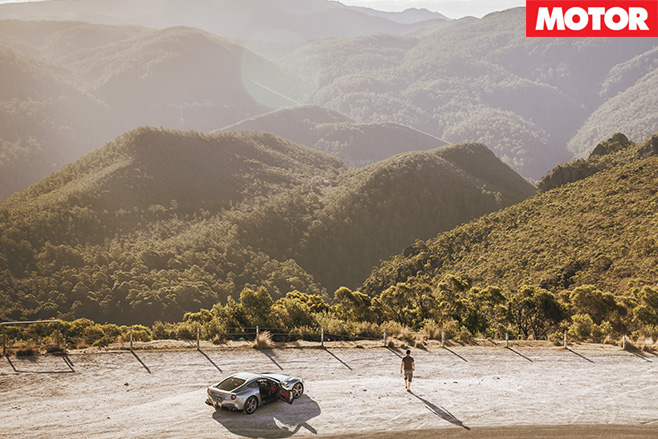
Five out of Five
Body:2-door, 2-seat coupe Drive: rear-wheel Engine: 6262cc V12, DOHC, 48v Bore/Stroke: 94.0mm x 75.2mm Compression: 13.5:1 Power: 545kW @ 8250rpm Torque: 690Nm @ 6000-8700Nm Redline/Cut: 8450/8700rpm Power-to-Weight: 357kW/tonne 0-100km/h: 3.1sec Top Speed: 340km/h (claimed) Consumption: 15.0L/100km (claimed) Emissions: 350g/km (claimed) Transmission: 7-speed dual-clutch Weight: 1525kg Suspension: double A-arms, adaptive dampers, anti-roll bar (f); multi-links, adaptive dampers, anti-roll bar (r) L/W/H: 4618/1942/1273mm Wheelbase: 2720mm Tracks: 1665/1618mm (f/r) Steering: electrically-assisted rack and pinion Lock-to-lock: 2.0 turns Brakes: 398mm carbon-ceramic ventilated discs, 6-piston calipers (f); 360mm carbon-ceramic ventilated discs, 4-piston calipers (r) Wheels: 20 x 9.5-inch (f), 20 x 11.5-inch (r) Tyres: 255/35ZR 20 (f), 315/35ZR 20 (r) Michelin Pilot Super Sport Price: $690,745 Price as Tested: $825,245* Positives: World’s best drivetrain; incredible ride/handling balance; beautiful interior; exterior styling; everything, really Negatives: Option prices; Ferrari insurance policies
What is it?
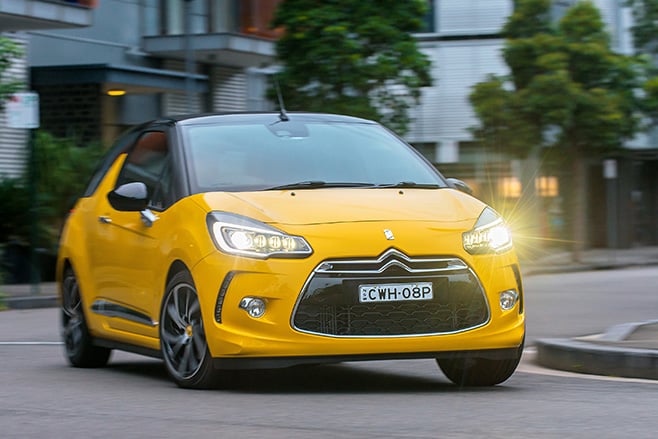
The updated Citroen DS3 – still badged as a Citroen in Australia, even though in time DS will split off from Citroen and become its own brand – retains the quirky charm that we loved when it first launched, with a few improvements… and a couple of caveats.
The range is simplified. Basically, there’s no more entry level models. There’s only two models: the DS3 DSport, and the DS3 Cabrio. Both have basically the same engine, but the hatch makes ever so slightly more power than the Cabrio. Citroen say they’re not aiming to be the biggest in the market, which is lucky, for a couple of reasons.
Firstly, the new DS3 is more expensive. The last gen DS3 started from 27-odd grand, while the new DS3 DSport hatch is $33,990 and the Cabrio is $36,590. It’s not as much of a jump as it seems – the average purchase price of the DS3 was $32k, after buyers ticked the options they wanted, and the new DS3 comes basically fulled optioned. Nevertheless, it’s not cheap for its size.
The other sticking point – for the salespeople, at least – is: it’s manual only. No auto option, this is for three-pedal fans only. Which we’re fine with, but will inevitably keep this hotter-than-warm-but-not-quite-hot hatch in the niche category.
The Cabrio, we should note, is less of a convertible and more of a largest-possible-sunroof: the cloth top retracts back along the edges of the roofline, leaving the doors in place (and pretty much eliminating your rear vision.) It doesn’t feel as open to the elements as a regular convertible; on the plus side, you can open and close the roof at up to 120km/h.
What’s new about it?
Mostly the engine – a new 1.6-litre four-cylinder turbo-petrol, with a useful-but-not-intimidating 121kW and 240Nm.
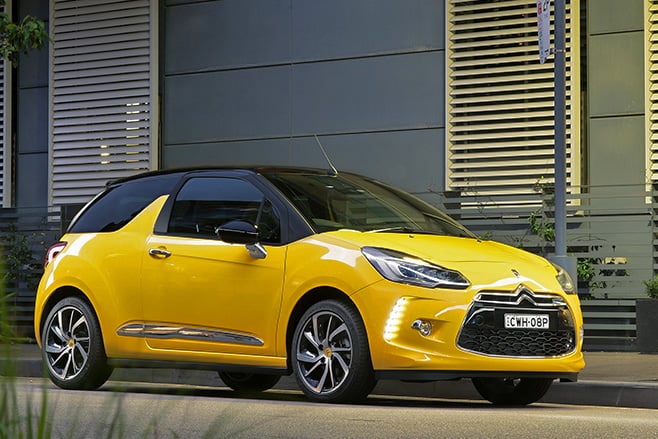
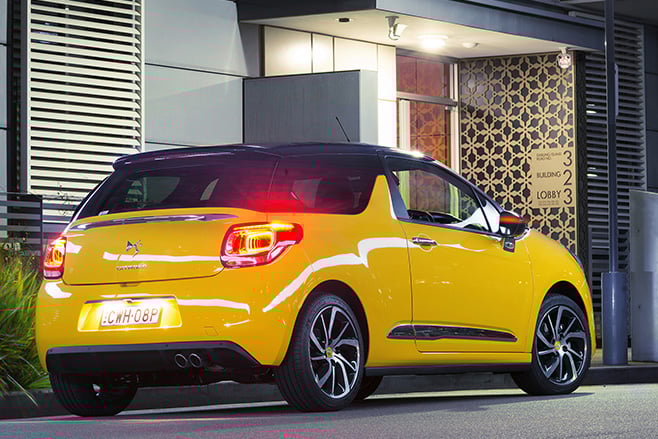
There’s some exterior tweaks – new LED and Xenon headlights, new 17in alloys, a reversing camera as standard – but you’d be doing well to tell the updated model from the last one from further than 20 feet away.
Citroen has also gone slightly bananas in offering colour and decal options – 29 different body and roof combinations for the DSport hatch, 21 combinations for the cabrio, and seven different patterned roof decals… all in all, there’s over 200 possible permutations.
What’s it like to drive fast?
It is, as the French would say, a bloody ripper.
One thing that takes some getting used to: it has the longest clutch travel in the known universe. Press the clutch in, and when you start to let it out, it feels like about a foot of travel before you get to the friction point… and then it all happens in about two inches. The first time we went to pull out from the carpark, I thought I’d somehow left it in neutral – that’s how far the clutch comes out with no result whatsoever. It’s slightly bizarre until you get used to it. But friction point aside, the manual box is actually great: short snippy shifts, and well paired with the 121kW, 240Nm four-pot: maximum torque is available from 1400rpm, and maximum power at 6000rpm, so it always feels lively, and never sluggish. On a blat through Mount Glorious outside Brisbane, the DS3 is solid and confident through corners, thanks partly to the car’s lean 1140kg weight, and even though 0-100km/h in 7.5 seconds doesn’t sound particularly scorching, it feels spritely and is good fun when you give it the beans.
On the commute home?
Both the hatch and the cabrio are comfy rides in the front seat, even for full-figured gents – but you wouldn’t want to have to squeeze in the back seat. The air con seemed more of a white noise generator than an actual cooling unit – even with the AC turned up to full, you could only detect a breeze by putting your hand right on the vent – but all in all, both the cabrio and the hatch devoured distance in the urban grind and on freeways in the best way possible.
There’s a new “Active City Braking” system, which would come in handy in case you had a stroke or were setting a new record on Angry Birds while driving: beneath 31km/h, the short range laser sensor (tucked inside in the rear view mirror mount on the windscreen) will detect if the car in front of you has slowed or stopped, and the system automatically adds the brakes. Above 31km/h the system cuts out.
Is there anything bad about it?
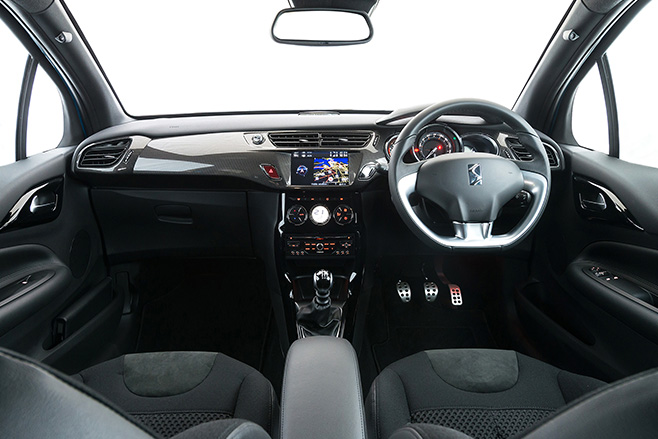
The infotainment screen seems like it ought to be a touchscreen but – surprise – it isn’t; so everyone who gets in the front will end up stabbing it with their fingers like the lovechild of Edward Scissorhands and Jack the Ripper.
The sat nav was befuddled by Brisbane, directing us right at no-right-turn intersections, or urging us to drive across concrete road dividers; and entering directions is an old-fashioned chore with the twiddly knob controller. Seriously, Citroen. Put in a touchscreen.
Because of its slidey-opening roof, the Cabrio has a tiny boot opening – you’d probably struggle to get a large bag in there.
What’s it cost and is it worth the coin?
So the DS3 DSport hatch is now $33,990 – that’s $4k more than the old one – but, Citroen counters, they’ve included $5k worth of options as standard. A slightly spurious argument, perhaps, but the DS3 is a pretty well kitted out car – LED and Xenon headlights with sequential indicators, that Active City Brake system, rear camera and parking sensors, tyre pressure monitors, and various whatnots that would have been options in the outgoing car.
Would you have this or a Mini Cooper S?
The Cooper S comes in at $36,950 for the three-door, so a few grand more than the DS3. Now, the Cooper S is a hoot to drive, and is slightly more practical than the DS3. On the other hand, if you’re in the market for either, then you’re probably looking for something a little left of field, and the DS3 delivers that – personality, flair, and customisation options – in spades. We’d still take the Mini – but it’s a close run thing.
Click here to find out more about the Citroen DS3.
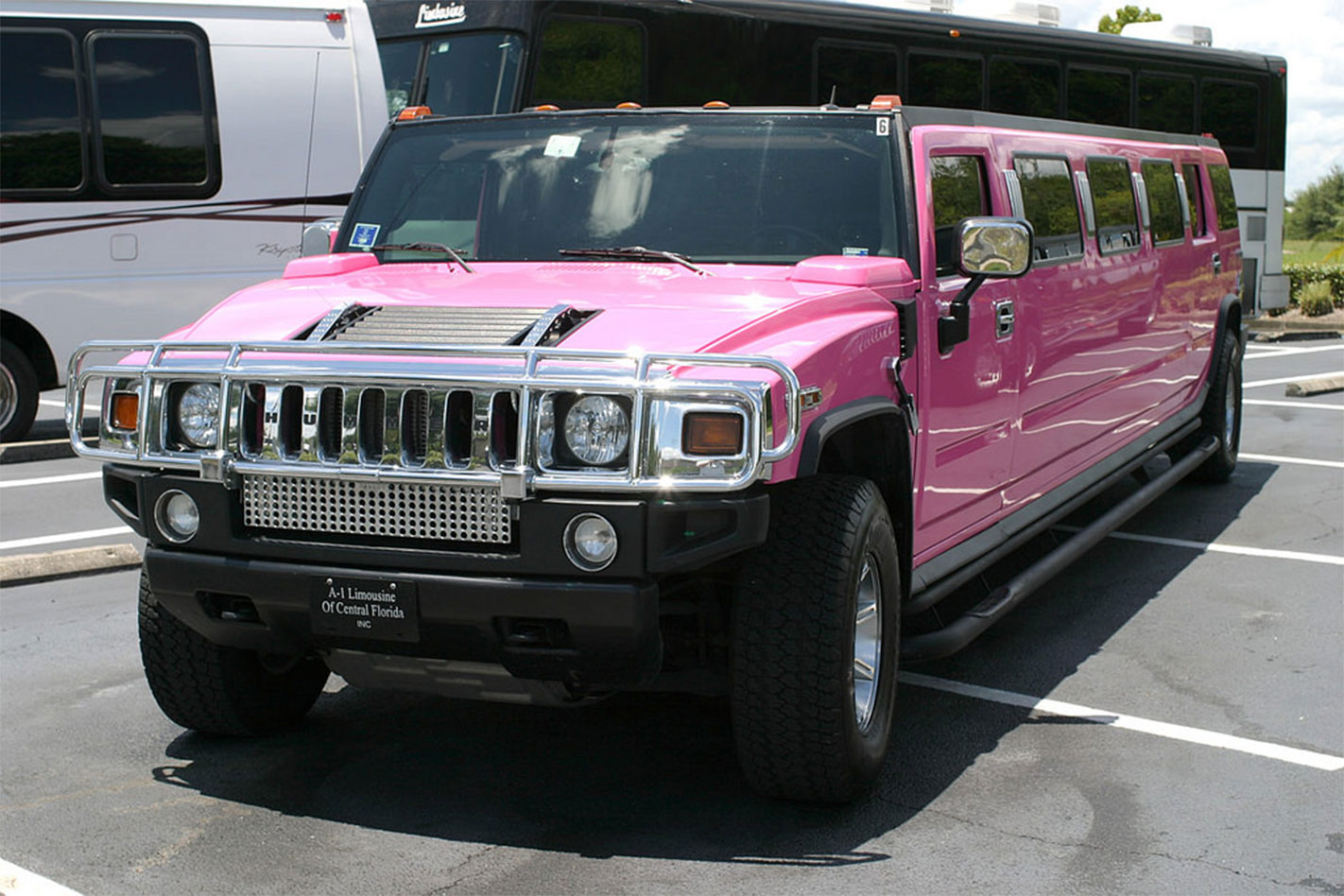
Who would’ve imagined that a Hummer limousine could remind me again of why I have always loved cars above our other creations?!
Yet such a behemoth, hired by my daughter to cart the poultry on her hen’s night, had me all giddy and giggles today, just the way my first ride in a sports car did long ago.
Okay, the lovelies hovering around it, ready to set the night alight, neatly disguised the brute’s lack of beauty but that wouldn’t have mattered anyway…because when the door was opened the impact was breathtaking: a seduction of soft lighting and lounges, afloat on music, afresh with scent and awash with beverages. This thing was created to please beyond all reason.
And so was every car that ever mattered.
Required by common sense to do nothing more than shelter a small group of people and transport them at a sensible pace, the thing’s instead evolved into elaborate artworks capable of performance beyond either belief or purpose. And it was that very extravagance that caused so many of us to love them. Not just for what they could do but for where they could lead our imagination. For the stirring they brought to our souls.
And all that we once imagined eventually became real. So why did it take a butt-ugly, slug-slow Hummer to bring back the stir? Because it surprised me. Because it exceeded all expectation. And that’s what cars must do again to remain more than just machinery.
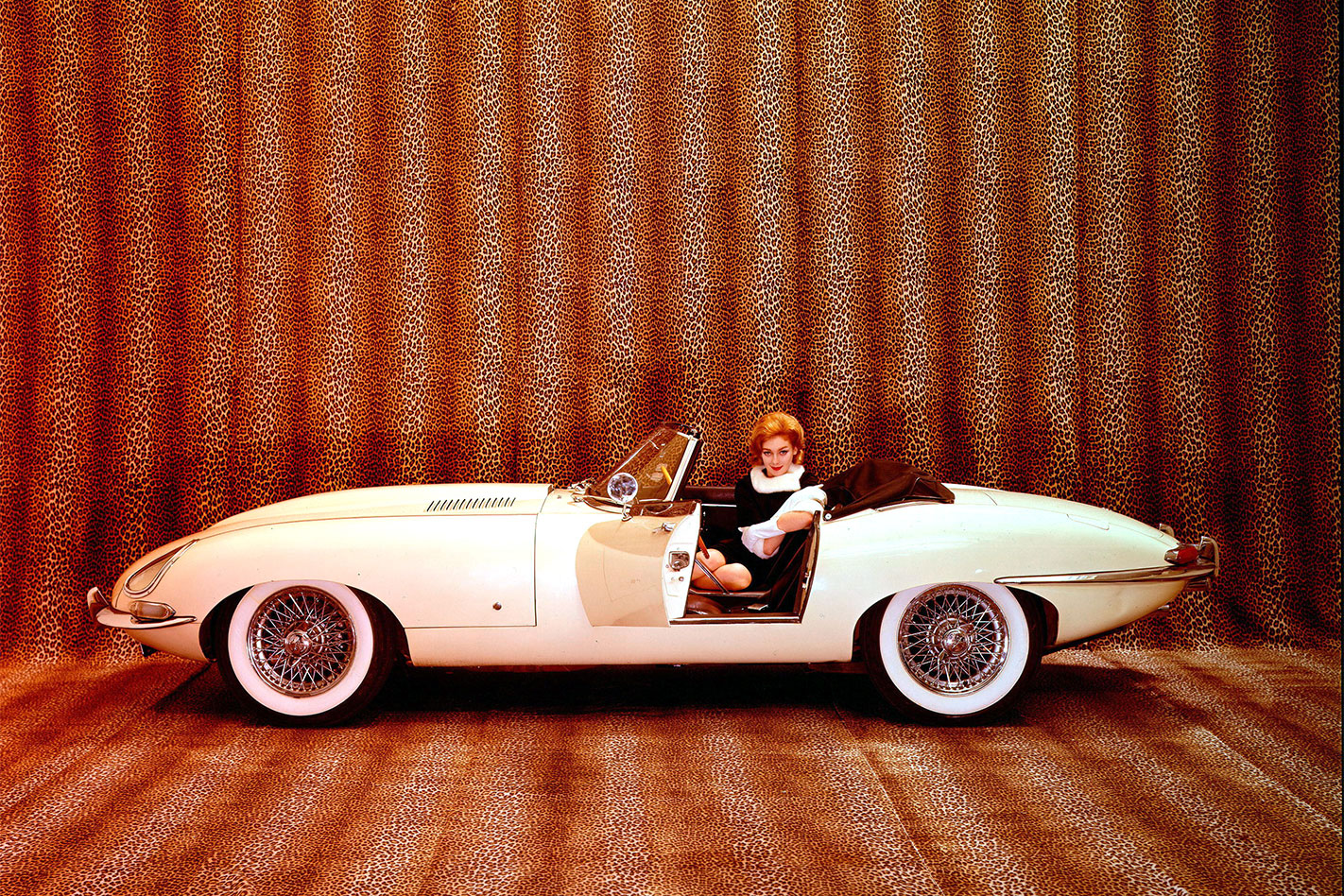
But their makers now need to find new ways to excel, because the traditional gotchas are gone. Styling, for instance, once the principal excuse for an annual unveiling that made each previous model instantly obsolete, no longer stuns us. That ship has sailed. For sheer indulgence nothing will ever better the ’59 Cadillac and, for a drop-dead breakthrough in beauty, the E-Type’s impact 50 years ago is never likely to be matched.
Okay, the gadget-gang’s changed everything to keep the driver enchanted and, charmed by the re-invention of the starter-button, distracted by the handbrake hunt and dazzled by control options that’d tax an astronaut, he/she can at least play pilot games to pass the time. But sitting in the dock as a passenger, clamped firm and bored rigid, is hardly the stuff of dreams. But the Hummer said it could be.

About the immediate availability of hot or cold refreshment in spill-proof vessels. About amusements such as individual entertainment choices and interactive games and conveniences such as reading/writing surfaces and snack service. And whatever else you could wish for that would make daily driving a pleasure for everyone in the car – and thereby redefine its possibilities.
Over the top? Of course. But so was every car that ever mattered.
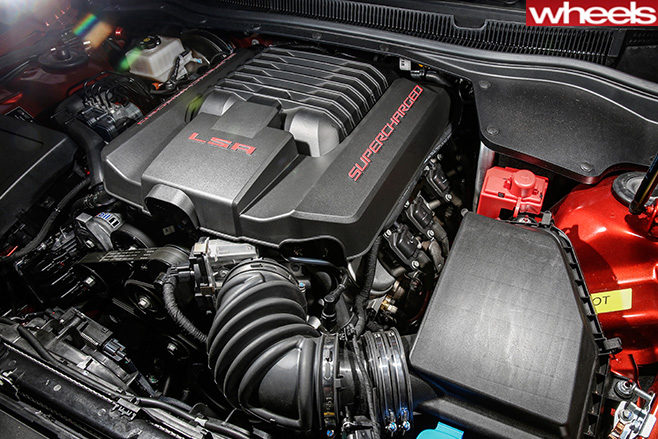
HSV saves the best for last, shoehorning the 400kW supercharged LSA V8 into the Clubsport and delivering a performance bargain of staggering capability.
WHAT IS IT? The 400kW Clubsport R8 LSA edges ever closer to HSV’s 430kW flagship GTS sedan, and with a price tag of just over $80k, delivers a crushing value proposition. It’s the end of days for the Clubbie and it’s going out with a bang.
WHY WE’RE TESTING IT We’d reported the rumours and they turned out to be true, so we grabbed one of the first supercharged Clubbies to roll off the Clayton line, strapped on the timing gear and set out to see if it was as wild as we’d hoped.
MAIN RIVALS Audi S6, BMW M5, Ford Falcon V8, Mercedes-AMG E63
THE WHEELS VERDICT The HSV Clubsport R8 is good old-fashioned fun and 80 grand very well spent. You might expect the Clubbie to be overwhelmed by this dominant engine, but there’s genuine talent in the chassis tuning. HSV might have saved the best for last.
PLUS: Manic power delivery; benign handling; space; interior tech; value MINUS: Lingering Bogan aroma; vast body; fuel thirst
THE WHEELS REVIEW STATS tell us that in the short term you’ll remember up to seven facts from this review. Over the longer-term one, maybe two at best. So if there’s just one thing you take away from the latest supercharged HSV Clubsport, brand this into your creaking brain: 4200rpm.
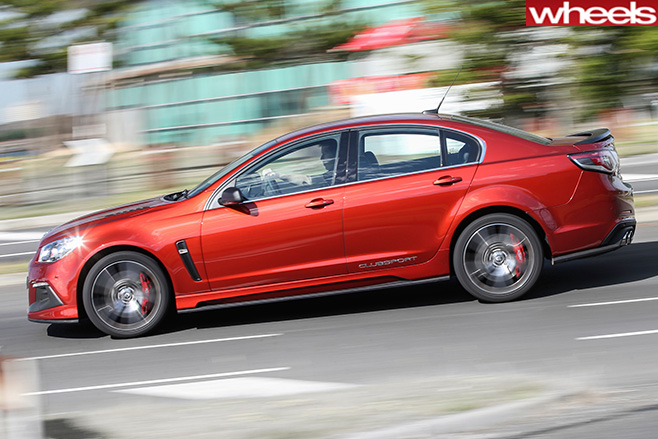
The first time it happens it’s genuinely shocking. When performance testing the car at a dragstrip, none of us could quite believe how violent the bang was, at first wondering whether the supercharger had shot itself in the head. But no, they all do that, sir.
Judging by the metronomic repeatability of the performance figures extracted, they will all do 0-100km/h in 4.7sec and a quarter mile in 12.9. This was on a day so hot that the end of the strip at times disappeared into a shimmering mirage, and HSV’s claims of 4.6 to 100 and 12.6 over the quarter in more temperate conditions seem wholly credible.
At this juncture, it’s probably worth putting some cards on the table. Despite my almost 20 years of road testing, this is the very first Commodore I’ve ever driven. Maloos and Monaros in the UK, yes, but this was something new.
New and huge. This Clubsport is bigger than a millennial BMW 7 Series. If you were going to build a credible sports car you really wouldn’t start from here, but, like a 911, the Clubsport is a tribute to dogged development over commonsense. You’ve built a bloody wonderful car here, Australia, and soon it’s going to be history.
HSV will sell you a Clubsport R8 LSA with a six-speed manual and launch control software for $80,990, while $83,490 nets you the car on test here, with the six-speed GL90E auto.
It’s surprisingly mannered at low speed. Yes, there’s a flare of revs at start up, a kerbside marking of territory, but beyond that there’s virtually no supercharger whine and very little of the characterful woofle you’d expect if you’d driven a few LS3-equipped cars. Put that down largely to the bi-modal exhaust. When tickling around at low revs you could be driving a four or a six.
The torque’s there, but the aural response is severely muted, all of which makes the engine’s switch from Jekyll to Hyde all the more dramatic. Ladle on the full 671Nm at 4200rpm and, even with the traction control set to maximum granny, the Clubbie will attempt to immolate its rear boots in the dry.
The drive mode selector will mute the soundtrack even further and over-assist the steering in Tour, and you’ll probably drive everywhere with it in Sport. Turning it up to Performance merely loosens the traction and stability control that bit further.
The long wheelbase allows you to transition from mild understeer into a few degrees of oversteer without requiring the car control of Ken Block, thanks to the exemplary calibration of the electrically assisted helm.
The AP brakes inspire confidence, and stood up to repeated stops from over 200km/h without noticeable fade.
Burlier spring and damper rates are claimed to improve body control and, while you’ll have to manage without the flagship GTS’s magnetic suspension and torque vectoring, chances are you won’t mind.
The beefier rear suspension architecture improves rear stiffness and braking power, yet it’s still resistant to the sort of mid-corner bumps that would send most big sports saloons into a harmonic porpoising near the limit.
The whole drivetrain’s been overspecified, from the LSA lump with its higher-grade internals to the heavier duty gearbox, tailshaft, differential and axles, not forgetting industrial-strength cooling for the engine and transmission.
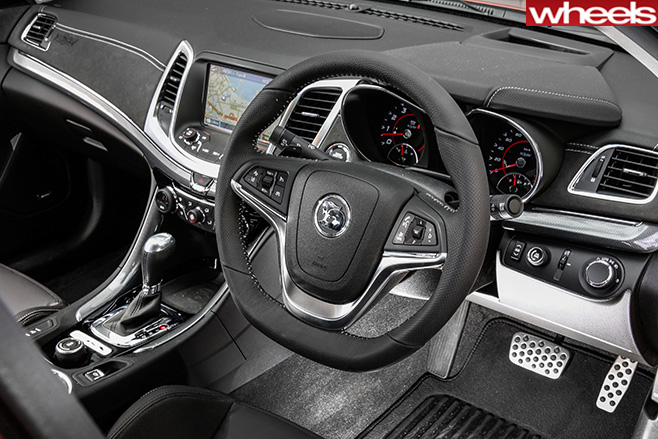
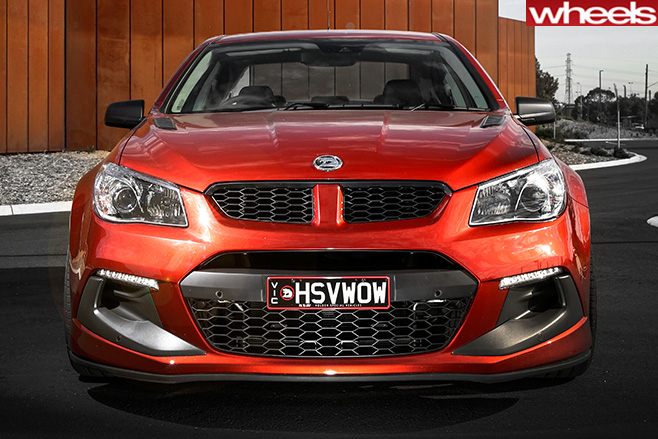
There’s not a whole lot that’s new indoors, but the exterior styling updates work well, with slashing Lambo-like trapezoidal front intakes and a black theme that incorporates bonnet vents, mirror caps, side skirts and a refreshingly subtle satin graphite low-pro rear wing. Somewhat surprisingly, all the trick gauges of the Enhanced Driver Information system are a $1095 option.
Any grousing feels churlish in the extreme, though. Here is a tidily finished, spacious and dynamically well-sorted car packing 400kW for around 80 grand. That’s borderline unbelievable.
Quite honestly, I thought this car was going to be crude, crass and a case study in how the Australian car industry took its eye off the ball. Once in a while it’s a joy to be proven utterly wrong.
The Clubsport R8 LSA is a bittersweet triumph, at once riotously enjoyable yet tinged with sadness. There’s something almost poetically heroic about this spittle-flecked brawler of a swansong.
SPECS Model: HSV Clubsport R8 LSA Engine: 6162cc V8 (90°), ohv, 16v, supercharger Max power: 400kW @ 6150rpm Max torque: 671Nm @ 4200rpm Transmission: 6-speed automatic Weight: 1907kg 0-100km/h: 4.7sec (tested) Economy: 15.0L/100km Price: $83,490 On sale: Now
Aussies these days can be empathetic when factories close and iconic badges retire, and so it may soon be for Americans who love the Dodge Viper.
Fiat Chrysler Automobiles formed as a result of getting through the GFC as okay as possible, but it has also meant development of niche models such as the Viper supercar halted.
Automotive News reports that in ongoing discussions over union agreements, the Detroit factory that builds the Viper will be closed from 2017. The company’s $5.3 billion future product plan also makes no mention of a next Viper. The Connor Avenue Assembly plant has long been rumoured to close among the US press.
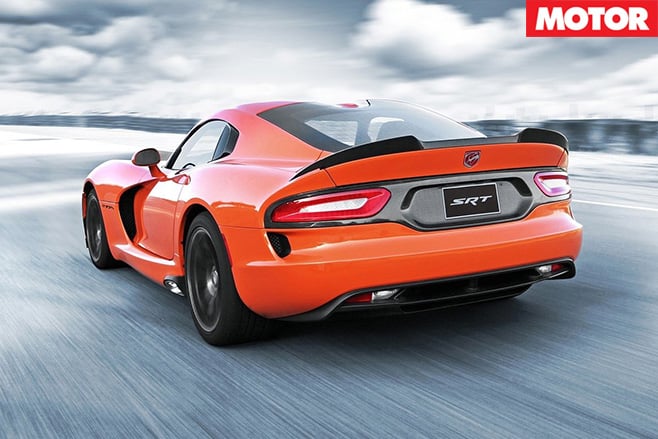
If the Viper dies it will also see the taking down of the last of the mega-sized naturally aspirated engine and what is currently the torquiest atmo passenger car donk in the world. It currently runs an 8.4-litre V10 that produces 477kW and 813Nm.
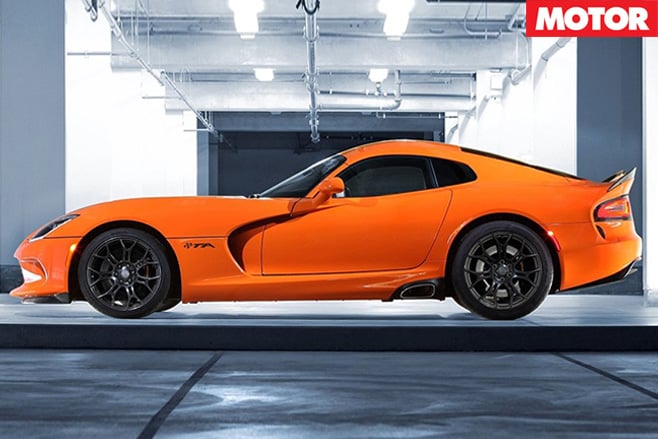
Without sales in the Continent and with US sales slowing, its fate beyond 2017 looks to be decided. It will be especially sad when FCA’s Australian arm were reportedly keen to convince Detroit to build any new sports cars in right-hand drive in order to cross the Pacific to our sports-car-loving market.
PLUS
- You could place drawing paper over Jaguar XE pricing and specifications and the BMW 3 Series and Mercedes-Benz C-Class competition, it really is that close. Range moves between $60,400 and $104,200.
- Cheap servicing is very rare for a European brand. Five years worth of check ups won’t cost you more than $1350 on any model.
- Excellent 380-watt Meridian stereo and 8.0-inch sat-nav are standard where premium audio and larger screen are optional in the entry-level German competition.
- Small diesel uses less fuel than the competition but is similarly pleasant and refined. Diesel the pick of the affordable side of the range.
- If you love to drive, the Jaguar mixes a sporty feel with comfort slightly better than the competition.
- Pricier models lose their value equation because they don’t add much extra equipment.
- Some technology standard on most rivals but optional across XE range, such as automatic braking should the driver fail to stop when a city-speed forward collision is detected.
- Feels squishier inside than the competition, so look elsewhere if rear legroom and boot space are priorities.
- Petrol engines are old and can’t match the economy or refinement of either close rivals or the newer small diesel.
- R-Sport models add sports suspension and sportier look but are much less comfortable over bumps.
