
Italy takes on the world as we turn up the heat on four popular hatchbacks.
First published in the November 2014 issue of Wheels magazine, Australia’s most experienced and most trusted car magazine since 1953.
Can’t wait to see the final scores? Jump to the verdict now.
THEY’RE the Claytons of performance five-doors – the hot hatches you have when you’re not having a hot hatch. But unlike the non-alcoholic spirit famously spruiked by actor Jack Thompson, ordering a ‘warm’ hatch for yourself shouldn’t result in laughter and ridicule.
Instead, if the formula is just right, you should bag yourself fun and function in equivalent doses – balancing strong performance with liveability, efficiency and visual subtlety, combined with a snappier insurance premium. All for an accessible $26-28K if you don’t mind shifting gears yourself, which you shouldn’t.
Plus, you get choice. I don’t think an Alfa Romeo, a Holden, a Hyundai and a Mazda have ever starred in a Wheels comparison together, yet here we have a Giulietta Progression ($27,450), a Cruze SRi Z-series ($26,490), an i30 SR ($27,990) and a Mazda 3 SP25 ($25,890) in a direct face-off for warm-hatch honours.
In a perfect world, we’d also have had a Ford Focus Sport ($25,890) and a Nissan Pulsar ST-S ($25,490) along for the ride, but what we’ve ended up with is the sweet spot of warm hatchness.
Four bright sparks
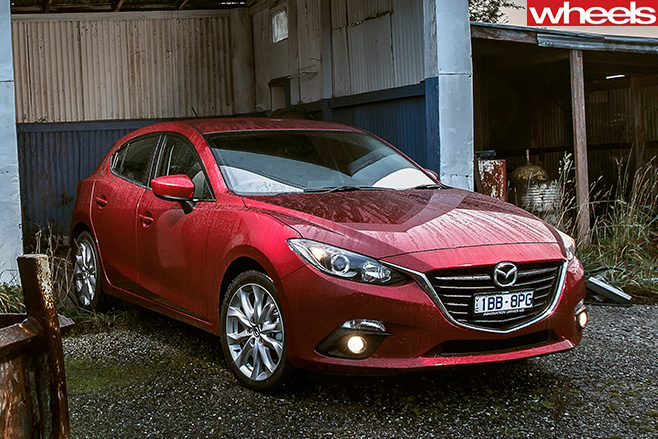
Igniting this medium-heat debate is the newest car here – Mazda’s third-generation 3 in base SP25 guise. Outwardly, it misses out on the trick headlights and LED tail-lights of the GT and Astina versions, but given Mazda Australia doesn’t badge its cars with trim-level designations, most punters would never know you bought the cheap one with the same effervescent drivetrain and saved thousands.
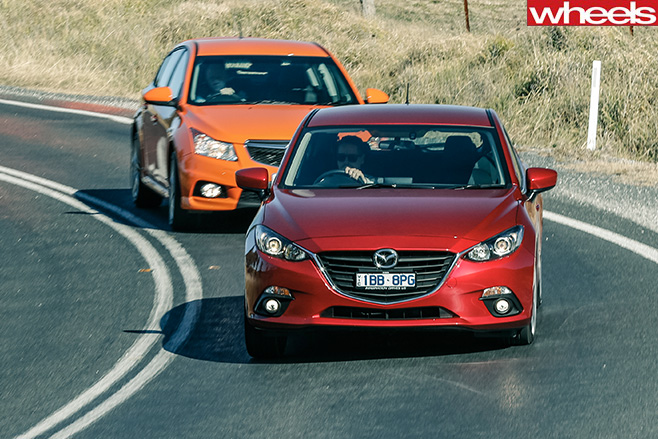
The Mazda matches the Holden on almost every count, and includes an idle-stop system, but it has cloth trim, no seat heaters and height adjustment only for the driver, though it uniquely offers a $1500 safety pack with blind-spot monitoring, rear cross-traffic alert, city auto-brake and an auto-dimming rear-view mirror.
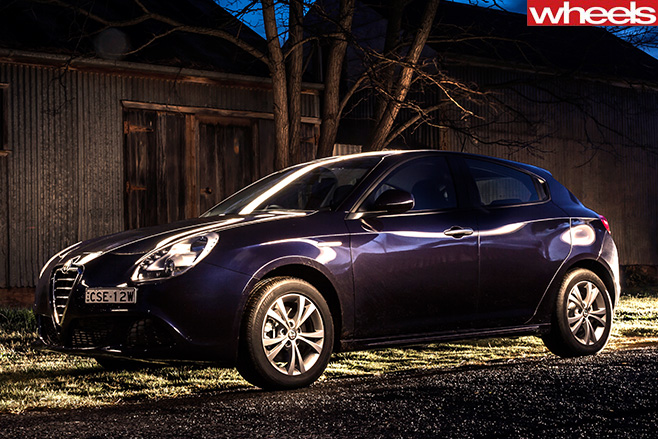
The Alfa adds another grand to the Holden’s tally, but for many the allure of an Alfa Romeo badge and the Giulietta’s arresting styling may be something you can’t put a price on. The Progression-spec Giulietta wears fairly unsporting 16-inch alloys, lacks navigation of any kind (until an updated model arrives in the first quarter of 2015) and demands extra for rear parking sensors, but it does get height-adjustable front seats with electric lumbar support, four auto up/down windows, Bluetooth and an idle-stop system.
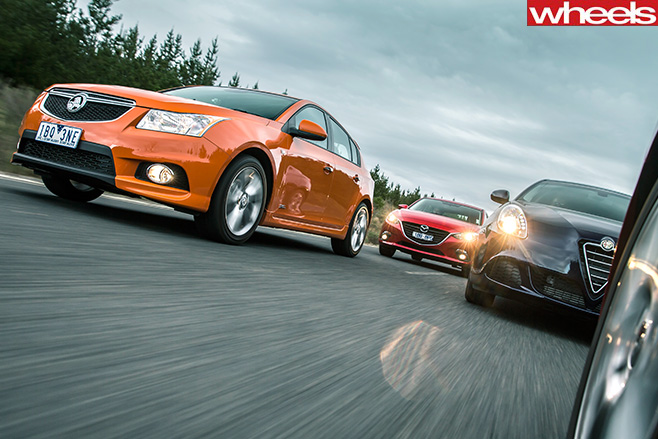
Warm and warmer
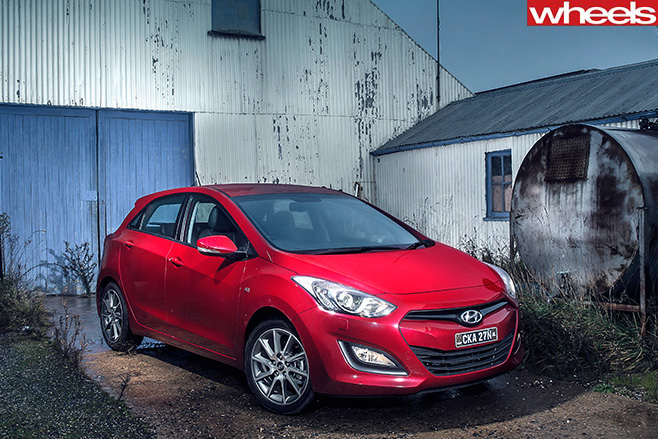
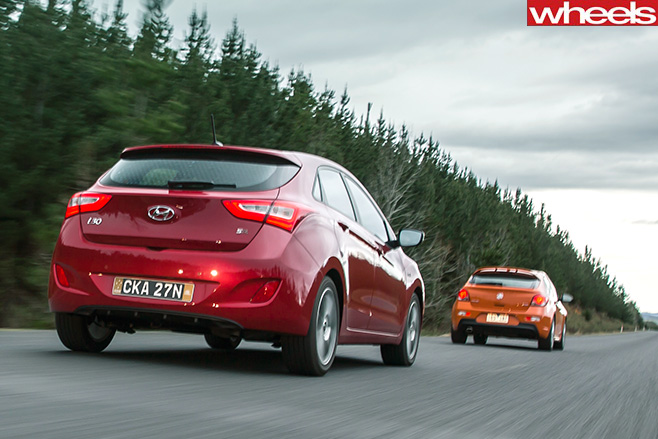
The i30 SR does get its own model-specific engine though – a 129kW/209Nm direct-injection 2.0-litre – and it’s a highlight. Rev-obsessed and rewarding of a committed right foot, it really delivers beyond 5000rpm and will comfortably extend to 7000rpm if you don’t mind a bit of noise, stirred by a reasonably slick six-speed gearshift. But bottom-end urge is not this engine’s forte. When the tacho needle drops below 4000rpm, acceleration fades, as demonstrated by the i30’s rolling-start languor in taller gears. It takes nearly twice as long as the turbocharged Giulietta to accelerate from 80-120km/h in sixth.
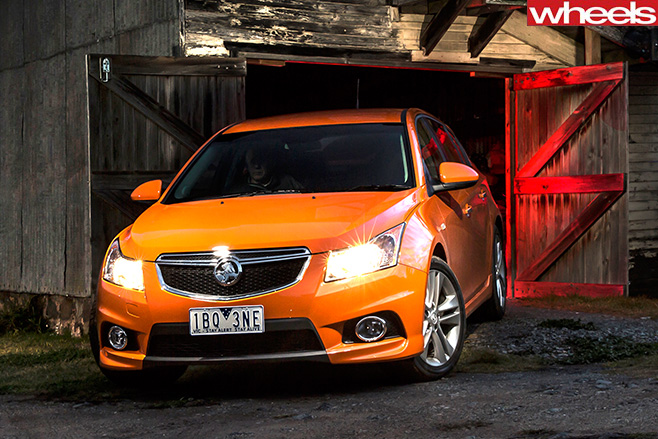
Jumping into the Giulietta is like turning up the heat from toasty to almost hot. The 125kW MultiAir version of Alfa’s robust 1.4-litre turbo four lacks the exceptional bottom-end flexibility of the 88kW base unit, but besides a small amount of turbo lag below 1500rpm, it feels much stronger, especially when revving hard.
Pouring on fuel
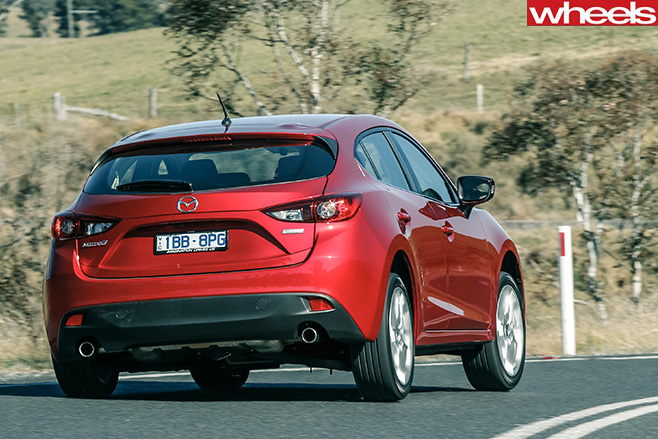
You don’t quite get that impression from looking at the SP25’s acceleration figures, however. Unlike the almost over-tyred Cruze, the Mazda struggles for grip off the line, axle-tramping its way to a less than spectacular 0-60km/h time of 3.8sec, hampered by a curious lull in engine response after quickly snatching second gear, not the helpful chirp of its front tyres necessary to keep the engine singing.
In the upper ratios, the SP25 flexes its muscles and quickly surges ahead of the Giulietta, but there’s often a sense that Mazda’s SkyActiv-G 2.5 has been restricted from giving its best. The zingy engine’s premature rev limit – just 6200rpm – seems to encroach all too quickly when pushing on.
Some like it hot
Thanks to being extensively honed by Holden’s talented chassis engineers over a number of years, the Cruze SRi is also a handler. In terms of tyre grip and neatness of cornering line, the Cruze is the sportiest car here. Wearing fat, high-quality 235/45R18 Bridgestone Potenza RE050As, the it deserves big praise for its steering precision, poise and adjustability. It also manages to combine excellent body control with a surprisingly liveable ride for such a tightly suspended car on 18-inch wheels, even though you’re constantly aware of what’s going on underneath.
The Alfa’s involvement and eagerness more than make up for its relative softness because the 125kW Progression runs the same comfort-biased suspension tune as the base version. To get sports suspension in a non-QV Giulietta, you need to start with a $31,350 Giulietta Distinctive and option an extensive Sportiva pack for $3500.
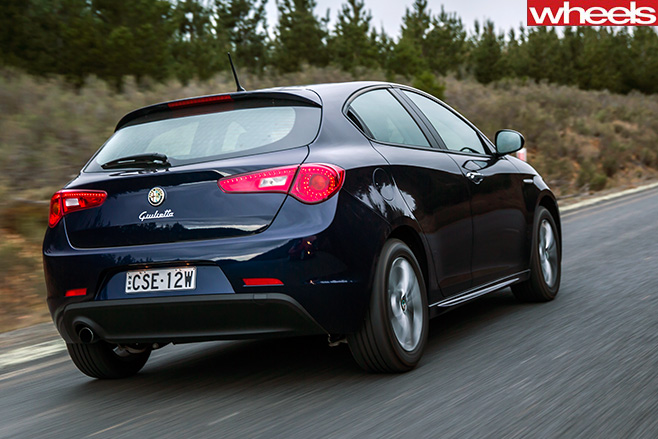
Much the same applies to the Mazda 3 SP25, though its steering lacks the Giulietta’s instant connection. Get stuck into it and the SP25’s broad grip, excellent balance and effective power-down all demonstrate the impressive dynamic talent of its new-generation platform. The Mazda’s tight body control and rewarding rear-end balance harmonise nicely with its steering feel and response when loaded up, and the alacrity of its drivetrain. But it transmits a fair amount of tyre noise (a long-time Mazda weakness) and its jittery initial ride compliance is less forgiving than the Cruze’s.
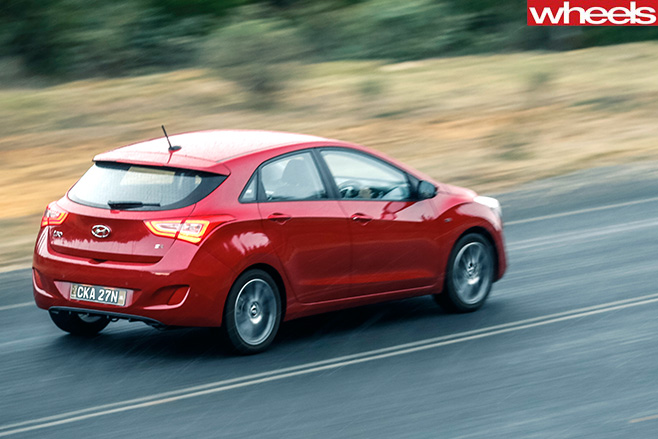
Cornering in the wet is another matter. The i30 SR’s tyres turn to skates when asked to corner on a moist surface, inducing understeer on turn-in and oversteer when you back off to bring it into line. Yet even in the dry, its tyres lack adhesion. Look no further than the SR’s mediocre 100km/h-0 braking distance of 39.4m, which is some way behind the slightly fade-prone Mazda (37.5m) and slightly over-assisted Alfa (36.4m), and well off the Cruze’s excellent 35.4m.
A seat by the fire
Not helping matters is the i30’s multi-setting electric steering which feels gluggy and vague around straight ahead, yet even muddier and more artificial in ‘Sport’ mode. Switching to Comfort around town delivers some improvement in weighting crispness, but even then you’re left holding a wheel that is too big, wrapped in artificial-feeling leather, and sitting on a seat that’s mounted too high.
In comparison, its rivals feel much sportier, with relatively low-set driving positions and, in the Alfa and Mazda, terrific three-spoke steering wheels.
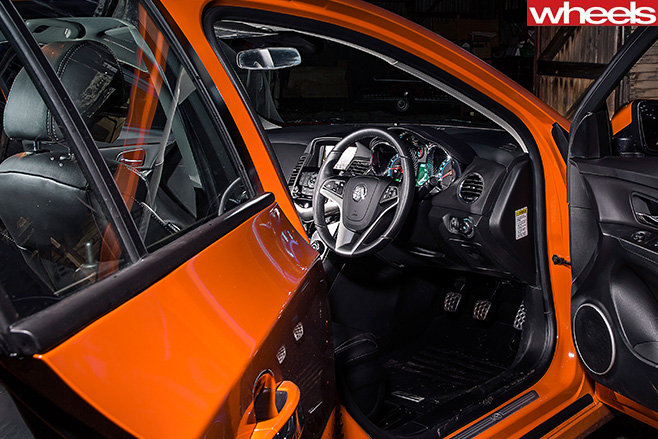
There’s a solid back seat in the Cruze, too, offering a slightly elevated view, but its cushion could use more under-thigh support, and the only rear cupholders are on top of the armrest. Rear passengers also sense the Cruze SRi’s busy ride, though it handles really big hits with aplomb. And its nicely trimmed 413-litre boot is brilliant, easily the biggest here.
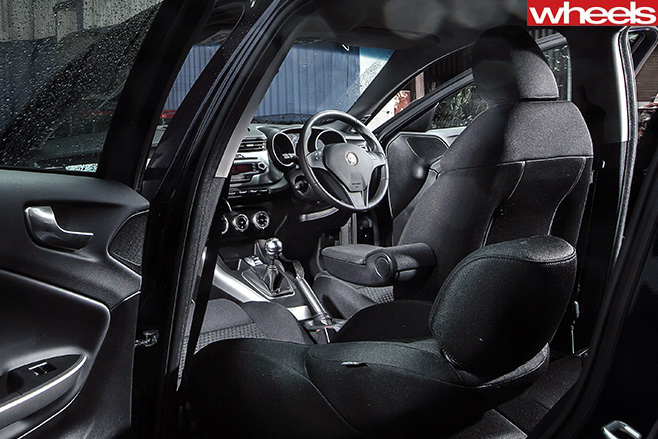
The Alfa’s interior design is almost as aged (2010) and only months away from receiving an update (centred around a dashboard multimedia touchscreen), but at least it has personality. Its front seats are the most adjustable and the most comfortable, and while its ribbed cloth trim is obviously designed to be durable, it also has a dose of Italian cool. However, there’s frustration ahead if you happen to be lugging more than one takeaway coffee or want somewhere to put a drink bottle.
If its room you want, nothing beats the well-packaged Hyundai. Rear-seat passengers sit deep into this group’s best seat, though it trades the superior forward vision of the Cruze and Giulietta for greater under-thigh support. Its centre armrest will hold coffees and its doors house 600ml water bottles, but that’s where the i30’s niceties end.
Up front, the centre armrest won’t slide, making it useless for resting limbs on, and despite sporting leather trim, the front passenger seat has the most basic adjustment possible, in contrast to the eight-way electric driver’s pew.
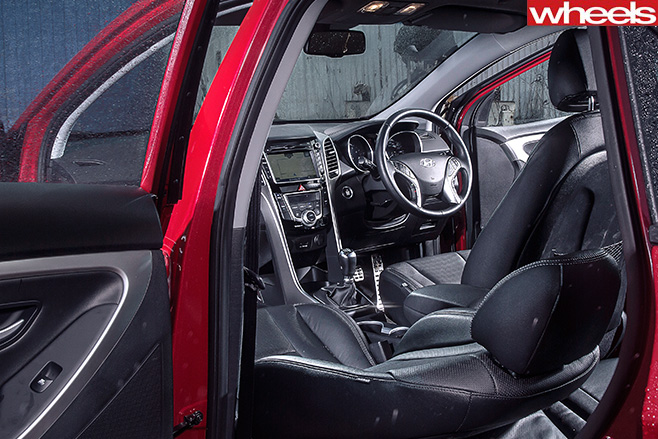
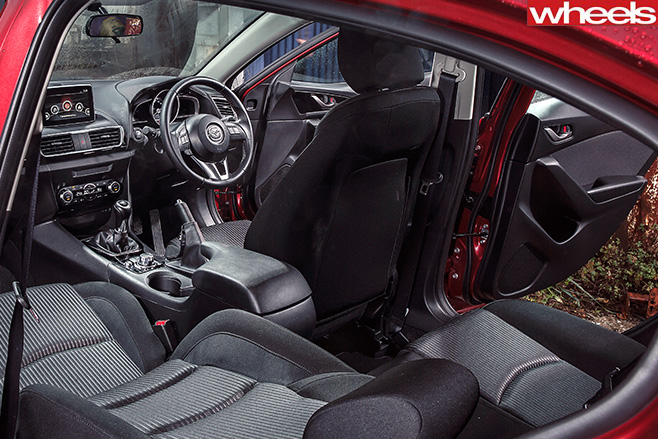
The Mazda goes one better than the Hyundai with an even higher level of finish quality and classier graphics for its centre touchscreen. There’s a refreshing minimalism to the new 3’s interior, though it mixes some great pieces of design with some duff elements, like its lack of adequate front-seat adjustment, delivering a driving position that’s never quite ideal. And the base SP25’s instrument design is style-driven tat. Cue a squinty digital tacho and massive analogue speedo in lieu of two equal-sized, clear dials.
So which burns brightest?
Sadly, that’s one thing that ultimately betrays the i30’s Korean econocar origins – a DNA strand too deeply embedded for the Aussie-developed SR to fix. It’s quite handsome, with a roomy, inviting interior and what appears to be plenty of kit. Solid drivetrain, too, but there’s something superficial about the i30 that no amount of tuning or fancy trim can overcome. At least not without a new steering set-up and decent tyres.
Where the i30 SR lacks polish, the Cruze SRi has been honed to within an inch of its life. Its handling poise and pointy steering deserve praise, and Holden has done a fine job making 1474kg of lardy hatchback feel spritely. In fact, the Cruze’s best bits are all the Holden stuff – its chassis tune, its hatchback design and its colour (Fantale orange, just like an SS-V’s). But the rest lacks the design sizzle that gets a car like the i30 over the line at purchase time.
What’s guaranteed to shift Giuliettas into driveways is its gorgeous styling. And, once driven, its enthusiasm. From the moment you turn its grippy steering wheel, the Giulietta has personality, its front and rear ends talking to each other, goading its driver to push harder, or drive longer. It’s comfortable, too, with plenty of useable room, including the boot. But it doesn’t matter how long the Alfa’s warranty is, it still carries some baggage in the reliability department, as its 51 percent three-year resale attests.
In contrast, with resale at nearly 68 percent and a reliability record founded on years of near-faultless operation, the Mazda 3 SP25 has to emerge as the warm hatch to beat. Its sporty styling demands packaging compromises and it lacks the Alfa’s instant effervescence, but deep down there’s a fine driver’s car waiting to have its talents exploited.
The base SP25 isn’t perfect – in fact, we’d try and stretch to the GT version with its superior instrument arrangement and more comfortable electric seats – but as both the cheapest car here and arguably the most accomplished, warm has never felt so toasty.
Absent friends
NOT quite making it to the starting grid was Ford’s Focus Sport and Nissan’s turbocharged Pulsar ST-S. The Focus would’ve been a great benchmark for dynamics, but its torque-deprived 2.0-litre four would have been old news, given there’s a facelifted model due early next year with a 1.6-litre ‘Ecoboost’ turbo-petrol four in its armoury. And while Nissan’s 140kW Pulsar ST-S would’ve had no trouble making ground on the straights, we fear its underdone chassis may have left it floundering in the corners, some way short of warm-hatch greatness.
Three way
TOWARDS the lower end of Hyundai’s vast i30 line-up is arguably the budget warm hatch – simply called the i30 SE. Unlike the Korean-sourced five-door, the three-door SE comes from Slovakia and gets a proper multi-link rear end like the i30 SW wagon, not the five-door’s inferior torsion beam. The SE three-door also looks cooler, though you’ll have to settle for the same 98kW/163Nm direct-injection 1.6 used in top-spec Rios. It’s a good engine and, in six-speed manual form, only has to lug 1192kg, but swift progress demands frequent gear shifting.
Why no Golf?
VOLKSWAGEN does not at present offer a true warm Golf – only the plush $32K Highline DSG or the hot $41K GTI – but a solution is imminent. You can forget about the GTD because VW Australia has decided not to continue with a performance Golf diesel. Instead, a warmer Golf will be part of a future range-wide roll-out of VW’s R-Line.
Verdict
MAZDA 3 SP25
Price as tested: $26,258 *Includes metallic paint ($200), floor mats ($168)
NCAP rating: 5 stars (Aus)
Fuel economy: 9.9L/100km (test average)
Acceleration: 0-100km/h: 7.9sec (tested)
Plus: Slick manual; strong economy and resale; rear-end balance
Minus: Road noise; lacks front seat adjustment; poor rear seat vision
Verdict: 7.5/10
ALFA ROMEO GIULIETTA
Price as tested: $27,950 * Includes metallic paint ($500)
NCAP rating: 5 stars (Euro)
Fuel economy: 10.3L/100km (test average)
Acceleration: 0-100km/h: 7.5sec (tested)
Plus: Connected steering; poised and involving chassis; distinctive styling
Minus: No sat-nav or rear air vents; lacks dynamic polish; road noise
Verdict: 7.0/10
HOLDEN CRUZE SRi Z-SERIES
Price as tested: $26,990 *Includes premium paint ($500)
NCAP rating: 5 stars (Aus)
Fuel economy: 12.3L/100km (test average)
Acceleration: 0-100km/h: 8.3sec (tested)
Plus: Sharp handling; well-damped ride; strong brakes; polished city manners
Minus: Needs to lose some weight or boost grunt; dated cabin; thirst
Verdict: 6.5/10
HYUNDAI i30 SR
Price as tested: $27,990
NCAP rating: 5 stars (Aus)
Fuel economy: 10.2L/100km (test average)
Acceleration: 0-100km/h: 8.1sec (tested)
Plus: Rev-obsessed engine; solid packaging; handsome styling
Minus: Mushy, muddy steering; too-big steering wheel; poor tyres
Verdict: 5.5/10
These are the performance cars that should cost you the least to own over three years. This has been calculated by Wheels using fuel economy, maintenance and insurance costs, and the sum you can expect to lose in depreciation. Cars also get points for the length of their warranties. To read about the brains behind the formula, please click here to visit Wheels.
BEST VALUE PERFORMANCE CARS UNDER $75K
1. Kia ProCeed GT
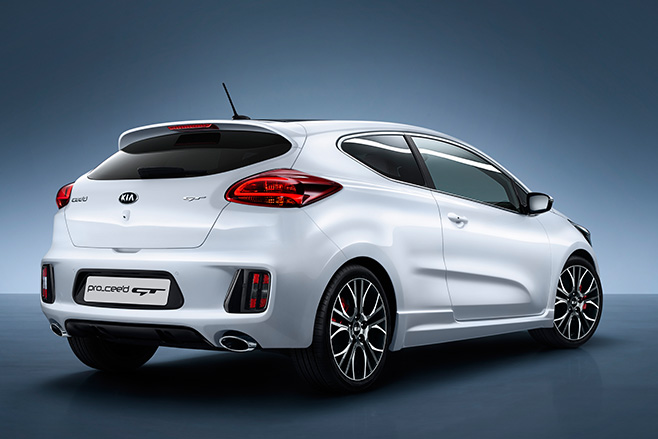
Korea’s first hot hatch is also its best value equation. You won’t be at all surprised to know that Kia’s seven-year unlimited-kay warranty plays a big part in the result. It’s also pretty obvious that a $29,990 entry price is a good start in a class with a $75K ceiling, even though price itself isn’t scored, because instead the predicted three-year resale – a reasonable 57 percent – works on a very low starting point. The multi-link rear suspension and Recaro seats are highlights when compared to its direct rival (in second place), making the ProCeed GT a better buy, despite being a bit thirstier.
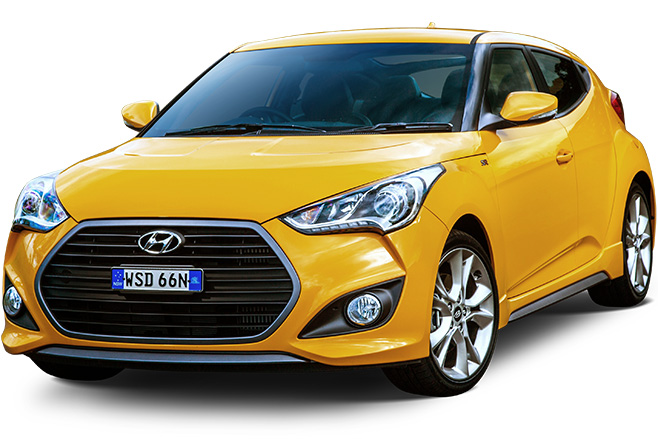
2. Hyundai Veloster SR Turbo
3. Toyota 86
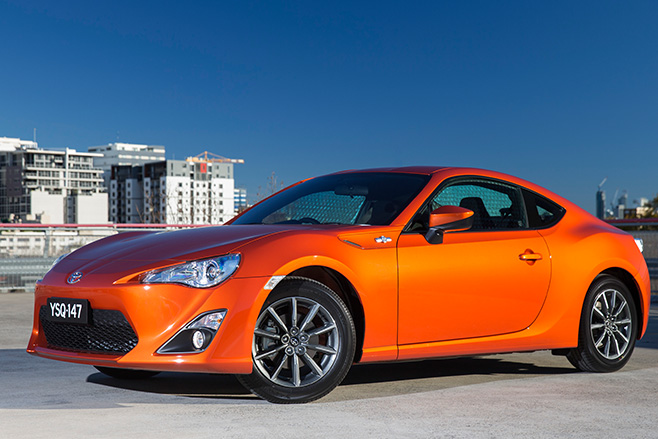
| Performance Cars under $75K | Kia ProCeed GT | Hyundai Veloster SR Turbo man | Toyota 86 GT man |
| Purchase Price | $29,990 | $29,990 | $29,990 |
| Combined cycle fuel (L/100km) | 7.4 | 6.9 | 7.8 |
| Fuel RON (min. rec.) | 91 | 91 | 98 |
| Three-year fuel cost | $4224 | $3938 | $5009 |
| Redbook resale (%) | 57.0 | 59.6 | 63.5 |
| Three-year depreciation | $12,896 | $12,116 | $10,946 |
| AAMI insurance premium | $940 | $945 | $954 |
| Service interval (months) | 12 | 12 | 6 |
| Warranty (years) | 7 | 5 | 3 |
BEST VALUE PERFORMANCE CARS $75K – $150K
1. Mercedes-AMG A45
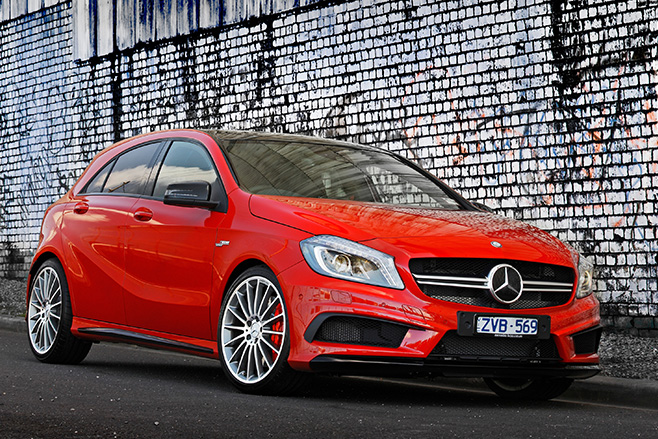
Merc’s A45 AMG might be an expensive car in isolation, but in terms of the performance it offers for the money – both initial outlay and ongoing costs – it’s actually a ripper bargain. The service interval is long (12 months), which means more time baiting BMW owners and less time in the workshop, while the 60 percent resale is pretty good – it sheds $30K in three years.
2. BMW M235i
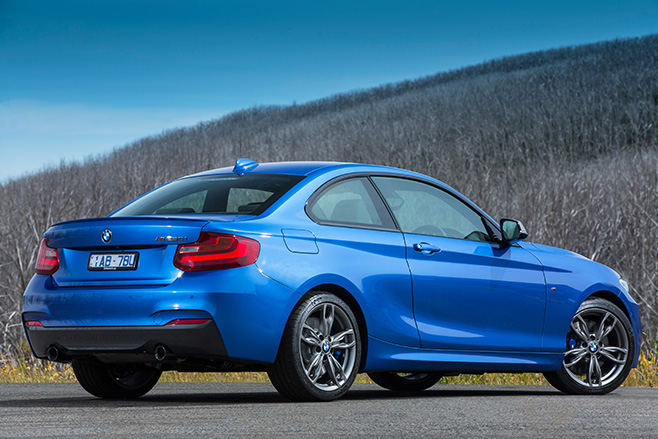
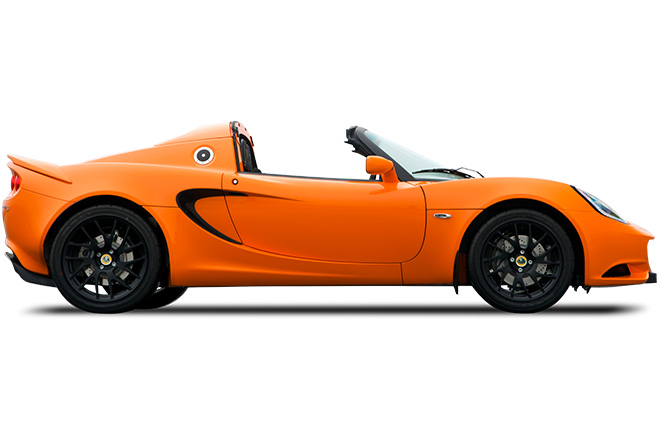
| Performance Cars $75K-$150K | Mercedes-AMG A45 4MATIC | BMW M235i | Lotus Elise S Roadster 1.8SC |
| Purchase Price | $75,700 | $79,930 | $84,990 |
| Combined cycle fuel (L/100km) | 6.9 | 8.1 | 7.5 |
| Fuel RON (min. rec.) | 98 | 95 | 95 |
| Three-year fuel cost | $4431 | $4923 | $4558 |
| Redbook resale (%) | 60.3 | 57.8 | 58.6 |
| Three-year depreciation | $30,053 | $33,730 | $35,186 |
| AAMI insurance premium | $1766 | $1529 | $2003 |
| Service interval (months) | 12 | 12 | 12 |
| Warranty (years) | 3 | 3 | 3 |
These are the utes that should cost you the least to own over three years. This has been calculated by Wheels using fuel economy, maintenance and insurance costs, and the sum you can expect to lose in depreciation. Cars also get points for the length of their warranties. To read about the brains behind the formula, please click here to visit Wheels.
1. Mitsubishi Triton GLX
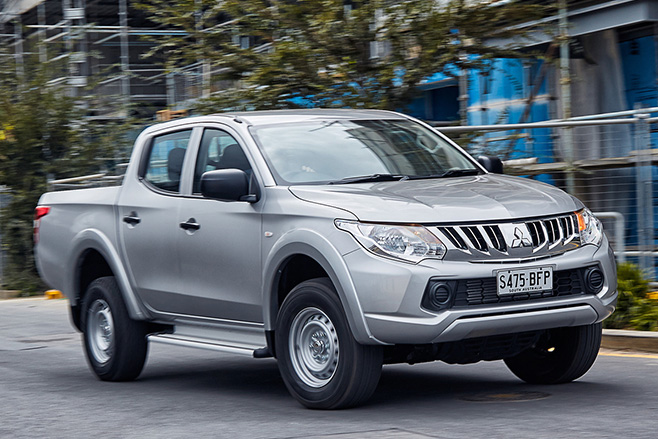
Value has long been a Triton trademark, and the Mitsubishi workhorse is more appealing than before thanks to a rebody earlier this year that brought an improved version of the 430Nm 2.4-litre turbo-diesel, a nicer interior and more standard equipment. At $36,990, it costs nearly $9K less than the second-placed Ranger and undercuts the Amarok by $10K, so the Triton loses fewer dollars to depreciation, while offering a longer five-year warranty and uses a bit less fuel.
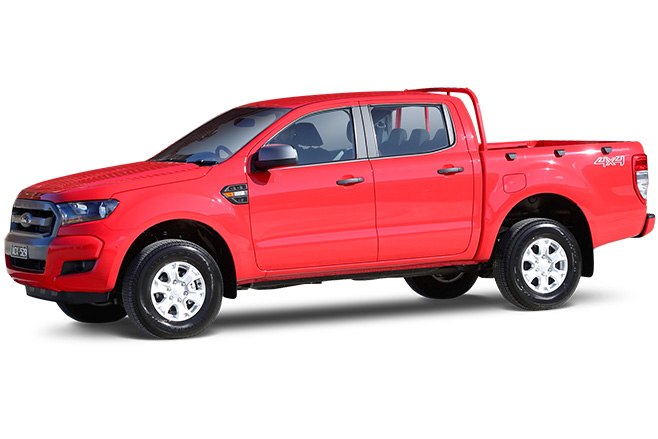
| Dual-cab 4×4 utes | Mitsubishi Triton GLX 2.4DT man | Ford Ranger XLS 2.2DT man | Mazda BT-50 XT 3.2DT man |
| Purchase Price | $36,990 | $45,590 | $44,240 |
| Combined cycle fuel (L/100km) | 7.2 | 8.1 | 8.9 |
| Fuel RON (min. rec.) | D | D | D |
| Three-year fuel cost | $4352 | $4895 | $5379 |
| Redbook resale (%) | 58.3 | 65.6 | 64.6 |
| Three-year depreciation | $15,425 | $15,683 | $15,661 |
| AAMI insurance premium | $1041 | $1171 | $1141 |
| Service interval (months) | 12 | 12 | 12 |
| Warranty (years) | 5 | 3 | 3 |
These are the convertibles that should cost you the least to own over three years. This has been calculated by Wheels using fuel economy, maintenance and insurance costs, and the sum you can expect to lose in depreciation. Cars also get points for the length of their warranties. To read about the brains behind the formula, please click here to visit Wheels.
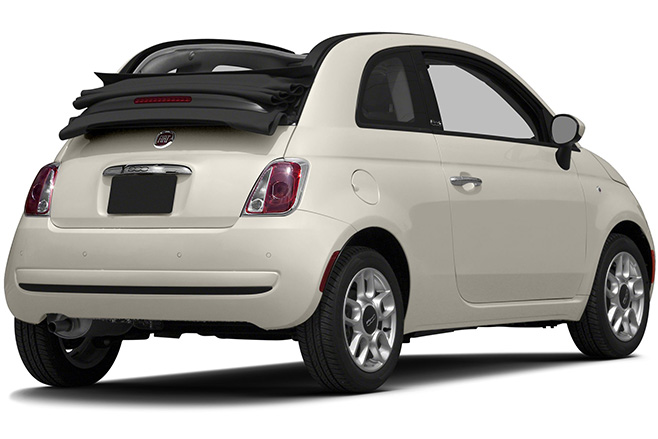
Fiat’s 500 C, the least-expensive ragtop on sale in Oz, was a dead cert to win here. You might as well treat yourself to the Lounge version; it’s a bit pricier than the base 500C, but its 900cc turbo two-pot will save money on fuel and give you a talking point. Retained value is not brilliant in percentage terms, but losing 47 percent of 20-odd grand over three years isn’t too bad.
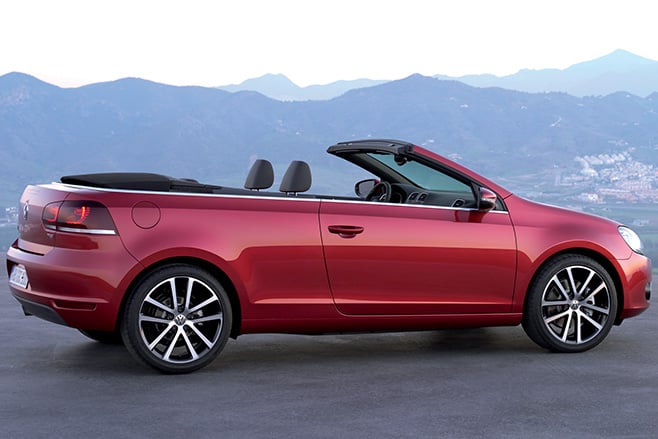
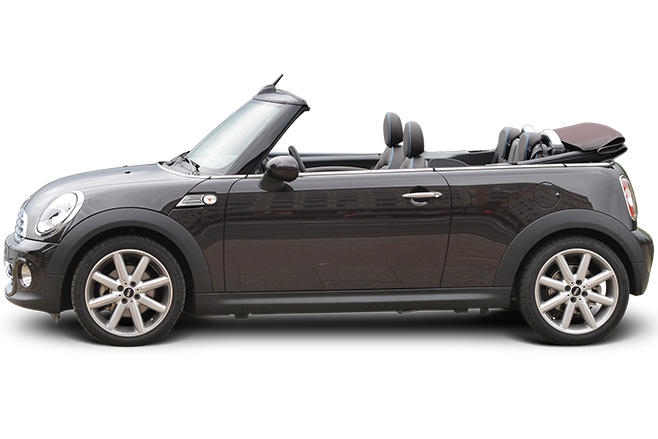
| Convertibles under $60K | Fiat 500 C Lounge TwinAir | Volkswagen Golf Cabriolet 118TSI | Mini Cooper Cabrio |
| Purchase Price | $24,500 | $43,990 | $40,350 |
| Combined cycle fuel (L/100km) | 3.9 | 6.5 | 6.1 |
| Fuel RON (min. rec.) | 95 | 95 | 95 |
| Three-year fuel cost | $2370 | $3950 | $3707 |
| Redbook resale (%) | 52.6 | 59.3 | 53.8 |
| Three-year depreciation | $10,902 | $17,904 | $18,642 |
| AAMI insurance premium | $851 | $1109 | $1089 |
| Service interval (months) | 6 | 12 | 12 |
| Warranty (years) | 3 | 3 | 3 |
These are the people movers that should cost you the least to own over three years. This has been calculated by Wheels using fuel economy, maintenance and insurance costs, and the sum you can expect to lose in depreciation. Cars also get points for the length of their warranties. To read about the brains behind the formula, please click here to visit Wheels.
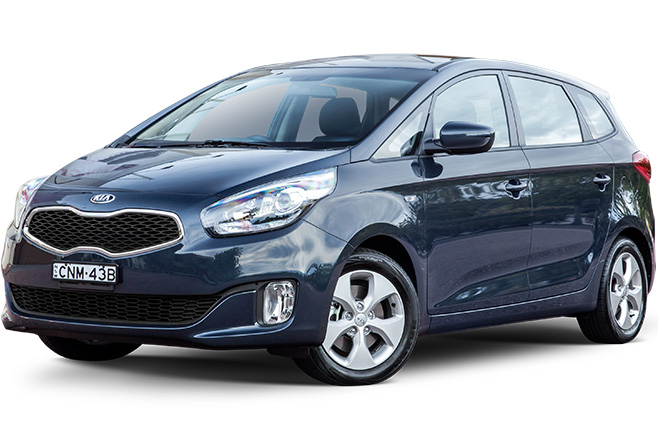
Taking the top spot isn’t a first for Kia’s Rondo, which suggests frugality is not just a fleeting quality. The Korean bus doesn’t win on the strength of retained value – the predicted depreciation isn’t fantastic at 53 percent – but on the fact you can buy the Rondo for a mere $30K, so there’s not too much to lose. Kia’s seven-year warranty is a bonus, which helps the Rondo people-mover see off challengers from other long-warrantied brands such as Hyundai and Citroen.
2. Hyundai iMax 2.5 CRDi
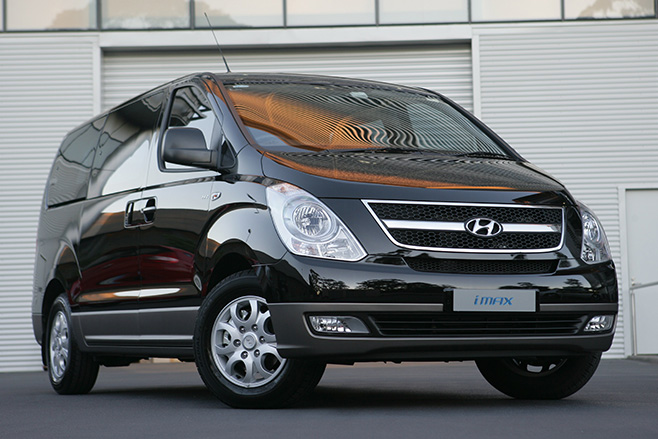
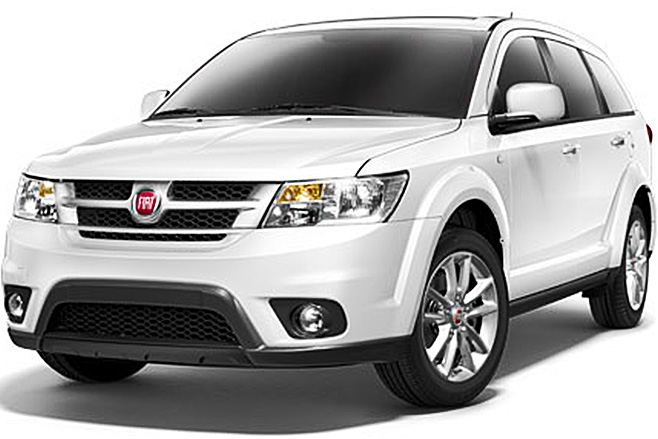
| People Movers under $60K | Kia Rondo Si 2.0i auto | Hyundai iMax 2.5DT man | Fiat Freemont 2.4i auto |
| Purchase Price | $30,240 | $41,490 | $27,000 |
| Combined cycle fuel (L/100km) | 7.9 | 8.1 | 9.8 |
| Fuel RON (min. rec.) | 91 | D | 91 |
| Three-year fuel cost | $4509 | $4895 | $5594 |
| Redbook resale (%) | 53.2 | 65.2 | 58.1 |
| Three-year depreciation | $14,152 | $14,439 | $11,313 |
| AAMI insurance premium | $944 | $1035 | $933 |
| Service interval (months) | 12 | 12 | 6 |
| Warranty (years) | 7 | 5 | 3 |
These are the SUVs that should cost you the least to own over three years. This has been calculated by Wheels using fuel economy, maintenance and insurance costs, and the sum you can expect to lose in depreciation. Cars also get points for the length of their warranties. To read about the brains behind the formula, please click here to visit Wheels.
BEST VALUE BABY SUVS
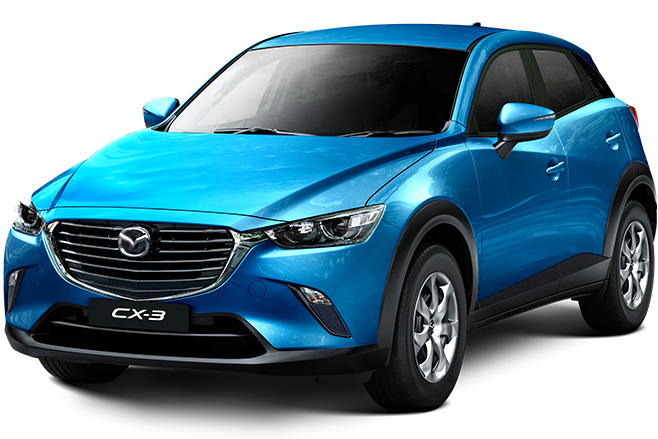
Sub-compact SUVs – we’re calling them ‘baby’ because ‘compact’ now means medium – have sparked the SUV segment in 2015. Mazda’s CX-3 is the coolest looking, and fun to drive. It also offers the best value. Keen pricing works with a resale figure among best in category to make the Mazda unstoppable. Never mind that the front-drive CX-3 won’t venture much further off road than a gravel driveway. It’s one of those rare creations that’s trendy yet sensible, and desirable yet affordable.
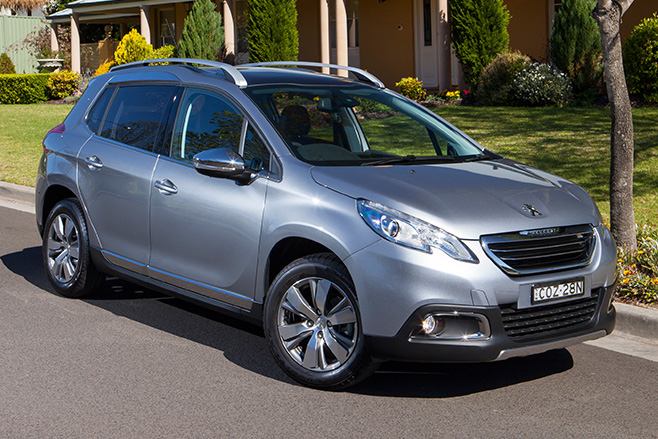
2. Peugeot 2008 Active
3. Ford EcoSport Ambiente
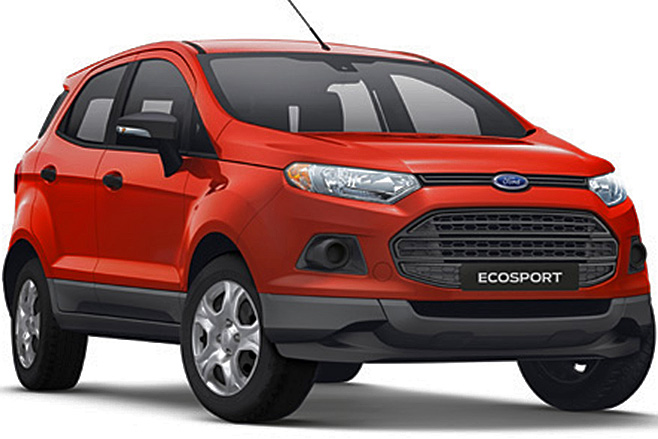
| Baby SUVs | Mazda CX-3 Neo man 2.0L FWD | Peugeot 2008 Active man | Ford EcoSport Ambiente man 1.5L |
| Purchase Price | $19,990 | $21,990 | $20,790 |
| Combined cycle fuel (L/100km) | 6.3 | 4.9 | 6.5 |
| Fuel RON (min. rec.) | 91 | 95 | 91 |
| Three-year fuel cost | $3596 | $2978 | $3710 |
| Redbook resale (%) | 66.8 | 59.3 | 59.2 |
| Three-year depreciation | $6637 | $8950 | $8482 |
| AAMI insurance premium | $738 | $827 | $798 |
| Service interval (months) | 12 | 12 | 12 |
| Warranty (years) | 3 | 3 | 3 |
BEST VALUE COMPACT SUVS UNDER $45K
1. Mazda CX-5 Maxx FWD
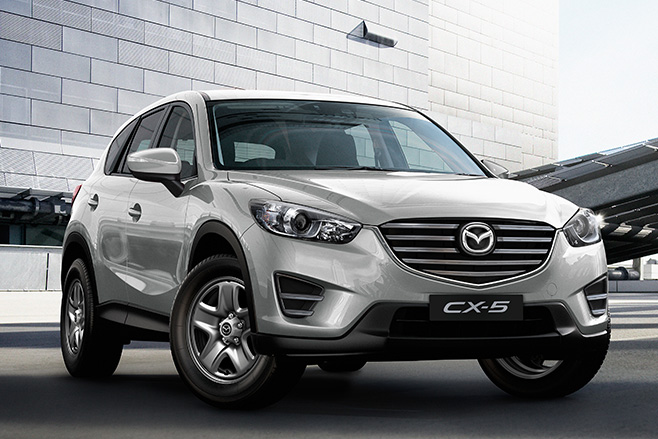
Compact SUVs have become better value as they’ve grown in popularity, improving economy and shedding superfluous features to lower entry costs. In the base CX-5, the smaller 2.0-litre petrol four-cylinder works because it also does away with the AWD system of pricier versions, reducing weight and transmission losses. The cheapest CX-5 isn’t the least expensive of the soft-roaders considered for the category, but its resale is the best.
2. Kia Sportage Si
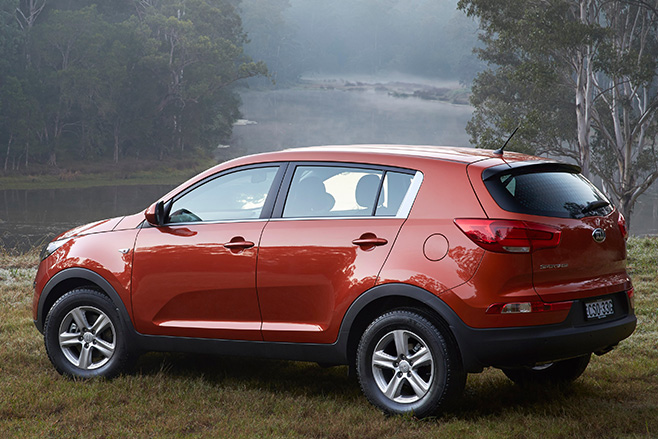
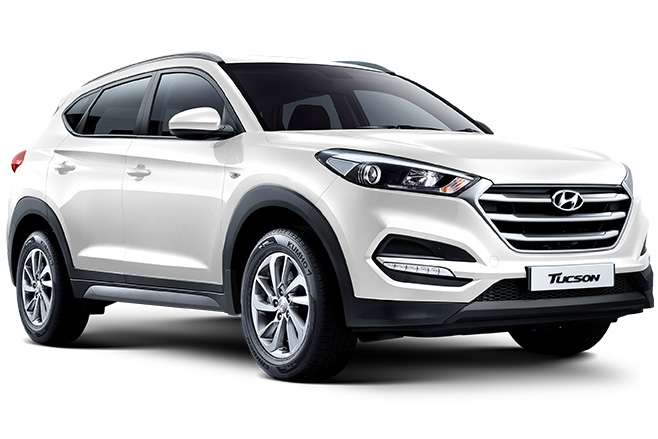
| Compact SUVs under $45K | Mazda CX-5 Maxx 2.0L FWD | Kia Sportage Si FWD 2.0i | Hyundai Tucson Active |
| Purchase Price | $27,190 | $25,990 | $27,990 |
| Combined cycle fuel (L/100km) | 6.4 | 8.2 | 7.8 |
| Fuel RON (min. rec.) | 91 | 91 | 91 |
| Three-year fuel cost | $3653 | $4680 | $4452 |
| Redbook resale (%) | 67.8 | 60.8 | 61.0 |
| Three-year depreciation | $8755 | $10,188 | $10,916 |
| AAMI insurance premium | $863 | $851 | $854 |
| Service interval (months) | 12 | 12 | 12 |
| Warranty (years) | 3 | 7 | 5 |
BEST VALUE COMPACT SUVS UNDER $70K
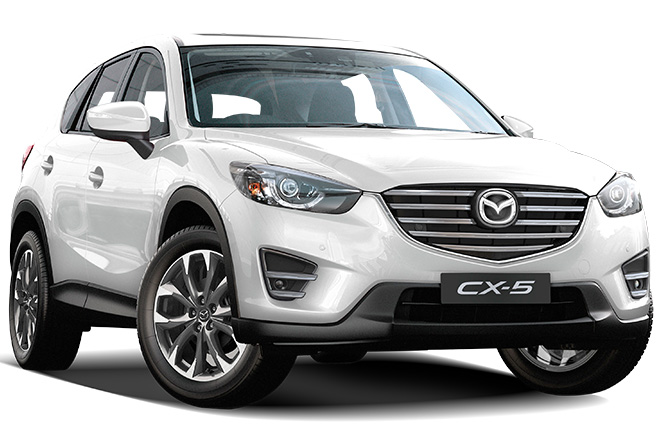
Moving into this higher price bracket served to capture premium SUVs that previously lived in the Premium/Crossover category, but the classy Euros struggled to match the value equation of this high-spec Japanese wagon. At the Grand Touring level, the CX-5 is admirably well equipped with safety and convenience kit, and boasts all-wheel drive, a slick auto and the choice of petrol or diesel motivation.
2. Range Rover Evoque Pure
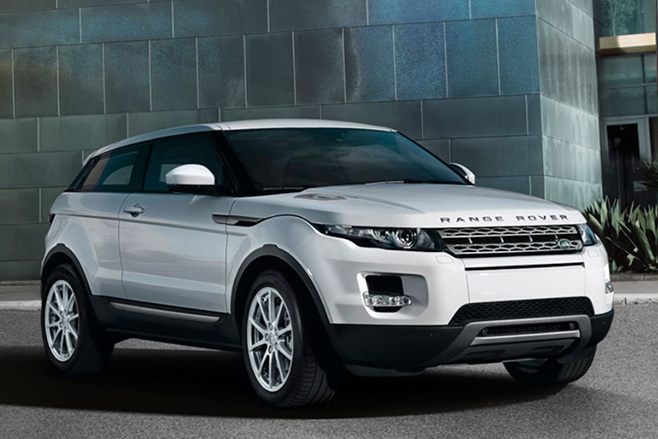
3. Audi Q3 2.0 TFSI Sport Quattro
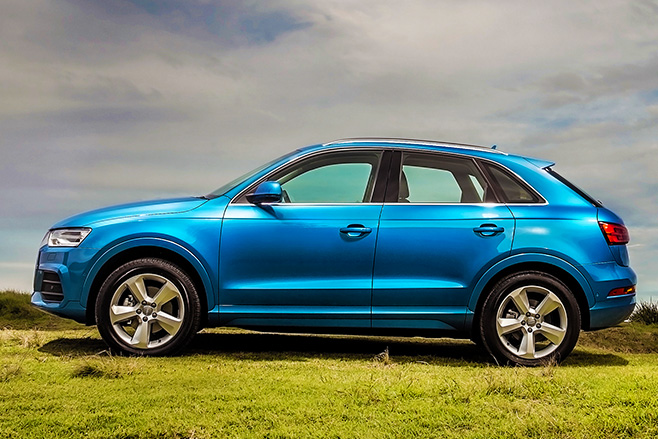
| Compact SUV under $70K | Mazda CX-5 Grand Touring 2.2D | Range Rover Evoque eD4 Pure 3dr man 2.2D | Audi Q3 2.0 TFSI quattro |
| Purchase Price | $46,590 | $51,495 | $52,300 |
| Combined cycle fuel (L/100km) | 5.7 | 4.9 | 6.7 |
| Fuel RON (min. rec.) | D | D | 95 |
| Three-year fuel cost | $3445 | $2961 | $4072 |
| Redbook resale (%) | 68.1 | 66.1 | 66.8 |
| Three-year depreciation | $14,862 | $17,457 | $17,364 |
| AAMI insurance premium | $1,162 | $1,167 | $1,183 |
| Service interval (months) | 12 | 12 | 12 |
| Warranty (years) | 3 | 3 | 3 |
BEST VALUE MEDIUM SUVS
Kia Sorento Si
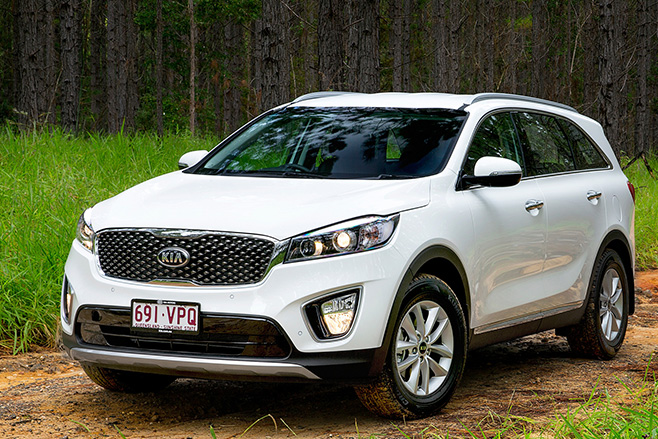
You can buy any number of seven-seat SUVs for less than $40K, which makes them great value in terms of shifting bums on a budget. The Sorento is a tick more, at $40,990, but it retains 64 percent of your initial outlay over the first three years. That’s a great figure, much better than its 9.9L/100km economy (though at least it’s on 91 octane). Some in class are closer to 8L/100km.
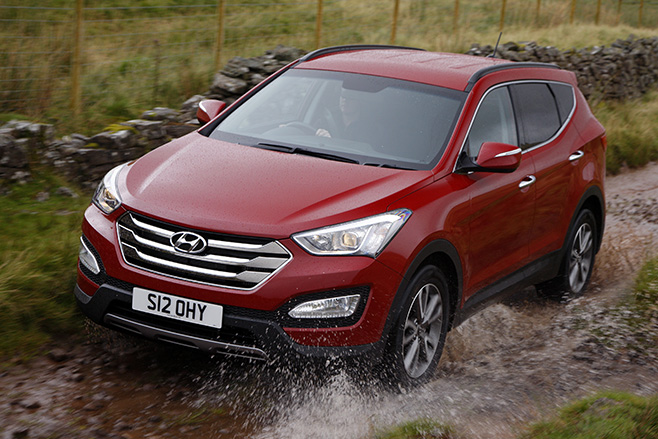
2. Hyundai Santa Fe Active
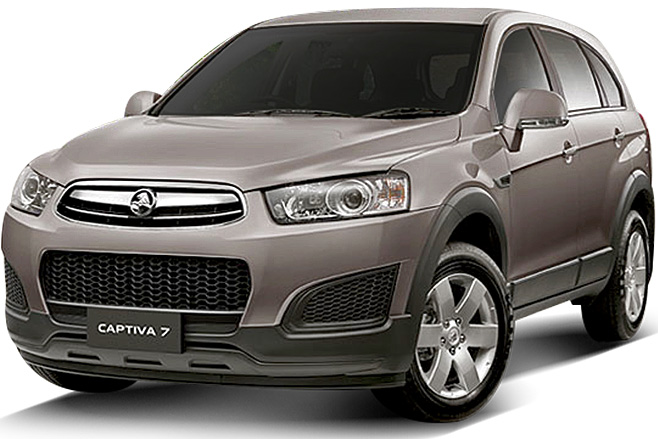
3. Holden Captiva 7 LS
| Medium SUV 7-seat under $60K | Kia Sorento Si auto 3.3i | Hyundai Santa Fe Active man 4×4 2.4i | Holden Captiva 7 LS auto 2.4i |
| Purchase Price | $40,990 | $38,490 | $30,490 |
| Combined cycle fuel (L/100km) | 9.9 | 9.0 | 9.5 |
| Fuel RON (min. rec.) | 91 | 91 | 91 |
| Three-year fuel cost | $5651 | $5137 | $5422 |
| Redbook resale (%) | 64.3 | 61.3 | 61.4 |
| Three-year depreciation | $14,633 | $14,896 | $11,769 |
| AAMI insurance premium | $967 | $993 | $916 |
| Service interval (months) | 12 | 12 | 9 |
| Warranty (years) | 7 | 5 | 3 |
BEST VALUE LARGE SUVS
1. Ford Territory TX petrol
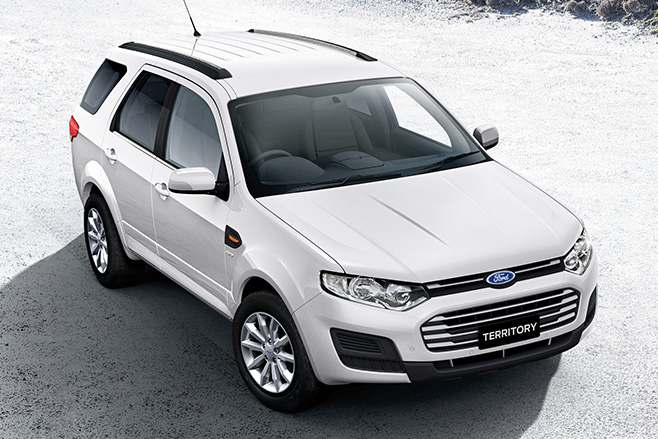
Many in this category major on off-roadability, but the Territory shines on tarmac. It kicks off with a tantalisingly low entry price – the TX wears a $37,490 sticker – and although it’s on the thirsty side (10.2L/100km), it’s happy on regular 91-octane petrol. It’s also among the least costly to insure in class – about $990 per year – and boasts a 12-month service interval. If your big wagon will mainly live on the road, the Ford is a better bet than most 4x4s.
2. Mitsubishi Pajero GLX diesel
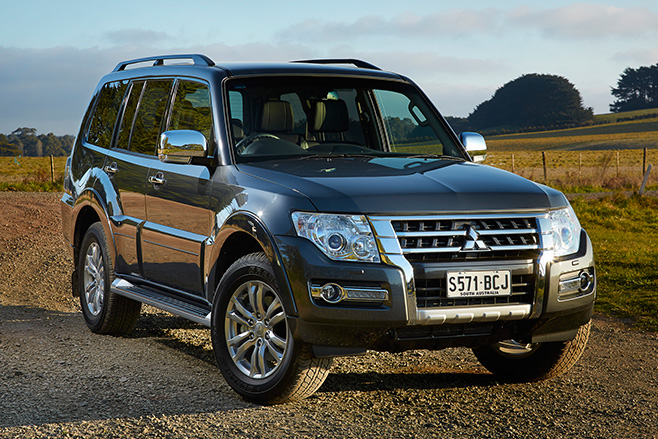
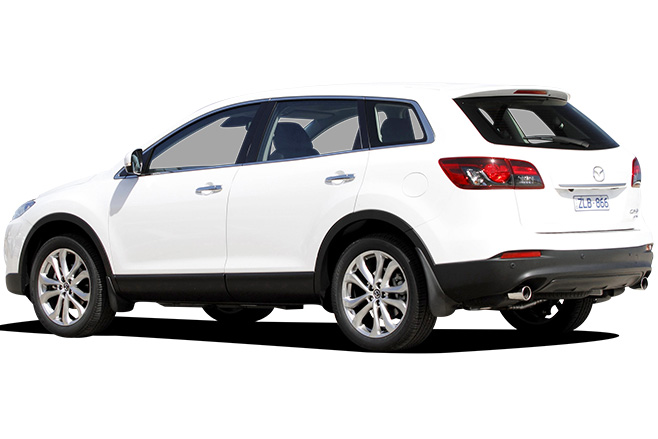
| Large SUV/4WD | Ford Territory TX 4.0i auto RWD | Mitsubishi Pajero GLX DiD man | Mazda CX-9 Classic |
| Purchase Price | $37,490 | $50,990 | $43,770 |
| Combined cycle fuel (L/100km) | 10.2 | 8.4 | 11 |
| Fuel RON (min. rec.) | 91 | D | 91 |
| Three-year fuel cost | $5822 | $5077 | $6279 |
| Redbook resale (%) | 55.6 | 60.1 | 60.0 |
| Three-year depreciation | $16,646 | $20,345 | $17,508 |
| AAMI insurance premium | $989 | $1169 | $1096 |
| Service interval (months) | 12 | 12 | 12 |
| Warranty (years) | 3 | 5 | 3 |
These are the large cars that should cost you the least to own over three years. This has been calculated by Wheels using fuel economy, maintenance and insurance costs, and the sum you can expect to lose in depreciation. Cars also get points for the length of their warranties. To read about the brains behind the formula, please click here to visit Wheels.
BEST VALUE LARGE CARS UNDER $45K
1. Skoda Superb Ambition 118TSI sedan
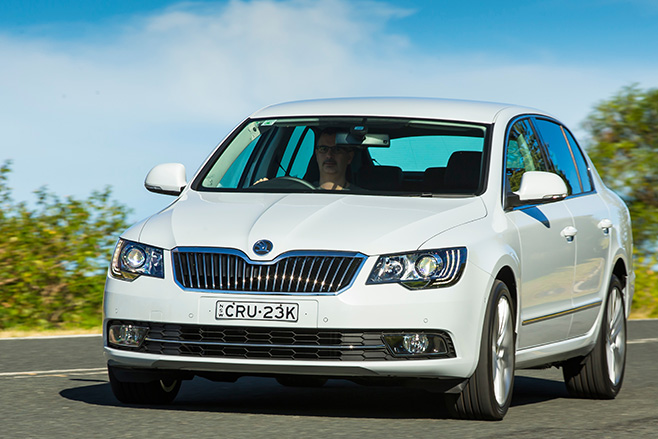
Skoda’s Superb is a car of contrasts, yet it works both on paper and on the road. It’s a big, roomy car yet in 118TSI form it has a mere 1.8-litre turbo four-cylinder engine, when same-sized rivals have 3.6- and 4.0-litre sixes. In practice, the sweet 1.8 has just enough of the low-down torque a family/touring car needs, while delivering 7.2L/100km economy. Its resale is not fantastic (51 percent), but it’s significantly cheaper to buy than each of the cars it beat, so the overall cost of depreciation over three years remains reasonable.
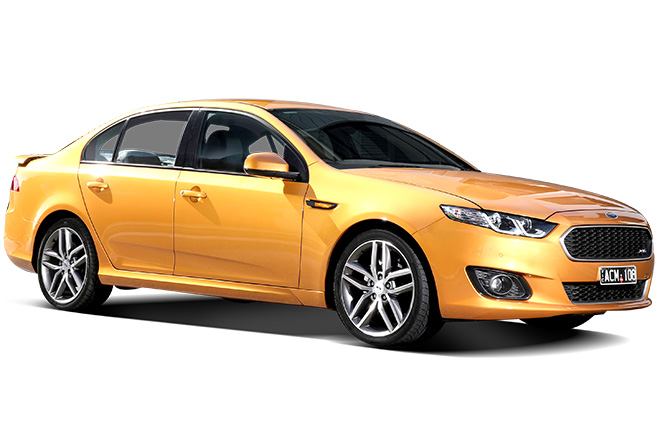
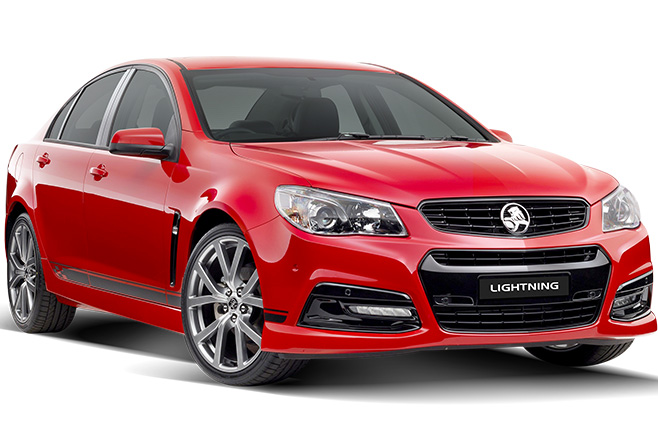
| LargeCars under $45K | Skoda Superb Ambition 118TSI sedan auto | Ford Falcon XR6 man | Holden Commodore SV6 sedan man |
| Purchase Price | $31,990 | $36,090 | $36,790 |
| Combined cycle fuel (L/100km) | 7.2 | 11.1 | 9.0 |
| Fuel RON (min. rec.) | 95 | 91 | 91 |
| Three-year fuel cost | $4376 | $6336 | $5137 |
| Redbook resale (%) | 51.2 | 61.6 | 62.4 |
| Three-year depreciation | $15,611 | $13,859 | $13,833 |
| AAMI insurance premium | $991 | $1100 | $999 |
| Service interval (months) | 12 | 12 | 9 |
| Warranty (years) | 5 | 3 | 3 |
BEST VALUE LARGE CARS UNDER $60K
1. Skoda Superb Elegance 125TDI wagon
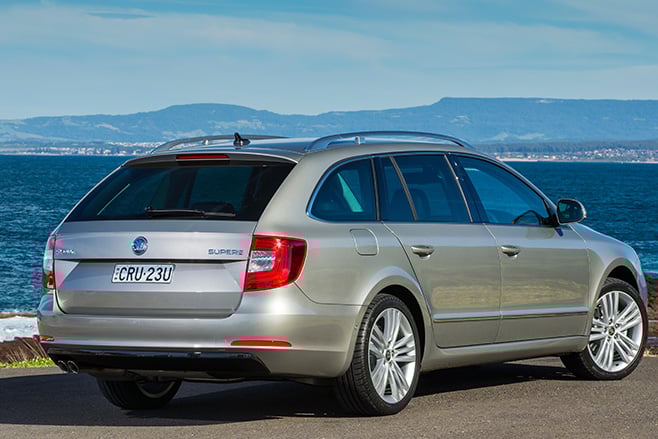
It’s not surprising to see the Superb delivering large-car value in both pricing categories. The Skoda is one of the least expensive and most efficient cars in its class. In this segment it does the job in turbo-diesel form; with 350Nm, the 2.0-litre oiler is never short of everyday thrust, yet drinks much less than six-cylinder petrol rivals. Elsewhere, the three-year warranty is good and 12-month service intervals are great.
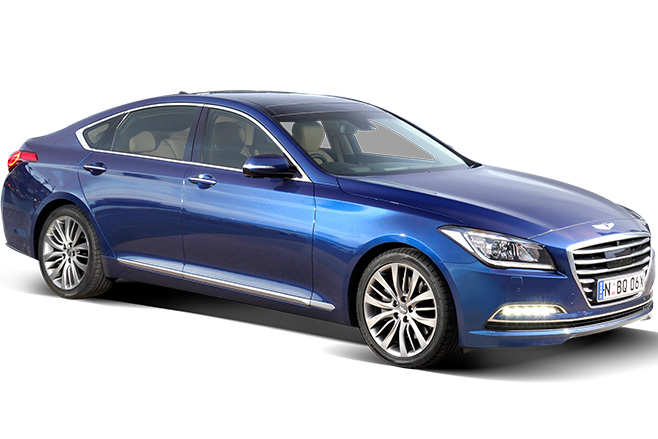
3. Ford Falcon G6E Turbo
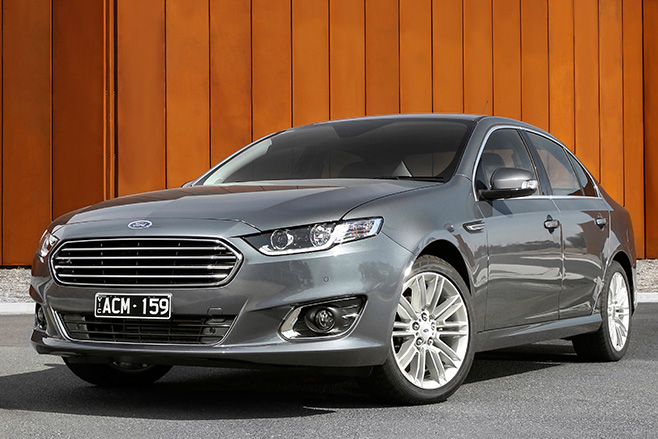
| Large Cars under $60K | Skoda Superb Elegance 125TDI wagon auto | Hyundai Genesis | Ford Falcon G6E Turbo |
| Purchase Price | $46,690 | $60,000 | $47,050 |
| Combined cycle fuel (L/100km) | 5.5 | 11.2 | 11.7 |
| Fuel RON (min. rec.) | D | 91 | 91 |
| Three-year fuel cost | $3324 | $6393 | $6678 |
| Redbook resale (%) | 51.0 | 50.3 | 50.8 |
| Three-year depreciation | $22,878 | $29,820 | $23,149 |
| AAMI insurance premium | $1149 | $1138 | $1350 |
| Service interval (months) | 12 | 12 | 12 |
| Warranty (years) | 3 | 5 | 3 |
BEST VALUE PREMIUM LARGE CARS
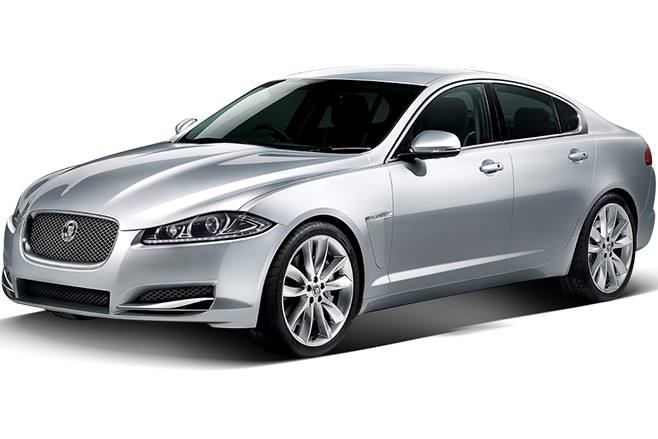
Depreciation disasters live in the large luxury segment – there’s big money at stake, but a small pool of second-hand buyers weighs down on resale values. The Jaguar XF’s 47 percent three-year retained value forecast is among the worst, yet the 2.2D Premium Luxury’s reasonable $76,500 price tag limits the wallet damage at purchase and resale times.
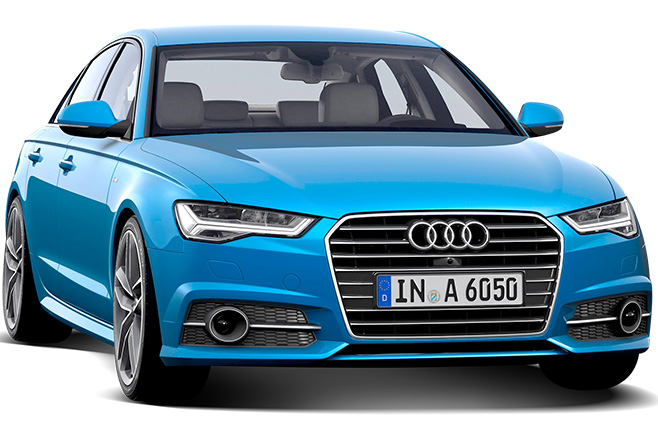
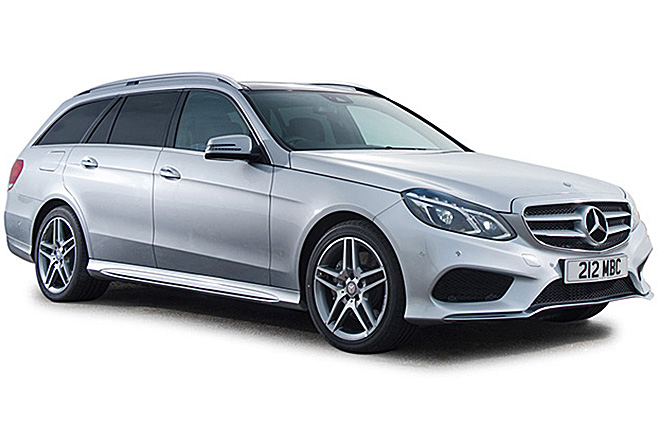
| Premium Large Cars | Jaguar XF 2.2D Premium Luxury | Audi A6 1.8 TFSI S-Line | Mercedes-Benz E200 Estate |
| Purchase Price | $76,500 | $79,900 | $87,900 |
| Combined cycle fuel (L/100km) | 5.2 | 5.7 | 6.7 |
| Fuel RON (min. rec.) | D | 95 | 95 |
| Three-year fuel cost | $3143 | $3464 | $4072 |
| Redbook resale (%) | 47.1 | 48.4 | 53.8 |
| Three-year depreciation | $40,469 | $41,228 | $40,610 |
| AAMI insurance premium | $1523 | $1541 | $1605 |
| Service interval (months) | 12 | 12 | 12 |
| Warranty (years) | 5 | 3 | 3 |
These are the medium cars that should cost you the least to own over three years. This has been calculated by Wheels using fuel economy, maintenance and insurance costs, and the sum you can expect to lose in depreciation. Cars also get points for the length of their warranties. To read about the brains behind the formula, please click here to visit Wheels.
BEST VALUE MEDIUM CARS
1. Kia Optima Si
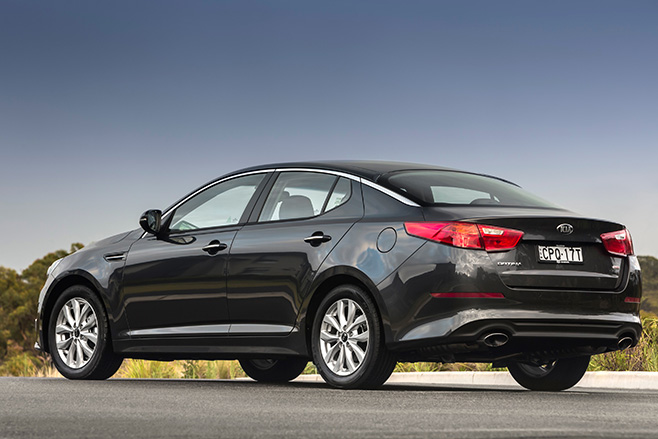
THE Optima finishes on top, not with brilliant resale (though its 58 percent figure is rock-solid) nor with spectacular fuel economy (it’s actually among the thirstier cars in the class at 7.9L/100km). And, while the 12-month service interval is as long as any (and longer than some), it’s no better than the second-placed Hyundai’s.
How did the Korean mid-sizer do it, then? Kia’s industry-best seven-year, unlimited-kilometre warranty did the bulk of the work by giving it the full 10 points available in this regard, which few cars (and no rivals) earned, but even if the Optima had a five-year warranty, like the Hyundai i40, it would still come first, so its value fundamentals are sound.
Had both cars come with three-year warranties, they would be relegated to the middle of the field; still good picks overall, but no longer placegetters. So, how much is a long warranty worth, anyway? Well, in something as undoubtedly dependable as a Kia, perhaps not that much in real dollar terms, but the peace of mind it affords is priceless.
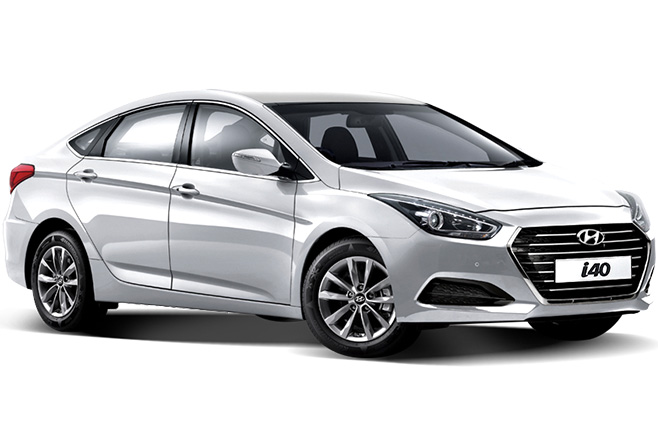
3. Subaru Liberty 2.5i
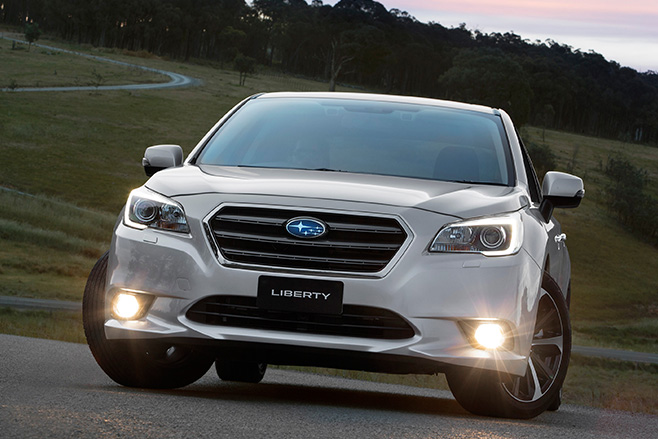
| Medium Cars under $45K | Kia Optima Si | Hyundai i40 Active sedan | Subaru Liberty 2.5i auto sedan |
| Purchase Price | $31,490 | $31,990 | $29,990 |
| Combined cycle fuel (L/100km) | 7.9 | 7.5 | 7.3 |
| Fuel RON (min. rec.) | 91 | 91 | 91 |
| Three-year fuel cost | $4509 | $4281 | $4167 |
| Redbook resale (%) | 57.9 | 53.3 | 63.9 |
| Three-year depreciation | $13,257 | $14,939 | $10,826 |
| AAMI insurance premium | $958 | $960 | $845 |
| Service interval (months) | 12 | 12 | 6 |
| Warranty (years) | 7 | 5 | 3 |
BEST VALUE PREMIUM MEDIUM CARS
1. VW Passat 118TSI
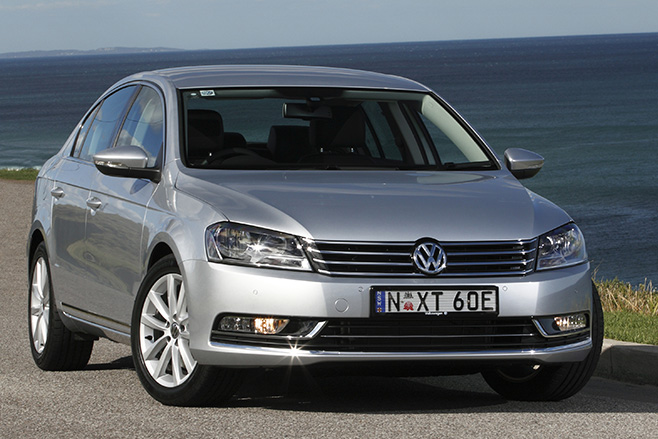
Where once base-model money bought you a badge and not much else, the Volkswagen Passat proves you can get a cracking little engine and decent equipment for the money. The 1.8-litre turbo-petrol four-cylinder is responsive, smooth and characterful, and uses only 7.2L/100km, which is brilliant for a brisk 1500kg sedan (or wagon). Yet it’s the Passat’s reasonable purchase price combined with a decent 59 percent three-year resale figure that does the bulk of the money-saving.
2. Citroen DS5 DSport HDi
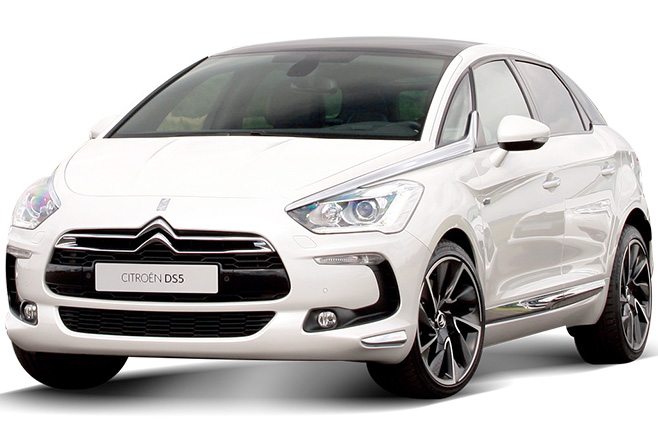
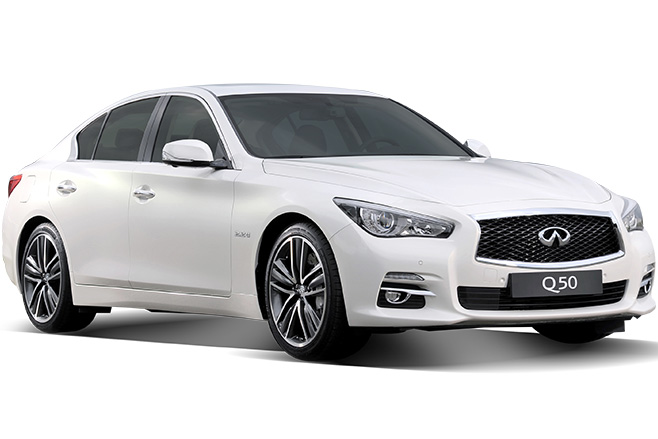
| Premium Medium Cars $45K-$60K | Volkswagen Passat 118TSI sedan | Citroen DS5 DSport HDi | Infiniti Q50 GT 2.2d |
| Purchase Price | $38,990 | $51,990 | $51,900 |
| Combined cycle fuel (L/100km) | 7.2 | 6.1 | 5.2 |
| Fuel RON (min. rec.) | 95 | D | D |
| Three-year fuel cost | $4376 | $3687 | $3143 |
| Redbook resale (%) | 58.6 | 58.1 | 53.4 |
| Three-year depreciation | $16,142 | $21,784 | $24,185 |
| AAMI insurance premium | $1023 | $1207 | $1202 |
| Service interval (months) | 12 | 12 | 12 |
| Warranty (years) | 3 | 6 | 4 |
These are the small cars that should cost you the least to own over three years. This has been calculated by Wheels using fuel economy, maintenance and insurance costs, and the sum you can expect to lose in depreciation. Cars also get points for the length of their warranties. To read about the brains behind the formula, please click here to visit Wheels.
BEST VALUE CITY CARS
1. Holden Barina Spark CD
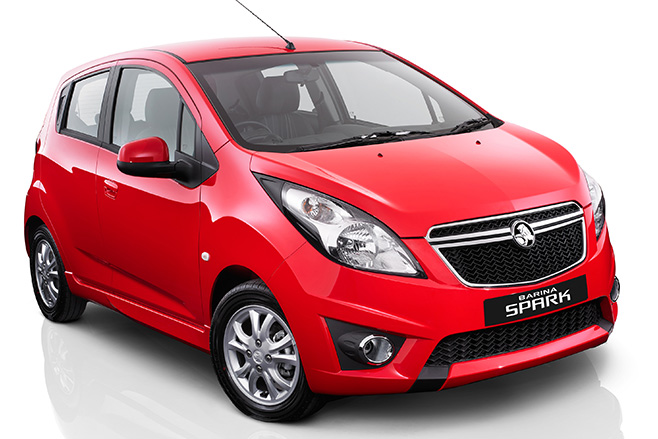
The Holden Barina Spark is the second-cheapest car of the 2000-odd we put through the wringer, and according to official figures uses just 5.2 litres of 91-octane petrol per 100km. But, while its resale is not bad at 65 percent, it’s bettered by our top three light-class contenders. While city cars are the cheapest new cars you can buy, there is better value in buying a slightly bigger and more expensive new car, because it will retain a bigger proportion of its new price over three years.
2. Suzuki Celerio
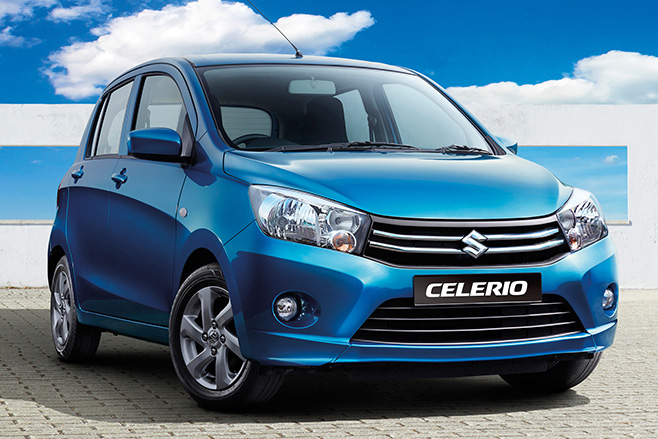
3. Nissan Micra ST
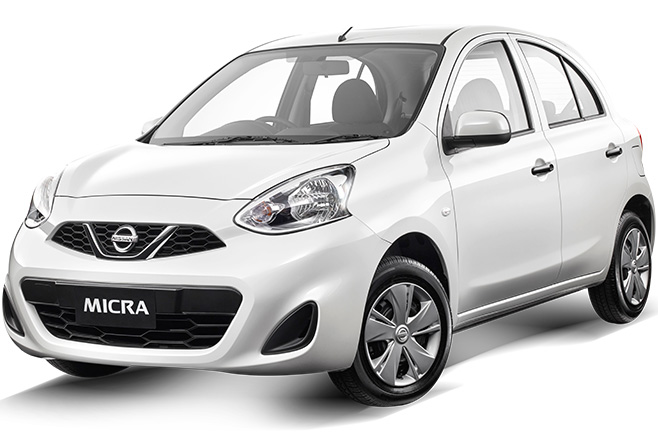
| City Cars | Holden Barina Spark CD hatch man | Suzuki Celerio man | Nissan Micra ST man |
| Purchase Price | $12,890 | $12,990 | $13,490 |
| Combined cycle fuel (L/100km) | 5.2 | 4.7 | 5.9 |
| Fuel RON (min. rec.) | 91 | 91 | 91 |
| Three-year fuel cost | $2968 | $2683 | $3368 |
| Redbook resale (%) | 64.7 | 64.3 | 67.0 |
| Three-year depreciation | $4550 | $4637 | $4452 |
| AAMI insurance premium | $627 | $627 | $642 |
| Service interval (months) | 9 | 6 | 6 |
| Warranty (years) | 3 | 3 | 3 |
BEST VALUE LIGHT CARS UNDER $17K
1. Mazda 2 Neo
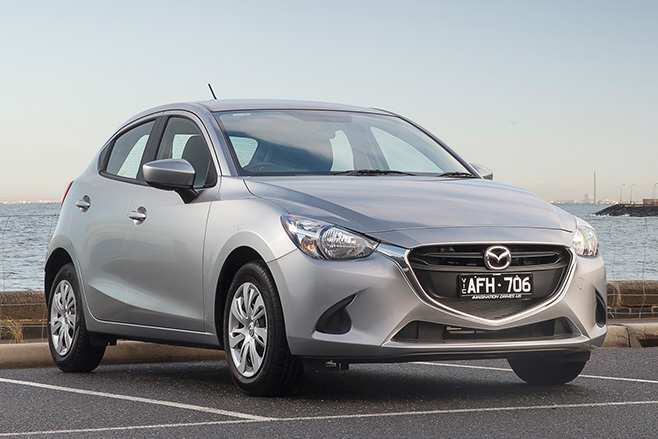
Meet the car that’s not just the value pick of the light-car class, but the entire field. The Mazda 2 Neo is Australia’s least expensive car to run in terms of three-year depreciation and fuel costs. So if you want to save money, buy a base Mazda 2. And it’s pleasing that, if you want to enjoy your driving in a light car, a 2 is good for that too.
2. Honda Jazz VTi
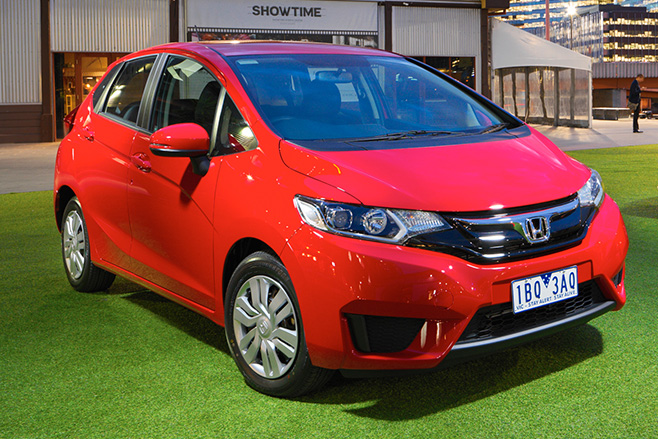
3. Ford Fiesta Ambiente
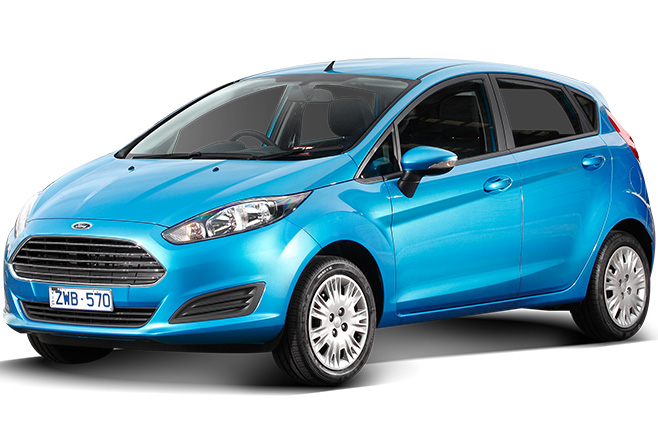
| Light Cars under $17K | Mazda 2 Neo man | Honda Jazz VTi man | Ford Fiesta Ambiente man |
| Purchase Price | $14,990 | $14,990 | $15,825 |
| Combined cycle fuel (L/100km) | 5.4 | 6.2 | 5.8 |
| Fuel RON (min. rec.) | 91 | 91 | 91 |
| Three-year fuel cost | $3082 | $3539 | $3311 |
| Redbook resale (%) | 79.0 | 69.2 | 64.5 |
| Three-year depreciation | $3148 | $4617 | $5618 |
| AAMI insurance premium | $641 | $641 | $709 |
| Service interval (months) | 12 | 6 | 12 |
| Warranty (years) | 3 | 3 | 3 |
BEST VALUE LIGHT CARS UNDER $25K
1. Mazda 2 Genki
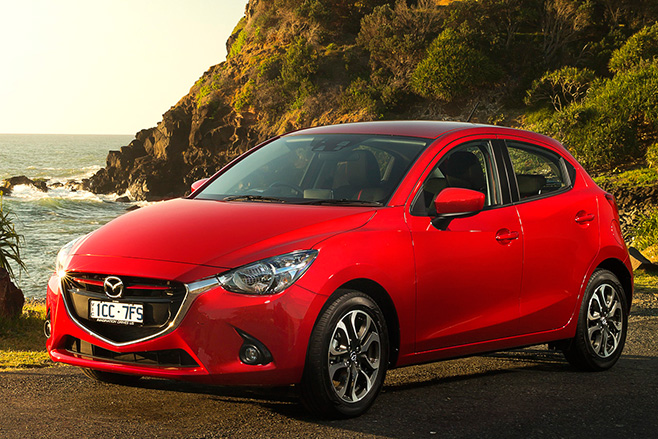
Another price point, another Mazda 2 on top; clearly the Mazda’s value doesn’t dissipate as you work up through the range. The smart-looking Genki uses less fuel than the Neo, yet has a bit more power – win-win. There’s value in the fact the Genki features extra driver safety technology, plus other niceties to make it more satisfying to own and easier to sell when it’s time for a new one.
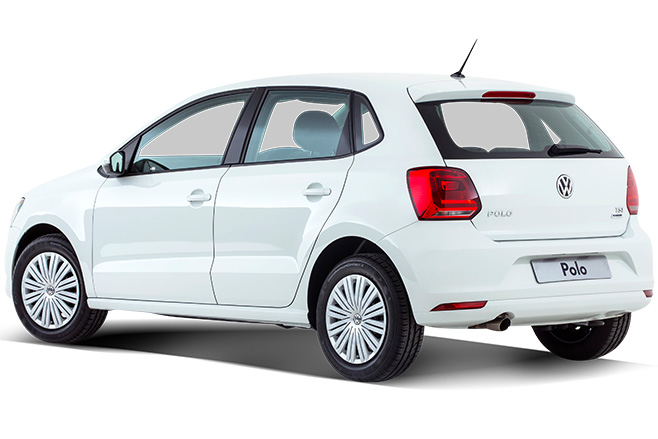
2. VW Polo 81TSI Comfortline
3. Ford Fiesta Trend
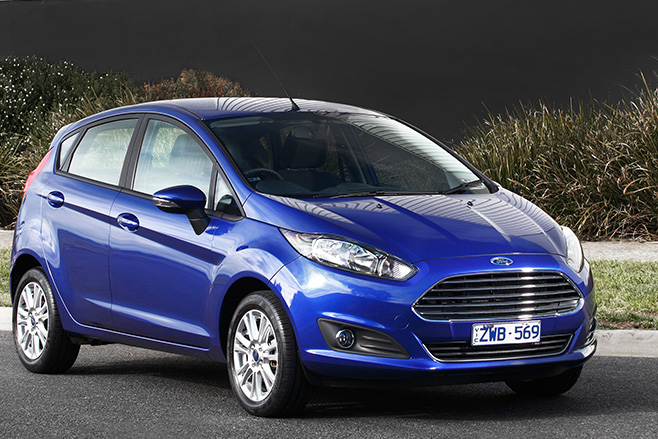
| Light Cars under $25K | Mazda 2 Genki man | Volkswagen Polo 81TSI Comfortline man | Ford Fiesta Trend man |
| Purchase Price | $19,990 | $18,590 | $17,825 |
| Combined cycle fuel (L/100km) | 5.2 | 4.9 | 5.8 |
| Fuel RON (min. rec.) | 91 | 95 | 91 |
| Three-year fuel cost | $2968 | $2978 | $3311 |
| Redbook resale (%) | 76.3 | 65.6 | 64.7 |
| Three-year depreciation | $4738 | $6395 | $6292 |
| AAMI insurance premium | $726 | $731 | $724 |
| Service interval (months) | 12 | 12 | 12 |
| Warranty (years) | 3 | 3 | 3 |
BEST VALUE SMALL CARS UNDER $25K
1. Kia Cerato S
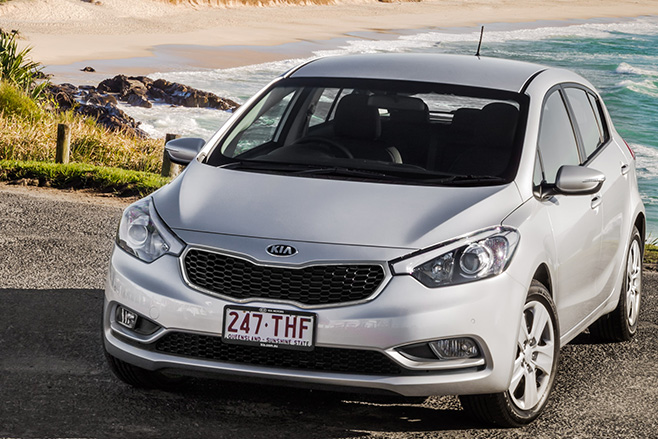
Nothing can beat a Kia warranty – seven years and unlimited kilometres – which brings enviable peace of mind; even in something you’d expect little trouble from, such as our category champ, the Cerato S. The Kia is among the least expensive to buy of the entry-level small car set, which helps offset its retained value forecast of only 57 percent. Some rivals demand fuel with a 95 octane rating, while the Cerato happily sips cheaper 91.
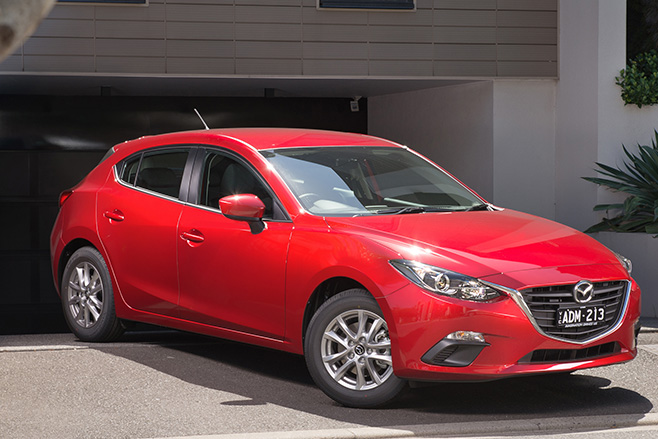
2. Mazda 3 Neo
3. Skoda Rapid Spaceback Ambition
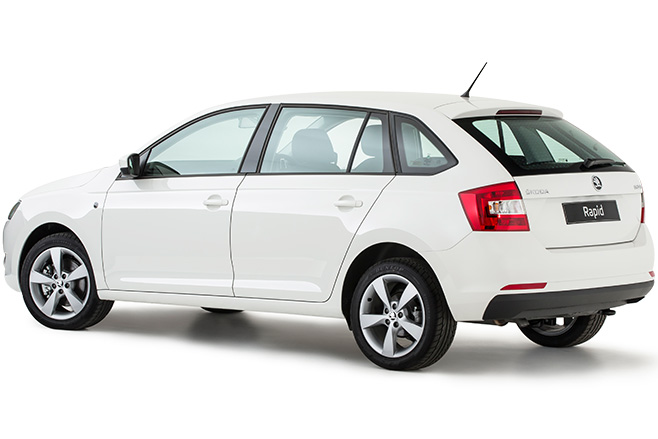
| Small Cars under $25K | Kia Cerato S man | Mazda 3 Neo man | Skoda Rapid Spaceback Ambition man |
| Purchase Price | $19,990 | $20,490 | $18,990 |
| Combined cycle fuel (L/100km) | 6.6 | 5.8 | 5.4 |
| Fuel RON (min. rec.) | 91 | 91 | 95 |
| Three-year fuel cost | $3767 | $3311 | $3282 |
| Redbook resale (%) | 57.0 | 63.7 | 59.5 |
| Three-year depreciation | $8596 | $7438 | $7691 |
| AAMI insurance premium | $730 | $804 | $731 |
| Service interval (months) | 12 | 12 | 12 |
| Warranty (years) | 7 | 3 | 3 |
BEST VALUE SMALL CARS UNDER $35K
1. Mazda 3 SP25
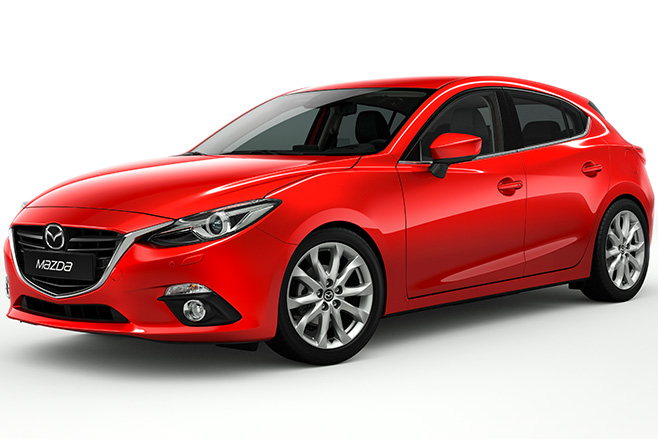
It’s been a Mazda-fest so far! The money asked for Mazda’s SP25 mid-ranger gets you a small car with an appealing level of equipment, a bigger, gruntier 2.5-litre engine than under the bonnet of lesser versions, and enough style to draw in the punters. The 3’s excellent 66 percent retained value is largely responsible for its win, helped by a best-practice 12-month service interval.
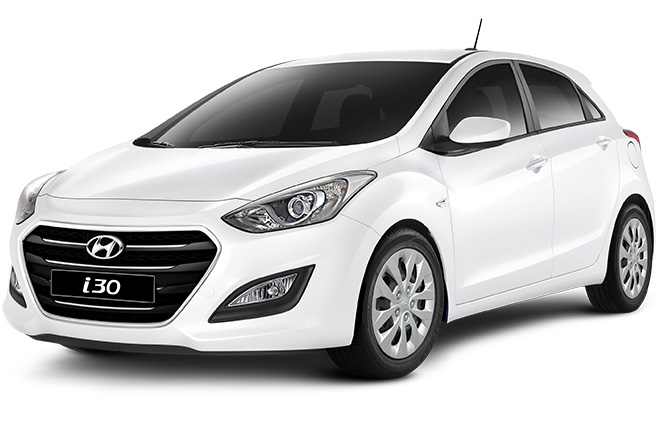
2. Hyundai i30 Active diesel
3. Volkswagen Golf 92TSI wagon
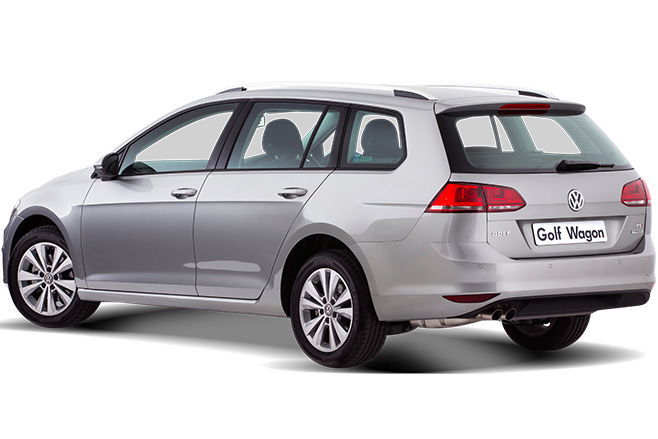
| Small Cars under $35K | Mazda 3 SP25 auto | Hyundai i30 Active auto | Volkswagen Golf 92TSI Wagon auto |
| Purchase Price | $25,190 | $25,890 | $25,840 |
| Combined cycle fuel (L/100km) | 6.5 | 4.9 | 5.3 |
| Fuel RON (min. rec.) | 91 | D | 95 |
| Three-year fuel cost | $3710 | $2961 | $3221 |
| Redbook resale (%) | 65.9 | 57.4 | 59.8 |
| Three-year depreciation | $8590 | $11,029 | $10,388 |
| AAMI insurance premium | $848 | $837 | $851 |
| Service interval (months) | 12 | 12 | 12 |
| Warranty (years) | 3 | 5 | 3 |
BEST VALUE PREMIUM SMALL CARS UNDER $50K
1. Audi A1 Sportback
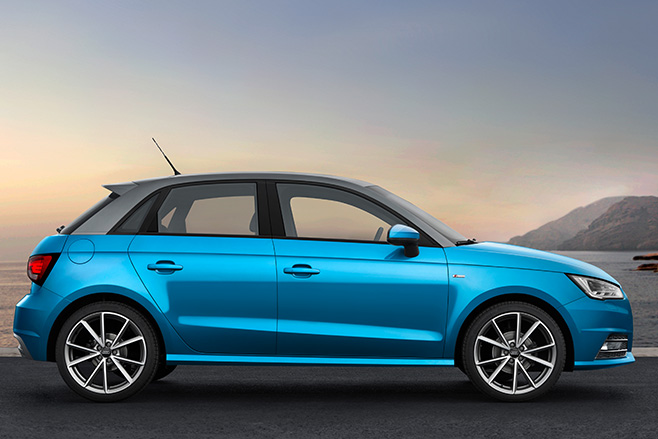
Audi appeal is just as potent in concentrated form. The A1’s classy cabin might be shrunken compared with, say, an A4, but it’s just as slick. You don’t even need to spend beyond the base model thanks to a likeable new 1.0-litre turbo triple, which teams brilliantly with the five-speed manual.
2. MINI One 3dr
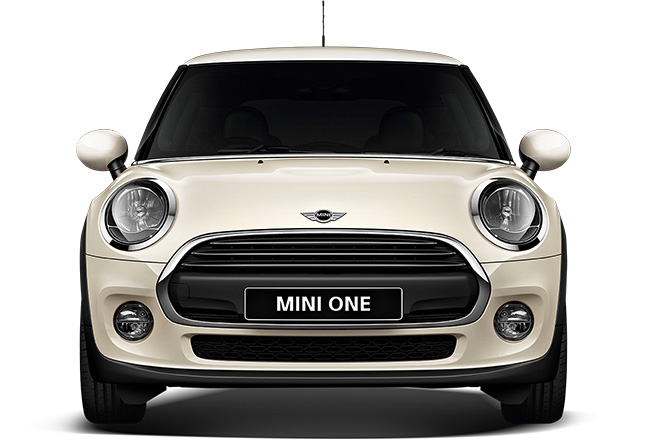
3. Peugeot 308 Allure HDi
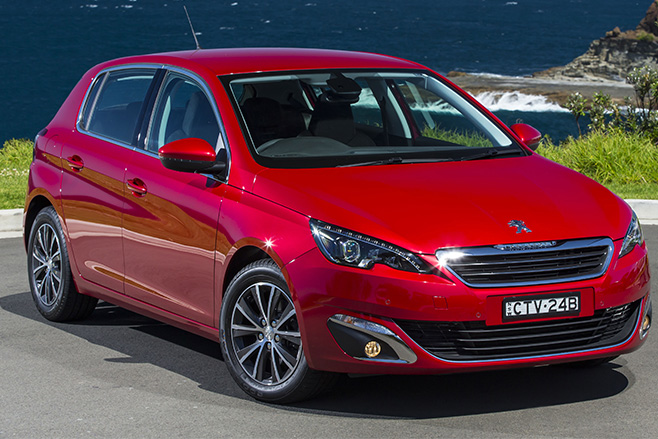
| Premium Small Cars under $50K | Audi A1 Sportback man 1.0 TFSI | Mini One 3dr man | Peugeot 308 Allure HDi auto |
| Purchase Price | $26,900 | $24,950 | $35,290 |
| Combined cycle fuel (L/100km) | 4.2 | 4.9 | 4.1 |
| Fuel RON (min. rec.) | 95 | 95 | D |
| Three-year fuel cost | $2553 | $2978 | $2478 |
| Redbook resale (%) | 60.0 | 58.0 | 59.7 |
| Three-year depreciation | $10,760 | $10,479 | $14,222 |
| AAMI insurance premium | $858 | $843 | $999 |
| Service interval (months) | 12 | 12 | 12 |
| Warranty (years) | 3 | 3 | 3 |
Volkswagen Group Australia – Sydney Volkswagen Group Australia Pty Ltd 24 Muir Road Chullora NSW 2190 Regents Park Business Centre PO Box 414 Regents Park NSW 2143 ABN 14 093 117 876 Phone (02) 9695 6000
7th October 2015
VOLKSWAGEN GROUP AUSTRALIA ANNOUNCES NEXT STEPS IN ITS ACTION PLAN TO ADDRESS THE WORLDWIDE DIESEL EMISSIONS ISSUE
Volkswagen Group Australia (VGA) today announced an online tool so that Australian Volkswagen and ŠKODA customers can check if their vehicles have the affected EA 189 diesel engines, as part of its action plan to respond to the global diesel emissions issue. Volkswagen and ŠKODA customers who would like to find out if their vehicle is affected can enter their Vehicle Identification Number (VIN) on the relevant brand websites: www.volkswagen.com.au, www.skoda.com.au and www.volkswagen-commercial.com.au. Volkswagen customers can also contact the customer call centre on 1800 607 822 and ŠKODA customers can call 1800 607 540.
Until a technical solution is made available from the head office of Volkswagen AG, customers do not need to take any further action.
VGA met with the relevant government authorities last week to advise them of its strategy in Australia.
The first stage announced late last week involved the temporary suspension of sale of affected vehicles fitted with 1.6 or 2.0-litre EA189 diesel engines. The suspension will remain until the emission issues are addressed in those vehicles.
VGA is taking action following notification from the head office of the Volkswagen Group that certain diesel vehicles sold in Australia were fitted with software that can affect their emissions during a dynometer test.
“Volkswagen Group Australia takes this issue extremely seriously and is continuing to gather all the facts from our head office to support any rectification plans in Australia,” said Volkswagen Group Australia’s managing director, John White.
“We understand the disappointment and frustration felt by our customers, dealers and partners in Australia and apologise for any inconvenience this may cause.
“We are doing everything possible to fix the problem and will be making further announcements in the near future.
“It is important for customers to note that all affected vehicles remain technically safe and driveable and that we will contact them in time to advise what the next steps are,” said Mr White.”
Volkswagen Group Australia is committed to supporting its customers, partners and dealers throughout this process.
Please note:
• New diesel Volkswagen Golf 7, Touareg, Transporter and Crafter models are currently not affected • New diesel ŠKODA Octavia generation 3 models are currently not affected • All petrol models currently available are not affected Number of vehicles sold by VGA in Australia affected by the diesel emissions issue per brand:
Volkswagen Passenger Cars – 54,745 Golf (2009-2013) Polo (2009-2014) Jetta (2010-2015) Passat CC (2008-2012) Volkswagen CC (2011-2015) Passat (2008-2015) Eos (2008-2014) Tiguan (2008-2015) ŠKODA – 5,148 Octavia (2009-2013) Yeti (2011-2015) Superb (2009-2015) Volkswagen Commercial Vehicles – 17,256 Caddy (2010-2015) Amarok (2011-2012)
