
WHERE DOES IT FEEL AT HOME?
With a choice of hybrid or petrol-only engines, the Camry offers an option for both city driving and long distances.
The hybrid engine, which is available in most models, records the better figures. But for those who regularly take long-trips, the petrol engine will better serve you.
STAND OUT FEATURES
Given its popularity in the family and corporate segments, Toyota has put particular emphasis on the Camry’s safety.
Top spec models take it up a notch with extra safety gear, including active safety systems and Pre-crash Safety systems.
WE LOVE
The Camry isn’t short on space, particularly compared to others in its league and it comfortably seats three adults in the back and offers plenty of space in the cargo area. But keep in mind the hybrid models eat into boot space to make room for the batteries.
In the technology department, Toyota Link is the most noteworthy feature. It offers drivers real-time advice on finding fuel, weather information, accommodation, restaurants and businesses in your area. It’s also a requirement if you want access to navigation, and connects you to radio app Pandora so you can stream music.
THINGS WE’D LIKE TO CHANGE
Toyota Link is not overly user friendly to set up and it will cost you money to keep your subscription after the first year. You may prefer to go without and get your own GPS device.
White is the only standard colour in the Camry and any pick of the other nine choices will cost you an extra $450. Not a lot, but still, we prefer to have choice.
Even after its 2015 facelift, the interior is left a little bland. But then again, it’s not really trying to be anything but a simple, practical car.
WHO WILL IT SUIT?
Don’t care about the dynamics of a car? Not interested in entering the stylish stakes? Are you just looking for practicality and reliability? Then the Camry is right up your alley. Sure, it’s a fairly vanilla car, but it’s a choice for those who are counting pennies and have very little need for a car with a big personality.
Click here to read the full review on the on the Toyota Camry.
PLUS
- The Toyota Camry is not short on space. In most guises, it can comfortably fit three adults in the back seat.
- For city driving, the hybrid engine records good figures in the fuel efficiency stakes and is available in all models (except the sporty Atara SX) (Cost an extra $3000-4000 for hybrid engines).
- For those looking at regular long drives, the petrol engine is the better option.
- Parking sensors and Toyota’s satellite communication system, ToyotaLink, is available in all models (except the base Altise).
- There’s plenty of value in the Toyota Camry. It’s quite a bit cheaper than predecessors ($5000 cheaper) and others in its league, and the price-jumps between the models are more reasonable.
- Given its popularity amongst families and businesses, it’s no surprise Toyota has put an emphasis on the Camry’s safety package.
- It has plenty of boot space, but the hybrid models come at a sacrifice of cargo to make room for the batteries (94 litres smaller).
- Camry’s may not be an overly exciting car, even with a new design to the exterior, but then again, its focus is on comfort, and the newest version is no different.
- White is the only standard colour available, so be prepared to spend more for a pick of its other nine colour choices (extra $450).
- The interior of the Camry is nothing special and a little bland.
- The lower profile tyres on the bigger wheels may ride more roughly and cost more to replace.
There are several theories for the extinction of the dinosaurs all those millions of years ago.
This story was originally published in our January 2014 issue
Some say they all drowned in a great flood. Others speculate they were hunted and eaten by aliens. Everybody’s got a theory. But my favourite (mainly because it’s the one I’d most like to see made into a movie) is the one where a meteorite clobbers Earth, sending up a huge cloud of ash and dust that blocks out the sun and leads to an ice age which kills everything apart from cockroaches and Toyota Camrys. Cool.
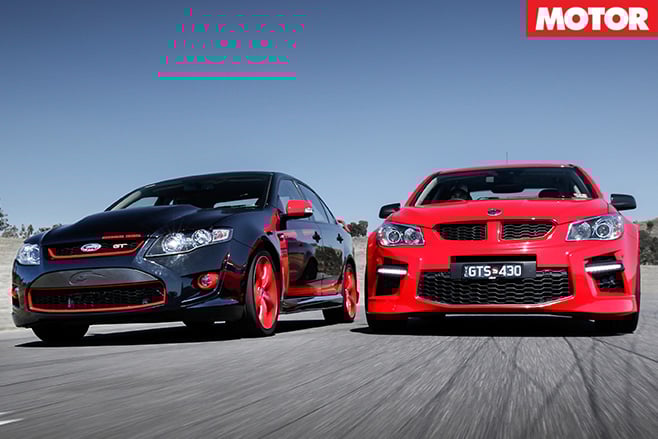
Anyway, there’s a new extinction due soon and, even though fans of the breed may rankle at the use of the term ‘dinosaur’ it’s true that, in Darwinian terms, both the HSV GTS and FPV GT R-Spec are at the end of the evolutionary road. The genetic code is on the wall.
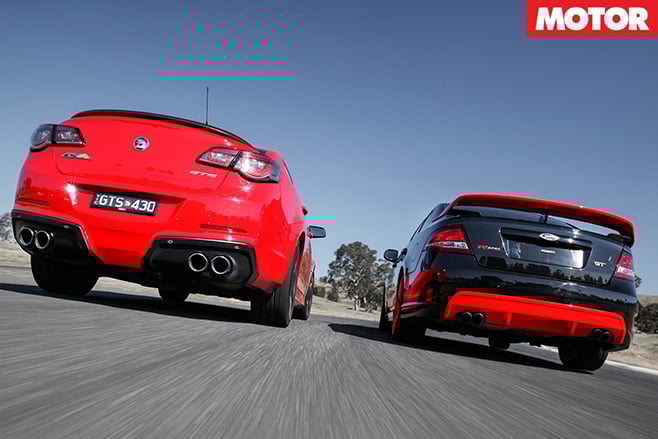
So she’s a done deal then? Well, yes, but let’s not get ahead of the plot here. It hasn’t happened yet and, if the current generation of heavy-hitting Aussie muscle cars are anything to go by, we’ll all miss the big lugs when they’re gone. See, they might be nearing their use-by date, but the latest offerings from both Ford (via FPV) and Holden (courtesy of HSV) are without a shadow of a doubt the best, most specialised versions of Rapidus Australis we’ve ever seen.
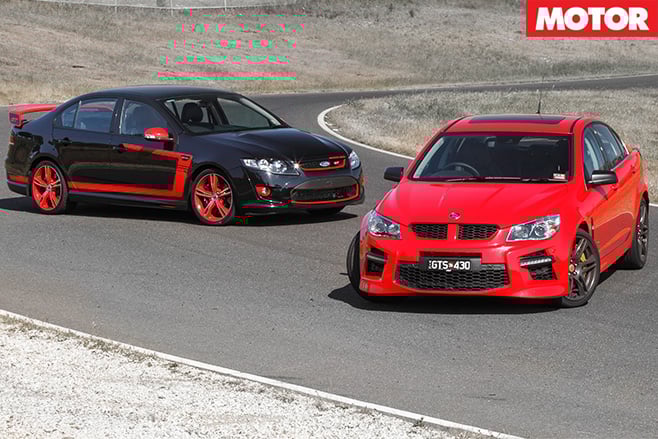
Both have evolved in similar ways to arrive at this final specification, too. Both use V8 engines, a mighty 6.2-litre pushrod unit in the HSV; a smaller, 5.0-litre V8 for the FPV which makes up for its cee-cee deficit thanks to DOHC heads.
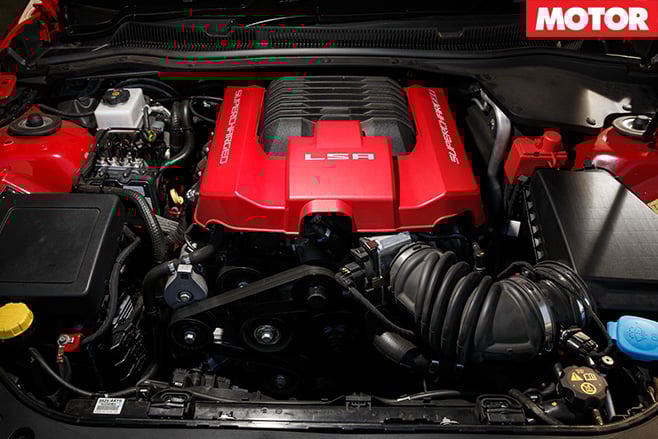
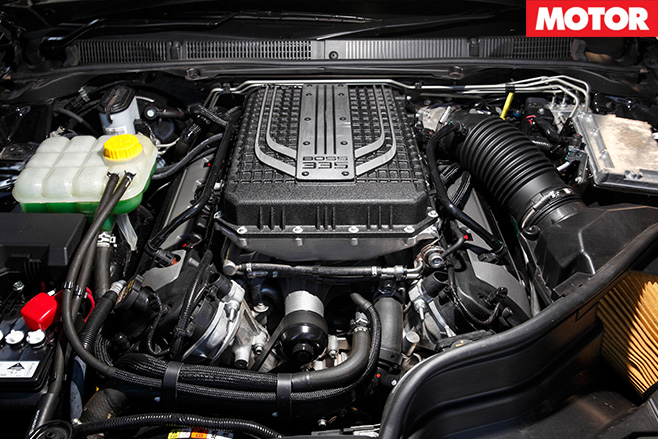
Crucially, though, both engines use forced induction in the form of a twin-screw supercharger sitting up high and mighty on top of the engine and blowing nothing but sunshine.
But the new HSV GTS simply blows that number into a cocked injector hat. With 430kW, the LSA V8 is the new king of the kids and even if the official number sells the Ford V8 short, it still can’t march up the front with the GTS’s monster mill.
This time around, both cars were autos, which kind of makes sense in the context of what people are actually buying. They’re both six-speeders and both have been hailed as good things in the past. In fact, we were knocked out by the ZF in the FPV when teamed with the blown V8, but the unit fitted to the HSV now seems at least as good and maybe even a bit slicker shifting.
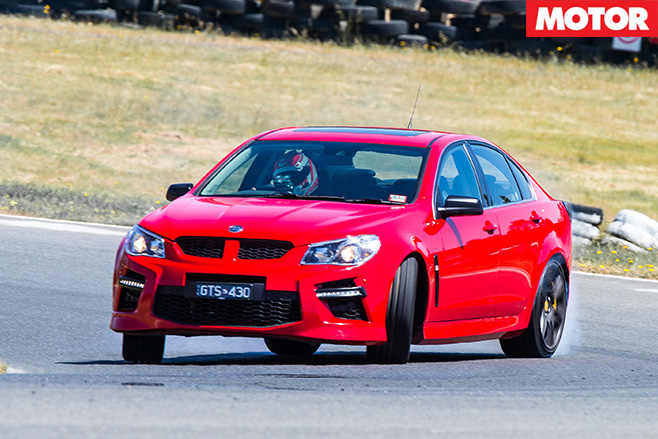
Of course, even without launch control, the GTS is still a genuine mid-12-second car. But the margin between it and the FPV is much smaller than you might imagine, as our best time at Heathcote of 12.75 seconds at 182.46km/h proves.
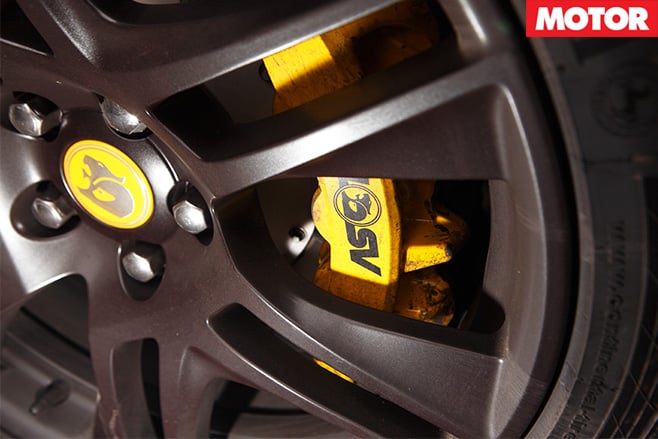
Things get tough for the FPV from there, though. Under brakes, the HSV has it on toast for feel and actual retardation, and mid-corner speed is an easy win to Team Red. Even at moderate speeds on a racetrack you can easily feel the differences between the two.
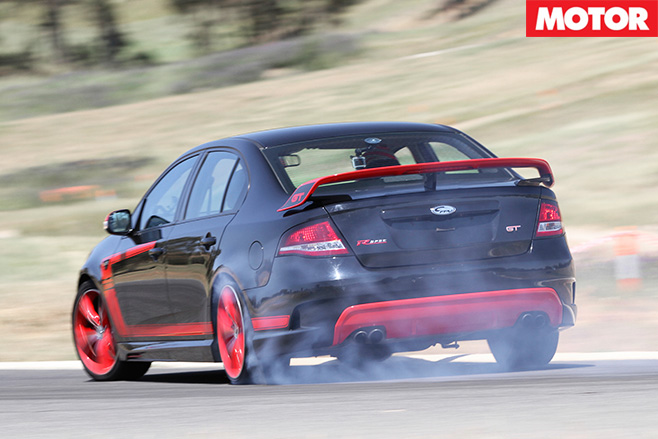
In contrast, the FPV requires a more deft touch, not because there’s more grunt (quite the opposite) but simply because there’s less grip. Even with revised suspension control blades that enable the FPV to use a wider rear-wheel/tyre combo, there’s still every opportunity to haze ’em if you get too liberal.
There’s also more body roll in the FPV and an overall set-up that requires you to wait and perform each function in turn rather than overlapping the steering, throttle and braking inputs like you can with the GTS.
Of course, the FPV would still be one helluva long distance car (as has every V8 Falcon ever made, but particularly from BA onwards) but it simply hasn’t the side-step to cut it as a track day car. Not if there’s a GTS in attendance, anyway.
So it was no real surprise to find that the GTS absolutely thumped the R-Spec ’round the tight little Broadford complex in central Victoria. In the fresh-from-the-Bathurst-podium hands of W. Luff Esq., the GTS was coaxed around Broadford in 1:05.6, handing the FPV its ass on a platter with a 1:08.8.
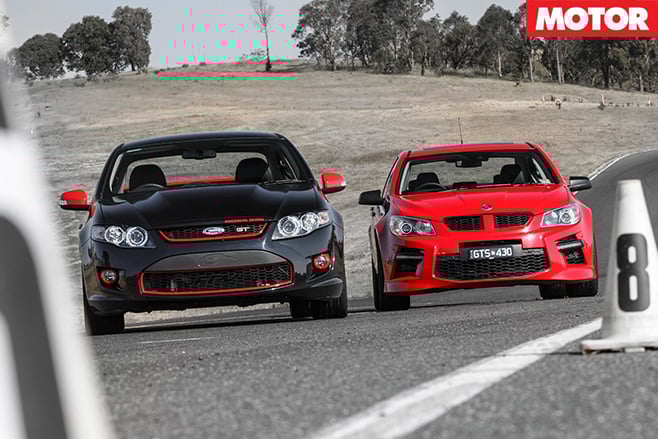
But like I said, even on the road, the GTS has the game shot to bits. There’s a degree of balance and poise that just hasn’t been seen in Holden-based big cars for many years (maybe even ever) and the chuckability of the thing belies its mass and size and completely deals with that brutal engine. This is no mean feat, which is probably why it’s taken two-and-a-half decades of HSVs to pull it off.
It ain’t, of course, all skittles. Why, for instance, in 2013 when even humble hatchbacks have them, do neither HSV nor FPV get a set of shift paddles? Okay, so either gearbox is probably best left to its own rather clever devices for the most part, but there comes a time when the road gets all twisty and you reach for a paddle to prod. Tough luck in this company, pal.
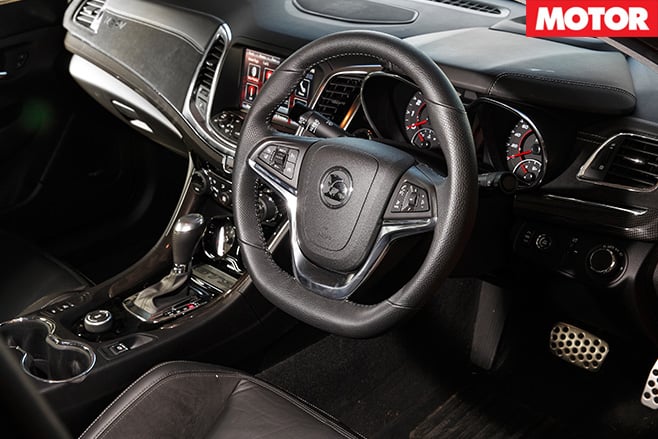
But to be honest, I didn’t find a single setting that gave me the sort of steering feedback I was after. And that’s odd, because a Clubsport I drove a few weeks back had really nice steering, yet the GTS can’t seem to replicate this.
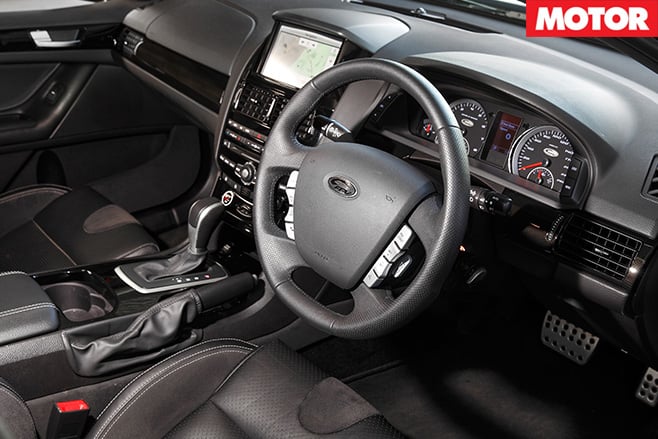
Either way, though, the HSV is a sharper tool than the FPV which still feels it has some kind of filter between the front wheels and the tiller. It’s not bad in isolation, but back to back with the HSV, the R-Spec seems a little more deadpan. The seating position surely doesn’t help and, while we’ve given Ford (and FPV) all kinds of stick over the years for the Falcon’s appalling seat-pedal-wheel relationship, nothing’s been done about it.
So it still feels like you’re sitting on the FPV rather than in it and the steering wheel is still in your lap. And I won’t even mention the fact that you need to insert the ignition key with your right hand and hit the stupid starter button with your left. Oh, oops.
Live with it, we say, because if the supercharged GTS isn’t the best thing to roll out of a local car factory, we can’t think of what is. Except, you won’t be able to live with it much longer, because that damn meteor is that little bit closer to Earth now than it was when you started reading this.
| u00a0 | u00a0 | u00a0 | u00a0 | 4.5/5 | u00a0 | u00a0 | u00a0 | 3.5/5 |
| u00a0 | u00a0 | u00a0 | u00a0 | u00a0 | u00a0 | u00a0 | u00a0 | u00a0 |
| u00a0 | u00a0 | u00a0 | u00a0 | HSV GTS | u00a0 | u00a0 | u00a0 | FPV GT R-spec |
| Body | u00a0 | u00a0 | u00a0 | 4-door, 5-seat sedan | u00a0 | u00a0 | u00a0 | 4-door, 5-seat sedan |
| Drive | u00a0 | u00a0 | u00a0 | rear-wheel | u00a0 | u00a0 | u00a0 | rear-wheel |
| Engine | u00a0 | u00a0 | u00a0 | 6162cc V8, OHV, 16v, supercharger | u00a0 | u00a0 | u00a0 | 4951cc V8, DOHC, 32v, supercharger |
| Bore/Stroke | u00a0 | u00a0 | u00a0 | 103.25 x 92.0mm | u00a0 | u00a0 | u00a0 | 92.2 x 92.7mmu00a0 |
| Compression | u00a0 | u00a0 | u00a0 | 9.1:1 | u00a0 | u00a0 | u00a0 | 9.25:1 |
| Power | u00a0 | u00a0 | u00a0 | 430kW @ 6150rpm | u00a0 | u00a0 | u00a0 | 335kW @ 5750rpm |
| Torqueu00a0 | u00a0 | u00a0 | u00a0 | 740Nm @ 3850rpm | u00a0 | u00a0 | u00a0 | 570Nm @ 2200-5500rpm |
| Power-to-Weightu00a0 | u00a0 | u00a0 | u00a0 | 229kW/tonne | u00a0 | u00a0 | u00a0 | 180kW/tonne |
| 0-100km/hu00a0 | u00a0 | u00a0 | u00a0 | 4.55sec (tested) | u00a0 | u00a0 | u00a0 | 4.67sec (tested) |
| Top Speedu00a0 | u00a0 | u00a0 | u00a0 | 250km/h (limited) | u00a0 | u00a0 | u00a0 | 250km/h (limited) |
| Consumptionu00a0 | u00a0 | u00a0 | u00a0 | 15.7L/100km (claimed) | u00a0 | u00a0 | u00a0 | 13.7L/100km (claimed) |
| Emissions | u00a0 | u00a0 | u00a0 | 369g/km CO2 (claimed) | u00a0 | u00a0 | u00a0 | 325g/km CO2 (claimed) |
| Transmissionu00a0 | u00a0 | u00a0 | u00a0 | 6-speed automatic | u00a0 | u00a0 | u00a0 | 6-speed automatic |
| Weightu00a0 | u00a0 | u00a0 | u00a0 | 1893kg | u00a0 | u00a0 | u00a0 | 1862kg |
| Suspensionu00a0 | u00a0 | u00a0 | u00a0 | A-arms, magnetic dampers, anti-roll bar (f); multi links, coil springs, magnetic dampers, anti-roll bar (r) | u00a0 | u00a0 | u00a0 | Double A-arms, coil springs, anti-roll bar (f); multi-links, coil springs, anti-roll bar(r) |
| L/W/Hu00a0 | u00a0 | u00a0 | u00a0 | 4988/1899/1457mm | u00a0 | u00a0 | u00a0 | 4970/1868/1453mm |
| Wheelbaseu00a0 | u00a0 | u00a0 | u00a0 | 2915mm | u00a0 | u00a0 | u00a0 | 2838mmu00a0 |
| Tracksu00a0 | u00a0 | u00a0 | u00a0 | 1616/1590mm (f/r) | u00a0 | u00a0 | u00a0 | 1583/1598mm (f/r) |
| Steering | u00a0 | u00a0 | u00a0 | electrically-assisted rack and pinion | u00a0 | u00a0 | u00a0 | hydraulically-assisted rack and pinion |
| Brakes | u00a0 | u00a0 | u00a0 | 390mm ventilated/grooved discs, 6-piston calipers (f); 372mm ventilated/grooved discs, 4-piston calipers (r) | u00a0 | u00a0 | u00a0 | 355mm ventilated/drilled discs, 6-piston calipers (f); 330 mm ventilated/drilled discs, 4piston calipers (r) |
| Wheels | u00a0 | u00a0 | u00a0 | 20 x 8.5-inch (f), 20 x 9.5-inch | u00a0 | u00a0 | u00a0 | 19 x 8-inch (f); 19 x 9.5-inch (r) |
| Tyres | u00a0 | u00a0 | u00a0 | 255/35R20 (f), 275/3520 (r) Continental ContiSportContact 5P | u00a0 | u00a0 | u00a0 | 245/35 ZR19 (f); 275/30 ZR19 (r) Dunlop Sport Maxx |
| Priceu00a0 | u00a0 | u00a0 | u00a0 | $97,480 (as tested) | u00a0 | u00a0 | u00a0 | $76,990 |
| Positives | u00a0 | u00a0 | u00a0 | The best HSV ever: power, power and more power, torque, torque and more torque, Magnetic Ride | u00a0 | u00a0 | u00a0 | Sophisticated DOHC engine, the fastest Oz Ford ever, has launch control with auto u2019box |
| Negativesu00a0 | u00a0 | u00a0 | u00a0 | Lacks steering feedback, no launch control, no paddle shifters, gauges all over the shop | u00a0 | u00a0 | u00a0 | Appalling seating position (still); loses out to GTS in brakingu00a0and engine performance |
WRC: Latvala wins flood-hit Rally France
FINN Jari-Matti Latvala has overcome appalling conditions on Corsica to win the flood-ravaged Rally France, which returned to the island this year after a long break.
Volkswagen driver Latvala overtook surprise early leader Elfyn Evans late on Saturday and consolidated his lead yesterday, eventually winning by 43.1 seconds.
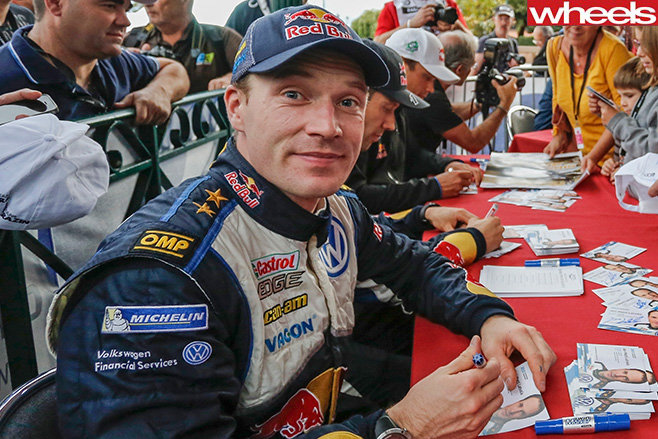
Welshman Evans hung on to claim a career-best second in his Ford Fiesta from Andreas Mikkelsen in another Volkswagen, with a margin of just 3.2 seconds.
For once Sebastien Ogier didn’t figure.
The opening day of the Tour de Corse brought dreadful conditions, and surprise after surprise. Shock leader Evans defied the unpredictable stages as he embarked on the rally of 10,000 corners with no prior experience.
Torrential rain and muddy roads turned the claustrophobic and snaky rally roads of Corsica into a game of rolling the dice. Judging just how hard to go was difficult.
Just two of Friday’s three scheduled stages were held, with treacherous roads forcing the cancellation of the other.
On Friday night, four brands held down the first four places, with Hyundai’s Kevin Abbring heading his illustrious team-mates in second, Latvala in third, and Mads Ostberg fourth in his Citroen.
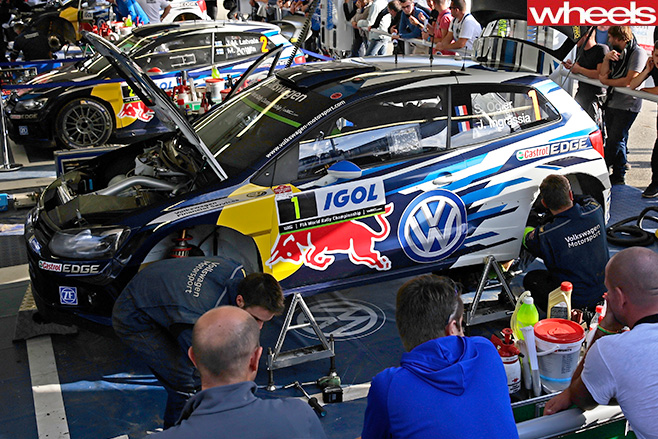
On Saturday, the surviving VW crews mounted an impressive fightback, Latvala plucking the lead from the overly cautious Evans, and Andreas Mikkelsen grabbing third on a course again shortened due to the weather.
With Latvala leading Evans by a mere two seconds, the scene was set for a tense final day. But the Finn pulled away in the day’s three speed tests, and Mikkelsen’s late challenge fell short.
“We’ve not had to push to the maximum at any point, but it was a faultless drive in difficult conditions,” Latvala said. “After winning last year, I have now done it again in Corsica and it’s important for me to show I can be competitive on all surfaces.”
FORMULA 1: Bernie comfortable with teams’ complaint to EU
FORCE India and Sauber have made a complaint to the European Union competitions commission about Formula One’s payments and governance structure, overseen by commercial rights holder Bernie Ecclestone and F1 owner CVC Capital Partners.
But Ecclestone says he’s comfortable with the complaint.
It’s an ongoing saga. Minnow teams have long been frustrated that Ferrari, Mercedes, McLaren, Red Bull and Williams are favoured financially by additional handouts amounting to tens of millions of dollars. The favoured five get 65 per cent of the total prize pot of $US 835 million.
The two midfield teams have cranked up their claims for economic equality with the pitch to the EU, with hopes that an investigation will overturn the lopsided distribution of revenues.
“We haven’t discouraged or encouraged anybody to do anything,” Ecclestone told Autosport.
“That’s what the European Union is there for… for these sorts of things.
“They [the teams] must give it a go, and if they’re successful it’s good, and if not then it costs nothing.”
Ecclestone reminded Autosport that in 2012 all the teams signed “clear contracts” effectively agreeing with the specified distribution of revenues, with five teams getting premium payments.
The contracts referred to by Ecclestone are those signed by the teams, in which it apparently makes clear the five major teams would receive premium payments, which were agreed upon by way of bilateral agreements signed in 2012.
REVIEW: Legendary racers laud Tasman Cup book
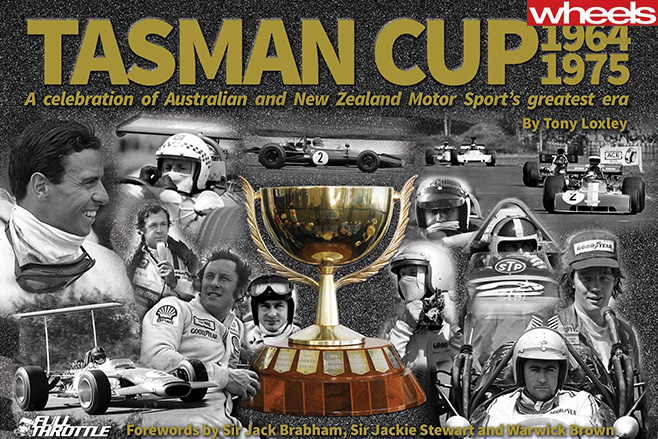
The only Australian to have won a Tasman Cup series, Brown was holding three kilograms of precious memories from what many believe was the best – and the most dangerous – open-wheel racing Down Under, certainly until the arrival here of Formula One grands prix.
The weighty tome faithfully records, in words and pictures, the entertaining and dangerous period of the single-seater Tasman Cup, which ignited Australasian motor sport from 1964 to 1975.
Forty years on, the book, Brown sensed, would allow his grandchildren and those after them to appreciate and understand what he and his mates did on tracks across Australasia against visiting Formula One drivers including world champions Jim Clark, Graham Hill, Jackie Stewart and Jack Brabham.
“The younger members of my family know I raced cars back in the day, but Tony Loxley’s book tells the story in a way I’ve never seen before,” said Brown, alluding to a time of brutal if fragile coffins on wheels, rudimentary wings, and H-pattern Hewlands.
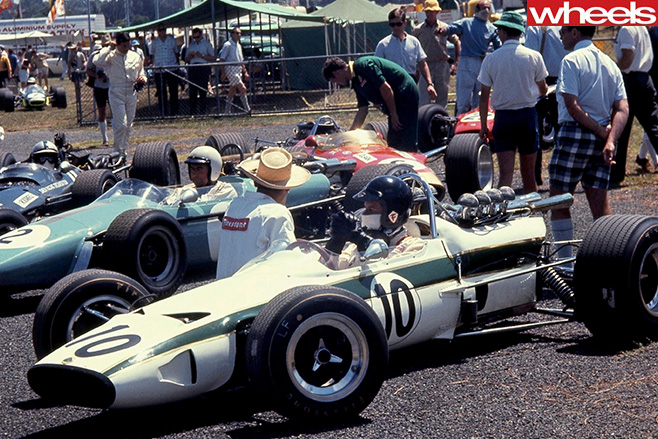
It started with 2.5-litre formula cars and then in 1970 swung for cost reasons to the rawer, simpler and angrier Formula 5000 beasts.
“They were papier mache compared to today’s cars but they had so much grunt to fire you out of the corners,” said Brown, a contemporary of Kevin Bartlett, Spencer Martin, Max Stewart and Frank Matich.
“The cars were as dangerous and intimidating as a shark in shallow water,” wrote kiwi journalist Allan Dick.
The always-eloquent international journalist Peter Windsor, an admirer of Matich’s locally brewed talent, never limited his praise to the racer/constructor: “I was a Niel Allen fan too – though he was so much more on the edge that I found him frightening to watch…”
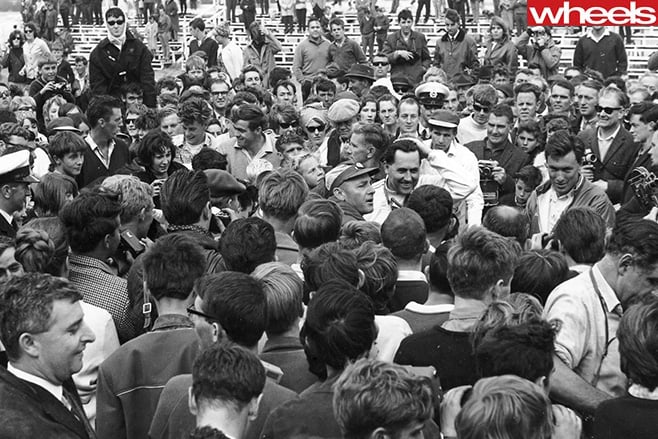
Loxley trawled the world for some wonderful photos – 900 in all, and many unpublished until now.
Loaded with first-hand stories from drivers, mechanics and journalists of the day, the book is a thorough – sometimes sad, often joyous – reflection of a time when Australian and New Zealand single-seater racers measured themselves against the world’s finest grand prix stars.
“We would learn so much every Tasman Series,” recounted Bartlett.
Those who have provided personal accounts include Bartlett, Brown, Vern Schuppan, Chris Amon, Derek Bell, Graeme Lawrence, Graham McRae, Bruce Allison, Niel Allen, and poignantly, two who have since died, Leo Geoghegan and Matich.
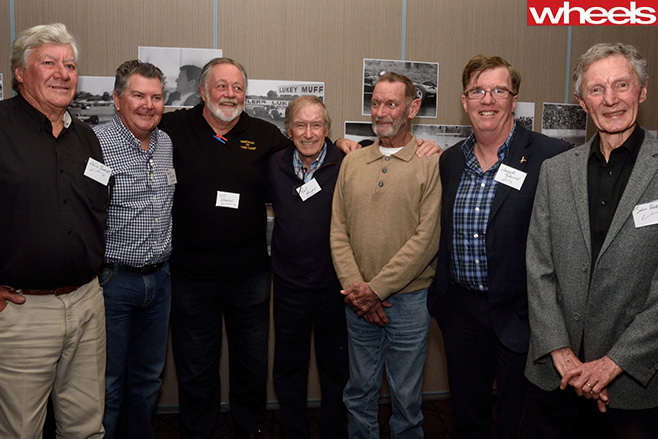
Many of the pics and anecdotes relate to the off-track stuff. “We moved as a group, played as a group, raced as a group,” recalled Jackie Stewart of the travelling circus.
Author/compiler Loxley says his motivation for the book, and others he has done, is to ensure the brave competitors are remembered by future generations.
Tasman Cup 1964-1975: A celebration of Australian and New Zealand Motor Sport’s Greatest Era retails for $94.95.
Orders can be made by calling 1300 582882 or online at http://www.fullthrottlepublishing.com.au
DAKAR: Loeb for Peugeot’s assault
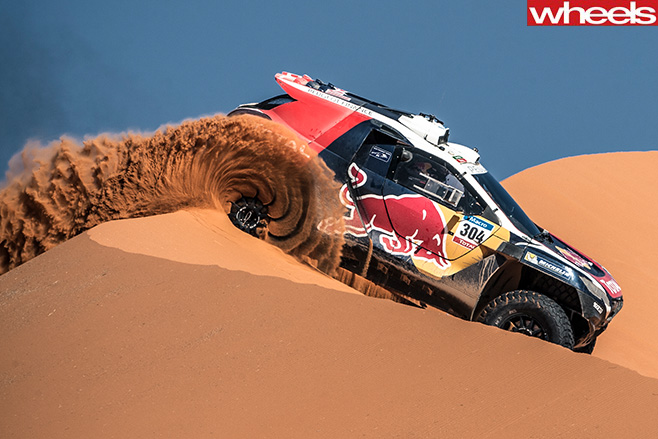
The nine-time world rally champ and Pikes Peak record-holder has joined Peugeot’s 2008DKR line-up alongside another former WRC champ, Carlos Sainz, for one of the toughest challenges in motor sport over 13 days in Argentina and Bolivia in 2016. Previous winners Stéphane Peterhansel and Cyril Despres will complete the four driver squad.
“The Dakar is completely different from the racing I’m doing at the moment,” said Loeb. “It will be very long, over two weeks, and you need to have the endurance to look after the driver and the car. It’s another approach to racing but I’ll discover that in January.”
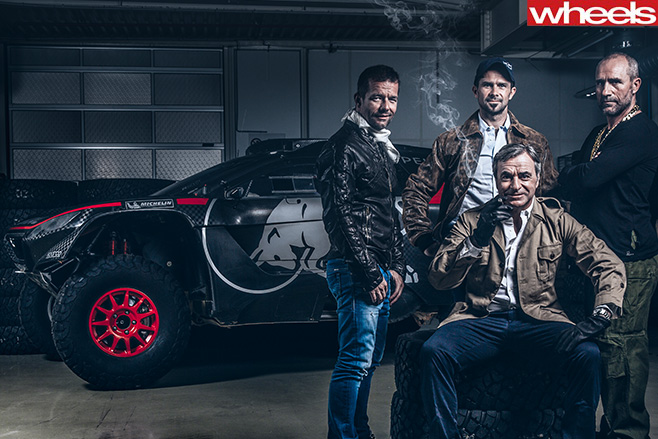
“What struck me most of all is how the Dakar car was a completely new experience: in the WRC I have been used to going round obstacles but with this car you can just drive straight over them, and it takes some time to have the confidence to believe it!
“I’ve also been used to having very detailed pace notes: in Cross Country, you have to find the road for yourself and improvise your route. And this is actually the first time I have driven any type of diesel car in competition too. So there is a lot for me to learn, but I am eager to find out more.”
It has taken a while, but Lexus has finally joined mid-sized luxury leaders with a 2.0-litre turbo engine for its top-selling IS range.
WHAT IS IT? The latest update for the IS, Lexus’s most affordable rear-drive model and a car that is still the brand’s top seller. The Lexus IS200t is the biggest news in this refresh, adopting the new 2.0-litre four-cylinder turbo engine that’s weaving its way through the Japanese luxury brand’s line-up.
WHY WE’RE TESTING IT While the luxury world continues to go SUV mad, the mid-sized sedan category is the heartland that key Lexus rivals such as Mercedes-Benz and BMW invest so much in. Lexus’ answer, the IS, has always been great value, and now it has a new 2.0-litre engine with turbocharger tech. Can it match its European rivals for punch and efficiency?
MAIN RIVALS Mercedes-Benz C-Class, BMW 3-Series, Audi A4, Jaguar XE, Infiniti Q50, Volvo S60.
THE WHEELS VERDICT A classy addition to an accomplished model, with better performance and fuel efficiency.
PLUS: Modern interior; high equipment levels; torquey turbo MINUS: Weight; manual mode not manual enough; tight rear seats
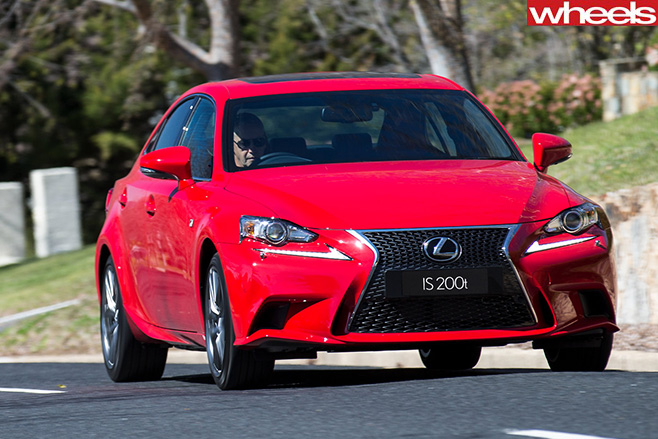
Now the IS200t has brought Lexus into line with burgeoning mid-sized competition with a 2.0-litre four-pot turbo. Lexus Australia chief Sean Hanley says: “It just took Lexus a long time to make sure we got it right.”
The 200t is the usual turbo deal: more power and torque, the latter produced lower in the rev range, and with an 18 percent fuel economy improvement to boot, thanks in part to auto stop-start. The IS is now fighting it out with class heavy hitters at 7.5 litres per 100km.
The raw numbers have the power up to 180kW and torque at a stout 350Nm. Throw an extra couple of ratios into the auto – for eight in total – and that translates to a 0-100km/h claim of 7.0 seconds, more than a second better than the 250.
It plonks the 200t closer to the outputs and claims of the Mercedes-Benz C250 and BMW 330i, the latter recently updated.
Price-wise the IS straddles the early parts of the German rivals’ ranges, with the entry-level Luxury up $2500 to $57,500 and the flagship Sports Luxury $76,500. In the middle is the F Sport ($65,500) with its unique grille and front bumper. Lexus still offers the IS300h hybrid for $2500 more than the 200t, and the V6-powered IS350 at a $6000 premium.
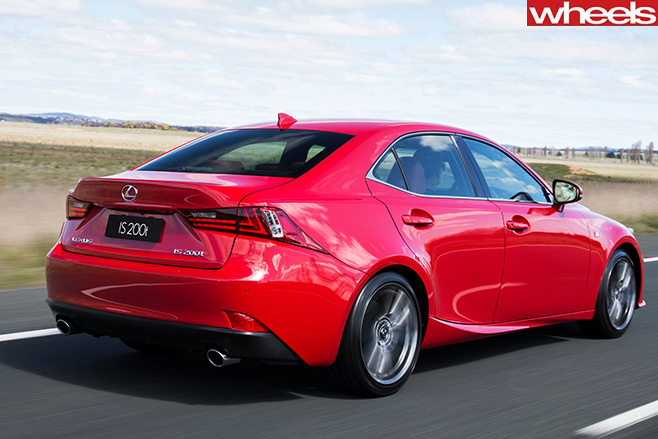
The new engine has a generous dollop of low-rev muscle that makes for more relaxed light-throttle motoring, albeit with some darting between ratios when reapplying power. With excellent refinement and the ability to access that full 350Nm from 1650rpm, much everyday acceleration can be tackled low in the rev range.
Sink the right foot and it maintains its newfound enthusiasm up to its shift point, which varies between 5800rpm and 6000rpm. It feels like there’s more revs left in it but the computer intervenes, even when in manual mode and the sportiest Sport+ mapping.
Speaking of which, forget the doughy Eco mode that insists on taller gears to the detriment of driving enjoyment; Sport is more enticing.
Chassis tweaks are minimal and come down to a stiffer body and a Yamaha-developed “performance damper”, which absorbs engine vibrations and allows the suspension to work uninterrupted.
Variable dampers on the F-Sport and Sports Luxury allow for minor adjustment to the ride, with the Sport setting reducing unwanted movement. The IS200t’s chassis is capable and well controlled. Grip from the 18-inch Dunlop tyres is good, but it’s an understeerer when pushed.
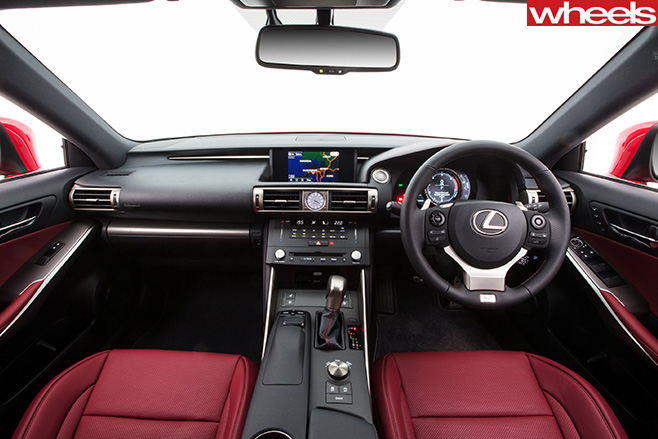
The update brings more gear, too, including rain sensing wipers, electric steering adjustment, and auto emergency braking above 40km/h as part of an enhanced active safety story.
Gripes include the foot-operated park brake that occasionally takes a dig at your left shin, and the tight rear leg room. The Luxury misses out on a digital speedo but little else, with equipment levels a highlight.
Indeed it’s value that’s still the standout of the IS range, with the new engine bringing it closer to its luxury opposition.
SPECS Model: Lexus IS200t Engine: 1998cc, dohc, turbo 4-cyl Max power: 180kW @ 5800rpm Max torque: 350Nm @ 1650-4400rpm Transmission: 8-speed auto Kerb weight: 1620-1680kg 0-100km/h: 7.0sec (claimed) Price: $57,500-$76,500 On sale: Now
Click here to read the full range review of the Lexus IS.
KIA MOTORS EUROPE is believed to be developing a production version of the GT Concept four-door coupe-sedan first shown at the Frankfurt Motor Show in 2011.
Expected to be launched within the next two years, the rear-drive fastback is slated to be Kia’s most overtly premium sports offering, with performance to match its low-slung styling.
If rumours ring true, the productionised version of the GT Concept will ride on a highly modified version of the Hyundai DH Genesis’s platform, but with turbocharged four-cylinder and V6 engine choices – as well as Kia’s highly advanced and efficient T-Hybrid system, which combines a small-capacity diesel with a 48-volt electric booster.
A downside of producing such a European luxury performance fastback flagship is that it would sideline the well-received GT4 Stinger Concept, which was one of the big stars of last year’s Detroit Motor Show.
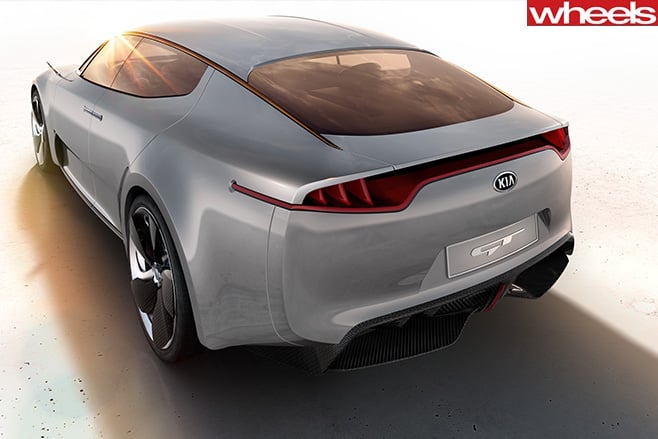
“Working at Kia, you’re never out of projects… there so many projects,” he started.
“We did show a concept car four years ago at the Frankfurt motor show, which was a four-door rear-wheel drive coupe-sedan called the GT. We did always mention that we were very serious about this type of car, and this particular vehicle.
“We do believe that this car is a very important milestone in the development of the brand as a whole. Because we had developed the original concept car, that is a project that has been very important to myself and the team here in Europe, and we’re keeping a very, very close eye on that project.”
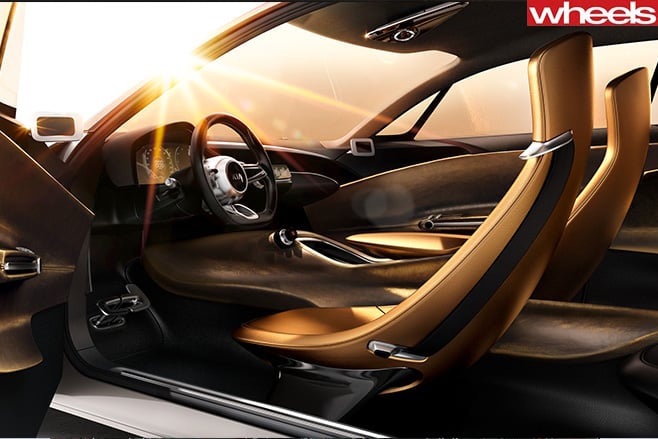
“The Stinger is almost the more expected way to do things,” he said. “It’s having a front-engine rear-wheel-drive affordable type of car, which is great. But for us, it is almost more interesting for Kia to focus on the GT first. It’s something that nobody really expected us to do when we showed that.
“To go in the league of the four-door, fastback coupe rear-wheel drive with a lot of power, that’s something that surprised a lot of people, but Kia was already thinking of going in that direction.
“I wouldn’t say that (the GT4 Stinger is dead), but it’s not something that’s been a priority here… but a lot of people are car guys at Kia’s design department, and if you’re a car person, a GT4 Stinger is the kind of thing you’d want to be driving as well. It is an interesting project.”
Whichever way Kia decides to go, things are hotting up, with performance and dynamics seemingly finally catching up with the striking vehicles that have symbolised the company’s offerings since ex-Audi designer Peter Schreyer took over the reins in 2006.
VOLKSWAGEN and Audi have announced an immediate suspension of Australian sales of 10 popular diesel models as a result of the emissions scandal that has engulfed the company globally.
Certain diesel versions of the Jetta, CC, Passat, Caddy and Tiguan have been pulled from sale today and dealers instructed not to deliver any existing stock to customers.
Audi has also suspended sales of some of its top sellers, including diesel versions of the A4, A5 and Q5.
Sister brand Skoda has suspended sales of diesel versions of two models, the Yeti and Superb.
The sales suspension only applies to cars fitted with the EA189 diesel engine, both in 1.6 and 2.0-litre capacities.
The latest generation Volkswagen Golf, the brand’s strongets-selling model, are not affected as it uses all-new engines.
The action is understood to have been instigated by a meeting yesterday with the Australian Competition and Consumer Commission and the Department of Infrastructure and Regional Development.
The ACCC earlier this week issued a statement saying the Volkswagen investigation was “a priority” for the consumer watchdog.
“We are very concerned about the potential consumer and competition detriment from this alleged conduct,” said ACCC chairman Rod Sims.
In statements released this morning (see below) Volkswagen and Audi said the action was the “first step” in what is shaping up to be an expensive and brand-damaging campaign to rectify what is expected to be tens of thousands of affected Volkswagen, Audi and Skoda models already on Australian roads.
The Volkswagen statement said: “Volkswagen Group Australia (VGA) met with the relevant government authorities yesterday to advise them of its strategy in Australia to address concerns that have been raised around the world regarding the diesel emissions issue.”
Volkswagen didn’t announce which models were suspended from sale but its public website no longer lists the diesel versions of the Jetta, CC, Passat, Caddy, Tiguan, Yeti and Superb.
Audi did outline the three of its models affected and went further to reassure existing customers there was no safety issue in driving affected cars.
“Audi AG has released a statement to inform existing customers that the company would be contacting them in the coming weeks and months with information about how their cars will be retrofitted.”
The emissions scandal broke last month when it was revealed Volkswagen had cheated US emissions regulations with a “defeat device” that ran the engine in a different mode when undergoing emissions testing.
Volkswagen has admitted 11 million vehicles globally are affected but it has not detailed how many of those cars are in Australia; some local news organisations have estimated there could be between 40,000 and 50,000 Volkswagen, Audi and Skoda vehicles affected in Australia.
The emissions scandal – which showed emissions of nitrogen oxide could be up to 40 times the levels demanded on United States roads – is expected to cost Volkswagen tens of billions of dollars in fines and rectification work. The company has also shed tens of billions off its share price and is facing reduced sales as a result of the negative publicity.
Here is the full Volkswagen Australia statement:
VOLKSWAGEN GROUP AUSTRALIA ANNOUNCES TEMPORARY SUSPENSION OF SALES OF CERTAIN AFFECTED VEHICLES FITTED WITH EA189 DIESEL ENGINES
In its first step, effective immediately VGA has temporarily suspended the sale of affected vehicles fitted with 1.6 or 2.0-litre EA189 diesel engines. The suspension will remain until the emission issues are addressed in those vehicles.
VGA will make further announcements next week.
Here is the full Audi Australia statement:
Audi Australia to temporarily suspend sales of A4, A5 and Q5 2.0 TDI models
Australia, 3 October 2015 – Audi Australia Pty Ltd, together with VOLKSWAGEN Group Australia (VGA) met with the relevant government authorities yesterday to advise them of its strategy to address concerns that have been raised around the world regarding the diesel emissions issue.
In its first step, effective today, Audi Australia Pty Ltd temporarily suspended the sale of affected vehicles fitted with the 2.0-litre EA189 diesel engine, certified according to the European emission standard EU5. The suspension of sales for the Audi brand relates to the Audi A4, A5 and Q5 vehicles with a 2.0 TDI engine only. The suspension will remain until the emission issues are addressed in those vehicles.
AUDI AG has released a statement to inform existing customers that the company would be contacting them in the coming weeks and months with information about how their cars will be retrofitted. Audi Australia will make further announcements next week following ongoing investigations with its head office, but the company can confirm that affected vehicles continue to be safe to drive.
The 1.6-litre and 2.-litre TDI engines certified according to the new EU6 emission standard are not affected. The same applies to V6 and V8 TDI engines, irrespective of whether they are certified according to EU5 or EU6. No petrol engines are affected.
Audi’s customers remain its highest priority and will be contacted directly as soon as possible. In the interim, customers are encouraged to contact the Audi Customer Service Line on 1800 50 AUDI (2834).
PLUS
- Looks fantastic, long sleek and imposing. Stands out as expensive.
- Interior is high-quality and well-appointed, though some of the toys (TV) are optional on this 640i.
- Impressively efficient for such a big car, BMW claims just 7.9L/100km combined fuel economy.
- 3.0-litre turbocharged six-cylinder engine and eight-speed automatic gearbox are a great combo in most circumstances.
- Ride issues. The car reacts quite sharply to bumps at both around town and on the highway.
- There’s not anywhere near as much space inside as there should be in a car this big; the rear seats in particular are only fit for children.
- Heavy at 1820kg, which takes its toll on acceleration, fuel economy and handling.
- The same engine is available in smaller BMW convertibles like the M235i or 435i for much less money.
Volkswagen has apologised for its cheating diesels and announced a recall. Can it be forced to pay billions of dollars in fines?
SO IT’S TRUE. Volkswagen, the world’s top-selling car company, cheated. And now it’s facing a multi-billion dollar fine and massive damage to its reputation worldwide.
But that’s only the first surge of a tidal wave that could drown the company, and engulf the entire automotive industry. This is the biggest automotive scandal in modern times. This is not a poorly fitted floor mat fouling an accelerator pedal, or a faulty ignition. Neither is it an attempt to cover up shortfalls in tyre quality. And it’s worse than the 34 million unit Takata recall over airbags that had the potential to send shrapnel into occupants.
Those high-profile faults were largely results of oversights. Dieselgate is worse, because it was not a mistake. Volkswagen planned to cheat.
Volkswagen AG, to its credit, acted quickly once the world learned of its deception – ironically thanks to diesel advocate John German. CEO Martin Winterkorn apologised on behalf of the company he led for almost nine years, for breaking the trust of its customers and the public. VW then admitted that the problem encompassed 11 million VW, Audi and Skoda vehicles, far more than the initial 482,000 alleged by the EPA in the US. Winterkorn offered his resignation to the VW Group board. It was accepted. More heads are set to roll.
So we know VW cheated. We know they are sorry. We know heads are rolling. We know they have vowed to do everything possible to rectify the situation and win back consumer trust. And we know this will mire VW in financial hardship for years to come. The total bill could hit $72b, says investment bank JP Morgan.
But one big question remains: Did VW break the law?
I have two questions. Does the wording provide wriggle room for a car to be engineered with a ‘test-bed’ emissions tolerance different to its real-world emissions? And are such devices legal?
Like any legal document, it’s word-heavy and full of interdependent and nested clauses. I’m no lawyer, but Section 202 could answer that first question: “Such standards shall be applicable to such vehicles and engines for their useful life…”
Then there’s clause 4a, which directly addresses defeat devices: “Effective with respect to vehicles and engines manufactured after model year 1978, no emission control device, system, or element of design shall be used in a new motor vehicle or new motor vehicle engine for purposes of complying with requirements prescribed under this title if such device, system, or element of design will cause or contribute to an unreasonable risk to public health, welfare, or safety in its operation or function.”
The Dieselgate story still has much to tell, and it may be years before the courts decide if VW broke the law. One thing is certain: Finding the answer will make many lawyers richer, on both sides.
It’s as authentic as ever, but the latest update to the G-Wagen brings driving tweaks and a new V8 engine.
WHAT IS IT? The latest iteration of the mighty Gelandewagen. The shape hasn’t changed since the original of 1979 – ensuring authentic appeal and rugged off-road credentials – but the engine and electronics are as modern as those in any Mercedes-Benz.
WHY WE’RE TESTING IT To see how the new G-Class runs with a detuned AMG heart. The 4.0-litre V8 is now standard in the G500 and we were given an early taste test.
MAIN RIVALS We hate to pike out on this one, but there really are no direct rivals. Mercedes-Benz likes to see the G-Wagen as a discretionary purchase like a boat or small plane.
For things on four wheels the Land Rover Defender is the closest in concept – old, rugged design that’s been vaguely thrust into the 21st century – but it’s a lot cheaper. So think cars with a similar price tag like the Porsche Cayenne Turbo or even Mercedes-Benz’s fresher GL (soon to become GLS).
PLUS: Rugged looks and cult following; serious off-road ability; faithfulness to orginal MINUS: Steering; dynamics; ride; fuel use; space for people and phones
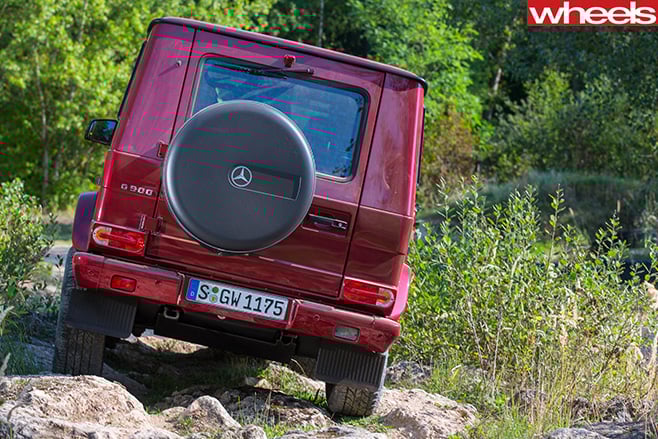
THE WHEELS REVIEW WHEN it comes to retro, they don’t get a whole lot more retro than the G-Wagen – Mercedes-Benz’s first off-roader and still its most capable. But it’s not because designers have gone out of their way to recreate a legend. Other than in the occasional detail, designers haven’t got near the thing. The bodywork is identical to the 1979 original, as is the ladder frame architecture that underpins it.
A mild front-bumper freshen-up is the main visual change with this latest tweak.
Underneath, too, the latest G is more technically minded.
Power and torque have been wound back to 310kW and 610Nm, well down on the 375kW and 700Nm the same engine makes in the just-released C63 AMG.
Fire it up and there’s some residual AMG rumble to its side-exit exhausts, less glitzy than the bigger chromed units in the G63 AMG. The G500 also has an impressive low-rev thrum that reaffirms this ain’t your average bush basher.
Noises are key to the G’s appeal. The doors thunk shut with a 1970s clang before the locks fire downward with a rifle-bolt clink shortly after take-off.
Speaking of which, it’s brisk. The 500 responds enthusiastically to throttle inputs and easily overcomes the 2.5-tonne heft. Initial acceleration, in particular, is stout, and if you keep it pinned it’ll whisk past 100km/h in 5.9 seconds.
But it’s the mid-range that’s the 500’s best asset, with a muscular surge that isn’t miles behind the flagship G63. It’s less toey when revved to its shift point, a smidge before 6000rpm. That V8 sound, too, winds back the intensity as revs rise.
The engine has more left in it to push the draggy G through the air (its coefficient of drag is 0.54; some trucks do a better job) but the chassis has had enough by then. Actually at any speed the dynamic package is terrible, and anything above 120km/h is a wild old ride that requires delicate and well timed steering inputs. Even at modest speeds there’s a vagueness to responses and enough leaning to encourage plenty of forward planning for anything that involves changing direction.
While it’s too much in town, the heavily weighted recirculating ball steering – yep, it’s slow to respond – makes it less likely to overstimulate things at speed. Even during moderate cornering, though, the G500 rocks and rolls at the slightest hint of driver input.
Punch hard out of a tight bend, too, and the inside front wheel might briefly wheelspin, more a product of the lurching than genuinely overwhelming the 18-inch hoops.
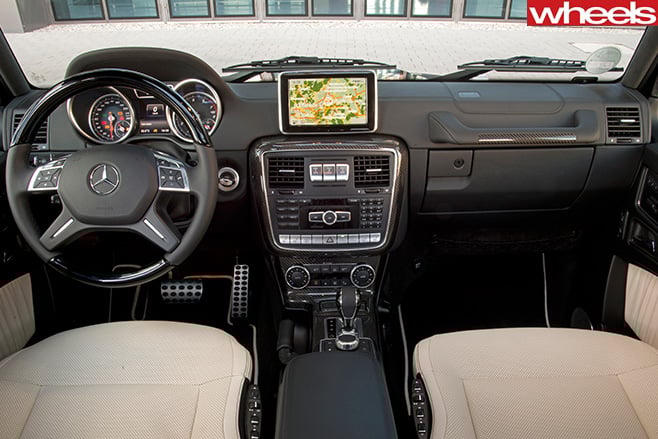
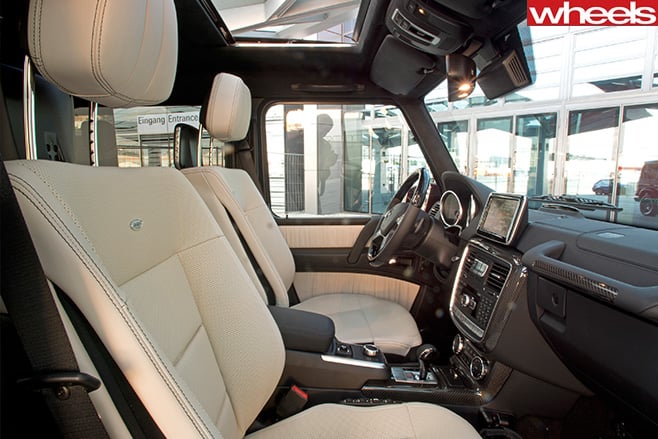
Other G downsides remain. For such a big, boxy truck it’s tight for space, with rear legroom particularly tight. And it doesn’t have the elegant ergonomic flow of Benzes designed in the last few decades; ventilation controls are low on the console, everything is upright and in your face, and the door handle is a fumble away. Even finding space for a phone is a challenge, which is perhaps no bombshell given mobiles didn’t exist when the G was spawned.
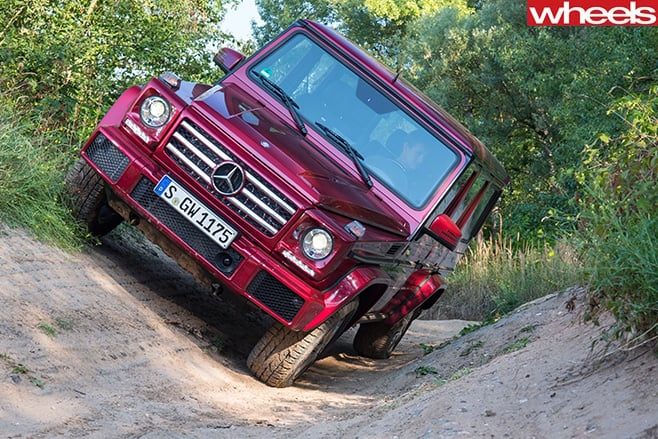
Off-road, though, is where the G sparkles. While it lacks the adjustable ride height and downhill assist control of fresher four-wheelers, it has the hardware to ensure that little will halt progress. It towers high off the road and has solid metal components to protect anything sensitive underneath.
The three diff locks – front, centre, and rear – ensure brilliant traction in sloppy terrain or rocks.
Whatever it loses on-road it makes up off it. The G is an astonishingly capable machine.
And therein lies the appeal of an ageing – but enduring and ever popular – stalwart of the world’s toughest tracks. The G is a dynamic disaster and as politically incorrect as any. But it’s an eye-opening riot to drive, and one that musters character-laced appeal that many new cars can’t begin to approach.
SPECS Model: Mercedes-Benz G500 Engine: 3982cc V8, twin-turbo Max power: 310kW @ 5250-5500rpm Max torque: 610Nm @ 2250-4750rpm Transmission: 7-speed auto Kerb weight: 2520kg 0-100km/h: 5.9sec Price: $180,000 (estimated) On sale: February 2016
