
Mazda is having another crack at the languishing light sedan class, and the Mazda 2 Sedan brings more kit for its hatchback sibling as well.
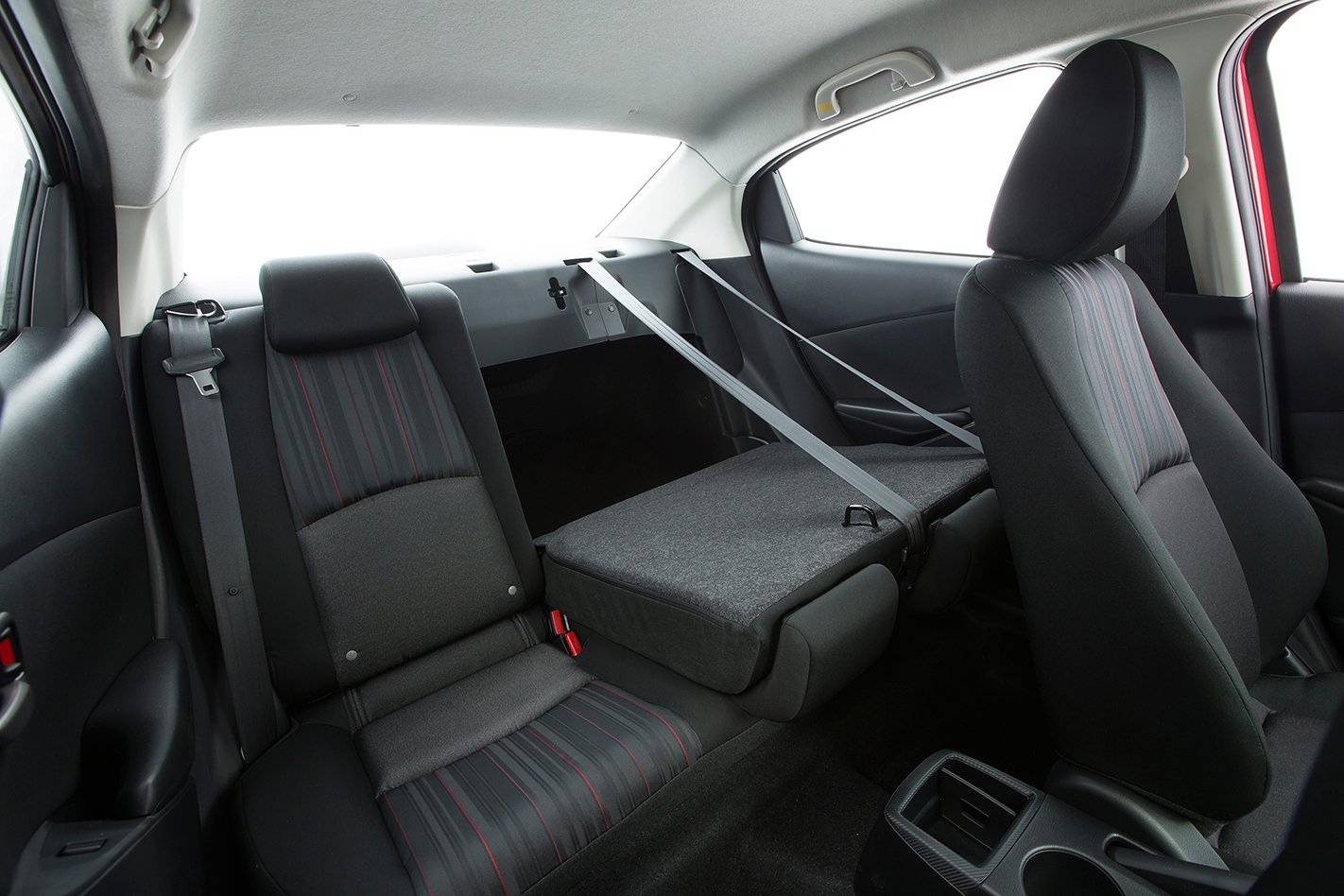
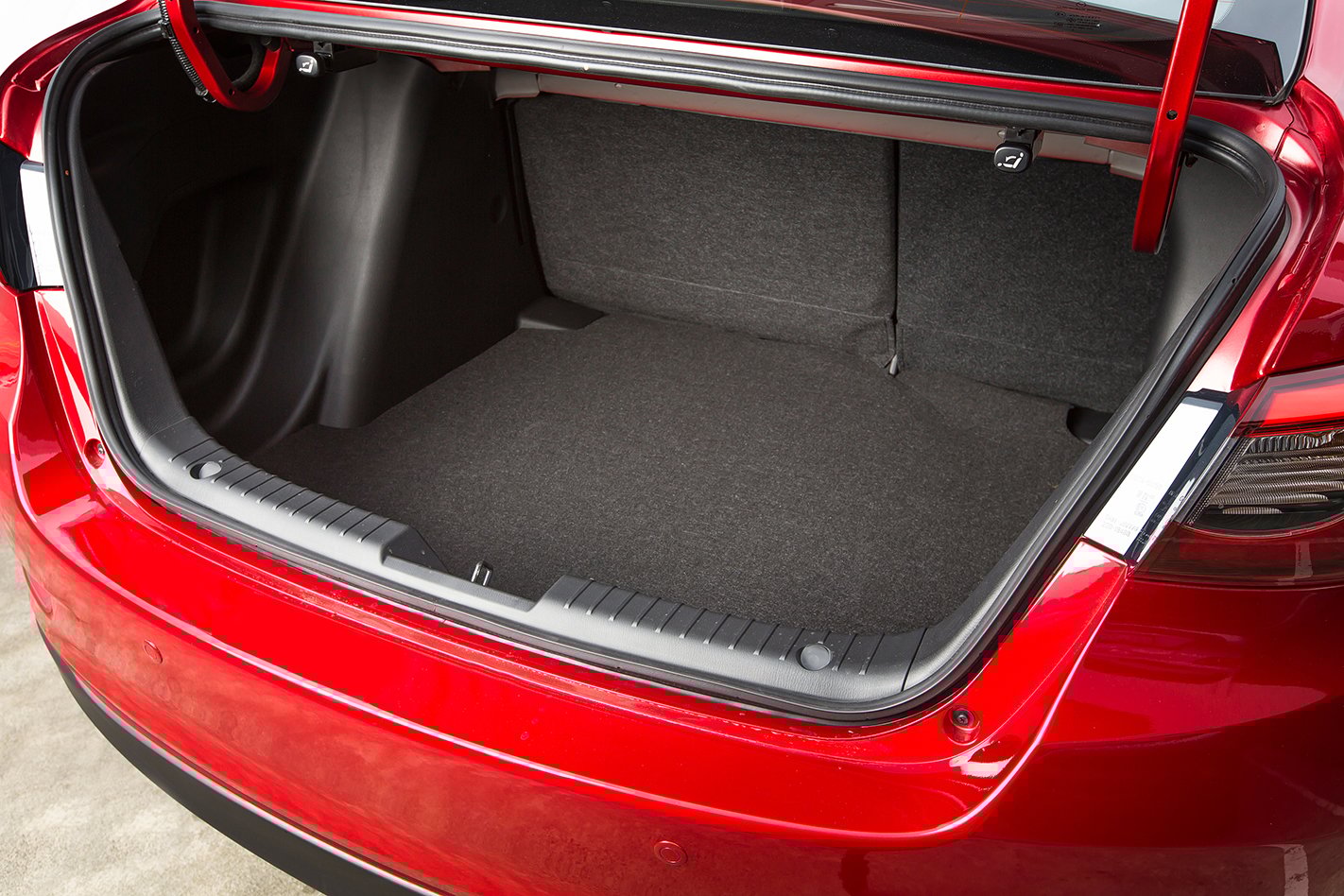
WHAT IS IT The Mazda 2 Sedan is basically the prettier hatch with a boot grafted on. The biggest difference compared with the short-lived previous version is a more harmonious look. While adding significantly larger cargo volume, the Thai-built sedan is otherwise virtually equal to the five-door.
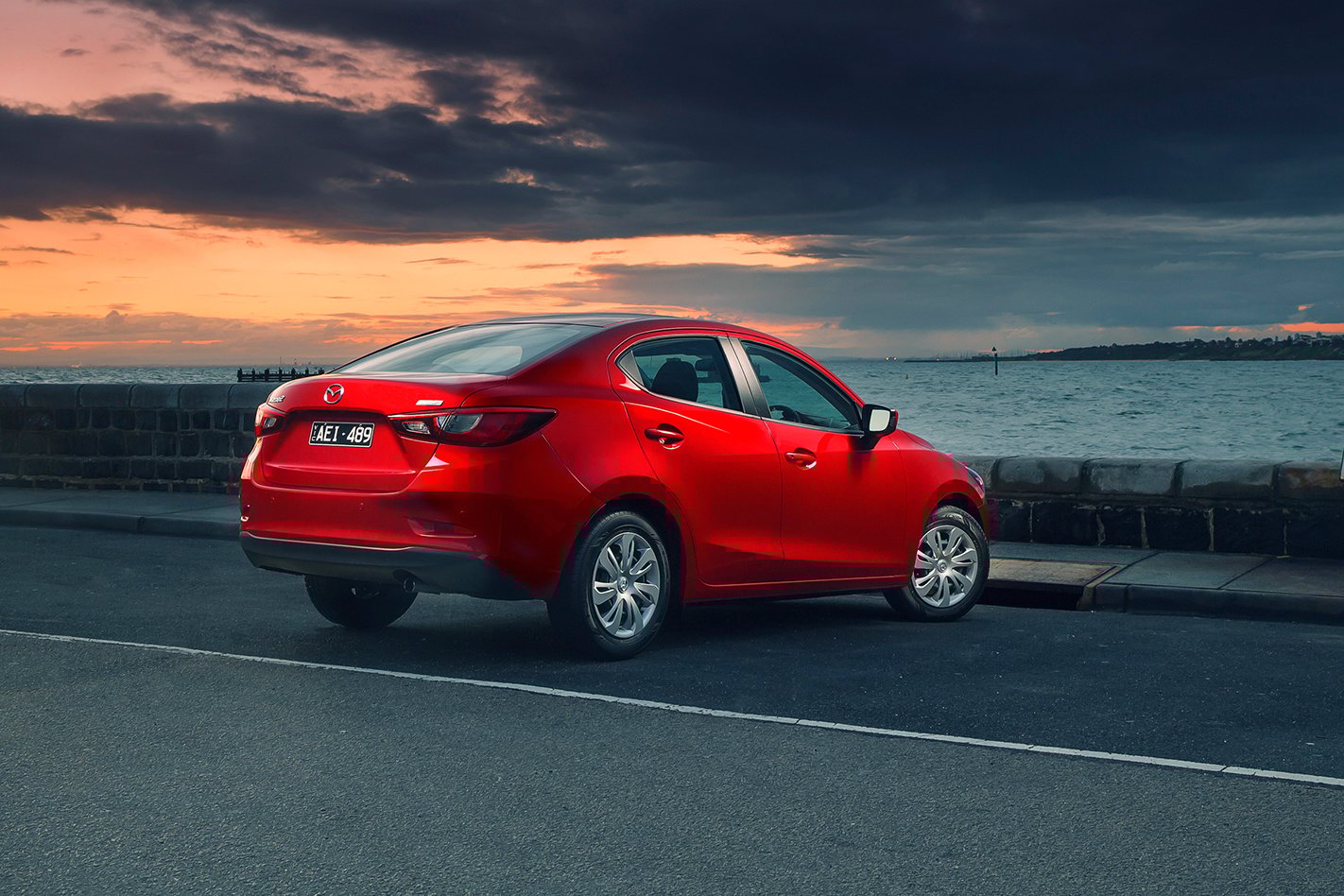
MAIN RIVALS Holden Barina, Honda City, Hyundai Accent, Mitsubishi Mirage, Toyota Yaris
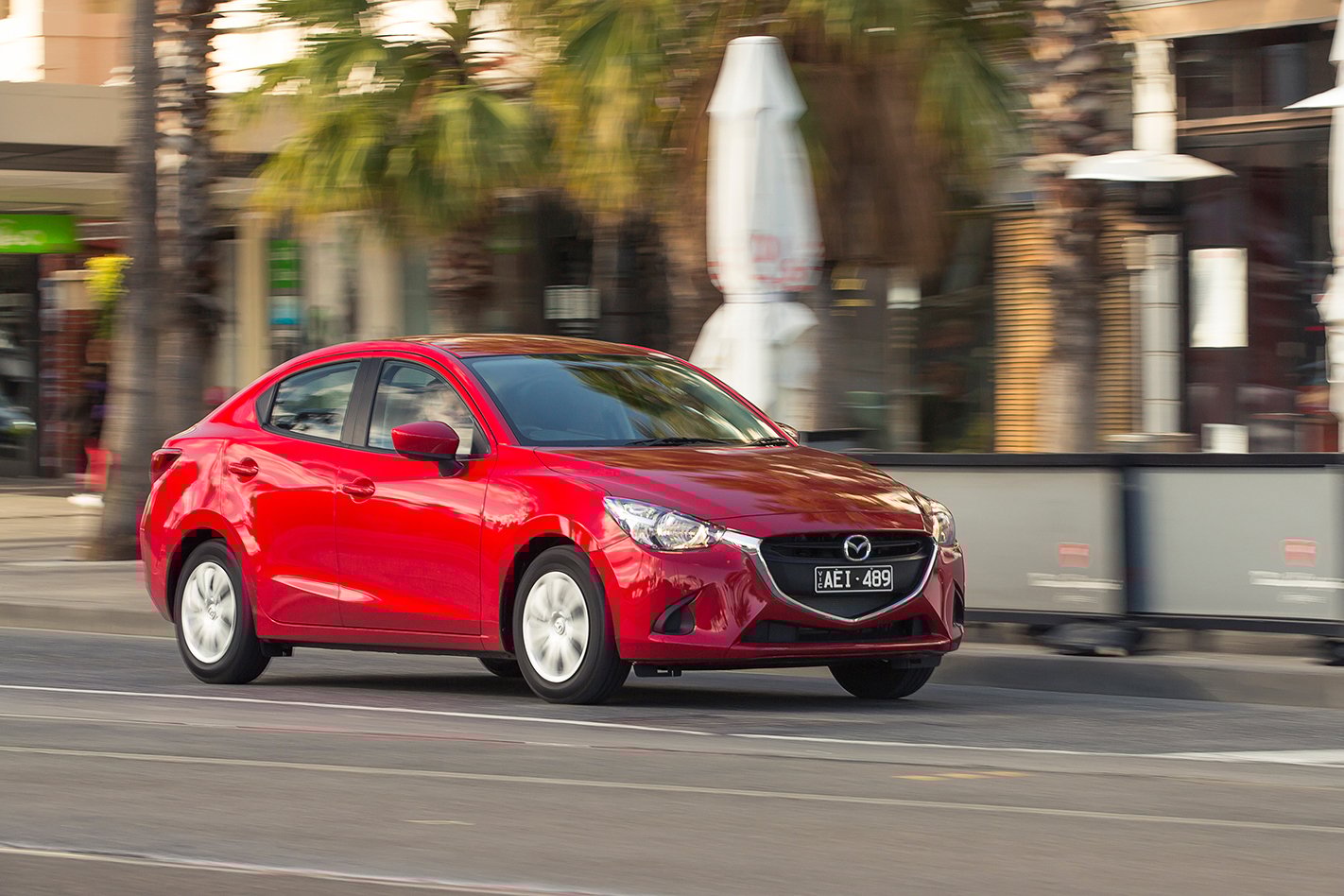
We haven’t driven the hatch and sedan back-to-back, but we can tell you that the latter seems to give away nothing in driver enjoyment. Additionally, for both body styles, the base Neo at last scores standard cruise control and reverse parking sensors at no extra cost, although the extra gear in the Maxx (reverse camera with a larger touchscreen) and Genki (LED headlights) do mean a $700 price jump for each respectively.
PLUS: Integrated styling, sporty dynamics, smart interior, massive boot, strong value MINUS: Some road noise, ugly tiny tacho, the 2 Hatch still looks sassier
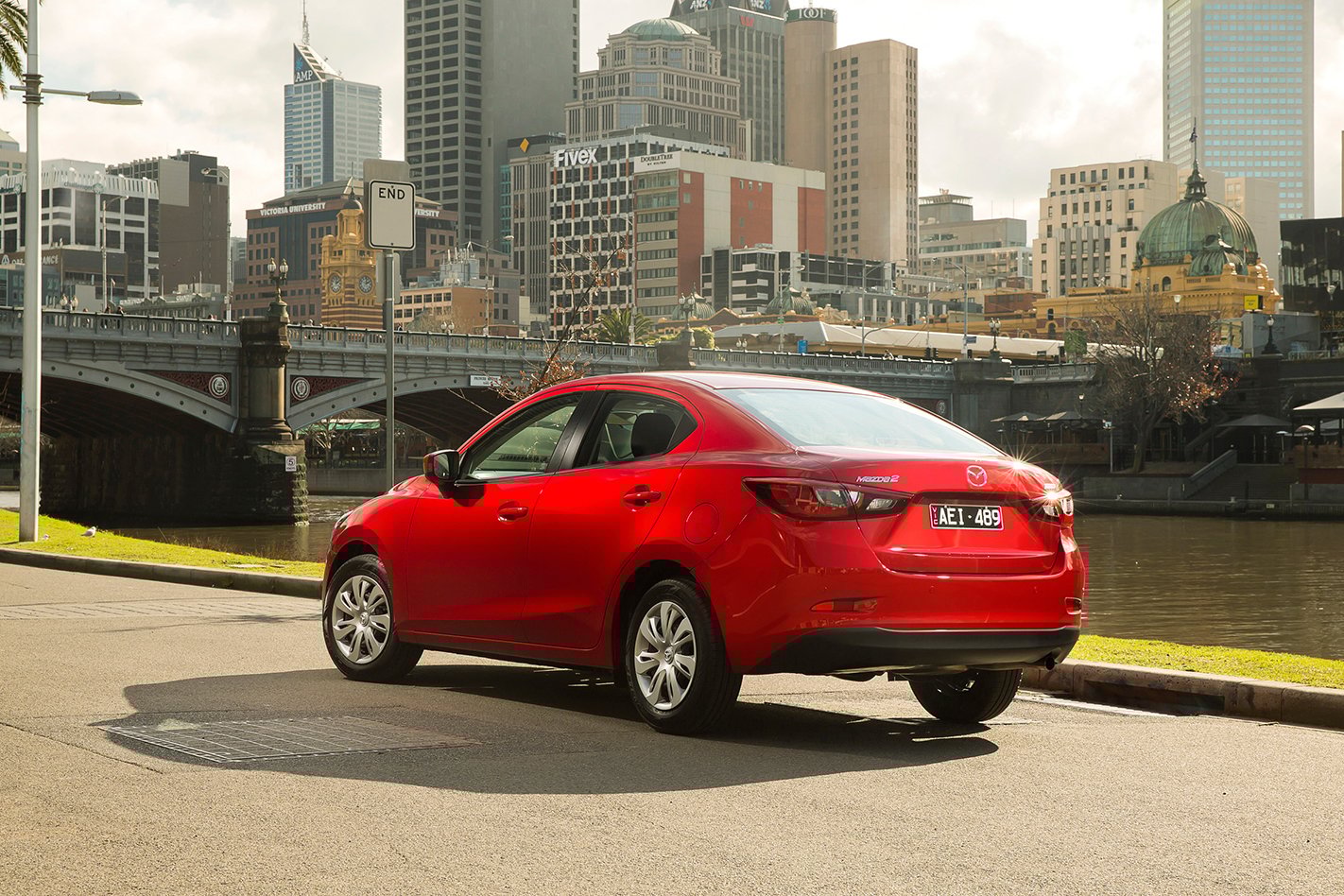
Now Mazda reckons it has cracked the code with the 2 Sedan. And bam. With a swoopy, scaled-down 3-style silhouette instead of the pregnant bull ant look encumbering most rivals, we’re actually paying attention.
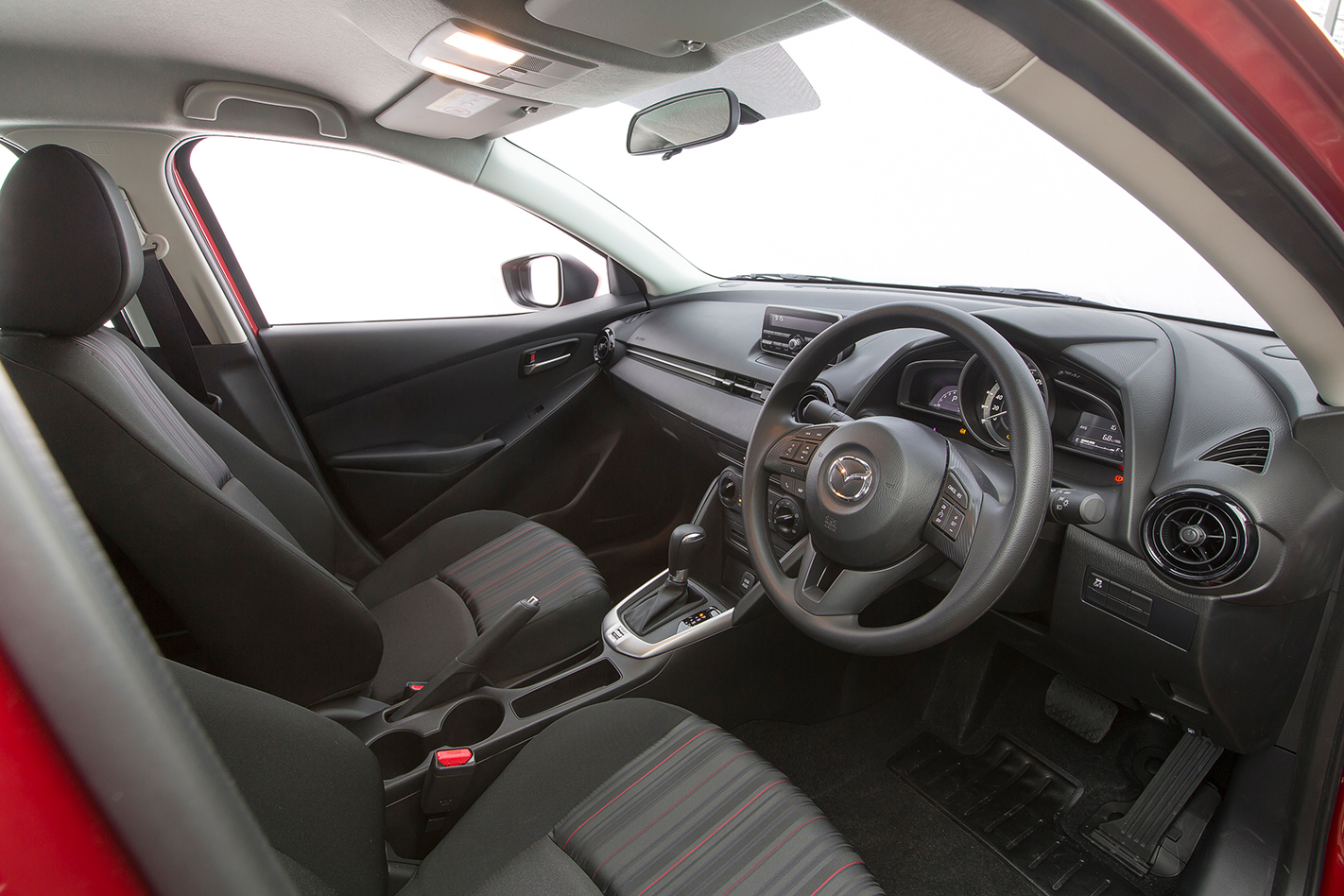
Predictably, two 1.5-litre direct-injection four-pot atmo petrol engine choices lurk at the pointy end, with the base Neo using the 79kW/139Nm V-P5, while the mid-spec Maxx scores the higher-compression 81kW/141Nm F-P5 unit with stop/start and a 4-2-1 exhaust. Honestly, better fuel economy aside, the latter’s differences are miniscule: both rev sweetly, pull hard past the 6200rpm red line and imbue the smallest Mazda with a lively spirit, aided by one of the most delicious manual shifters around. Also notable is the slick six-speed auto, particularly in Sport mode – which holds ratios when needs dictate.
Besides its dorky design, one reason why the previous 2 Sedan (available only in 2010/11) flopped was because of a hefty $20K opening gambit. Now Mazda has pegged the successor with the Neo ($14,990) and Maxx ($17,690) hatch variants. Some 2rainspotters might notice the Maxx now costs $700 more, but that’s because it gains the larger MZR Connect multimedia touchscreen and reverse camera in both body styles. Better still, cruise and rear sensors are now included range-wide, with autonomous emergency braking adding $400 extra.
SPECS Model: Mazda DL 2 Sedan Neo Engine: 1496cc 4cyl, dohc, 16v Max power: 79kW @ 6000rpm Max torque: 139Nm @ 4000rpm Transmission: 6-speed manual Weight: 1035kg 0-100km/h: N/A Fuel economy: 5.4L/100km Price: $14,990 On sale: Now
Click here to read the full range review of the Mazda 2.
The headline screams UK Mustang buyers want American V8s – yet the mother country still has nothing on its convict settlement.
Ford UK says it has attracted 2000 forward orders on the approach to the reborn muscle coupe’s November arrival, a match for the Australian forward orders list ahead of our cars arriving one month later.
Poms and Aussies will be among the few countries to snare right-hand drive production, and the waiting list 17,000km away is about the same; order now and it’ll be mid-2016 delivery for you.
A full 70 per cent of UK buyers have chosen 5.0-litre V8 over 2.0-litre Ecoboost four-cylinder. That may be enough to warrant a boastful headline overseas, but in Straya that portion stands at a mighty 88 per cent.
Both countries nearly match each other for preference of bodystyle – 84 per cent coupe here, 80 per cent coupe there – with the slight lead overseas very probably due to those customers needing to sun themselves more regularly and at every opportunity.
Proving emphatically how much we love a rear-drive, muscle car, our Ford Mustang sales look set to match Britain despite a total new car market that is less than half the size – 1.11 million new cars were shifted here last year, versus 2.48mil there.
The first right-hand drive Ford Mustangs are just starting to roll off the production line this week in Detroit, Michigan.
Get your free weekly report from the world of fast cars – subscribe to the MOTOR newsletter!
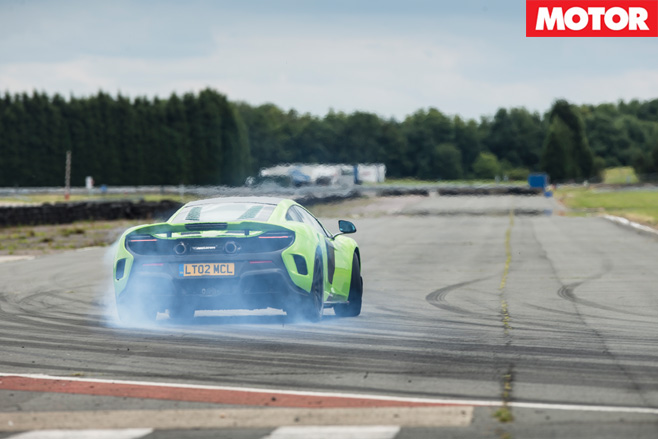
Those of you salivating over the big wing McLaren can holster the cheque book, McLaren’s 675LT is sold out.
But while the car’s 500-strong global allocation is spoken for, David McIntyre, McLaren Asia Pacific’s regional director, says there will be more ‘Longtail’ badged McLarens.
“It’s our intention that the LT will be a badge that we use in other [parts of the model range], as part of a regular product lifecycle which will continue for years to come.”
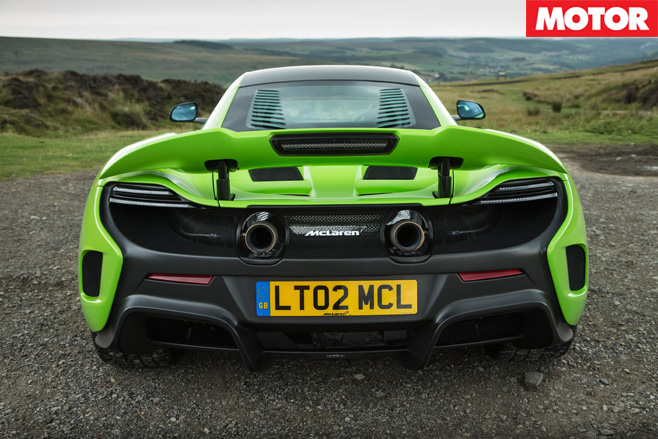
While it’ll no doubt be more expensive, a new LT within the entry-level Sport Series should be squarely aimed at Porsche’s 911 GT3. However, McLaren isn’t saying whether LTs will be produced again as a limited edition, or enter series production like the GT3.
McIntyre is, however, happy to declare LT models will follows the same formula as the current 675, right down to the engine. “The philosophy of the LT package, the main focus, is light weight, aerodynamics, and then I guess power will be part as well”.
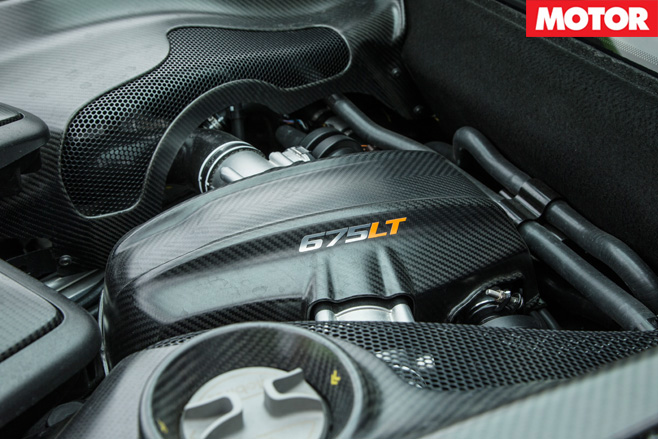
Timing is unknown for the new LTs, but with McLaren’s Sport Series already launched, lighter, louder, and faster McLarens should be on their way to fill up the rest of the range, so let’s hope your cheque books aren’t holstered too long.
Get your free weekly report from the world of fast cars – subscribe to the MOTOR newsletter!
What’s this new cat in town, then?
After a half-decade absence in the 3 Series/C-Class segment, Jaguar is clawing its way back into the compact sedan class with the clean-sheet XE. This $104,200 XE S is the range-topper (for now) designed to challenge the Audi S4 … but not the BMW 335i.
Hang on, not the BMW 335i? Jaguar reckons the $12K-cheaper 335i is a bit too luxury-sports to be considered a competitor, where the $105,000 S4 puts greater emphasis on sports-luxury.
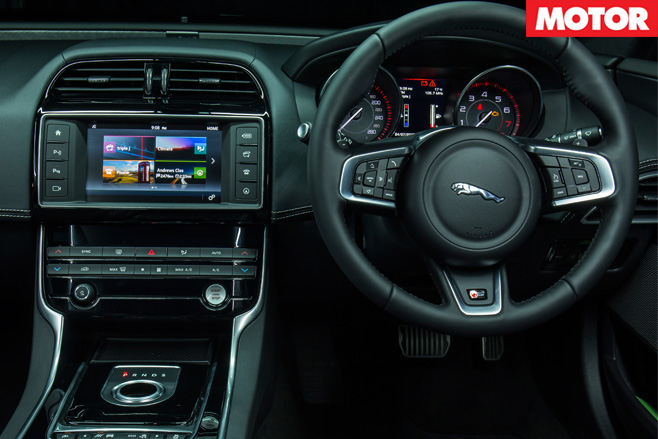
The XE S is pleasant inside but lacks space and differentiation compared with a $65K XE R-Sport diesel, which isn’t helped by kit that remains optional (heated seats, head-up display, digital radio).
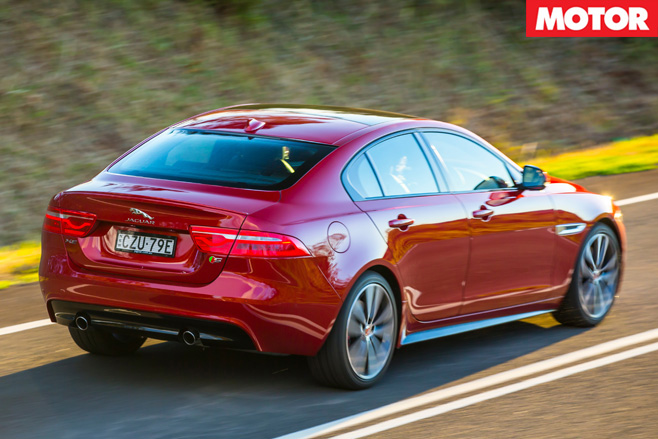
There are a couple of caveats, though… The XE S doesn’t get the option of a booming exhaust like the F-Type does, and extra sound deadening makes the V6 feel more like a scotch sipper than vodka swigger.
It’s fast through the mid-range but not electric off the line – blame the 1665kg kerb weight, which is 155kg heavier than a 335i. Jag says the weight owes to a double wishbone suspension design claimed to deliver class-leading dynamics.
Has it paid off in the dynamics? Yes. The electro-mechanical steering crisply guides a front-end that challenges a 3 Series for sharpness, yet the way the XE S can rapidly change direction indicates a level of composure beyond that rival.
Ride comfort is excellent in the softest of the two-stage adaptive damper settings, especially for a car wearing 19s (40-aspect front, 35-aspect rear). Switch to Dynamic and the shocks subtly tighten without becoming unruly, while the steering backs off the assistance slightly, again subtly.
Thanks to the linear throttle delivered by the supercharger and good grip from the 255mm-wide rears, the rear-drive XE S is enjoyably contained rather than lairy.
3.5/5
Specs
Engine: 3.0-litre supercharged V6, DOHC, 24V Power: 250kW @ 6500rpm Torque: 450Nm @ 4500rpm Weight: 1665kg 0-100km/h: 5.1sec 0-100km/h (claimed) Top speed: 250km/h (limited) $104,200 Pluses: Lovely steering, ride and handling balance; blown V6’s mid-range Minuses: Muted V6 and exhaust compared with F-Type; cabin lacks differentiation and equipment for the price
Holden has teamed up with Disney ahead of the release of the new Star Wars: The Force Awakens movie, due for release this November.
Apparently, Holden will “have a number of innovative and engaging activations coming to Australia and New Zealand and our customer should be prepared to expect the unexpected.”
On the back of this announcement MOTOR can exclusively reveal 10 ways this new tie-up will change Holden’s future operations.
- The Millenium Falcon will be renamed the Millenium Commodore
- In an unusual move, each new model will be a little bit worse than the one preceding it, however it won’t be enough to stop the new car selling in huge numbers
- The hero colour for VF II will change from Hothouse Green to Yoda Green
- Head-up displays will disappear, with drivers now expected to use the Force
- Holden Chairman Mark Bernhard will henceforth only answer to ‘Emperor Bernhard’
- Jar Jar Binks will be the public face of Holden’s MY2016 marketing campaign
- Holden’s Port Melbourne offices will be sold, with staff relocating to a large, moon-shaped HQ located approximately 36,000km from Earth’s surface
- The lion on Holden’s badge will be replaced by the face of Chewbacca
- With active safety gear inspired by Stormtrooper technology, Holden vehicles will now be the safest on the road, incapable of actually hitting anything they’re aiming at
- All sat-nav instructions will be delivered by Darth Vader (this is actually a thing!)
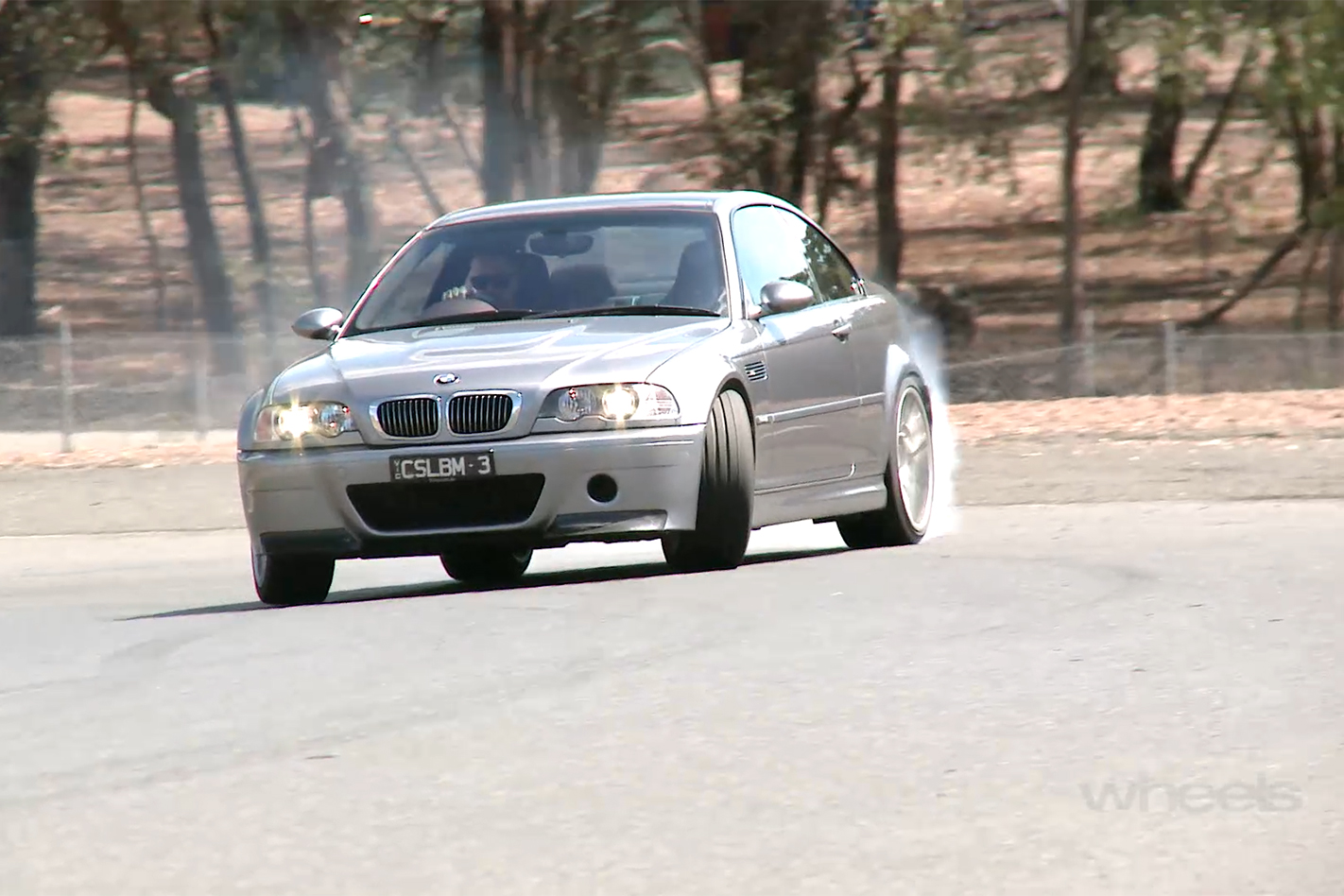
THE IDEA was as simple as it was brilliant. Grab one of the purest M cars BMW ever made, a 2003 M3 CSL, and throw it head to head with its newest descendent, the turbocharged M4.
The task: find out which is best.
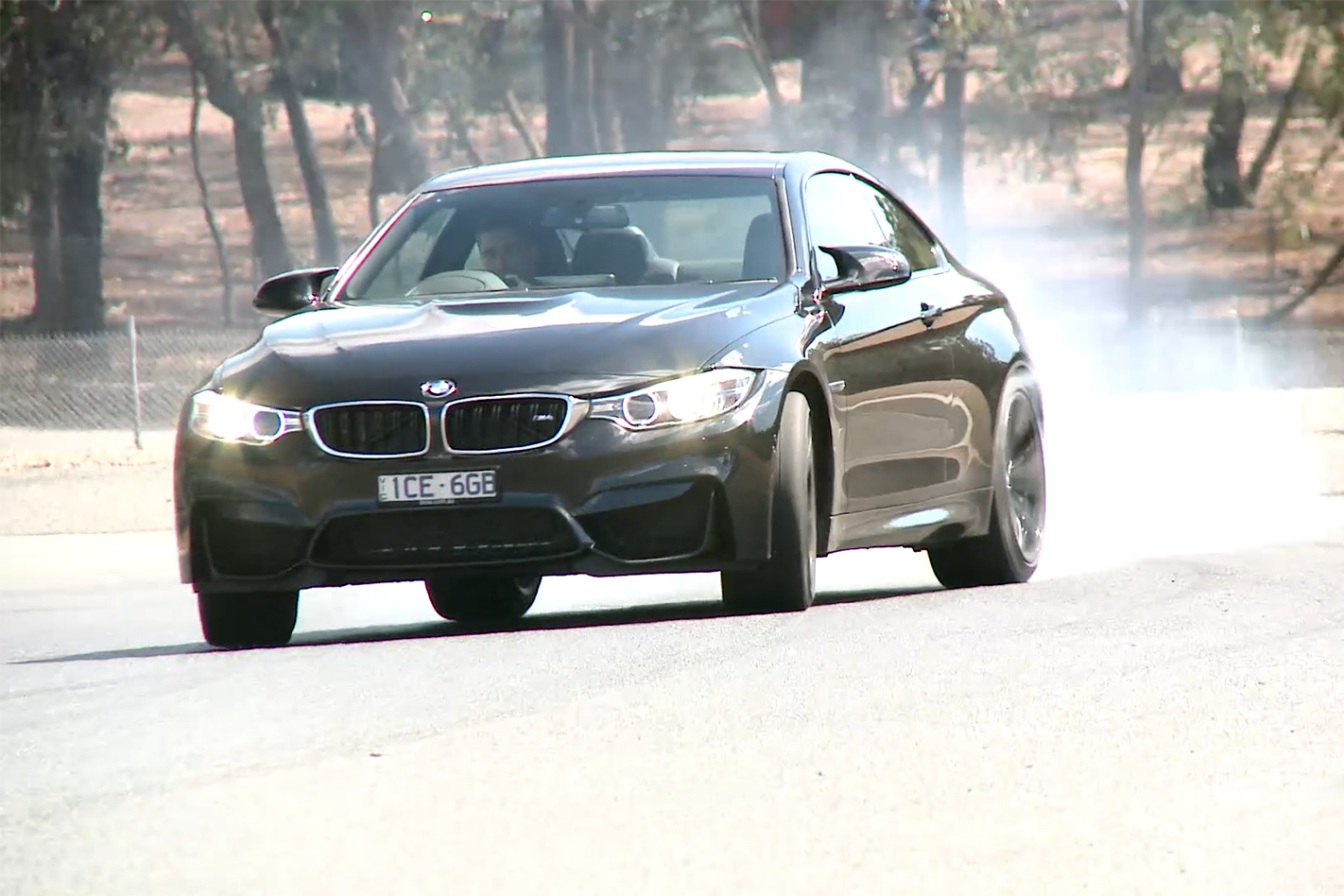
The M3 CSL has sweetness, playfulness and predictability the M4 just can’t replicate. And then there’s the noise it makes. The M4 can only dream of such raspy, high-pitched goodness.
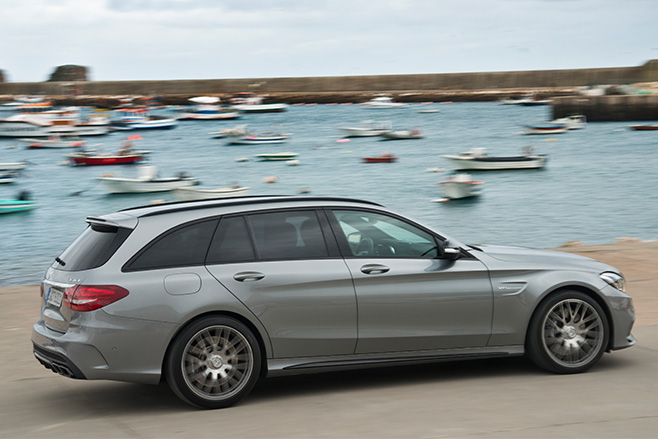
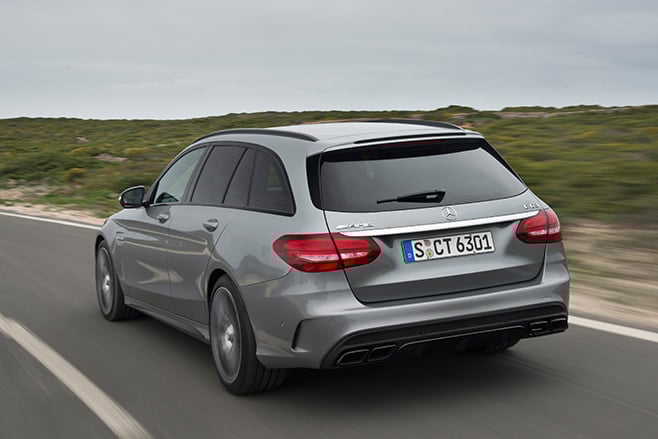
Fast wagons have a new ambassador in the Mercedes-AMG C63 Estate.
WHAT IS IT Mercedes’ C-Class flagship in wagon form – for customers who are as practical minded as they are performance focused. Mercedes continues to use the quaintly English label Estate to distinguish it.
WHY WE’RE TESTING IT We’ve driven the AMG C63 sedan a few times. This is our first experience of the extended-roofline, five-door version.
MAIN RIVALS High-end, high-performance wagons are rare. BMW doesn’t bother to offer an M3 in this body style. The best bet for a direct competitor is the Audi RS4 Avant.
THE WHEELS VERDICT Estate sounds posh but super-wagen would be more apt. The AMG C63 marries stupidly quick performance to what remains one of the more intelligent body styles, despite limited popularity in Australia.
PLUS: Sound from V8 and exhaust; balanced handling; mighty pace; wagon styling MINUS: Boot space technically little larger than sedan’s; Comfort ride could be softer
THE WHEELS REVIEW WE’RE NOT suggesting there’s the prospect of an abrupt end for the boom in luxury SUVs, but C-Class wagon sales have increased nearly seven-fold locally in the past decade. The version loaded to the gunwales with so much credibility that a roof-pod is almost mandatory is the C63 AMG Estate.
We’ve driven the sedan at Bathurst and declared it yet another step forward for Mercedes’ biggest-selling AMG line. This is our first taste on local roads of the more practical version.
A couple of monoscroll turbochargers nestled between the angled banks of cylinders ensures performance and efficiency both move onwards, however, with the wagon’s 4.1 seconds 0-100km/h and 8.7L/100km figures just the usual fractions behind the sedan, due to its additional 75kg mass.
Our thinking is that the Estate’s extra helping of sheetmetal makes it the more attractive of the current choice of C-Class body styles, even if that’s unlikely to grow the percentage of wagon buyers beyond a tenth of C63 sales.
There’s no discernible deformity in the handling after the transition from shrink-wrapped limo to load-hauler. There’s still a deft balance that makes the Estate easy to guide at a significant pace along a challenging road.
The steering is quick, and our preference over the rack in the AMG GT S. It’s more consistently fluid regardless of speed, and offers more feel when searching out the adhesion levels of the 19-inch Michelin Super Pilot Sports.
It’s not a challenge to get the power down early, and when grip levels are breached, Sport and Sport Plus modes allow some minor slip angle before the electronics rein in the torque with a degree of subtlety.
The suspension can still thump over surface joins in Comfort, though, and a less firm ride in this mode would help perfect the C63 AMG’s dual-purpose directive.
We can’t think of anything we’d change about the hand-built 4.0-litre twin-turbo V8. There’s an extra 50Nm compared with its twin in the long-snouted GT S – essentially for the benefit of the C63’s extra weight – and the sensation from our drive of the AMG double act is that the Sedan and Estate require even less accelerator pedal travel to generate speeds that are comically quick for a wagon.
Throttle response is generally terrific, with Sport Plus where the engine feels least like a turbocharged unit. And sounds least like one.
The multi-clutch seven-speed auto doesn’t feel like a poorer, slower-acting cousin to the dual-clutcher used in the GT, either, especially in Sport Plus where the transmission is remarkably alert and responsive.
Operate the paddles instead and it’s possible to discover a third gear that can tackle a winding road almost single-handedly, such is its wonderful elasticity. It is capable of ranging from urban tootling to instant licence-loss velocity.
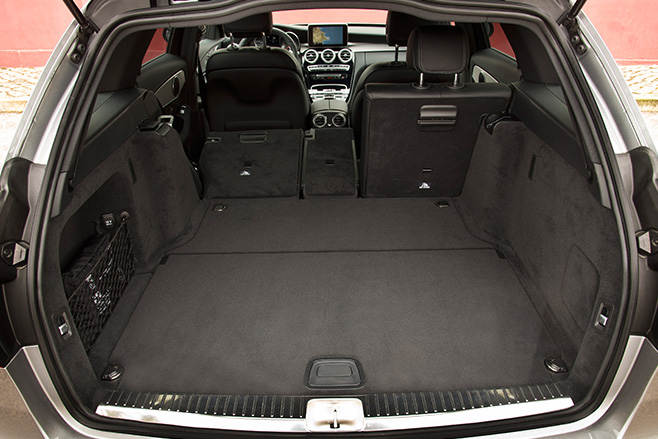
Maximum velocity in top gear is 10km/h down on the sedan’s 290km/h to add another performance deficit, leaving Estate buyers with the compensation of the more convenient rear access (as boot space is actually only an extra 10 litres).
But both share the benchmark C-Class interior garnished with flashier and sportier AMG trimmings, and both take the C63 badge to loftier heights.
Of course, for many shoppers their seating positions simply won’t be tall enough.
SPECS Model: Mercedes-AMG C63 S Estate Engine: 3982cc V8 (90°), dohc, 32v, twin turbo Max power: 375kW @ 5500rpm Max torque: 700Nm @ 1750-4500rpm Transmission: 7-speed automatic Weight: 1730kg 0-100km/h: 4.1sec (claimed) Fuel economy: 8.7L/100km Price: $157,400 On sale: Now
Sign up here to receive the latest round-up of Wheels news, reviews and video highlights straight to your inbox each week.
MY HOUSE is on a typical suburban street. And, like all typical suburban streets, residents often park outside their house. So my two-lane street is really one lane shared by traffic going both ways.
Drivers are forced to thread the needle down parked-car tunnels, sometimes a hundred metres or more, diving into rare gaps to let oncoming traffic through. How would an autonomous car negotiate this?
Two of the houses near mine are being turned into townhouses. So my street is a warzone of utes, vans and trucks, sometimes blocking traffic as they deliver building supplies.
How long would an autonomous car sit, waiting, before continuing its journey? Will it be able to read the situation to see the delivery is almost done, or that it’s just beginning, and make an informed decision to reroute? Perhaps this is where autonomous car programmers will expect the occupant to take back control.
My street is also a bus route, with three stops in the first 700m. When the bus stops, will an autonomous car read the situation and decide to go on the wrong side of the road to get around? Will it be able to see the passengers have all alighted or boarded, and decide to wait a few seconds for the bus’s imminent departure?
There is a busy roundabout near work, which I negotiate twice a day. It’s next to a train station and has pedestrian crossings on every feeder road. How will an autonomous car integrate with human-driven cars at such roundabouts? And deal with pedestrians who often stride onto the road like they’re immortal?
Every morning, my neighbour drops her three kids at school, one of many converging on the same school at the same time. Will autonomous cars make the drop-off process smoother as they slot seamlessly into a stop-start conga line? Or will dozens of computer-controlled cars aiming for the same street address reach an impasse and have a meltdown?
Most Saturdays I drive to my favourite cafe for breakfast. There’s no designated car park, so I try my luck out front, then try nearby side streets. I use experience and knowledge to minimise ‘scouting time’. What will the autonomous car do when it arrives and the spot out front is taken? Will it turn onto a side street away from my destination to find a park? Will it be able to read parking signs? Or is this another human intervention situation?
What about merging with human-driven cars? Will the typically intransigent Australian driver’s refusal to yield lead to a stalled autonomous car, unable to merge safely, and unwilling to be just a little bit aggressive?
I see how autonomous cars can work on freeways, and when every vehicle – without exception – is computer-controlled and interlinked. But even then total autonomy is a pipe-dream. How does one automate couriers? Taxis? Buses? Motorbikes? Bicycles? Emergency vehicles?
There will always be a need for human control. Most likely in the suburbs, where the unexpected and the unusual are commonplace. Computers hate the unexpected.
I’m a car enthusiast, and I like driving. I used to worry that autonomy would end our fun. Yet there are so many hurdles facing total autonomy, I’m more confident than ever that partial autonomy is as close as we’ll get in my lifetime.
Ask yourself this: If computers are so capable and planes can fly themselves, why do we still have pilots, co-pilots and air traffic controllers?
Taking its toll
POLITICIANS and safety experts would have us believe the autonomous car will usher in some kind of zero road trauma Utopia. Garbage. Sure, autonomous cars won’t hit each other (unless the computer goes on the fritz, which is a whole other can of worms), but they’ll still hit pedestrians who step onto the road while bopping to music, talking on the phone or stumbling home drunk from the pub (about a third of pedestrians killed on our roads are technically drunk).
Sign up here to receive the latest round-up of Wheels news, reviews and video highlights straight to your inbox each week.
About a year ago Lotus armed its Elise with frightening aero and motorsport-only bits to define the track-only Cup R.
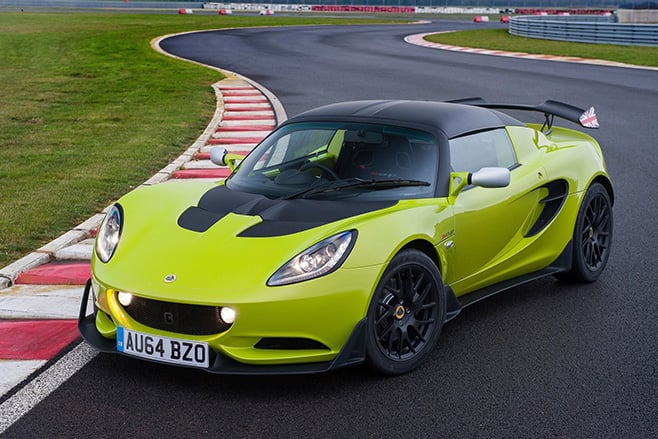
Now it’s announced the 220 Cup, a road-registrable spin-off from the Cup R, is coming to Australia.
Formerly known as the Elise S Cup, the 220 Cup is the most extreme Elise Lotus offers Down Under.
Helping it achieve such a title is an aerodynamic package that’s very similar to the Cup R’s, sporting a huge rear diffuser further complemented by a front item, a large rear wing, and side skirts.
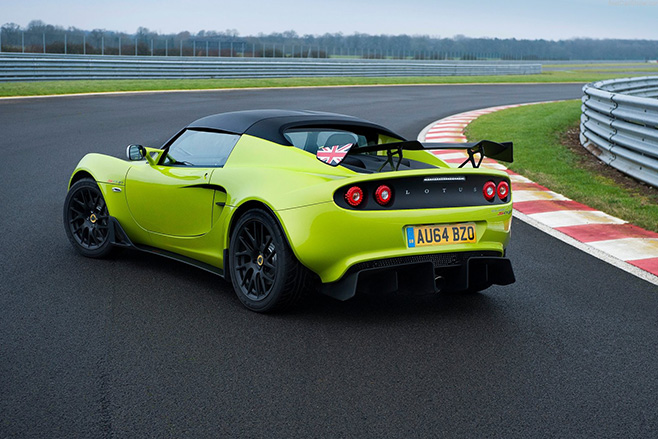
The aero package’s claim to fame is that it helps the Elise 220 Cup produce “an additional” 66kg of downforce at 125km/h, and 125kg at 225km/h.
Acceleration halts at 225km/h, the speed which sees the 162kW/250Nm 1.8-supercharged Toyota sourced four-cylinder max out top gear. The six-speed transmission’s borrowed from the shorter geared naturally aspirated Elise.
The rest of its dynamic package is as per the Elise Club Racer, and includes adjustable anti-roll bars, bigger brakes, inside-wheel braking technology, and Yokohama AD07 semi-slicks.
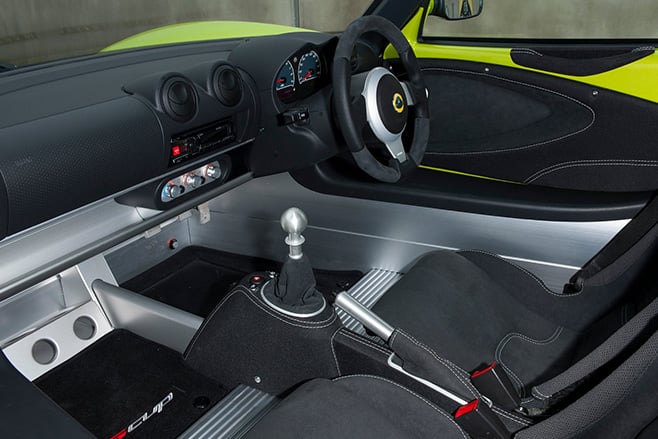
With such track focus, the 220 Cup happily forgoes central locking, in car entertainment, and floor mats, but picks up SuedeTex interior trim.
Get your free weekly report from the world of fast cars – subscribe to the MOTOR newsletter!
Jaguar’s third injection of new product in a single year will hit with the production F-Pace SUV set for an official Frankfurt motor show reveal.
The new XE compact sedan launching in Australia this week, as well as the forthcoming XF large sedan and F-Pace SUV, are built off the same modular architecture designed not to just save weight, but to beef up chassis dynamics.
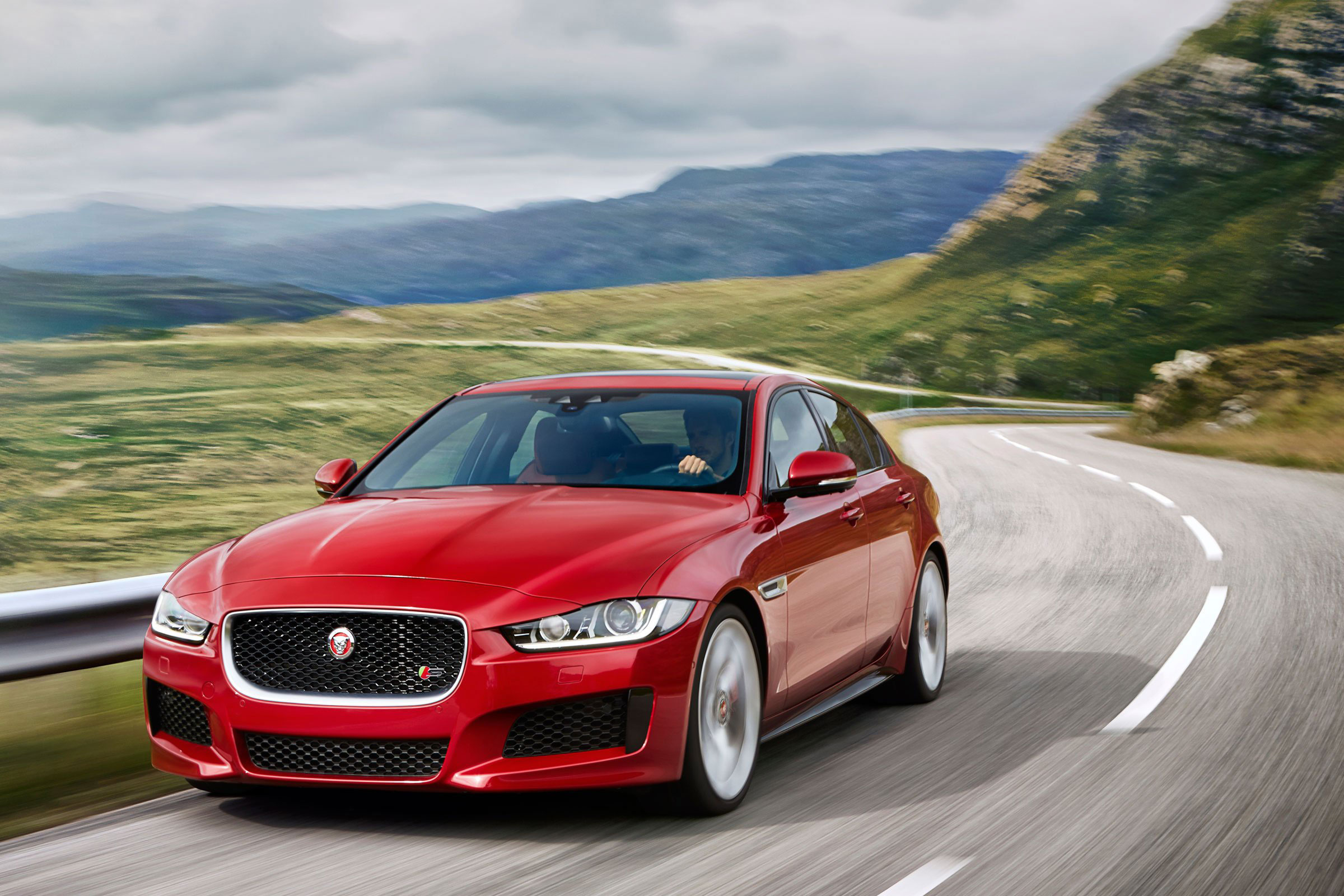
The result? For the supercharged V6 XE S flagship, a double wishbone front suspension set-up with the same stiffness, camber and castor control as the F-Type coupe.
“We like to think of this car as close to a four-door F-Type as we can,” tells Jaguar Australia product planning manager Andrew Chapman.
For the 5.1sec 0-100km/h, 250kW and 450Nm XE S, he says, “we’re not focused on BMW 335i, we’re focused on [Audi] S4 and beyond.”
Jaguar isn’t shying away from stating who it wants to challenge with the F-Pace, either.
“There is only one target: Macan,” says Jaguar Australia public relations senior executive James Scrimshaw.
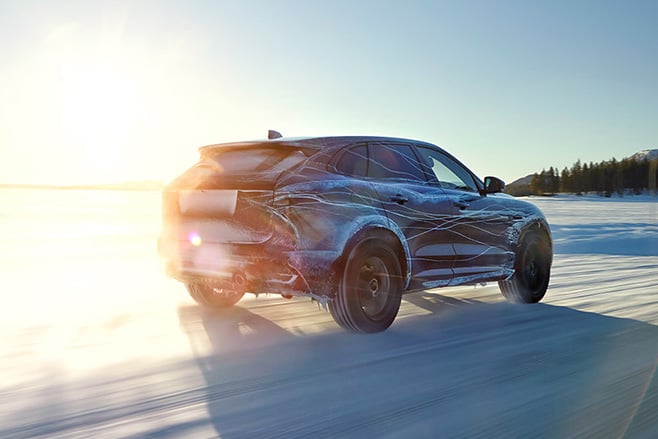
The F-Pace will share suspension with XE, which in turn claims to match F-Type, so the British brand is confident its swoopy, passenger car-based SUV can swoop in and take the class dynamics crown – as it also wants for XE and XF in their respective segments.
“[XE] is getting Jaguar back to where it should be and that’s being a driver’s car,” added Jaguar Australia managing director Matt Wiesner. “Not being driven, but all about the driving.”
Of total Jaguar Land Rover (JLR) sales in Australia, the cat-badged brand only claws onto a 10 per cent share of total volume. Wiesner wants to take that to 20 or 30 per cent by 2019/20. The 23 Jaguar dealers today will expand to 40 dealers by the end of next year, as the brand prepares for a fresh onslaught of those dynamically gifted new models.
Get your free weekly report from the world of fast cars – subscribe to the MOTOR newsletter!
