
We hate to be the bearer of bad news, but a man with flamboyant taste in footwear wrecked his Ferrari LaFerrari in Shanghai Tuesday night.
According to Chinese media, the driver lost control of the 708kW limited edition hybrid supercar during a thunderstorm hitting the concrete barrier of the motorway he was driving on.
Fortunately the driver wasn’t hurt during the accident; sadly the same can’t be said for his million dollar machine.
The LaFerrari appears to have suffered pretty severe body damage and the rear suspension has been smashed to pieces.
Source: www.wreckedexotics.com
Get your free weekly report from the world of fast cars – subscribe to the MOTOR newsletter!
It’s no secret Toyota lusts after Le Mans 24 Hours’ top podium.
Like a lion that struggles to clinch its quicker prey, the Japanese manufacturer has returned to the French race year after year to leave its mark on the world’s greatest endurance race, only to leave with numerous tales of falling at the last hurdle.
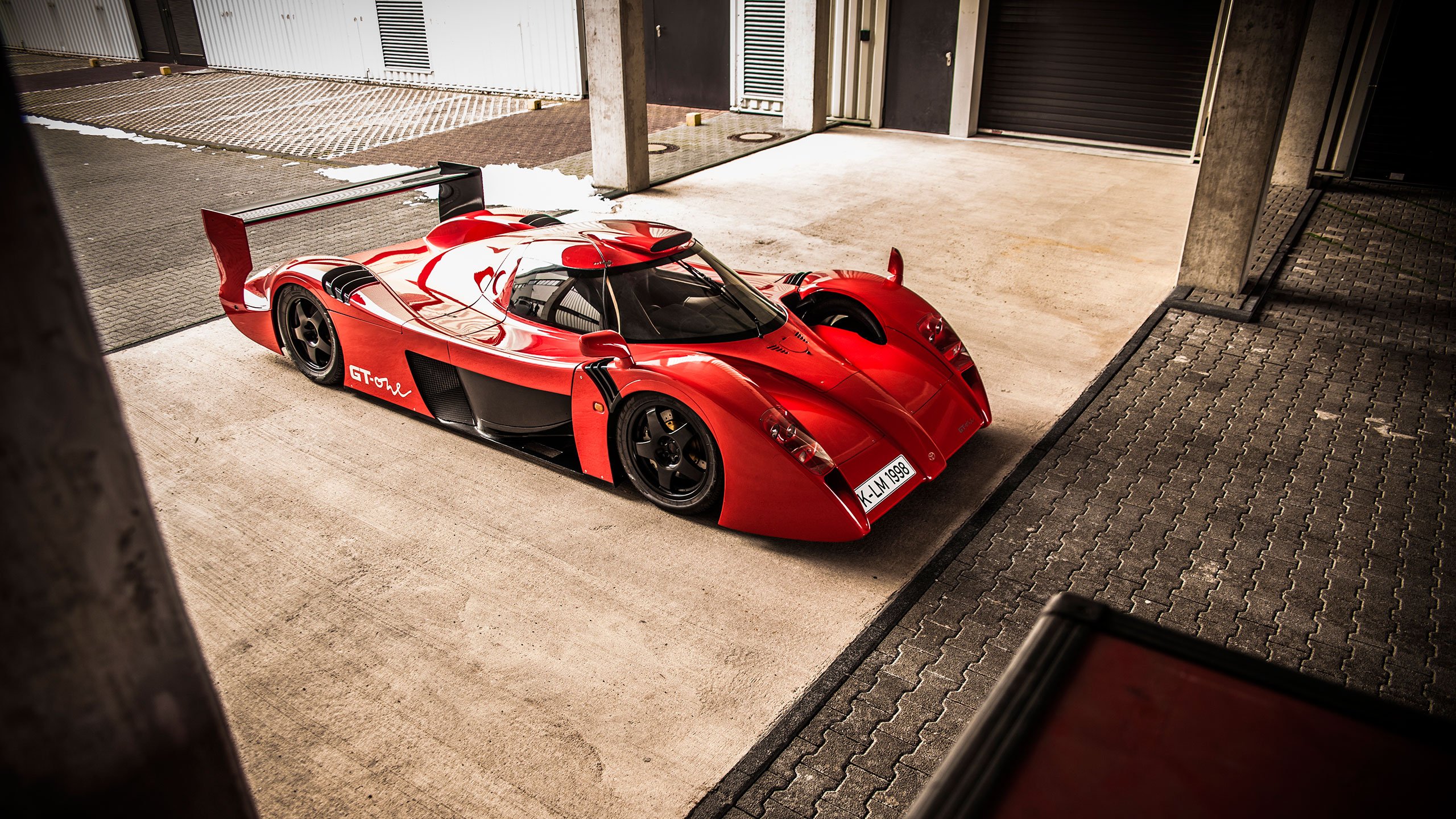
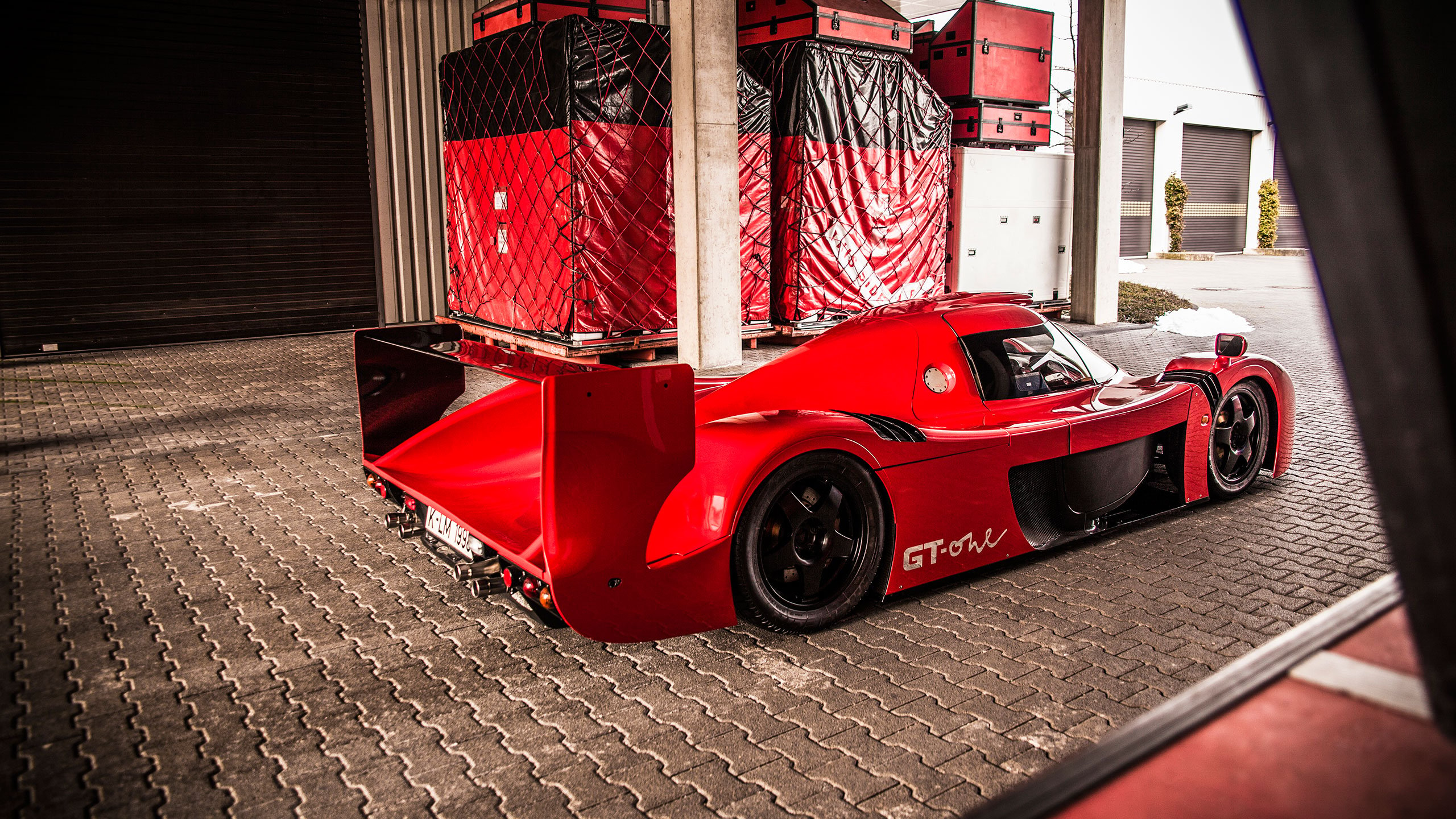
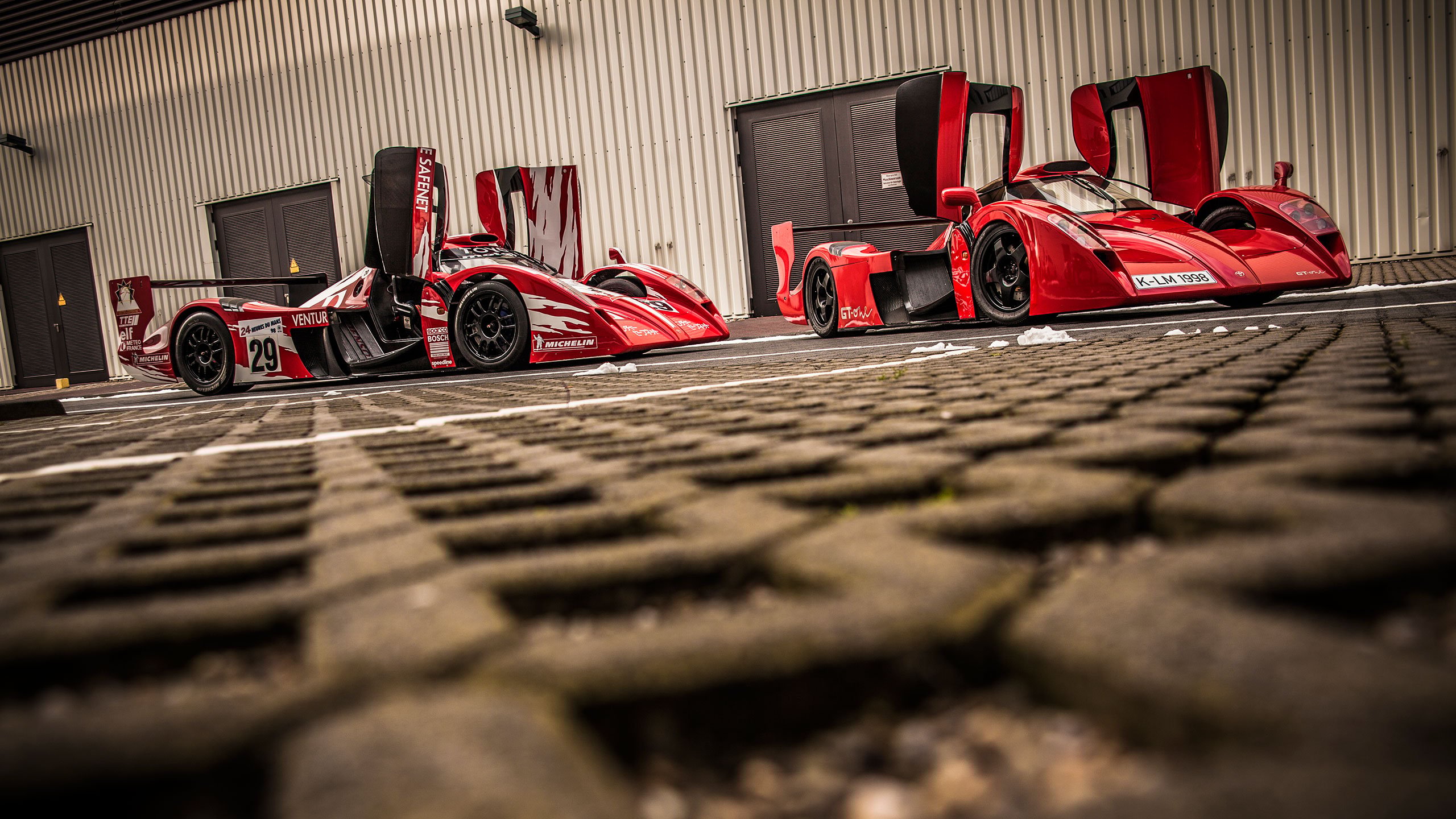
Along the way, the resource available to the brand and its racing subsidiary Toyota Motorsports GmbH has seen it build spectacular race machinery. None more pretty than this week’s wallpaper candidate: the TS020.
Under the eye of Frenchman Andre de Cortanze the TS020 was designed to marry form and function in hope of a 1998/’99 Le Mans win. And away from the racetrack, this culminated in a TS020 built to road specification to appease FIA regulations.
This car was named the GT-One and lives in TMG’s Cologne headquarters, Germany, which we visited last year.
While we couldn’t drive it – Toyota said it’s unaware if the 3.6-litre twin-turbo V8 engine even starts – we did capture photos of the gorgeous 360km/h-plus endurance animal for you desktop’s pleasure.
THE last Toyota Camry to be made in Australia has started rolling off the carmaker’s Altona production line, marking the offical start of the final chapter for the Japanese brand’s local manufacturing.
Known as the “Big Little Change Camry”, the mid-size four-cylinder conventionally engined and hybrid sedan that will need to compete with an all-new Ford Mondeo, the Mazda 6 sedan and wagon, Hyundai Elantra and Volkswagen Passat mimics the Camry’s international styling externally, but carries over most of its interior from the previous model.
Toyota said it had invested $108 million in developing the 2015 Camry, which included $23.6 million from the Federal Government and an undisclosed contribution from the Victorian government.
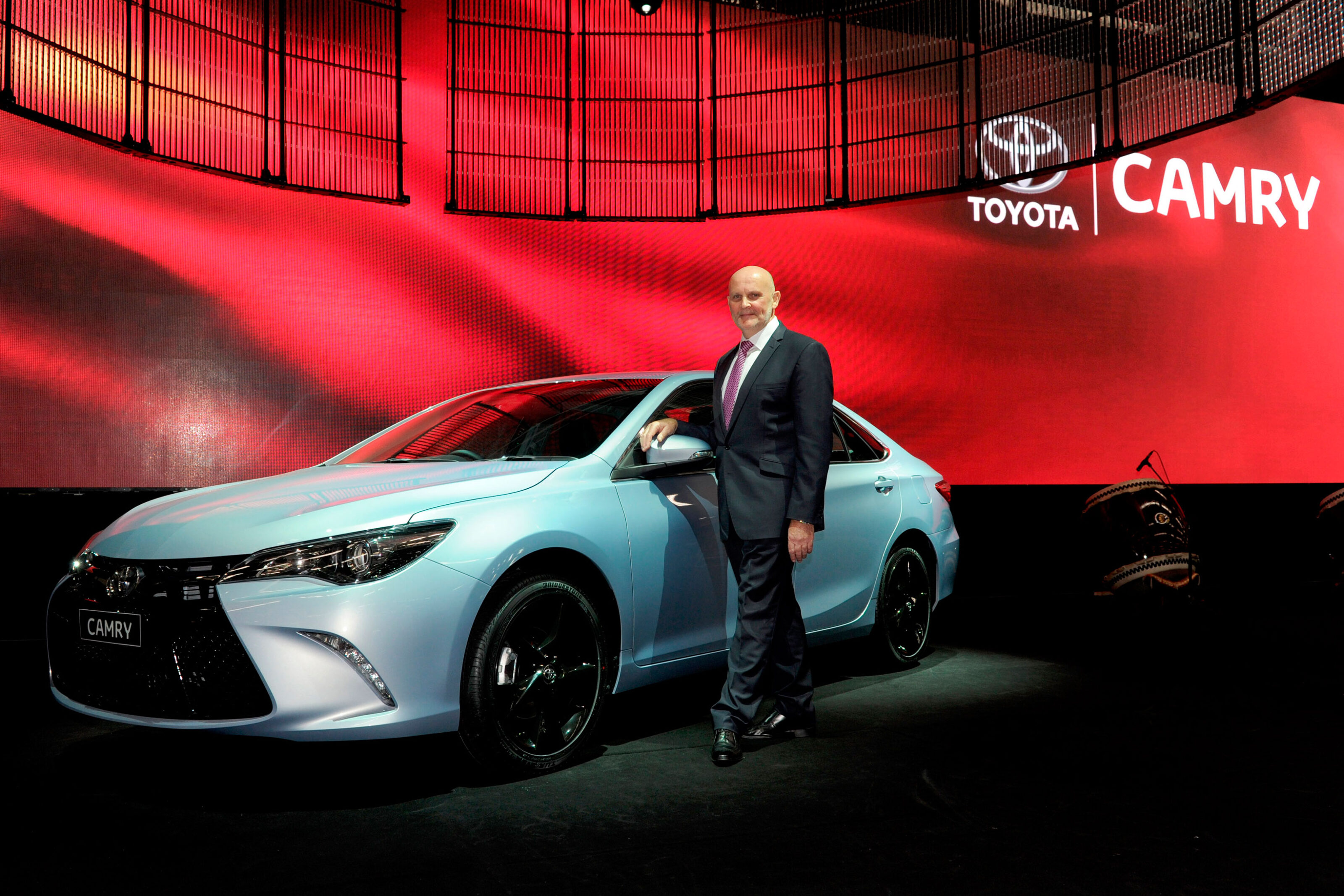
“This is truly the boldest Camry yet, with exciting, dynamic styling that is sure to turn heads,” Toyota Australia president David Buttner (above) said.
“We have been careful not to compromise style over substance and have maintained all the traditional strengths that current buyers love.”
However, while the last-ever Australian-built Camry will be built to Toyota’s exacting worldwide quality, the Australian version of the sedan will miss out on many of the advanced safety options available on overseas versions of the car – an indication that although this represents a major change externally, beneath the skin costs had to be cut.
Toyota Australia has struggled with rising costs of production of the Camry and its V6-engined sibling, the Aurion, while a strong Australian dollar ate into its Middle Eastern export program, where about seven out of every 10 Camrys running down Toyota’s Altona production line west of Melbourne were destined.
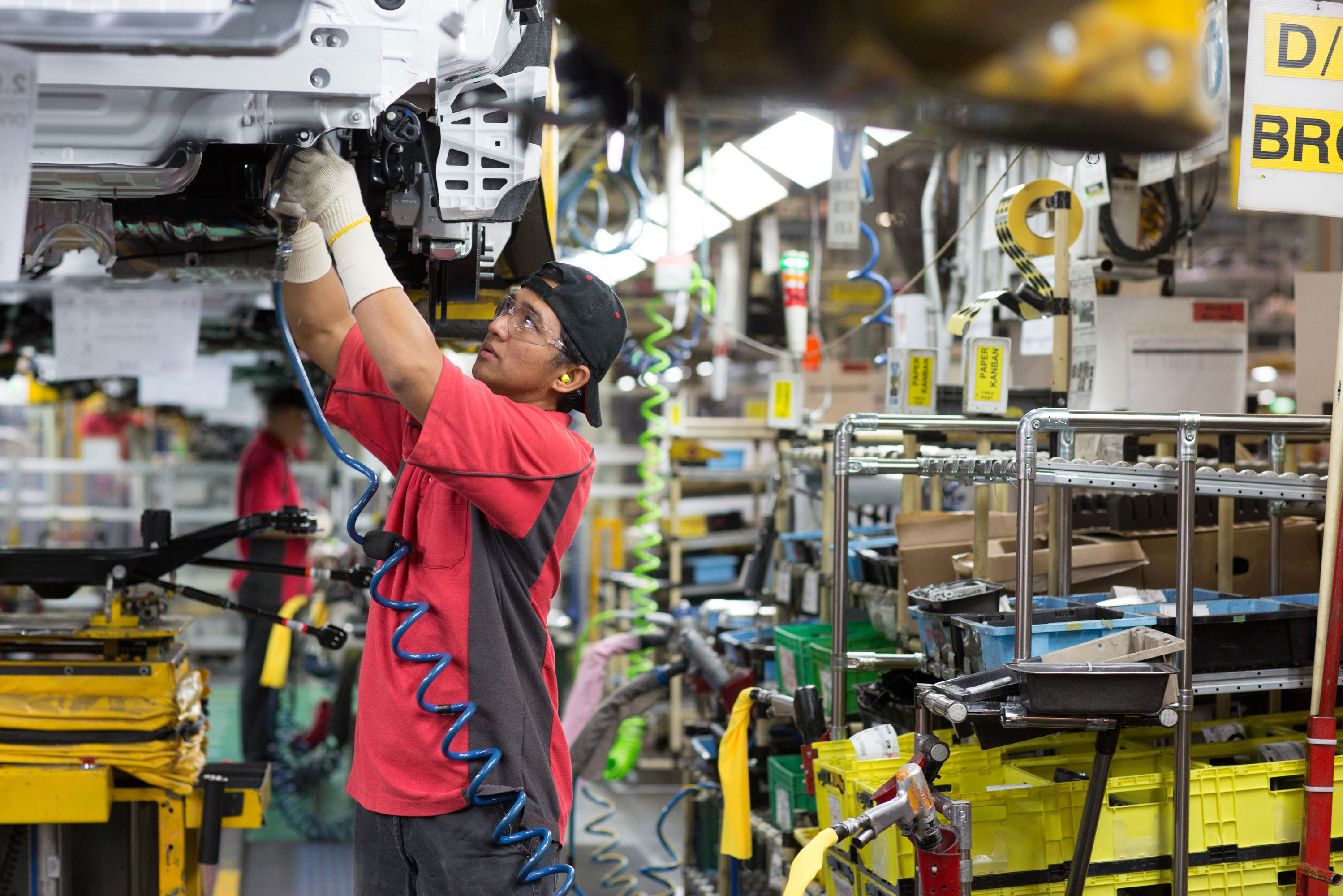
The plant is scheduled to make about 90,000 cars this year, slightly down on the numbers pegged in previous years.
Restructuring the manufacturing operations – Toyota, like Holden, expects to exit Australian carmaking in late 2017, a year after Ford shutters its engine and assembly lines – helped push the company to a crushing $437 million loss for the 2013-14 financial year.
It is expected to report another loss when it closes the books on the 2014-15 financial year in about June.
Toyota said pricing and specification for the final Camry would be revealed next month, when the Big Little Change model officially goes on sale.
Toyota has not offcially revealed which overseas factory will pick up the Australian production capacity once the last Camry and Aurion roll off the Altona assembly line.
THE Volkswagen Golf R400, Wolfsberg’s answer to the dragon-slaying Mercedes-Benz A45 AMG, is set to surface within the next 18 months.
Fuelling a German small-car power war that is likely to see the fastest production Golf in history top 300kW by the time it arrives in Australia, the R400 is already in the prototype phase undergoing final shakedown.
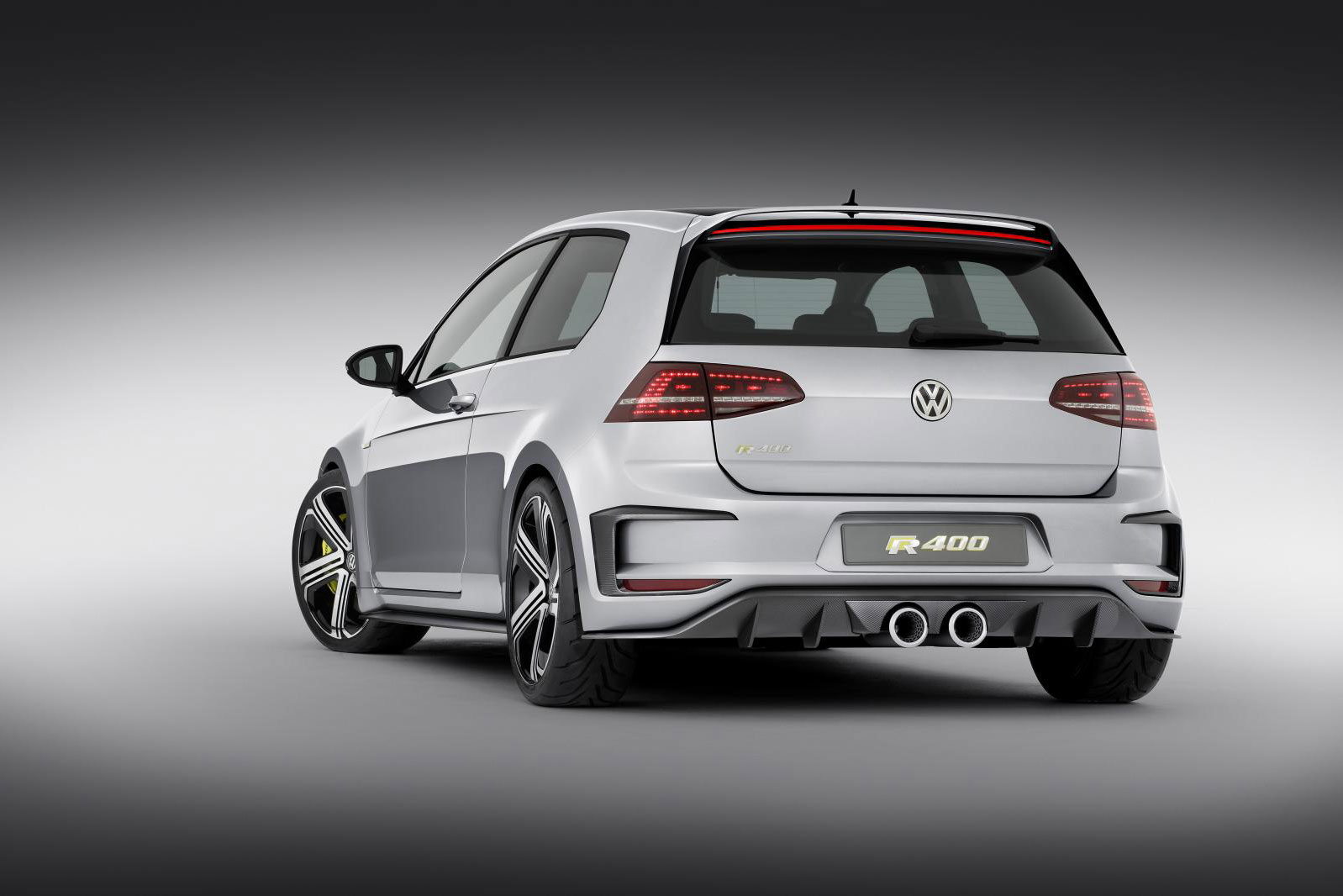
While German Volkswagen spokespersons refused to confirm that it has been given the green light, Wolfsburg-based public relations manager Christophe Peine told Australian journalists at the Golf R wagon and Alltrack drive in Spain this week that feasibility studies are continuing.
“No decision has been taken about the (R400) coming to market,” he said through a translator. “It has just been confirmed but it is still in the concept and development phase.
“We have driven prototypes and tested it for feasibility to see how a 400 horsepower puts its power through to its wheels… but we have to see whether it will continue (on to production). We will assess it on a case-by-case basis.”
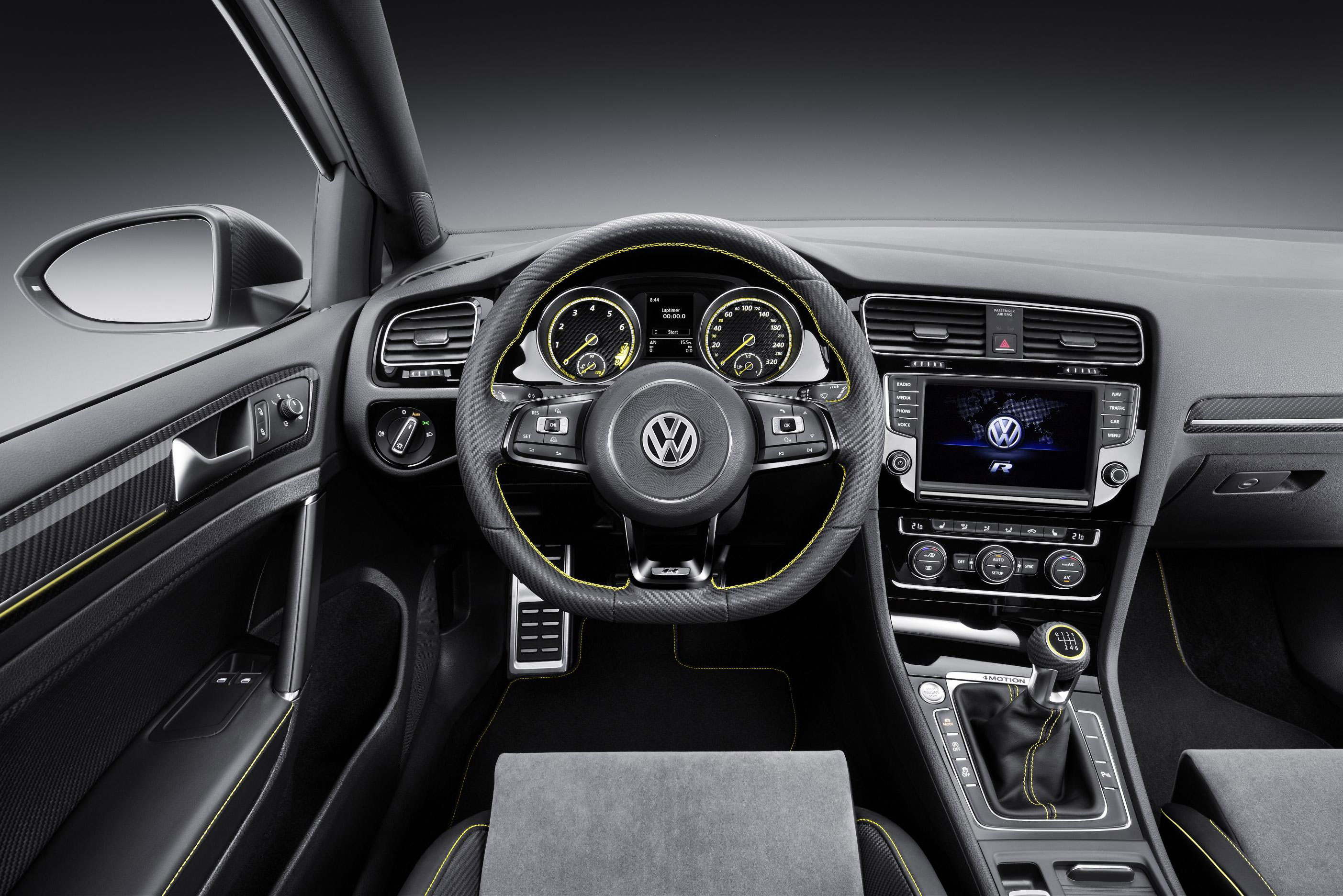
Earlier this week, Volkswagen’s head of powertrain, Dr Heinz-Jakob Neusser, told CAR magazine in the UK that “we will do this car”, though specifics about power and launch timing have yet to be announced.
Volkswagen unveiled the Golf R400 Concept at the 2014 Beijing motor show, promising sub-4.0 second 0-100km/h performance.
If the hottest Golf ever was to make it to Australia, pricing would put it within range of the $75,700 A45 AMG, making it also the exxiest Golf in history.
Finnish hypercar upstart Toroidion has pulled the sheets off its ambitious all-electric supercar claimed to produce 1000kW.
Using the blue riband Top Marques Monaco as its chosen debut forum, the curvaceous 1MW, or One Megawatt, vehicle is intended as “proof of concept” of cutting-edge high-performance powertrain technology designed, developed and built in Finland.
Its maker claims that the 1MW concept is street legal, offering what it calls scalable all-electric power for “different applications” – in other words, its heady one-megawatt maximum can be scaled down measurably for normal urban use.
Interestingly, the technology behind the 1MW, though short on revealing detail, adopts a battery-swapping format – rather than the conventional plug-in recharging method – in what Toroidion calls Rapid Battery Swap.
Initially established in 2011 to spearhead an all-electric powertrain to compete at the Le Mans 24 Hour racing event, the Raasepori-based Toroidon firm was founded by Finn Pasi Pennanen who, according to the official website, has spent two decades in motoring “developing and building concept cars.”
The two-seater is said to boast lightweight construction and is said to produce its phenomenal 1341-old-school-horsepower via a quartet of electric motors in and all-wheel-drive configuration.
So far no performance claims have been made for the supercar that, to date, has offered little more than fancy and speculation.
Get your free weekly report from the world of fast cars – subscribe to the MOTOR newsletter!
Changes to the 2015 Mitsubishi Triton MQ-series include an all-new 2.4-litre turbodiesel engine, a slightly roomier cabin with a new interior, and a six-speed manual gearbox.
WHAT IS IT The Triton is Mitsubishi’s best-selling vehicle in Australia. Fulfilling a multitude of roles, the MQ represents the first mechanical update for Triton since 2009 and the first body change since 2006. It’s available in both single and double cab, and in 2WD and 4WD.
WHY WE’RE TESTING IT Utes, particularly dual-cabs, are big business. They are no longer just work vehicles, but extremely popular family vehicles. Utes have become so popular in recent times that 2015 sales to-date place utes, with 14.4 % share of the new-vehicle market, second only behind ‘Small Cars’ (22.3%) and ahead of all the ‘SUV’ classes and all other ‘Car’ classes, according to official VFACTS figures.
MAIN RIVALS Toyota Hilux, Ford Ranger, Holden Colorado, Nissan Navara, Mazda BT-50, Volkswagen Amarok
THE WHEELS VERDICT While the Triton MQ is a ‘new’ generation vehicle, it represents evolution not revolution.
PLUS: Nimble by class standards; full-time 4wd on up-spec models MINUS: Tweaked older design; smaller cab than some
THE WHEELS REVIEW IT LOOKED like we had managed to get the Triton stuck. The 4wd section of the drive route Mitsubishi had organised for the preview of its 2015 Triton was at the spectacular Eagle View 4WD track, about an hour and a half east of Adelaide. As the name suggests, this is steep, rugged country and this particularly gnarly section of the track had managed to thwart the best efforts of the electronic traction control and all forward progress had stopped.
Thankfully we were driving the top-spec Exceed model, which comes standard with a rear differential lock, activated via a dashboard switch. Once the diff was locked, the Triton laboured for a second or two but eventually extricated itself from the predicament we were in.
This is Mitsubishi’s long-awaited answer to rash of all-new utes including the Ford Ranger, Mazda BT-50, VW Amarok, Holden Colorado and Isuzu D-Max that arrived in 2011 and 2012. Although the MQ Triton is officially dubbed a MY16 model it will go on sale in May this year. Despite what Mitsubishi would like you to believe, the MQ is not a clean-sheet design but more of a development of the MN Triton first released in 2009, itself a remake of the 2006 ML Triton.
Most importantly the MQ brings a new turbodiesel engine, a new six-speed manual (replacing the previous five-speeder), and a revised five-speed automatic that’s available right across the range. Previously only the top-spec model received a five-speed, the rest made do with a four-speed.
The new diesel is slightly smaller than the current offering (2.4 vs. 2.5 litres) but claims 2kW more (133kW vs. 131kW). The big benefit comes where it’s needed most, with peak torque up from 400Nm to 430Nm. With the auto box the improvement is more significant due to the fact that the old engine was only rated to 350Nm when mated to a self-shifter.
On the road the new engine is noticeably quieter, smoother, more refined, and more energetic than the outgoing offering. It’s also more economical according to the official figures. Not so good is the still somewhat indifferent auto box, the only gearbox available to sample at the preview.
Powertrains aside, the other big point of difference with the new Triton is the cabin. It’s only incrementally bigger than before but the seats are far more comfortable and the fit and finish is a world apart from the outgoing MN version. The steering wheel also gains both reach and tilt adjustment.
On the road the Triton feels small and nimble by class standards but lacks the dynamic polish of utes like the Ford Ranger and VW Amarok. Is it enough? As capable and likeable as the Triton is, a clean-sheet design was all that’s going to level with the class best. With the next-gen Hilux looming over the ute division, Mitsubishi needed a game-changer. This battle could get dirty.
SPECS Model: MY16 Mitsubishi Triton Engine: 2.4L, 4cyl, dohc, 24v, turbo diesel Max power: 133kW @ 3500rpm Max torque: 430Nm @ 2500rpm Transmission: 6-speed manual/5-speed automatic Weight: 2000kg (est.) 0-100km/h: N/A Fuel economy: 7.6L/100km Price: TBA On sale: May 2015Click here to read the full range review of the Mitsubishi Triton
You might not know the name Simon McKinley, but chances are you’re familiar with his driving.
You might have seen videos of a white Ford Mk II Escort being driven with the sort of commitment only exhibited by those with immense talent or a severe lack of regard for consequences.
If not, you can witness it above.
The mad Irishman behind the wheel is Simon McKinley, who sadly passed away on the weekend following an accident in an Irish hillclimb event.
McKinley crashed while driving a single seater (having progressed from his Escort) and despite the best efforts of the rescue crew, died at the scene.
The rest of the event was cancelled as a mark of respect, and social media has been awash with tributes to the 34-year-old four-time Irish Hillclimb champion.
McKinley is survived by his wife Deirdre, herself a regular competitor, and one-year-old son Rory. Our condolences are with McKinley’s family and friends.
The next time we’re adding a handful of opposite lock, we’ll remember him.
Get your free weekly report from the world of fast cars – subscribe to the MOTOR newsletter!
We were worried for a while there.
Maybe it was a hangover from the GFC, maybe it was simply an unfortunately coincidental gap in many companies’ product planning, but there was concern for a time that the affordable end of the performance market was about to dry up faster than sales of Rolf Harris originals.
Thankfully, it didn’t last long. The resurgence began as a trickle, spearheaded by the VW Polo GTI and rear-drive Toyobaru twins, but that trickle has turned into a flood over the 12 months, allowing us to assemble the largest Bang for your Bucks field since we introduced a price cap back in 2007.
Twenty-two cars showed up to test their mettle against the Bang formula, but it could have been even more. With customers waiting until 2016, Mercedes couldn’t justify providing an A45 AMG, HSV declined to take part with a Clubsport and GTS, Nissan/Infiniti couldn’t find a Pulsar SSS or Q50 in time and Peugeot… well, Peugeot didn’t get back to us about an RCZ-R.
Not to worry, because there’s still plenty of hot metal to entertain the judging panel of yours truly, editor Dylan Campbell, road test veteran Curt Dupriez, MOTOR stalwart David Morley and rally young gun Brendan Reeves, filling the very large shoes of our regular pro, Warren Luff, who was overseas working on his tan. Or driving GT cars. Or something.
From the bottom end of the Bang pool come the Hyundai i30 SR and Mazda 3 SP25 warm hatches, relying on their sharp sticker prices rather than razor-sharp handling to take home the trophy.
Which could be a tough ask, as the baby hot hatch market has simply exploded during the last year. Ford’s Fiesta ST, Renault’s new Clio RS, Peugeot’s 208 GTi and Kia’s ProCeed GT all pack a turbocharged punch for less than $30K and all have to be in with a shot at glory.
Moving further up the hot hatch price scale introduces the recently updated Abarth 595 Turismo, Mini Cooper S, Golfs in GTI Performance (VW didn’t have a base model) and R form, Audi’s S3 Sportback and a couple of oddities.
Skoda’s Octavia RS is neither fish (hatch) nor fowl (sedan) and Audi’s RS Q3 replaces the hatch with a tailgate. Does an SUV belong at Bang? Well, it does wear an RS badge, but don’t get Statler & Waldorf (read: Dupriez & Morley) started on that one.
Representing the rear drivers are the cracking BMW M235i and Lexus IS350 F Sport, while the V8 crew, Chrysler’s 300 SRT8 Core and Holden’s VF SS ute and VF SS-V Redline, are on hand to provide the obligatory drift shots.
Subaru’s latest turbo terror is present in both WRX and STI form (both past winners), while Volvo’s S60 Polestar is last but not least. Unless we’re talking about affordability, its $99,950 ask just scraping in under the $100K limit.
Speaking of price, the biggest change this year is that due to the size of the field, we’ve split the contenders into two groups, $0-50,000 and $50-100,000.
While there will also be an overall winner (revealed next month), splitting the field in two gives a more accurate picture of how each car sits against its peers and prevents a cheap-but-slow car taking victory through price alone.
Being now based in Melbourne also forced a venue relocation to MOTOR’s traditional Victorian home of Winton Raceway. Its 12-turn layout makes it ideal for testing road cars, especially as its relatively low-speed nature stops the high-power cars from gaining too much of an advantage.
Finally, the formula. On the basis that if you stand still you’re actually going backwards, we’ve made a couple of tweaks for 2014.
The weighting of performance and price in determining each car’s score remains at 60:40 respectively, and for each criteria each car’s performance is still scored relative to the rest of the field, it’s just the weightings of the individual criteria that have been altered slightly.
The straight-line disciplines have remained the same, with the 0-100km/h and 0-400m disciplines worth 10 per cent and 80-120km/h, 0-400m terminal speed and lap V-max worth five per cent.
Braking from 100-0km/h remains worth 10 per cent, but apex speed (taken from Winton’s slow turn seven hairpin) is now worth 10 per cent and the lap time itself, the ultimate indicator of a car’s overall performance, is worth 25%.
Finally, the judges’ rank is worth 20 per cent, as all the speed in the world is worthless if a car is rubbish to drive. If you think the weightings are all wrong, let us know!
So, with the numbers run and the mathematics done, let’s find out what finished where in Bang for your Bucks 2014.
$0-50,000 Car List Abarth 595 Turismo Ford Fiesta ST Holden SS ute Hyundai i30 SR Kia ProCeed GT Mazda 3 SP25 Mini Cooper S Renault Sport Clio RS200 Sport Skoda Octavia RS Subaru WRX Subaru WRX STI VW Golf GTI Performance
$50-100,000 Car List Audi RS Q3 Audi S3 Sportback BMW M235i Chrysler 300 SRT8 Core Holden VF SS-V Redline Lexus IS350 F Sport VW Golf R Volvo S60 Polestar
Formula Weightings 0-100km/h – 10% 0-400m – 10% 80-120km/h – 5% 0-400m V-Max – 5% 100-0km/h – 10% Lap Time – 25% Apex Speed – 10% Lap V-Max – 5% Judges Rank – 20%
Get your free weekly report from the world of fast cars – subscribe to the MOTOR newsletter!
We know what you’re thinking. How the hell does a car that won neither of the categories take the overall crown?
It’s really very simple. Against its $0-50K peers, the Fiesta ST scored a Bang index of 85.9 and Bucks index of 134.1 for an overall BFYB score of 162.5, just pipped by the Renault’s 164.6.
By bringing in all those fast, expensive $50-100K cars, the Ford’s Bang index dropped slightly to 79.4 (i.e. it wasn’t that much slower than the fast stuff) but its Bucks index skyrocketed to 185.3 (i.e. it was a LOT cheaper) for a final BFYB score of 193.4, pushing the Renault (190.8) into second place outright.
Regardless of the numbers, you’ll get no argument from anyone who’s driven one that the Fiesta ST is a thoroughly deserving BFYB winner.
If the name of the game is providing performance and fun for not much money, then the Blue Oval’s latest pocket rocket is a guaranteed future hall-of-famer.
Besides that bargain price, its numbers aren’t anything particularly special. Nought-to-100km/h takes 7.4sec and the quarter mile 15.4; solid, but far from mind-blowing.
What separates the Fiesta from its peers, though, is that it feels so alive. The 1.6-litre EcoBoost engine has torque everywhere but also revs and growls with fizzy energy; likewise, its six-speed manual has a precise, mechanical feel.
Its lap time of 1:06.6 was no faster than the Clio or Peugeot 208, but it could’ve done a 1:15 for all we cared. Accurate, talkative steering and a chassis that responds to your every whim mean that whether you’re chasing a lap time or driving it while looking out the side windows, you’re full involved without any uncertainty as to what’s going to happen next.
The only real chinks in its armour are a slight lack of traction exiting second-gear corners, the occasional steering rack rattle when really loaded up and brakes that get a bit soft after a couple of hard laps.
Perhaps some will find its willingness to oversteer a little unnerving at first but with a little practice you can practically enter corners backwards, all the while safe in the knowledge that you’ll be able to gather it up again.
Its talents were reflected in the judges’ rankings, with no-one placing it lower than third overall. No-one except Brendo that is; while full of praise for the Tangerine Terror, he ranked it way down in 12th! Pro drivers, what do they know anyway?
Behind the Fiesta, the final outright podium places were filled by the categories winners, the Renault Sport Clio RS200 (2nd) and VW Golf R (3rd).
Vaulting into a surprise fourth place was the Peugeot 208 GTi, followed by a local hero, Holden’s SS ute, stealing the place from Subaru’s WRX STI by a mere 0.1 point!
With a BFYB title and Performance Car of the Year podium placing under its belt, the only thing left for the Fiesta to do is to join the likes of the Subaru WRX and Polo GTI in the hallowed halls of the multiple BFYB winners.
But that’s a problem for next year, so for the next 12 months, the Fiesta is king.
Outright Placings
- Ford Fiesta ST
- Renault Sport Clio RS200
- VW Golf R
- Peugeot 208 GTi
- Holden SS ute
- Subaru WRX STI
- Subaru WRX
- Skoda Octavia RS
- Mazda 3 SP25
- Kia ProCeed GT
- Holden SS-V Redline
- Audi S3
- BMW M235i
- VW Golf GTI PP
- Chrysler 300 Core
- Mini Cooper S
- Hyundai i30 SR
- Lexus IS350 F-Sport
- Audi RS Q3
- Volvo S60 Polestar
- Abarth 595 Turismo
This wasn’t in the script. With any event such as Bang for your Bucks, there are the inevitable pre-event wagers as to what’s going to take home the silverware.
And if we’re honest, most of us had the Fiesta ST as the odds-on favourite thanks to its combination of respectable pace, incredible driver appeal and bargain basement $25,990 price tag.
So how did the Clio end up on the top spot? It simply outperformed Ford’s pocket rocket, outscoring it in every category bar 0-400m and lap V-max, providing a Bang score strong enough to overcome the disadvantage of the base Clio RS200’s still-reasonable $29,290 ask.
Renault’s copped plenty of flak for its approach to the new Clio RS, replacing the previous atmo screamer – one of our favourite hatches of all time – with a larger, softer, turbocharged, automatic five-door, but when the result is this good on a racetrack, well, would sir like some ice cream with his humble pie?
Its new-found day-to-day civility may have robbed the new Clio of some of what made the old car special, but it’s lost none of its ability to entertain when you’re driving it like you’ve stolen it.
A class-best Turn Seven apex speed speaks volumes about the grip on offer, yet it’s the Clio’s chassis that makes the biggest impression.
Whether you want to drive neat and tidy or trail the brakes in and hang the tail out, the Clio is game to play, and will do so all day.
While some of the other cars in the field could only manage a hot-lap or two before needing a Bex and a good lie down, the beak-faced Renault felt like it could’ve gone around until it ran out of fuel.
It was this stamina that led yours truly to rank it ahead of the Fiesta when it came time to tally up the judges’ vote. Whereas the Fiesta can occasionally get a little ragged in extremis, the Clio just gets better the harder you thrash it.
Brendo agreed but messrs Campbell, Dupriez and Morley all felt the Fiesta’s even more playful nature and greater character (manual gearbox, feisty engine) made it the preferred tool.
They have a point, as the Clio’s not without its faults, chief among which is the 1.6-litre lump under the bonnet.
There’s not much wrong with the way it goes, 240Nm of turbo torque and one of the best front-drive launch control systems allowing 0-100km/h in 6.99sec and 0-400m in 15.10sec despite a slippery surface.
Both times are a half-second up on what the old naturally-aspirated car could manage, but it’s lost plenty of appeal in the process.
Whereas the 2.0-litre atmo donk revved to 7500rpm+, the show’s now over by 6000rpm; the delivery feels a bit flat, too, and the artificial engine noise won’t be troubling anyone’s “greatest sounding cars ever” list any time soon.
You also won’t find a single judge that doesn’t think the experience wouldn’t be improved by three pedals and a movable lever in the centre console.
It’s not that we’re against self-shifting gearboxes per se, it’s just that this isn’t one of the better ones.
That said, it’s at its best when wicked up to Race mode and it won’t override your manual shifts, unlike a certain other manufacturer who resides at the tail end of the alphabet.
While an unexpected winner, the new Renault Sport Clio RS200 is nonetheless a thoroughly deserving one.
It scaled to the top of the podium by dint of its performance, while still asking for less than $30K, and such are its abilities that its flaws quickly become minor quibbles.
Results $0-50K placing – 1st Overall placing – 2nd Judges’ ranking – 4th
0-100km/h – 6.99sec (15th) 0-400m – 15.10sec @ 152.08km/h (14th) Lap Time – 1:46.50sec ( 14th) Pricing – $29,290 (4th)
Specs Engine: 1618cc inline-4, DOHC, 16v, turbo Power: 147kW @ 6000rpm Torque: 240Nm @ 1750rpm Weight: 1218kg Gearbox: 6-speed dual-clutch Suspension: struts, A-arms, anti-roll bar (f); torsion beam, coil springs, anti-roll bar (r) Brakes: 320mm ventilated discs, 2-piston calipers (f); 260mm solid discs, single-piston calipers (r) Wheels: 17 x 7.5-inch (f/r) Tyres: 205/45 R17 Goodyear Eagle F1 (f/r)
Get your free weekly report from the world of fast cars – subscribe to the MOTOR newsletter!
