
MALCOM Fraser, the former Liberal prime minister who ramped up protection of the Australian car industry in the late 1970s to early ’80s, has died aged 84.
An avid Wheels subscriber since his introduction to the prime minister’s office from 1975-83, Mr Fraser used his influence to ramp up import tariffs and increase quotas for car manufacturing.
In an interview with Wheels early last year, Mr Fraser spoke of how he used the magazine to keep up to date with what was happening in the automotive world.
He also featured in two Wheels stories, taking up the role of road tester for the new locally made Ford LTD in 1976, and again in 2008 where, 32 years after reviewing the original, he farewelled the LTD’s little brother, the Fairlane.
Watch as Mr Fraser recounts his years steering the burgeoning Australian car industry.
CITROEN will launch its first B-segment compact crossover in January, targeting the just-released Mazda CX-3, Renault Captur, Honda HR-V and Peugeot 2008.
Dubbed C4 Cactus (despite using the ‘PF1’ underpinnings of the smaller C3 rather than the larger C4 small car), the high-riding five-seat five-door hatchback is likely to land offering a pair of downsized turbo powerplants.
The base model is expected to offer a development of the 1.2-litre turbo three-cylinder Pure Tech petrol engine in five-speed manual guise, while automatic buyers will be catered for by a 1.6-litre four-cylinder HDi turbo-diesel.
However, the auto will be a clutchless automated gearbox, dubbed ETG in Citroen-speak, rather than a regular torque-converter, CVT or dual-clutch transmission as offered in rival products.
The Aisin-supplied six-speed auto is expected to be fitted to the 1.2 Pure Tech from a later date.
There will be no all-wheel-drive offering.
While exact pricing is unknown this far out from the launch, the range should mirror most competitors by sitting in the $25-35K bracket.
Citroen Australia general manager John Startari said the Cactus has the potential to be his company’s best-selling model.
“It’s going to depend on final pricing and specification, but the C4 Cactus has the potential to be our most popular model,” he told Wheels.
“In fact, we are already holding a number of pre-orders for the vehicle ahead of its local introduction.”
As we reported last October, the C4 Cactus was initially to be offered only in a left-hand drive, until the company cottoned on to its potential wider appeal
Among the Citroen’s more distinctive elements are its ‘Airbump’ technology (pockets of bubbles imbedded in the plastic side cladding to help stop minor impact damage), roof-mounted front passenger airbag (liberating dashboard space for more storage), liquid rather than spray for the windscreen washer jets, door pulls and pop-open rear-door windows.
Some of these features help reduce the cost of manufacture.
Additionally, there are almost 100 different variant combinations thanks to a wide colour, trim and option palette, further boosting the newcomer’s youth-baiting brief.
As with all of the Peugeot-Citroen group’s B-segment hatchbacks, the front suspension employs MacPherson struts while the rear end uses a simple torsion beam.
PART Jeep but with healthy lashings of Italian style, the 500X is Fiat’s retro-infused take on the booming small-SUV segment
WHAT IS IT? Fiat’s first proper SUV (so not counting the Freelander, a Fiat-badged Dodge Journey). It just happens to borrow styling themes from the tiny 500. Underneath it shares components with the Jeep Renegade, but brings a distinctive design and city-focused flavour. Produced in Italy, the pint-size SUV is a soft-roader for those chasing a little pizzazz.
WHY WE’RE TESTING IT The Fiat 500X will arrive in Australia in the third quarter of 2015 as the latest newcomer to the small-SUV segment. We get behind the wheel in Turin, Italy, for a taste test.
MAIN RIVALS There are plenty of older, underwhelming small SUVs in the crosshairs (we’re looking at you Ford EcoSport, Mitsubishi ASX, Suzuki S-Cross…) but it’s the 2015 new arrivals that are more serious competitors. Think Mazda CX-3, Renault Captur, Honda HR-V and Jeep Renegade.
THE WHEELS VERDICT There’s plenty to like about Fiat’s Jeep-infused baby SUV entrant.
PLUS: design touches inside and out; brave trim elements; torquey 1.4 turbo; decent dynamics; active safety tech on some models MINUS: ride over sharp bumps; mild torque steer from FWD models; tight back seat; front seats lack lateral support
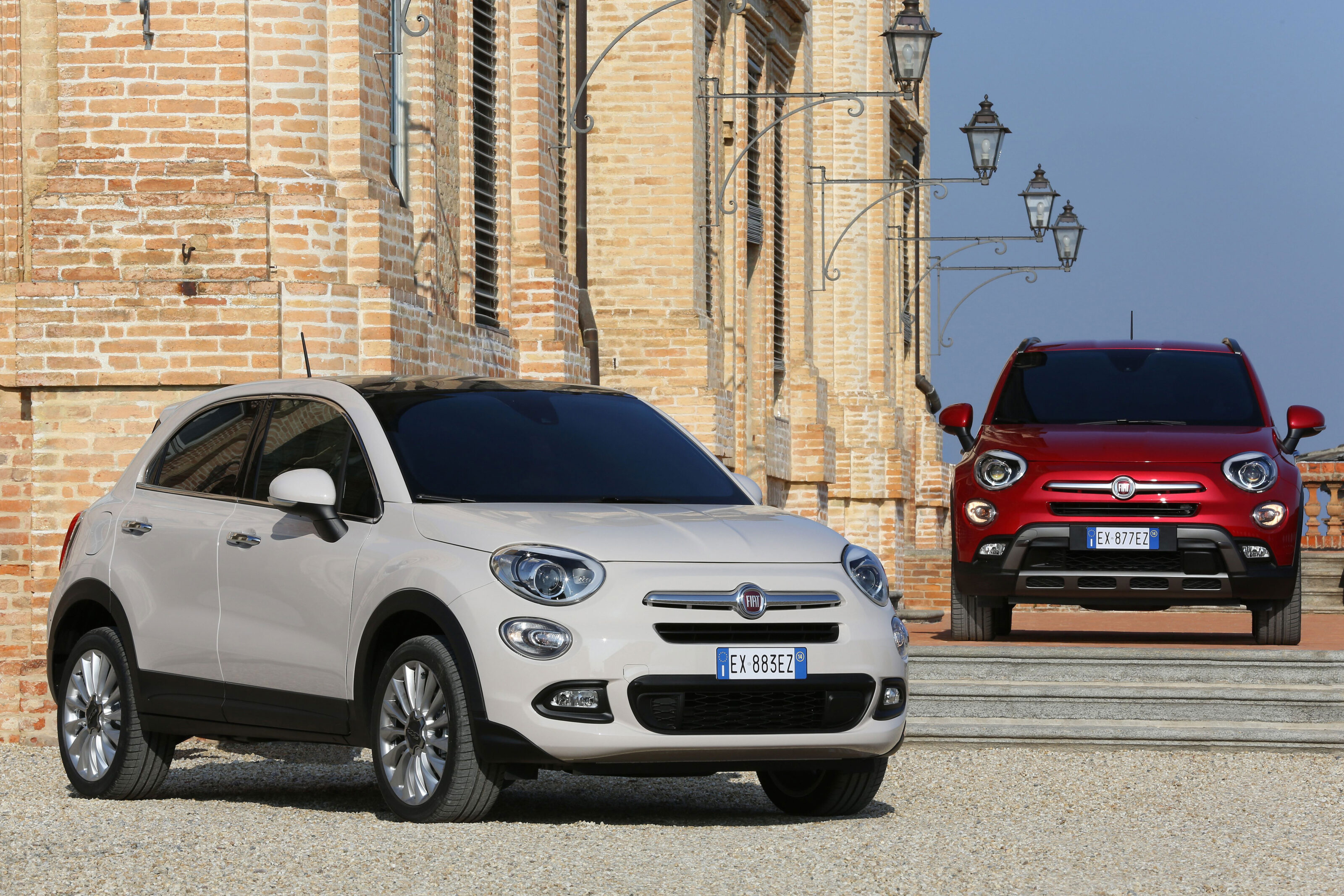
THE WHEELS REVIEW GETTING noticed in the small-SUV segment is a lot harder in 2015 than it was a year or two ago. Unexpectedly talented arrivals have packed what was previously a niche (and largely neglected) segment to the gunwales.
Fiat thinks it has the trick with its 500X, which comes to Oz in the third quarter. While it shares almost nothing with the cutesy 500 city car other than part of its name, the X represents the crossover in what is the brand’s first SUV – if, for a blissful moment at least, we can pretend the Freemont never happened.
As is the case with so many Italian cars, aesthetics are key. The retro-infused 500-esque headlights and curvaceous high-riding lines define a vehicle dreaming of big things. But whereas the five-door 500L almost-MPV looks bloated and awkward, the 500X gets much closer to proportional acceptance with a high-rider wagon body.
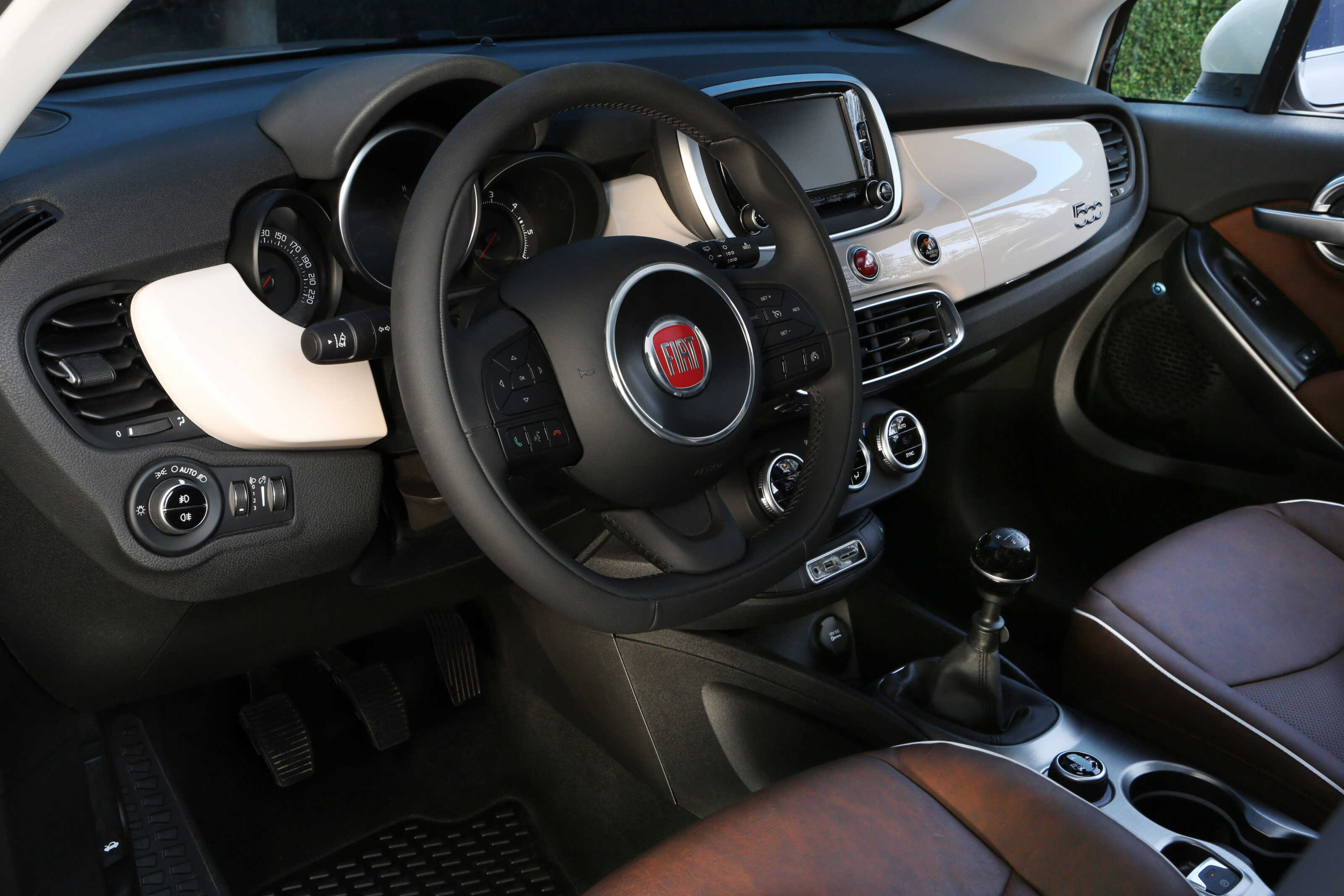
Inside there’s lots to like. Simple 6.5-inch colour touchscreen atop the dash (entry models get a 5.0-inch unit) and partial digital instrument cluster (Jeep drivers will recognise the fonts and switchgear) add the requisite tech for what Fiat promises will be a well-specified car. Silver finishes lift the tone, although it would be better if they were closer to real metal; the door handles in particular feel plasticky cheap. Top-spec models pick up boomy ‘Beats by Dre’ stereos perfect for Millennials.
It will be best if rear-seat occupants are below average adult dimensions because legroom is tight and headroom only adequate. At least there’s good side vision and a higher bench for a decent view. Sitting higher gives an SUV feel, but the lack of upper body support soon becomes apparent; changes of direction has you bracing with your knees.
It’s a shame because the 500X is dynamically capable. The independent suspension is taut and jars over sharp-edged bumps, but compliant and well-behaved over larger ones, settling quickly. On northern Italian roads at the tail end of ski season, our car is running on winter tyres but grip from the 18-inch rubber is acceptable, the front gently sliding wide as you push on.
The electrically assisted steering is overly light and doesn’t offer much meaningful feedback, but is devoid of unwanted kickback and it responds faithfully.
Fiat’s familiar 1.4-litre four-cylinder turbo is available in two tunes, but it’s the lower-output 103kW version we’re testing here. Unspectacular power is backed up by a more than generous 230Nm that arrives low in the rev range. Acceleration to 100km/h is claimed to take 9.8 seconds and it feels snappy enough. Even better is the low-rev muscle after a hint of turbo lag.
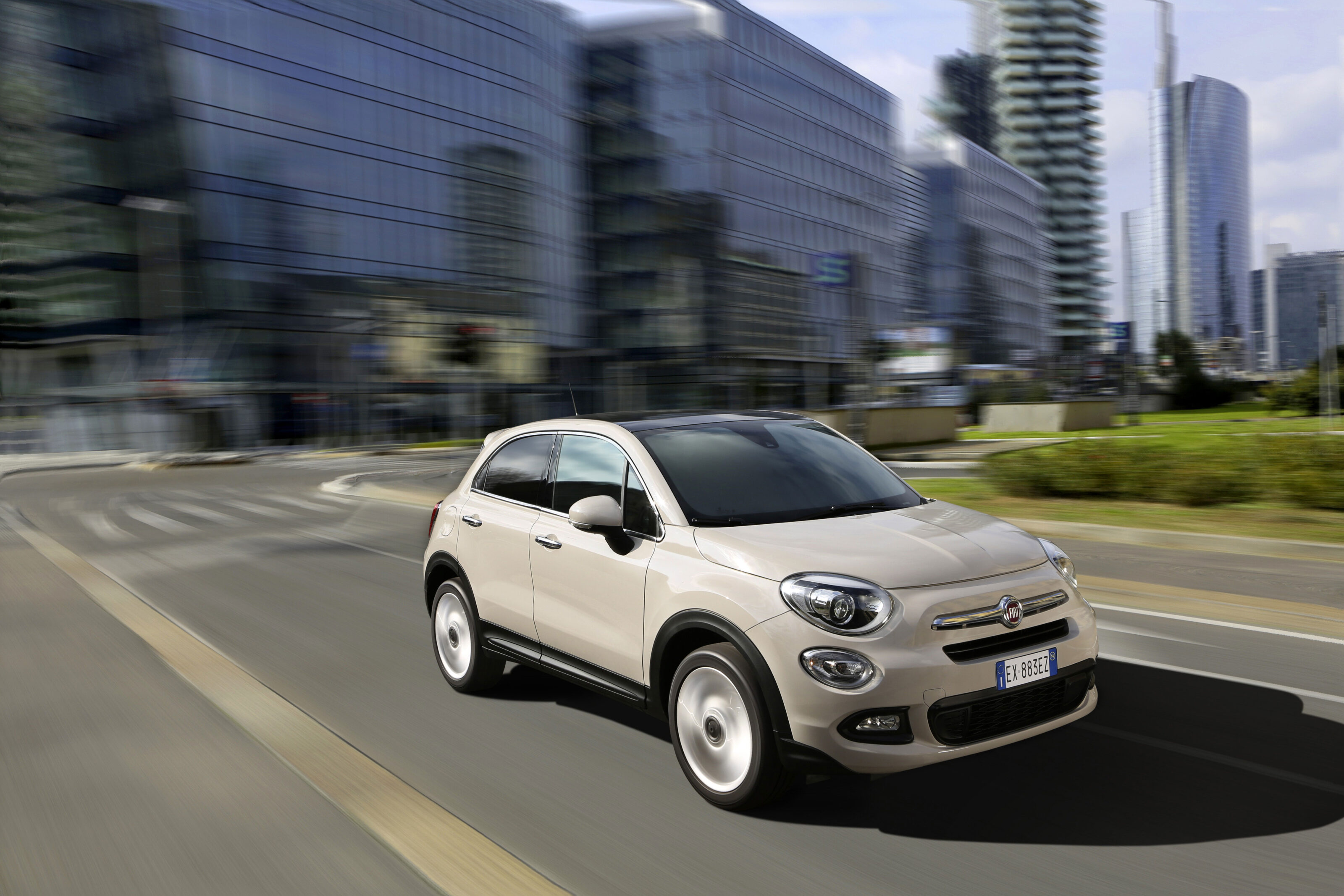
There’s a wriggle of torque steer, though, albeit not the unwieldy send-you-across-two-lanes type exhibited by some older hot hatches. It’s not enough to spoil what is a thoroughly likeable car that promises to sprinkle some retro charm on the emergent small-SUV segment.
While the ‘Old Cow’ dark tan leather trim, gleaming exterior doorhandles and metal-look interior finishes might tempt plenty, there’s no shortage of substance to a small wagon that also happens to be a big Fiat.
SPECS Model: Fiat 500X Lounge 1.4 Engine: 1368cc 4cyl, dohc, 16v, turbo Max power: 103kW @ 5000rpm Max torque: 230Nm @ 1750rpm Transmission: 6-speed manual Kerb weight: 1320kg 0-100km/h: 9.8sec Economy: n/a Price: $27,000 (estimated) On sale: August
TESLA has launched its latest software that it claims will end range anxiety for its electric vehicles, as well as adding more safety features and new top speed of 250km/h for the Model S.
The Silicon Valley company’s 6.2 software update, which is enacted remotely, introduces ‘Range Assurance’ and ‘Trip Planner’ that it claims will ‘eliminate range anxiety’. It does so by directing the nav system to the nearest Tesla Supercharger (the company’s high-speed charging points) along the route and within the remaining range if the final destination is beyond this distance.
The Superchargers can provide 273km range in as little as 30 mins, according to Tesla, with the company also claiming that 90 per cent of the US population lives within 282km of a supercharger. The entry-level Model S has a claimed range of 335km, while the top performing P85D posts a 407km maximum range, while there are 403 supercharger stations in the USA with 2219 superchargers.
The range and Supercharger points can be access by a smartphone app called ‘Trip Planner’ that works in conjunction with sat-nav to advise owners of how much charge is required to complete the programmed journey.
The BMW i3 has a similar system in its sat-nav, whereby it advises the range of the remaining charge on the navigation display. It also alters the range depending which drive mode the i3 is in, and advises of the nearest charging point should the destination be beyond reach.
The Tesla 6.2 software also provides Automatic Emergency Braking and Blind Spot Warning, features promised when the Model S recorded a five-star EURO NCAP rating late last year.
A SHARP-EYED Wheels reader has caught a future version of Hyundai’s largest luxury limousine, the V8-engined Equus, secretly testing in Australia.
This engineering development mule, spied at rest this week by Rohan Crofton in the sleepy north-eastern Victorian town of Bright, is a long way from its Korean home where it sits at the top of the carmaker’s food chain.
Bigger than Genesis, the exclusively left-hand-drive Equus is due for a significant overhaul after its original unveiling at the New York motor show in 2010.
However, we reckon development work on the Equus is a lot further along the track than this heavily camouflaged car would have us believe. The clue to this is a series of shots snapped in February by another Wheels reader, Michael Joyce, just north of Canberra.

Looking closely, we can see a long, wide saloon with a decent front and rear overhang hidden under a cover that, when we superimpose images of the Equus mule, point to a show-ready concept version of the saloon being photographed and filmed at an airstrip just outside Gundaroo.
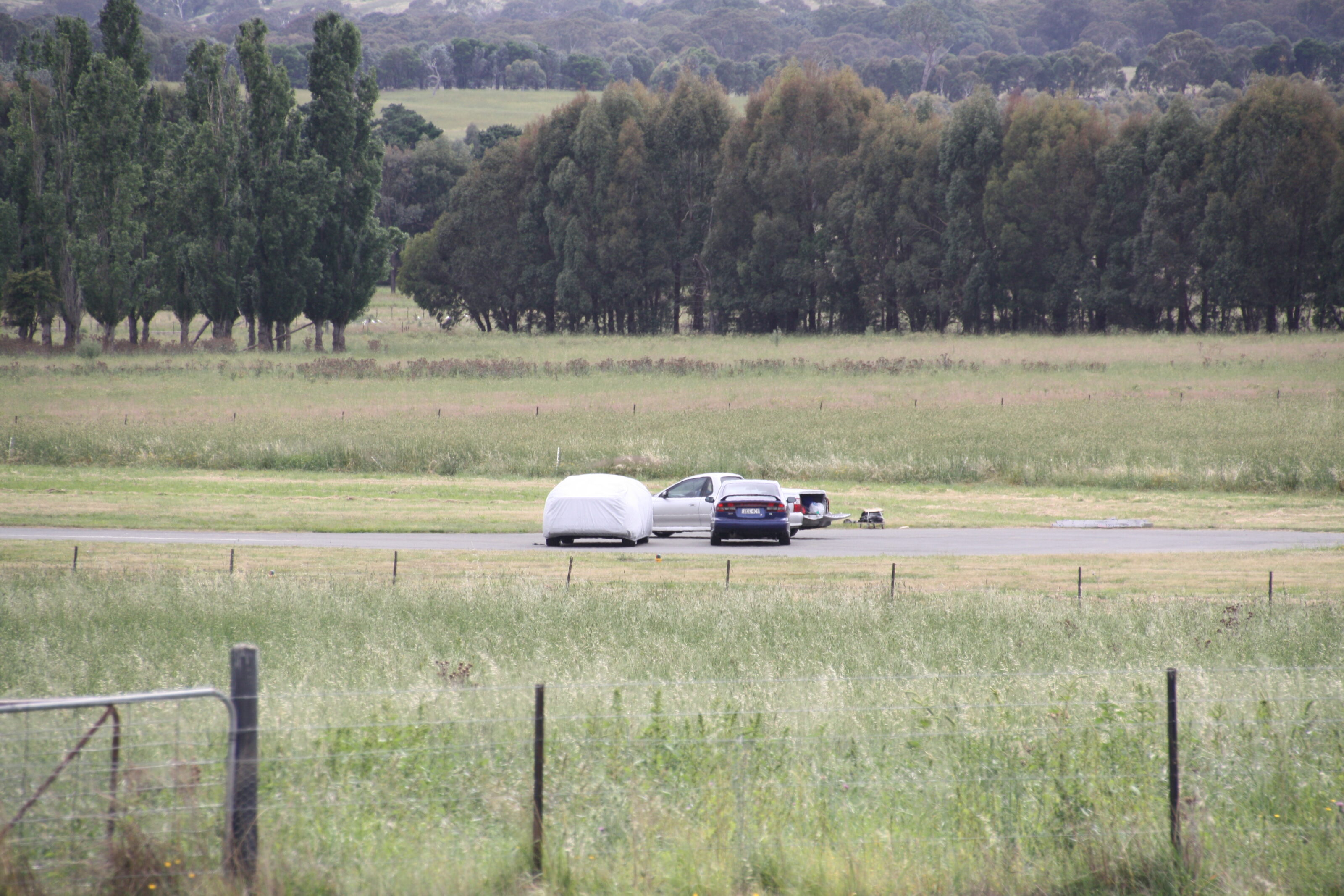
We tried following the trail, even resorting to phoning the local post office, hairdressing salon and pub in an effort to find out what was under the covers, but despite knowing that the mystery car had been there for about a week, no one could add anything else to the story.
Development of the Equus appears to be barrelling along, as is testing of the model’s first all-wheel-drive system, all-new active cruise control, and automated emergency braking system.
Even more spy images show yet another development mule snapped in the snowy landscape of northern Scandinavia.
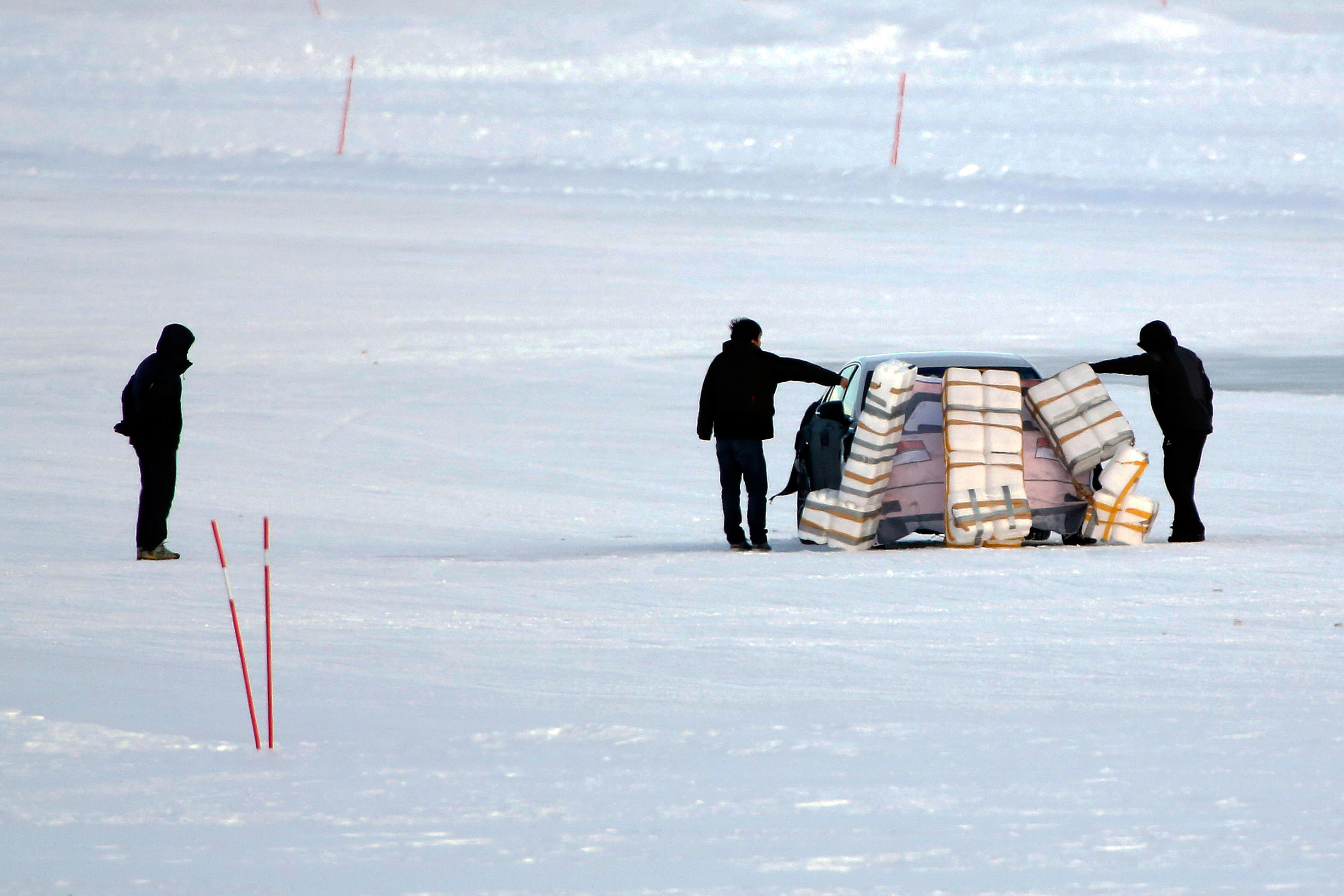
Judging by the nose of the Equus shown bursting through a dummy barrier, the slippery surface of a frozen lake is still a challenge for the self-braking system.
Hyundai has anything up to a dozen test cars in Australia at any one time, generally taking advantage of the country’s arid interior to stress-test air-conditioning and cooling systems while South Korea lies blanketed in snow.
The Korean car maker is believed to have locked in the concept version of the Equus spied in Australia for a reveal at April’s New York motor show.
Have spy pics of your own? We’d love to see them. Just email them to [email protected]
To celebrate 45 years of the legendary GT-R, Nissan has revealed a special edition of its current techno-laden supercar.
Nissan is bringing three 2016 45th Anniversary R35 GT-Rs, as they will be known, to Australia – a relative fraction of the 30 destined for America, where it will be called the GT-R Golden Edition.
The latter name can be attributed to the fact Nissan has developed an exclusive colour for the car, a metallic golden hue called ‘Silica Brass’.
Besides the new external paint scheme, the 45th Anniversary features a colour-matched build plaque on its interior centre console and identification plate in the engine bay.
Last offered in 2002 on M-Spec variants of the R34 Skyline GT-R, the colour takes on a more subtle sheen than the frighteningly bright two gold R35 GT-Rs of past, one built for Usain Bolt and the other for charity.
Meanwhile the GT-R remains mechanically untouched, still packing the same 404kW and 628Nm from its twin-turbo V6.
Nissan has told MOTOR the three Australian 45th Anniversary GT-Rs have been allocated to dealerships, but said it doesn’t yet know what price increase over a standard R35 GT-R the 45th Anniversary will wear, or whether they’re yet spoken for.
However, with the US Golden Edition commanding only a $1000 premium over its standard counterpart, we don’t expect the price difference to be significant.
Get your free weekly report from the world of fast cars – subscribe to the MOTOR newsletter!
Renault got the memo for the 2015 Geneva Motor Show, which was to bring something fast. And while its subject didn’t have a magnesium roof, hyper-hybrid system or SV-badge, it did parade something RenaultSport fans will be very interested in.
Determined to reclaim what the automatic-only, turbocharged, open-differential Clio RS200 EDC lost on die-hard Dieppe purists, RenaultSport has built a faster version of its third-generation performance mini-hatch.
It’s called the Clio RS220 Trophy EDC (Efficient Dual Clutch), and it’s coming to Australia.
The new range-topper Trophy will bring more power, a sharper transmission and more grip from its chassis.
RenaultSport engineers have tweaked the Nissan-sourced 1.6-litre turbocharged four cylinder’s intake and exhaust systems, filling the latter with a freer flowing, and more efficient, catalytic converter.
Meanwhile the rev limit has grown from 6500rpm to 6800rpm, and a fatter turbocharger makes use of the engine’s newfound flow.
As a result, an extra 15kW and 20Nm are squeezed from the inline four, helping the RS220 Trophy make 162kW and 260Nm. That’s not all, its new torque boost function lathers on another 20Nm in fourth and fifth gear.
Hoping to make up for the lack of a manual transmission, its six-speed dual clutch transmission has been recalibrated to ensure faster shifts, promising to swap cogs twice as fast when in ‘Race’ mode, and paddle travel is 30 per cent shorter.
Complementing the engine upgrades is a plethora of chassis adjustments that see the Clio Trophy plummet 20mm at the front and 10mm at the rear, and use firmer dampers and 40 per cent stiffer rear springs.
Michelin Pilot Super Sports wrapped around machine-face style 18s and a quicker steering rack round out the dynamic upgrades.
Owners score upgrades to its interior too, where new leather ‘sport’ seats are matched with carbon-look air vent surrounds.
Frost White, a new matt paint hue matched with a gloss black roof and spoiler, will be added to the car’s colour palette. And identifying a RS220 Trophy will be made easier with ‘Trophy’ markings on its front blade, door mouldings and doorsills.
As a limited edition, the RS220 Trophy will be sold in 11 markets worldwide. Renault has confirmed Australia will be included, but will wait at least half a year longer than Europe for its allocation, which remains undisclosed along with its price.
With a the top-spec Clio RS200 EDC running up $37K, we hope it’s not too far north of that – as that’s where formidable competition from Wolfsburg awaits.
Get your free weekly report from the world of fast cars – subscribe to the MOTOR newsletter!
WATCHING him on television, putting the final bullet into Falcon, closing two factories and announcing the sacking of 1200 workers, Bob Graziano seems po-faced, emotionless, remote. He seems like an easy man to dislike; a Blue Oval hitman in a blue suit sent to Australia to kill off 90 years of history and the world’s third oldest nameplate, regurgitating the official spin despite the 7.30 Report’s Leigh Sales’ attempts to provoke and pillory him.
He looks and sounds like an accountant, emoting unconvincingly about how much Ford values ‘Aurrstrayaa’ and how exciting the future for Ford will be.
And yet, inevitably, that two-dimensional image is misleading. Graziano might bleed Ford blue, but he still bleeds. “It was obviously a very difficult decision to take,” he says of the closures. “But the data was compelling, so it was ultimately the right decision, regardless of how painful it is.
“There are individuals out there who don’t like our decision and won’t consider the brand. And I get that. What we need to continue to do is communicate what we are going to do in Australia … But it would be naive of us to assume that we made the announcement and everything just returned to the way it was before.”
The paradox in all this is that, having recommended the hard decision to fundamentally restructure Ford’s Australian operation, Graziano is now trying to make the transition as fair, and painless as such an unfair, painful exercise can be. It’s a desire that marries with his complex combination of characteristics.
“You could not wish for a better guy to handle this process fairly and sensitively than Bob Graziano,” was how one person intimately familiar with Ford Australia and its steady decline put it. “He has a social conscience, and not everyone does.”
That’s one reason why he gave more than three years notice of the intended closure date – although he concedes that “unforeseen circumstances” might see the plants shut sooner. And also why he doubled his tenure as president from three to six years to navigate Ford Australia safely through this “transition”.
“I’d like to think a lot of the heavy lifting will be done,” says Graziano of the next three years. “But it will always be a work in progress because the consumer will demand that things continue to evolve, they have for the last 100 years and they will for the next 100. We have to change with that.”
Graziano is a strident warrior for Ford and more quietly for God. Being a senior executive in one of the globe’s most cut-throat industries can’t always be easy when combined with sincere Christian values. But Graziano tries, grinding out 16-hour work days and then, along with wife Ginny, donating significant amounts of time to charitable work and counselling.
It is something they have quietly done for years and will take on full-time when he retires from Ford, most likely after his six-year stint in Australia is over at the start of 2017.
“I often talk about my four Fs in life and that’s my faith, my family, my friends and Ford. In that order,” he says. “It’s what helps keep me grounded, it’s what helps keeps my family grounded and it has been an integral part of my life.”
The president and CEO of Ford Australia is at the wheel of his current company car, a Ford Falcon G6E Ecoboost, as he speaks of his philosophical underpinnings.
From FoMoCo’s Aussie headquarters in Campbellfield on Melbourne’s northern outskirts, we have driven past the assembly plant, which closes no later than October 2016, then down the freeway toward Geelong, home of the Ford engine plant, which will also be shuttered by that date.
On the way we see the small You Yangs mountain range jutting out of the plains. Tucked into its north-eastern edge is Ford’s engineering, test and development centre, which will continue to operate after the plants are quietened.
In a couple of hours with Graziano acting as chauffeur, we have touched on the various arms of what constitutes Ford in Australia; past, present and future.
If he was at all self conscious about the tour we were taking, Graziano never showed it. Not because he wasn’t conscious of what we were asking him to do, nor the symbolism of it, but because he believes to his core what is being done here – to the local industry and to Australian people – is right for Ford.
“Some people don’t like the word, but it is a transition for the brand,” he said. “Think about the transitions Ford in Australia has taken over the last 90-plus years and this is yet another one. It is ideally setting us up for the next 90 years in Australia.
“We believe we have contributed quite a bit to the automotive landscape in Australia, and we want to continue to contribute. Just in another way.”
Graziano, 54, is steeped in Ford and the automotive industry. His father, Lou, worked for Ford in senior roles for 34 years and Bob was raised – along with six siblings – in Bloomfield Hills, the affluent suburb of Detroit that is home to many car company execs, and the global HQ of Chrysler. Graziano didn’t grow up so much a car guy as a car-industry guy.
One of his sisters worked for 34 years at Ford and Graziano himself joined the blue oval in 1982, straight out of his father’s alma mater, Drake University in Iowa, where he gained a bachelor of science in business administration. Since then he has never worked for any other company, or really considered it.
Through 31 years and 12 moves, he and Ginny have raised five children and lived in places as diverse as Brazil, South Africa, Japan, China and now Australia.
The day of this interview in early October, Graziano was celebrating the birth of his first grandchild back in the USA.
“I was born in a family that was a Ford family and grew up with it. Everything we have is because of the Ford Motor Company,” he says. “There were always Fords in the driveway. When I first met my wife she drove a Honda and when she came up to visit, my Dad wouldn’t let her park in the driveway.”
Graziano shows rare irritation at the suggestion that Ford is not as great as he clearly believes it is. He is a true believer. This is real love, deep, embedded.
“If you were to call any of my friends and asked them what I say about Ford behind closed doors, I would be very surprised if they told you anything different to what I say to you,” he asserts.
Track back through Graziano’s postings and it becomes very clear he is a ‘go-to guy’ for Ford, be it boosting the company’s presence in South America, managing the relationship with Mazda or steering the Ford alliance in the exploding Chinese market.
It is significant that his career path followed the same course as two of the most senior modern Ford bosses, now retired CFO Lewis Booth and boss of the Americas Mark Fields, who is widely touted to be Alan Mulally’s successor at the very peak of the company.
Being sent to Australia is a detour away from a logical progression up the corporate ladder. But just as clearly, Graziano could be trusted to find a way to finally fix Ford’s Australian flow of red ink. It’s a task others have not been able to manage.
Mulally could rely on Graziano to do the right thing by the ‘One Ford’ plan. Not to be seduced by the romanticism of building cars here, nor be put off the hard decisions because his ego was too big to cope. And not be too scared to be branded the villain in the ‘Death of Falcon’ passion play.
“There aren’t too many jobs in the company that allow you to sit back and coast,” Graziano counters, resisting the description of hard-man. “They all provide you with the opportunity to make a difference, and some provide bigger opportunities than others.”
Clearly so. It is because he believes what he is doing for Ford that he can stick so doggedly and calmly to the corporate-speak message he wants to convey, sometimes in the face of incredulity and even derision. The only person I’ve ever interviewed who can do it better – if better is the right word – is Mulally himself.
“You have a job to do and I have a job to do and what I want to do is communicate our story,” Graziano says. “I don’t know if it is something I have learned, I have something I want to communicate and when we are talking I want to make sure we are coming back to what we want to talk about.
“It’s the other side of the same coin that you have. You are always on message as well, there is always something you want to get out of your stories. We can go off into the weeds for a while but you will come back to your main story sooner or later. I am no different.”
Metaphorically we’ve wandered into the weeds a few times on this drive, but Graziano has stayed laser straight. He’s not an easy man to distract or unsettle, but it might be easier to like him than his actions, and manner, suggest.
It has been a calm, secure, quiet and educative ride. For Bob Graziano we fancy the next three years will be far more turbulent.
Still moving Ford was originally published in the December 2013 edition of Wheels
SLOWING sales, the decision to exit Australian manufacturing, and the biggest loss in Ford Australia’s history will remain the legacy of US-born Bob Graziano’s almost five-year stewardship.
Here’s how his Australian sojourn panned out:
Oct 2010: Ford announces Graziano, then heading up its China operation, as head of Ford Australia, replacing Australian Marin Burella
Mar 2011: Production cut to three days a week for a month to help clear a backlog of unsold cars
May 2011: Ford Australia posts $25 million profit for the 2011 financial year; industry minister Kim Carr predicts slow Falcon, Territory sales will bounce back with new models
Jul 2011: Ford introduces capped-price servicing scheme to win back customers
Jan 2012: Federal government invests $103 million in next-generation Falcon large car, sparking furore over government support for car industry; Ford regional chief Joe Hinrichs says Australia is too expensive to start an export program
May 2012: Ford Australia posts record $290 million loss; Ford aims at retaking top-three sales spot in Australia; Ford workers return to work after collapse of parts supplier CMI temporarily interrupts production
Jul 2012: Ford announces 440 redundancies and flags 30 percent cut to production, from 209 to 148 vehicles a day
Aug 2012: 100 Ford Territory SUVs ship to Thailand as part of a trial export program, but local tariffs push price tag to $100,000; US parent invests heavily in Broadmeadows-based design centre
Nov 2012: 330 factory workers pushed out the door as Ford holds hopes of keeping workforce stable at 2900
Apr 2013: LHD Territory export program declared too costly to be viable
May 2013: Ford Australia formally announces it will quit manufacturing, posts $141 million loss and flags it won’t return to profitability until after it shuts down local production; Kim Carr says it could have survived longer with aborted Focus production plan
July 2013: Ford regional chief Joe Hinrichs says Australia was too far away from US to make it viable
Aug 2013: Down days introduced due to slowing Falcon, Territory sales; US chief Alan Mulally admits Australian production “had to go”
Jan 2014: Detroit flags Australia will be a drain on profits ahead of 2016 closure
Apr 2014: Ford invests in Lara proving ground as part of Australian engineering focus
Jun 2014: Redundancy axe falls again, culling 200 from manufacturing; Falcon and Territory production cut to 83 vehicles a day, down from 133 in January; Graziano denies rumours slow sales will force early factory closures
Nov 2014: Graziano says he’s not interested in chasing a top-three spot in the Australian market
Dec 2014: Extended capped-price servicing program launched to lure customers, later expands it to include free loan car for customers having vehicles serviced at Ford dealerships; announces plans to release 20 new-generation or refreshed models in Australia by 2020; quits V8 Supercars
Jan 2015: Sales of Ford’s locally made cars falls to a 48-year low
You’ve never seen a 500 like this: a wild and exclusive race-bred Italian pocket rocket that takes the cutesy Fiat 500 base and turns the wick up to extreme
WHAT IS IT? As the name suggests, it’s a two-seater that just happens to look like a Fiat 500. It’s also the fastest, most exclusive Fiat on the market (technically it’s an Abarth, but it’s based on the 500). Fiat refers to it as “the smallest supercar” on the market.
WHY WE’RE TESTING IT About a dozen are coming to Australia – with a big price tag. Our brief drive was a rare opportunity to sample what could become a collector’s item.
MAIN RIVALS There really aren’t any direct rivals because no one has been as crazy as the Italians in dreaming up a car like this. Fiat would like you to think something like a Lotus Elise could be on the same shortlist. But let’s be more realistic and say it’s more likely to be a Volkswagen Golf R, or a modified Toyota 86/Subaru BRZ. Or even a Mercedes-Benz A45 AMG.
THE WHEELS VERDICT Fun and feisty but super-expensive and more a track warrior than a daily tourer. You’d have to be a hard-core 500 fan.
PLUS: Chunky and funky design; rorty exhaust note; optional dog-ring transmission MINUS: Price, price and price; oh, and it’s fairly impractical
THE WHEELS REVIEW WHEN it comes to exclusivity, you can forget the latest two-door Bentley or Lamborghinis. The Abarth 695 Biposto out-exclusives the lot.
About 10 are destined for Australia, each with a price tag ranging from $65,000 to as much as $100,000, depending on which options you’ve decided to tack on to the fastest, most hyper Fiat 500 ever built.
Like the Abarth 695 Tributo Ferrari, the Biposto gets a feisty 1.4-litre turbo, but there’s a whisker more power than that former 500 range-topper, for a grand total of 140kW. Hardly explosive outputs, then.
But it’s the work done on light-weighting the tiny two-door that’s helped shave its 0-100km/h sprint down the best part of a second, to a claimed 5.9 seconds. Impressive.
Gone are the Xenon headlights and fog lights. The radio, too, has been left on the shelf. And the rear seats are missing, inspiring the car’s Biposto (two-seat) name.
Fiat claims a dry weight of 997kg, slotting neatly below the tonne, though the kerb weight will sound less sexy, going into four figures.
Our taste test was just that – short and sweet. It involved a lap of the Balocca proving ground near Fiat’s home base in Turin. We’re talking a handful of kilometres, every one of which we did at maximum attack.
Out of the pit lane, the throaty Akrapovic exhaust (complete with titanium pipes) sends a beefy growl through the sparse cabin. Lift off and it burbles and cracks on the overrun.
Performance, too, is punchy. The familiar four-pot is loaded with meaty mid-range, enough to get the Pirellis fighting for traction out of tight corners.
Row it through the gears, though, and the speedo soon sails past 200km/h, at which point aerodynamics are having their say and slowing forward progress.
Sizeable Brembo brakes (for a little car) bite hard and can have the tail feeling light with a desperate lunge into a tightening right-hander. The electronics chime in to keep things vaguely pointing straight and the little two-seater scrabbles around.
One thing that hasn’t been improved, though, is the seating position. You’re perched up high and feel every rock-and-roll as the Fiat darts – athletically – from one corner to the next.
It’s not the only thing wrong, especially once you glance at the price tag.
Ultimately, there are slicker ways to go faster for the same money, but you may not turn as many heads, or have quite as much fun doing it.
Model: Abarth 695 Biposto Engine: 1368cc 4cyl, dohc, 16v, turbo Max power: 140kW @ 5500rpm Max torque: 250Nm @ 3000rpm Transmission: 6-speed manual Weight: 997kg (dry) 0-100km/h: 5.9sec Price: $65,000 (est.) On sale: Now

