
LAUGHTER isn’t something that rings often around the chambers of the Victorian Supreme Court, but today seems to be something of an exception.
Prompting it, by all accounts, is an attempt by Dutch pilot Giedo van der Garde to regain his seat at the Sauber Motorsport team ahead of the Australian Grand Prix, which officially kicks off later today with the naming of the drivers who will contest the 2015 season opener.
Providing it are Justices Whelan, Beach and Ferguson, who have listened as the legal team representing Sauber attempts to extract the team from the tricky problem of having to fill two race car seats with three arses.
Wheels is not present in court, so we’re relying on a Twitter feed from respected Formula One scribe Adam Cooper, whose rolling account of the proceedings from the courtroom reads more like a TV sitcom than an appeal against a ruling handed down late last year that basically says if it’s written in a contract, then there’s no backing out from it.
Cooper’s account of the court’s hearing describes a bench that seemed to have more knowledge of the workings of F1 than the team of lawyers representing Sauber and its nominated drivers, Swede Marcus Ericsson and surprise recruit Brazilian rookie Felipe Nasr.
At one point of the proceedings, Cooper says a lawyer representing Ericsson and Nasr told the court that his drivers “could face legal proceedings if they drive and deprive [van der Garde] of his seat”.
“Judges laugh at suggestion,” Cooper wrote, saying that one judge offered that this would only happen “at the far outer reaches of the galaxy”.
At 4.30pm today – the exact moment that teams need to notify the F1 hierarchy of the highly paid, or high-paying, derrieres to fill the drivers’ seats – the Victorian Supreme Court of Appeal will say whether or not Sauber’s bid to kick van der Garde out of a seat has been successful.
The judges had flagged earlier that it could delay its decision until 9.30am tomorrow, which would not have suited either Sauber or van der Garde.
If things go van der Garde’s way, it means Sauber has three legitimately signed-up drivers on its books, and will likely need to start talking to van der Garde and the team’s other drivers about paying one out – a problem that could bring the team’s finances unstuck, Sauber has warned.
We await the verdict on the verdict.
NOBODY’S going to challenge Lewis and Nico. That’s the accepted wisdom in the paddock after every technical director who wasn’t called Paddy Lowe clicked shut their laptops after the Barcelona pre-season tests and had a moment of quiet reflection.
The Mercedes-AMG Petronas steamroller appears unstoppable.
That said, there are precedents here. Fernando Alonso was an unbackable favourite in 2007, only for Kimi Räikkönen to relegate the Spaniard to third in the final race. So who has the potential to cause some long faces in Brackley this time round?
There are a few worth watching but momentum and unpredictability make a driver’s prospects more interesting than most at the start of the season.
Forget about old stagers like Button, Massa and Räikkönen. Experienced hands in the same teams are unlikely to reverse last season’s fortunes, sadly. So for all their service to the sport, and the love the sport has for them, they are not drivers to watch.
And while there’s novelty value in seeing a 17 year-old race in F1 (Max Verstappen) and watching the in-car footage to see if Carlos Sainz’s son (Carlos Sainz Jr) can match his Dad’s blurry hand-speed, drivers so new and so far back are unlikely to seriously challenge at the pointy end of the season.
Pastor Maldonado? He’s one to watch, if only to see who he’s going to spear into the scenery.
For momentum, Daniel Ricciardo has to be the man most likely to challenge them again, energised by his three wins last season.
That would have been good in any season, but it was sensational in a year when another team was so dominant: nobody else outside Mercedes won.
He smiles and laughs and looks like he’s actually enjoying being an F1 driver, and that ease counts for more than you might think.
And he just set the fastest time for an F1 driver on Top Gear, so it’s all settled. The only thing that could be an issue is that this is the second season after his breakout year. Expectations are higher.
Speaking of momentum, his team-mate Daniil Kvyat‘s move to the top of the Red Bull ladder after just one season will have swollen his confidence and indicates abilities that Christian Horner can see on his monitors, but that perhaps aren’t obvious to us through the noise of other influences.
He’ll be looking to put one over on the crowd favourite in Albert Park.
Valtteri Bottas might just be the season’s dark horse. Fourth last year, the Williams-Mercedes package looks even stronger for this campaign and momentum certainly appears to be with the Finn, who claimed six podiums.
With 38 races under his belt, the Finn’s excised the rookie rashness from his racecraft and now looks the finished article; quick, assured and decisive.
It feels obvious to nominate multiple world champions, but as vast talents in new teams, Sebastian Vettel and Fernando Alonso fit our unpredictability requirement.
It’s crazy to think that Alonso won his first championship a decade ago: he is unquestionably still capable of winning another, and his race-craft makes him the driver the others most fear arriving in their mirrors.
Add to his unpredictability the fact that he’s back at an old team with unhappy memories, and driving a car with a new – and rather good – engine supplier. He’ll miss Melbourne, and huge question marks still hang over both his Barcelona incident and the durability of the McLaren-Honda package, but a driver as good as Alonso just can’t be overlooked.
Neither he nor Vettel has much momentum after a zero-win season, but both will be highly motivated to at least destroy their team-mates and prove they still have it.
Vettel may have timed his move to Ferrari well: that team cannot afford to stay dismal for long, and a colossal shake-out at Maranello might give him the car a four-time world champion deserves.
If there’s one thing that’s defined Vettel’s career to date, it’s a certain guile to put himself in the right seat at the right time. Does he know something we don’t? We’ll know a few more answers come Sunday.
Being Australia, we’re more than familiar with the concept of high-performance utes.
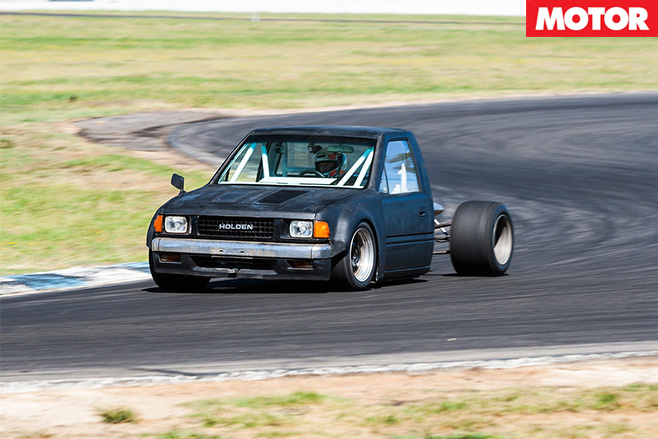
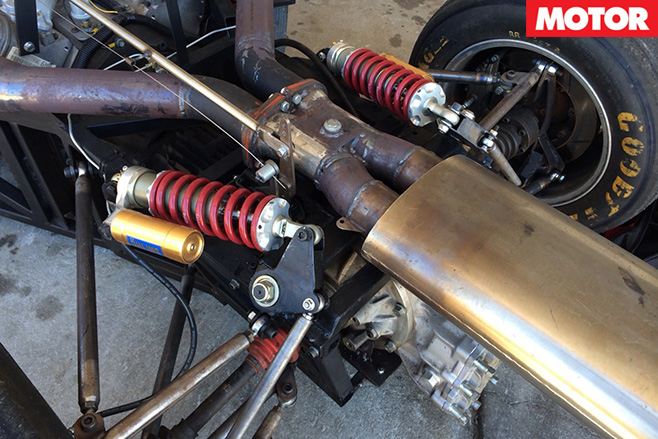
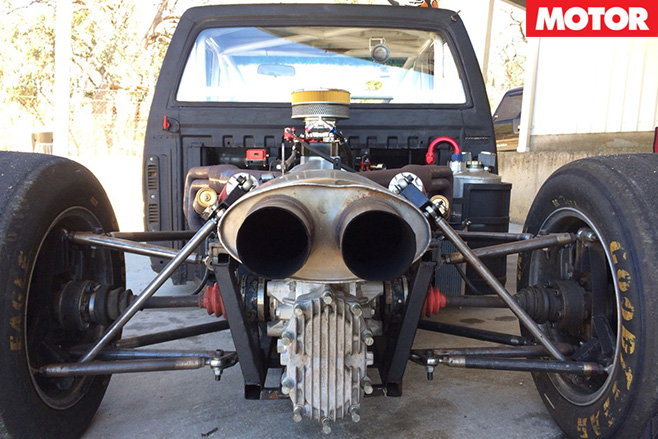
Even so, no hay-hauler prepared us for this Holden Rodeo built by Mike Moore.
Sporting a mid-engine V8, steel space frame, and ‘around’ 447kW, it is clear utility was engineered out of this second-generation Rodeo long ago. It has been brainwashed to think, behave and sound like a race car.
We’ve scraped together some short footage of the Rodeo clearing its lungs on start-up and out on Winton Raceway track. And while the grainy iPhone quality video won’t win us an Oscar, you get a good idea to what degree of insanity this hellacious track monster was built.
Have a watch, then once you’re done, check out our picture gallery for the full story.
Get your free weekly report from the world of fast cars – subscribe to the MOTOR newsletter!
To sample one of the latest trio of hypercars – McLaren P1, Ferrari LaFerrari and Porsche 918 Spyder – would surely be top of most petrolheads’ wish lists.
UK businessman and devoted petrolhead, Paul Bailey, was lucky enough to sample all three on the same day – because he became the first person in the UK to own all three.
In one incredible day, Bailey, along with wife Selena and a film crew from UK website Supercar Driver drove his McLaren P1 to pick up his new LaFerrari, before the traffic-stopping pair made their way to retrieve the 918 Spyder.
Throughout the video, Bailey talks you through the personalisation of each vehicle, and his initial thoughts behind the wheel of the LaFerrari and 918 Spyder.
It’s not your usual tyre-smoking, sideways antics, but the video provides a fascinating insight into the mindset of those that can actually afford these exclusive machines.
Best of all, Bailey is a proper down-to-earth car nut, regularly exercising his toys on track and auctioning off passenger rides for charity.
Bailey’s Carrera GT and Enzo regularly featured in various UK publications, so there’s every chance the ‘Holy Trinity’ will appear as the ultimate comparison test before much longer.
Get your free weekly report from the world of fast cars – subscribe to the MOTOR newsletter!
Whether it’s a rare supercar or unsuspecting sleeper, local track days always produce the unexpected.
Looking like something from Mad Max dropped on Formula One slicks, this mid-engine Holden Rodeo proved a recent Test and Tune day at Winton Raceway MOTOR attended was no different.
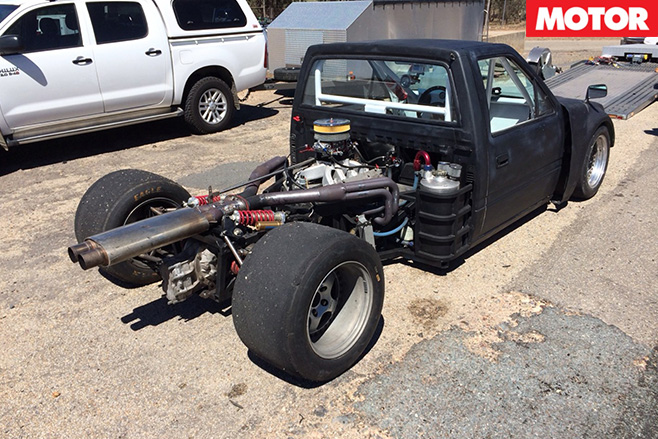
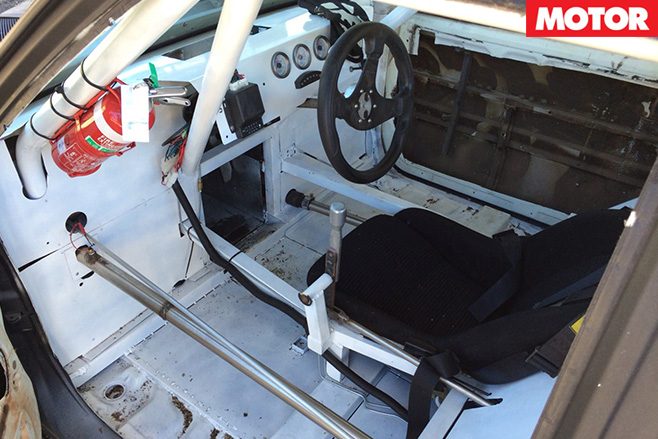
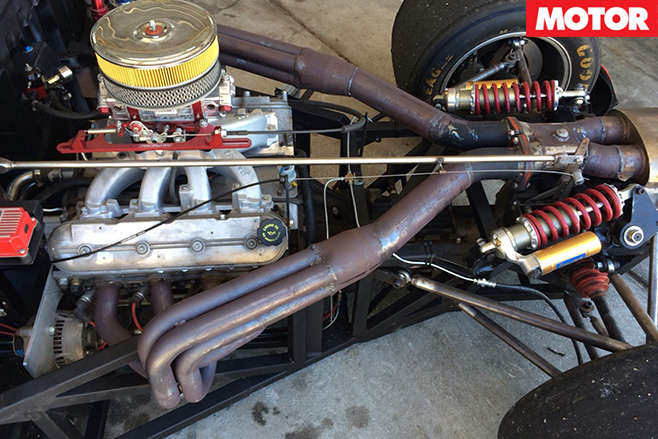
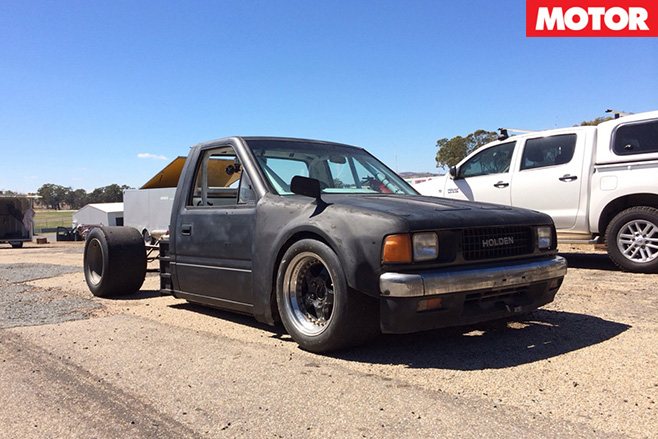
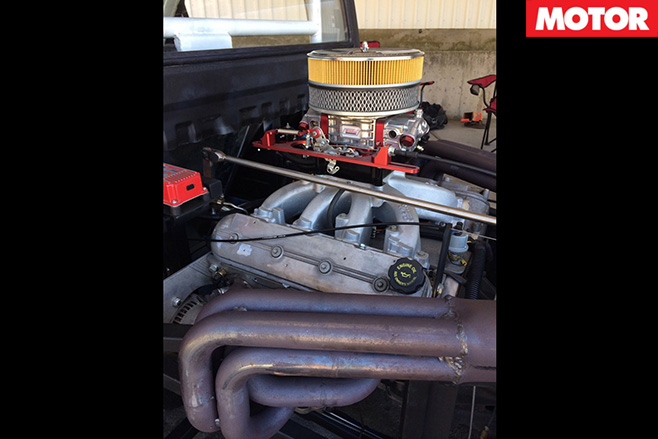
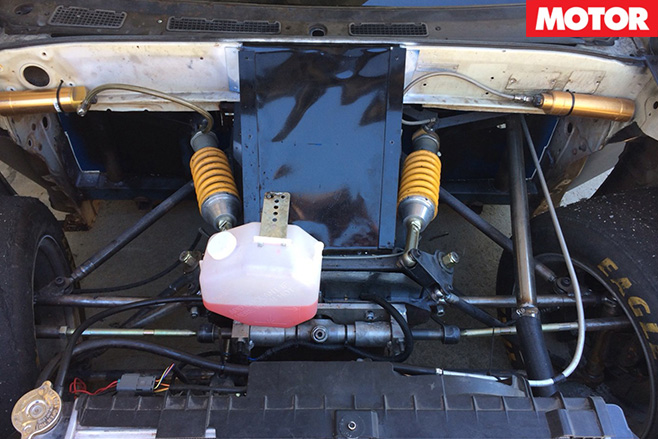
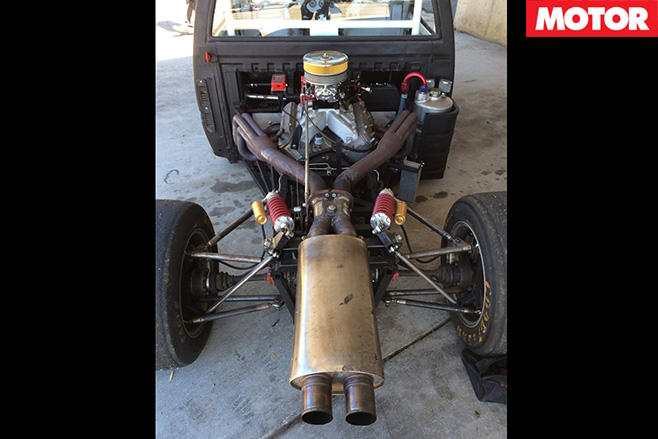
Power meets a four-speed Jerico gearbox and then a Winters quick-change differential before finding the ground through 14-inch wide rear slicks.
IT’S been a long time between hot laps, but the revival of Honda’s Type R sub-brand will be limited to a single model for now.
Speaking at the 2015 Geneva motor show, Honda Europe senior vice-president Philip Ross said there were no immediate plans for more Type R hero models in the Honda line-up.
That means only the Civic Type R will be at the top of the brand’s performance tables – at least until the arrival of the NSX hybrid supercar late in the year.
“No plans at the moment to do any other Type Rs,” said Ross.
“It’s taken us a while to develop and this is what we’re focused on. That one there is so exceptional that that’s good for us now.”
Type R models have had more powerful, highly strung engines and stiffer suspension for better roadholding, particularly on track.
Distinguished by more aggressive wings and a red Honda H badge, Type R versions of the Civic and Integra have been sold in Australia, with other models available sporadically overseas.
A glance at Honda’s domestic model range yields no promising contenders, so the British-built Civic represents your lot for the time being at least.
Honda claims it will be the fastest front-wheel drive car around the Nürburgring race track in Germany. A development model lapped the undulating 21km track in 7min50sec, beating the former record-holder – Renault’s Mégane RS275 – by four seconds.
Debate the legality of that if you will, but Ross is confident a series production version will go at least as quickly again in a planned future run at the infamous circuit.
Kia’s 2015 Carnival people-mover features fresh styling, upgraded mechanicals, improved safety and convenience features, along with significant improvements to refinement and quality.
WHAT IS IT? The Korean-made ‘breeder bus’ majors on functionality, with acres of interior space, a flexible eight-seat interior, the choice of petrol or diesel engines and an extensive list of standard features spread across a four-variant model range (S, Si, SLi, and Platinum).
WHY WE’RE TESTING IT The all-new 2015 model is based on a new platform that begets a stronger, stiffer body, more sophisticated SUV-like styling, enhanced safety features and driver aids, along with a new petrol engine, revised diesel engine, and localised suspension tuning, designed to optimise ride and handling.
MAIN RIVALS Citroen C4 Grand Picasso, Honda Odyssey, Toyota Tarago, Hyundai iMax, Volkswagen Multivan.
THE WHEELS VERDICT Hard to go past if bums on seats with space to burn is the priority, but Citroen’s C4 Grand Picasso drives around it dynamically and looks better to boot.
PLUS: Acres of interior space; torquey turbo-diesel; decently refined; versatile seating configuration; impressive safety features in top-spec model MINUS: Still drives like a small bus; you need to spend big to get the full suite of safety features
THE WHEELS REVIEW IN A move that will puzzle McDonald’s marketers, the just-launched 2015 version of Kia’s popular people-mover has dropped its established ‘Grand’ prefix to become, simply, the Kia Carnival.
While this third-generation offering may not sound as sumptuous as its predecessor, Kia has thrown the lot at its “breeder bus” to deliver a package sure to prove more satisfying for space-hungry families.
This new Carnival completes the successful design overhaul of Kia’s range by German styling whiz Peter Schreyer, who dropped the van’s height by 55mm and adopted blockier SUV-like styling to create its sleeker silhouette.
The effect is, shall we say, ruggedly handsome, and while we doubt anyone is going to think you’ve bought a Jeep, the new look may help shake some of the negative baggage usually ascribed to this vehicular genre.
Also SUV-like is the eight-variant model range’s pricing, which for petrol versions starts at $41,490 for a base V6 S, rises to $45,490 for the Si, nudges $49,990 for the SLi, and tops out at $57,490 for the V6 Platinum.
The diesel option adds $2500 to each variant, meaning the range-topping Platinum diesel will place the bathroom renovations on hold at a wallet-wounding $59,990.
Speaking of bathrooms, with a kerb weight of 2100kg and the potential to haul several hundred more kilos of human payload, the Carnival demands decently gutsy petrol and diesel powertrains, and making the case for spark ignition is Kia’s new Euro V-compliant Lambda II 3.3-litre GDI V6, which musters a respectable 206kW and 226Nm while returning a combined average of 11.6L/100km.
Compression ignition is catered for with a carryover 2.2-litre four-cylinder turbo-diesel that’s had a freshen-up to modestly boost its outputs to 147kW and 440Nm diesel.
We like the more instant throttle response of the V6, but the gruffer and more muscular diesel would get our vote for its superior 7.7L/100km efficiency and greater driveability.
Both engines drive the front hoops via a respectably smooth and responsive six-speed auto, featuring pseudo-manual shift mode and an arguably more useful active-eco mode for enhanced fuel consumption.
Space and functionality are, of course, paramount in this category, and the new Carnival’s 40mm of additional wheelbase translates into extra legroom for all three rows.
The range of seating configurations is impressively versatile, including a 60/40-split third row that folds flat into the floor, innovative new ‘stand-up’ seats in the second row make it easier to get in and out, and a removable centre seat enables a walk-through configuration… or a game of 10-pin bowls.
If shifting house is more your thing, the Carnival has this covered, too, with 960 litres of boot space available with all seats in position, expanding to 2220L with the third row folded, or a truly cavernous 4022L with all seats stowed. We recommend leaving a trail of bread crumbs if heading back there.
Surprise-and-delight features include a motherload of storage compartments, multi-boxes, chilled glove compartments and no fewer than 10 cupholders. There’s also a convex ‘conversation’ mirror to ensure mum can give kids her patented ‘Julie Bishop Death Ray Stare’, and a special stain-resistant seat fabric, presumably for kids who have just received said stare.
Other useful features include electric sliding doors and an auto-opening tailgate on SLi and Platinum models that activates simply by standing behind the car for a few seconds with the key in your pocket.
Safety is well covered with six airbags, a rear-view camera and the usual array of ABS, ESC, TCS, EBD and BAS acronyms. It’s only when you step up to the full-fat Platinum, however, that you unlock blind-spot monitoring, active cruise control, lane-departure warning and forward collision warning.
Former Toyota Australia suspension guru Graeme Gambold helped tune the Carnival’s MacPherson strut front and multi-link rear suspension for local conditions, his efforts ensuring a decently disciplined ride-handling balance. The ride errs on the firm side when unladen, but settles down nicely with a load on board, while the steering is accurate enough, though light and largely feel-free.
A slippery test route over cyclone-soaked back roads in south-east Queensland and northern NSW showed that the big Korean can be hustled along at a decent clip without endangering life or limb. But the reality is that buying this big, blocky beast is more about channelling your inner school-bus driver than it is about nailing apexes.
So, dad, if you’re late with the school lunches, just take a chill pill and enjoy the enhanced ambience of the quieter, calmer Carnival cabin.
SPECS Model: Kia Carnival GDI SLi Engine: 3342cc 6cyl, dohc, 24v Max power: 206kW @ 6000rpm Max torque: 336Nm @ 5200rpm Transmission: 6-speed automatic Weight: 2100kg 0-100km/h: N/A Fuel economy: 11.6L/100km Price: $49,990 On sale: Now
Subaru’s WRX STI has long been a favourite with the track day crowd.
To see if the latest model can still cut the mustard, we took our long-term test car to one of Winton’s weekly ‘Test and Tune’ days.
To see and hear how it fared, watch the video above, featuring a couple of onboard laps and some explanation of the latest STI’s strengths and weaknesses.
Anything you want to know about the car, simply ask in the comments below.
FIGURING out the form guide ahead of the green lights in Melbourne is a punt at the best of times, but this year the usual Formula One sandbagging and chicanery is further masked under another level of opacity thanks to some staggering incompetence on the part of its organisers. Put simply, the playing field isn’t anything like level.
The FIA’s intention was for the engine manufacturers to have completed their changes for the 2015 season before the first race in Melbourne.
Ferrari and Renault were struggling to do that, and with the rules allowing less than half the engine to be changed anyway, Mercedes was feeling pretty confident that its engine advantage in 2014 was in no danger of being chased down.
But then Ferrari spotted that the FIA hadn’t actually written down when the final engine designs had to be submitted.
“We just kind of thought that everyone knew,” a dopey spokesman said. (I’m paraphrasing.) The result is that the relative performance we see in the first few races is unlikely to stay the same through the season.
It is far more likely that Mercedes’ closest rivals will extract the maximum possible benefit from the limited changes they can make, even if that means making them later and foregoing some power in the first few races. So Albert Park won’t be a wholly accurate barometer.
And they need all the help they can get. Mercedes is believed to have had a near-40kW advantage last season, and to have added the same to its output over the off-season.
It is hard to imagine the others improving by that margin, but not impossible. Many commentators are writing Ferrari off again in 2015 as it restructures. But it is rumoured to have added 60kW to its engine over the winter, with possibly more to come.
The arrival of Vettel and of Sergio Marchionne as a more hands-on boss, and the effective sacking of yet another team boss and of Luca di Montezemolo, Ferrari’s once-talismanic leader, might have shocked the Gestione Sportivo into transformation.
Honda’s return to F1 is hugely exciting, but most pundits’ scepticism about its ability to challenge Merc in its first season back was reinforced by reliability issues in early testing.
More importantly, as a new engine maker, the FIA has decided that Honda can’t develop its engines during the season, as the others now can, and will have to freeze the design of the engine it ran in Melbourne.
All of which must make it doubly galling for Honda to see the car they bequeathed to Brawn – and which was then bought by Mercedes – dominate pre-season testing.
The likelihood is that the Mercedes will drive away with it again this year, though perhaps not by such an imperious margin. Senior team members acknowledge that if the world championship is contested entirely within their garage again, they have an obligation to the fans and the sport to put on a good show, and manage Lewis and Nico better than last year.
“I think that we saw what ‘bad’ looks like last season,” technical director Paddy Lowe told us, “and nobody wants to go there again.”
FORD is set to expand the use of lightweight materials – including aluminium and carbon fibre – as part of an extensive fuel-saving program.
The company will use its upcoming Ford GT supercar (a car that won’t be sold in Australia because it has the steering wheel only on the left) as a test bed to learn about working with carbon fibre.
Carbon-fibre has typically been reserved for low-volume sports cars, such as the Lamborghini Aventador and McLaren 650S. More recently it’s been used in the BMW i3 and i8 electric and plug-in hybrid cars and is becoming more accepted for mass production applications.
“We are really focused on light weighting,” said Ford’s group vice-president and chief technical officer, Raj Nair.
“I think you’ll see an increased use of use of all the lightweight materials [on future Fords] – aluminium, high strength steel, boron steels, magnesium and carbon fibre. Carbon fibre probably has applications that are higher volume than [the GT] going forward.”
Ford surprised the automotive industry in 2014 when it confirmed its F-Series pick-up truck – a car now on sale in the US – would use a largely aluminium body, reducing weight and fuel use and allowing for the use of smaller engines.
Lightweight materials – which are generally more expensive to produce and often cost more to repair – will also play a role in the development of future performance models, including the Focus RS hot hatch revealed at the 2015 Geneva motor show.
Powering all four wheels for the first time, the new RS – which goes on sale in Australia early in 2016 – produces 235kW from its 2.3-litre four-cylinder turbo.
However, it could be the only sporty RS model in the Ford range.
“We’d never say never, but typically RS has been exclusive to a single vehicle in the line-up,” said Mr Nair.
“If you were to look at our [performance car] pyramid, you have the Focus ST, the Mustang GT, the next level of that pyramid we would have the Shelby GT350, the Mustang, the Focus RS … and even perhaps the [F-Series] Raptor. And obviously the pinnacle of the pyramid is the Ford GT.”
