
Jaguar Land Rover wasn’t angered by Holden’s decision to name its entry level VF Commodore the Evoke — which sounds suspiciously like Land Rover’s hot-selling Evoque. On the contrary, in fact.
“It made me smile,” says Phil Popham, Jaguar Land Rover’s Global Operation Director. Speaking at the press launch of the car maker’s ultra-impressive new Range Rover Sport in the UK, Popham said a number of agencies had been asked to come up with names for the Evoque when the model was first signed off for production.
The names those agencies presented to the car-maker were “rubbish,” he said.
A head office brainstorming session hit upon the name Evoke, he said, and it struck a chord. “I liked it; it really meant something. We originally had the spelling E-V-O-K-E. But then we decided to give it a Land Rover twist by spelling it with a ‘QUE’ instead.”
And, of course, that’s the way it stayed.
Toyota Australia recently announced that it will pour $123 million into its local manufacturing operations as it prepares to build what it says is a major facelift vehicle from 2015.
This is likely to be the new Camry/Aurion seeing as this is the only car Toyota produces in Australia. Toyota’s plan is to also grow its supplier development program over the next five years. The Federal Government is supporting Toyota’s investment with a $23.6 million contribution and has promised a further $5 million towards the supplier development program.
Australia’s cheapest car, the $9,990 Chery J1, is no more due to safety regulation changes.
The Chinese-made five-door hatch has been terminated after new laws, dictating all new cars must be fitted with electronic stability control, were introduced at the start of November.
So far in 2013 Chery has managed to sell just 165 J1’s, despite its rock-bottom price tag.
Also falling victim to the new laws is the J1’s Chinese cousin, the Great Wall X240 SUV which sold for $23,990.
Today was supposed to be the day that Holden’s great export hope was launched in the US city of Palm Springs.
It went well, with US journalists praising the car, until the event was overshadowed by the news that an Australian government source believes Holden has made the decision to close its local manufacturing operations.
Holden spokeswoman Andrea Matthews, who is at the Chevrolet SS launch, has stated that the company would not comment on speculation.
Chevrolet executives also refused to comment, even though shutting the Elizabeth plant in 2016 would mean the Chevrolet SS it is launching would only be on sale in the US for three years.
In Australia, the federal government appears to be preparing Australians for a Holden withdrawal although it is not yet prepared to publicly confirm the company’s position.
If the story is wrong and GM has not yet made a decision, it will soon, given comments made by prime minister Tony Abbott today.
GM has been seeking a substantially larger sum than the $275 million it was allocated in 2012, making it clear that without the extra money, it would pull the pin on its plants in Elizabeth and Melbourne.
Today, Abbott confirmed the government would not offer Holden any more money, preempting a preliminary report by the Productivity Commission that was due on December 20.
“There’s not going to be any extra money over and above the generous support the taxpayers have been giving the motor industry,” Mr Abbott said. Australian Manufacturing Workers Union national secretary, Paul Bastian, isn’t giving up yet and called on the Prime Minister to avert a Holden shutdown.
“There are too many jobs at risk, the Prime Minister has to step in,” Bastian said. “This industry is critical to Australia’s manufacturing sector, and tens of thousands of people’s lives. If we lose it, we’re looking at a $21 billion hole in the economy.”
Today is D Day for Holden with the embattled company’s boss, Mike Devereux, this morning appearing before the government’s Productivity Commission.
Reports are swirling Devereux could use the occasion to announce Holden’s withdrawal from Ausutralia, with the meeting likely to not only decide the fate of thousands of Holden employees, but 4200 workers at Toyota Australia as well.
Holden and Toyota are dependent on their combined volumes to keep local suppliers afloat and costs in check following the planned closure of Ford’s Australian manufacturing operation in 2016.
Canberra sources claim the newly elected federal government is yet to decide its position on whether to grant Holden the increased funding it needs to survive and that the cabinet is split, with industry minister Ian MacFarlane fronting one group advocating increased support, while treasurer Joe Hockey is one of several ministers unconvinced the investment is worthwhile.
Hockey recently appeared to signal he wouldn’t be pressured by corporations such as GM when he stated “I won’t be bullied,” in response to aggressive lobbying on behalf of a US firm pushing to take over GrainCorp.
It might be unsavory that politics will decide the future of such a proud Australian icon (admittedly an American-owned Australian icon), but it is entirely appropriate given the first Holden of 1948 was developed as a result of a government push for a vibrant Australian car industry. Ironically, one of the reasons General Motors was selected to build “Australia’s Own Car” was that it required less government financial support than Ford.
This time around, General Motors has demanded a substantial sum to ensure production at its Elizabeth plant near Adelaide continues to produce cars between 2017 and 2022. It has pegged the investment needed to produce the two global products in Australia at $1 billion and is understood to be seeking somewhere between $275 million and $500 million worth of investment and concessions from state and federal governments.
The Rudd government Mark II believed it was worthwhile, both for Australia and its own future, and announced a deal just weeks before this year’s federal election that secured Holden’s commitment to local manufacturing. Although, it also went on to introduce the potentially disastrous Fringe Benefit Tax changes that kicked local manufacturers where it hurt at the wrong time, before losing the election and rendering both plans redundant.
The Abbott government had trumpeted reducing, not increasing, government car industry assistance before the election, but has since sent out mixed messages. Now, it has called in the bean counters from the Productivity Commission to evaluate the benefits of any automotive assistance deal. It will deliver a preliminary report on December 20 and a final report next March.
Whether the PC’s work will be used to help make a decision, or simply to justify a decision, is yet to be seen. GM executives in Detroit want an answer soon and have already postponed critical work at the Elizabeth plant including $2 million of upgrades for the body shop that were due this Christmas break. Instead, just $250,000 will be spent on a feasibility project that involves minor tinkering with the lines.
How long will they wait? The union says GM needs an answer before Christmas, but that may simply be its own opinion. However, GM is a business and would not hesitate closing Australian plants to ensure its own feasibility if the process dragged on.
After all, it came close to shutting Holden down during the Global Financial Crisis, with only the income from healthy sales of VE Commodore and a government line of credit standing between it and disaster. GM did kill the historic Pontiac brand in 2010, among others, revealing nostalgia counts for nothing in spreadsheet columns.
As for the Holden workers, they have done their bit by signing up to a more flexible and less lucrative agreement. A small group went to Canberra last month to lobby MacFarlane and Hockey along with union chiefs. MacFarlane listened for an hour, Hockey didn’t show.
One Holden worker told Wheels: “You know, it’s just sad that in all of this Holden has become a political football.”
Holden has confirmed it will cease manufacturing in Australia by 2017, closing after almost 90 years of local production.
After months of speculation surrounding Holden’s future, Victorian Premier Deni Napthine made the announcement in State Parliament this afternoon.
“This is a very, very sad day for Australia and Victoria,” he told parliament. “We have been advised that it is an irrevocable decision.”
Holden is holding a press conference at 3pm, with thousands of Holden workers to be told the news later today.
The bombshell comes just a day after Holden boss Mike Devereux told the federal government no final decision had been made on the company’s future in Australia.
More to come.
This is the full statement released by General Motors from its Detroit branch:
As part of its ongoing actions to decisively address the performance of its global operations, General Motors today announcedit would transition to a national sales company in Australia and New Zealand. The company also said it woulddiscontinue vehicle and engine manufacturing and significantly reduce its engineering operations in Australia by the end of 2017.
“We are completely dedicated to strengthening our global operations while meeting the needs of our customers,” said GM Chairman and CEO Dan Akerson. “The decision to end manufacturing in Australia reflects the perfect storm of negative influences the automotive industry faces in the country, including the sustained strength of the Australian dollar, high cost of production, small domestic market and arguably the most competitive and fragmented auto market in the world.”
As a result of the company’s actions, approximately 2,900 positions will be impacted over the next four years. This will comprise 1,600 from the Elizabeth vehicle manufacturing plant and approximately 1,300 from Holden’s Victorian workforce.
Holden will continue to have a significant presence in Australia beyond 2017, comprising a national sales company, a national parts distribution centre and a global design studio.
GM Holden Chairman and Managing Director Mike Devereux said an important priority over the next four years would be to ensure the best possible transition for workers in South Australia and Victoria.
“This has been a difficult decision given Holden’s long and proud history of building vehicles in Australia,” said Devereux. “We are dedicated to working with our teams, unions and the local communities, along with the federal and state governments, to support our people.”
The sale and service of Holden vehicles will be unaffected by this announcement and will continue through the extensive network of Holden dealers across Australia and New Zealand. Warranty terms and spare parts availability will remain unchanged.
“GM remains committed to the automotive industry in Australia and New Zealand. We recognize the need for change and understand the government’s point of view. Moving forward, our business model will change significantly however, GM Holden will remain an integral part of its communities and an important employer both directly and through our dealers,” Devereux said.
Since 2001, the Australian dollar has risen from US$0.50 to as high as US$1.10 and from as low as 47 to as high as 79 on the Trade Weighted Index. The Australian automotive industry is heavily trade exposed. The appreciation of the currency alone means that at the Australian dollar’s peak, making things in Australia was 65 percent more expensive compared to just a decade earlier.
With the decision to discontinue vehicle and engine manufacturing in Australia by the end of 2017, GM expects to record pre-tax charges of $400 million to $600 millionin the fourth quarter of 2013. The charges would consist of approximately $300 million to $500 million for non-cash asset impairment charges including property, plant and equipment and approximately $100 million for cash payment of exit-related costs including certain employee severance related costs.
Additional charges are expected to be incurred through 2017 for incremental future cash payments of employee severance once negotiations of the amount are completed with the employees’ union. The asset impairment charges will be considered special for EBIT-adjusted reporting purposes.
With its Australian future now in the balance, here’s how Toyota reacted to news of Holden’s closure:
“We are saddened to learn of GM Holden’s decision.
This will place unprecedented pressure on the local supplier network and our ability to build cars in Australia.
We will now work with our suppliers, key stakeholders and the government to determine our next steps and whether we can continue operating as the sole vehicle manufacturer in Australia.
We will continue with our transformation journey as planned.”
GENERAL MOTORS has ended weeks of damaging speculation with the shock announcement that Holden will cease vehicle manufacturing in Australia from late 2017 to become a full-line importer.
Approximately 2900 jobs at Holden will be lost directly, with 1600 positions to “be impacted” in South Australia and a further 1300 in Victoria.
Only sales and distribution in Melbourne will remain in operation after that date, along with the design studio for future global vehicles.
Along with the vehicle and engine manufacturing plants in South Australia and Victoria respectively, the Lang Lang proving ground just outside of Melbourne will also cease operations.
Effectively this will end nearly 70 years of Holden engineering and over 85 years of General Motors vehicle production in this country.
What this means for the future of the Commodore brand beyond the fourth quarter of 2017 has not been announced, with Holden refusing to reveal what its replacement will be or where it will be imported from.
The Chairman and Managing Director of Holden, Mike Devereux, said that the decision was only made at General Motors’ Detroit headquarters last night (Tuesday December 10 2013) Australian time, after the conclusion of the productivity commission with the federal government.
“I went to the productivity commission yesterday as I was requested to do… and subsequent of my appearance, we had another review of the situation in Australia yesterday afternoon, I was informed by GM leadership – and I concur and agree with the decision that they have made – that we will exit manufacturing in Australia,” he told a packed press conference in Adelaide today.
The Holden workforce in South Australia and Victoria were informed of General Motors’ decision to cease manufacturing around lunchtime today.
“I received a final decision from General Motors yesterday afternoon and my first port of call was to jump on a plane and inform our employees,” Mr Devereux said.
“From 2018 Holden will become a full-line importer… with a world-class design studio doing global work for General Motors.
“It also means a reduction of operations in our head office in Melbourne… meaning the eventual loss of approximately 2900 jobs.
“It will be a lengthy and orderly transition over a four-year period… and after that Holdens will continue to be sold and serviced in Australia and New Zealand.”
Mr Devereux went on to say that every avenue of opportunity was explored to retain the manufacturing of Holden vehicles in Australia, but increasingly difficult conditions mean that pulling car making out is the only viable solution.
“This is an incredible difficult day at Holden given our long and proud history of making vehicles in Australia,” he stated.
“Make no mistake, we have looked at every possible option to build our next-generation cars here in this country to replace our existing models. Holden builds cars that are popular right across this country. Everybody that is saying otherwise is ignoring the monthly sales figures. The fact is that two of the top five passenger cars in this country is made right here in our plant in Adelaide, and we are number two overall.
“But no matter which way the numbers, the long-term business case to make and assemble cars in this country is simply not viable.
“It is no secret – we are not only witnessing a huge shift in the automotive market in this country, but also in the wider economy in Australia.
“Australia’s automotive industry is up against a perfect storm of negative influences, including the sustained strength of the Aussie dollar against nearly all trading currencies, the relatively high cost of production, and the relatively small scale of the local domestic market.
“In addition we have arguably the most competitive and fragmented auto market on the entire planet… and the bottom line for GM is that building cars in this country is just not sustainable.”
Mr Devereux said General Motors would work with federal, state and local governments to help equip people who will lose their jobs what they need to find new employment.
“We will be doing our best to support our people over the next four years… but there is nothing I can say that will take the sting out of this announcement.
“This is a very difficult situation for everybody at Holden, the government and the economy of this country. We don’t mean to make light of the fact that since 1948… that we have been part of the industrialisation of this country, and has always had a strong relationship with the government of Australia and the people of Australia.
“But we understand the point of view of the government of this country… and I don’t think it would be a surprise to anybody, but it is more viable to make cars in other countries.
“(The decision to exit manufacturing) is irreversible”
The Holden brand will be retired by 2021 in Australia and local design and engineering departments shuttered, General Motors announced last week.
In what is monumental news for the Australian automotive industry, Holden’s Melbourne design studio and Lang Lang proving ground are expected to shut with up to 600 of 800 local jobs lost.
However, while the final act came in 2020, the demise of Holden can be traced back to 2013, when GM announced that it would transition the company to a ‘sales and marketing’ operation – code for the cancellation of local manufacturing.
This announcement, triggered by Ford’s decision to kill the Falcon and Territory, saw the lines stop in 2017, and the brand killed off in 2020.
To many, it seemed inevitable, but Holden’s decision to cease manufacturing in Australia was a long and sometimes painful journey. Here’s how it unfolded back in 2012 and 2013.
March 22 2012
Holden Chairman and CEO Mike Devereux announces deal with federal and South Australian and Victorian state governments to build two new global architectures at Elizabeth, guaranteeing local manufacturing out to 2022.
Co-investment is $275 million from governments and $1 billion from GM, generating an estimated $4 billion in economic activity. Second generation Cruze and Commodore replacement are the expected vehicles, although not confirmed on the day.
May 7 2012
Announces at $89.7 million profit for 2011 – identical to Automotive Transformation Scheme assistance handed out. Result is down from $112 million in 2011, but still way ahead of the $205 million loss suffered in 2010.
18 May 2012
VF Commodore to be exported to USA as Chevrolet SS from late 2013.
31 August 2012
Daily output at Elizabeth drops from 430 to 400 cars per day as part of an efficiency initiative claimed to save $10 million per annum.
27 September 2012
Confirms Elizabeth will close for an unspecified number of days as slowing sales hit VE Commodore and Cruze.
2 November 2012
170 voluntary redundancies at Elizabeth announced. Blamed on slowing sales.
27 November 2012
Mike Devereux uses Colorado 7 launch press conference to urge the federal opposition to clarify its automotive manufacturing policy or risk the future of the industry.
30 November 2012
VF Commodore breaks cover as Chev SS NASCAR.
15 January
At the Detroit show Devereux talks of the Commodore’s Zeta architecture continuing in production beyond 2017, suggesting VF replacement will be front-wheel drive.
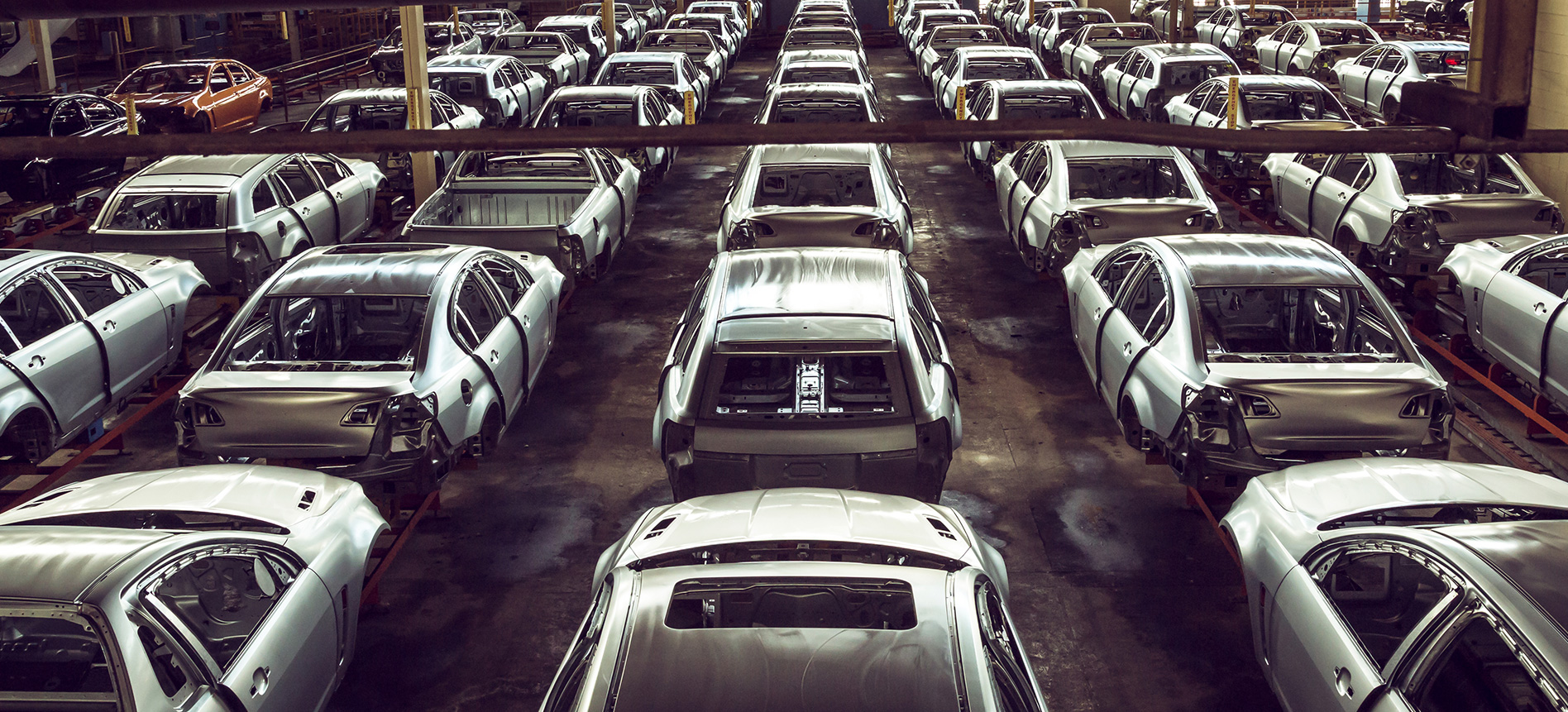
8 February 2013
Devereux confirms the Commodore nameplate will roll on beyond 2017 when VF expires, says local engineering and development work has begun.
10 February 2013
VF Commodore officially revealed months ahead of on-sale date as car is about to star racing as a V8 Supercar and NASCAR.
16 February 2013
Chevrolet SS road car unveiled at Daytona by Mark Reuss. More talk of Zeta legacy, possibly built in the USA.
8 April 2013
Devereux announces the loss of 400 jobs at Elizabeth and 100 in Victoria, including Lang Lang test track validation staff. Line speed slows from 400 to 335 cars per day. Cruze sales downturn – driven by cheaper imports benefiting from high Aussie dollar – blamed.
5 June 2013
VF Commodore pricing announced, with drops of up to $9800.
8 May 2013
Holden CFO George Kapitelli announces $152.8 million loss for 2012, blames exchange rate that “puts particular pressure on our Australian manufacturing operations.”
23 May 2013
Ford announces end of local manufacturing and death of Falcon nameplate by October 2016. News breaks during VF Commodore national media launch. “Ford’s gone, we are not – that’s the story,” Devereux tells journalists. Holden issues a statement saying 2012 agreement was “based on the economic and market conditions at that time”. Effectively it means GM’s future investment is on-hold.
18 June 2013
Devereux announces he will be seeking labour cost reductions from the Elizabeth workforce, claiming an added cost of $3750 to build cars in Australia.
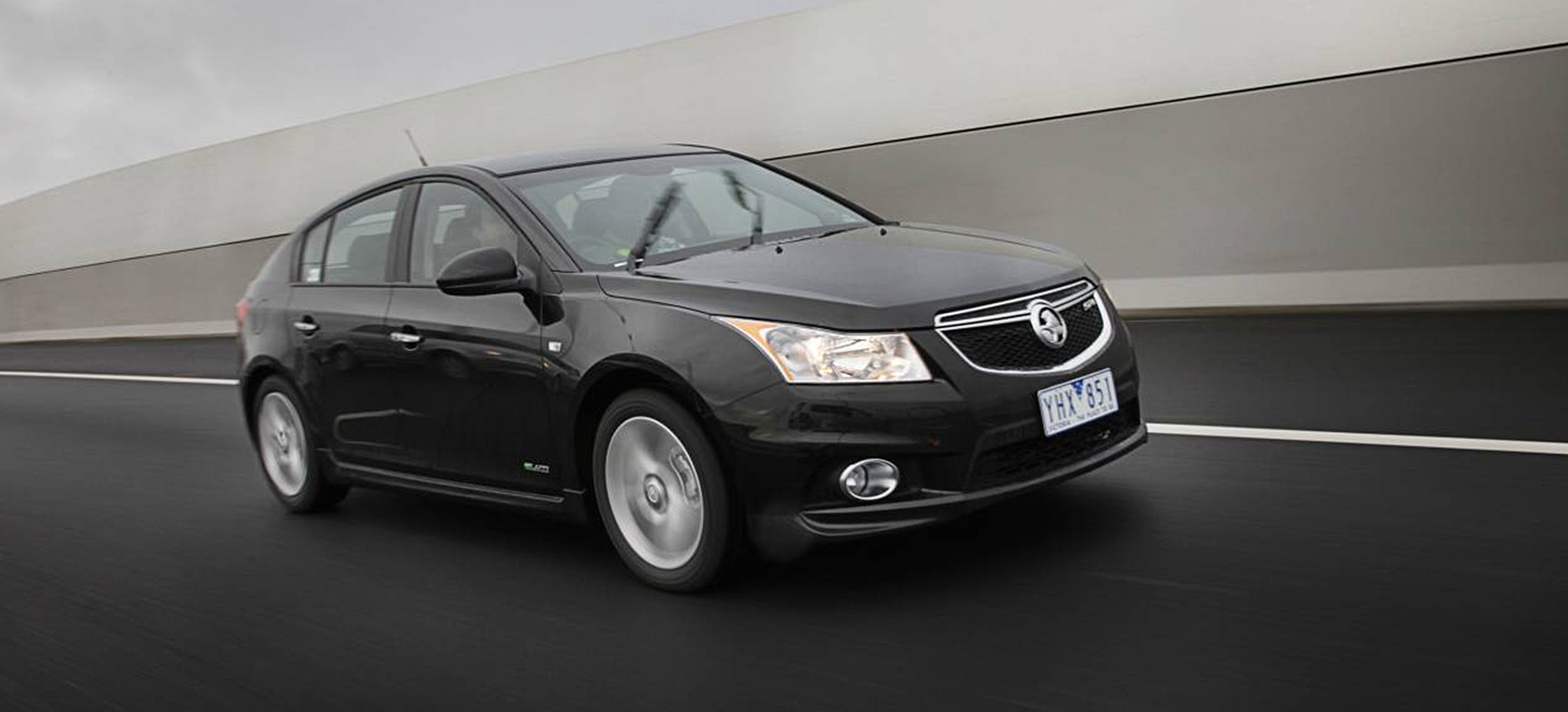
Says move is crucial to continued survival of local production. Subsequently emerges Holden loses about $670 on each car it builds and the plant roughly $40 million per year.
13 August 2013
Elizabeth workforce agrees to three-year wage freeze, dependant on new models being built post-2016.
14 August 2013
Devereux says he aims to have Holden’s business plan for the manufacture of the next-gen Cruze and Commodore ready for his General Motors superiors in early October, just weeks after the federal election.
12 September
Voluntary separation packages confirmed, seeking a reduction of 45 staff from engineering in Port Melbourne and Lang Lang.
September 7
The coalition wins the federal election, with a $500 million cut to car industry assistance and a Productivity Commission review its key auto policies. New Industry minister Ian MacFarlane says he is a fan of the local car industry.
2 October 2013
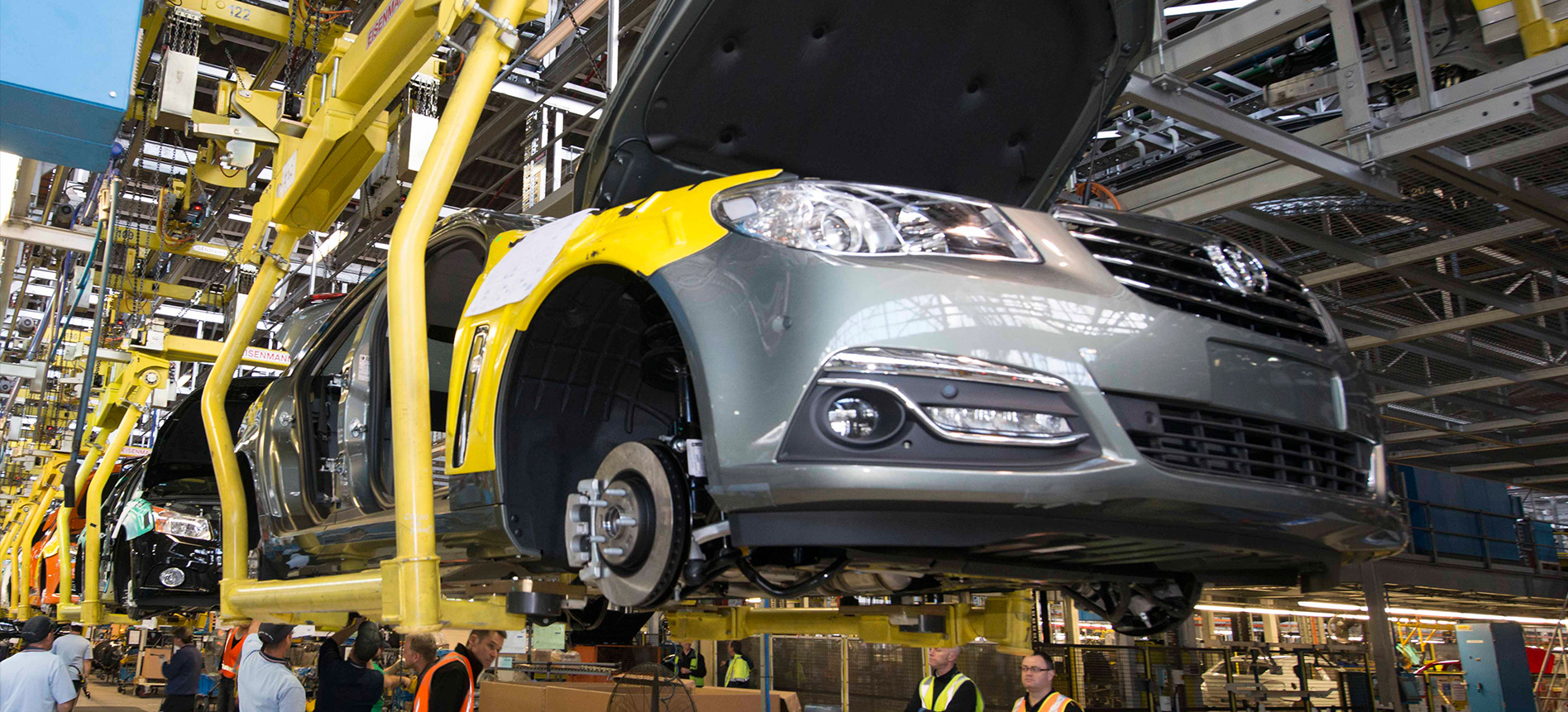
After much-anticipated Elizabeth tour, Devereux outlines to MacFarlane revised government investment needed to continue manufacturing. Announces Productivity Commission review of the industry will hand down preliminary findings in December.
25 October 2013
GM announces Devereux being promoted to regional sales and marketing job from the new year.
4 November 2013
Productivity Commission deadline for submission closes with more than 70 received.
November 2012
Confirmed Devereux’s boss Stefan Jacoby has made a brief visit to Australia, but no meetings with governments.
5 December 2013
Senior ministers within federal government leaks to ABC that GM has already made the decision to cease manufacturing in Australia.
In subsequent days, Government goes on the offensive with PM Abbott, Treasurer Hockey and stand-in PM Truss all demanding a definitive answer from Holden, before the Productivity Commission preliminary findings are announced.
10 December 2013
Devereux appears before Productivity Commission and says no decision on Holden’s future has been made. Leaves hearing to make conference call with GM senior leadership team where closure decision is confirmed.
11 December 2013
Devereux announces closure of Elizabeth in 2017, Port Melbourne V6 assembly plant in 2016, Lang Lang test ground and engineering department. Holden will become a full-line importer. Design studio to continue.
