
The Holden brand will be retired by 2021 in Australia and local design and engineering departments shuttered, General Motors announced last week.
In what is monumental news for the Australian automotive industry, Holden’s Melbourne design studio and Lang Lang proving ground are expected to shut with up to 600 of 800 local jobs lost.
However, while the final act came in 2020, the demise of Holden can be traced back to 2013, when GM announced that it would transition the company to a ‘sales and marketing’ operation – code for the cancellation of local manufacturing.
This announcement, triggered by Ford’s decision to kill the Falcon and Territory, saw the lines stop in 2017, and the brand killed off in 2020.
To many, it seemed inevitable, but Holden’s decision to cease manufacturing in Australia was a long and sometimes painful journey. Here’s how it unfolded back in 2012 and 2013.
March 22 2012
Holden Chairman and CEO Mike Devereux announces deal with federal and South Australian and Victorian state governments to build two new global architectures at Elizabeth, guaranteeing local manufacturing out to 2022.
Co-investment is $275 million from governments and $1 billion from GM, generating an estimated $4 billion in economic activity. Second generation Cruze and Commodore replacement are the expected vehicles, although not confirmed on the day.
May 7 2012
Announces at $89.7 million profit for 2011 – identical to Automotive Transformation Scheme assistance handed out. Result is down from $112 million in 2011, but still way ahead of the $205 million loss suffered in 2010.
18 May 2012
VF Commodore to be exported to USA as Chevrolet SS from late 2013.
31 August 2012
Daily output at Elizabeth drops from 430 to 400 cars per day as part of an efficiency initiative claimed to save $10 million per annum.
27 September 2012
Confirms Elizabeth will close for an unspecified number of days as slowing sales hit VE Commodore and Cruze.
2 November 2012
170 voluntary redundancies at Elizabeth announced. Blamed on slowing sales.
27 November 2012
Mike Devereux uses Colorado 7 launch press conference to urge the federal opposition to clarify its automotive manufacturing policy or risk the future of the industry.
30 November 2012
VF Commodore breaks cover as Chev SS NASCAR.
15 January
At the Detroit show Devereux talks of the Commodore’s Zeta architecture continuing in production beyond 2017, suggesting VF replacement will be front-wheel drive.
8 February 2013
Devereux confirms the Commodore nameplate will roll on beyond 2017 when VF expires, says local engineering and development work has begun.
10 February 2013
VF Commodore officially revealed months ahead of on-sale date as car is about to star racing as a V8 Supercar and NASCAR.
16 February 2013
Chevrolet SS road car unveiled at Daytona by Mark Reuss. More talk of Zeta legacy, possibly built in the USA.
8 April 2013
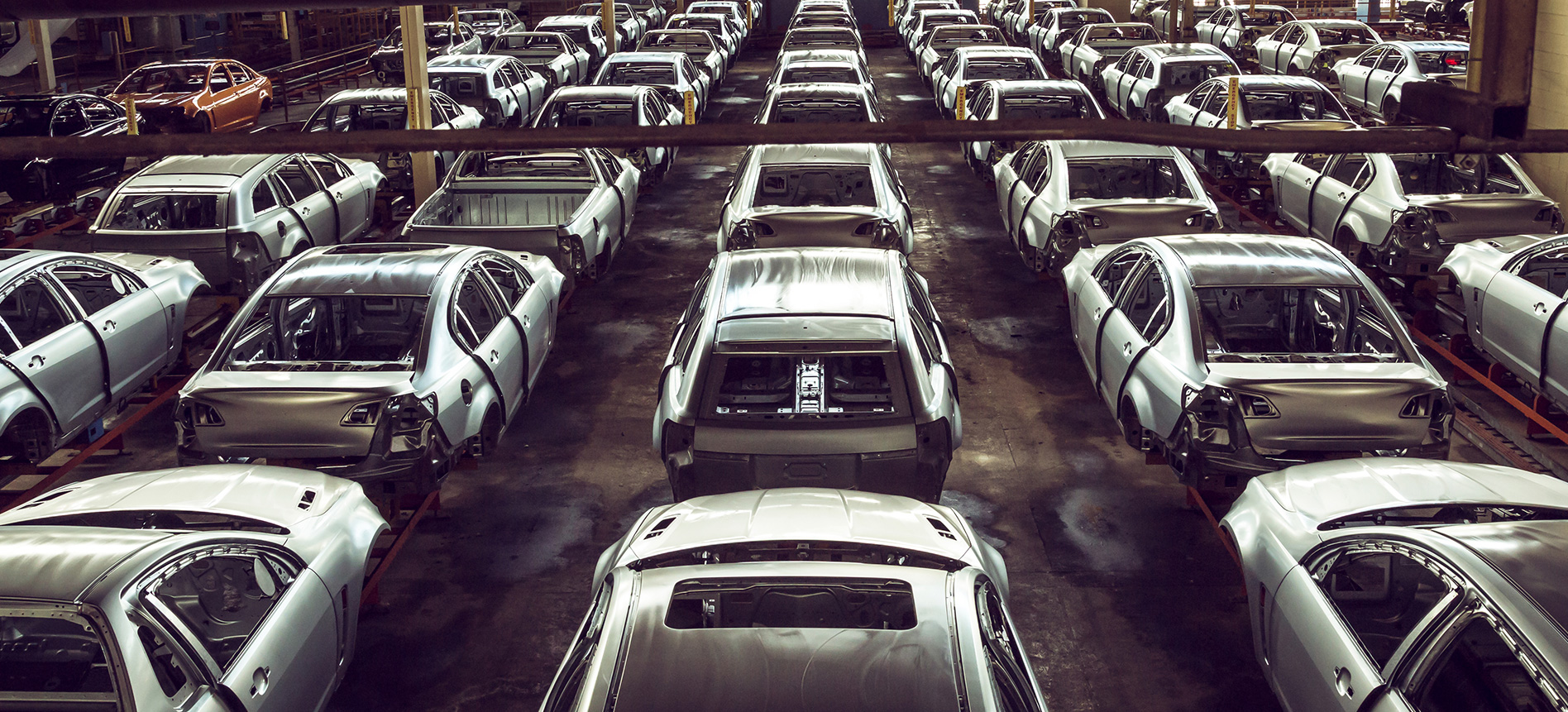
Devereux announces the loss of 400 jobs at Elizabeth and 100 in Victoria, including Lang Lang test track validation staff. Line speed slows from 400 to 335 cars per day. Cruze sales downturn – driven by cheaper imports benefiting from high Aussie dollar – blamed.
5 June 2013
VF Commodore pricing announced, with drops of up to $9800.
8 May 2013
Holden CFO George Kapitelli announces $152.8 million loss for 2012, blames exchange rate that “puts particular pressure on our Australian manufacturing operations.”
23 May 2013
Ford announces end of local manufacturing and death of Falcon nameplate by October 2016. News breaks during VF Commodore national media launch. “Ford’s gone, we are not – that’s the story,” Devereux tells journalists. Holden issues a statement saying 2012 agreement was “based on the economic and market conditions at that time”. Effectively it means GM’s future investment is on-hold.
18 June 2013
Devereux announces he will be seeking labour cost reductions from the Elizabeth workforce, claiming an added cost of $3750 to build cars in Australia.
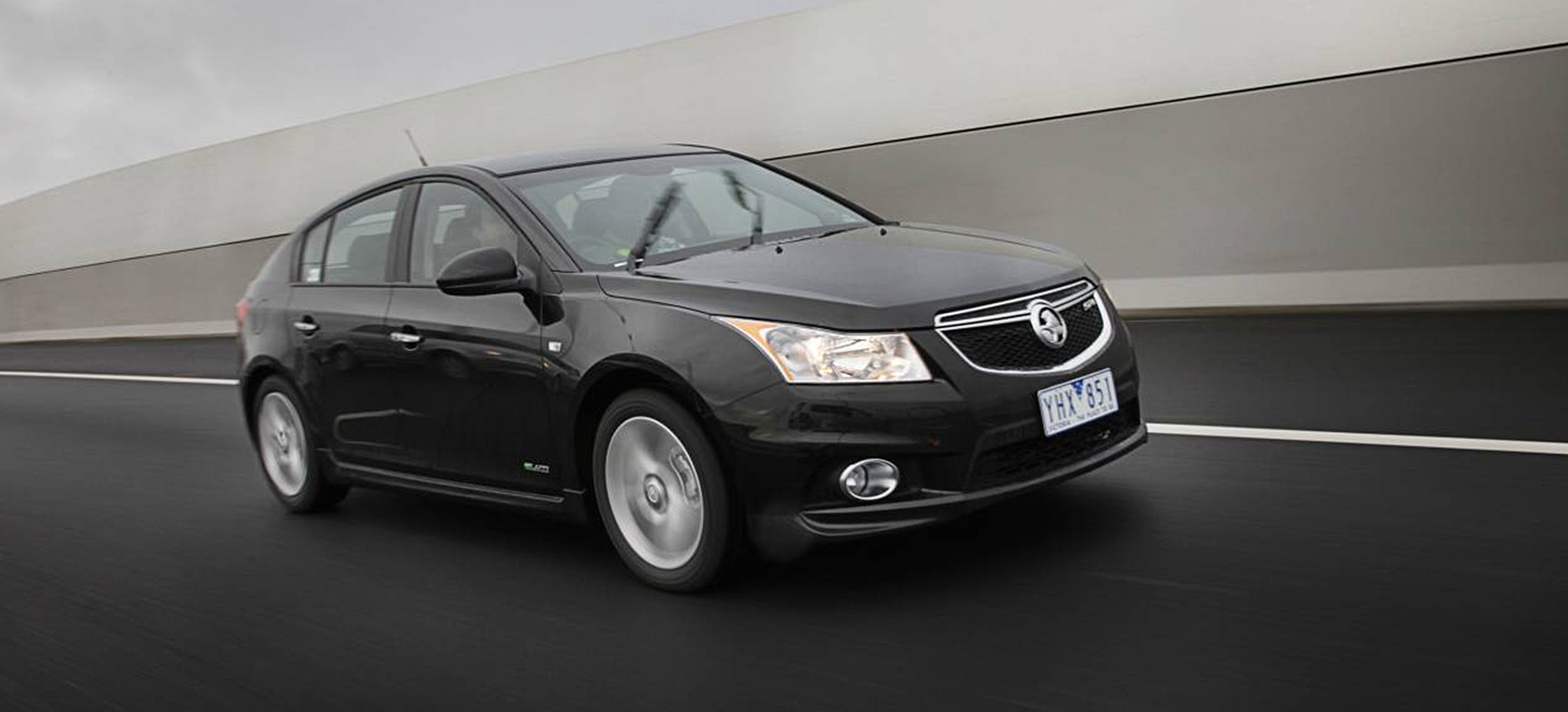
Says move is crucial to continued survival of local production. Subsequently emerges Holden loses about $670 on each car it builds and the plant roughly $40 million per year.
13 August 2013
Elizabeth workforce agrees to three-year wage freeze, dependant on new models being built post-2016.
14 August 2013
Devereux says he aims to have Holden’s business plan for the manufacture of the next-gen Cruze and Commodore ready for his General Motors superiors in early October, just weeks after the federal election.
12 September
Voluntary separation packages confirmed, seeking a reduction of 45 staff from engineering in Port Melbourne and Lang Lang.
September 7
The coalition wins the federal election, with a $500 million cut to car industry assistance and a Productivity Commission review its key auto policies. New Industry minister Ian MacFarlane says he is a fan of the local car industry.
2 October 2013
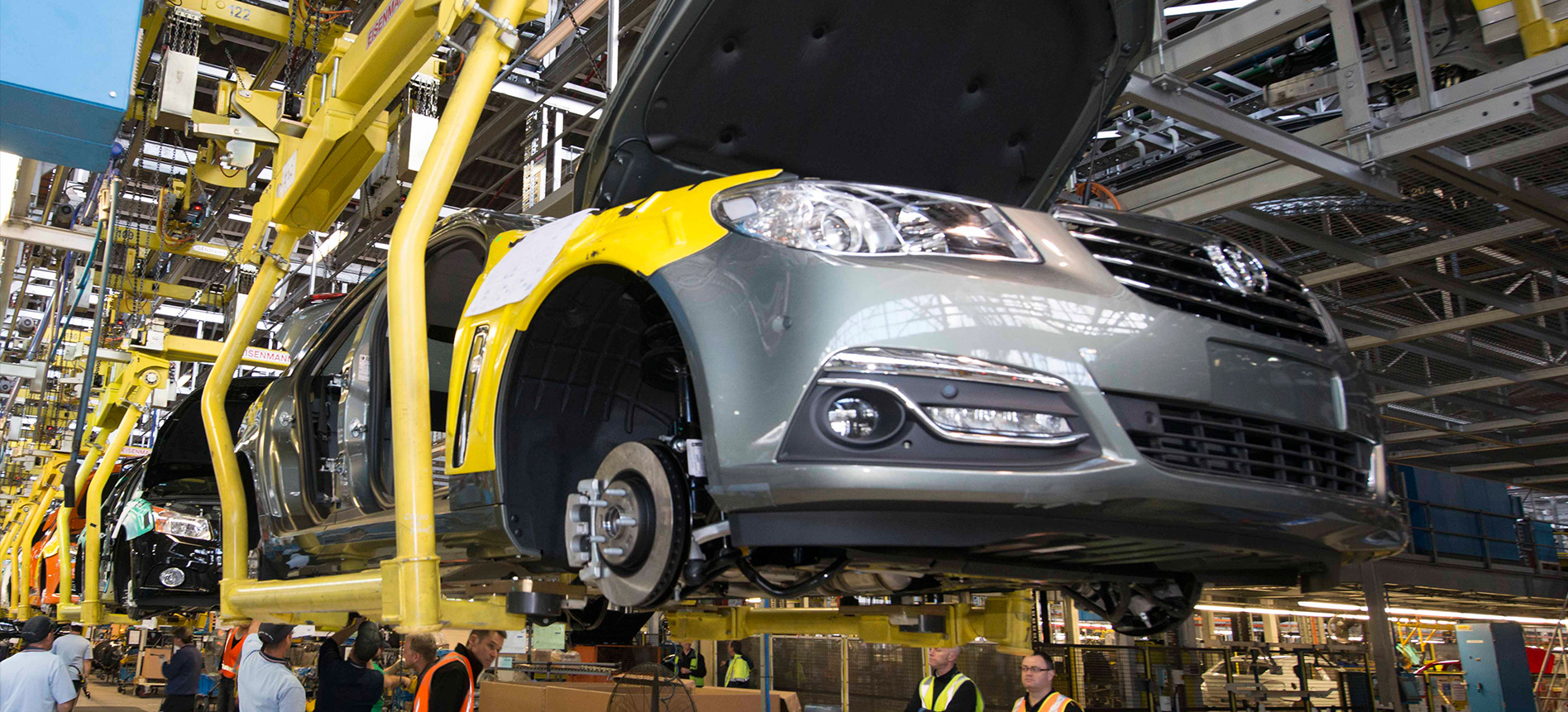
After much-anticipated Elizabeth tour, Devereux outlines to MacFarlane revised government investment needed to continue manufacturing. Announces Productivity Commission review of the industry will hand down preliminary findings in December.
25 October 2013
GM announces Devereux being promoted to regional sales and marketing job from the new year.
4 November 2013
Productivity Commission deadline for submission closes with more than 70 received.
November 2012
Confirmed Devereux’s boss Stefan Jacoby has made a brief visit to Australia, but no meetings with governments.
5 December 2013
Senior ministers within federal government leaks to ABC that GM has already made the decision to cease manufacturing in Australia.
In subsequent days, Government goes on the offensive with PM Abbott, Treasurer Hockey and stand-in PM Truss all demanding a definitive answer from Holden, before the Productivity Commission preliminary findings are announced.
10 December 2013
Devereux appears before Productivity Commission and says no decision on Holden’s future has been made. Leaves hearing to make conference call with GM senior leadership team where closure decision is confirmed.
11 December 2013
Devereux announces closure of Elizabeth in 2017, Port Melbourne V6 assembly plant in 2016, Lang Lang test ground and engineering department. Holden will become a full-line importer. Design studio to continue.
THE Federal Chamber of Automotive Industries has released total vehicle sales figures for the 2013 calendar year.
Its VFACTS report revealed total Australian sales of 1,136,227 units, an increase of 2.2 per cent over 2012’s 1,112,032 units.
In a tough period for Australian manufacturing, sales for locally produced Holdens, Toyotas and Fords dropped, year-on-year. Holden’s 57,261 represented a 17.1 per cent drop from 2012. Aussie Toyota sales declined 12.7 per cent, to 31,699, and Ford slipped 14.1 per cent, to 29,550, compared to 2012.
But despite local woes, Toyota once again took the gong for total vehicle sales, with Subaru overtaking Honda in December, to gain ninth spot:
Top 10 total vehicle sales
Toyota (214,630)
Holden (112,059)
Mazda (103,144)
Hyundai (97,006)
Ford (87,236)
Nissan (76,733)
Mitsubishi (71,528)
Volkswagen (54,892)
Subaru (40,200)
Honda (39,258)
Top 10 sales by model (excl. commercials)
TOYOTA’S revised Corolla just eclipsed the ageing Mazda3 for top spot in passenger sales, though with a new 3 arriving early in 2014, the Corolla will have to watch its back. The local Commodore, Camry and Cruze remain entrenched in the top six despite continued pressure.
Toyota Corolla (43,498)
Mazda3 (42,082)
Hyundai i30 (30,582)
Holden Commodore (27,766)
Toyota Camry (24,860)
Holden Cruze (24,421)
Mazda CX-5 (20,129)
Ford Focus (19,180)
Hyundai ix35 (19,098)
Volkswagen Golf (17,342)
2013 winners
THERE must be something in the Italian water, as Alfa Romeo and Fiat both posted impressive gains. Total Alfa 2013 sales sat at 2373, up 162 per cent on 2012. Excluding commercials, Fiat sold 3854 units, an increase of 651 per cent on 2012. The Fiat 500 and Abarth range was a key contributor with 2443 sales – up 376 per cent.
Mitsubishi had its best year as a full importer, posting 71,528 total sales for a 21.5 per cent increase.
Renault’s 7016 sales realised a 40 per cent gain, and its best year since returning to the Australian market in 2001.
Other noteworthy performances included the Chrysler 300 (up 108 per cent to 2508), Ford Kuga (up 250 per cent to 3874), Honda CR-V (up 164 per cent to 12,510) and the electric Nissan LEAF, which climbed to 188 sales, an improvement of 144 per cent.
2013 losers
ALTHOUGH Euro chic worked for the Italians, Citroen seems to have lost its way, posting a 2013 sales total of 1180, down 31 per cent on 2012. The French company’s C4 sold only 214 units, a drop of 60 per cent.
Proton moved a thin 611 units, down 39 per cent on the previous year, but more significantly Ford’s Mondeo dropped 41 per cent to 3089 units, a worrying sign for the car which many perceive as the Falcon’s replacement. Honda’s similarly sized Accord Euro achieved just 1834 sales, down 70 per cent, and Nissan’s Micra suffered a 53 per cent slump to 4326 total sales.
FORMER Holden managing director Alan Batey believes there is too much value in the Holden brand for General Motors to drop the marque for Chevrolet once local production ceases in late 2017.
The current executive vice president of General Motors in North America told the Australian press at the Detroit motor show today that while the December 11 announcement was devastating, it is far from the end of the Holden nameplate.
“Tough. Love everybody. Love the brand,” he revealed. “I had a wonderful time for four years working with everyone down at Holden. So it was a tough moment, disappointed and sad.
“But at the same time the brand stands tall. I think we’ll continue to have a great presence in the market. We’re keeping our capability from a design perspective down there under Mike Simcoe’s leadership. We have a lot of talent that we want to leverage, so Holden will remain a very important brand in our portfolio. I believe that we can win in Australia.
“But from a personal perspective it was a tough moment.”
Mr. Batey also dismissed the rumours suggesting Chevrolet replacing Holden in Australia after the cessation of manufacturing in late 2017.
“Holden is such a strong brand. I struggle with where that came from. We’ve seen other brands move out of local manufacturing in Australia, and their presence has remained strong, and we will be the same.
“If you were starting out with a clean sheet of paper, then that would be something different. But you’re not. You’re starting out with Australia’s own. I don’t think it would make real sense to put bow ties in front of Holdens down there. I don’t think that would make sense at all.”
Furthermore, Mr. Batey believes that Holden sales will not be permanently affected by the closure announcement.
“Early signs (are strong),” he said. “In fact I was talking to Philip Brook (Holden Executive Director of vehicle sales, service and marketing) over the Christmas period and things are looking pretty good.”
However Mr. Batey refused to reveal whose vehicles exactly would be imported as the replacement for the locally made VF Commodore, WN Caprice and JH Cruze post 2017.
“Honestly I don’t have anything to announce today,” he said.
Replacing the now President of GM Mark Reuss in Australia in 2009, Mr. Batey served as Chairman and MD of Holden until 2010.
Holden will be free to cherry-pick from General Motors global automotive portfolio after the closure of its Australian manufacturing operations in 2017.
According to Richard Ferlazzo, head of Holden design, the one arm of the local creative process that continues after 2017, Holden will be free to take the most appropriate models for Australia, whether they come from Germany, America, Korea or, even China. All to be badged as Holdens.
In the past, with local manufacture of the Cruze, Holden was prevented from importing models like the Opel Astra. “We’re been restrained by the need to maintain Cruze assembly volumes,” says Ferlazzo. “And that sometimes hurt.”
The Cruze hatchback, designed by Holden, and sold in Europe as the Chevrolet Cruze, was deliberated styled to look and feel cheaper than the Astra, that’s built on the same Delta architecture.
“We wanted to do more (with the design), but had to leave things out and reduce costs and that didn’t help,” says to Ferlazzo.
An emotional Ferlazzo, deeply saddened by the loss of local designed Holdens, says the studios are currently very busy designing cars for a variety of GM’s global operations. “Ed Welburn sees real value in Holden’s studios and Mary Barra – GM’s new CEO – said it was his decision,” according to Ferlazzo. “There will be pressures, of course, but remember, Holden is one of only two places in the GM world capable of building concept cars. We’re doing some now.”
“Our studios are 50-years old in a few months, and I’d like to find new premises,” he adds. Obviously the loss of around 500 engineers from Holden’s R&D building will make it too big for future operations so the search has begun for new studios, now that Holden is set to become just a sales organisation.
HYUNDAI will try and break well clear of the 100,000 annual volume ceiling with the return of the Sonata nameplate, an all-new light car-based SUV and the long-awaited second-generation i20.
Spurred on by a record 97,006 sales in 2013 – a six per cent jump of the preceding period – the Korean brand will exhume the Sonata moniker in the third quarter, to better challenge the latest Toyota Camry.
That’s about the same time the BMW 5 Series-sized DH-series Genesis luxury sedan will launch in Australia; as we revealed earlier in the week, Hyundai hopes to have the flagship sedan comfortably under $60,000.
The Sonata is the belated replacement for the YF-series i45, which sold in steady numbers for two years from 2010.
When discontinued, Hyundai was confident the European-engineered i40 sedan and Touring – though smaller inside and out – would be the better sellers, but has since changed its tune.
The Sonata badge will grace the all-new and larger LF-series sedan, which is said to bring significantly improved dynamics and refinement, as well as more performance.
The latter will be further enhanced by the option of a 2.0-litre turbocharged four-cylinder petrol engine.
Whether the Sonata kills off the i40 line is unknown, though the former lacks both diesel and wagon availability.
Another fresh face in the Hyundai line-up will be the brand’s answer to the bevy of sub-compact urban SUVs such as the Holden Trax and Peugeot 2008.
Expected to surface at the Beijing motor show in April, and rumoured to carry the ix25 badge, it should make it to our shores by year’s end. Pricing is projected to be in the low-$20,000 region.
Like the Trax and 2008 – which are based on the Barina/Corsa and 208 light cars respectively – the ix25 will be built on the second-generation i20 platform that also underpins the Kia Soul.
Set for an early 2015 launch in Australia, the next i20 (IB-series) is reportedly a measurably larger and more grown up proposition altogether than the existing six-year old model, with elements of the firm’s Fluidic Sculpture 2.0 styling language to give the baby hatch a far more contemporary look.
We understand Hyundai is considering importing the higher-specification Turkish-built version that will also serve the more sophisticated European market, rather than its lower-cost Indian-made sibling.
Finally, there is a very small chance that the lauded i10 sub B-segment city car may land in Australia – though not before sometime next year. It has enjoyed a welcome reception from some quarters of the European press recently, with praise directed towards the littlest Hyundai’s refinement and composure.
We’ll keep you posted as the high-flying H-brand reveals more information about its intriguing new wares.
The revelation comes just 24 hours after the embattled company announced 300 fresh job losses from its Victorian plants as it attempts to match supply with a rapid decline in demand for its large Aussie-made Falcon and Territory.
The job cuts at Ford’s Broadmeadows and Geelong plants will be enforced in June, when Ford says it will wind back production by a third. Currently Ford produces 133 cars at its Broadmeadows plant per day, with this number to fall to between 80-90 by June.
“Look, no one has a crystal ball and can absolutely guarantee the future,” said Ford spokesperson Wes Sherwood.
“We have always said our intent is to continue manufacturing until that time [2016]. But we also know that if the market situation changes, or there are major disruptions in our ability to produce vehicles, we may need to re-evaluate that timing.
“Clearly we’ve got to be realistic that there are a lot of factors weighing in on these decisions.”
The news comes as no surprise to the executive director of the Victorian Automotive Chamber of Commerce, David Purchase, who warned that Ford’s job cuts could have a flow-on effect for Toyota.
“Clearly it will put more pressure on the government to ensure that Toyota remains,” he said. “It’s disappointing the government is not supporting manufacturing and automotive manufacturing in particular.
“But [Ford’s job cuts] were to be expected and we should expect to see more of this over time. Ford competes in a world market that is extremely tough and competitive. I personally would not be surprised if we see a quicker slowdown or reduction than was first envisaged.”
“We hope Ford will be able to continue to manufacture vehicles until their final day in 2016. However, this is an area of concern.
While production has been reduced, Sherwood told
“We’re still on plan to increase the number of vehicles we’re going to offer and refresh our entire line-up by 2017,” he said.
“We’re also on plan for the launch of the new Falcon and Territory later this year. But we also need to match production with demand and this is tied to what’s happening in the market, which we know is moving towards smaller vehicles. This trend is increasing, so that’s the reality we’re facing.”
The move means Australia will no longer produce any cars locally, with Toyota to stop production of its Camry, Camry hybrid and Aurion models, as well as its Australian-made four-cylinder engines.
Toyota will become an import-only business.
Approximately 2500 employees will be directly influenced by the decision, according to Toyota, with tens of thousands more to be affected in the broader automotive industry.
Staff were assembled at Toyota’s Port Melbourne plant this afternoon and informed of the decision.
Unfeasible economic conditions, including a higher Australian dollar, high manufacturing costs and low economies of scale were blamed for the decision.
“This is devastating news for all of our employees who have dedicated their lives to the company during the past 50 years,” said Toyota Australia President and CEO, Max Yasuda. “We did everything that we could to transform our business, but the reality is that there are too many factors beyond our control that make it unviable to build cars in Australia.
“Although the company has made profits in the past, our manufacturing operations have continued to be loss making despite our best efforts.”
More to follow.
Toyota could leave Australia before its 2017 deadline, with the company refusing to guarantee it won’t shut its factories early.
Speaking exclusively to Wheels, company spokesperson Beck Angel said that, while Toyota will make every effort to stay until 2017, it can’t guarantee its workers’ futures.
“We still have customers that we need to service and build cars and engines for right up until our plant closes,” she said. “We will now work closely with our local suppliers, key stakeholders and the government to work through an appropriate transition process. We will, of course, work with our employees and support them as much as possible during the next few years.”
More than 2500 employees are expected to lose their jobs as a result of Toyota’s closure, with 30,000 more to be affected in the wider automotive industry.
But, unlike Ford and Holden, Toyota says its closure isn’t the result of tumbling sales in the large-car segment. Instead, unfeasible economic conditions, compounded by a high Australian dollar, high manufacturing costs and low economies of scale have been blamed.
“Our vehicles continue to be high sellers in Australia,” said Angel. “In fact, the Camry is consistently among the top 10 sellers in Australia every year and is in high demand from our export customers. The Camry has been the best-selling car in its segment for 20 years.”
It’s a trend Toyota expects to continue until 2017, with the company not anticipating any buyer backlash from its decision to terminate local production. Both Ford and Holden have seen sales nosedive in the fallout of their closure announcements.
As for what will remain of Toyota in Australia, the company’s design team should continue unchanged as it completes work for the entire Asia Pacific region.
“They don’t work exclusively on the design of our locally built vehicles, so they will continue to operate following the plant closure,” said Angel. “But it’s too soon to speculate on this, broadly speaking. We need time to assess what our business will look like beyond 2017.”
.
Show day in Melbourne
