
Former Chair of Duracell and Boarden Chemical, C. Robert Kidder, has a big job ahead of him.
Kidder will take the helm of Chrysler after its operating assets and possible global alliance with Fiat are determined through the courts and closed-door handshakes. He replaces Robert Nardelli under a new half-million-dollar salary cap scheme enforced by the Obama administration.Kidder has an impressive resume that spans 40 years of elite company involvement. He is currently on the board of several companies including Schering-Plough, Microvi Biotech, Morgan Stanley, where he is also lead director, and chairman and CEO of investment firm 3Stone Advisors.“I am pleased to join Chrysler at a time when Chrysler is poised to launch an exciting new era,” said Kidder at the formal announcement in Michigan, USA yesterday.“I am confident that Chrysler will emerge from Chapter 11 (bankruptcy) a lean and powerful competitor, combining its own rich history of innovation with Fiat’s technology and expertise to invigorate the American car market and to challenge other car companies around the globe.”Outgoing boss Nardelli has been Chrysler’s Chairman and CEO since August 2007, and had the unpleasant task of announcing Chrysler’s intentions to file for bankruptcy, as well as a new global strategic alliance with Fiat, at the end of last month. He will take up an advisory role at Cerberus, the company that initially acquired Chrysler after its split from Daimler.“We are most fortunate that Bob Kidder will lead the new company through its transformation,” said Nardelli.“My number one priority has been to preserve Chrysler and the livelihoods of thousands of people who depend on its success. With his broad expertise serving on numerous world-class boards and his accomplished business background, Bob will provide the leadership and strategic counsel that will help to create a strong global competitor moving forward.”
It may lack the true car-killing qualities of the Dakar Rally Raid or, say, The Blues Brothers, but Wheels COTY testing often does deliver a corpse or two. Back in 2005, the then-new Nissan Murano failed to deliver on the tough promises of its gladiator-helmet styling, expiring with a CVT transmission snagged in one ratio while its space-saver tried (and failed) to resuscitate a puncture.
This second-gen model, with no carry-over panels and major revisions generally, happens to feature a toughened, upgraded CVT and also provides a full-size spare wheel. Hmm … coincidence or consequence?The 3.5-litre V6 also benefits from a raft of friction-reducing and tuning tweaks (see panel) that raise its maximum outputs to 191kW/336Nm, up 19kW/18Nm on the original. Fuel consumption benefits, with the official figure of 10.9L/100km some nine percent more frugal.The extra performance is useful, but it’s the overall refinement that is more memorable. This is a silky, willing engine that delivers a distant, hard-edged snarl if pushed, but otherwise is a quiet, relaxed performer. And that’s the essence of the Murano. Its exterior styling may still suggest it wants to take you jousting, yet its supple, relaxed ride and hushed interior sound levels seem more aimed at tempting you out of a Lexus RX350.Yes, dynamically it’s far from the sharpest SUV in the shed. And that sits just fine with me. I’m officially sick of ‘sporty’ crossovers that promise moments of corner-carving brilliance while thumping and jostling for attention the other 99 percent of the time.That said, the new Nissan does feature chassis revisions to make the whole experience less boaty. The steering is now moderately weighted (but still lacks any meaningful connection to the front wheels), while new multi-link rear suspension copes better with mid-corner bumps. Drive with a degree of set-up and sympathy and it’s fine, but it quickly becomes a determined understeerer if you push beyond its comfort zone.Inside it’s a big improvement on the original — more leather-trimmed gentlemen’s lounge than the 350Z-inspired pseudo sports effort delivered first time around. The entry ST model is well equipped, but you’ll need to step up to the Ti model ($55,890) to secure must-haves like reversing camera and power operated tailgate. Remember, though, that the new ST is some $6K cheaper than the original. It’s a bit early for COTY, but that’s value hard to argue with.Nissan Murano ST Engine 3498cc V6, dohc, 24v Max Power 191kW @ 6000rpm Max Torque 336Nm @ 4400rpm Transmission 6-speed CVT 1-100km/h 8.0sec (claimed) Price $45,990 On sale Now
Chevrolet will cash in on the cachet of its Transformers movie star with a limited edition Bumblebee Camaro.
The car will roll off the production line on June 24, to coincide with the release of the Transformers movie sequel, Revenge of the Fallen.Specs are shady, but the LE Camaro in either LT or SS spec (V6/V8) features the Rally Yellow Camaro palette (which is lighter than the movie car) with its iconic black stripes, and Transformers-branded wheel caps, door sills and centre console.It’s run will last ’til December, when the ‘buzz’ of the movie has well and truly dissipated…
In these desperately frugal times, it’s nice to see some people are prepared to fork out if the goods are worth it. And Ferraris are still the price-fetchers.
This original 1957 Ferrari 250 Testa Rossa sold under the hammer at the weekend for a record-smashing 9.0 million euro – that’s 16.2 million of our Aussie bucks.An anonymous bidder secured the vintage supercar via telephone to the Ferrari heartland of Maranello, Italy, where RM Auctions held the annual “Leggenda e Passione” – an event specialising in Italian supercars.The previous record was set at last year’s event, when UK radio host Chris Evans coughed up 7 million euros for a black 1861 Ferrari 250 GT SWB California.The record would have been lapped at Saturday’s auction if another pony – a Ferrari 330 P4 – hadn’t been passed in at 7.25 million euros.The Testa Rossa “pontoon fender” model is one of only 22 similar jobs manufactured in Maranello between ’57 and ’58.The number 124 racer finished 4th when it debuted in the Buenos Aires 1000km in ’58, and has a history in the SCCA Championship in following years.In 2007 a Le Mans winning 1962 Testa Rossa was sold at auction for a then-record breaking $A11.3 million.
Here’s the deal: the MX-5 has an anniversary, its 20th, and you get the pressies. As if that weren’t incentive enough, the goodies come wrapped in the best MX-5 ever.
Now, that may seem a bit of a stretch, considering the MX-5 has been the world’s most successful affordable sports car from day one, 20 years ago.However, you have only to lower the roof, turn the heater up and thread the latest MX-5 through a winding road on a crisp, clear autumn morning to appreciate that this second edition of the third generation is the so-more-ish icing on an already tasty cake.Although relatively subtle, the latest changes demonstrably reinforce and refine the MX-5’s ingrained sportiness.External revisions include new tail-lights and rear bumper, together with a nose job that sees different headlights, sculpted front fog lamp bezels and the return of Mazda’s five-point grille.The cabin’s most noticeable change is the dashboard fascia panel’s switch to matt dark grey, eliminating the previous glossy piano black’s reflections. Most comfortable change is the seats’ more widely splayed side bolsters. Driver’s seat height adjustment is a welcome addition.The instruments have revised graphics, and attention has been given to the HVAC knobs, the armrests and (to lessen contact with occupants’ knees) the doors’ drink holders.The manual’s tachometer red band now starts at 7200rpm, a bit farther up the rev scale than previously, because while the engine still cites 118kW maximum power and 188Nm maximum torque, it has found an extra 500rpm to play with. It feels enthusiastically livelier and sportier all the way to its 7500rpm cut-out.The engine also sounds nicely throatier, thanks in part to the intake system’s newly developed ISE system, or Induction Sound Enhancer. And there’s a meatier exhaust burble.Happily, the cabin is noticeably quieter than the outgoing version, even in the soft-top model, and especially in the Roadster Coupe.Internally, the manual’s engine has a new forged crankshaft, fully floating pistons with more robust gudgeons, different valve springs for high-speed bounce resistance, and tougher connecting rods.All good stuff, and the more impressive because drive-cycle fuel consumption of the manual and automatic alike is trimmed to 8.1L/100km. That’s a 0.4L/100km reduction for the manual and 0.7L/100km for the auto.While both transmissions exploit the MX-5’s sportiness to the utmost, the six-speed Activematic auto continues with the previous engine. It makes the same 118kW and 188Nm outputs, but delivers maximum power at 6700rpm (rather than at 7000rpm like the manual). The auto’s engine doesn’t spin quite as freely as the manual’s. However, it still performs sportily while offering the ease of driving expected to help account for 38 percent of MX-5 local sales.Thanks to improved synchromesh mechanisms, the DIY six-speed gearbox has light and rifle-bolt shift quality, with the bonus of delightfully crisp, wrist-flicking throws from slot to slot.Only the manual models get a limited-slip (torque-sensing) diff. However, there’s no discrimination where further improved driving dynamics are concerned.Just when you possibly thought the MX-5’s traditional benchmark grip, balance, predictability, controllability and driver-involvement was about as good as it gets, the latest model lifts the bar, again. Through corners, it just goes and flows while generating a rare affinity with the road and the driver.The overall suspension design remains as before, but the springs and dampers are lightly revised, while the front cross-member is stiffened, and the front-end geometry adjusted to lower the front roll centre (by 26mm).The steering weighting feels to have been lightened somewhat, but it still points like a homing beacon. Fine-tuning of the car’s turn-in, roll-control and yaw characteristics bring a richer shade of rosy glow to the whole handling experience.So, with 20 years of great predecessors in mind, is this really the best-ever MX-5? Without doubt.Mazda MX-5 Engine 1998cc, in-line 4, dohc, 16v Max Power 118kW @ 7000rpm Max Torque 188Nm @ 5000rpm Transmission 6-speed manual 1-100km/h 7.6sec (manual, claimed) Price from $43,850 On sale Now
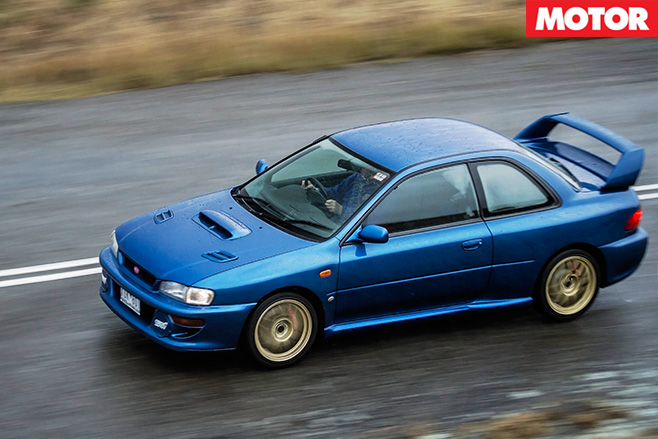
Built to satisfy new world rally championship rules, the 1999 subaru STI 22B is the greatest impreza road car ever.
Ten years after its debut, this car remains the finest Impreza ever. It may as well be a road-going world rally car as it’s your best chance to feel like the legendary Colin McRae on a winding road. The STi 22B is the King of Subarus, the deity of the iconic WRX, the GT HO for the PlayStation generation.
This Super Sube was first shown at the Tokyo Motor Show back in 1997 as the ‘WRCar-STi’ and was a direct result of Subaru’s World Rally Championship campaign, giving it enormous street-cred right off the bat.
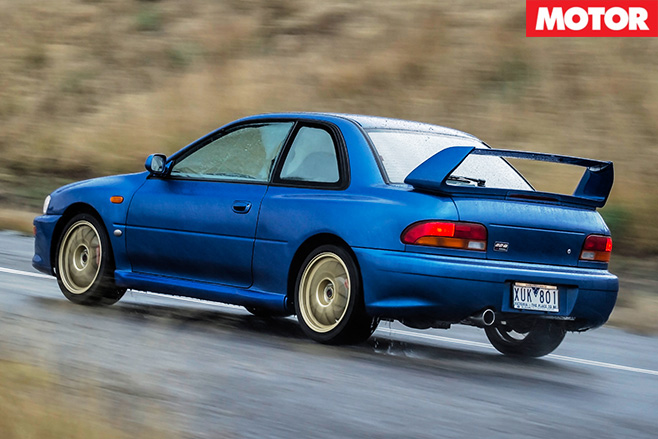
So when the governing body decided that vehicles must be showroom-based (saving manufacturers an estimated $30 million each in development costs), the 22B was born. Developed by Subaru Tecnica International – Subaru’s performance tuning arm – all 400 ‘WRC Blue’ numbered versions sold out almost instantly in Japan (reports state anywhere from 24 to 48 hours).
An additional 25 (un-numbered) were produced for export, of which five were nabbed by Subaru Australia for local consumption in 1999.
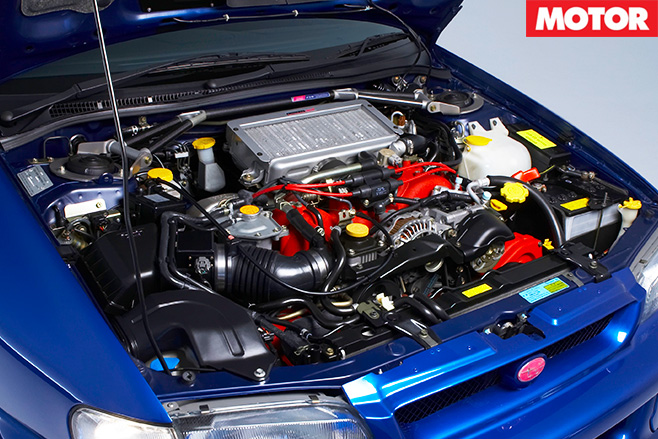
A closed-deck block housed a set of forged pistons fed by stronger, sodium-filled valves, with metal gaskets and molybdenum-coated internals used throughout, and the top-mount intercooler was given a water-sprayer.
Despite the changes, the 22B made the same ‘206kW’ and near-enough the same torque as the ’99 STi Coupe (360 plays 353Nm), but the key to the 22B’s superiority was that its torque peaked 800rpm earlier, thanks in-part to a more sophisticated engine management system.
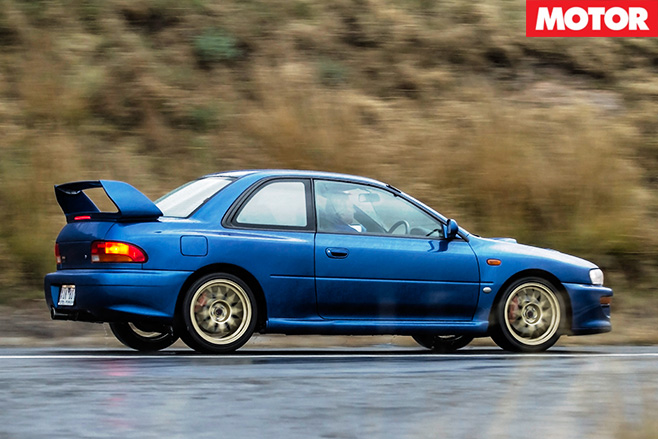
Further upgrades included wider front and rear tracks, with pumped guards adding 80mm to the Impreza’s width. Unique 17-inch BBS alloys were an inch bigger than the regular STi’s, and the 22B was also 15mm longer, thanks to its two-way adjustable rear wing. It sat 15mm lower on Eibach springs and Bilstein shocks, and aluminium suspension components helped it shed 25kg from the STi’s 1295kg.
That all meant the 22B could devour any local V8 and a swag of imported metal in a point-to-point shootout. Indeed, the intensity of the Super Sube’s experience saw words such as “violent” penned by local motoring press. While the chassis’ of various WRX/STis and Evo Lancers already displayed supreme grip levels, the 22B stretched the envelope even further.
Who cares if the 22B’s standing-400m time of 13.8 seconds and 0-100km/h sprint of 5.7 seconds placed it only just ahead of the STi’s 13.97 and 5.76. With even stronger mid-range engine response, the 22B’s rolling acceleration times were its forte – it made already quick cars appear almost sloth-like. The 22B smashed 80-110km/h in third gear in 2.4 seconds.
HSV’s top-of-the-range GTS 300 – which was produced a year later, mind you – took 3.1 seconds. Combine this sort of punch with the 22B’s great chassis balance, crisp steering (it had a quicker rack) and prodigious grip, and you ended up with a supercar stormer. Sure, it couldn’t touch Porsche’s 993 911 Turbo in a straight line, but it could challenge any atmo 996.
It’s about achieving a result regardless of how. In doing so, Subaru brushed aside rationalism and set a sticker price of $132,000 – $7000 of which, Subaru Australia claimed, went towards ADR approval.
That made the 22B more than twice the price of the STi (which we dubbed “The bargain of the century” in February ’99) and placed it firmly in BMW M3 territory. But the 22B was never meant to be driven by every second architect – this is a sole-purpose destroyer.
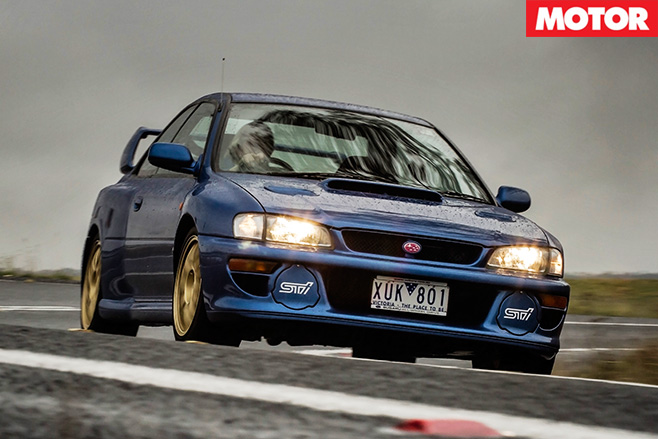
Put simply, the 22B remains the ultimate Subaru. With such a limited number produced, it is the rarest of a supreme breed of the most-iconic WRX. It pushed budget, marketing and rationality aside the way an enthusiast builds his or her dream car regardless of cost, delivering uncompromised cornering ability and power delivery.
Its devastating point-to-point capability rightfully made supercar owners envious. Sure, the 22B doesn’t have a 911’s classic lines, nor decades of heritage. It doesn’t have the pull of a Ferrari, or the velvet-glove appeal of an M3. But can it devour its pricier rivals on a mountain pass? You bet. Above all, it was the result of – and is now homage to – Subaru’s glory days of world rallying.
The times for cheap cars are probably upon us. Tata Motors has written more than 200,000 fully paid domestic orders for its new Nano light car in just two weeks, the Indian giant has reported.
That’s a serious order bank in a market good for just 1.5 million passenger cars annually.Deliveries of the Nano – the so-called “People’s Car” which is priced from about A$2700 – will begin to flow in July.With money tight and the future unknown for many families in the global village, is cheap and cheerful set to become the norm across the vehicle industry?Proton thinks so, foreshadowing a reinvigorated assault on the Australian car market spearheaded by what it insists will be our lowest-priced sedan.Currently, our cheapest sedan is Holden’s Korean-made Barina at $16,290.So early next year, when Proton launches its price leader, it will need to undercut the Barina and any other cheapie contender on the scene including those planned entries from China.The new sedan, called Saga in Malaysia, will replace the present 1.2-litre Savvy Hatch, a car that hasn’t been a raging success. The new car will get a badge unique to Oz.Sources close to Proton won’t rule out a price of around $12,000 – a figure that will be hard to beat.The managing director of Proton Cars Australia, John Startari, admits that the Malaysian brand has not performed to expectations here. But, with a commitment in resources and backing by parent company Proton Cars Berhad, Startari senses it can do good business in this tougher, price sensitive market.“Product, pricing and marketing support have received major boosts to ensure that we have the tools to take Proton to the market,” he said.Part of the brave new world is Proton Australia’s dealer network rebuilding across the country.The company has severed ties with almost half its existing dealers and is now recruiting new high calibre dealers to broaden the reach and service levels for Proton customers.Startari says the new lowest-cost sedan, powered by a 1.6 litre Campro engine, will be the cornerstone of the Proton range. “It will be significantly different to the current Savvy,” promises Startari.Proton will not announce the pricing or the name of the new car until the launch. However Startari says its price, equipment levels and overall value for money will make it a contender in the small/light car class.Proton produces a range of cars from four-door family sedans to sporty three-door hatchbacks and utilities, and is also the parent company of sports car maker, Lotus.After 14 years on the Australian market, Proton has a modest presence of around 25,000 cars on our roads.
In deference to Australia’s shrinking economy, the Bulmers have taken the responsible step of downsizing. We believe it’s the least we can do in these troubled times.
Having ballooned out of the mid-size C-Class Estate and into the imposing CX-9 for last month’s holiday-road-trip-from-hell, we felt it only right to suck in the gut, notch up the belt and don the sackcloth for a period of carbon-crediting abstinence.At least that’s what I thought we were in for when I learned our new short-termer would be a diesel-powered Mercedes B-Class.I admit to not knowing a lot about the B-Class prior to this test, other than the fact it sits neatly between the diminutive A-Class and the sensible C-Class in Benz’s size and price hierarchy. That, and the fact it has never, to the best of my knowledge, tripped over a moose.Having now spent a month or so at the wheel of a B180 CDI, I have a newfound respect for the packaging abilities of Merc’s engineers and designers. Despite the B’s fairly compact exterior dimensions, it boasts a surprisingly roomy interior that seats four adults in comfort and gives away little in the way of useable space to the larger C-Class.Unfortunately, the engineers appear to have been so preoccupied with creating clever interior solutions, that they neglected dynamics and performance. In my view, neither are of a standard that you might reasonably expect from a car costing $45,800 (or $54,860 as is the case with this optioned version).The problems start with the steering, which is nervous and lacking in feedback. As a result, you’re never really comfortable or fully engaged with the handling. Add to this the leisurely acceleration and soft throttle-response of its 2.0-litre turbo-diesel, plus a droning CVT soundtrack, and it’s a mediocre drive.For some people the B’s safety, efficiency and packaging benefits will make a compelling enough case. But others, like me, will know that Mercedes-Benz can, and should have done a better job on the drive side.Date acquired: March 2009 Kilometres this month: 548km Total kilometres: 548km Av. fuel consumption: 8.3L/100km Maintenance: nil Our loaner’s impending 10,000km service coincided with an out-of-town launch, so we decided to sample Merc’s Airport Express dealership. We dropped off the B180, were ferried to the check-in and, upon return, were collected in the serviced and shone B180. Nice one, Wolfgang!
Tragically, I’d missed my first — and possibly only — chance to shout the immortal words: “Stop the presses!”.
With March Wheels already done and dusted, my indignation concerning the long-term Hyundai i30 diesel’s continuously problematic cruise control would have to wait. Damn. Well, until now…You might remember the symptoms from the previous two i30 reports; the most recent following what was said to have been a fix via an adjustment to the steering-wheel-mounted switch.On a Sydney-Canberra-Sydney trip days after the abovementioned ‘fix’, the i30’s cruise control worked perfectly. Didn’t miss a beat, there and back.On a weekend-after repeat of the same drive, the i30’s cruise control also worked well … on the first leg. The return trip was another story. A perplexing other story, as it happened.With ‘Cruise’ selected and the light dutifully shining in the bottom of the speedo dial, the ‘Set’ function again refused to lock in; just as it had done during the Sydney-Gold Coast-Sydney drive which first showed up the glitch.Again working on the assumption that the system was run by a computer, we tried various combinations of stops and starts (‘reboots’). With and without ‘Cruise’ selected — you name it, we tried it.An early belief that, to successfully ‘reboot’ the system, ‘Cruise’ had to be switched off when you killed the ignition proved false. Nothing seemed to do the trick. Then, the cruise briefly came good again … at road works. Sheesh!So the cruise control remains problematic. We’ll keep you updated with Hyundai’s response to that situation.In terms of just about everything else, though, the i30 continues to impress. Driven frugally, its fuel economy is exemplary for anything this side of a hybrid. It’s also versatile enough to swallow loads. And, last but not least, it can be fun to drive.Use the revs, press on, stand on the brakes, turn it in… the i30 won’t disappoint. If you’ve got the revs and gear right, you’ll even feel some gratifying turbo punch out of the corners. And, if you’re anything like us, you’ll probably enjoy the little Hyundai’s ‘chuckability’. Even the Kumho tyres aren’t the impediment we at first thought they’d be.Date acquired: Nov 2008 Kilometres this month: 1400 Total kilometres: 7013 Av. fuel consumption: 6.4L/100km Maintenance: 1000km free service, cruise control switch adjustment (no charge).The Big One – i.e. fuel economy – continues to impress. This month’s average of 6.35L/100km means it’ll do 835 kays on a full 53-litre tank of the oily stuff. The other Big One – driveability – is evident, too.
Right from the start, in 2007, there’s been a carefully orchestrated plan behind the scenes at Nissan to keep evolving Godzilla, in the same way that Porsche keeps upping the ante with the 911, to keep sales hot and to stay ahead of the curve.
Case in point, Nissan brought in a slew of small but significant updates for the GT-R for 2009, topped off of course by the lightened, hardcore, limited edition Spec V.Another version in the works is the Spec M, a premium “luxury” version of Godzilla with higher grade interior, which is expected to debut new seats and higher grade finishings for the GT-R’s dour, gameboy-themed cabin. Spec M is expected out in Japan this December yet could well appear first at this October’s Tokyo Show.On the engine front, according to word, Nissan is not set to ready any major changes until 2011 when the GT-R gets its first serious overhaul. It may be then that Nissan will finally roll out the 550 bhp powered up V6 twin turbo for Godzilla that was widely tipped for Spec V yet in the final analysis failed to show….because the GT-R team decided to spend its R&D cash on those superlative Nissan Carbon Ceramic brakes instead.Just how fast the Spec V is around the Nurburgring should be answered in May when the Kazutoshi Mizuno, the GT-R development chief, and his team decamp once again for Germany’s Green Hell. Up until now, when asked for a Ring Time for Spec V, Mizuno would only smile quizzically and say…”please imagine….”
