
Welcome to the MOTOR Awards 2021, where our team offer a tip of the hat to those that displayed automotive excellence in the last 12 months.
Gutsiest Racing Move Winner: Kevin Estre, Nurburgring 24 Hour
No one was ready for the Kevin Estre at the start of this year’s Nürburgring 24 Hour. Rain had started to fall on parts of the Nordschleife as the grid prepared for the 24 hour battle. While most chose wet weather tyres Estre was the first runner to start the race with slick tyres from 11th on the grid.
Estre’s viral fame was first established in 2019 with his ‘pass on the grass’ during the 2019 Green Hell enduro, but the first two- and a-bit laps of the 2021 race were something else altogether. In twenty minutes, he dispatches the ten cars ahead of him on the grid in a savage series of attacks and passes that is without peer. The total deconstruction of Estre’s rivals can be viewed in full online. Watching it is an exercise in getting your jaw acquainted with the floor.
The charge is perhaps one of the greatest opening salvos of any racing discipline. Ever. But it is in the granular detail that Estre’s masterclass really amazes. He commits to his line while passing an Audi R8 that squeezes him to the outside of the track on the run toward Flugplatz.
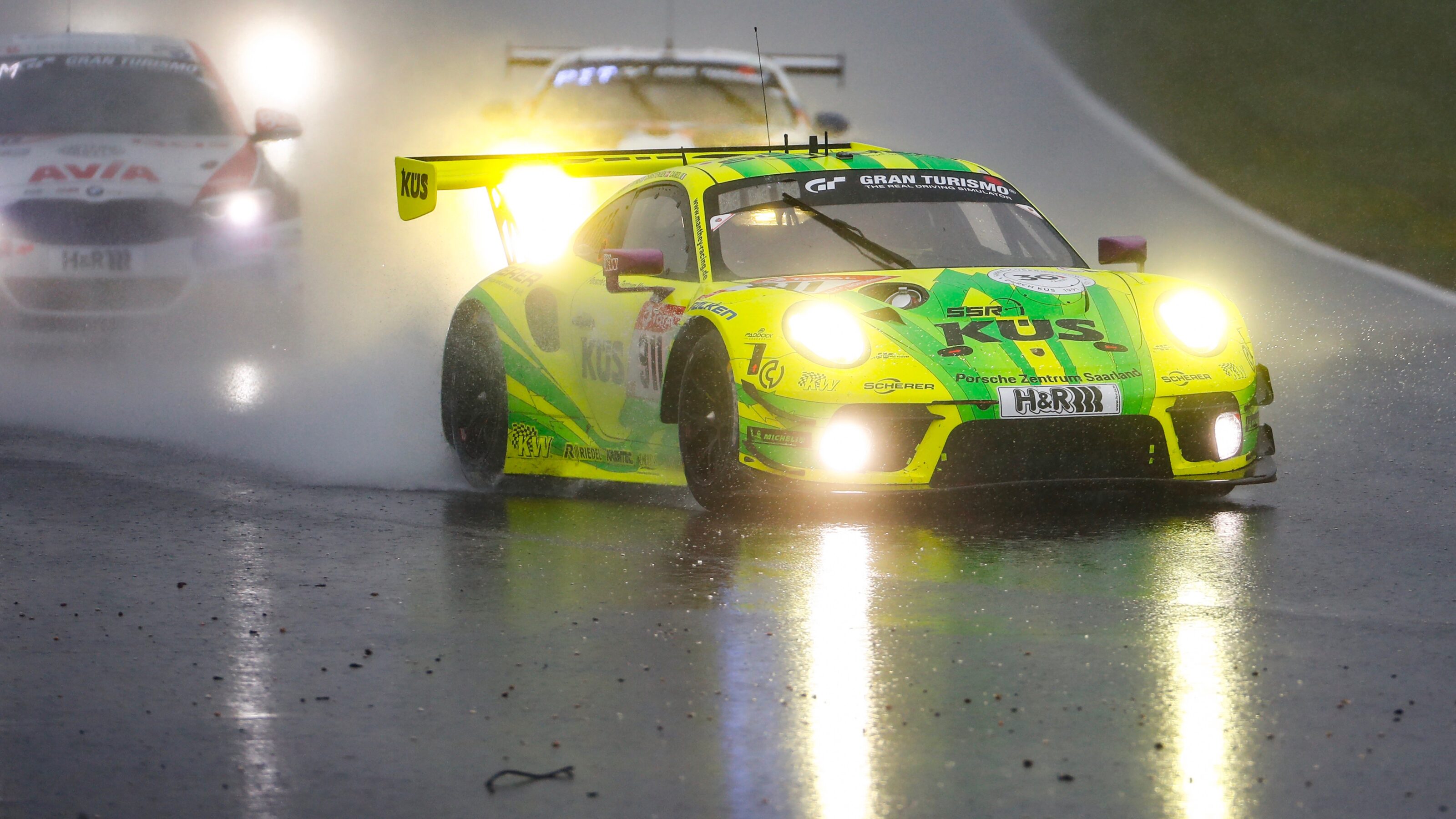
There’s no time to rest as Estre immediately positions himself on the outside once more to pass a Lamborghini Huracan, holding firm through both Kottenborn and Schwedenkreuz as rain starts dotting the windscreen. It’s heart in the mouth stuff. His fake-out on the second-place BMW M6 is decisive in its clinical aggression.
The final victim is the pole-sitting M6, which Estre chases down for much of the second lap, relentlessly closing the gap even when experiencing a code brown tank-slapper at Hohenrain. Then he puts his wipers on to clear away spots of rain and you remember once again all these moves are performed on rivals that ostensibly have access to more grip thanks to their wet weather tyres.
The sheer relentlessness of the assault is mesmerising. Estre’s brilliance sets up what would be an eventual victory for himself and his teammates in a heavily shortened event. His entire race was without flaw, but it was the opening stint that we’ll talk about for decades to come. A heroic performance that places the Frenchman in the pantheon of Green Hell immortals, alongside the likes of Walter Röhrl and Stefan Bellof. All hail the new Ring Meister.
Honourable mention: Edoardo Mortara, Diriyah E Prix
Edoardo Mortara was able to move from fifth to third in a single move at this year’s Diriyah E Prix when he dispatched Mitch Evans and Pascal Wehrlein in unison. Using his ‘Attack Mode’ to power past Evans down the straight, Mortara sliced through a vanishing gap to simultaneously sell a dummy to Wehrlein who he then moved ahead of by going around the outside of the next turn. Ace work!
Honourable mention: Gresham Wagner, Global Mazda MX-5 Cup
At the exit of the final turn of Global Mazda MX-5 Cup’s race at Daytona, Gresham Wagner was in third place. Having fought his way 12th, he survived an all-out eight car duel to be in the box seat during the run to the line. Timing his exit from the draft to perfection, Wagner claimed victory by just a tenth of a second in 2021’s most exciting finish.
Snapshot
- Track Maps to feature Wakefield Park and Sydney Motorsport Park
- Feature will roll out in i30 Sedan N from factory, available as update to i20 N and Kona N
- More tracks set to be added
There’s no denying Hyundai wants its owners to take its N models to the track – from offering exclusive track days to warranties which cover activities off public roads.
The latest addition for Australian buyers is the implementation of its Track Maps tech – an automatic lap timer, which recognises where the vehicle is thanks to its navigation system and allows the driver to focus on nailing the lap rather than looking for a button to press.
Two Australian circuits have already been added to the feature, with Goulburn’s Wakefield Park and Sydney Motorsport Park available in Track Maps, with the latter’s four layouts all included.
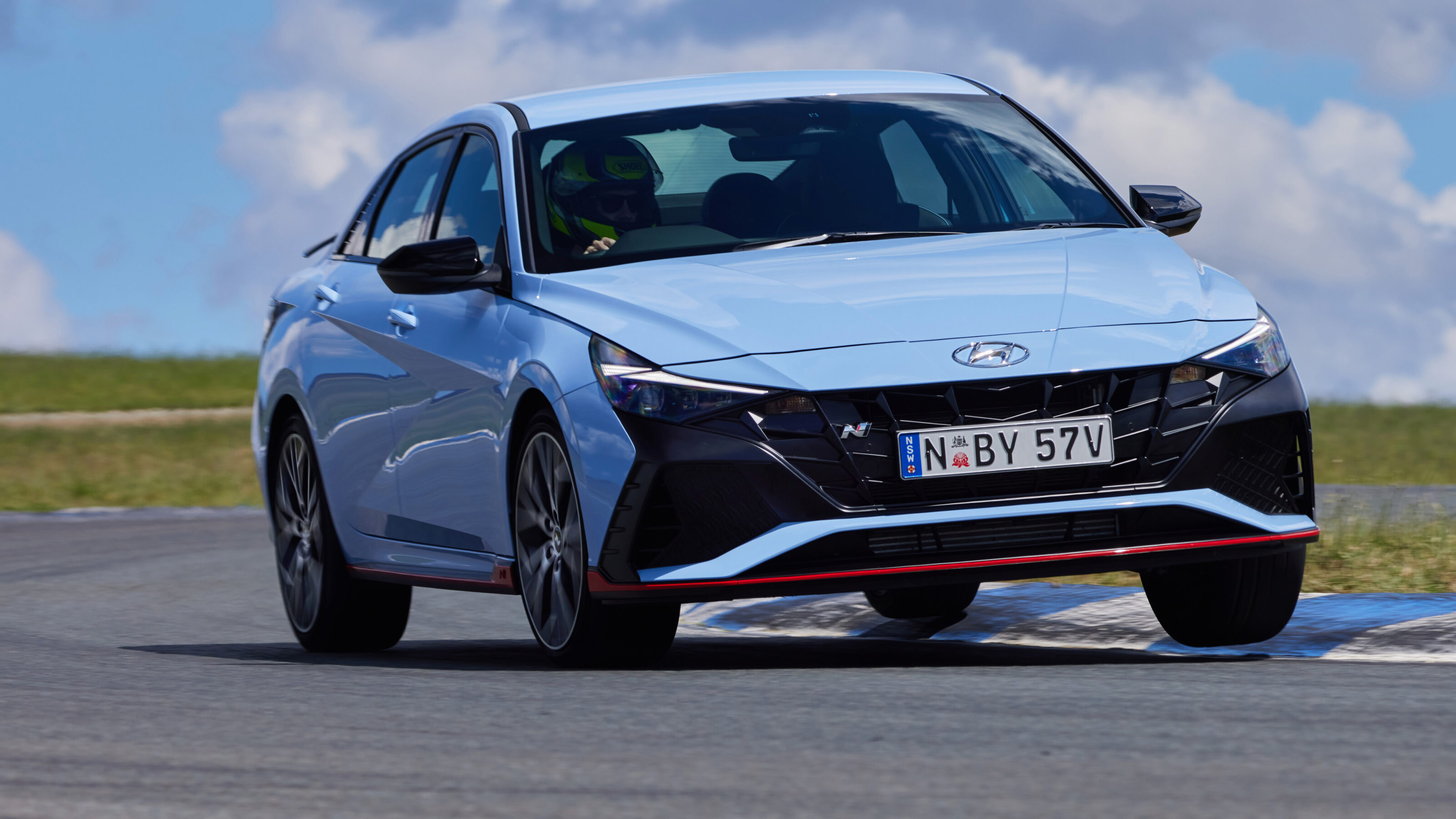
On offer from launch in the new i30 Sedan N, the tech will also be available as a free update to i20N and Kona N owners from mid-2022 – though just with SMP to begin with – while Hyundai continues to curate “a host of major circuits around Australia” for the mid-year launch.
However, for i30 N Hatch and Fastback owners, the feature isn’t available, with drivers having to rely on dedicated lap timers or third-party smartphone apps to log their efforts instead.
With a list price of $49,000 before on-road costs, the i30 Sedan N is the most expensive of the N cars to feature Track Maps, sitting above the $32,490 i20N and $47,500 Kona N.
Snapshot
- Original Elise entered production in 1996
- Total of 51,738 units of the three models have been made
- Assembly lines set to be replaced for new Emira
British sports car manufacturer Lotus is farewelling its Elise, Exige and Evora as it prepares to ramp up production for its Emira next year.
Its Norfolk plant was the site of the Elise’s conception in September 1996 when the first example rolled off the production line, lasting for 25 years as the centrepiece of Lotus’s modern era with 35,124 examples built.
Introduced four years after the Elise as a more track-oriented, hardcore version of the two-seater, the Exige bows out after 10,497 units were produced – over 4000 more than the Evora which came later in 2008 with a total of 6117 units.
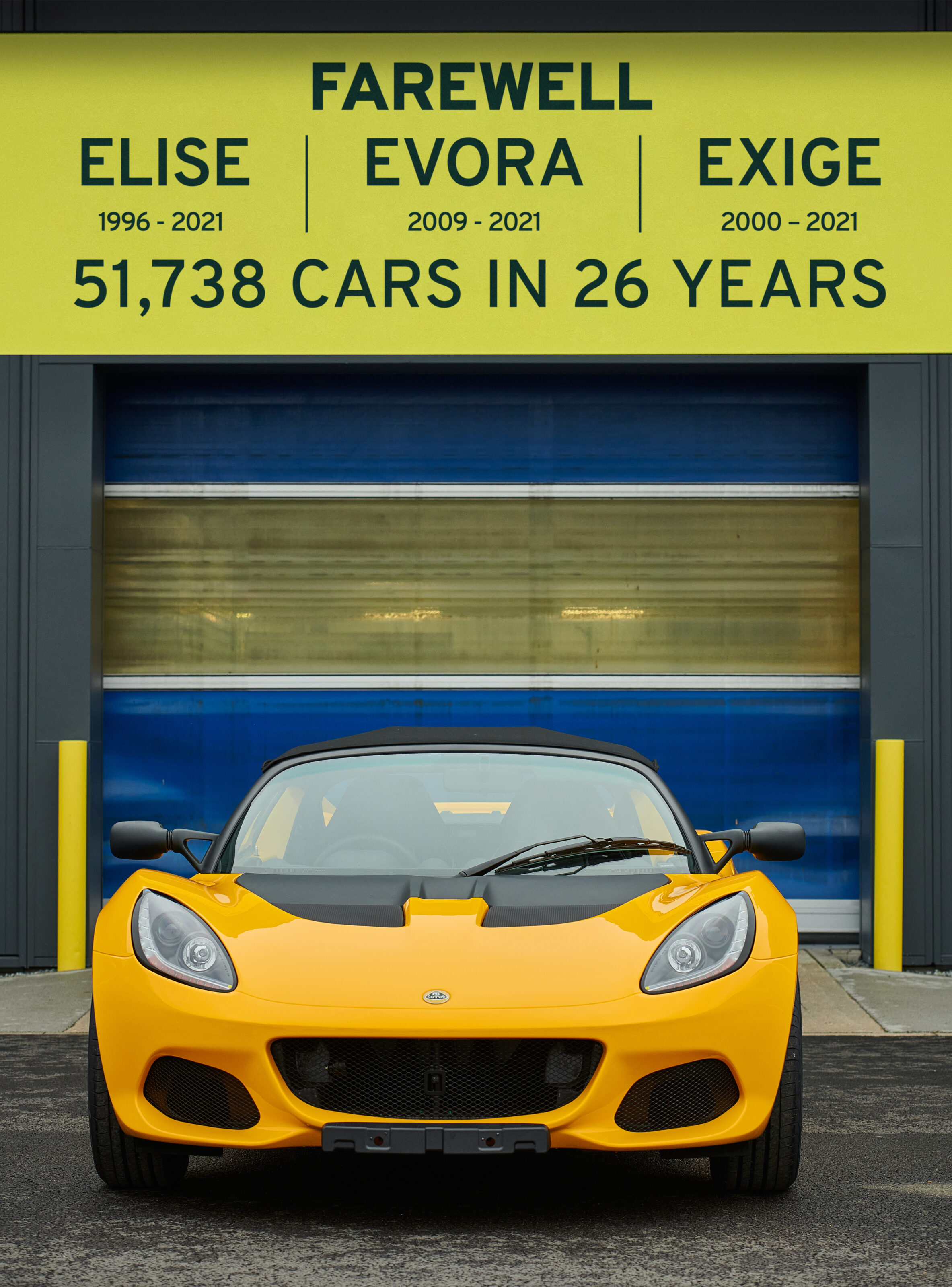
Despite the three cars covering just 25 years of Lotus’s 73-year long standing as a manufacturer, the 51,738 units sold make up nearly half of the brand’s total production volume, and that’s without including the Lotus-built Vauxhall VX220, Opel/Daewoo Speedster and Tesla Roadster.
Lotus Managing Director Matt Windle said the final three models would be honoured by joining the manufacturer’s heritage fleet as it moves forwards to its next generation of vehicles.
“First of all, I would like to thank the Lotus team which has worked on the Elise, Exige and Evora over the years and is now transferring to Emira and Evija manufacturing,” said Windle.
“I would also like to convey enormous gratitude to all the customers of the Elise, Exige and Evora over the last 26 years for their passion, enthusiasm and support. These customers have given our ‘three Es’ true cult status – usually reserved for long-out-of-production classics.
“As we say farewell to the last few cars, we look forward to the Emira and Evija in the all-new factories at Hethel and sub-assembly facilities in Norwich, which introduce greater efficiencies and automation, higher quality and flexibility and the hugely exciting next chapter in our Vision80 strategy.”
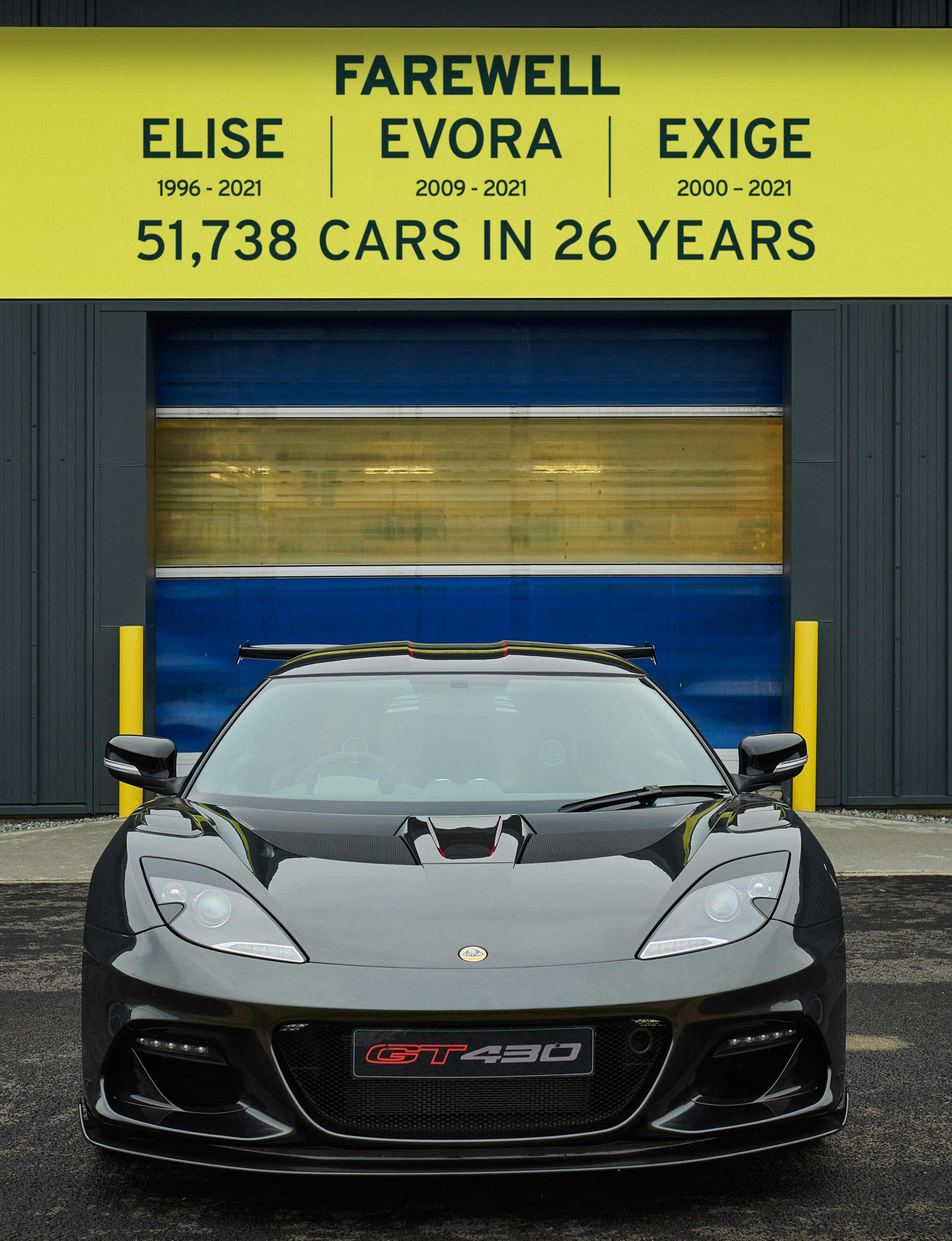
The Emira will act as a replacement to the outgoing Evora, powered by a choice of two engines – a 2.0-litre four-pot and a 3.5-litre V6 – with the first examples expected to land in Australia from July 2022.
On top of the upcoming Evija electric hypercar, Lotus is also looking to expand its brand by going down the SUV path, with at least two high-riding models expected to be a part of its electrification strategy.
Australians will have more budget-friendly electric vehicles (EVs) to choose from in 2022, with GWM Ora gearing up for a local launch.
GWM Ora is the company’s dedicated EV marque, launching alongside GWM Tank which will focus on four-wheel-drives, and the established SUV brand GWM Haval – with GWM remaining dedicated to utes in Australia.
“Under the overwhelming wave of electrification, as one of the important areas of Great Wall Motor’s global strategic map, the Australian market has laid out the line-up of electrified products prospectively,” the company announced in a statement.
“In 2022, the first batch of electric models will be launched in Australia, including the pure-electric brand Ora.”
Both ‘GWM Ora’ and ‘Aure’ have been trademarked in Australia, with a number of models also patented in recent months.
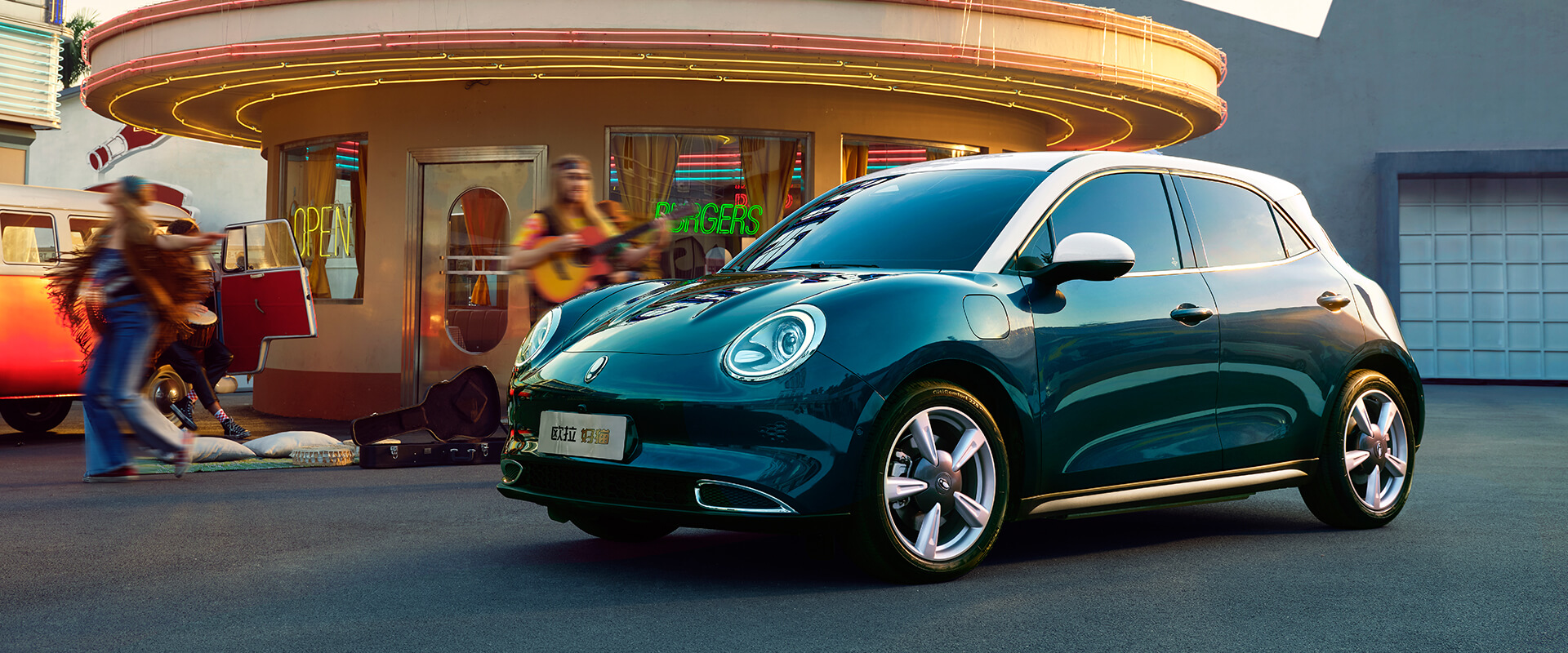
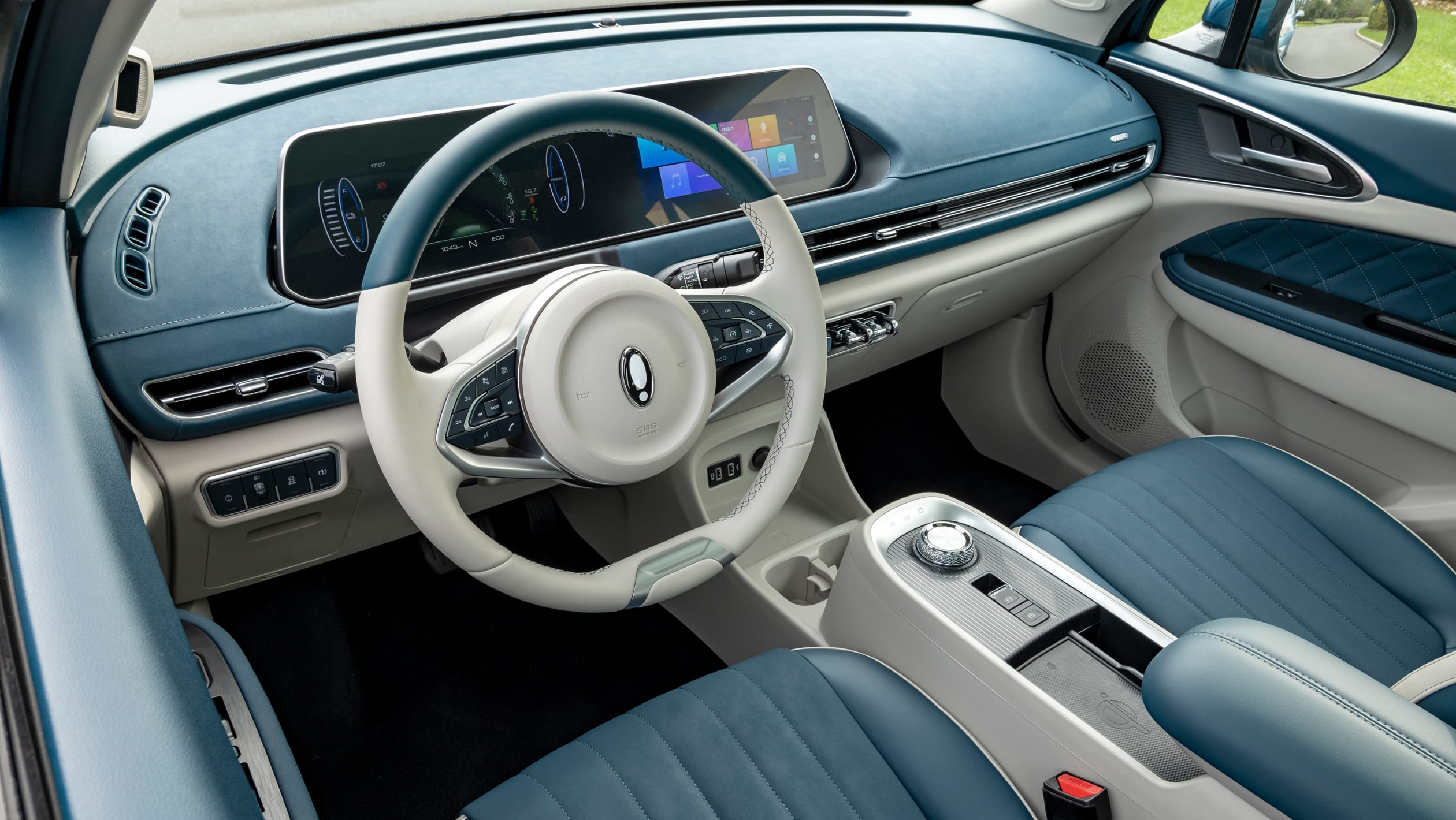
It’s expected the 2022 GWM Ora Cat 01 will be offered in a similar specification to the model launched in the UK recently, with a choice of 48kWh or 63kWh battery packs feeding a 126kW/250Nm electric motor driving the front axle.
Depending on the battery optioned, Ora claims a driving range of up to 336 kilometres and 420km respectively.
While the Ora Cat 01 is priced in the UK from around £25,000 – or roughly AU$46,000 – the model could be positioned to undercut the MG ZS EV, Australia’s cheapest zero-emissions car at $44,990 drive-away.
Along with the MG ZS EV, the GWM Ora Cat will be joined by the BYD EA1 – another cut-price Chinese electric car slated to launch in 2022.
“Ora is a worldwide brand,” GWM Ora Europe CEO Xianghua Qiao told Wheels in September.
“Through the development of technology and also with [the] pressure of climate change, Ora will be successful in Australia because we focus more on green energy.”
Expect an official launch of the GWM Ora brand in the coming months.
Tesla’s latest software update brings further improvements, this time activating an in-car noise reduction system.
The most recent over-the-air update, which also introduces a number of other convenience features, brings a new ‘Active Road Noise Reduction’.The system activates a pair of microphones embedded in the front seats, which measure cabin noise and, as Tesla puts it, “generate anti-noise through the speakers to create quiet zones around the occupants.”
The system has received mixed reviews so far from Tesla owners online, which might reflect why Tesla has called it noise “reduction” rather than noise-cancelling. The feature is already found in a variety of competitor cars from other brands.
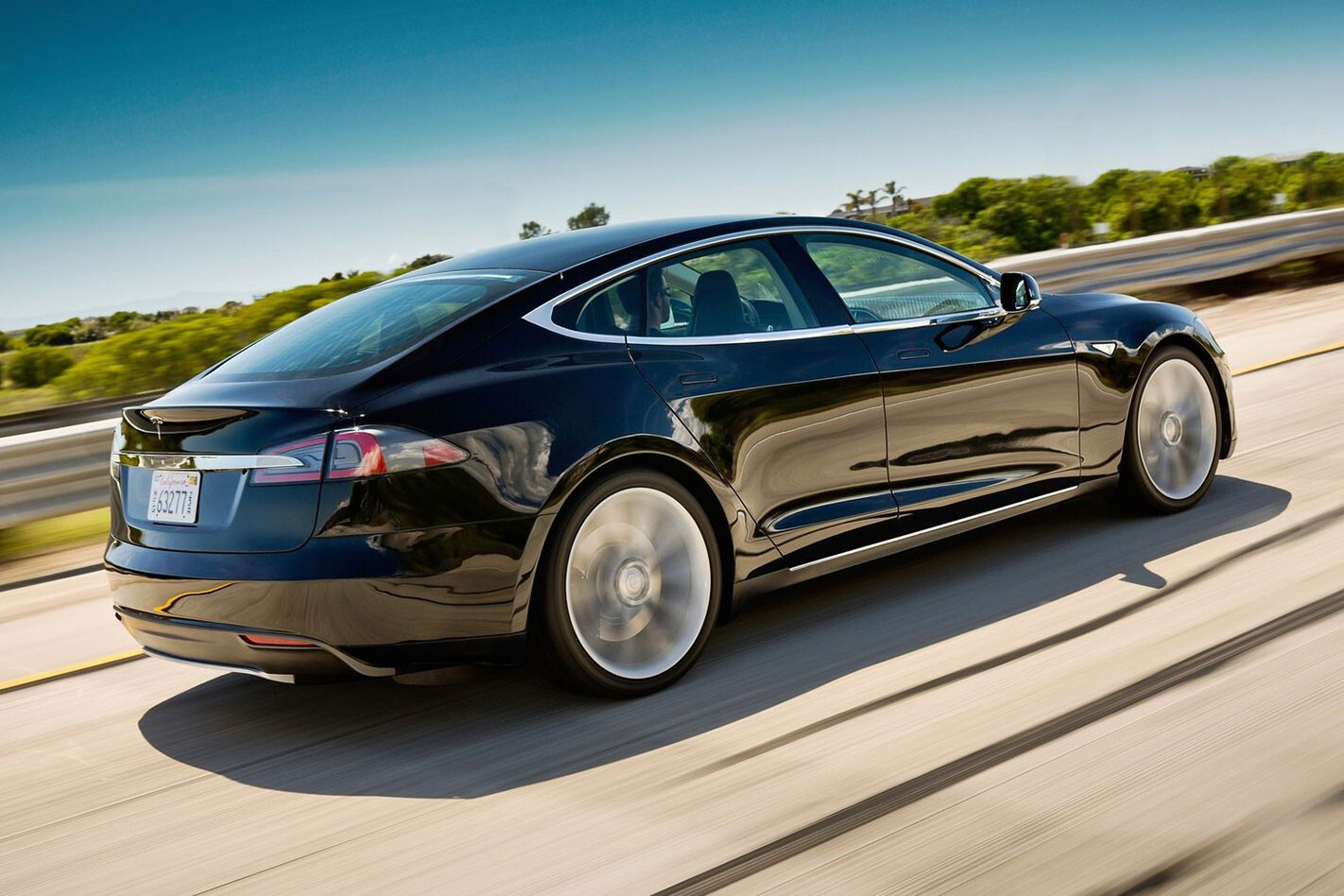
It appears that the noise reduction feature is also only available on the very latest, refreshed Model S and Model X, which were revealed earlier this year.
Further features introduced in the update (codenamed 2021.44.5) include the ability to preset driver profiles in the car’s navigation system, set the car to unlock only the driver’s door on approach, and adjust the rear climate control from the front touchscreen.
Updated cars are also said to have the ability to report uneven tyre wear, while the Autopark function is now able to identify perpendicular parking spots.
Also added, although in early ‘Beta’ test status, is a feature that synchronises a driver’s preferences including seat, mirror and steering wheel positions, and allows them to be applied in another Tesla owned by the same driver profile.
February 2023: Megane E-Tech price range confirmed for Australia
The 2024 Renault Megane E-Tech will arrive in Australia towards the end of 2023, with pricing starting from around $70,000. Details below.
2021: New Megane E-Tech driven
This is the Megane E-Tech Electric, Renault’s second-generation pure electric car following on from the aged but perennially updated Zoe.
The Megane Electric is a small hatch that has been rushed through development by Renault CEO Luca de Meo since he was appointed just over a year ago and will launch in the UK during the third quarter of 2022, though it remains unconfirmed for Australia.
De Meo clearly enjoys needling his former employee, Volkswagen Group. His engineers have carte blanche to boast of the Megane’s (claimed) 100kg+ weight advantage over its VW ID.3 rival. And the boss calls the first Renault on his watch the ‘GTI of EVs’.
An electric hot hatch? Sounds appealing…
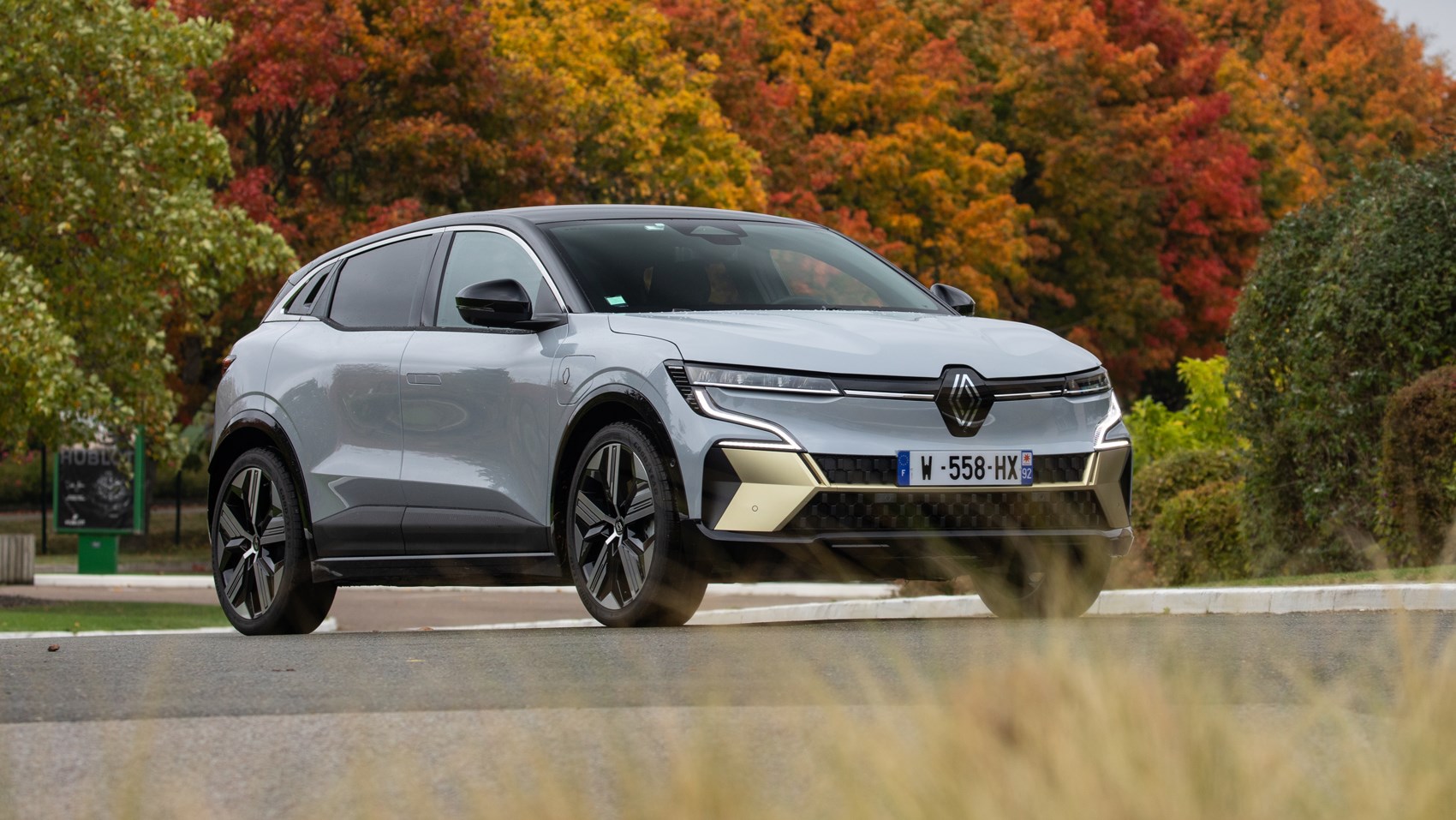
Absolutely. It’s a mighty appealing prospect to assess over a couple of hours in the countryside bordering Paris, too. We start in Comfort mode, navigating stretches of divided roads interrupted with roundabouts. GTI exhibit A: the steering has a low 12:1 ratio, and it’s responsive off the straight-ahead, if a little light and numb feeling.
A 160kW/299Nm electric motor spins the front axle, fed in this top-spec S Edition by a 60kWh battery between the 20-inch wheels. That gives an official range of 470km; the 40kWh pack is good for 300km. This EV40 model gets a lower power motor producing 96kW.
Standout feature is the ride quality. It’s suavely comfortable but still taut enough for good body control. Now that sounds very GTI.
Renault says the e-motor and clutch combined only weigh 145kg. It’s all part of a forensic program to minimise weight on this new, dedicated electric CMF-EV platform, which also underpins the Nissan Ariya.
Be measured with the accelerator and progress is steady; it doesn’t fly like a GTI. That said, through corners, it’s flatter than a fly that hits your windscreen at 110km/h. There’s substance to Renault’s claim that the centre of gravity is 90mm lower than the existing petrol Megane’s. The thin 110mm battery pack helps with that, integral to the CMF-EV underpinnings.
Quick enough – how’s the handling?
Standout feature is the ride quality. Potholes, hurtling over expansion joints, high-frequency bumps, the Megane Electric just ebbs and flows over the topography. It’s suavely comfortable but still taut enough for good body control. Now that sounds very GTI.
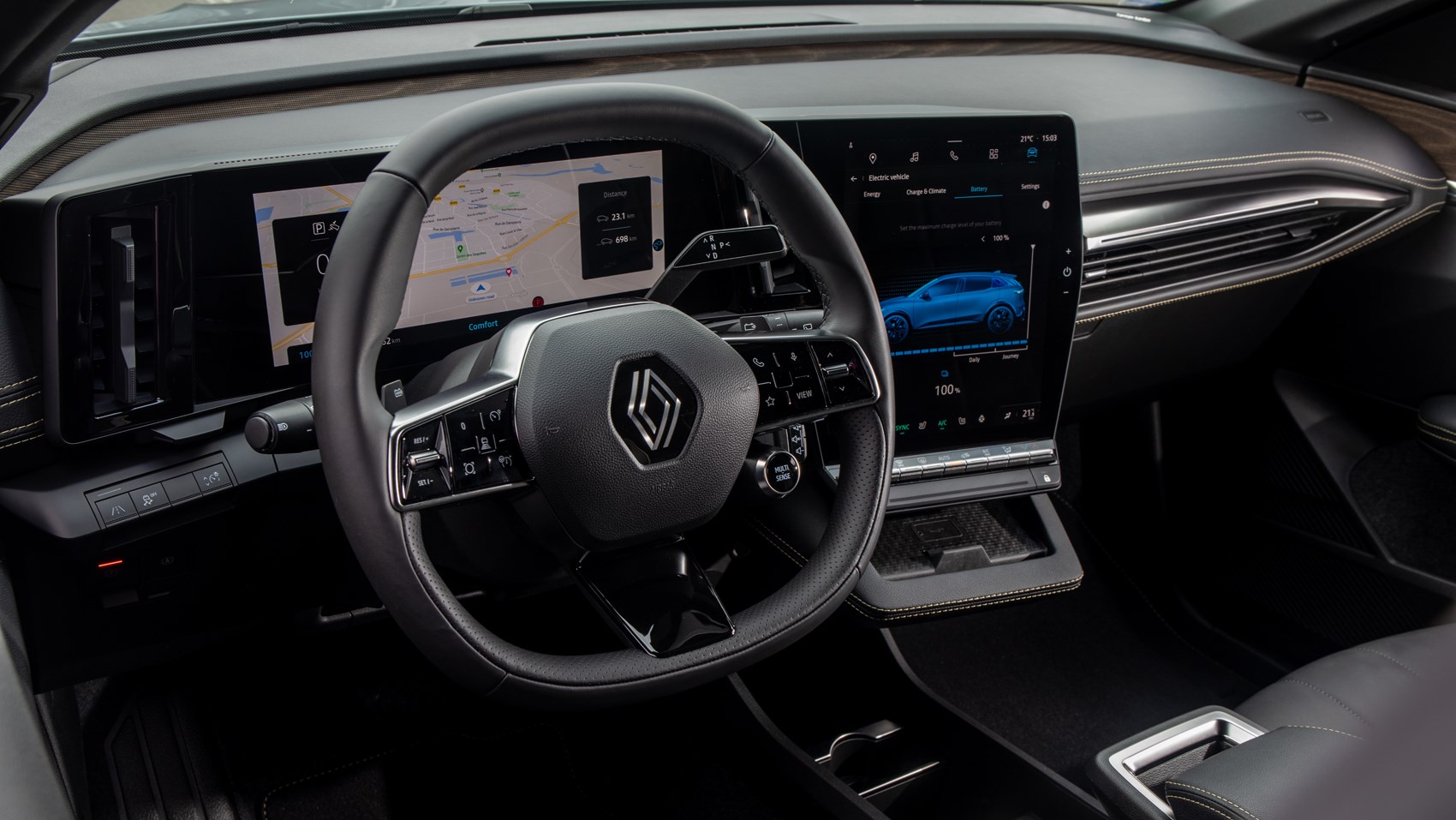
Time to engage Sport via the drive mode button on the misshapen steering wheel, reminiscent of Bane’s facemask. The throttle becomes super-responsive, with punchy acceleration capable of rocking your head back and making the 7.4sec 0-100km/h time seem utterly plausible.
The steering has much more heft and reassurance too. I tend not to bother much with drive modes when the differences are barely discernible, but I’d lock the Megane Electric in Sport and throw away the key.
Unfortunately the four grades of regenerative braking aren’t so distinctive. I know this is a matter of taste but I’d prefer a greater breadth of intensity, with the max setting truly throwing weight forward as you lift to help pivot the car into corners. Something for an over-the-air update, Renault? Operating them is crystal clear however; a yank on the left steering paddle to boost braking, on the right to reduce. But the brake pedal sometimes acts like an inconsistent parent: too soft, then too hard.
Efficiency and all the charging options
We averaged 4.8 miles per kWh when driving enthusiastically on a mix of urban and rural French roads and autoroutes, which bodes well for the Renault having an efficiency edge over its German rivals.
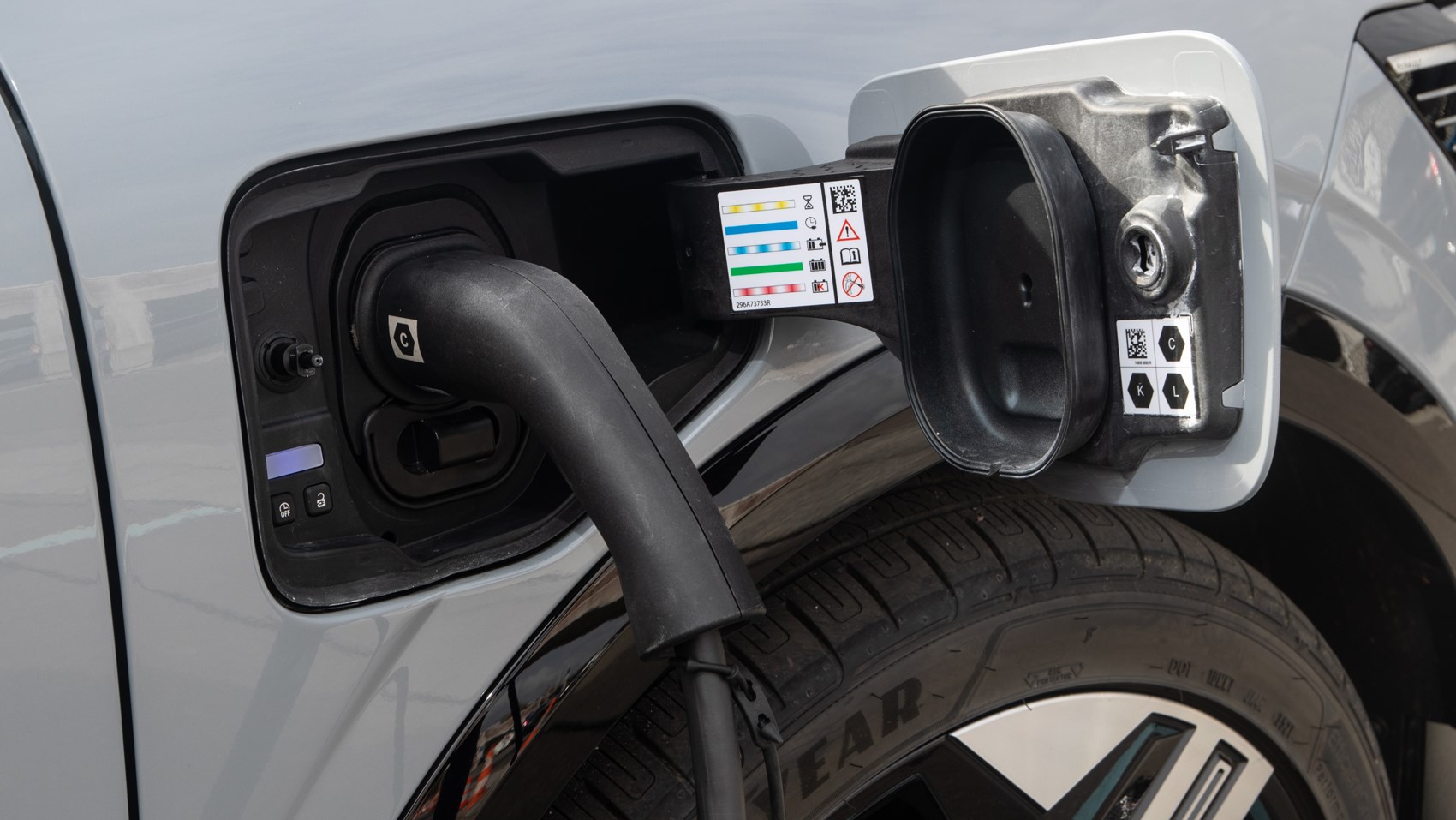
Customers will be able to option different types of in-car charger systems, ranging from the base 7kW AC ‘standard charge’ to fast DC public charging at 85kW for the smaller 40kWh battery and 130kW for the bigger battery pack.
The Megane Electric EV60 can draw around 200km of range in 30 minutes on a 130kW DC charger. Eight hours of charging on a typical 7.4kW home charger will bestow around 400km of range.
It certainly looks wild…
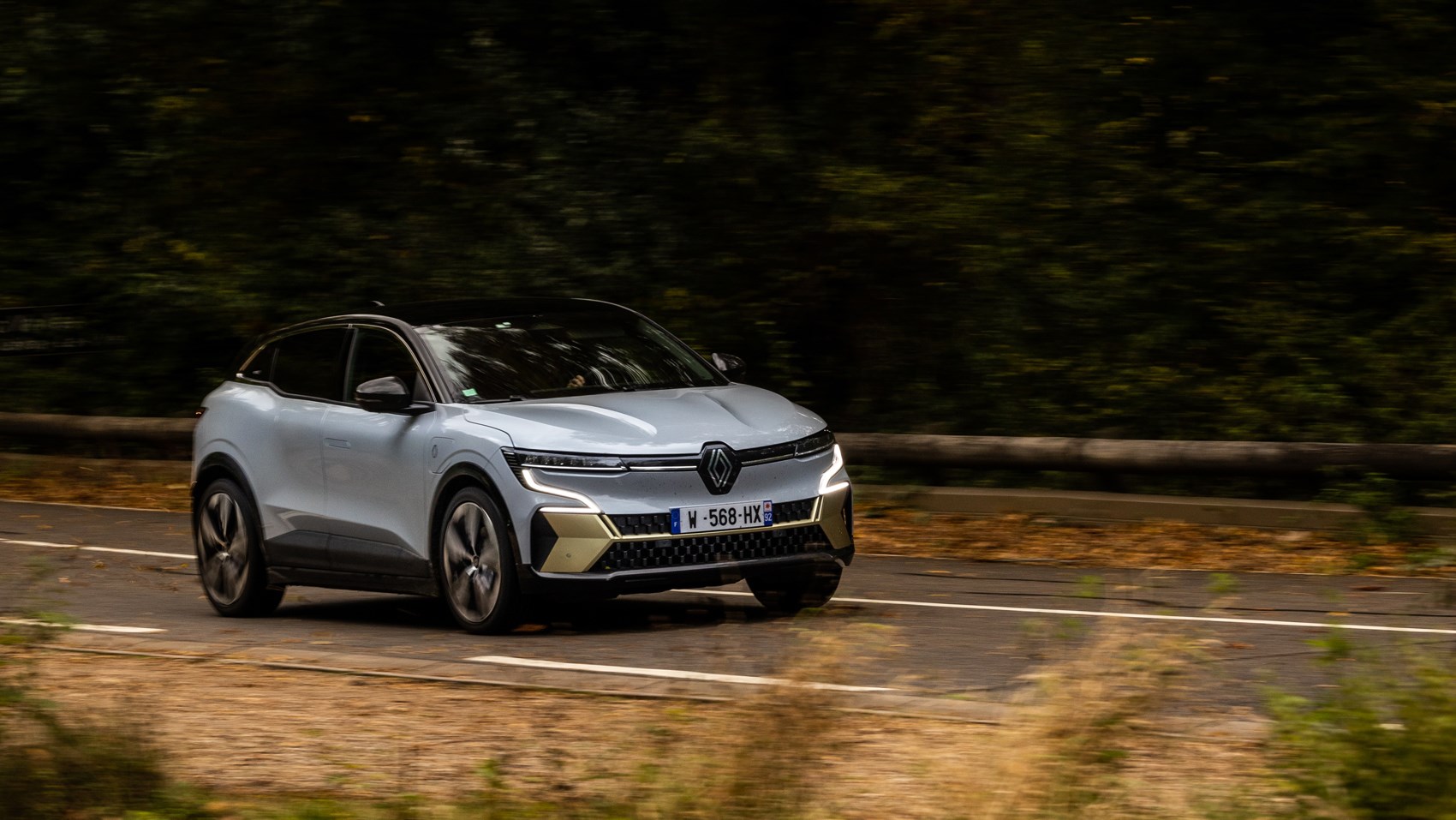
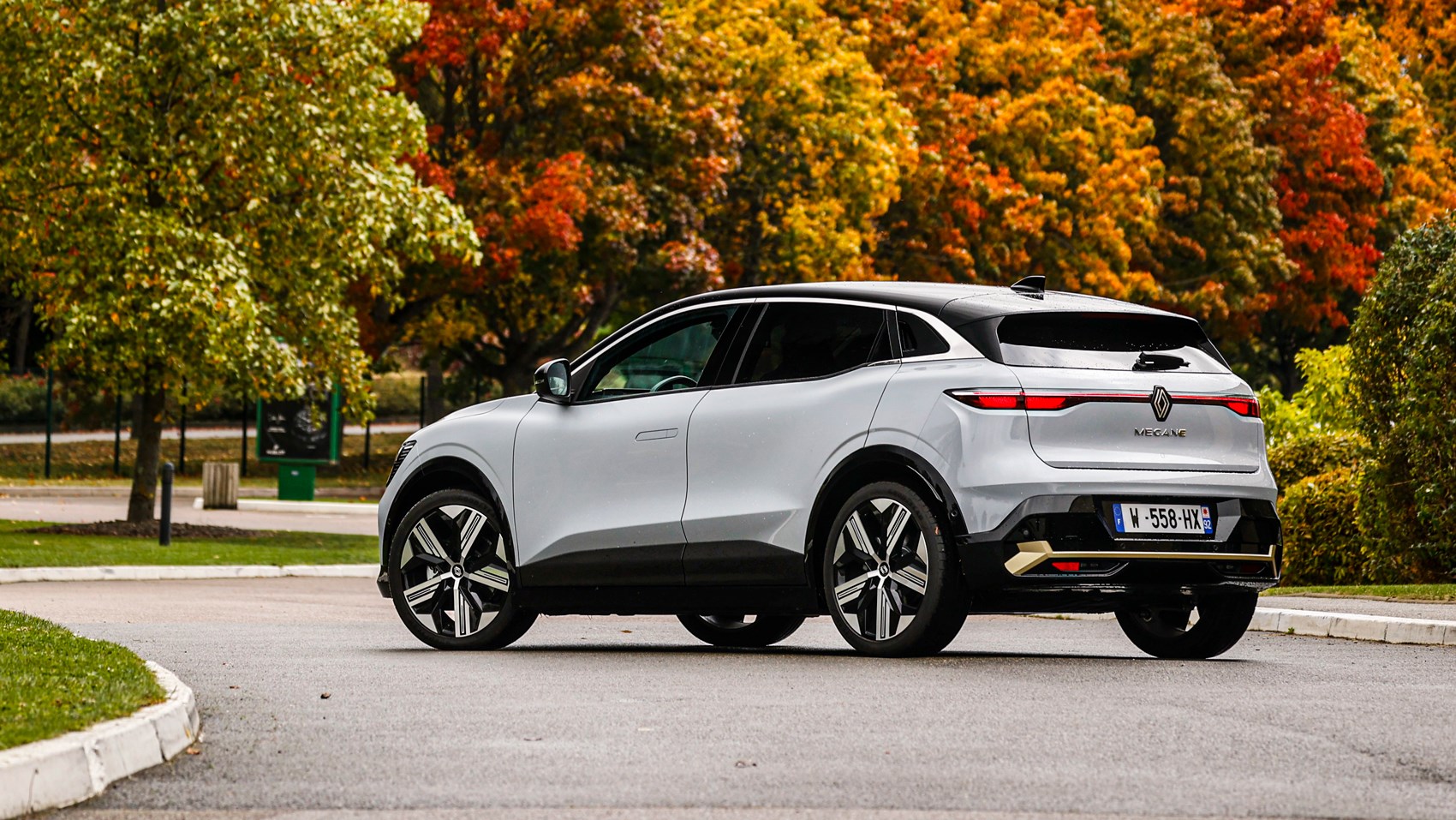
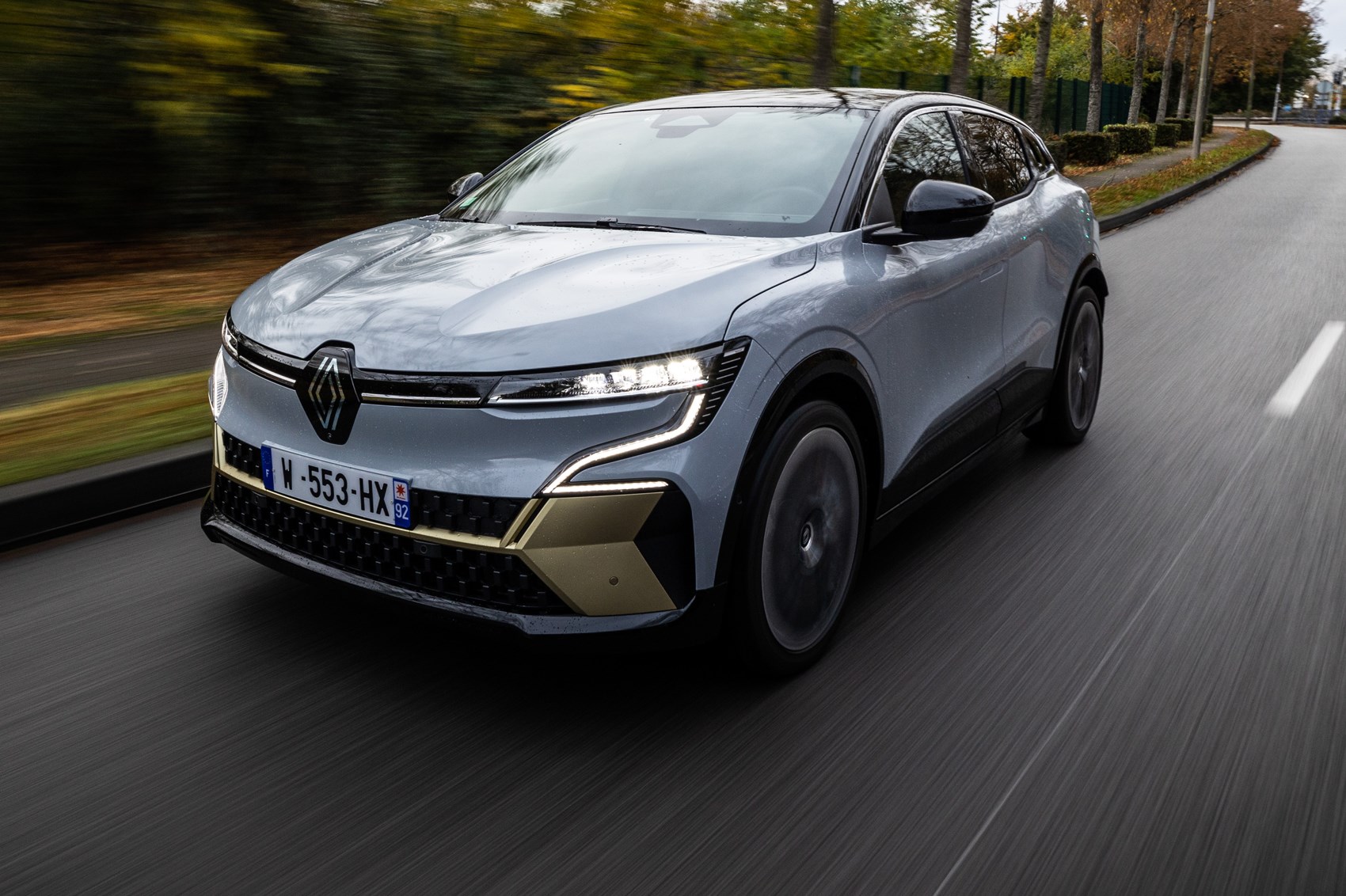
It’s a handsome car, the Megane Electric. Don’t be fooled by the crossover design cues that owe royalties to a certain Gerry McGovern: the car stands a scant 50mm taller than the combustion Megane, is a little shorter and has regular ground clearance.
And this hatchback has lots of space inside; there’s sufficient legroom in the rear and a flat floor thanks to the bespoke battery underpinnings. But the glasshouse is set very high, which will displease claustrophobic adults and most small children, and the driver’s view through the rear screen is letterbox sized.
It’s a handsome car, the Megane Electric. Don’t be fooled by the crossover design … the car stands 50mm taller than the combustion Megane, is a little shorter and has regular ground clearance.

The cockpit is trimmed nicely, with quality to banish some shonky Renault prejudices (aside from the naff ON button and hollow stalks). The disguised rear door handles have a lovely action, the curved dash top is trimmed in parquet flooring (mice-sized), and the driver’s digital display and touchscreen are glossy and colourful.
The boot is vast – it stows 440 litres of stuff – but it’s awkwardly deep, so hopefully Renault is planning a two-stage floor not ready for this prototype drive.
Google powers the infotainment and there’s fun to be had asking the assistant questions, though she steadfastly ignores requests to cancel nav waypoints or turn up the heating. There are still physical buttons for that.
Verdict
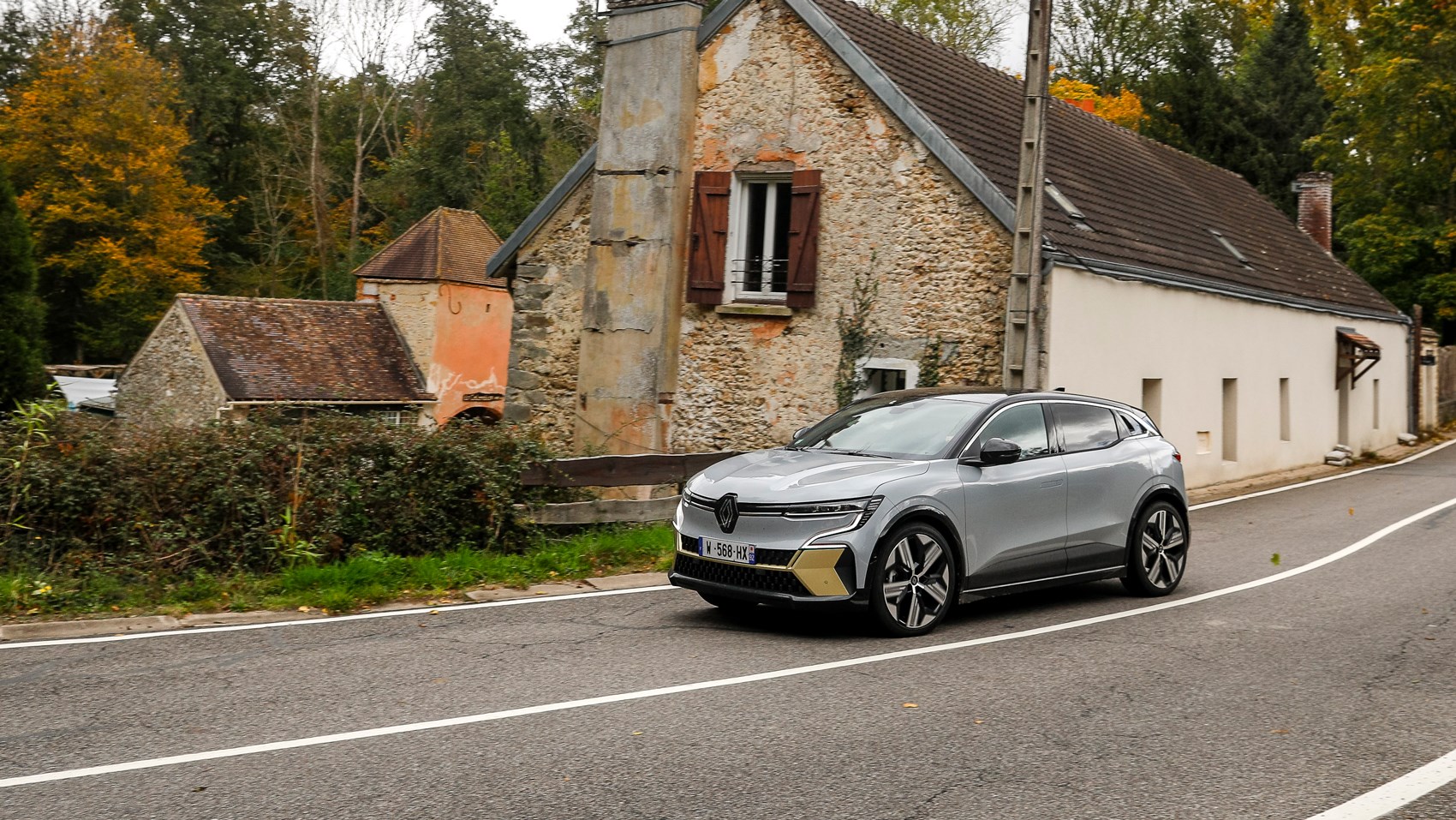
Modern through and through then. Just what you’d expect from an entire reinvention of a car we’ve known for decades, and will for a while yet as existing petrol Meganes will continue to be sold until 2024.
The Megane Electric is smooth-riding, sharp-looking, efficient-running and its interior is up there with the best in class. Pretty engaging to drive too, if not quite the electric GTI Renault’s promising. How about a Renault Sport version, Luca?
Surprisingly candid is how we’d describe the head of Mini, Bernd Korber, who is speaking with Wheels about the brand’s bold future. He’s not hiding emotions, either.
“We’ve got the next five years pretty much buttoned up,” he says, “but even thinking about the platform that will replace the [incoming EV] matrix introduced in 2023 is still spooky stuff right now”.
On paper, Mini is healthy. Impacted supply chains have knocked down a 2021 sales projection from 350,000 to 305,000, but that is still a five percent increase on the 292,000 cars sold last year. Ultimately, Mini is aiming for 500,000 annual sales, a goal expected in the decade’s second half.
Before then, big changes, like new factories in China and Germany that will assist a global debut of new and EV models, lay the groundwork for growth. In China, Mini will build two electric models in partnership with Great Wall Motors.
The first will arrive in 2023. Codenamed AO, the new EV will be a front-drive, three-door hatchback based on a bespoke Munich-developed platform. There also will be a brand new five-door zero-emission crossover in 2024. Think of a five-door Paceman with a less rakish roofline, all-wheel drive and large body-coloured grille ready to fight the Hyundai Kona.
In Leipzig, Germany, Mini will also build the next Countryman from 2023. It will offer electric and ICE powertrains on a common platform, presumably UKL-based, thanks to hardware from the BMW X1 and iX1.
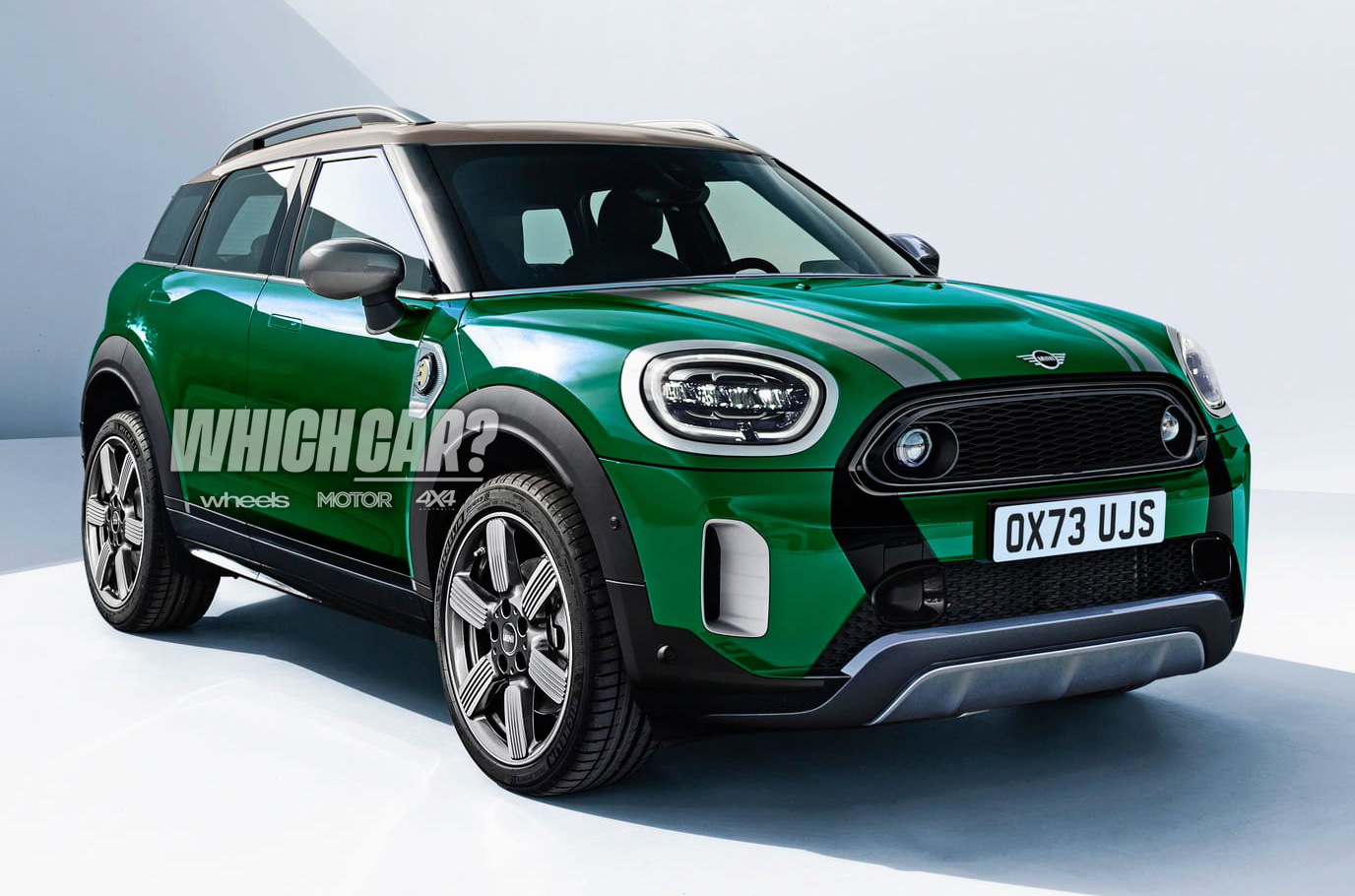
“The plan is to market the Compact Utility Vehicle as a small electric-only crossover and to position the bigger third-generation Countryman SUV about half a notch above the current model,” Kerber adds. “Thanks to the modular layout, there should be no practical downside for either drivetrain option.”
As for the electric Mini built in China with GWM, Korber insists it will look very similar to the combustion engine Mini three-door, “because we won’t mess with our prime icon”.
“A Mini is a Mini,” he adds, “no matter whether it is battery or petrol powered”. It also suggests the current combustion engine Mini Cooper hatch (in convertible, three- and five-door guise) will simply continue until 2025.
That year Mini will heavily redesign its UKL1 platform underpinning those combustion engine models, introducing what most likely will be the brand’s last combustion engine models before going all-electric in 2030.
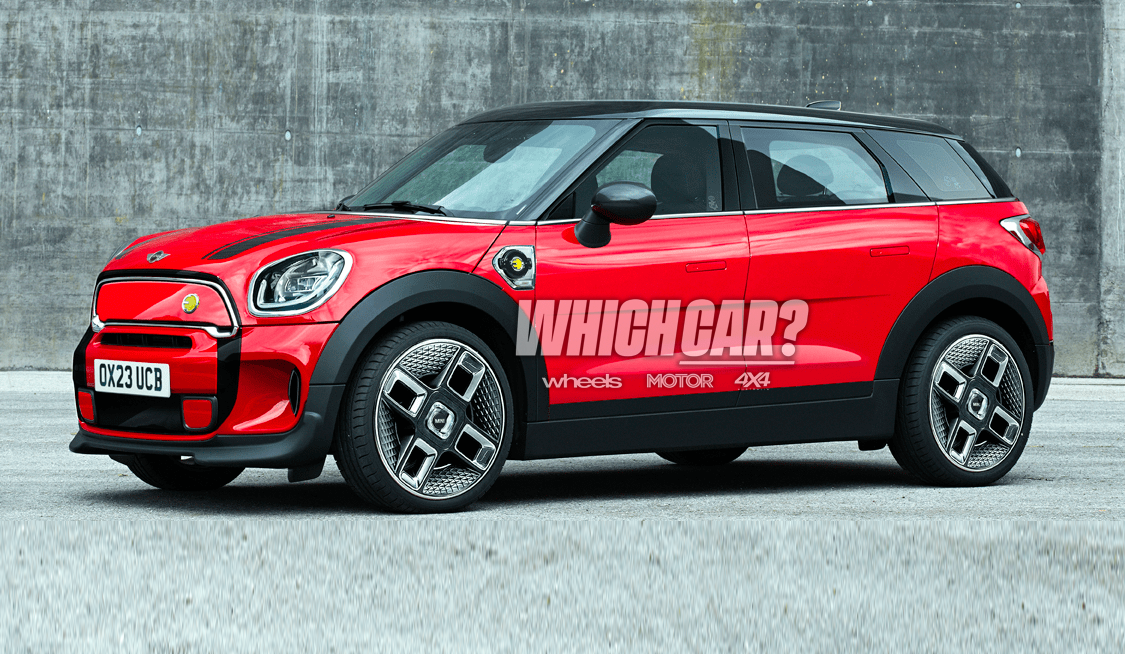
As for Mini’s John Cooper Works performance sub-brand? “This is still a work in progress,” Korber admits. “We know for sure that JCW will eventually also go fully electric, but perhaps we should kick off one more truly radical project before the high voltage revolution strikes”.
Extracting more from the Mini JCW GP would be hard given its 2.0-litre turbocharged engine is already stretched to 228kW. However, electrification could realise something with a modest range and anywhere up to 300kW.
Before 2030, we also expect two all-new Mini models that will broaden the brand’s market segment coverage. The first is an ultra-compact EV hatch positioned under the three-door Mini, likely to eventually replace it.
Meanwhile, the other model replaces the Clubman with an interpretation of the brand’s Urbanaut people-mover concept, likely adopting the same sliding roadside door, lounge layout and interior packaging.
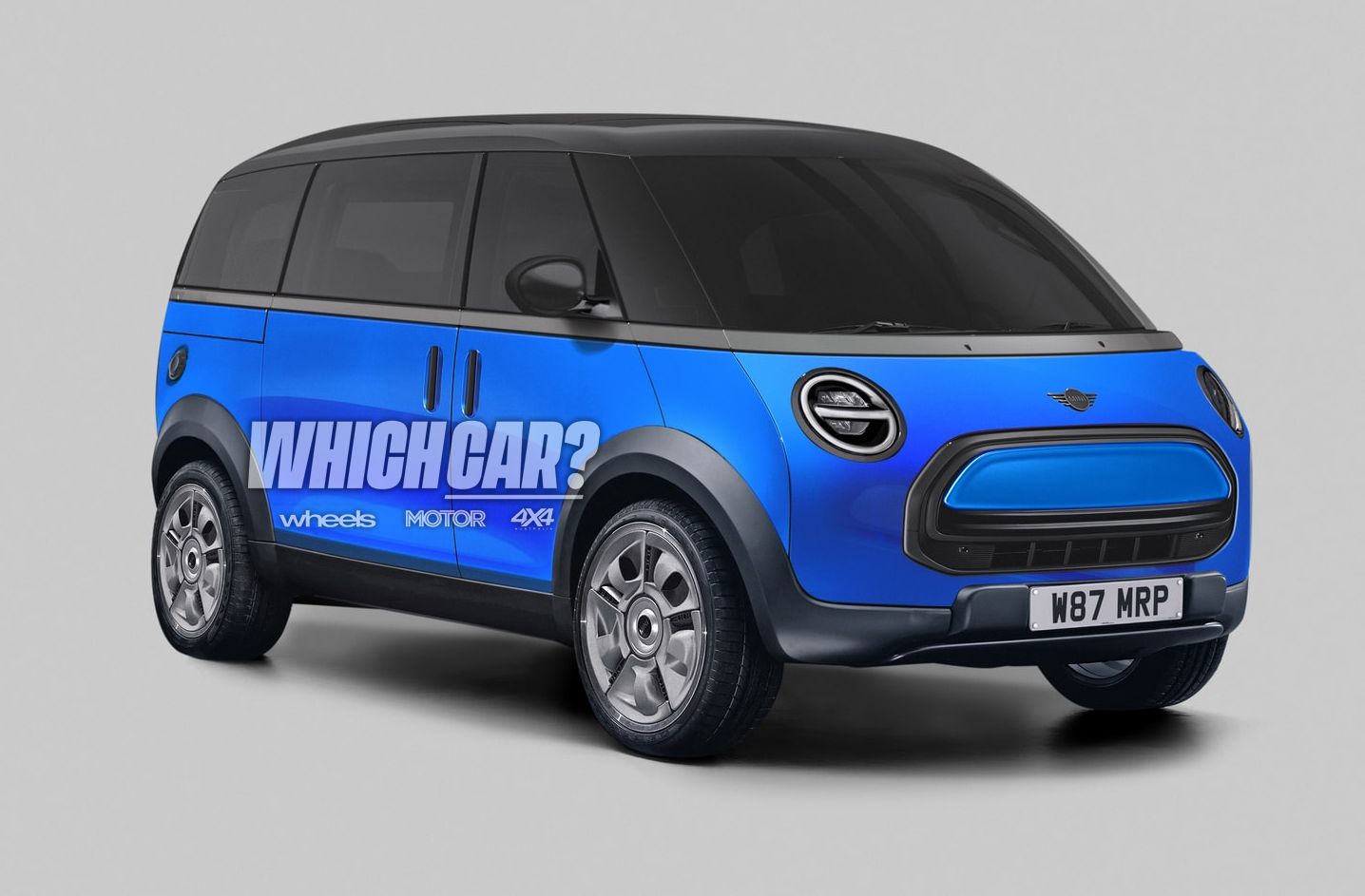
Korber also reveals more frequent exterior updates are on the way focused on Mini design trademarks. Think side scoops, wheels, stripes, roof treatment, tail-light graphics, toggle switches or seat patterns.
“All it takes to generate a fresh look are new colours, different materials like knit surfaces, mood changes by projection and special style packs,” says Korber.
Topping it all off will be “heritage-inspired or future-oriented” limited-edition specials. Mini is talking to external partners about coachbuilding specialised low-run collectibles.
They will feature unique exteriors, bespoke interiors, reworked engineering and might recreate icons like the Moke. They will also be expensive, but Mini says a market for such halo cars exists.
Beyond that, it’s too early to know if the AO will inspire an advanced second-generation EV architecture with autonomous driving or if that will underpin a BMW i1 or i2 – if they ever materialise.
Alternatively, Mini could tap into hardware from BMW’s incoming Neue Klasse EV range or further collaborate with Great Wall Motors. Whatever happens, for at least five years, the future looks bold and bright for Mini.
Sticking a premium badge on a compact SUV is an exercise fraught with danger. It’s difficult to make something small and tall feel especially premium, especially in terms of refinement and ride.
Now, Mercedes-Benz’s nuggety little seven-seat GLB does a pretty good job of squaring that circle. But the new Mercedes-Benz EQB 350 4Matic does a better one. This little Mercedes SUV is almost as relaxed and refined to drive as an S-Class.
The secret is what’s under the bonnet. Or, rather, what’s not under it.
The EQB 350 4Matic shares much of its basic architecture, body, and interior with the GLB lineup currently on sale in Australia. But instead of a 2.0-liter turbocharged inline four – which punches out 120kW in the entry-level, front drive GLB 200, 165kW in the GLB 250 4Matic, and 225kW in the full-fat AMG GLB 35 4Matic – it’s powered by two electric motors.
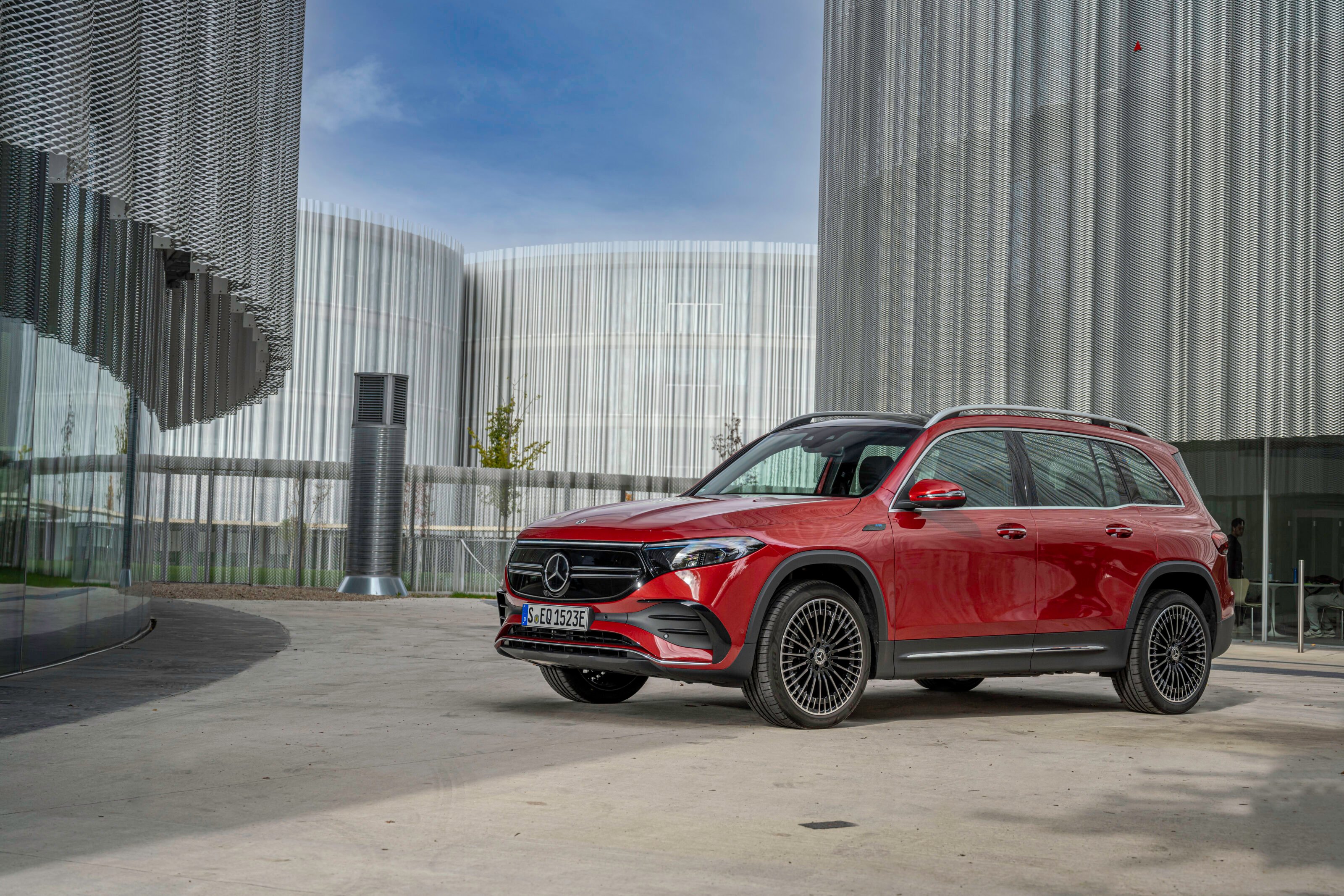
At the rear, driving the rear wheels, is a newly developed permanently excited synchronous e-motor. Up front is a less powerful asynchronous e-motor. Between them, they deliver a total system output of 215kW and 520Nm.
That’s enough, says Mercedes-Benz, to punch the 2175-kg EQB 350 to 100km/h in 6.1 seconds, neatly splitting the difference between the GLB 250 4Matic’s 6.9 seconds and the AMG GLB 35’s 5.3 seconds.
Let’s get the elephant out of the room: The EQB’s e-motors are powered by a 66.5kWh battery that, on the European WLTP test cycle, delivers a range of 419km. Though that translates to a reasonable 6.3km/kWh, the EQB 350 can’t match the 507-km range and 7.2km/kWh efficiency of the dual-motor Tesla Model Y Long Range.
The Tesla’s quicker, too, taking just 4.0 seconds to get to 100km/h, helped by its 286kW and 510Nm powertrain and the fact it’s almost 200kg lighter.
In truth, the blocky EQB 350 is a very different sort of SUV to the soap-bar smooth Tesla. The Mercedes is shorter and narrower and has 61mm less in the wheelbase than the American SUV, but is 82mm taller overall, with a roofline that extends back to a near-vertical hatch rather than the Tesla’s coupé-like swoop. If you want to carry seven people – or a lot of gear – the EQB is a more practical design.
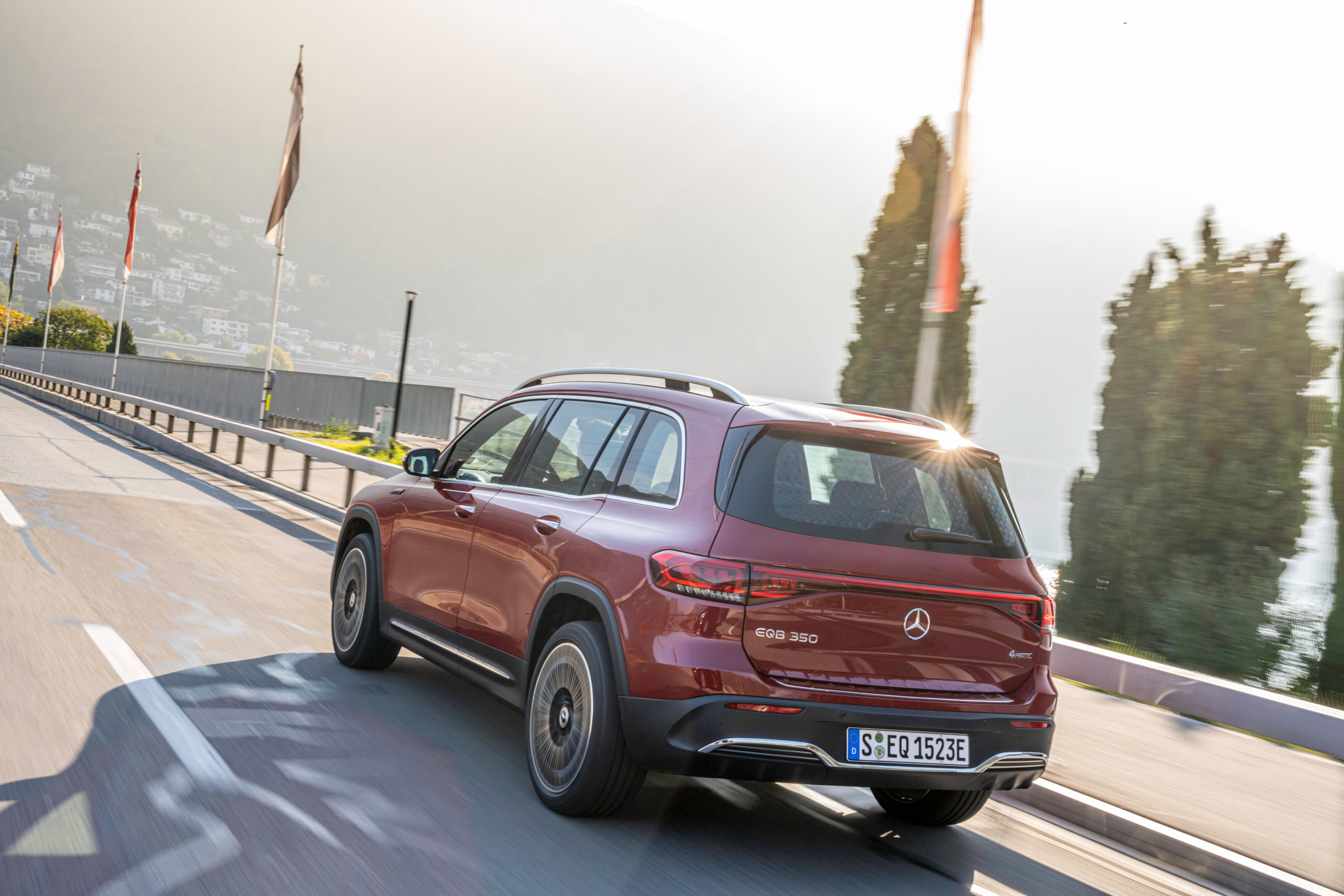
Though the FWD-optimized internal combustion engine architecture of the MFA2 platform underneath is betrayed by the short dash-to-axle and longish front overhang, the conversion from petrol to battery power hasn’t compromised the interior packaging at all, which means the EQB comes with the same seven-seat capacity as the GLB.
And whereas the Tesla Model Y’s optional third-row places passengers’ heads right under the glass of the rear hatch, the EQB’s third row passengers have steel over their heads.
What’s more, Mercedes-Benz makes it abundantly clear that to ensure maximum protection in the event of a rollover it considers the EQB’s third row suitable only for those 1.65m or shorter.
In truth, the blocky EQB 350 is a very different SUV to the soap-bar smooth Tesla … If you want to carry seven – or a lot of gear – the EQB is more practical

The second-row slides fore and aft 140mm, and in the rear-most position, there’s a ton of leg and knee room for 1.8m adults.
There’s plenty of headroom, too, even though the rear seat H-point is higher than that of the front to give rear passengers better all-round visibility. Load space ranges from 495L with the third row in place, to 1710L with the second and third rows folded flat.
It only takes a couple of kilometres behind the wheel for the EQB 350 to establish its credentials as a luxury compact SUV in terms of refinement and ride. None of its internal combustion engine rivals can match the smooth, silent surge of power from the dual e-motors, nor the quiet composure with which it goes down the road, especially with the adaptive dampers set in Comfort mode.
In terms of its EV competition, the EQB 350 is nowhere near as busy on poor roads as the stiffly sprung Volvo XC40 Recharge, and generates a lot less road noise than the Tesla Model Y.
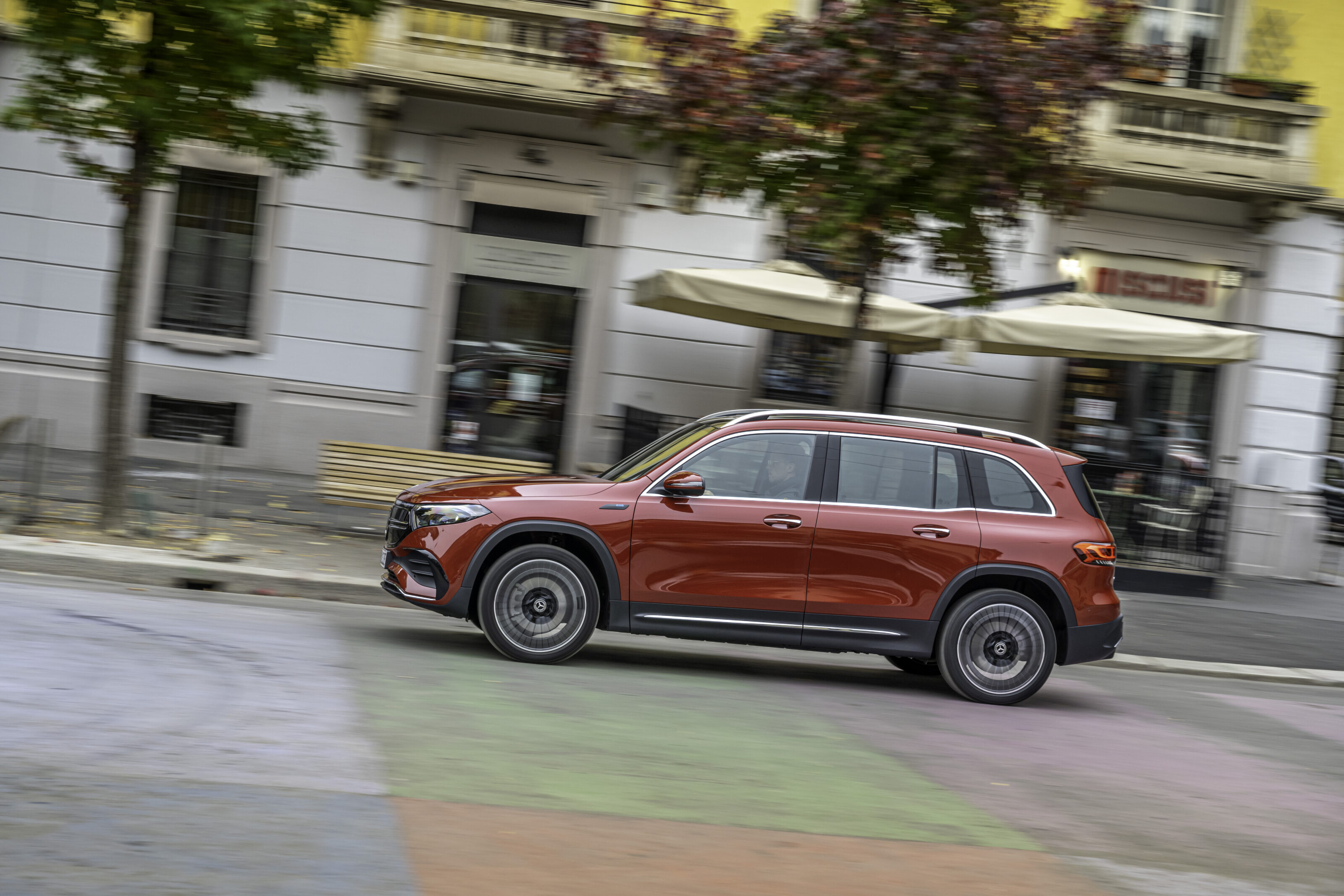
It’s no hot hatch, but the EQB 350’s steering is direct, nicely weighted, and provides decent feedback. Braking is smooth and linear, the transition between regenerative and mechanical retardation seamless.
There’s a ton of traction out of corners courtesy of the well-planted multi-link rear axle, with the front wheels playing the perfect supporting role. Nail the accelerator and the Mercedes scoots away from the apex with surprisingly little understeer.
The power demand between the front and rear axles is optimized 100 times per second, depending on the driving situation. The more efficient rear motor handles most of the workload, the front motor contributing only when needed.
There’s a ton of traction out of corners courtesy of the multi-link rear axle … Nail the accelerator and the Mercedes scoots away from the apex with little understeer
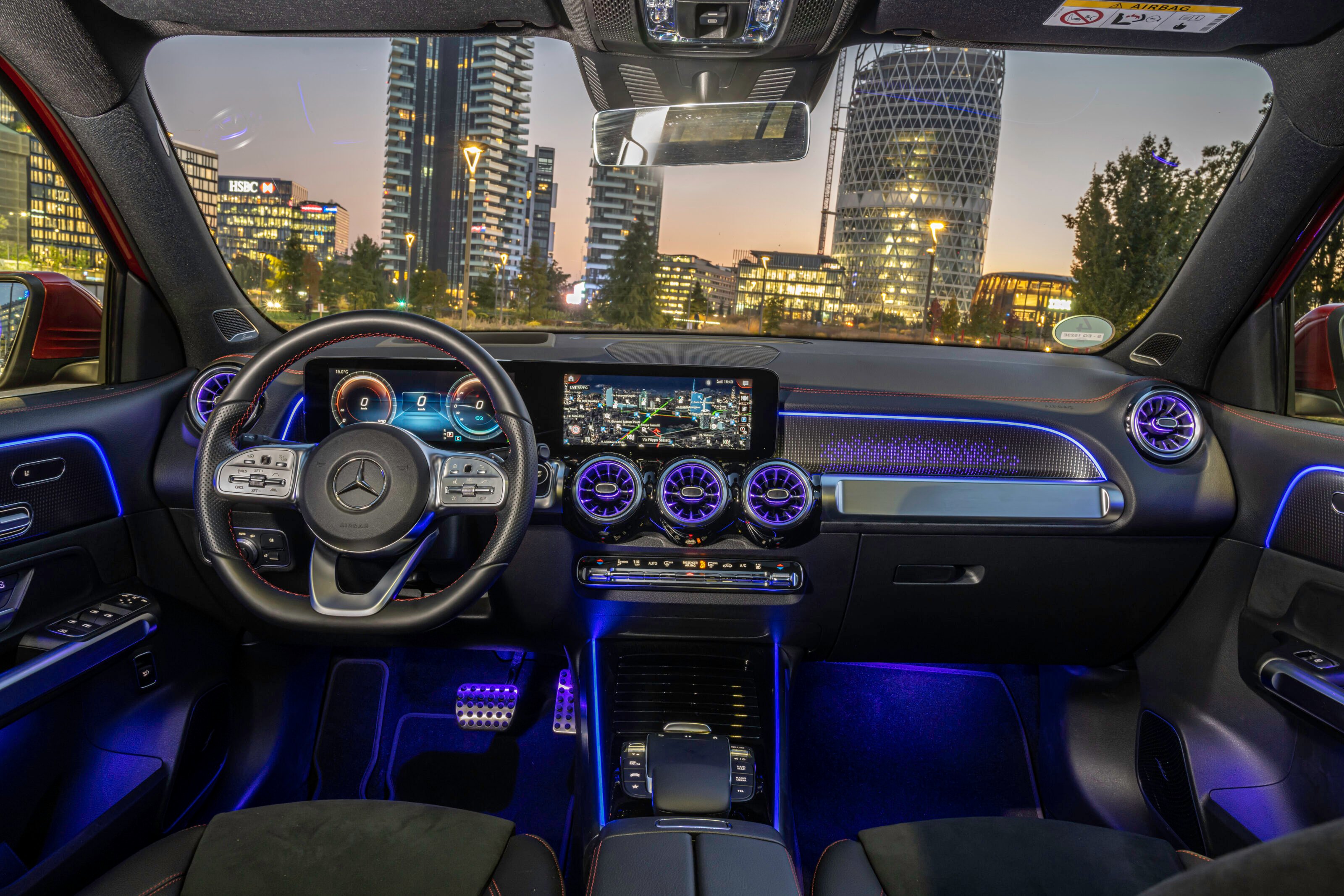
You can feel the front axle help pull the EQB 350 out of corners under hard acceleration, though there’s virtually no corruption through the steering. Max power standing starts on snowy forest roads near Munich (our test car was fitted with winter tyres) saw the EQB 350 leap away from a standstill with minimal traction interventions and tracking straight and true. It’s a brilliantly easy and surprisingly enjoyable thing to drive.
There are three driver-selectable lift-off regen levels, actuated via the paddles on the steering column. There’s also a mode that allows the car to use navigation data, traffic information and speed sign recognition to automatically adjust the regen level itself. The EQB felt nicest with the least amount of regen selected, more natural, more fluid in its forward progress.
Our 340km test drive included a 260km run along the autobahn from Stuttgart to Munich, the rest on country roads and village streets. It was a breezy winter’s day, the ambient temperature right around zero and snow flurries in the air, which explained why the EQB’s MBUX system was predicting a maximum range of only 342km as we pulled out of the hotel garage.

But as the MBUX nav system not only showed where EV charge points were, whether they were fast chargers or not, and how many were free, there was no point holding back on the autobahn.
The EQB happily whooshed along at 130 to 140km/h, with occasional bursts to an indicated 164km/h (claimed top speed is 160km/h). Not surprisingly, the battery charge plummeted, hitting 52 percent after just 100km.
A stop at a 300kW fast charger – though, disappointingly, the EQB will only charge at a maximum rate of 100kW, and in the cold weather, it ran at 70kW – saw the battery topped up from 52 percent to 82 percent in 25 minutes. The nav predicted a likely range of 267km, a maximum range of 327km, and that we’d arrive at the 150kW charger at our waypoint 158km away with 25 percent charge remaining.
The EQB 350 has other charms. It’s roomy and practical for its size, well-equipped and well-finished, and it really does ride and drive like a small luxury car
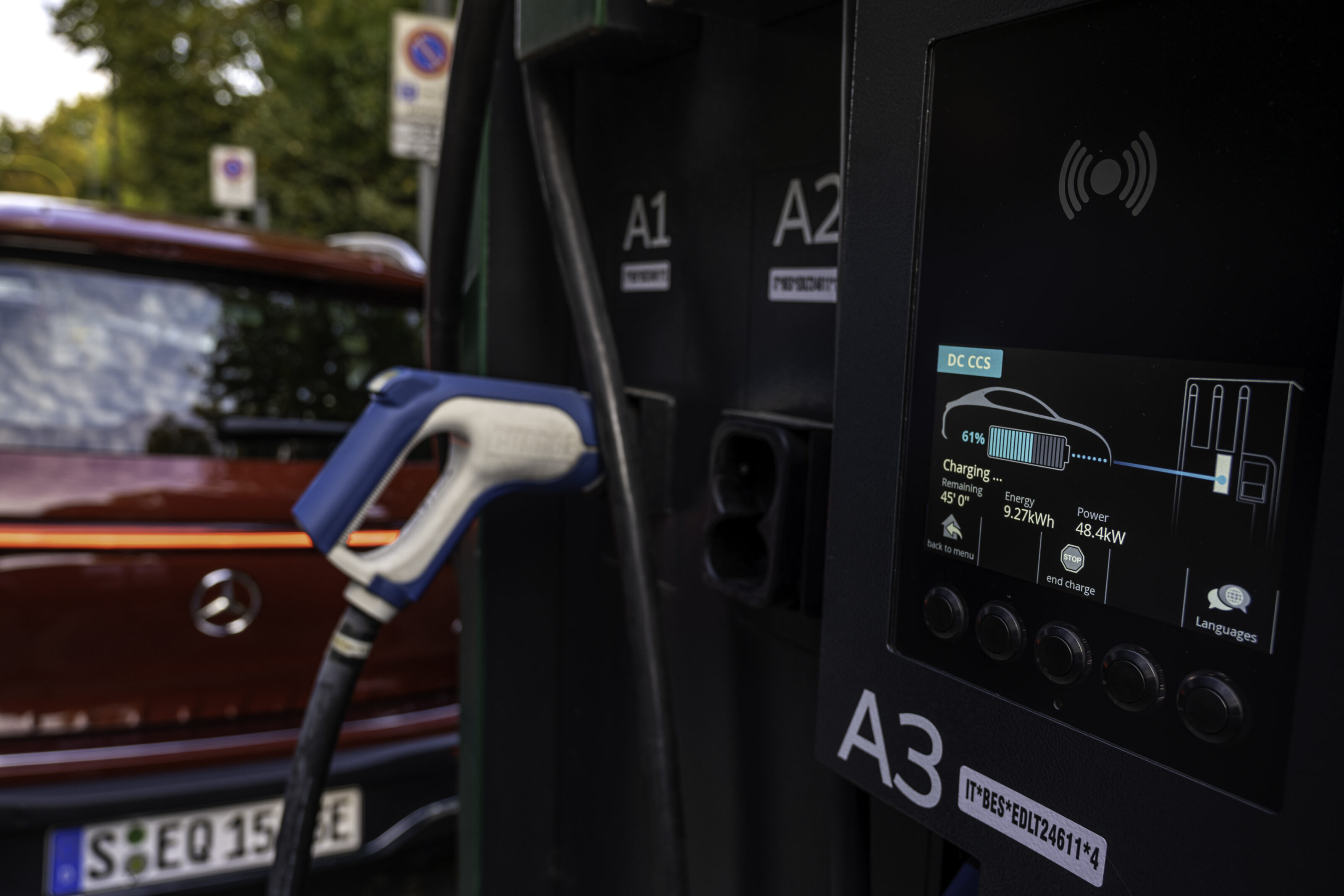
Not quite. We arrived with 21 percent charge and between 56 and 80km of range remaining. A 34-minute stop with the EQB sucking down electrons at the rate of 75kW brought battery charge back up to 82 percent.
Now, freezing weather, heavy acceleration events, and sustained high speeds made our trip an extreme duty cycle for an EV, which explains why the EQB 350 struggled to deliver much more than 3.2km/kWh. Driven normally, under normal conditions, you could probably bank on averaging at least 5.2km/kWh, which equates to a range between 340km and 350km.
Okay, that’s not class leading. But the EQB 350 has other charms. It’s roomy and practical for its size, well-equipped and well-finished, and it really does ride and drive like a small luxury car. And Mercedes-Benz is aware of the range issue. It’s working on long range version of the EQB, which may sacrifice the third row in favor of extra battery capacity.
The Mercedes-EQ EQB 350 4Matic is top dog in a lineup that includes the EQB 300 4Matic with 168kW and 390Nm and the front drive EQB 250 with 140kW and 375Nm, which will go on sale in 2022.
In Europe, the EQB 350 4Matic is priced at a 13 percent premium over the GLB 250 4Matic, which would suggest a recommended retail price in Australia of around $90,000, excluding stamp duty, rego, and dealer delivery.
Flashback
Snapshot
- ACT, NSW and WA to enforce double demerits from December 24
- Victoria, SA, NT, QLD and Tasmania don’t hand out harsher penalties during public holidays
- Road toll for 2021 has surpassed 2020 levels
Australian motorists could be hit with tougher penalties for breaking road rules this Christmas, with a number of states and territories handing out double demerit points from December 24.
Applying to the Australian Capital Territory, New South Wales and Western Australia, double demerits will be slapped on certain traffic offences from Christmas Eve until early next year – potentially leading to a quicker loss of licence in certain situations.
For the ACT and NSW the double demerit period stretches from December 24, 2021, to January 3, 2022, while those in WA are at risk for almost another week – with the end date extended out to January 9, 2022.
| Location | Double demerit period |
|---|---|
| Australian Capital Territory | December 24, 2021 to January 3, 2022 |
| New South Wales | December 24, 2021 to January 3, 2022 |
| Western Australia | December 24, 2021 to January 3, 2022 |
| Queensland | Applies all year for second offences |
| Victoria | Not applicableu00a0 |
| Tasmania | Not applicableu00a0 |
| South Australia | Not applicableu00a0 |
| Northern Territory | Not applicableu00a0 |
It’s worth noting each of the aforementioned states and territory all have varying laws on which road rules will be affected by double demerits, as the ACT also includes a list of extras in the period which add just one point rather than doubling the penalty.
For travellers in Victoria, Tasmania, Queensland, South Australia and the Northern Territory, no double demerits apply during the public holiday period – though expect police to be extra vigilant given a majority of the country’s state borders are now open.

Despite Australia being in various stages of lockdown throughout the year, the 2021 road toll has risen to 1126 fatalities, a 1.4 per cent increase over 2020.
The New South Wales Government has also reinstated speed camera warning signs for mobile speed cameras, although as opposed to before where the signs would be placed in advance of the camera vehicle, they will now be affixed to the roof – giving drivers less time to react if they’re doing the wrong thing.
Australian Capital Territory
| Traffic offence | Double demerits |
|---|---|
| Exceeding the speed limit by less than 15km/h | 2 |
| Driving without a seatbelt | 6 |
| Exceeding the speed limit by at least 15km/h but not more than 30km/h | 6 |
| Disobeying a traffic signal | 6 |
| Riding a motorcycle without a helmet | 6 |
| Using a mobile phone while driving u2014 calls (except hands-free) | 6 |
| Using a mobile phone while driving u2014 texting, social networking etc. | 8 |
New South Wales
| Traffic offence | Double demerits |
|---|---|
| Exceeding the speed limit by 10km/h or less (full licence) | 2 |
| Exceeding the speed limit by more than 10km/h but not more than 20km/h (full licence) | 6 |
| Riding a motorcycle without a helmet (rider alone) | 6 |
| Driver or passenger not wearing a seatbelt | 6 |
| Exceeding the speed limit by 10km/h or less (learner or provisional licence) | 8 |
| Driving using a mobile phone when not permitted (full licence) | 10 |
| Learner or provisional driver using a mobile phone while driving | 10 |
Western Australia
| Traffic offence | Double demerits |
|---|---|
| Exceeding the speed limit by more than 9km/h but not more than 19km/h | 4 |
| Exceeding the speed limit by more than 19km/h but not more than 29km/h | 6 |
| Driving through a red light | 6 |
| Using a mobile phone illegally while driving1 | 6 |
| Driving with a blood alcohol content (BAC) equal to or above 0.05 but less than 0.06 (first offence)2 | 6 |
| Driving with a prescribed illicit drug present in your oral fluid or blood (first offence) | 6 |
| Failure to wear a seatbelt or child restraint | 8 |
| Driving a vehicle fitted with a device, or in a manner, designed to evade detection by a speed camera | 14 |
Snapshot
- New BNE Airport-based complex has seen $1bn in investments
- Facility will include a racing circuit, skid pan and 4WD centre
- Premium dealerships expected to open trackside
The Brisbane Airport Corporation (BAC) has put the call out to find an experienced group to take control of its new BNE Auto Mall complex, the newest motoring facility in Queensland.
Based right next to the airport, the 51.3 hectare precinct was announced in 2016 – aiming to be a hub for automotive experiences in South East Queensland, while also setting a benchmark for the country.
Headlining the facility will be a 2.5 kilometre circuit designed by five-time Australian Touring Car Champion, Mark Skaife – who also helped design the Canberra, Homebush and Townsville street circuits – with assistance from governing bodies such as Motorsport Australia and the FIA.
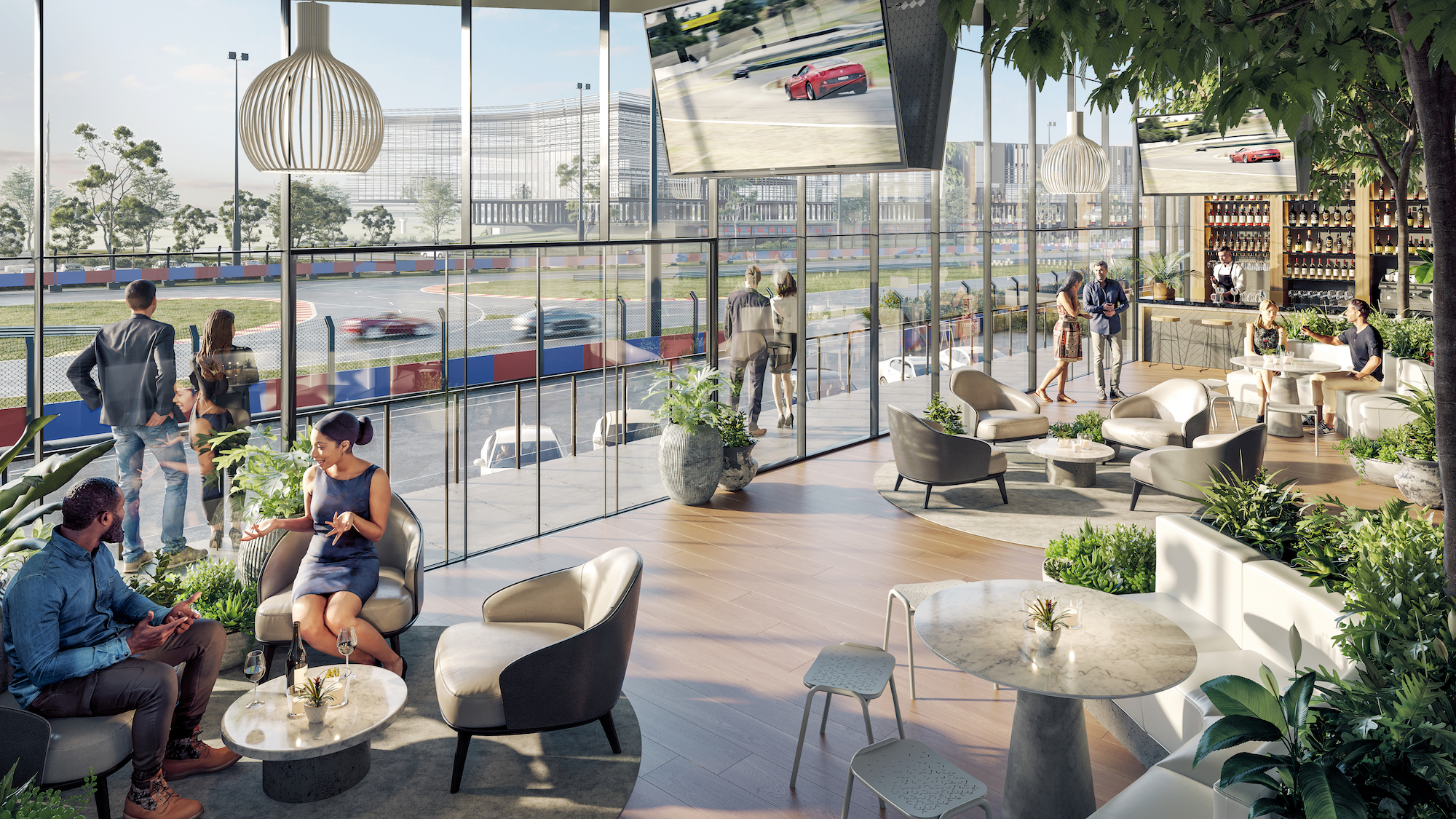
The BNE Auto Mall won’t just be about on-track experiences, with the complex also encompassing a range of businesses from automotive dealerships, restaurants and entertainment facilities.
BAC CEO Gert-Jan de Graaff said the venue is set to open in 2024 and will establish itself as a one-stop shop for the Australian automotive industry.
“Opening in 2024, BNE Auto Mall is the largest, most visionary, and eagerly anticipated mixed-use development of its kind in Australia, and it will be a game-changer when it comes to the way in which people buy and experience motor vehicles,” said Graaff.“While aviation is our primary purpose, we have always strongly believed that Brisbane Airport is a destination within itself and so much more than just an airport.“This landmark automotive precinct is proof of that, as it will provide exponential benefits for Brisbane and for Queensland well into the future.“I have no doubt that the expansive scope of this Expression of Interest will generate excitement and encourage innovative thinking that will help shape this unique, world-class automotive destination.”
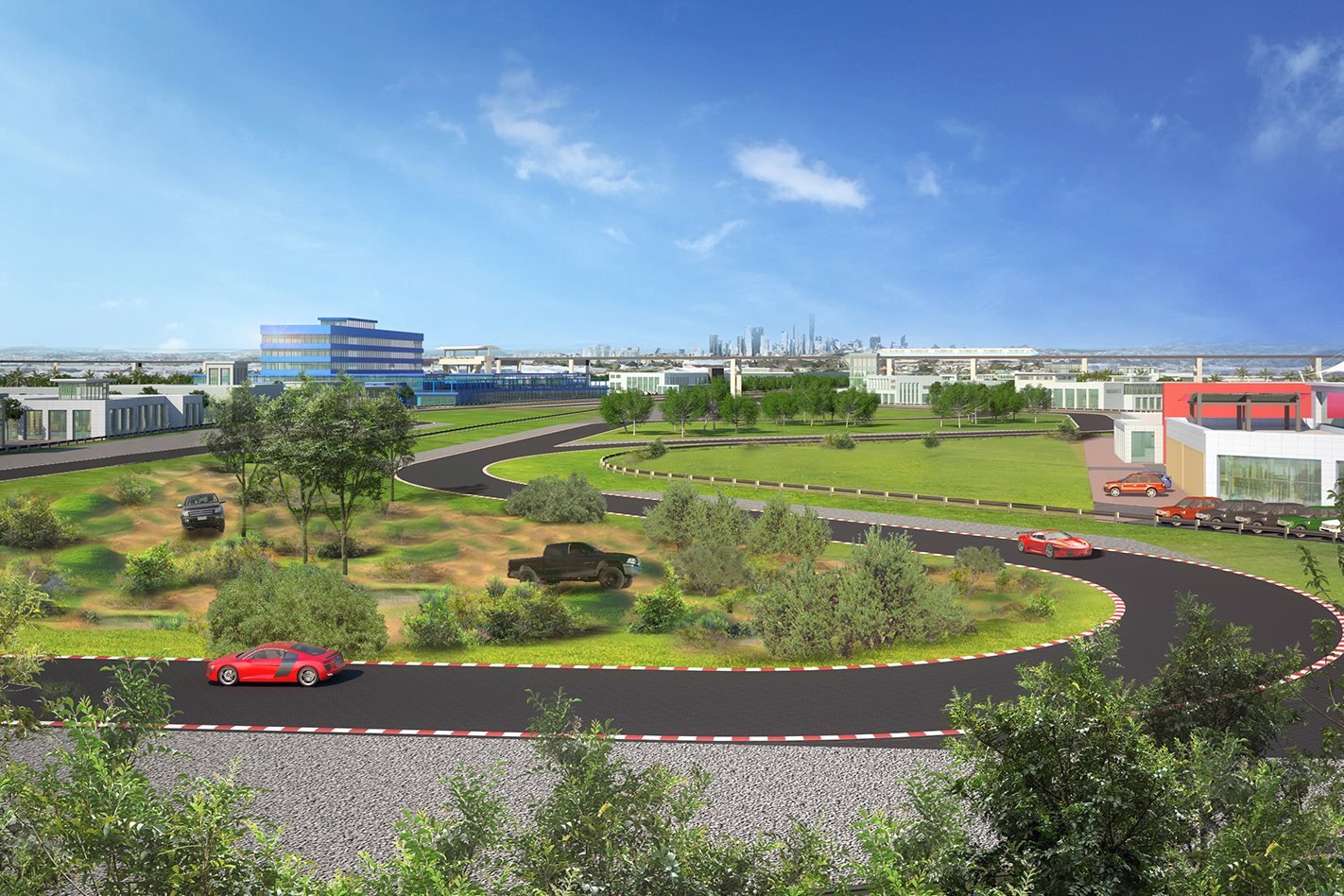
Motorsport Australia CEO Eugene Arocca said the BNE Auto Mall could be the next big thing for motor racing in SEQ.
“To have a state-of-the-art facility like this in Brisbane is a significant boost for motorsport in Queensland and Australia,” said Arocca.“This particular facility will do wonders for grassroots motorsport and for people looking to take their first steps into the sport via track days and other non-speed events.“The fact that it is so close to the city makes it very accessible for people from all walks of life, and I think it’s a wonderful opportunity for an events business looking to expand its brand.“There are endless opportunities with this precinct and I am looking forward to seeing it develop, open and support motorsport well into the future.”
Queensland is set for a motorsports boom from 2022 after businessman Tony Quinn recently took over ownership of Ipswich’s Queensland Raceway, utilising the Christmas break to resurface and renovate the circuit.
