
One of the headline updates of the 2022 Nissan GT-R was the return of two fan-favourite hues: Midnight Purple and Millennium Jade.
The folks at Omori Factory know their audience well, and the two colours feel like poignant fan service for a car that is undeniably nearing the end of its lifecycle.
Of course, Nissan has made no specific claims regarding the future of R35 or any potential replacement, but long-standing GT-R fans have been here before. Almost 20 years ago, in fact.
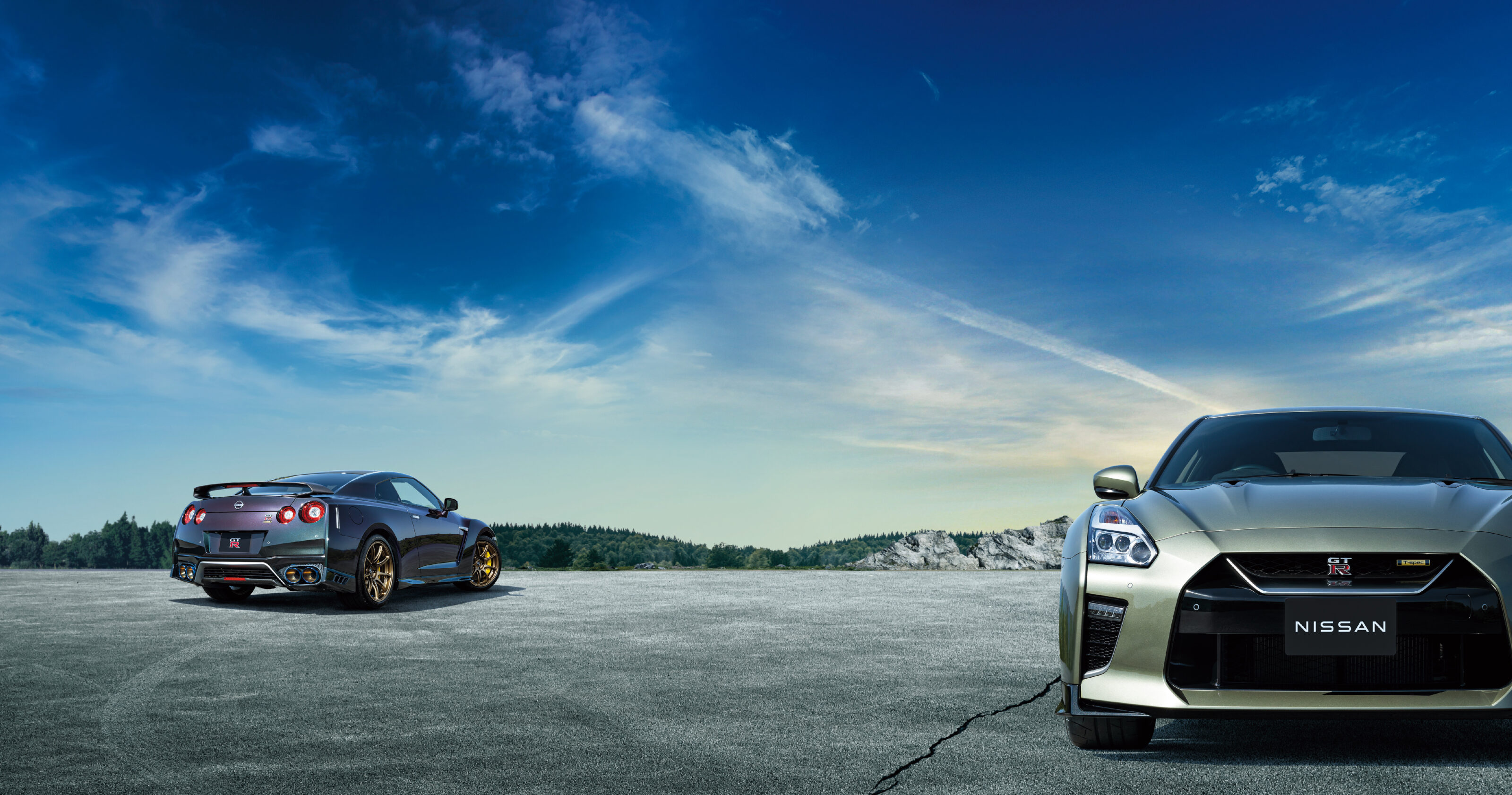
Both Midnight Purple and Millennium Jade colours were last offered during the twilight of R34 GT-R production (we’re not counting the 100 limited edition 2014 R35s finished in ‘Midnight Opal’).
The cult colour of purple originally appeared on the R33 GT-R and quickly became one of the series’ hero colours, proliferating across 15 per cent of all R33 GT-Rs produced (2510 of 16,668).
Nissan introduced Midnight Purple II, with an added green colour-shifting property, to mark the beginning of R34 GT-R production in 1999. 334 were built in total, and all were reportedly sold within ten days. Midnight Purple III is the rarest of the trio, reappearing in March 2000 and bestowed upon just 132 V-spec editions.
It’s the inclusion of Millennium Jade, however, to the range that seems pertinent as R35 is discontinued in Australia due to our unique ADR 85 side-impact regulations.

It was back in 2002 that Millennium Jade made its debut on V-Spec II Nür and M-spec Nür variants of the R34 GT-R. 1003 Nürburgring-badged vehicles (718 V-Spec IIs and 285 luxurious M-Specs) were ultimately produced to see out the end of R34 GT-R production.
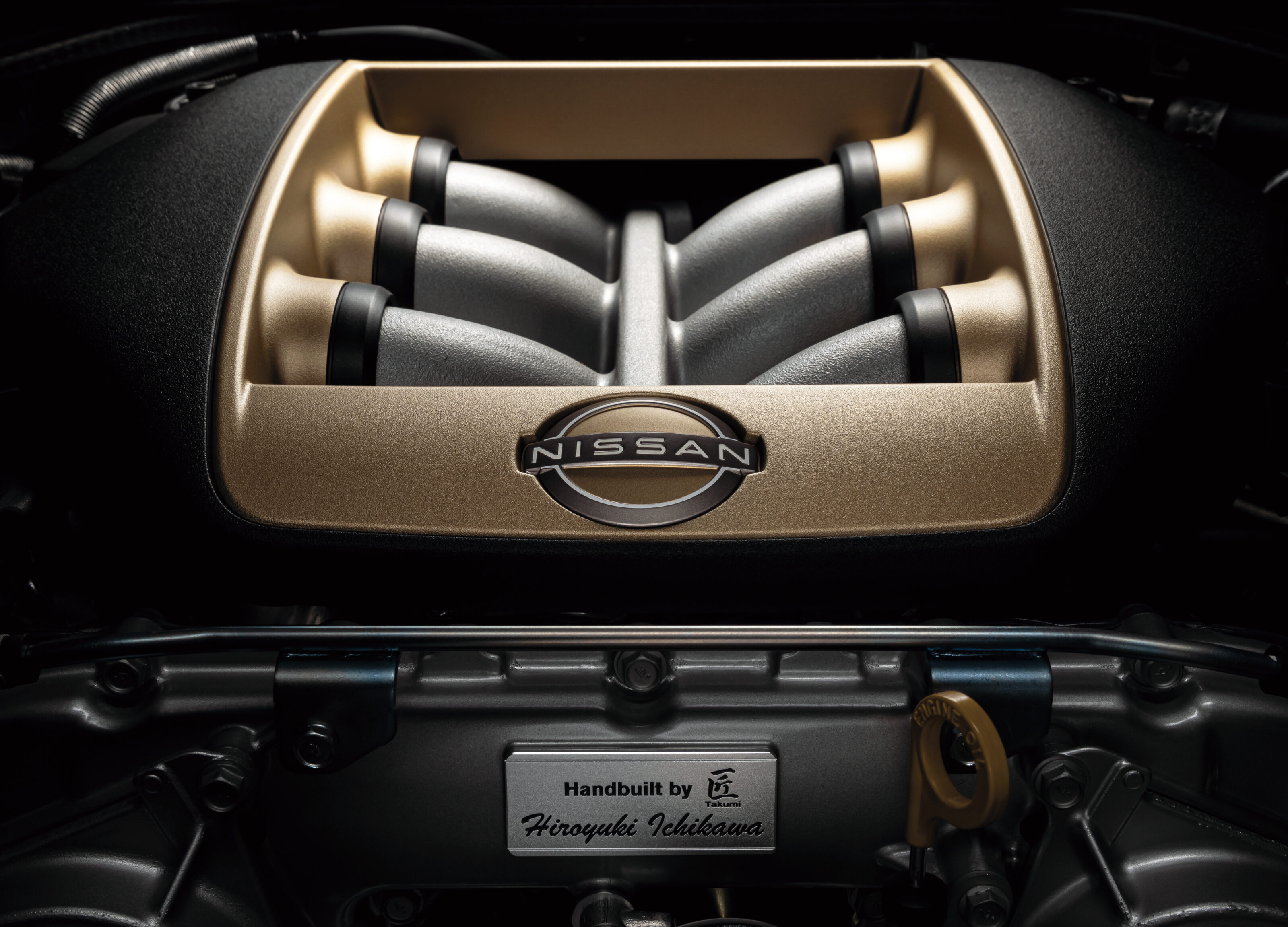
Those R34 GT-R Nürs all uniquely boasted gold engine covers (specifically finished in EY0 Silica Breathe) instead of the standard red covers. Lift the bonnet of the new GT-R T-Spec, and you’re also greeted by an engine cover finished in gold instead of the standard red.
At the time of the Nür’s release in 2002, Nissan had yet to make any official comment on a future successor. The GT-R Proto Concept emerged at the 2005 Tokyo Motor Show, and the R35 ultimately debuted in production form at the 2007 Tokyo Motor Show.
Locally, the current chapter of GT-R has come to a close, with Australia’s final shipment having recently made landfall in Queensland.
Local Managing Director Adam Paterson, however, has stated that “this isn’t the end of the GT-R story in Australia”.
Are we watching history repeat itself? Only time will tell.
Key Points
- Volvo’s 2030 electrification target won’t make Polestar redundant
- Unlike Volvo, Polestar won’t limit its vehicle speeds
- Brand to develop bespoke performance motors
Polestar CEO Thomas Ingenlath said his company is more than just a Volvo EV sub-brand and will continue to suit a range of different requirements after the parent company is fully electrified.
Speaking from Gothenburg, Sweden, during a briefing with Australian media, Ingenlath (below) said it was very clear from the beginning that electrification on its own wasn’t Polestar’s brand differentiator and that it would exist in its own right.

Ingenlath said while Volvo’s ethos was based on producing cozy, warm and welcoming family cars where everything is very inclusive, Polestar was about attracting and expressing much more tech and innovation with an emphasis on performance and a sporty drive.
“That is not of course the most comfortable for the two kids in the back when you go over speed bumps,” he conceded. “[But] it is much more tuned to an engaging drive. All of that gives the brand a character.”
The former chief designer at Skoda said Polestar and Volvo will also continue to go their separate ways with styling, saying there is plenty of scope to do that within the broad ‘bandwidth’ of Scandinavian design.
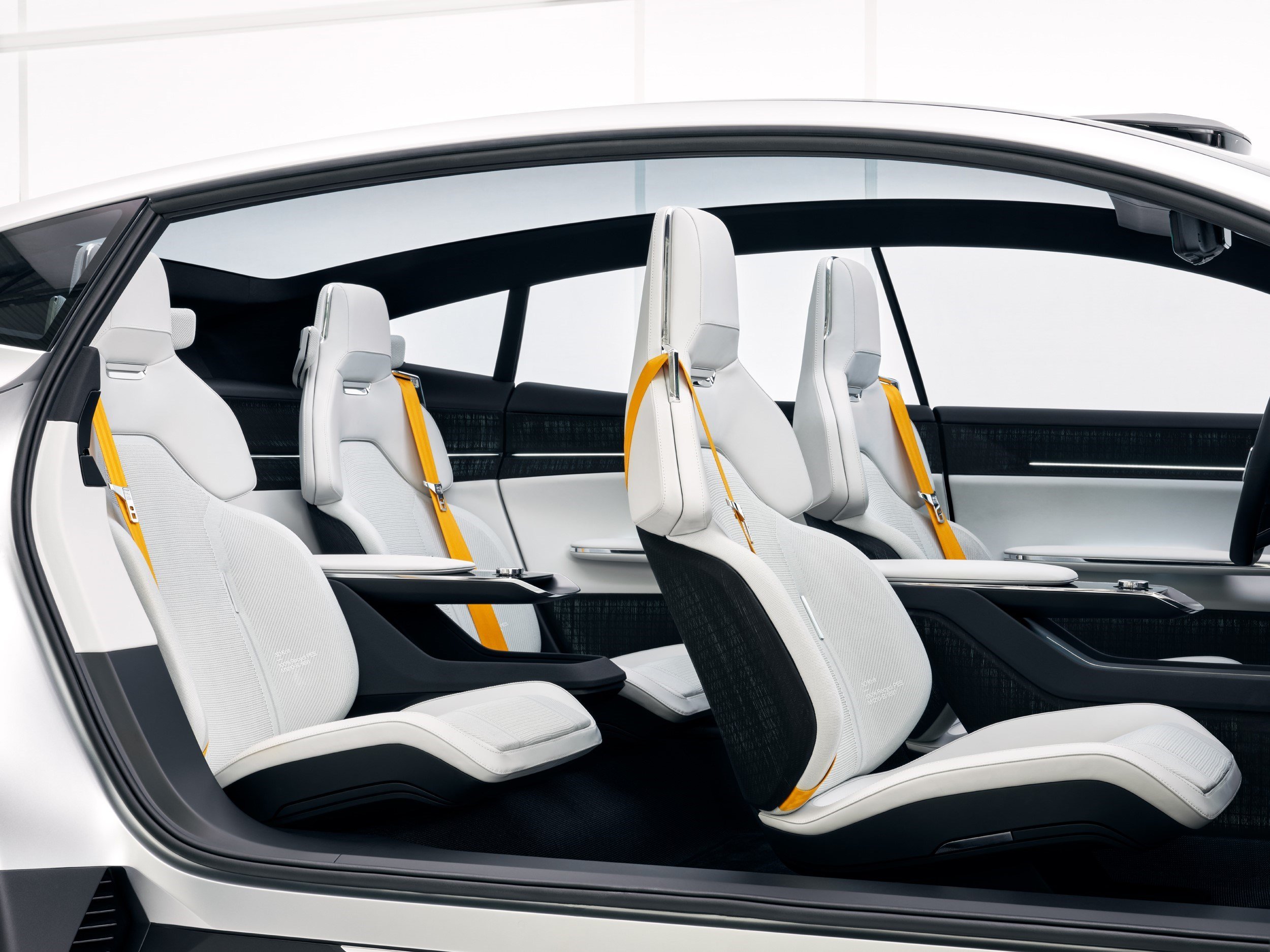
“In the past, there was a brand like SAAB being very Scandinavian, but still very different to Volvo, that is how I see Polestar and Volvo in 10 years…with Polestar clearly being much more about the avant-garde and with an exclusive look that is not trying to please everybody.
“It’s much more of a challenger.”
With the Polestar brand’s racing roots, performance was always going to be a key point of difference from Volvo and, to that end, it has confirmed it will not follow the parent company’s decision to limit its vehicles’ speed to 180km/h.
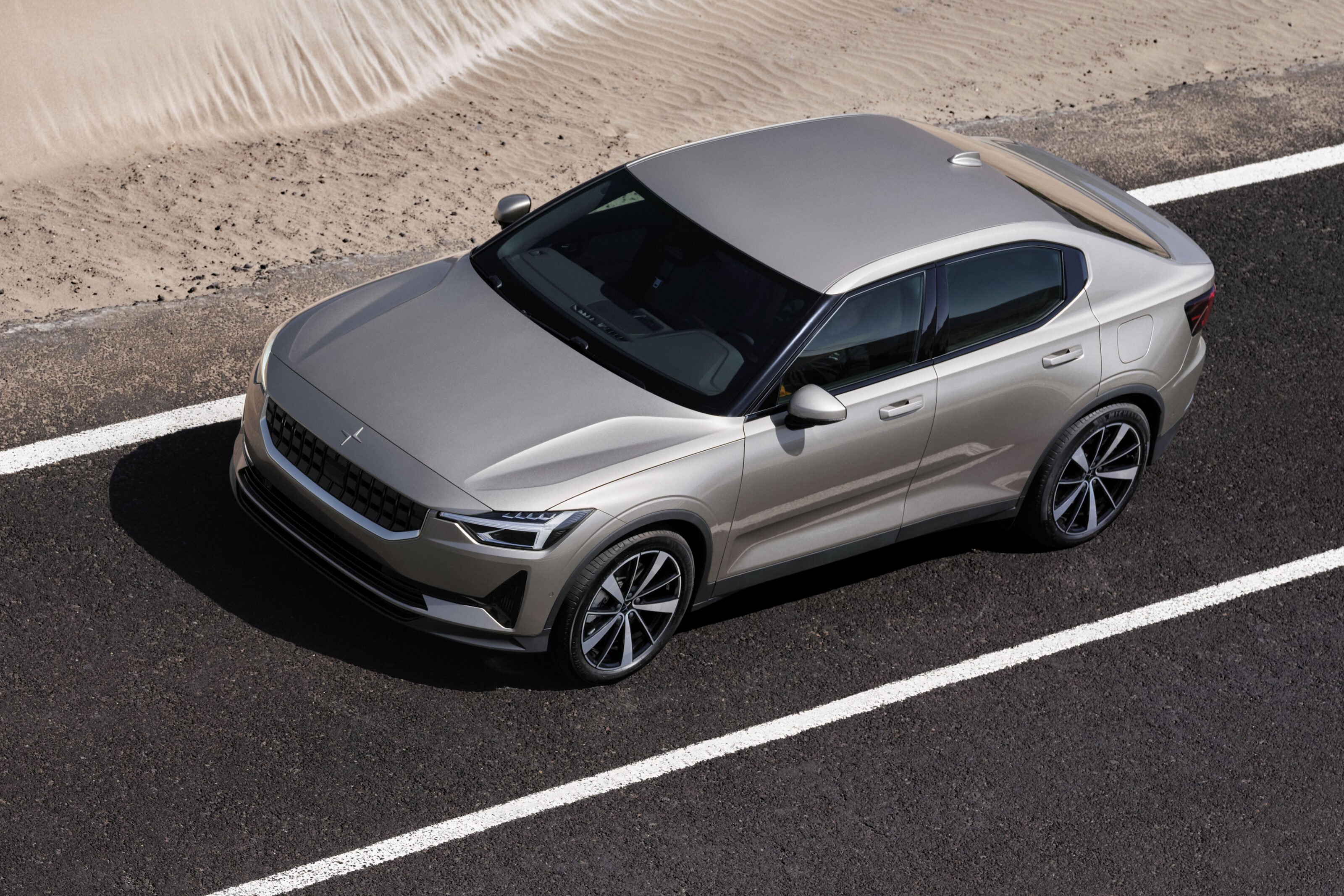
However, Ingenlath was keen to downplay the significance of top speeds as a key measurement for performance EVs, adding it is not the company’s principal to dramatically increase the top speed of its cars.
“We don’t limit the speed we have, but on the other hand, we have no intention of making a big announcement of how fast our cars are.”
He pointed out that the most thrilling aspect of an electric vehicle’s dynamics is how it accelerates and that all happens below 200km/h.
“I’ve been on our test track with Joakim [Rydholm], our test driver, showing me the length of developments when he’s fine-tuning the suspension and the steering.
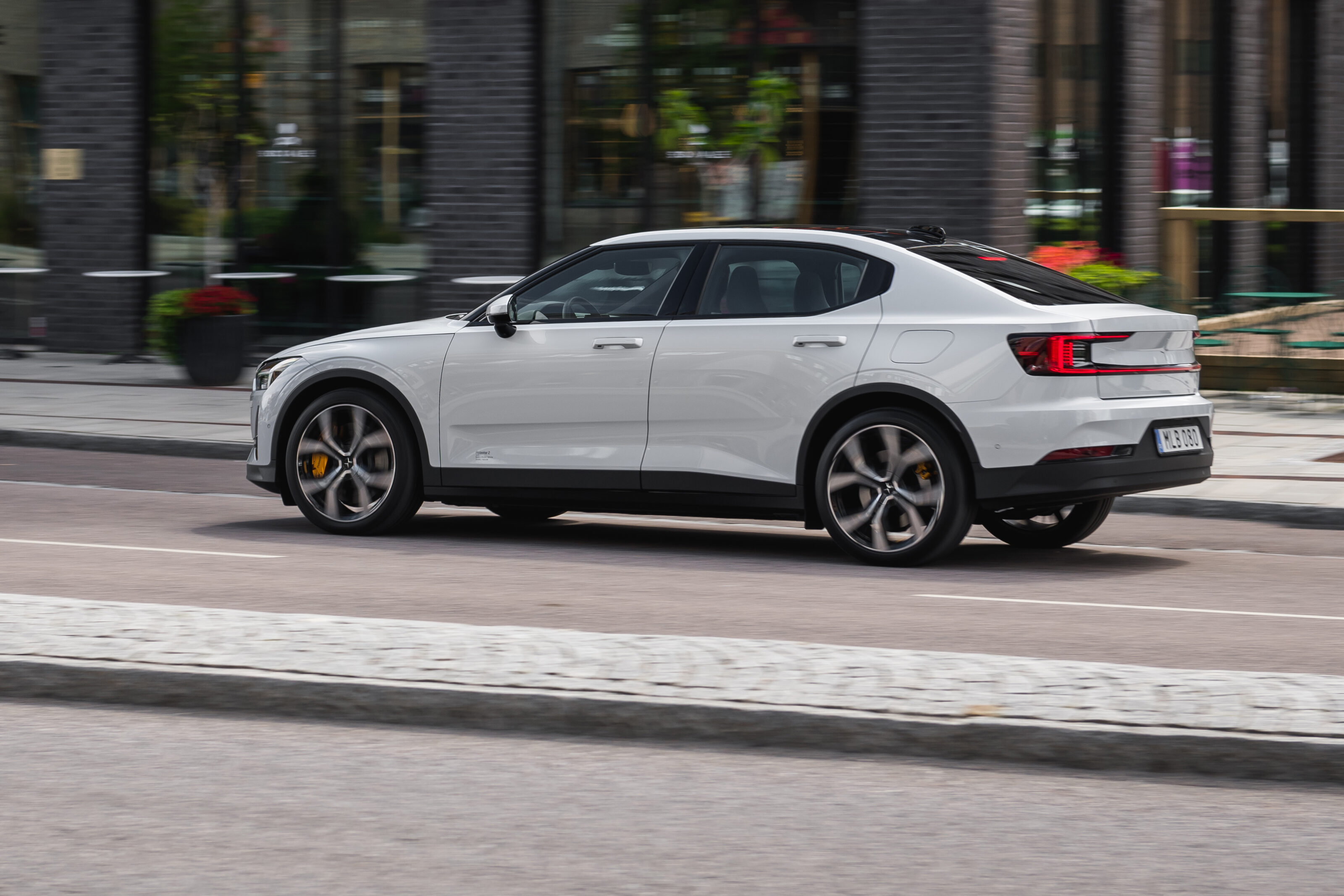
“It is kind of scary driving with him because he drives of course very well, but is pushing the boundaries to an extent, which makes it quite uncomfortable mentally for me – that is all happening below even 100 kilometres (per hour) so that’s where these cars are really amazing to drive.”
Even so, Polestar aims to develop bespoke performance motors separate from Volvo, which he said won’t require them.
“We will, with the Polestar 2, go into performance turning with software and offer that to our customers, but indeed, in the next product, we will then go into the hardware and have our own electric drivetrain.”
So does that mean Polestar could go back to its motor racing roots?
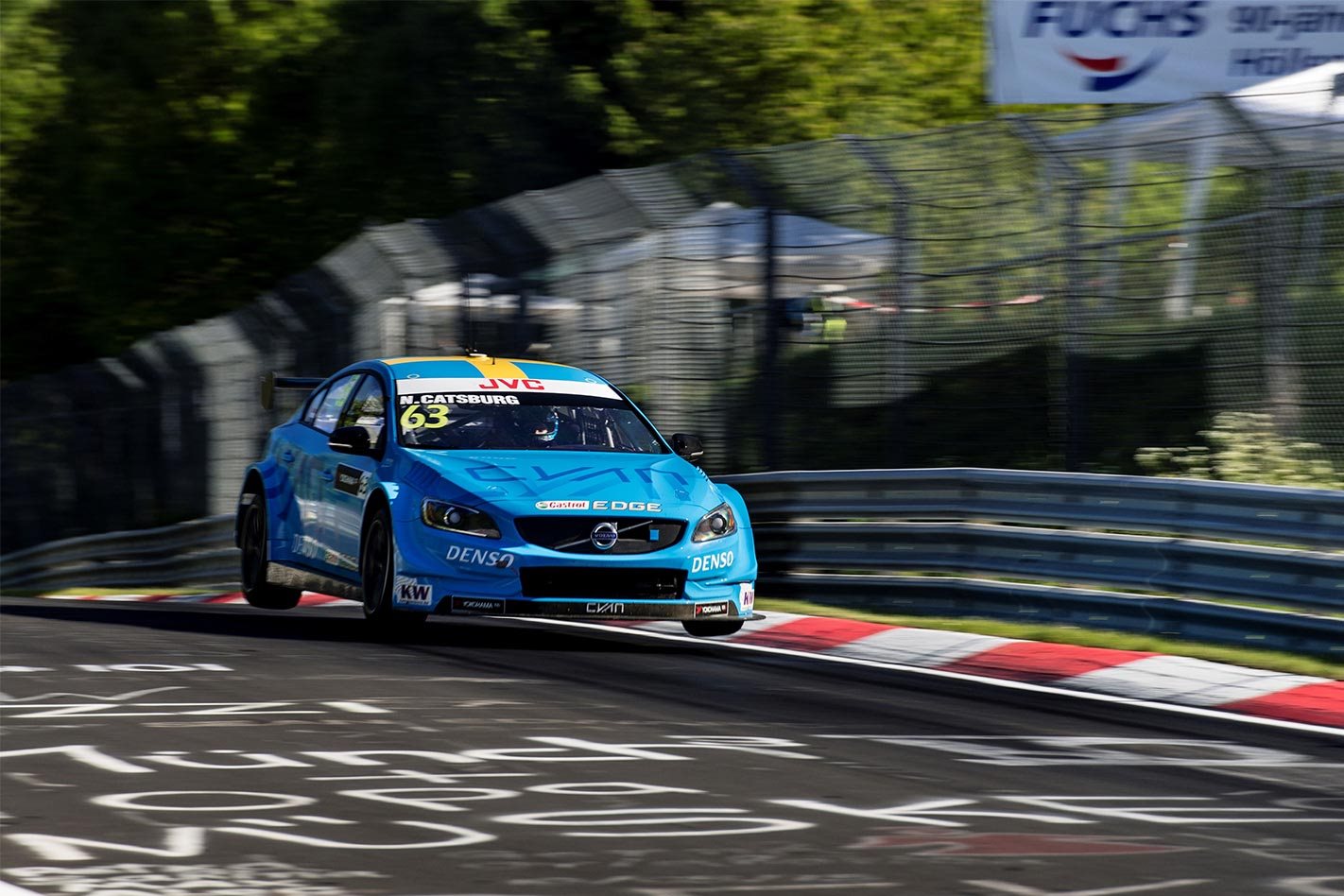
“Could well be,” Ingenlath said.
“We don’t have a dogma against it, it’s really about concentrating on what we need to do and keep the resources focused on that.
“I very much would enjoy in a couple of years having that opportunity to join something meaningful and compete, but unfortunately at the moment it would be reckless to risk everything by adding that to our list,” he said.
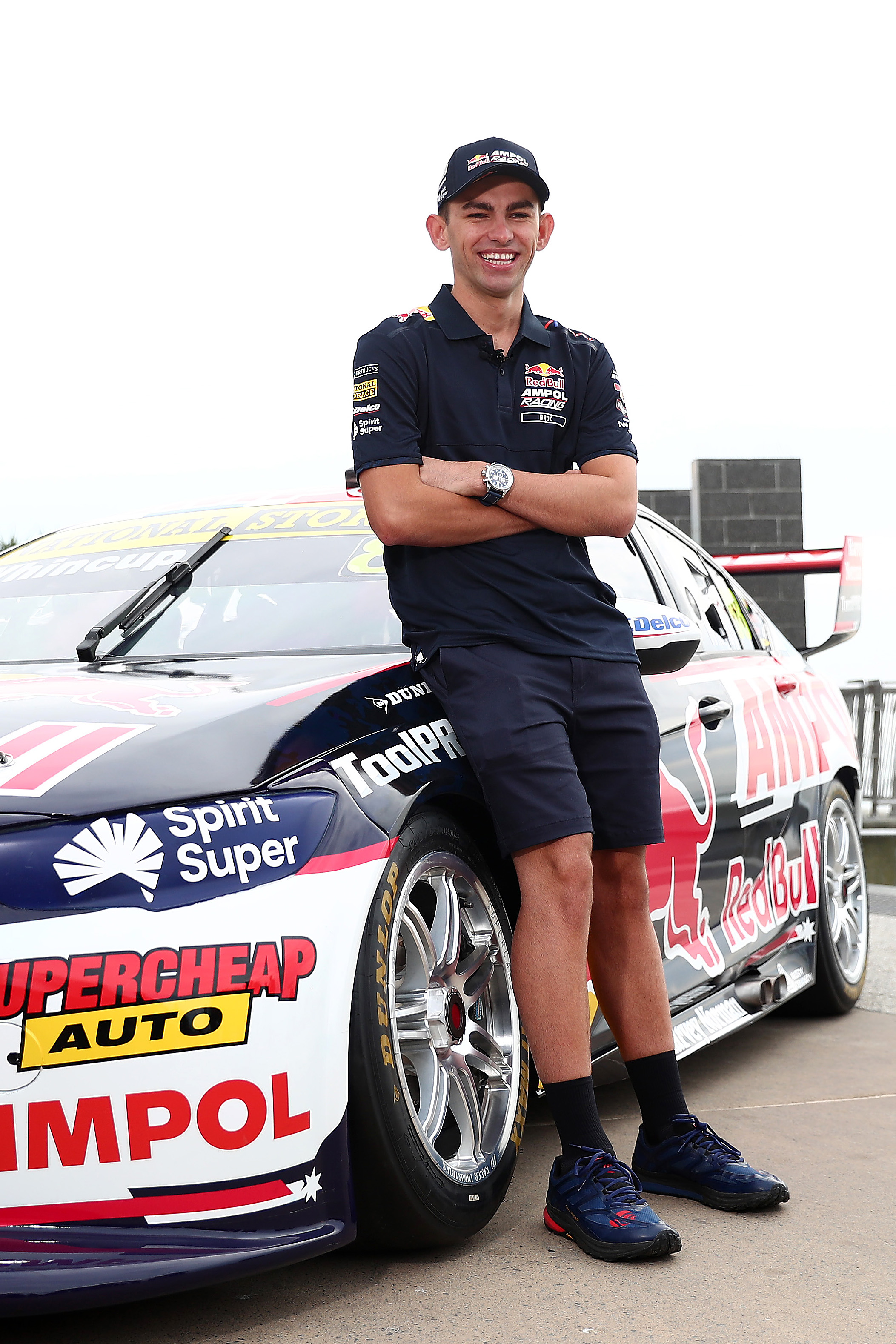
Imagine replacing Muhammad Ali. Or Mick Jagger. That’s the daunting scenario debutante Broc Feeney is facing when he replaces the imperious Jamie Whincup, statistically Supercars GOAT, for 2022. While 38-year-old Whincup polarises fans, his staggering success is undeniable: the most championships, wins, fastest laps, podiums and four Bathurst victories. No other driver comes close, so is teenage Feeney ‘The New Whincup’?
“I’m not comparing myself to anyone; I want to be Broc Feeney!” says the Gold Coast born-and-raised teenager only half-jokingly. “Hopefully one day I can say that I won a championship, and hopefully a Bathurst 1000.”
Speaking to Wheels, Feeney exudes a confidence and maturity yet with pleasant youthful enthusiasm. There’s self-belief, sure, yet no arrogance about him, despite his conquering all-comers to land the most coveted race seat in this country.
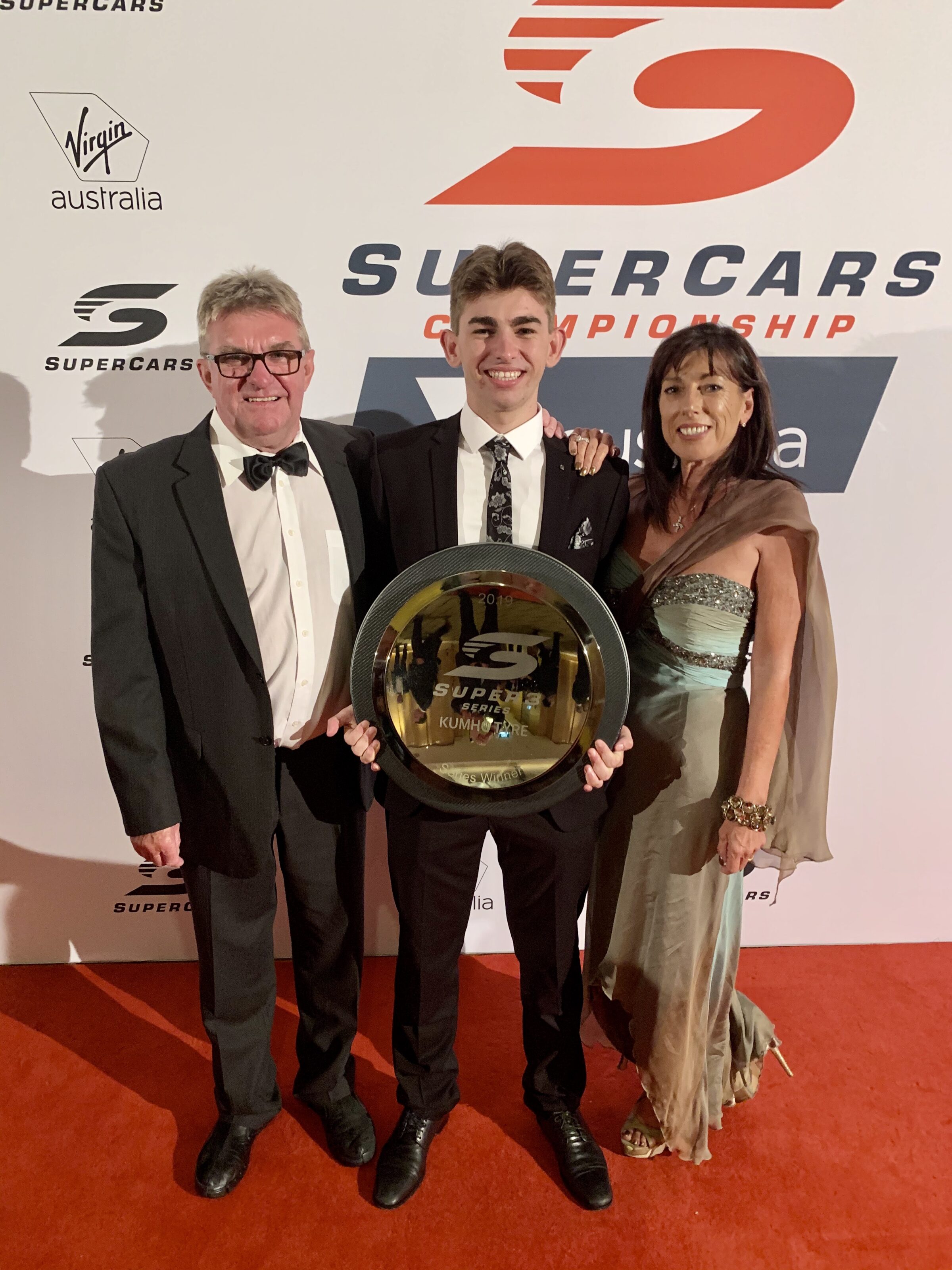
Broc Feeney was born on October 18th, 2002 – the same year Whincup made his Supercars debut – and spent his 18th birthday driving to 10th place at his first Bathurst 1000. The name Broc, by the way, is derived from his mother’s maiden name, not a tribute to the late, great Peter Brock. The young racer gets that question a lot.
The younger of two boys, Broc’s racing obsession was fostered by parents, Paul and Sue. Paul Feeney was a successful motorcycle racer in his own right with ties to the racing community including one Casey Stoner, who, among other riders, had a huge influence on Broc’s approach to his own racing. “My parents met at a racetrack, so it’s always been a part of my life, riding my bike around the workshop and racing since I was three or four on my PeeWee 50,” Feeney says.
The switch from two wheels to four came after a family holiday to Thailand when Broc was nine.
“We discovered the local kart-hire track and basically never left,” he recalls. Back home, a come-and-try day at Ipswich saw his first kart purchase and the transition was complete. Overseas success followed.
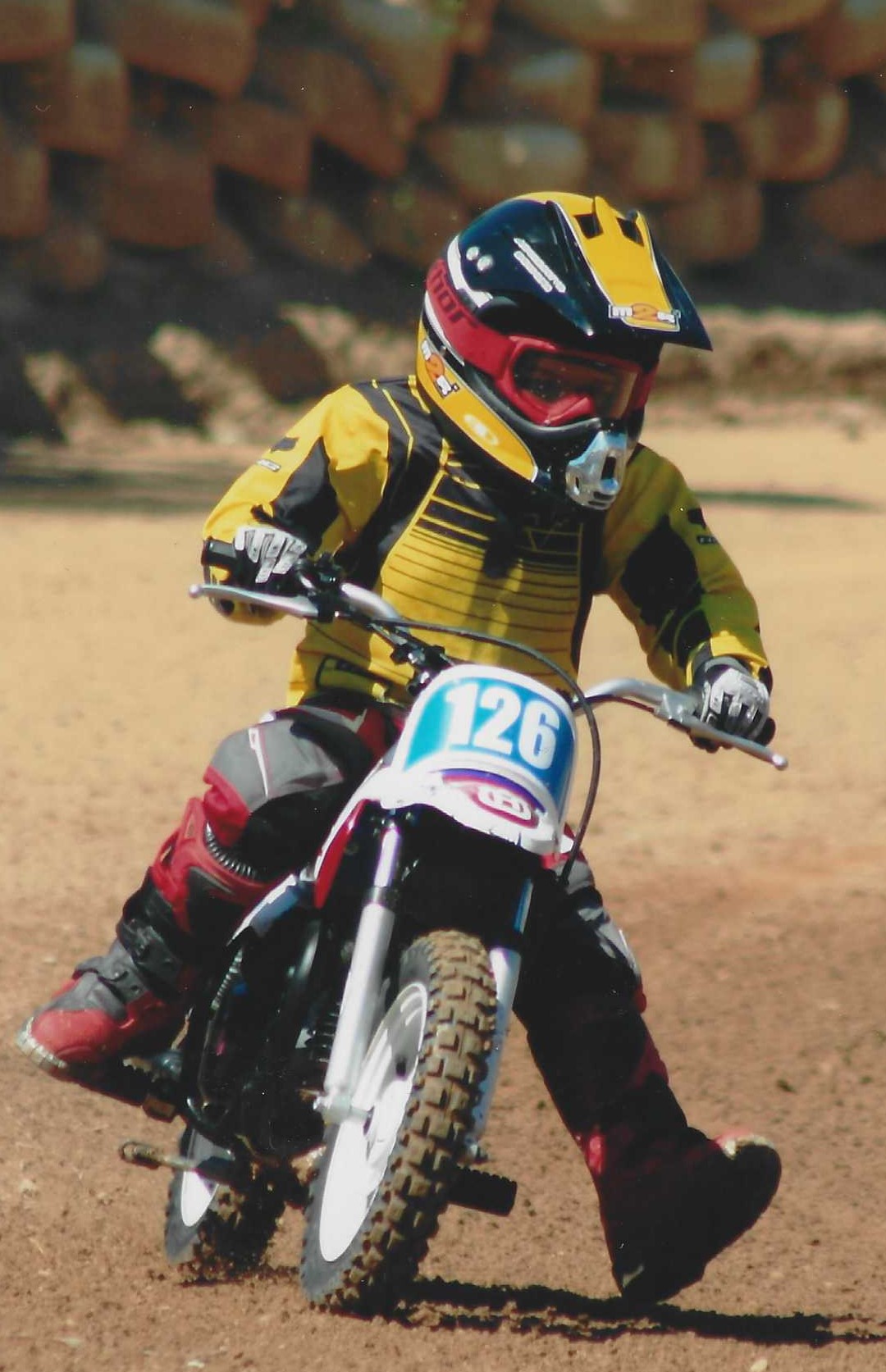
“I was used to go-karting every weekend. I was doing the 86 series and I thought, ‘Far out, I get only six races this year’, so I started thinking about what else we could do to get my bum in a seat.”
At barely 15 years of age, Broc’s potential road to Supercars was mapped out with mentor, Bathurst winner turned Supercars-talent whisperer Paul Morris. It meant getting behind the wheel of a car for the first time, with Morris showing the youngster the ropes before any bad habits could develop. Coaching from fellow graduates of Morris’s talent program saw the likes of Anton De Pasquale, now with Dick Johnson Racing (DJR), for young Broc to lean on, too. “Whatever Paul’s doing, it works,” Feeney says.
The 86 Series was a logical step for 2018, Feeney becoming the youngest ever race winner, and taking sixth in the championship despite missing the Bathurst round as he was an agonising 11 days short of the minimum age of 16. There was another issue, though. “I was used to go-karting every weekend. I was doing the 86 series and I thought, ‘Far out, I get only six races this year’, so I started thinking about what else we could do to get my bum in a seat.”
In shades of his 2022 team-mate Shane van Gisbergen, if it had a steering wheel, Feeney was keen. He made cameos in Aussie Racing Cars, defeated one Lando Norris to claim the first wild-card victory in Supercar’s 2019 E-Series and scored a class win at the 2020 Bathurst 12-hour.
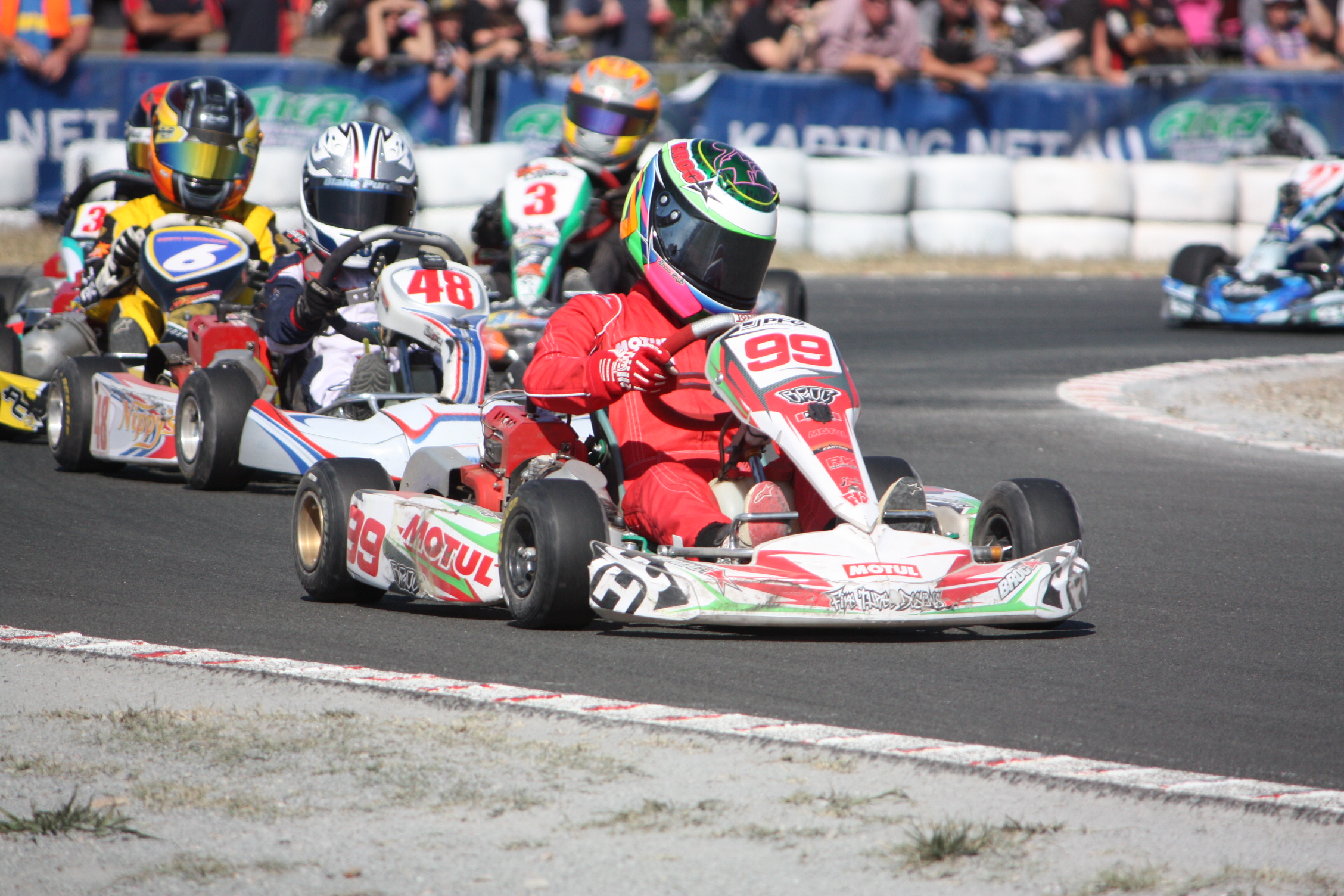
In 2019 Feeney rocked the Super3 series, where he won from pole on debut, scoring 12 podiums in 15 races as the youngest ever Super3 champion. The performance was enough to get him Supercar tests with both Erebus and DJR, where he shone, earning him a spot in Super2 with Tickford for 2020 and his Bathurst birthday drive.
A switch to Triple Eight for 2021 Super2 series has seen Feeney dominate, rewarded with a wild-card Bathurst entry alongside two-time winner, Russell Ingall, before being confirmed as Whincup’s heir. Yet he’s acutely aware that despite the on-paper promise, future success will not be instant, nor is it guaranteed.
He reluctantly says he’s targeting modest progress with Top 10s in 2022, with no better yardstick than the in-form and perennial winner van Gisbergen, a salivating intra-team contest in itself.
“I’m coming into a team where they’re used to winning championships and winning a lot of races, and they don’t want that to change,” he says. “I’m not going to stop until I’m winning races and trying to win championships. I know that’s going to be a long process, but I won’t stop until I do it.”
The Next ‘Brocky’?
Kart blanche
Feeney’s pace in a kart saw him become five-times Queensland champion. His karting zenith came in 2017 as he took the National KA2 title, became the first Australian to stand on the podium at the ROK Cup International Final in Italy and finished second at the highly regarded SuperNationals in Las Vegas. “I lost that one by 0.04sec, so I’d love another crack at it,” the hot-shoe admits.
Born to excel
Feeney also entered the Hyundai Excel series, where he first met Roland Dane, the beginning of a relationship that culminated in his 2022 promotion. He continued to race the Hyundai even as he progressed through Super3 and Super2 development categories.
Young leader?
Craig Lowndes remains the youngest driver to lead The Great Race, at 19 years, four months and 11 days, but with Feeney turning 19 only 17 days before this year’s race (based on Bathurst’s revised December 5 date), that’s a record the young Triple Eight driver could well make his own.
https://www.instagram.com/p/CVKhgtshZwU/
It’s been 20 years since Aston Martin revealed its flagship V12 Vanquish at the Geneva Motor Show.
Then the most sophisticated and technologically-advanced Aston Martin to date, it was the product of ‘Project Vantage’ – which had been unveiled at the 1998 Detroit Motor Show.
Displayed as a near production-ready vehicle designed by Ian Callum, it boasted a 6.0-litre V12 making 335kW within an all-aluminium chassis and body.
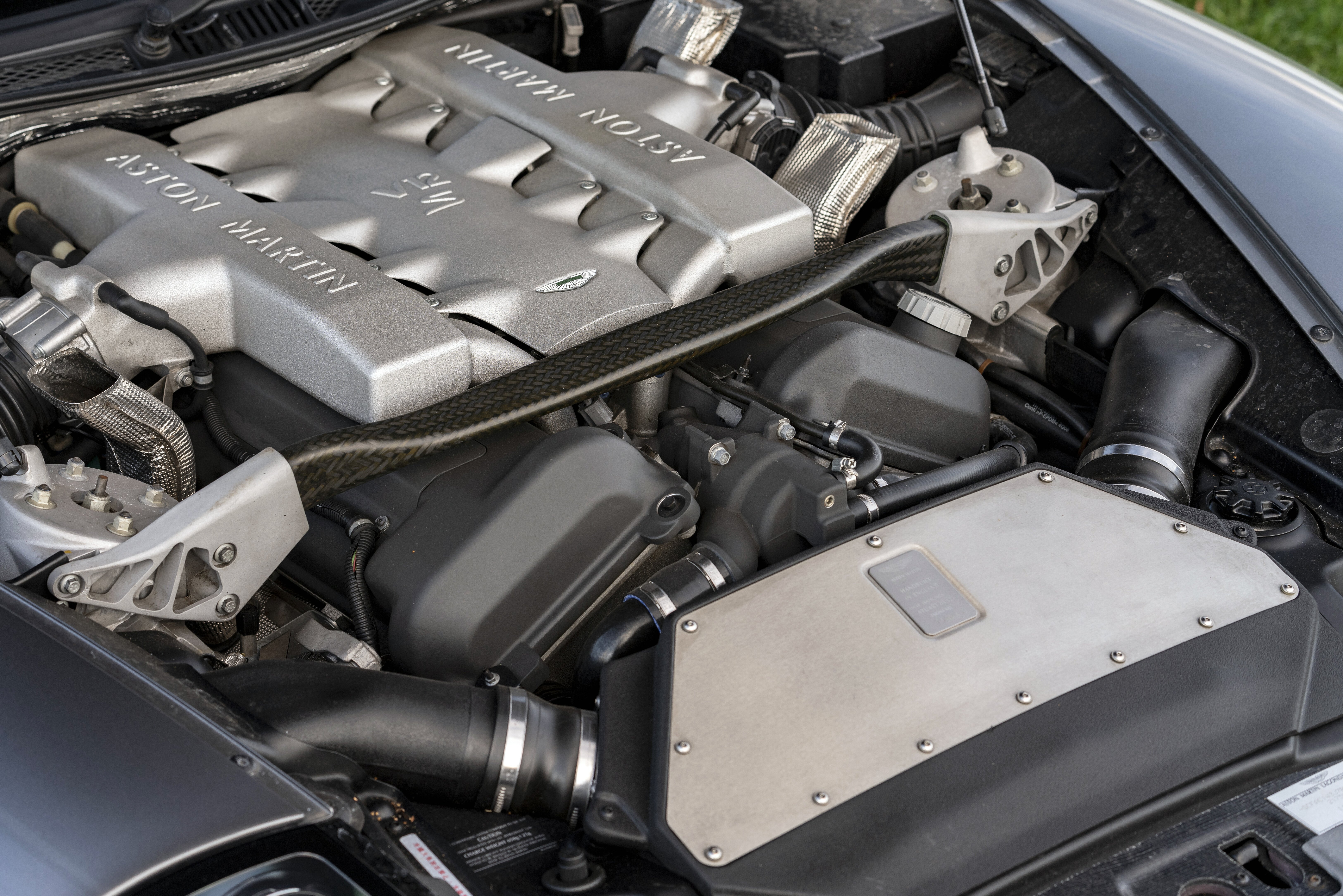
When the V12 Vanquish debuted three years later, it featured drive-by-wire throttle control and paddle shifters — cutting-edge technology for the time.
The aluminium V12 cranked out the same 335kW as the show car, with 556Nm of torque on tap and a top speed of 305km/h. A new crank and valve gear, alongside improved breathing characteristics, gave it an advantage over the contemporary DB7s powerplant.
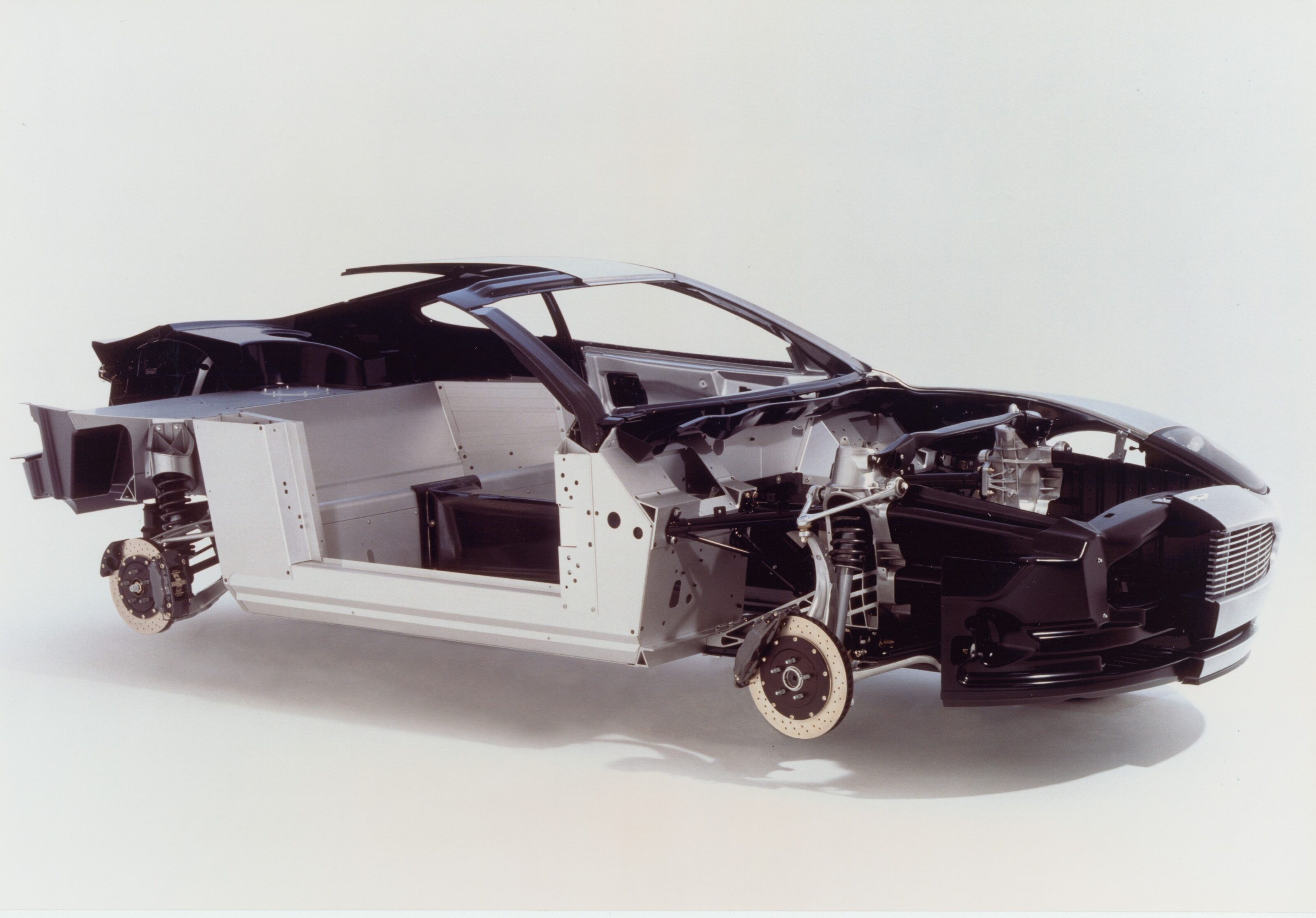
Offered in 2-seat or 2+2 layouts, the production tourer also used advanced body construction methods like a bonded aluminium superstructure and braided carbon fibre A-pillars.
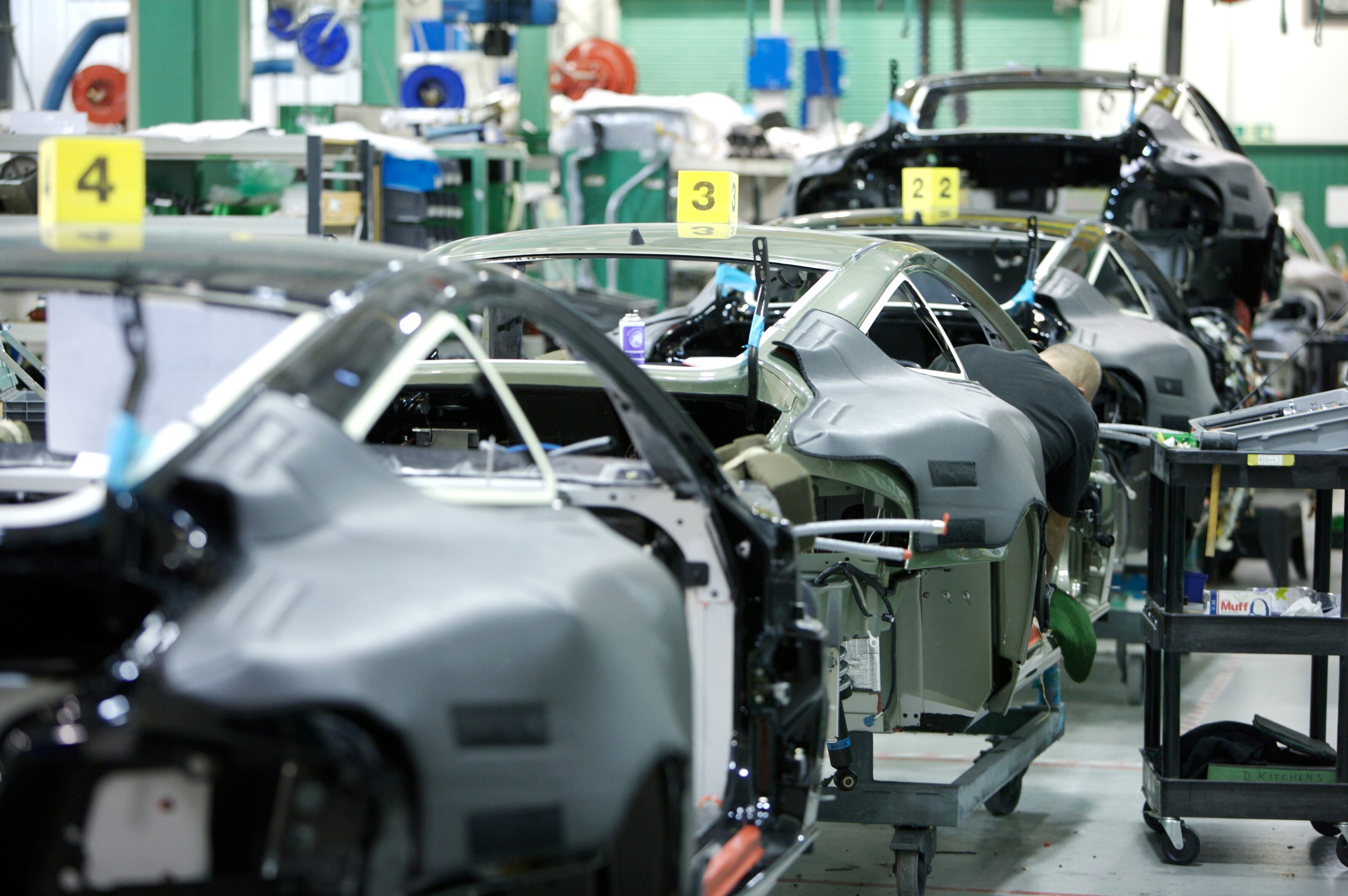
Experts in Silicon Valley and the University of Nottingham were called in to achieve the techniques, and each car took a full eight weeks to build.
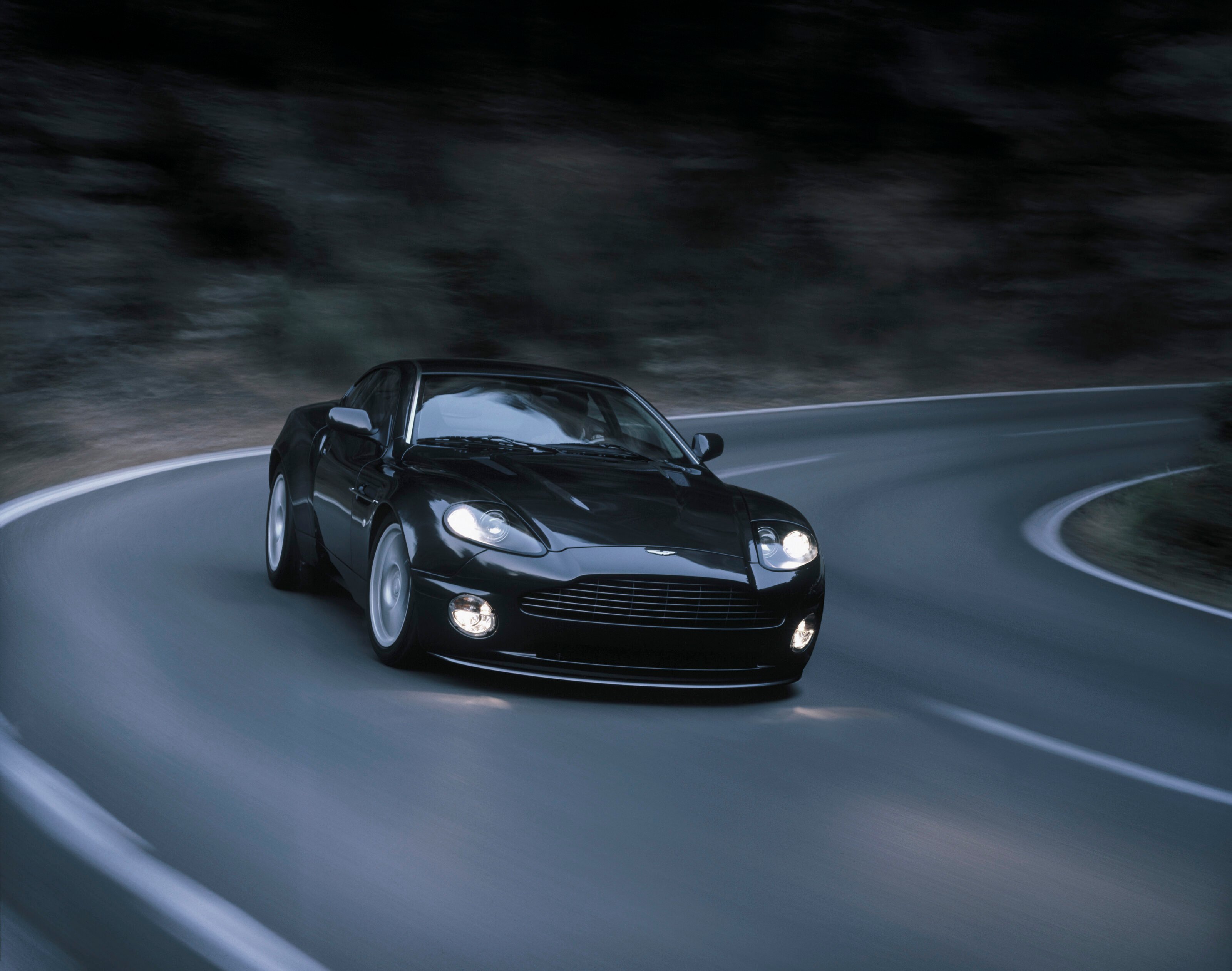
Aston Martin upped the ante in 2004 by unleashing the amped-up V12 Vanquish S.
Topping out at over 320km/h, the V12 received new heads for a 388kW output – while suspension, steering and brakes were tweaked.
Even the drag coefficient was further improved, thanks in part to a revised grille design.
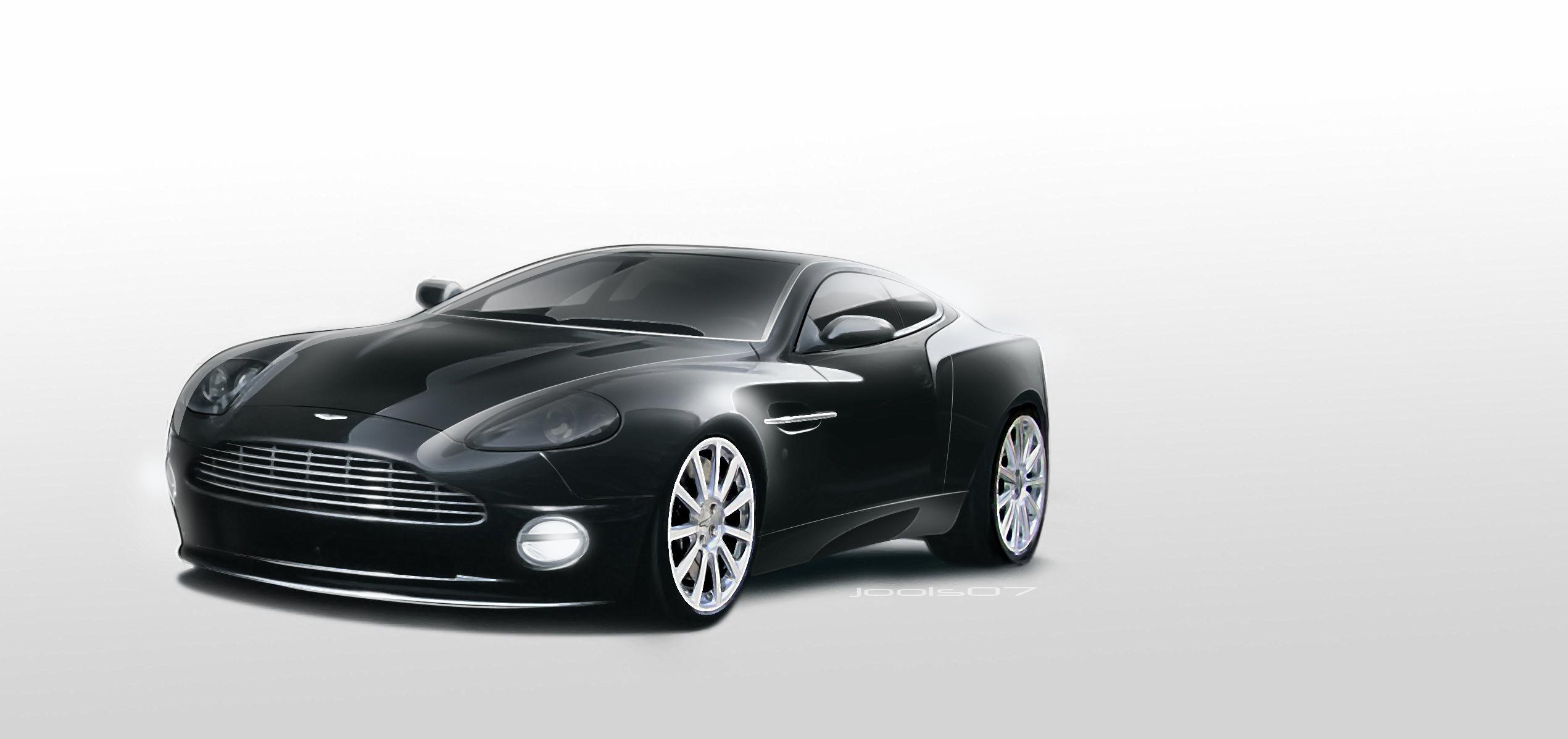
The release of 2007’s Ultimate Edition coincided with the closure of the carmaker’s Newport Pagnell factory. Just 40 individually-numbered examples were built, all finished in ‘Ultimate Black’ with semi-niline leather, leather headliner, and dark chrome accents.
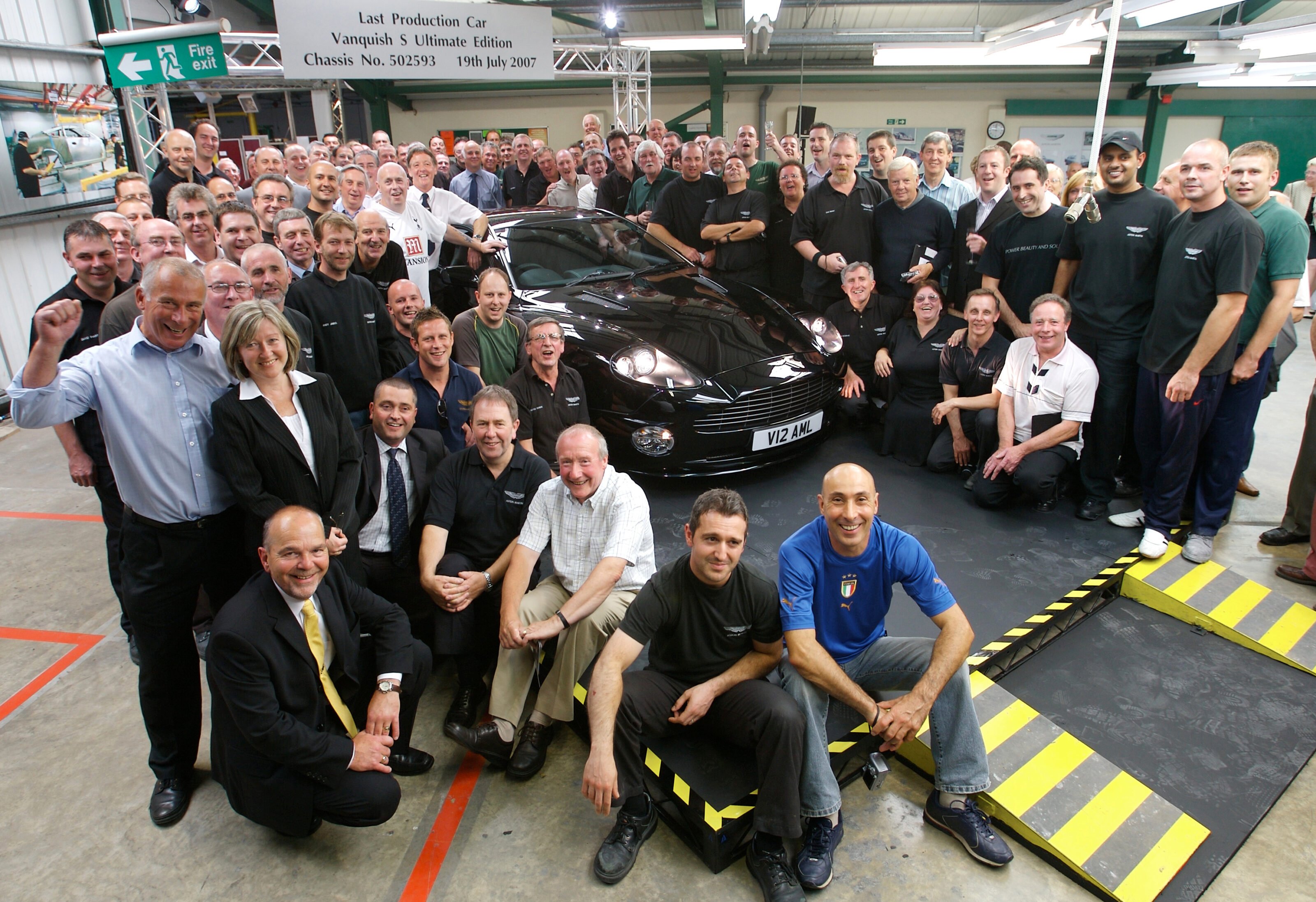
In total, 2589 V12 Vanquishes were built. Today, the Aston Martin Works heritage centre offers manual conversions for the car. Approximately 130 have been completed so far, with an average 10 cars being swapped yearly.
“The original V12 Vanquish represented an important and timely development for our marque,” said Aston Martin Works president Paul Spires.
“It was, and is, a great super GT with all the character, style and power that is rightly expected of an Aston Martin sports car.
“Twenty years on from that debut, the V12 Vanquish remains a proud part of the marque’s heritage, which we celebrate here at Newport Pagnell. It is an exceptional piece of our history, and a car that we can rightly look back on with considerable pride.”
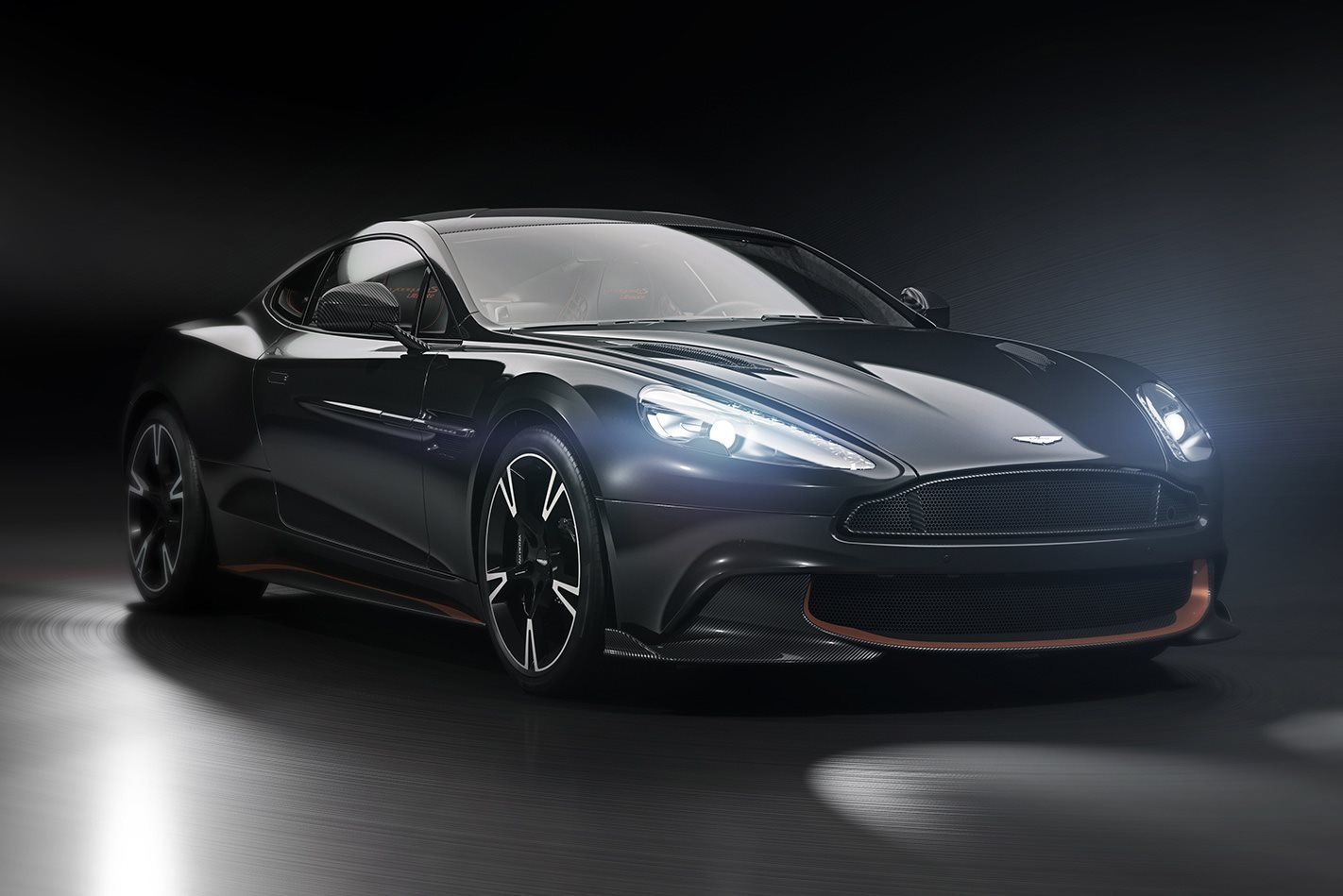
The Vanquish nameplate would be revived in 2012, this time with a 5.9-litre V12. Production wrapped up in 2018, with the DBS taking its place.
The 2022 Kia Niro is edging closer to its official unveiling, with the vehicle snapped in various states of camouflage in recent months.
Before Kia pulls the wraps off the second-generation Niro, we asked artist Theottle to digitally strip back the camo and provide a glimpse of what we can expect when the model eventually arrives.
Borrowing some design cues from Kia’s latest models, the new Niro draws most of its looks from the HabaNiro concept of 2019 – with a strong but unconventional front-end and boomerang-shaped LED tail-lights.
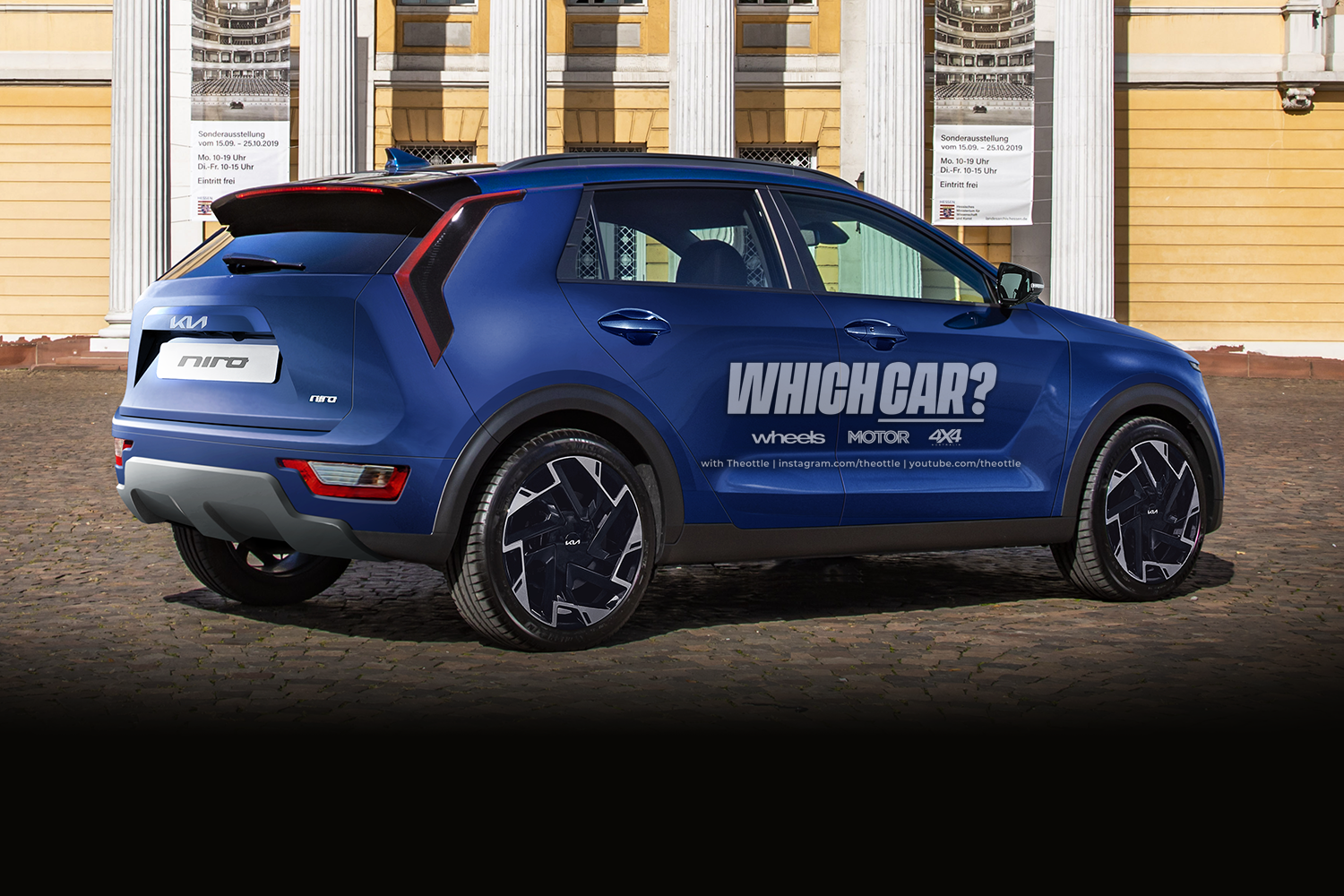
While some spy pics show an unusual contrast colour at the D-pillar – a visual feature of the HabaNiro concept – we expect most buyers will opt for a single exterior paint.
To reduce drag and improve range, a set of aerodynamic alloy wheels have been fitted to the small electrified SUV.
Earlier reports suggest the new-generation Niro will use updated powertrains found in the current model, with improved efficiencies to deliver a great driving range (up from the current 455 kilometre maximum) from the battery-powered EV.

The plug-in hybrid Niro is also expected to see some slight improvements to its 58km electric driving range, while petrol-hybrid models could see a minor power bump too.
For those wondering why we’re already seeing a new Niro so soon after the vehicle was launched, the current model has been on sale in overseas markets since 2016, but was only introduced in Australia in May 2021.
There’s no official word yet on when we can expect the 2022 Kia Niro to be revealed, but we do know the model will arrive into showrooms in the second half of next year.
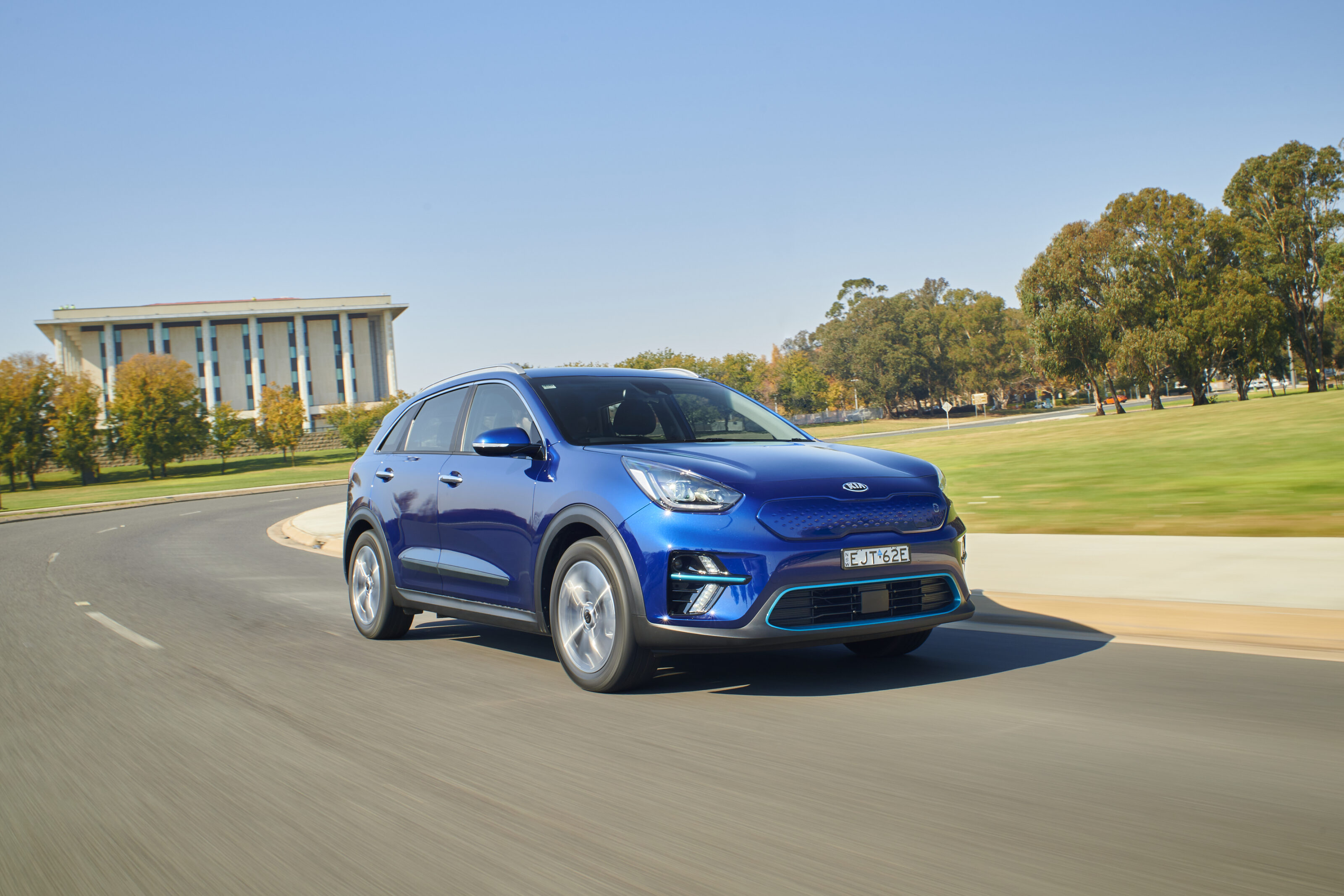
Below: The current first-generation Kia Niro
Key Points
- Probably more than 500 cars at launch time
- In a map 50 per cent bigger than before
- Oh boy.
The upcoming new Forza Horizon 5 Xbox racing game will launch with at least 491 cars to work your way through, bettering the 460 featured at launch time for the fourth instalment.
Of course, the number of rides now available in Forza Horizon 4 has ballooned to nearly 800, but FH5 is clearly going to be off to a solid start when it rockets out of the gates on November 9.
Actually, according to creators Playground Games, the list isn’t even complete – it expects to reveal even more options as the new racer’s launch date draws closer.
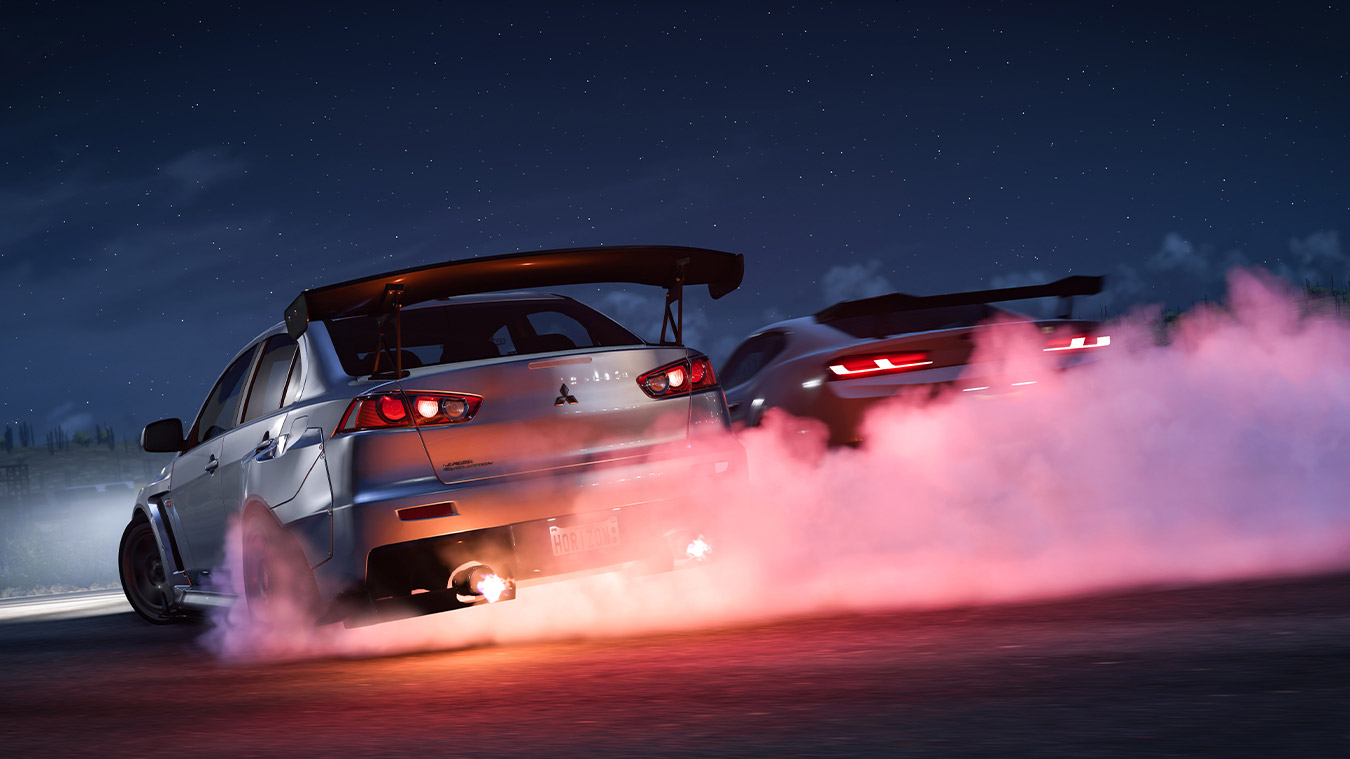
The full list of cars is below, and this latest news follows confirmation in August that FH5’s sprawing map will be about 50 per cent bigger than its predecessor’s world.
Based on real-world Mexico, Playground Games’ developers confirmed on Twitter that the environment is 1.5x larger than Horizon 4’s.
That map was around 71 square kilometres in total, meaning the new one should exceed 100 square kilometres.
Forza Horizon 5 will be available on Xbox Series X, Xbox Series S, Xbox One, and Windows 10 (and probably Windows 11?) from November 9.
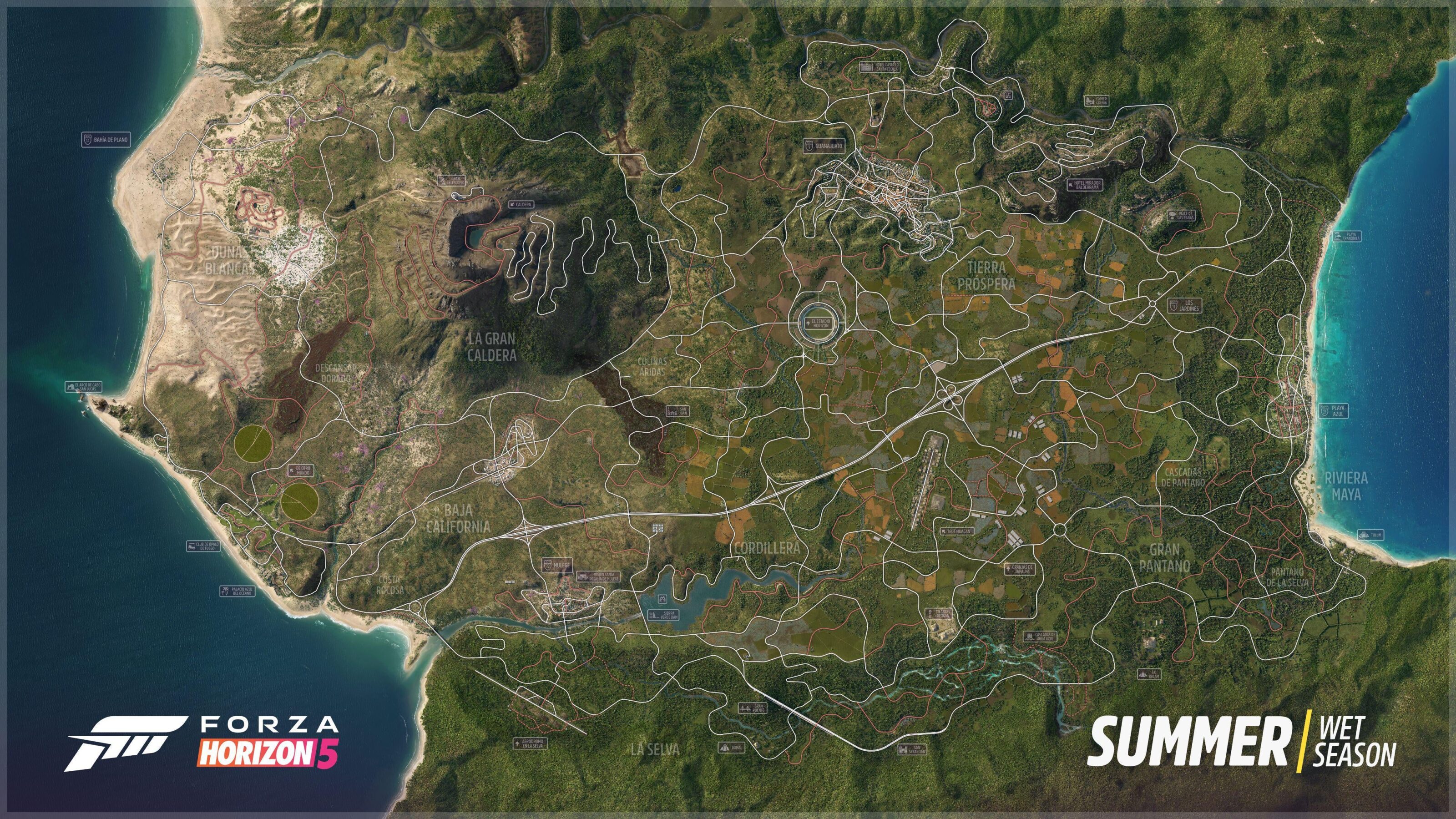

Lead breathtaking expeditions across the vibrant and ever-evolving open world landscapes of Mexico with limitless, fun driving action in hundreds of the world’s greatest cars.
Forza Horizon 5: Launch car list
(Accurate as of October 30, 2021)
| 2001 Acura Integra Type R |
| 2002 Acura RSX Type S |
| 2017 Acura NSX |
| 1973 Alpine A110 1600s |
| 2017 Alpine A110 |
| 2015 Alumi Craft Class 10 Race Car |
| 1973 AMC Gremlin X |
| 2554 AMG Transport Dynamics M12S Warthog CST |
| 2018 Apollo Intensa Emozione |
| 2013 Ariel Atom 500 V8 |
| 2016 Ariel Nomad |
| 1964 Aston Martin DB5 |
| 2013 Aston Martin V12 Vantage S |
| 2016 Aston Martin Vantage GT12 |
| 2017 Aston Martin DB11 |
| 2017 Aston Martin Vulcan AMR Pro |
| 2019 Aston Martin Vantage |
| 2019 Aston Martin DBS Superleggera |
| 2019 Aston Martin Valhalla Concept Car |
| 1984 Audi Sport quattro |
| 1995 Audi RS 2 Avant |
| 2001 Audi RS 4 Avant |
| 2003 Audi RS 6 |
| 2006 Audi RS 4 |
| 2009 Audi RS 6 |
| 2010 Audi TT RS Coupu00e9 |
| 2011 Audi RS 3 Sportback |
| 2011 Audi RS 5 Coupu00e9 |
| 2013 Audi RS 4 Avant |
| 2013 Audi RS 7 Sportback |
| 2013 Audi R8 Coupu00e9 V10 plus 5.2 FSI quattro |
| 2015 Audi RS 6 Avant |
| 2015 Audi TTS Coupu00e9 |
| 2015 Audi S1 |
| 2016 Audi R8 V10 plus |
| 1958 Austin-Healey Sprite MkI |
| 1939 Auto Union Type D |
| 2014 BAC Mono |
| 1930 Bentley 4-1/2 Litre Supercharged |
| 1930 Bentley 8 Litre |
| 2016 Bentley Bentayga |
| 2017 Bentley Continental Supersports |
| 1957 BMW Isetta 300 Export |
| 1981 BMW M1 |
| 1988 BMW M5 |
| 1991 BMW M3 |
| 1995 BMW M5 |
| 1997 BMW M3 |
| 2002 BMW M3-GTR |
| 2002 BMW Z3 M Coupe |
| 2003 BMW M5 |
| 2005 BMW M3 |
| 2008 BMW M3 |
| 2008 BMW Z4 M Coupe |
| 2009 BMW M5 |
| 2011 BMW 1 Series M Coupe |
| 2011 BMW X5 M |
| 2012 BMW M5 |
| 2013 BMW M6 Coupe |
| 2014 BMW M4 Coupe |
| 2015 BMW i8 |
| 2015 BMW X6 M |
| 2016 BMW M2 Coupu00e9 |
| 2016 BMW M4 GTS |
| 2018 BMW M5 |
| 2019 BMW Z4 Roadster |
| 1926 Bugatti Type 35 C |
| 1992 Bugatti EB110 Super Sport |
| 2011 Bugatti Veyron Super Sport |
| 2018 Bugatti Chiron |
| 2019 Bugatti Divo |
| 1970 Buick GSX |
| 1987 Buick Regal GNX |
| 2016 Cadillac ATS-V |
| 2016 Cadillac CTS-V Sedan |
| 2018 Can-Am Maverick X RS Turbo R |
| 2013 Caterham Superlight R500 |
| 1955 Chevrolet 150 Utility Sedan |
| 1957 Chevrolet Bel Air |
| 1960 Chevrolet Corvette |
| 1964 Chevrolet Impala Super Sport 409 |
| 1967 Chevrolet Corvette Stingray 427 |
| 1969 Chevrolet Camaro Super Sport Coupe |
| 1969 Chevrolet Nova Super Sport 396 |
| 1970 Chevrolet Chevelle Super Sport 454 |
| 1970 Chevrolet Corvette ZR-1 |
| 1970 Chevrolet El Camino Super Sport 454 |
| 1970 Chevrolet Camaro Z28 |
| 1979 Chevrolet Camaro Z28 |
| 1988 Chevrolet Monte Carlo Super Sport |
| 1995 Chevrolet Corvette ZR-1 |
| 1996 Chevrolet Impala Super Sport |
| 2002 Chevrolet Corvette Z06 |
| 2009 Chevrolet Corvette ZR1 |
| 2015 Chevrolet Corvette Z06 |
| 2015 Chevrolet Camaro Z/28 |
| 2017 Chevrolet Camaro ZL1 |
| 2017 Chevrolet Colorado ZR2 |
| 2018 Chevrolet Camaro ZL1 1LE |
| 2019 Chevrolet Corvette ZR1 |
| 2020 Chevrolet Corvette Stingray Coupe |
| 1970 Datsun 510 |
| 2013 DeBerti Design Jeep Wrangler Unlimited |
| 2018 DeBerti Design Chevrolet Silverado 1500 Drift Truck |
| 2018 DeBerti Design Ford F-150 Prerunner |
| 2019 DeBerti Design Toyota Tacoma TRD u2018The Performance Trucku2019 |
| 1969 Dodge Charger R/T |
| 1969 Dodge Charger Daytona HEMI |
| 1970 Dodge Challenger R/T |
| 2008 Dodge Viper SRT10 ACR |
| 2013 Dodge SRT Viper GTS |
| 2015 Dodge Challenger SRT Hellcat |
| 2015 Dodge Charger SRT Hellcat |
| 2016 Dodge Viper ACR |
| 2018 Dodge Durango SRT |
| 2018 Dodge Challenger SRT Demon |
| 2018 Exomotive Exocet Off-Road |
| 1957 Ferrari 250 Testa Rossa |
| 1957 Ferrari 250 California |
| 1967 Ferrari #24 Ferrari Spa 330 P4 |
| 1968 Ferrari 365 GTB/4 |
| 1969 Ferrari Dino 246 GT |
| 1984 Ferrari 288 GTO |
| 1987 Ferrari F40 |
| 1994 Ferrari F355 Berlinetta |
| 1995 Ferrari F50 |
| 1996 Ferrari F50 GT |
| 2002 Ferrari Enzo Ferrari |
| 2003 Ferrari 360 Challenge Stradale |
| 2005 Ferrari FXX |
| 2007 Ferrari 430 Scuderia |
| 2009 Ferrari 458 Italia |
| 2012 Ferrari 599XX Evolution |
| 2013 Ferrari LaFerrari |
| 2013 Ferrari 458 Speciale |
| 2014 Ferrari FXX K |
| 2015 Ferrari 488 GTB |
| 2015 Ferrari F12tdf |
| 2017 Ferrari 812 Superfast |
| 2017 Ferrari GTC4Lusso |
| 2018 Ferrari Portofino |
| 2019 Ferrari 488 Pista |
| 1932 Ford De Luxe Five-Window Coupe |
| 1940 Ford De Luxe Coupe |
| 1956 Ford F-100 |
| 1959 Ford Anglia 105E |
| 1964 Ford GT40 Mk I |
| 1965 Ford Mustang GT Coupe |
| 1965 Ford Transit |
| 1966 Ford #2 GT40 Mk II |
| 1966 Ford Lotus Cortina |
| 1967 Ford Racing Escort MK1 |
| 1968 Ford Mustang GT 2+2 Fastback |
| 1969 Ford Mustang Boss 302 |
| 1970 Ford GT70 |
| 1972 Ford Falcon XA GT-HO |
| 1973 Ford Capri RS3100 |
| 1973 Ford Escort RS1600 |
| 1975 Ford Bronco |
| 1977 Ford #5 Escort RS1800 MkII |
| 1977 Ford Escort RS1800 |
| 1981 Ford Fiesta XR2 |
| 1985 Ford RS200 Evolution |
| 1986 Ford Escort RS Turbo |
| 1987 Ford Sierra Cosworth RS500 |
| 1992 Ford Escort RS Cosworth |
| 1993 Ford SVT Cobra R |
| 1994 Ford Supervan 3 |
| 1999 Ford Racing Puma |
| 2000 Ford SVT Cobra R |
| 2003 Ford Focus RS |
| 2005 Ford GT |
| 2009 Ford Focus RS |
| 2010 Ford Crown Victoria Police Interceptor |
| 2011 Ford F-150 SVT Raptor |
| 2011 Ford Transit SuperSportVan |
| 2013 Ford Shelby GT500 |
| 2014 Ford Fiesta ST |
| 2014 Ford Ranger T6 Rally Raid |
| 2014 Ford #11 Rockstar F-150 Trophy Truck |
| 2014 Ford FPV Limited Edition Pursuit Ute |
| 2015 Ford Falcon GT F 351 |
| 2016 Ford Shelby GT350R |
| 2017 Ford M-Sport Fiesta RS |
| 2017 Ford Focus RS |
| 2017 Ford GT |
| 2017 Ford F-150 Raptor |
| 2017 Ford #14 Rahal Letterman Lanigan Racing GRC Fiesta |
| 2017 Ford #25 u2018Brockyu2019 Ultra4 Bronco RTR |
| 2018 Ford #25 Mustang RTR |
| 2018 Ford Mustang GT |
| 2018 Ford Mustang RTR Spec 5 |
| 2018 Ford #88 Mustang RTR |
| 2019 Ford Ranger Raptor |
| 2020 Ford Mustang Shelby GT500 |
| 2020 Ford #2069 Ford Performance Bronco R |
| 2020 Ford Super Duty F-450 DRW PLATINUM |
| 2021 Ford Bronco |
| 1989 Formula Drift #98 BMW 325i |
| 1997 Formula Drift #777 Nissan 240SX |
| 2006 Formula Drift #43 Dodge Viper SRT10 |
| 2007 Formula Drift #117 599 GTB Fiorano |
| 2013 Formula Drift #777 Chevrolet Corvette |
| 2015 Formula Drift #13 Ford Mustang |
| 2016 Formula Drift #530 HSV Maloo GEN-F |
| 2018 Formula Drift #64 Nissan 370Z |
| 2018 Funco Motorsports F9 |
| 1983 GMC Vandura G-1500 |
| 2012 Hennessey Venom GT |
| 2019 Hennessey VelociRaptor 6u00d76 |
| 1973 Holden HQ Monaro GTS 350 |
| 1974 Holden Sandman HQ panel van |
| 1977 Holden Torana A9X |
| 1974 Honda Civic RS |
| 1991 Honda CR-X SiR |
| 1992 Honda NSX-R |
| 1994 Honda Prelude Si |
| 1997 Honda Civic Type R |
| 2003 Honda S2000 |
| 2004 Honda Civic Type R |
| 2005 Honda NSX-R |
| 2005 Honda NSX-R GT |
| 2007 Honda Civic Type R |
| 2009 Honda S2000 CR |
| 2015 Honda Civic Type R |
| 2016 Honda Civic Coupe GRC |
| 2018 Honda Civic Type R |
| 1955 Hoonigan Chevrolet Bel Air |
| 1965 Hoonigan Ford Hoonicorn Mustang |
| 1965 Hoonigan GYMKHANA 10 Ford Hoonicorn Mustang |
| 1972 Hoonigan Chevrolet Napalm Nova |
| 1977 Hoonigan GYMKHANA 10 Ford F-150 u2018Hoonitrucku2019 |
| 1978 Hoonigan Ford Escort RS1800 |
| 1986 Hoonigan Ford RS200 Evolution |
| 1991 Hoonigan Rauh-Welt Begriff Porsche 911 Turbo |
| 1991 Hoonigan GYMKHANA 10 Ford Escort Cosworth Group A |
| 1992 Hoonigan Mazda RX-7 Twerkstallion |
| 1994 Hoonigan Ford Escort RS Cosworth WRC u201cCossie V2u201d |
| 2016 Hoonigan GYMKHANA 10 Ford Focus RS RX |
| 1969 Hot Wheels Twin Mill |
| 2011 Hot Wheels Bone Shaker |
| 2014 HSV GEN-F GTS |
| 2014 HSV Limited Edition GEN-F GTS Maloo |
| 2006 HUMMER H1 Alpha |
| 2019 Hyundai Veloster N |
| 2015 Infiniti Q60 Concept |
| 1970 International Scout 800A |
| 1956 Jaguar D-Type |
| 1959 Jaguar Mk II 3.8 |
| 1961 Jaguar E-type |
| 1964 Jaguar Lightweight E-Type |
| 1991 Jaguar Sport XJR-15 |
| 1993 Jaguar XJ220 |
| 2010 Jaguar C-X75 |
| 2012 Jaguar XKR-S |
| 2015 Jaguar F-Type R Coupu00e9 |
| 2015 Jaguar XFR-S |
| 2015 Jaguar XE-S |
| 2016 Jaguar F-TYPE Project 7 |
| 2017 Jaguar F-PACE S |
| 2018 Jaguar I-PACE |
| 1976 Jeep CJ5 Renegade |
| 2012 Jeep Wrangler Rubicon |
| 2014 Jeep Grand Cherokee SRT |
| 2016 Jeep Trailcat |
| 2018 Jeep Grand Cherokee Trackhawk |
| 2020 Jeep Gladiator Rubicon |
| 2002 Koenigsegg CC8S |
| 2008 Koenigsegg CCGT |
| 2015 Koenigsegg One:1 |
| 2016 Koenigsegg Regera |
| 2017 Koenigsegg Agera RS |
| 2020 Koenigsegg Jesko |
| 2013 KTM X-Bow R |
| 1967 Lamborghini Miura P400 |
| 1986 Lamborghini LM 002 |
| 1988 Lamborghini Countach LP5000 QV |
| 1997 Lamborghini Diablo SV |
| 1999 Lamborghini Diablo GTR |
| 2008 Lamborghini Reventu00f3n |
| 2010 Lamborghini Murciu00e9lago LP 670-4 SV |
| 2011 Lamborghini Gallardo LP 570-4 Superleggera |
| 2011 Lamborghini Sesto Elemento |
| 2012 Lamborghini Aventador LP700-4 |
| 2013 Lamborghini Veneno |
| 2014 Lamborghini Huracu00e1n LP 610-4 |
| 2016 Lamborghini Aventador Superveloce |
| 2016 Lamborghini Centenario LP 770-4 |
| 2018 Lamborghini Huracu00e1n Performante |
| 2019 Lamborghini Urus |
| 1972 Land Rover Series III |
| 1973 Land Rover Range Rover |
| 1997 Land Rover Defender 90 |
| 2015 Land Rover Range Rover Sport SVR |
| 2018 Land Rover Range Rover Velar First Edition |
| 2020 Land Rover Defender 110 X |
| 1997 Lexus SC300 |
| 2010 Lexus LFA |
| 2015 Lexus RC F |
| 2014 Local Motors Rally Fighter |
| 1969 Lola #6 Penske Sunoco T70 MkIIIB |
| 1971 Lotus Elan Sprint |
| 1997 Lotus Elise GT1 |
| 1999 Lotus Elise Series 1 Sport 190 |
| 2012 Lotus Exige S |
| 2016 Lotus 3-Eleven |
| 2020 Lotus Evija |
| 2008 Maserati MC12 Versione Corsa |
| 2010 Maserati Gran Turismo S |
| 2017 Maserati Levante S |
| 1990 Mazda Savanna RX-7 |
| 1994 Mazda MX-5 Miata |
| 1997 Mazda RX-7 |
| 2002 Mazda RX-7 Spirit R Type-A |
| 2005 Mazda Mazdaspeed MX-5 |
| 2011 Mazda RX-8 R3 |
| 2013 Mazda MX-5 |
| 2016 Mazda MX-5 |
| 1993 McLaren F1 |
| 1997 McLaren F1 GT |
| 2013 McLaren P1 |
| 2015 McLaren 650S Coupe |
| 2015 McLaren 570S Coupu00e9 |
| 2018 McLaren 720S Coupu00e9 |
| 2018 McLaren Senna |
| 2018 McLaren 600LT Coupu00e9 |
| 2019 McLaren 720S Spider |
| 2019 McLaren Speedtail |
| 2020 McLaren GT |
| 2016 Mercedes-AMG C 63 S Coupu00e9 |
| 2017 Mercedes-AMG GT R |
| 2018 Mercedes-AMG GT 4-Door Coupu00e9 |
| 2018 Mercedes-AMG E 63 S |
| 2021 Mercedes-AMG Mercedes-AMG ONE |
| 1929 Mercedes-Benz SSK |
| 1939 Mercedes-Benz W154 |
| 1954 Mercedes-Benz 300 SL Coupu00e9 |
| 1987 Mercedes-Benz AMG Hammer Coupe |
| 1990 Mercedes-Benz 190E 2.5-16 Evolution II |
| 1998 Mercedes-Benz AMG CLK GTR |
| 2011 Mercedes-Benz SLS AMG |
| 2012 Mercedes-Benz SLK 55 AMG |
| 2012 Mercedes-Benz C 63 AMG Coupu00e9 Black Series |
| 2013 Mercedes-Benz G 65 AMG |
| 2013 Mercedes-Benz A 45 AMG |
| 2013 Mercedes-Benz E 63 AMG |
| 2014 Mercedes-Benz Unimog U5023 |
| 2014 Mercedes-Benz G 63 AMG 6u00d76 |
| 2015 Mercedes-Benz #24 Tankpool24 Racing Truck |
| 2018 Mercedes-Benz X-Class |
| 1971 Meyers Manx |
| 1986 MG Metro 6R4 |
| 1965 MINI Cooper S |
| 2009 MINI John Cooper Works |
| 2012 MINI John Cooper Works GP |
| 2013 MINI X-Raid ALL4 Racing Countryman |
| 2018 MINI John Cooper Works Countryman ALL4 |
| 2018 MINI X-Raid John Cooper Works Buggy |
| 1988 Mitsubishi Starion ESI-R |
| 1995 Mitsubishi Eclipse GSX |
| 1997 Mitsubishi GTO |
| 1999 Mitsubishi Lancer Evolution VI GSR |
| 2004 Mitsubishi Lancer Evolution VIII MR |
| 2006 Mitsubishi Lancer Evolution IX MR |
| 2008 Mitsubishi Lancer Evolution X GSR |
| 2014 Morgan 3 Wheeler |
| 1953 Morris Minor 1000 |
| 2010 Mosler MT900S |
| 1933 Napier Napier-Railton |
| 1969 Nissan Fairlady Z 432 |
| 1971 Nissan Skyline 2000GT-R |
| 1973 Nissan Skyline H/T 2000GT-R |
| 1987 Nissan Skyline GTS-R (R31) |
| 1990 Nissan Pulsar GTI-R |
| 1992 Nissan Silvia CLUB Ku2019s |
| 1993 Nissan Skyline GT-R V-Spec |
| 1993 Nissan 240SX SE |
| 1994 Nissan Fairlady Z Version S Twin Turbo |
| 1994 Nissan Silvia Ku2019s |
| 1995 Nissan NISMO GT-R LM |
| 1997 Nissan Skyline GT-R V-Spec |
| 1998 Nissan R390 |
| 1998 Nissan Silvia Ku2019s Aero |
| 2000 Nissan Silvia Spec-R |
| 2002 Nissan Skyline GT-R V-Spec II |
| 2003 Nissan Fairlady Z |
| 2004 Nissan Pickup #23 Rally Raid |
| 2010 Nissan 370Z |
| 2012 Nissan GT-R Black Edition |
| 2016 Nissan Titan Warrior Concept |
| 2017 Nissan GT-R |
| 1984 Opel Manta 400 |
| 2009 Pagani Zonda Cinque Roadster |
| 2010 Pagani Zonda R |
| 2016 Pagani Huayra BC |
| 2011 Penhall The Cholla |
| 1984 Peugeot 205 Turbo 16 |
| 1991 Peugeot 205 Rallye |
| 2007 Peugeot 207 Super 2000 |
| 1971 Plymouth Cuda 426 Hemi |
| 2015 Polaris RZR XP 1000 EPS |
| 1965 Pontiac GTO |
| 1977 Pontiac Firebird Trans Am |
| 1987 Pontiac Firebird Trans Am GTA |
| 1959 Porsche 356 A 1600 Super |
| 1970 Porsche #3 917 LH |
| 1970 Porsche 914/6 |
| 1982 Porsche 911 Turbo 3.3 |
| 1985 Porsche #185 959 Prodrive Rally Raid |
| 1987 Porsche 959 |
| 1989 Porsche 944 Turbo |
| 1989 Porsche #65 Rothsport Racing 911 u2018Desert Flyeru2019 |
| 1993 Porsche 968 Turbo S |
| 1995 Porsche 911 GT2 |
| 1998 Porsche 911 GT1 Strassenversion |
| 2003 Porsche Carrera GT |
| 2004 Porsche 911 GT3 |
| 2012 Porsche 911 GT2 RS |
| 2014 Porsche 911 Turbo S |
| 2014 Porsche 918 Spyder |
| 2015 Porsche Cayman GTS |
| 2016 Porsche 911 GT3 RS |
| 2016 Porsche Cayman GT4 |
| 2017 Porsche Panamera Turbo |
| 2018 Porsche 718 Cayman GTS |
| 2018 Porsche 911 GT2 RS |
| 2018 Porsche Cayenne Turbo |
| 2018 Porsche Macan Rally Raid |
| 2019 Porsche 911 Carrera S |
| 2019 Porsche 911 GT3 RS |
| 2019 Porsche Macan Turbo |
| 2020 Porsche Taycan Turbo S |
| 2015 Radical RXC Turbo |
| 2017 Ram 2500 Power Wagon |
| 1972 Reliant Supervan III |
| 1980 Renault 5 Turbo |
| 1993 Renault Clio Williams |
| 2008 Renault Mu00e9gane R26.R |
| 2013 Renault Clio R.S. 200 EDC |
| 2018 Renault MEGANE R.S. |
| 2019 Rimac Concept Two |
| 2016 RJ Anderson #37 Polaris RZR-Rockstar Energy Pro 2 Truck |
| 2004 Saleen S7 |
| 2018 Saleen S1 |
| 1965 Shelby Cobra 427 S/C |
| 1965 Shelby Cobra Daytona Coupe |
| 2021 SIERRA Cars RX3 |
| 1998 SUBARU Impreza 22B-STi Version |
| 2004 SUBARU IMPREZA WRX STi |
| 2005 SUBARU IMPREZA WRX STI |
| 2008 SUBARU IMPREZA WRX STI |
| 2011 SUBARU WRX STI |
| 2013 SUBARU BRZ |
| 2015 SUBARU WRX STI |
| 1969 Toyota 2000GT |
| 1974 Toyota Celica GT |
| 1979 Toyota FJ40 |
| 1985 Toyota Sprinter Trueno GT Apex |
| 1989 Toyota MR2 SC |
| 1992 Toyota Supra 2.0 GT |
| 1992 Toyota Celica GT-Four RC ST185 |
| 1994 Toyota Celica GT-Four ST205 |
| 1998 Toyota Supra RZ |
| 2013 Toyota 86 |
| 2020 Toyota GR Supra |
| 1998 TVR Cerbera Speed 12 |
| 2005 TVR Sagaris |
| 2018 TVR Griffith |
| 2015 Ultima Evolution Coupe 1020 |
| 2005 Vauxhall Monaro VXR |
| 2016 Vauxhall Corsa VXR |
| 1963 Volkswagen Type 2 De Luxe |
| 1963 Volkswagen Beetle |
| 1969 Volkswagen Class 5/1600 Baja Bug |
| 1970 Volkswagen #1107 Desert Dingo Racing Stock Bug |
| 1981 Volkswagen Scirocco S |
| 1983 Volkswagen Golf GTI |
| 1992 Volkswagen Golf Gti 16v Mk2 |
| 1995 Volkswagen Corrado VR6 |
| 1998 Volkswagen GTI VR6 Mk3 |
| 2003 Volkswagen Golf R32 |
| 2010 Volkswagen Golf R |
| 2011 Volkswagen Scirocco R |
| 2014 Volkswagen Golf R |
| 2017 Volkswagen #34 Volkswagen Andretti Rallycross Beetle |
| 1983 Volvo 242 Turbo Evolution |
| 1997 Volvo 850 R |
| 2015 Volvo V60 Polestar |
| 2017 VUHL 05RR |
| 1945 Willys MB Jeep |
| 2019 Zenvo TSR-S |
Lead breathtaking expeditions across the vibrant and ever-evolving open world landscapes of Mexico with limitless, fun driving action in hundreds of the world’s greatest cars.
You’ve got to hand it to Alfa Romeo’s legionnaires, haven’t you? They just keep trying, even though they’ve been through deeper trials than the Das Boot crew. And, through all their attempts at self-sabotage, they’ve somehow kept something of a prestige sporty image out in punterland.
This feature was first published in MOTOR magazine’s October 2004 issue
If the Italian management wants to recover and consistently get it right, one company it could take its inspiration from is Nissan. A moribund hulk three years ago, it’s been turned around so spectacularly that it’s kicking the butts of all comers in Japan.
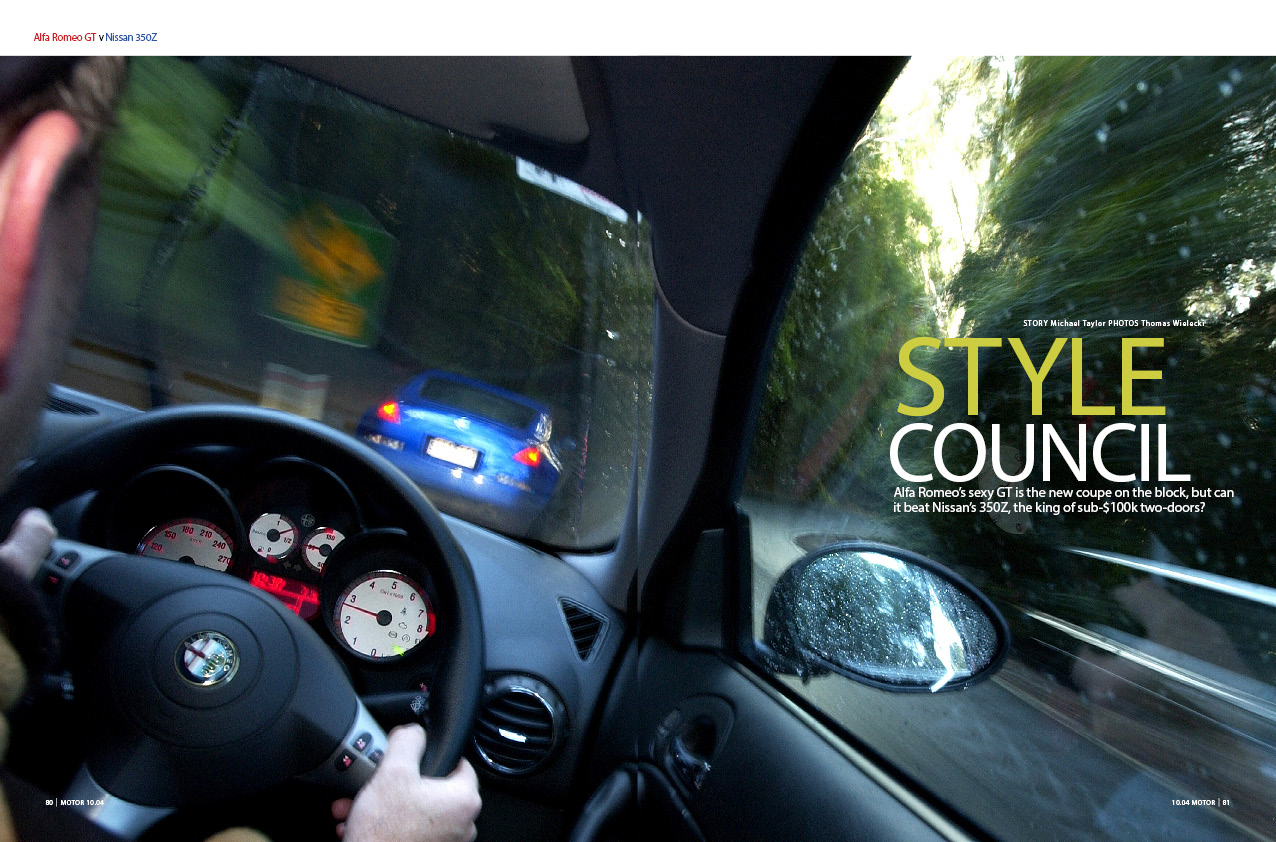
That’s if they get it right. A stop-gap Alfa’s new GT may be, but it’s still got to fight the grown-ups and, if Alfa is going to insist on proclaiming the model’s sportiness, Nissan’s got just the machine to challenge it.
It’s been seen in these pages before (yep, this very jigger, actually), and we’ve determined that the 350Z is quite possibly the best sub-$100k two-door coupe doing the rounds at the moment. And it’s also gobbled up its main fellow contenders – Mazda’s torque-free RX-8 and Holden’s mass-production-based Monaro – with relative ease.
In our books, any two-door that wants to stake a sporting claim on this side of the big-money wall had better be ready to stare it down and then outperform it, and that includes Alfa Romeo.
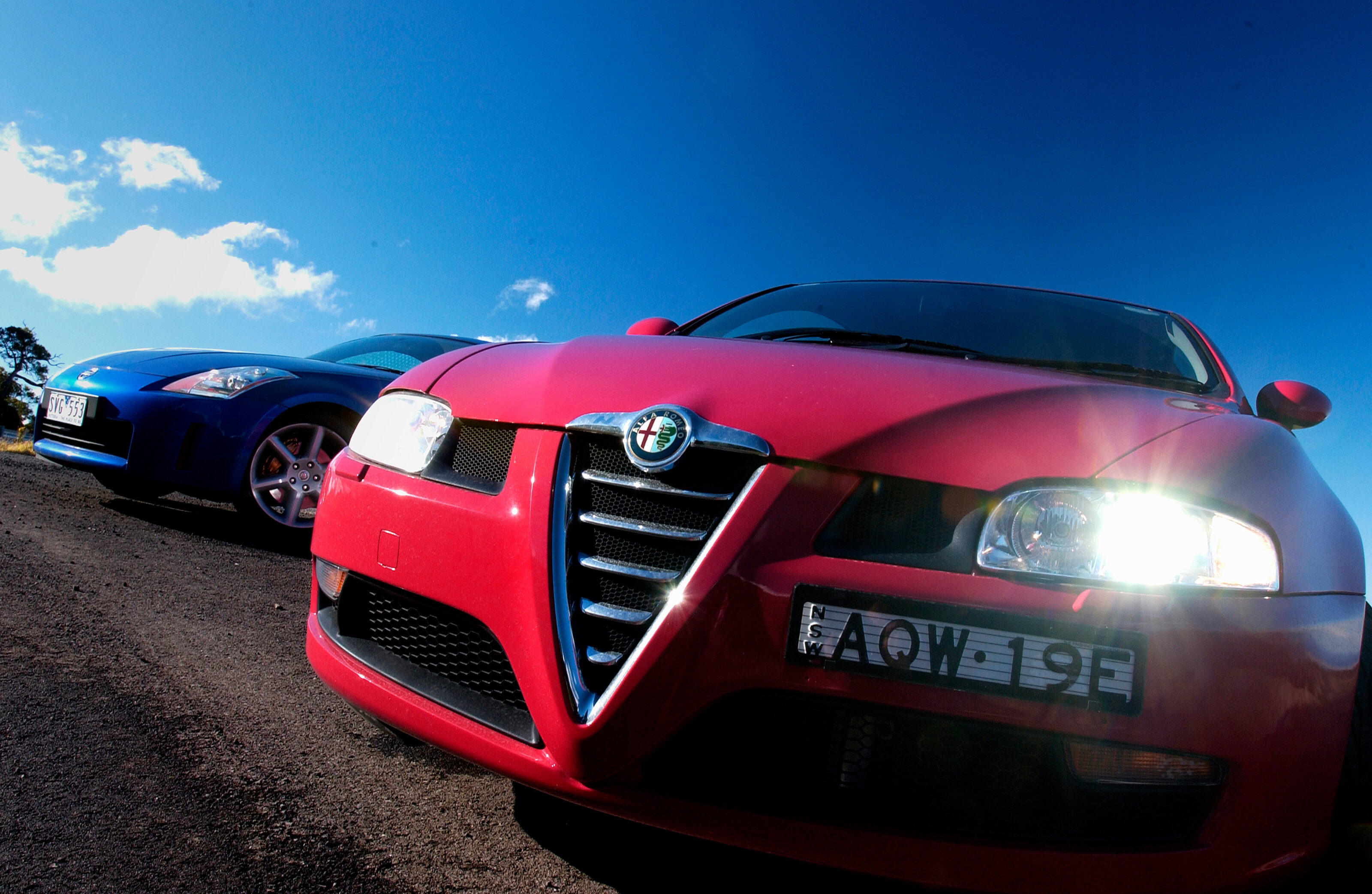
But it ain’t that simple, because there are significant philosophical differences here. Where the Nissan is a focused, two-seat, bugger-the-bumps-we’re-attacking rear-driver, the Italian isn’t. Like most recent Alfas, it’s a bum-dragger, which doesn’t automatically mean that as such it can’t be as hard-edged as a rear-driver – it just means its boffins have to look harder and make diff, spring and roll-bar choices that can compromise day-to-day comfort. Which usually means it’s a marketing decision, not an engineering one.
The biggest difference, though, is that it has rear seats that are actually usable for short-to-medium distances. It’s the first hint that the Alfa’s from a softer breed of cattle.
The second hint is that while it runs essentially the same 3.2-litre V6 engine as its overpowered 147 GTA sibling, it’s at the same 176kW spec as the ageing GTV. Already, it’s giving away 30kW to its Japanese rival.
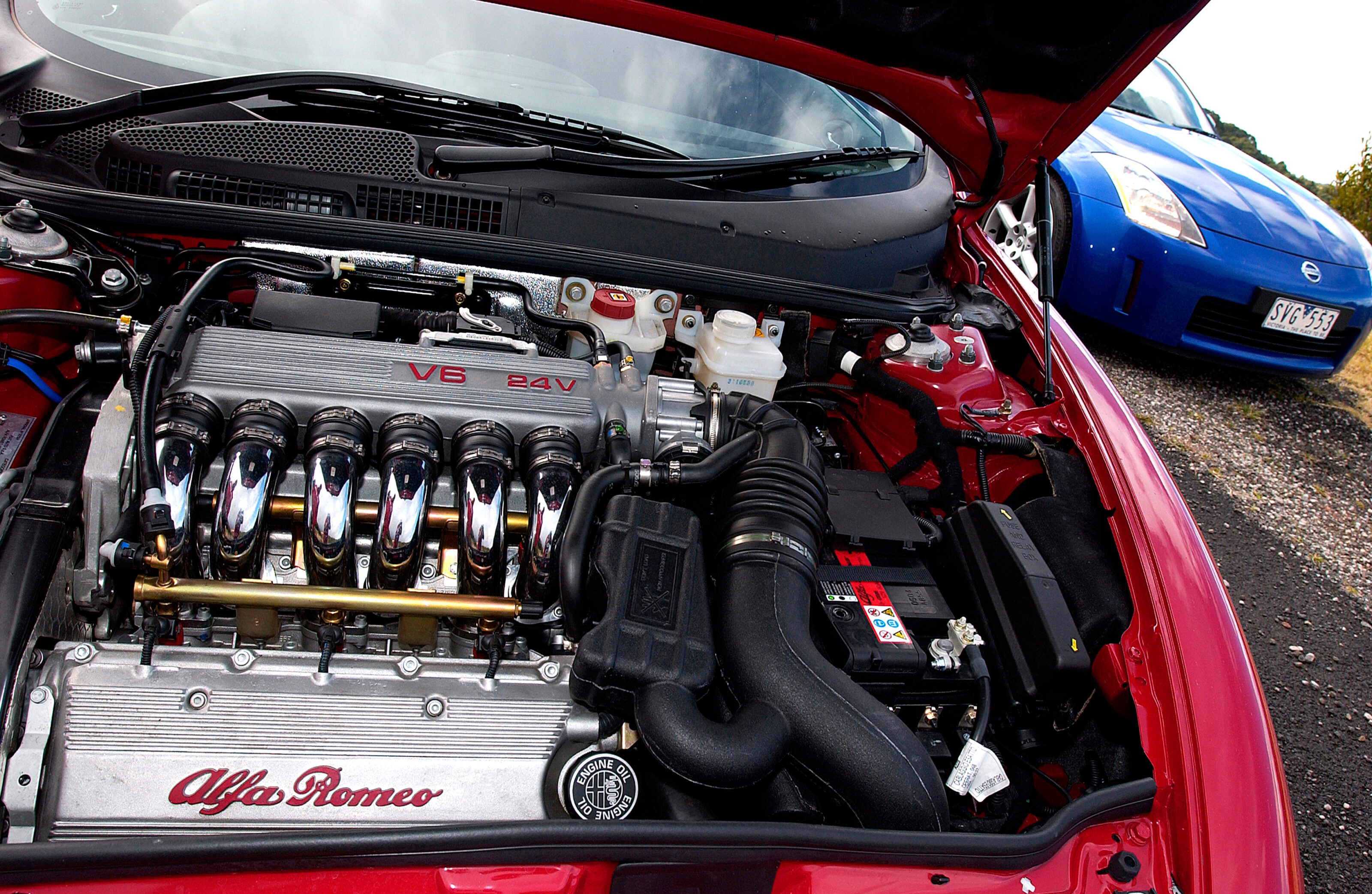
The Alfa’s go is torque, though, which it proves in the mid-range where it punches out 300Nm at a fairly high 4800rpm, even though it’s got plenty on tap from under 2000.
Still, the Zed sees the Alfa’s 300Nm and raises it 63, peaking at precisely the same engine speed. And they’re not far from each other on the scales, either. At around 1400kg apiece, neither car deserves to be sent to Ms Craig – which especially enhances the Alfa’s credibility on account of the weight of its lavish extra seats and their accompanying folding and harnessing mechanisms.
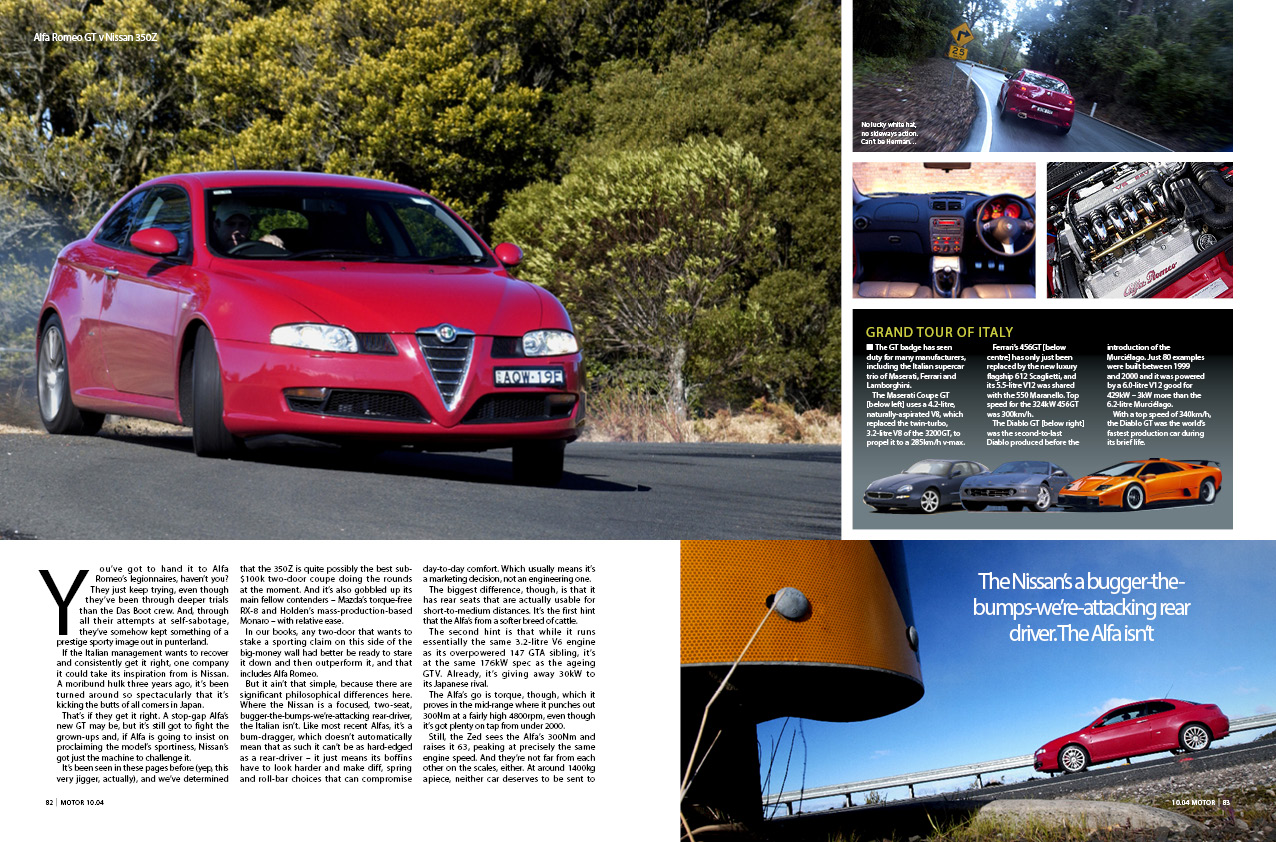
It’s a lovely interior, this Italian piece of style. Take the body for what it’s worth (some love it universally, some like it from certain angles, whilst some think they just lost interest when they got to the C-pillar), but the interior is, indeed, swish.
In an era of German-driven simplicity, expensive materials and uniform ergonomics, the Alfa is style personified. It’s the car’s highlight, even if it does leave some minor controls (cruise control, instrument lighting) bafflingly hidden behind steering wheel spokes. The dash facia is dominated by a pair of 1970s-Alfa-inspired instrument tubes, split by a more conventional fuel and temperature display, along with a space for the trip computer’s musings.
Look a bit closer, and you’ll find its centre dash a mix of good and bad, but never ugly. The sound system is the bad. Everything’s fiddly and small, and if you’re fingers are pudgier than a pencil, forget about it.
While its HVAC controls look and work a treat, it pinches the air vents straight out of the Audi TT’s design handbook but the industrial-era look doesn’t quite work with the Latin style of the rest of the dash.
Both cars have console bins, but the Zed’s is bigger. It needs to be, because there aren’t many alternatives. Its Italian rival actually has a glovebox. Not a big glovebox, perhaps, but it’s a step up from the Zed, which relies on a couple of cubby holes in its rear bulkhead to provide most of its interior storage.
At different times, we’ve bunged everything from two sets of golf clubs, a mountain bike and three weeks’ worth of holiday gear into the Zed’s rump, so we’ve gained new respect for its storage ability. It’s just that, with fold-down rear seats, the Alfa swallows more.
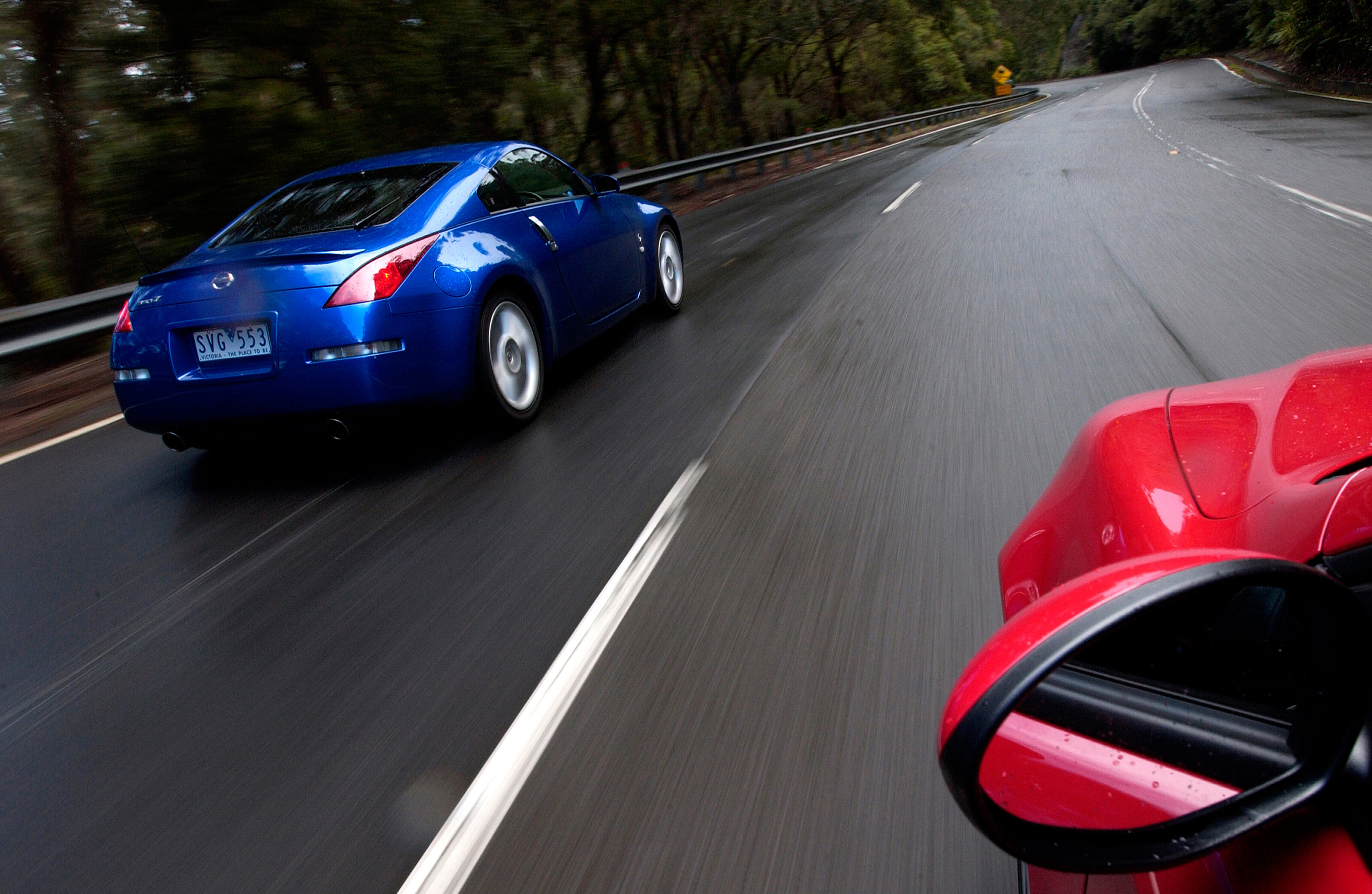
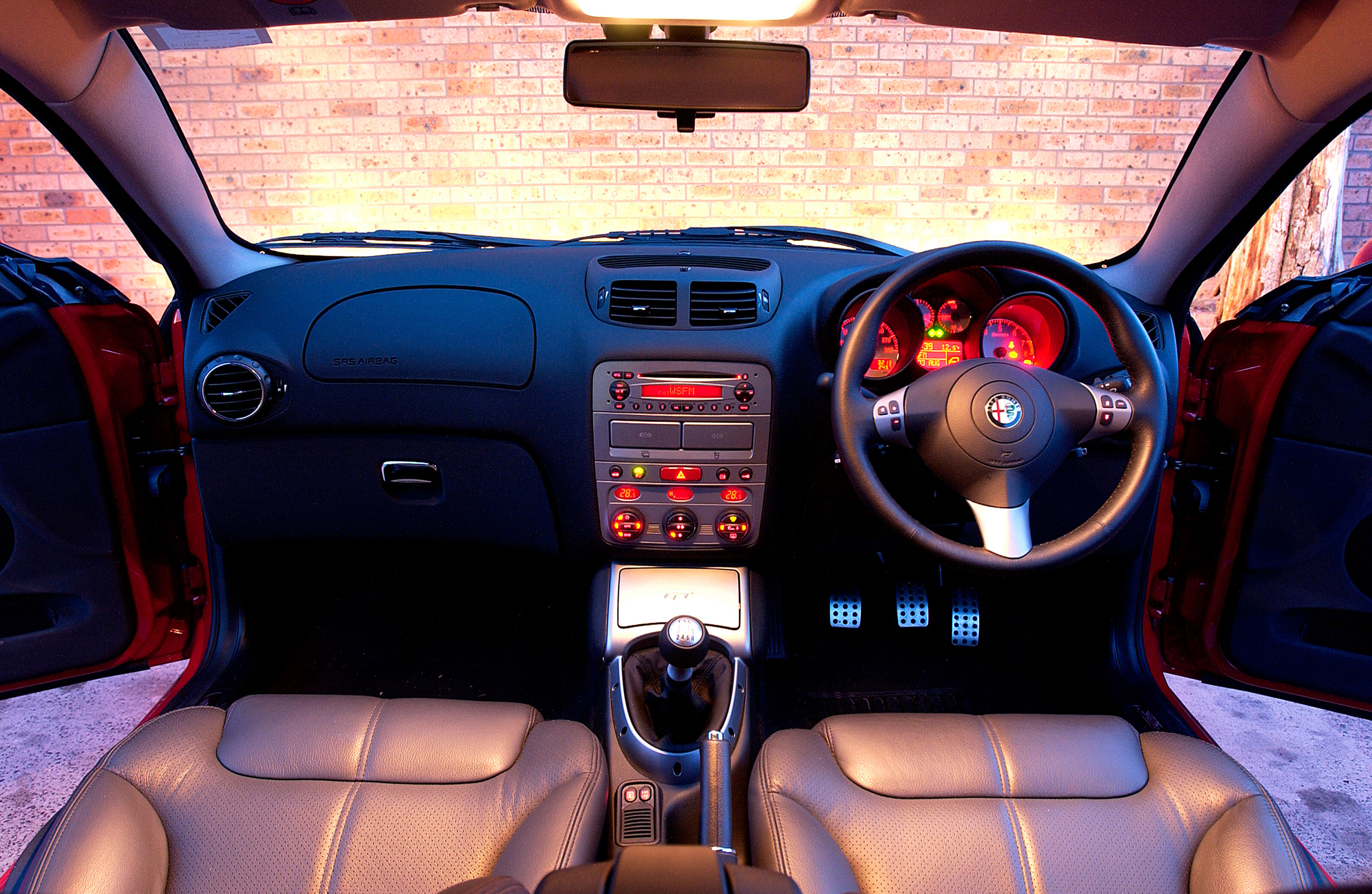
You probably realise we wouldn’t normally go on about an interior package, but there’s a point, and it is that in the Alfa’s case, you’re really selling it short if you don’t. In fact, to get what the GT is all about, it’s absolutely compulsory. If you were to compare the two cars purely on their abilities to whip through a mountain pass, there’d be no way you’d understand it, because, to be frank, in this company, the GT gets absolutely snotted. In-gear acceleration, straight-line sprinting, braking prowess, brake feel, turn-in ability, composure mid-corner, power-down on the way out… you name it, they’re all big ticks in the Zed’s box. Which we’ve become accustomed to seeing in comparos, to be honest.
Try as it might, the best things about the Alfa are its peripheral effects. The engine noise, for one, wouldn’t suffer in comparison with anything this side of $100k. At 1500 revs, it starts a deep melody that constantly changes in both timbre and tone as it slides towards the redline. And it’s a glorious piece of sculpture to look at, all chromed pipes and proud cam covers.
But it just doesn’t go as hard as the Zed’s bigger, 3.5-litre engine, and its shortfall in wattage can not be picked up by sound alone, and certainly not when its weight is 1410kg and the Zed’s is 1453kg in its Track spec.
Alfa claims a 0-100km/h of 6.3 seconds for the GT. Our version was half a second slower than that, and there’s not a skerrick more pace in it. It’s also in the low-15-second bracket for the quarter mile – or nearly a full second slower than the Zed.
But the impressive thing is the manner of Zed’s dominance. Ripping the tripe out of it in isolation can start you on highlighting areas where it could be better. We’d like a bit more reward for our efforts when we attack the redline, for example – in the elimination of that trace of kickback when you hit mid-corner bumps at about the same time that you run out of grip.
Drive it next to something that, outwardly, feels like an honest, stable, swift-ish machine, and you suddenly appreciate that you’ve been a bit harsh and that all that time, it’s been operating at the outer edges of a much larger envelope than we’d thought – and that we’ve been taking it for granted.
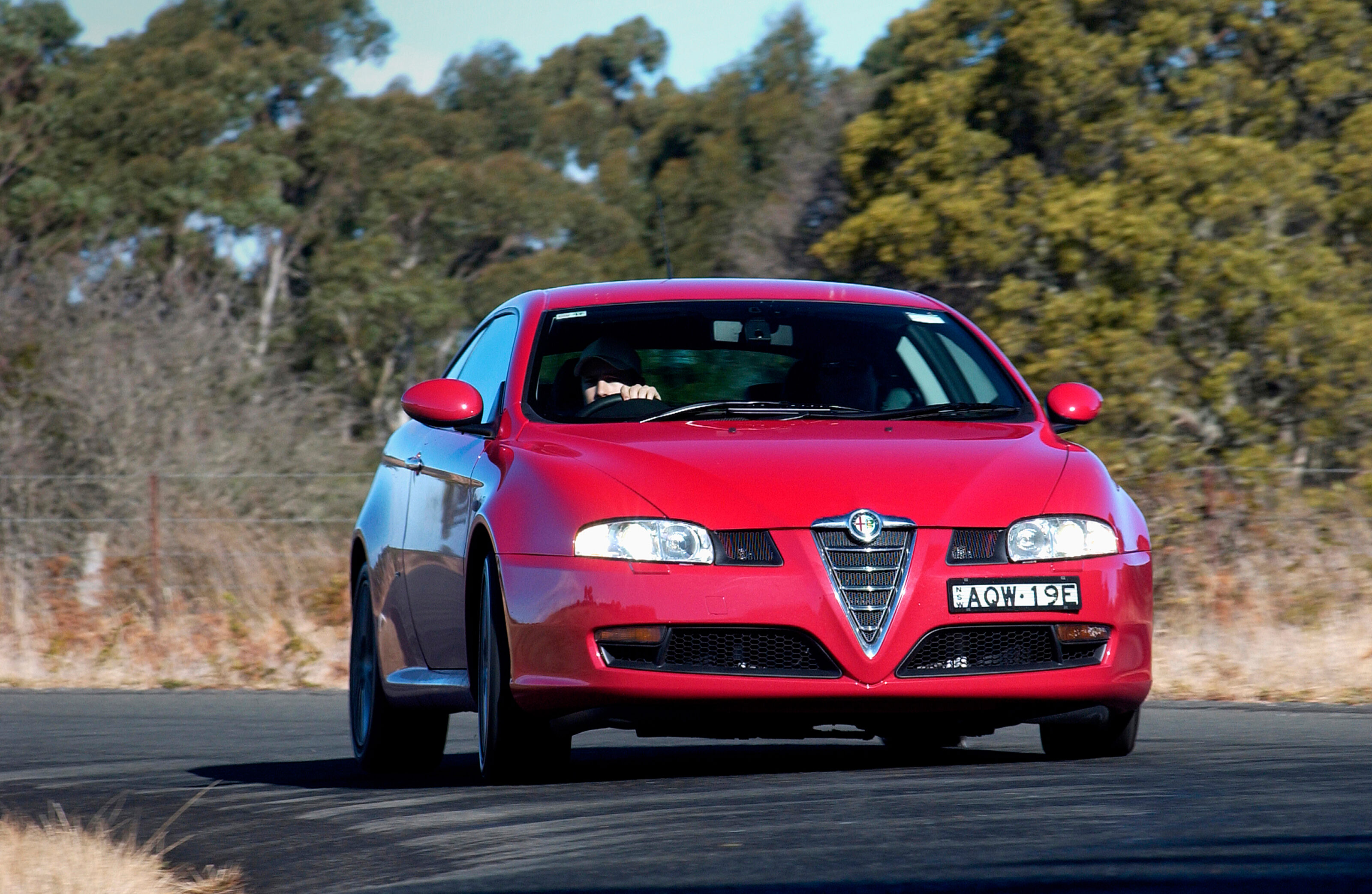
To whip the Zed up and down any road with at least one corner in it is to know how devastatingly fast a well-set-up rear driver can be. Its power output is not stunning in the age of the Gen III, but its torque curve is. There is perhaps no car out there more forgiving of a driver too lazy to find the right gear out of a corner.
Both cars are fairly adept at the whole gear-change thing anyway, so there are no excuses for sloth. The Nissan’s is chunky, short and quick, although the clutch in this model makes smooth one-two shifts nigh-on impossible. Like the Zed, the Alfa’s ratio selection has been superb, and it makes very good use of its torque spread. Its throws are longer but they still feel terrific and every shift adds to the experience.
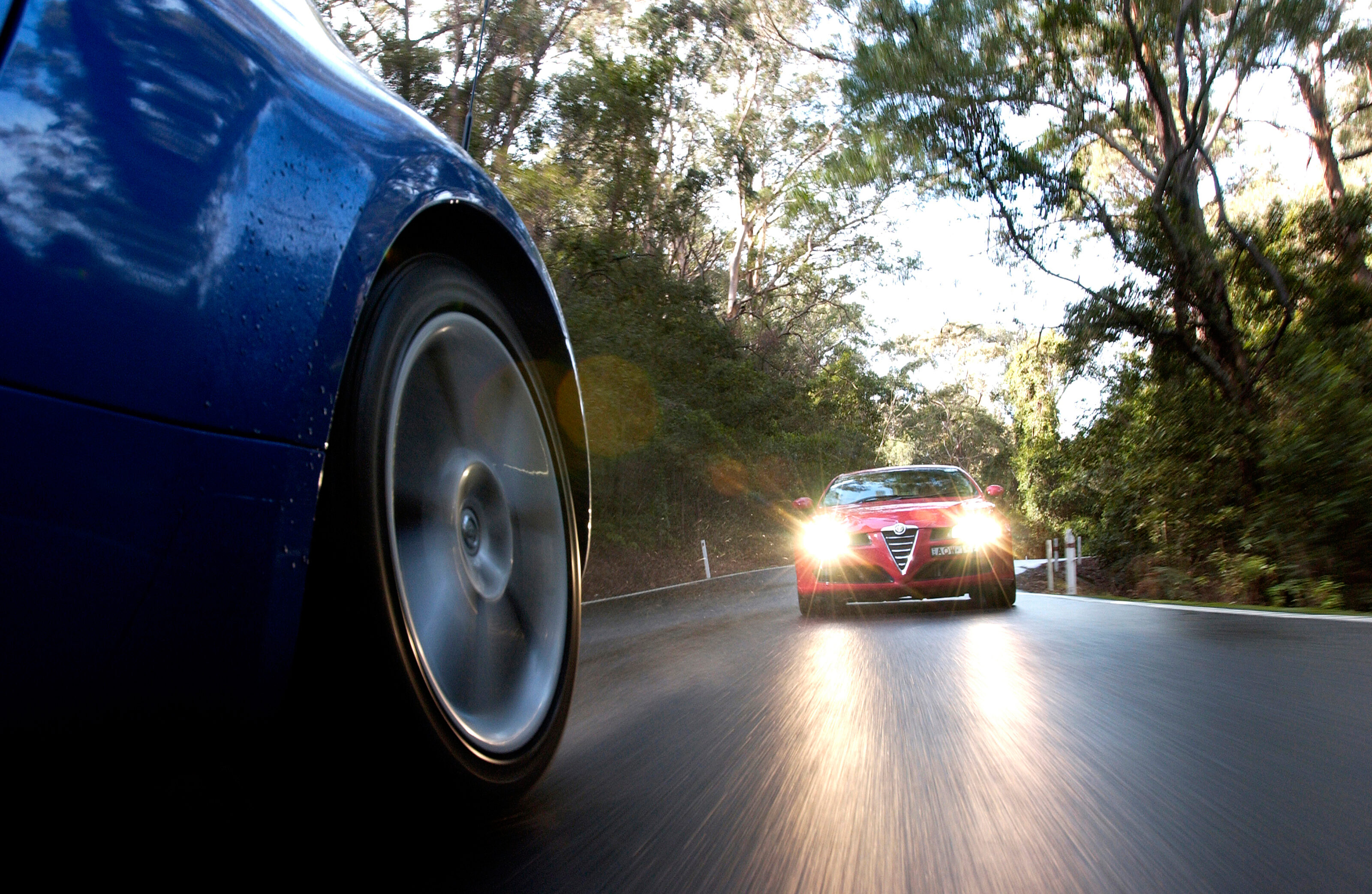
The Alfa’s actually not bad in its in-gear acceleration, either, accompanied as it is by that sublime, spine-tingling howl. Where it starts to strike trouble is, though, when it’s being asked to punch hard and corner hard at the same time. It’s actually pretty good under brakes and it can even turn in with authority. After that, it starts to fall apart.
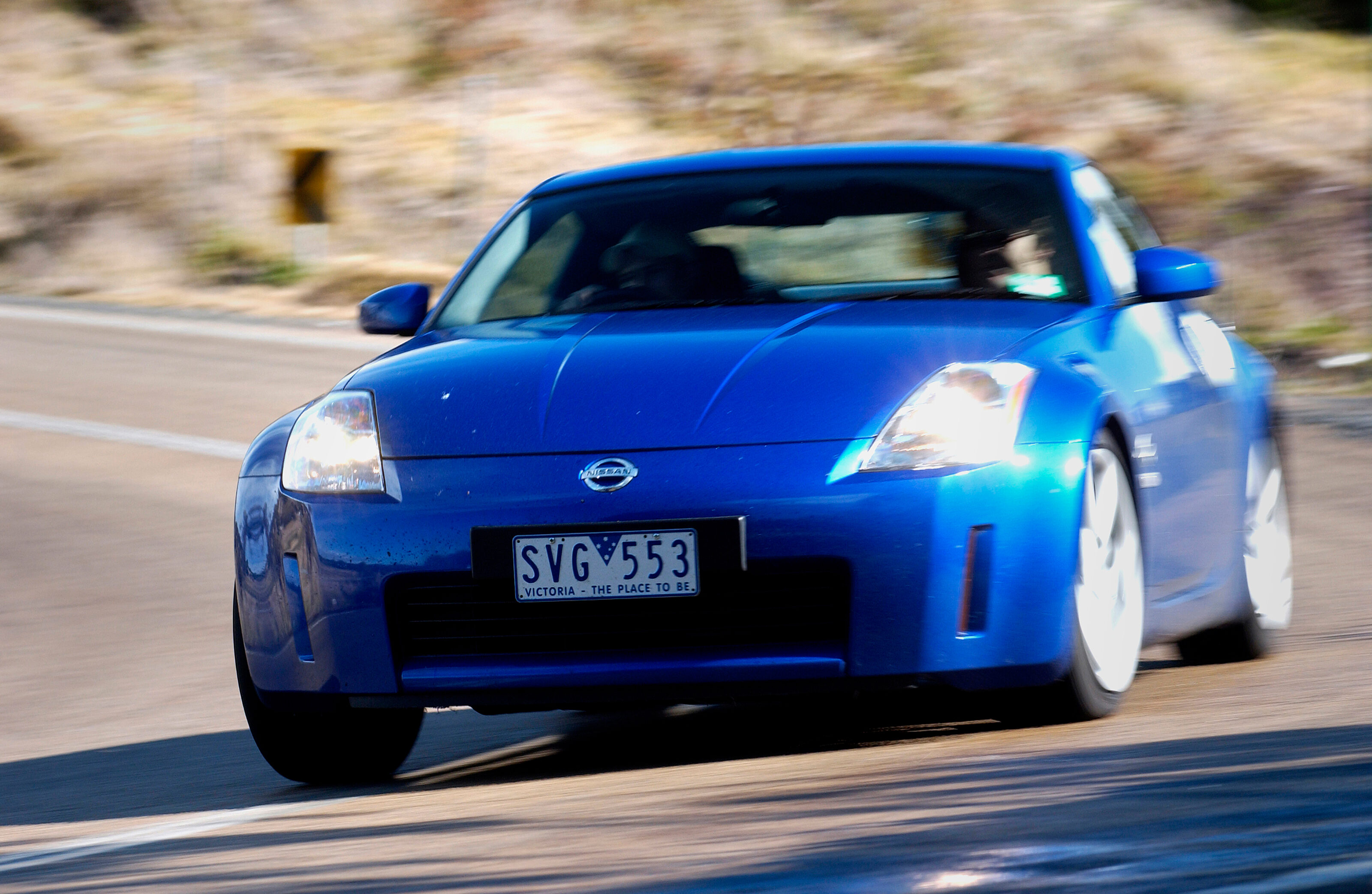
The GT’s troubles seem to stem from a lack of chassis rigidity, particularly in and forward of its firewall. Its steering kickback over mid-corner bumps is something to behold – it fights for grip as the driver fights its torque steer, and as soon as you sniff the throttle, you can almost guarantee that one of the most intrusive skid-control systems in cardom will be along lickety-spit.
Alfa’s engineering has fallen well behind its image. It gets away with it only because so many owners buy the image and not the car. Top-shelf drivers would no longer find appeal here, because the GT is at its best up to but not beyond seven-tenths of its abilities. It can go quicker, but only by being and feeling ugly.
The flip side is that Nissan’s brand cachet is still not high enough to sell the number of Zeds its abilities deserve. The Zed is selling well, but a lot of people won’t consider it because it’s a $65,000 Nissan, even though its engineering and even its design detail are far better than this Italian’s.
No, if Alfa wants to know what it should be doing to lure back the sporting cognoscenti, it would be very simple. Build a 350Z, drop an Alfa-esque body on it, maintain the balance, the poise and the grip.
A Zed-beater with an Alfa badge? When we see that, we’ll know the trials are over and Alfa’s comeback is complete.
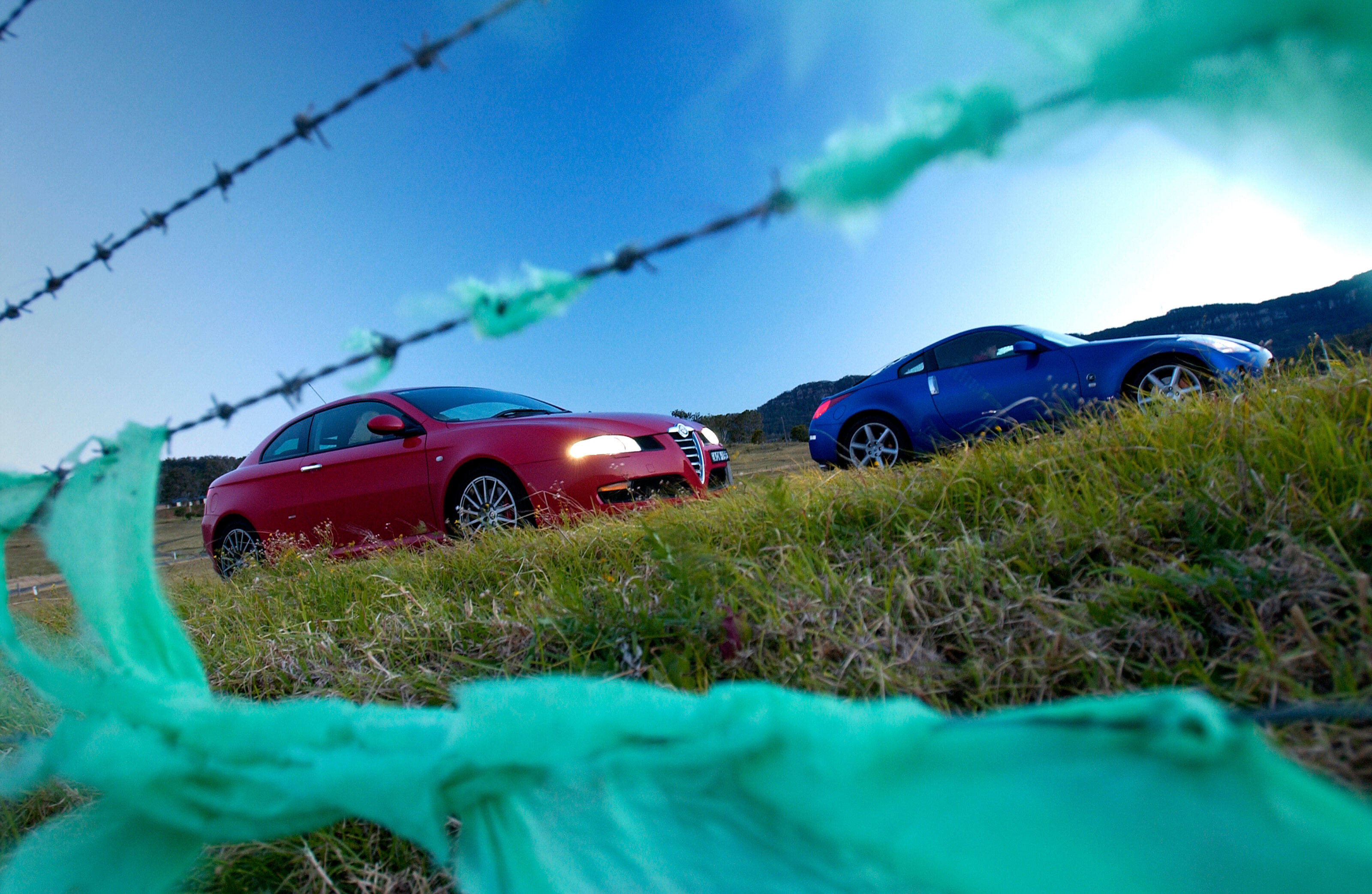
…Or you could have
Don’t want a Zed, but like the idea of a sub-$100k coupe? There’s a bit to choose from and it’s all fairly interesting. And here’s the pick of ’em.
The only real dedicated two-seat rival is Audi’s design icon, the TT. Due for replacement in 2006, the engine note is blah and its chassis ain’t gold.
Still German, there’s BMW’s 3-Series coupe, which has two useful rear seats and unmatched pose cred.
Locally, there’s the Monaro (with the more aggro VZ due soon), and it’s got the best seat capacity of ’em all. It also punches hard in a straight line.
Another four-stumper, the RX-8 is close on price and chassis poise, although down on herbs – dreadfully so if you buy the auto.
- Welcome: First Impressions
- Part 2: Tour of Duty
- Part 3: “Take my Money!”
- Kia Cerato GT specification table
Welcome: First Impressions
Price as tested: $36,525.60 Fuel this month: 186km @ 12.3L/100km
One of the privileges of a comms director for an auto publisher is the occasional chance to drive the latest in automotive engineering. Over the years I’ve driven a plethora of different vehicles – micro passenger cars, big utes, commercial vans, high-performance sportscars and everything in between.
Some cars you know you are going to love even before you collect the keys, others you feign illness to avoid having to drive them – and then some middle-of-the-road opportunities actually turn out to be quite fun. And fun is where the Kia Cerato GT sits with me so far, after a few weeks of having it as my daily driver.
Now as a disclaimer straight off the top: I’m not a professional journalist or road tester – I’m far from it, but what I hope to deliver you over the coming months is a straightforward, honest look at the ‘real-world’ ownership experience of Kia’s latest sporty hatch offering.
I’ll dive deeper into the aspects covered in this first report in the coming months but for now, my initial thoughts…
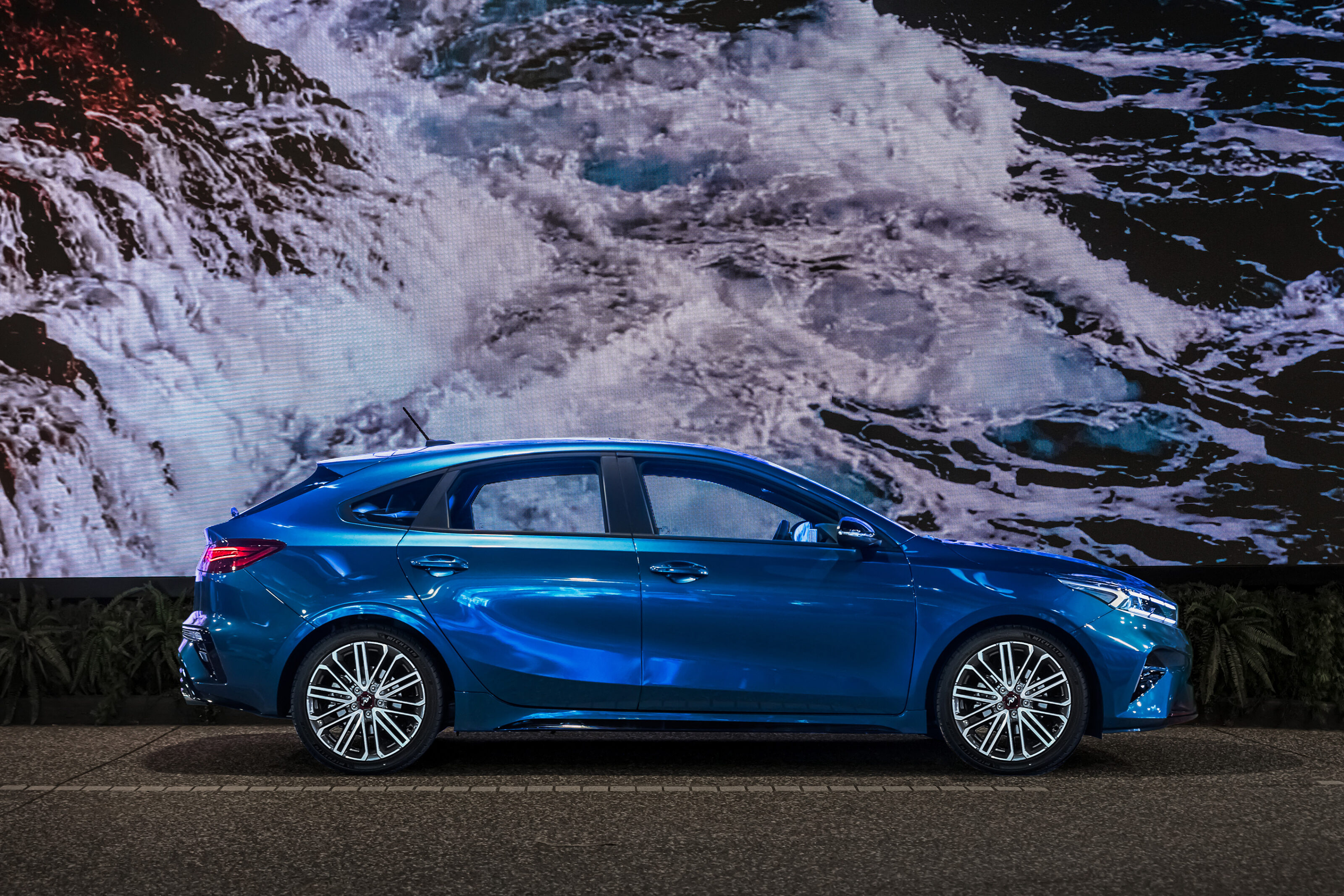
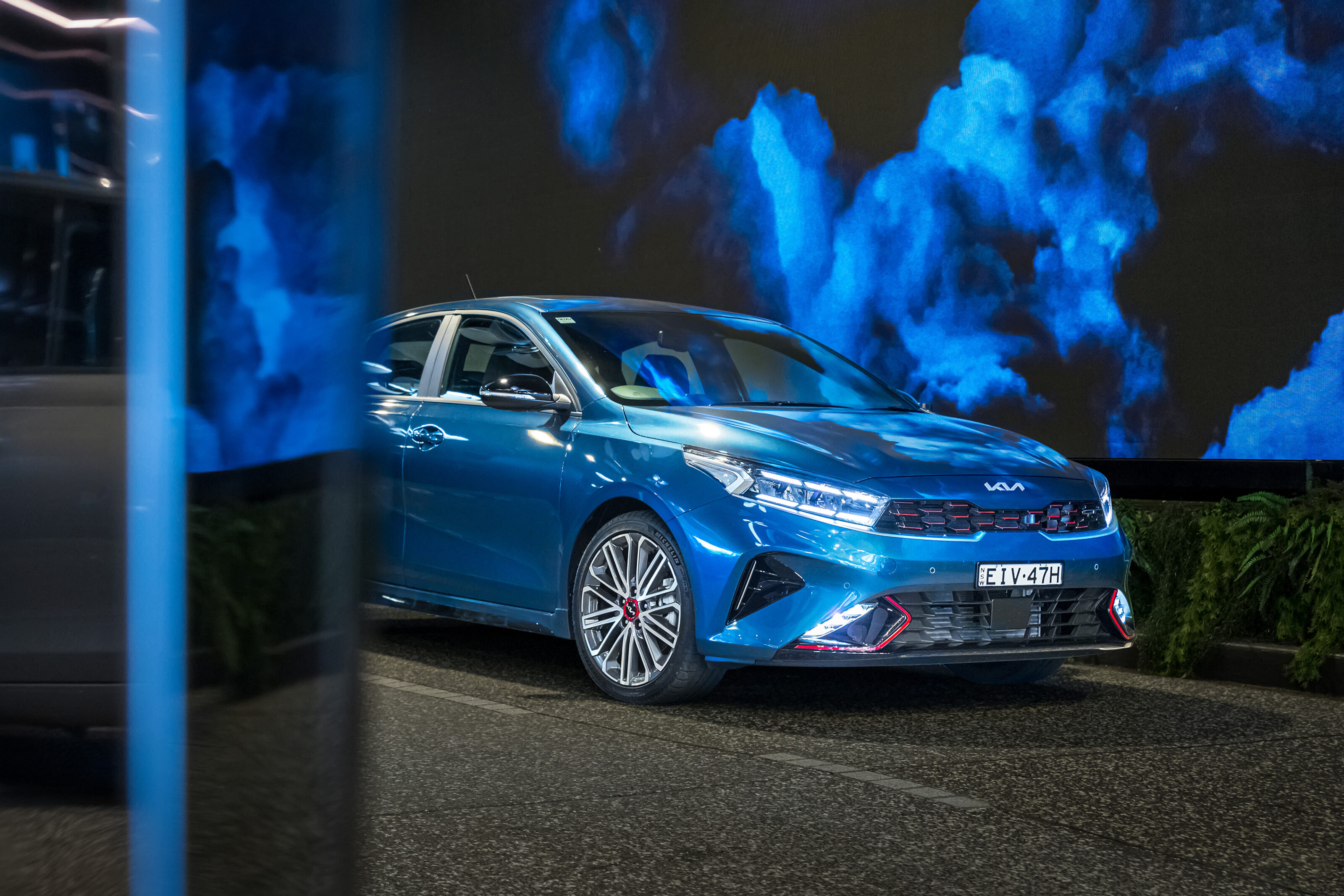
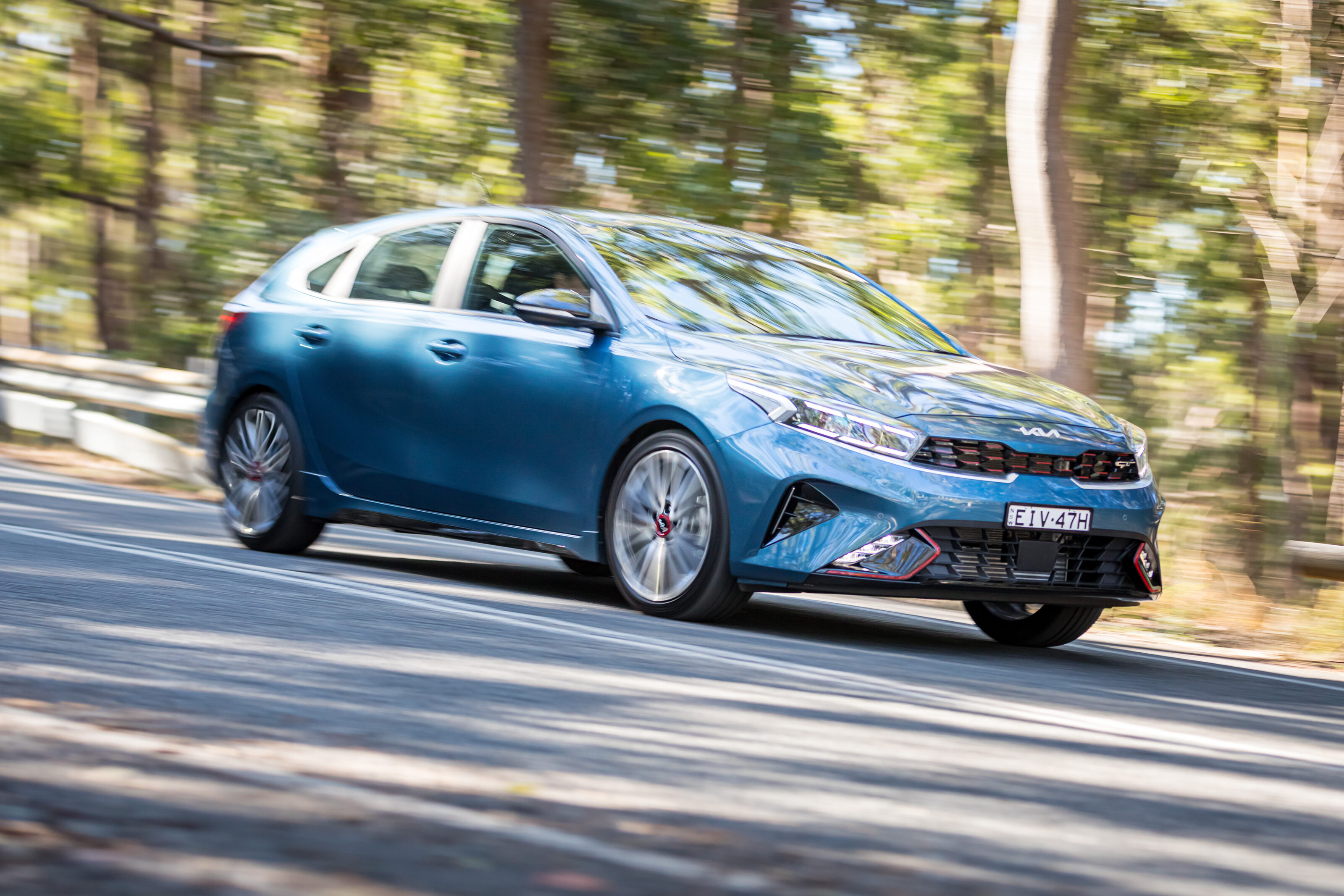
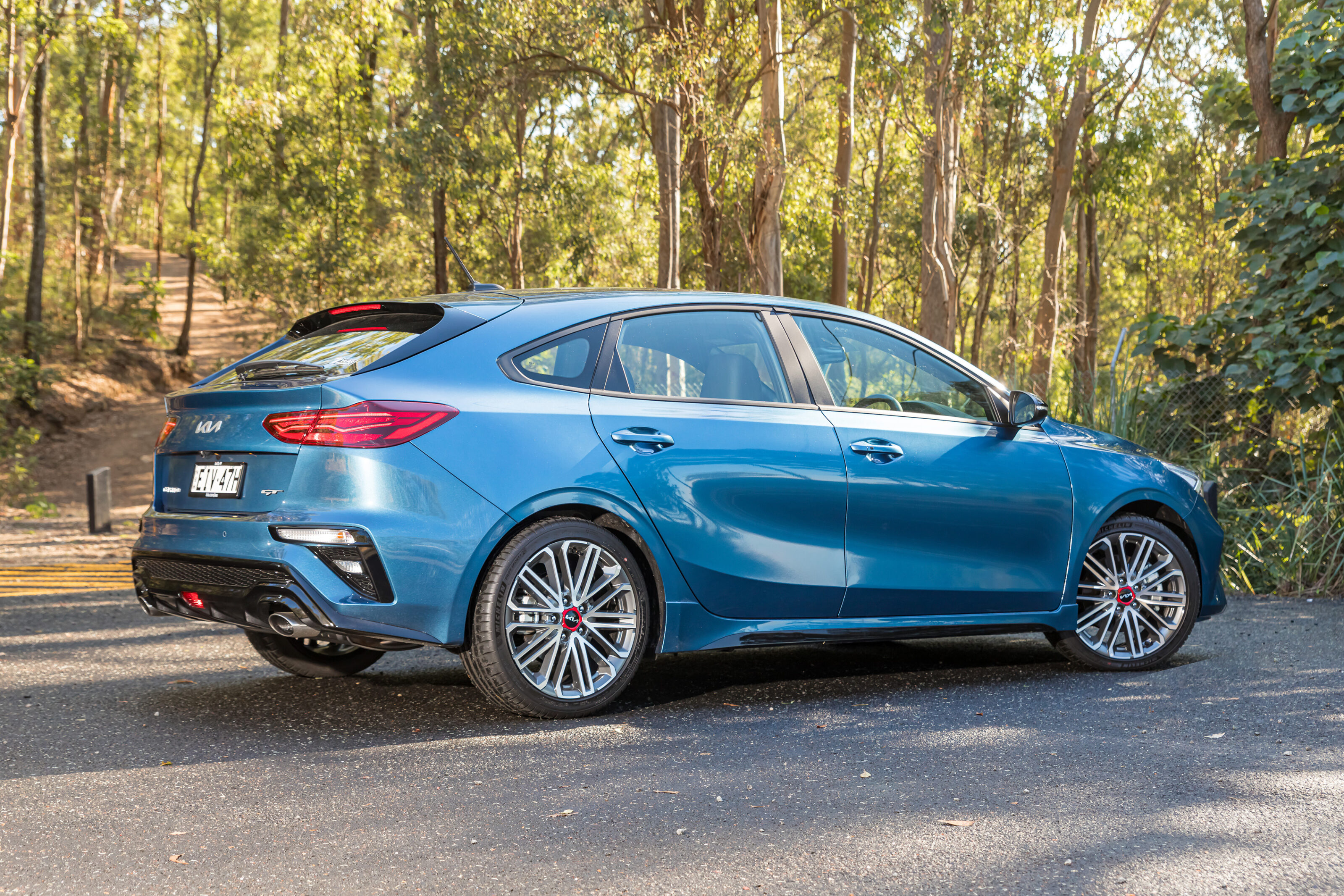
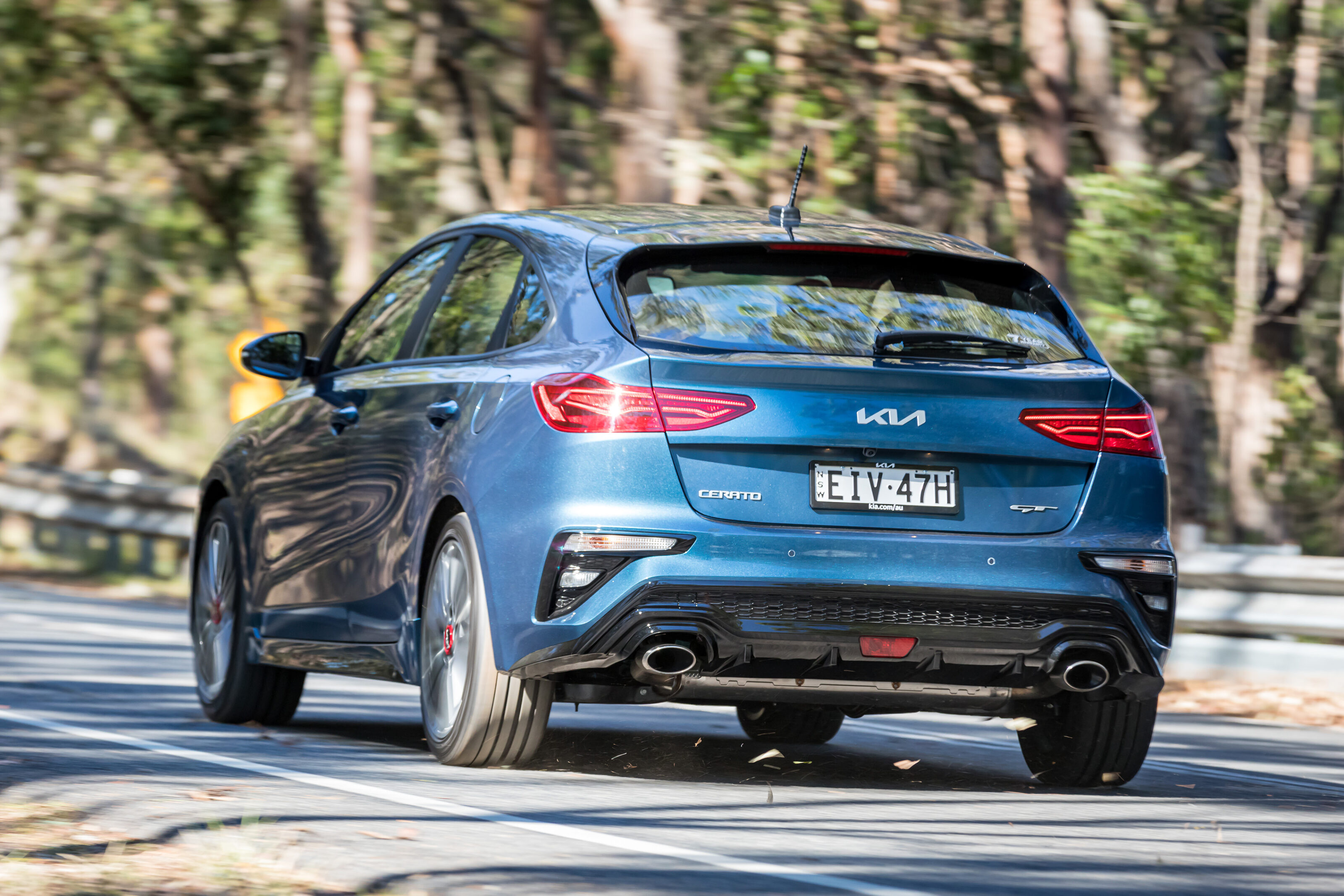
On first impressions, I’m quite taken by the GT’s good looks. This one’s finished in Horizon Blue, which I think works well with the contrasting red accents and piano-black trim – it says ‘sporty’ without trying too hard.
Smart-looking two-tone 18-inch alloys fill the wheel arches, giving the GT a slightly ‘slammed’ look – but a word of warning – having lived with these same wheels on a Kia Stinger before, the wheel just inches past the low-profile tyre wall, making them very susceptible to gutter rash if you’re not careful. And no, I did not rash the rims (the ad sales staffer shall remain nameless – oh and Kia, that was a company-owned car – not your press car!).
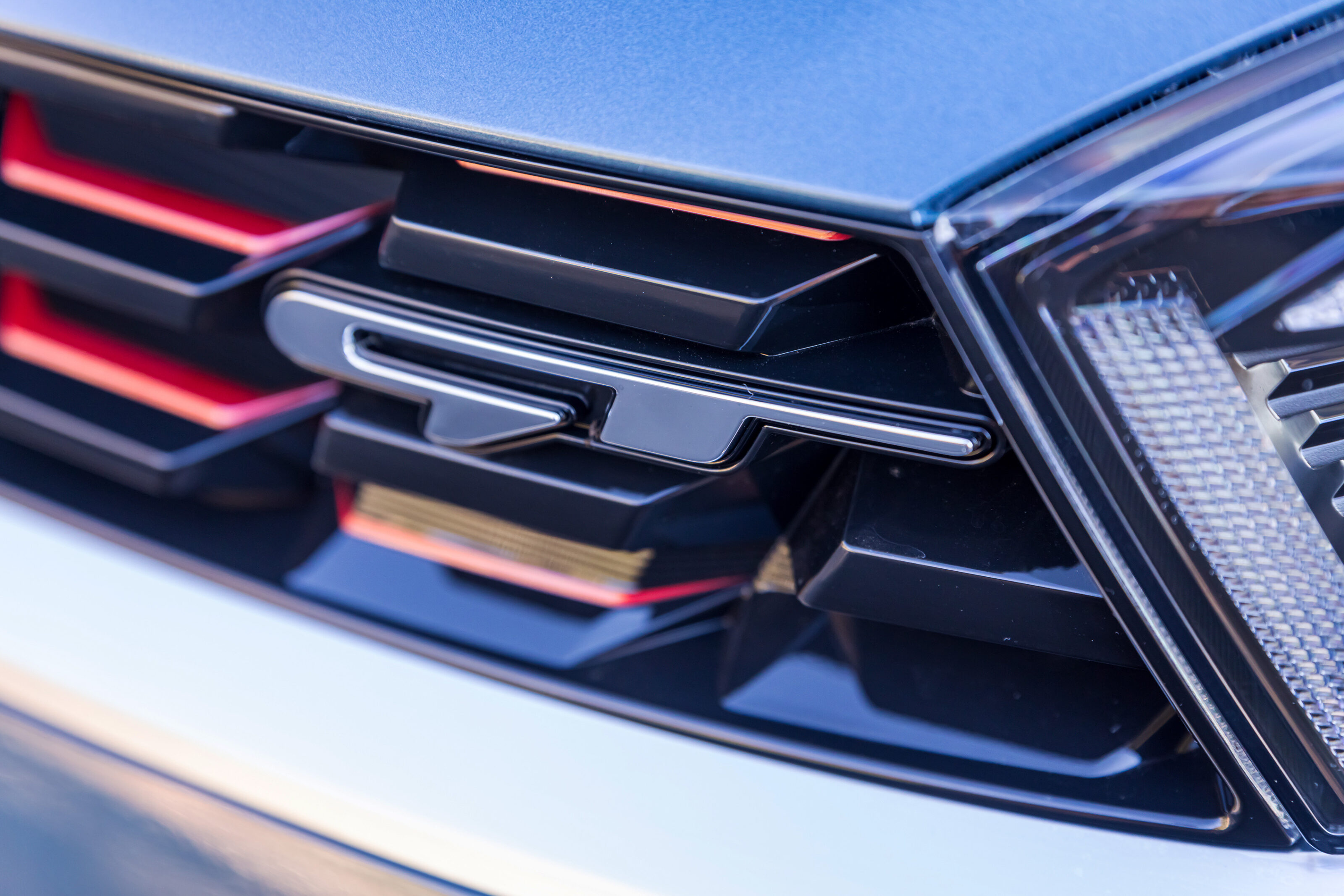
On exterior aesthetics alone, the Cerato GT looks the business in this segment. As debated in some forums, I’ll reserve judgement for now on whether or not it deserves to wear a GT badge.
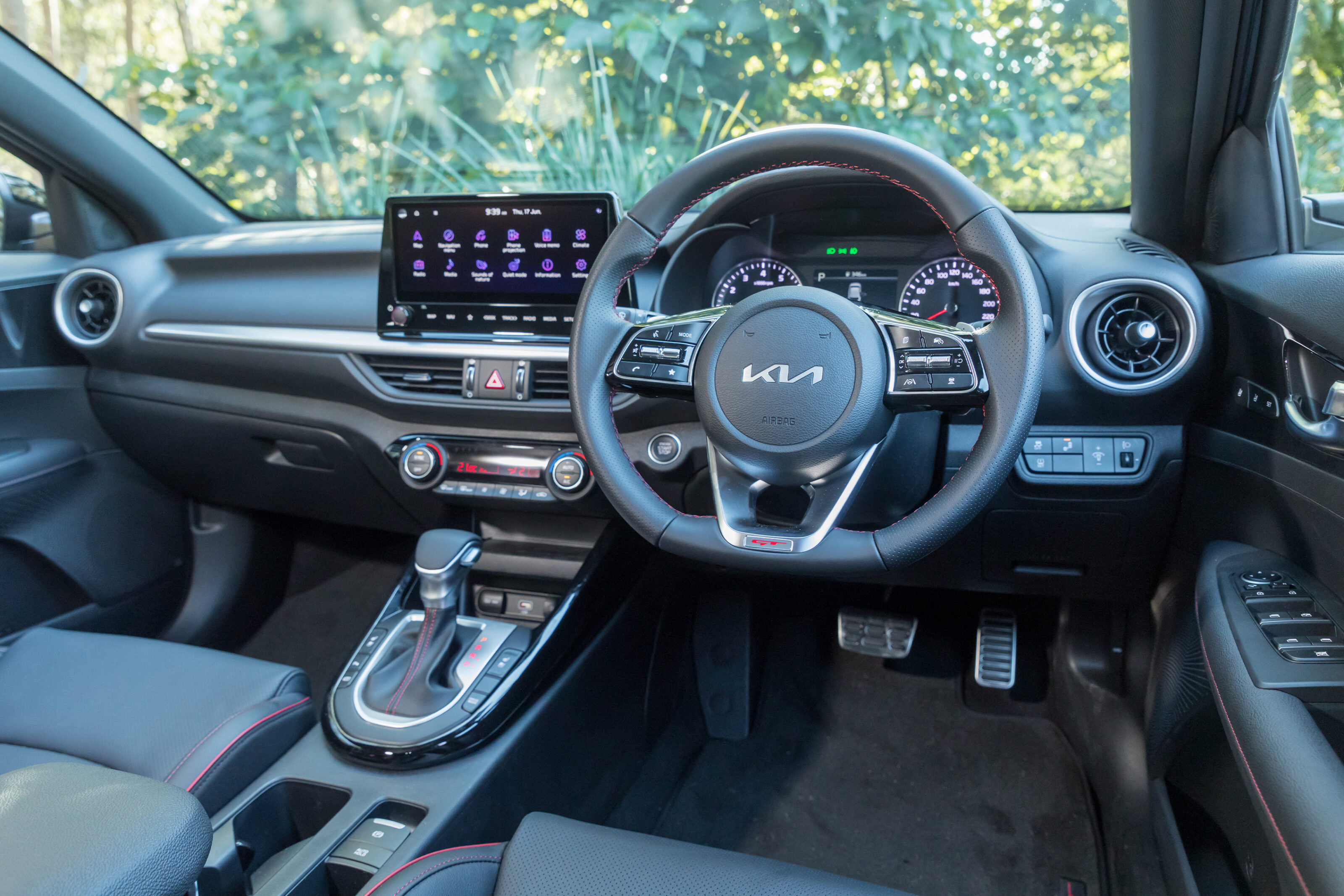
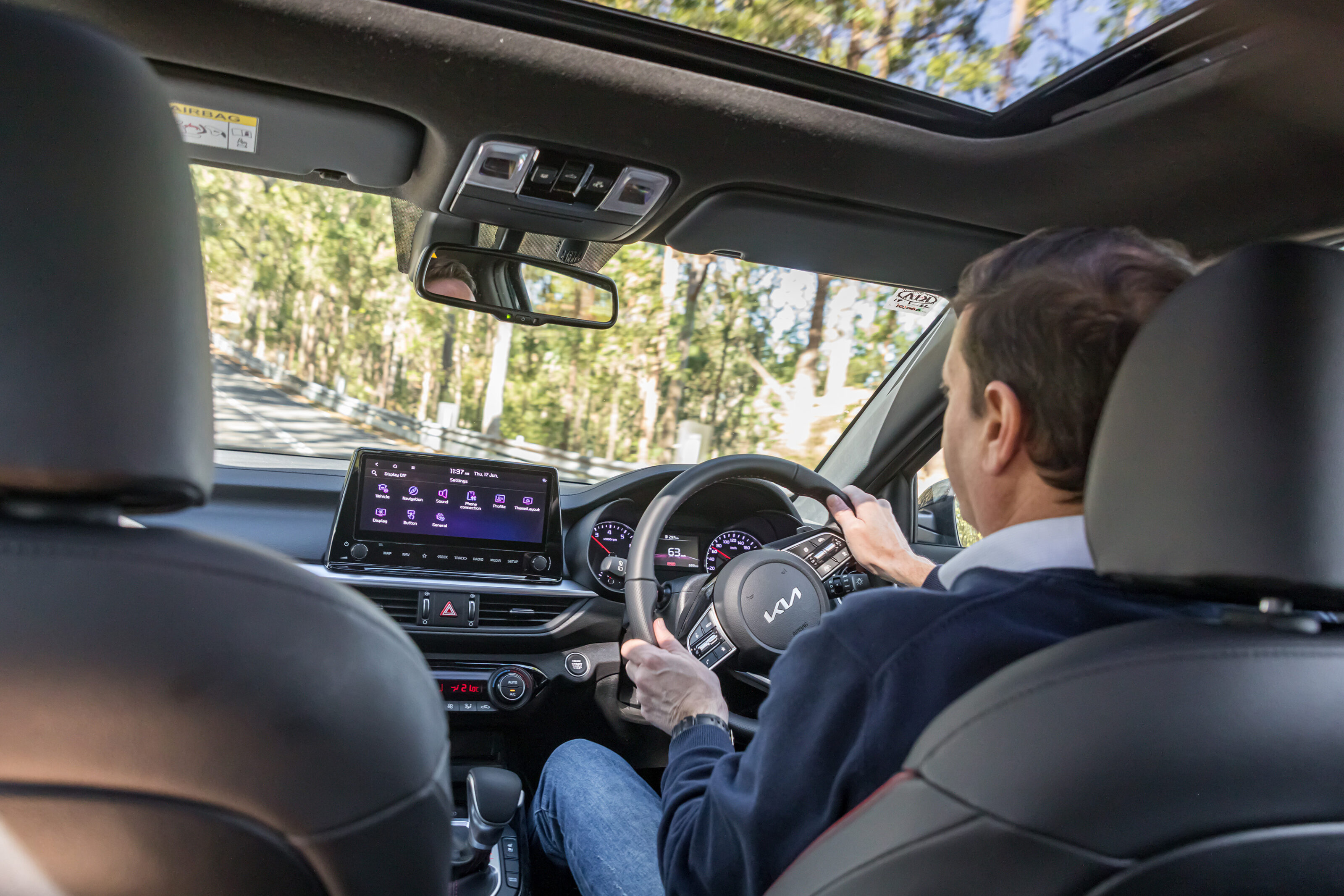
Keyless entry to the cabin reveals the continued GT theme featuring some nice design touches without being garish. Red accent stitching on the leather-appointed seats and door trims, GT embroidered seats and floor mats, a flat-bottomed steering wheel and aluminium pedals are among the highlights.
Brushed satin aluminium accents do their best to distract you from some of the harder plastic finishes that give away its basic donor car foundations but overall it’s a respectably pleasing interior package for the money (as tested drive-away price $36,525.60).
Interior space is extremely generous (I’ll have no issues carrying the kids in their car seats or adult passengers in future reports), and the Cerato packs all the comforts and conveniences you’d expect in a modern hatch.
Notably, during the past few freezing weeks, I’ve become addicted to the heated seats (and when summer rolls around again, ventilated cooling as well).
Android Auto, Apple CarPlay and wireless charging top the list of tech, along with an easily navigated infotainment system via a 10.25-inch touchscreen. An eight-speaker JBL sound system provides the party noise – but in my case, delivers the ABC radio news crisply with the welcomed DAB+ digital radio source.
Most recently driving my sluggish ‘family bus’ (an all-wheel-drive Volvo XC90) I found coming to terms again with a much lighter and nimbler, pure front-wheel-drive car was a little sketchy to begin with – but I quickly adapted.
The 1.6-litre four-cylinder turbo-petrol unit delivers 150kW at 6000rpm and 265Nm from 1500rpm but I’ve found the turbo a little laggy down low with the sweet spot for some spirited driving at around 3000rpm.
The seven-speed dual-clutch automatic transmission seems to do its job right most of the time, but it isn’t as intuitive as others I’ve driven in more premium, sports-oriented models. Then again, those were upwards of $100,000.
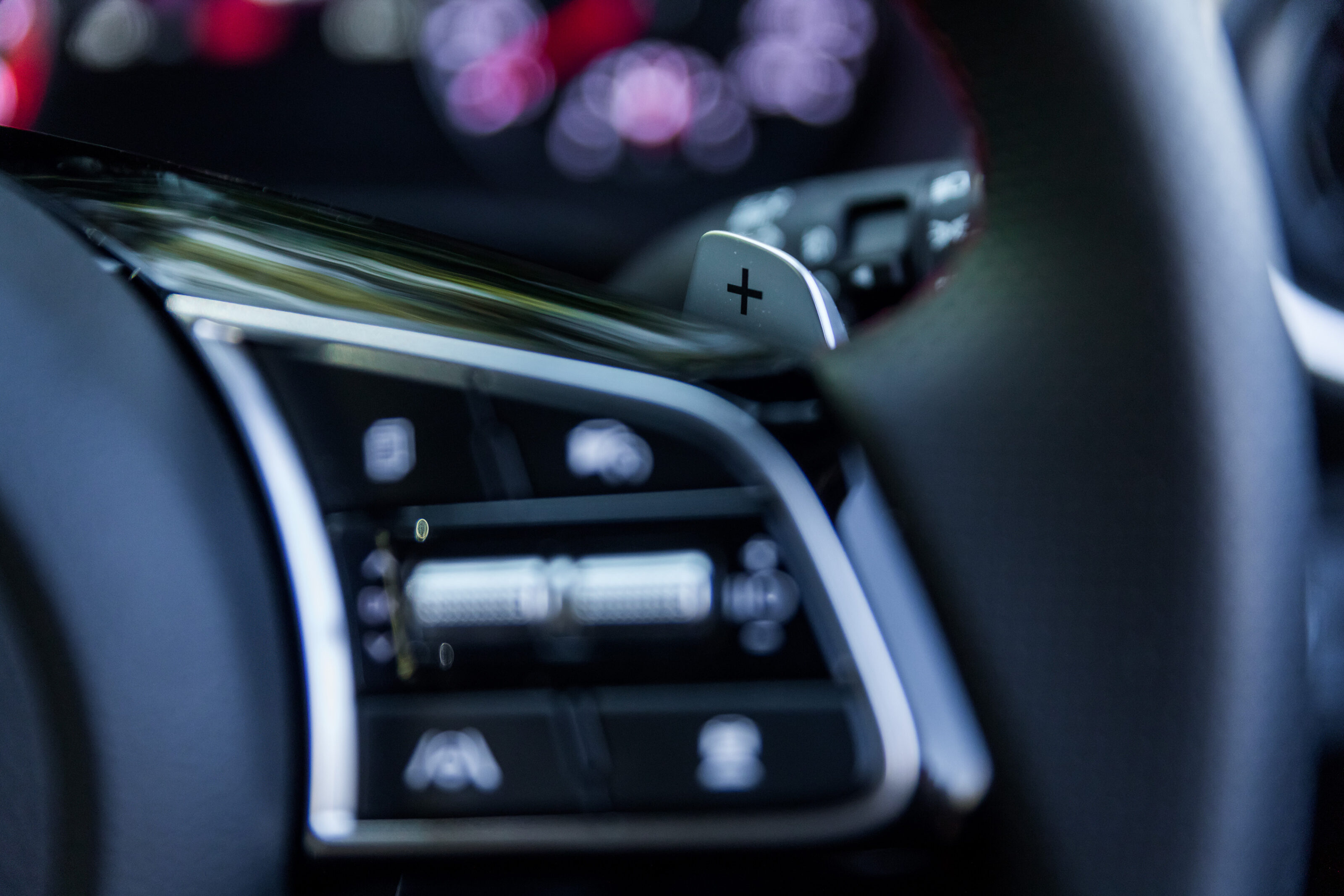
Paddle shifters negate any issues here (you can only blame yourself then!) and in Sport mode, the mapping lets you hold gear and doesn’t take over and try to up- or down-shift you at an inconvenient time (as the equivalent modes of some other brands will).
Weighing in at only 1395kg (tare), the above engine outputs make for a power-to-weight ratio of 107.5kW/tonne which, in the real world, should be good for a 0-100km/h sprint around 7.0 seconds – if our track test in its pre-facelift guise is any indication. In our 2019 Bang For Your Buck event, the Cerato GT managed a 7.08-second time.
In the confines of normal road rules and conditions around town, the Cerato GT isn’t a slouch, delivering suitably zippy and confident performance.
With four drive modes to choose from (Normal, Eco, Smart and Sport) I’ve rarely had it out of Sport mode as it’s only been me in the car (and after all, I want to have some fun). As such, with some talent-forgiving, hilly and twisty roads, it’s no surprise my fuel economy to date is currently running at 12.3L/100km (8.9L/100km urban claimed).
This week the kids and I are doing some highway driving (in Eco mode) so I am expecting some very different, and more economical figures.
If you have any questions you’d like me to address in coming reports, please hit the comments section below.
Part 2: Tour of Duty
Fuel this month: 458km @ 9.8L/100km Total fuel: 644km @ 9.8L/100km
Well, I’ve clocked up nearly two months in the Cerato GT, and so far I can’t seem to fault it for an affordable sporty (as opposed to Hot) hatch that could almost double as a full-time family car – not that you would spend your hard-earned on the latter purchasing criteria when cross-shopping the GT. But I’ll give you another insight as to why it could come close.
As reported by my colleagues in other Kia Cerato GT reviews, I thought I’d throw in my driving impressions (and potentially differing opinions) now that I’ve had a decent amount of time behind the wheel.
First up, the ride is firm, but that’s expected. There isn’t an affordable sports-oriented vehicle I know of that has mastered the art of delivering a locally tuned suspension system that can allow the driver to feel they’re driving a much more advanced, exotic and expensive sports car.
And while I think Kia’s best suspension tuners have done a great job in bringing the two lines of performance and comfort to meet at the right point, there will always be those who expect more from a $36K-and-a-bit car wearing a GT badge. Maybe drop the grandeur of the badge and it would be more widely praised? Personally, I have struggled to find any feel of torque steer unless punting it into a corner uphill.
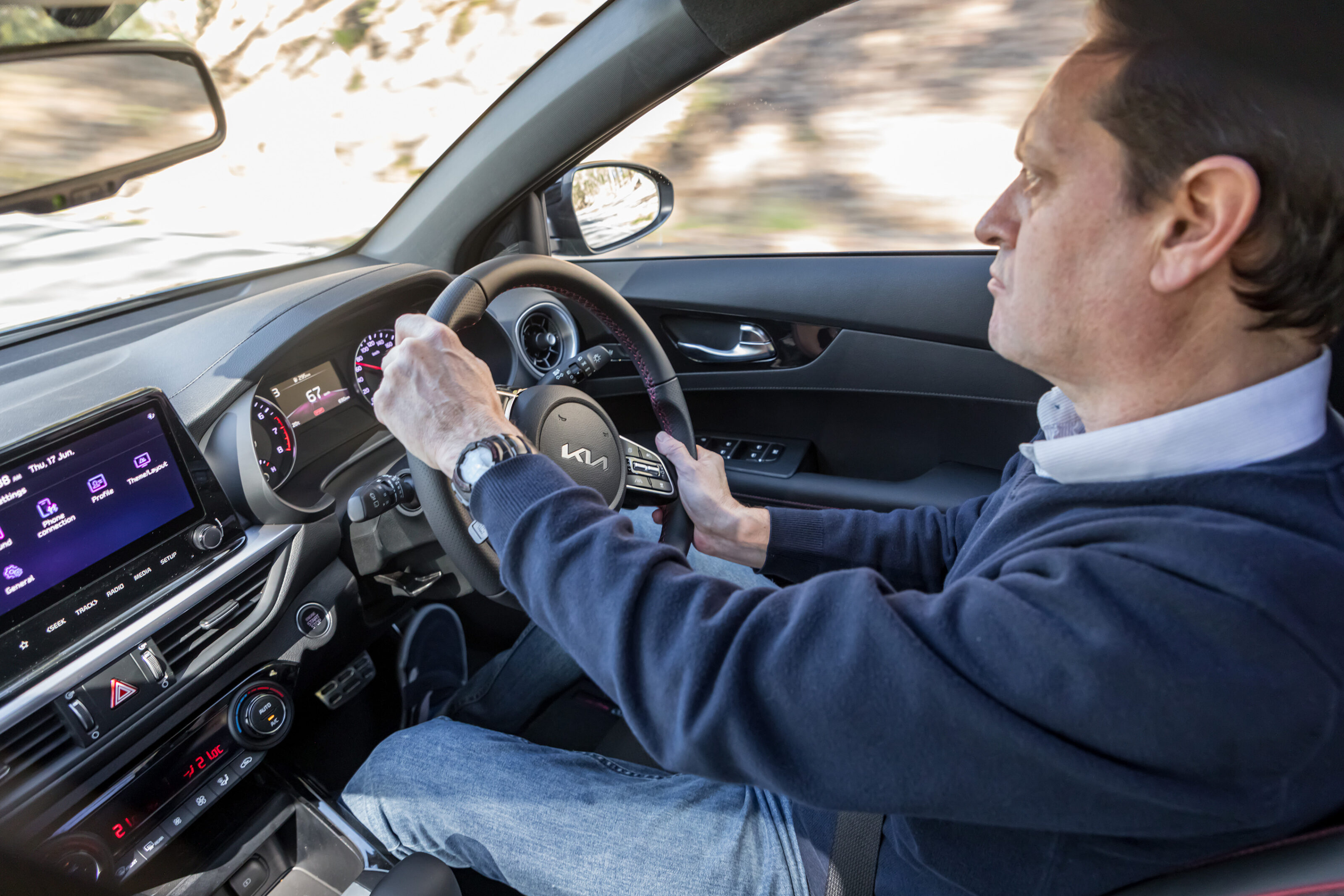
The Michelin Pilot Sport 4 225/40Z tyres riding on 18s are most likely another contradiction when thinking of comfort on pot-holed, cracked, below-average suburban streets, but on a nice piece of twisting tarmac, they are simply fantastic and allow you to make a corner more exciting – even under a low speed limit.
But you’re only as good as your brakes, and the front 305mm ventilated discs do enough to pull you up safely on public roads. They aren’t in the same league as a serious hot hatch package that could see it walk away unscathed from a day on the track, but that’s not where the GT is pitched.
Giving away its heritage, the GT kicks off any trip in ‘Normal’ mode by default and for the life of me, I can’t feel the performance differences between ‘Normal’ and ‘ECO’ … or ‘Smart’ for that matter. But I can tell when counting the ‘calories’ … more on that later.
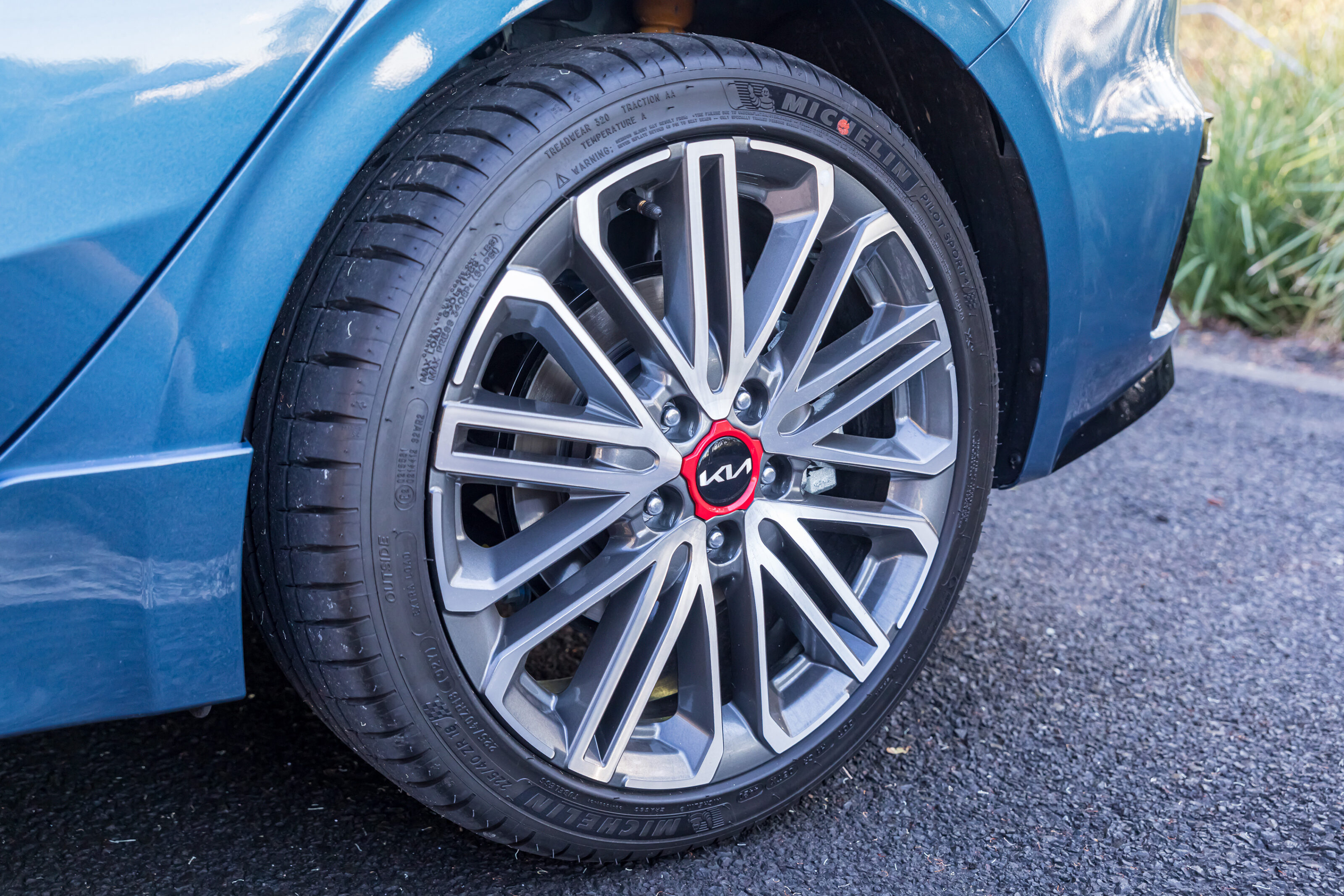
On the subject of delivering the driver an experience, the artificial audio in ‘Sport’ mode I think is a little overdone and raucous at times. The inflected revs and engine volume don’t seem to accurately reflect where you actually are, performance-wise. It can sound like you’re on the redline, when actually you’re far from it. These synthetic theatrics will appeal to some.
Most of my driving over significant distances is through trips with my kids, who so far love the sporty flavour of the GT. Topping their list of demands on every adventure is; “Daddy, open the sunroof please!” Unless it’s raining (and believe me they’ve asked when it is raining, thinking “it would be fun”), I concede to their sunroof ‘open at all times’ request.
As much as it pains me, I eventually cave in to a brief moment of their disappointment as the wind-deflection design isn’t quite class-leading with enough buffering even at low speeds for me to pull the pin and close it. They get over it pretty quickly.
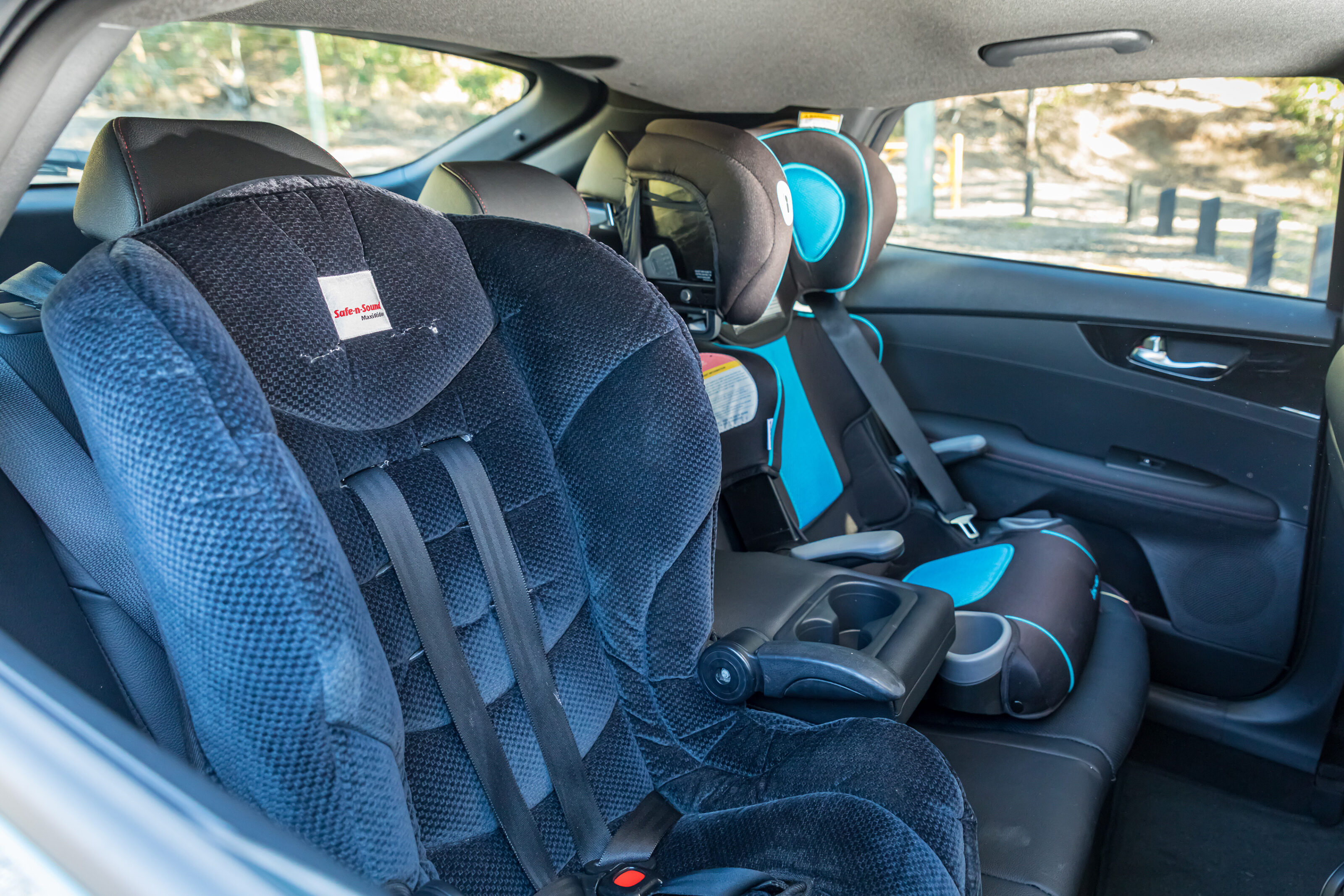
And while on the subject of kids, the GT successfully passed the ice-cream test (yes, it’s a real thing) with young madam falling asleep mid-treat (unbeknownst to me but to the joy and laughter of her brother) leaving a melted mess of Bubble-O-Bill – thankfully mostly over her – but with some ending up outside of her car-seat catchment area. A quick wipe, and brand-new.
Why anyone would buy a car that regularly carries kids with cloth/fabric seats, is beyond me. Sans kids, I’ve also carried two adults in the back with no complaints around lack of space.
While minor because I don’t use it all the time, an initial niggling issue has been the intermittent Apple CarPlay connection. Sometimes it fires up first time no problem, and then occasionally – and randomly – throws me a ‘connect compatible USB cord’ … while connected and previously working fine.
On the fuel economy front, I’ve completed several highway driving stints (in ECO mode) that have produced some reasonable results ranging between 5.7-6.1L/100km, proving that while the perky 1.6T provides some decent spark if you want it to, yet when you take it easy, it can be a frugal performer.
Part 3: “Take my Money!”
Fuel this month: 721km @ 9.9L/100km Total fuel: 1063km @ 10.6L/100km
With three months and just over 1000km under my ‘newby pretending to be motoring journalist’ belt, I’ve reached the point in my faux-ownership experience with Kia’s Cerato GT Hatch where I can comfortably answer the one big question; would I actually buy one?
The short answer is yes – and let me explain why, but some perspective first…
I’m a male in his (late) 40s trying to hang on to his youth. In reality, I could potentially be classified as being in classic mid-life-crisis territory when it comes to a car purchase, but I don’t have an immense disposable income so the default red Porsche 911 is going to have to wait a few more years (that’s a joke). I love spirited driving but also cherish my licence points. I’m also well and truly mature enough to appreciate function and practicality over my own selfish desires – especially when I have my kids in tow. So the Cerato GT is a definite leader on my consideration list. It’s a fun car but also serves a big helping of practicality.
For a one-car family that gets out and about camping, carrying bikes, loads of sporting gear and the like, the Cerato GT obviously won’t win the practicality stakes like a dual-cab ute or large SUV would – as many family buyers have been drawn to in recent years (possibly due to business tax perks).
In the same breath, a ute or SUV in this price bracket won’t deliver you any sense of driving satisfaction unless you have the additional kit and technical ability to take it off-road – which most owners don’t. Oh, and to take a standard ute, and then modify it to tackle any serious heart-pumping terrain ain’t going to be cheap. So I’m back to the core virtue of practicality. And as a hatch, the GT gives me enough versatility to facilitate my lifestyle.
Where the GT hits the spot with me is its split personality and ambidextrous performance. Thanks to the clever and well-calibrated engine mapping modes I can derive a level of satisfaction from every drive. And this is important in my eyes. Whether it’s a 20-minute COVID lockdown boredom-busting loop up and around my local mountain road for kicks, or a leisurely school pick-up, or a leisurely highway cruise that delivers excellent fuel economy – I get out of this car smiling. And isn’t that what you want from your daily drive?
But as a final thought on the drive modes, I do maintain that Kia could easily just stick with Eco and Sport modes. ‘Normal’ and ‘Smart’ modes are just unnecessary digital adornments in my opinion.
Because let’s face it, in life you are either going fast or slow – be it food, financial investment reward, work or on holidays – if you get my drift? If you live in a beige world, this isn’t the car for you.
From an ownership and value perspective, Kia’s seven-year warranty and capped price servicing looks attractive. While interval costs vary year to year, the total you would spend in seven years is $3234… which averages out to $462 a year. It’s not the cheapest capped price servicing in class, but the warranty is equal industry best.
Keep in mind, a new set of tyres (225/40ZR18 Michelin Pilot Sport 4) will set you back close to a grand, but if you don’t go flogging them in industrial estate backblocks you should get at least 40,000km out of the OEM set. Nothing to worry about. To top off the value perspective, I’ve spent around $210 in fuel in the three months I’ve had this fun little jigger in my possession, and that’s using 98RON which, at last fill here in Brisbane, was $1.99 a litre!
I’ll dig into a deeper competitor comparison in my next report but for now, at ballpark $35K, and knowing most of the competition, I’m pretty much sold.
2021 Kia Cerato GT specifications
| Body: | four-door sedan / five-door hatchback |
|---|---|
| Drive: | Front-wheel drive |
| Engine: | 1.6-litre four-cylinder turbo-petrol |
| Transmission: | seven-speed twin-clutch |
| Power: | 150kW @ 6900rpm |
| Torque: | 265Nm @ 1500rpm-4500rpm |
| Bore stroke: | 77mm / 85.4mm |
| Compression ratio: | 10.0:1 |
| 0-100km/h: sec (claimed) | No official claim |
| Fuel consumption: | 6.8L/100km (combined) |
| Weight: | 1370kg – 1395kg |
| Suspension: | MacPherson strut front / multi-link rear |
| L/W/H: | 4510mm / 1800mm / 1445mm (hatch) |
| Wheelbase: | 2700mm |
| Brakes: | 305mm front / 284mm rear |
| Tyres: | 225/40Z Michelin Pilot Sport 4 |
| Wheels: | 18-inch alloys |
| Price: | $35,290 plus on-road costs |
Got something on your mind, or a question that needs answering? Then get on your soap box and send us a letter!
Each month we award a 12-month subscription to MOTOR magazine for sharing a particularly entertaining story, while all the honourable mentions get published in print.
If you want to win 12 issues of the world’s most exciting performance car you simply have to tell us about your most inspired used-car purchase.
So go on, send us a rant, a story or just your thoughts, to [email protected], you know you want to.
Here’s what your fellow MOTOR fans had to say this month!
Stelvio Parse
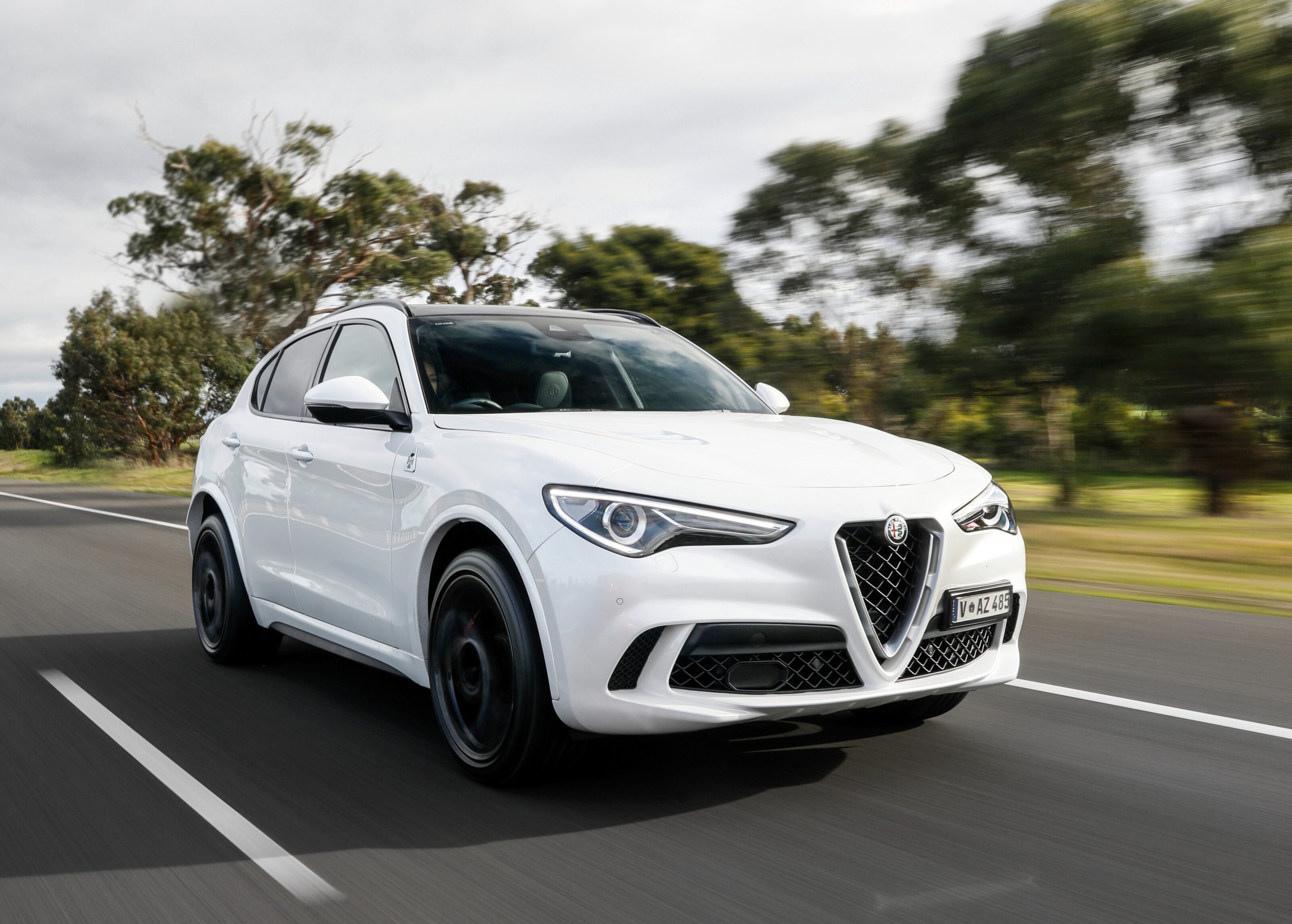
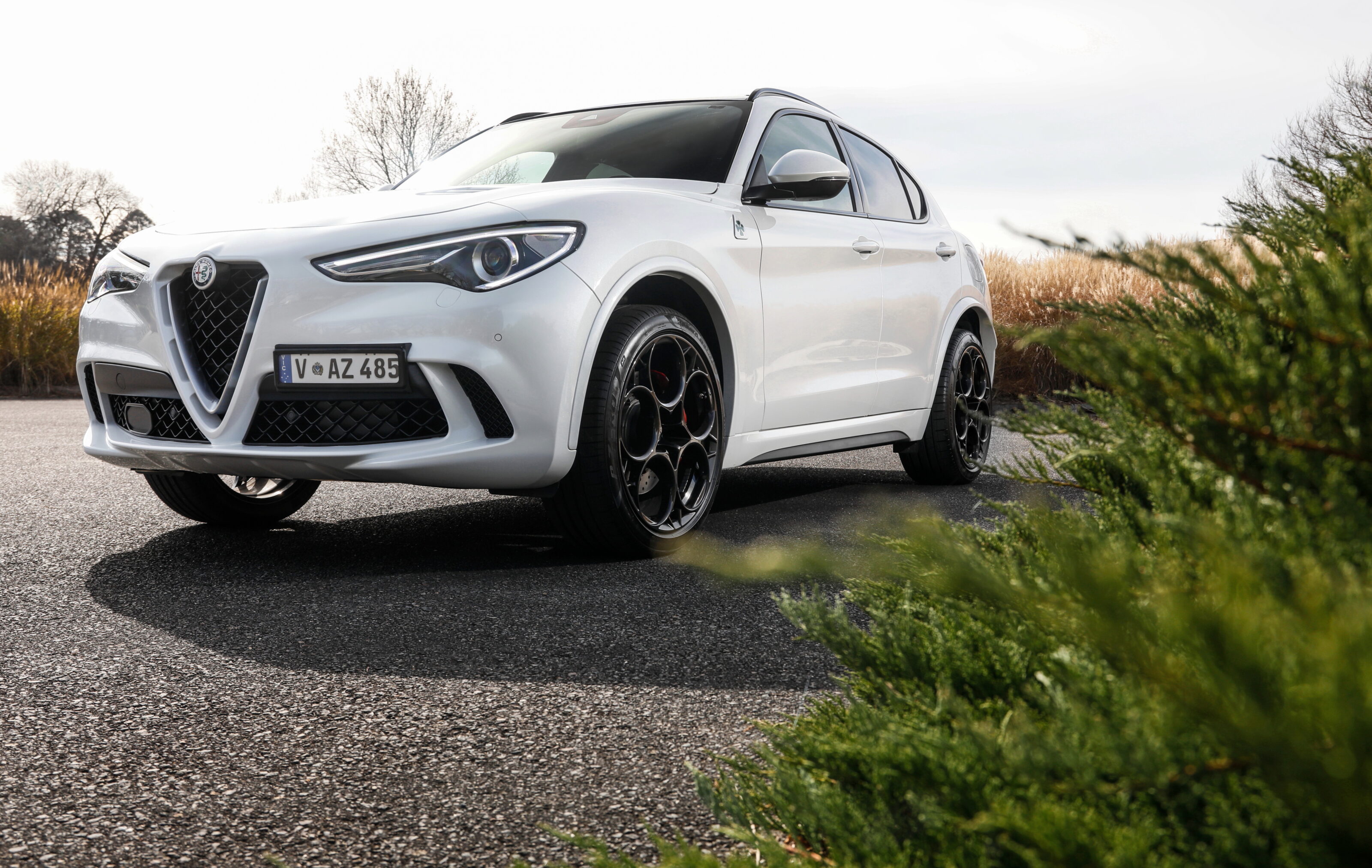
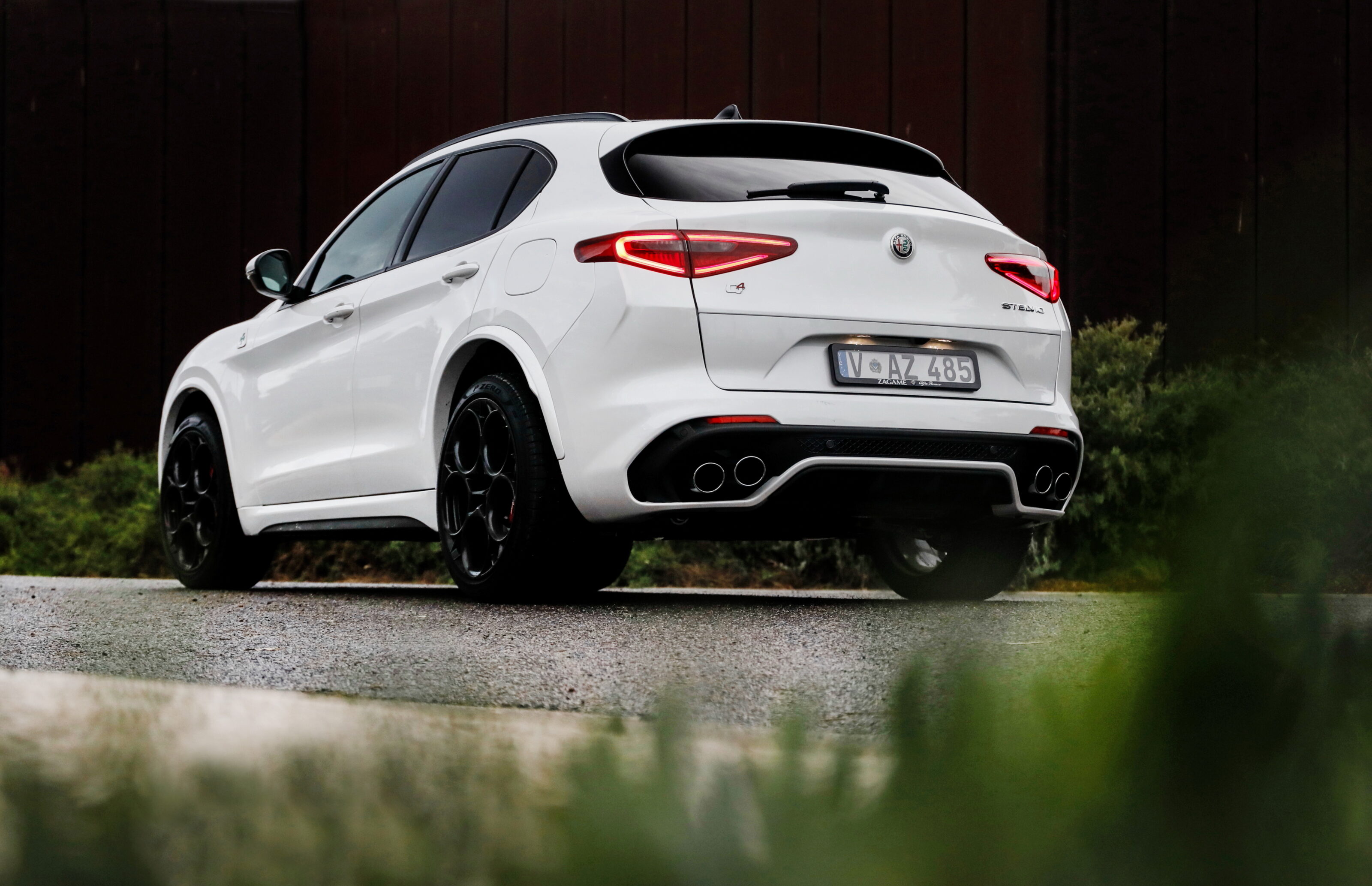
Andy, you edit a very good MOTOR mag. Hell I don’t even pay for mine because I won the right for a 12 month supply last year by stating my case about SUVs, and gave some reasons why my diesel Stelvio is such a joy to own.
Your article on the Q got me agreeing then disagreeing on some points, sometimes both at the same time. One paragraph in particular touched base with me I must say. It was on your conclusion about the Stelvio.
You said “there are those drivers who love a car that’s beautifully set up … then there are those drivers who see it as a challenge to mould their driving style to the quirks or shortcomings of the vehicle they are driving. The former might struggle with the Stelvio, it has a lot of characteristics.”
Quite perfectly said.
Remembering also that he gave us a vehicle that as you say is mischievous and that every journo and owner will tell you is simply so much fun to drive. R.I.P. Sergio.
Me, well I have been spoiled a bit and would say I was indeed the former, but not so now. The Stelvio has ‘characteristics’ about it for sure, but it also has great character. That is what I love about it, (given mine isn’t a Q), or is it the 470Nm which going through that 8-speed in Dynamic mode and using paddles that quite literally does my head in (and dispatches big numbers of many and varied chariots along the way), all the while refusing to use fuel?
Overall as you may have guessed I truly love what Sergio Marchionne gave us, what a genius and heartfelt man who must have been heartbroken by the lack of sales. I salute him for his passion and his ability to dare to gamble and shall remember him for his ‘absoluteness’ in taking that gamble.
Remembering also that he gave us a vehicle that as you say is mischievous and that every journo and owner will tell you is simply so much fun to drive. R.I.P. Sergio.
Dave Burt, via Email
Cheers, Dave. Maybe the Giulia raised expectations that the Stelvio would never meet. If anything it shows how far Alfa Romeo has progressed that a vehicle as exciting and charismatic as the Stelvio Q wasn’t as rounded a proposition as perhaps I’d hoped. – Ed
Shooting Star
I loved the “clown shoe” Sweet Dream but think you started with the wrong donor car. While a manual, rear drive BMW Z4 M Coupe would be amazing, it would also be prohibitively expensive and too powerful to properly enjoy in the land of low speed limits and excessive speed cameras.
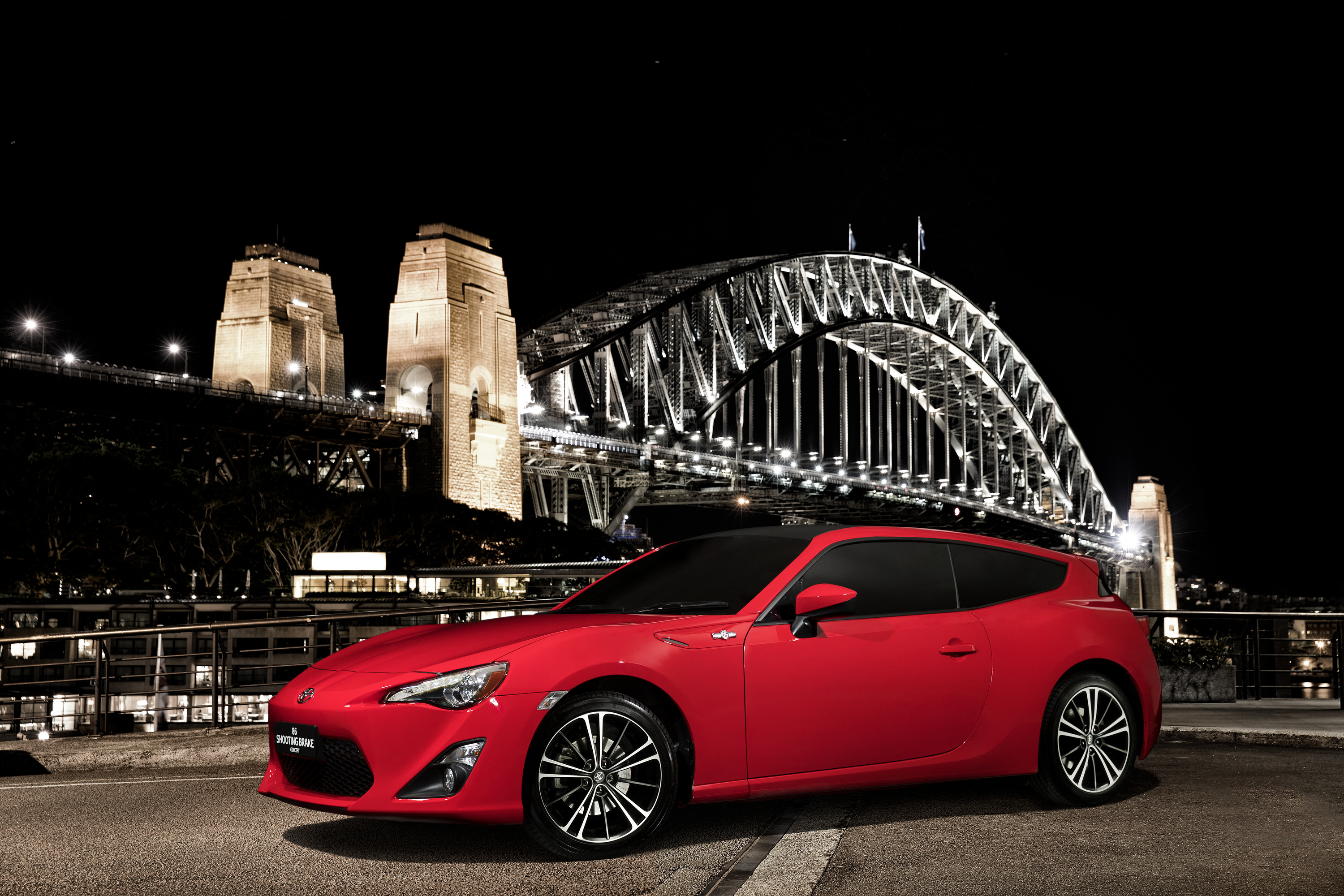
A shooting-brake version of the upcoming BRZ/86 on the other hand would be a third the price, have accessible and fun performance, and would make it much more practical for the cost of a few kilos. Subaru/Toyota might even consider adding enough length to the wheelbase of this version to make the rear seats usable. A modern Lancia HPE or even a mini Ferrari FF?
The initial sales success of the original BRZ/86 dropped off after a few years to the point enthusiasts were worried there wouldn’t be a version 2.0. Maybe the practicality of a shooting-brake BRZ/86 would find the incremental buyers to sustain the BRZ/86 on an on-going basis. Would love to see it.
PS – If you are looking for more Sweet Dream ideas, a VW California with VW Amarok sized wheels and 4WD system for ability to camp in comfort anywhere in Australia would be very sweet.
Wayne Black, via Email
I think Toyota already beat you to that punch with a one-off 86 shooting brake design study. – Ed
Door Jam
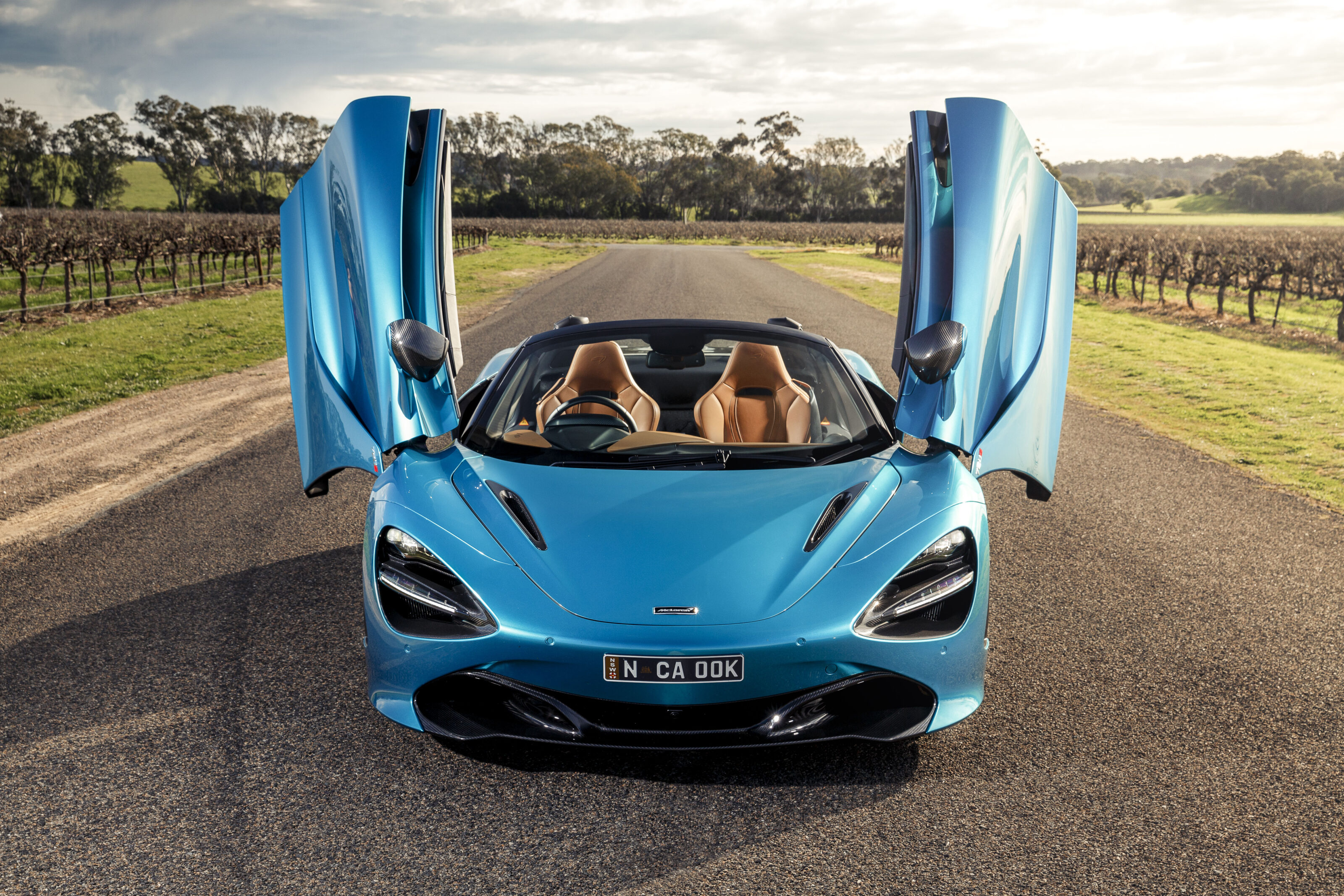
I was recently corrected by a friend who claimed that a McLaren 720S didn’t have scissor doors but had butterfly doors instead. I can’t quite work out what the difference is. I know Lamborghinis have scissor doors, but aren’t the McLaren’s much the same? Confused.
Kelly Somerville, Geelong
Your friend is technically right. It’s all about whether the door angles straight up, like a Lamborghini’s or upwards and outwards, like those of the McLaren 720S.
The butterfly design allows for easier entry and egress but is a slightly more complex mechanism to engineer and requires more clearance at the side of the car to operate. Don’t get us onto dihedral synchro-helix doors. That’s for another day. Next time your friend tries to flex on car door knowledge, ask if they know which car was the first to feature them. We think it’s the 1967 Alfa Romeo 33 Stradale. Revenge is a dish best served upwards and outwards. – Ed
Slow Ride
Whilst the speed limit ‘wowsers’ cry foul at every opportunity, you never hear them talk about needless crashes occurring because people are forced to drive too slowly. Take the 100km/h speed limit on country roads as an example. We regularly hear of single-car accidents on straight country roads, where a car has left the road and met with a tree. Why is this happening?
The answer is simple. People are bored plodding along at 100km/h in cars designed to travel these roads in safety at much higher speeds. Consequently, they look for diversions. Perhaps a quick text to someone, or a chat on the mobile. Perhaps engaging with the kids in the back? Listening to the radio. In fact, anything but concentrating on their driving. But now we come to the real issue. They simply fall asleep at the wheel.
Everybody in the car is lulled into sleep by the comfort of the car, driving along in virtual silence.
Why do they fall asleep? Well, besides boredom, it is also due to needless fatigue. This situation is greatly exacerbated when they drift over to the wrong side of the road and a totally unnecessary head-on accident occurs.
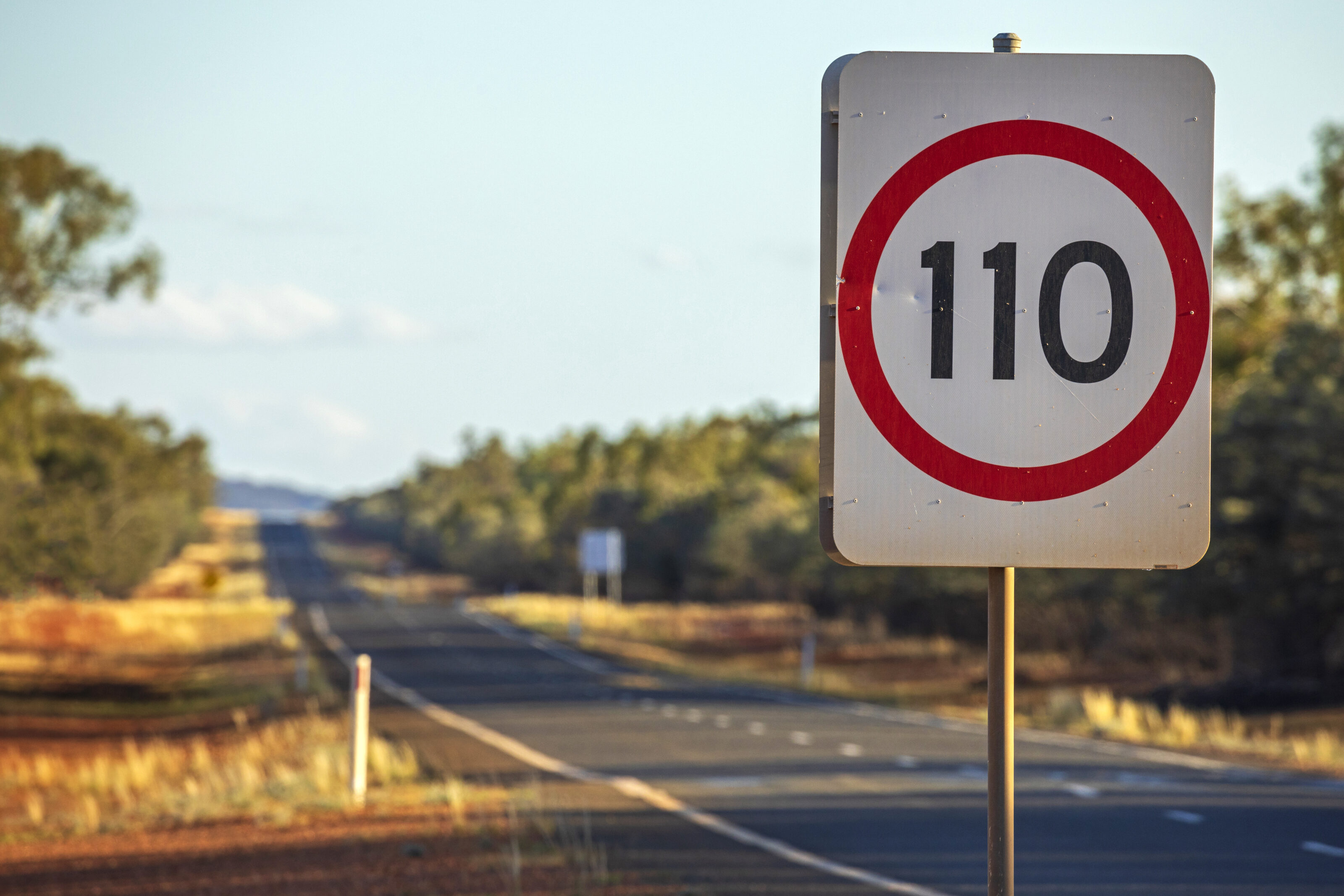
That we are forced to plod along at 100km/h or 110km/h on our ‘open road’ freeways is a waste of our most precious resource, time. If we could drive faster, we would arrive at our destinations refreshed and importantly, we would have been concentrating on our driving, whilst getting there.
Considering the state of play with our ‘wowsers’ and the politicians who make these ridiculous rules, I suggest the following.
- Raising the speed limit on dual carriage to freeways to at least 130km/h.
- Making the default speed limit on country roads 120km/h.
In Australia, the only motoring journalist that I am aware of to tackle, at least the dual road speed limit issue, is Steven Corby while editor of Wheels magazine. I was most disappointed to see that he did not receive any support from his colleagues. So here we are, driving the most advanced and safest cars ever built, on the best roads that we have ever had, at a speed I used to cruise my mom’s 1958 Morris Minor 1000 at. It is just wrong.
Chris van Wyk, Middle Park, Vic.
I’d love to see common sense prevail here but impoverished driving standards coupled with a lack of political appetite at virtually any level leads me to believe this is, for now, a rigged fight. That may change, but it pays to pick your battles. Starting with driver training. – Ed
McLaren has announced Mike Flewitt will step down from his role as CEO after eight years at the helm.
Flewitt led McLaren through a period of expansion, overseeing the introduction of models such as the McLaren GT, Artura, Senna, Speedtail, and Elva.
“I feel incredibly proud to have led McLaren Automotive through most of its first, highly-successful, decade and am privileged to have played a part in the incredible McLaren story,” Flewitt said in a statement.
“This young company’s success is testament to the many passionate and talented people I have had the pleasure of working with and I look forward to seeing that success continue.”
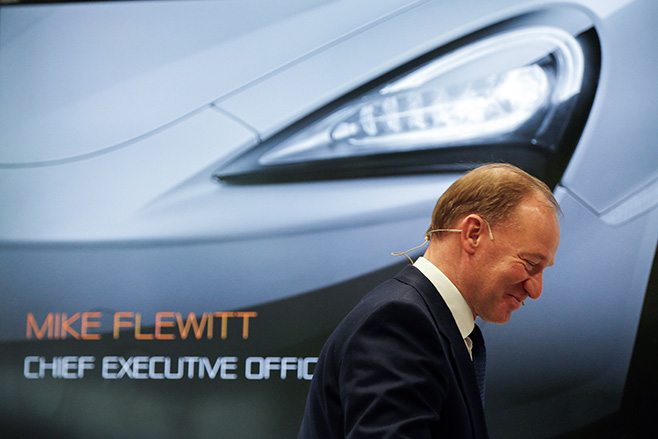
The UK supercar maker says it is currently searching for a successor, but the announcement has raised concerns that the company may be in a more dire financial situation than previously thought.
In April, McLaren sold its award-winning headquarters for £170 million (AU$311 million), in a deal that sees the manufacturer remain at the site for the next 20 years.
Further fundraising exercises have continued throughout the year, according to Bloomberg, through the sale of shares and bonds.
McLaren non-executive director Michael Macht will take over all technical and operational functions, while sales and marketing will report to executive chairman Paul Walsh.
