
Classic Wheels

Gallery 1
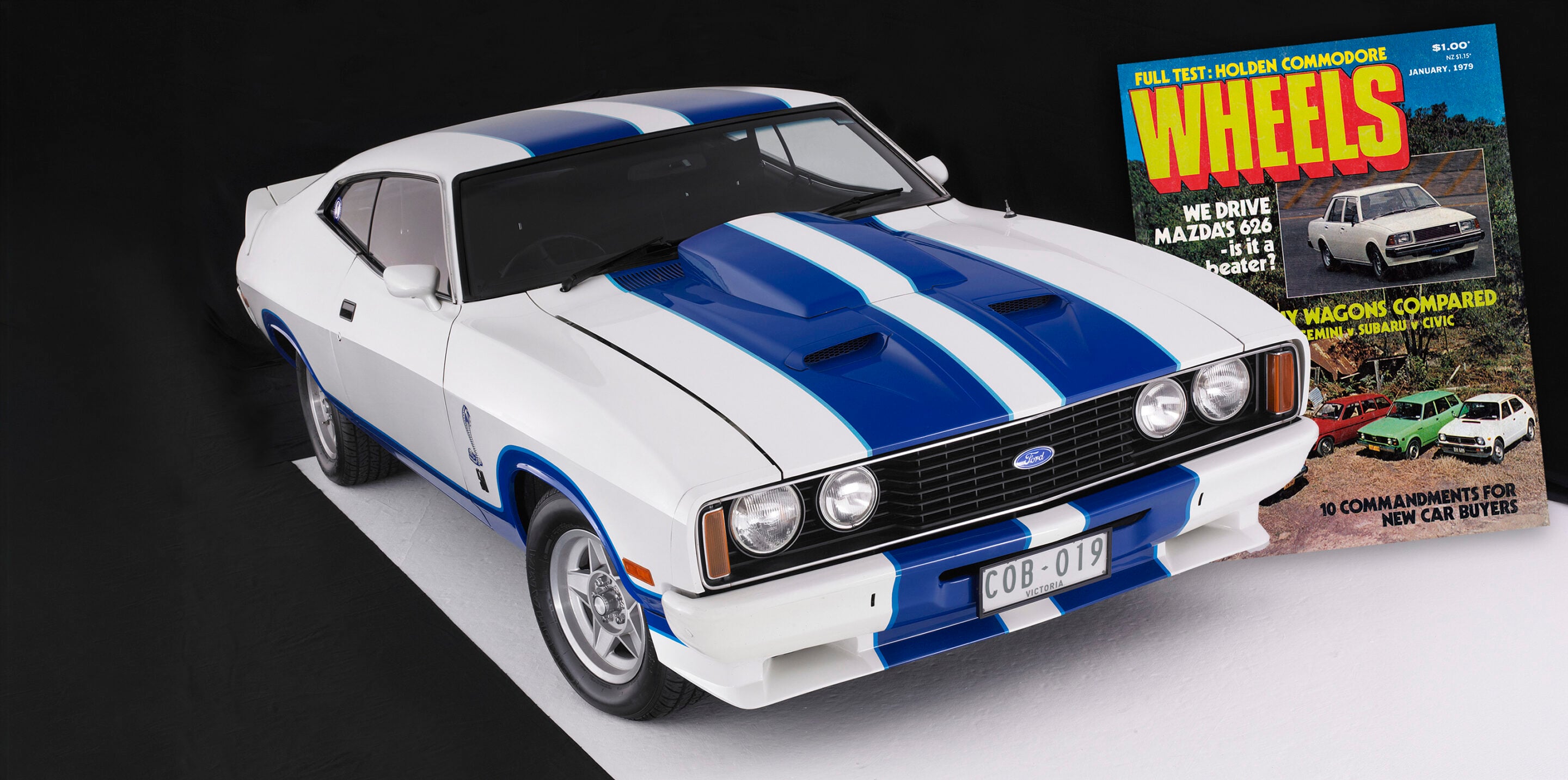
This car, the Falcon Cobra, was launched primarily to make the last XC Falcon Hardtops more appealing to the dealers and buyers. The idea, which came from Edsel Ford II, the company’s new deputy managing director, might just have spawned another Australian classic car in the process…
First published in the January 1979 issue of Wheels magazine, Australia’s best car mag since 1953. Subscribe here and gain access to 12 issues for $109 plus online access to every Wheels issue since 1953.
1
About the only reason there are any Australian-made cars which can justify the description “classic” is that there exists an annual production sedan race called the Bathurst 1000. Australia’s longest, richest and best-known race has been responsible for the births of a lot of special sedans. It is quite likely that, but for the Hardie-Ferodo race, every Australian car would go unmourned to the scrap metal man. Every one that is, apart from a couple of hundred “humpy” Holdens which are in the process of restoration by shrewd investors and those who enjoy bathing in nostalgia.
The list of Bathurst cars starts with pioneers like the Holden EH S4 and the Cortina GT500 and runs through the golden days of the Falcon GT-HOs and Monaros 327 and 350 and the Chargers E38 and E49, on to the Torana V8s – and the Falcon Cobra.
In recent times – from 1974 onward – Australia’s Bathurst specials have changed. They are much less the essence of the track cars; more the bones of them. Before ’74 Bathurst race cars were required to be quite close in specification to production cars that you could buy on the showroom floor. Ford for example had to sell a token number of HOs to get the cars’ crisp, high revving, painstakingly-assembled engines to the track.
1
For some years now Bathurst regulations have been aligned with those of other production touring car races. The latest cars need only provide such things as the ‘good’ gear ratios, body strengthening, aerodynamic devices, special performance differentials and axles, seats and running gear.
Simply, they put the right engine in the right body. Suspension , brakes, engines, fuel tanks, wheels and tyres can all be modified fundamentally, provided the original car’s integrity is preserved.
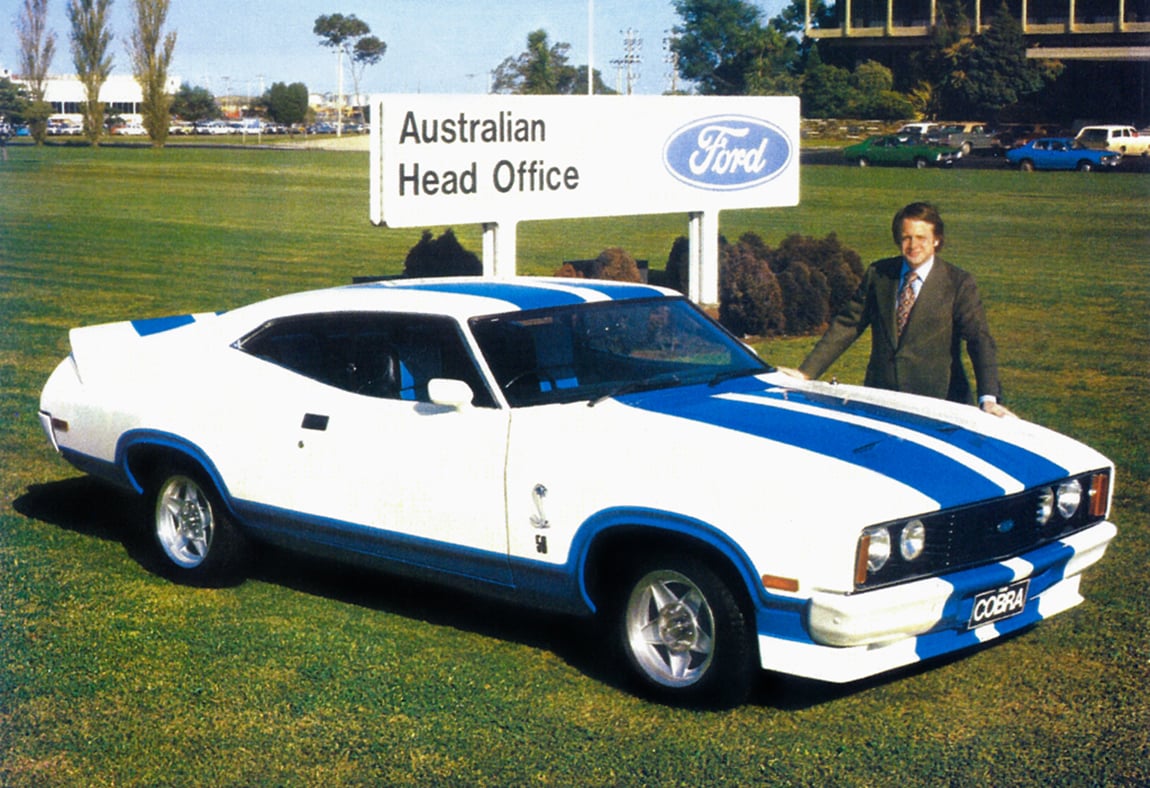
It is into this environment that the Falcon Cobra comes. An idea attributed to Edsel Ford (pictured, below), the Cobra is a lot more than the basis of a Bathurst car. It is a 400-build special which boosts V8 sales and gets rid of Ford’s last two-door hardtop bodies. It is a piece of promotion for Ford, for Allan Moffat – and for Edsel, too. It is a Neat Idea.
Of course, the Cobra is not Ford’s first or last special-build model. There have been several others based on the Falcon V8 and all have offered performance options built in at a lower-than-usual price. But what is particularly clever about this Cobra is that as well as generating showroom traffic and unloading hardtop bodies (and V8 engines in them) the model also provides those who race the big Fords on Australia’s circuits with a ready supply of cars – sufficient until the Hardtop-based racer is superseded by XD Falcon racing cars.
1
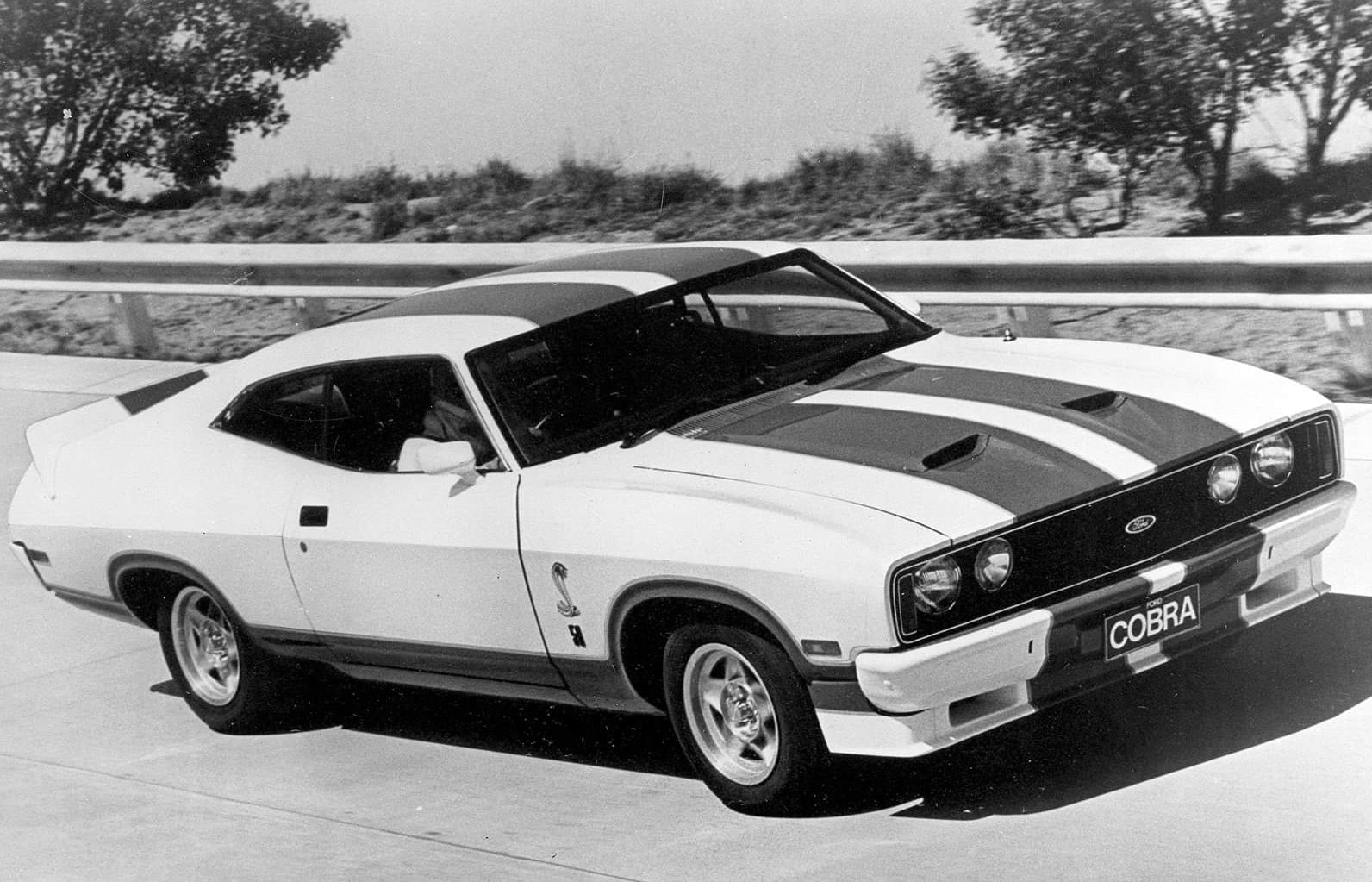
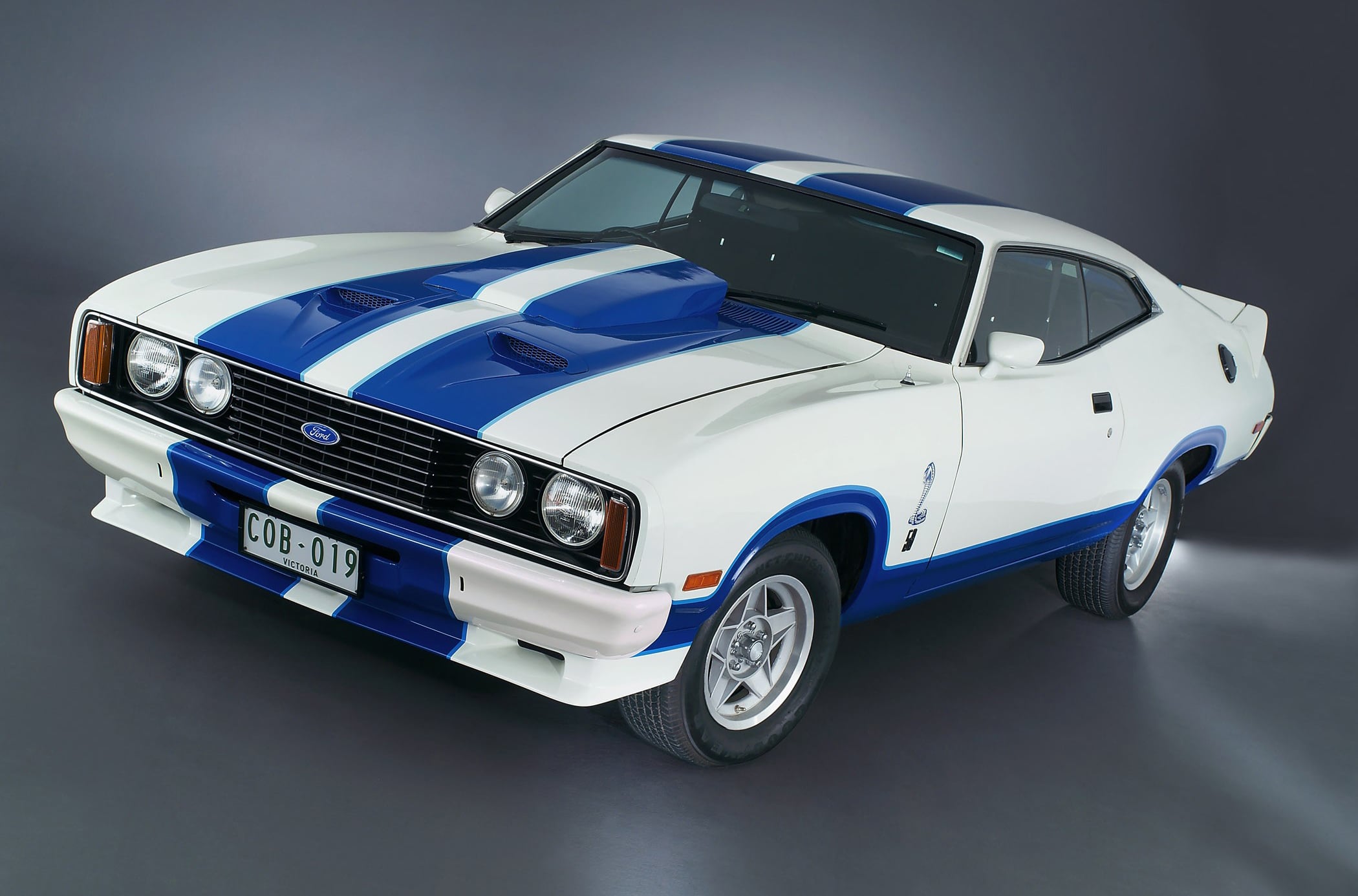
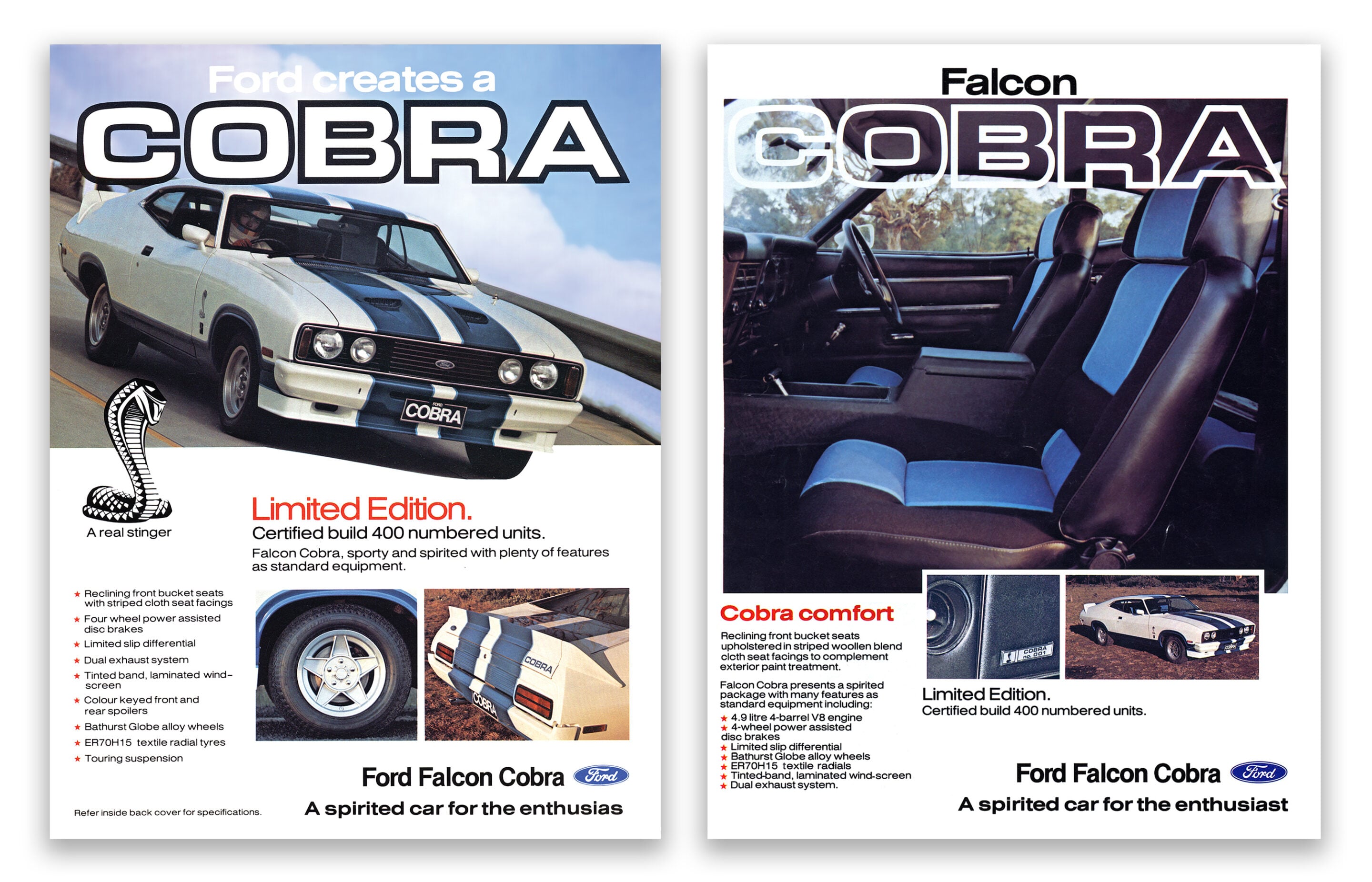
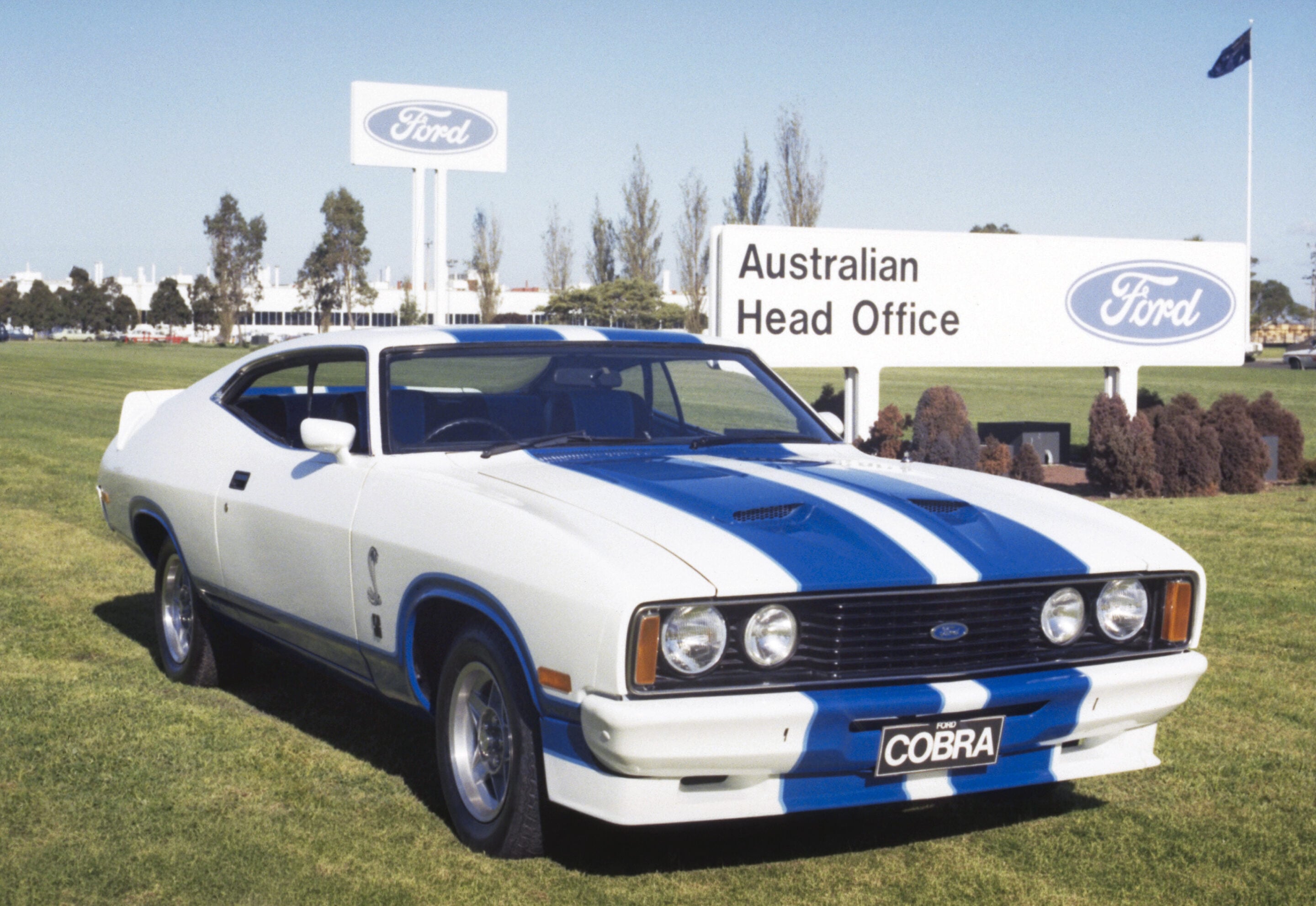
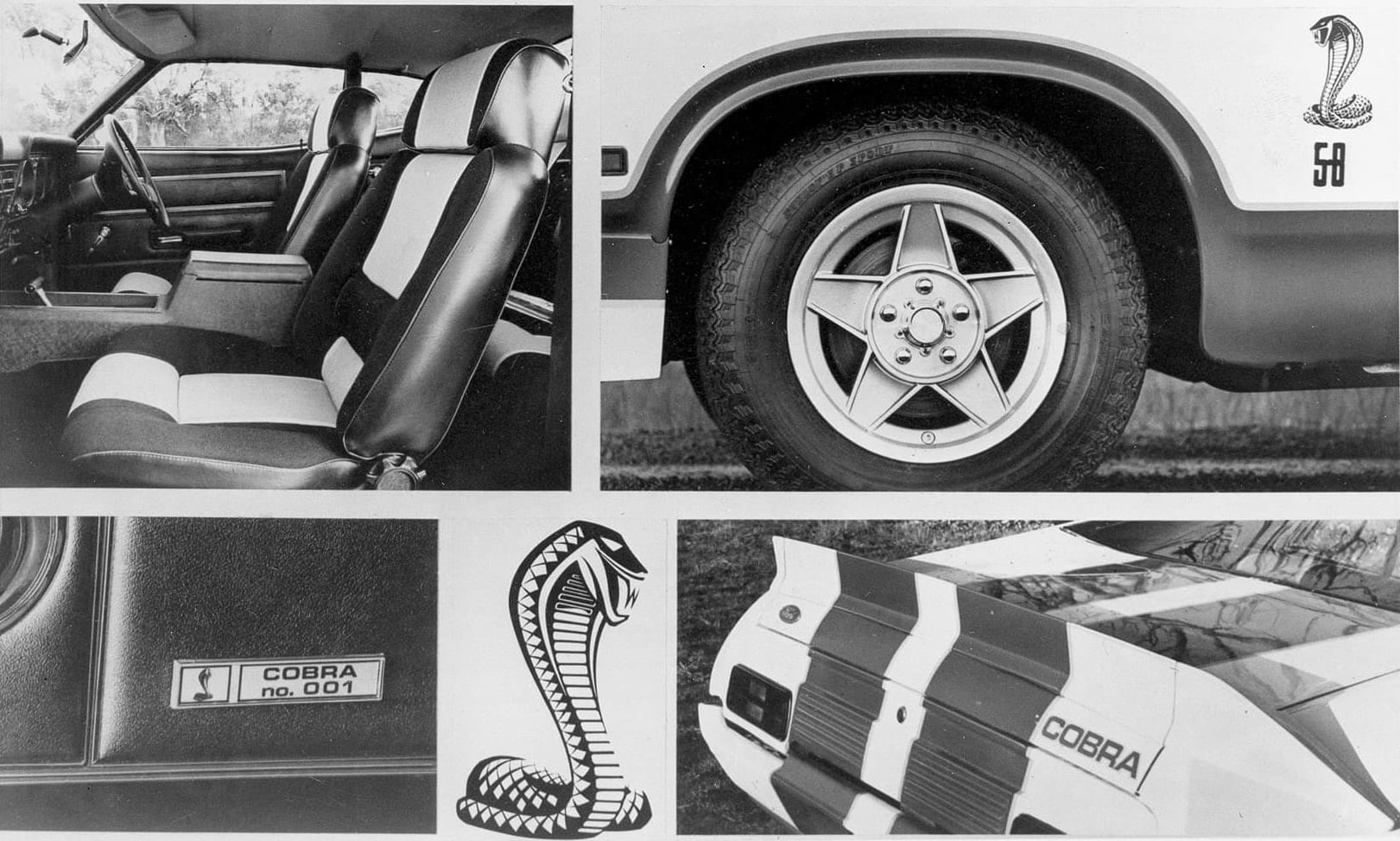
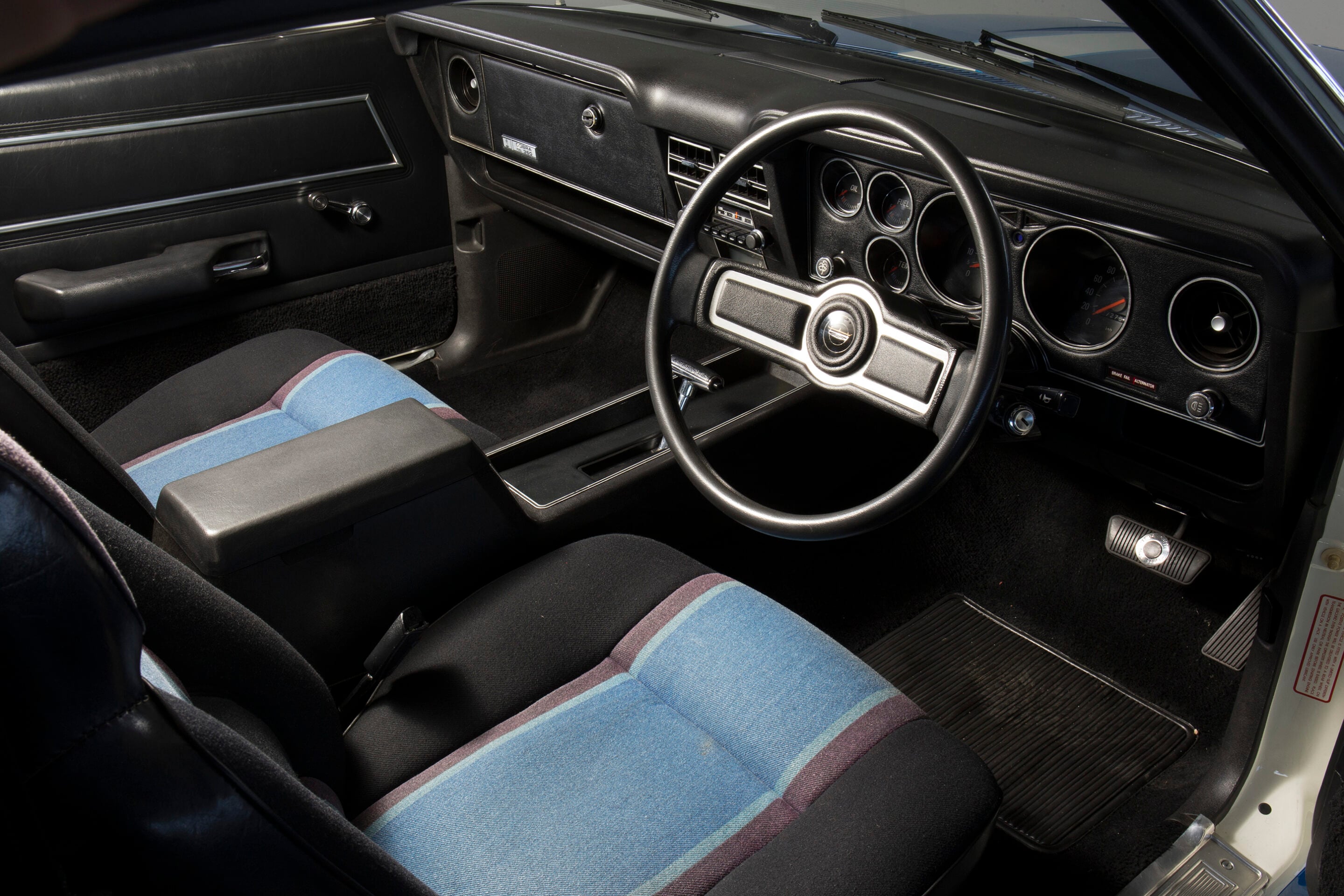
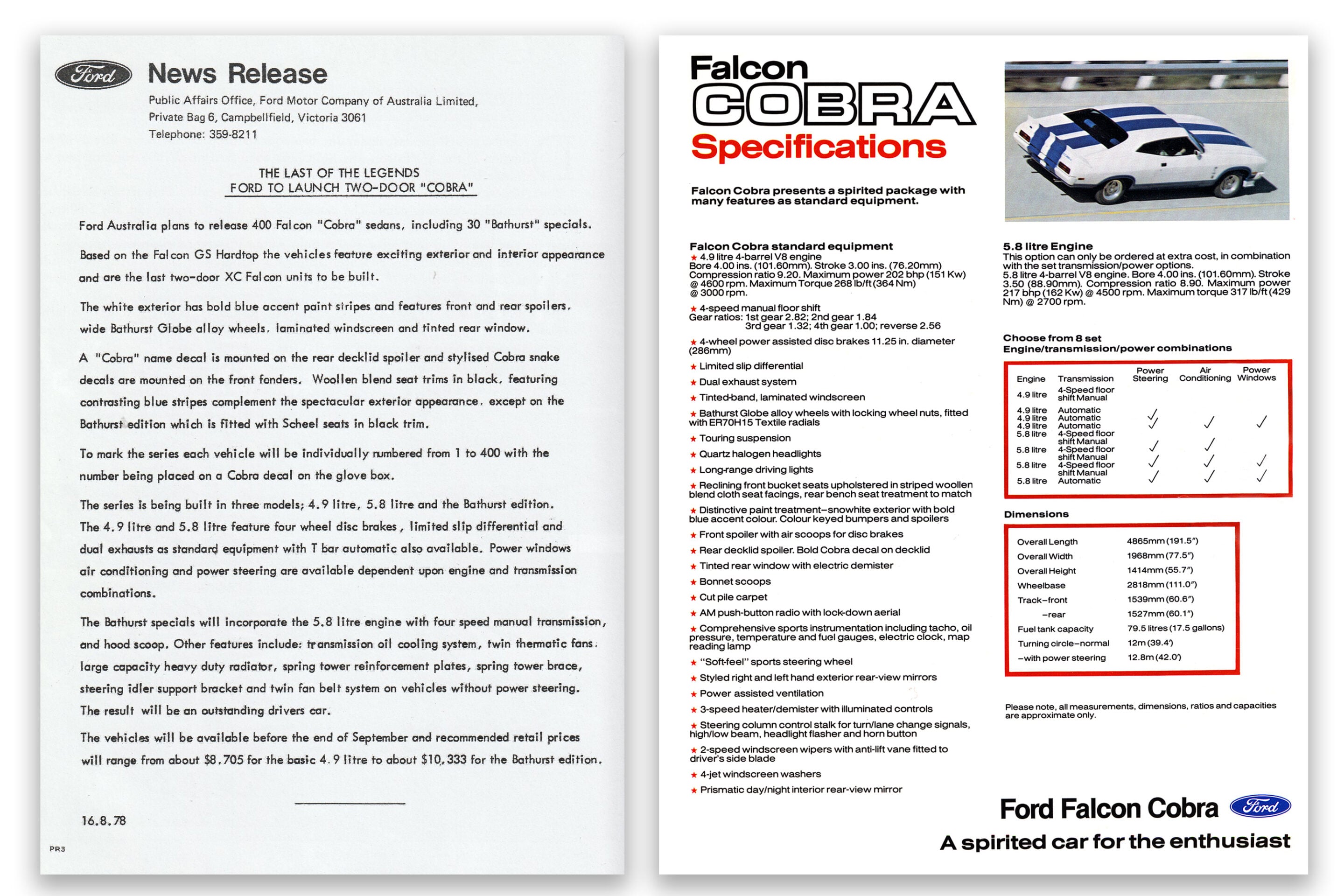
Let’s deal with the 370-build, ordinary Cobra first. It comes looking like Allan Moffat’s except for wheels and signwriting. The colour scheme, also chosen by Edsel Ford, makes the car look brutish and tall. It comes as standard with a 4.8-litre V8, four-speed manual transmission, five-spoke Globe Bathurst alloy wheels with 70-profile textile radials, a limited slip differential, dual exhausts, comprehensive instruments, an AM radio, standard Ford bucket seats with clothfaced seats (cloth in the rear, too), halogen headlights with driving lights also set into the grille, something the Ford handout calls ‘touring suspension’ which seems to mean a handling pack with firmer spring and damper rates for better cornering control, a padded-rim sports steering wheel and four-wheel disc brakes.
Ford’s blurb calls the Cobra an “outstanding driver’s car” which just might be going a bit far since it has been possible to have a Falcon in this trim for years. What it ought to be is a relaxed, long-legged touring car, comfortable and pretty quiet. Options available are power steering, the 5.7-litre engine and air conditioning. The standard Cobra left the factory with a price of $8705 on the screen. The Bathurst version cost $10,330.
1
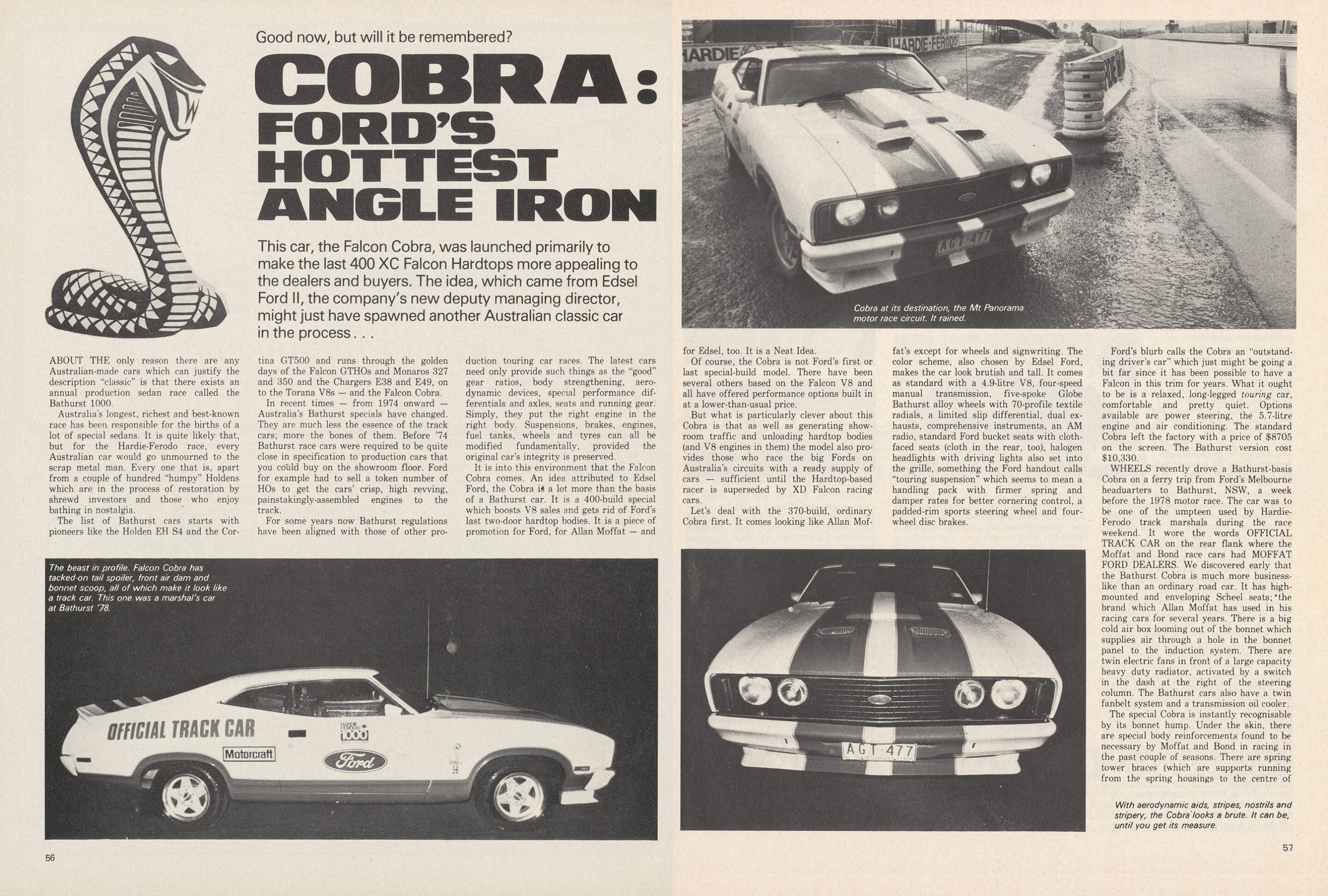
Wheels recently drove a Bathurst-basis Cobra on a ferry trip from Ford’s Melbourne headquarters to Bathurst, NSW, a week before the 1978 motor race. The car was to be one of the umpteen used by Hardie Ferodo track marshals during the race weekend. It wore the words OFFICIAL TRACK CAR on the rear flank where the Moffat and Bond race cars had MOFFAT FORD DEALERS.
We discovered early that the Bathurst Cobra is much more businesslike than an ordinary road car. It has high-mounted and enveloping Scheel seats; the brand which Allan Moffat has used in his racing cars for several years. There is a big cold air box looming out of the bonnet which supplies air through a hole in the bonnet panel to the induction system. There are twin electric fans in front of a large capacity heavy duty radiator, activated by a switch in the dash at the right of the steering column. The Bathurst cars also have a twin fanbelt system and a transmission oil cooler.
The special Cobra is instantly recognisable by its bonnet hump. Under the skin, there are special body reinforcements found to be necessary by Moffat and Bond in racing in the past couple of seasons. There are spring tower braces (which are supports running from the spring housings to the centre of the firewall). The spring towers themselves have tower reinforcement plates and there is a strengthening brace on the steering idler arm support. Ford says the mods are not necessary for its road cars – in fact the tower braces tend to feed vibration and harshness into the car’s cockpit – but they make the body more rigid under the near 1G cornering forces generated by racing conditions, slicks and 10-inch wheels.
1
Luckily for the big Falc, the equipment, mods and considerable performance combine to make it a serious, business-like machine. To the casual observer, the Falcon hardtop has become an example of the things which 1978 car design should not be about – bulk, weight, bulbousness and poor space usage.
Nevertheless, the fast touring equipment and racing modifications make the Cobra into a serious fast car. But it is not easy to drive, even when tooling around town. The visibility is poor because of the low roof, high sides and rotten rear three-quarter vision. The car is bulky and the driver – even the person who has driven hardtops before – finds it hard to know where the car’s extremities are.
That plus the fact that the Falcon Hardtop has those infamous bulging rear wheel arches, makes town driving an enterprise fraught with uncertainties. But when you get the big beast out on the open road where you can waggle the wheel, bury the boot into the firewall and jump onto the brakes hard, and have enough space to cope with the consequences, the Falcon becomes a bulky but quick driver’s car.
1
The Cobra’s performance, we must tell you, is no better than that of other current 5.8-litre Ford. In fact it may be a whisker worse because the Hardtop model is a little heavier than the sedans and in the case of ‘the Bathurst 30’ there is the weight of body strengthening, oil cooler, large capacity radiator (and concepts), twin electric fans to haul.
The Bathurst Cobra’s engine, as bought, is a standard, production-line 5.8-litre (351 cube) Cleveland V8 engine. It gets no go faster gear. Far away are the old days when the output was quoted as either 275 or 300 bhp. Ford now says the engine produces 162kW (217 bhp) at 4500 rpm and maximum torque is 429Nm (317 lb/ft) at 2700 rpm. Part of the reason for the lower figures is that the method of rating engine power has. changed in the past few years, but there is no doubt that 351s of the early Seventies – even the ordinary ones, were crisper and more powerful than they are today. Ample evidence of that comes from the fact that the Cobra’s tacho red sector now starts at 4800rpm. In the old Falcon GT it began at 5500.
Incidentally, if there are tear stains on these pages, they have been shed by those who drove and like to remember the great days of the Falcon GT-HO Phase III which would do a GENUINE 140mph top speed and an engine rev-limiter which prevented you from giving the hot Cleveland mill more than 6150rpm.
1
Back in 1978, the Cobra goes well. Any car of its size with 5.8 litres and a manual gearbox ought to perform well. The car we drove was new and tight and didn’t really become properly smooth or free until the end of our 1000 kilometre drive, but we estimate that it could have got across the standing 400m course in 16.5 seconds, which is not bad considering the car’s tall gearing. In top it does about 42km/h (26mph) per 1000rpm. The Bathurst Cobra’s gearbox is a close-ratio one. Gear speeds are 85km/h, 113km/h, 158km/h and 204km/h. Flat in top, the tach needle just touches the 4800rpm red sector.
It was always a satisfying facet of the Falcon GT’s performance that it could indicate a ton in third gear and the Cobra shows that it still has performance by getting to 158km/h (99mph). There has always been something extremely satisfying about changing up at a ton.
The Falcon’s chassis is very good. The car has the brakes, steering and roadholding to cope very well with the engine power. It is nonsense to suggest that the car is highly manoeuvrable, however. It needs to be set up well before a corner and not disturbed on the way through it. Anyone who watched the Bathurst race on television should know that the race cars behaved the same way. They hung onto bends very well but very, very few are the times they were disturbed in mid-corner. It is a tribute to the abilities of Moffat and Bond that they were able to lap as consistently as they did in race traffic without the dart-and-duck of the Toranas available to them.
1
The Cobra corners in mild understeer and there really isn’t enough power available to generate big oversteer on bitumen, except on the tightest of bends. But the big car is very fast through bends because its weight, coupled with a taut and well-developed suspension gives it stability in bends.
The front end of the car feels as though the suspension mounts are rooted in granite. It is SO strong. On test, we ran it out over bitumen holes and ripples just to feel the strength, if you understand. The front end would stick like glue to the road even after the rear end – more resistant to spring wind-up than most – was dancing about. It was during these antics that we experienced some snap-oversteer. Bumps tended to throw the car’s rear out while the front end was still stuck on line.
All Falcon manual steering is heavy these days and the Cobra’s is perhaps the heaviest of all. It is not very direct – about four turns from lock to lock – and feels rather spongy at the straight ahead, but the car’s tendency to maintain its cornering line (except over savage bumps) means that great sensitivity is not missed. Smoothness and planning are the things that pay dividends in steering the Cobra.
1
The Cobra’s ride wouldn’t do for an-LTD, but it is pretty good anyway. The wide track and longish wheelbase ensure that there is no exaggerated pitching and the stiff springs and dampers, coupled with anti-roll bars at both ends, cut out lurches and body roll.
The Cobra suffers from a considerable amount of road noise – a lot of it fed in through the spring tower braces – but this tends to be noticeable only at low speeds. The level of wind noise, on the other hand, is quite low. Even at 180km/h we found the Cobra fairly quiet through the air, whereas the Hardtops we drove a year or so ago had their windows sucked outward until noisy air leaks were set up at no more than 130km/h.
Falcon four-wheel disc brakes are as fine on the Cobra as they are on other Ford models. They are progressive, very powerful and, after the pads have been sufficiently bedded-in, they resist fade very well. No complaints for road use.
Inside, the Bathurst Cobra is routine Falcon except for the bonnet bulge, seen largely through the laminated windscreen, and a tacked-on switch low on the right of the dash to work the cooling fans. Oh yes, and there are Scheel seats in the 30 Bathurst Cobras. If you are six feet tall, you’ll find your head very close to the roof and you’ll need to increase the rake on the seat to increase clearance. Tall drivers need to adopt a reclined driving position in the Falc, but find it a comfortable one. It’s a ‘cocoon car’ like most of the large Australian Fords we can remember.
1
By now, people will already have bought Cobras believing them to be of the GT-HO/ L34/A9/X ilk; and that they will eventually become well-remembered and increasingly valuable classic Australian cars. But is it true?
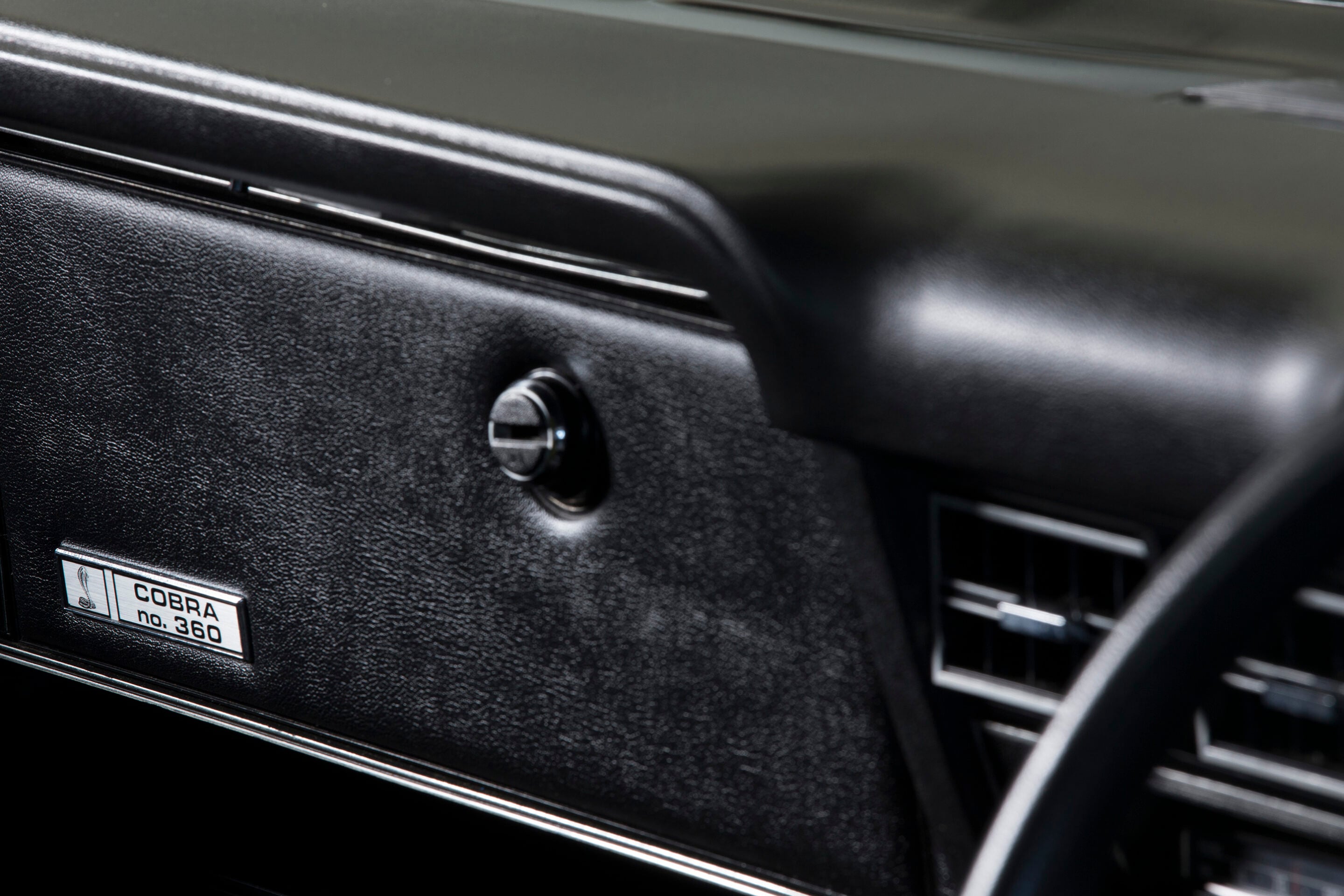
In the case of the 370 ordinary Cobras, it probably is not. For evidence of that you only need to look at the way the first Falcon Superbird, the John Goss and the Allan Moffat specials have faded out of sight. They were no more than optioned Falcons offered at attractive prices. And so are the 370 ordinary Cobras.
The Bathurst Cobra is probably a better proposition, though in being linked with the lesser car by its appearance and name it may suffer. And after all, the Cobra was unsuccessful against the Toranas at Bathurst in ’78. We’d call the Cobra a good, if rather irrelevant, car and a marginal classic. We see it best as a car for the owner who wants to build, finally, the best and fastest road Falcon.
Follow WhichCar/Wheels on Google
Click the button below to make WhichCar by Wheels a preferred source for your news.

We recommend
-
 Classic Wheels
From the Wheels Archive: Three generations of Ford Falcon, but which one was best?
The Falcon was the answer to Holden's dominance Ford Australia had been looking. We tested three generations back-to-back.
-
 Classic Wheels
From the Wheels Archive: Ford’s New Hot One – the birth of the Falcon GT legend
Ford's legendary Australian muscle car heritage started with the 1967 XR Falcon GT... and we put the V8 super sedan through its paces.
-
 Features
From the Wheels archive: Ford's Monaro fighter
After years in the two-door wilderness, Ford threw down the gauntlet with the release of 1972's Falcon Hardtop.
