
News
Gallery 1
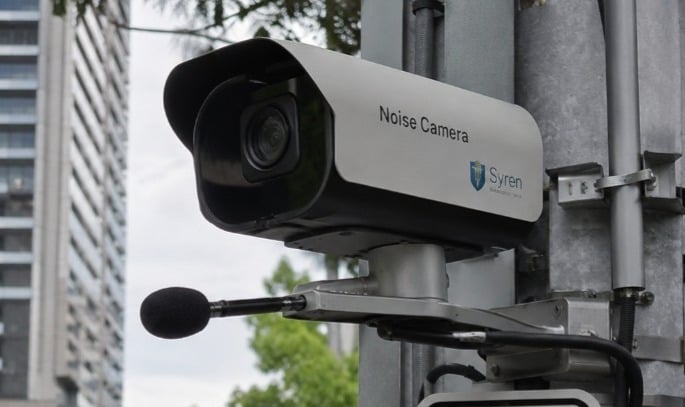
Victorian authorities will deploy roadside cameras capable of detecting excessively noisy vehicles under a new trial targeting hoon driving and illegally modified exhaust systems.
Seven acoustic cameras will be introduced across Melbourne and regional Victoria as part of the two-year, $1.3 million program. The devices are expected to begin operating later this year at locations with histories of repeated vehicle-noise complaints.
Unlike conventional speed or red-light cameras, the equipment uses microphones and acoustic sensors to measure noise generated by passing vehicles. When a predetermined sound threshold is exceeded, the system records images and other data, including the vehicle’s registration plate.
The information will then be assessed by Environment Protection Authority Victoria officers, who can issue the registered owner with a notice requiring the vehicle to undergo noise testing.
A vehicle found to exceed the permitted limit must be repaired or modified to comply with the regulations. Owners who fail to take the required action can face penalties of up to $1221 for an individual or $6105 for a company.

1
The cameras can be installed beside the road or attached to existing poles, allowing authorities to move them between locations as complaint patterns change. Sites will be selected after consultation with Victoria Police, although the final camera locations have not been publicly confirmed.
Port Phillip Council has pushed for one of the devices to be installed near Station Pier and Beacon Cove in Port Melbourne, where residents have repeatedly complained about burnouts, engine revving and noisy vehicle gatherings. Boroondara Council has made a similar request for Yarra Boulevard in Kew, another well-known late-night hoon hotspot.
The trial follows a sharp increase in reports about noisy vehicles. EPA Victoria received more than 9100 noise reports in 2025 and issued almost 5000 testing notices, along with 1222 infringement notices.
Similar technology has already been tested in the NSW council areas of Bayside and Wollongong (see main image from Transport for NSW). Those cameras combined microphones, video recording and number-plate recognition to identify loud vehicles, although fines were not issued during the initial trial.
The Victorian rollout is intended to give the EPA another way to identify repeat offenders without relying solely on residents recording registration numbers or police intercepting noisy vehicles at the time of an offence.
Follow WhichCar/Wheels on Google
Click the button below to make WhichCar by Wheels a preferred source for your news.


We recommend
-
 News
NewsAI traffic cameras lead to surge in road fines across Australia
Automated enforcement technology is lifting fine revenue nationwide, with most offences now detected by cameras rather than police.
-
 News
NewsDrivers urged to challenge AI camera fines as accuracy concerns grow
Lawyers warn automated systems may be misidentifying everyday objects as mobile phones.
-
 News
NewsMajority of AI seatbelt fines overturned in one state when drivers challenge the penalty
Sixty per cent of reviewed infringements were scrapped, as legal experts say motorists should contest questionable AI-issued fines.
