News

Gallery 1
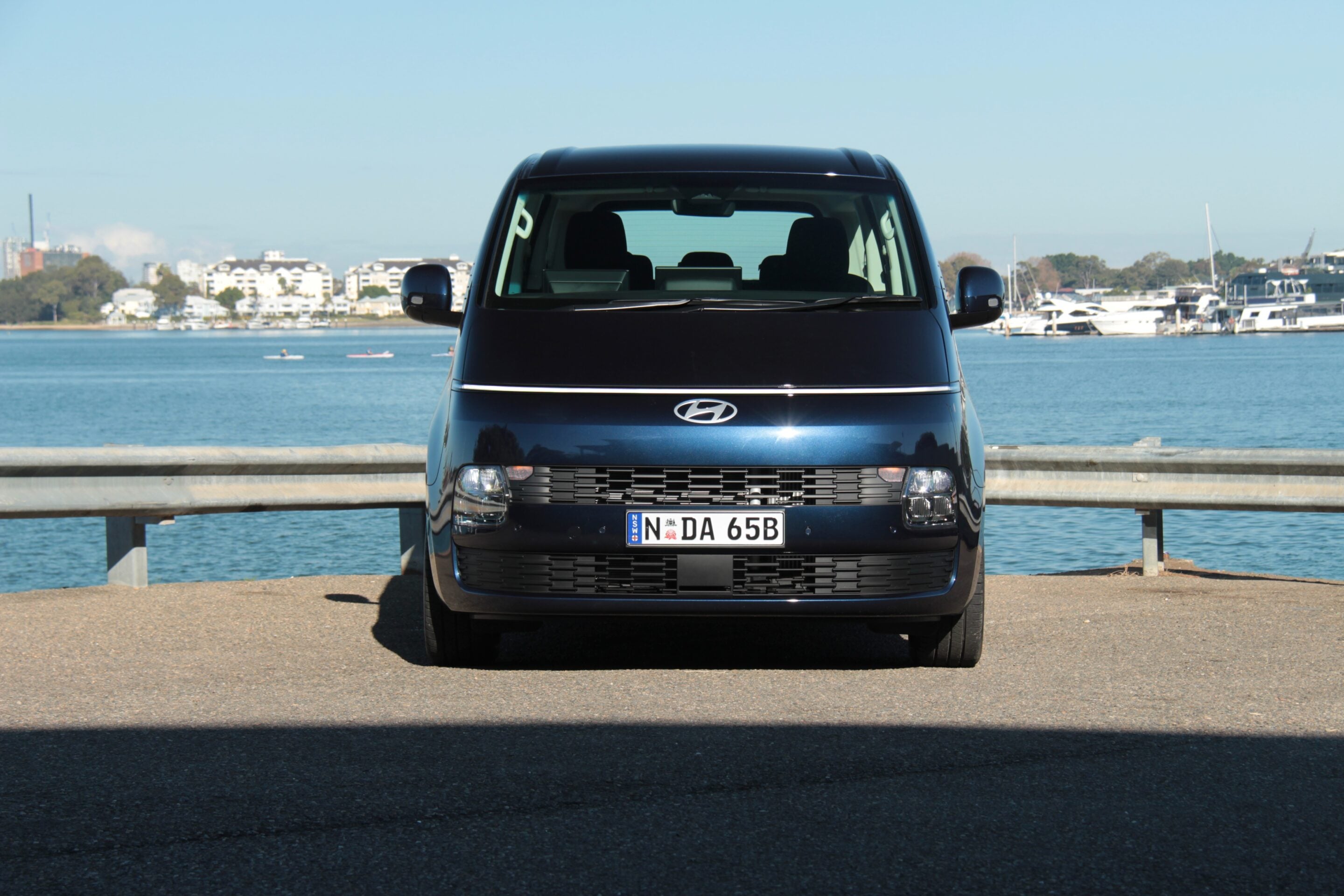
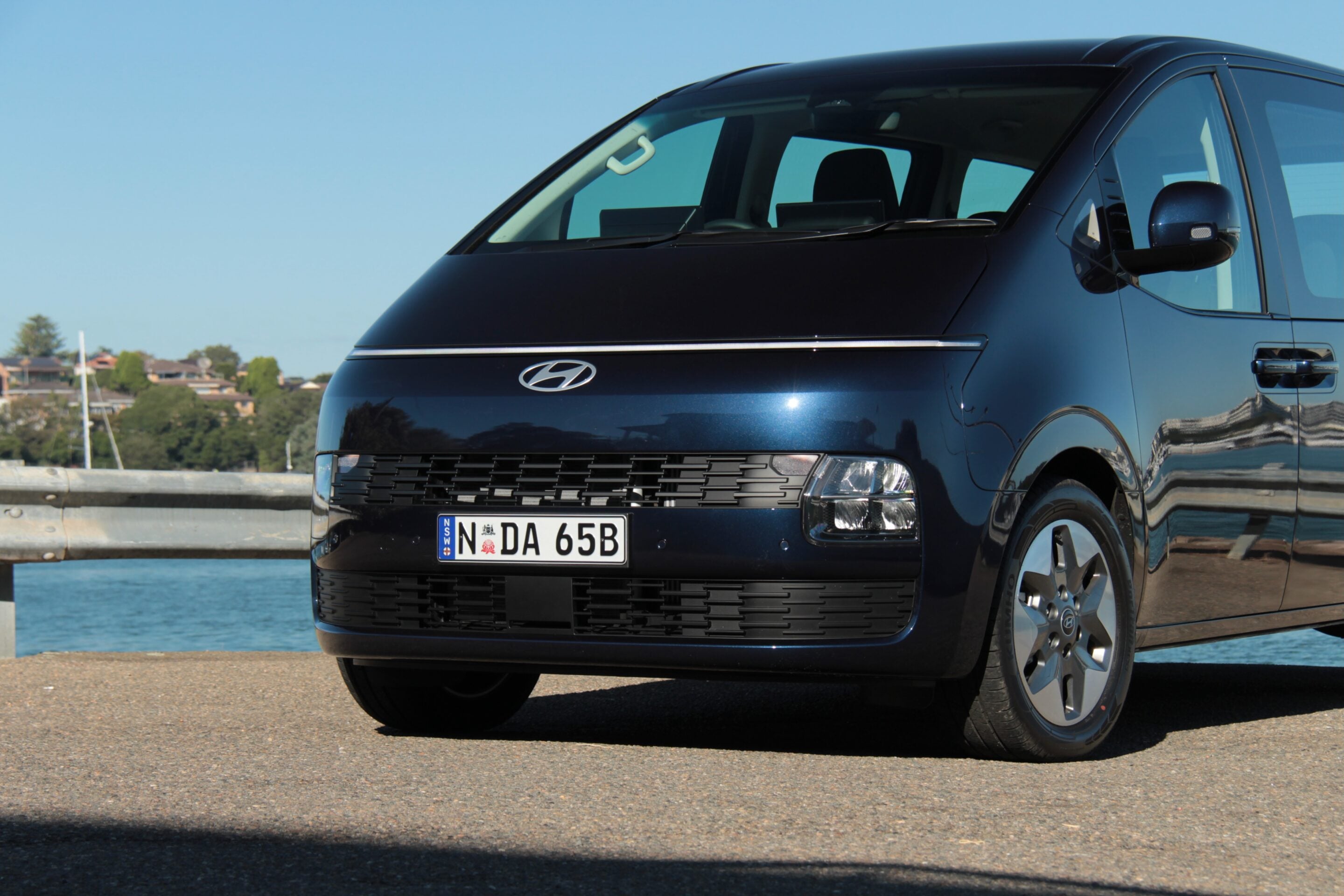
Hyundai Australia remains committed to offering the petrol V6-powered Staria alongside its new hybrid variants, though it admits Australia’s New Vehicle Efficiency Standard (NVES) will increasingly influence how long the six-cylinder people mover remains viable. No longer available in SUVs such as the Santa Fe and Palisade, V6 power is now only available in the Staria in Australia, alongside a four-cylinder turbo-diesel and a new turbocharged four-cylinder hybrid also seen in the Tucson.
Speaking to WhichCar at the launch event for the updated Staria and Staria Load, Hyundai said that current fleet demand continues to justify the petrol V6’s place in the Staria lineup, despite the addition of a more fuel efficient hybrid variant, as well as tightening emissions regulations.
“We still see demand from our fleet partners and are happy to continue offering the V6 Staria for them,” a Hyundai Australia spokesperson said. “Of course, NVES is a factor, and so has some part in the consideration of the variant remaining feasible.”
3
In its current form, the 3.5-litre V6 petrol engine in the Staria makes 200kW of power and 331Nm of torque, and is rated at 10.5L/100km on the combined fuel consumption cycle and a heavy 239g/km for CO2 emissions. Because of that, each V6 Staria will be fined $6100 under 2026 NVES rules, which will only increase in the future as the rules get stricter.
By contrast, the new 1.6-litre four-cylinder turbo-petrol hybrid offered only in the top-spec Lounge variant for now, makes almost the same amount grunt as the V6 at 180kW/304Nm, but crucially is rated at just 6.5L/100km for fuel consumption and 147g/km for emissions. Because of the latter figure, its projected NVES fine is much less at $1500, making it much easier for the company to juggle.
Despite the NVES pressure, Hyundai says that there is still clear demand for the V6. At the launch, the company forecasted that it will account for around 40 per cent of Staria MPV sales, making it the top-selling drivetrain. As for the diesel and hybrid, Hyundai predicts an equal 30 per cent remaining share for both drivetrains.
3
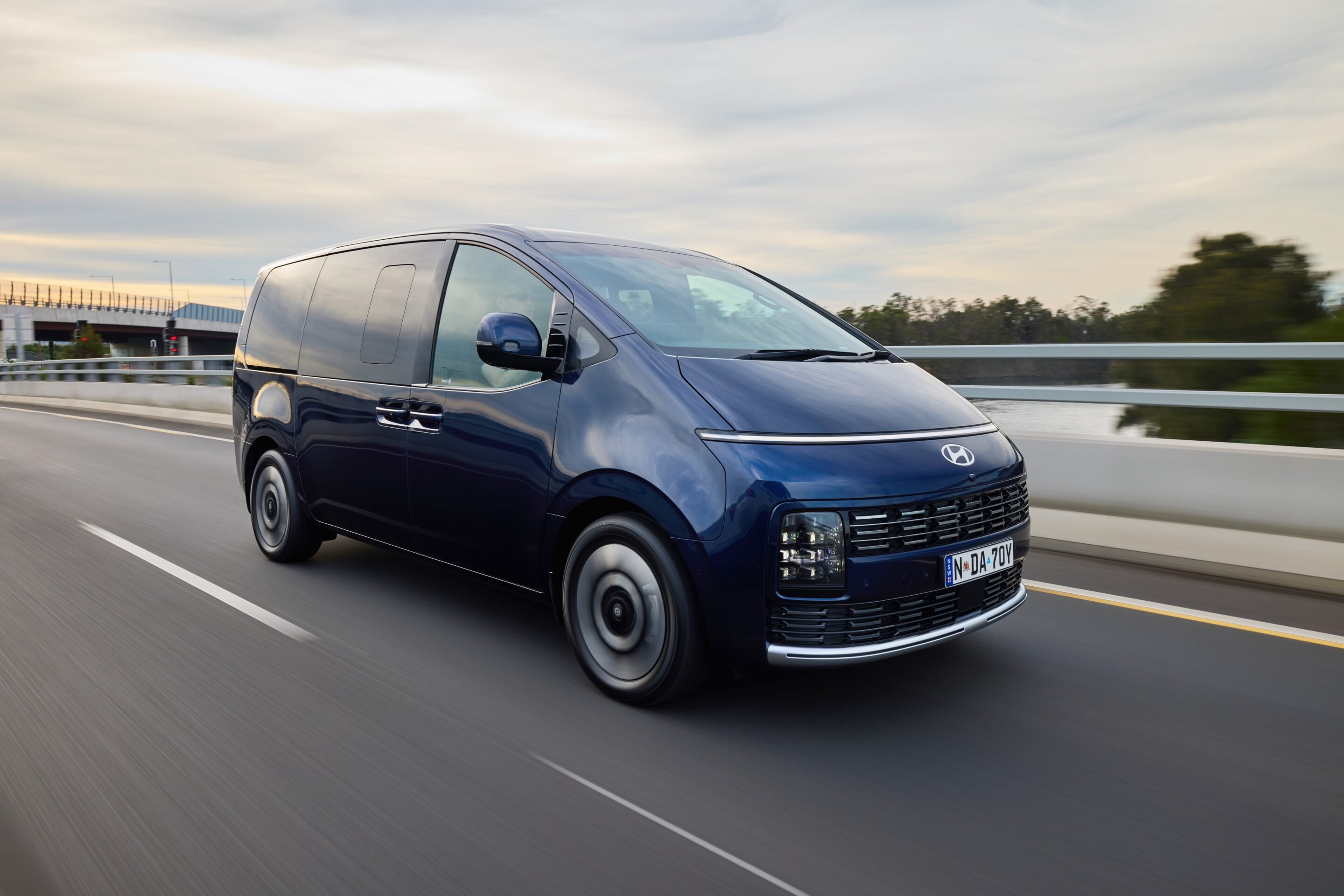
The new Staria Lounge Hybrid
While Hyundai remains committed to offering a range of powertrains, it admits complying with Australia’s strict new emissions regulations will become increasingly challenging.
“Like most brands with a mix of ICE, hybrid and battery electric vehicles, we are finding NVES a challenge, especially from 2027 onwards,” Hyundai said.
“Our intention is to balance our future model lineup to meet NVES requirements as best as possible and deliver affordable, efficient cars to the market.”
For now, the updated Staria range is now on sale in Australia priced from $54,300 plus on-road costs in petrol, diesel and hybrid forms. Stay tuned for our first drive reviews of both the Staria Lounge and Staria Load, coming soon.
Follow WhichCar/Wheels on Google
Click the button below to make WhichCar by Wheels a preferred source for your news.

We recommend
-
 News
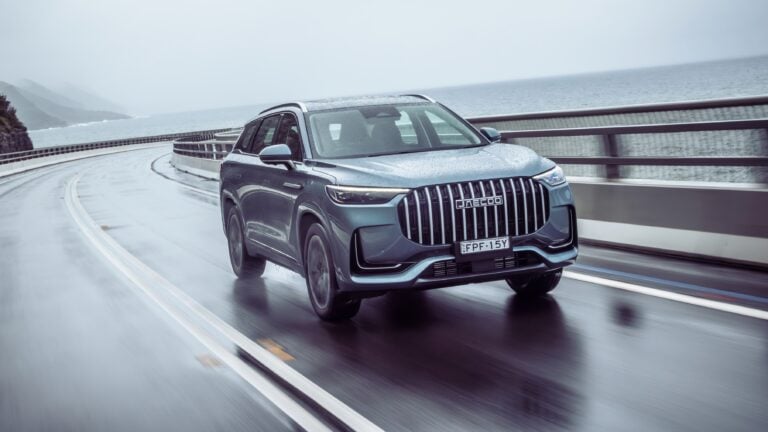
NewsJaecoo J8 SHS now on sale in Australia with seven seats and plug-in hybrid drivetrain
Previously only offered as a five seater, the new Jaecoo J8 SHS model arrives with a seven-seat layout and a new plug-in hybrid drivetrain making 315kW of power.
-
 News
NewsChery C5 now available with powerful yet efficient hybrid drivetrain
In addition to petrol and electric options already available, the Chery C5 now offers a new hybrid drivetrain with a consumption rating of just 4.9L/100km.
-
 News
NewsLeapmotor B05 Australian pricing announced ahead of August arrival
Leapmotor's new electric hatch arrives in August with sharp drive-away pricing, generous equipment and up to 482km of claimed driving range.