
News

Gallery 1
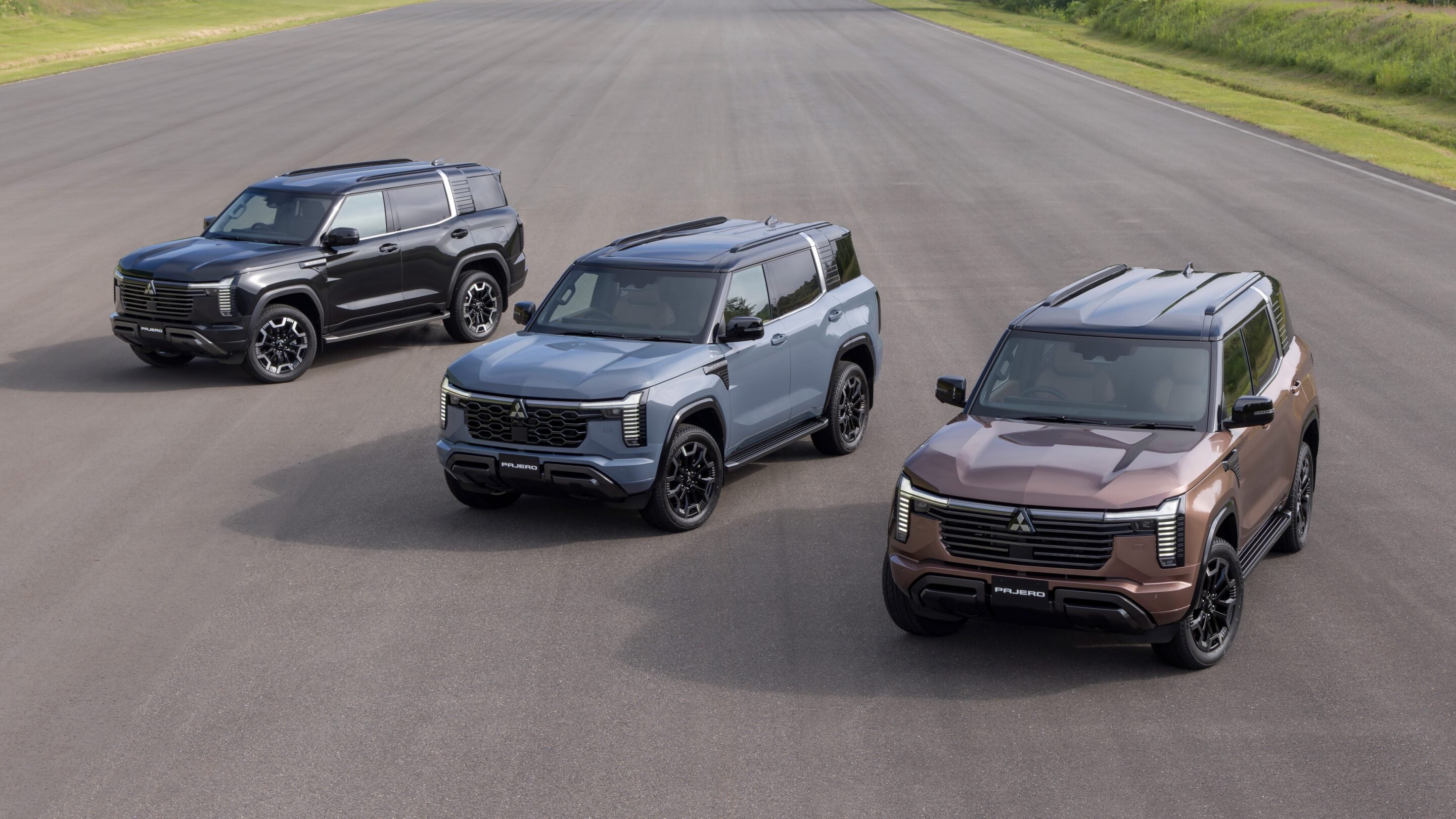
After an absence of almost five years, the legendary Mitsubishi Pajero is back – and it’s more luxurious, advanced and capable than ever before. On sale in Australia before year’s end, the new Pajero uses the same platform and beefy turbo diesel as its Triton ute sibling, but with a more sophisticated four-wheel drive system.
First introduced in 1982, the Pajero has sold almost 3.3 million units over its four-generation lifespan as it competed against the likes of the Toyota Prado, Ford Everest and Isuzu MU-X. Arguably the most iconic Mitsubishi product ever, the latest model will be built in Thailand alongside the Triton and launched in around 100 countries.
Measuring 4920mm long, 1925mm wide, 1910mm tall and riding on a 2870mm long wheelbase, the new Pajero is 70mm shorter in length, around the same width, 70mm shorter in height but 20mm longer between the wheels than the current Toyota Prado. It’s also only 20mm longer than the previous Pajero, and 95mm longer than the slightly smaller Pajero Sport sold locally until early 2025.
7
Sitting on a modified version of the ladder frame chassis used by the Triton ute with a new five-link rigid rear axle, the new Pajero also uses the same 2.4-litre turbocharged four-cylinder diesel engine as the Triton, making 150kW of power and 480Nm of torque.
However, unlike the Triton and its six-speed automatic transmission, the Pajero uses a “newly-developed” eight-speed auto. Fuel consumption figures are yet to be revealed, and a hybrid drivetrain is rumoured to be in development too.
As previously revealed by Mitsubishi’s teasers, the new Pajero uses the company’s ‘Super-All Wheel Control’ (S-AWC) system, which incorporates active yaw control and individual wheel braking. It also features the ‘Super Select 4WD-II’ four-wheel drive set-up from the Triton, which includes 2H (rear-wheel drive), 4H (full-time four-wheel drive), 4HLc (locked centre differential) and 4LLc (locked centre differential with low-range gears) modes.
Normal, eco, gravel, snow, mud, sand and rock driving modes are also fitted for drivers “of all experience levels to enjoy driving with confidence across a wide range of road surfaces”. Mitsubishi says the new Pajero’s ground clearance is 230mm – between 9mm and 20mm more than a Prado, depending on the model. Its approach angle is 30.4 degrees, ramp breakover is 22.6 degrees and departure angle is 25.8 degrees.
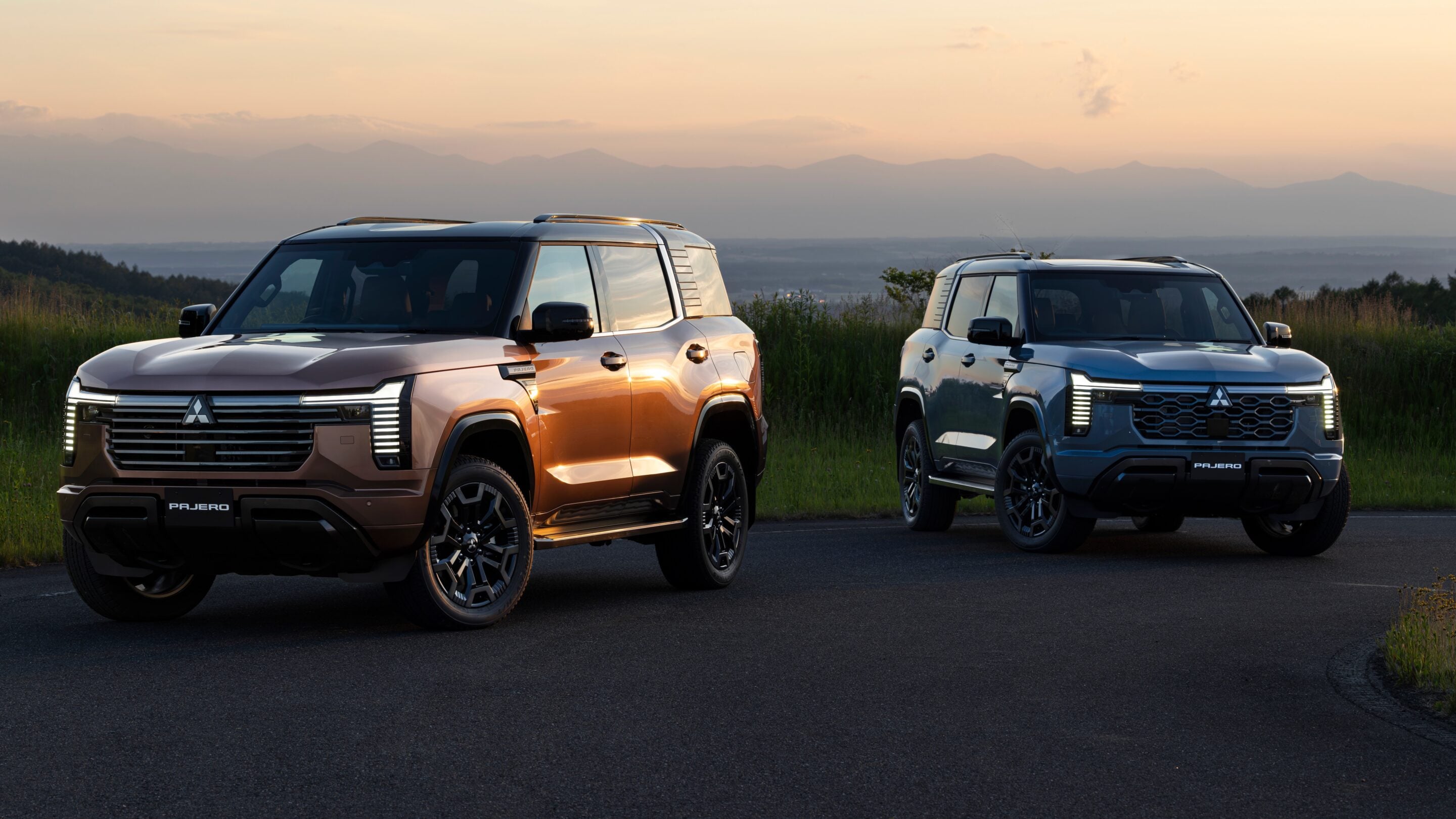
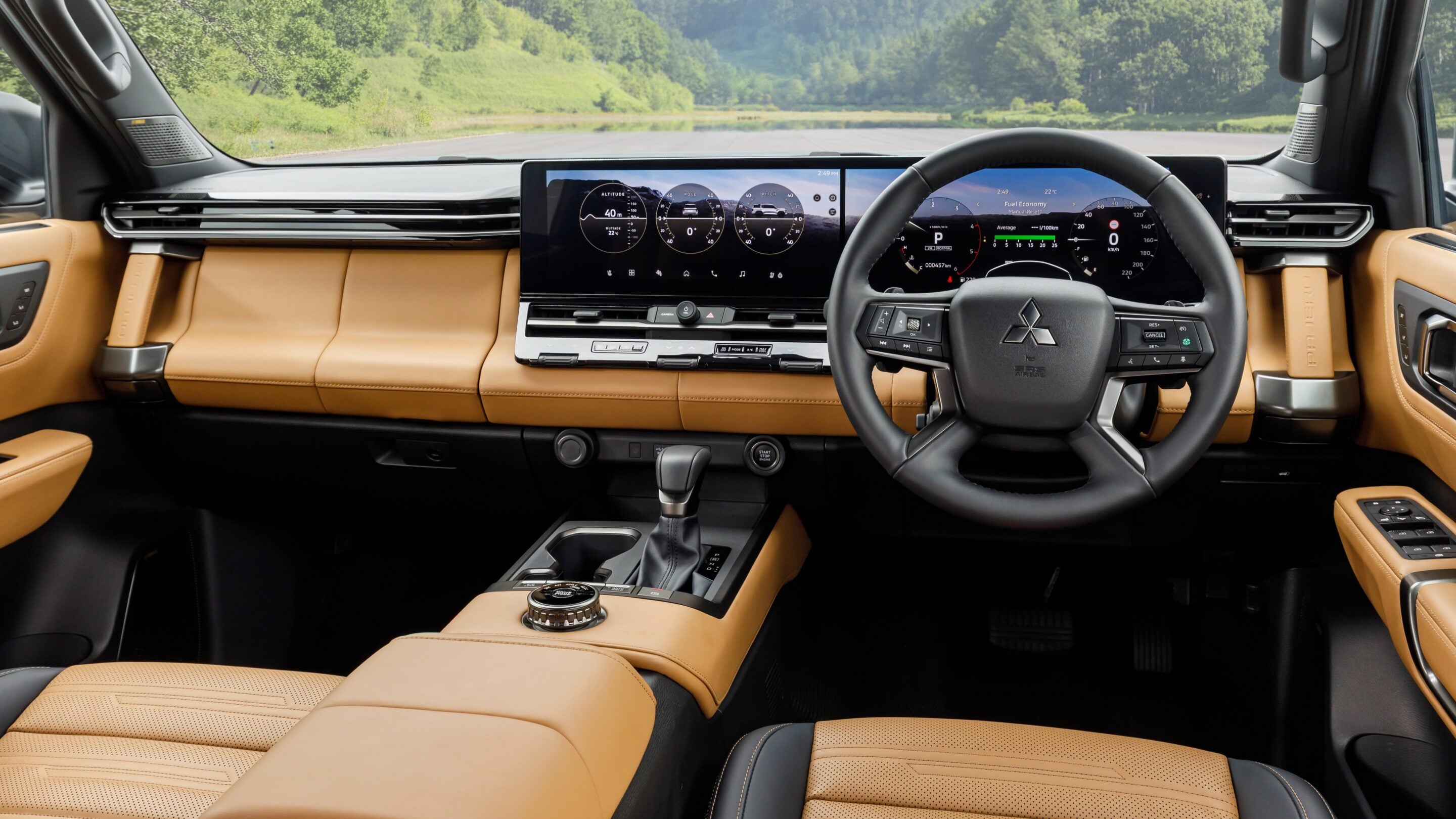
The Pajero’s exterior styling is bold and strong, with ‘T-Bar’ LED lighting at the front, a large honeycomb grille and even a “‘”hexagonal rear motif that reinterprets the rear-mounted spare tyre of earlier generations of Pajero”, according to Mitsubishi. The interior is decidedly more premium than what we’ve seen previously, with new twin displays of up to 14.3 inches and soft-touch leather-like trims on the dashboard and doors.
11
As before, three rows of seating will accommodate up to seven passengers, and even the third row will have air vents and USB-C ports. Move forward into the second row and features include a 150mm-sliding seat, inbuilt sunshades in the doors, a third zone of climate control, heated outboard seats and more USB-C charging ports in the front seat backs.
Mitsubishi is yet to reveal a full standard equipment list, but has confirmed that the Pajero will be equipped with eight airbags – including a front centre airbag – as well as its ‘MI-PILOT’ adaptive lane guidance, adaptive cruise control, autonomous emergency braking with pedestrian, cyclist, motorcyclist and intersection assistance, front cross-traffic alert and emergency assist for pedal misapplication.
Other features include heated and ventilated front seats, acoustic window glass, electric steering column adjustment, multiple modes for the displays, including the triple-gauge layout from previous Pajero models, wireless smartphone mirroring, a 360-degree camera that creates a 3D model of the vehicle, Mitsubishi Connect live services functionality and a 12-speaker Yamaha Ultimate audio system.
The new Pajero is set to go on sale in Australia before the end of 2026, with local pricing and specifications yet to be confirmed.
Follow WhichCar/Wheels on Google
Click the button below to make WhichCar by Wheels a preferred source for your news.

We recommend
-
 News
NewsRange Rover goes electric in the biggest-ever change to the iconic luxury off-roader
After a long wait, the electric Range Rover has finally been revealed in what is the biggest change ever to the nameplate, offering up to 600km of range.
-
![Two Lexus NX SUVs parked side by side in a lot, green on the left and silver on the right, with a concrete wall and trees behind.”, “Green and silver Lexus NX crossovers parked parallel in front of a tall concrete barrier.”, “A green Lexus NX and a silver Lexus NX in a parking area, with a concrete wall and greenery in the background.”, “Two luxury crossover SUVs (Lexus NX) displayed in a lot beside a gray concrete wall.”, “Silver Lexus NX (front) and green Lexus NX (rear) parked next to a concrete barrier with trees in the backdrop.”]} }{}{](https://media.whichcar.com.au/uploads/2026/09/LexusNX9-768x512.jpg) News
NewsNew Lexus NX SUV goes all-hybrid and gets more grunt as brand axes other petrol-only models for Australia
The revamped Lexus compact SUV also introduces big changes to the interior to go along with improved battery tech.
-
 News
NewsThe rugged Hyundai Boulder SUV breaks cover in patent filing that shows it's a no-nonsense off-roader
The Hyundai Boulder was revealed as a concept in April. Now a new image provides a look at how it could look in production form.
