Reviews

Gallery 1
7.6
/10
Score
Score breakdown
7.0
Safety, value and features
8.0
Comfort and space
7.0
Engine and gearbox
9.0
Ride and handling
7.0
Technology
Things we like
- Excellent off-road and quite good on it
- Spacious cabin a big improvement over the last model
- Feels smaller than it actually is from behind the wheel
Not so much
- Loud and somewhat sluggish four-cylinder diesel
- GX is too sparsely equipped
- Not cheap for a base model
With the cost of seemingly everything on the rise, buying a new car isn’t getting any easier for many of us. Prices continue to climb, once-affordable models are creeping further upmarket and even the latest Toyota LandCruiser Prado is considerably more expensive than the model it replaced.
If you still have your heart set on the famous model, however, it at least offers an entry level model in the form of the GX.
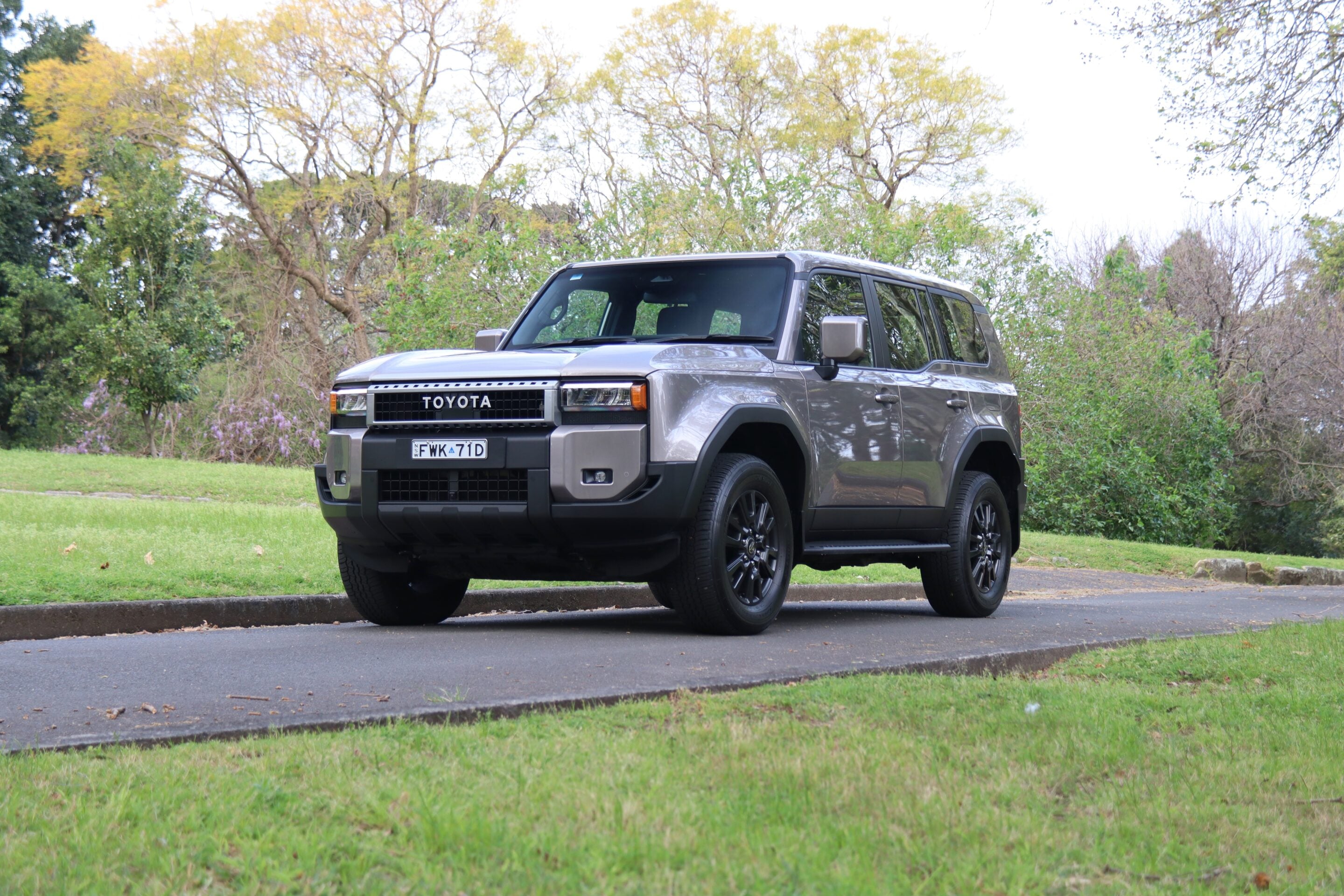
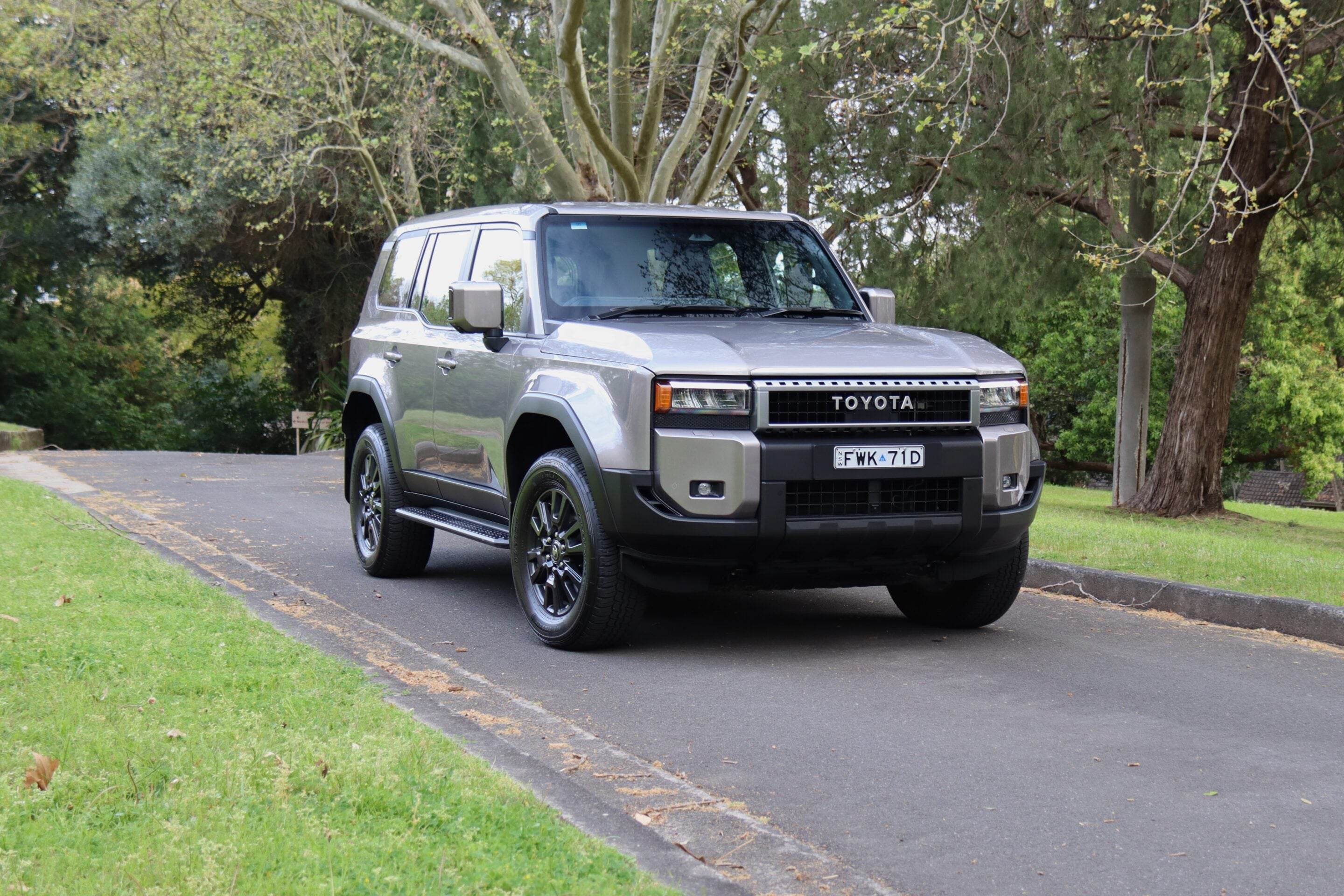
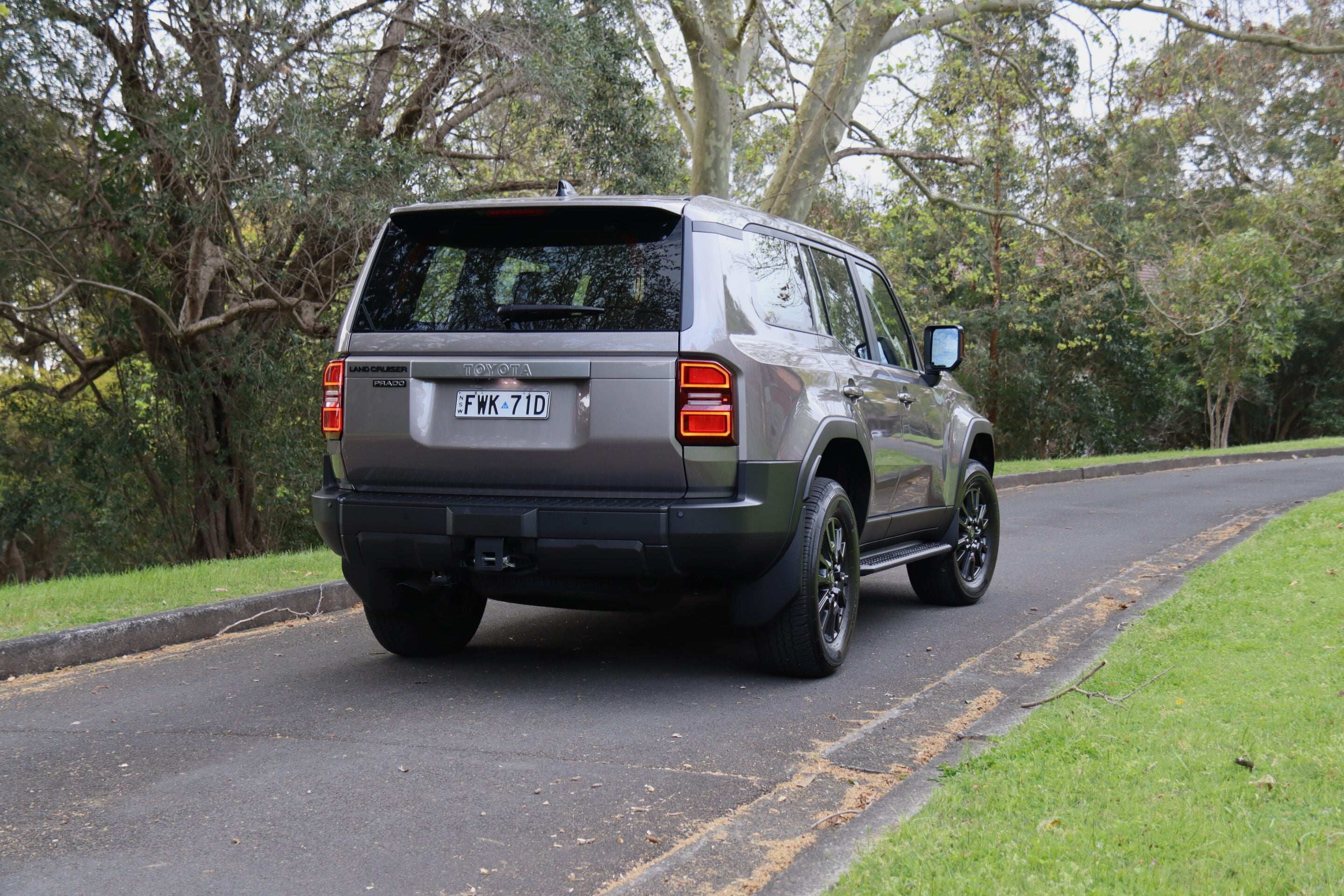
It’s certainly not cheap but rather than piling on luxury features and pushing the price even higher, the GX keeps things simple. There are cloth seats, smaller 18-inch wheels and seating for five rather than seven, but underneath it’s still a Prado, with the same diesel drivetrain and serious off-road credentials as more expensive versions. In a world where cars keep getting more expensive, is the cheapest and simplest Prado actually the one to buy?
How much does the Prado GX cost to buy?
While the flagship Kakadu nudges six figures before you’ve even paid the government its share, the entry-level GX is priced from $73,200 plus on-road costs, or around $80,000 driveaway once you’ve included a premium paint like the ‘Dusty Bronze’ hue of our test car. The next-step-up GXL asks $79,665 +ORC, or $80,665 +ORC if you’re after one with seven seats.
Standard equipment on the GX includes 18-inch alloy wheels, dusk-sensing automatic LED headlights, rain-sensing wipers, side steps, smart keyless entry with push button start, dual-zone climate control, a 12.3-inch touchscreen with satellite navigation and wireless Apple CarPlay and Android Auto, a 10-speaker sound system and five USB-C ports. You also get a 7.0-inch digital instrument display, 360-degree panoramic-view camera and a 220-volt outlet in the cargo area.
4
Safety equipment is similarly generous, with autonomous emergency braking, adaptive cruise control, lane-keeping assistance with adaptive lane guidance blind-spot monitoring, safe-exit assistance, front and rear parking sensors, driver monitoring and even nine airbags.
Stepping up to the GXL adds synthetic leather upholstery, leather-like trim for the steering wheel and gearknob, heated and ventilated front seats, an electric tailgate, roof rails, rear privacy glass and an extra zone of climate control. Crucially for family buyers, the GXL is the first Prado model available with seven seats (+$1000). For a lot of people, the GXL is the true base model Prado because of the extra seats availability.
How practical is the Prado GX?
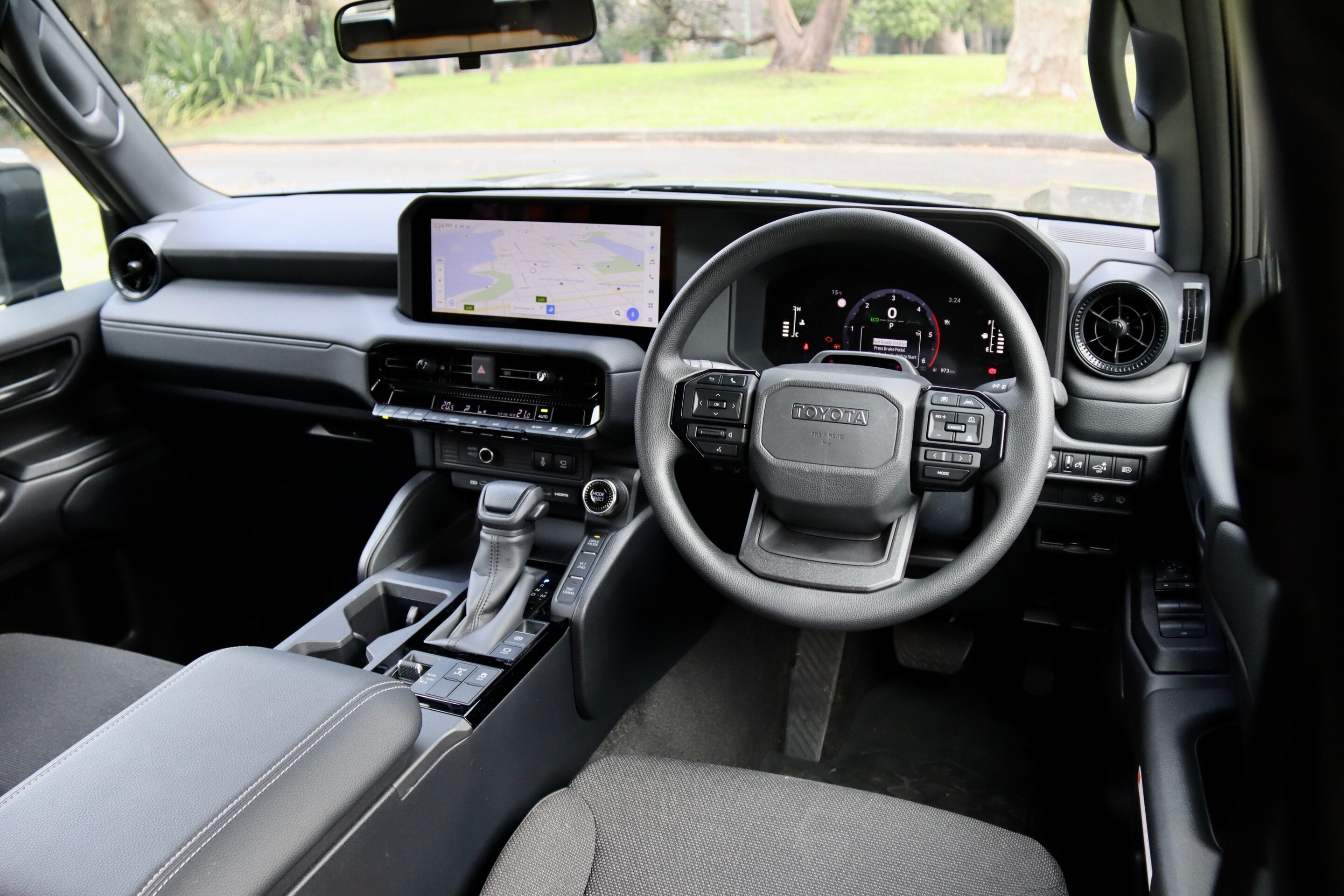
The cabin itself also feels anything but cheap. The 250 Series Prado’s dashboard is a dramatic improvement over its predecessor, with a more modern horizontal design, chunky switchgear designed to be used with gloves on and better material quality. There are plenty of physical buttons for important functions, rather than burying everything inside the touchscreen, and everything feels well screwed together.
7
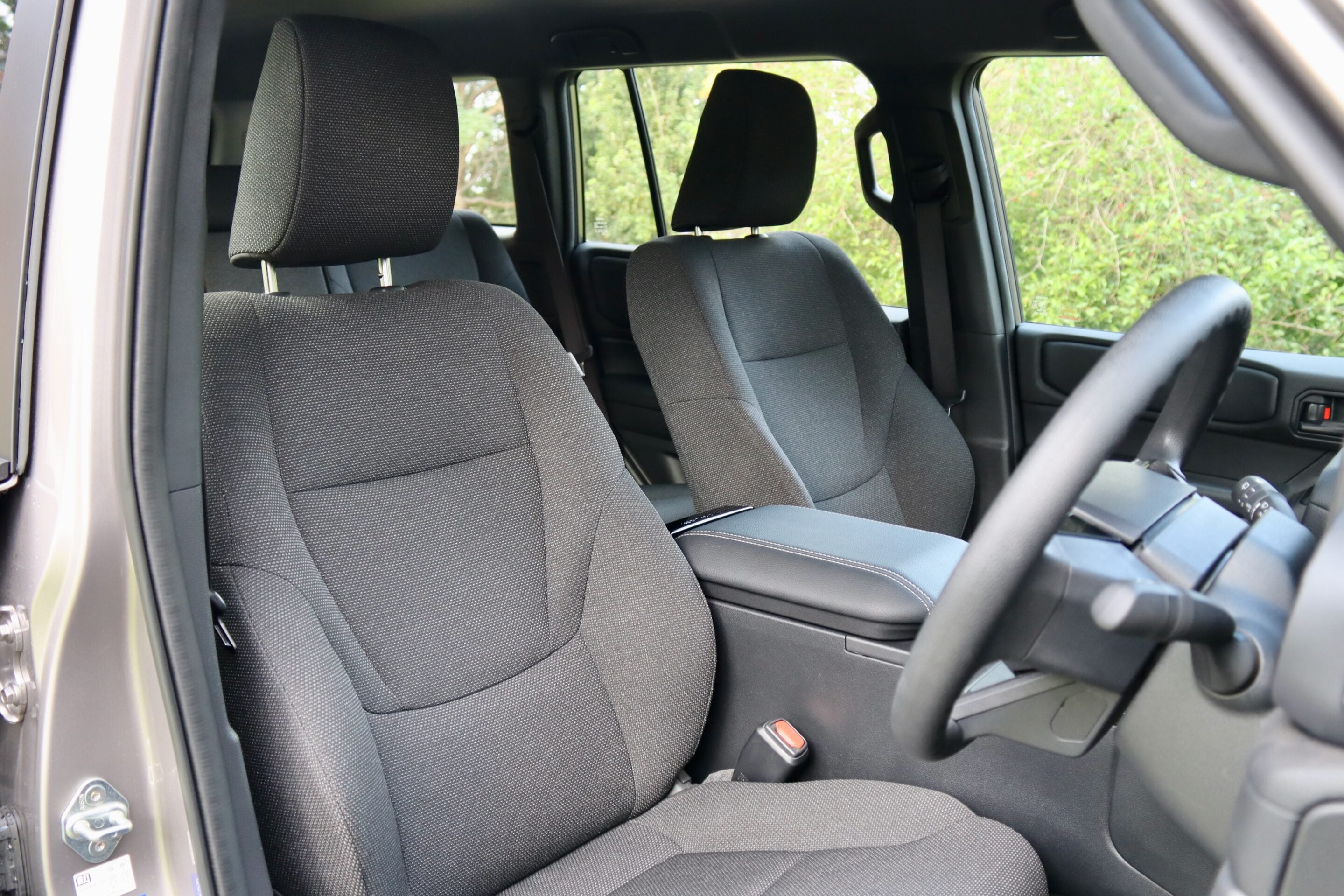
Where the GX shows its entry-level status is in some of the cabin finishes. Its seats are manually adjustable and covered in fabric, the steering wheel is urethane rather than leather and there are hardy rubber floor mats rather than plush carpet. But strangely, those things kinda suit the Prado.
There’s also excellent storage throughout the front of the cabin, the driving position is commanding and visibility is impressive for something measuring almost five metres long and nearly two metres wide. The manually adjustable seats might sound basic at this price and really should offer more adjustment, but they’re supportive and comfortable over long distances.
Space in the second row is generous, with plenty of room for adults, a reclining backrest and useful storage like bottle holders in the doors and charging points on the centre console.
Unlike the seven-seat Prado variants, the GX is strictly a five-seater, and that means it avoids one of the new Prado’s biggest packaging compromises. Seven-seat versions feature a bulky third row that eats heavily into luggage space even when folded, whereas the GX offers a vast 954 litres behind its second row. Folding the 60:40 rear seats and capacity expands to 1895 litres, which is massive.
7
The load floor is relatively high because the battery for the 48V mild-hybrid system is stored underneath it and isn’t flat with the second row folded. There’s still a huge amount of usable space though.
The old model’s annoying side-hinged rear door has disappeared, replaced by a more conventional top-hinged tailgate with separately opening glass that makes accessing the luggage area much easier. The separate opening tailgate glass is a genuinely useful feature as well.
What’s the Prado GX like to drive?
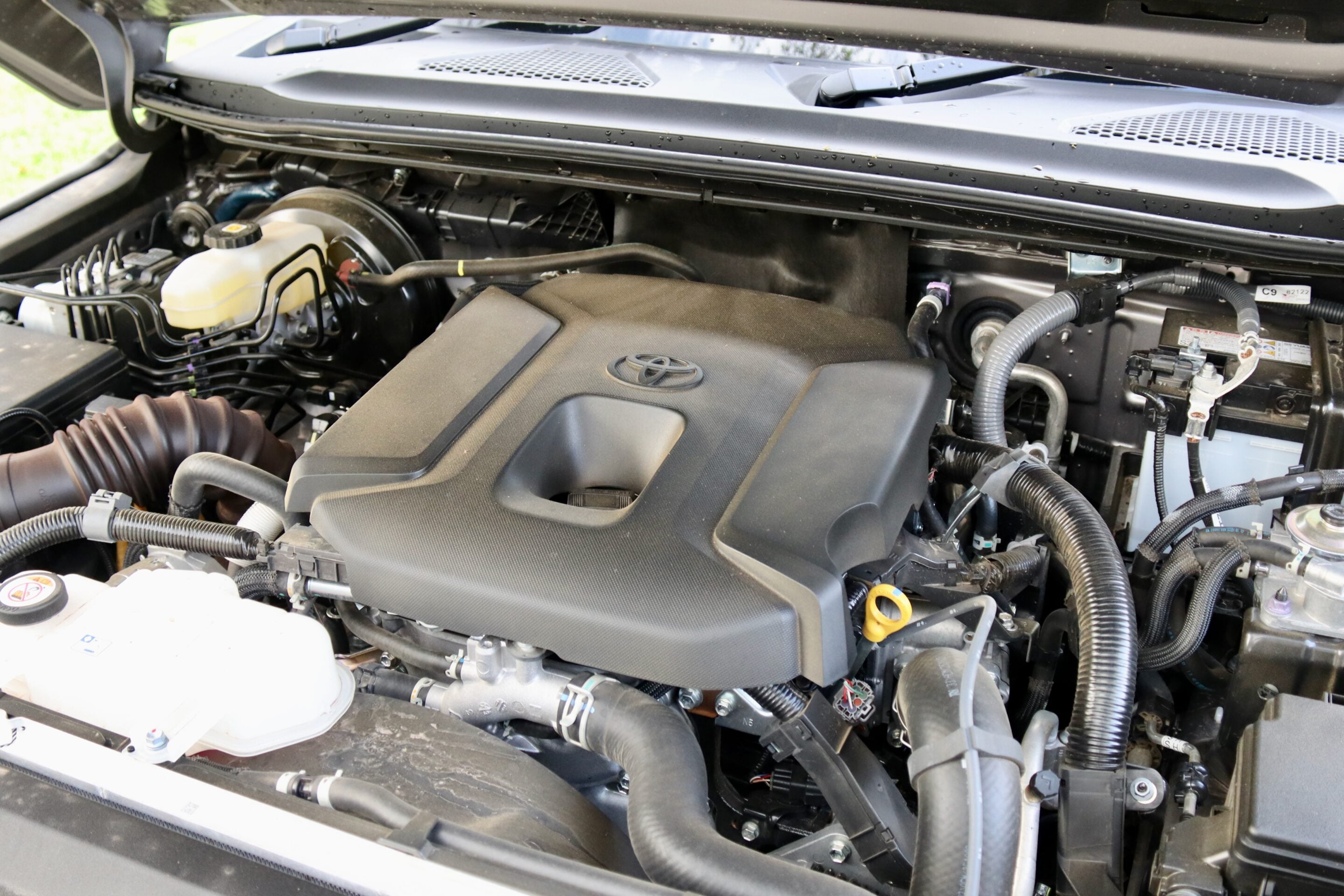
Every new-generation Australian-spec Prado uses Toyota’s familiar 2.8-litre four-cylinder turbo-diesel engine paired with 48-volt mild-hybrid assistance. Outputs remain 150kW of power and 500Nm of torque, while an eight-speed automatic transmission and permanent four-wheel-drive system with low-range gearing also still feature. On paper, those figures aren’t especially remarkable for a vehicle weighing almost 2.5 tonnes, and on the road, the Prado isn’t particularly fast.
Put your foot down and there’s more than enough performance for everyday driving, but overtaking requires planning and the engine is loud – we wish a detuned version of the LandCruiser 300 Series’ 3.3-litre V6 diesel were fitted to the Prado as it would be more refined, but also stronger. The 48-volt mild-hybrid assistance helps smoothens things out at lower speeds and the eight-speed automatic is a considerable improvement over the old six-speeder.
Toyota claims combined fuel consumption of 7.6L/100km, though our week-long consumption in mostly urban driving was 10.2L/100km. The new Prado sits on Toyota’s TNGA-F body-on-frame platform, as does the larger LandCruiser 300 Series, and feels far more sophisticated than the old 150 Series. The steering is quicker and more accurate, making it easier to place on the road and less cumbersome around town.
8
The Prado GX’s ride quality is excellent. Its small 18-inch wheels provide plenty of tyre sidewall, and the suspension does an excellent job of dealing with Australian roads. Even bigger bumps are well absorbed, while the body control is impressively taut too for a big off-roader, making it overall more comfortable than before. It’s obviously not a sports car and will roll through corners, but it’s well controlled and handles well considering its size and off-road intentions.
We didn’t get to try off-road driving during the loan period of this Prado GX, but previous experience tells us that it’s also excellent away from tarmac. Off-road features include low-range gearing, a locking centre differential, Toyota’s excellent off-road traction control, crawl control and downhill assist control. It can also tow a 3500kg braked trailer, though its 110-litre fuel tank is a big 40 litres less than the previous model.
How much does the Prado GX cost to service?
As with other new Toyota products, the Prado is covered by a five-year/unlimited km warranty with no roadside assistance (buyers must pay a minimum of $99 annually instead), while servicing to the scheduled program can extend the engine and driveline coverage to seven years.
Servicing is required every 10,000km or six months (whichever comes first), which is shorter than many rivals, and the first five years/100,000km of servicing costs $3950, or $790 per year.
Should I buy a Toyota LandCruiser Prado GX?
Ultimately, we think that the GX proves that choosing the cheapest model in the range doesn’t necessarily mean feeling shortchanged, as it proves that the Prado’s impressive fundamental qualities are featured across the range. That means a comfortable and composed driving experience, excellent off-road ability, a spacious cabin, strong off-road ability and all the toughness and reliability that buyers expect from the LandCruiser badge feature across the range.
Counting against it are the agricultural drivetrain that’s loud everywhere. Additionally the upper-spec GXL’s extra equipment isn’t too much extra cash and even though it’s the base model, the GX is still an expensive beast priced at around $80,000 once on-road costs are included. We’d stump the extra cash for the GXL because we think it’s the best value model, but the Prado GX proves charming in its own right, and worth consideration as a large off-road SUV.
3
Prado GX standard features:
- 18-inch alloy wheels with a full-size spare
- Dusk-sensing automatic LED exterior lighting
- LED front fog lights
- Rain-sensing automatic wipers
- Heated and auto-folding mirrors
- Side steps
- Keyless entry with push button start
- Dual-zone automatic climate control
- Height-adjustable manual driver’s seat
- Cloth interior trim
- Urethane steering wheel and gear lever
- 7.0-inch digital driver’s display
- 12.3-inch touchscreen
- Satellite navigation with live traffic
- Wireless Apple CarPlay and Android Auto
- AM/FM/DAB+ digital radio
- Bluetooth calling and audio streaming
- 10-speaker sound system
- 5x USB-C ports
- Sport, eco and normal driving modes
- All-weather rubber floor mats
- 9x airbags
- Autonomous emergency braking
- Adaptive cruise control
- Lane keeping assistance with adaptive lane guidance
- Blind-spot monitoring with rear cross-traffic alert
- Safe exit assist
- Traffic sign recognition
- Driver attention monitoring
- Auto high beam
- Front and rear parking sensors
- 360-degree camera
- Security alarm
Prado GX specifications:
| Price | $73,200 plus on-road costs |
|---|---|
| Powertrain | 2755cc turbocharged four-cylinder diesel + 48V mild-hybrid system |
| Power | 150kW (@ 3400rpm) |
| Torque | 500Nm (@ 1600 – 2800rpm) |
| Transmission | Eight-speed automatic, four-wheel drive |
| Claimed combined CO2 emissions | 200g/km |
| Fuel type/tank size | Diesel, 110 litres |
| Kerb weight | 2490kg |
| Dimensions (L/W/H/WB) | 4990/1980/1925/2850mm |
| Boot capacity | 954 litres (rear seats up), 1895 litres (rear seats folded) |
| Warranty | Five-year/unlimited km |
| Five-year service cost | $3950 ($790 per year) |
| On sale | Now |
7.6
/10
Score
Score breakdown
7.0
Safety, value and features
8.0
Comfort and space
7.0
Engine and gearbox
9.0
Ride and handling
7.0
Technology
Things we like
- Excellent off-road and quite good on it
- Spacious cabin a big improvement over the last model
- Feels smaller than it actually is from behind the wheel
Not so much
- Loud and somewhat sluggish four-cylinder diesel
- GX is too sparsely equipped
- Not cheap for a base model
Follow WhichCar/Wheels on Google
Click the button below to make WhichCar by Wheels a preferred source for your news.


We recommend
-
 News
NewsToyota will slam the brakes on its redesign process with models waiting almost a decade for a new look
Keen on an all-new version of big-selling Toyota models like the HiLux and RAV4? You'll need the patience of a saint...
-
 News
NewsToyota to launch next-generation battery to slash the cost of cars and boost their performance
Toyota is aiming to change production lines to fit the new tech to 600,000 vehicles, with customers the big winners.
-
 News
NewsVFACTS August 2026: Record monthly battery electric sales lead the way as China's domination of strong new-car market continues
Chinese brands were big winners once again, according to the fresh VFACTS figures, which show they occupy four of the top 10 spots.