Comparisons

Gallery 1
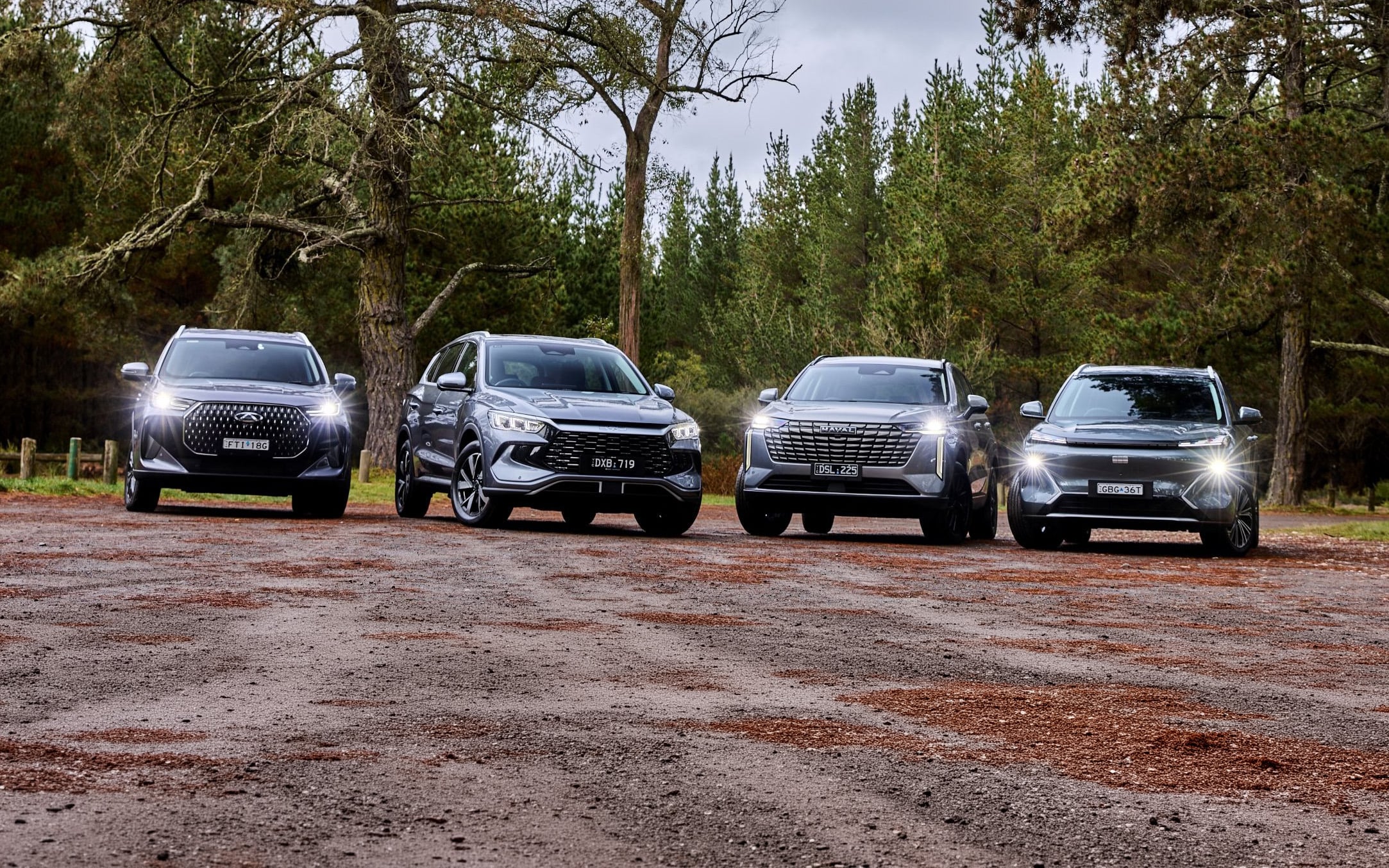
Wheels readers have, as they so often do, spoken loudly. Not dismissive of plug-in hybrid (PHEV) technology outright, readers of this magazine have, overwhelmingly, asked for one specific question to be answered. How much fuel do they use in the real world, once the battery is depleted? And so, Wheels has delivered.
We’ll look at the vehicles assembled here in a minute, but first let’s cover a couple of important details. The reason you’ve asked for this test is because of the vagaries of the ADR fuel consumption claim that most of these PHEVs carry. And that relates directly to the ADR testing itself.
Given the only way to replicate a test is to do it under a very controlled set of parameters, it’s fair to say that the publicised fuel use claim rarely reflects real world consumption. It does, however, allow buyers to cross shop vehicles within segments to get an idea of which one is more efficient. You should expect, as we’ve always maintained, to use more than the ADR claim in the real world.
The second part of the equation is the testing itself (designed before regular hybrids were a sales force, let alone plug-in hybrids), which doesn’t elegantly reflect the fact that over the first 100km, most clever PHEVs use barely any petrol. Hence claims like 1.2L/100km, for example.
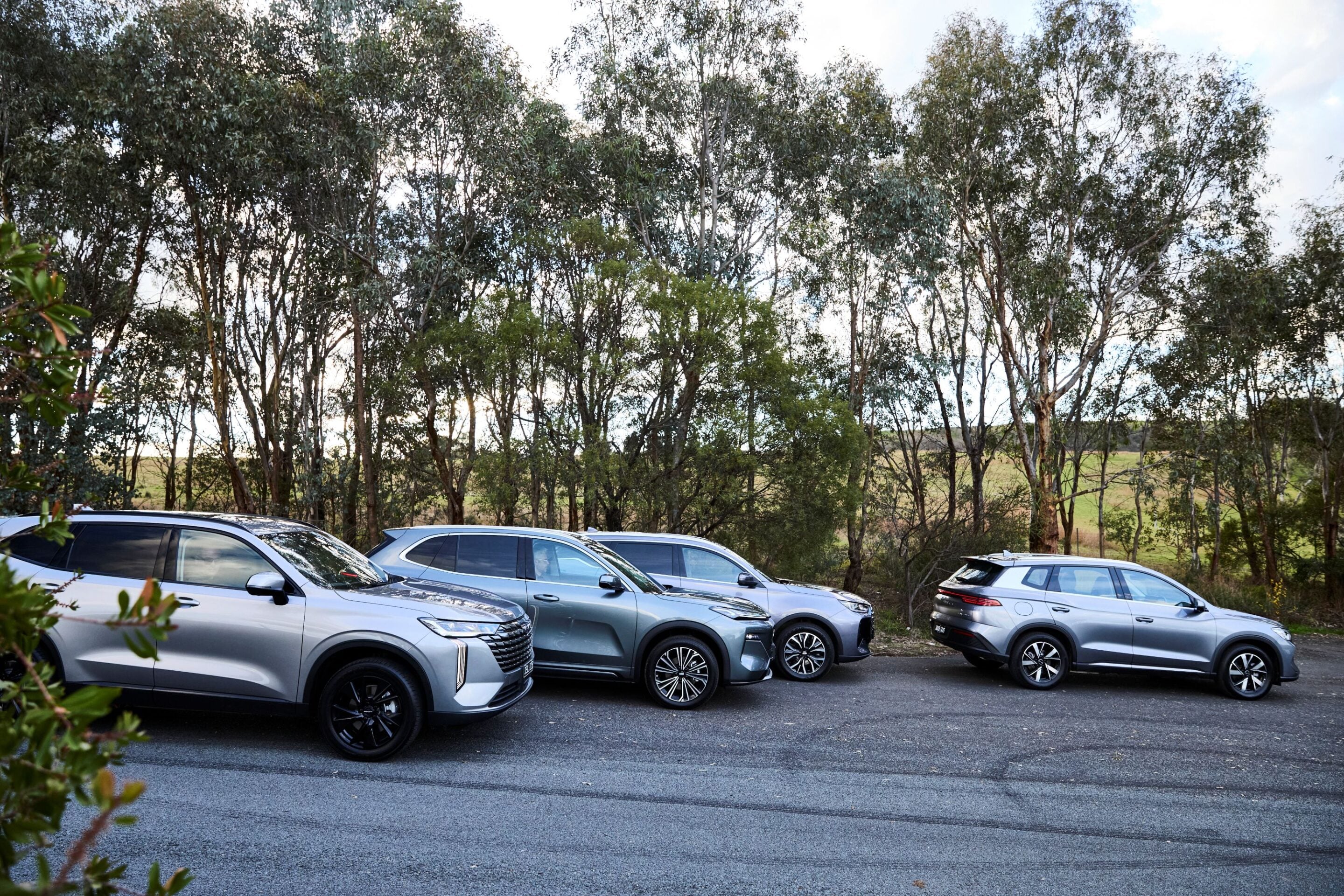
1
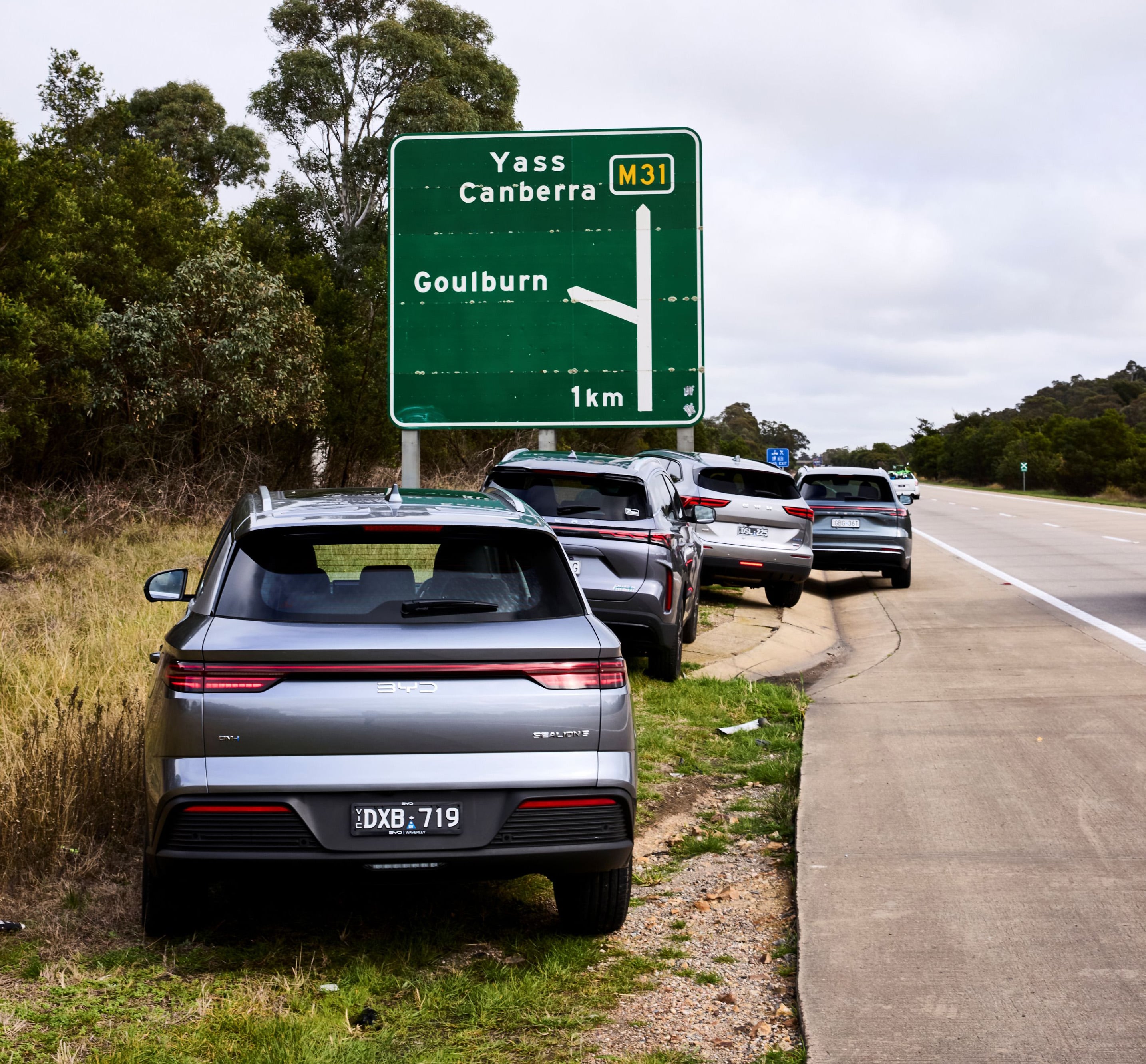
For this test, we fired straight into the kind of driving PHEVs should like the least – prolonged highway running, 700km of it, forced into EV mode as we set off. All four SUVs started with a full tank and a full charge, to give them their best shot at efficiency and range.
It’s worth reminding readers here, too, that the only way to smartly run a PHEV, is to charge it every night at home and do as much of your day-to-day running on electrons as possible. Any of the four SUVs assembled here are more than capable of covering the average Australian daily commute (generally accepted to be between 37km and 40km) on electric power alone, but they have to be charged first. If you buy a PHEV and never plug it in, you’re not getting the real benefits of the technology. We also know that a lot of drivers on the urban fringe travel more than 40km total to get to and from work, which is why the way these four behave once the petrol engine kicks in properly is so crucial.
The way that plug-in hybrids work has evolved, too, benefitting from not just the advancement of the design, but advances in both internal combustion engine technology and electric vehicle technology. Not all PHEVs are equal either of course, but the first versions effectively ran the battery flat, then reverted to the petrol engine, which then had to lug around a largely ineffective battery pack and electric motor (or motors), to the detriment of fuel efficiency. The first PHEVs also had short electric ranges, meaning they weren’t really practical in the real world.
Now, though, the technology has changed, and the accepted way forward is for the battery pack to retain a certain state of charge (20 to 25 per cent in most cases), and once it reaches that point, the petrol engine can deliver power to the wheels, or act as a generator to refill the battery, or both.
The systems, and the brains that control them, are significantly smarter, and there’s no surprise that
Chinese manufacturers are leading the way. The pace of development, improvement, increased efficiency and control smarts is extraordinary.
If you’re like us, you’ll be genuinely stunned by the real world fuel use of the four SUVs on test – with numbers that keep regular hybrids on their toes. Given a regular hybrid can’t cover anywhere near the distance of a PHEV on pure electricity, their genuine efficiency now puts the PHEV firmly in focus.
Our drive loop began with a short 6.6km run in regular traffic to the on-ramp of a major Sydney motorway where the speed then sat between 100km/h and 110km/h. The final average fuel use figures were recorded when we had returned back to the city. These PHEVs were therefore given almost no opportunity to regenerate any electricity as you would in traffic, making it as difficult as we could for them to remain efficient. First, then, to the vehicles on test.
BYD Sealion 5 Premium
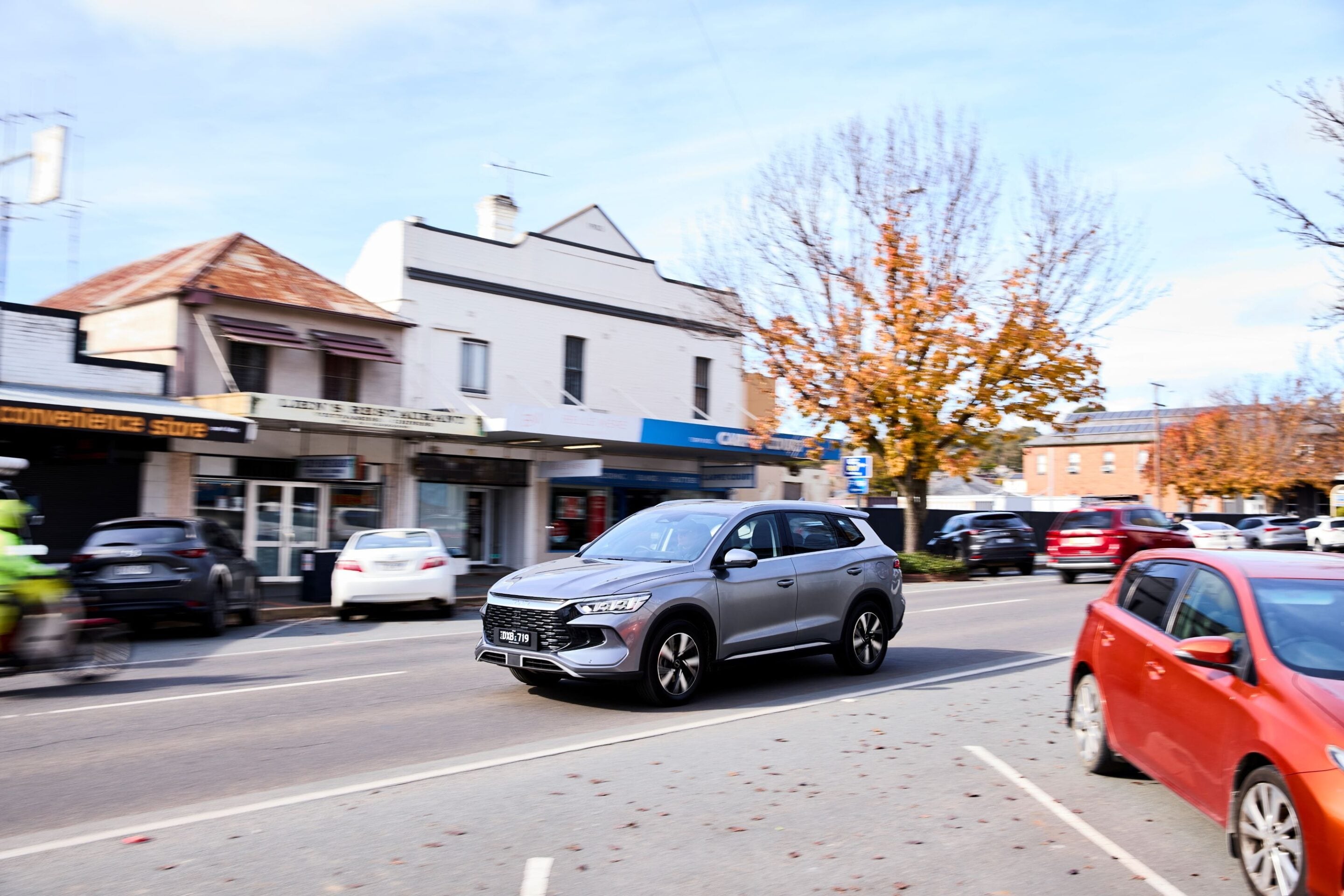
1
There’s a sharp focus on value throughout this foursome and the BYD starts from $37,990 before on-road costs to hold up its end of the bargain. At the time of testing, the Sealion 5 was listed at $41,600 driveaway.
The Premium we have on test gets the bigger (BYD Blade) 18.3kWh battery and a healthy list of standard equipment. Headline stats include a 1.5-litre four-cylinder petrol engine, single electric motor and FWD, a combined power claim of 156kW and a WLTP-claimed electric range of 85km. The ADR fuel claim is 1.3L/100km with the battery charged more than 25 per cent and 4.6L/100km with the battery depleted to less than 25 per cent.
Geely Starray EM-i Inspire Extended Range
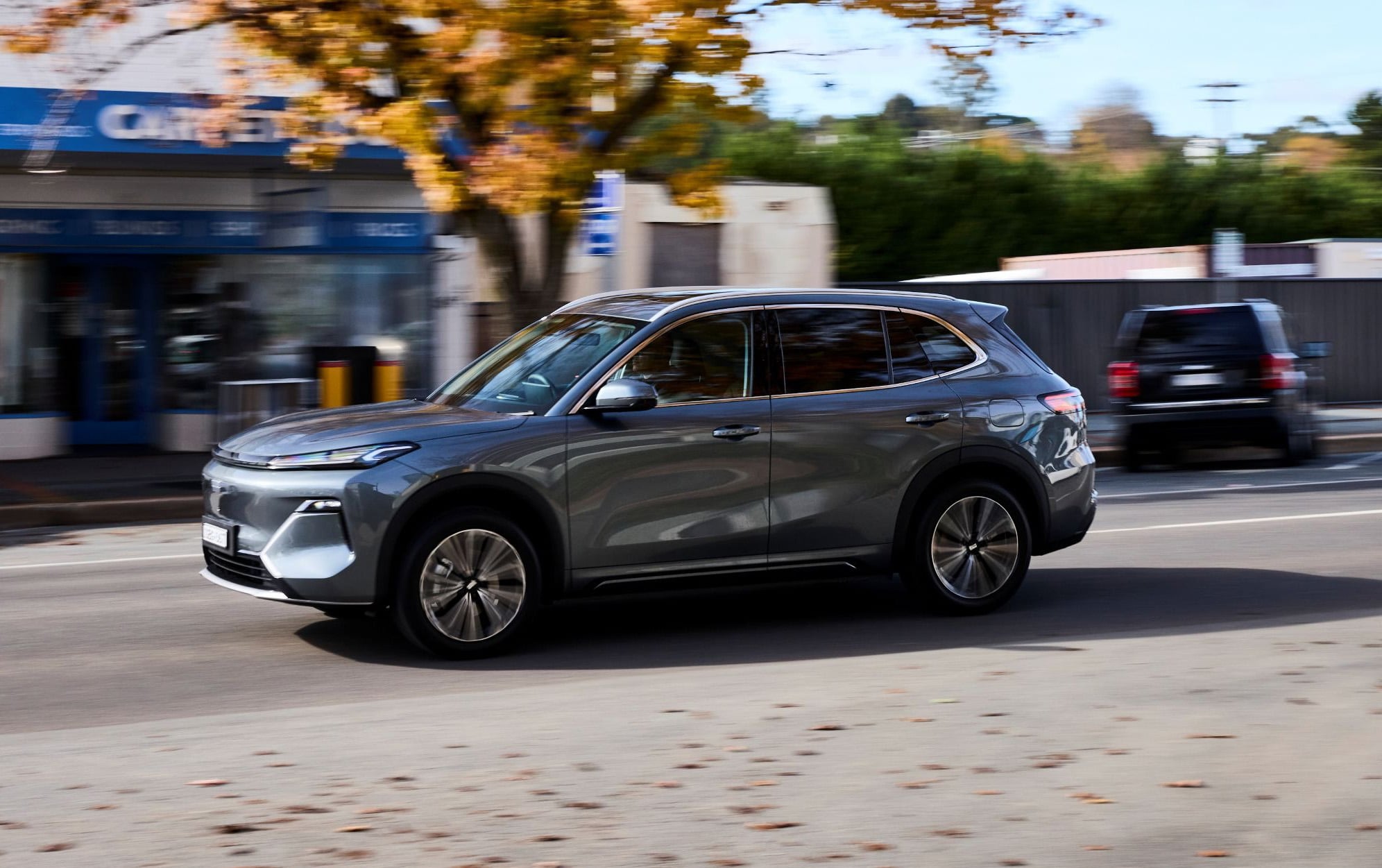
1
Recently updated with a bigger battery, and therefore significantly longer electric range, the Geely Starray starts from $41,490 before on-road costs. At the time of testing, it could be had for $45,000 driveaway.
The upgraded lithium-iron phosphate (LFP) battery pack now weighs in at 29.8kWh and provides a WLTP-claimed electric range of 136km, the best claim of the four SUVs on test.
Like the BYD, there’s also a 1.5-litre petrol engine, single electric motor, and front-wheel drive. Combined power is a meaty 193kW and Geely claims 1.4L/100km, however, doesn’t offer a fuel consumption number once the battery starts to drop below a certain percentage.
GWM Haval H6 Ultra PHEV AWD
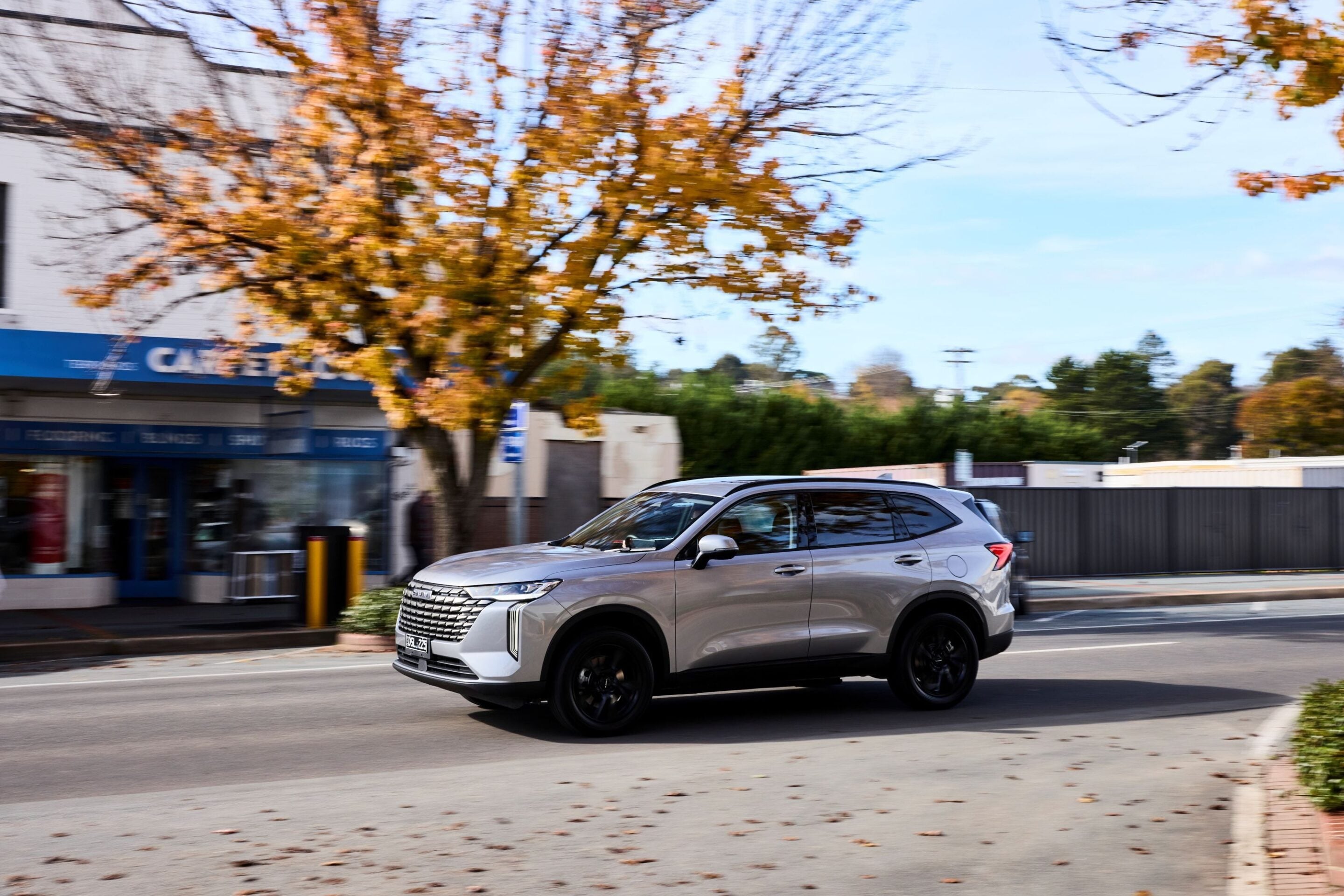
1
GWM wasn’t able to supply a FWD version of the H6 PHEV, but we were happy to take the AWD model to round out this test. Keep in mind, then, that a FWD version of the Haval should, in theory, be even more efficient than the results we achieved with the AWD.
It starts from $50,990 before on-road costs, but at the time of testing could be had for $45,990 driveaway. You can get into a FWD Lux PHEV for $39,990 before on-road costs, better matching the PHEVs on test here.
GWM uses a turbocharged 1.5-litre four-cylinder petrol and two electric motors for a combined 268kW. The fuel claim is 1.1L/100km with the 19.09kWh LFP battery above 25 per cent, stepping up to 5.3L/100km once below that. H6 has an electric range of 80km.
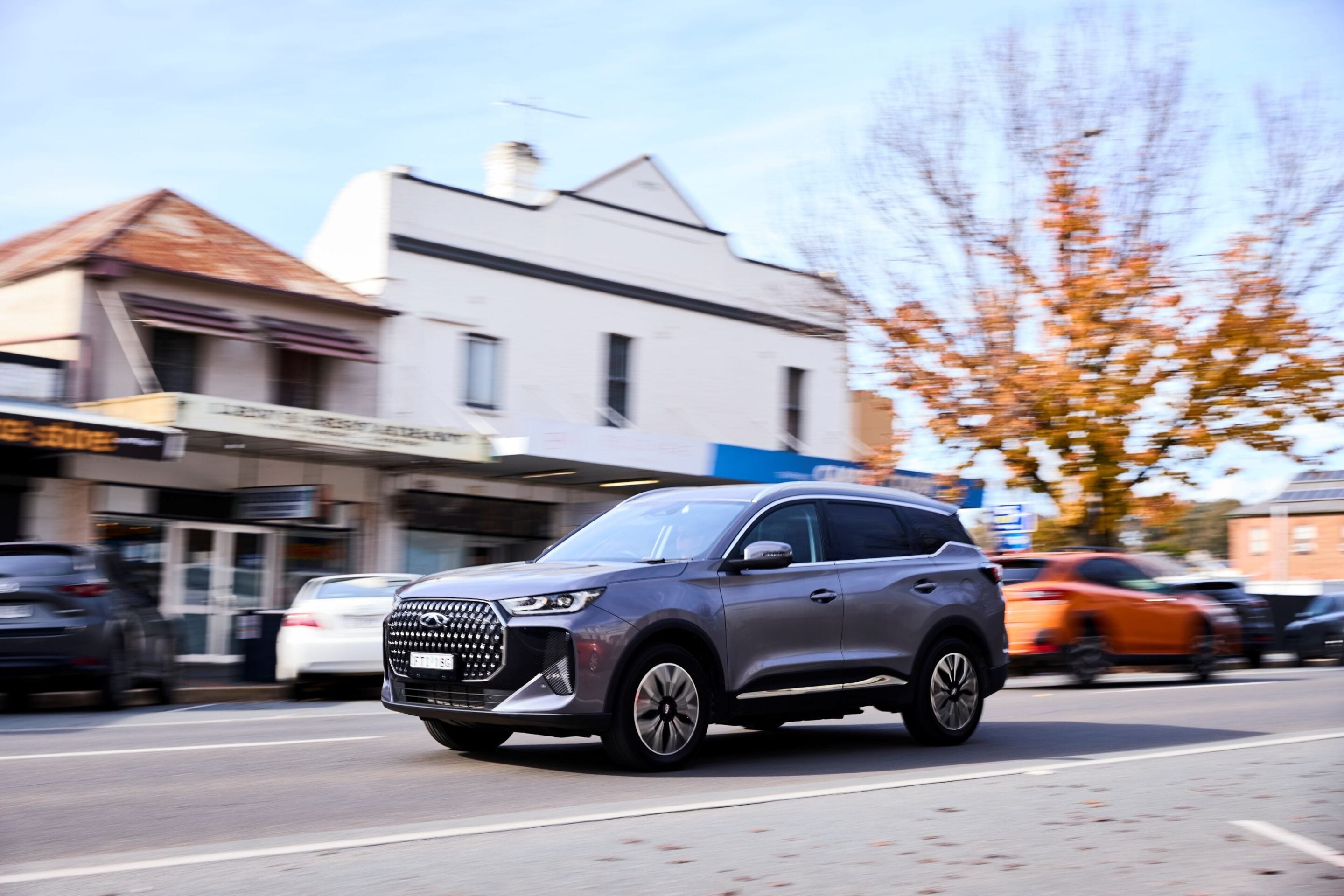
Chery Tiggo 7 Super Hybrid Ultimate
1
There’s no denying Chery’s attention to pricing appeal with a $38,990 driveaway sticker at the time of testing. Its 1.5-litre petrol four-cylinder is also turbocharged for combined power outputs of 255kW. There’s a single electric motor, FWD and a claimed electric range of 90km on the WLTP cycle. The LFP battery pack under the skin is 18.4kWh and Chery also only offers a single fuel use claim, 1.4L/100km on the combined cycle.
There’s little doubt then that these four SUVs are all priced incredibly attractively, especially given their level of standard equipment. If they can deliver real-world efficiency close to the best regular hybrids, their sales pitch is a good one. Onto the testing.
On the road
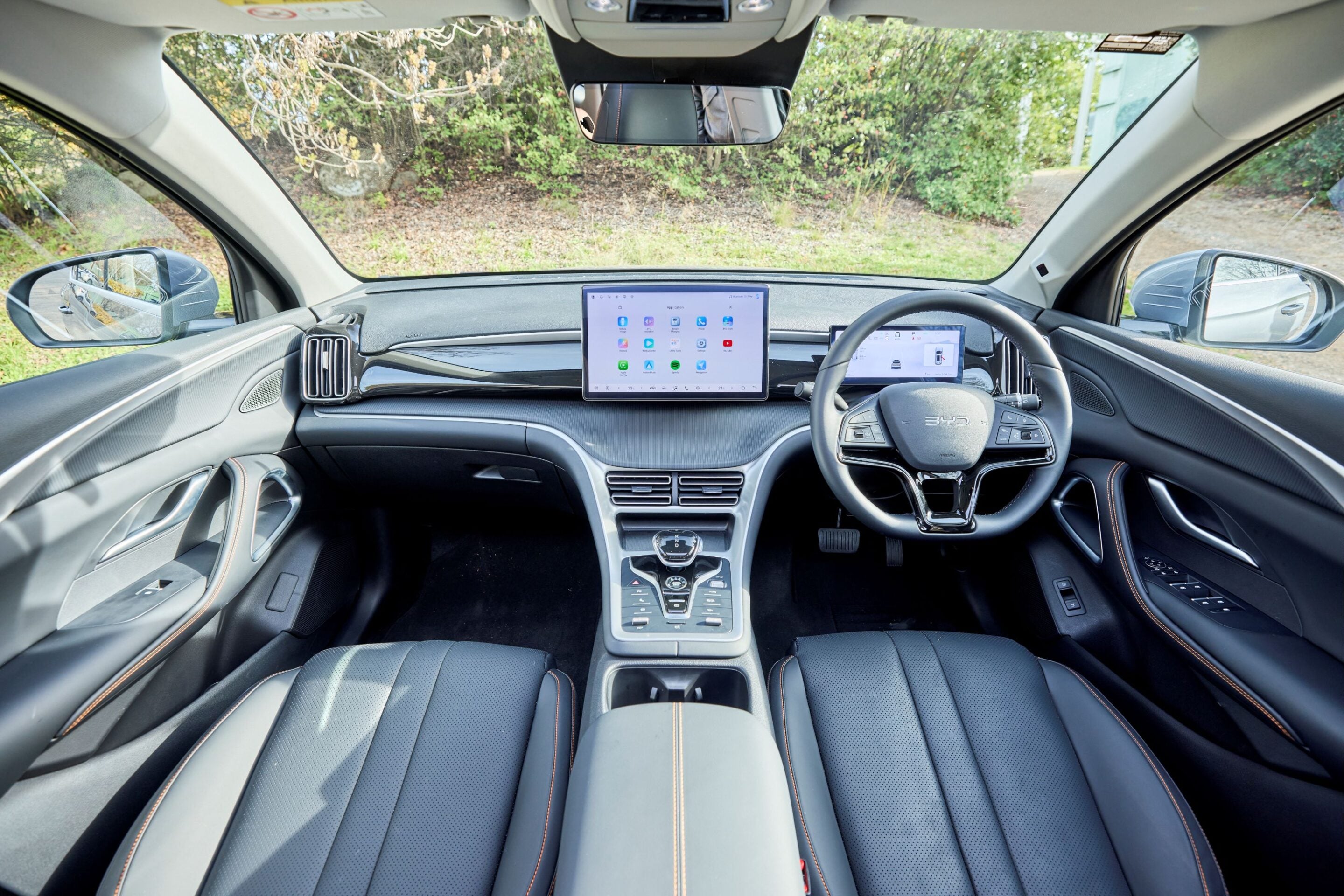
On appearance, the Sealion 5 delivers the most premium feeling cabin. Open the door, get settled in, and it feels like a quality place to be. That continues with premium trim into the second row.
It’s not all roses though, with the Wheels team wanting more physical buttons, and a more robust sunroof cover. The infotainment system can be confusing for those of you new to current technology, but you do get used to it pretty quickly.
Riding on Hankook EVO SUV 225/60/18 rubber, the Sealion soaks up country roads nicely, while still feeling sharp and relatively engaging to drive.
The Geely – on its 235/50/19 Goodyear Efficient Grip tyres – rides the firmest of the group, on any surface. It’s not too harsh, mind you, just firmer than others on test. We noticed a strange harmonic vibration through the driveline between 80km/h and 110km/h, more noticeable at prolonged highway speed, and it presents as a general lack of refinement through the driveline. Geely also needs to do some subtle tuning work to its electronic safety systems, which are a little too enthusiastic.
The other points to note are the Geely accelerator and brake pedals are the trickiest to master smoothly. Some of you won’t like the minimalist nature of the cabin with a lack of controls, but the Geely has the best screen. It’s quick and responsive, and once set up, it’s easy to use, too. Overall build quality, certainly from inside the cabin is as good, if not better than the other combatants here.
6
The GWM Haval H6 has a firm ride, possibly due to being heavier with the extra motor and AWD system, but its steering is the best, tweaked by Aussie engineering gurus who know exactly how an SUV needs to respond on local roads.
Interestingly, the Haval was shod in more rugged Cooper Evolution 235/55/19 tyres, which might also have contributed to the firmer ride.
Haval’s infotainment is excellent, and keep in mind the system in this model, is PHEV-only. Like most modern vehicles, there’s a lack of physical buttons and switches and we found the steering wheel controls harder to work out than they ought to be. There’s not a lot in it, but the GWM also has the best back seat, in regard to space and comfort.
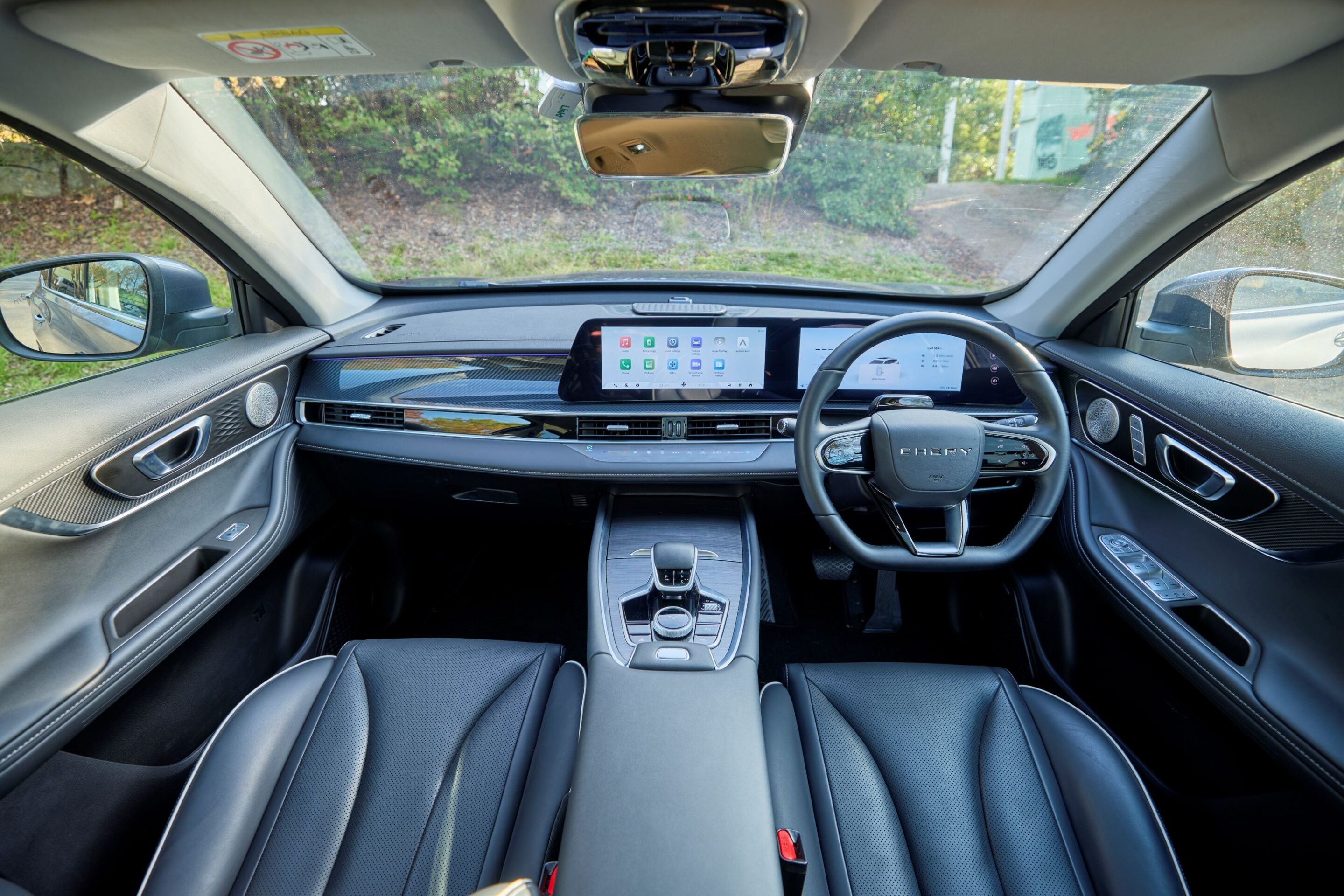
Chery’s Tiggo 7 rides on Maxxis Victra Sport 5 225/60/18 tyres, and the ride was better on the freeway than it is around town. It’s a little more easily upset by sharp ruts and speed humps typical of B-roads, and while it’s not a dealbreaker, it’s worth noting.
Inside, Tiggo 7’s infotainment system is noticeable by its age, given how much more proficient the Tiggo 8’s system is. This older system is slower, less responsive and requires more patience to operate.
A minor annoyance is the consumption readouts, which provide only a rolling 50km average that you need to constantly monitor if you’re watching the numbers as we were.
Chery’s all-round advantage, however, despite a shorter electric range, is how little fuel it uses once that range is depleted. This is a genuinely miserly SUV in any company, no matter how you drive it, and its larger fuel tank means you’ve got a whopping cruising range on the open road.
6
The results are in
The first thing all three of these PHEVs managed to do was impress with their electric range – especially given the fact we sent them straight onto the highway.
So let’s compare that first, keeping in mind again, that the Geely has the longest claimed range of the four. It covered an impressive 102km before the petrol engine kicked in. Next best was the Haval H6 covering 73km, then Sealion 5 at 72km and lastly the Chery at 69km.
As noted already, all four will cover the average daily commute with charge to spare. That alone, makes a strong case for consideration if you’re looking to use as little fuel as possible.
Where things got more interesting, though, is the indicated fuel use averages after 700km of almost exclusively highway running. The thirstiest was the Sealion 5, which used 6.3L/100km, and I use the term ‘thirstiest’ deliberately, because that’s hardly outlandish when you consider the most frugal regular hybrids in this segment only use around 1L/100km less than that under similar testing.
2
Next was the H6, which used 6.2L/100km, while the updated Geely Starray drank 5.3L/100km.
The winner though was the Chery Tiggo 7, which used an impressive 5.2L/100km. That undercuts the best return from our regular hybrid test last month (5.8L/100km for the Honda CR-V), that pitted the RAV4 against Tucson and CR-V. Combine 5.2L/100km with the 69km we covered on electric power, not to mention the asking price, and the Chery’s value equation speaks for itself.
Last month’s test was more city-focused though, so those regular hybrids might have settled into lower fuel consumption averages on a longer highway run.
Picking a winner outside the numbers though, is tough. The Chery is the most fuel efficient, but can’t match the Geely’s EV range. Its price is extremely hard to ignore, though.
The BYD felt the most premium on test and was a lovely touring all-rounder.
The Geely’s extended electric range is attractive, as is its fuel use after that range is depleted, while the GWM is the fastest and most engaging to drive thanks to the Aussie smarts that have gone into the ride and handling package. It is, of course, an AWD model, which was the only one we could access to test here. An unfair advantage then? Maybe a little.
Wheels reckons you can’t go past the Chery Tiggo, then, if budget is your strongest driver. The numbers – across the board – speak for themselves. Further, while the GWM was a hoot to drive, and the Geely’s electric range is eye-catching, the BYD delivers the most premium all-round package.
It’s worth noting that all four are excellent, and all four were significantly more frugal in the real world than we expected. If you’re considering buying a PHEV SUV from one of these manufacturers, there’s precious little to split them.
But for under forty grand drive-away and with real-world fuel consumption on par with regular hybrid medium SUVs, it’s hard to go past the Chery Tiggo 7, just edging out the BYD Sealion 5. Just.
Specifications
GWM Haval H6 Ultra PHEV AWD
1
| Price | $50,990 (currently $45,990 driveaway in NSW) |
|---|---|
| Drivetrain | 1499cc turbocharged four-cylinder plug-in hybrid |
| Engine outputs | 110kW/240Nm |
| E-motor outputs | 80kW/170Nm (front), 150kW/350Nm (rear) |
| Combined outputs | 268kW/760Nm |
| Battery | 19.09kWh LFP |
| Transmission | Dedicated hybrid, all-wheel drive |
| Claimed 0-100km/h time | 4.8 seconds |
| Claimed electric range | 80km (est. WLTP) |
| Claimed peak charge speed | 6.6kW (AC), 34kW (DC) |
| Claimed 30-80% charge time | 28 minutes |
| Claimed combined fuel consumption | 1.1L/100km (above 25% battery), 5.3L/100km (below 25% battery) |
| Claimed CO2 emissions | 25g/km |
| Fuel type/tank size | 91 RON regular unleaded, 55 litres |
| Dimensions (l/w/h/wb) | 4703/1886/1730/2738mm |
| Boot capacity | 560 litres (rear seats up), 1445 litres (rear seats folded) |
| Kerb weight | 1980kg |
| Warranty | Seven-year/unlimited km (car), eight-year/unlimited km (battery) |
| Five-year service cost | $2140 ($428 per year) |
| On sale | Now |
| Overall rating | 7.5 |
Chery Tiggo 7 Super Hybrid Ultimate
1
| Price | $38,990 driveaway |
|---|---|
| Drivetrain | 1499cc turbocharged four-cylinder plug-in hybrid |
| Engine outputs | 105kW/215Nm |
| E-motor outputs | 150kW/310Nm |
| Combined outputs | 255kW/525Nm |
| Battery | 18.4kWh LFP |
| Transmission | Single-speed, front-wheel drive |
| 0-100km/h | 7.0-7.5 seconds (approx.) |
| Claimed electric range | 90km (WLTP) |
| Peak charge speed | 7.4kW (AC), 40kW (DC) |
| Claimed 10-80% charge time | 20 minutes |
| Claimed combined fuel consumption | 1.4L/100km |
| Claimed CO2 emissions | 33g/km |
| Fuel type/tank size | 91 RON regular unleaded, 60 litres |
| Dimensions (l/w/h/wb) | 4535/1864/1702/2653mm |
| Boot capacity | 470 litres (rear seats up), 1305 litres (rear seats folded) |
| Kerb weight | 1825kg |
| Warranty | Seven-year/unlimited km (car), eight-year/unlimited km (battery) |
| Five-year service cost | $1595 ($319 per year) |
| On sale | Now |
| Overall rating | 7.6 |
BYD Sealion 5 Premium
1
| Price | $37,990 plus on-road costs (currently $41,600 driveaway in NSW) |
|---|---|
| Drivetrain | 1498cc four-cylinder plug-in hybrid |
| Engine outputs | 72kW/122Nm |
| E-motor outputs | 145Nm/300Nm |
| Combined power | 156kW |
| Battery | 18.3kWh BYD Blade |
| Transmission | Single-speed, front-wheel drive |
| Claimed 0-100km/h time | 8.1 seconds |
| Claimed electric range | 85km (est. WLTP) |
| Peak charge speed | 3.3kW (AC) |
| Claimed 0-100% charge time | Around six hours |
| Claimed combined fuel consumption | 1.3L/100km (above 25% battery), 4.6L/100km (below 25% battery) |
| Claimed CO2 emissions | 27g/km |
| Fuel type/tank size | 91 RON regular unleaded, 52 litres |
| Dimensions (l/w/h/wb) | 4738/1860/1710/2712mm |
| Boot capacity | 463 litres (rear seats up), 1410 litres (rear seats folded) |
| Kerb weight | 1785kg |
| Warranty | Six-year/150,000km (car), eight-year/160,000km (battery) |
| Five-year service cost | $2345 ($469 per year) |
| On sale | Now |
| Overall rating | 7.5 |
Geely Starray EM-i Inspire Extended Range
1
| Price | $41,490 plus on-road costs (currently $45,000 driveaway in NSW) |
|---|---|
| Drivetrain | 1499cc four-cylinder plug-in hybrid |
| Engine outputs | 73kW/125Nm |
| E-motor outputs | 160kW/262Nm |
| Combined power | 193kW |
| Battery | 29.8kWh LFP |
| Transmission | Single-speed, front-wheel drive |
| Claimed 0-100km/h time | 8.2 seconds |
| Claimed electric range | 136km (WLTP) |
| Claimed peak charge speed | 6.6kW (AC), 60kW (DC) |
| Claimed 30-80% charge time | 16 minutes |
| Claimed CO2 emissions | 32g/km |
| Claimed combined fuel consumption | 1.4L/100km |
| Fuel type/tank size | 95 RON premium unleaded, 51 litres |
| Dimensions (l/w/h/wb) | 4740/1905/1685/2755mm |
| Boot capacity | 528 litres (seats up, including under floor storage), 2065 litres (rear seats folded, including under floor storage) |
| Tare mass | 1784kg |
| Warranty | Seven-year/unlimited km (car), eight-year/unlimited km (battery) |
| Five-year service cost | $1932 ($386 per year) |
| On sale | Now |
| Overall rating | 7.3 |
This story first appeared in the August 2026 issue of Wheels magazine, now on sale. Subscribe here and gain access to 12 issues for $109 plus online access to every Wheels issue since 1953.
Follow WhichCar/Wheels on Google
Click the button below to make WhichCar by Wheels a preferred source for your news.

We recommend
-
 Comparisons
Medium SUV comparison: Honda CR-V v Hyundai Tucson v Toyota RAV4 face-off
Medium SUVs remain the backbone of passenger car sales in the Australian new car market and show no sign of slowing down. This month, our reigning pick in the segment, Hyundai’s excellent Tucson, takes on Toyota’s new RAV4 and Honda’s revised CR-V.
-
 Comparisons
Toyota Yaris v Mazda 2: Small cars for the big smoke face off
Traditional rivals Toyota and Mazda tackle the compact city car segment with the Yaris and 2 – one hybrid, one traditional, but both intent on packing the most space into a compact hatch.