
Comparisons

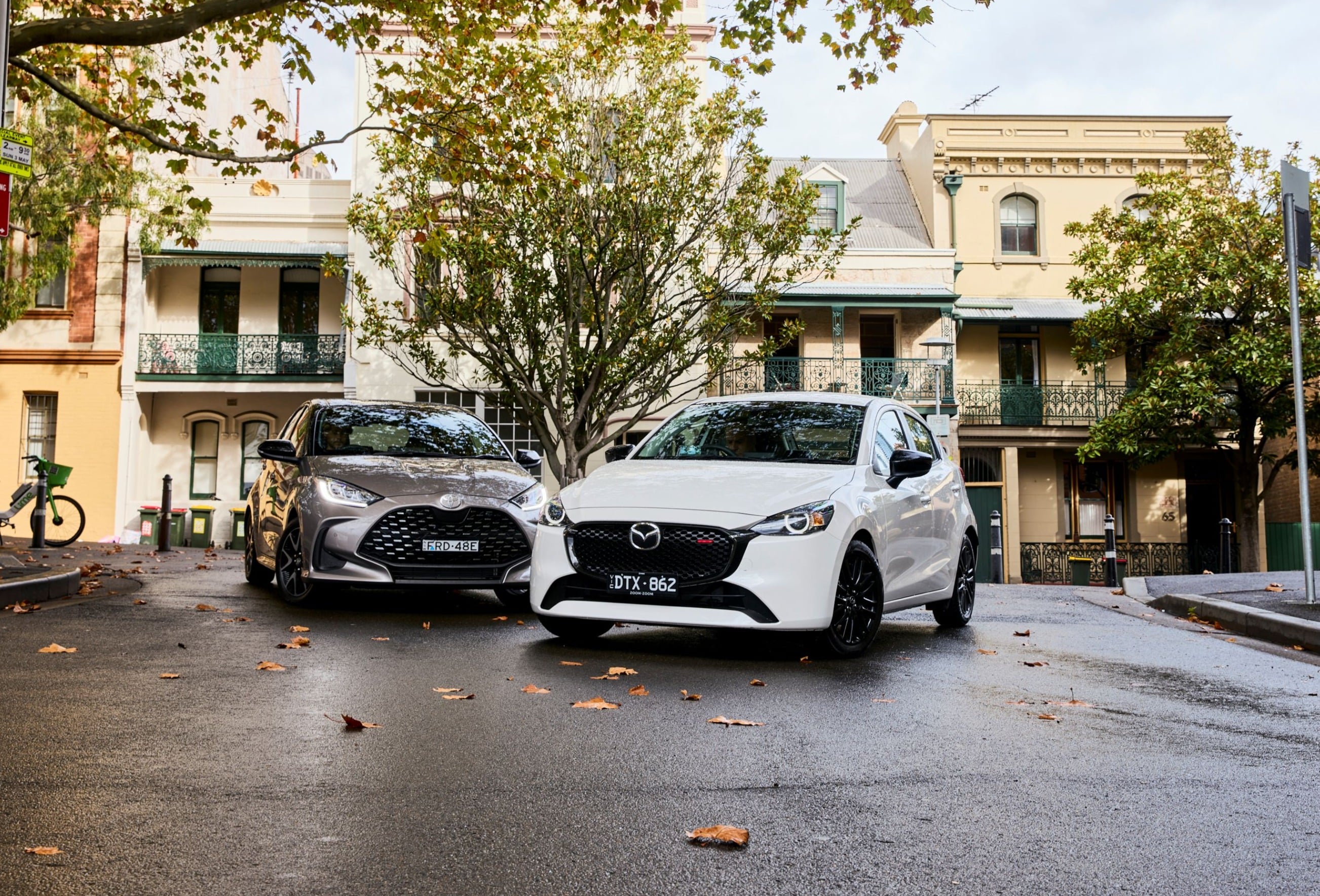
Gallery 1
Remember when small cars were affordable?
So does Wheels, but it seems those days are well and truly gone. At a time when everything costs more than it ever has, the concept of the affordable small car has shifted significantly.
Going back to when small cars were affordable, let’s look back at the first thoughts of Wheels testers when driving both of this issue’s combatants.
Yaris first graced the pages of Wheels in February 2006, with Peter Robinson and John Carey both getting behind the wheel. “It feels a very mature, responsible car that you’d recommend to anybody,” Robbo wrote.
“The 1.3-litre is elastic and enthusiastic, if a little uncharismatic,” Carey said. “While the light-shifting manual transmission is a pleasure to use, the indecisive four-speed auto isn’t so smart.”
1
It was the Mazda 2’s turn in August 2004, with Nathan Ponchard testing this time.
“The Mazda 2 responds well to a fast-spinning crank and a driver with intent,” Ponch wrote. “The specs say it produces 90 per cent of its maximum torque from just 1900rpm, but the reality is that the 2’s all-alloy MZR engine is a fairly peaky unit that needs at least 3500rpm showing on its tacho to feel perky.”
More than two decades on, the concept of an affordable car with a manual transmission has almost gone the way of the dodo, but the formula remains genuinely close to the original. That is, deliver
as much as a manufacturer can, in a package as diminutive as possible. Time to find out whether that works beyond the theory.
The cost breakdown
It’s at the cash register where things get really interesting. The concept that any Yaris is ‘cheap’ is long gone, with the starting price for our tester a hefty $34,590 before on-road costs. At the time of testing, that equated to a driveaway price of $34,590.
And if you’re thinking that mid-thirties is a big ask for a compact city car, you’re not alone. You do get a healthy serving of standard equipment, and we’ll get to that in a minute. Rewind back to 2006 as we did above, though, and you’ll remember that Yaris launched as an attractive three-door manual, starting at just $18,990. Haven’t times changed?
1
The Yaris range starts from $28,990 before on-road costs for the Ascent Sport, while the mid-grade SX starts from $32,390 before on-road costs, and the next step is to the range-topper we have here. Why is all this interesting? Put simply, it’s the asking price of the Mazda that spices things up.
On test, we have the more affordable – in the two-grade range – Mazda 2, which starts from $27,290 before on-road costs, or $28,990 driveaway at the time of testing. As such, this comparison seeks to answer the following question. Is the most affordable 2 all the city car you need? Or do you really get ‘more for more’ with the most expensive Yaris?
There’s no doubt that $34,590 versus $28,990 might, in theory, answer the question for you, but the reality runs a little deeper. The Yaris promises to be significantly more frugal thanks to its efficient hybrid drivetrain, and while you won’t save the buy-in price difference in fuel in the first three to five years, Toyota would be banking on brand loyalty and standard equipment to entice buyers.
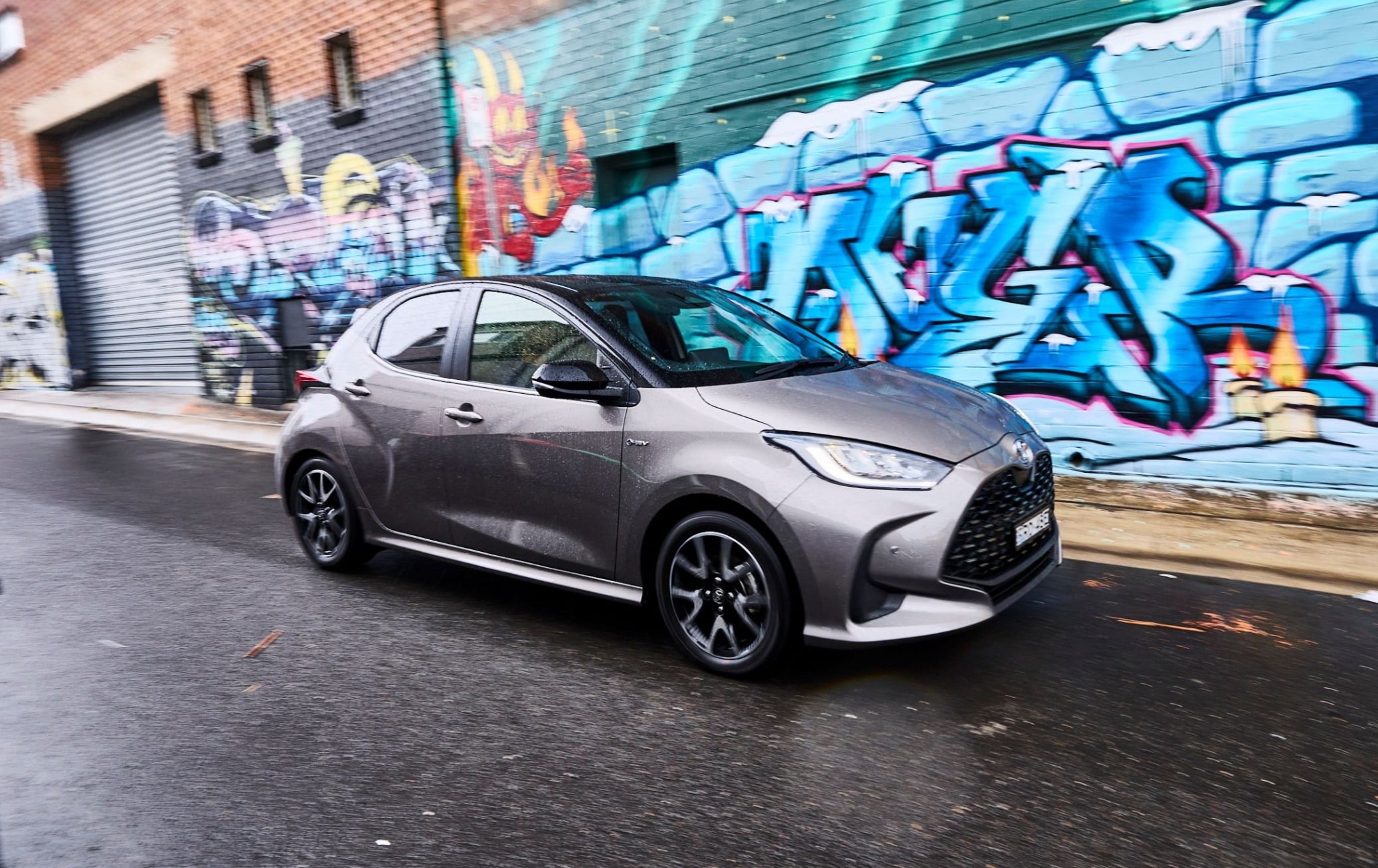
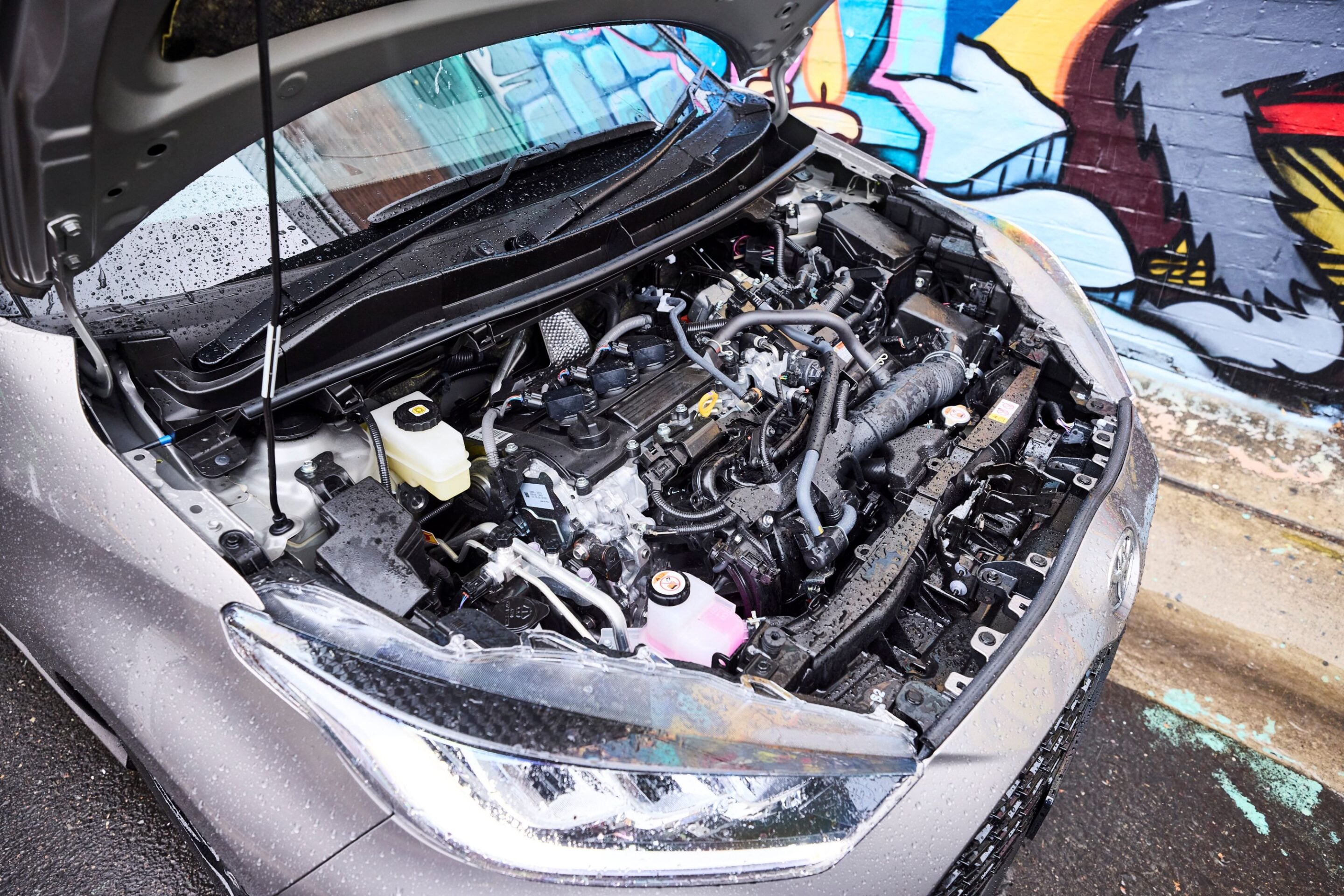
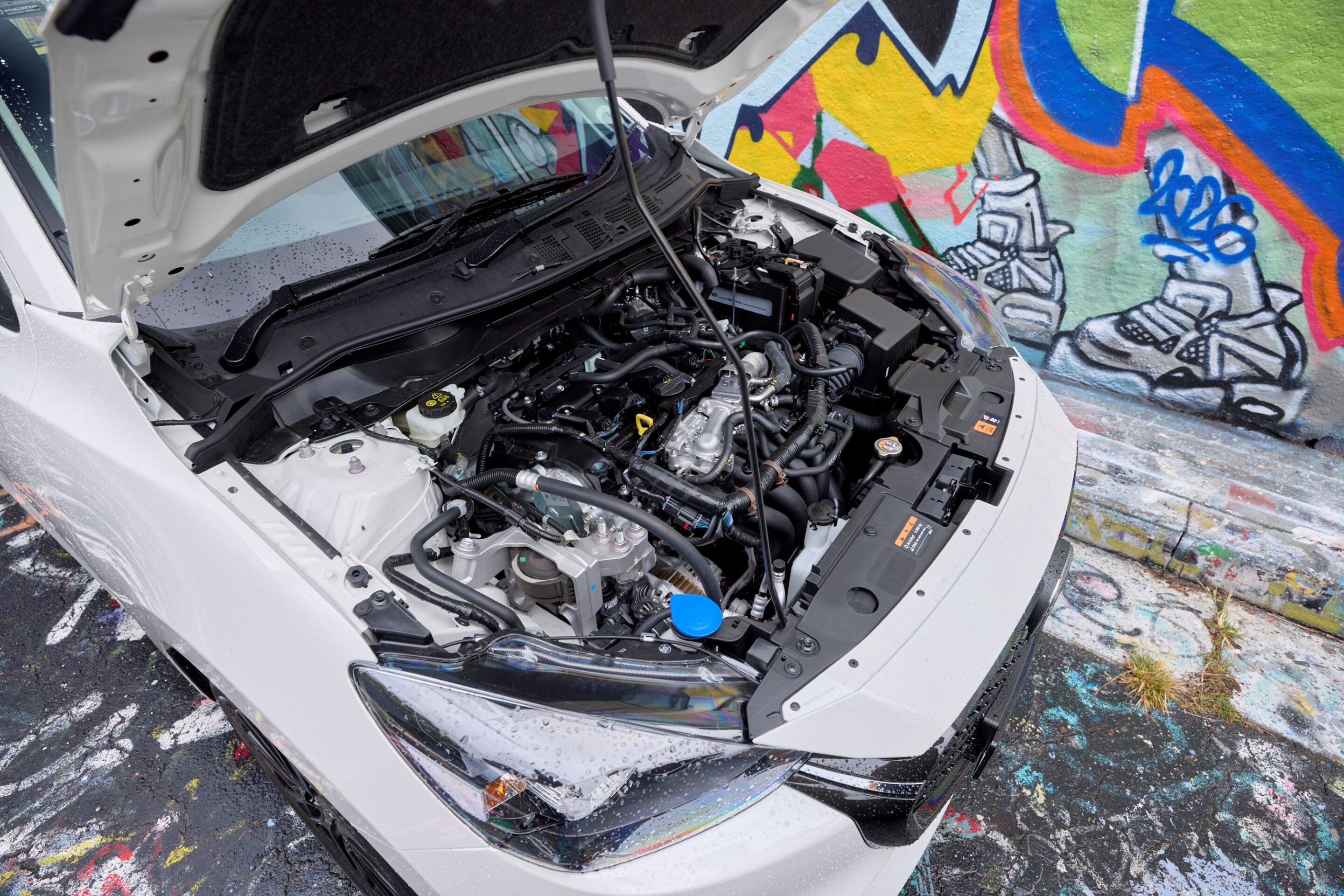
Under the bonnet, Yaris gets a zesty 1.5-litre three-cylinder DOHC petrol engine, running an electric motor and Toyota’s long-serving hybrid technology by way of a 4.3Ah lithium-ion battery.
Yaris uses an e-CVT and front-wheel drive, and Toyota claims a peak combined power output of 85kW. While the petrol engine generates 120Nm and the electric motor tips in 141Nm, the total torque
figure matches the electric motor’s 141Nm.
The combined fuel-use claim is low to say the least, with Yaris consuming just 3.3L/100km on the test cycle. Against that, under real-world Wheels testing, with our usual 70:30 city versus highway mix, Yaris used 4.1L/100km.
1
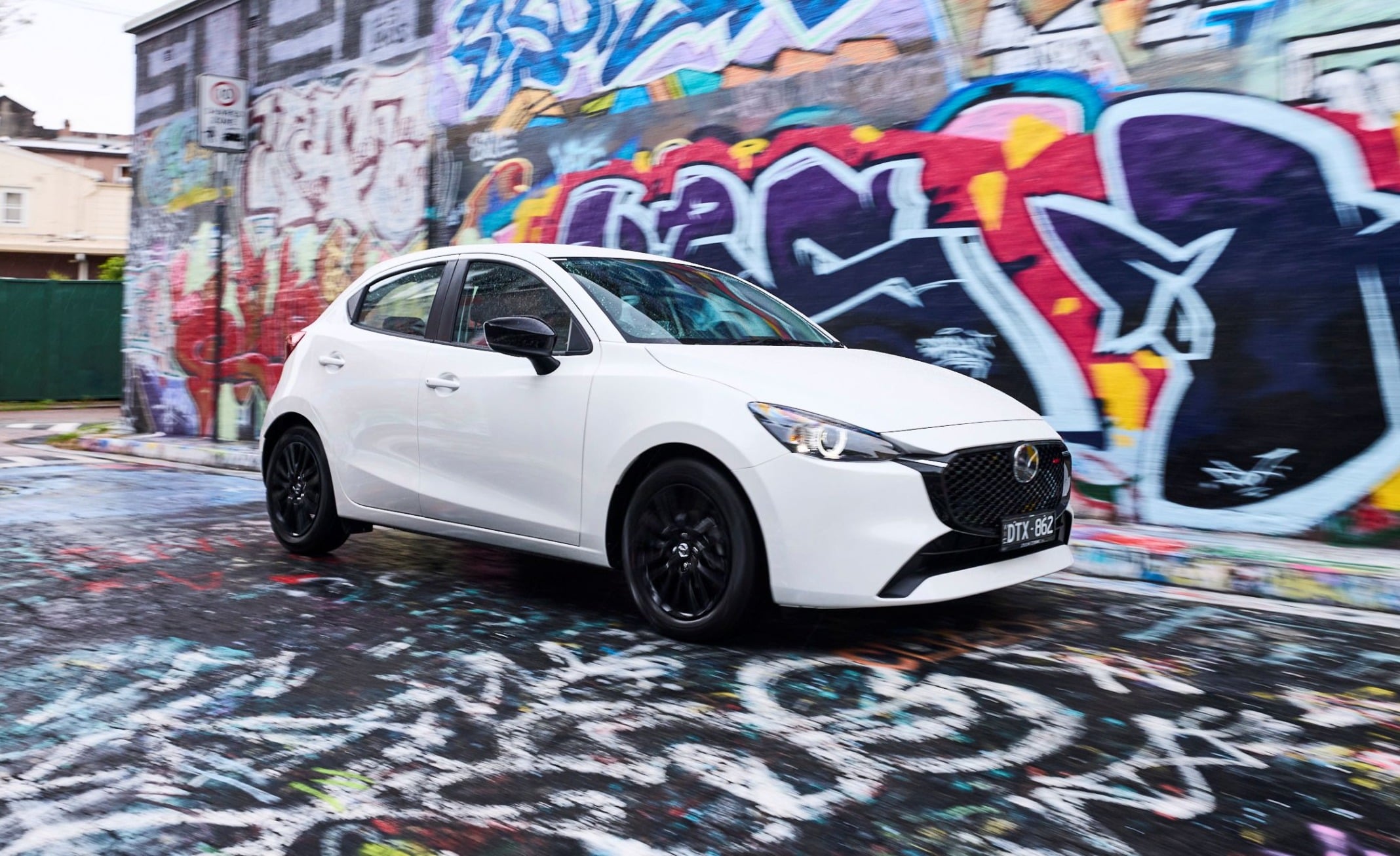
Mazda 2 Evolve costs less, and is less technologically complex beneath the stubby bonnet as well, with a more traditional take on the city car segment. There’s no hybrid tech, or associated weight, only stop/start to assist the little Mazda in reducing fuel use. For some, that lack of complexity might be enough to sway the purchase decision.
There’s a 1.5-litre, naturally aspirated, DOHC petrol four-cylinder, which makes 81kW and 142Nm, driving through a traditional six-speed automatic and on to the front wheels. Mazda quotes 5.0L/100km on the combined cycle, and over the same testing loop as the Yaris, Wheels saw a return of 6.7L/100km.
While the lack of hybrid technology might lead you to think the Mazda is significantly lighter than the Toyota, that doesn’t play out in the real world. The Yaris tips the scales at 1130kg, while the Mazda doesn’t undercut it anywhere near as much as you might think, weighing 1109kg. That means the fuel
efficiency of the Toyota is as real as it is tangible, given it’s hauling around almost the same weight.
Both will run on 91RON fuel, and warranty coverage is five years/unlimited kilometres for both cars. Both also ask for a service every 12 months of 15,000km. Across the first five years, the Mazda 2 will cost $2290 to service, while the Yaris costs just $1325 over the same period.
The spec battle
A surfeit of equipment isn’t necessarily the key driver when buyers are looking at this segment, but it certainly doesn’t hinder the sealing of the deal if your focus is on the specification sheet. First up, let’s look at the equipment that both these compact city cars share.
That list includes automatic dusk-sensing LED headlights, 16-inch alloy wheels, temporary spare wheels, auto-folding mirrors, push button start, single-zone automatic climate control, leather-wrapped steering wheels (the Toyota’s is synthetic), touchscreens with wireless Apple CarPlay and Android Auto, satellite navigation, AM/FM/DAB+ radio, autonomous emergency braking with pedestrian detection, adaptive cruise control, lane keeping assistance, blind-spot monitoring with rear cross-traffic alert (with braking), traffic sign recognition, reversing cameras, rear parking sensors, head-up displays, and driving modes.
Drilling into the specification sheet a little deeper indicates that the Mazda gets rain-sensing automatic wipers, a leather-wrapped gear selector and handbrake, and five years of roadside assistance – features the Yaris doesn’t get, with Toyota requiring owners to pay for roadside assistance.
1
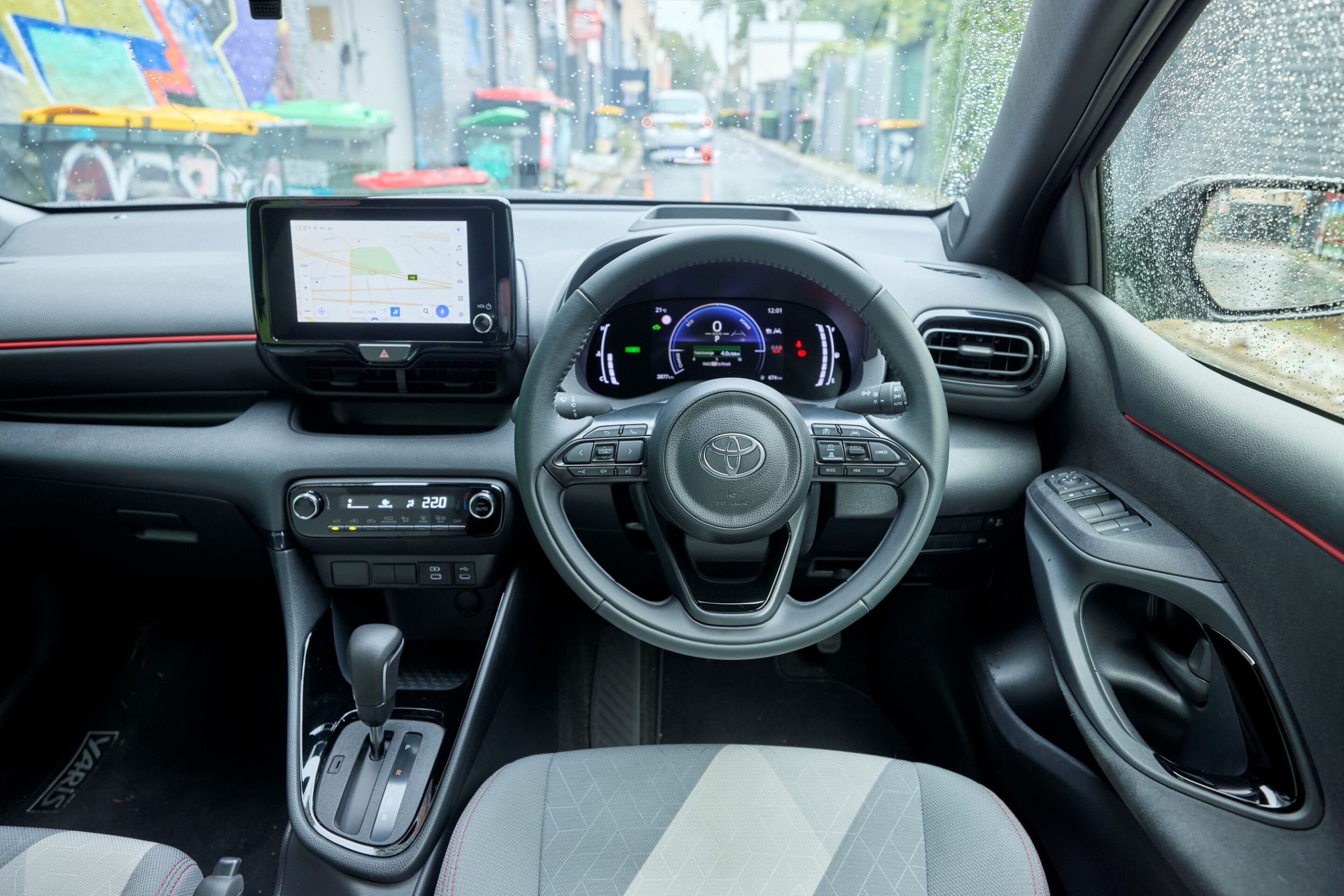
However, Yaris counters with the following equipment that 2 misses out on: smart keyless entry, adaptive lane guidance, a digital driver’s display, live services, automatic calling after a crash, two extra airbags for eight in total, front parking sensors, a more advanced AEB system with cyclist detection and daytime intersection assistance, four automatic windows, a larger touchscreen – 8.0-inch v 7.0-inch – a dual-level boot floor, Eco and EV driving modes and cabin air purification.
Outside of roadside assistance, there isn’t anything Mazda brings to the party (that Toyota doesn’t)
that you genuinely need to enjoy your daily drive. However, in the case of the Yaris – which it’s worth remembering, is a more expensive proposition – the inclusion of extra airbags, extra sensors, and a larger touchscreen for example, are material benefits that absolutely convey a sense of value.
Cabin Fever
The Yaris cabin is light and breezy, but that attractive light grey seat trim is prone to stains, something Wheels can attest to, given the time we spent cleaning them post collection before the photos were taken. The seats are comfortable, visibility is excellent, and there’s room for six-footers up front, but you’ll then need to assume the rear seats are for show only.
There are some hard plastics throughout, but not in the high contact areas to the point it becomes annoying. Toyota claims 270 litres storage space in the boot, which is useful for city dwellers or weekends away for two. Fold the second row down and the adjustable floor base allows you to have a decent, flat space.
1
In terms of cabin tech, a bigger screen is one thing, but it needs to work efficiently and in the case of the Yaris, it does. Wireless Apple CarPlay was easy to connect and works well, and the interaction between driver and car is an easy one. Toyota’s head-up display beats Mazda’s, not so much in terms of the information displayed or clarity, but in terms of physical execution.
The small storage shelf at the top of the centre stack is a clever place to stow your smartphone. Yaris is first and foremost a compact car, and that’s never more evident than inside the cabin, where there’s not a huge amount of storage space, but the daily requirements you’ll want – bottle holders in the door, safe houses for takeaway coffee in the centre console and somewhere to keep your phone and personal items tucked away – are all accounted for.
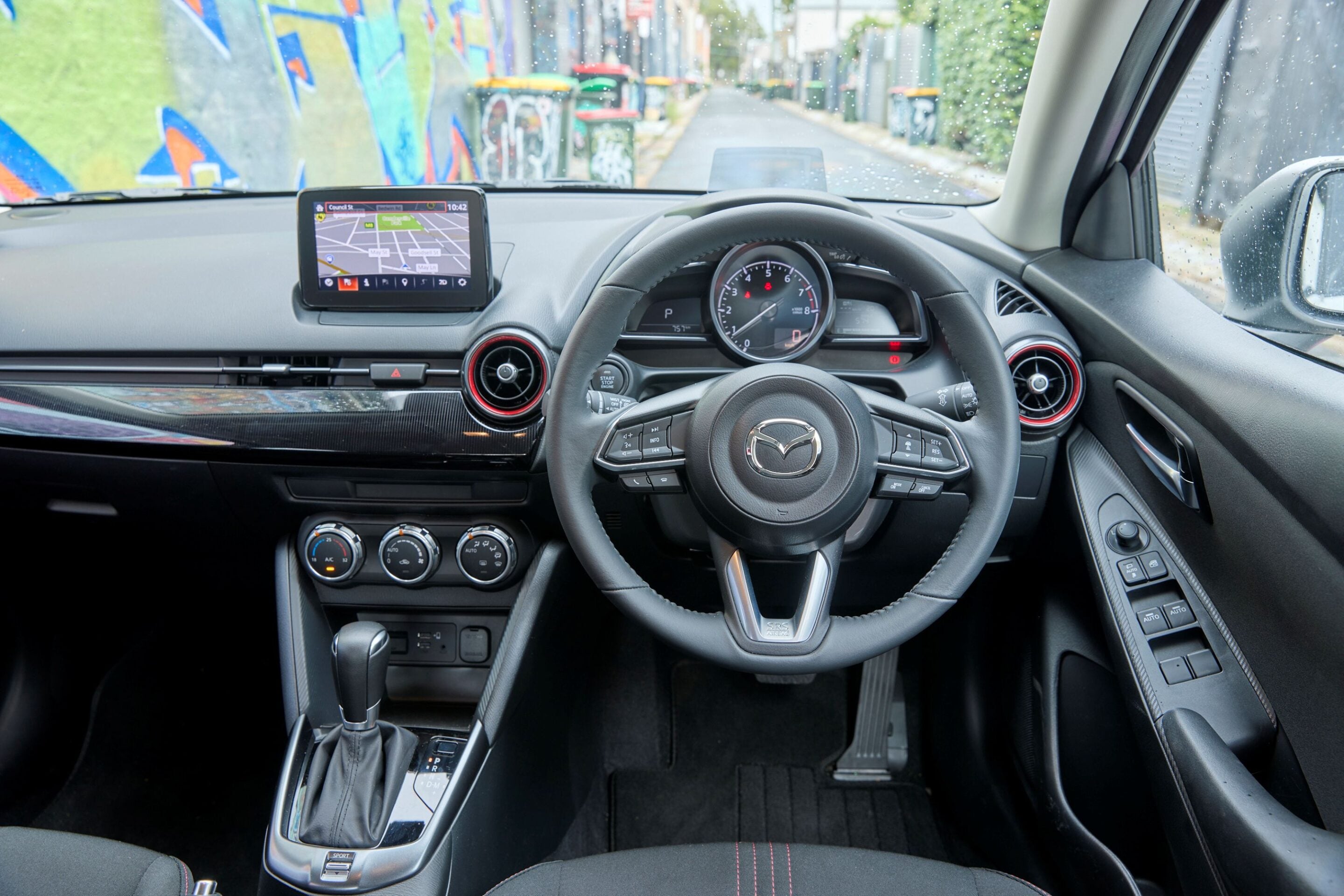
Open the door to the Mazda 2, and despite the sharper starting price, you’ll find a muted, classy, and premium-looking cabin. Unanimously, everyone who poked their head into the two hatches commented that the Mazda conveyed a luxurious air the Toyota couldn’t quite match.
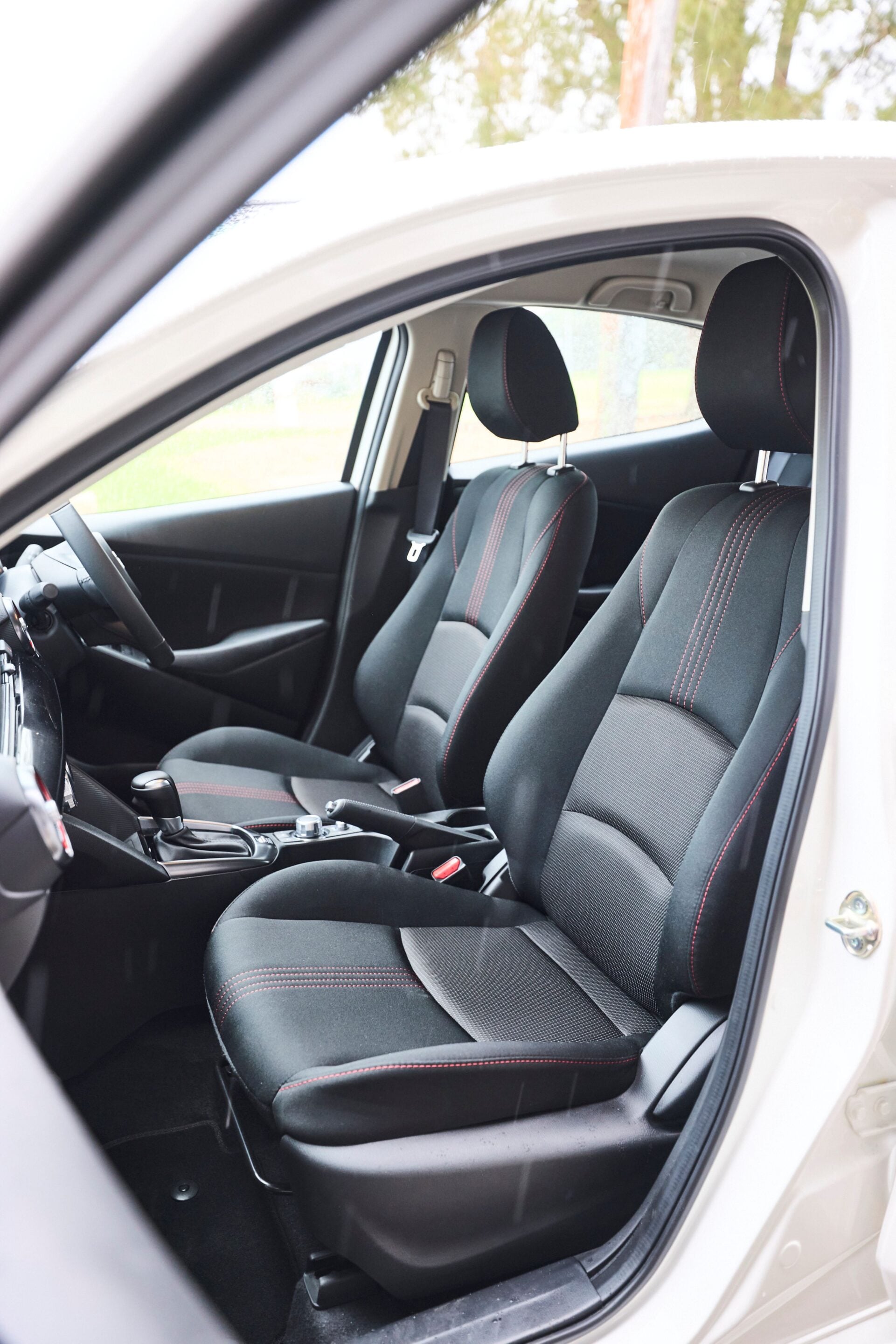
Like Yaris, there are still hard plastics in evidence, but again, not in areas where they will be annoying. Neither car feels built down to a price, but the 2 does a better job – with its black cabin trim and contrast red stitching – of feeling the more premium of the two. It certainly feels sportier, even though that’s more based on looks than anything you can measure.
2
If you’re looking for the more hard-wearing interior, the Mazda’s black trim is the obvious choice. The fact you can adjust the height of the 2’s seatbelts – something you can’t do in the Yaris – is something Wheels’ testers of varying heights appreciated.
Mazda’s screen is an inch smaller, but still works well to clearly display the information you need. There is, however, a control hangover that Wheels is regularly annoyed by. It is a touchscreen, with a catch. Touch inputs work so long as you’re not moving, because once you take off, it’s over to the console-mounted rotary dial to control infotainment features. Yes, you’ll get used to it if you’re an owner, but it’s neither simple nor intuitive.
Mazda’s steering wheel controls are neatly arranged, and have a robust feel to their action, but the way the head-up display relies on a pop-up plastic screen feels a little bit last generation compared to the slicker display of the Yaris.
The front seats are comfortable, on par with the Toyota’s but it’s the same story with tall occupants knocking out the effectiveness of the rear seats. Storage feels the same when you look at the cabin, but looks are deceiving, with the Mazda offering 250 litres and thus losing out to the Toyota.
Comparing the two back-to-back, the Mazda’s cabin feels tighter than the Toyota’s. The storage bin ahead of the shifter isn’t large enough to accommodate a smartphone, perhaps showing the age of the 2 platform.
2
Behind the wheel
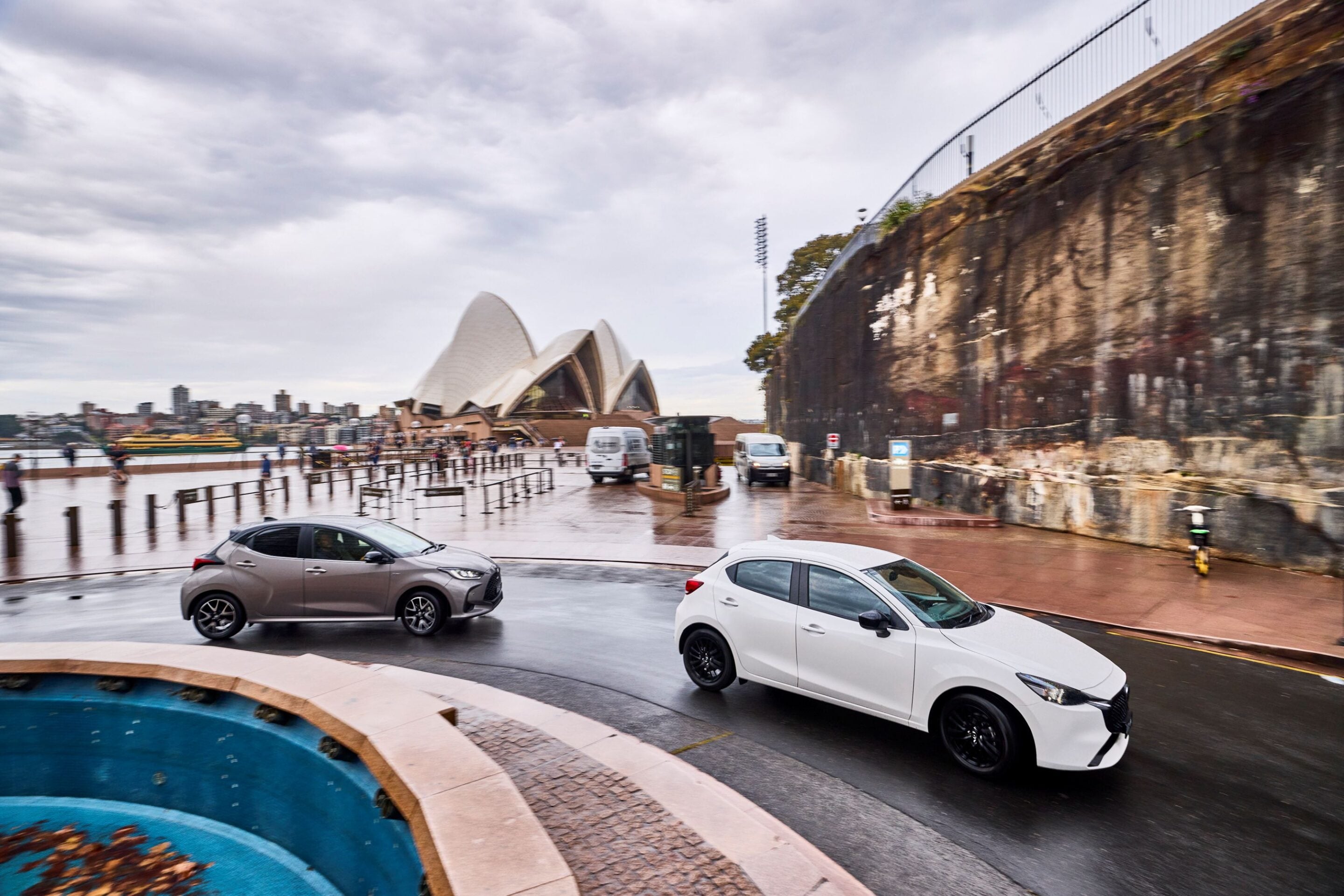
Both these hatches are in their absolute element dealing with the cut and thrust of city traffic, with sharp steering, excellent ride quality, predictable brakes and decent power delivery – a heady recipe for city success.
Manoeuvrability – despite a 20mm longer wheelbase – goes in favour of the Mazda 2 with its compact 9.8-metre turning circle making easy work of the urban grind, against the Yaris’ 10.2m turning circle. If you’re frequently driving bigger, heavier SUVs, as the Wheels testing team often is, the lightness, change of direction and general fun these city cars provide is a revelation.
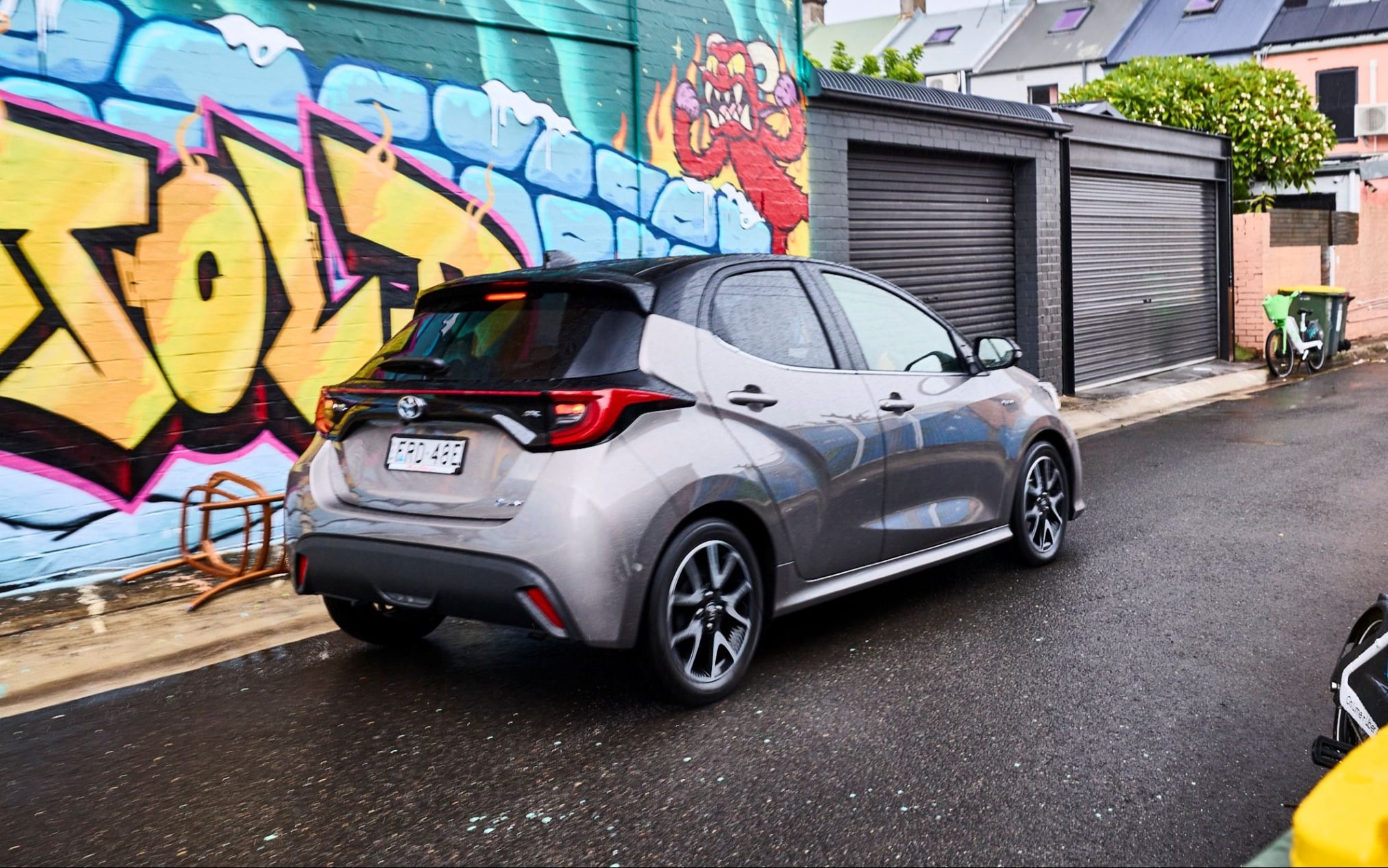
The Yaris is an interesting conundrum in that the transition from electric propulsion to petrol is as smooth as any Toyota we’ve tested. So much so that you hardly notice it and have to pay attention if you’re looking for it. Likewise, the working of the e-CVT, which dulls some of the sensation of speed increasing, is significantly better than the CVTs of old.
2
Against that smoothness, though, is the gruff, throaty edge to the 1.5-litre three-cylinder. We’d
appreciate the slightly unrefined nature of the way only a three-pot can work in a sporty application, but it jars with the otherwise smooth progress of the hybrid Yaris. It’s something you only notice under load, but such is the nature of both these cars that you need to get the engine spinning to really get moving.
As such, and when you do, you’ll hear the little three-cylinder belting out its song a little louder than you might like. Cranking up to highway speed, for example, you’re asking the Yaris to work a little harder than it wants to.
Yaris delivers a beautiful mix of bump absorption and handling competence, with none of the choppiness or harsh ride some small cars are guilty of. Riding on 185/55/16 tyres against the chubbier 60-profile rubber of the Mazda, you might expect the Yaris to ride firmer, harsher even, but it doesn’t. Even loaded up with photo gear and two adults, the ride remains nicely controlled. Sharp speed bumps are easily
dealt with, ensuring that whatever you need to tackle in the city won’t see the Yaris lose composure inside the cabin.
Readying itself in silence and with the ability to crawl up to 30km/h on electric power alone, the Yaris is focused nicely on exactly the type of driving the urban buyer needs. Leave the confines of the city and the 36-litre fuel tank and low consumption mean you can tackle longer distances just as easily. The light, city-focused steering works well on a twisty road, too, and the Yaris is deceptively nimble – and fun – as speed increases.
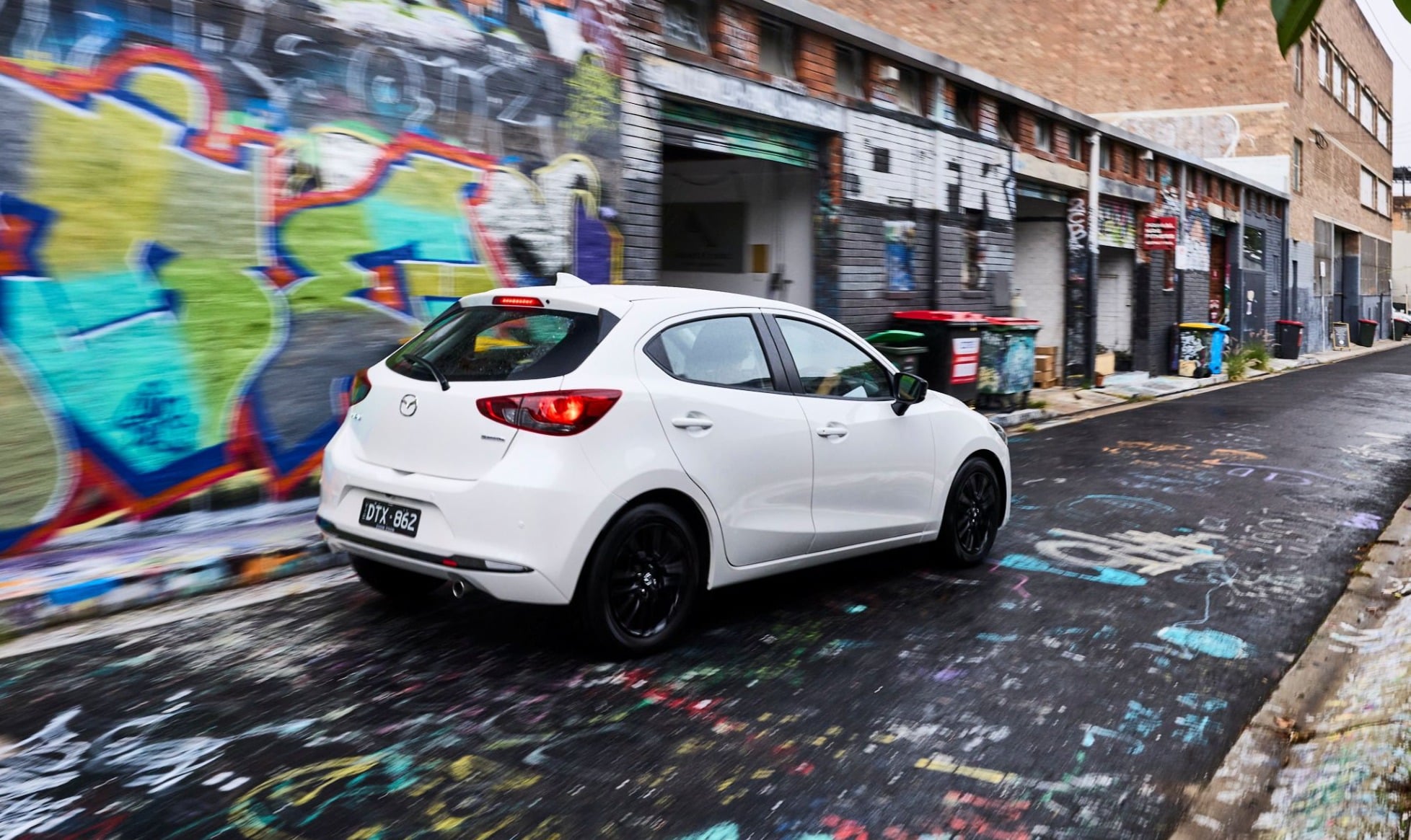
Most of you would assume the Mazda 2 is the sportier of the two options here, and that’s borne out by the driving experience. Despite both power and torque sitting lineball in terms of the numbers, it’s the 2 that feels sharper, punchier, and more inclined to want to be let off the leash.
The four-cylinder makes some noise as the revs increase, and they will often if you want to keep the Mazda 2 accelerating, but it’s a quieter engine under load than the three-cylinder in the Yaris. Both lack punch off the mark though, and the Mazda 2’s gearbox, traditional as it is, isn’t as precise as some conventional automatics under enthusiastic acceleration.
While neither of these hatches are fast in real terms, it’s the 2 that delivers more urgency. However, like the Yaris, it doesn’t love highway speed, or getting there too quickly. The auto can feel slow to react to downshift requests, and we noticed it moving between sixth and fifth a little too much as we worked between 100km/h and 110km/h zones on the highway.
Braking and steering are excellent, and the Mazda’s tight turning circle makes it a joy to thread through traffic and into parking spaces – no matter how compact they might be. Like the Yaris, the 2 is more
direct and fun than you’d expect of this segment, and while it may not encourage you to really hustle it along, it is capable of such folly.
2
The ride is a fascinating comparison back-to-back on the same choppy inner-city surfaces. Mazda gives the 2 marginally more sidewall (60 profile v 55) on the same 185 width and 16-inch wheel diameter. So, you’d expect the 2 to be slightly cushier, but it’s not. The ride is actually a little firmer, but somehow even more composed and comfortable. Kudos to Mazda’s engineers for that one, especially on our pathetic road network.
Of the two, the Mazda is the driver’s pick – more engaging, less removed from the driving experience, and more fun – but the Yaris is more frugal, and is the better roadtrip tool, especially over longer distances.
The Wheels Verdict
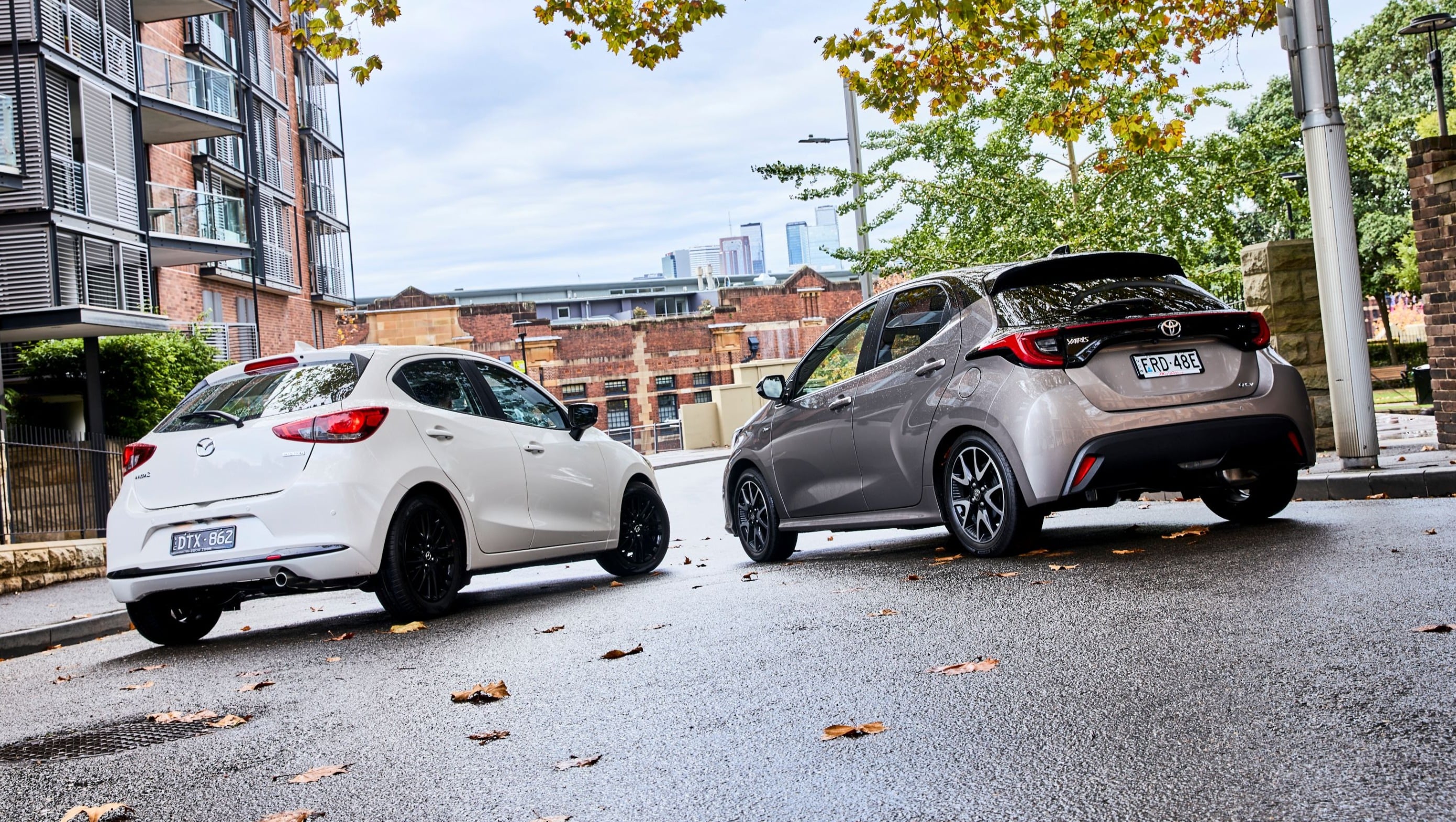
If you put the asking price and fuel consumption to one side, these two are so closely lined up, it’s difficult to split them. However, where the Toyota costs more to buy, it uses less fuel and is cheaper to service than the Mazda. And, there’s no doubt you do get more for more in terms of the extra standard equipment loaded into the more expensive Toyota. The Toyota also feels newer than the Mazda and looks it from inside the cabin.
The 2, as has been the case for quite some time now, remains the better driver’s car. It’s not so important in this segment, but if you value the engagement of the drive, the Mazda 2 is the more competent, connected and enjoyable of the two. So on that count, Wheels would direct you to your nearest Mazda showroom.
However, if you can extend your spend at the point of purchase, the Yaris shines. It uses less fuel, is just as competent around town, and the extra standard equipment is something you see, feel and use every day, which makes the case for spending the extra money.
2
But if Wheels could pick only one, we’d opt for the Mazda 2 and save the extra money, such is the driving enjoyment and engagement it brings in what could be a much more boring platform. It’s a comparison of splitting hairs between these two, there’s no doubt about that, but the Mazda 2 – just – hangs onto the top step of the podium.
Toyota Yaris ZR: Specs
| Price | $34,590 plus on-road costs |
|---|---|
| Engine | 1490cc three-cylinder DOHC petrol + electric motor |
| Engine outputs | 67kW/120Nm |
| E-motor outputs | 59kW/141Nm |
| Peak system power | 85kW |
| Peak system torque | 141Nm |
| Transmission | e-CVT automatic, front-wheel drive |
| Claimed fuel economy | 3.3L/100km |
| Claimed CO2 emissions | 76g/km |
| Fuel type | 91RON regular unleaded |
| Fuel tank | 36 litres |
| Dimensions (l/w/h/wb) | 3950/1695/1495/2550mm |
| Boot size | 270 litres (rear seats up) |
| Kerb weight | 1130kg |
| Warranty | Five-year/unlimited km |
| On sale | Now |
| Overall rating | 7.5/10 |
Mazda2 G15 Evolve: Specs
| Price | $27,290 plus on-road costs |
|---|---|
| Engine | 1496cc four-cylinder DOHC petrol |
| Peak power | 81kW (@ 6000rpm) |
| Peak torque | 142Nm (@ 3500rpm) |
| Transmission | Six-speed automatic, front-wheel drive |
| Claimed fuel economy | 5.0L/100km |
| Claimed CO2 emissions | 117g/km |
| Fuel type | 91RON regular unleaded |
| Fuel tank | 44 litres |
| Dimensions (l/w/h/wb) | 4085/1695/1495/2570mm |
| Boot size | 250 litres (rear seats up) |
| Kerb weight | 1109kg |
| Warranty | Five-year/unlimited km |
| On sale | Now |
| Overall rating | 7.7/10 |
1
This story first appeared in the June 2026 issue of Wheels magazine, now on sale. Subscribe here and gain access to 12 issues for $109 plus online access to every Wheels issue since 1953.
Follow WhichCar/Wheels on Google
Click the button below to make WhichCar by Wheels a preferred source for your news.

We recommend
-
 Comparisons
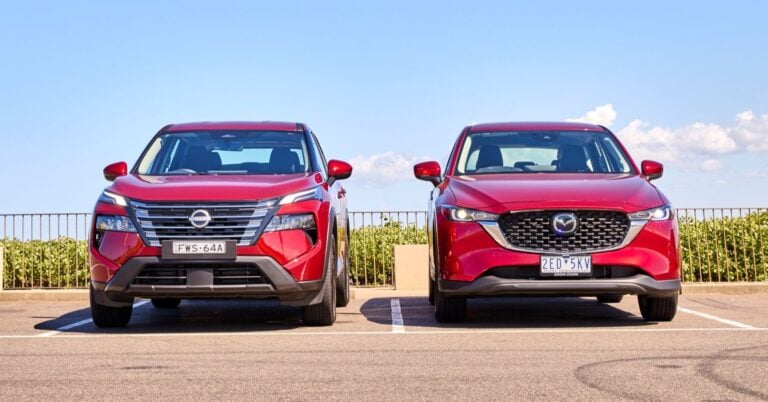
Nissan X-Trail v Mazda CX-5: Medium-size SUVs go head-to-head in hard-fought segment
Upgraded for 2026, the Nissan X-Trail is primed to take the fight to one of the segment favourites, the Mazda CX-5, which is nearing the end of its life as a new model looms on the horizon
-
 Comparisons
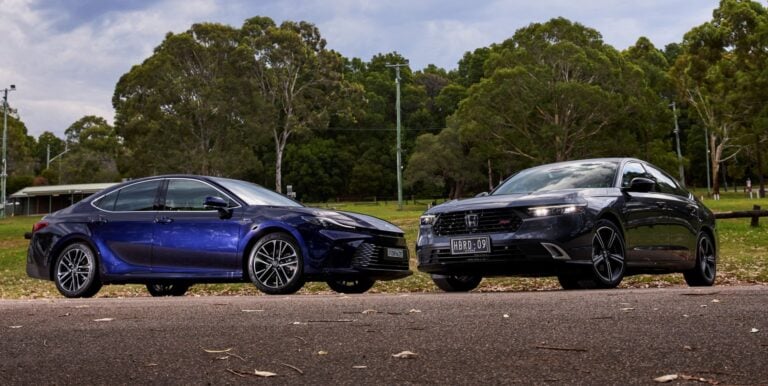
Honda Accord v Toyota Camry: Middleweight sedan showdown
Medium sedans might not be the flavour of the month any more, but as we discovered with two of the stalwarts of the segment, there is still plenty to like about these hybrid family haulers.
-
 Comparisons
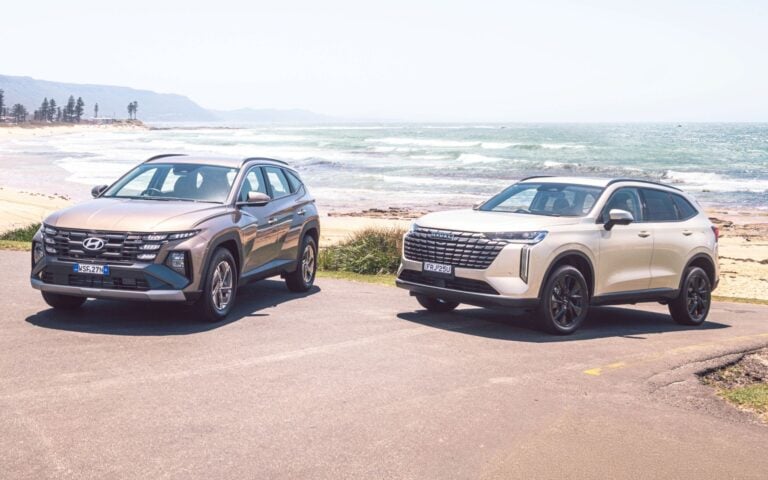
Hyundai Tucson Hybrid v GWM Haval H6 Ultra Hybrid: Front-wheel drive SUV showdown
Medium SUVs are Australia’s favourite way to move a family around, get to and from work, or head off on a road trip. That’s why every manufacturer wants a piece of the pie. If you want a medium SUV though, do you need AWD and all the extras? Wheels looks at two of the more affordable hybrid FWD models on the market.
