Reviews


Gallery 1
8.1
/10
Score
Score breakdown
8.0
Safety, value and features
8.5
Comfort and space
8.0
Engine and gearbox
8.0
Ride and handling
8.0
Technology
Things we like
- Off-road enhancements more than skin deep
- On-road manners uncompromised by rugged updates
- Spacious and plush cabin, even in row three
Not so much
- Short service intervals in terms of distance
- Drinks plenty of fuel
- Downhill brake control needs refinement
Globally, Hyundai has been flirting with getting its hands dirty for a couple of years now. No longer content to offer a range of soft-roaders, the Korean brand fortified its line-up of SUVs with a pair of terrain-friendly sub-brands, XRT and XRT Pro.
The XRT badge, akin to Hyundai’s N-Line, made its debut in 2022 across a couple of SUVs in North America – Tucson, Santa Fe – as well as the brand’s Santa Cruz pick-up truck.
2
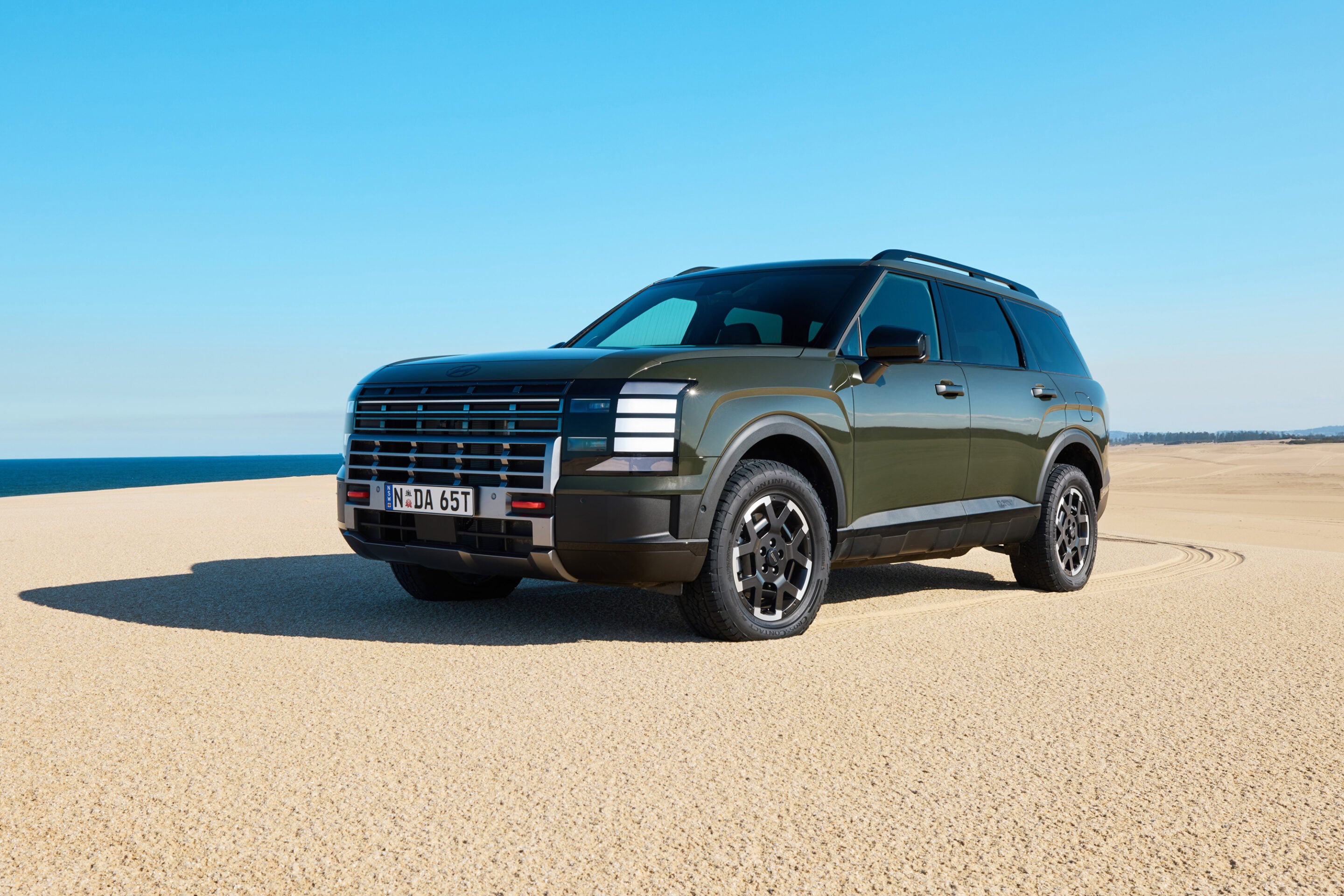
Here in Australia, Hyundai dipped its toes in the mud with the Santa Fe XRT in 2025 which enjoyed a number of rugged body enhancements including all-terrain tyres fitted to smaller wheels, 25mm lifted suspension, skid plates and side steps. But while the Santa Fe XRT looked the goods, all chubby-tyred and bash-plated, it lacked the mechanical updates to be considered a serious off-road competitor to the likes of Toyota LandCruiser Prado and Ford Everest.
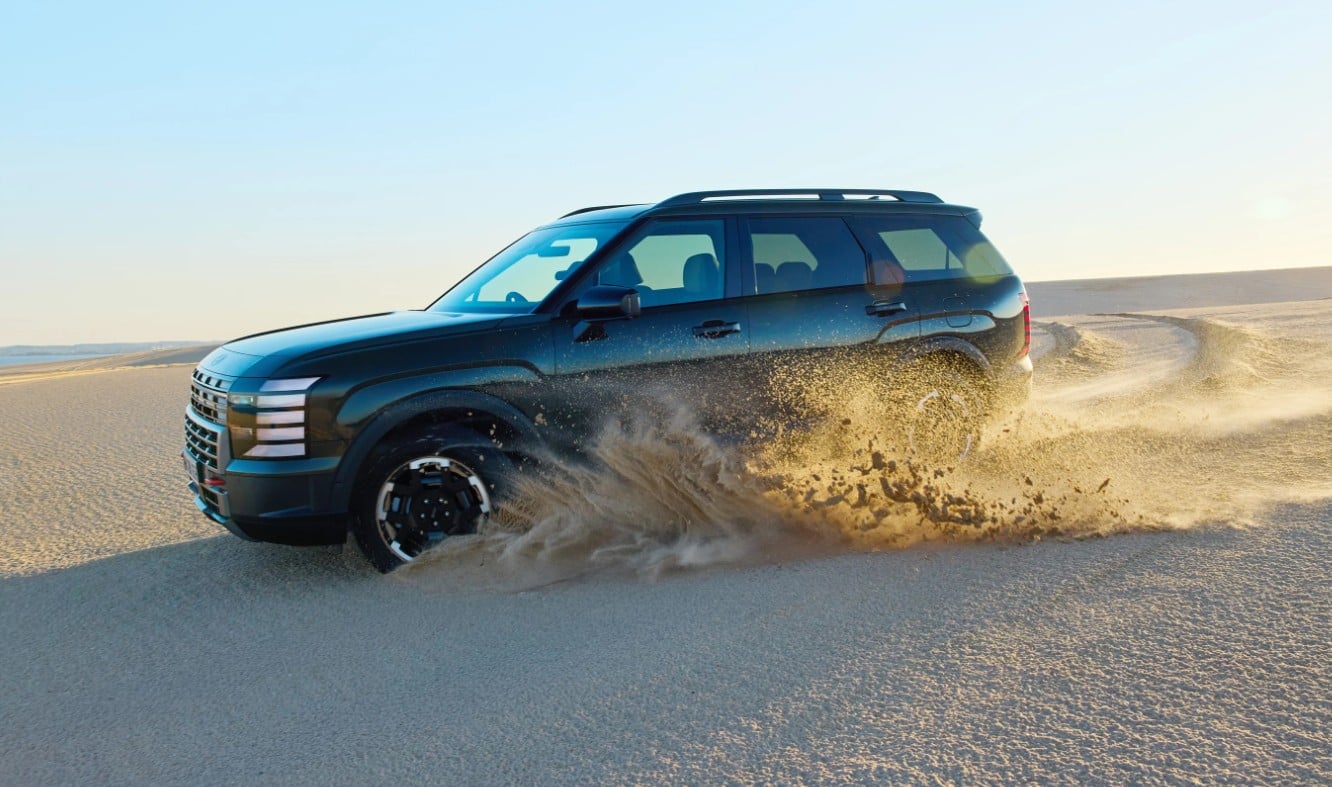
But that’s all changed with the launch of the Hyundai Palisade XRT Pro which has landed in Australia with some off-road hardware to match its toughed-up looks.
How much is the Hyundai Palisade XRT Pro?
Just a single variant wears the XRT Pro badge and it slots in at the more affordable end of the Palisade model walk.
2
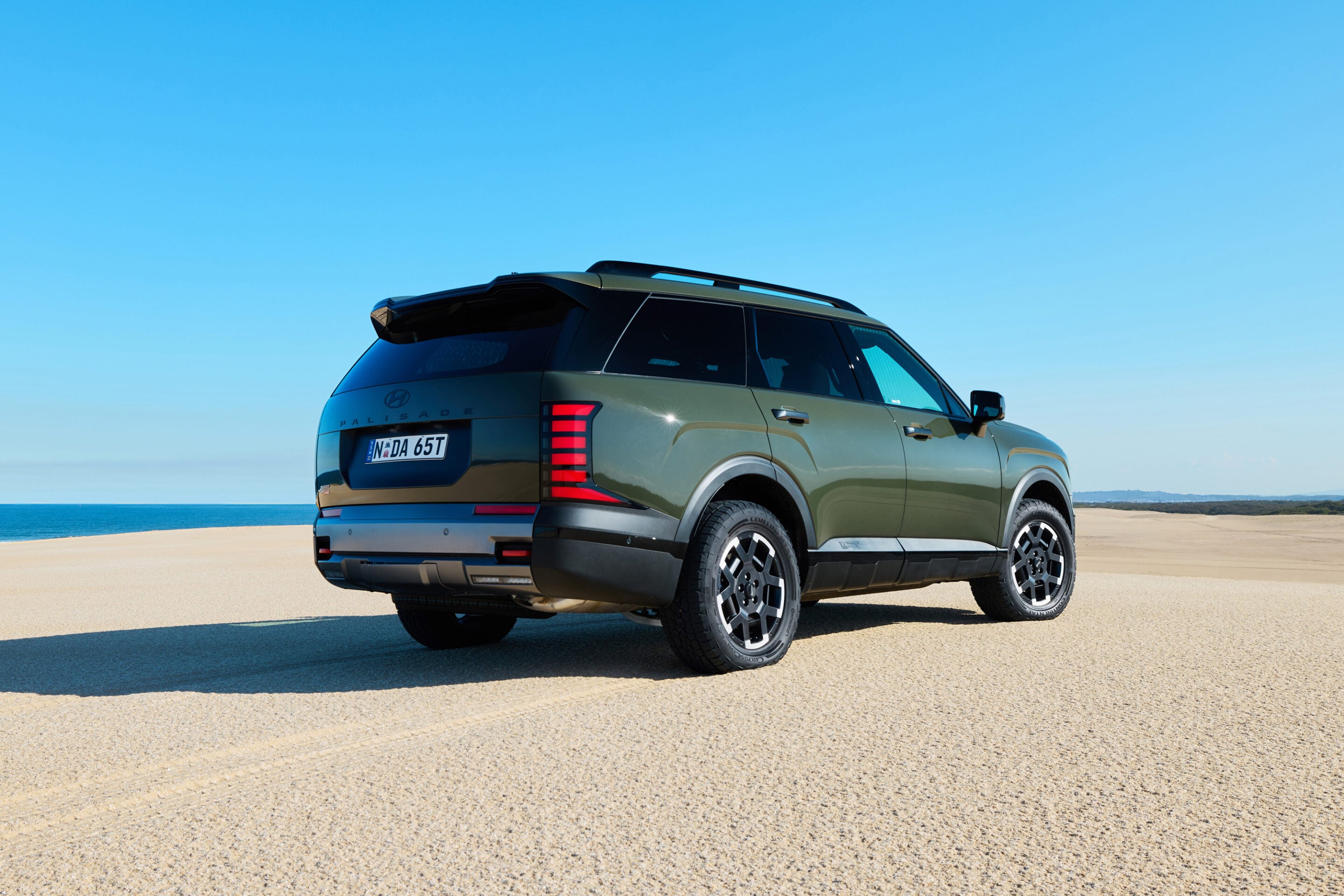
Priced from $79,900 plus on-road, the Palisade XRT Pro commands a $3400 premium over the entry-level Palisade Elite on which it’s based.
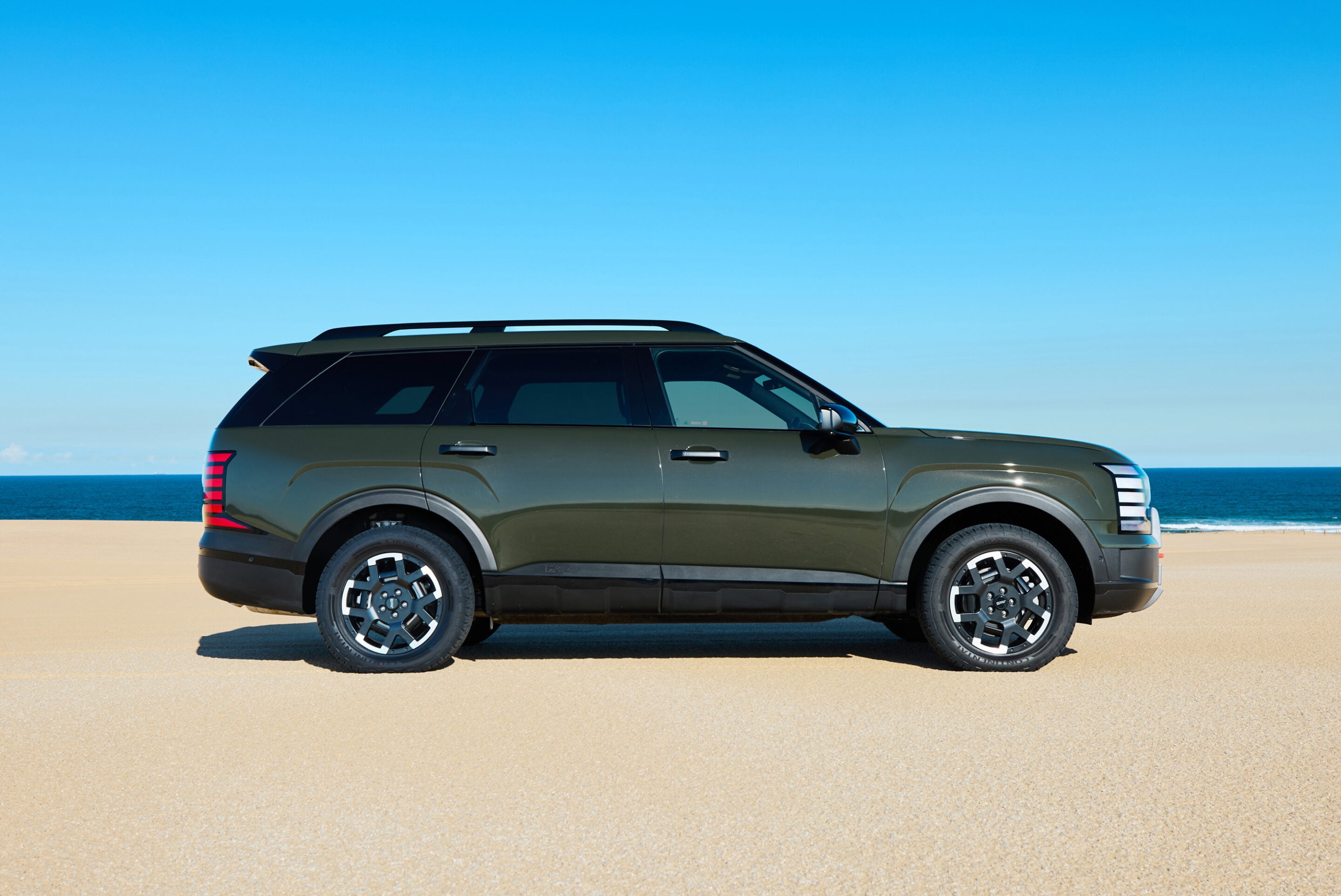
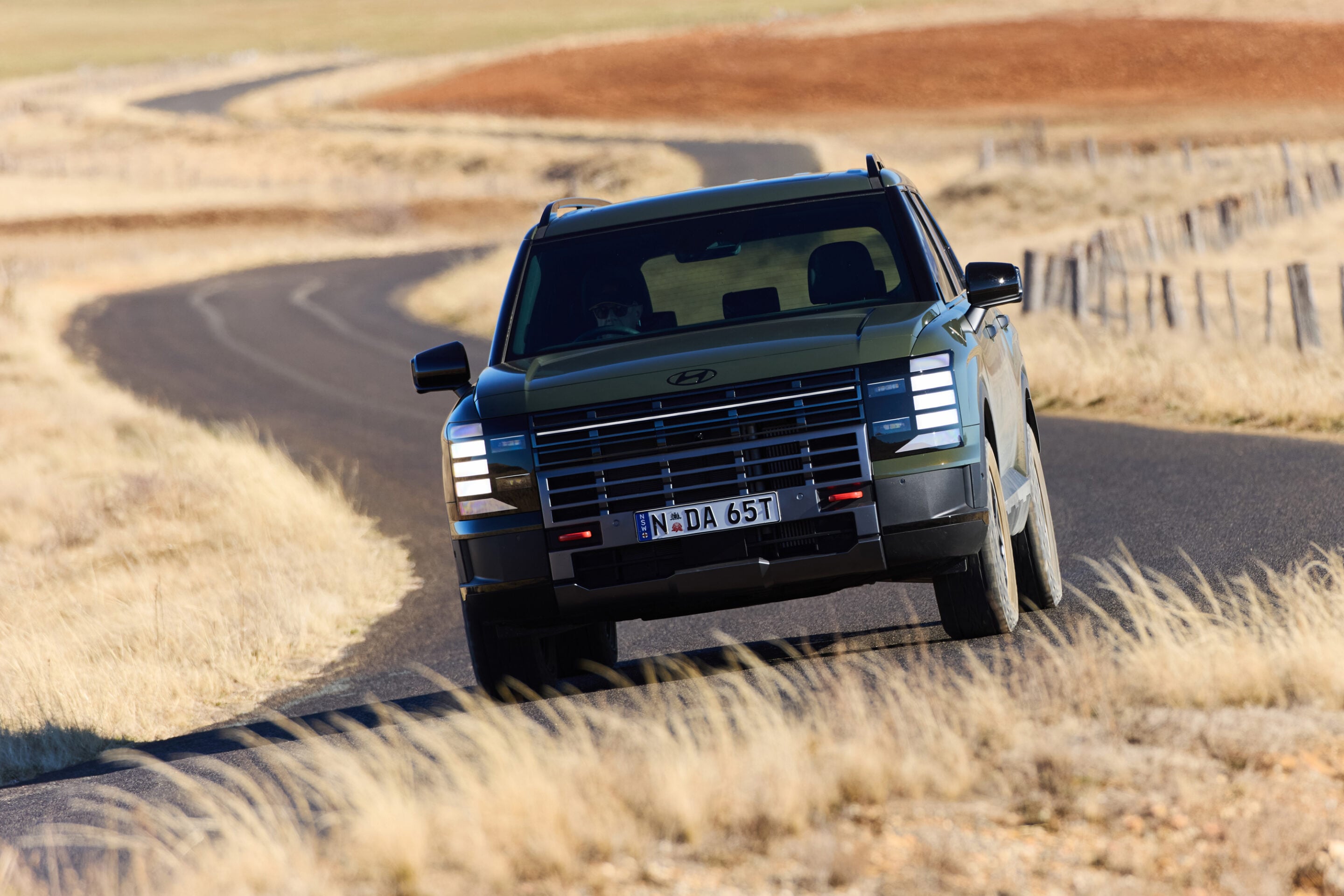
The XRT Pro does a good job of justifying the extra spend over the Elite. It sits on smaller 18-inch wheels, clad in Continental Cross Contact all-terrain rubber while ground clearance has been increased by 25mm, now quoted at 212mm. The suspension has been reworked, with new hardware and a unique XRT Pro tune that prioritises off-road ability. There’s also an electronic rear limited-slip diff.
Underneath, there’s a non-hybrid 2.5-litre turbo-four which in this trim makes 207kW/422Nm, up from the 192kW and 353Nm in the Elite, although it’s worth noting the Elite’s hybrid system bumps combined outputs to 245kW and 460Nm.
A new eight-speed automatic transmission replaces the Elite’s six-speed unit. The result is increased towing capacity, now rated at 2200kg braked, up by 200kg over hybrid Palisades. A factory-fitted towbar is standard as are self-levelling dampers which adjust and maintain ride height depending on how much weight is on board. There are also several terrain drive modes, including sand, mud and snow.
2
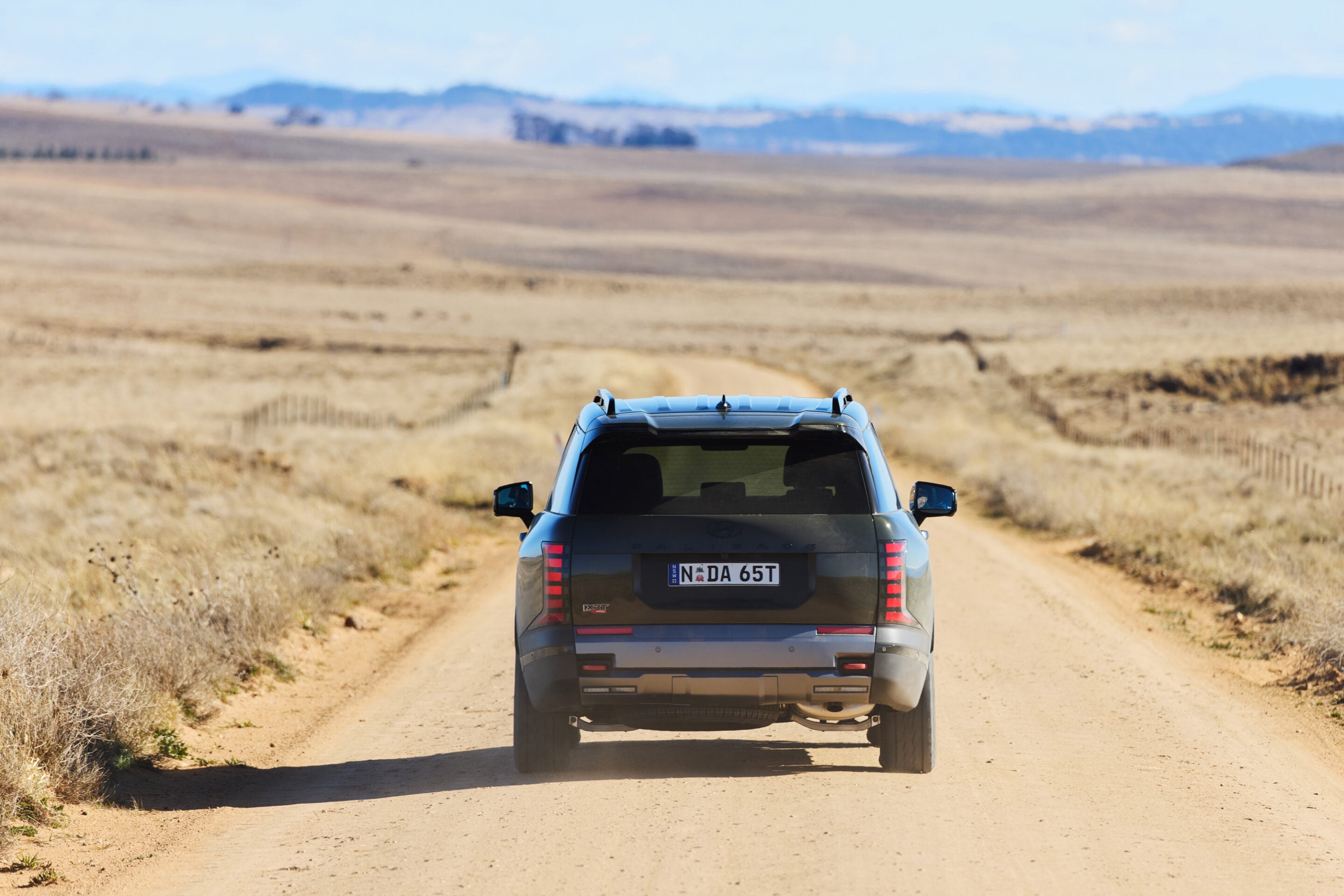
Outside, the XRT Pro distinguishes itself with skid-plates, a horizontal light bar, darkened XRT-Pro embossed elements and functional red recovery hooks attached directly to the chassis.
What’s the Hyundai Palisade XRT Pro like on the inside?
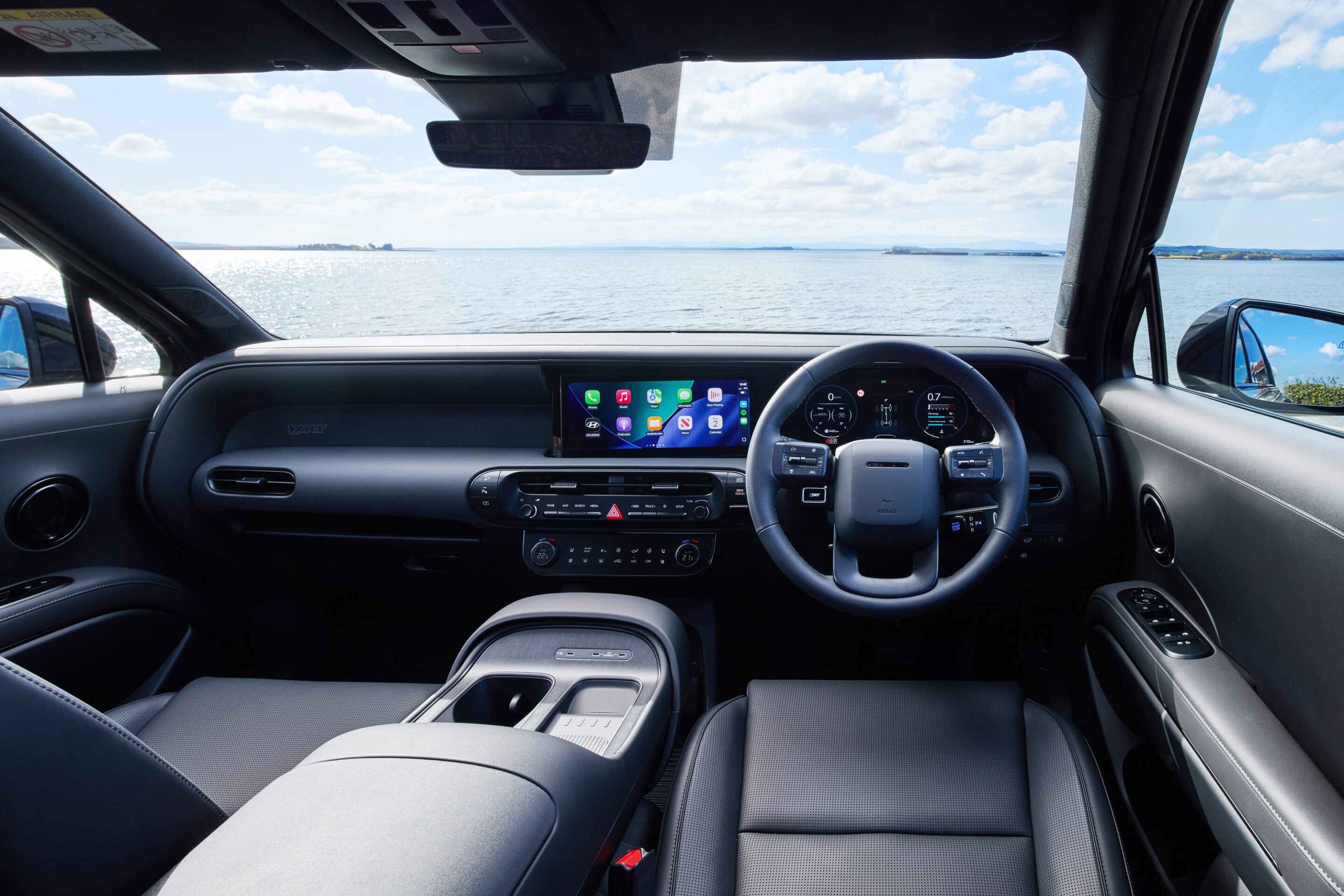
The XRT Pro treatment continues in the cabin with unique faux-leather power adjustable seats. XRT Pro branding is everywhere, including in the instrument cluster where gauges that show pitch, roll and steering angles will prove useful when out in the wild. A ground view monitor projects images of what’s underneath the Palisade, also useful when trying to navigate gnarly trails.
6
The rest is pure Hyundai Palisade with seating for eight, big screens (12.3-inch infotainment and another 12.3-inch digital instrument cluster), a heated steering wheels, 14-speaker Bose sound system, sat-nav, dual-zone climate control, heated and ventilated front seats, and a sunroof.
There is practicality to the cabin that’s hard not to be impressed by. The Palisade has eight seats, and while that usually comes with compromise, especially in the third row, the Hyundai packaging gods have ensured that even adults can fit – comfortably – into seats six, seven and eight. There aren’t a lot of seven- or eight-seaters that can make that claim.
Up front, the power adjustable seats are well bolstered and supportive. You sit high in the cabin, with a commanding view over the bonnet and onto the road ahead while the Palisade’s blunt angles and squared off edges take the guesswork out of placing the big lugger on the road and in car parks.
6
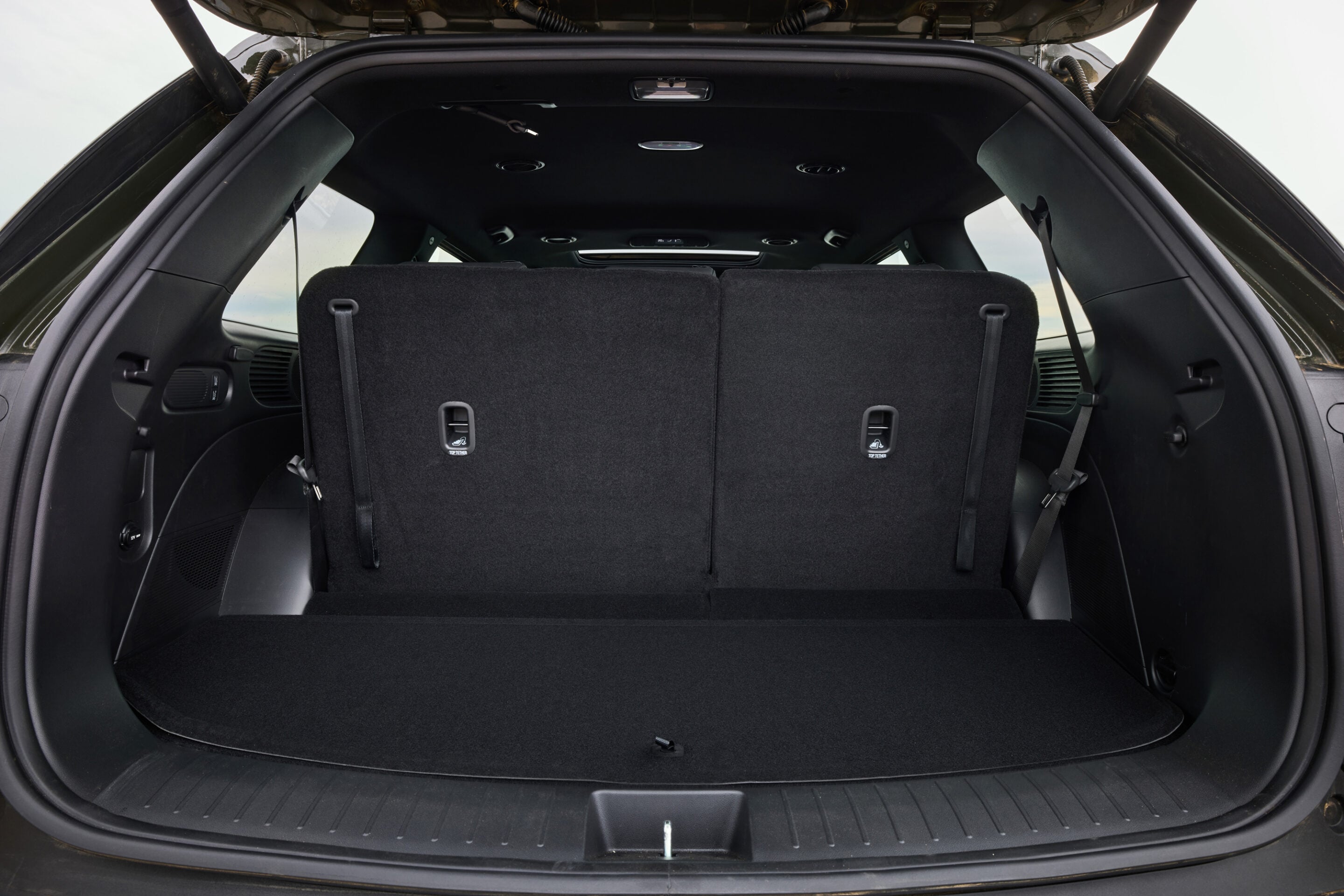
There are plenty of nooks, bins and crannies to stow small stuff while out back, even with the third row in use, there’s a usable 317 litres of luggage capacity, expanding to 729 litres and a monster 2098L with the third and second rows folded away respectively. Bonus points to Hyundai for a full-size alloy spare wheel hanging off the XRT Pro’s undercarriage. Nice one.
How does the Hyundai Palisade XRT drive on the road?
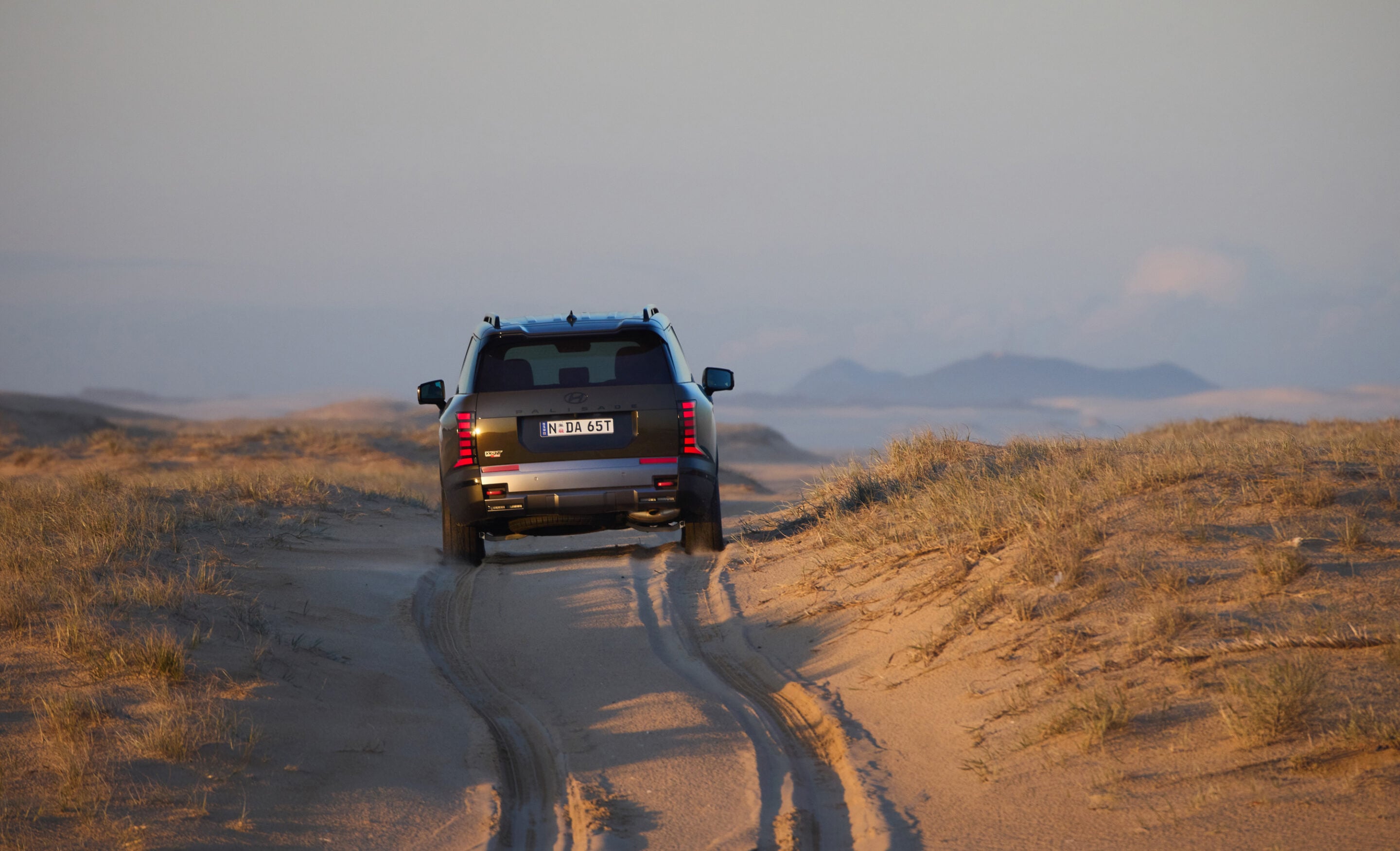
Pretty much like any other Palisade, is the short answer. The 2.5-litre petrol four-pot has enough poke for day-to-day driving. Sure, in XRT Pro trim there is no hybrid assistance to provide that extra zing from take-off, but you’d be hard-pressed to notice the difference.
Where the XRT Pro shines on the road is ride comfort. Those smaller wheels and big rubber (the sidewalls measure in at 153mm) combine to isolate minor road irritants and bumps with aplomb, the big SUV simply gliding over imperfections. It’s not softly sprung, not by a long stretch, but there’s a composure under wheel, even over bigger obstacles like speed bumps, that’s hard not to be impressed by.
4
The steering feels light and accurate, highlighted by a short trip through some winding back roads while brake pedal feel is good. The brakes themselves, ventilated rotors – 345mm up front and 325mm at the rear – do a good job of retarding speed in a predictable manner.
And despite the presence of those chunky Continental tyres, road noise is kept nicely at bay. Of course, you hear some ‘wooshing’ from wheels on bitumen, but it remains well within acceptable levels.
Simply, the XRT Pro doesn’t stray too far from the regular Palisade’s demeanour on the road, a large, easy-to-drive-and-place SUV that offers composure and comfort in equal measure. It’s worth noting that the addition of all-terrain hardware hasn’t compromised the Palisade’s underlying family-friendly on-road worthiness. And that’s not always a given in this segment.
Is the Hyundai Palisade XRT Pro a capable off-roader?
To answer that question, Hyundai Australia laid on some pretty gnarly off-road tracks – variously muddy and bouldered – at a dedicated facility on Sydney’s outskirts.

3
To be clear, this rugged Palisade isn’t going to be a contender for crossing the Simpson Desert or climbing up Beer O’Clock Hill, but the mechanical changes wrought underneath are enough to elevate the big family hauler above the level of ‘Fire Trail’ SUVs that dominate our roadscape.
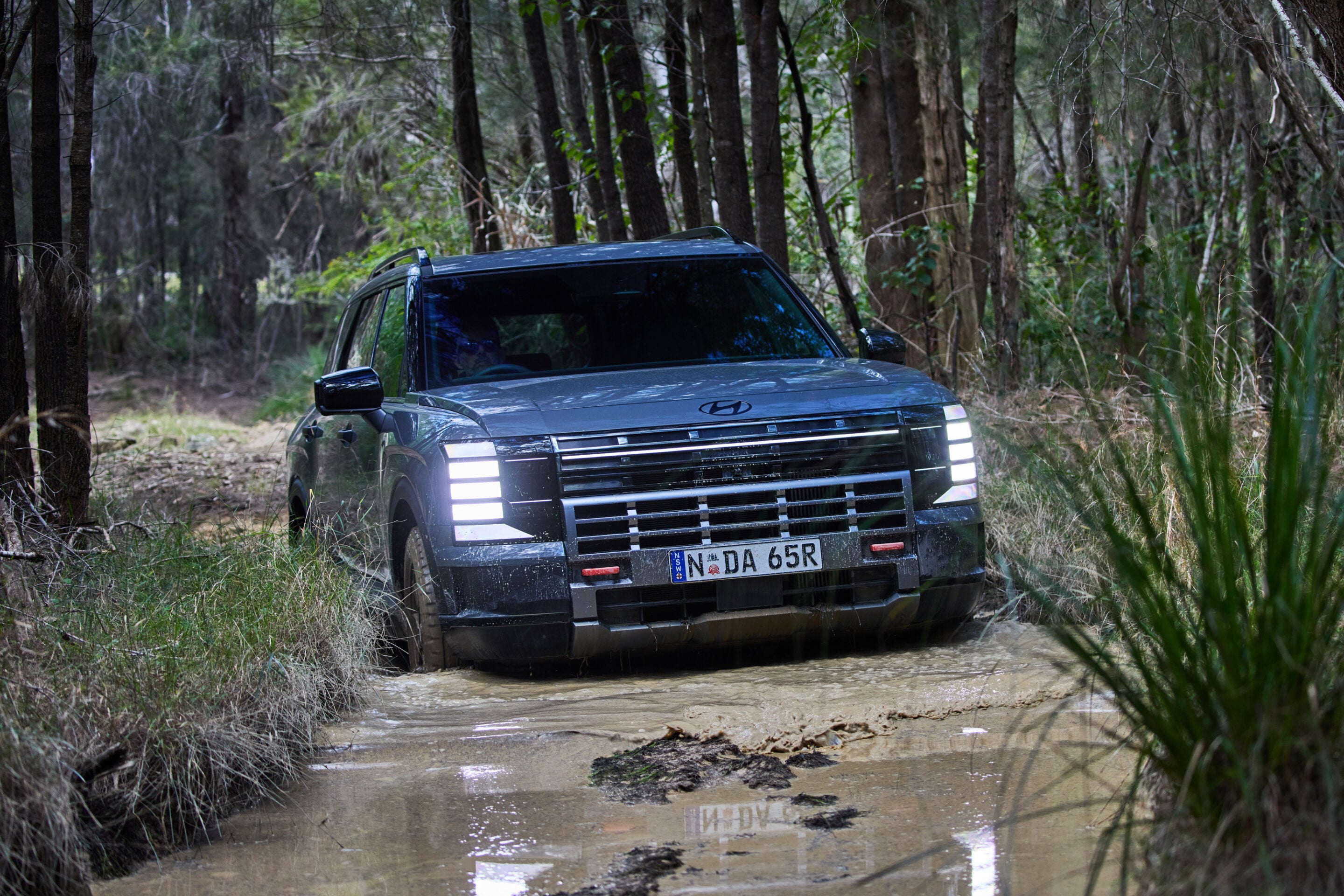
Its all-terrain chops hinge on the efficacy of the electronically controlled limited-slip diff at the rear which brings grip and traction to the wheels – or wheel – that need it most in slippery conditions. And the news here is good, the big SUV hauling up challenging and uneven climbs without ever floundering, even when various wheels were hanging high in the air.
The e-LSD might not be as confident in apportioning torque as an old-school mechanical locker, but it did the job commendably enough to allow the Palisade to climb rutted and rock-strewn climbs with minimal fuss.
3
The 25mm extra ground clearance might not seem like much but it increases approach, ramp-over and departure angles measurably, now rated at 20.5, 22.4 and 18.3 degrees respectively, bringing some added reassurance you won’t rip off a bumper or side skirt when tackling steeper trails.
The underbody camera that shows the positioning of the front wheels on the terrain underneath proved helpful, even if picture clarity wasn’t as sharp as some similar setups I’ve previously experienced. Still, it’s useful, especially for anyone new to tackling adventure trails.
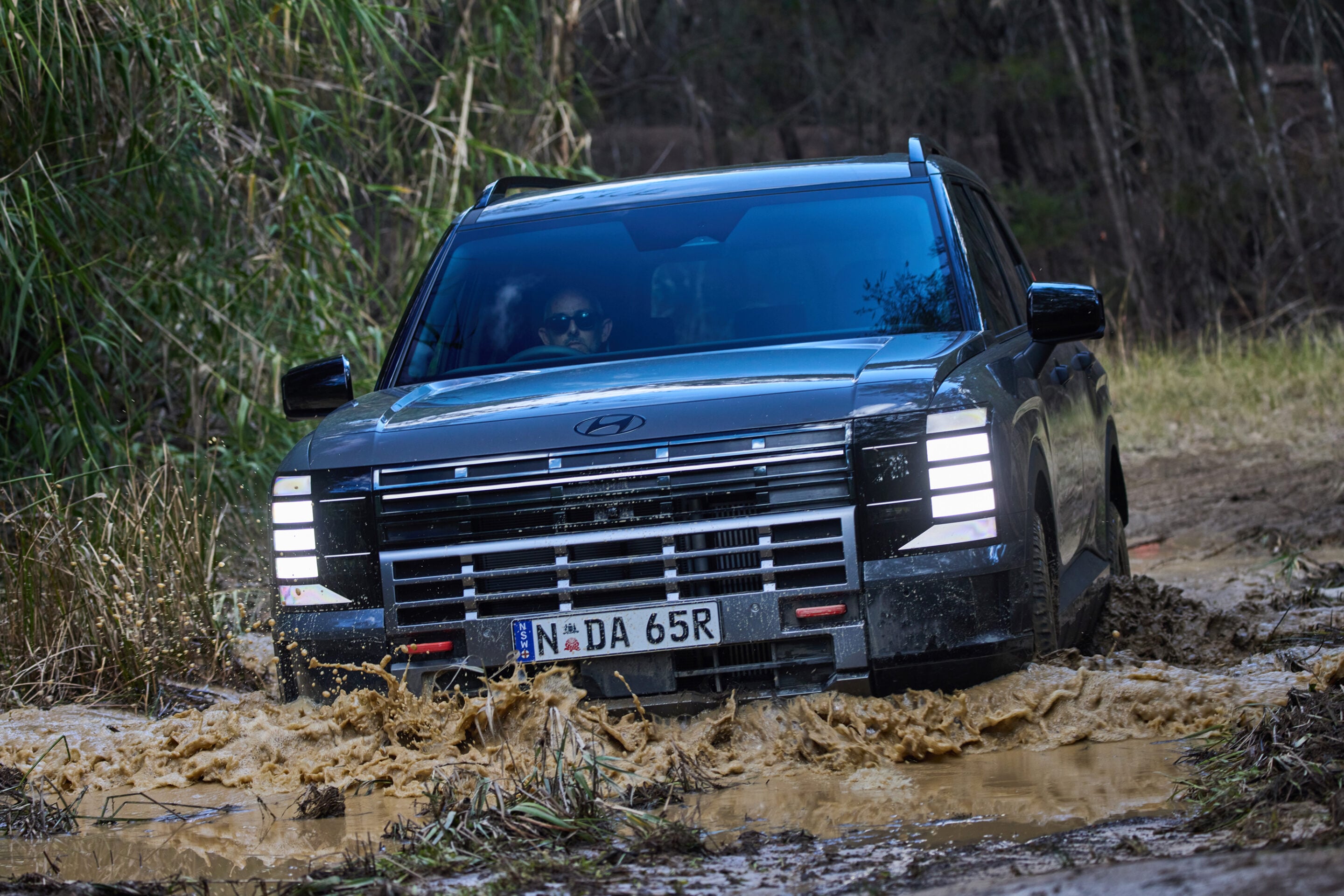
The various terrain drive modes – Mud, Sand, Snow – adjust things like throttle mapping, torque distribution via the e-LSD and braking to best suit the surface.
1
I spent my time off the beaten track exclusively in Mud mode which delivered reassuring grip while nicely I spent my time off the beaten track exclusively in mud mode which delivered reassuring grip while nicely and easily maintaining forward momentum along an ankle-deep muddy trail. The downhill brake control isn’t as refined as some I’ve experienced, a little jerky on descent but overall did keep the XRT Pro from running away with itself.
How much does the Hyundai Palisade XRT Pro cost to service?
Hyundai recommends 12-month or 10,000km (whichever comes first) visits to the workshop for servicing. That’s a bit short on the distance front where 15,000km is the industry norm. And that means anyone covering the Australian average of around 12,000-13,800km annually will be visiting their local dealership more than once per year.
The first five visits (5 years or 50,000km) will cost a total of $2366, according to Hyundai’s online service calculator. Stretch that out to seven years or 70,000km and the bill will total $3752.
2
Hyundai covers the XRT Pro with its standard five-year/unlimited km warranty that can be extended to seven years, providing all servicing is carried out by an authorised Hyundai dealer.
What’s the verdict on the Hyundai Palisade XRT Pro
Hyundai’s first serious attempt at an off-roader capable of more than just running comfortably down mildly-rutted dirt roads deserves praise. Sure, the XRT Pro isn’t going to have a cohort of dedicated body-on-frame off-roaders looking over their shoulders anytime soon.
But it’s more than capable of holding its own on the type of challenging trails that would thwart a flotilla of all-wheel drive soft-roaders. And that opens up possibilities for treks and destinations previously off the table for a cohort of buyers who like the idea of adventure but not to the same level of commitment as the dedicated off-roading community.
1
It’s not one for serious off-roaders, but the Palisade XRT Pro is a well-built bridge between everyday all-wheel drive SUVs and hard-core trailblazers.
Perhaps its neatest party trick is that Hyundai’s engineers have added some off-the-beaten track oomph without compromising on-road comfort, something that has made the regular Palisade line-up so damn appealing.
Specs – Hyundai Palisade XRT Pro
| Price | $79,900 plus on road-costs |
|---|---|
| Powertrain | 2497cc four-cylinder turbo-petrol |
| Transmission | 8-speed automatic, all-wheel drive |
| Power | 207kW (@ 5800rpm) |
| Torque | 422Nm (@ 1700-4000rpm) |
| Fuel consumption (claimed) | 11.2L/100km |
| Claimed CO2 emissions | 254g/km |
| Fuel type/tank size | 91 RON regular unleaded, 72 litres |
| Weight | 2258kg (tare mass) |
| Dimensions (L/W/H/WB) | 5090/1980/1830/2970mm |
| Turning circle | 11.88m |
| Ground clearance | 212mm |
| Approach angle | 20.5 degrees |
| Departure angle | 22.4 degrees |
| Breakover angle | 18.3 degrees |
| Towing capacity (braked) | 2200kg |
| Maximum downball weight | 160kg |
| Boot capacity | 317L litres (three rows up), 729 litres (row three folded), 2098L (rows two and three folded) |
| Spare wheel | Full-size alloy |
| Warranty | Five-year/unlimited km (extendable to seven years with dealer servicing) |
| Five-year service cost | $2366 (50,000km) |
| On sale | Now |
8.1
/10
Score
Score breakdown
8.0
Safety, value and features
8.5
Comfort and space
8.0
Engine and gearbox
8.0
Ride and handling
8.0
Technology
Things we like
- Off-road enhancements more than skin deep
- On-road manners uncompromised by rugged updates
- Spacious and plush cabin, even in row three
Not so much
- Short service intervals in terms of distance
- Drinks plenty of fuel
- Downhill brake control needs refinement
Follow WhichCar/Wheels on Google
Click the button below to make WhichCar by Wheels a preferred source for your news.


We recommend
-
 Reviews
Hyundai Santa Fe XRT: Car vs Road - Warburton to Woods Point
The toughened-up Santa Fe takes on 110km of washboard, potholes and hideous weather in Victoria's back country.
-
 News
NewsThe rugged Hyundai Boulder SUV breaks cover in patent filing that shows it's a no-nonsense off-roader
The Hyundai Boulder was revealed as a concept in April. Now a new image provides a look at how it could look in production form.