
Comparisons


Gallery 1
One. Just one. Exactly one.
That’s how many new cars in Australia are priced under $20,000. A solitary one.
Ten years ago, that number was 148, running the spectrum from the $11,990 Mitsubishi Mirage (with a manual gearbox) to the $19,990 Tata Xenon. The what now? The Tata Xenon, a ute from India which in single-cab chassis 4X2 trim came in at a tenner under the psychological $20k barrier.
In between, a smorgasbord of affordable options from established brands, including a smattering of Europeans – hatchbacks, city cars, small sedans, and even the occasional dual-cab ute, all priced under $20,000.
The rapid advancement in technology over the intervening decade has, unsurprisingly, pushed up prices. Cheap ain’t what it used to be and any new car buyer looking to get a foot in the new-car-small door needs to budget anywhere between $20k to $30k.
1
And it’s a fallow field too, with just 51 available models coming in under $30k, the new normal that underscores the changing definition of what it means to be an ‘affordable new car’.
So what do Australia’s affordable new cars look like now? What does ‘value’ mean? And what do you get for your new twenty-something-thousand dollar car?
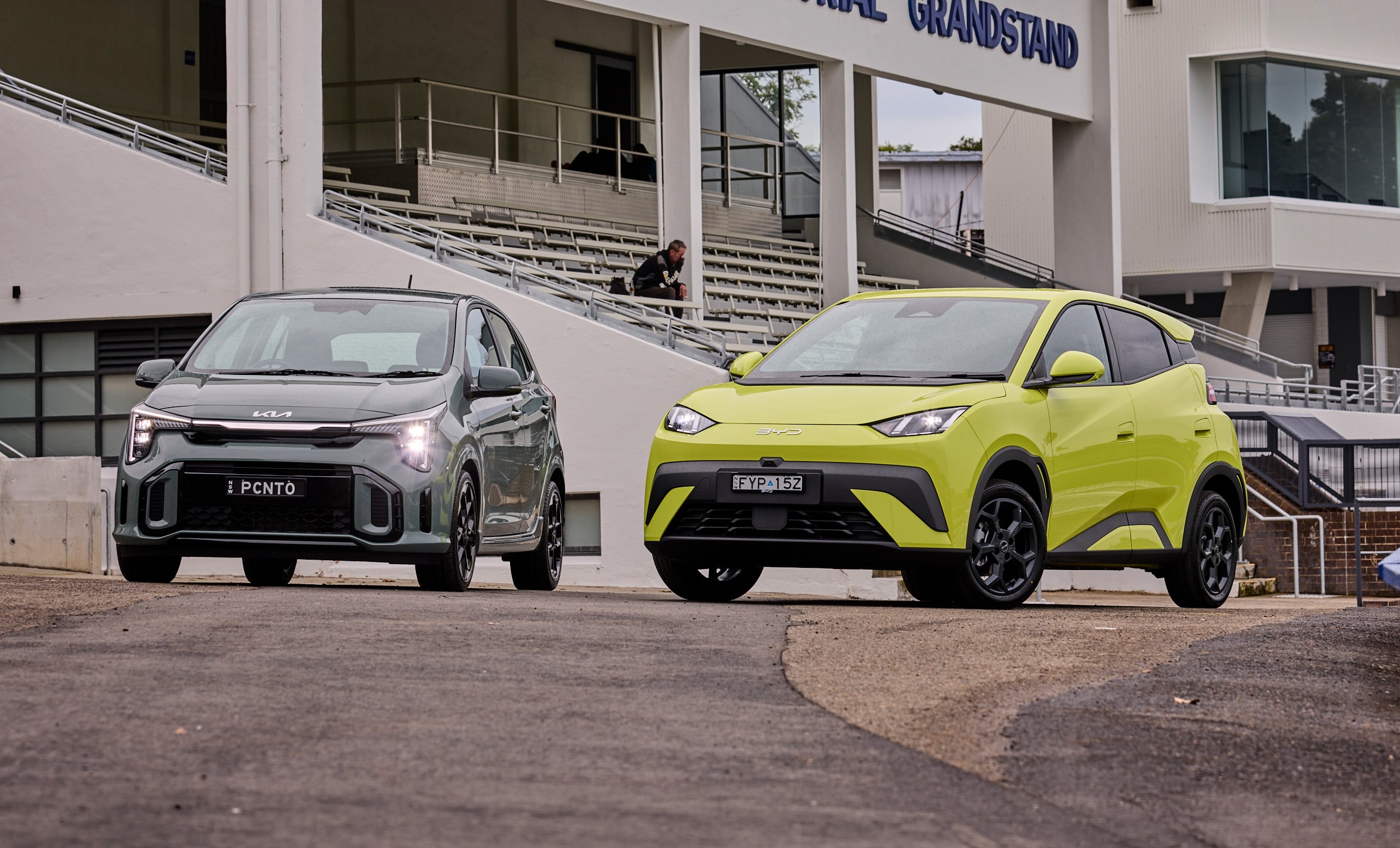
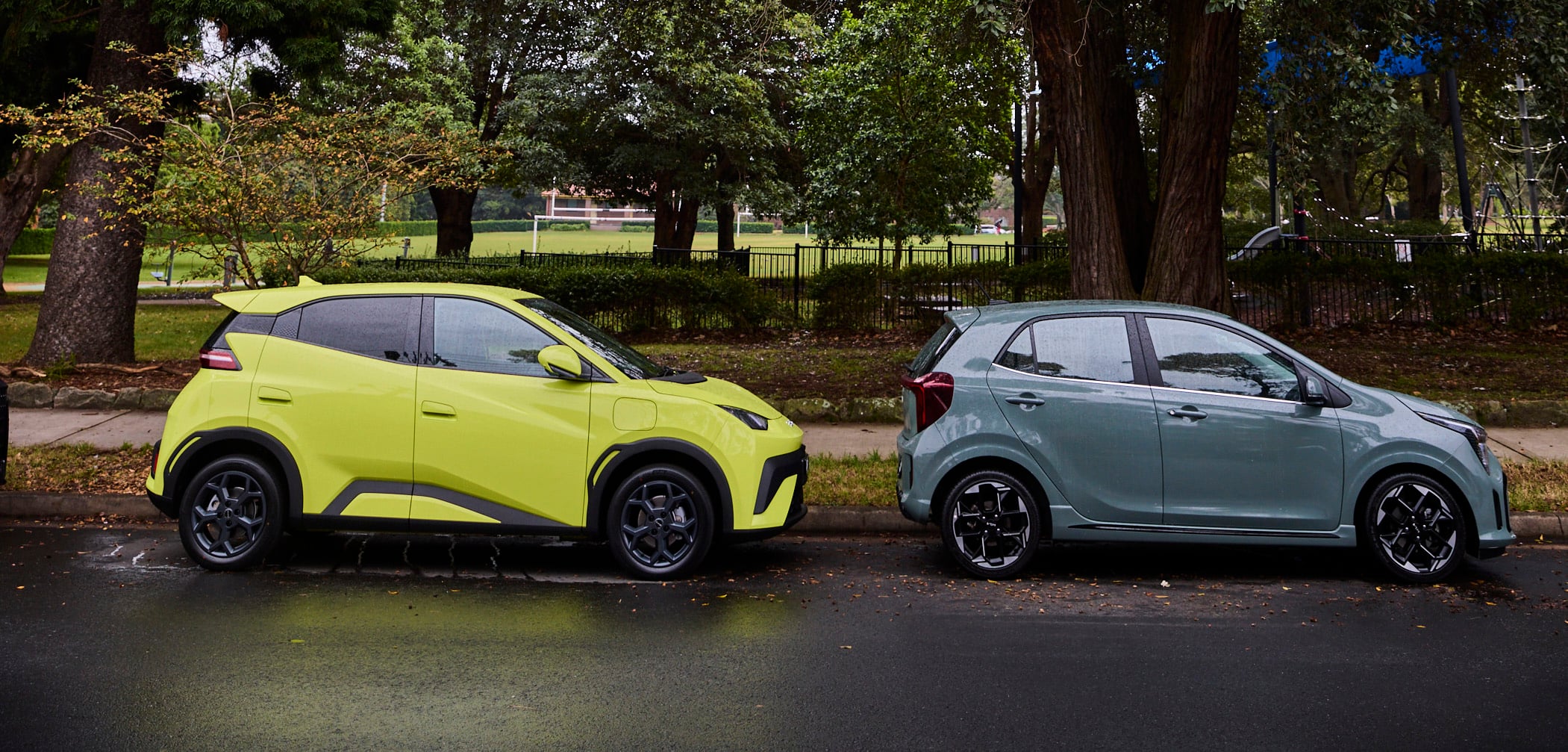
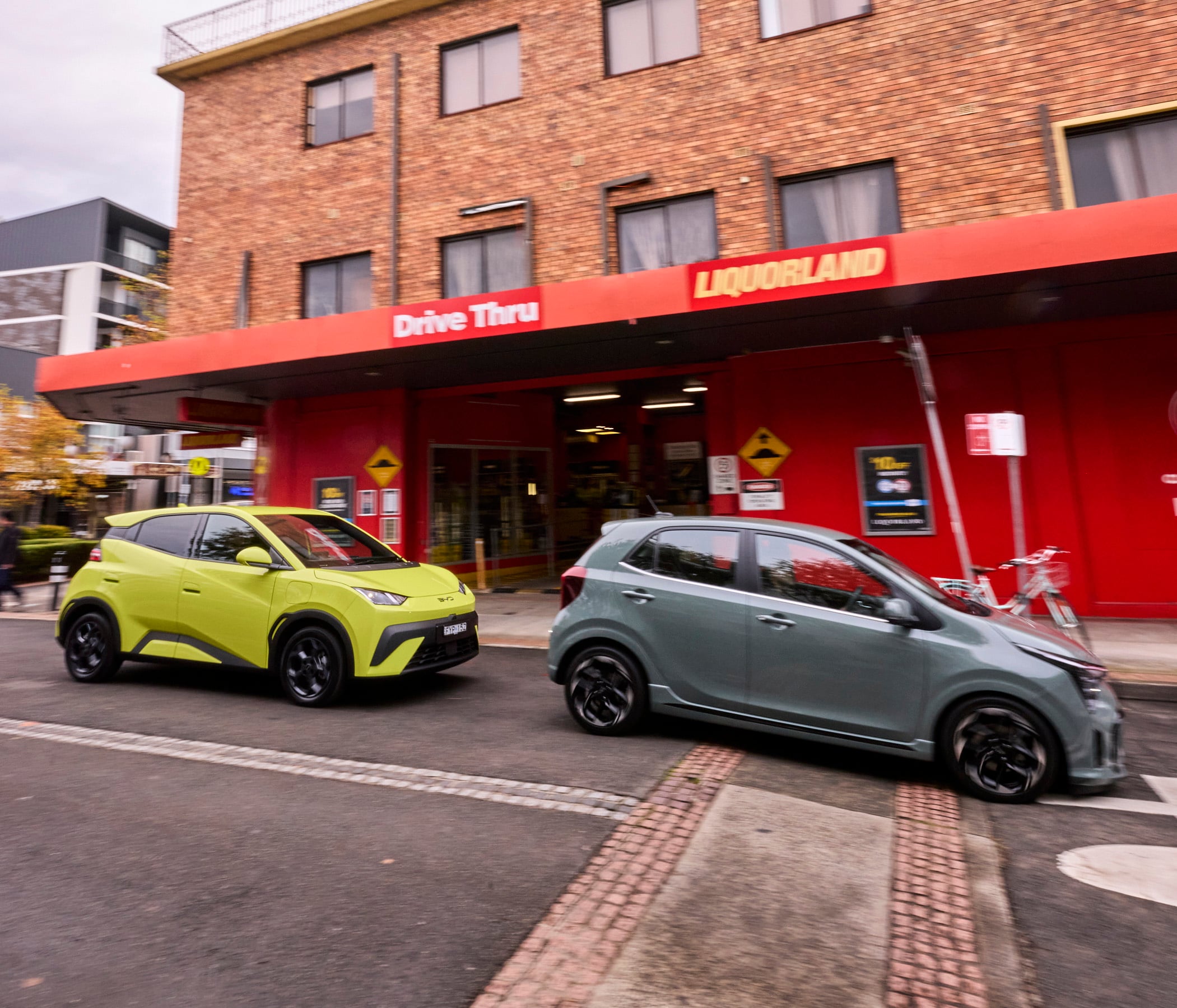
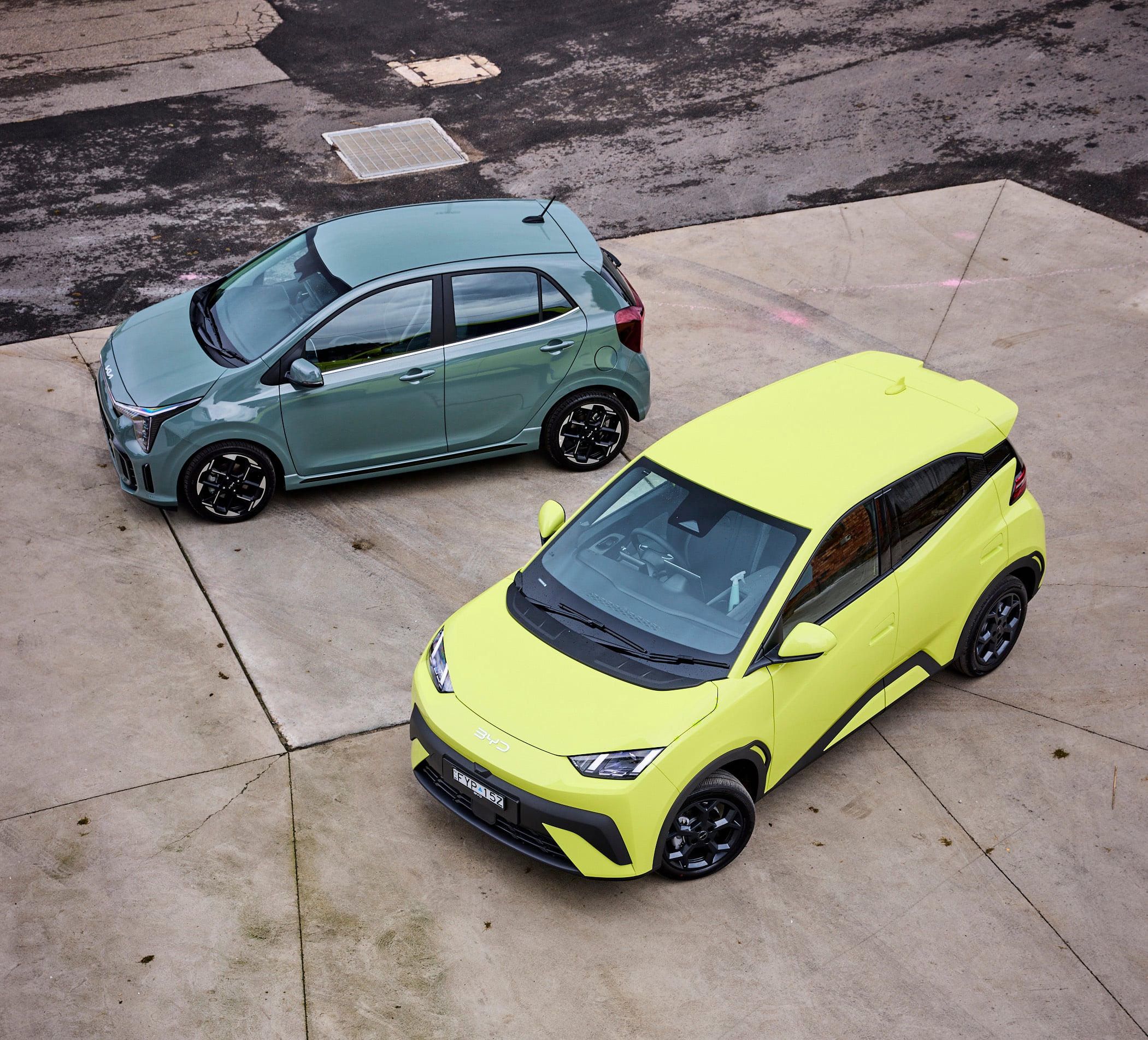
That’s what we wanted to find out so we assembled two of the most affordable new cars your money can buy right now. One, the Kia Picanto, is steadfastly traditional, a petrol-powered city car that has proven popular with Aussie new car buyers for over a decade. The other, the BYD Atto 1, embraces the modern age of motoring, a battery-electric city car that smashes through the ‘EVs are too expensive’ dichotomy… and by some margin.
Korea versus China, traditional versus new-age, petrol versus electric. So which one comes out on top? Let’s find out.
The Contenders
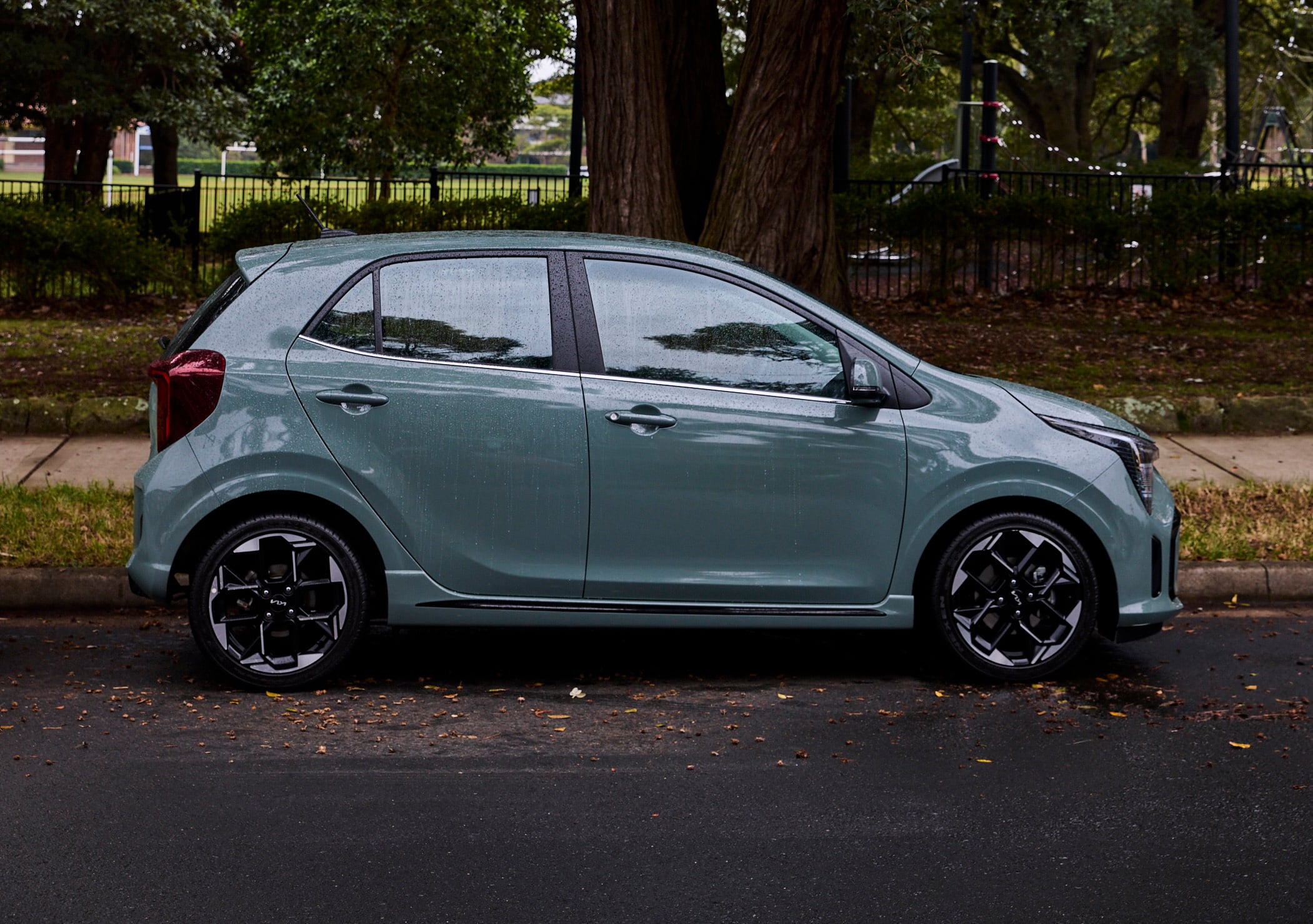
The Kia Picanto is no stranger to our roads. Launched locally back in 2016, some 13 years after its global debut, the little South Korean has gone on to become a city car mainstay.
With total sales in excess of 55,000 since its launch in 2016, the Picanto has long been lauded for its affordable and simple formula on modern motoring. Priced at $14,990 when launched in 2016, the Picanto was right in the thick of the fight for affordability, trading blows with the identically-priced Honda Jazz, Hyundai Accent, Mazda 2, and MG3. They weren’t Australia’s most affordable cars that year – the gawky Mitsubishi Mirage and its $11,990 sticker held that distinction – but they did come in under the psychological $15,000 ceiling.
1
Fast forward to 2026, and the $19,190 Picanto stands alone in a new car landscape more diverse than ever before. It’s the only new car, period, priced under $20k.
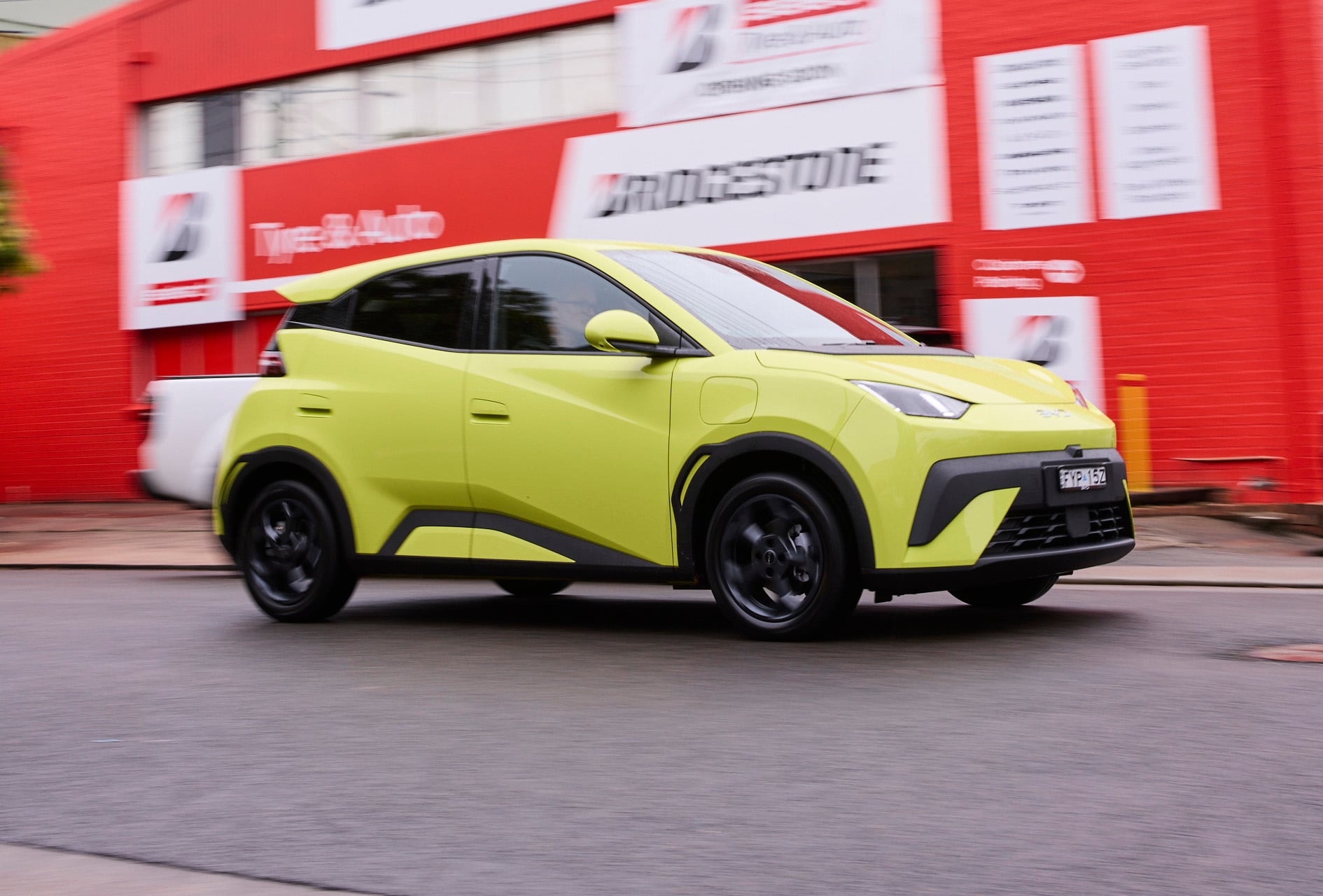
The BYD Atto 1 is a baby, a newcomer to Australia that arrived here in November 2025 with much fanfare and expectation on its diminutive haunches.
Why the hullabaloo? Because at $23,990 before on-road costs when it launched, the Atto 1 instantly became the ‘most affordable electric car’ in Australia. And in a climate where critics of electric cars cited ‘affordability’ and ‘lack of price parity’ as primary reasons for snubbing EVs, the Atto 1 reshaped the conversation.
1
The price war
We haven’t opted for the out-and-out cheapest variants of either for our comparison here. Instead, we’ve jumped straight to the top of the range tree of both models, our argument being that the extra few grand for either model is money well spent in terms of what you get.
First up, the Kia Picanto GT-Line on test here starts from $22,590 before on-road costs, translating to around $25,190 driveaway nationally, according to Kia Australia’s website.
The BYD Atto 1, even in its most affordable Essential specification, can’t match the Picanto’s circa $25k driveaway price, asking for around $27,000 before landing in your driveway. But on test here we have the flagship $27,990 plus on-road costs Atto 1 Premium which parks in your garage for around $31,200.
That gives the edge to the Kia, and handsomely, on price alone. So does delving into their respective spec sheets paint a different picture?
Our Picanto wears a $550 coat of Adventurous Green metallic paint, bumping the as-tested price to $25,756 driveaway. It’s one of six cost-plus colours, leaving just plain old appliance White as the only ‘free’ shade.
BYD’s colour palette is much simpler, comprising just four hues, three of which command a $500 premium, including the Pine Lime of our test car. As-tested price? $31,731 driveaway. As it is on the Picanto, the only no-cost colour is white, or, as BYD calls it, Apricity White. Apricity: noun, the warmth of sun in winter, in case you were wondering (I had to look it up).
Both city slickers are generously equipped with the type of gear young and savvy urban buyers expect. Standard kit across both models includes 16-inch alloy wheels, dusk-sensing headlights, heated auto-folding mirrors, keyless entry, faux leather seat upholstery and steering wheel trim, power windows, wireless smartphone mirroring, manual air conditioning, and Bluetooth connectivity.
There are some differences, though. The Kia comes with a space-saver spare wheel, trumping the Atto 1’s tyre repair kit. But the BYD counters with native satellite navigation, absent from Picanto, where route guidance is only available through Apple CarPlay or Android Auto.
The Picanto’s six-speaker audio system trumps the four-speaker count of the Atto 1. Both systems offer thin sound quality.
4
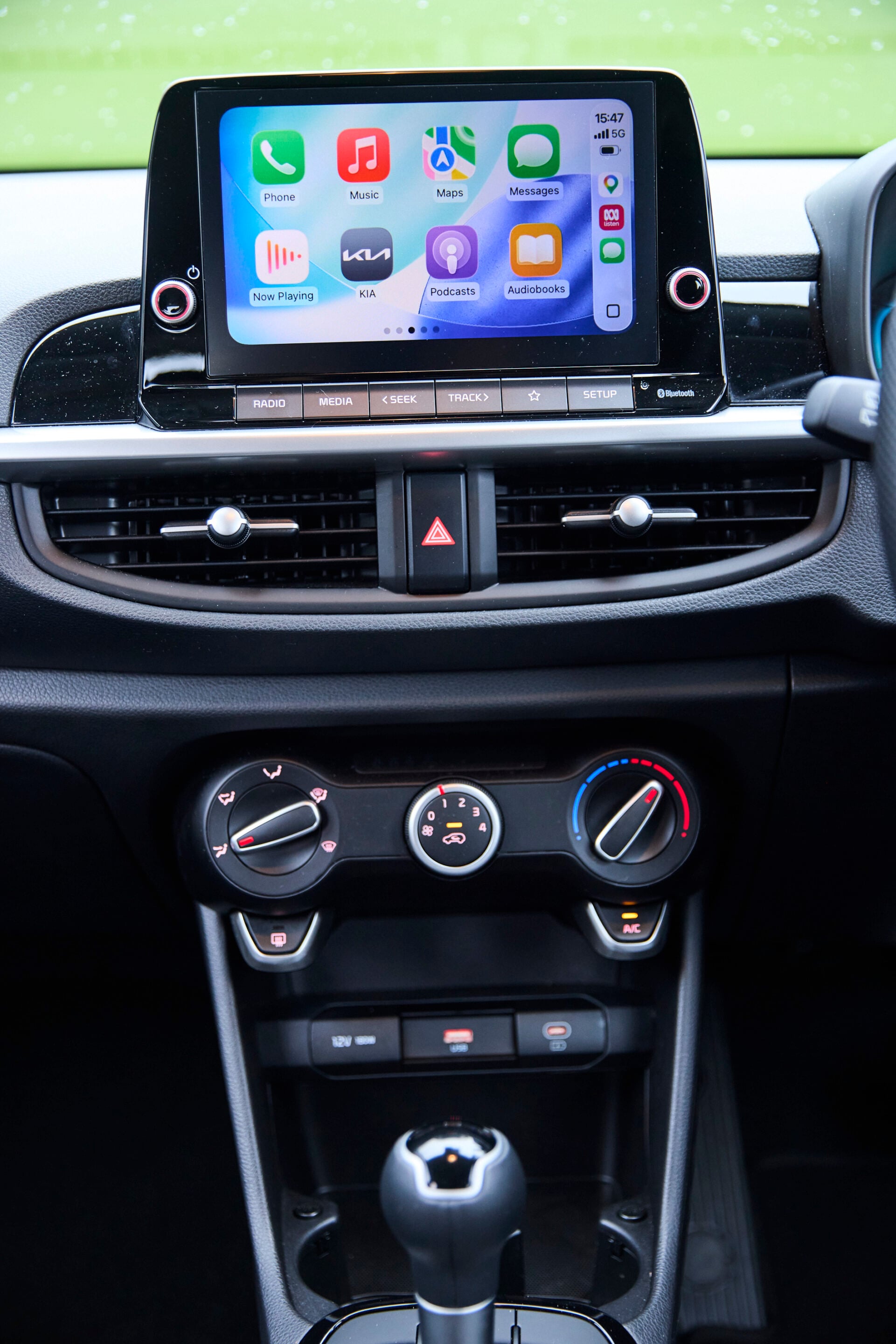
As a tech-forward company, the BYD’s 10.1-inch touchscreen sees off Kia’s 8-inch screen while the digital driver display score reads 7-inch to 4.2-inch in favour of the BYD.
The Atto 1 is alone in offering adaptive cruise control and front and rear parking sensors, besting the Picanto’s regular cruise control and rear parking sensors only. Similarly, the Atto 1’s 360-degree camera trumps Kia’s reversing camera. BYD also scores tyre pressure monitoring. Picanto doesn’t.
So, a little bit of give and take (and arguably not enough, at least on paper) to counter the circa six grand price difference between this pair. Not yet, anyway.
Power struggles
This, of course, is where the difference between the two urbanites is at its starkest – petrol versus electric.
There’s nothing modern about the Picanto’s powertrain, which marries a 1.2-litre naturally-aspirated four-cylinder petrol engine with a rudimentary four-speed automatic transmission. Power outputs are meagre, with just 62kW and 122Nm channelled to the front wheels.
The Atto 1’s modern take on motoring brings a single electric motor with 115kW and 220Nm powering the front wheels. Those numbers easily dwarf the Picanto’s but they do have to work harder to shift 1390kg of Atto 1. The Kia, in comparison, is a positive lightweight, tipping the scales at just 936kg, more than 400kg lighter than its rival here.
Cabin fever
Despite their compact dimensions, neither car feels particularly small inside, both making good use of the available space.
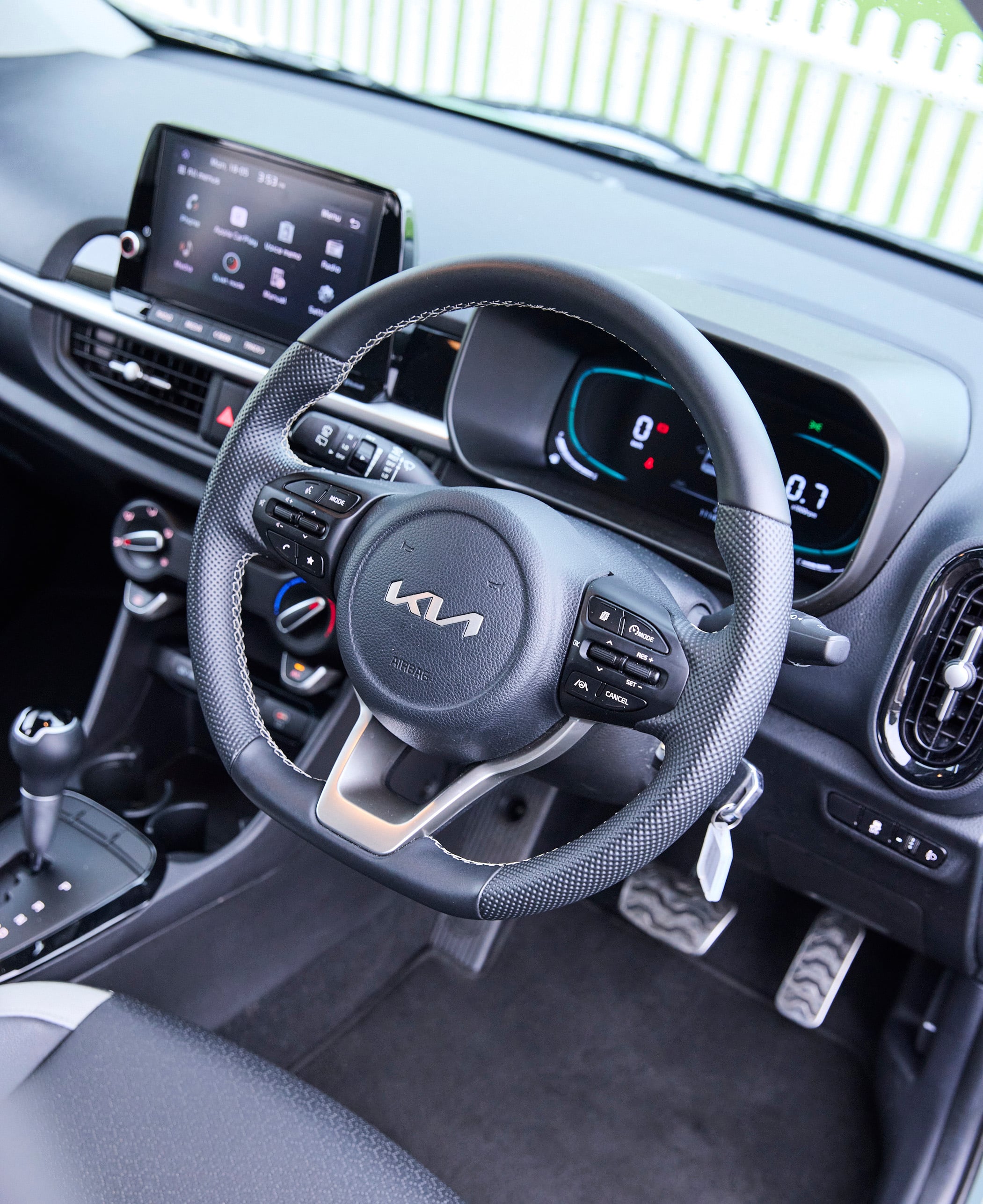
The Picanto’s cabin does feel a little dated alongside the BYD’s, hardly surprising considering its decade-old underpinnings.
4
Both are draped in artificial leather but it’s the BYD’s that does the best impression of being the real stuff, the Picanto’s looking and feeling like the vinyl it is.
Kia has tried to inject some visual interest with perforations and light grey accents on the seats, and contrast stitching on the leather-wrapped steering wheel, but at its heart, the Picanto’s cabin remains pretty basic.
The manually adjustable front seats are comfortable enough but lack the creature comforts of the BYD’s, which bring heating and ventilation to the small car party. There’s a paucity of storage options in the Picanto, as you’d expect from the segment, with the usual cupholders, a serviceable glovebox, door pockets that can take small bottles, and not much else.
The Kia’s rudimentary cabin layout does bring some benefit, including chunky dials for air conditioning – something the BYD doesn’t offer, its climate controls housed inside its 10.1-inch touchscreen.
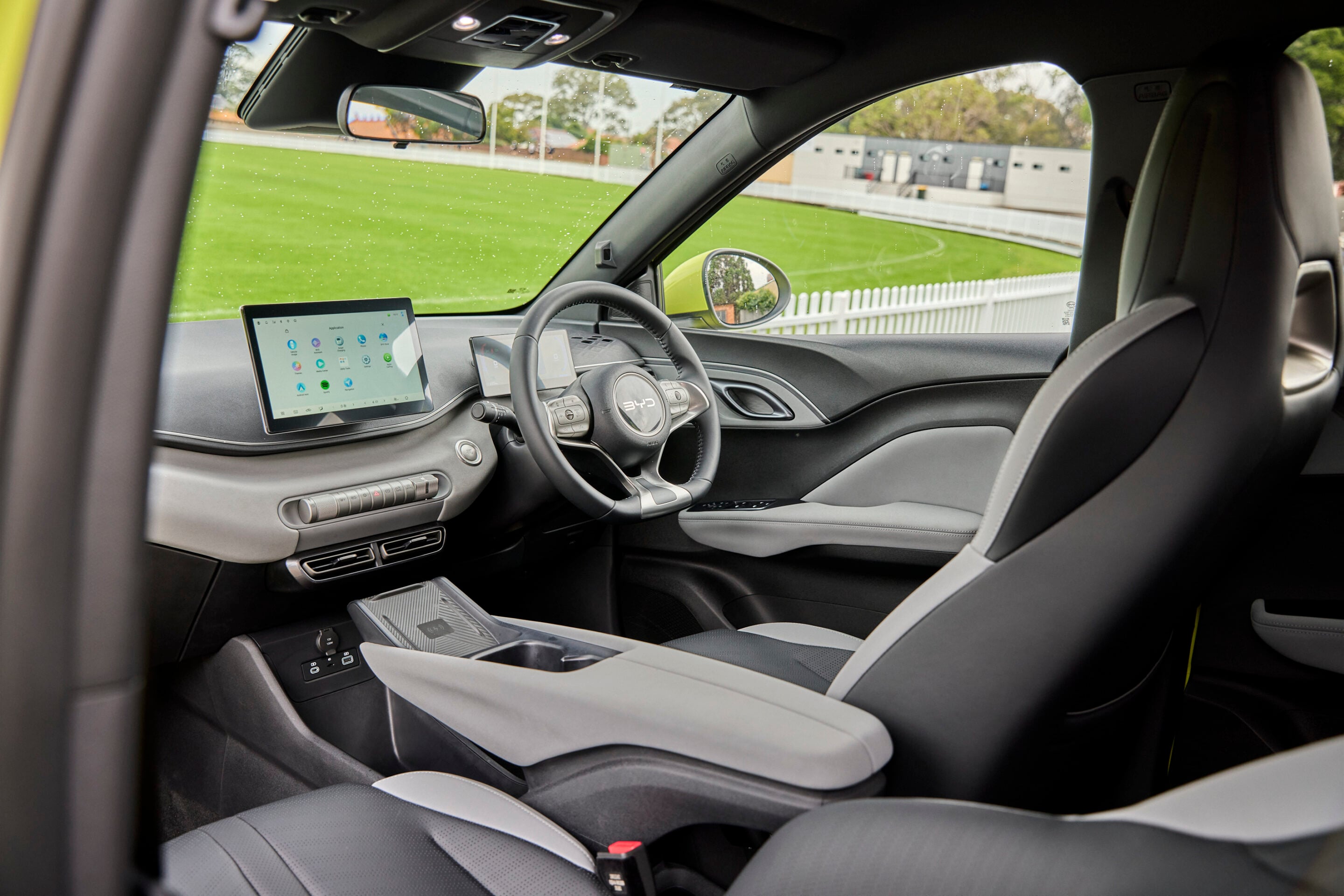
Slide into the Atto 1 and it’s immediately apparent this is a car for now. The overall design is significantly sharper and cleaner than the Kia’s, a fresh and contemporary look that trades tactility for minimalism.
The materials throughout the BYD are a cut above the Kia’s, its synthetic leather closer to the real stuff than the Picanto’s. Both are compact cars, of course, but the Atto 1, at least up front, feels bigger, more spacious, lighter.
The front seats are on a par with the Picanto’s, at least in terms of comfort, and have the added benefit of heating and cooling. The driver’s seat is power adjustable, something the Picanto can’t match.
Storage options are limited, with cupholders, door pockets, and a small glove compartment along with a wireless smartphone charging pad, something the Kia doesn’t offer.
2
Second-row comfort is always going to be a compromise in cars of this size. And it’s here where the Atto 1 is a clear-cut winner, its back-seat comfort superior to the Picanto’s. The seats feel nicer to sit in and there’s more available room in key areas such as foot, knee and leg. Headroom is a touch compromised by the Atto 1’s sloping roofline but the differences are marginal.
There is a caveat, though – the Atto 1 is a four-seater only, with no middle seat in row two. This isn’t as a big a deal as it sounds on paper, with city cars rarely the domain of families of five, or even three. We’d venture the majority of buyers in this segment are singles or couples.
The Picanto at least makes a pretence of squeezing three across in row two, although we wouldn’t recommend it. It’s tight back there, even for two people.
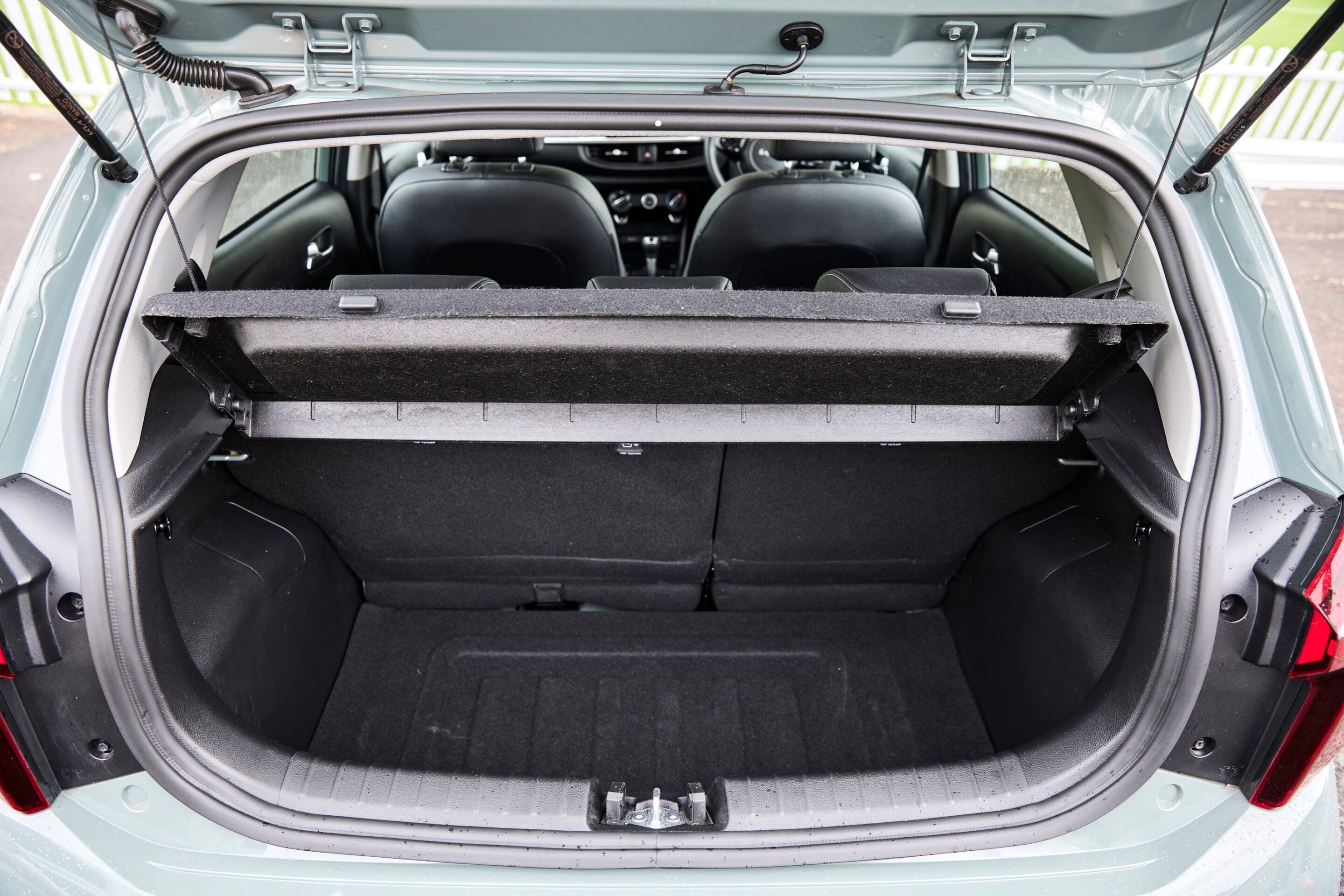
Boot space is as you’d expect of the segment, although here the BYD, with 308L/1037L, easily accounts for its rival’s 255L/1010L storage capacity. The bonus here is that the Picanto is alone in offering a spare wheel, even if it is a space-saver. Score a puncture in the BYD and you’ll be filling your tyre with goop and hoping like hell it makes it to the nearest tyre retailer.
Tech warfare
The Kia’s 8-inch touchscreen is small by today’s standards and its user interface feels a generation behind. Not that most buyers will notice, with smartphone mirroring likely the preferred options. Here the Kia brings wireless (or cabled) Apple CarPlay and Android Auto to the party and while it works well for the most part, we did experience the occasional drop-out.
The Atto 1’s 10.1-inch screen looks altogether more modern with a slim frame (the Kia’s chunky surround is showing its age) and a better user interface. And it needs to, because most of the BYD’s critical functions are accessed via the screen. Tech nerds will feel right at home.
Wireless Apple CarPlay and Android Auto are standard, as is wireless smartphone charging. Unlike the Kia, we had no issues connecting to CarPlay, which proved stable throughout.
We’re not massive fans of accessing key features via a touchscreen (seat heating or cooling in the BYD takes a minimum of four presses) which makes the simplicity of the Picanto’s chunky dials a reminder of what we have lost in this day and age. The simple things, hey.
4
Road warriors
It’s on the road where these two illustrate the widening gulf between old-school combustion and modern electrification.
The Picanto does nothing particularly wrong when it comes to the driving experience. The 1.2-litre four-pot might not be the last word in power and torque, but for the most part, the 62kW and 122Nm it makes are perfectly acceptable.
It’s not the sharpest tool in the garage, with acceleration best described as leisurely. But it’s sharp enough to blend in with the flow of urban traffic with minimal fuss, even if the four-speed auto transmission has to work harder than say a six-, seven- or eight-speed tranny. But that’s expensive technology and at this end of the new car market, buyers are less likely to care that a few cogs are M.I.A.
Around town, the little Picanto is brisk enough but once out on the highway at motorway speeds, things start to become decidedly less pleasurable. Yes, the Kia can handle 100-110km/h but it does so noisily and hungrily, the engine roaring at 3000rpm, the result of only having four gears to play with.
Road noise is intrusive too, occupants the victim of those 16-inch alloys and their accompanying slim-sidewalled rubber. The ride can feel a little harsh too, telegraphing minor bumps and lumps into the cabin while larger road messes like potholes or speed bumps result in a loud thud inside the cabin.
The steering remains light and quick, while the Picanto’s sub-1000kg kerb weight pays dividends in urban and suburban surroundings where the little city dweller proves agile and light on its wheels. Maneuverability is good, as you’d expect from a car this size.
It’s in the urban jungle where the Picanto is at its best, nimble and lithe, and with enough pep to not feel like it’s totally floundering.
The Atto 1 strikes a different note on the road. For starters, its far more powerful electric motor results in better acceleration off the mark and a quieter time out on the motorway.
2
Acceleration is brisk without resorting to the back-in-the-seat shove some EVs are known for. Instead, the Atto 1 simply hums along with the flow of traffic in an orderly and quiet manner.
BYD claims a 0-100km/h time of 9.1 seconds, which isn’t especially fast, but we’d suggest the first surge to 30-40km/h is much quicker than the average petrol-powered car.
Kia, for its part, doesn’t offer a 0-100km/h claim but multiple independent tests in Australia have recorded times in the 13-to-14-second bracket.
The Atto 1 is more accomplished than the Kia on the highway too, feeling less stressed at motorway speeds than its petrol-powered rival. The ride quality is better as well, less busy and more compliant than the Kia’s. That becomes especially noticeable over patchier road surfaces, the BYD absorbing potholes and bumps with a level of composure missing from the Picanto.
The steering feels light and direct too, and like the Kia, the Atto 1 does its best work in the city, feeling lithe and nimble despite carrying a weight penalty of more than 400kg over its Korean rival.
Running on empty
Neither combatant here is especially heavy on energy use. In the case of the Picanto, a claimed 6.0L/100km of 91-octane regular unleaded comes close to the 6.4L we recorded out in the real world. That translates to a typical driving range of around 546km from its 35-litre tank.
The Atto 1’s 43.2kWh battery pack is claimed to deliver around 310km of driving range, according to WLTP lab testing. BYD says the Atto 1 will chew through electrons at the rate of 16kWh per 100km.
Our week with the little EV smashed through that barrier, with an indicated 12.7kWh/100km achieved over a wide variety of typical driving conditions, including an energy-sapping motorway haul at 110km/h. That frugal use of electrons should, in theory, extend the Atto 1’s range to around 340km, well shy of the Picanto’s petrol tank, but adequate for the majority of urban and suburbanites who rarely cover more than 30-40km a day.
BYD says the battery can be replenished at a maximum DC rate of 85kW, resulting in a 30-100 per cent top-up in just 22 minutes. AC charging is capped at 11kW, translating to a five-hour refill from 0-100 per cent. The Picanto, of course, takes a couple of minutes to refuel.
The verdict
The redrawing of the ‘affordable new car’ boundaries has thrown up some interesting questions and offered some different answers.
Traditional petrol-powered cars continue to set the tone for first-car buyers and downsizers, which, like the Picanto here, offer fuss-free motoring with few disruptions to how we’ve always gone about our motoring lives.
2
The Kia Picanto’s place as ‘the most affordable car in Australia’ carries some considerable weight when it comes time to take the leap. For around $25,000, buyers are treated to a car that’s familiar and doesn’t require changes to habits to extract the most from it.
It’s easy to drive around town, nimble and fuss-free, and has enough technology bundled into its diminutive package to appeal to a large swathe of buyers in the segment.
But where the Picanto is starting to show its age, the BYD Atto 1 shines a light on the future. Yes, the buy-in for this Premium spec is considerably more than what Kia asks. But it’s easy to see where that extra cash has been splashed, and not just in its electric technology.
A nicer cabin, finished in better-quality materials and married to a quicker overall powertrain, make a compelling case for switching to electric.
Ultimately, the Kia Picanto and BYD Atto 1 offer two different answers to the same question – what is the most affordable car money can buy today? For traditionalists the Picanto flies the flag for those not ready to take the leap into electrification. But for those who are willing, the BYD Atto 1 offers an easy buy-in to the future.
So which one wins? For our – admittedly more – money, the Atto 1 takes the trophy, primarily for its contemporary cabin, better road manners and overall more resolved driving experience.
Specifications
Kia Picanto GT-Line
1
| Price | $22,590 plus on-road costs ($25,190 driveaway nationally) |
|---|---|
| Engine | 1248cc naturally aspirated four-cylinder petrol |
| Power | 62kW @ 6000rpm |
| Torque | 122Nm @ 4000rpm |
| Transmission | Four-speed automatic, front-wheel drive |
| Claimed fuel consumption | 6.0L/100km |
| Claimed CO2 emissions | 140g/km |
| Fuel type/tank size | 91 RON regular unleaded, 35 litres |
| Dimensions (l/w/h/wb) | 3595/1595/1485/2400mm |
| Boot capacity | 255 litres (rear seats up), 1010 litres (rear seats folded) |
| Kerb weight | 936kg |
| Warranty | Seven-year/unlimited km |
| Servicing costs | $2079 5 years/75,000km |
| Overall rating | 7.2 |
BYD Atto 1 Premium
1
| Price | $27,990 plus on-road costs |
|---|---|
| Drivetrain | Single-motor electric |
| Transmission | Single-speed, front-wheel drive |
| Peak outputs | 115kW/220Nm |
| Claimed | 0-100km/h 9.1 seconds |
| Battery | 43.2kWh lithium-ion |
| Claimed range | 310km (WLTP) |
| Claimed efficiency | 16kWh/100km |
| Claimed peak charge speed | 11kW (AC), 85kW (DC) |
| Claimed 10-100% DC charge time | 22 minutes |
| Dimensions (l/w/h/wb) | 3990/1720/1590/2500mm |
| Boot capacity | 308 litres (rear seats up), 1037 litres (rear seats folded) |
| Kerb weight | 1390kg |
| Warranty | Six-year/150,000km (car), eight-year/160,000km (battery) |
| Servicing costs | $1391 5 years/100,000km |
| Overall rating | 7.5 |
This story first appeared in the September 2026 issue of Wheels magazine, now on sale. Subscribe here and gain access to 12 issues for $109 plus online access to every Wheels issue since 1953.
Follow WhichCar/Wheels on Google
Click the button below to make WhichCar by Wheels a preferred source for your news.

We recommend
-
 Comparisons
Hybrid Heroes: Honda HR-V v Hyundai Kona comparison
As hybrid technology reshapes Australia’s favourite vehicle segment, we compare two fuel-sipping small SUVs battling for value, efficiency, practicality and everyday driving appeal
-
 Comparisons
Medium SUV comparison: Honda CR-V v Hyundai Tucson v Toyota RAV4 face-off
Medium SUVs remain the backbone of passenger car sales in the Australian new car market and show no sign of slowing down. This month, our reigning pick in the segment, Hyundai’s excellent Tucson, takes on Toyota’s new RAV4 and Honda’s revised CR-V.
-
 Comparisons
Toyota Yaris v Mazda 2: Small cars for the big smoke face off
Traditional rivals Toyota and Mazda tackle the compact city car segment with the Yaris and 2 – one hybrid, one traditional, but both intent on packing the most space into a compact hatch.
