Reviews

Gallery 1
7.4
/10
Score
Score breakdown
7.0
Safety, value and features
7.0
Comfort and space
8.0
Engine and gearbox
8.0
Ride and handling
7.0
Technology
Things we like
- Improved compared to pre-updated model
- Genuinely quick now
- Still plenty of Toyota familiarity
Not so much
- Compromised cabin design, no glove box
- AWD model is too expensive
- Slow DC fast charging compared to many rivals
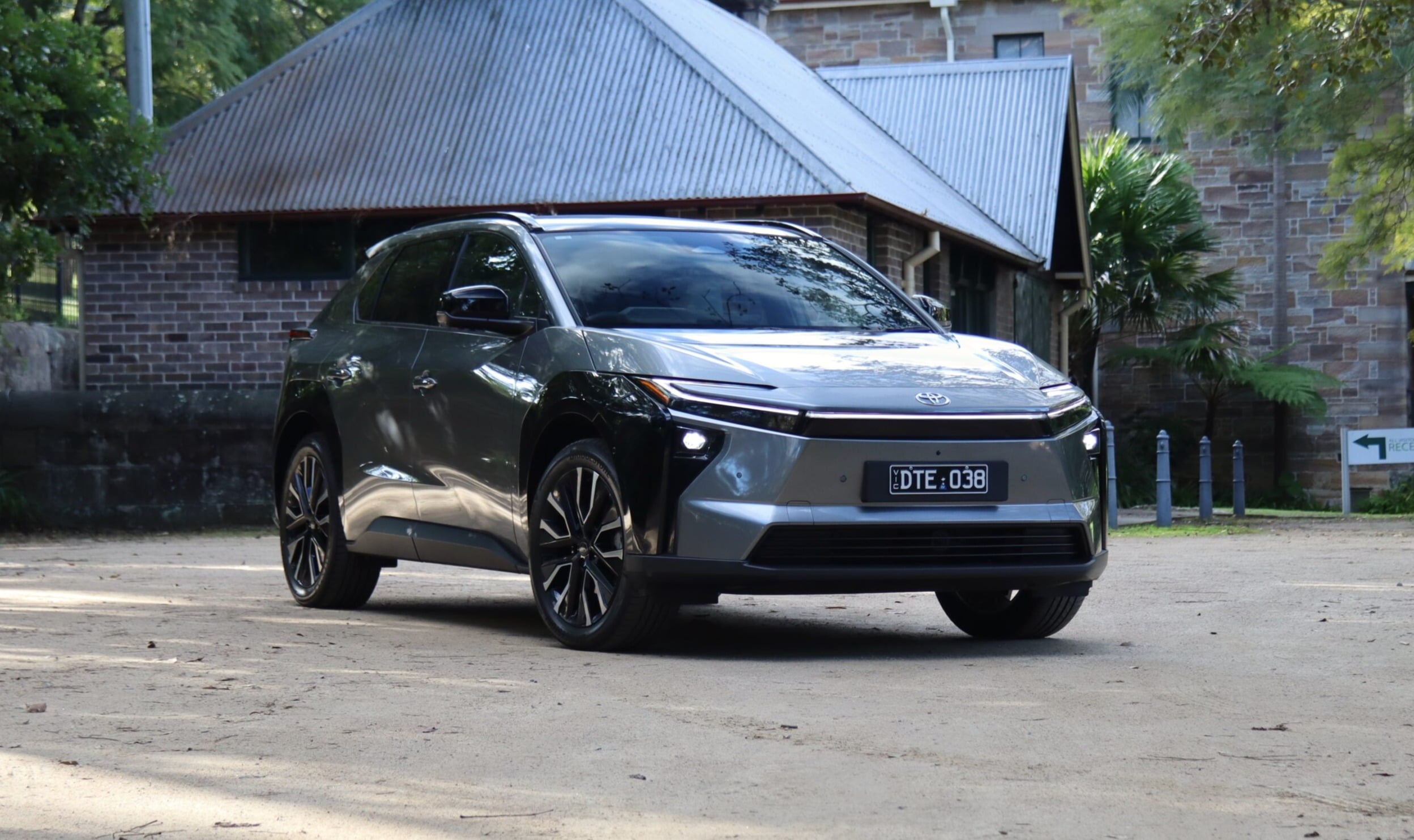
The Toyota bZ4X has always been a solid choice for an electric mid-size SUV, but until now has struggled to match the overall value offered by a growing number of segment rivals. Earlier in 2026, Toyota responded with a comprehensive update that brought sharper styling, improved technology and, crucially, a big price cut of more than $10,000 at the entry point. It’s a more compelling proposition than before, but in our fiercely contested populated SUV market, where new challengers seem to arrive almost monthly, is Toyota’s effort enough to put the bZ4X back into contention?
How much does the bZ4X cost to buy?
Pricing for the updated bZ4X range starts from $55,990 plus on-road costs for the entry-level front-drive model, and $67,990 +ORC for the all-wheel drive model tested for this review. Those familiar with the bZ4X will know that entry price is over $10,000 less than the pre-updated model, with the AWD car also enjoying a $6910 price cut.
4
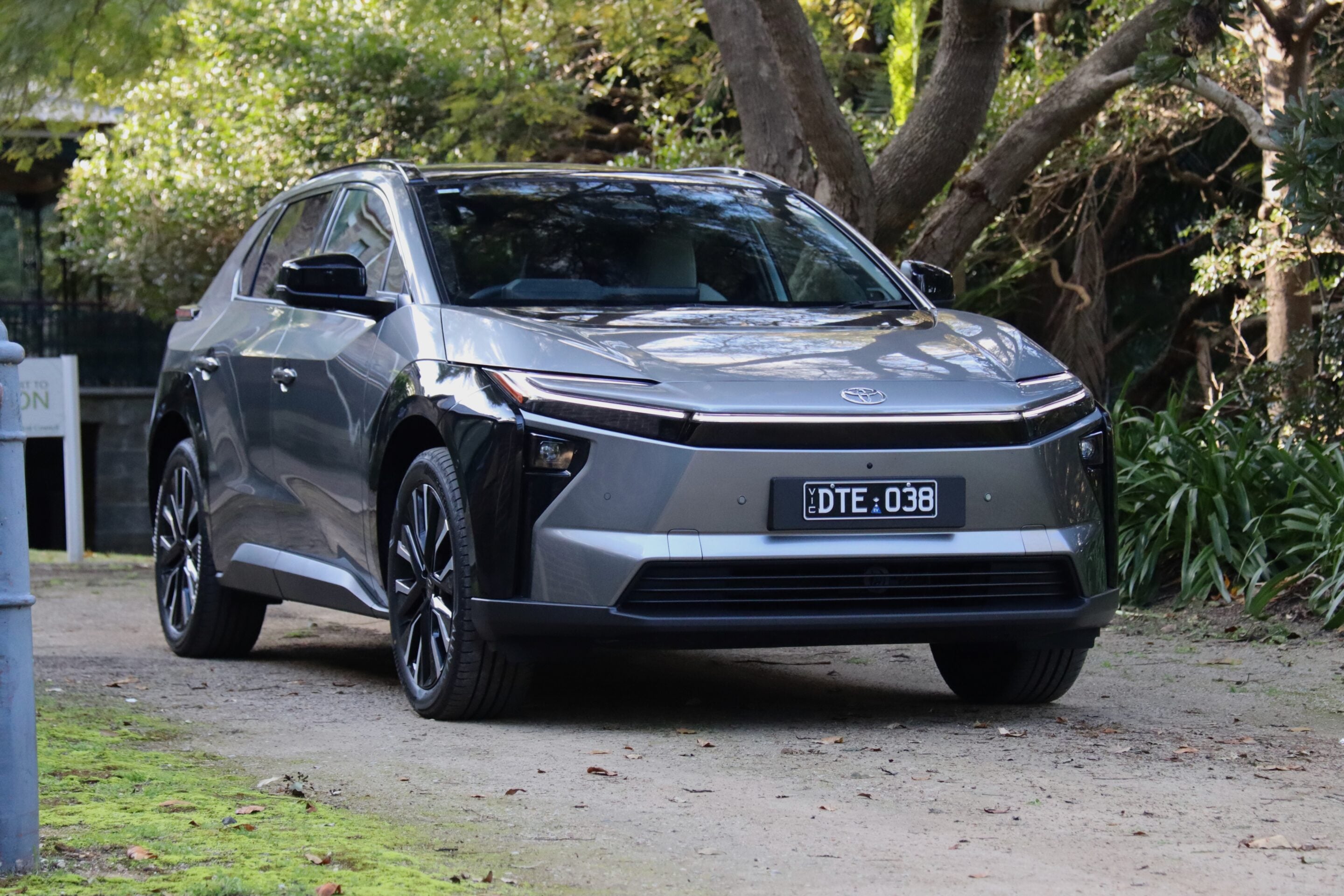
That’s despite the company adding a larger battery, refreshed exterior styling with a new front end, a new centre console layout and a new touchscreen. As a result, the bZ4X is now a lot more competitive with its chief rivals like the Tesla Model Y, BYD Sealion 7 and Zeekr 7X. Heck, its starting price puts it on par with a mid-range hybrid RAV4. Sales have increased dramatically because of that, with 1718 sales under its belt in the first half of 2026 versus 1041 sales for the whole of 2025.
2026 Toyota bZ4X pricing (plus on-road costs):
| FWD | $55,990 |
|---|---|
| AWD | $67,990 |
A full list of standard features is available at the bottom of the page, but the bZ4X AWD is well equipped with kit such as 20-inch alloy wheels, LED exterior lighting, automatic wipers, a panoramic roof, synthetic leather upholstery, heated/ventilated/electrically adjustable front seats, a larger 14-inch touchscreen with sat-nav, wireless Apple CarPlay and Android Auto, nine-speaker JBL audio, two wireless phone chargers and safety features like eight airbags and the usual suite of modern driver assistance tech.
And while the updated bZ4X range is now better positioned in the market for sales success, the AWD model might not be the one to go for. It adds extra equipment to the FWD car like bigger wheels, synthetic leather trim, JBL audio and the extra e-motor but the $12,000 price gap is large, and doesn’t make the bZ4X a dramatically better car. If you don’t need the extra features or performance and grip from the AWD model, we’d stick with the FWD model.
How far can the bZ4X travel on a charge?
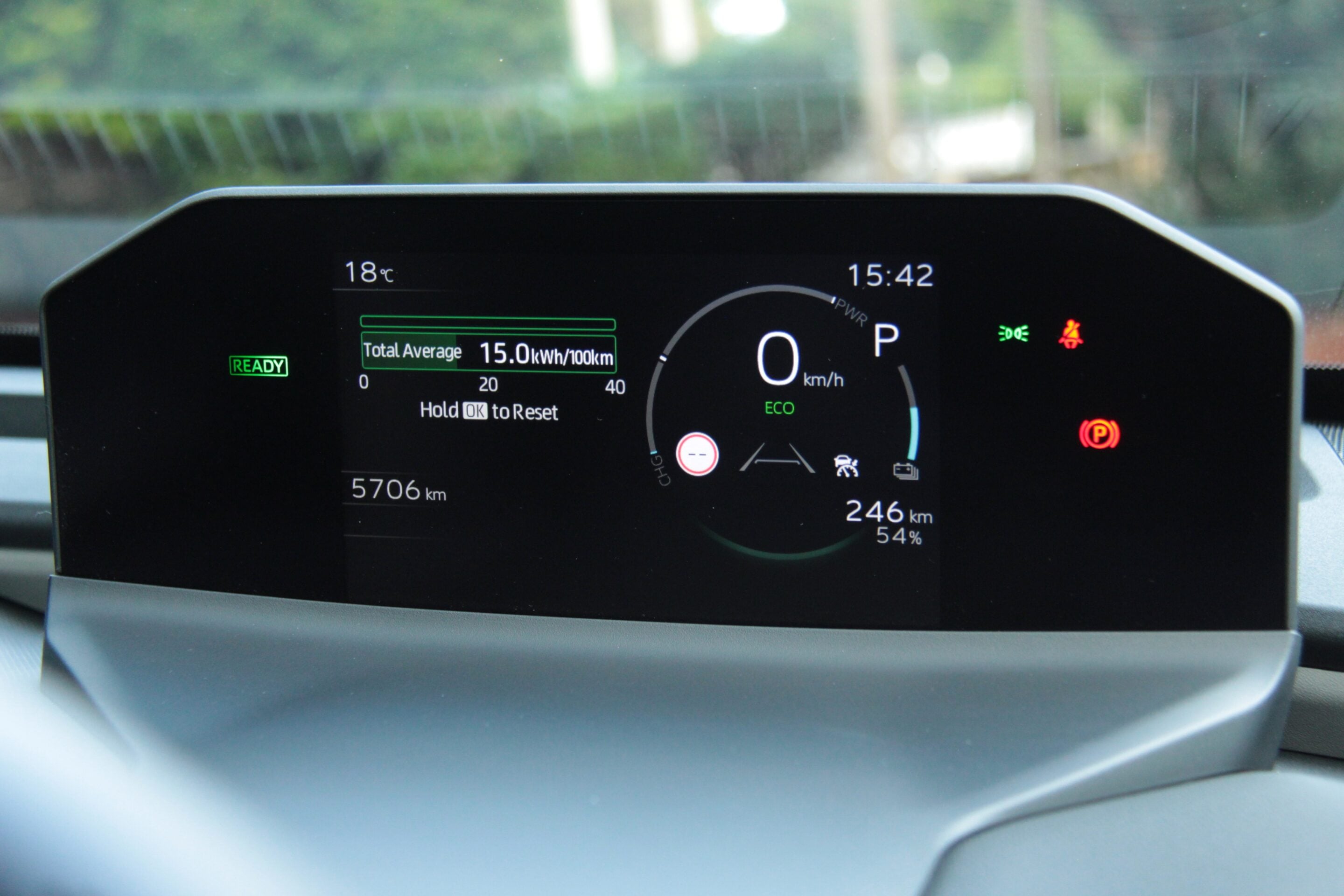
Part of the update to the bZ4X was a larger new 74.7kWh NMC battery, which has not only given it more range but made it more energy efficient. The claimed WLTP range for the AWD model is 517km, which is a huge increase of 106km, and the FWD car is now rated at 591km. As for energy consumption, the bZ4X is officially rated at 16kWh/100km – 2.1kWh/100km less than before – but we found that easy to best, with a rating of 15.1kWh/100km after a week of driving in mixed conditions.
4
As for charging, the bZ4X range is rated to DC charge at a maximum of 150kW, giving it a claimed 10-80 per cent charge time of as little as 35 minutes. That’s an aspect that hasn’t changed compared with the pre-updated model, and compared with rivals like the super fast-charging Zeekr 7X – which can accept a 450kW maximum for a 10-80 per cent charge time of just 12 minutes – the bZ4X still feels behind. However, it claws back points for those wanting to AC charge it, as it can now be done at up to 22kW, which matches the aforementioned Zeekr and doubles the Sealion 7’s speed.
How is the bZ4X to drive?
Part of the bZ4X’s facelift was an increase in power for both models with the FWD now making 165kW (+15kW) and the AWD car now offering an extra 92kW of grunt, making 252kW in total. That makes it significantly quicker than before, and at just 5.1 seconds to 100km/h, owners will be scaring GR Yaris owners off the lights. It’s got more than enough grunt for all driving situations, but it’s also quite easy to drive as the throttle and brake pedals are easy to modulate, allowing for smooth power delivery from zero. Rear 3/4 visibility isn’t great because of the sloping roof, but the mirrors are large and front visibility is excellent.
On the road, the bZ4X feels largely the same as it did before. The 20-inch wheels of the AWD car give a bit of busyness below 60km/h that could be improved (the smaller 18s on the FWD would likely improve the ride here) but it’s otherwise very comfortable and easy to drive, which is exactly what you’d expect from a Toyota SUV. At highway speeds, it’s feels quite planted, though road noise levels could be improved as it is a bit loud.
5
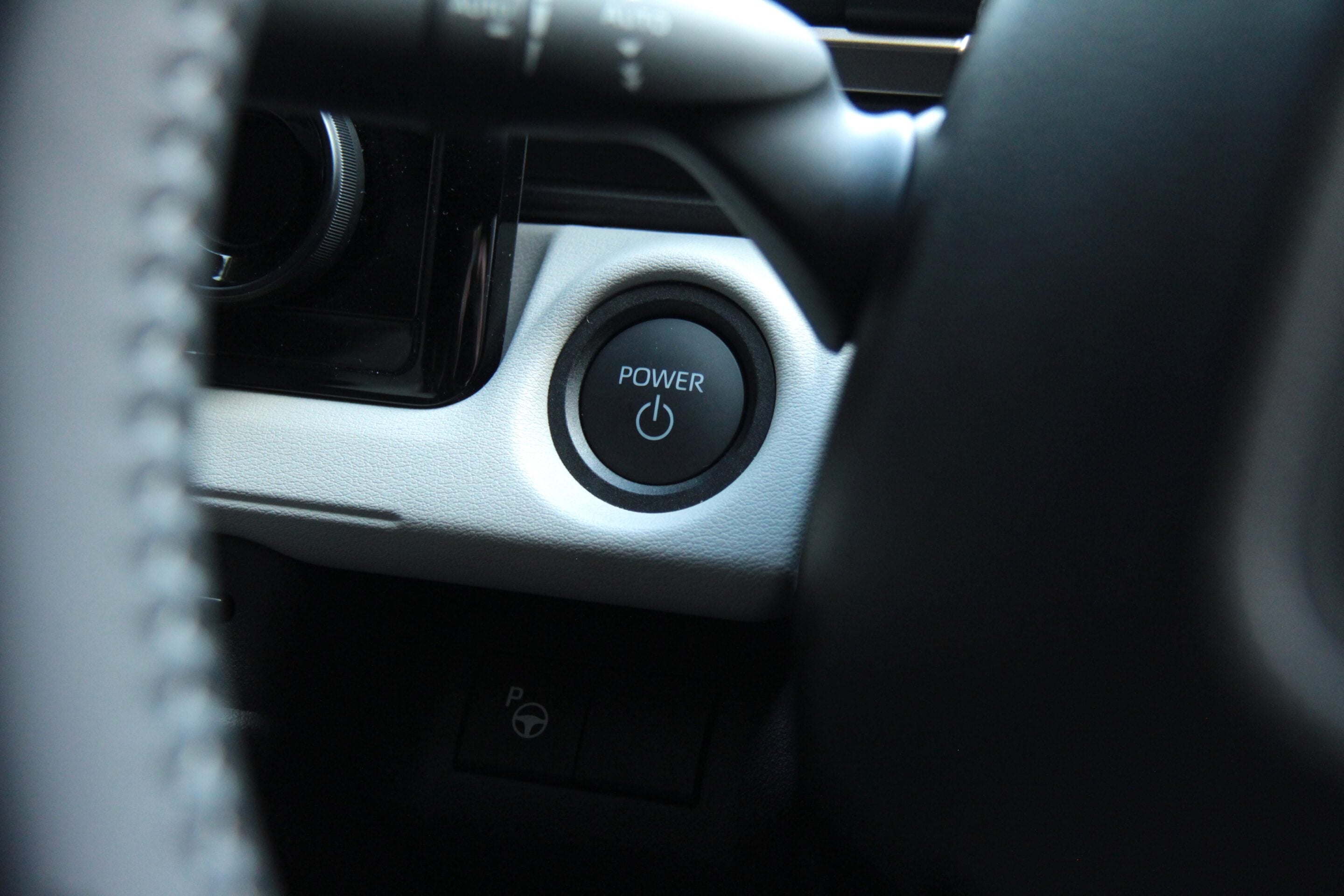
Four regenerative braking settings are part of the update, easily selectable with the paddle shifters on the steering wheel, which range from quite light to almost-one pedal driving. They’re useful, and unlike some Chinese cars, being able to use the paddle shifters to adjust the effects is a godsend. Subaru’s ‘X-Mode’ off-road system – the bZ4X is twinned with the Subaru Solterra and were developed together by both companies – is along for the ride as well, with snow/dirt and snow/mud driving modes for reasonable off-road use.
One area where the bZ4X is noticeably better than some Chinese rivals is its active safety features. The bZ4X is a great example of active safety systems trusting their drivers and only alerting to assist, instead of just taking over the whole experience. One such example is the driver monitoring, which will only ding at you if you glance away from straight ahead for a prolonged time, whereas most Chinese cars will blare at you for even glancing at your mirrors. If even that is too much, it’s an easy two-press process on the touchscreen to deactivate.
Is the bZ4X practical?
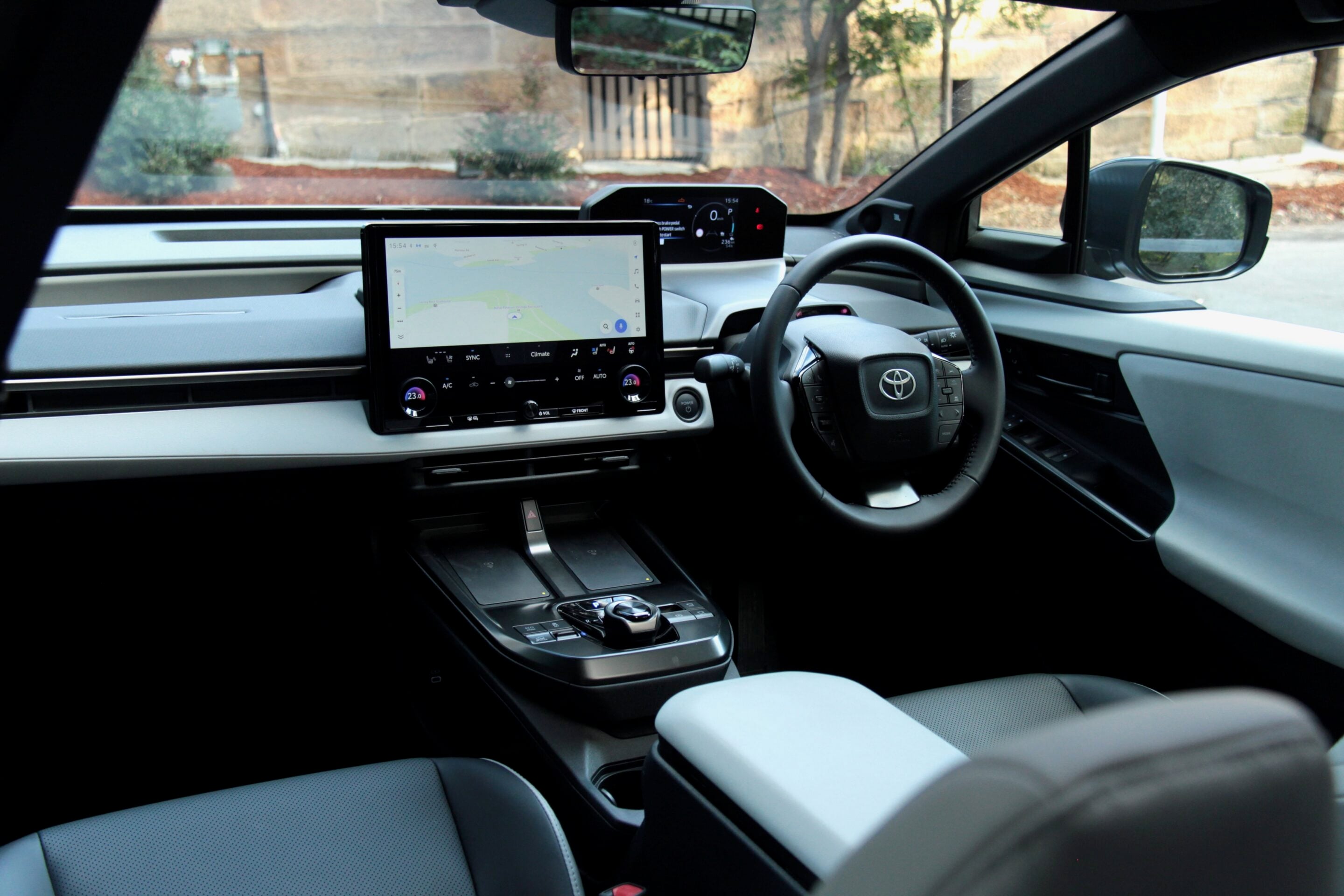
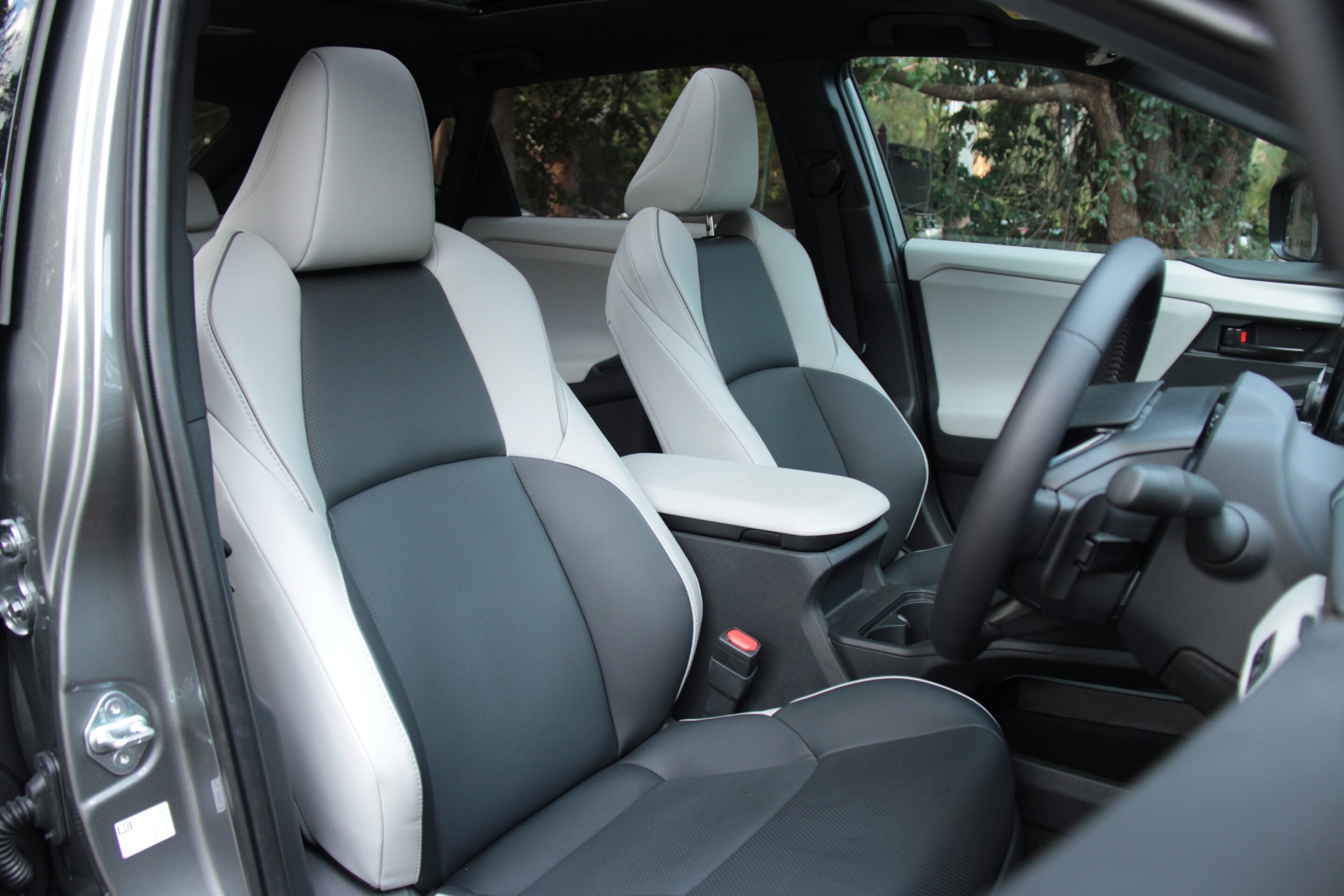
Being both a Toyota and a mid-size SUV, of course there is a practical side to the bZ4X. It’s a more than capable of handling four people and their luggage, and a fifth could fit for a while in the rear as well. Having said that, elements of the cabin design and a lack of a front boot mean that much more practical rivals exist. The layout of the bZ4X’s cabin remains largely unchanged compared with the pre-updated model, save for the new centre console design that now features two wireless phone chargers and a new, larger touchscreen area with cool ventilation controls stolen from Lexus.
Despite the changes, the cabin is still a bit unusual, like Toyota wanted to design something futuristic to match other EVs, and that’s seen in the modern Peugeot-like positioning of the steering wheel that sits in your lap with the driver’s display sitting above the steering wheel. The layout works for this writer at six-feet tall, but probably not for shorter folk as the wheel rim would sit in their line of sight for the driver’s display. The display itself is fine and easy to operate, though a bit dated to look at.
4
Storage features include reasonable door bins, a tray underneath the centre console, a bin under the centre armrest and medium-sized cup holders – but there’s no glovebox, despite there being space for one. That means that your service books must live in the centre under-tray, making it nigh-on useless to store anything else, making storage options limited.
Material quality is solid, with a good amount of soft touch materials and good quality switchgear throughout the cabin, but it doesn’t feel as premium as something like the Zeekr 7X. We’d love to see an extra layer of finishing – perhaps some metal-like door handles and a more modern driver’s display would go a long way to making it feel more premium inside. One cool touch, however, is the heated panel on the bottom of the steering column that activates with the heated driver’s seat.
The 14-inch touchscreen wins back more points, too, as it’s quick, bright and easy to use. It’s well featured with wireless smartphone mirroring, sat-nav with live traffic, digital radio and live services so that you can check information like charging status and lock the car from the Toyota app, though it’s nowhere near as expansive as Tesla’s touchscreen software, if that’s what you’re after. The nine-speaker JBL audio gives solid, if not amazing, aural quality.
6
The rear seat of the bZ4X is one of its best attributes as it’s spacious and comfortable, as well as equipped nicely. Two taller adults will be fine there, with a third fitting in a pinch. Dual USB-C ports, heated outboard seats, a central armrest with cup holders, map pockets and bottle holders in the doors tick the amenities box, while the panoramic glass roof adds much needed light to the space. Its electric blind is quite loud, however.
Measuring 452 litres, the bZ4X’s boot is not as large as many rivals – the Sealion 7’s 500L boot is noticeably larger, and it also features a 58L front boot, whereas the bZ4X does not – though it’s still a good space with a low load lip and a few extra features like a second level cubby, a few hooks to hang bags off and in the AWD model, a 220V/1500W vehicle-to-load socket. The rear seats fold almost flat, and while Toyota Australia is yet to confirm a number, overseas reports suggest that it can hold around 1500 litres. If you’re wanting more space, the new wagon-like bZ4X Touring holds 603 litres of cargo.
Is the bZ4X cheap to service?
Like all other new Toyota products, the bZ4X is covered by a five-year/unlimited km warranty with no roadside assistance (it’s a minimum of $99 extra annually through Toyota), though its drive battery is covered up to 10 years with annual checks performed by a dealer.
Its annual service intervals are every 15,000km and five years/75,000km of servicing costs just $950, or $190 annually. That’s more than a Model Y (which doesn’t have any service costs until parts need replacing), but less than rivals such as the Sealion 7 and 7X.
Should I buy a Toyota bZ4X?
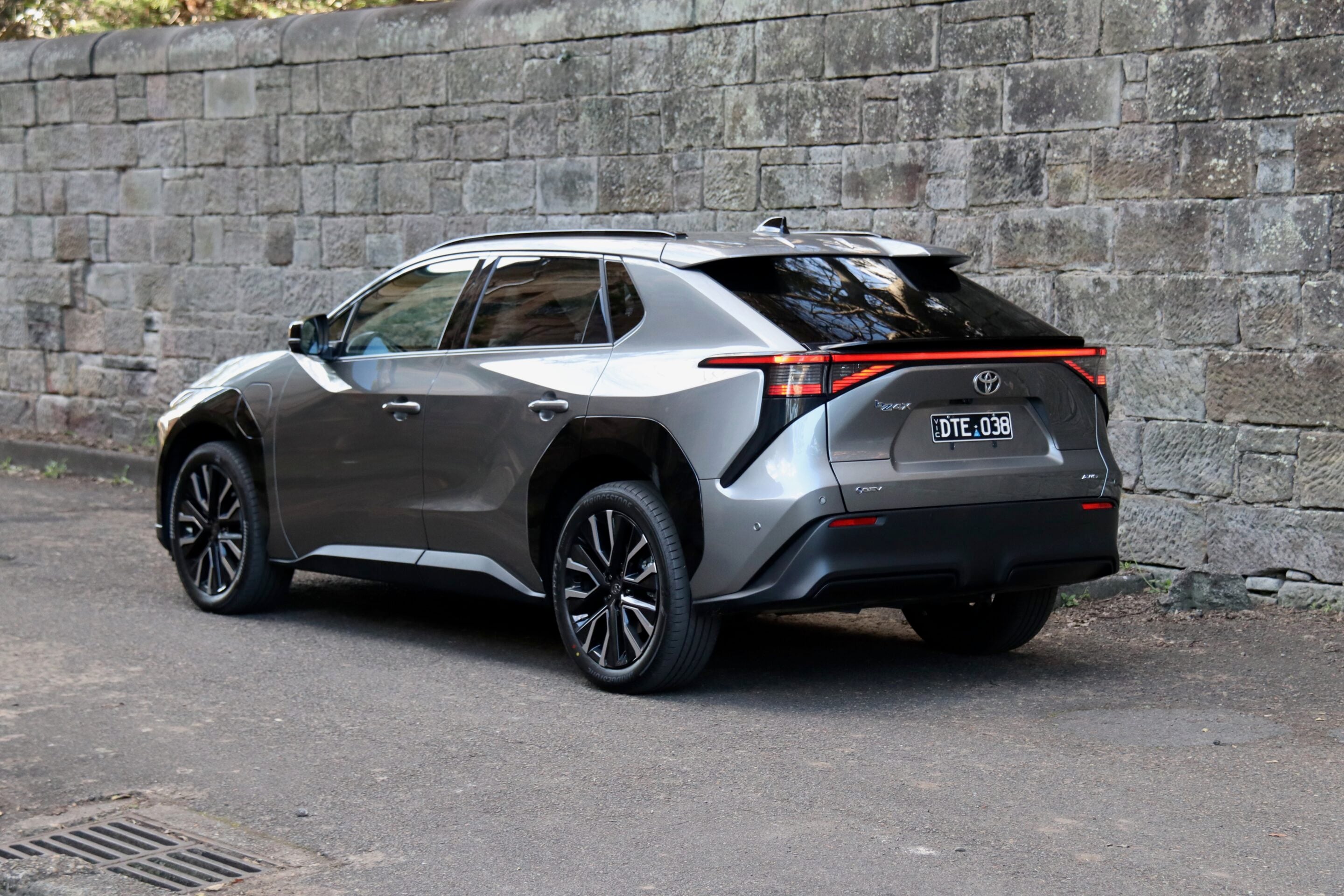
Overall, it’s clear that there is a lot of improvement with the updated Toyota bZ4X. It’s now more energy efficient so it travels further on a charge, plus it’s a lot more powerful and to top it all off, it’s now much better value for money, particularly in entry-level FWD form. It’s the car that Toyota should’ve launched with originally as it’s simply a more competitive product than before, even with the plethora of rivals that have launched since the bZ4X first went on sale locally in early 2024.
5
That said, it’s still not perfect. The AWD bZ4X tested is too expensive compared with the FWD model and there are still practicality limitations thanks to its lack of front boot and glovebox and its average boot. Its peak DC fast charging speed is still slow compared with some rivals and the cabin design is still compromised and just a bit weird. Overall, however, Toyota now has a more talented electric SUV on its hands to battle big name rivals and as the sales figures are showing, buyers seem to agree.
bZ4X AWD standard features:
- 20-inch alloy wheels (with a tyre repair kit)
- Dusk-sensing automatic LED exterior lighting
- Rain-sensing automatic wipers
- Roof rails
- Rear privacy glass
- Keyless entry with push button start
- Panoramic sunroof
- Electric tailgate with easy-open functionality
- Heated/auto-folding mirrors with puddle lamps and auto-tilt functionality in reverse gear
- Dual-zone automatic climate control with rear air vents
- Synthetic leather upholstery
- Electric front seat adjustment with driver’s lumbar and memory
- Heated and ventilated front seats
- Heated synthetic leather steering wheel
- Heated outboard rear seats
- 7.0-inch digital driver’s display
- 14-inch touchscreen with live services
- Satellite navigation with live traffic
- Wireless Apple CarPlay and Android Auto
- AM/FM/DAB+ digital radio
- Bluetooth audio and calling
- Nine-speaker JBL sound system
- 2x wireless phone chargers
- 4x USB-C ports
- Eco, normal, snow/dirt and snow/mud driving modes
- Vehicle-to-Load (V2L) 220V/1500W socket in boot
- 8x airbags
- Autonomous emergency braking (with intersection, pedestrian and daylight cyclist detection)
- Adaptive cruise control with traffic jam assist
- Lane keeping assistance with adaptive lane guidance
- Blind-spot monitoring with rear cross-traffic alert
- Driver attention monitoring
- Speed sign recognition
- Safe exit alert
- Matrix adaptive high beam
- Front and rear parking sensors
- Automatic low-speed reverse braking
- 360-degree camera
- Automatic parking functionality
bZ4X AWD specifications:
| Price | $67,990 plus on-road costs |
|---|---|
| Powertrain | Dual electric motor, single-speed transmission, all-wheel drive |
| Battery | 74.7kWh NMC |
| Power | 252kW |
| Torque | 448Nm |
| 0-100km/h (claimed) | 5.1 seconds |
| Range (claimed) | 519km (WLTP) |
| Energy efficiency (claimed versus on test) | 16kWh/100km, 15.1kWh/100km |
| Max DC charging rate | 150kW (approx 10-80% in 35 minutes) |
| Max AC charging rate | 22kW |
| Kerb weight | 2035kg |
| Dimensions (L/W/H/WB) | 4690/1860/1650/2850mm |
| Boot capacity | 452 litres (rear seats up) |
| Warranty | Five-year/unlimited km |
| Five-year service cost | $950 ($190 per year) |
| On sale | Now |
7.4
/10
Score
Score breakdown
7.0
Safety, value and features
7.0
Comfort and space
8.0
Engine and gearbox
8.0
Ride and handling
7.0
Technology
Things we like
- Improved compared to pre-updated model
- Genuinely quick now
- Still plenty of Toyota familiarity
Not so much
- Compromised cabin design, no glove box
- AWD model is too expensive
- Slow DC fast charging compared to many rivals
Follow WhichCar/Wheels on Google
Click the button below to make WhichCar by Wheels a preferred source for your news.

We recommend
-
 News
NewsColes plugs into EV boom with fast-charger rollout at supermarkets
Up to 30 Coles stores will gain high-speed EV chargers over the next two years as the supermarket giant looks to make grocery shopping more convenient for electric vehicle owners.
-
 News
NewsBYD Australia says June sales success won’t be repeated any time soon
BYD Australia has downplayed suggestions that it could topple Toyota's new car sales dominance.
-
 News
NewsAussie state launches review of dangerous driving laws amid calls for tougher penalties
State government to examine whether existing offences and penalties go far enough to hold dangerous drivers accountable after fatal crashes.