Features

Gallery 1
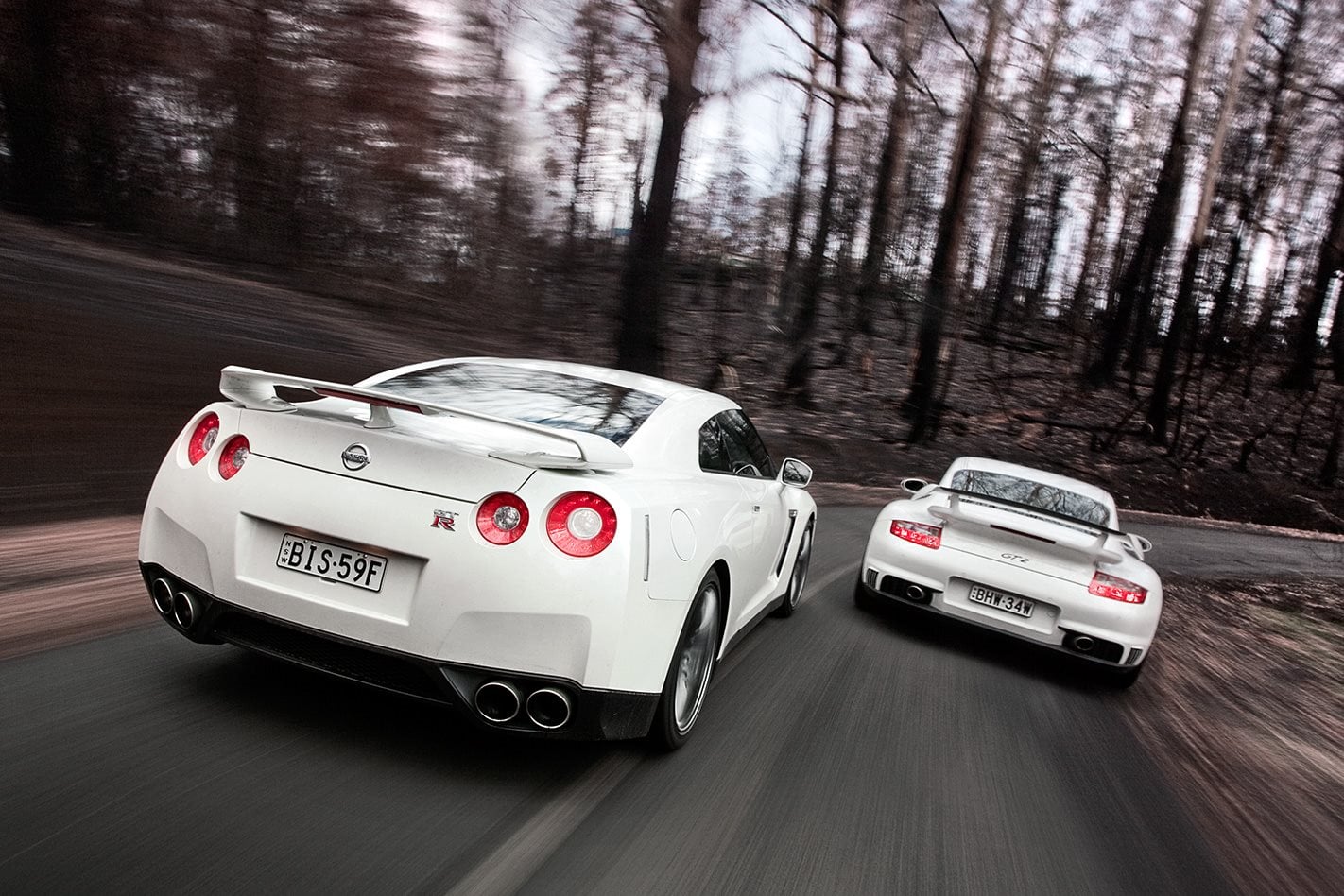
Let’s get something straight right from the get-go – this isn’t a normal two-car comparison.
This article was originally published in the June 2009 issue of MOTOR magazine.
How can it be when the fresh meat – Nissan’s manga-hero GT-R Premium – costs just $159,900, while the established player – Porsche’s all-conquering 911 GT2 – asks $447,500?
It’s a test that just doesn’t compute, and yet it’s also one that makes total sense. Besides, what do you compare the new-generation Godzilla with? An Audi S5? A five-star adventure tour of New Zealand?
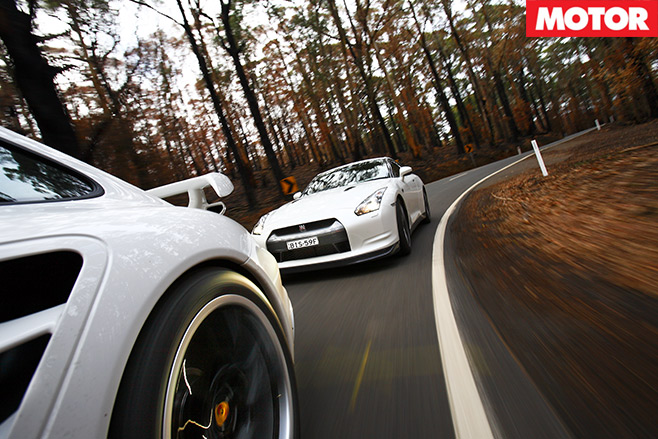
Naturally, the boffins at Stuttgart reckon it’s bullshit, so prepare for the war of words and numbers to continue in the coming months. But in Australia, right here and now, if the GT-R had an adversary to beat, it’s this magazine’s reigning Performance Car of the Year champion – the Porsche 911 GT2.
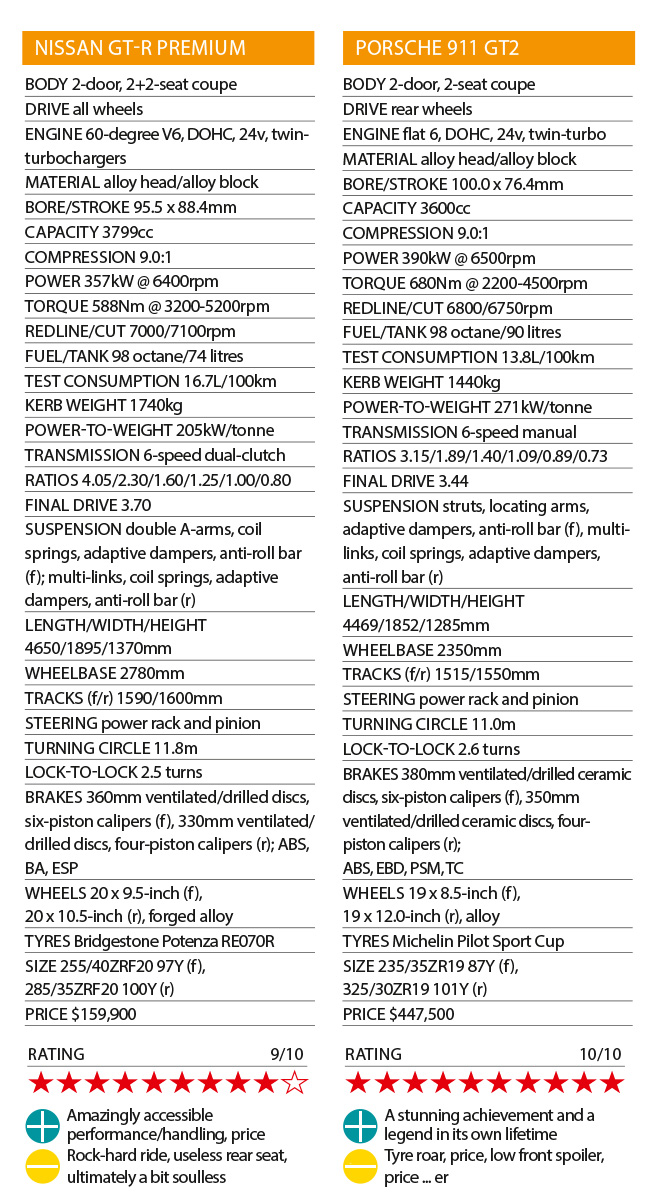
On paper, however, you’d reckon a standard 911 Turbo would be a fairer contest for the Nissan. After all, it’s all-wheel-drive, it’s 145kg heavier than a GT2 (though still 155kg less than the GT-R), has normal road tyres instead of cut slicks, plus a back seat of sorts and a skinnier price tag ($361,100).
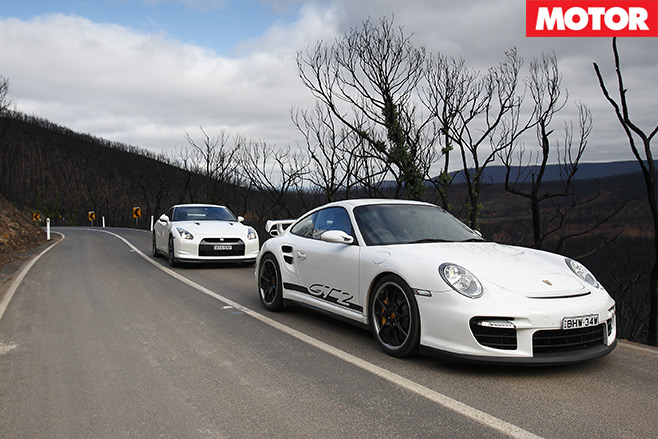
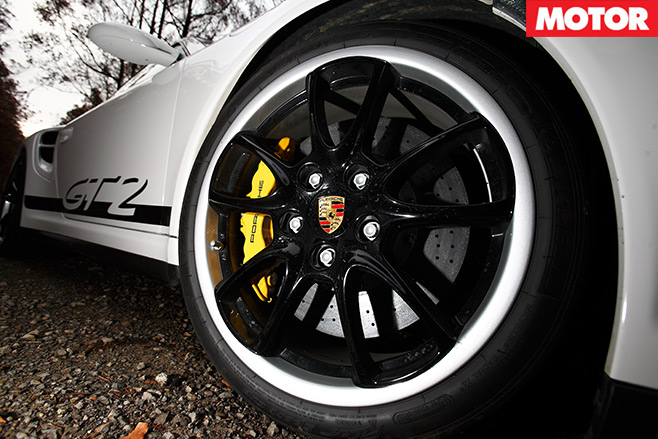
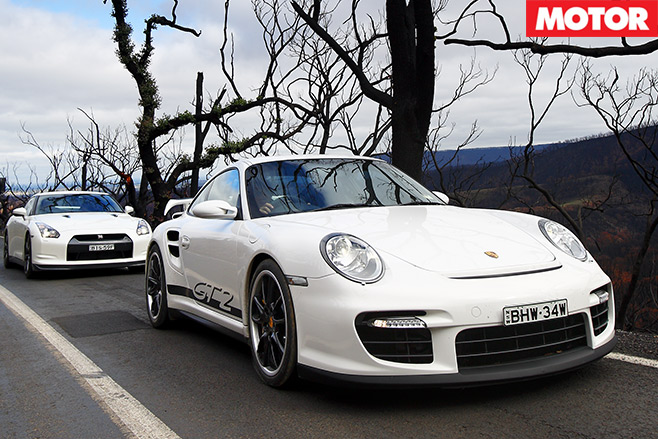
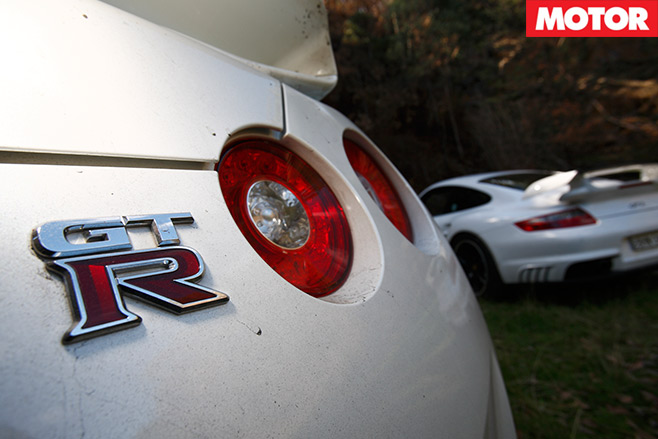
So GT2 it is then, in matching white with sinister black 19s and a love-it-or-hate-it black ‘GT2’ decal decorating both sides. Alongside the sharp-edged, pearl-white GT-R, the Porsche looks far less futuristic and even slightly retro, thanks to its 911SC-style dark wheels and Carrera RS-inspired stripery. But it’s also a much smaller car than the GT-R.
Compare the measurements and you’ll be surprised by just how big the GT-R is, most obviously in a wheelbase that stretches 430mm beyond the Porsche’s. Overall length is closer (it’s only 181mm longer), but the GT-R is also 43mm wider, 85mm taller and, probably most damning, 300kg chunkier.
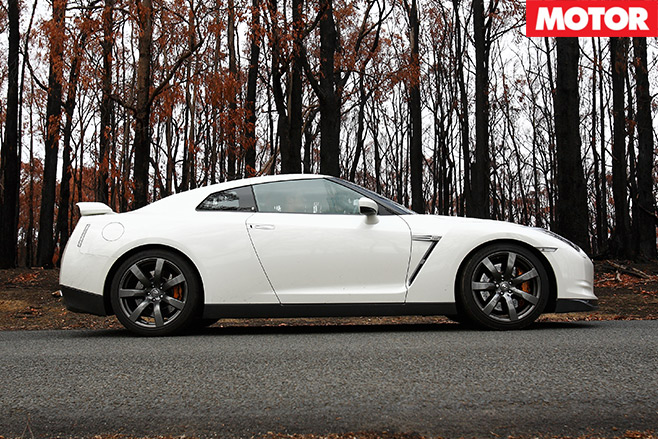
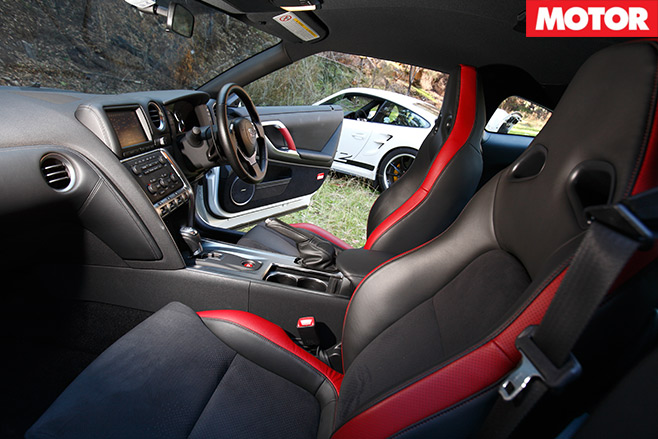
The GT-R’s drama continues as you prepare to take the hot seat. Its concept-car door handles are flush little aluminium blades that you prod with your thumb, then grab with your fingers to open, and its electric seat adjuster is pure genius – a single rotary dial on the side of the seat cushion that you twist for the backrest, push for-and-aft for length and nudge up and down for height.
But the GT-R’s dashboard is a slightly dorky mix of curves and rectangles, like some weird-burger Japanese-domestic hatchback, and the computer-game-inspired centre screen (with 10 different screen-views) juts uneasily from the top of the centre stack, interrupting the flow of the rest of the interior.
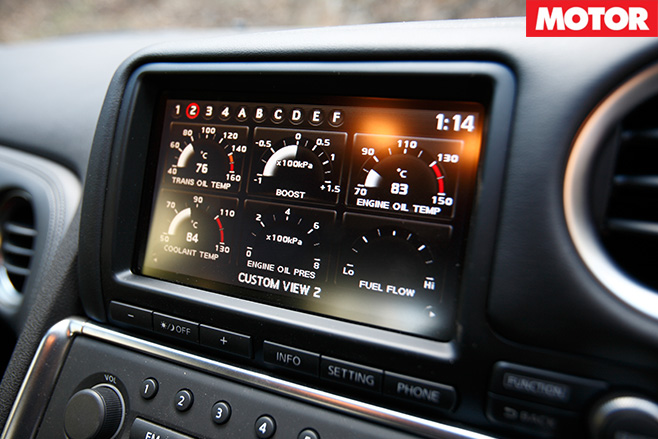
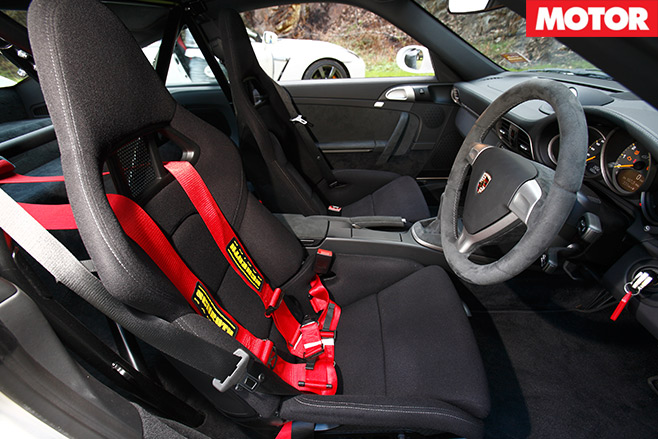
The Porsche also has a more-tactile steering wheel (a seductive, triangular, mock-suede number) than the Nissan’s larger, harder wheel, though Japan’s supercar inexplicably includes two flip-down column adjusters – one for height, the other for reach – which must be a world-first, though exactly why is anyone’s guess. To hold the steering wheel more firmly in place?
In fact, ‘firm’ is a word that goes hand in hand with the GT-R. From the moment you flick its dual-clutch transmission into D and cut a head-turning swathe into traffic, the firmness of this car’s suspension is impossible to ignore.
Crawling north from Melbourne along the ill-surfaced Hume towards Winton Raceway and Wangaratta airport, it takes time to really pin-point the differences between ‘normal’ and ‘comfort’.
In default mode, the Nissan jolts and jiggles incessantly, and tram-lines along channels in the road at slower speeds, but it does all that in cushy mode, too – just to a lesser extent. Blame could be directed at the GT-R’s massive 20-inch Bridgestone Potenza RE070R run-flats because all those criticisms are exactly what tarnished the dynamic reputation of BMW’s first run-flat-equipped 3 Series.
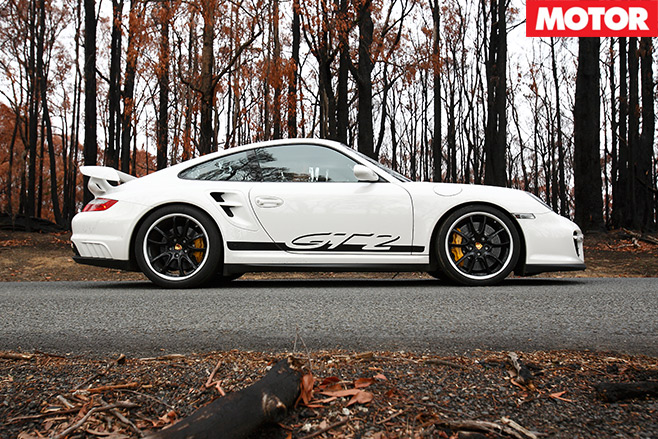
…or the GT2, for that matter, though the Porsche does a vastly superior job of plying knobbly Aussie highways than the Nissan. Its PASM damping system employs just two settings – one for the majority of driving situations, the other for racetracks or unusually smooth surfaces – and it defaults to the comfier of the two for an amazingly unobtrusive ride for such a low-slung, track-biased car.
The Porsche is more relaxed engine-wise, too, because it’s doing just 2350rpm at 120km/h in sixth, as opposed to 2650rpm in the Nissan. But you can’t escape the GT2’s considerable tyre noise.
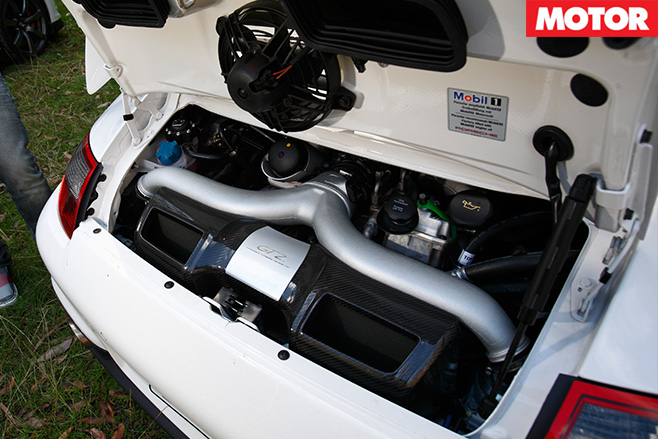
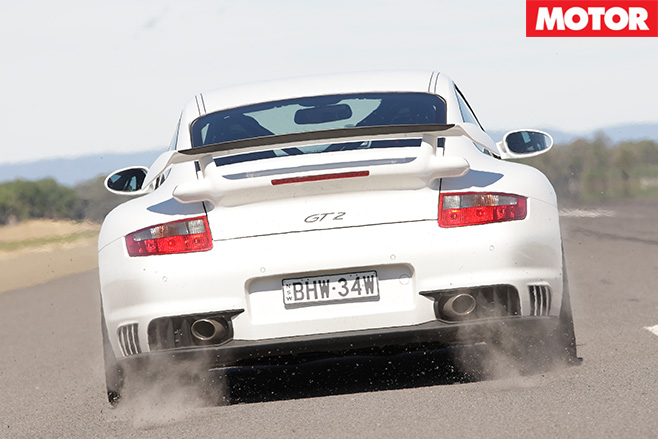
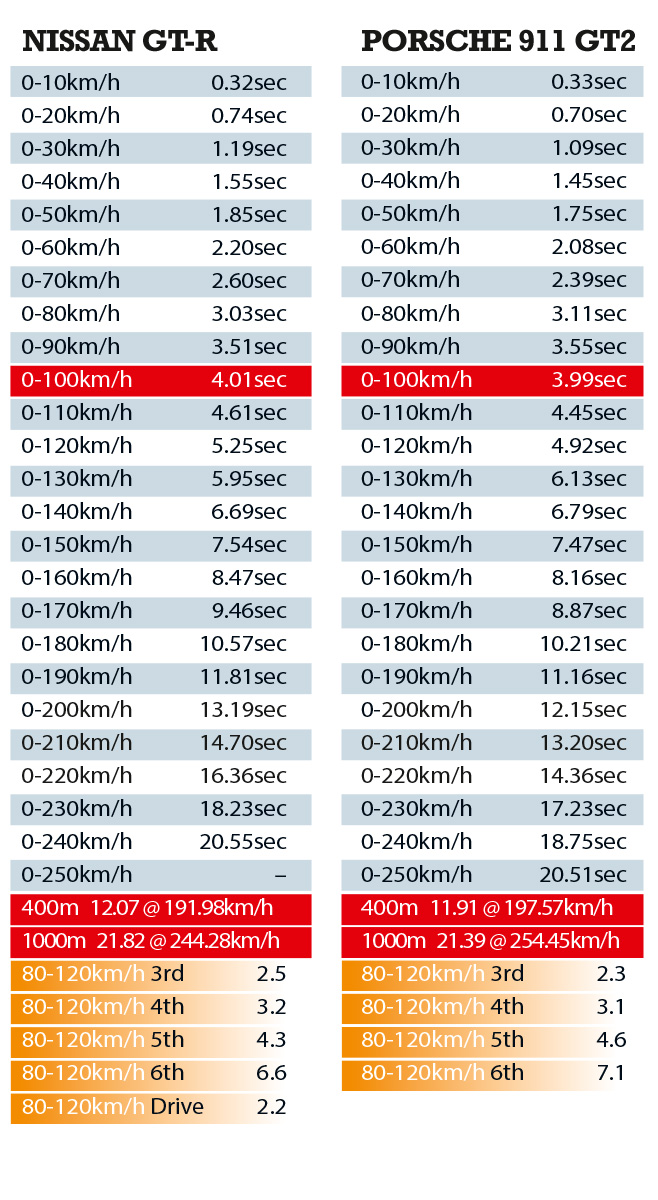
Peeling off the soporific Hume and onto the runway at Wangaratta airport finally gives us the opportunity to let these animals off the leash. And it’s the GT2 that does the bolt first. When we first performance-tested the mega-Porsche in June ’08, we turned stability-control off, balanced the car on the clutch take-up point, then quickly squeezed in power – clocking 3.9sec to 100km/h (its claim is an achievable 3.7) and 11.7 for the quarter.
I’ve performance-tested the GT2 before, but as I ease to a standstill at the end of the runway to write down the numbers, I notice that my hands are actually shaking. Acceleration in the GT2 has that effect. It doesn’t matter how many times you’ve driven one, the intensity of its performance never fails to leave you breathless.
Subsequent acceleration runs result in too much ESP interference as the GT2 rips up the runway’s loose surface, so to avoid sand-blasting the pricey Porsche’s rear haunches with gravel, I swap into the GT-R.
Eventually, I select the sportiest settings and floor it in Drive while holding it on the brake, tacho steady at two grand, and then let the car do all the work. The GT-R responds by momentarily moving forward, then exploding.
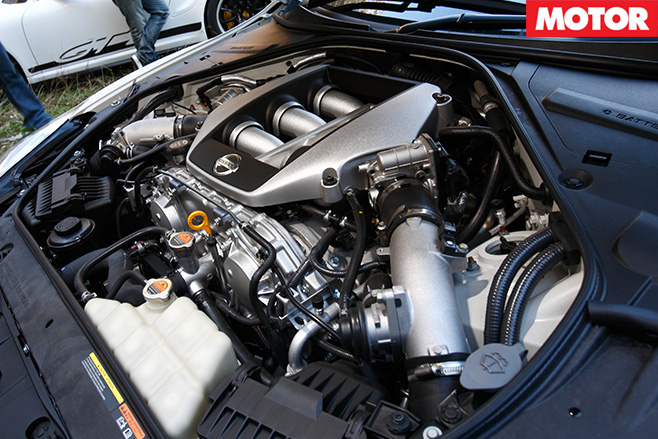
Despite the gravel, there’s no wheelspin at all – just a seamless, unrelenting surge of epic proportions – and nothing for the driver to do other than to hang on. Compared with the Porsche’s blasting, amphetamine-laced turbo whoosh, the Nissan’s 357kW twin-turbo V6 sounds grainier and somehow acoustically related to the old 350Z’s meaty, industrial V6 roar. But it’s just as ballistic.
By 200km/h, the Porsche is a second ahead. By 240, it’s nearly two seconds, and at the standing-kilometre, the Porsche is travelling more than 10km/h faster. You have to know what you’re doing and work hard to reveal the GT2’s superiority, but it’s there. By God, is it what.
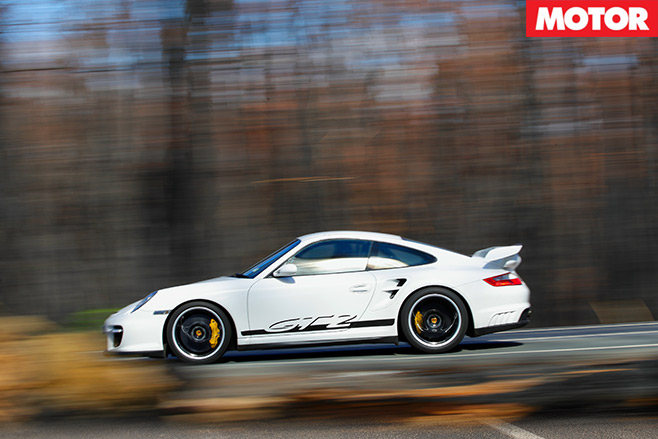
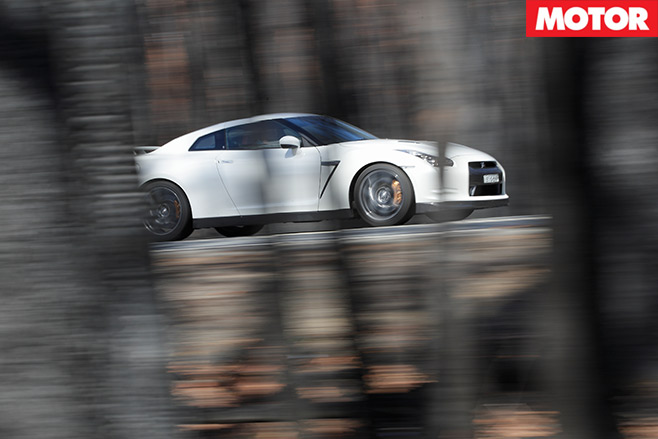
Its change-of-direction is brilliant as it darts from apex to apex, as is its drive out of corners, and its balance and grip are sensational. The GT-R gobbles up tight stuff with staggering ease – its twisty-road agility totally belying its size and weight – but long, fast sweepers start to expose its mass. The GT-R can carry miles of corner speed, but its rubber is working its freckle off, and the subsequent tyre squealing does tend to give the game away a bit.
At speed, the GT-R’s manic ride settles a little, but you need to leave its dampers in ‘normal’ for the best steering and cornering response. In default mode, its front-end simply feels more connected and more interested, with its terrific steering feel at its most heightened. And you can leave ESP activated, too, because the stability-control’s subtlety is genuinely impressive. The GT-R will even serve up power-oversteer exiting a tight corner if you’re ballsy enough.
The Porsche locates you much closer to the road in a visibly narrower cabin with superb vision, but it’s this car’s exceptional handling that elevates it to a position of true greatness. Where the GT-R turns into a tight corner, the GT2 pivots into one.
You spot the corner, move outwards a touch, then lift off either the throttle or brakes as you turn and the GT2 simply whips its nose into place. With its rear engine, rear-wheel drive and 300kg weight saving, the Porsche simply feels lighter and more adjustable than the Nissan.
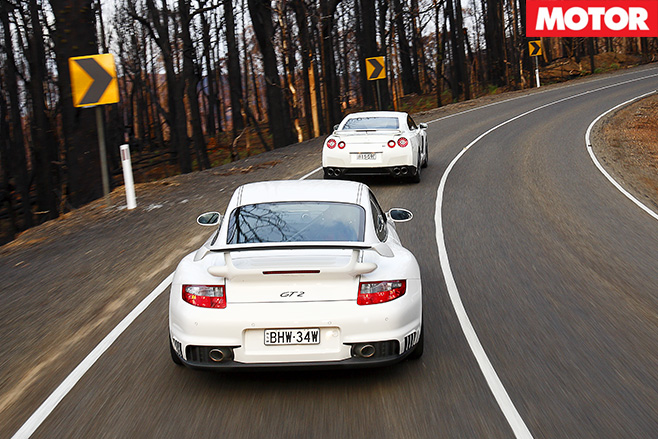
Unlike the Nissan, which mildly understeers until you get stuck into it and the rear-drive bias dissolves it, the GT2 simply doesn’t understeer on the road. It can get its power down earlier in a corner than the GT-R and actually oversteers less – giving just a slight drift while charging forward, in corners where the Nissan actually requires a touch of opposite lock.
The twin-turbo Nissan has crisper and more urgent light-throttle response than the twin-turbo Porsche, too, and while its brakes ultimately aren’t quite up to the ceramic Porker’s stratospheric standards, the GT-R offers better pedal progression and feel than the GT2’s firmness.
Maybe it’s unfair to compare an all-wheel-drive, two-plus-two coupe against a purpose-built lightened one, but try telling that to the Targa Tassie competitors who’ll be pitting the R35 GT-R head-to-head with just about every 911 model you care to name. The GT-R certainly isn’t shamed by any means, and to be brutally honest, it betters the GT2 in few areas.
So, hats off for the R35 GT-R, though I don’t know whether it’s worth dropping your pants for. Nothing, and we mean nothing, can match it at its price, but the real benchmark will cost you nearly three times more.
1
SPECS
1
THE NUMBERS
1
Follow WhichCar/Wheels on Google
Click the button below to make WhichCar by Wheels a preferred source for your news.