Features

Gallery 1
Low-tech Tasmanian whisky gurus meet high-tech Bavarian limo.
First published in the March 2016 issue of Wheels magazine, Australia’s most experienced and most trusted car magazine since 1953.
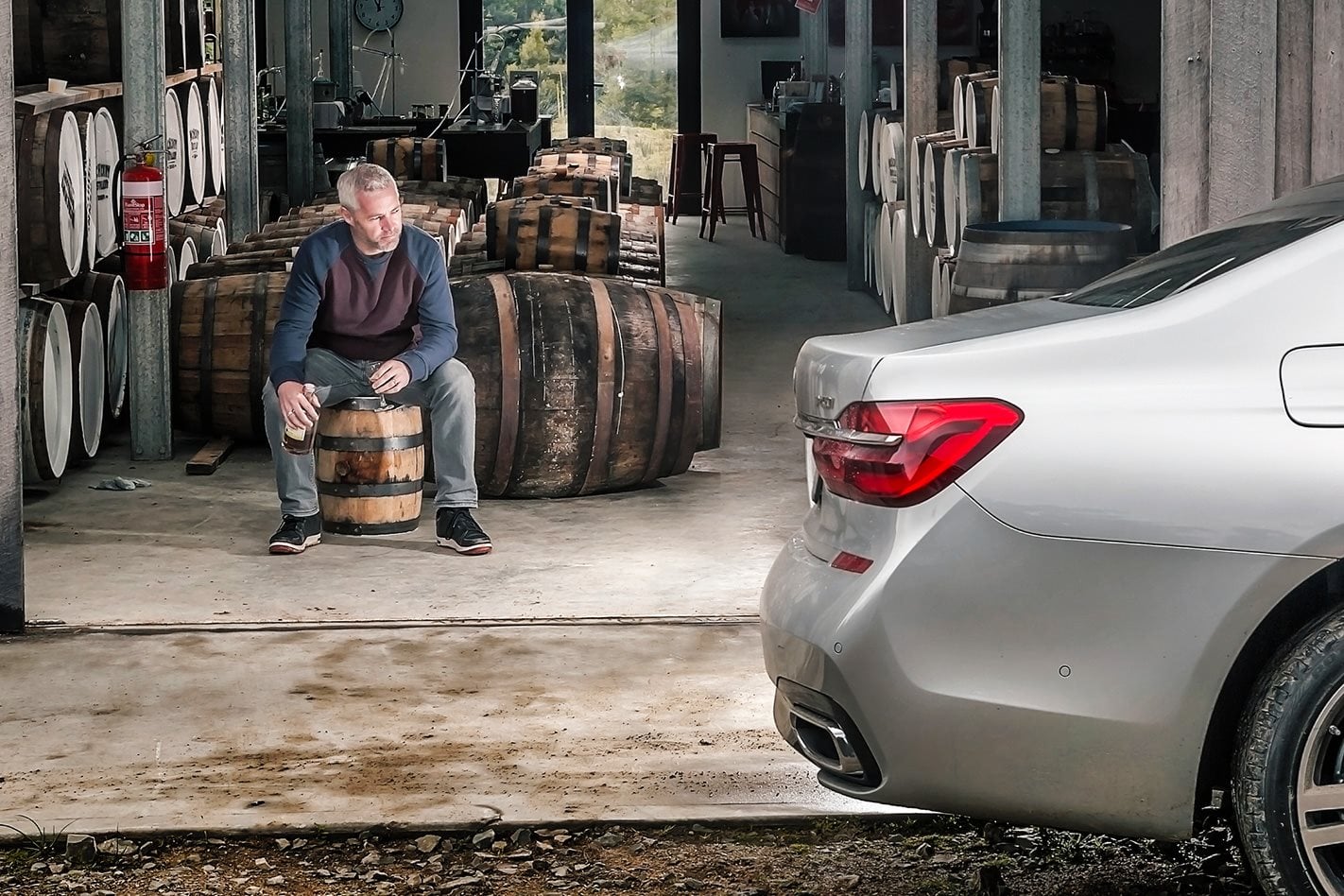
I CAN see what you’re thinking: “What’s wrong with our lead picture? Road testing and alcohol don’t mix! And why is that brooding male model doing an advertisement for whisky in the proud pages of Wheels?”
Fear not, gentle reader, for there is little danger of me transgressing the drink-driving laws while on a mission to find out how the fuzzy little island of Tasmania has tipped the globe on its axis to become the home of the world’s finest scotch (which is exactly the kind of refined drink that buyers of the new 7 Series love to imbibe, possibly while relaxing in the back seat, using their car’s new integrated Samsung tablet to play with the flavour notes of the cabin).
Why? Because, to me, whisky is medicine; bad medicine, because it’s what my parents used to give me for a toothache. Sure, it worked, but as a result it’s a drink I associate with numb gums, flambéed nostrils and wooziness.
I decided not to mention this to the deeply passionate distillers we met in Taswegia, nor to The Editor when I was asked to do the story, because the idea of piloting “the most technologically advanced car on the road” made my inner nerd twinge like that moment when you open the bright white box around a new Apple.

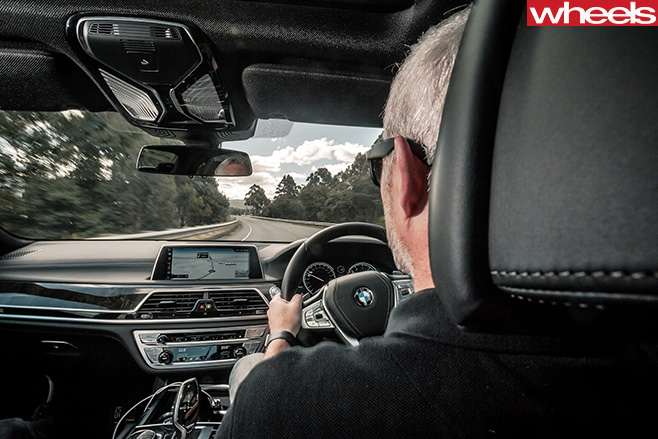
We couldn’t even leave the car park of the Hobart BMW dealer until I’d played with the new Gesture Control system, which allows you to turn up the stereo volume by twiddling your finger in the air, or to pinch and spin a freakishly clever 3D image of the car from all angles. You can even answer or reject phone calls with a dismissive flick of the wrist. Pointless and gimmicky? Yes. But great fun? Also assuredly yes.
On the freeway to our first distillery – Overeem Whisky, which forms part of the increasingly well-sozzled Tasmanian Whisky Trail – I couldn’t resist freaking out snapper Wielecki with the semi-autonomous steering, which allows you to sit and watch, for 10 seconds at least, while the big beast steers itself around bends. Sadly, it follows line markings the way a three-year-old follows instructions; with the best of intentions but an undeniable lack of precision.
Ask Polmear what peat is and he’ll launch into a description of Australia’s only peat farm – basically a marshy bog – that makes it sound like the Garden of Eden. Some whisky makers burn peat to kill and dry the barley because they believe the smoke imbues it with extra flavour.
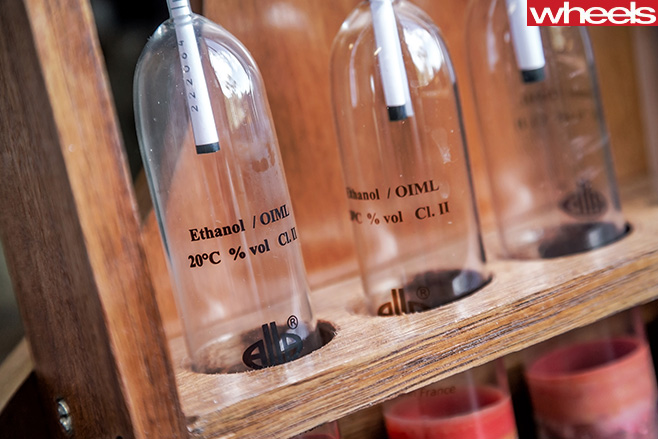
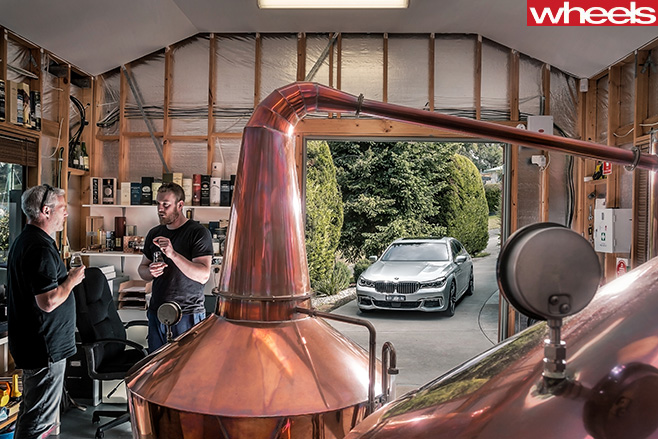
Polmear soon has me holding a glass of pure, clear-looking spirit – the “new make”, which is 63.4 percent alcohol and smells like racing ethanol mixed with tequila and diesel – and encourages me to taste it. Wielecki is keen to capture what this does to my facial muscles and I’m about to bravely sip some when Rob decides it might not be the best plan; he advises to just dip my finger in and rub some on my lips and tongue instead. Sounds medicinal to me.
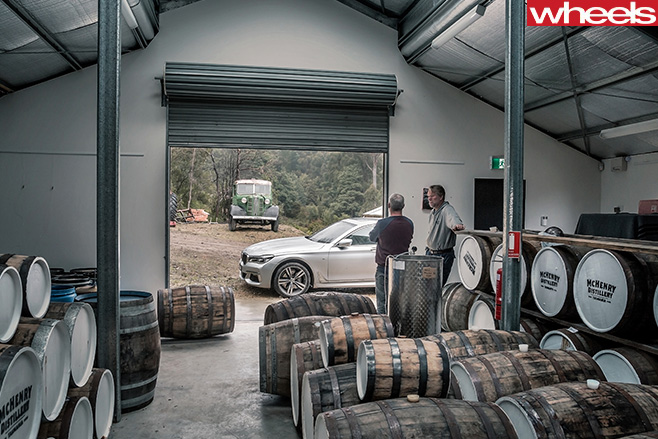
What I’ve also noticed is that the “distillery” is actually a garage so small we’d have struggled to park the 7 Series in it (unless we used the remote self-parking system, which is still illegal in Australia, but apparently wonderful in other countries). This is the first inkling I get that Tasmania’s whisky production, while renowned, might be even smaller than a cottage industry; more of a one-man-tent industry.
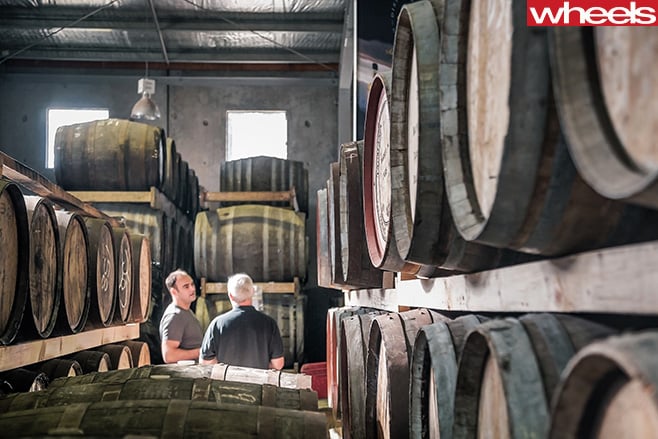
Passionately, Polmear says they’re not in it to make money; they’re in it to make good whisky. “We only make 70 litres of whisky a day; the scale is tiny,” he says. “Somewhere like Glenfiddich in Scotland spills more in a day than we produce per year. But there are advantages to being small; we’ve got that whole hand-crafted thing, because we can control everything, we do it by hand while they use computers.”
Despite its small size, and the fact it’s only been open seven years and it arguably takes a decade to make just one truly great whisky, Overeem is hugely well rated on the world market, scoring 95 out of 100 for one of its tipples in something called Jim Murray’s Whisky Bible, where 94 or higher is considered to be elite.
While it’s bigger than a garage and has a rustic sales room at the front, the business end is a large shed, about one-tenth the size of your local Bunnings, and all the bottling and labelling is still done by hand.
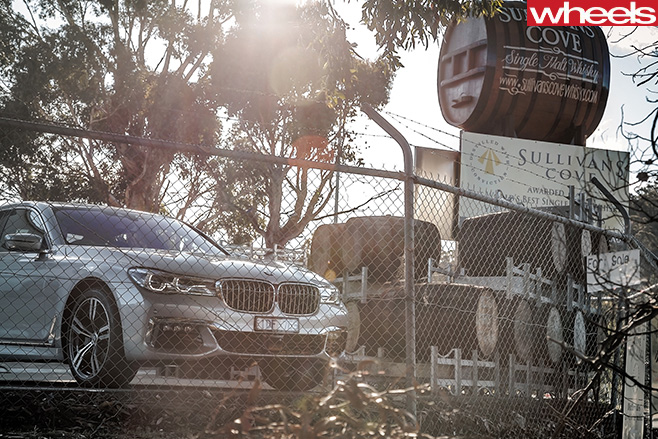
Sullivans’ spokesman Bert Cason explains that the world titles are conducted as blind tastings and that, when the judges were told which whisky they’d picked, all the Scots in the room reacted as if they’d been told they couldn’t deep-fry Mars Bars any more.
Once again, it seems these whisky makers, despite their success, won’t be rushing out to buy a new 7 Series any time soon (prices start at $217,300 for the 730d, rising to $312,700 for the 750Li). Sullivans Cove has been in business since 1991, but only turned its first profit a couple of years ago, Bert tells us, shrugging apologetically.
“It’s a get rich very, very slow scheme,” he chuckles. “There’s no rushing this and no one does it for easy money; you need patience. Because we won’t bottle anything until it’s 10 years old, we can only currently produce 18,000 bottles of whisky a year, and Australia could drink that five times over on its own, let alone the global demand.
Cason, a car enthusiast, advises us to climb Mount Wellington, a towering edifice that looms over Hobart even more impressively than the constant scudding cloud cover, to capture the sunset.
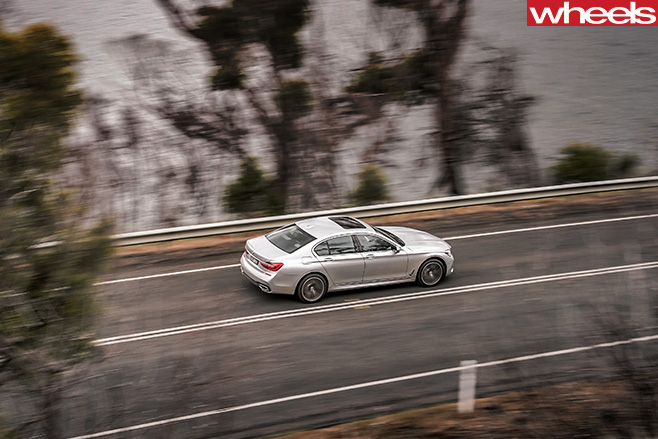
Switching between the two Comfort modes and the Sport mode as we tackle the twisty climb, the 7 Series is startlingly impressive and wonderfully involving to drive for what is essentially a limousine for rich executives. Our BMW 740i starts at $224,200 but is optioned up to $237,100, which includes a small, muscular Thai woman inside each seat for massage purposes, a steal at just $2000 for the pair.
Part of the magic is thanks to optional ($5500, but standard on the 750i) Executive Drive Pro, a form of active suspension that uses cameras to scan the road ahead for potholes and pre-adjusts the suspension to prepare for the impact in milliseconds. The road up Mt Wellington has almost as many bumps and lumps as it does small-animal carcasses, but the 7 Series simply oozes over all of them with supreme disdain.
Perhaps even more impressive is the steering, which feels grand and yet muscular, like The Rock if he’d been born into royalty. It’s genuinely fun to drive, which is good news for the 85 percent of Australian buyers who choose to sit up front.
Why you’d buy such a big car and not enjoy the rear-seat luxury is beyond me, but so is the idea of being rich enough to pay thousands of dollars for bottles of Tasmanian whisky.
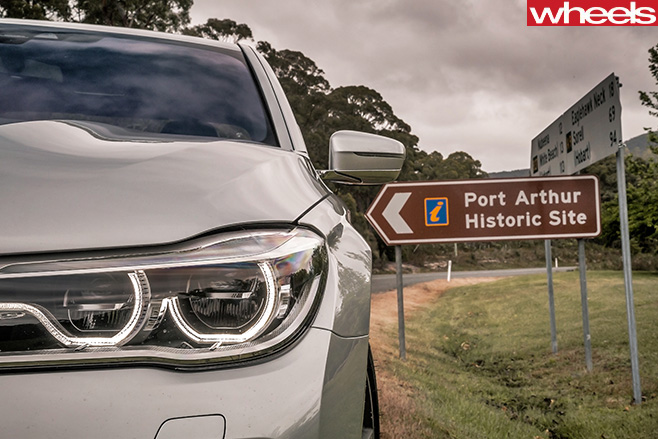
The next day we choose a longer jaunt to the historic penal colony of Port Arthur, to visit Australia’s southern-most distillery, William McHenry and Sons.
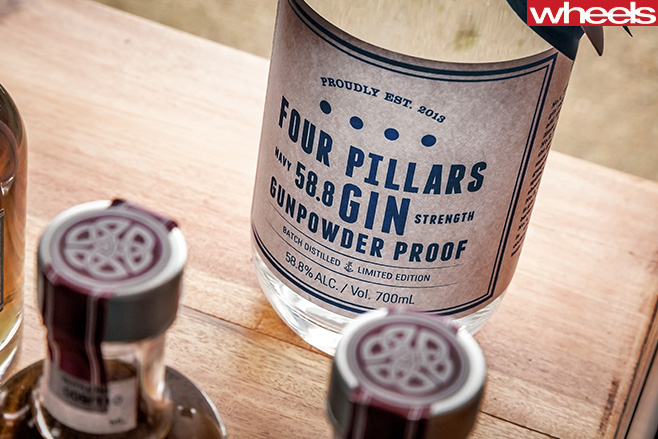
Nestled in an implausibly green valley and fed by a natural spring, which provides beautifully soft and mineral-rich water for its whisky, McHenry’s is still small but features beautiful timber buildings that wouldn’t be out of place in a movie about running moonshine, and is expanding into gin production, because you can knock out a batch in a day or two, rather than waiting 10 years. Visitors can even create their own gins and take them home on the day.
Distiller Bill Ravenscroft, who looks and sounds like the sort of bloke who’d have a crack at moonshine given the chance, says Tasmania’s biggest advantage – and the reason it has more whisky producers than any other Australian state – is its almost Scottish weather.
After a couple of days of tasting the tiniest amounts of whisky possible, and having Rob Polmear almost convince me that a scotch with the right amount of oiliness on the palate can be palatable, even pleasant, I’m almost sorry I have to drive home. Then again, Polmear also tried to tell me he can taste things like cotton candy, marshmallow, citrus, pencil shavings and custard in whisky, so he might just be insane.
But we’re in Tasmania, home of not just the world’s best scotch but some of its best roads, with a geek-tastic car that somehow doesn’t let all its gigabyte bells and wifi whistles distract you from the business of enjoying driving.
I didn’t end up taking a single drop of Tassie whisky with me, because childhood scars don’t heal that easily, but I did bring home a hard-drive full of good memories of driving the Whisky Trail in a car that’s not just from a different country, but a different time.
Would you like an ‘E’ with that?
As Bert Cason from Sullivans Cove explained, the ‘whiskey’ spelling was invented back in the bad old days of prohibition in the US: “Scotch was always whisky without an ‘e’, then during prohibition the Scots were selling pretty crap whisky to the Americans, because they were desperate, and the Irish started selling theirs with an ‘e’ to distinguish their higher-quality ‘whiskey’. Then the Canadians caught on to it, and the Americans, so basically those countries all do it with an ‘e’, and everyone else does it without one.”
Irish whiskey is still different today, because it’s triple-distilled while we, and the Japanese, follow Scottish tradition and only distill twice.
The Irish also make single-malt whiskeys, which are considered “the champagnes of whisky”, according to the experts.
Follow WhichCar/Wheels on Google
Click the button below to make WhichCar by Wheels a preferred source for your news.