Features

Gallery 1
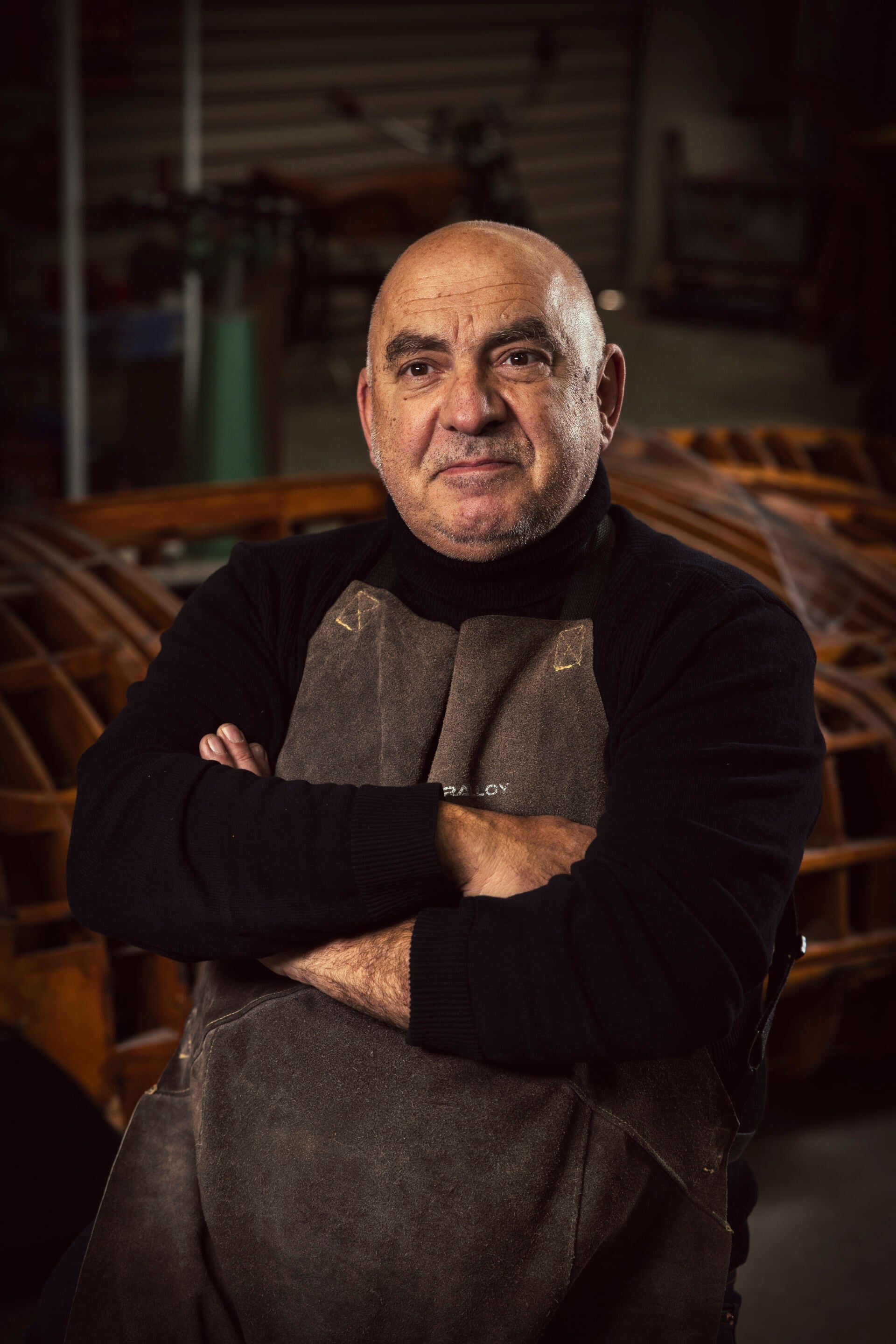
Very few people have created a career with the door skin for a humble 1964 HD Holden. Brian Tanti is likely to be the only one.
Yet it was his TAFE project as a teenager, while studying to become a panel beater in Melbourne in the 1970s, that opened the door to a life with some of the world’s coolest, costliest and most collectible cars.
Tanti spent 30 years as the custodian of Lindsay Fox’s exotic car collection, has scratch-built bodies for classic Porsches and Mercedes-Benzes, been responsible for a concept car to tout the abilities of Australia’s automotive industry, had a hand in the proposal for a Holden super-ute, and also helped to train and inspire a generation of young automotive apprentices.
“I made the door skin as a TAFE project. It was a functional opportunity, but also the chance to do something creative,” Tanti recalls to Wheels. “It was a fusion of art and science. It had to be functional but there was also a craft involved. People told me how good it was. They wanted to hang it up on display.”
2
It was the trigger that fired something special in Tanti, who admits he had been an under-achiever in the education system.
“I did my time as a smash repair guy. Up until then I often felt like a square peg in a round hole. All my family did really well at school, but it just didn’t work for me. Something sparked my love of learning. And that moved me into a whole other area.”
Tanti describes himself as a coach-builder, a historic occupation that is rooted in art as much as science.
In the days of four-legged horsepower, coach-builders were the artisans who created special and unique vehicles for the world’s wealthiest travellers.
These days, Tanti is setting up a new workshop back in Victoria as he creates a unique and one-off
creation for a super-wealthy international customer. He cannot say much because the details are top
secret, protected by a Non-Disclosure Agreement, but it is a multi-million dollar ‘coach-built special’ including a completely bespoke one-off custom engine block specifically for the car.
1
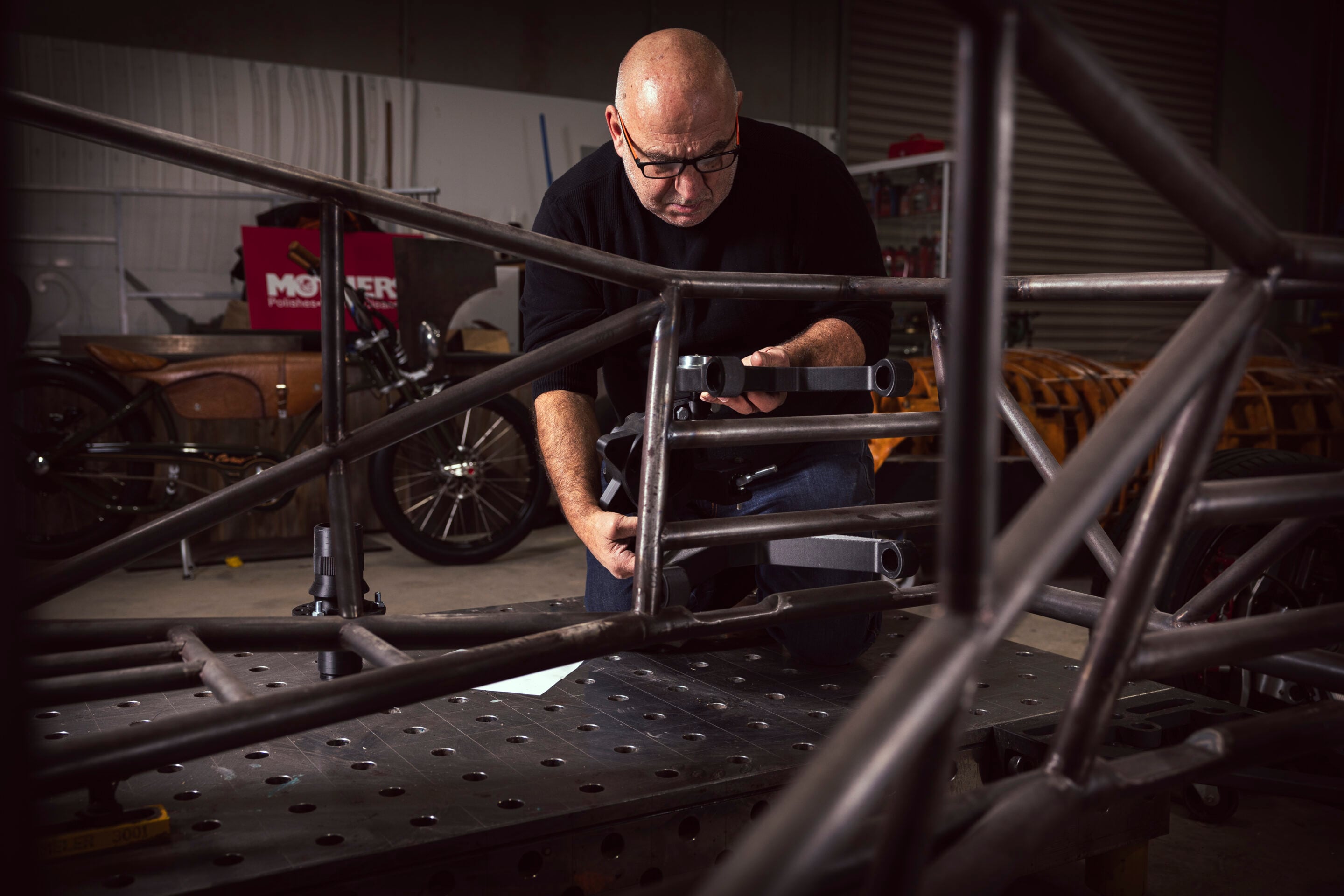
It’s a car that is stretching all of Tanti’s creative abilities, including the creation of a hand-formed
aluminium body, and reminding him of what old-school craftsmanship is about.
“There is this psychology that if you’re working with your hands then it’s dumb and stupid. That’s just not true,” Tanti says. “Being a craftsman is all about nurturing your learning ability. It trains your senses of concentration and perception. You’re initiated into an ethic about what you do.
“There are people all around you who are trying their best and doing their best. It’s almost a moral code in your life.”
Tanti’s career and life has been touched by many, many famous and influential people, from Sir Stirling Moss and McLaren F1 boss Ron Dennis to the King of Johur and Holden design star Tony Stolfo.
On the phone it’s impossible to have a five-minute conversation with Tanti. There is so much experience and so many amazing stories, going way back to the start of his career.
4
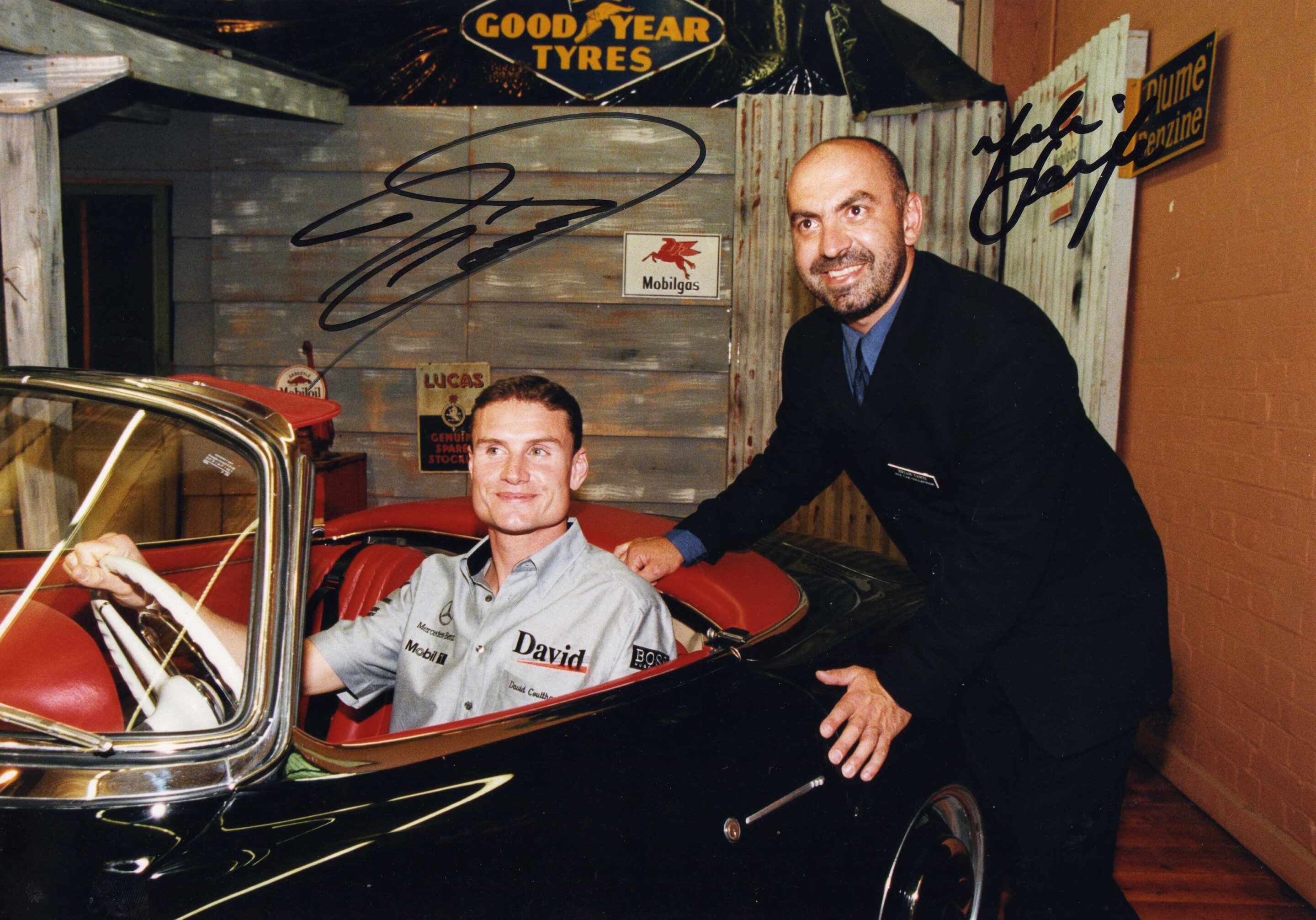
“After I finished my apprenticeship I went to the UK and worked in coach-building firms, where I got to learn the craft,” he says. “When I came back from the UK I worked for a Rolls-Royce dealership, R.A. McDermott, which became an incubator for the Australian automotive industry. Most of the guys who went through that shop opened their own businesses and did lots of important and substantial cars.
“I was there for three years. We were doing all sorts of stuff – Lagondas, Aston Martins, vintage and veteran Rolls-Royces “It was an introduction to low-volume, hand-made cars. And it’s a love I’ve carried through my whole career. The reason why it was so important was Rob McDermott gave people the opportunity to learn. And to train and improve.”
Soon came the biggest opportunity of Tanti’s career.
“Two guys opened a paint shop and I contracted to them. One of the first jobs we were given was a Ferrari 250 GT SWB. We did lots of other early Ferraris.
“Then we were contracted to do a car for Lindsay Fox. And shortly after that the Fox family offered me a job and I stayed with them for 30 years.”
The pay was never great, but the work was hugely rewarding, he got to travel the world in search of significant cars, and he was instrumental in establishing the Fox Museum at the Docklands in Melbourne.
“The building was originally built to be a customs-bonded warehouse. The very first Australian national stamps were printed there. It was a very interesting building with lots of history,” he says. “Basically, what we were doing was building the cars and slowly establishing the museum. There were some pretty hairy moments. There were a lot of junkies floating about, a lot of unsavoury stuff.
“It was a 24/7 job. It was a very interesting life and we did lots of interesting things. Formula One car launches, fundraisers, corporate events.”
1
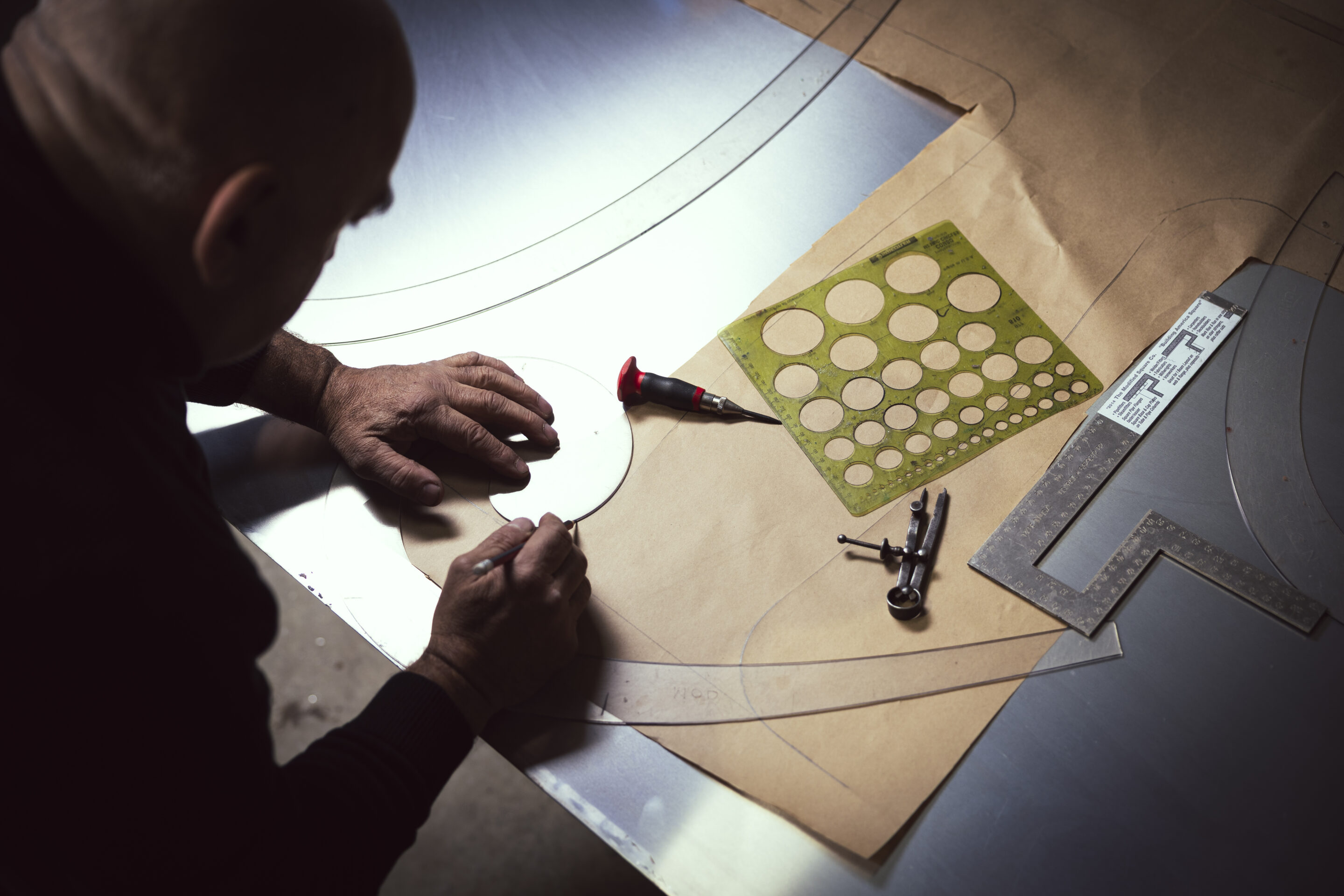
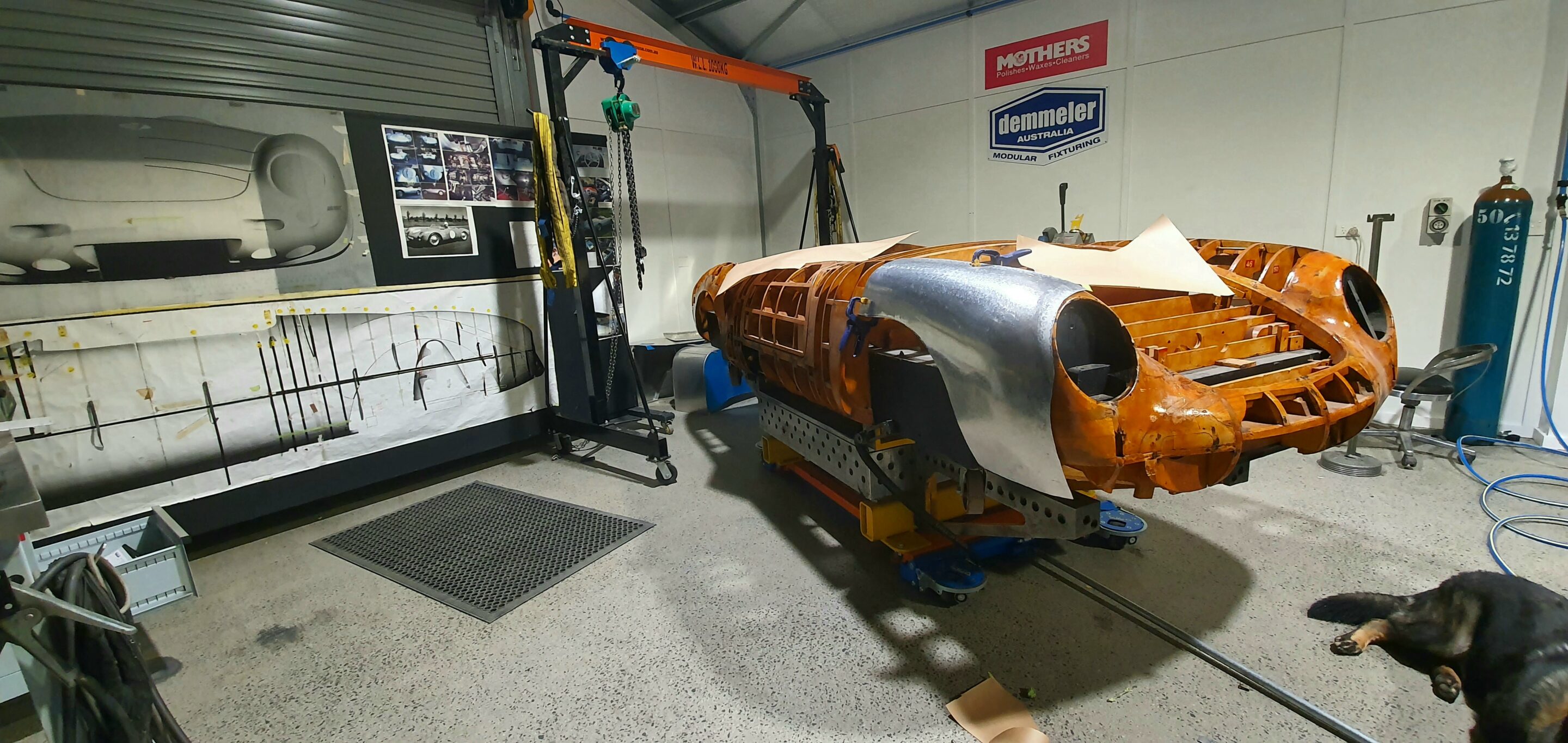
But the cars were still the key for Tanti and he rapidly earned a worldwide reputation for his hands-on work on classic Benzes and Porsches.
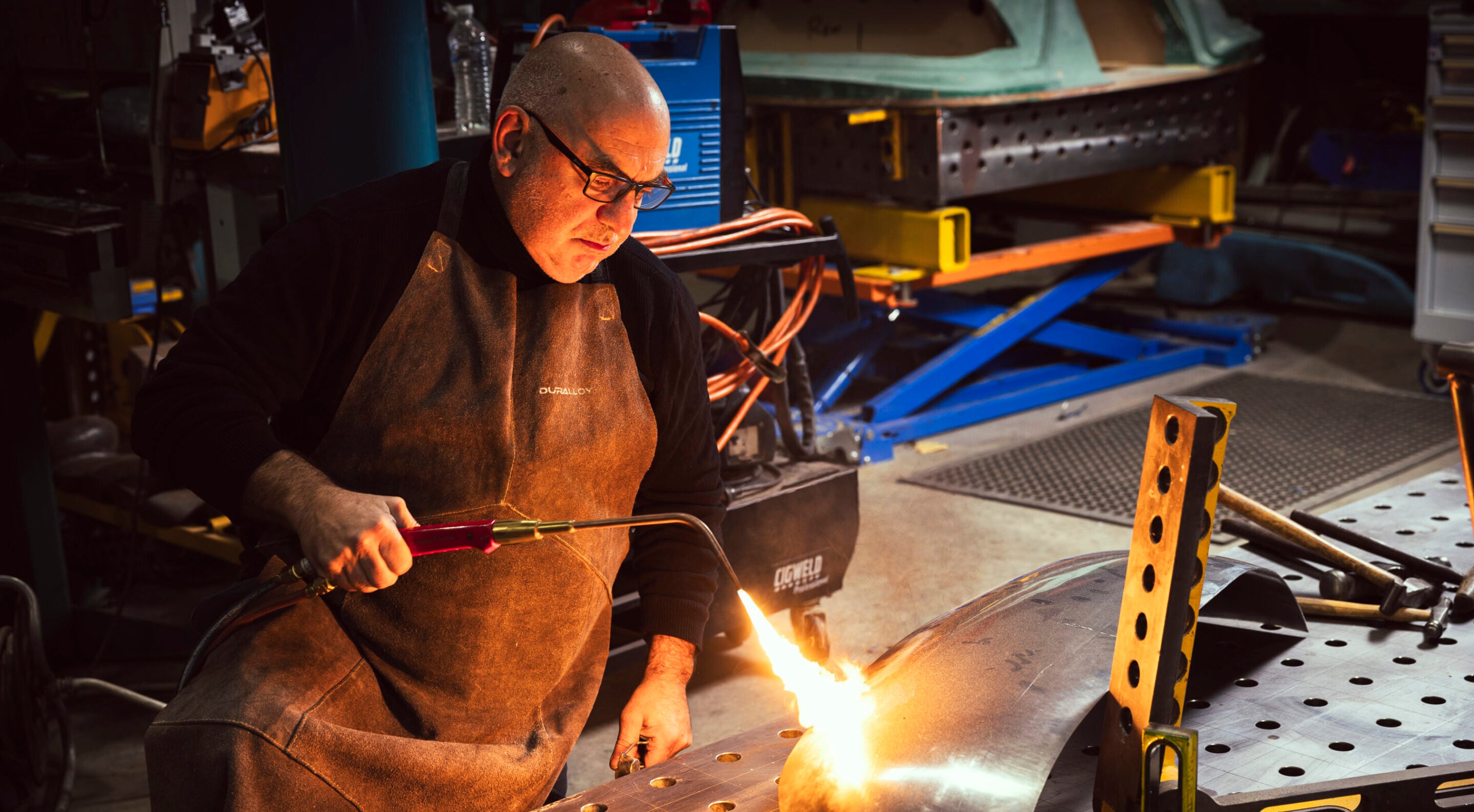
“When you’re pulling these things apart it’s like a patchwork quilt. You use your skills in metal working to create the form and then have to fuse all the pieces together.”
It’s all hands-on work, from creating wooden bucks for the basic shape to work on English wheels
and mechanical hammers, to the final forming and finishing.
“The buck is a three-dimensional representation of the math data. You use your skills in metal working to create the form. I think it is both art and science. At the end of the day, it’s a functional object.”
Tanti says he cannot pick a favourite from the Fox collection, but he is clear on its importance.
“When I started with Lindsay the value of the collection was put at about $9 million. Towards the end of my time there I saw a Porsche 550 that went up for sale with Le Mans history, similar to ours, that made $9 million.”
3
But Tanti had plenty of other projects. He was also working on educational programs and forging contacts in the car industry, from component suppliers to major manufacturers. He was also involved with the Victorian and Federal governments on research projects and promoting the car industry.
One program, just before the turn of the 21st century, was the aXcess Australia concept car, a showcase for the motor industry that generated huge business for local suppliers. Tanti was a key player in the construction, designer Paul Beranger was on point at Millard Design, and 116 individual companies supplied parts and services.
“It was very successful. Those cars went all over the world. There were two cars and they cost $4 million,” says Tanti.
“They generated something like $20 million for the local supply chain. But government stripped all the funding out of automotive. In the end we weren’t getting any funding, so we had to dissolve the project. Interesting times but it’s ancient history now.”
Later there was a concept car called the FR1 – standing for Fund Raiser #1 – which starred at the Melbourne Motor Show in 2009. It was a modern take on an old-school hotrod, looking a lot like the Chrysler Prowler but with a 6-litre Chevrolet V8 engine.
It was a teaching tool for the youth-focussed Auto Horizon Foundation as Tanti became deeply involved in educational work with the Kangan Batman TAFE.
“The creation of the FR1 came about because I felt we needed to make a statement about the work that could be done in Australia,” he says.
It also took Tanti into the world of carbon fibre.
“Boeing was one of the partners in the FR1 project. It was something very new. And we had a carbon fibre chassis for the FR1.”
The behind-the-scenes stories keep coming, including a quirky bike he built and Tanti’s
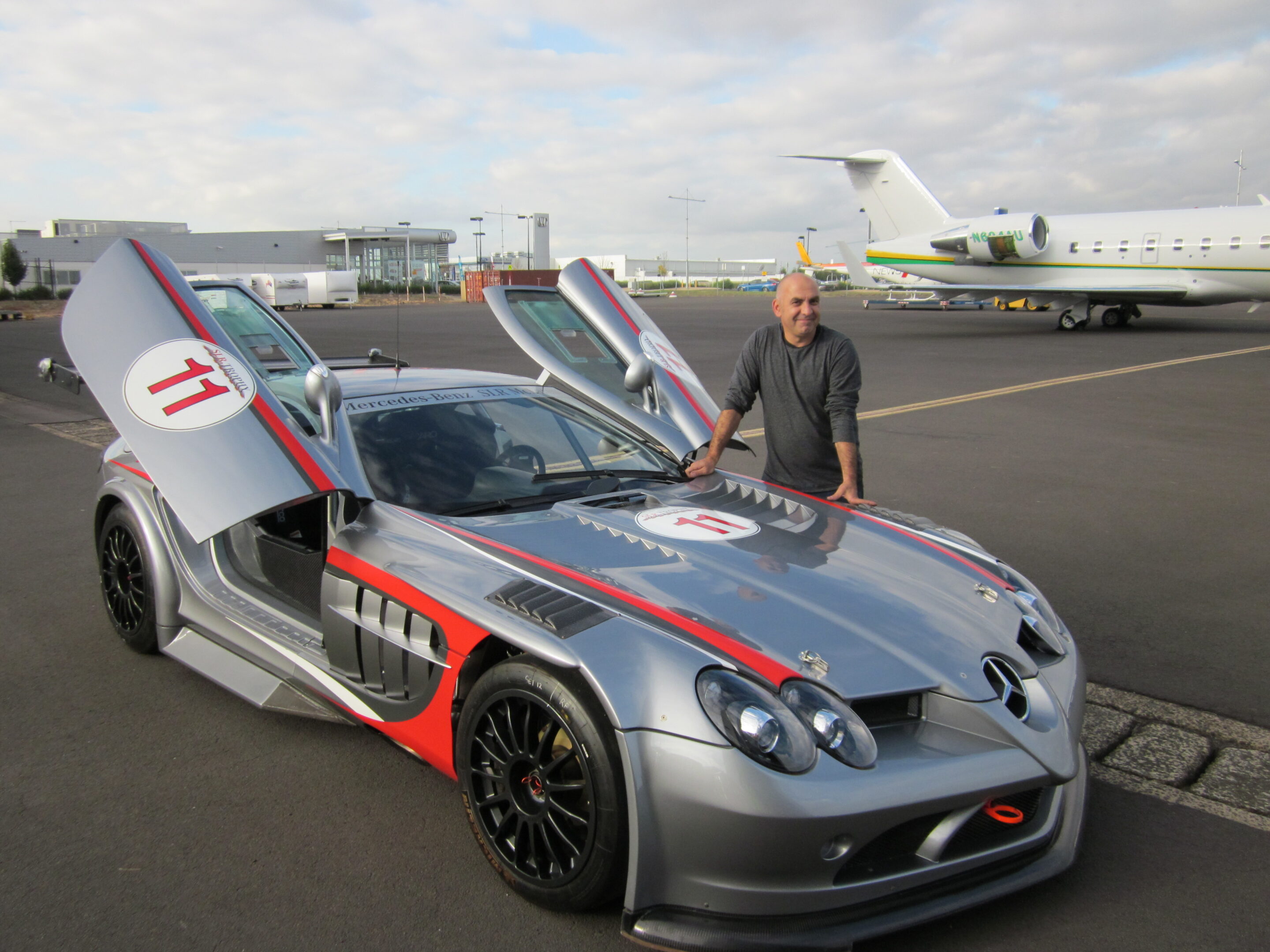
minor involvement in the Holden super ute project reported by Peter Robinson for Wheels.
“I took Lindsay’s Ferrari Enzo in to put alongside it. And we took a few photos for fun,” Tanti chuckles.
2
But his time with Fox was coming to an end and he eventually quit and set up Brian Tanti’s Garage in Sydney, before a second change of venue to Bowral, then finally a return ‘home’ to Victoria.
“My workshop is a tip. There is so much to do,” he says. “I have a Porsche 550 on the table right now, which I will eventually sell. And I’m doing the international project. The owner approached me to do it and it’s a very extensive build. It’s obviously a long-term dream of his and he’s throwing a lot of money at me to do it. The client is a real gentleman, a lovely person. And that makes the work that much more enjoyable.
“If you’re blessed to work with somebody that understands the whole business of craft versus industrial production then it makes the work very enjoyable. Craft is a different currency.”
Tanti is into his 60s but has no plan to retire and, apart from building cars and working with his
favourite German power hammer, he still hopes to guide and inspire the next generations.
“It’s going to keep me young if I keep working. There is a resurgence in the whole idea of craftsmanship, and people looking for alternatives to where they thought their career pathway was taking them. The broader your experiences, the more rounded you become.”
Despite the downturn in Australia’s manufacturing capability, he also believes in a future for the youth of the 21st century who are interested in cars.
“I watched Australian manufacturing hollow out and I knew this was bad for Australia, despite all the public and private discourse around unsustainable manufacturing. Ironically, now we find ourselves with this heightened political and public anxiety as we become totally reactive to our lack of sovereign capability.”
This article originally appeared in the August 2025 issue of Wheels magazine. Subscribe here and gain access to 12 issues for $109 plus online access to every Wheels issue since 1953.
Follow WhichCar/Wheels on Google
Click the button below to make WhichCar by Wheels a preferred source for your news.