Reviews
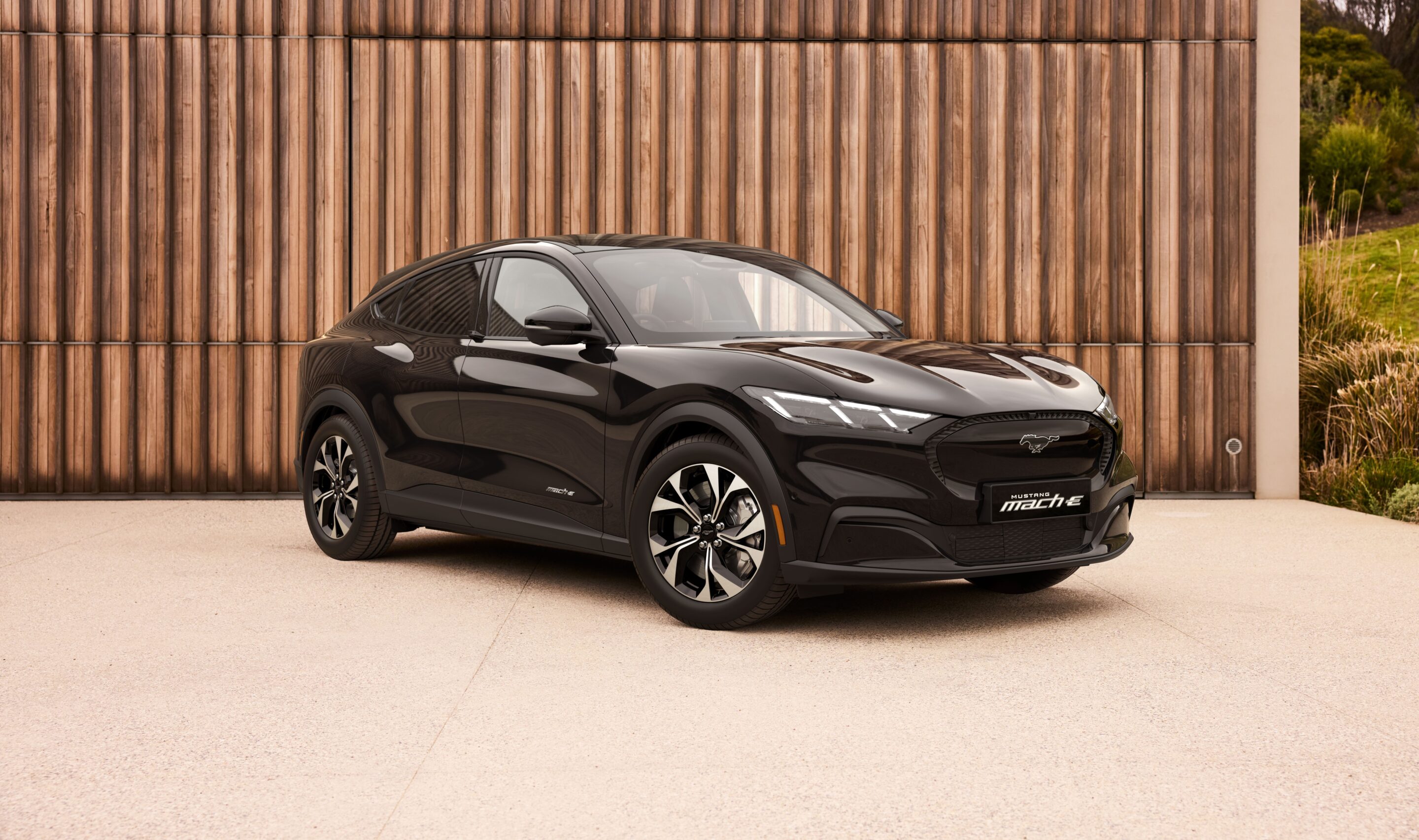
Gallery 1
7.9
/10
Score
Score breakdown
7.0
Safety, value and features
9.0
Comfort and space
8.0
Engine and gearbox
8.0
Ride and handling
8.0
Technology
Things we like
- Ride-handling balance in rear-drive versions
- Overall performance
- Interior space
Not so much
- Fragile ride in GT variant
- Fiddly door handles
- Not exactly cheap
Three years on from its local launch, Ford’s Mustang Mach-E continues to represent a riddle wrapped in a contradiction. Well, in a marketing sense, anyway, because it remains a mystery to many that the model is still badged as a Mustang. And that’s especially so when the just announced facelift appeared to offer the perfect opportunity to drop the Mustang tag and simply go with Mach-E. An opportunity gone begging, as it turns out.
Why dump the pony? Because to those of us with enough grey hair, a two-tonne-plus, battery-electric SUV is to the original Mustang ethos as pineapple is to a pizza topping. So scratch the hard-core Mustang nutters. But similarly, the denizens of our leafy inner suburbs are very likely to look down their surgically perfected noses at the Mustang badge and reject the prospect on that basis alone. Damned if you do…
Surely, this car could stand on its Mach-E tag alone; reconciling the E for Environment’ and the Mach’ reference as a wink and a nod to the traditionalists. Then again, Ford pays its marketing geniuses a lot more than I’m paid to scribble about cars, so maybe I’ll just shut up and check out what the facelift has brought. Yeah, there’s a thought.
4
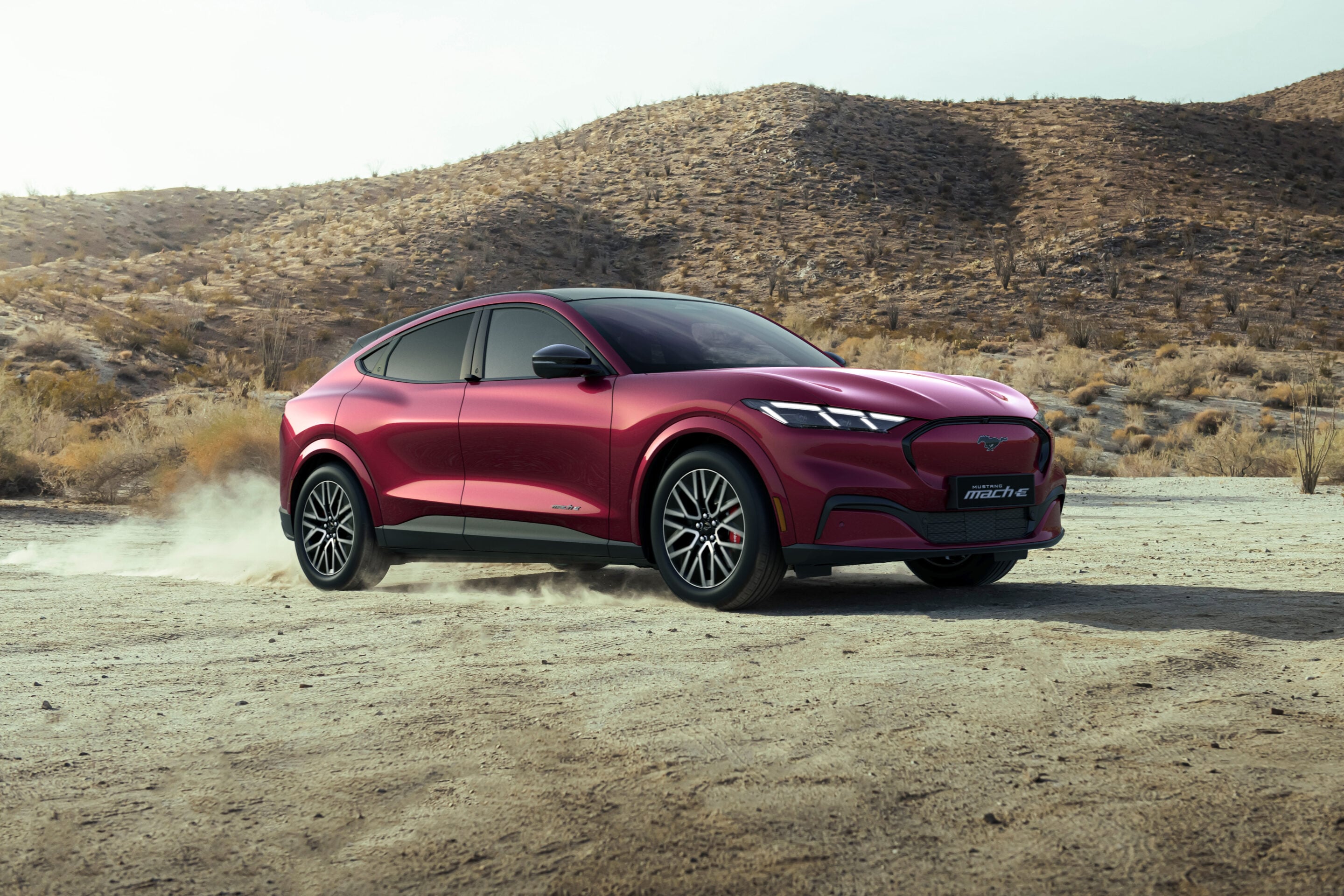
The range remains the same; kicking off with the entry-level Select rear-drive with its 19-inch alloys, LED lighting and heated seats and steering wheel. Yours for $65,990. The Premium rear-drive is next and adds a larger EV battery, some red stitching inside, multi-coloured ambient lighting and body-coloured wheel-arch extensions. But it’s a big step up to $80,490. The GT is the $98,490 big-hitter with even more battery and an extra motor for all-wheel-drive. It also adds 20-inch wheels, Pirellis, adaptive suspension (dampers) Brembo front calipers and Performance front seats.
Mechanically, the Select and Premium share the basics. That starts with the 212kW, 525Nm electric motor mounted between the rear wheels. The Select gets a 73kWh battery-pack for a claimed 470km range (WLPT). The Premium gains 15kWh for a total of 88 (but still just shy of the previous Premium’s 91kWh battery) and a 600km range in the process. The GT, meanwhile, has a 91kWh battery driving the twin motors which, combined, offer up 434kw and 955Nm. Running two motors makes for big shunt, but also burns electrons faster, so the range claim is down to 515km.
For the record, our on-test consumption figure of 17kW per 100km is pretty handy and tends to back up the theory that the range estimates may not be too fanciful. That’s on the two rear-drive models, at least, and our figures for the GT fell victim to the temptation of almost 1000Nm, rendering them unworthy of publication. Ahem.
4
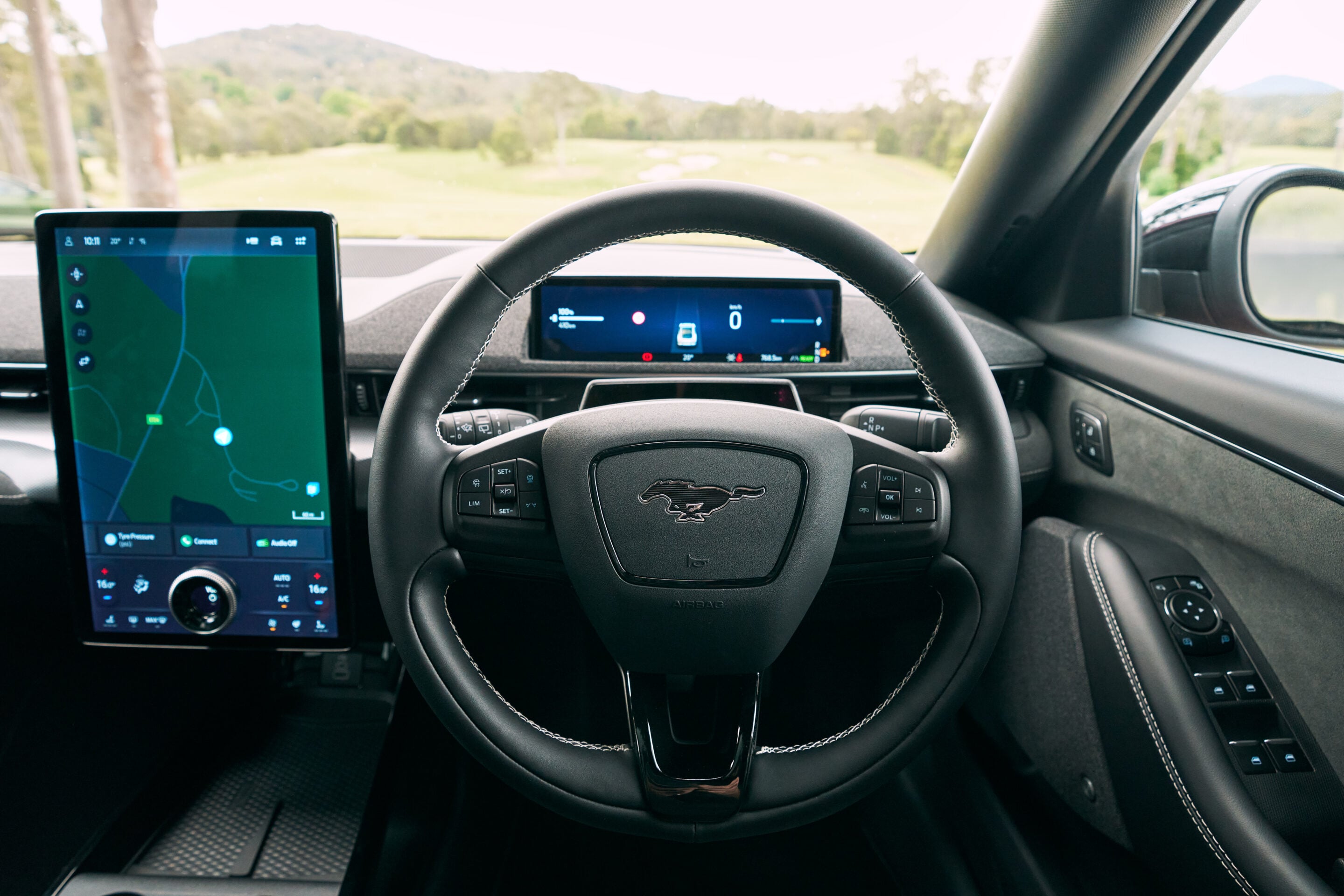
Other facelift changes include the fitting of a heat-pump to improve the efficiency of the cabin heating and ventilation, although it gobbles up a fair amount of room in the frunk. The alloy wheel designs are new and, on the GT, apes the rims on the `proper’ Mustang. There’s other stuff, too, like matte-finish lower body panels on the Premium version and a new interior layout with a column-mounted stalk replacing the previous rotary PRNDL dial. The GT gets a new grille, too. Yee-hah.
More importantly, the Select and Premium now sport a retuned suspension set-up which, in a nutshell, has backed the spring and sway-bar rates off a bit in the interests of ride quality. And, presumably, to greater differentiate the feel of the car compared to the firmer GT with its new clever-shocks. It’s worked, too. Not only that, but it’s probably now the defining dynamic characteristic.
Which is to say the Select and Premium now offer the preferred experience. Sure, they never have the same big-dog-on-a-short-leash feel of the twin-motored GT, but you’d never call them anything but muscular in their own right. There are always Newton-metres on call, and plenty of them, and, like the GT, you also get that lush, whooshing sensation of being swept up by a huge force and carried away somewhere. It’s just that the GT will get you to wherever that is a lot faster and with added whoosh.
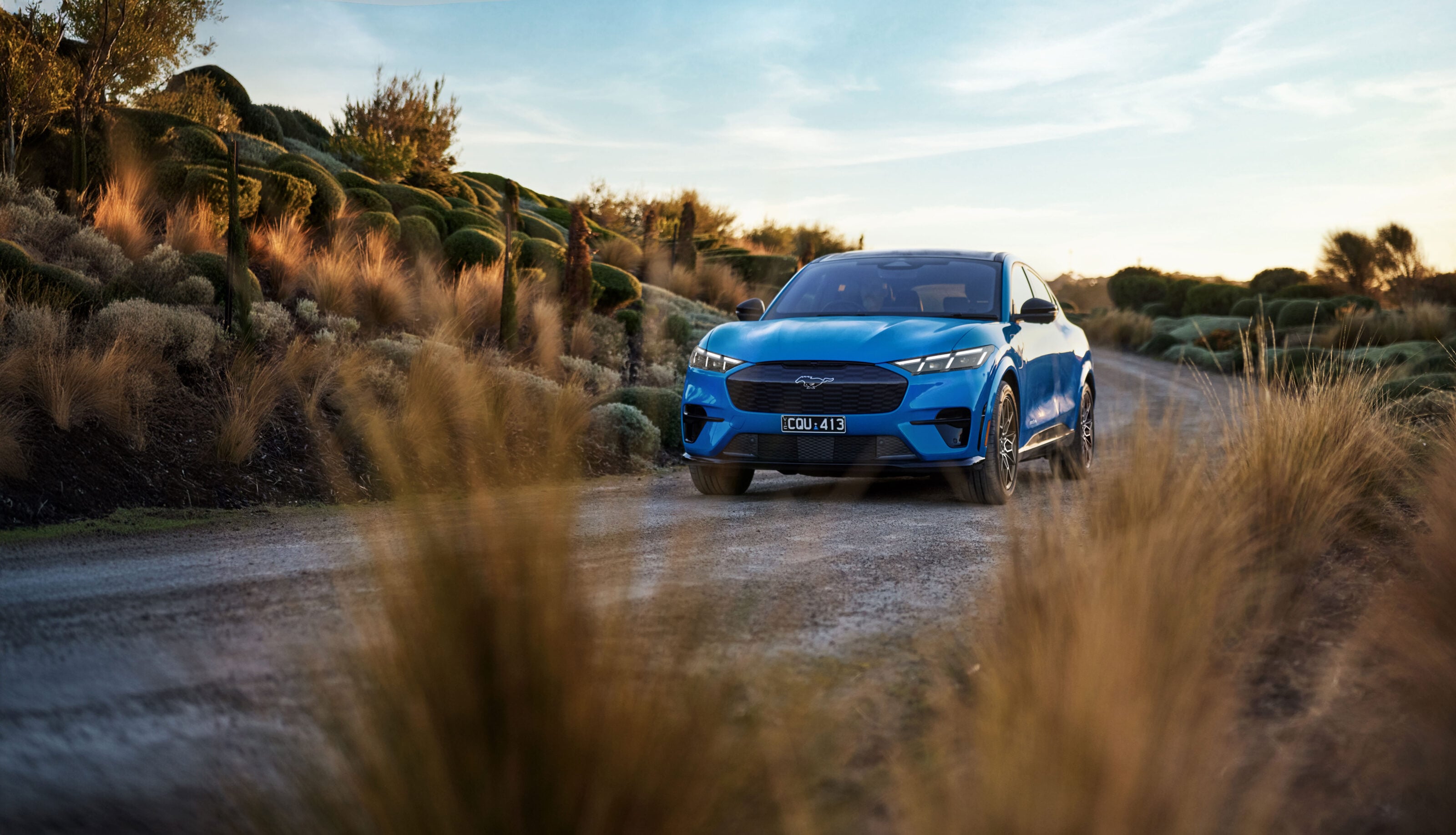
But hit a bump in the GT and you may begin to wonder why you spent the extra gold. To be honest, the top-flight Mach-E is just too stiff for everyday roads. Even fiddling with the selectable drive modes doesn’t seem to zero in on a setting for the adaptive dampers that feels right. It doesn’t crash into holes, but neither does it manage to glide across them. Smaller, fidgety road-pox is also felt through the seats and rather than emerge as the relaxed, luxe thing a big, expensive electric car should manage, the GT hops and bops around painfully.
4
In contrast, the two cheaper variants are much nicer to ride in. There’s a far better mix of spring and damper and the end result is one that allows the Mach-E to swallow the worst of the lumps and flatten the rest. Rarely do you find two versions of the same car with such different ride characteristics. The better news is that this extra layer of ride-crema hasn’t been at the expense of the car’s ability to sidestep. It still feels pretty agile and it really doesn’t feel as big and heavy as the spec sheet insists.
The other difference, though, is that the softer suspension tune on the rear-drive Mach-Es does dull the steering down a fraction. It seems about half a turn lock-to-lock slower (although it probably isn’t) and it doesn’t have quite the clarity of the helm in the GT. It’s almost like it’s not loading up as you’d expect it to, and the overall sensation is that you’d like a bit more backchat from the front end. There’s also a tiny nothing-doing spot at the straight-ahead that the car otherwise, thanks to its wheelbase and overall stability, doesn’t require.
Inside, the presentation is crisp and clean with plenty of soft-touch surfaces although the tiny dashboard’ screen ahead of the driver looks a bit underdone. Not that it’s hard to read or lacking any vital info, just that it looks like the interior was designed for a bigger pane of screenage. The rear seat is pretty huge, and even though the centre-rear seating position is still the stuff of short straws, there’s admirable knee room and foot-room under the front chairs and the chance for a six-footer to sit behind another six-footer with no complaints. The rear door opening, however, seems a bit tight, and while the huge (and standard) panoramic roof opens up the interior brilliantly, opening it up the traditional way is frustrating thanks to the placement of the interior door handles that are simply too far back to avoid banging your elbow into the rest of the car. And don’t start us on the popper style exterior door handles or the slit-like view through the rear window. Thank goodness for reversing cameras.
Meanwhile, what’s the one thing very, very few EV makers have ever got right over the years? Yep, the synthetic soundtrack. But good news; the Mach-E’s ‘note’ (which can also be turned completely off when it’s not needed – which would be 99 per cent of the time) is actually tolerable, mainly because it’s not trying to be a booming V8 or a Formula 1 clone. Okay, it’s still a bit Dr Who, but, like the rest of the car, really, it’s a lot closer to the mark than you might imagine a Mustang with no pistons should have turned out.
Specs
| Model | Ford Mustang Mach-E |
|---|---|
| Price | $65,990/$80,490/$98,490 (Select/Premium/GT) |
| Peak power | 212kW (Select and Premium)/434kW (GT) |
| Peak torque | 525NM (Select and Premium)/955Nm (GT) |
| Transmission | Single-speed reduction |
| Battery | 73kWh/88kWh/91kWh |
| WLPT claimed range | 470km/600km/515km |
| Efficiency (as tested) | 17kW per 100km (RWD models) |
| Peak DC charging speed | 150kW |
| 10-80 per cent peak charge time | 32 to 36 minutes |
| Dimensions (l/w/h/wb) | 4728mm/1881mm/1627mm/2984mm |
| Kerb weight | 2100kg/2086kg/2276kg |
| Boot (seats up/seats folded) | 402 litres/1420litres |
| Warranty | 5 years/unlimited km (8 years/160,000km on EV battery) |
| On sale | Now |
7.9
/10
Score
Score breakdown
7.0
Safety, value and features
9.0
Comfort and space
8.0
Engine and gearbox
8.0
Ride and handling
8.0
Technology
Things we like
- Ride-handling balance in rear-drive versions
- Overall performance
- Interior space
Not so much
- Fragile ride in GT variant
- Fiddly door handles
- Not exactly cheap
Follow WhichCar/Wheels on Google
Click the button below to make WhichCar by Wheels a preferred source for your news.