COTY

Gallery 1
It’s possibly a kind of Pavlovian response thing (without the salivating) but when faced with yet another mid-sized SUV, the default mental programming in my head is to prepare for disappointment.
Not that these things are necessarily bad cars but, as a tribe, they don’t exactly offer too much in the dynamic thrills department. It’s all down, of course, to their devotion to the task of moving people safely, efficiently and at a price-tag that still allows for a driveway to park them in. And that’s often at the expense of any real sparkle. As in: If you’re not looking for much, they offer plenty (thank you, Harper Lee).
But just like Harper Lee’s back catalogue which, for literally decades consisted of the singular To Kill a Mockingbird (and even now stretches to just three titles), scarcity is no barrier to brilliance. Once you’ve found it.
2
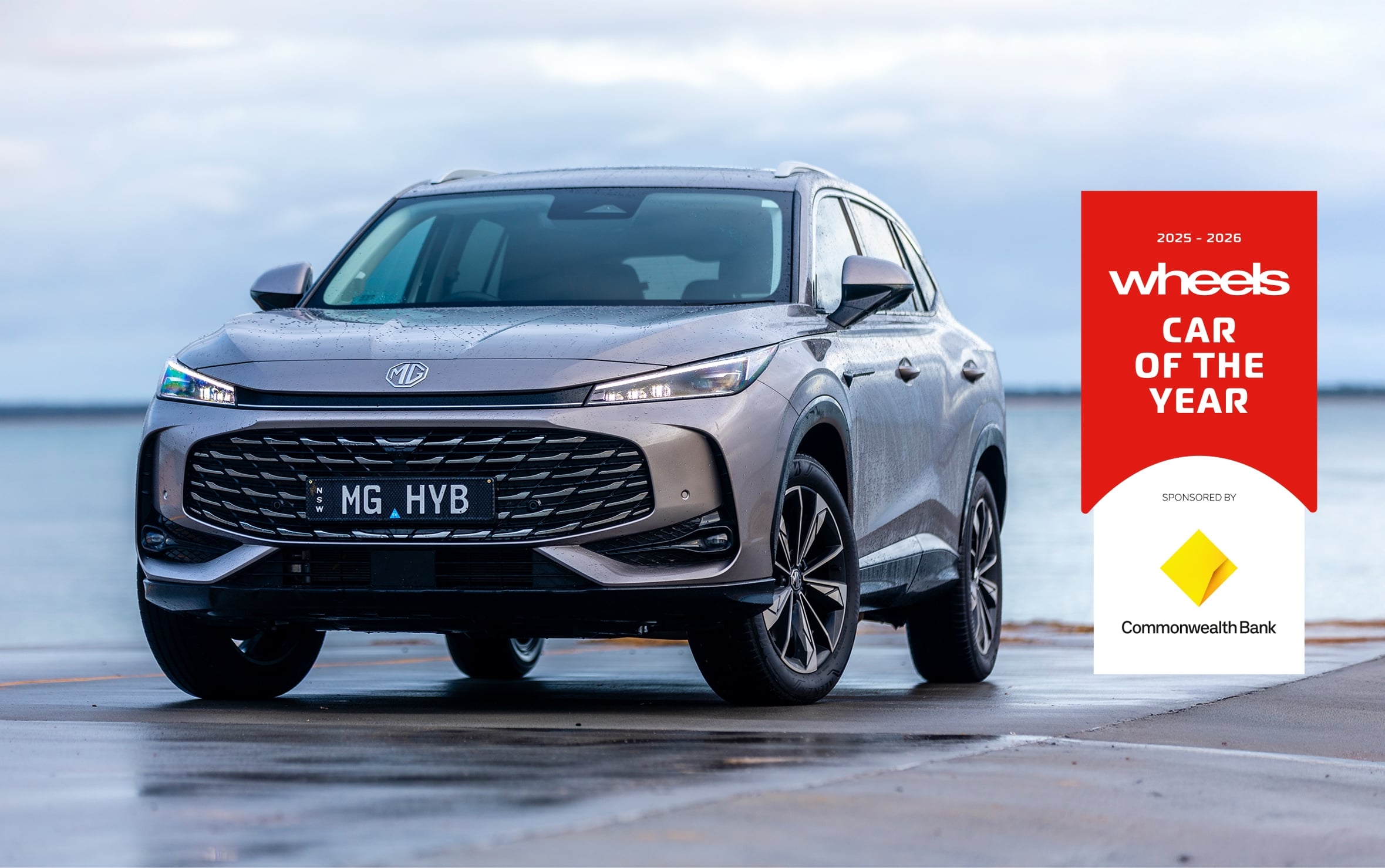
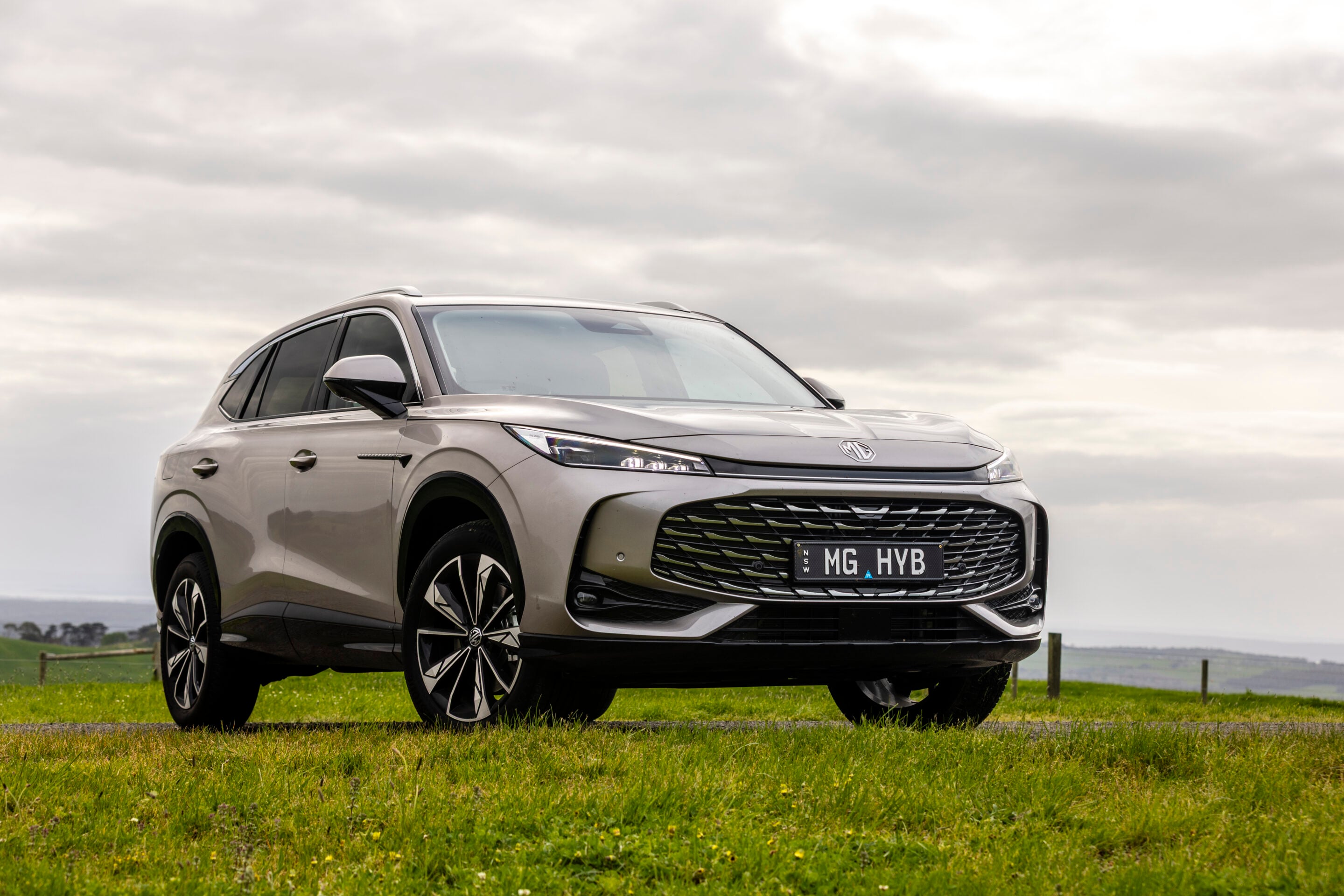
The true rarity of the MG (and largely why it’s a finalist) is that it has somehow managed to overcome the sensation of being at the mercy of that cost-versus-flair equation, and its jacked-up SUV layout. Where the majority of its competitors either roll around in corners or ride like billy-carts (or both), the MG emerges as the exception that gives us hope that maybe, one day, all SUVs will steer and handle properly.
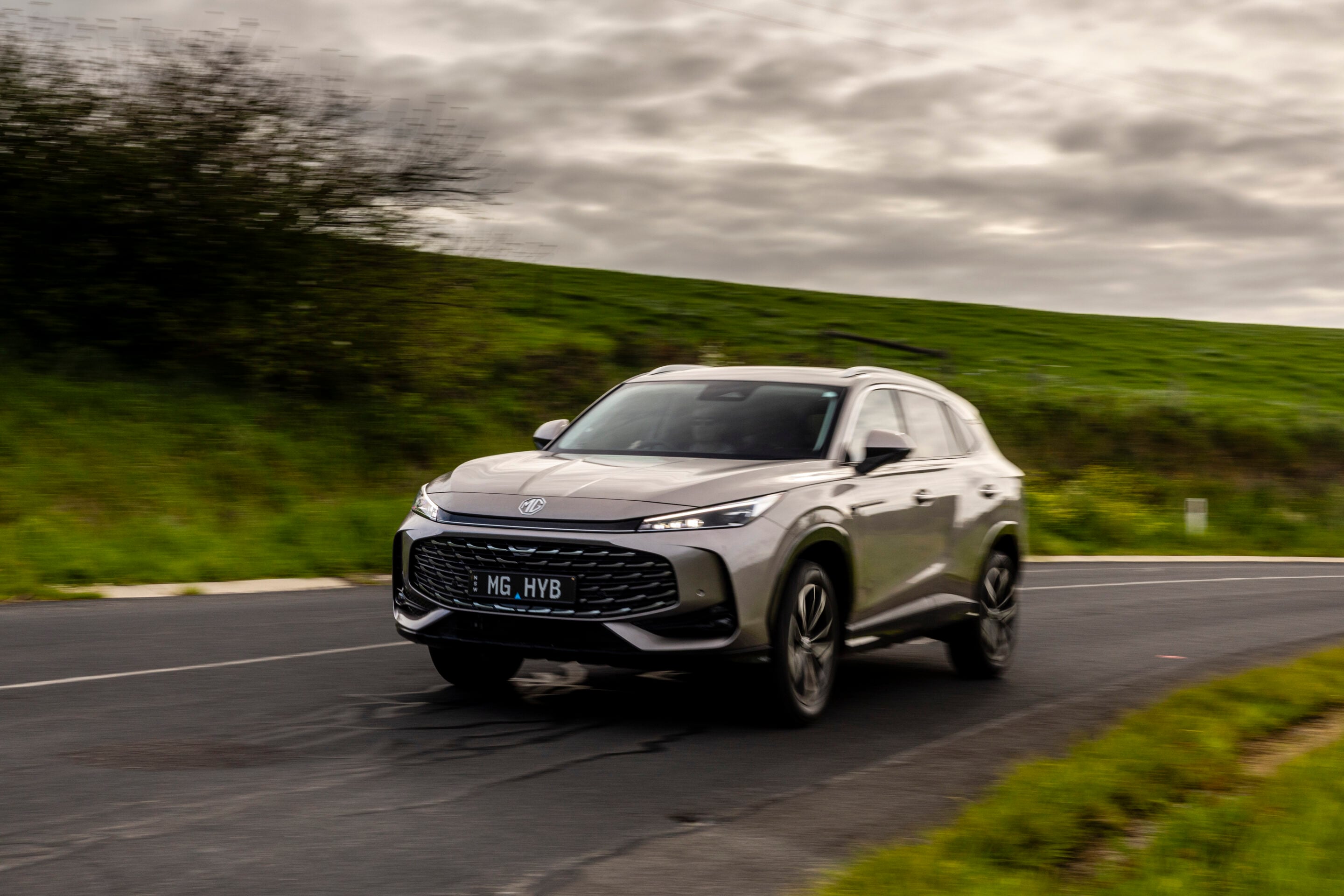
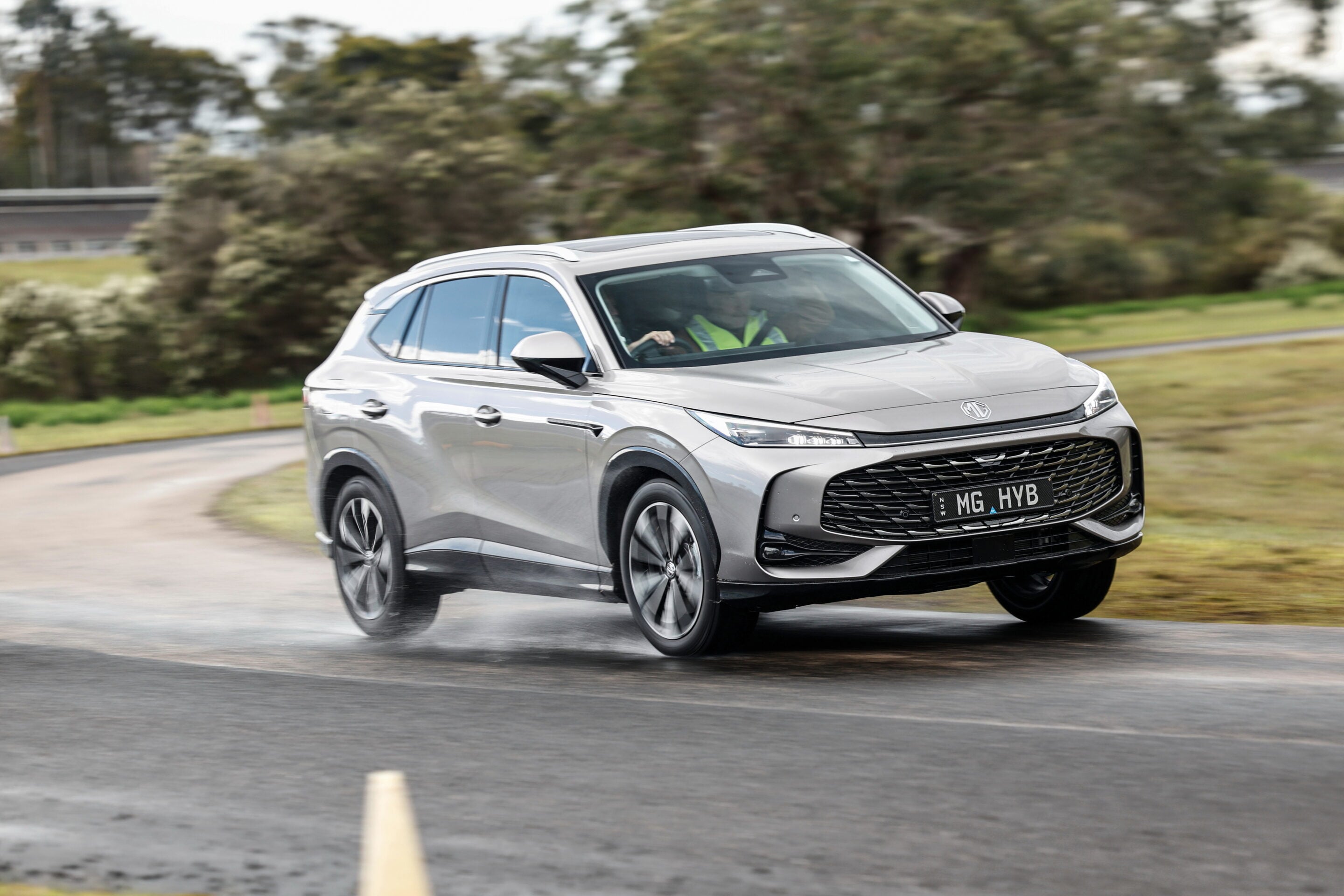
The rainbows start appearing pretty much as soon as you’re rolling, when your backside suddenly over-rides what your brain is expecting. Rather than the busy, jiggling ride you were expecting, the MG glides over bumps and ripples while letting you know what’s going on without shouting about it. In fact, it’s probably that small-amplitude, high-frequency ride quality that most definitively marks the HS out as more than a little bit special.
As speeds rise and cornering forces multiply, the HS begins to revert to type a fraction, but only a fraction. For the most part, the bump absorption is sufficient for that wide, broad bonnet to apparently hover above the road, unaffected too much by what’s going on directly under it. It’s an initial plush factor yet to be seen in anything else in this price-size category, we reckon.
2
So how has this modern miracle been achieved? Seat of the pants suggests it’s the result of a successful decoupling of the forces produced by steering and suspension. While that sounds like a bad thing, it’s not, because the loads generated by the steering aren’t automatically passed through to the suspension and vice-versa.
So everything can keep doing what it’s supposed to do without a bump-steer pillow-fight going on below the wheel-arches. Maybe.
While MG also offers a similar package with a plug-in hybrid system (and a corresponding price-tag), the non-plug-in variant we have here seems to be the sweet spot (for now, at least). That’s especially so if recent research pans out and a high percentage of owners of plug-ins really do use them as normal hybrids anyway, continuing to put petrol in them just before they stop.
2
So what you have under the lid is that increasingly ubiquitous 1.5-litre turbocharged petrol engine coupled with a single electric motor. The difference here is that rather than a single-speed transmission, the MG gets a two-speed unit.
Combined, the two power units max out at 165kW and produce 340Nm of torque… which doesn’t sound amazing and, in fact, isn’t. But it doesn’t exactly leave the car wanting, either, and that’s because the MG is not as portly as it might have been. Okay, 1656kg is hardly ballerina stuff, but no plug-in battery and front-wheel-drive means it isn’t banging on for two tonnes like the GWM Haval H6 AWD plug-in, for instance.
Meantime, the power delivery is smooth and supple, in line with many of its competitors whose manufacturers have also recently rediscovered the packaging and refinement joy of a small-capacity four-cylinder petrol engine.
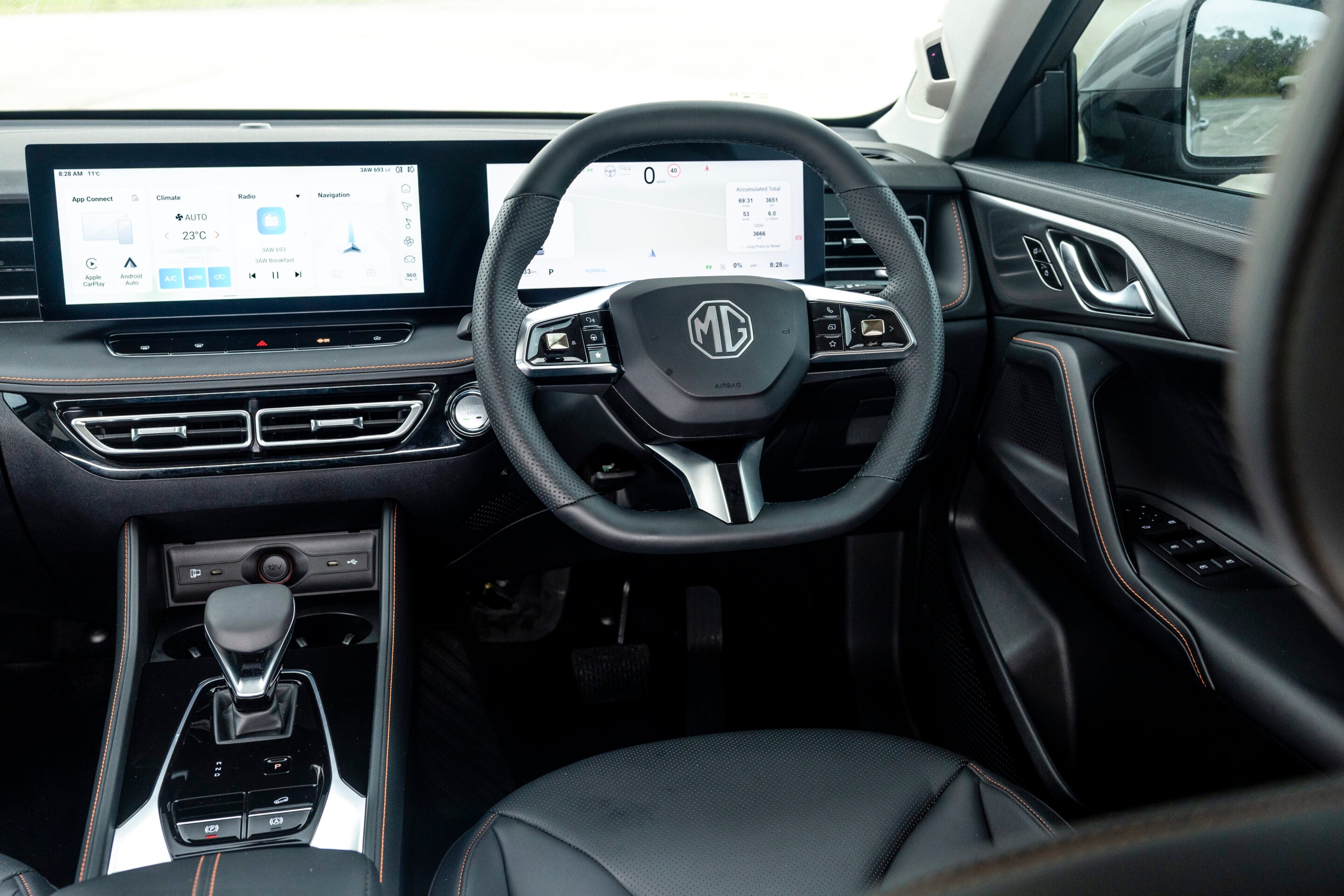
Given the importance of value for money in this segment, MG has gone for broke. Over and above the gear fitted to the entry-level HS Hybrid, the Essence adds a vast panoramic sunroof with a (thin) sun-shade, a hands-free powered tailgate, front fog lights, wireless phone charging, a driver’s seat with four-way lumbar adjustment, heated front seats and exterior mirrors, dual-zone climate and a slightly less faux aunt leather.
3
As a non-plug-in, of course, there’s no 100km of electric-only range, but the official combined fuel consumption figure of 5.2 litres per 100km suggests the MG won’t be a guzzler.
The HS Hybrid hasn’t been crash tested locally in this form, but it does cash in on the HS’s 2024 ANCAP rating of five stars. That’s down to inclusions of the latest driver-assistance packages including autonomous emergency braking, blind-spot monitoring and rear-cross-traffic alert.
There is also much to keep the family accounts department at peace, too. The $44,990 driveaway pricing is a good start, and there’s a seven-year/unlimited-kilometre warranty to help maintain sleep patterns. Oh, and if you elect to have the vehicle serviced exclusively at an MG dealership (of which there are now roughly 100 across the nation) that basic warranty unfolds to 10 years and 250,000km of cover.
It’s good, then, this new MG. And perhaps the best illustration of that was the wide-eyed look of amazement on the face of every COTY judge as they stepped from the HS after their first drive. And that level of surprise and delight always suggests you’re on to something.
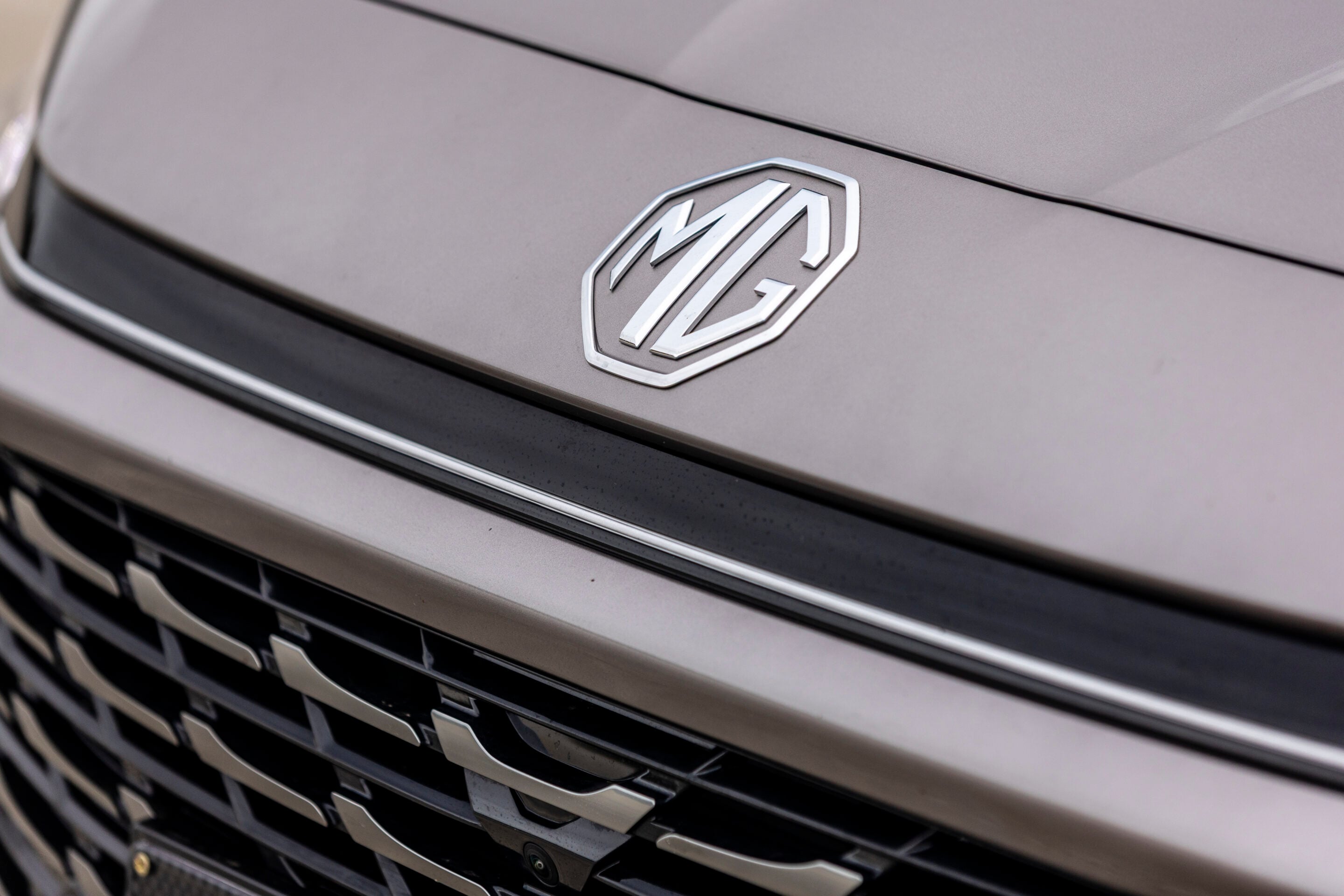
2
Specs
| Price | $44,990 (driveaway) |
|---|---|
| Body | Five-door, five-seat SUV |
| Drive | Front-wheel drive |
| Drivetrain | 1.5L turbo petrol 4 cylinder, 1.83kWh NCM lithium iron water-cooled battery |
| Power | 165kW |
| Torque | 340Nm |
| Transmission | 2-speed hybrid |
| Consumption | 5.2L/100km, 1000km range (TNFC) |
| Kerb weight | 1656kg |
| 0-100km/h | NA |
| L/W/H/W-B | 4670/1890/1655/2765mm |
| Boot space | 507L/1484L |
| Warranty | 7yr/unlimited km (min), 10yr/250,000km (conditional) |
| Safety rating | Not Tested (5 star ANCAP 2024) |
Follow WhichCar/Wheels on Google
Click the button below to make WhichCar by Wheels a preferred source for your news.

We recommend
-
 COTY
COTY2025-26 Wheels Car of the Year finalists, 3RD: Toyota GR Corolla
Toyota’s GR Corolla hogged both keys and tyres at COTY, blending rally-bred pace with daily-driver polish, proving Gazoo Racing’s magic lives on in 2025.
-
 News
News2025-26 Wheels Car of the Year issue now on sale
From 20 contenders to a surprise top three and a deserving winner, the 62nd edition of the world's longest running annual car award, Wheels’ Car of the Year, returns in our annual yearbook along with plenty of other highlights.