
Comparisons

Gallery 1
Right now, it’s easy to do what so many Australian new-car buyers do – that is talk yourself into thinking you need the most expensive variant of whatever your brand of choice is, with every option box ticked.
Such is the way of automotive finance, it’s easier to talk yourself into 50 or 100 bucks more each week, to get more, than it is to cough up the extra $5000-$10,000 at the dealer if you’re buying outright.
But the following question is well worth considering, especially given the rising cost of everything in 2026.
Do you really need any of it? And with so many of us financing a new car purchase, should we be so flippant with the final price?
It would seem, then, that in 2026 with the electronic smarts and safety aids on offer, a front-wheel drive SUV in the medium segment will do everything most buyers want and need, with the same level of safety as that provided by an all-wheel-drive model.
1
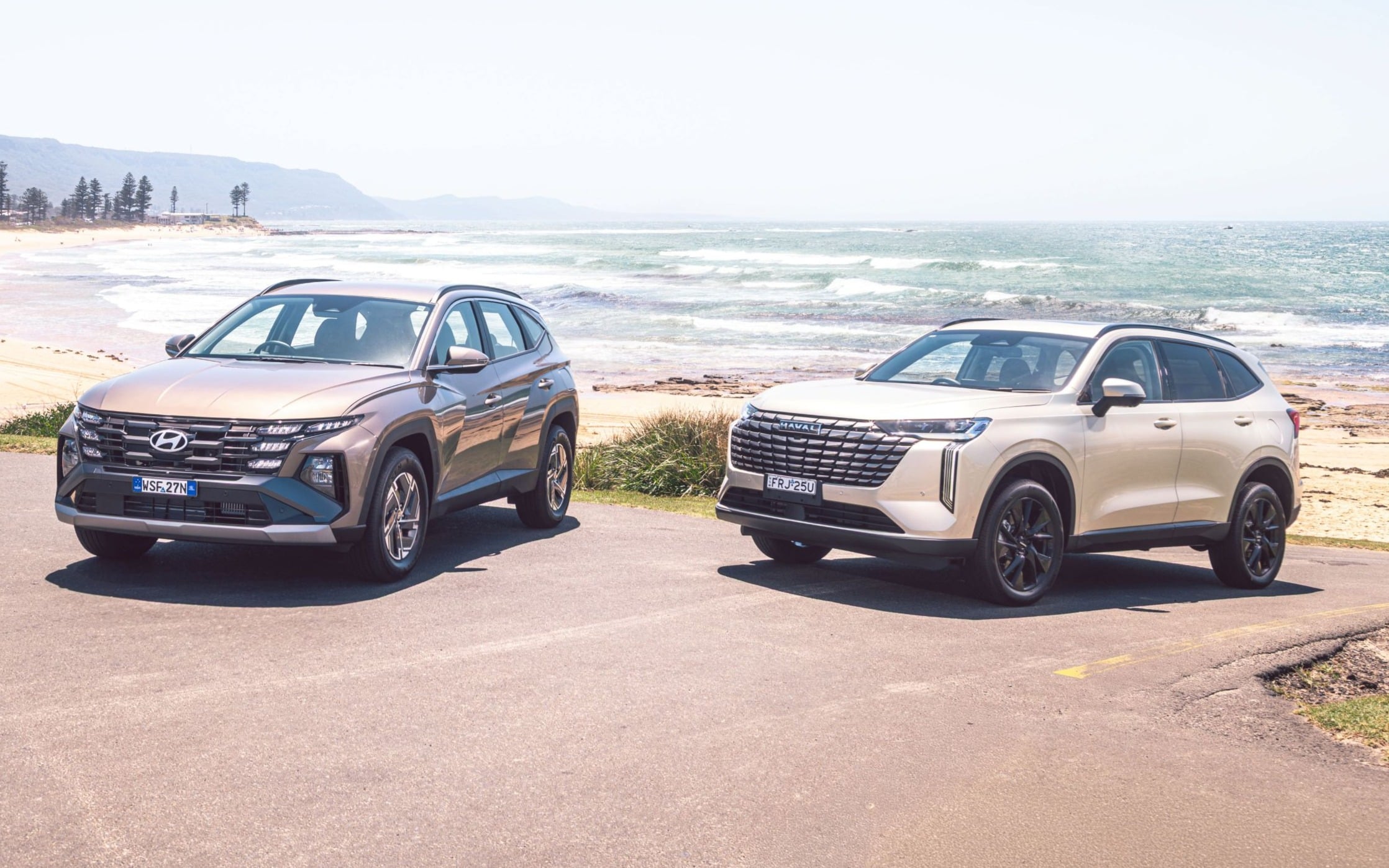
How many of you are really using the full capability of your AWD vehicle? The likely answer is, a very small percentage. That’s why we’ve assembled two front drivers – one from an established player and one from a newer challenger – not just to find out which is better, but to find out what entry-grade FWD life is really like.
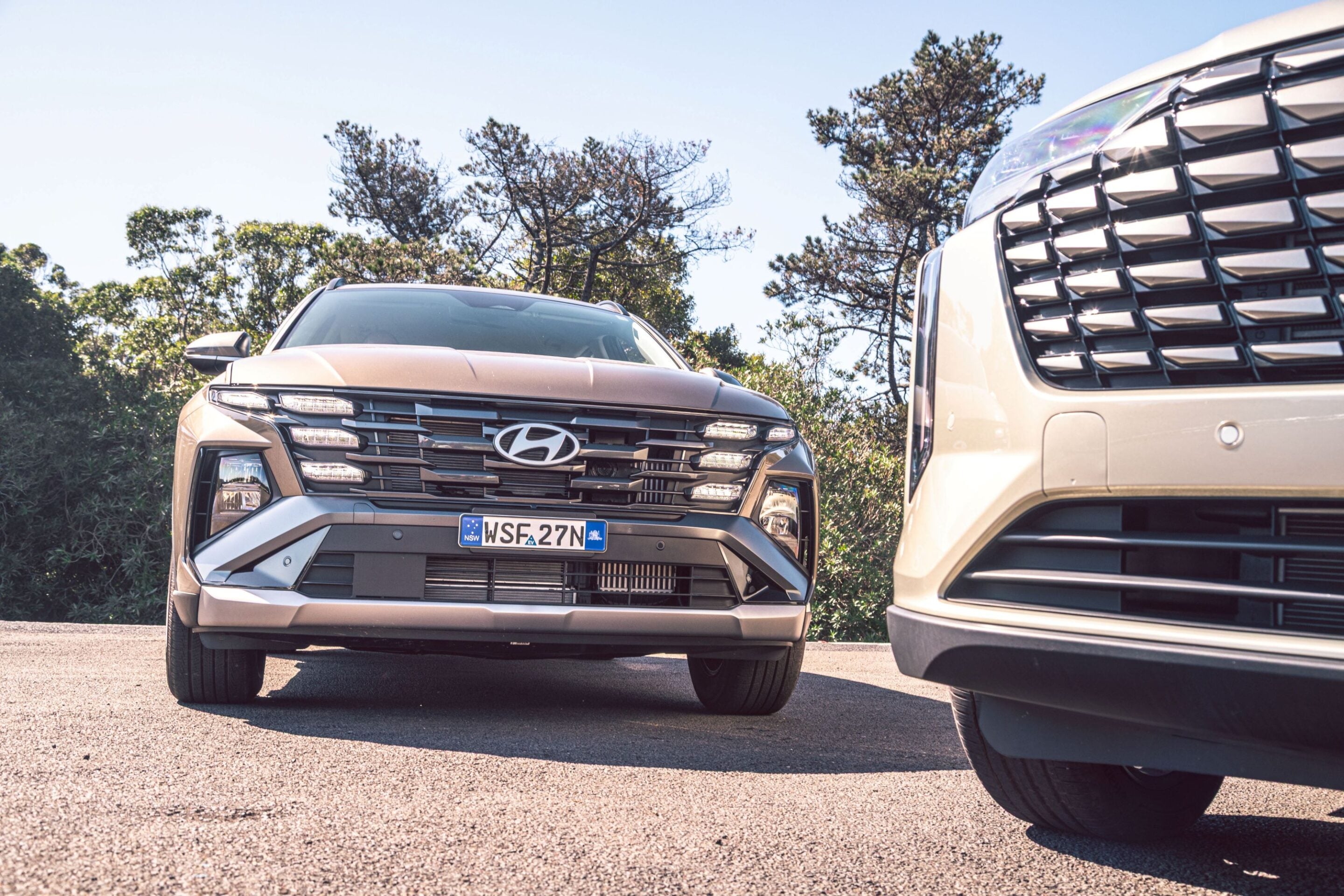
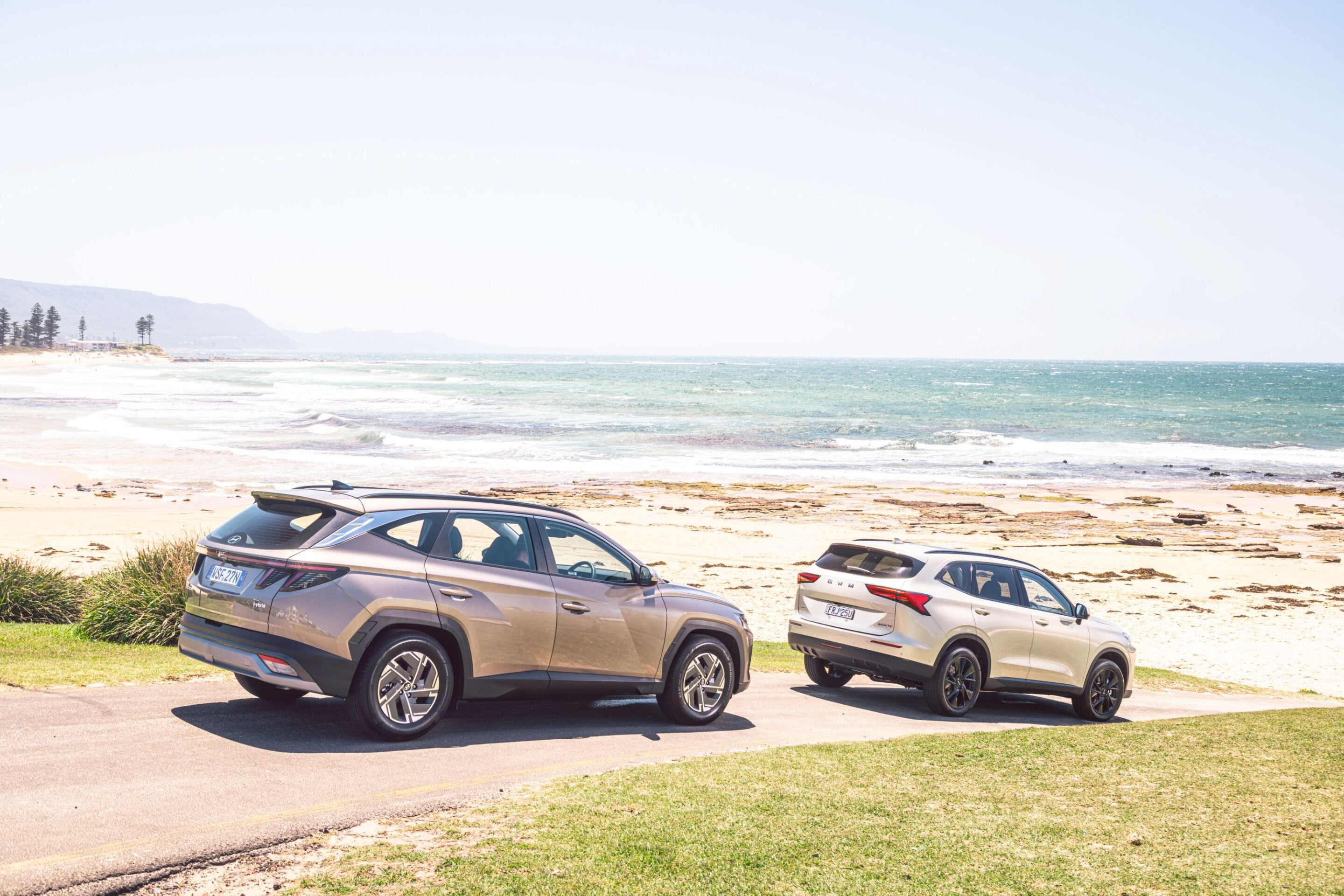
In the blue corner, we’ve got the Hyundai Tucson Hybrid, listed at $42,850 before on-road costs. Crucially, at the time of testing, Hyundai had a driveaway deal of $44,990, so you should always check for offers and deals when you’re ready to purchase.
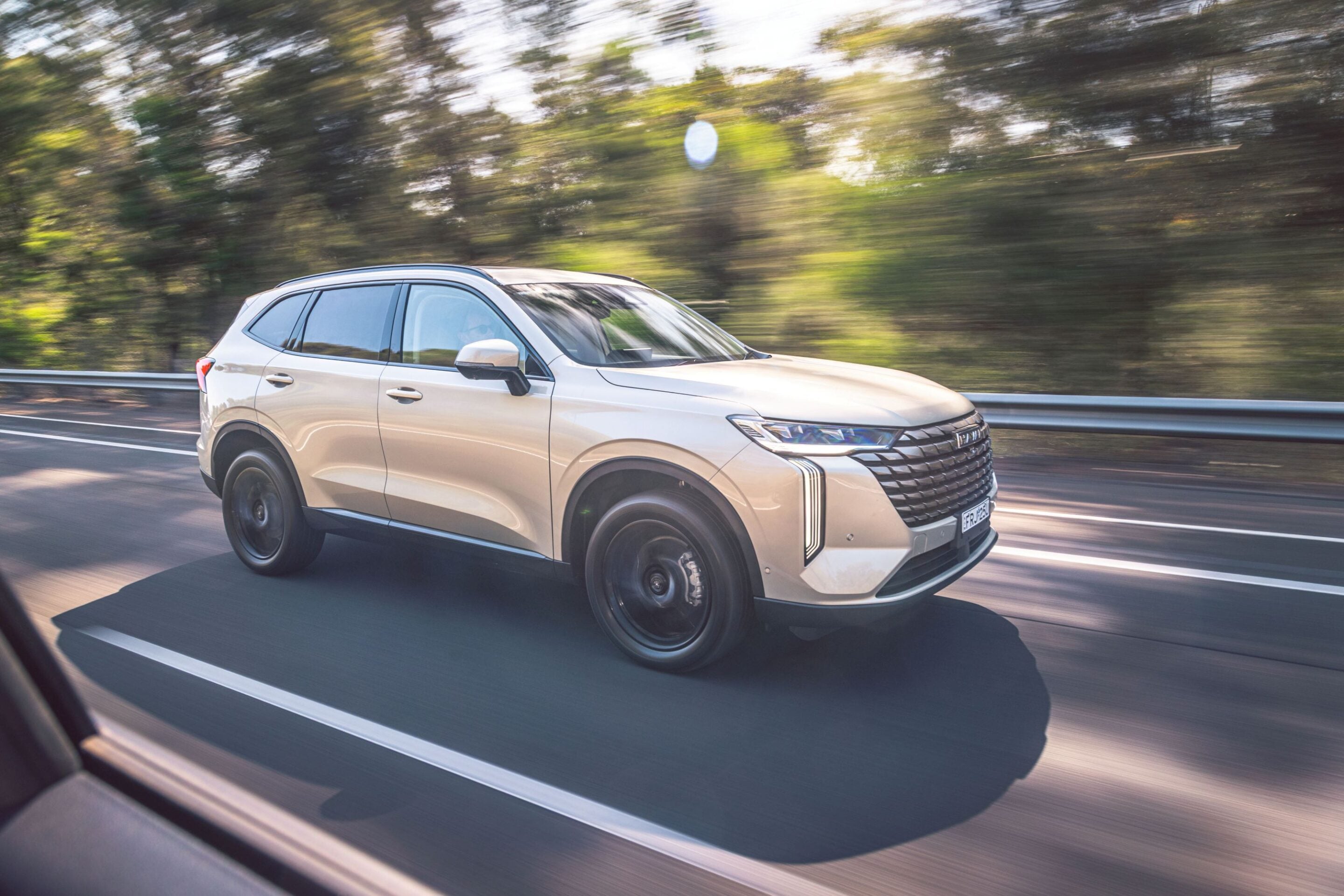
In the red corner, we’ve got the GWM Haval (pronounced the way you’d say ‘gravel’) H6 Ultra Hybrid, listed at $43,990 driveaway at the time of testing. We’ve lined these two up as closely on price as we could, and it’s worth noting early that the H6 gets a beefier list of standard equipment than the Tucson.
If you wanted similar equipment from a Tucson you’d have to spend around $5000 more for the Elite, while a lower-specification H6 Lux Hybrid currently lists at $39,990 before on-road costs. What Wheels has done for this comparison, though, is dissect what you get for a very similar spend. In that sense, Hyundai has market history and known retained value on its side, while Haval enters the fight with a stacked standard feature list.
Key inclusions that both SUVs share is the next important factor in the testing process. First up, both get a five-star ANCAP safety rating, the Tucson from 2021 testing and the H6 from 2022.

2
With safety such a key driver for buyers, standard equipment is understandably important to both brands. As such, both have: seven airbags, AEB (pedestrian, cyclist and intersection coverage), adaptive cruise control, lane keeping assistance, adaptive lane guidance, blind-spot monitoring with rear cross-traffic alert (with braking), driver attention monitoring, traffic sign recognition with overspeed alert (H6’s can be switched off permanently), front and rear parking sensors and tyre pressure monitoring.
Safety aside, other shared standard equipment includes: dusk-sensing automatic LED headlights, keyless entry/start, roof rails, heated/auto-folding mirrors, lumbar adjustment for the driver, wireless Apple CarPlay/Android Auto, AM/FM/DAB+ radio, dual-zone climate control, rear air vents, wireless phone charger, leather steering wheel, four USB ports, selectable driving modes, auto up/down functionality for all four windows and a column-mounted gear selector.
When you move into the cabin, the obvious difference is the seat trim, followed by the difference in infotainment screens. Interestingly, Wheels judges were appreciative of the chance to test what looks to be robust cloth trim in the Hyundai, such is the current penchant for faux leather across the automotive landscape. Some love leather – fake or otherwise – while some prefer cloth. For mine, I’d only opt for leather if it’s real leather and in the case of the Tucson as tested here, the cloth material is comfortable, wasn’t sweaty on a stinker of a day, and seems to be robust enough to withstand the abuse a family could hurl at it.

1
That said, Haval’s synthetic leather trim isn’t horrible by any means, and its easy cleaning capability means it will attract family buyers wanting to ensure as few stains remain as possible. Seats with electric adjustment are obviously easier to get into a finer position than manual adjustment provides, and that’s a definite advantage to the Haval.
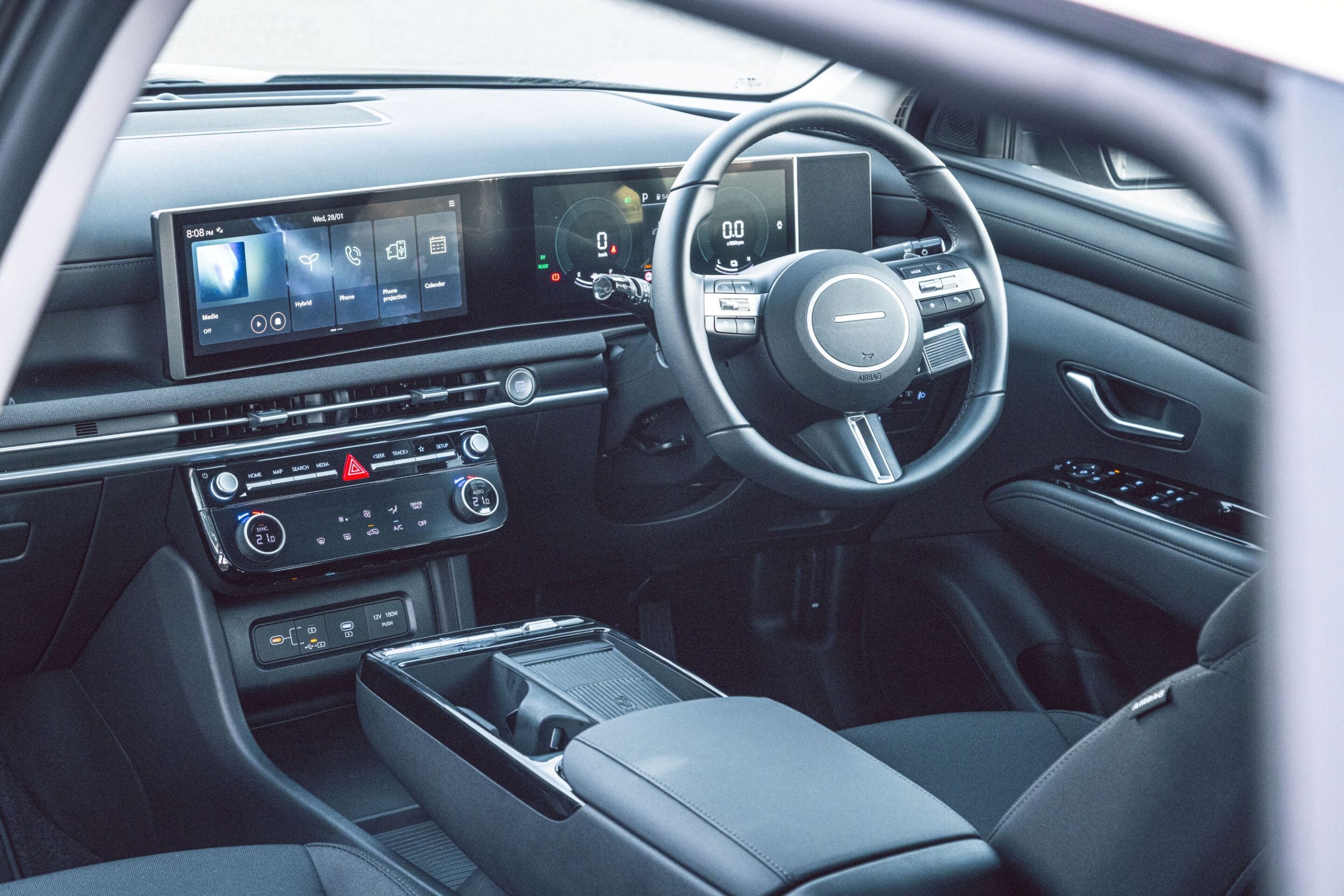
Hyundai’s 12.3-inch infotainment screen, which sweeps across to join the 12.3-inch digital driver display, is an exercise in clean design but can’t match the sheer size of Haval’s imposing 14.6-inch screen. While both show everything you want or need to see, there’s a level of simplicity to the Hyundai’s system which makes it more appealing when you compare them back to back.
Both screens were responsive to touch inputs and connected seamlessly with smartphones on test. I always prefer a wired connection, but if you like wireless, that also worked nicely as did the wireless charging for both SUVs. However, your phone will get hot, which is why I avoid wireless charging.
The reason Wheels thinks the Hyundai’s control system is more intuitive is the clustering of functionality behind the screen that GWM has opted for, meaning things that should otherwise be simple, like HVAC controls or volume adjustment, are more complicated than they need to be. It’s not a deal breaker, but Hyundai’s provision of switches and dials for major controls makes a lot more sense and doesn’t require any familiarisation.
1

1
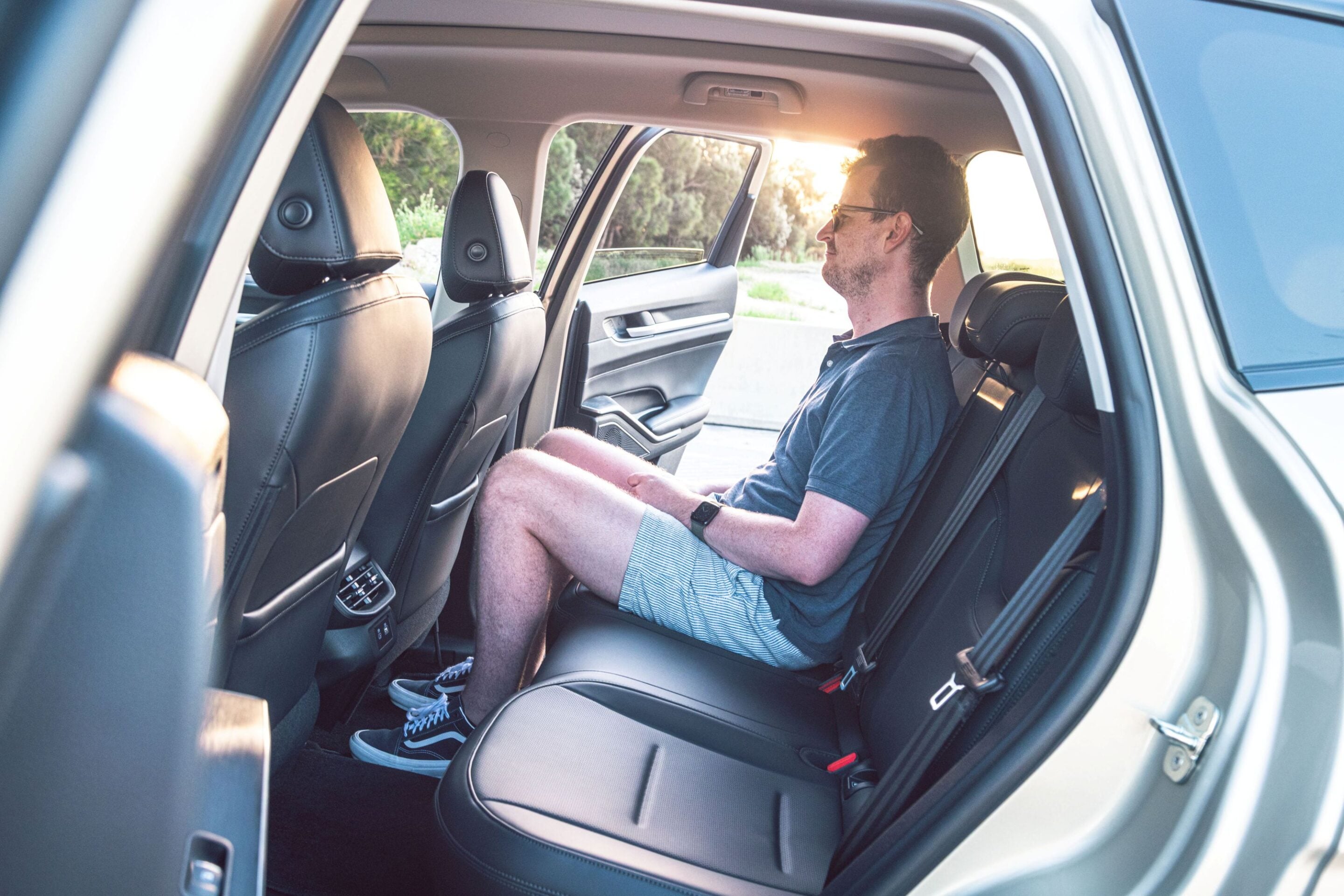
Occupant space across the four main seating positions is line ball, and you’ll need super tall adults up front to eat so far into rear seat space that taller occupants back there will feel uncomfortable.
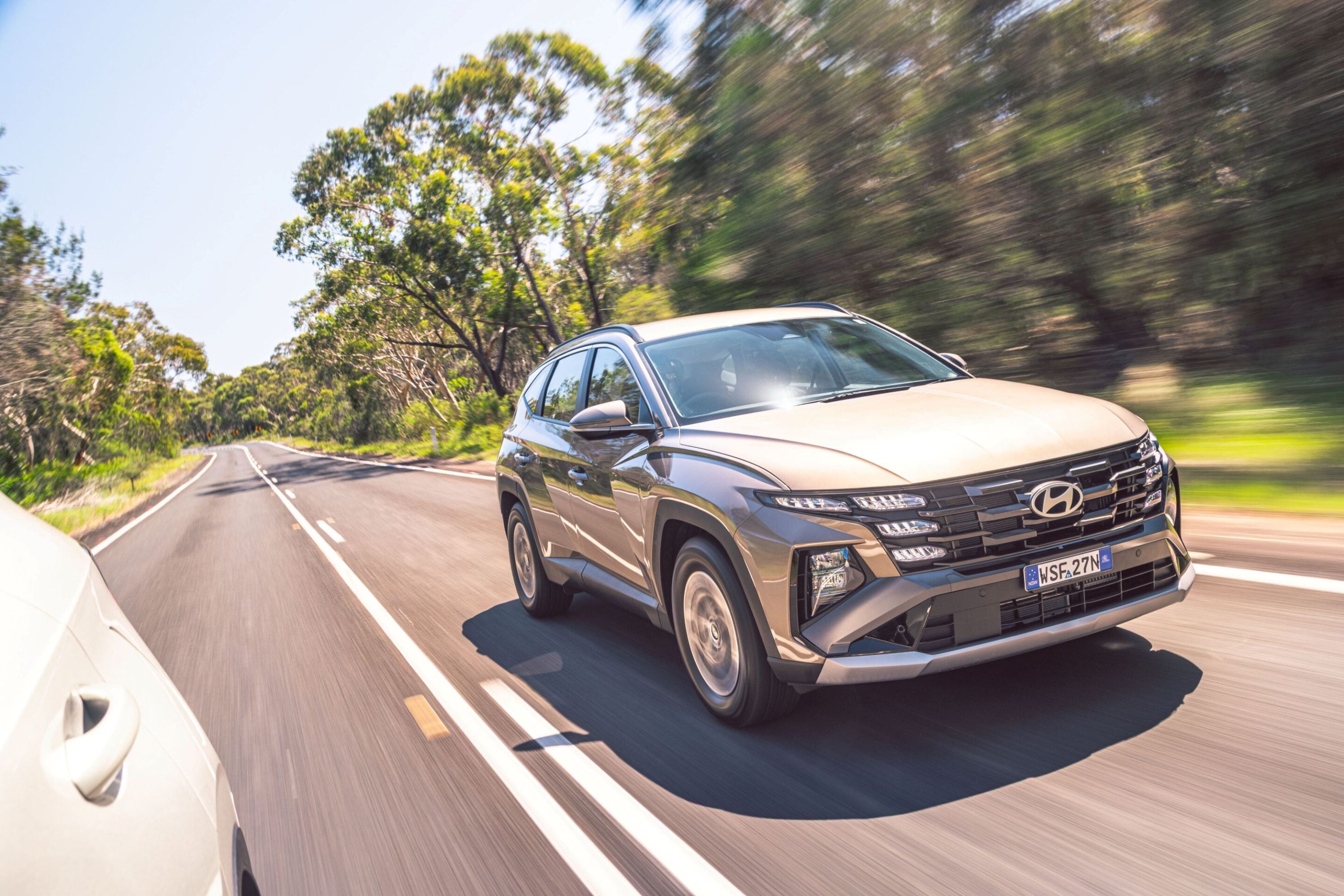
Driving is where Wheels found the two vehicles on test diverged most noticeably. The Tucson is a more polished, more relaxed cruiser, where the H6 feels firmer, more urgent and sportier – certainly sportier than it needs to in this segment. Some of that you might not mind – the firmer ride, for example – but the enthusiasm of the front tyres to chirp under load isn’t so appealing.
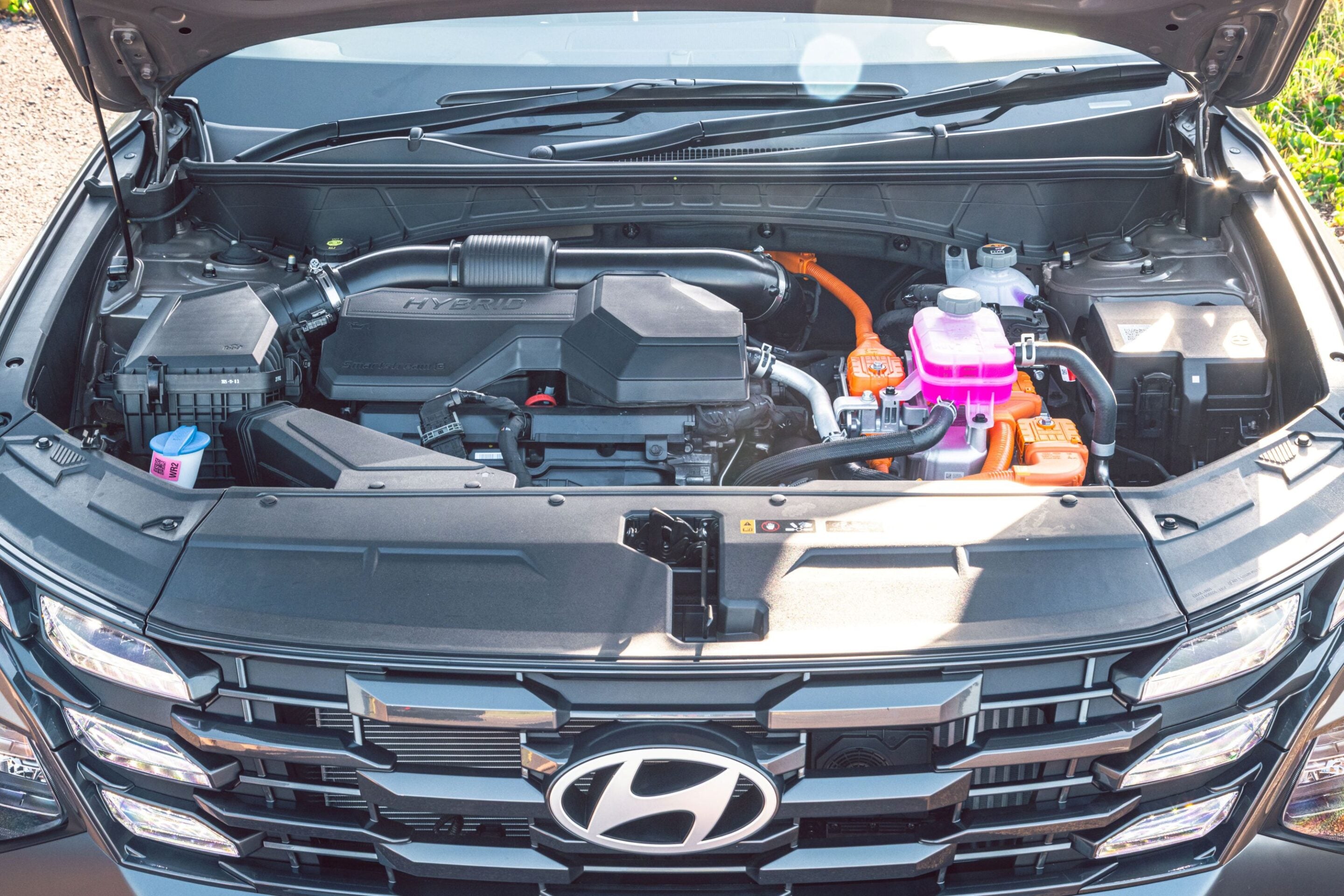
Both approach efficient hybrid motoring from slightly different angles, attempting to get to the same place: use as little fuel as possible. Hyundai powers its Tucson with a 1.6-litre turbocharged four-cylinder petrol engine, mated to a six-speed automatic transmission. Powering the front wheels, there’s 172kW and 367Nm on offer from the combined system. Broken down, Hyundai quotes 132kW/264Nm from the petrol engine and 37.4kW/264Nm from the electric motor. Hyundai’s official fuel use claim is 5.3L/100km on the combined cycle, and on test, covering more than 300km, Wheels used an indicated 5.7L/100km.
The GWM Haval uses a 1.5-litre turbocharged four-cylinder petrol engine, mated to a two-speed automatic transmission, also powering the front wheels. It makes 179kW and 530Nm combined. Split between petrol and electric, Haval says the numbers are 110kW/230Nm from the petrol engine and 130kW/300Nm from the electric motor. Haval says the H6 is even more miserly than the Tucson, using 5.2L/100km, but on test over the same cycle, it proved thirstier, using an indicated 6.1L/100km.
2
Eschewing the somewhat dulled down ‘Eco’ drive modes, Wheels tested these SUVs in the default ‘Normal’ mode across urban, highway, coarse chip country roads, and up to highway speeds. We didn’t try to be super efficient with either. Rather, we drove them with the flow of traffic as smoothly as we would try to drive any car, and hopefully as close as possible to the way they will be used in the real world. Effectively, the Tucson delivered efficiency we would expect of a hybrid drivetrain in this segment, while the H6 was a little less frugal than we would have liked. As with so much of this tight test, that might not be a deal breaker, but if you’re buying on value primarily, it’s another factor to consider.
Now, reading the power and torque figures would suggest that the H6 has some decent performance chops – and that’s true if everything lines up based on what the control system thinks is happening. If the battery has the right state of charge, if the petrol engine is in the sweet spot of the rev range, and if the hybrid power unit is alert, you have the chance to get everything all at once. And, in theory that might sound fun, but when you get a hit of that fat slab of torque, the relationship between front tyre and bitumen can become tenuous. You’ll spin the tyres up without even trying, especially if you’re turning out of a street and pointing uphill for example. It’s not unsafe, but it’s a lack of resolve that doesn’t afflict the much more sedate Tucson.
Both steer, brake and turn-in as you’d expect of a medium SUV, but the H6’s firmer suspension tune means it feels a little sharper, certainly at the limit if you’re hooking in. Some of the Tucson’s better bump absorption would be related to 17-inch tyres rather than the 19s fitted to the H6, but the rest of the equation is down to better body control and suspension behaviour. What you get then, is a smoother, more relaxed, and slightly more comfortable all-round ride when you’re behind the wheel of the Tucson.
2
The question of whether you need an AWD medium SUV is an easy one to answer. No, the overwhelming majority of Aussie buyers don’t. If you’ve got a rural weekender, tow a small trailer or head down dirt roads camping regularly, then you will want AWD, but for most of us living and operating in the city, FWD is all you need. The other benefit here is you’re invariably saving money on the purchase price.
From there, we move to the winner of this battle. As well-specified and sharply priced as the GWM Haval H6 is, our pick is the Hyundai Tucson – just. This is a closely-fought contest, not just on value and inclusions, but also on driving ability and real-world efficiency.
While both put forward an impressive case, it’s the Tucson that gets the win thanks to its more competent ride quality on poor surfaces, more intuitive in-car tech, and established position in the market. And given Wheels’ requisite for the inclusion of a spare wheel of some sort, the Hyundai’s space saver also gets a big tick.
The challenger brands are coming though, and GWM is perhaps best-placed with its broad product portfolio to attract otherwise-sceptical Australian new-car buyers.
2
Tale of the tape
It’s interesting to assess how similar these medium SUVs are, especially when you run the ruler over them. Tucson is 4640mm long, 1865mm wide, and 1665mm high, with a 2755mm wheelbase. The Haval H6 counters with a slightly longer 4703mm overall length, is wider at 1186mm and taller at 1730mm, despite a shorter 2738mm wheelbase.
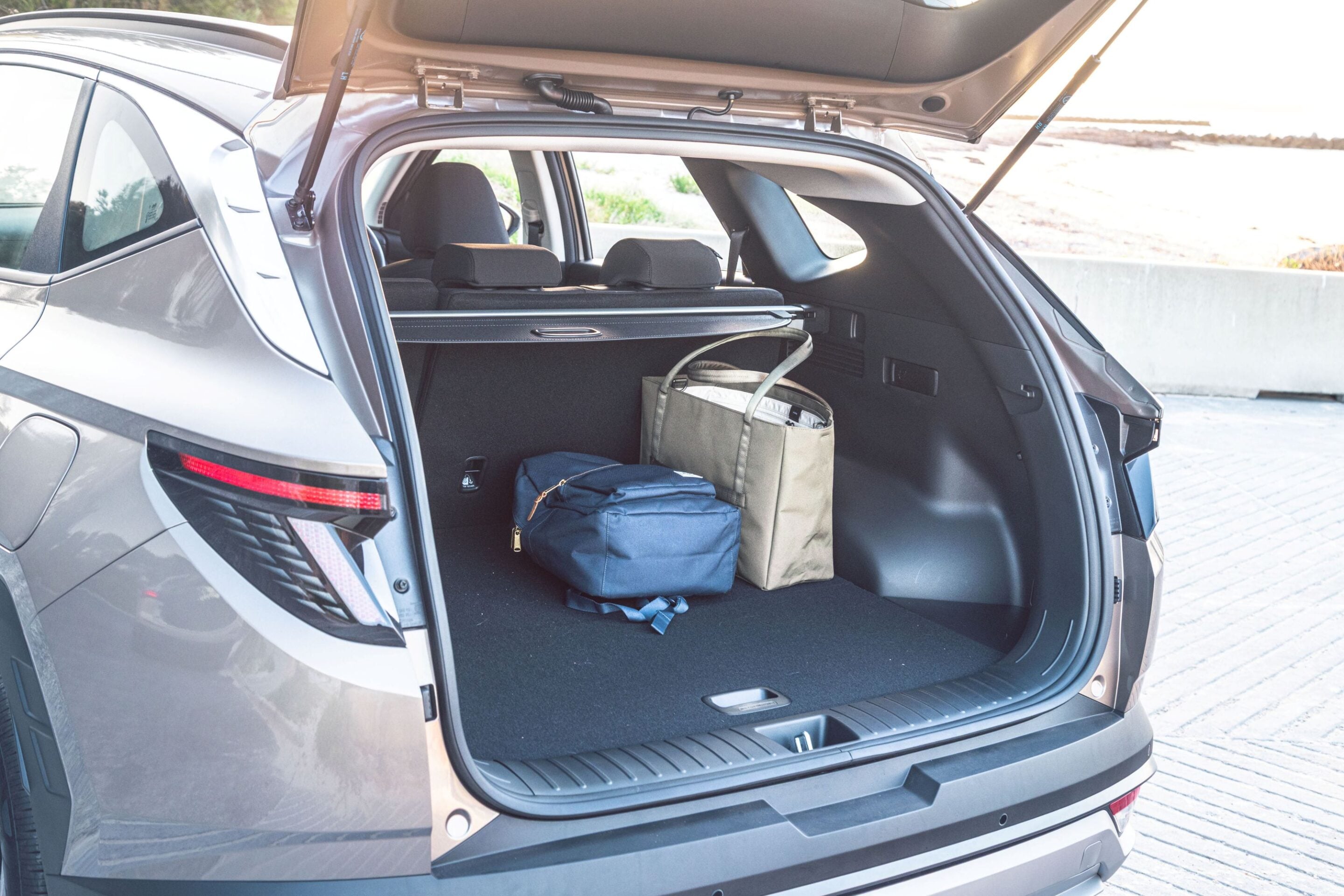
Tucson makes more of its cabin space though, with 582 litres available with the second row in use, and a hefty 1903 litres when you fold the second row down. H6 counters with 560L/1445L.
Tucson wins in towing with a 1900kg rating with a braked trailer, while the H6 can haul 1500kg, also with trailer brakes. Tucson is lighter overall, too, 1626kg plays 1720kg for the H6.
Warranty details form a vital part of the buying process for prospective owners, and the Haval’s seven-year/unlimited km coverage is a bonus – especially if you’re new to the brand. The H6 also gets an eight-year/160,000km warranty on the battery. The first service is required after 12 months and 10,000km and then every 12 months or 15,000km. Over five years, the H6 will cost $2145 to service.
Tucson is covered by a five-year/unlimited km warranty, extending to seven if serviced at Hyundai dealers. Like the H6, the battery is covered for eight-years/160,000km while servicing runs to 12 months/10,000km and is slightly cheaper, $2072 over five years.
1
Specs battle: What’s in, what’s out?
Both vehicles share similar standard equipment, but there are some noteworthy differences, so here’s the cheat sheet. H6 gets synthetic leather trim, electric front seat adjustment with heating and ventilation, driver seat memory, panoramic sunroof, LED tail-lights with rear DRLs, automatic wipers, a 360-degree camera, heated steering wheel, ambient lighting, 19-inch alloy wheels (17-inch for Tucson), an electric tailgate with kick sensor, a larger 14.6-inch infotainment touchscreen, head-up display, nine speakers (six for Tucson), rear privacy glass and an auto dimming rear-view mirror.
However, Tucson also gets some equipment that H6 doesn’t, including front USB-C ports, a space-saver spare tyre (no spare for the H6), Hyundai Live Services (app for remote start, remote updates), a broader autonomous emergency braking system, auto high-beams and digital key functionality.
Specs
Hyundai Tucson Hybrid
1
| Price | From $42,850 plus on-road costs |
|---|---|
| Engine | 1596cc turbocharged four-cylinder hybrid |
| Combined peak power | 172kW (@ 5600rpm) |
| Combined peak torque | 367Nm (@ 1000-4100rpm) |
| Transmission | Six-speed automatic, front-wheel drive |
| Fuel consumption (claim) | 5.3L/100km |
| Claimed CO2 emissions | 121g/km |
| Dimensions (length/width/height/w-b) | 4640/1865/1665/2755mm |
| Boot space | 582 litres (rear seats up)/1903 litres (rear seats folded) |
| Tare mass | 1626kg |
| Warranty | 5-year/unlimited km (vehicle – extendable to 7-year/unlimited with dealer servicing), 8-year/160,000km (battery) |
| On sale | Now |
| Rating | 7.8 |
GWM Haval H6 Ultra Hybrid
1
| Price | From $43,990 drive away |
|---|---|
| Engine | 1499cc turbocharged four-cylinder hybrid |
| Combined peak power | 179kW (@ 5500-6000rpm) |
| Combined peak torque | 510Nm (@ 1500-4000rpm) |
| Transmission | Two-speed automatic, front-wheel drive |
| Fuel consumption (claim) | 5.2L/100km |
| Claimed CO2 emissions | 120g/km |
| Dimensions (length/width/height/w-b) | 4703/1886/1730/2738mm |
| Boot space | 560 litres (rear seats up)/1445 litres (rear seats folded) |
| Weight | 1720kg |
| Warranty | 7-year/unlimited km (vehicle), 8-year/160,000km (battery) |
| On sale | Now |
| Rating | 7.6 |
This story first appeared in the March 2026 issue of Wheels magazine, now on sale. Subscribe here and gain access to 12 issues for $109 plus online access to every Wheels issue since 1953.
Follow WhichCar/Wheels on Google
Click the button below to make WhichCar by Wheels a preferred source for your news.

We recommend
-
 Comparisons
Battle of the budget busters: Three affordable compact SUVs gets the Wheels comparo treatment
Three sharply priced small SUVs from BYD, Mahindra and Suzuki compete for buyers on a tight budget, but as equipment, efficiency and expectations shift, only one contender ultimately delivers true modern-day value.
-
 Comparisons
Geely Starray vs Mitsubishi Outlander PHEV spec battle: Which plug-in hybrid SUV should you choose?
Plug-in hybrid SUVs are gaining popularity in Australia and the Geely Starray is one of the newest on the market. How does it compare against the more established Mitsubishi Outlander PHEV?
