News
Gallery 1
BYD’s Flash Charging system has gone from reveal to real-world implementation in just a matter of weeks.
The ultra-rapid charging system first shown in March 2026, and at the Beijing motor show in April, was available for customers to order on new BYD vehicles in China. Not to be outpaced by sales, BYD claims to have over 5000 Flash Charging locations already in operation.
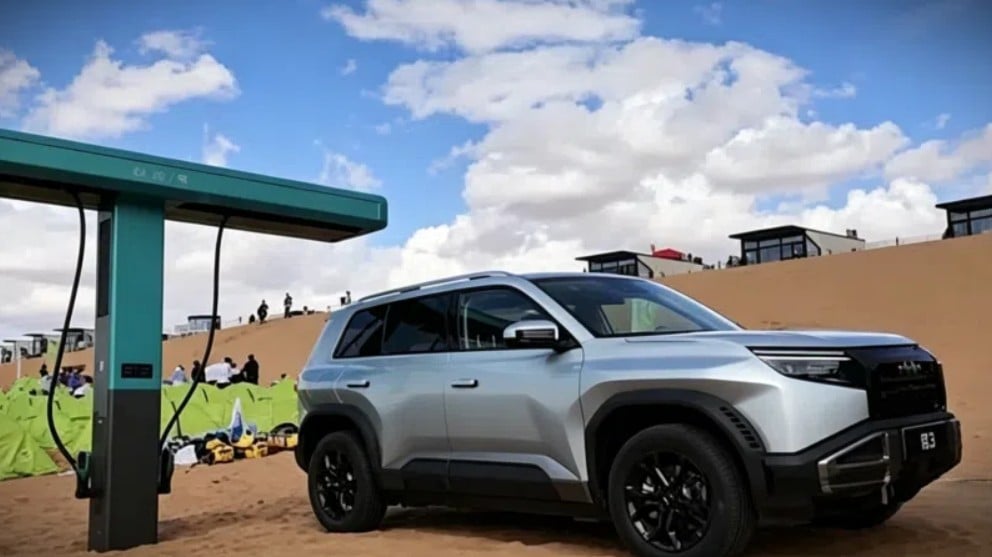
As part of BYD’s marketing juggernaut, the latest demonstration of the Flash Charging system took it away from the infrastructure of China’s cities, setting up a charging station in a remote part of the Tengger Desert in Mongolia.
1
The location was selected for its challenging conditions. High winds, loose sand, and no access to the kind of modern infrastructure normally seen in urban parts of China.
Where BYD’s Flash Charging system differs from existing electric vehicle chargers is in its power delivery. Capable of recharging at up to 1500kW, the power demands of the new system are almost four times greater than the fastest 400kW chargers available in Australia.
BYD claims this results in charge times as low as nine minutes from 10 to 97 per cent, with a small uncharged buffer remaining to enable cars to use regenerative braking to further boost the state of charge.
A quick top-up from 10-70 per cent takes a claimed five minutes, and cold weather testing at -30°C is claimed to extend charging time from 10-97 per cent by only three minutes.
The remote demonstration stands the BYD-built system in good stead for locations like Australia, with the often-harsh climate of remote parts of the country enduring high temperatures, and other extremes that can impact charge times.
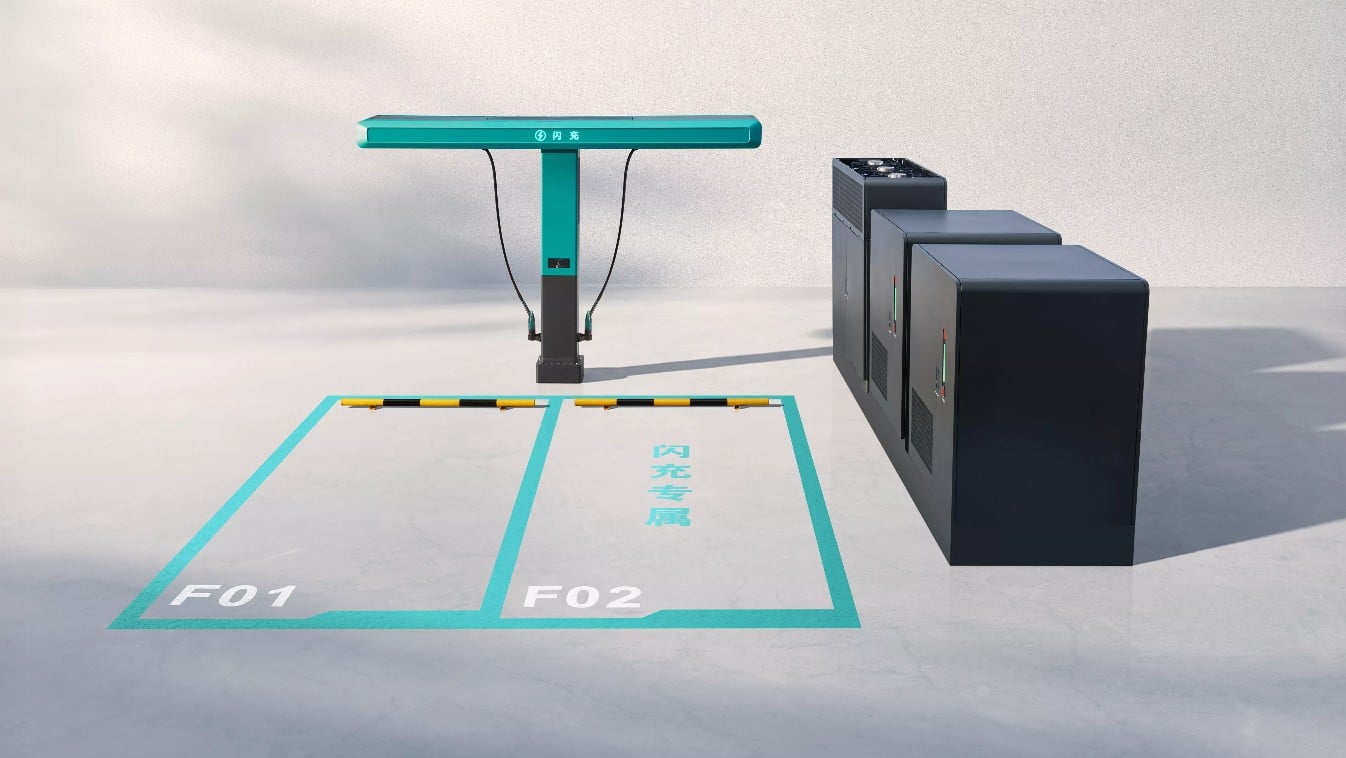
1
Despite this, the desert location chosen for the Mongolian demonstration typically experiences temperatures of between 10°C overnight and up to 27°C during the day around this time of year. A far cry from peak temperatures in places like Oodnadatta, which can exceed 50°C at their worst.
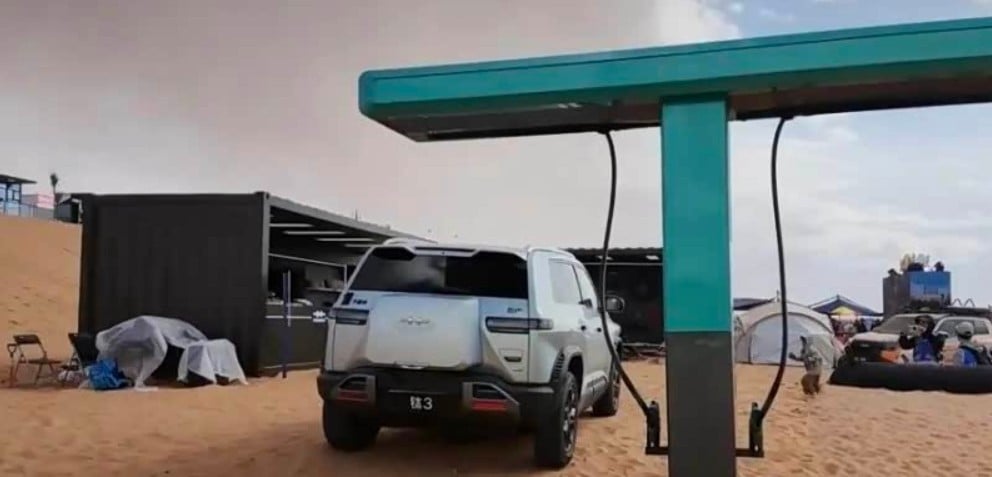
Allowing the system to operate to its full potential, Flash Charging uses a dedicated transformer to step up mains voltage and stores power in a BYD stationary battery (set-up pictured above), meaning that even in areas with interrupted power or aging infrastructure, the system should be able to operate at full power.
The battery reserve prevents overloading existing power grids, and also opens up the possibility of diesel and solar-supported backups in locations where suitable power supply infrastructure may not exist.
BYD has confirmed that its Flash Charging system will not remain confined to China, with plans to introduce compatible charging stations to Australia. Although existing BYD vehicles aren’t configured to work with the 1500kW charging system, new cars like the Denza Z9 GT will launch with Flash Charging capability.
In China, BYD will open its Flash Charging network to competitor vehicles with compatible 1000-volt electrical systems, though it has introduced 800-volt and 900-volt versions on its own cars already.
Follow WhichCar/Wheels on Google
Click the button below to make WhichCar by Wheels a preferred source for your news.


We recommend
-
 News
NewsDenza confirms Z9GT electric grand tourer with 1000km range for Australia debut
High-performance EV with ultra-fast charging and 1000km-plus claimed range due in showrooms from Q3.
-
 News
News400km of charge in 5 minutes! BYD unveils new EV tech
BYD reveals new 1,000V platform it claims can add more than 400km of range in just five minutes.
-
 News
NewsBYD’s local boss says battery tech key to Aussies buying more EVs
The company's local boss, Stephen Collins, says BYD will continue to pile resources into refining its already impressive battery technology to attract otherwise sceptical buyers.