
Best Vans


Gallery 1
Contenders
Renault Kangoo
Volkswagen Caddy Cargo
Peugeot Partner
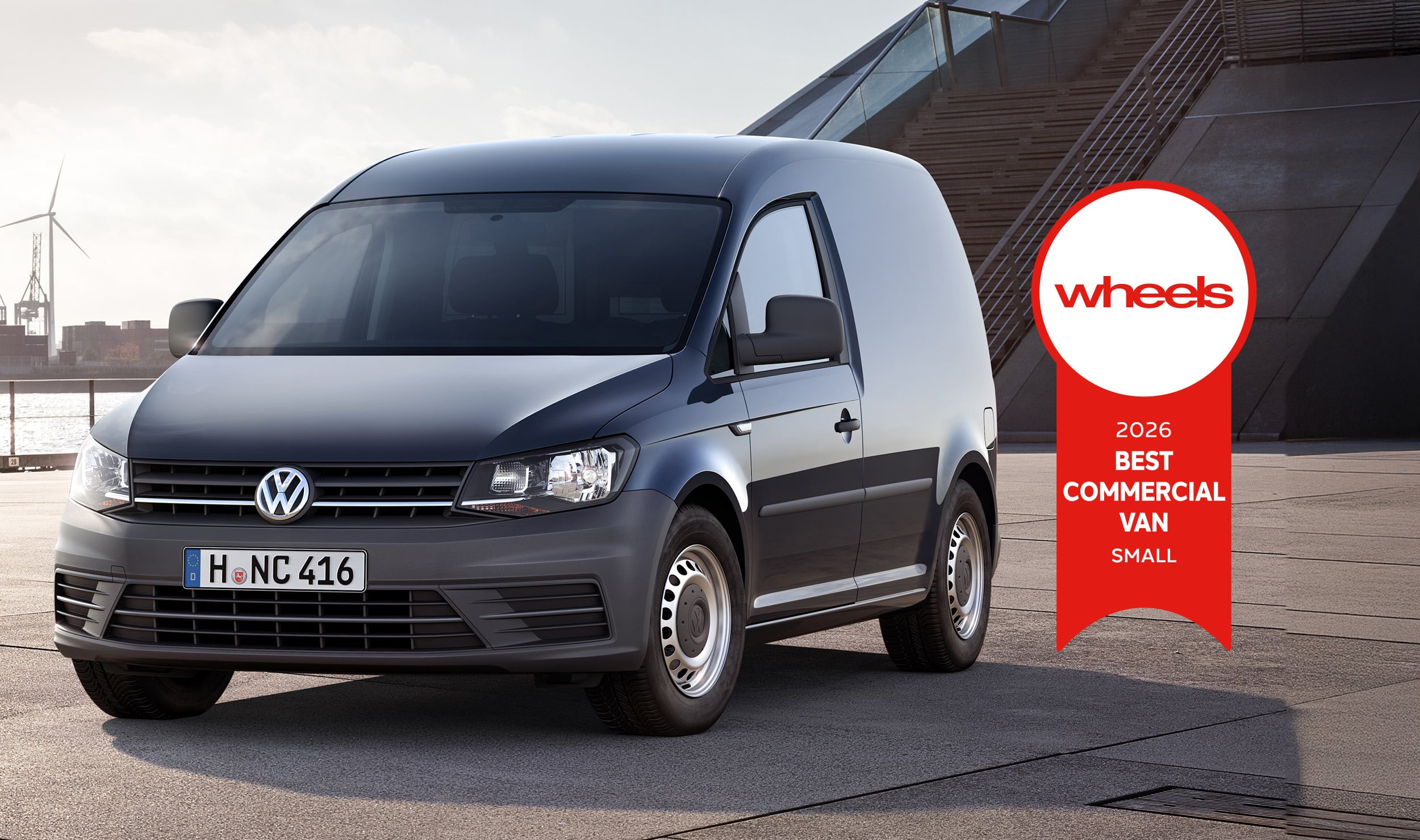
Winner: Volkswagen Caddy Cargo
3
Price: $51,646 (drive away at time of writing)
Engine: 2.0-litre four-cylinder turbo diesel
Gearbox: Seven-speed DSG
Power: 90kW
Torque: 320Nm
ADR fuel consumption: 4.9L/100km
Payload: 708kg
Kerb weight: 1542kg
Warranty: Five years/unlimited kilometres
Five-year service cost: $2758 (prepaid)
| Driving | |
| Interior | |
| Practicality | |
| Overall value | |
Strengths
- Cabin quality and execution
- Punchy diesel engine
- Drives like a Golf
Weaknesses
- Priced north of 50 grand
- SWB payload beaten by competition
- Some screen controls could be buttons
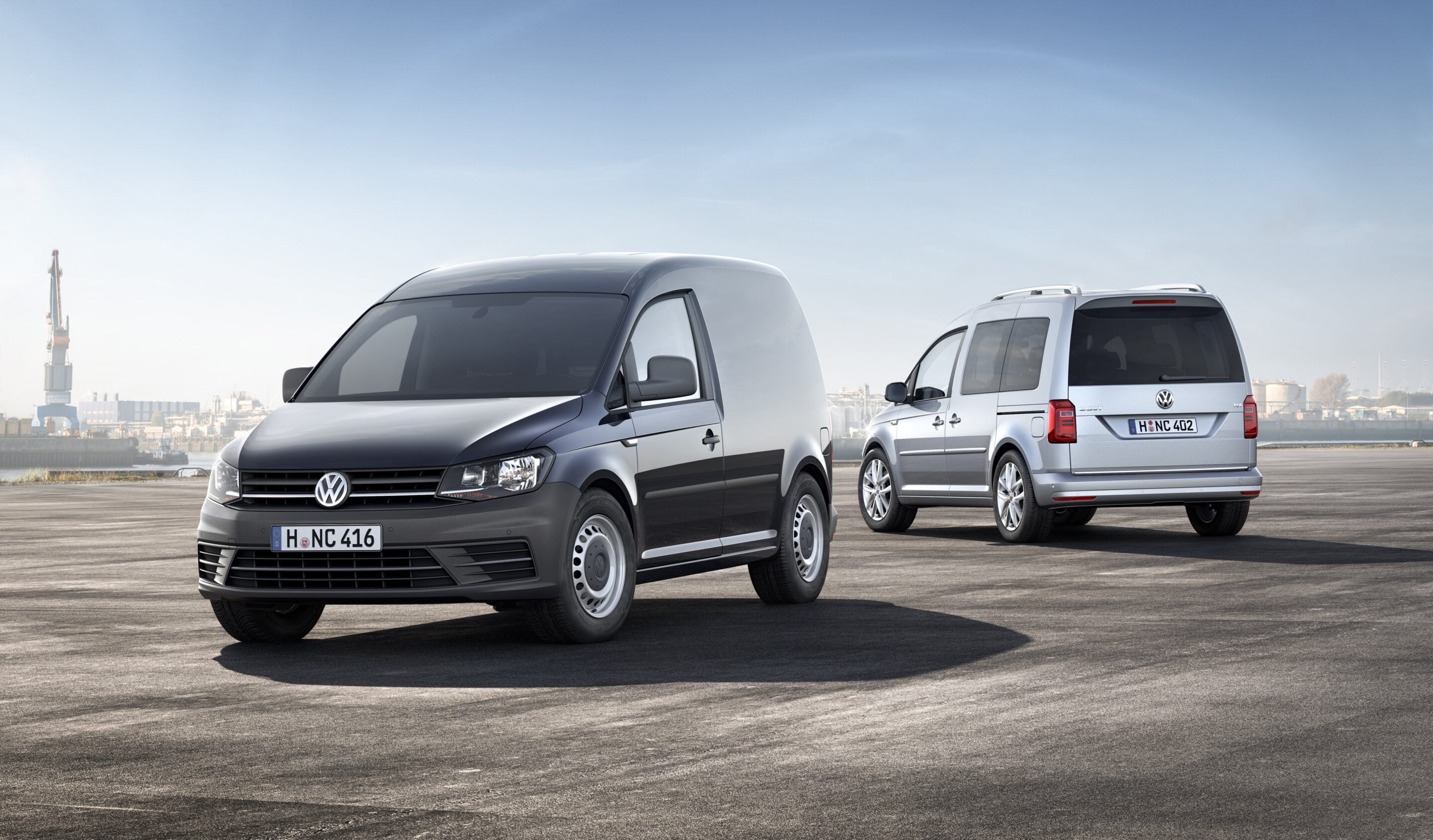
Without doubt, the strongest weapon in the Caddy’s armoury is the fact that it looks and feels like a Volkswagen Golf from the driver’s seat. And, if you ignore the slightly firmer ride when unladen, it drives a lot like a Golf, too. Our expectations of a van in Australia are very different from Europe, where this small segment of dominates. To focus only on the more popular medium vans, is to discount the capability and utility of a smaller van, especially for those of you in the city.
Further, Caddy Cargo can accommodate five people if needed, with the Crewman long wheelbase, while there are short and long wheelbase versions of the Cargo available without the rear seat. Our pick here is the regular Cargo short wheelbase TDI 320, with up to 3.7 cubic metres of storage.
Driving the Caddy is a strong reminder that commercial vehicles don’t need to be underwhelming. The willing 2.0-litre diesel four-cylinder, with its chunky 320Nm on offer, and the snappy seven-speed DSG are components that would be just as at home under a Golf as a commercial van and they drive as such. There’s also a 1.5-litre petrol four-cylinder if you’d prefer, with 220Nm available, but the diesel is the pick if you do a lot of driving.
With the diesel engine, it’s actually quite a punchy little van, that will easily keep up with urban traffic, even if you need to get off the mark quickly. Highway speed is dispatched with easily, and even a prolonged highway run is comfortable in the Caddy.
Given the focus on the city, the driving behaviour is important in this segment, with hatch-like response and feedback, ensuring every drive feels as far from a commercial experience as is possible. And, to be fair, the three combatants in this segment all feel more car-like than they do truck-like.
Caddy’s cabin is punctuated by a premium, quality feel, with robust black seat material (leatherette available), attention to detail and signature Volkswagen fit and finish. The infotainment touchscreen brings smartphone connectivity, and while it’s a simplistic cabin in terms of tech, it does have exactly what you need, arranged in a way that makes sense and is practical.
While all three vans in this segment impress – especially in regard to the driving – it’s the Caddy that is the pick of the bunch, especially with its full five-star ANCAP safety rating. Small vans are starting to find favour in our choked cities, and the Caddy is the best to drive, with a premium edge and quality wherever you look.
Renault Kangoo
6
Price: $50,009(drive away at time of writing)
Engine: 1.3-litre four-cylinder turbo petrol
Gearbox: Seven-speed DSG
Power: 90kW
Torque: 320Nm
ADR fuel consumption: 6.2L/100km
Payload: 757kg
Kerb weight: 1453kg
Warranty: Five years/200,000 kilometres
Five-year service cost: $2529
| Driving | |
| Interior | |
| Practicality | |
| Overall value | |
Strengths
- Excellent turbo petrol engine
- Driving dynamics are excellent
- Comfortable and zippy on the move
Weaknesses
- DSG can be slow to react
- Too much equipment is optional
- Not as competent in stop/start traffic
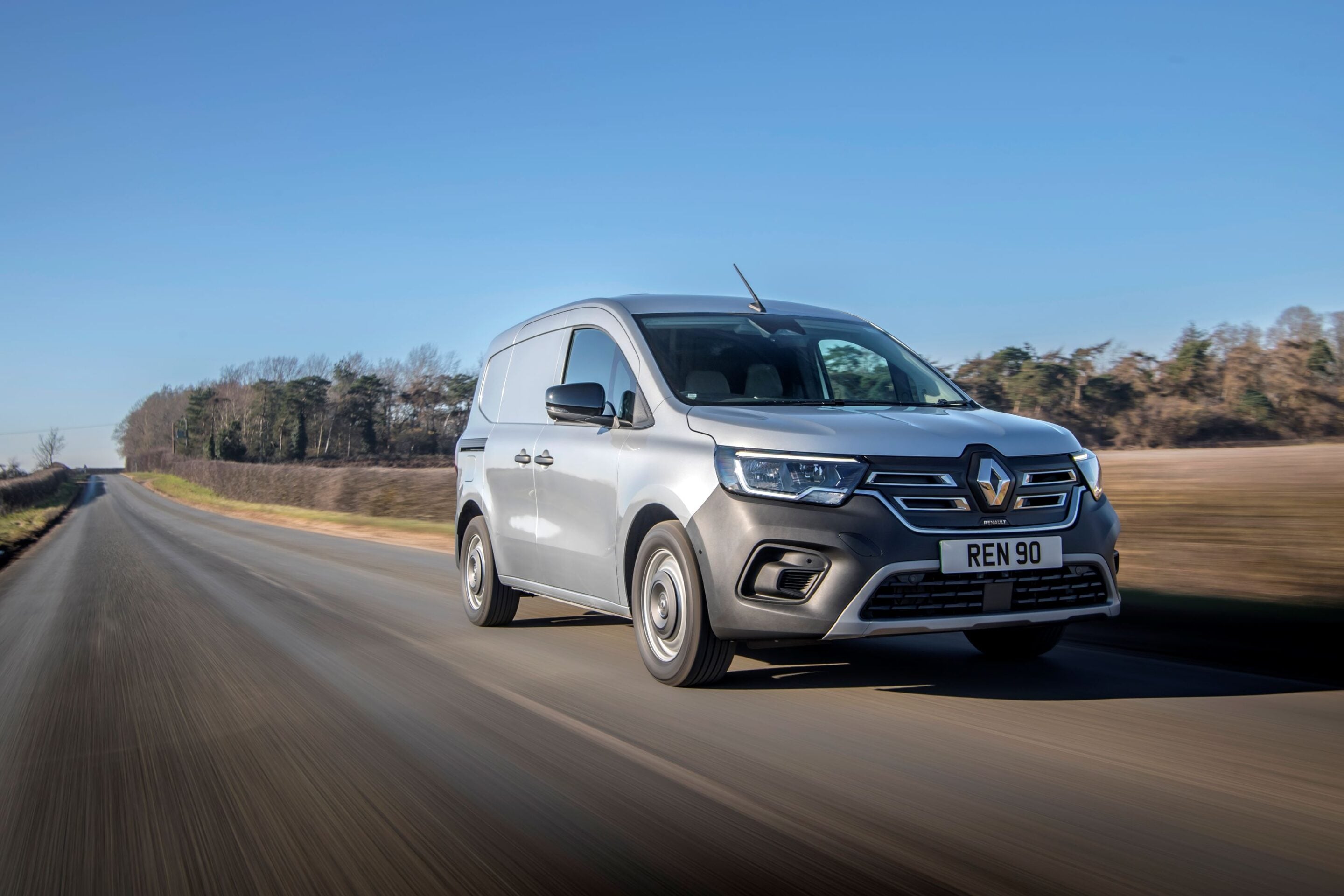
With a smooth turbo petrol engine and seven-speed dual-clutch automatic transmission, there’s a lot to like about the Renault Kangoo. And, it’s stout 96kW peak power delivery makes for a rapid little van around town, when called on, too. While it beats the Caddy in some specification – like payload – it’s not quite as refined as an all-round package.
Still frugal, it uses only 6.2L/100km on the combined cycle, but like a lot of European vehicles, requires 95 RON premium fuel. It’s kerb weight is almost 100kg less than the Caddy, so it feels quite light through the steering wheel, and is a clever van for city work.
Where it can’t match Caddy is in regard to driving refinement. While both use a dual-clutch auto, the Renault’s isn’t as sharp, quick to react and decisive as that used by Volkswagen, which, when you’re dealing with stop/start city traffic is something you’ll notice. Drive it more like hot hatch, and it comes into its own, but driven like a commercial vehicle, it’s not as refined as the Volkswagen.
The ride quality, and all-round behaviour, even unladen, is excellent and you’ll only notice tyre and wind noise at higher freeway speed on the open road. Where Kangoo could really take the fight to Volkswagen is in regard to standard equipment. While the standard equipment list looks reasonable enough, a look through the options list reveals relatively expensive packages for some equipment – load space lighting for example – that really should be standard.
For instance, add the Business Pack ($3200) and the Peace of Mind Pack ($1500), and you get extra electronic safety equipment, and things like LED headlights, wireless phone charging, and adaptive cruise control, but that will send the price climbing pretty quickly. Still, it’s fun to drive, and an excellent example of not needing a diesel engine simply because it’s a commercial vehicle.
Peugeot Partner
6
Price: $44,357 (drive away at time of writing)
Engine: 1.2-litre three-cylinder turbo petrol
Gearbox: eight-speed automatic
Power: 96kW
Torque: 230Nm
ADR fuel consumption: 6.3L/100km
Payload: 896kg
Kerb weight: 1283kg
Warranty: Five years/200,000 kilometres
Five-year service cost: $1920 (prepaid)
| Driving | |
| Interior | |
| Practicality | |
| Overall value | |
Strengths
- Great to drive
- Cheap running costs
- Strong standard equipment list
Weaknesses
- Cabin plastics not as premium as competition
- Not as premium as rivals
- Three-cylinder engine might deter some
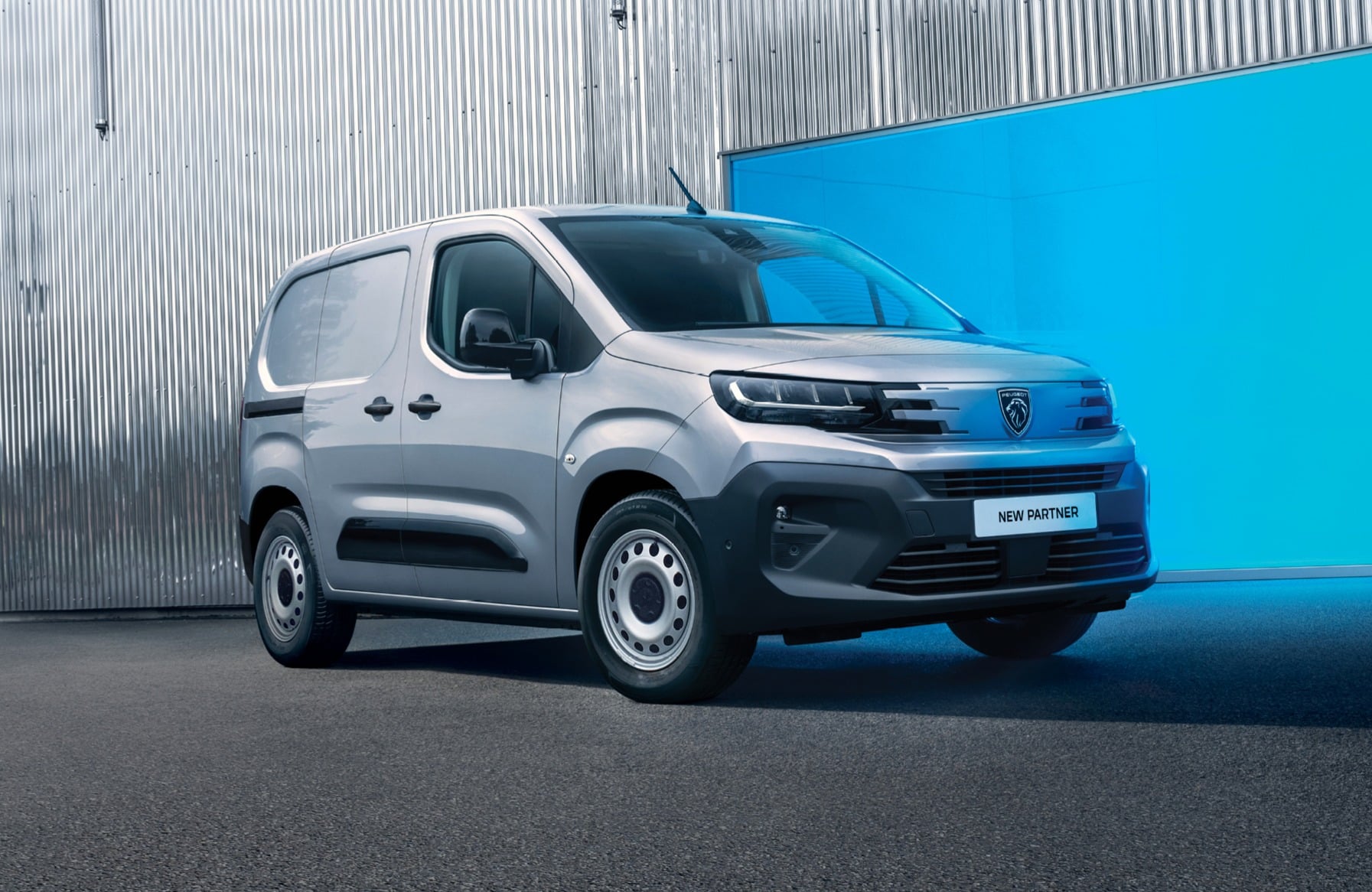
First up, if you’re looking to do the city job as cheaply as possible, look no further than the Peugeot Partner, Short Auto. With its sub 45k drive away price at the time of writing, and sharp four-year service cost, it’s the most price-efficient of the three contenders.
Countering that though, it does also require 95 RON premium fuel. The zesty three-cylinder delivers all the character of a traditional three-pot engine, with the typically fizzy exhaust note, and fun driving dynamics. 96kW and 230Nm are more than enough to get cracking in the city, and the ace up Partner’s sleeve, is the traditional eight-speed automatic, which delivers a smooth driving experience at any speed.
Ultimately, the Partner isn’t as refined or premium inside the cabin as the segment winner here, but it’s so sharply priced compared to the Volkswagen and Renault that you’d be mad not to look at it, especially if you’re on a tight budget. That’s even more the case when you take into account the way that it drives around town.
Key to all three of these vans is the companies building them consider their stock in trade other than be hatchbacks that are engaging to drive. And, while this segment is underestimated, the Partner injects a sense of fun into the drive that you might not expect.
Partner’s cabin is cleverly laid out, and functional, albeit featuring the kind of hard plastic that is prone to marking up. Storage is excellent, with practical spaces for the things van buyers need to store, given they spend so much time behind the wheel.
There’s a level of comfort behind the wheel that the price point doesn’t indicate, too, with an insulated, quiet ride even unladen, and while not as polished as the Caddy in an outright sense, the sharp steering, and general competence of the chassis make for an enjoyable van to use day-to-day.
Best Commercial Vans in Australia
Looking to get your hands on a new commercial van? Our stories below will guide you to the model that best suits your needs:
Follow WhichCar/Wheels on Google
Click the button below to make WhichCar by Wheels a preferred source for your news.

We recommend
-
 Best Vans
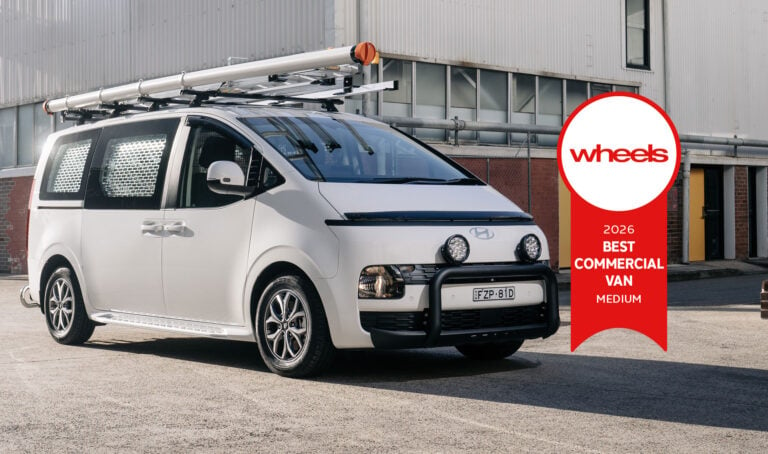
Best Commercial Vans 2026: Medium
Modern medium vans deliver far more than cargo space, combining SUV-like comfort, advanced safety and strong diesel performance for the demands of Australian businesses.
-
 Best Vans
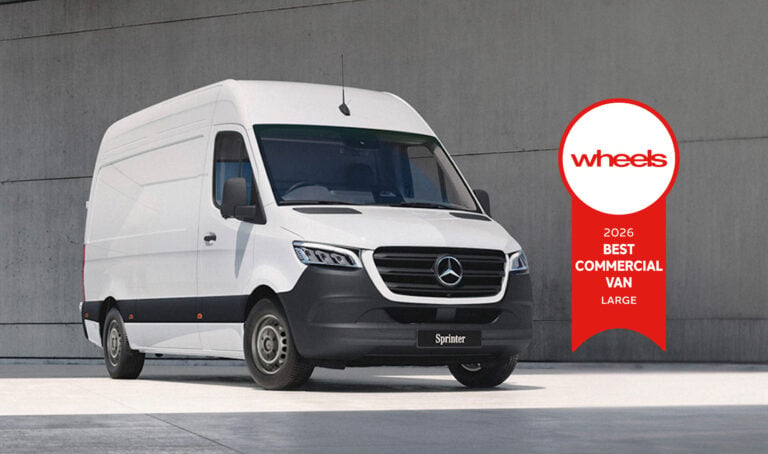
Best Commercial Vans 2026: Large
From fleet operators to owner-drivers, today’s large vans offer greater versatility, stronger safety and more car-like driving manners than ever before
