
Best Vans


Gallery 1
Contenders
Volkswagen Crafter
Mercedes-Benz Sprinter
Ford Transit
LDV Deliver 9
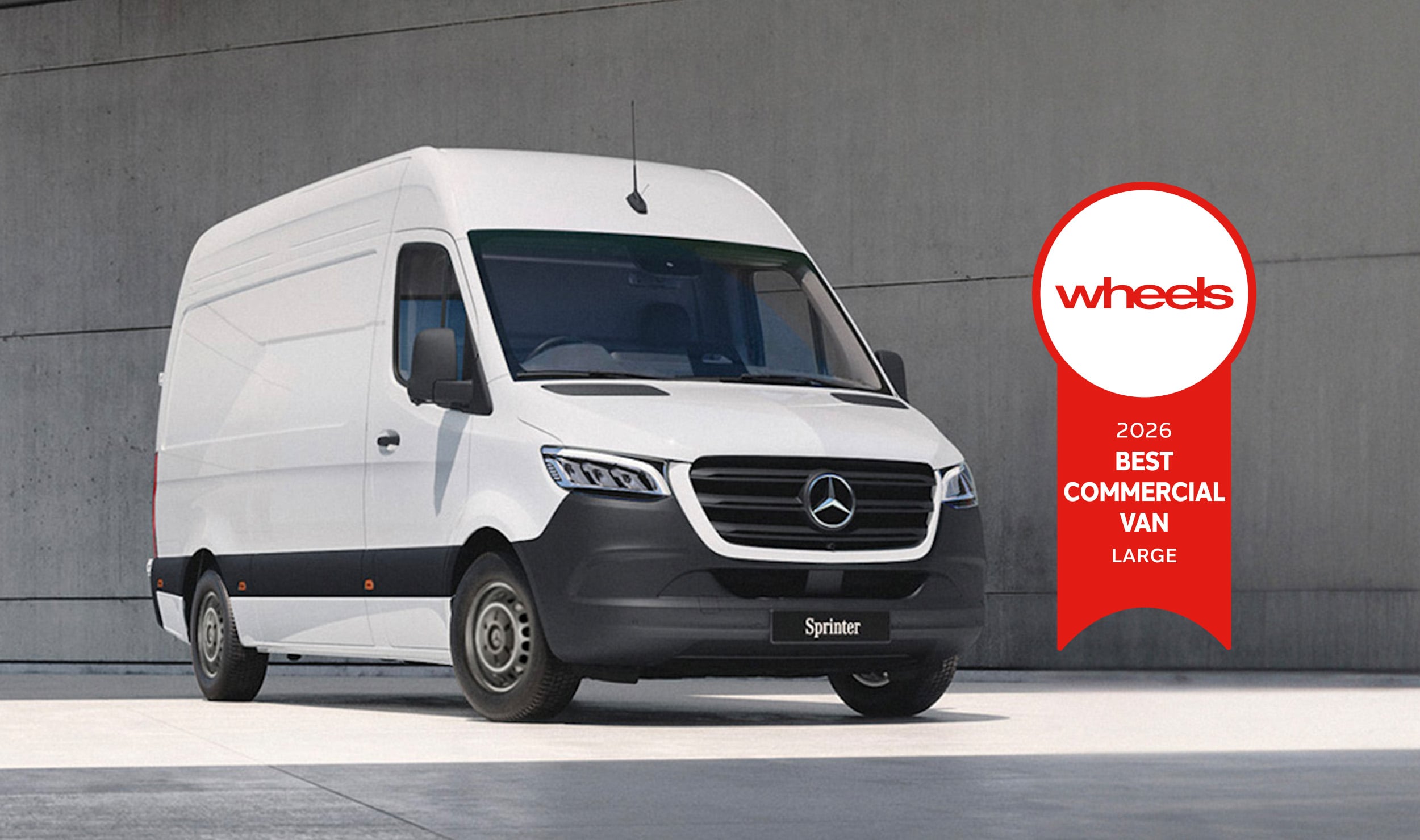
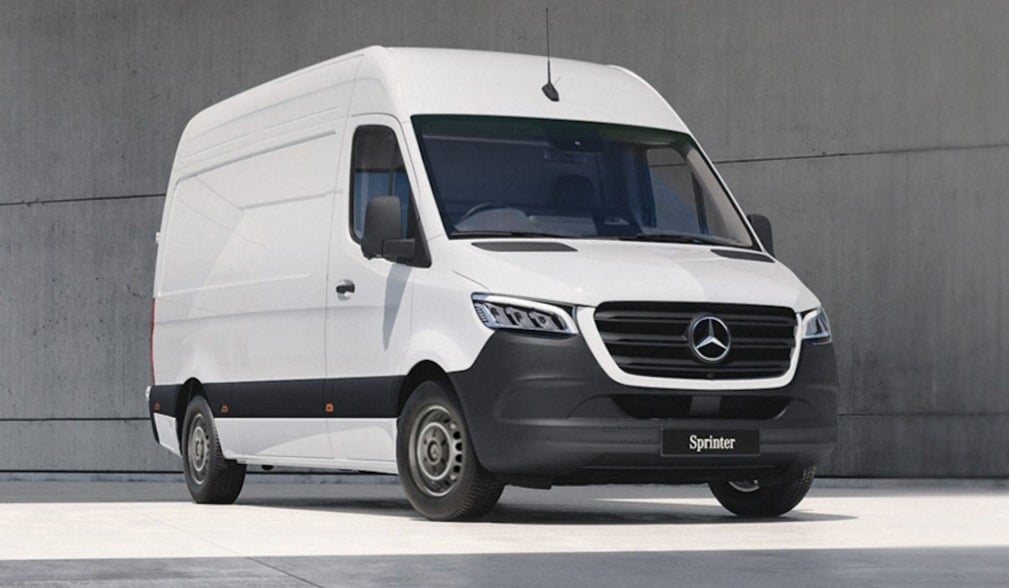
Winner: Mercedes-Benz Sprinter
2
Price: $92,267 (drive-away at time of writing)
Engine: 2.0-litre four-cylinder turbo diesel
Gearbox: Nine-speed automatic
Power: 125kW
Torque: 400Nm
ADR fuel consumption: N/A
Payload: 1346kg
Kerb weight: 2170kg
Warranty: Five years/250,000km
Five-year service cost: $3945 (Plus: $1350 trans service, 2 x fuel filter $580, $120 air filter,
2 x dust filters $320, 2 x dust roof filters $190, brake fluid $280) $6625 total
| Driving | |
| Interior | |
| Practicality | |
| Overall value | |
Strengths
- Standard safety is excellent
- Efficient powertrain
- Excellent seat comfort and space
Weaknesses
- Driveline options make choice difficult
- Significantly costlier than new entrants
- No driver foot rest or armrest
This is the segment where you step up into the realm of serious carrying space, and the price is also commensurate with the size. We’re covering vans here, of course, but ‘Benz offers the option of panel van, cab-chassis and minibus variants within the Sprinter range, along with four different turbo diesel engines and an electric variant for those so inclined. In short, there’s a Sprinter to cover every need.
Interestingly, the 2.0-litre, turbocharged four-cylinder diesel used by Mercedes-Benz is smaller and makes less power and torque than the heavy hitters in the medium segment below. Note that we’ve quoted the figures for the 317 CDI mid-wheelbase Sprinter.
However, with the adoption of an excellent nine-speed automatic, the big ‘Benz makes the most of the engine’s power and torque no matter what the drive scenario. You can even shift the nine speeder manually, if you want to.
That small point offers up a key takeaway regarding the Sprinter. Mercedes-Benz has approached the development and execution of it more like it would when manufacturing a car. That means it’s a lot more enjoyable to drive than it’s exterior dimensions would suggest, and the cabin is a comfortable place to be as well. As such, it’s quite spritely once you get used to the physical size of it on the road. This van isn’t designed to scythe its way through tight inner-city laneways, but if you need to move larger items, and you need to store them safely undercover, this is the way to do it.
Against the claims of mid 8L/100km fuel usage, we’ve used as little as 10.1L/100km in testing, with a nominal 750kg weight in the load space. You’ll know this is a big van the first time you climb in, and the handles come in – ahem – handy for getting into and out of the vans in this segment. The cabin feels huge compared with the smaller vans, with plenty of seat adjustment and a touch of class thanks to the leather-trimmed steering wheel. The cab roof is high, too, making the seating position feel bright and airy, with even taller drivers having plenty of headroom.
Unladen, the big ‘Benz rides beautifully considering the weight it is designed to carry and the length of the wheelbase the suspension must accommodate. Shifting between the nine ratios is almost imperceptible, regardless of how hard you’re leaning on it, and you’ll only notice tyre and wind noise at highway speed.
Volkswagen Crafter
5
Price: $72,990 (drive-away at time of writing)
Engine: 2.0-litre four-cylinder turbo diesel
Gearbox: Eight-speed automatic
Power: 130kW
Torque: 410Nm
ADR fuel consumption: N/A
Payload: 1379kg
Kerb weight: 2139kg
Warranty: Five years/unlimited kilometres
Five-year service cost: $3607 (prepaid)
| Driving | |
| Interior | |
| Practicality | |
| Overall value | |
Strengths
- Fantastic to drive laden or unladen
- Cabin ergonomics are excellent
- AWD available in the range if you need it
Weaknesses
- So many options to work out what you need
- No standard floor covering in the load space
- 360-degree camera would help
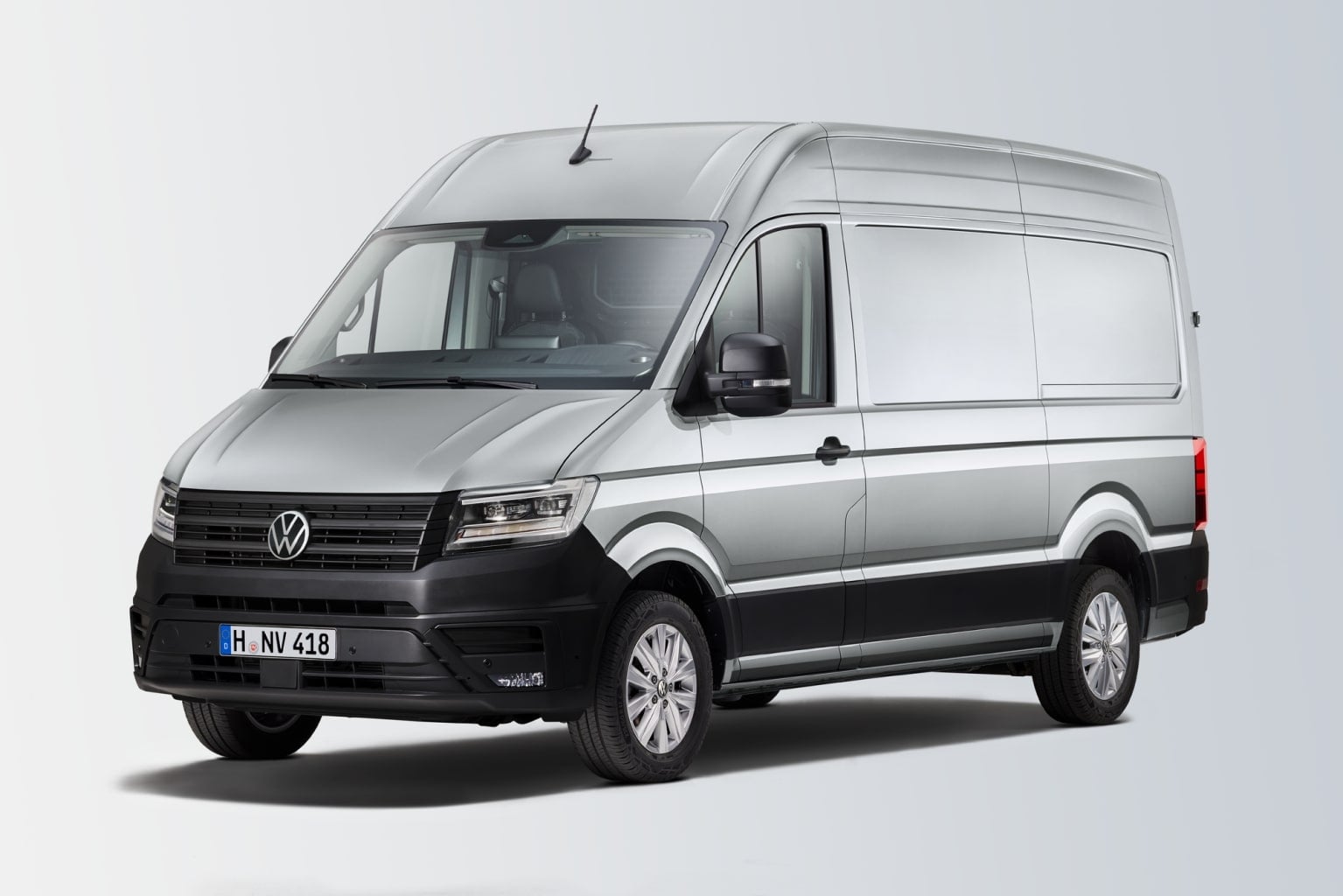
There’s a dizzying array of options in the Crafter range, with FWD, AWD and RWD available, dual rear tyres, manual or automatic and cab-chassis platforms as well. Here, we’ve looked at the mid-wheelbase model, which despite sharing very similar dimension and capability to the Sprinter, is significantly more affordable. Yes, the Sprinter is a better van, but you have to pay more to get more.
Interestingly, Volkswagen has stepped away from the DSG it uses across the range in other vehicles, and opted for a more old-school take in the form of a conventional eight-speed automatic. It provides a smooth driving experience, too, and the availability of the aforementioned AWD system is why you see so many Crafters decked out for off-road, long-distance touring.
The cabin in both design and space ensures long distances can be covered easily. There’s no shortage of leg, head, shoulder and knee room in the cab, and there’s a high and mighty feel to the seating position. While there’s a fair bit of tech on the safety list, we’d like a 360-degree camera in vans of this size.
As is the case with all the contenders in this segment, these vans are big, and there’s no escaping that. However, like the Sprinter, the Crafter never feels quite as big as it is – tight corners aside. You’ll need to mind the wheelbase of course, but once you take that into account, it’s a cinch to drive.
You’ll find the presence of Volkswagen-familiar infotainment and connectivity, meaning it works and works well. The 8.0-inch touchscreen isn’t as big as some, but in a segment that is built to work, it does what drivers will need it to do without playing into the gimmicks of massive screens. Make some of the options standard – like the plywood floor in the load space for example – and Volkswagen would make an already excellent product even better.
Ford Transit
5
Price: $69,490 (drive-away at time of writing)
Engine: 2.0-litre four-cylinder turbo diesel
Gearbox: Nine-speed automatic
Power: 121kW
Torque: 390Nm
ADR fuel consumption: N/A
Payload: 1280kg
Kerb weight: 2270kg
Warranty: Five years/unlimited kilometres
Five-year service cost: $2536
| Driving | |
| Interior | |
| Practicality | |
| Overall value | |
Strengths
- Drive experience is excellent
- Quality cabin tech and ergonomics
- High roof a no-cost option
Weaknesses
- Not as much power and torque as segment leaders
- Payload not as high as some
- 360-degree camera would be a good addition
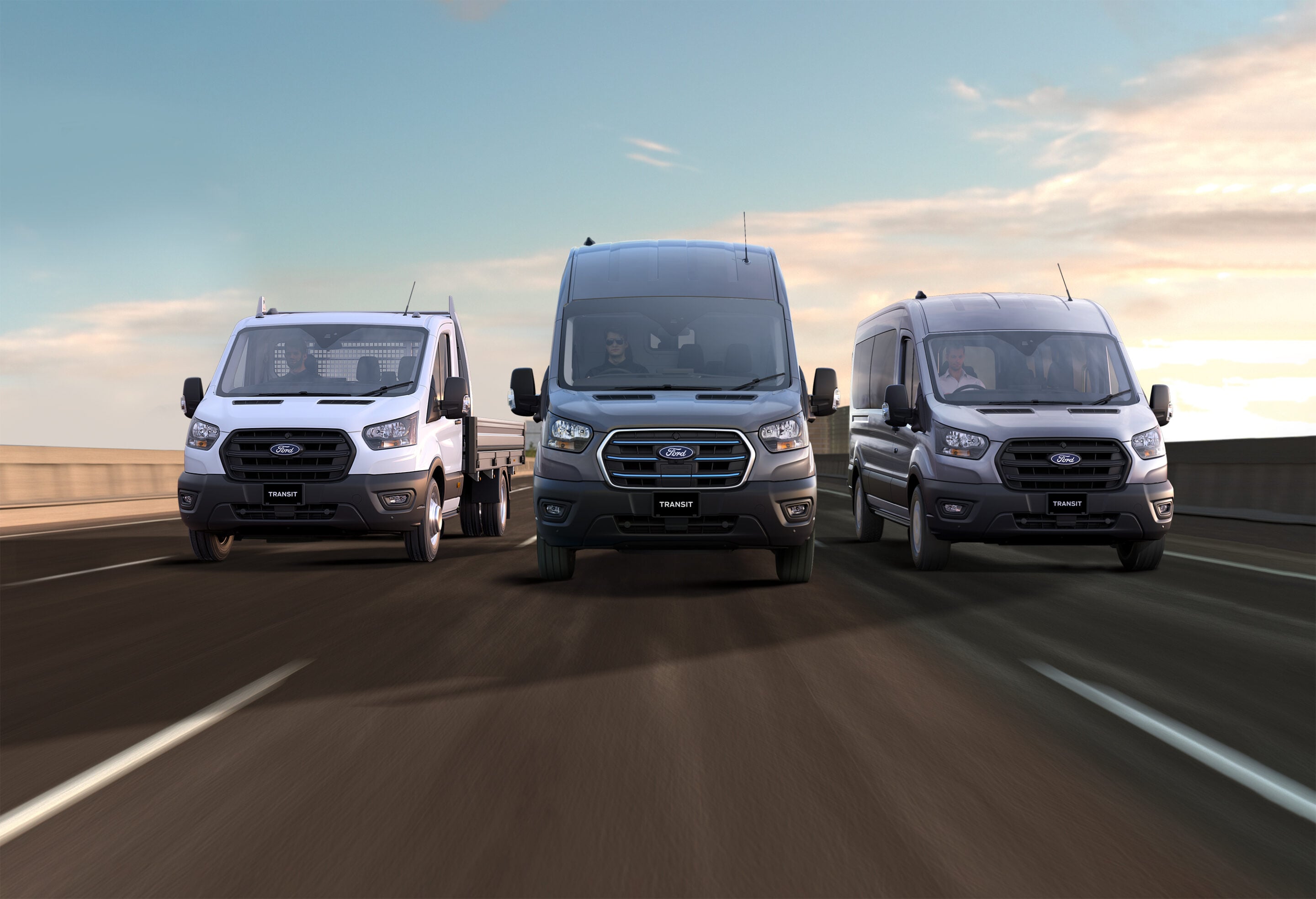
As with the Volkswagen in this segment, Ford offers a broad range of options and types within the large van segment. We’ve quoted figures here for the mid-roof, 350L, which is FWD, and keep in mind that the high-roof is a regular production option if you need the extra space.
Ford’s strong point here, is familiarity. In that, taking a seat inside the Transit lends a feeling of familiarity with other vehicles in the fleet, like the Ranger, with similarities in features like tech and infotainment. That’s not a bad thing either, because why get rid of something that works? And it means if you’ve owned a Ford recently, you’re going to get exactly what you expect.
Like the best in this segment, the Ford doesn’t feel as big to drive as it looks on approach. Again, this is a physically big van but it’s one that feels like it molds around you, the longer you drive. That’s a good thing, too, because owners of these vans spend plenty of time in them. The cabin is comfortable and light-filled, the 12.0-inch infotainment and 8.0-inch driver screens concise and easy to use, and the smartphone connection is reliable and rock-solid once connected.
While the power and torque figures don’t raise eyebrows on paper, the Transit gets moving swiftly, runs up to highway speed nicely, and stops predictably as well, ensuring it works effortlessly in the types of driving environments it’s going to have to deal with. Opt for an auto Transit, and you get Ford’s 10-speed unit, which does feature a lot of ratios, and does shift often, but when it does change gears, it does so smoothly.
Impressively – and this is true of most of the vans in this segment – the Transit remains efficient even during prolonged runs on the highway, with owners quoting low to mid eights, even with vans that have a high mileage. It’s impressive stuff.
LDV Deliver 9
5
Price: $47,990 (drive-away at time of writing)
Engine: 2.0-litre four-cylinder turbo diesel
Gearbox: Nine-speed automatic
Power: 128kW
Torque: 4205Nm
ADR fuel consumption: N/A
Payload: 1700kg
Kerb weight: 2300kg
Warranty: Seven years/200,000km kilometres
Three-year service cost: $2510 (Five years not available.)
| Driving | |
| Interior | |
| Practicality | |
| Overall value | |
Strengths
- Pricing is hard to resist
- Cabin is big and comfortable
- Tech works well
Weaknesses
- Cabin not as polished as some
- Resale value hard to predict
- Same size engine but less power and torque
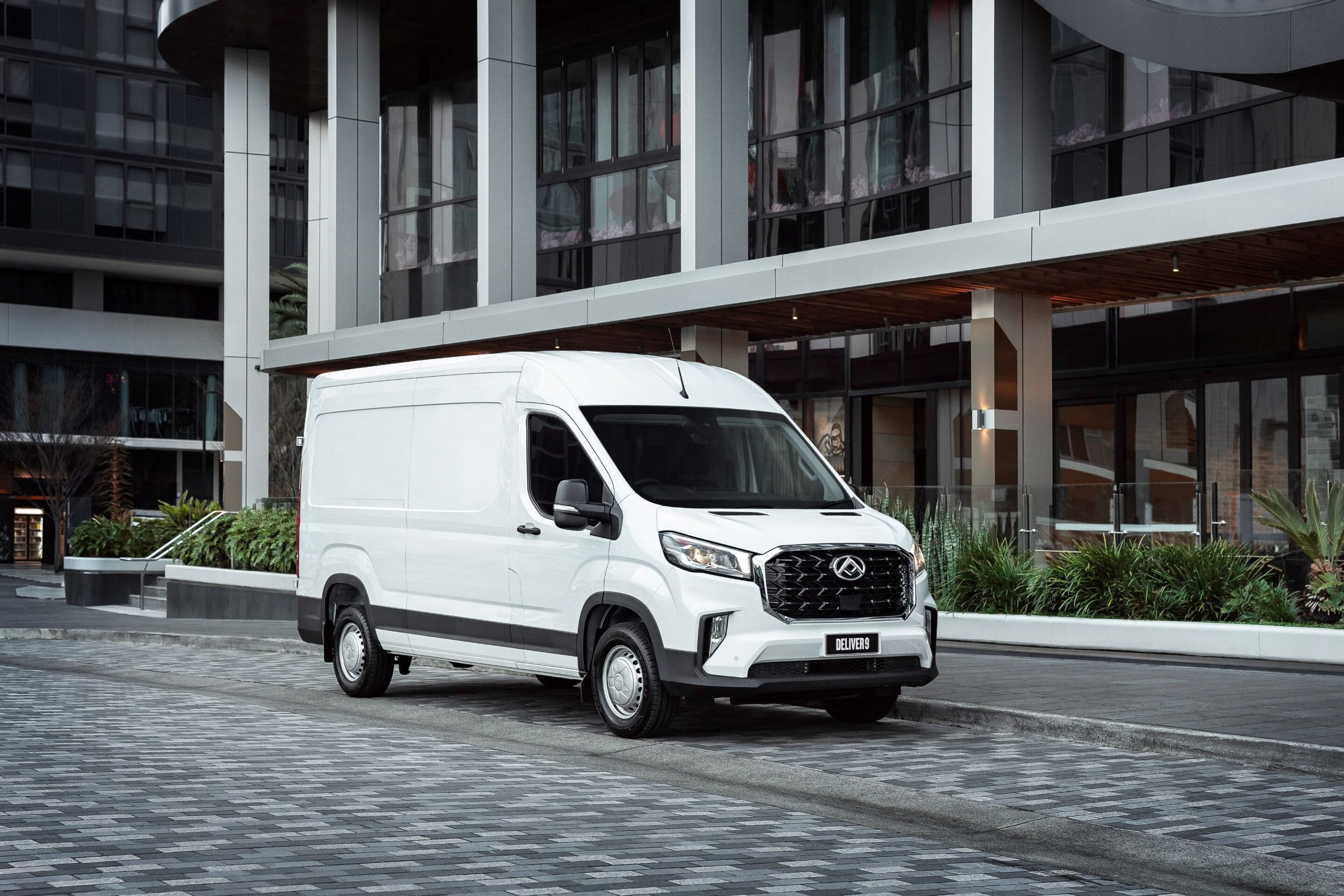
If you want to take a look at a van that’s irresistible in terms of price, the LDV Deliver 9 deserves an honourable mention. At the time of writing, you could get into LDV’s large van for as little as $47,990 driveaway, massively undercutting the established set.
Now, when you take a punt on a challenger brand, even as a business, you need to be aware that things like resale value aren’t guaranteed as they are with the established offerings. However, the hefty saving at the time of purchase might be enough to sway your buying decision.
Also available in electric form, the LDV Deliver 9 offers an alternative for those of you looking to stretch the budget as tight as you can. It’s heavier than the competition and makes similar power and torque, so you could be forgiven for thinking it might be sluggish.
It isn’t. Sure, it’s not as snappy as the best in segment, but the Deliver 9 is more than acceptable, especially given the asking price.
Even up to highway speed, the Deliver 9 has behaved nicely in testing, cruising along effortlessly between 100km/h and 110km/h. Around town, the long wheelbase needs to be respected, as it does for all of these vans, but once you factor that in you’ll find the Deliver 9 a pretty good driving experience.
What the Deliver 9 will allow some of you to do, if it suits your business needs, is step up to a large van for the price of a medium van, something that can’t be understated for a business in its infancy.
Best Commercial Vans in Australia
Looking to get your hands on a new commercial van? Our stories below will guide you to the model that best suits your needs:
Follow WhichCar/Wheels on Google
Click the button below to make WhichCar by Wheels a preferred source for your news.

We recommend
-
 Best Vans
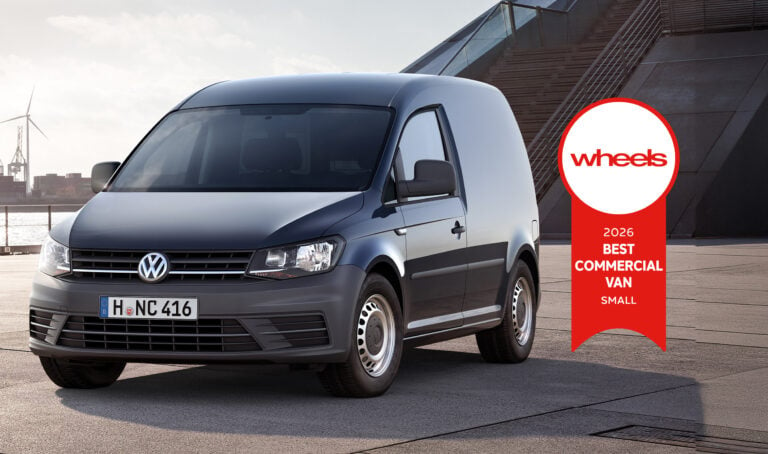
Best Commercial Vans 2026: Small
Small vans prove big capability comes in compact packages, delivering car-like driving manners, strong efficiency and practical cargo solutions for urban businesses.
-
 Best Vans
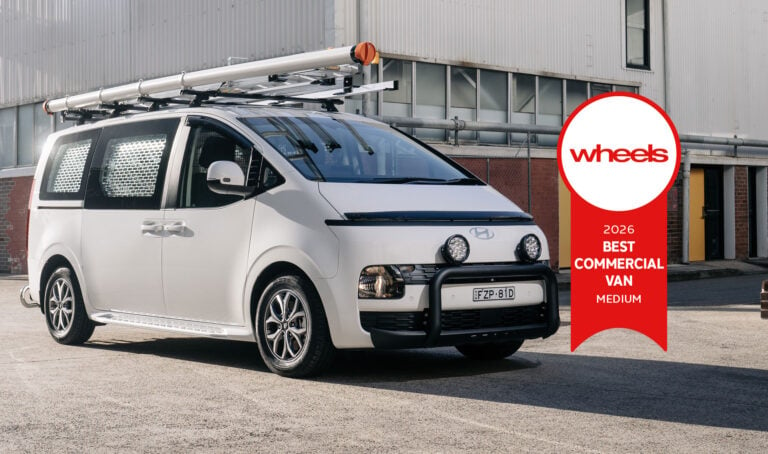
Best Commercial Vans 2026: Medium
Modern medium vans deliver far more than cargo space, combining SUV-like comfort, advanced safety and strong diesel performance for the demands of Australian businesses.
