Reviews

Gallery 1
8.2
/10
Score
Score breakdown
8.0
Safety, value and features
8.0
Comfort and space
9.0
Engine and gearbox
8.0
Ride and handling
8.0
Technology
Things we like
- Finally a hybrid van, and it's a good one
- Punchy but efficient hybrid system
- Updated Staria Load more tech-filled and well-rounded
Not so much
- No towing capacity for the hybrid, short service intervals
- Price rises across the range
- Premium model no longer offers diesel powertrain
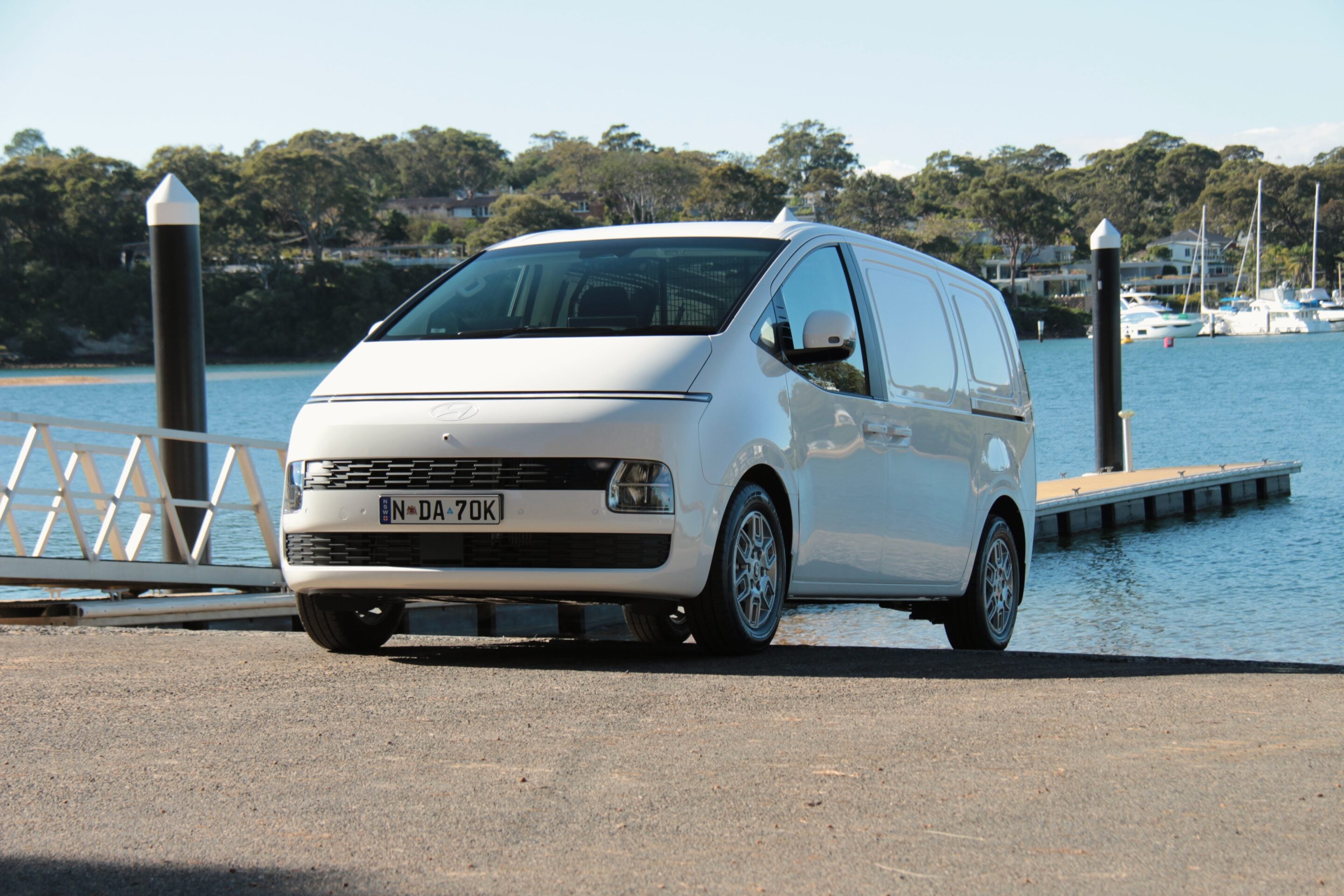
Until recently, Australia’s van market has largely been dominated by diesel power, with electrification arriving only in the form of a few electric and plug-in hybrid commercial vehicles. Hyundai is looking to change that with the new Staria Load Hybrid, which is the country’s first hybrid van without the need to charge. Considering the popularity of hybrid drivetrains in other types of vehicles, it’s a surprise that no car maker has previously offered in in Australia.
Promising lower fuel consumption and added refinement compared to diesel rivals without the range anxiety of an EV, the Staria Load Hybrid aims to bridge the gap between traditional diesel workhorses and an increasingly electrified future. But is hybrid technology enough to give it an edge in Australia’s medium commercial van segment? Let’s find out.
How much does the Staria Load cost to buy?
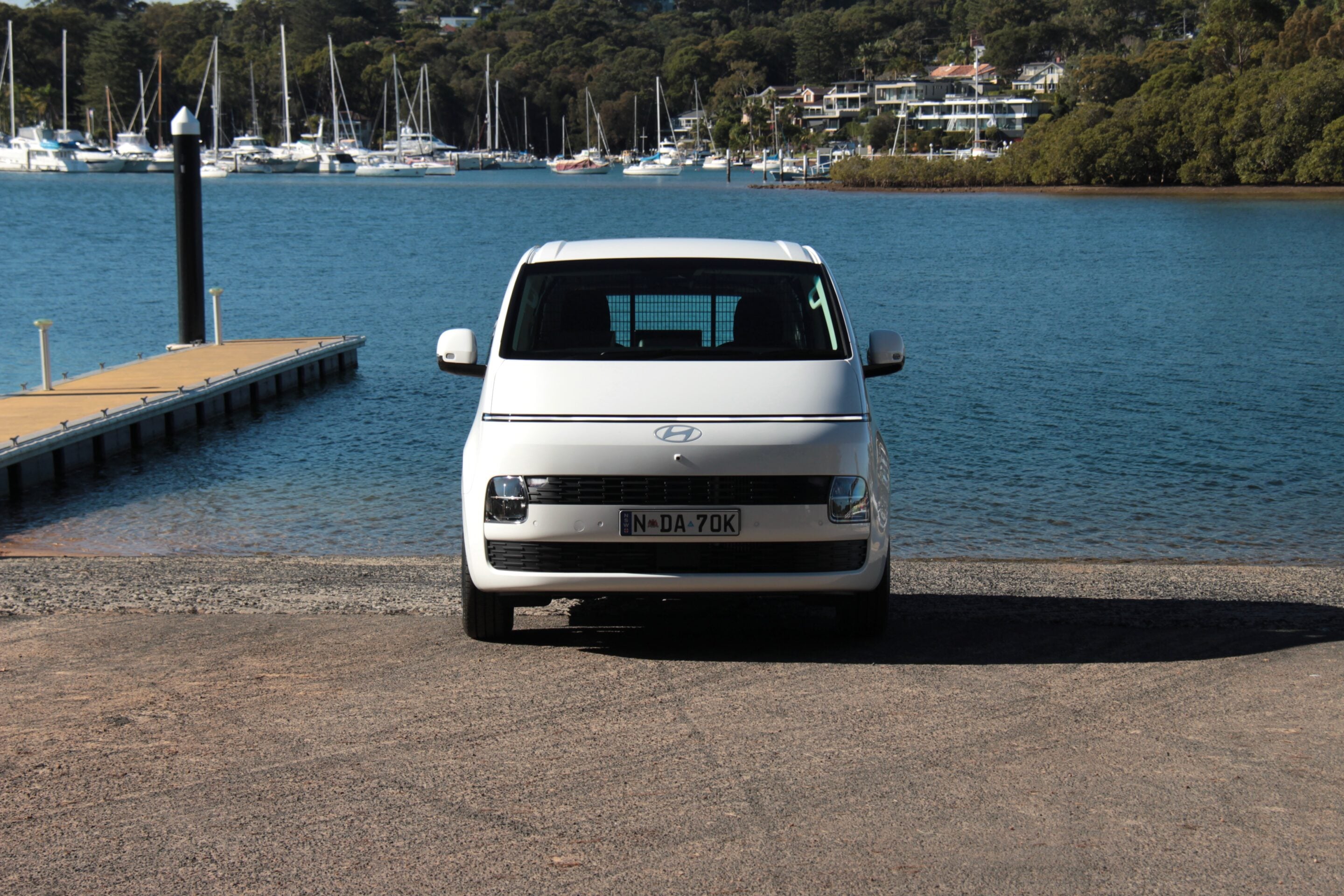
Pricing for the updated Staria Load range starts at $49,990 plus on-road costs for the diesel (+$2250 on the pre-updated model) and $53,490 +ORC for the new hybrid. Above the base model once again is the Staria Load Premium, which is priced from $61,240 +ORC, which is $8500 more expensive than the previous Premium, though it’s now powered by hybrid and not diesel power.
A fully electric Staria Load variant is also due later in 2026, with pricing yet to be announced.
4
The main competitors to the Staria Load are the Toyota HiAce (priced from $53,880 plus on-road costs as an automatic, and only available as a turbo-diesel despite Toyota’s long history with hybrid tech) and Ford Transit Custom (from $56,890 +ORC). Both vans are big sellers as well, and also offer a wide range of talents in the van segment. Plus, if you’re after electrification and can charge your van regularly, the Transit is available in both electric and plug-in hybrid forms — though, not a regular hybrid just yet.
2026 Hyundai Staria Load pricing
- Diesel: $49,990
- Hybrid: $53,490
- Electric: TBC
- Premium Hybrid: $61,240
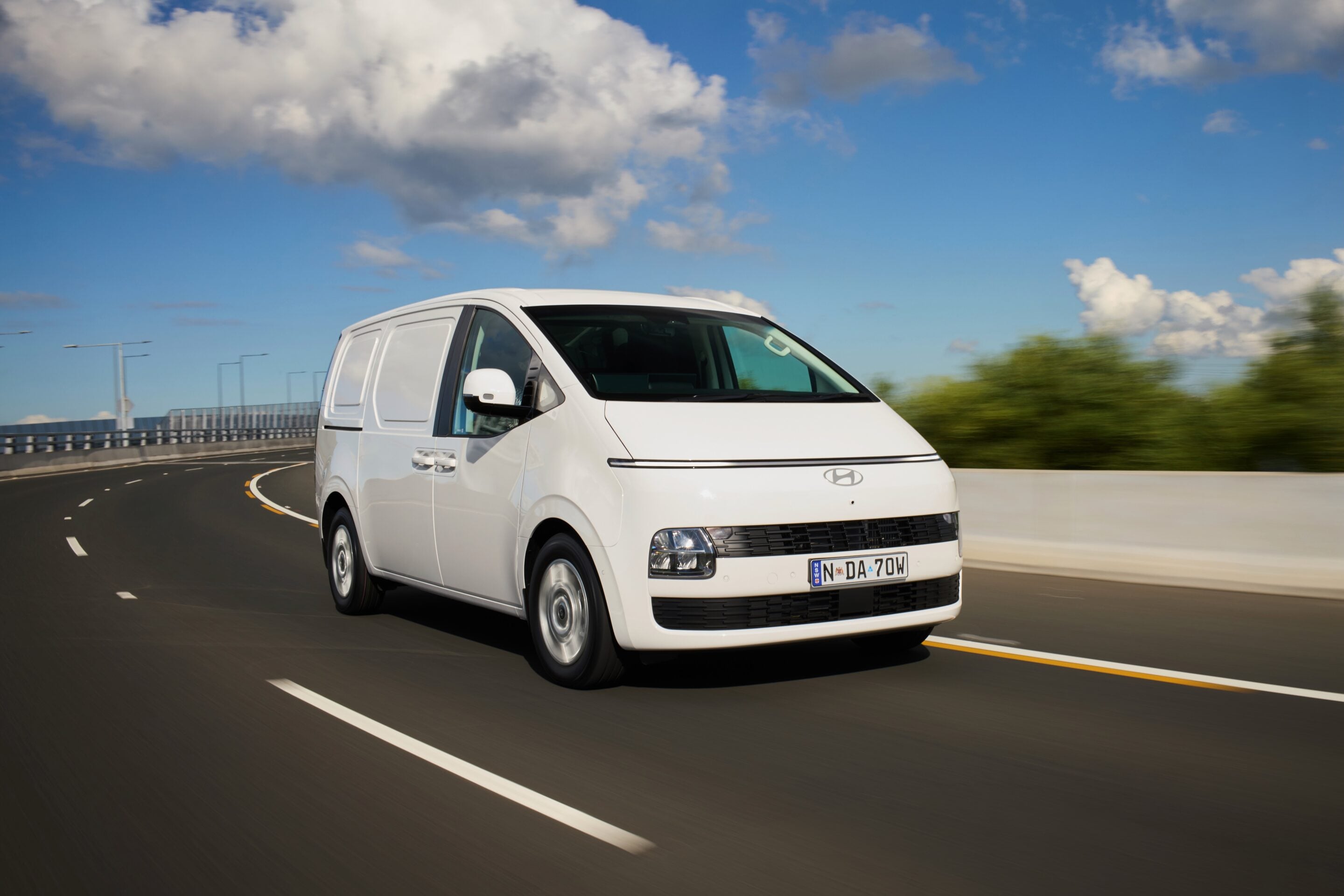
The new hybrid drivetrain is unique in the van segment, and is a welcome addition. There are both fully electric and plug-in hybrid drivetrains offered in other van products locally, but this is the first time a hybrid has been offered in a van. As such, it’s in a class of its own for value, and remains relatively sharply priced against the diesel. Having said that, the $7750 premium for the, uh, Premium is a lot.
Thankfully, the Staria Load is well equipped for a van, especially with active safety features. Buyers will find everything they could need in an entry-level van, including auto-folding mirrors, a leather steering wheel, manual air-conditioning (automatic climate control in the hybrid), a 12.3-inch touchscreen with sat-nav and wireless smartphone mirroring and a long list of safety kit.
4
Above the regular Load, the Premium adds features like 17-inch alloy wheels, a 360-degree camera, heated steering wheel, heated seats, LED exterior lighting, an electric tailgate and Hyundai’s cool blind-spot cameras. The Premium does add a lot of cool features — some of which we think should be standard on the base Load, like LED lighting — but does the extra $7750 transform it into an even more capable van? We don’t think so, so it’s not a necessary extra spend.
Staria Load standard features
- 17-inch steel wheels
- Dusk-sensing automatic halogen headlights
- Heated/auto-folding mirrors
- Keyless entry with push-button start and remote window control
- Leather steering wheel
- Manual air-conditioning (Hybrid adds single-zone automatic climate control)
- 4.2-inch driver’s display
- 12.3-inch touchscreen with over-the-air updates
- Bluelink live services
- Wireless Apple CarPlay and Android Auto
- Satellite navigation
- AM/FM/DAB+ digital radio
- Bluetooth calling and audio streaming (multiple devices at once)
- Five-speaker sound system
- 2x USB-C charging ports
- Wireless smartphone charger
- Rubber cargo mat
- 7x airbags
- Autonomous emergency braking
- Adaptive cruise control
- Lane keeping assistance with adaptive lane guidance
- Blind-spot monitoring with rear cross-traffic alert (with braking)
- Safe exit assist
- Driver attention monitoring
- Auto high beam
- Reversing camera
- Front and rear parking sensors
- Tyre pressure monitoring
Staria Load Premium model adds over Staria Load
- 17-inch alloy wheels.
- Full-sized alloy spare wheel
- LED headlights and tailights, including scrolling rear indicators and rear fog light
- Horizon garnish light
- Heated front seats
- Heated steering wheel
- Highway driving assist (HDA)
- Front, side and rear parking sensors
- 360-degree camera
- Power opening tailgate
- Electrochromic mirror (ECM)
- Blind-spot camera
- 12.3-inch digital driver’s display
- Remote smart parking assist system
How fuel efficient is the Staria Load?
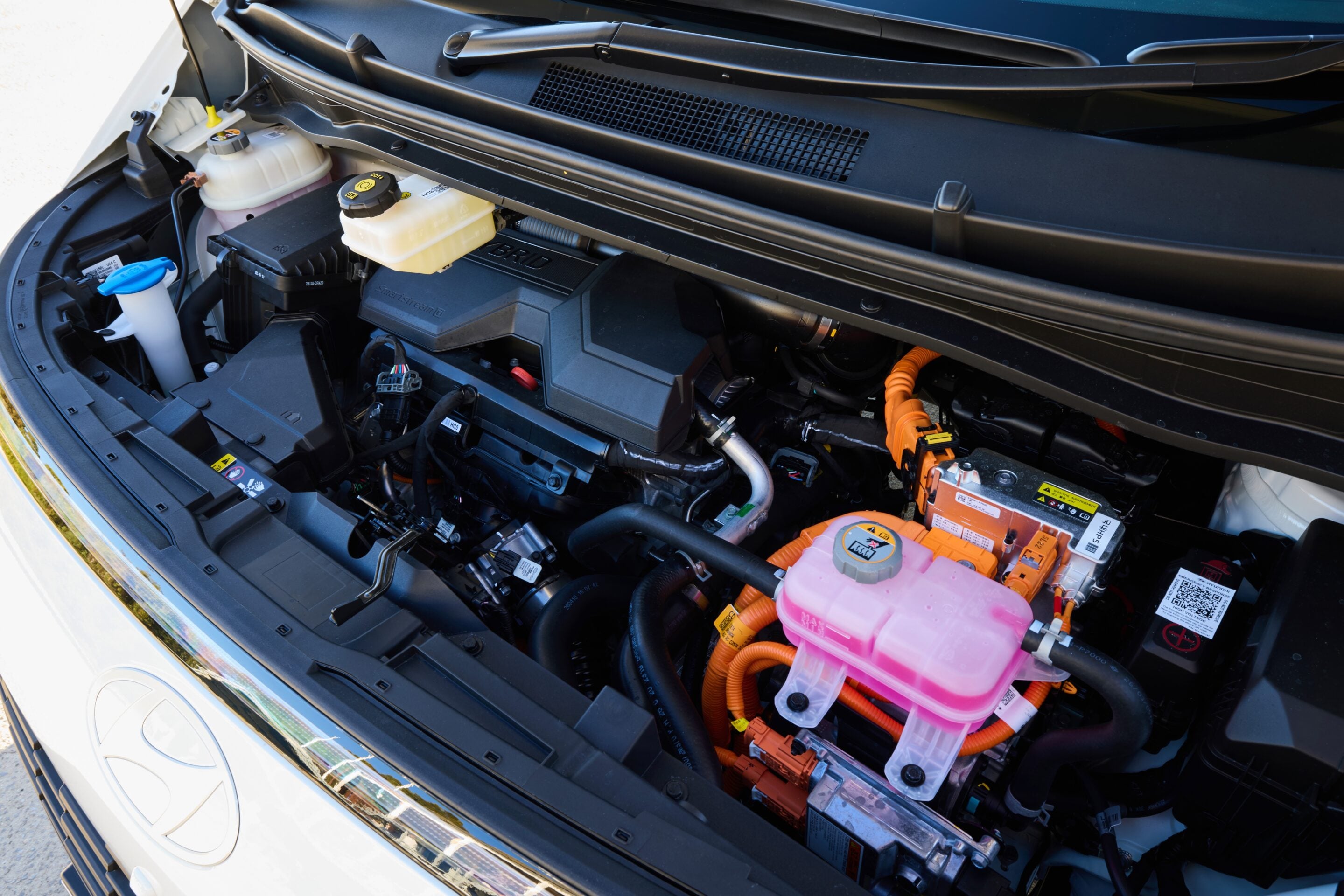
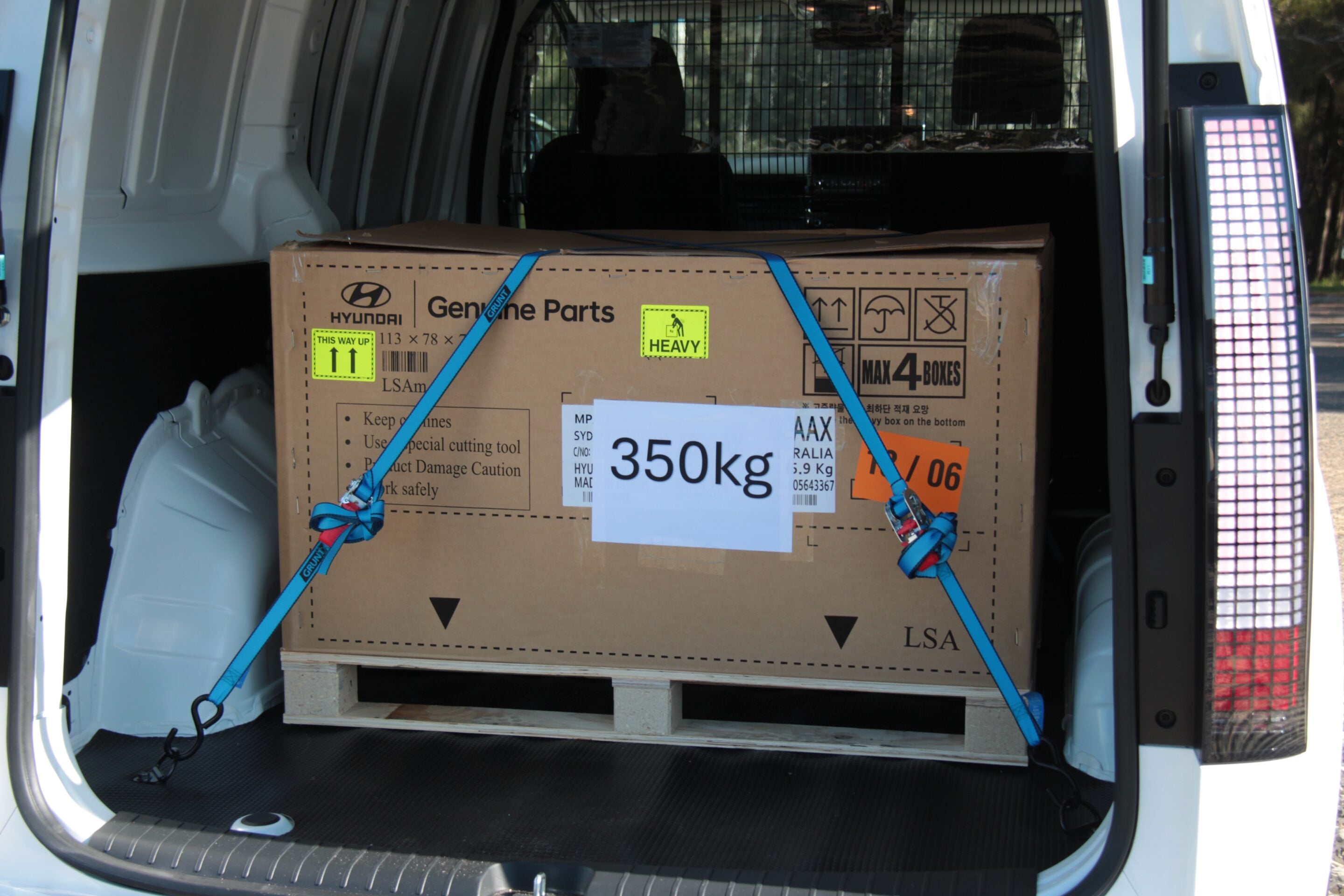
There are two drivetrains available: the 130kW/430Nm 2.2-litre turbo-diesel previously available or the new 180kW/304Nm 1.6-litre turbo-petrol hybrid. Both use automatic transmissions (an eight-speed in the diesel and six-speed in the hybrid) and both are front-wheel drive. The diesel is rated at 7.0L/100km on the combined cycle, while the petrol-hybrid improves fuel use to 6.5L/100km. On the launch program carrying 350kg of weight in the back, we achieved 7.3L/100km over various driving conditions in the hybrid, which is impressive.
3
Aside from some electric and plug-in hybrid offerings, vans are traditionally powered by diesel engines and while the hybrid isn’t amazingly more efficient on paper, it does punch out 50kW more power than the diesel, making it feel noticeably stronger on the road, even with a 350kg load in the back like we experienced on the launch program. While the hybrid doesn’t offer as much torque as the diesel (304Nm versus 430Nm), the instant torque from the electric motor does a lot to help.
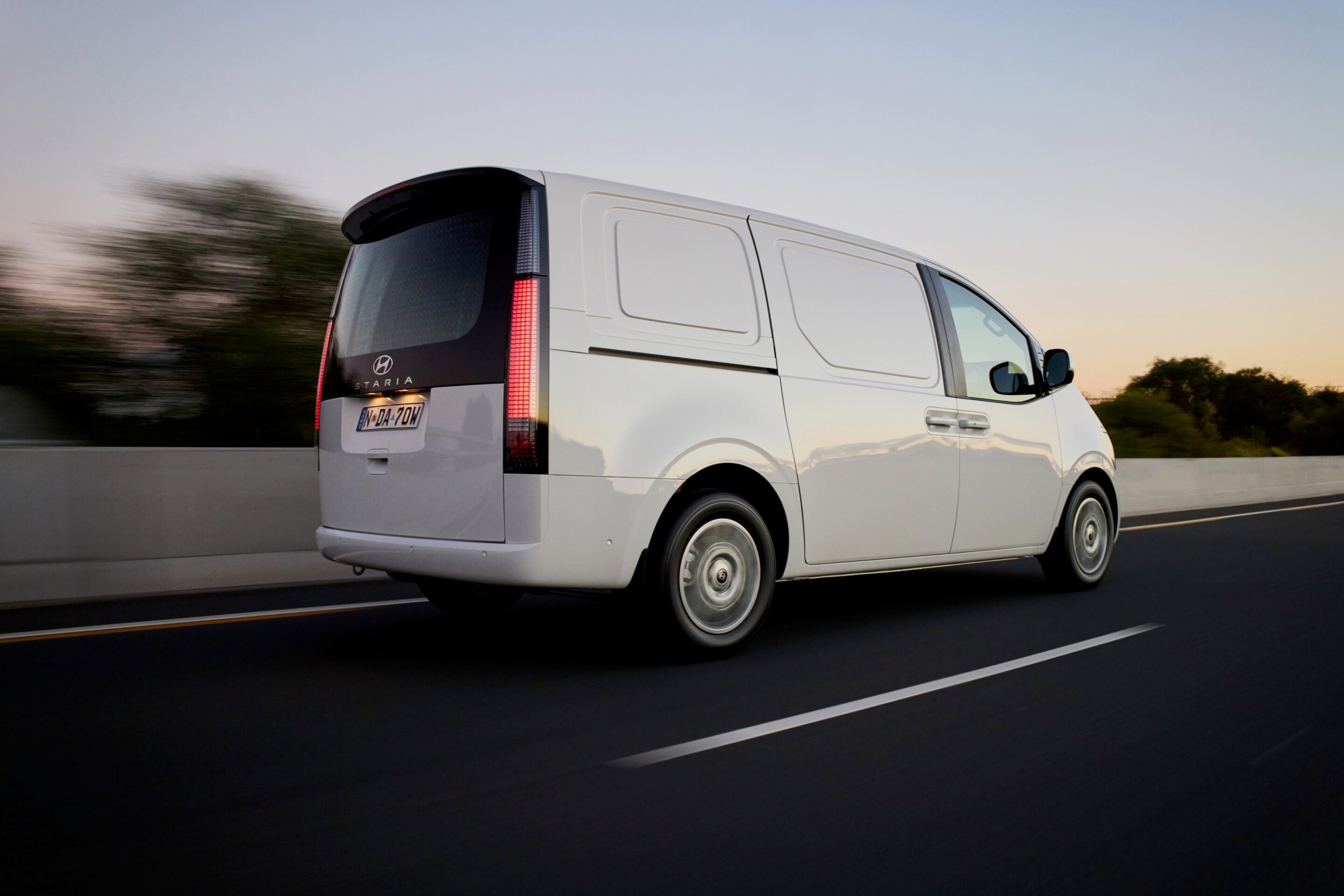
One of the biggest benefits of electrified vans is the added refinement. Diesel engines have come a long way in their noise, vibration and harshness (NVH) and the Load’s diesel is much more refined than the 2.8-litre turbo-diesel in the Toyota HiAce, but the petrol hybrid drivetrain in the Staria Load is a revelation in comparison with its relatively quiet atmosphere, even at full throttle. Of course, the open rear means that it’s not too quiet for road noise, but it’s still fine.
Hyundai says that it’s retuned the front shock absorbers and generally improved the ride for the updated model and while we didn’t get to spend a huge amount of time in it at launch, the Staria Load, previously already a good van to drive, is even better now. Sure, it’s no sports car and a Ford Transit Custom remains the most car-like medium van to drive, but the Staria Load feels more nimble than its size would suggest and its steering is nicely weighted and quick for a van as well.
How practical is the Staria Load?
It’s a van, so quite practical indeed. We aren’t sure why more people aren’t buying vans as they offer far more practicality than utes that sell in far larger numbers than they do. Having said that, the Staria Load, thanks to its smaller size, is not quite as capacious inside as a Toyota HiAce, nor the long wheelbase Ford Transit Custom.
3
Hyundai claims the Load carries a huge 4935 litres of cargo in the rear, while its 2607mm long cargo bay is generous for the segment. Payload is rated between 997kg and 1039kg, depending on the variant, down on its most obvious, albeit larger, rivals. Staria diesel is rated to tow 2500kg with a braked trailer.
There’s also one big caveat for the hybrid: it’s not rated to tow at all. Hyundai’s product planners are confident that wouldn’t deter many buyers based on their market research on who drives Staria Loads, but we think that it’s still a shot in the foot for the hybrid. We hope it changes soon.
5
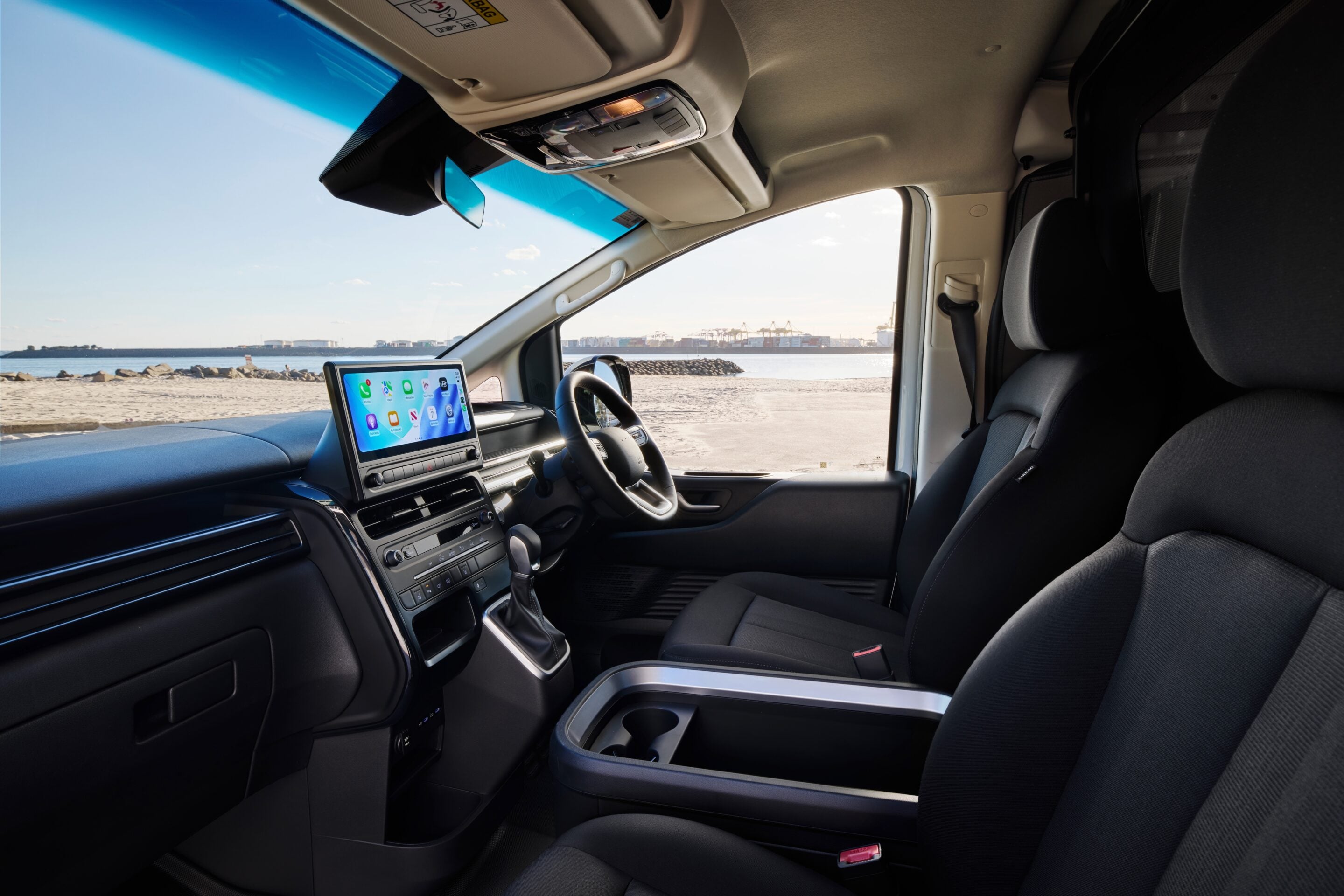
Moving forward to the cabin of the Staria and it’s still quite a spacious and practical space. There are plenty of storage spots around the cabin, including the massive open centre bin and clever lower storage, like where the wireless phone charger is located. Seat comfort is fine too, and the high driving position is commanding. Visibility is good for a van, thanks to its large mirrors and — unfortunately only on the Premium — very useful 360-degree and blind-spot cameras.
Hyundai’s ‘ccNc’ infotainment software was another recent addition to the Staria Load, and it’s modernised the cabin nicely. Featuring on all models with kit like wireless Apple CarPlay and Android Auto, sat-nav, DAB+ digital radio and Bluetooth calling and audio streaming, it’s very simple to use and for somebody that has already experienced a new model Tucson or Santa Fe, there’s no learning to be done because it’s the exact same system used in those SUVs.
How much does the Staria Load cost to run?
The Staria Load is covered by Hyundai’s five-year/160,000km commercial warranty, which is less than the unlimited distance that its non-commercial vehicles enjoy (which can be extended up to seven years if serviced at a dealer).
3
Five years of servicing costs $2659 ($531 per service on average) for the diesel and $2439 ($488 per service on average) for the hybrid, though the hybrid’s service annual intervals are shorter than the diesel’s by 5000km at just 10,000km. While that may seem expensive, it’s cheap compared to both the Toyota HiAce ($3650 for five years with six-monthly service intervals) and Ford Transit Custom diesel ($3300 for five years with annual intervals).
Should I buy a Hyundai Staria Load?
As Australia’s first hybrid van without a plug, the Hyundai Staria Load Hybrid marks an important step forward for the commercial vehicle market. It delivers meaningful fuel savings in the real world without asking buyers to change the way they use their vehicle. Its comfortable cabin, refined driving experience and generous standard equipment also impress, as does its lower starting price than its main rivals.
The only real negative to the hybrid drivetrain is its non-existent towing capacity, which may deter some. But for those who aren’t bothered, the Staria Load Hybrid is a compelling new benchmark in the segment. Plus, if you are looking to tow with your Staria Load, the excellent turbo-diesel is still available. Regardless of the drivetrain, the Hyundai Staria Load is still a great choice for a van — no wonder it recently won Wheels Best Medium Commercial Van 2026.
Staria Load specifications:
- Car: Hyundai Staria Load
- Price: From $49,990 plus on-road costs (diesel), $53,490 +ORC (hybrid)
- Drivetrain: 2.2-litre four-cylinder turbo-diesel or 1.6-litre four-cylinder turbo-petrol hybrid
- Peak power: 130kW (diesel), 180kW (hybrid)
- Peak torque: 430Nm (diesel), 304Nm (hybrid)
- Transmission: Eight-speed automatic (diesel), six-speed automatic (hybrid), front-wheel drive
- Claimed combined fuel consumption: 7.0L/100km (diesel), 6.5L/100km (hybrid)
- Claimed combined CO2 emissions: 183g/km (diesel), 147g/km (hybrid)
- Fuel type, tank size: Diesel (diesel), 91 RON regular unleaded (hybrid), 75 litres (diesel), 65 litres (hybrid)
- Dimensions (L/W/H/WB): 5253/1997/2000/3273mm
- Cargo space dimensions (L/W/H): 2607/1640/1436mm
- Cargo space: 4935 litres
- Kerb weight: 2063kg (diesel), 2091kg (hybrid)
- GVM: 3060kg (diesel), 3130kg (hybrid)
- Payload: 997kg (diesel), 1039kg (hybrid)
- Braked towing capacity: 2500kg (diesel), no towing rating for the hybrid
- Warranty: Five-year/160,000km
- Five-year service cost: $2659 (diesel), $2439 (hybrid)
- On sale: Now
8.2
/10
Score
Score breakdown
8.0
Safety, value and features
8.0
Comfort and space
9.0
Engine and gearbox
8.0
Ride and handling
8.0
Technology
Things we like
- Finally a hybrid van, and it's a good one
- Punchy but efficient hybrid system
- Updated Staria Load more tech-filled and well-rounded
Not so much
- No towing capacity for the hybrid, short service intervals
- Price rises across the range
- Premium model no longer offers diesel powertrain
Follow WhichCar/Wheels on Google
Click the button below to make WhichCar by Wheels a preferred source for your news.

We recommend
-
 News
NewsCentury Batteries extends partnership with Australian Road Safety Foundation
Century Batteries and the Australian Road Safety Foundation have extended their partnership to help reduce road trauma and promote safer driving practices.
-
 News
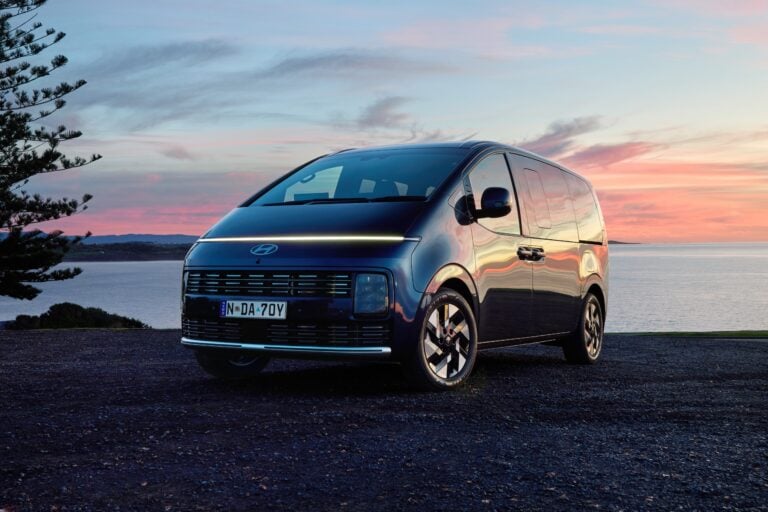
NewsHyundai adds hybrid drivetrain to Staria Lounge and Staria Load
Hyundai has launched Australia's first hybrid van in the form of the Staria Load, as well as a luxurious hybrid Lounge variant of the Staria people mover.
-
 News
NewsJeff Bezos-backed Slate Auto reveals bargain production electric ute and SUV
Are you after a barebones bargain small electric ute that you can almost completely customise yourself? Well, new company Slate has just the ute for you.