Features

Gallery 1
When the talented team at Holden Design needed special help with the brilliant EFIJY concept car in 2004, they knew exactly who to recruit for the job. It was Ron Harrop. The same had happened, way back in the 1960s, when touring car tearaway Norm Beechey needed someone to tame the wayward sideways behaviour of his Chevrolet Nova. Ron Harrop provided the fix.
Even recently, when a specialist company in the USA was looking for a solution to shortcomings in the fuel pump used for hotrod Chevrolet V8 engines they came down under for their answer. It took 18 months but Ron Harrop found it.
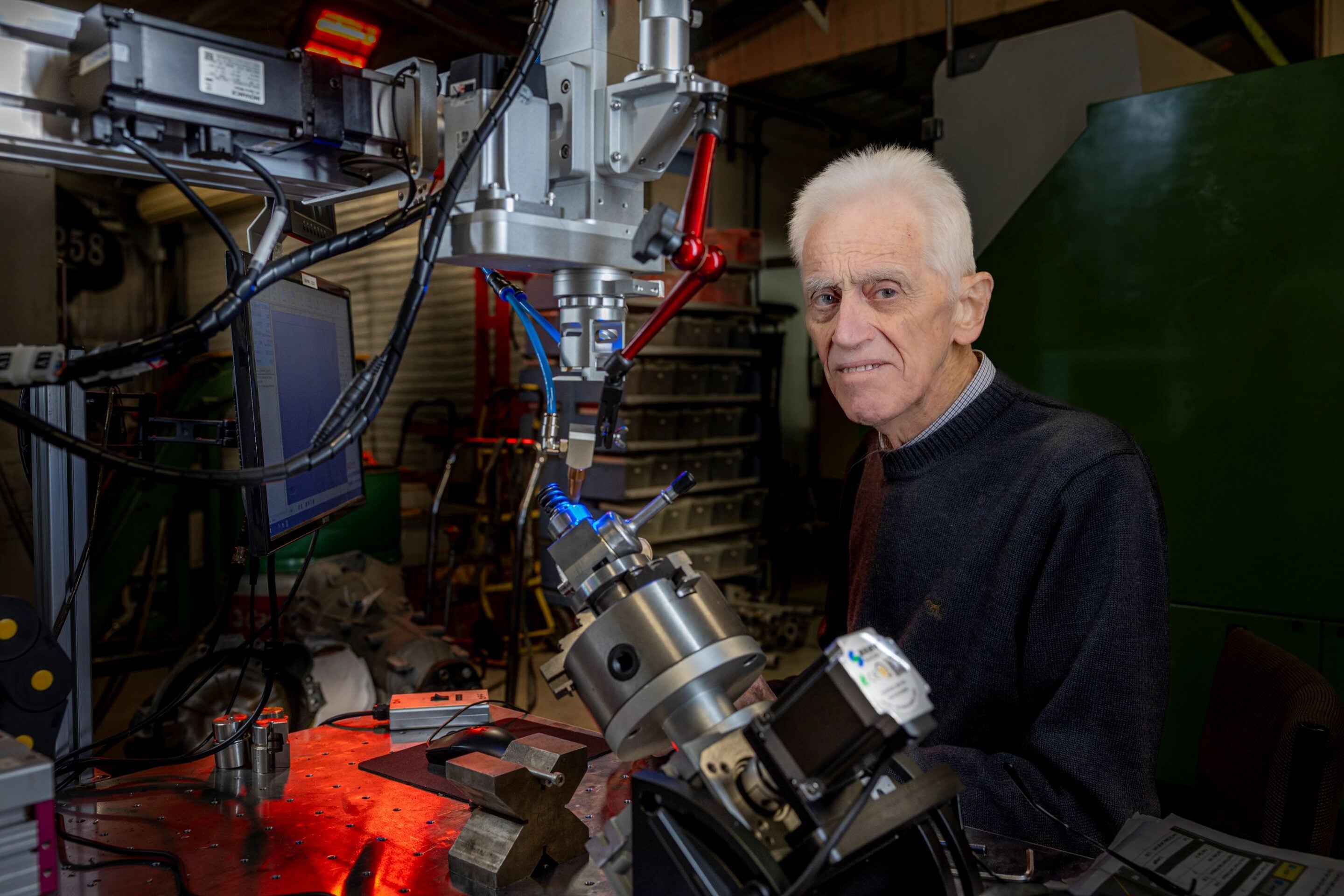
Harrop is another of Australia’s hands-on automotive artisans. His main work for more than 60 years has been in high-performance road and racing cars, but he has also designed parts for high-end sound systems and a super-stable hospital trolley to carry surgical tools, as well as the wheels and axles for the Tangara trains in NSW.
1
Then there was the award-winning wooden cocktail cabinet he made in high school.
“I designed it up and, away I went, I made it,”
Harrop recalls I was probably about 12, I suppose. I’ve still got it, actually.”
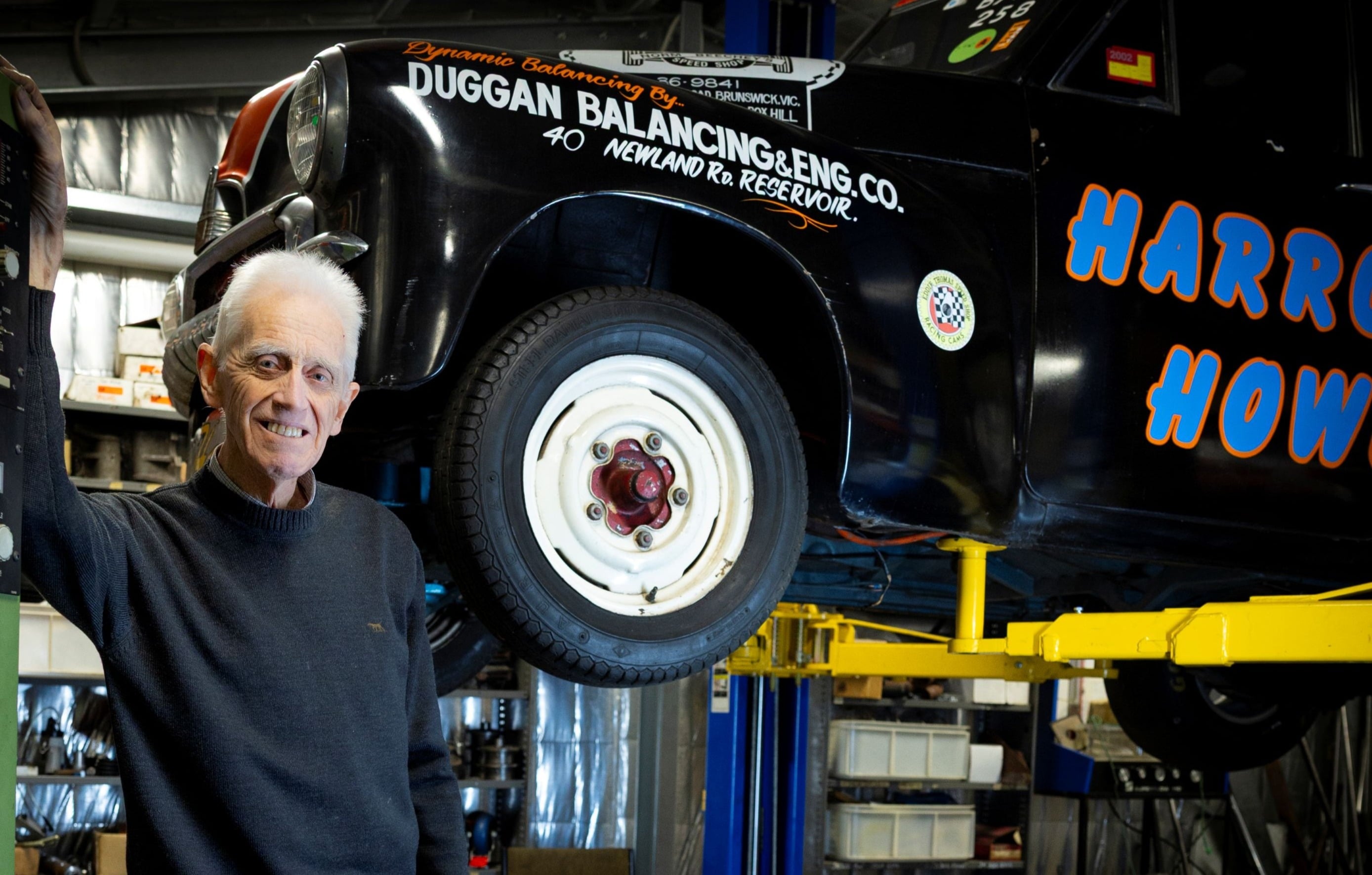
Now, immediately after his 80th birthday and fighting cancer, Harrop is still likely to be found in the shed at his property in Kilmore. It has all the metal working equipment you would find in a top-end fabrication workshop. He still keeps busy, some people would say too busy, but that’s the Harrop way.
“I don’t see it as work,” he says. “I cannot foresee a day when I won’t enjoy it. I’ve had a few health issues, but I’m still keen to keep going.”
It’s a talent and a work ethic he inherited from his father Len and something he has passed on to following generations, through training workshop staff and his own hands-on example. He’s had a lifetime of tinkering and problem solving. It began with things like Meccano toys and jumped quickly to go-karts in his teens.
“I ended up building one, welding it up before I was 13. I was always left to my own devices. I got up to a bit of mischief, but nothing bad,” he reflects.
“It had various engines. We used to take it to the beach at Ocean Grove and blaze up and down the beach. It was really good fun, and good grounding. You learned things.”
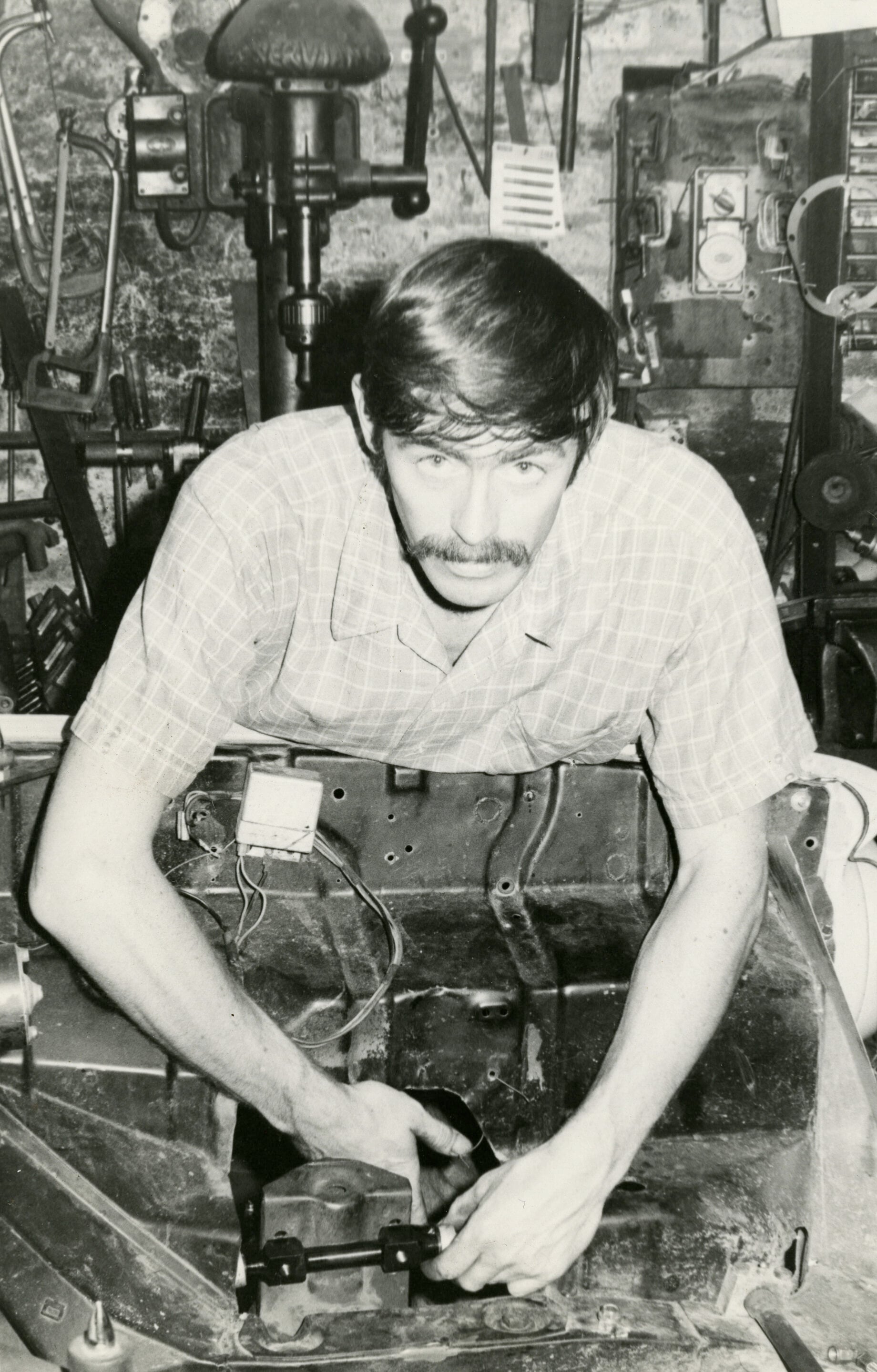
That grounding also came from the family business, LM Harrop Engineering in Brunswick, and it wasn’t long before Ron was involved.
1
“I worked with dad. I was his apprentice. It was good, really good. I went to Footscray tech and it was a five-year apprenticeship. I remember going to the first day there and was yawning because I’d been
doing it for four or five years. They ended up putting me into second year the next week.”
He rattled quickly through his time to be qualified as a boilermaker and was also getting drawn into the world of cars.
“I can remember the very first car dad had was a Fiat of some sort. Something from the 1930s,” he reveals. “Then a ’37 Chev, followed by a ’48 Chev Stylemaster, I think it was called. There were plenty of them around. I used to think he was a good driver. He was alright.”
“The first time I was driving cars I reckon it was outside Geelong, where friends had a farm. First was an Austin truck. Then progressed to driving the tractor, then had a fire truck with the milk churns and I’d drive that down to the gate.
“Got in a car and did some handbrake turns. People don’t get to do that now, so they have no idea and get into trouble.”
His first car was a Morris Minor, before an EH Holden, the 179 ‘Special’ model. He took the Minor to Templestowe Hillclimb and then hit the drag strip.
1
“I remember taking it out to Calder, at the drags, and did 18.21 for the quarter. How do I remember those things? I don’t know, it’s just interesting.”
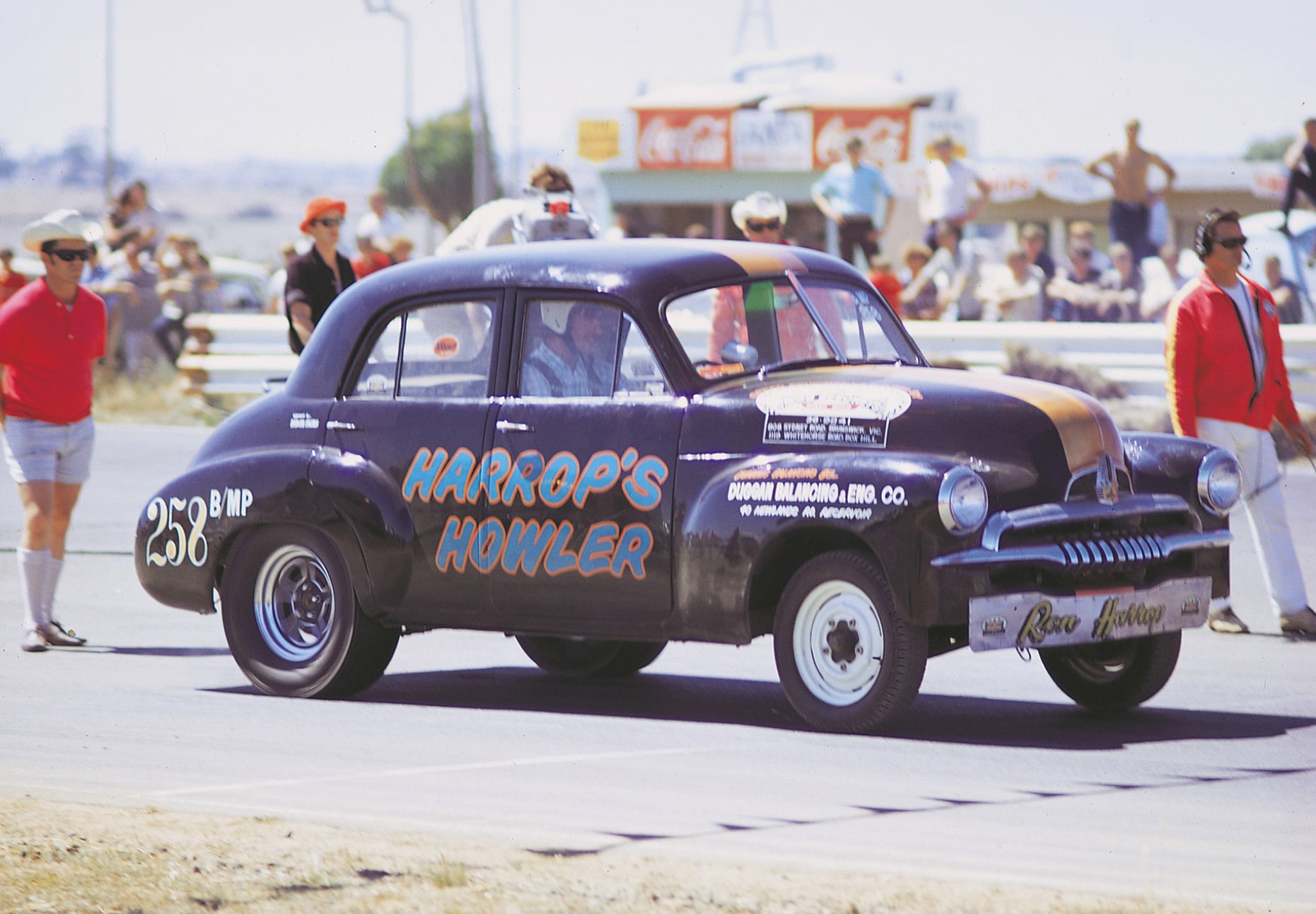
He would soon graduate to a serious drag racing car, a ‘humpy’ Holden called Harrop’s Howler, but along the way he ran into legendary touring car racer and showman Norm Beechey.
“He was my hero,” says Harrop. “He had a speed shop across the road in Brunswick and I’d drool over SU carbies and extractors. I ended up buying a reasonable amount of stuff from them.
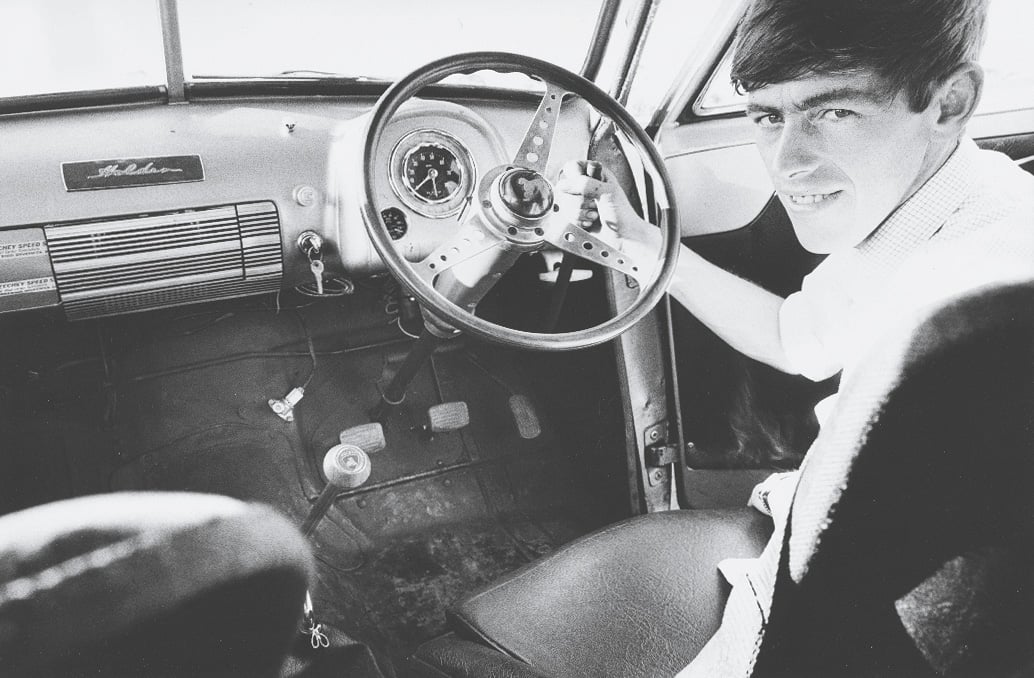
“Norm came in one day and asked what I did. He asked if I could make a Watts Linkage. I ended up fitting that to his Chevy Nova in about 1968. I figured out what made sense. I’ve always got a reason.
It might be the wrong reason, but it’s a reason.”
1
While he was helping Beechey with his then-new Holden Monaro he was also competing with his own EH Holden.
“I ran it at Calder and think I got down to a 14.05 in it. That was pretty well the fastest EH out there.”
But he was told the EH mechanical package would be even quicker in an FJ body. So he got one from Beechey for $29.
“I put all the gear in it and painted it black and I ended up with Harrop’s Howler,” he says. “In the first meeting I did a 13.43… I ended up doing an 11.81, with 343 horsepower at 7800 revs. Nobody was within a second of me.”
His competition career then moved to circuit racing, driving a mate’s EH Holden on the road course at Calder.
“Looking back, I had no idea what I was doing. I got a licence and hotted it up a bit more. I ended up winning the under 3-litre class and coming second overall. (Peter) Brock was the only one who beat me.”
While he was competing he was also doing engineering work for Bob Jane, another touring car legend. And it was Jane who provided the power for Harrop’s move into the big leagues of circuit racing.
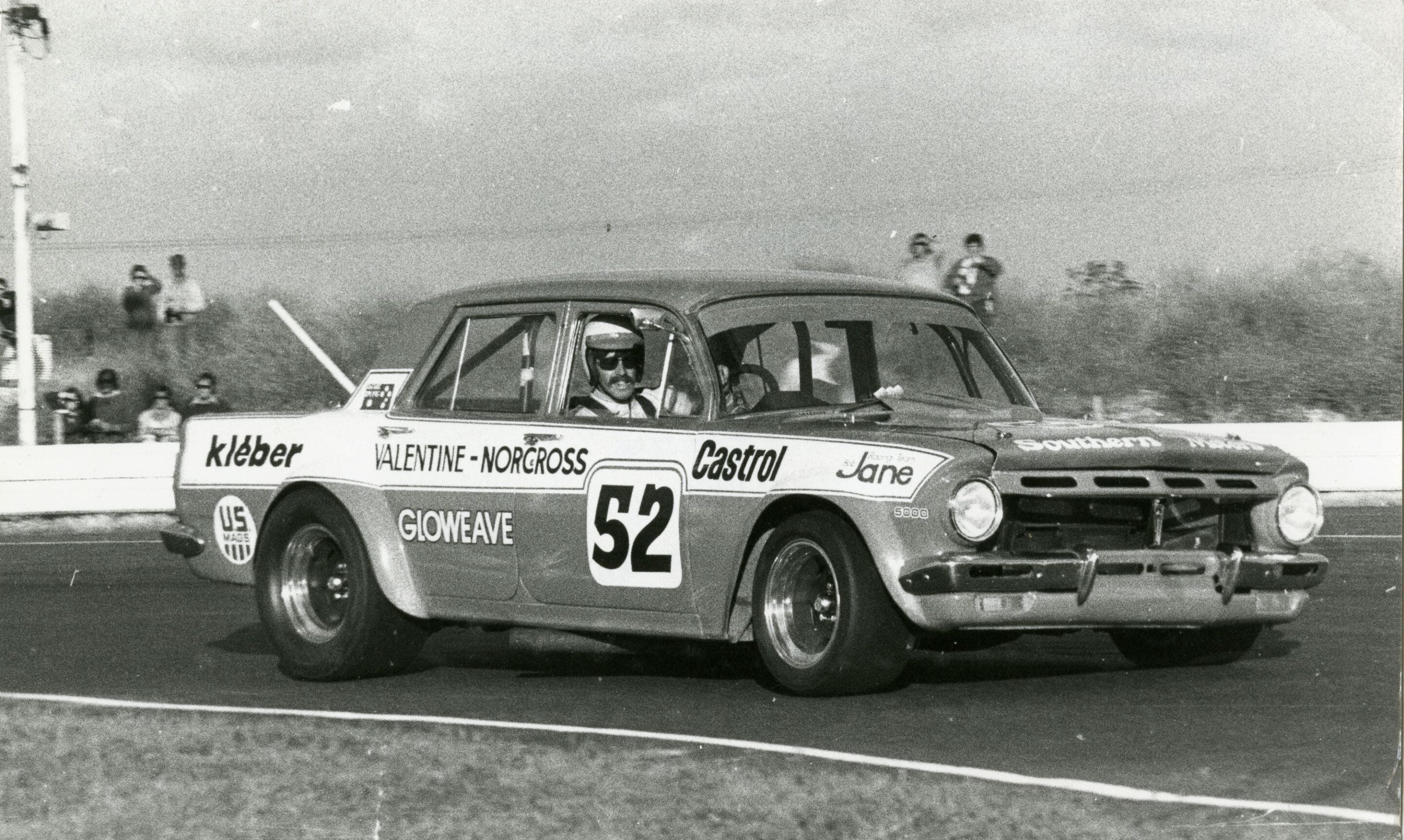
“Bob offered me the Repco Formula 5000 engine. I shoehorned that into the EH, and ended up second on the grid in the Sports Sedans at Calder. I built it in the shed at Brunswick.
“One meeting, Jim Richards’ Mustang had broken down, and I lent him the EH to go to Oran Park in Sydney. He had the lap record in it. He loved driving it. It was very easy to drive. I just made it that way. It had good steering and everything and it worked.”
3
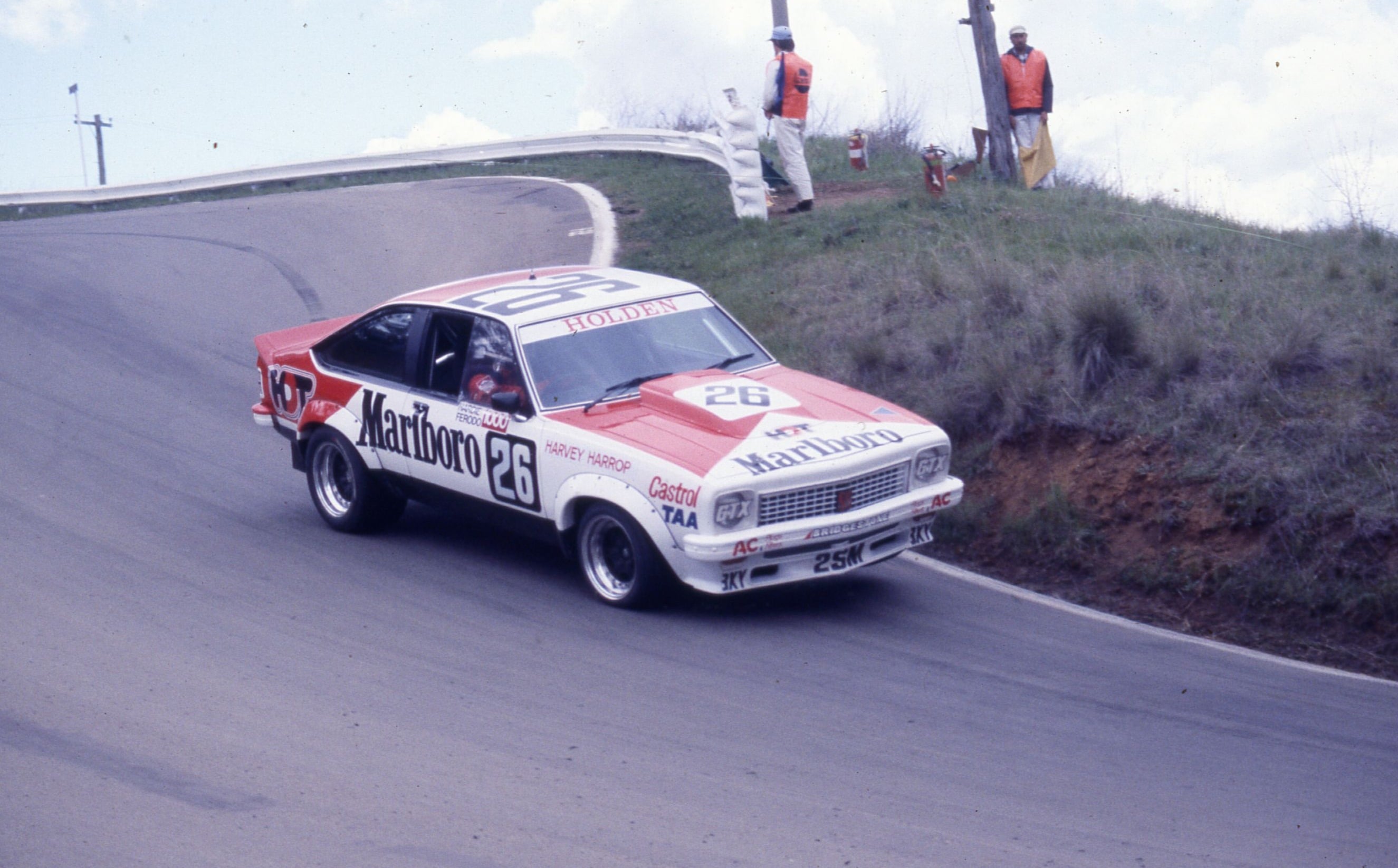
But his driving time was winding down, even though he was signed as a Bathurst co-driver for the Holden Dealer Team in the late 1970s, following a try-out at Calder.
“It was an L34 Torana at Calder, blazing around, and Peter (Brock) was there and he was three-tenths quicker than me. I was devastated and said ‘Take me for a drive’. The only difference was he was more ahead of the car. I got back in and was within a tenth. That was a good bloody lesson.
“I used to enjoy it. But when I stopped driving I didn’t miss it at all. I spent more time on the engineering side and it gave me a very good grounding on what you needed to do.”
He took over the family business in 1980 and moved it from Brunswick to Thornbury. It boomed and at its height had 65 staff doing all sorts of engineering work. It eventually landed at Bell Street in Preston in 2000, before Harrop sold out in 2008.
“That encompassed the machining side, design side and the aluminium casting facility. In hindsight I was probably too hands-on in the workshop, rather than managing the business.
“We had a couple of very large contracts with motor manufacturers and they weren’t selling the car, and the production got turned off. We went to the bank and said we were in a bit of strife. And they
basically just slammed the door on us.
“The opportunity came to sell it and, in hindsight, it works well to this day. Everyone remained employed and I went on to do other things and I’m happy with that.”
So Harrop has plenty of positive memories from the engineering business.
“It was the challenge of the various work that came to us. I’ve had a lot of experience in a lot of things and thoroughly enjoyed the challenge of coming up with solutions.”
1
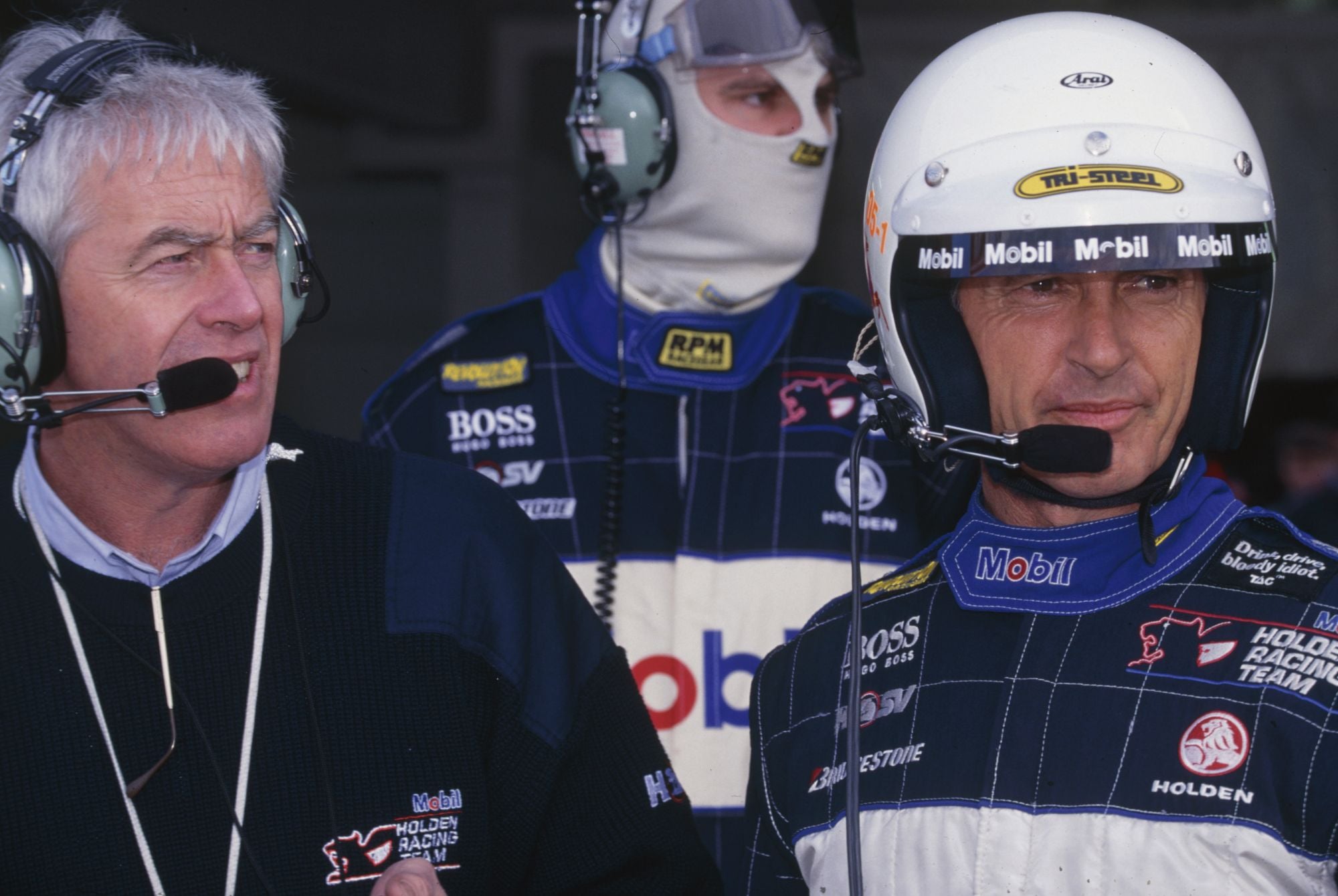
Later, on the racing side, Harrop was a key part in the success of the Holden Racing Team in the final days of Brock’s career and then made a significant difference at Tasman Motorsport with drivers including Jamie Whincup. He was still able to think through problems, design a solution, and then have it made.
“I did about five years with HRT,” he recalls. “I did a bit of work on the cars. Then basically took an overall view of it. Tasman was great fun initially, but then it fell apart for various reasons.”
Which brings the story round to the creation of the EFIJY, told by Peter Hughes, the subject of an earlier Wheels interview.
“The reason we reached out to Ron was because everyone knew he’d had an early history with FJs,” said Hughes. “And we were looking to enhance the car. We quickly agreed that Ron could be handy.
“He had the heritage, but we also needed components that we couldn’t produce in-house. Big brakes. The road wheels, which were 20 inches in the front and 22 on the back. We were also looking to soup-up the LS V8 and Ron’s superchargers came into play.
“He didn’t even blink. A lovely fellow. He said ‘Yeah, we can help you with that’. And it was a good collaboration.
“He has got this can-do attitude. And he was really nice to deal with.”
Harrop’s heydays are in the past, and he admitted he has slowed down, but he still likes a challenge. And he likes to use his hands, and his tools, in the shed.
1
“Life moves on. I’m doing direct injection fuel pumps for a company in the ’States. It’s turned into a big job. I fiddled around for about 18 months, and I’ve been doing that for them.”
He also has his wife Marie, four children and a group of grandchildren, to keep him busy. His car choices are a Porsche Macan as a daily driver, as well as a BMW 645Ci, one of the first in the country in 2004.
“I’ve also got a trusty Falcon and I love that as well.”
And then there is the Howler, which he bought back a couple of years again and intends to bring back to life.
“I’m trying to restore it and put it back to the way it was. And hopefully make it go a bit better. I hope to give it a run.
“I’ve always had enthusiasm to do things, so people have given me the opportunity. They say ‘Can you do that?’ and I say yes. And then I think, goodness, make sure you don’t stuff it up and it usually comes out pretty good.”
Extra archival imagery from Next Media.
This story first appeared in the July 2026 issue of Wheels magazine, now on sale. Subscribe here and gain access to 12 issues for $109 plus online access to every Wheels issue since 1953.
Follow WhichCar/Wheels on Google
Click the button below to make WhichCar by Wheels a preferred source for your news.

We recommend
-
 Features
The Wheels interview: Roland Dane, V8 Supercars pioneer with Triple Eight Racing
Roland Dane’s stellar achievement in Australian motorsport – creating Triple Eight Racing – may not even be the most interesting thing about his long and varied career, discovers Paul Gover.
-
 Features
The Wheels Interview: Mick Doohan, on life after MotoGP glory
Paul Gover catches up with Mick Doohan who at 60, brings the same single-minded determination to his business interests as he did claiming five MotoGP world titles.