Best Small Cars

Gallery 1
Contenders
Winner: MG 4 Urban
8
Price: From $31,990 driveaway (Essence 43)
Drivetrain: Single-motor electric, single-speed transmission, front-wheel drive, 43kWh (Essence
43) or 54kWh (Essence 54) battery
Outputs: 110kW/250Nm (Essence 43), 118kW/250Nm (Essence 54)
Claimed range (WLTP): 316km (Essence 43) – 405km (Essence 54)
Warranty: Seven-year/unlimited km (extendable up to 10 years/250,000km with dealer servicing
until then)
Five-year service cost: $1366
| Driving | |
| Interior | |
| Practicality | |
| Overall value | |
Strengths
- Excellent pricing and specification
- Spacious cabin and boot
- In its element driving around town
Weaknesses
- Active driver aids can be intrusive
- Faux leather trim would be better as cloth
- Charging speeds could be quicker
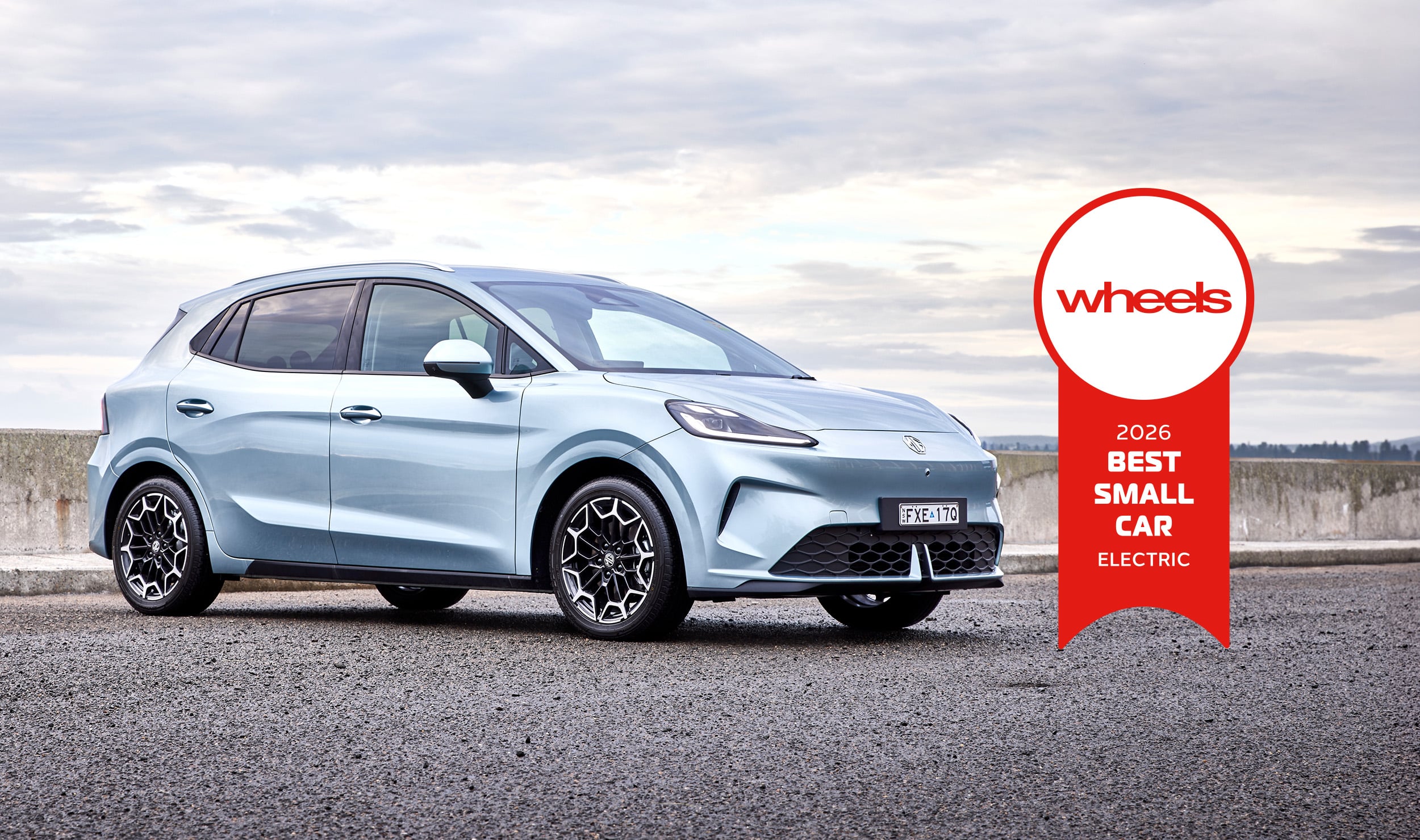
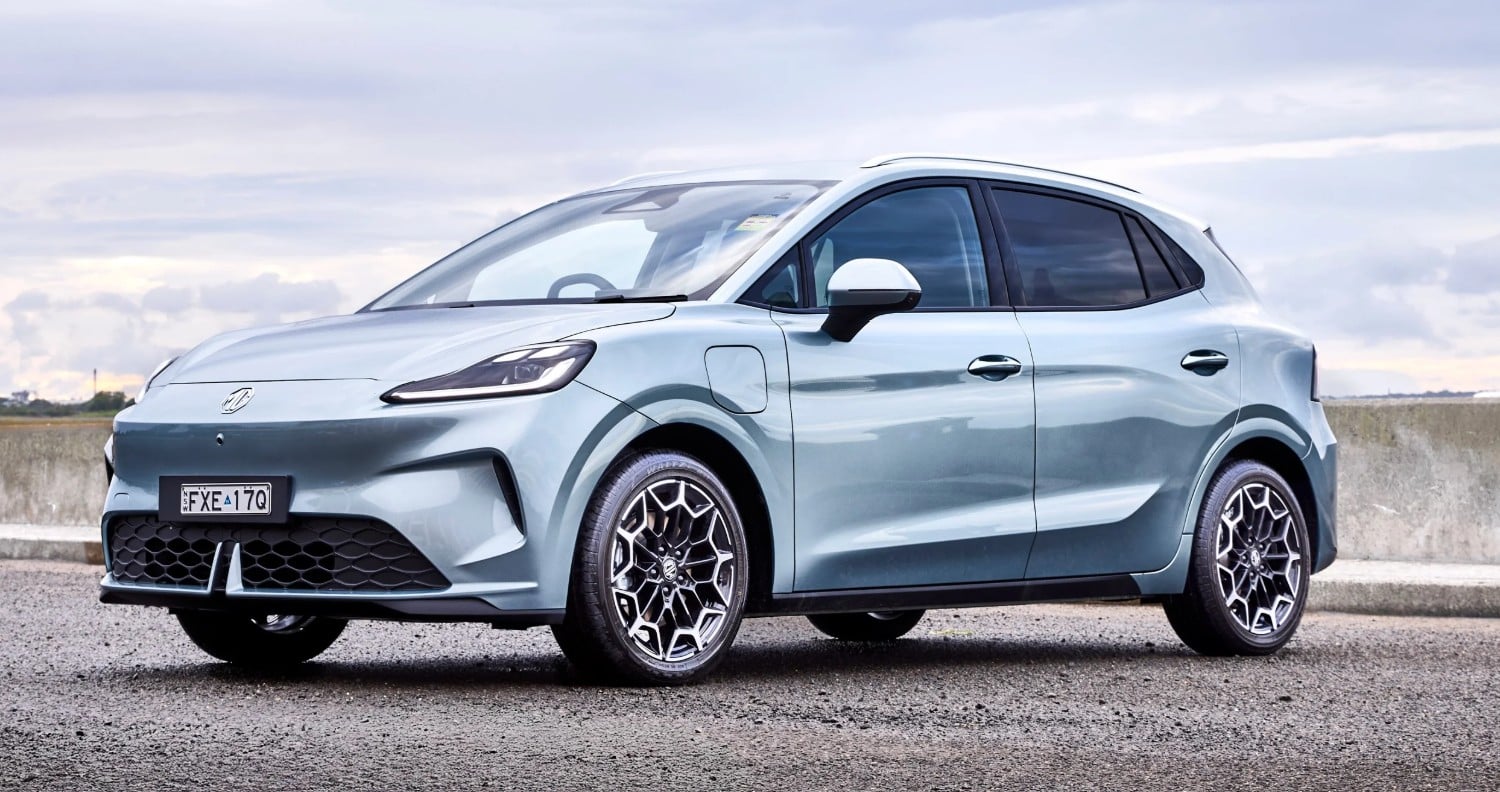
MG was one of the first brands to significantly lower the cost of EV ownership with models such as the ZS EV and MG 4, and now it has launched its most affordable electric vehicle yet. Called the MG 4 Urban, it’s built on a new platform using what MG calls ‘cell-to-body construction’, where the battery casing forms part of the vehicle’s structure to reduce costs. The result is a drive-away starting price of just $31,990. But there’s much more to the Urban than its affordability, and we think it’s the best electric small car you can currently buy.
There’s just one model in the MG 4 Urban range, the Essence, and it’s generously equipped. Standard features include automatic LED headlights, automatic wipers, keyless entry and start, synthetic leather upholstery, an electric driver’s seat, heated front seats and steering wheel, a large 12.8-inch touchscreen with online services, and a comprehensive suite of safety features including adaptive cruise control, adaptive lane guidance and a 360-degree camera.
Two battery options are available: 43kWh and 54kWh, offering claimed WLTP driving ranges of 316km and 405km respectively. DC charging performance isn’t class-leading, however, with maximum charging rates of 82kW for the smaller battery and 87kW for the larger one, resulting in claimed 10-80 per cent charging times of 28-30 minutes. AC charging is limited to 6.6kW, although that’s still sufficient for a full overnight recharge at home.
A 110kW/250Nm front-mounted electric motor powers the 43kWh version, while the 54kWh model gains an extra 8kW to offset the larger battery’s additional weight. Performance is more than adequate, and aside from some overzealous driver assistance systems – particularly the adaptive cruise control and lane-keeping assistance – the Urban delivers a refined and comfortable driving experience.
The cabin is modern, well finished and highly practical. While the 12.8-inch touchscreen controls most functions, MG has wisely retained physical climate and volume controls beneath the display for easier operation on the move. Storage throughout the cabin is generous, rear-seat space easily accommodates taller adults, and the boot offers a healthy 382 litres. A large underfloor storage compartment increases capacity to 480 litres, while folding the rear seats expands total cargo space to 1364 litres.
Running costs are another highlight. The MG 4 Urban is energy efficient, while servicing costs just $1366 over the first five years. MG also backs it with a seven-year/unlimited-kilometre warranty, which can be extended to 10 years or 250,000km if the vehicle is serviced through the dealer network, making it one of the longest warranty packages on the Australian market.
Overall, the MG 4 Urban is a standout in the Wheels Best Small Car 2026 – Electric category. It combines sharp pricing, generous equipment, useful driving range, excellent practicality and a polished driving experience in a highly convincing package. The driver assistance systems could be better calibrated, charging speeds could be faster and the rear seats don’t fold completely flat, but these are relatively minor criticisms. More importantly, it undercuts most rivals while delivering a level of capability that makes it a genuine class benchmark.
BYD Atto 1

9
Price: From $23,990 plus on-road costs (Essential)
Drivetrain: Single-motor electric, single-speed transmission, front-wheel drive, 31kWh (Essential)
or 43.2kWh (Premium) battery
Outputs: 65kW/175Nm (Essential), 115kW/220Nm (Premium)
Claimed range (WLTP): 220km (Essential), 310km (Premium)
Warranty: Six-year/150,000km
Five-year service cost: $1391
| Driving | |
| Interior | |
| Practicality | |
| Overall value | |
Strengths
- Reasonable range figures across the line-up
- Mature to drive and surprisingly punchy
- Spacious inside, despite tiny exterior dimensions
Weaknesses
- Base model Essential could be better equipped
- No blind-spot monitoring, rear cross-traffic alert or rear wiper
- Touchscreen is difficult to use at speed
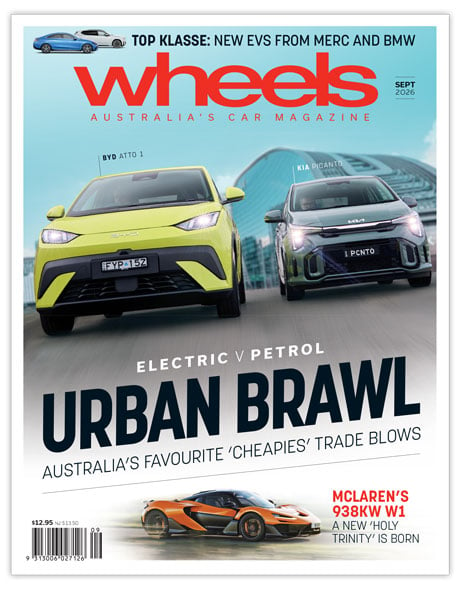
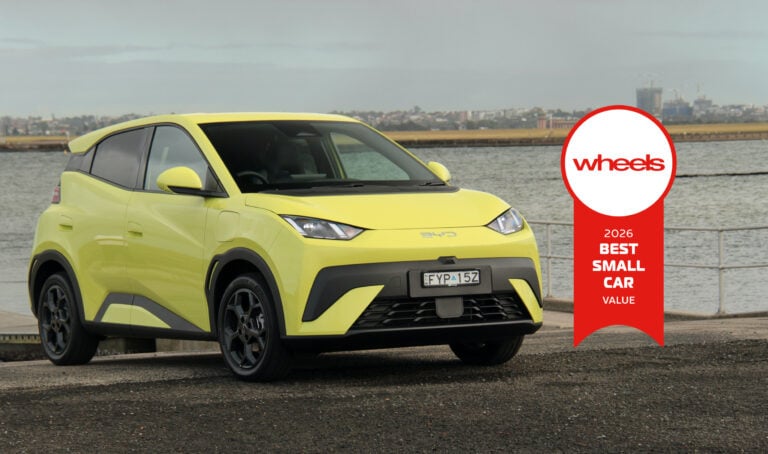
The BYD Atto 1 has changed the conversation around electric vehicles in Australia. Its aggressive pricing removes one of the biggest barriers to EV ownership, proving buyers no longer need to spend well over $40,000 to make the switch from petrol. Instead, the Atto 1 is a well-rounded electric hatchback priced below many comparable internal combustion models.
While affordability is its biggest selling point, the Atto 1 offers far more than just a low purchase price. Even the entry-level Essential is well equipped, featuring a large 10.1-inch infotainment system with live services and wireless smartphone mirroring, along with a reasonable suite of active safety features. However, blind-spot monitoring, rear cross-traffic alert and even a rear wiper remain unavailable.
The cabin feels modern and thoughtfully designed, with plenty of storage and clever packaging that provides enough room for four occupants. Its 308-litre boot initially appears quite small, but a deep underfloor storage compartment adds useful practicality.
The Atto 1 is also more accomplished to drive than you might expect. Instant electric torque makes it feel lively around town, while its compact dimensions and light controls make parking and urban driving effortless. The suspension delivers a comfortable ride with enough composure to inspire confidence beyond the city limits, giving the car a surprisingly mature feel.
The entry-level Essential offers a WLTP driving range of 220km, which is more than adequate for most urban drivers, while upgrading to the Premium adds another 90km for greater peace of mind. DC charging peaks at 65kW for the Essential and 85kW for the Premium, with both claiming a 10-80 per cent charging time of around 40 minutes. At home, AC charging of up to 11kW is supported, which is impressively quick.
The Atto 1’s value extends well beyond the showroom. Electricity remains significantly cheaper than petrol for most Australians, while the simplicity of an electric drivetrain reduces servicing requirements compared with an equivalent internal combustion vehicle. Five years of servicing costs just $1391, or $278 per year. BYD also backs the Atto 1 with a six-year/150,000km warranty, although some rivals offer longer coverage.
Of course, there are compromises. The Atto 1 seats only four because it has four seatbelts, while larger and more practical rivals such as the MG 4 Urban aren’t dramatically more expensive and are similarly priced to the Premium once on-road costs are included. It also misses some desirable safety features, and the touchscreen can be fiddly to use on the move because of its small on-screen touch points.
Ultimately, the BYD Atto 1 is a compelling option because it makes the transition to electric motoring more affordable than ever. It delivers the low running costs and smooth performance buyers expect from an EV at a significantly lower price than most rivals. It’s not just cheap for an EV – it’s inexpensive for a new car, full stop. For motorists seeking the lowest-cost entry into EV ownership, the Atto 1 is an impressive all-rounder.
Fiat 500e
1
Price: From $52,500 plus on-road costs
Drivetrain: Single-motor, single-speed transmission, 42kWh battery
Outputs: 87kW/220Nm
Claimed range (WLTP): 311km
Warranty: Three-year/150,000km
Five-year service cost: $1250
| Driving | |
| Interior | |
| Practicality | |
| Overall value | |
Strengths
- Cute and characterful throughout
- Zippy driving experience
- A perfect car for urban driving
Weaknesses
- Expensive to buy
- Lacklustre warranty
- Tiny back seat and boot
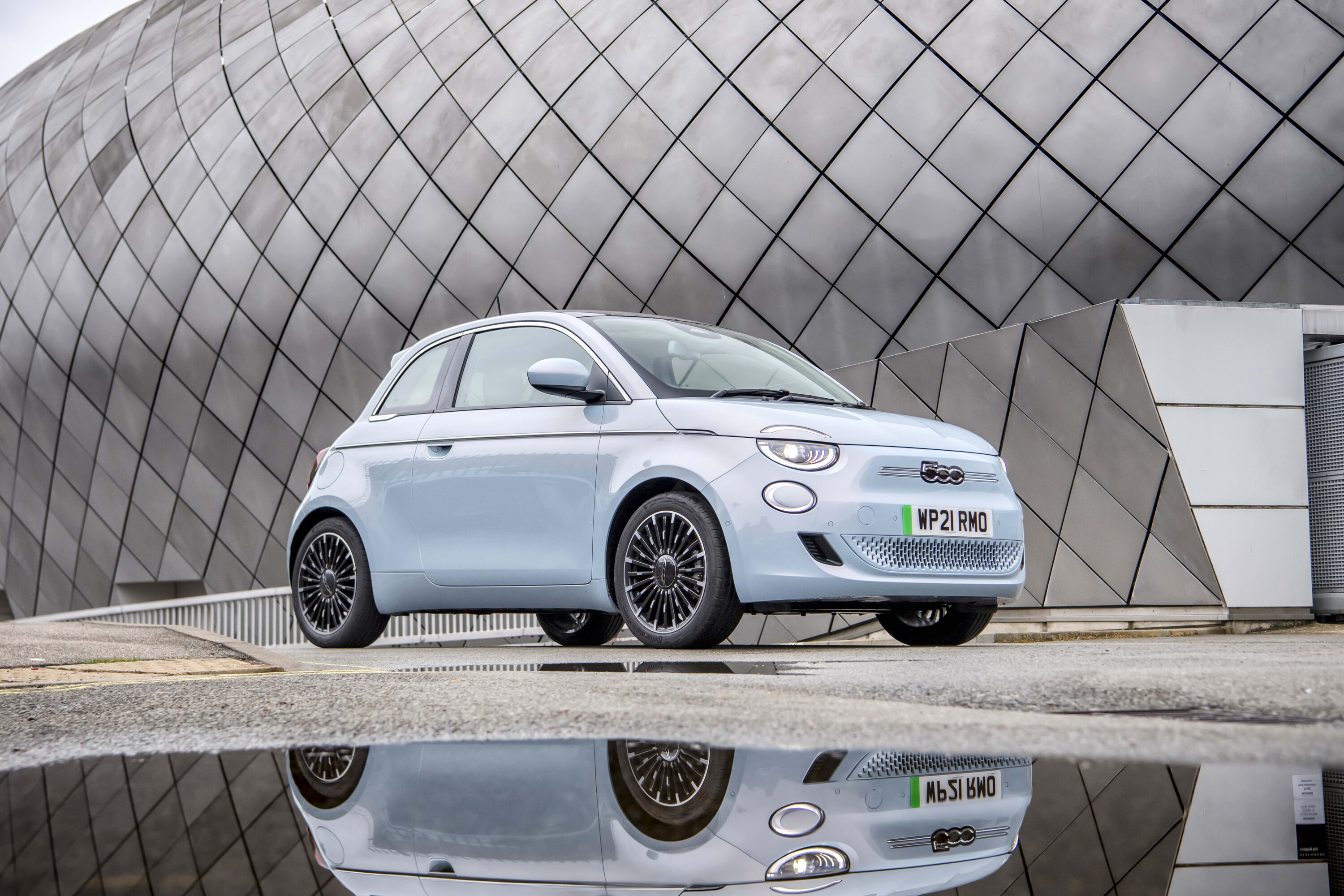
The Fiat 500e is one of those rare cars whose personality outweighs its shortcomings. It’s undeniably cute and instantly recognisable as a Fiat 500 – something that can’t be said of many new car designs in Australia in 2026. In a sea of increasingly similar-looking vehicles, Fiat’s retro-inspired city car stands apart with unmistakably Italian styling, a premium cabin and an undeniable sense of fun. It’s far from the cheapest or most practical EV on the market, but for buyers who value character above almost everything else, few cars can match its appeal.
Pricing is where the 500e faces its biggest challenge. At $52,500 plus on-road costs, it sits well above more practical alternatives such as the MG 4 Urban and BYD Dolphin, both of which offer greater interior space and substantially longer driving ranges for significantly less money. That makes the Fiat a heart-over-head purchase, although buyers are rewarded with generous standard equipment.
Australian-delivered 500e models are offered exclusively in La Prima specification, the highest trim level available in Europe. Standard features include 17-inch alloy wheels, automatic LED lighting, a fixed panoramic glass roof, a 10.25-inch touchscreen with wireless Apple CarPlay and Android Auto, a digital driver’s display, automatic climate control, adaptive cruise control, autonomous emergency braking, lane-keeping assistance and a reversing camera. The cabin feels more premium than its size suggests, with quality materials and an airy, stylish design that perfectly suits the car’s personality.
Power comes from an electric motor producing 87kW and 220Nm, drawing energy from a 42kWh lithium-ion battery. While relatively small, it still delivers a respectable claimed WLTP driving range of 311km.
The 0-100km/h sprint takes 9.0 seconds, making performance brisk rather than rapid, but the instant torque is ideal for darting through city traffic. Combined with its compact dimensions and light steering, the 500e feels perfectly at home in urban environments. DC fast charging of up to 85kW allows a claimed 10-80 per cent recharge in around 35 minutes, while 11kW AC charging makes overnight charging straightforward.
Fiat‘s ownership package remains one of the weakest in the class. The 500e is covered by a three-year/150,000km vehicle warranty, although the high-voltage battery is protected separately for eight years or 160,000km. Servicing is a stronger point, costing just $250 per visit for the first eight years, equating to $1250 over the first five years.
Ultimately, the Fiat 500e isn’t the logical choice in Australia’s growing EV market, but it was never intended to be. Instead, it’s a stylish, characterful city car that prioritises design, premium appeal and driving enjoyment over outright value and practicality. It won’t suit every EV buyer – or, judging by its sales figures, many buyers at all – but for those wanting an electric car with genuine personality in a compact package, the 500e remains a charming choice.
GAC Aion UT
8
Price: From $31,990 plus on-road costs (Premium), $35,990 +ORC (Luxury)
Drivetrain: Single-motor electric, single-speed transmission, front-wheel drive, 60kWh battery
Outputs: 150kW/210Nm
Claimed range (WLTP): 430km
Warranty: Eight-year/unlimited km
Five-year service cost: $1607
| Driving | |
| Interior | |
| Practicality | |
| Overall value | |
Strengths
- Strong performance
- Quite well equipped but low priced too
- Long warranty and cheap servicing
Weaknesses
- The touchscreen controls almost everything
- Oversensitive active safety features
- Slow DC charging speed
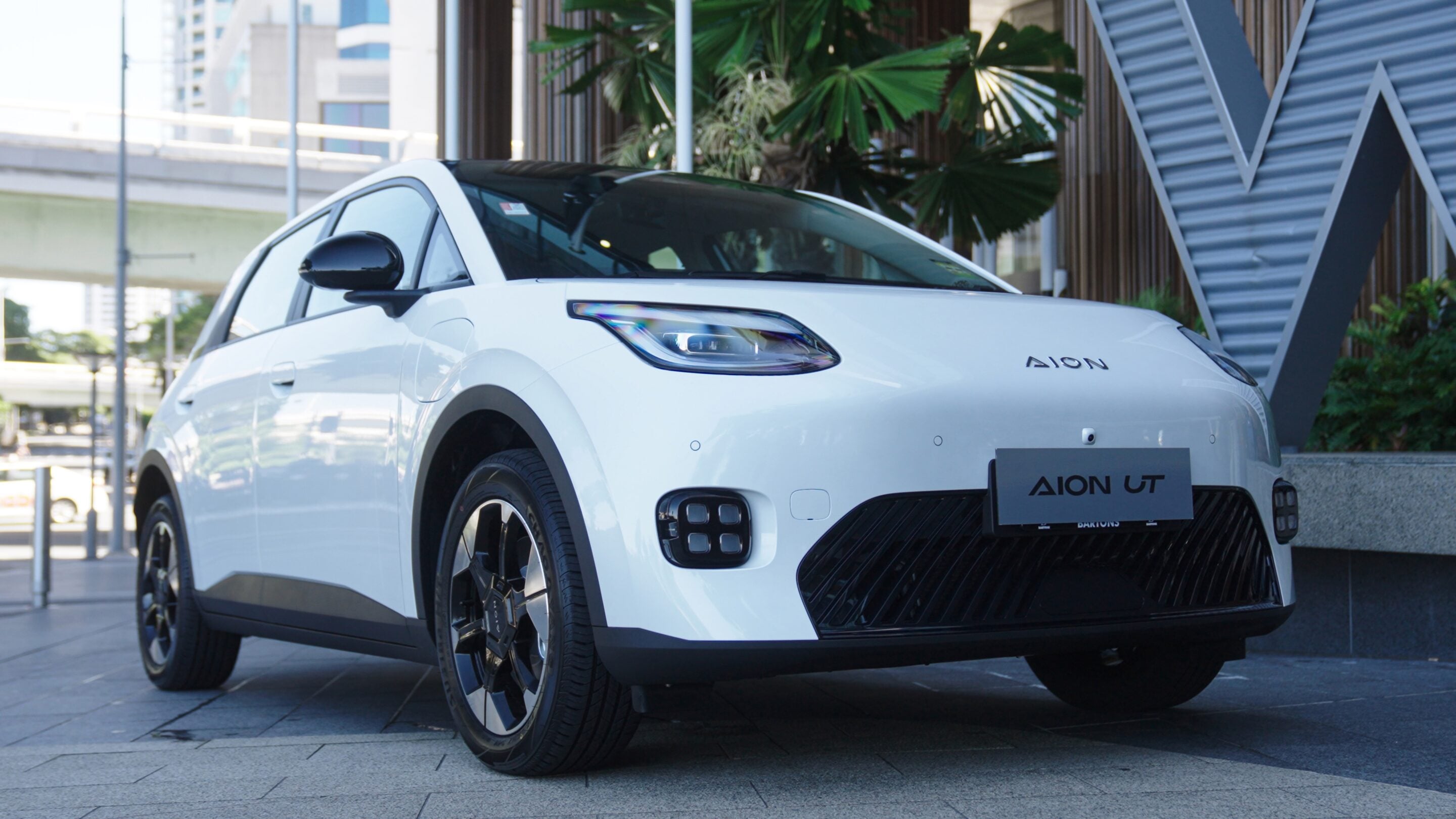
Who is GAC, you may well ask? It’s another Chinese car maker to recently launch in Australia, but this one may have broader appeal because, in China, it’s Toyota’s local joint-venture partner and is often described as “the Chinese Toyota”. Given Toyota’s enduring popularity in Australia, even that indirect association could work in GAC’s favour. More importantly, is its product any good? Based on the Aion UT electric hatchback, we think GAC is off to a strong start.
Like many Chinese newcomers, the Aion UT makes an excellent first impression. The cabin feels well finished and is surprisingly spacious, with ample room for six-foot-tall adults in the rear and a practical 321-litre boot.
As with many Chinese rivals, pricing is one of its biggest strengths. Starting from $31,990 plus on-road costs – although that figure is currently available as a driveaway deal until September 30 – the Aion UT undercuts many direct competitors and matches the MG 4 Urban. Even the higher-spec Luxury remains comfortably below $40,000 driveaway.
Despite its competitive pricing, the equipment list is generous. Standard features include automatic LED lighting, a 14.6-inch central touchscreen with wireless Apple CarPlay and Android Auto, an 8.8-inch digital driver’s display, automatic climate control, wireless phone charging and a comprehensive suite of driver assistance systems. The Luxury adds a panoramic sunroof with a sunshade, a power tailgate, a ventilated driver’s seat and auto-folding mirrors.
Power comes from a front-mounted electric motor producing 150kW and 210Nm, fed by a 60kWh LFP battery. Performance is lively, with a claimed 0-100km/h time of around 7.3 seconds, while the smooth power delivery makes it particularly enjoyable around town. A claimed WLTP driving range of up to 430km is competitive, although the maximum 87kW DC fast-charging rate could be higher.
GAC backs the Aion UT with one of the strongest warranty packages in the segment. The vehicle is covered by an eight-year/unlimited-kilometre warranty, while the battery receives separate cover for eight years or 200,000km. Five years of servicing costs a reasonable $1607, or an average of $321 per year.
The GAC Aion UT is an impressive debut that suggests GAC could become a serious player in Australia. It combines competitive pricing, generous equipment, strong performance, a spacious cabin and useful driving range – all qualities that should attract plenty of buyers. Against it are the relatively modest DC charging speed, a touchscreen that controls almost every function and active safety systems that can be overly intrusive. Even so, for value-conscious buyers looking to make the switch to electric motoring, it’s well worth considering.
Mercedes-Benz CLA
7
Price: From $72,200 plus on-road costs (CLA 200), $91,300 +ORC (CLA 350 4Matic)
Drivetrain: Single or dual-motor electric, two-speed transmission, 58kW (CLA 200) or 85kWh (CLA
350 4Matic)
Outputs: 165kW/335Nm (CLA 200), 260kW/515Nm (CLA 350 4Matic)
Claimed range (WLTP): 470km (CLA 200) – 663km (CLA 350 4Matic)
Warranty: Five-year/unlimited km
Five-year service cost: $4295
| Driving | |
| Interior | |
| Practicality | |
| Overall value | |
Strengths
- Impressive driving range and efficiency
- Well equipped across the range
- Great to drive, regardless of model
Weaknesses
- Too much screen
- Quite expensive to service
- Somewhat tight rear seat
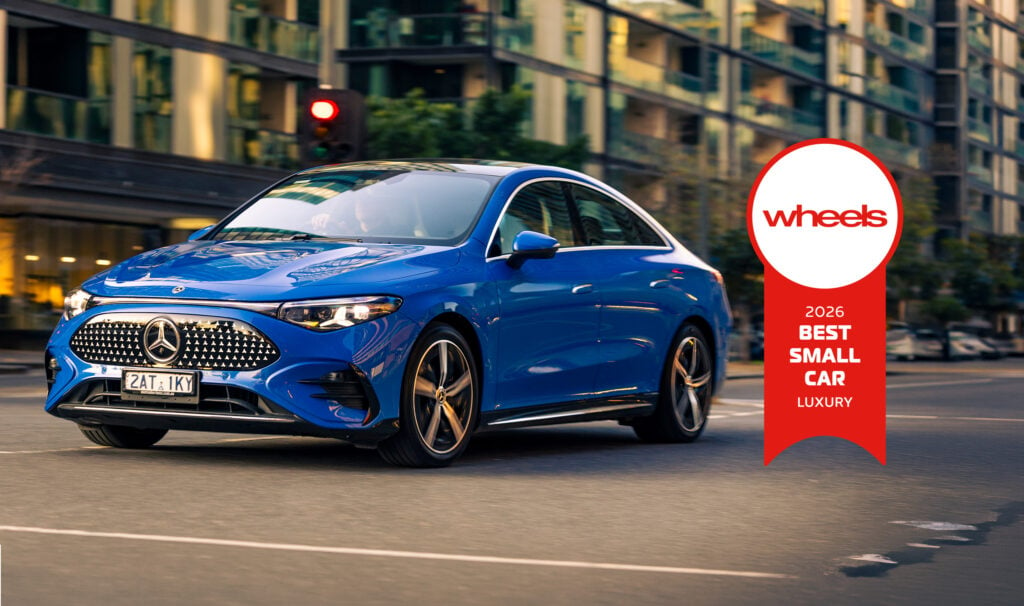
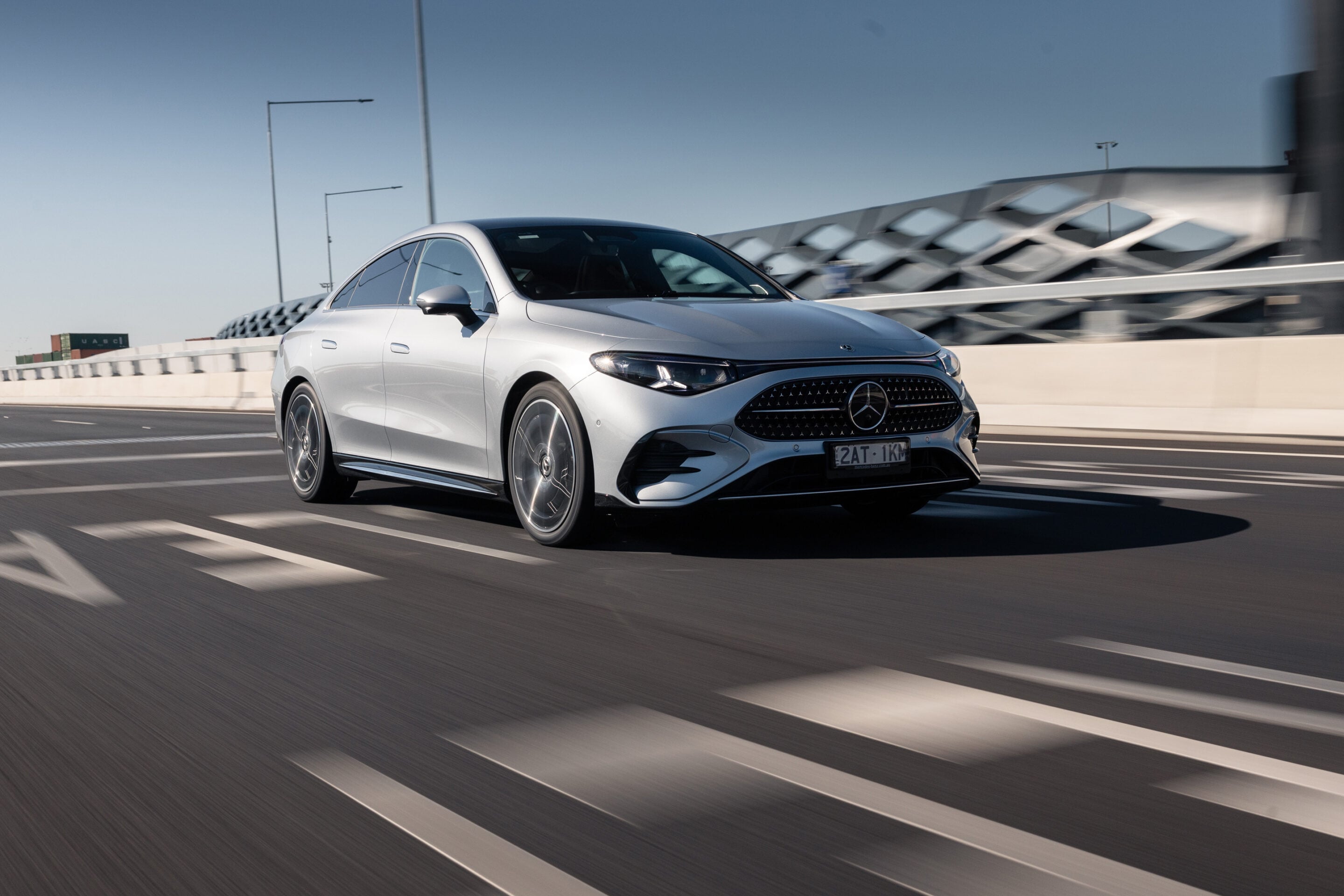
Now in its third generation, the Mercedes-Benz CLA has entered a new era, offering both electric and hybrid powertrains to appeal to a broader range of buyers. To achieve this, Mercedes-Benz developed an all-new platform designed to maximise efficiency, enable ultra-fast charging in EV form and accommodate a new hybrid drivetrain. The result is one of the most technologically advanced small cars on sale – but is it the best?
In Australia, the all-electric range starts from $72,200 plus on-road costs, while the more affordable hybrid line-up opens at $66,500 plus on-road costs for the CLA 180, rising to $68,100 for the CLA 200 and $84,300 plus on-road costs for the flagship CLA 220 4Matic. That places it almost $5000 above the entry-level BMW 2 Series Gran Coupe and nearly $9000 dearer than the base Audi A3 sedan, but the CLA is an all-new model that feels significantly more modern.
Mercedes-Benz has also ensured the CLA is generously equipped. Even the entry-level CLA 180 comes standard with automatic LED lighting, Artico synthetic leather upholstery, wireless smartphone charging, a panoramic glass roof and the brand’s new MB.OS operating system, which integrates Google and Microsoft AI technologies. Interior quality is impressive, while the sleek dashboard and ambient lighting create a futuristic atmosphere. Rear-seat space is only average, although the 405-litre boot is competitive. Buyers needing more practicality will also be able to choose the CLA Shooting Brake, due to arrive in Australia later this year.
The mild-hybrid range is powered by a single 1.5-litre turbocharged four-cylinder engine offered in three outputs: 100kW/200Nm in the CLA 180, 120kW/250Nm in the CLA 200 and 140kW/300Nm in the all-wheel-drive CLA 220 4Matic. Performance is strong throughout the range, with even the CLA 180 reaching 100km/h in less than nine seconds (8.0 seconds for the CLA 200 and 7.1 seconds for the CLA 220 4Matic). The hybrid system also allows the car to operate on electric power alone more often than expected for a mild hybrid.
Fuel efficiency is another highlight. The CLA 180 and CLA 200 are both rated at 5.4L/100km combined, while the more powerful all-wheel-drive CLA 220 4Matic consumes a claimed 5.8L/100km.
Mercedes-Benz Australia backs the CLA with a five-year/unlimited-kilometre warranty, which is competitive for a premium brand, although shorter than many mainstream rivals. Servicing is expensive, however, with a prepaid five-year plan for the mild-hybrid range costing $6710, or $1342 per year. The upside is long 25,000km service intervals.
Regardless of the drivetrain, the new Mercedes-Benz CLA is an impressive effort. Efficient yet punchy powertrains, generous standard equipment, cutting-edge in-car technology and relatively competitive pricing make it a compelling premium small car. Buyers can also choose an all-electric version, while the only real drawbacks are the modest rear-seat space and high servicing costs. Overall, the new CLA sets a high benchmark for premium hybrid small cars.
MG 4
7
Price: From $39,990 driveaway (Essence 64), $47,990 driveaway (XPower)
Drivetrain: Single- or dual-motor electric, rear- or all-wheel drive, single-speed transmission,
64kWh LFP (Essence 64) or NCM (XPower) battery
Outputs: 140kW/350Nm (Essence 64), 320kW/600Nm
Claimed range (WLTP): 452km (Essence 64), 405km (XPower)
Warranty: Seven-year/unlimited km (extendable up to 10 years/250,000km with dealer servicing
until then)
Five-year service cost: $1380 (Essence 64), $1434 (XPower)
| Driving | |
| Interior | |
| Practicality | |
| Overall value | |
Strengths
- Lovely chassis, tight handling
- Very quick XPower
- Funky styling, high quality cabin
Weaknesses
- Not as affordable as it once was
- Active safety tech can grate
- No spare wheel
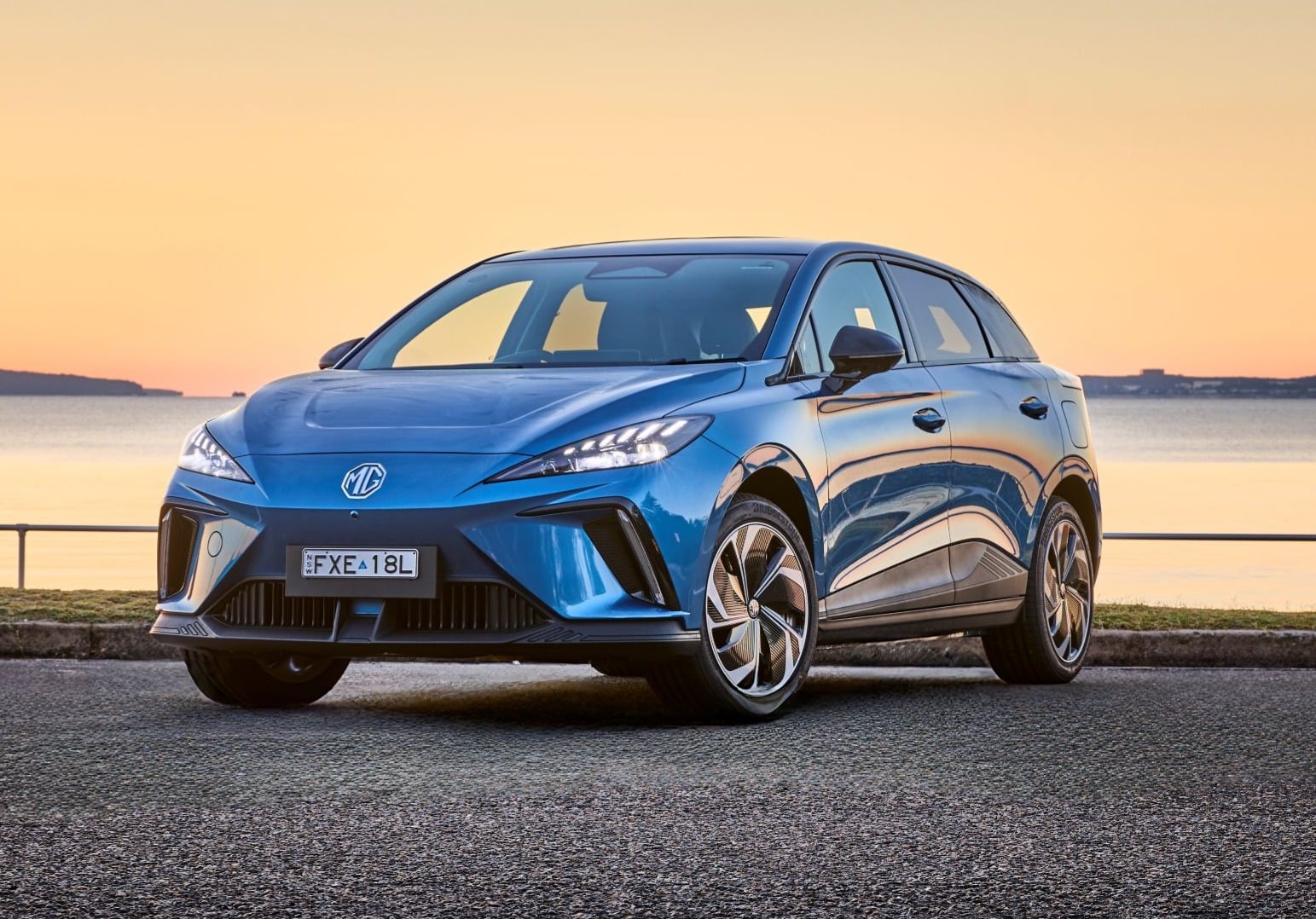
Before the MG 4 arrived, MG’s only electric vehicle in Australia was the ZS EV. While it was one of the market’s most affordable EVs, it wasn’t especially impressive. That changed with the launch of the MG 4 in 2023, which proved MG could build an EV that was not only affordable but also genuinely engaging to drive. Three years and a facelift later, does it still stack up? Absolutely.
Price remains one of the MG 4’s greatest strengths, although the updated model is more expensive to make room for the cheaper MG 4 Urban below it. The range now starts at $39,990 driveaway for the Essence 64, while buyers chasing serious performance can step up to the all-wheel-drive XPower for $47,990 driveaway. Although the previous entry-level variants have been replaced by the Urban, the MG 4 range still caters to everyone from budget-conscious commuters to keen drivers.
Standard equipment is generous across both models. The Essence 64 comes with automatic LED lighting, 18-inch alloy wheels, synthetic leather upholstery with cloth inserts, heated front seats, electric driver’s seat adjustment, a 10.25-inch digital driver’s display, a 12.8-inch touchscreen with live services and wireless smartphone mirroring, plus a comprehensive suite of safety features including adaptive cruise control, lane-keeping assistance, blind-spot monitoring with rear cross-traffic alert, automatic high beam and a 360-degree camera. The XPower adds unique alloy wheels, orange brake calipers and sports front seats with suede inserts.
The facelift also brought a major cabin upgrade. The dashboard now adopts a design similar to the MG S5 EV SUV and MG 4 Urban, featuring a large central touchscreen, a redesigned centre console and significantly more soft-touch materials. Front-seat comfort is good, rear-seat space is generous, and the boot offers a useful 350 litres, expanding to 1165 litres with the rear seats folded.
The previous MG 4 offered 51kWh, 64kWh and 77kWh battery options, but the updated model is simplified to two 64kWh versions. The Essence 64’s newer LFP battery delivers up to 452km of claimed range and supports faster DC charging at up to 154kW, allowing a claimed 10-80 per cent recharge in 25 minutes – five minutes quicker than the XPower’s 140kW maximum.
Power has also been streamlined. The Essence 64 uses a rear-mounted electric motor producing 140kW and 350Nm, delivering a claimed 0-100km/h time of 7.5 seconds. The XPower adds a front motor for combined outputs of 320kW and 600Nm, slashing the sprint to just 3.8 seconds. The rear-drive Essence 64 remains the pick for enthusiastic drivers thanks to its balanced, communicative chassis, while the XPower’s extra front motor gives it a more front-driven character. Both models ride comfortably and are impressively refined.
MG also offers one of the strongest ownership packages in the industry. Every MG 4 comes with a seven-year/unlimited-kilometre warranty, extendable to 10 years or 250,000km through dealer servicing. Servicing is also affordable, costing between $1380 and $1434 for the first five years or 125,000km, whichever comes first.
Ultimately, the MG 4 remains one of the strongest electric small cars on the market. It’s practical, enjoyable to drive, generously equipped and available in two distinct performance levels to suit different buyers. It’s no longer as affordable as it once was, the driver assistance systems can be intrusive and, like many EVs, there’s no spare wheel. Even so, with its outstanding warranty, competitive pricing and rewarding driving experience, the MG 4 remains one of the standout contenders in the small-car segment, regardless of powertrain.
Mini Cooper SE
5
Price: From $58,990 plus on-road costs (SE), $63,990 +ORC (JCW E)
Drivetrain: Single-motor electric, single-speed transmission, 49.2kWh battery
Outputs: 160kW/330Nm (SE), 190kW/350Nm (JCW E)
Claimed range (WLTP): 371km (JCW E) – 402km (SE)
Warranty: Five-year/unlimited km
Six-year service cost: $2250
| Driving | |
| Interior | |
| Practicality | |
| Overall value | |
Strengths
- Typical Mini go-kart handling
- Punchy performance in either model
- Character throughout
Weaknesses
- Not cheap to buy in any spec
- Not very practical
- Firm ride quality
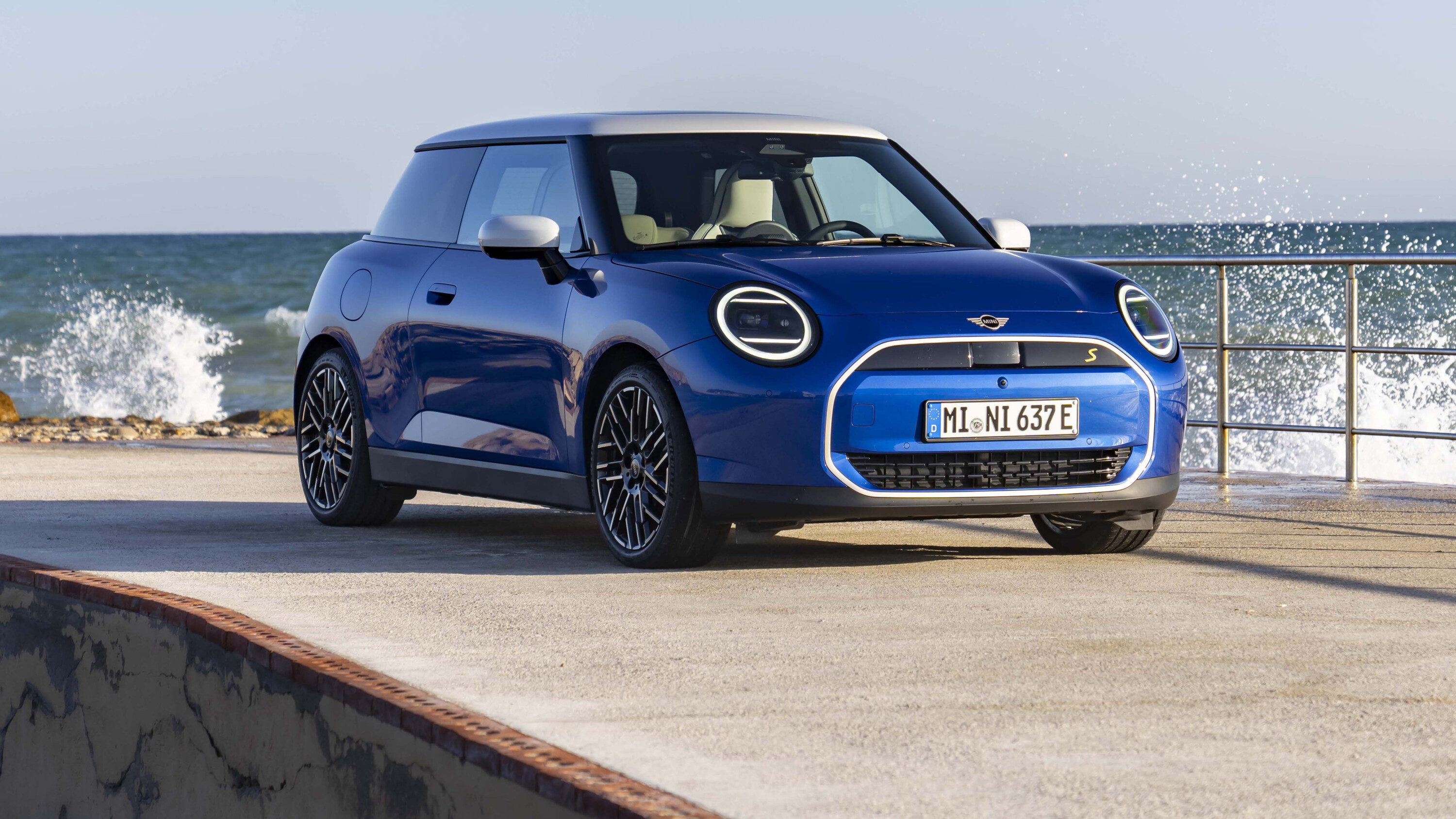
Mini has always been about building small cars that put a smile on your face, and the latest Cooper SE is no exception. While many electric cars prioritise efficiency or maximum driving range, the Cooper SE focuses on delivering playful handling and unmistakable Mini character. It may not be the most practical small EV on sale, but few can match its blend of premium appeal, performance and driving enjoyment.
Pricing places the Cooper SE firmly at the premium end of the small EV segment. Starting from around $58,990 before on-road costs in Australia, it’s considerably more expensive than mainstream alternatives. It’s certainly not cheap, but the modern Mini brand has never competed on price alone. Instead, buyers are paying for distinctive design, high-quality materials and the brand’s trademark go-kart-like driving experience.
Thankfully, the Cooper SE is generously equipped to help justify its price. Standard features include LED lighting, 18-inch alloy wheels, a circular OLED touchscreen running the latest MINI Operating System 9 with wireless Apple CarPlay and Android Auto, a head-up display, dual-zone climate control, heated front seats, wireless phone charging and a comprehensive suite of active safety features, including adaptive cruise control and lane-keeping assistance.
Inside, the minimalist cabin feels every bit as premium as the price tag suggests, with recycled materials, clever design touches and excellent build quality. The central circular touchscreen is a highlight, offering crisp graphics, fast responses and extensive functionality. Practicality isn’t a strong point, however. Rear-seat space is tight, while the boot offers 210 litres with the seats in place and 800 litres when they’re folded.
Beneath the body sits a 49.2kWh battery powering a front-mounted electric motor producing either 160kW and 330Nm in the Cooper SE or 190kW and 350Nm in the higher-performance JCW E. That’s enough for a 0-100km/h time of just 6.7 seconds in the Cooper SE and 5.9 seconds in the JCW E, making both among the quickest cars in the segment. More importantly, the instant torque, low centre of gravity and sharp steering make them feel agile and engaging in a way few electric hatchbacks can match.
Driving range has also improved significantly over the previous-generation electric Mini, almost doubling in the process. The Cooper SE offers a claimed WLTP range of up to 402km, while the more powerful JCW E sacrifices 31km of range. DC fast charging at up to 95kW enables a claimed 10-80 per cent recharge in around 30 minutes, while AC charging of up to 22kW is also supported, which is impressive.
Mini Australia backs both models with a five-year/unlimited-kilometre warranty, while a six-year prepaid service package costs $2250, or $375 per year.
Ultimately, the Mini Cooper SE and JCW E aren’t trying to be the value leaders of the electric small-car segment, nor the most practical or longest-range options. Instead, they offer genuine character through distinctive styling, eye-catching interiors, brisk performance and an engaging driving experience. As Minis always have, they prove that not every car has to look or drive the same – and that’s exactly why we love them.
Best Small Cars in Australia
Looking to get into a brand-new small car? Our stories below will guide you to the model that best suits your needs:
Follow WhichCar/Wheels on Google
Click the button below to make WhichCar by Wheels a preferred source for your news.