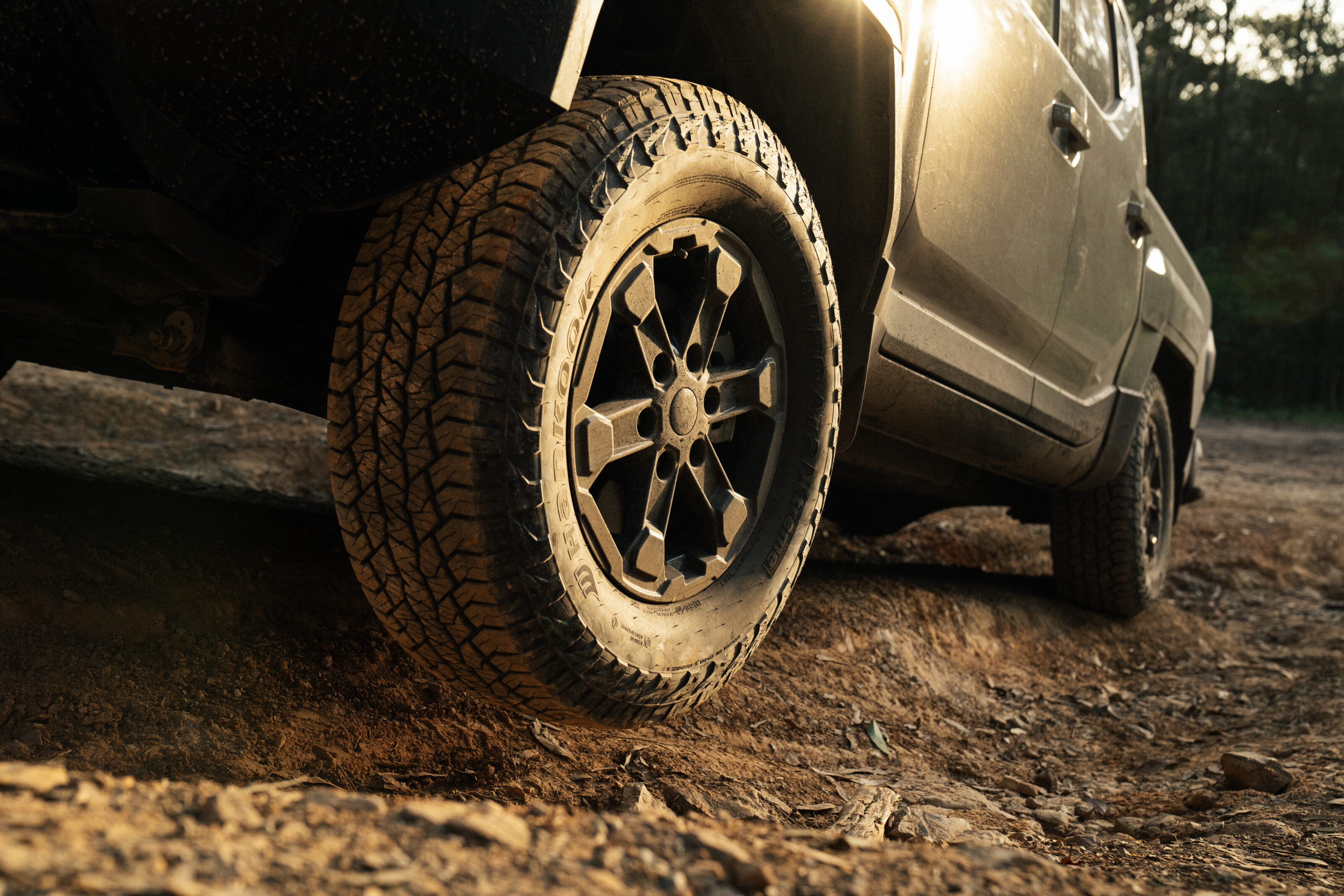
Kinglake is still recovering from Black Saturday. Some 16 years after a wall of flame devastated the town, accounting for 40 of the 173 fatalities on that terrible February day, the community has done its best to bounce back. More than half the population left in the wake of the fires which – given that 630 of the 760 houses were destroyed – is a testament to the resilience of those that stayed and rebuilt.
I’ve just arrived in the Corvette E-Ray, awaiting photographer Ellen Dewar. It’s still early but the day is shaping up to be a scorcher, with the mercury set to soar into the 40s. Thankfully it’s not going to be windy. At this hour, it feels as if the town is barely ticking over. The Songbird Cafe is still closed, but even at 8am there’s already an oppressive thickness to the still air, tradies arriving at the supermarket with sweat stains down their backs.
“What’s that then, a Ferrari?” ventures one, as he catches sight of the white coupe, with its obviously mid-engined shape. When told that it’s a new hybrid Corvette with all-wheel drive, he struggles to take in that little lot. It’s easy to understand why. The Vette made its name on the basis of rugged simplicity. You got a glass-fibre body, a big engine up front and drive went to a fat pair of rear treads. The right stuff. That was about it. Anything beyond that was almost sacrilegious.
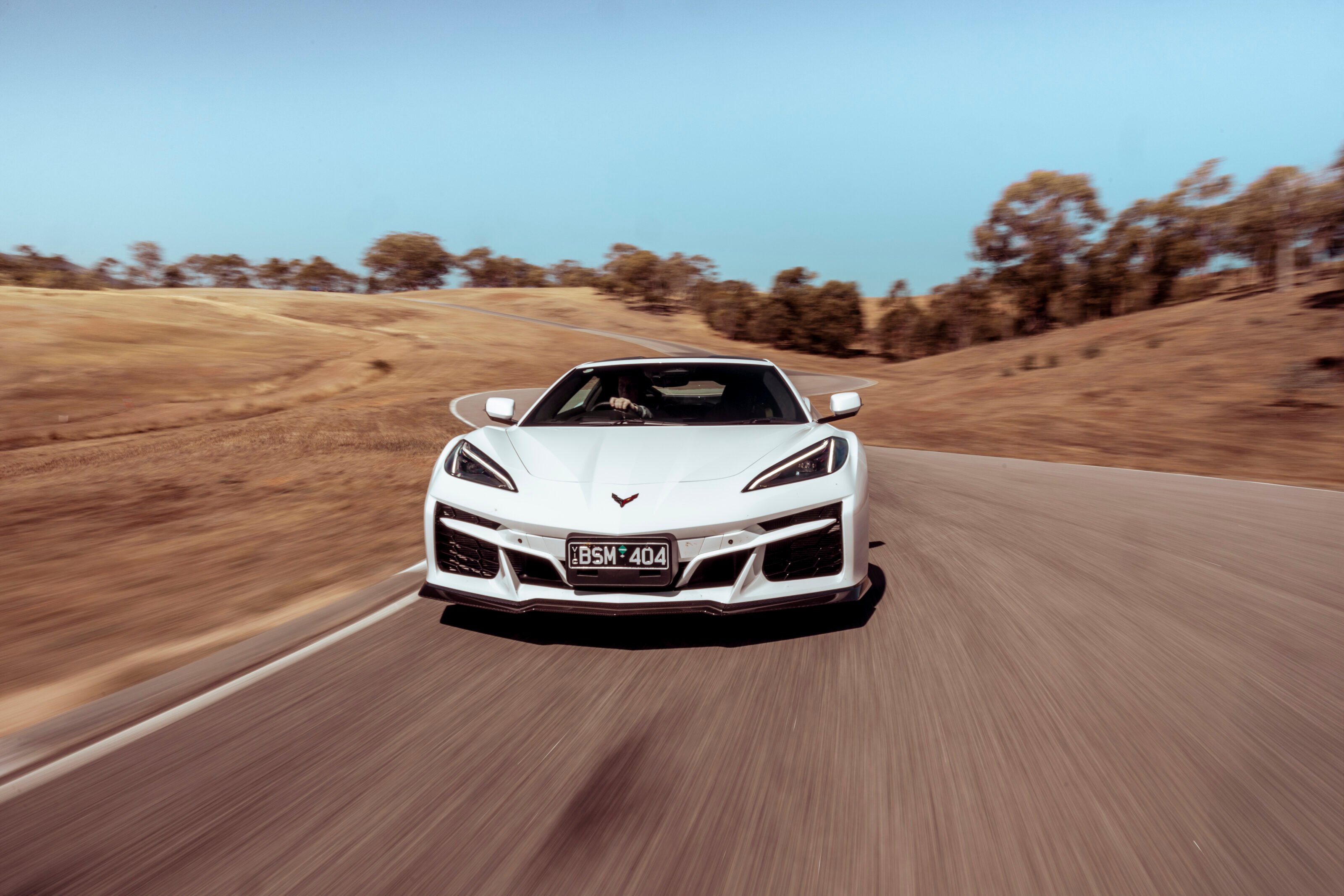
The C8 version changed all that. In truth, the formula had probably about run its course. In order to level with the world’s better junior supercars, an engine at the front and power going to the other end has its limitations. The E-Ray uses its technology in an interesting fashion. Unlike many of its new hybrid siblings, it doesn’t wield its electrically-assisted powertrain to game emissions regulations. It does so in order to make the car faster and more exciting. Whether that’s an enduring strategy is something to chew over at another time, but it’s certainly effective.
Dewar arrives and we leave Kinglake, heading east towards Castella. The forests have recovered, but the outskirts of town still have empty plots like missing teeth that have never been built upon. Perhaps in some places the bushfire risk is still too high. One local I spoke to claimed that the understory of vegetation was thicker than it was on Black Saturday. “It’s a case of when, not if,” he says, referring to the likelihood of another town-threatening blaze. “The difference now is that we know how bad it can be and we’ll get out fast.”
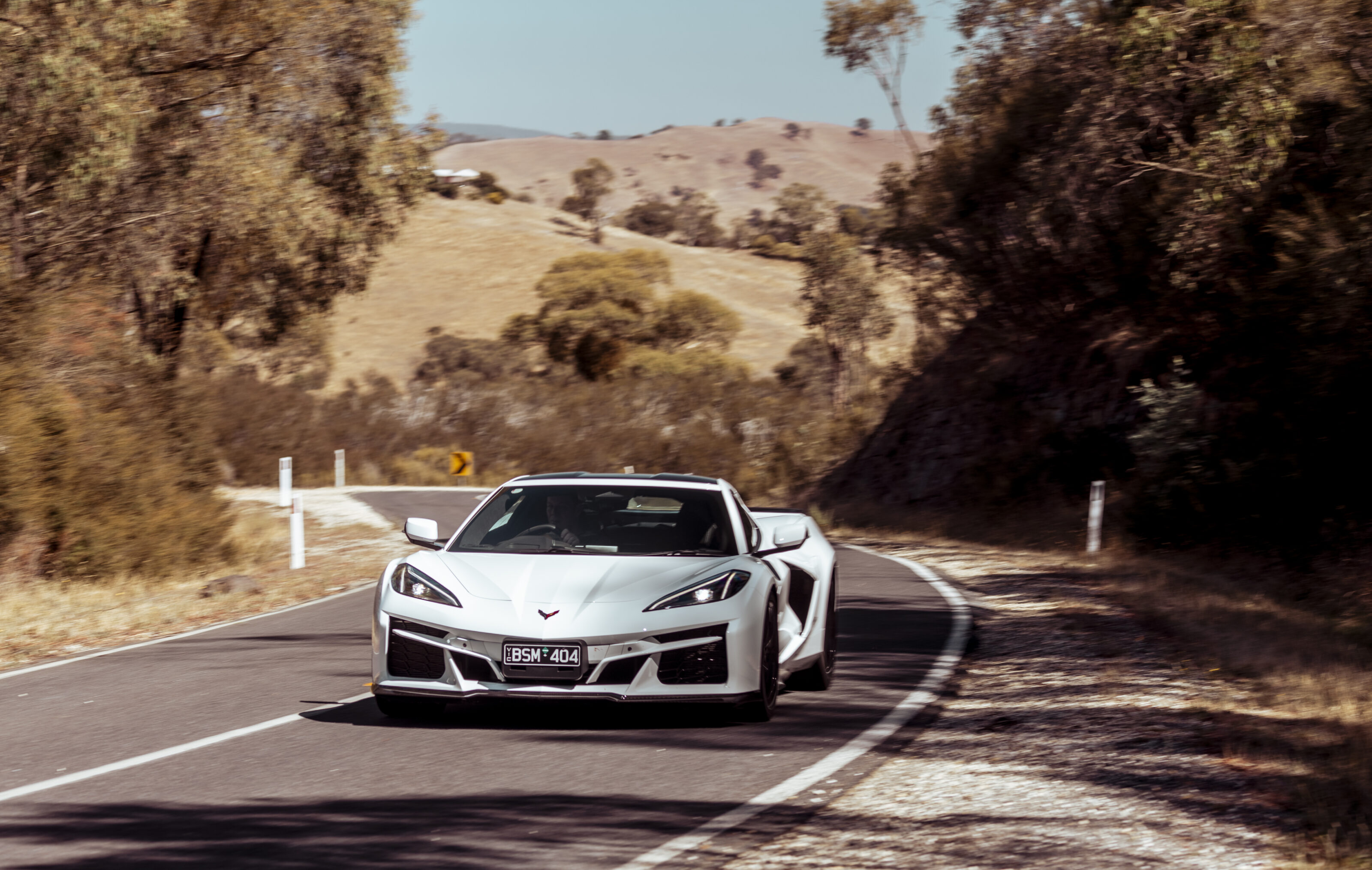
As we transit out of the woods and into the more open terrain up towards Murrindindi, it’s clear quite how dry the summer has been. The paddocks and rolling hills are a sullen dun colour, cattle scratching at the dust. The Vette’s a good companion on these loping sections. I’ve taken to switching the car into its customisable ‘Zora’ mode, which gives instant access to steering, suspension, engine, exhaust, braking and stability control sliders.
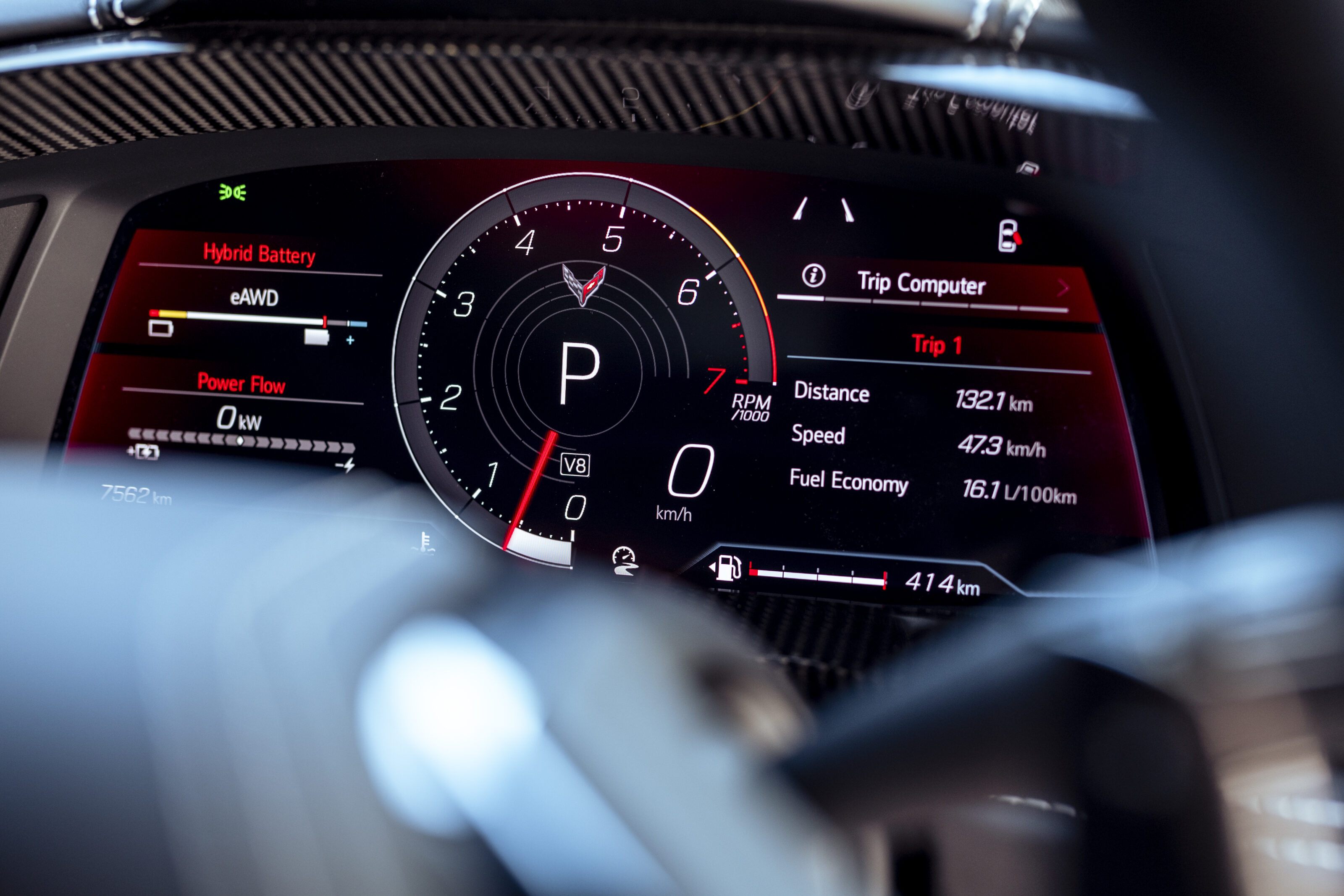
The magnetorheological dampers are in their lazy-boy setting right now and although there’s little they can do to dampen the thwack of the massive 345/25 ZR21 rear Michelins on surface imperfections, at least they’re ironing out a lot of the high-frequency chatter. If there was a bit more interior storage space, this could work as a long-legged GT car. With 345 litres between the front and rear luggage bays, it’s even halfway practical. It’s not hugely economical, but a little indicator light on the dash illuminates when the cylinder deactivation mode kicks in, whereupon you’re driving a 3.1-litre V4. Best not to dwell too long on that. It’s just weird.
Accommodation inside is good. I’m 194cm tall and I’m not too bad a fit, my hair just tickling the Alcantara headlining. The driver’s seat has electrically adjustable side bolsters, but the passenger doesn’t. I think the E-Ray dislikes its passenger. They get no storage for anything, not even a little pouch or net. Even the central bin is side-hinged to open towards the driver and, for the passenger, the cup holders are a reach over the faintly ridiculous 20-button HVAC central spar. Some of the ergonomics are decidedly odd. I search in vain for a way to kill the lane-keep assist, only to consult the manual and realise it’s on the header rail above the rear-view mirror. I hold the button to switch it out, only for an angry bloke in a Hilux to razz me up, thinking I was giving him the bird.
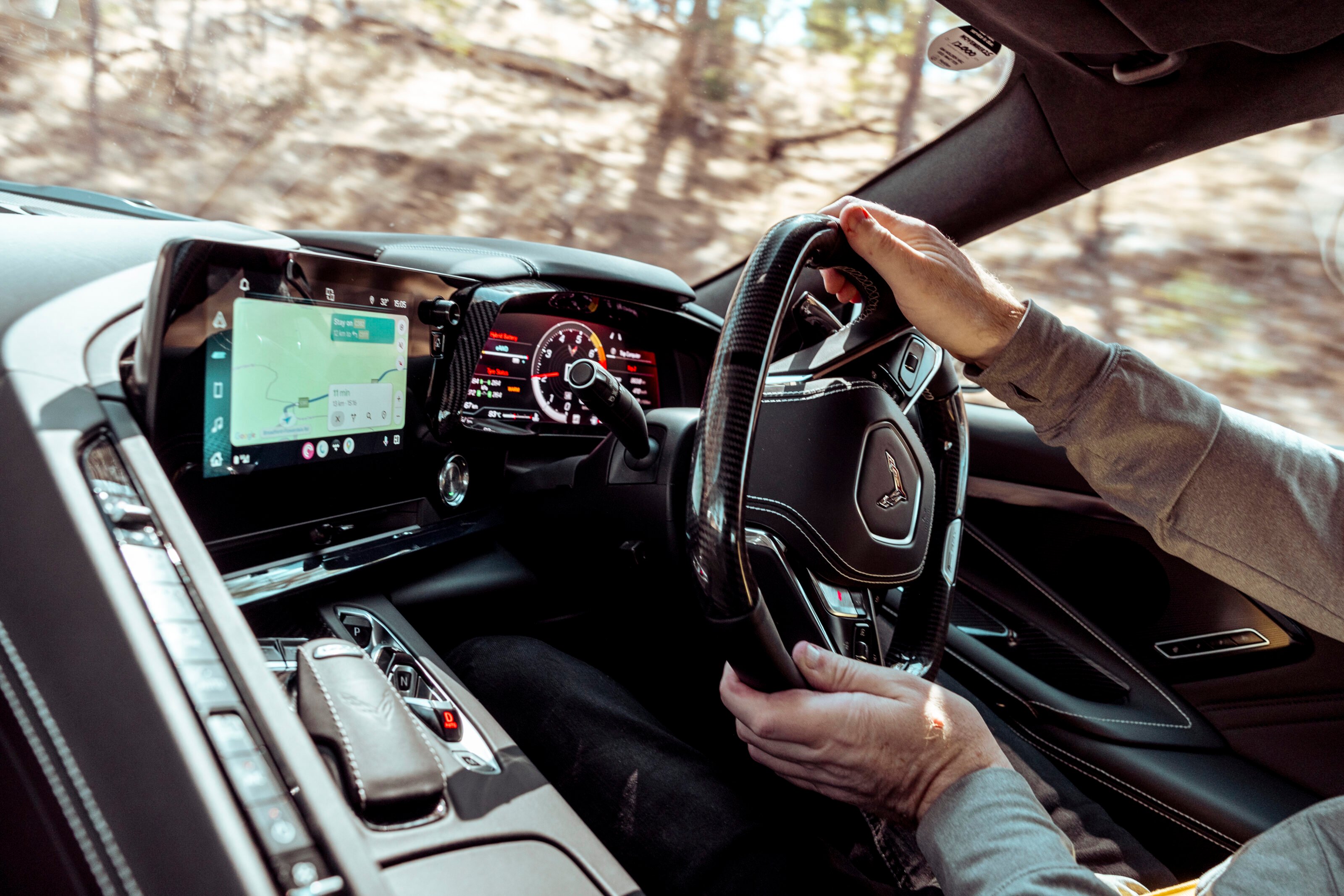
Murrindindi is a quiet location for some photography, but even here with sparse smallholdings dotted way back from the road, you’re aware of quite how loud the E-Ray is when you open the taps. I snuck away from my house in Stealth Mode at 6am that morning, the 19.kWh battery netting you an optimistic-sounding six kilometres of front-wheel drive silent running. Well, that’s the theory at least. Should you do anything vaguely morning-like, such as try to switch on the air conditioning, give the screen a wipe or just look at it funny, it’ll fire the 6.2-litre V8 up with a sharp bark. Didn’t that just wipe the smug right off my face. Mind you, the transition sound from electric to internal combustion is very cool, almost like a Le Mans hypercar pulling out of its pit box on electric power with the engine firing in hard.
The E-Ray likes to flex its vocal cords here and there. It never rises to anything operatic like a flat-plane Ferrari V8, but it bellows convincingly, in an appealingly old-school overhead-valve fashion. That’s if you’ve taken control of the carbon-fibre paddle shifters yourself. Leave the computer to take care of things and all too often you find that it’s plugged you into far too high a gear and you’re trying to wrangle throttle authority mid-corner with the engine barely ticking over, even in the racier drive modes. That needs work for the facelift. Keep on top of things yourself and you’re golden.
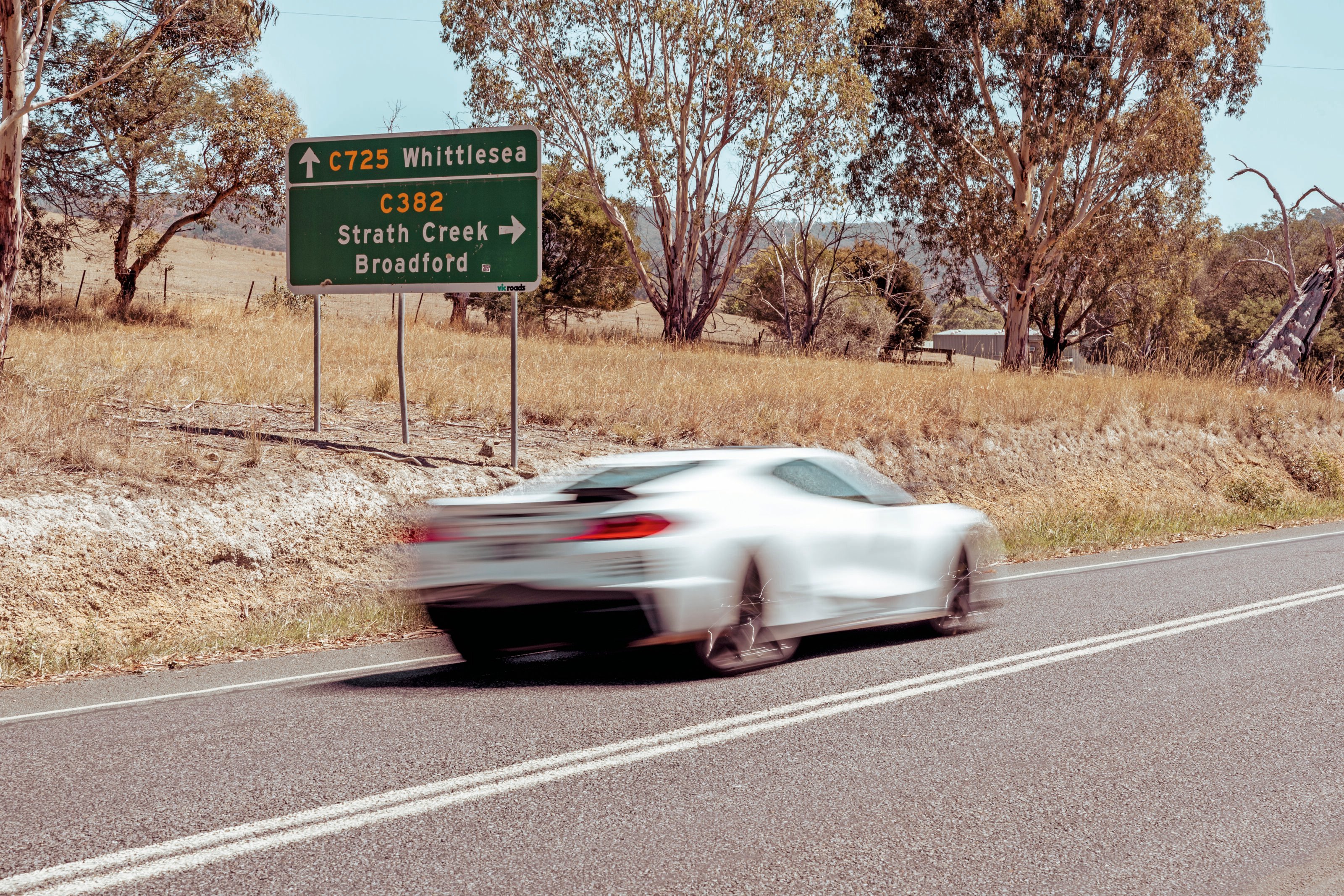
It’s crushingly rapid too. We saw an easy and repeatable 0-100km/h in 2.5 seconds at Sandown race track on our first encounter with the E-Ray, helped by the burnout mode which allows you to temporarily deactivate the front axle to spin up the rears and net some tyre temperature. Out on public roads it’s easy for the devil to become very comfortable on your shoulder. The small matter of 488KW and a massive 806Nm will do that for you. Compare that to the 475kW and 550Nm of its LT6-powered circuit warrior sibling, the Z06, and you get some idea of the E-Ray’s potency. You become slightly lulled due to the massive amount of grip at your disposal, and as a result it’s easy to find yourself covering ground at inadvisable speeds. Fortunately there’s a great head-up display that emblazons any potentially licence-losing velocity front and centre.
Find a legal location and 0-400m will disappear in 10.4 seconds, which is lineball with a Lamborghini Aventador SVJ, a McLaren 720S or a Ferrari 812 Superfast: genuine supercar royalty right there. So you’ll never be found wanting for outright go. At this point it’s worth considering the asking price too. At an RRP of $275,000, the E-Ray carries an $85,000 premium over the Stingray 3LT coupe, but that’s money well spent.
The hybrid drivetrain is, as you might hope from General Motors, rugged and relatively simple. The internal combustion engine takes care of the rear wheels, its 369kW/637Nm being fed through a Tremec TR-9080 eight-speed dual clutch transmission. The electric motor looks after the front treads. The compact battery pack is housed in the central tunnel and feeds the 119kW/169Nm permanent magnet synchronous motor. Clever software balances the way the E-Ray ladles out power to front and rear. Burnout mode aside, the only way to deliver a full rear-wheel drive experience is to travel faster than 250km/h.
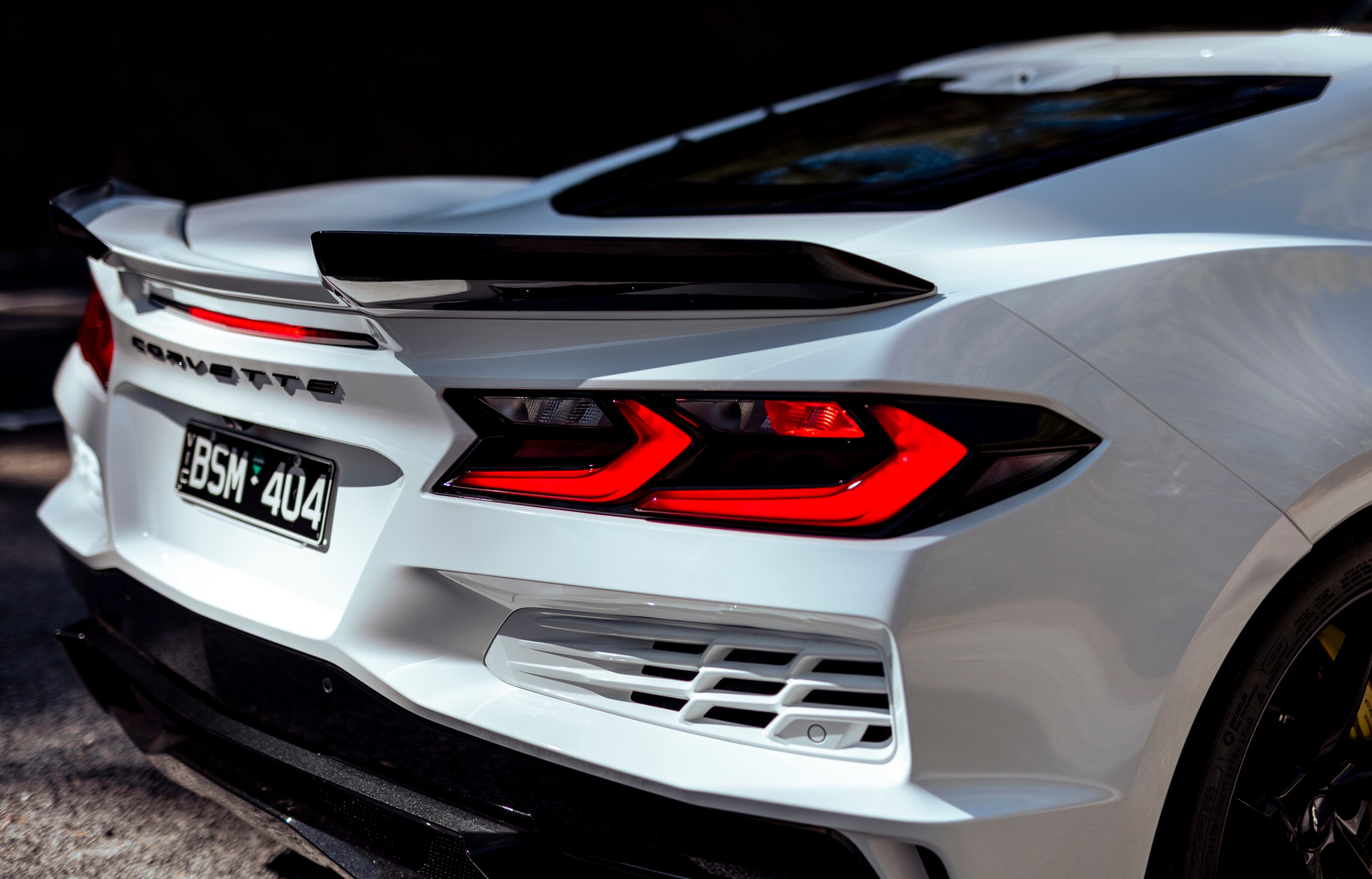
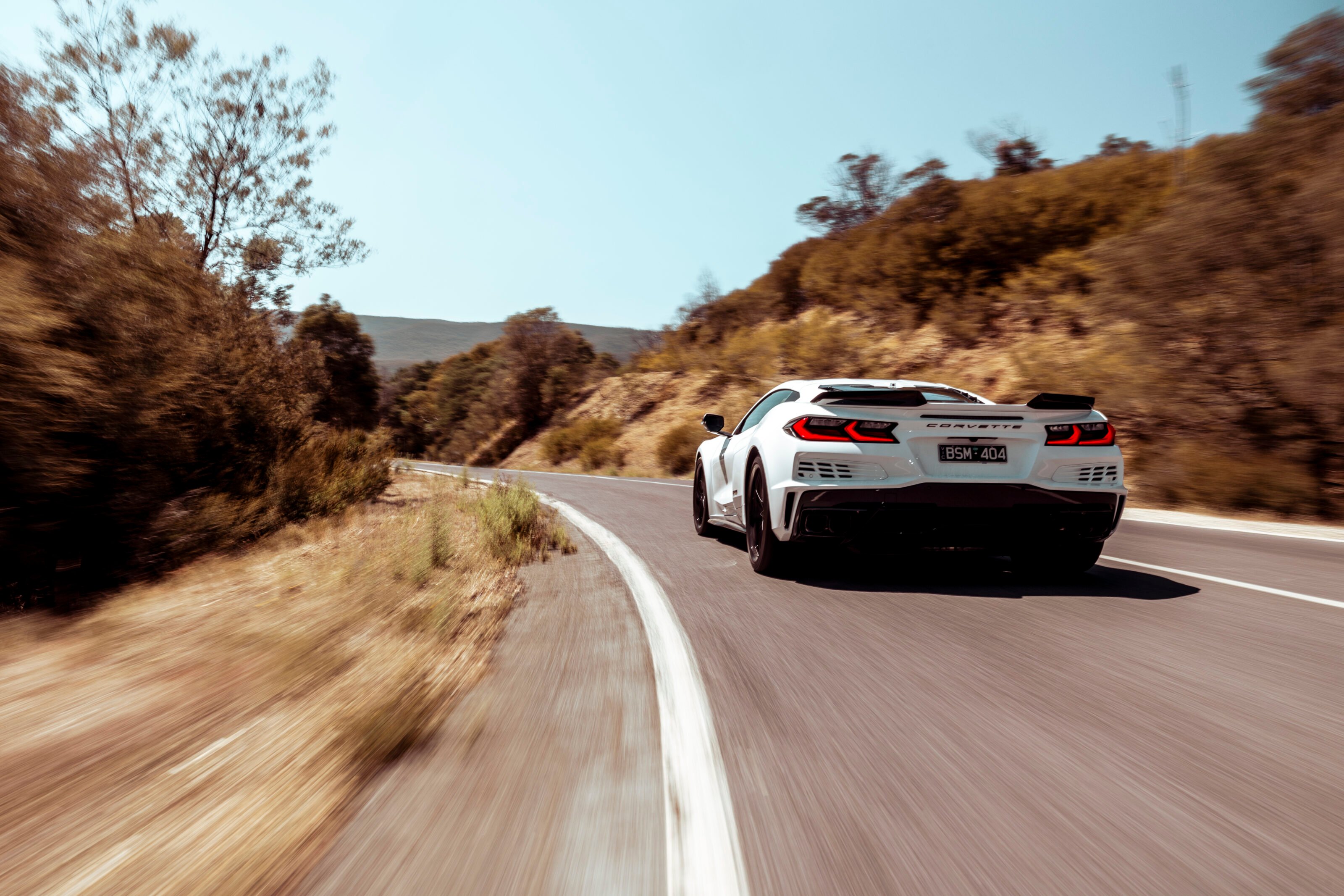
As well as the hybrid drivetrain, the styling is transformed for the better too. Remember the slightly underwhelming look of the Stingray’s rear end, almost as if it needed some wheel spacers? The E-Ray shares the Z06’s wide body, with broad gaping side intakes giving it a far more aggressive stance. Once you see the way the fuel filler cap, the intake and the curved haunch visually interact though, you’ll forever be reminded of a happy salmon. At the back are a set of interchangeable fixed flics for the rear spoiler. GMSV also supply a smaller set if you’d prefer a more low-key look.
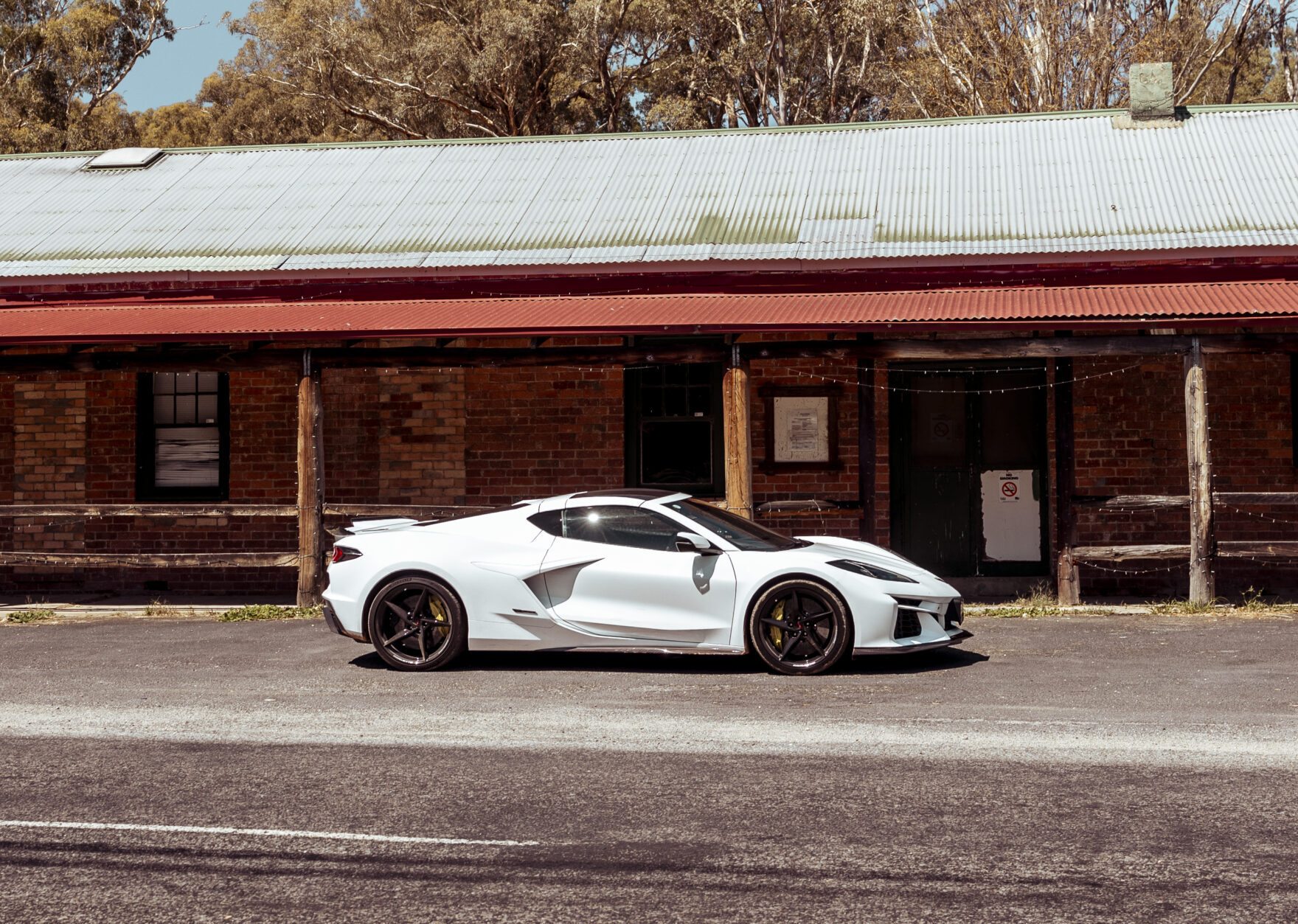
That asking price also includes the track-ready ZER pack, huge carbon-ceramic brakes, a carbon-fibre and leather trimmed steering wheel, and a beefier wheel and tyre set. Unlike the last Stingray we drove, this E-Ray has been beautifully specified too. The stormtrooper white with black details gets just a pop of colour from the matching yellow brake calipers and seatbelts. Hat tip to whoever was driving the configurator for BSM404.
Photo duties at Murrindindi over, we head towards the charmingly named Break Oday Road at Glenburn. We pause for a moment at the junction with the Melba Highway to kick around in the old parking lot of the ill-starred Glenburn Hotel. This was owned by F1 racer Alan Jones back in the early 1980s but it was another victim of the terrible fires of February 2009. Owners Ronnie and Howard Batterham then had such a protracted insurance wrangle with Lloyds of London that by the time they were in a position to rebuild, council rezoning rules had changed and the plot has stood empty ever since. The water tank is the sole surviving remnant of this once-thriving country pub.
Break Oday Road meanders lazily along towards Flowerdale at the headwaters of the Goulburn River. It’s cow country out here, but right now all the cattle is being fed from hayricks, the impoverished paddocks in desperate need of rain. I try to take stock of what I like about this Corvette, which is a lot, and those parts I don’t. Of the latter, the excessive HVAC strip is one, but that’s rumoured to be due for the chop with the next C8 facelift. The front lift kit is fast, effective and quite noisy, but the button is right next to the ESC off button, which could be problematic if you fat-finger the wrong one. I’d also like the steering to be a little more communicative. When you switch it into a more aggressive drive mode, the response can become a bit gluey. The silent e-mode is unable to be selected if the engine is running – a bit of a missed opportunity.
Above all, I’m just blown away by this car’s sheer depth of capability. Were your pockets adequately deep, you could happily daily drive this. Heck, you could throw a roofbox on it, chuck your skis inside and take it to the snow, were you so minded. It would be just one more driving scenario the E-Ray would happily just shrug and get on with. As I ponder this prospect, it dawns on me that we haven’t stopped for lunch. Flowerdale isn’t delivering on that front, because everything seems to be closed. We tool on to Strath Creek, where everything is also closed. Pro tip: if you come out this way, BYO refreshments, otherwise you could be faced with a hangry photographer.
Just out of Strath Creek is a stretch of road that’s indelibly etched into Wheels’ road testing history. The ‘Broadford Bends’ climb sharply up a scarp slope to Murchison Lookout and have featured in road tests going back decades. Virtually every road tester has a story to tell about some escapade or other at this challenging series of corners, and the battered guardrails bear testament to those with an excess of enthusiasm and a shortfall of talent.
Punting the E-Ray up the sharp gradient puts a heavy demand on the powertrain and the e-motor up front starts a high-pitched keening. It’s like a supercharger whine, and it’s reminiscent of an old Jaguar XKR, which is certainly no bad thing. So consistent was the sound signature though, that I began to wonder whether this was a symposed sound being piped through the speakers. Turns out it was. How ironic it would have been if the electric part of this car gave it the aural drama that the internal combustion engine lacks in its upper registers. Nice story, not supported by facts, unfortunately.
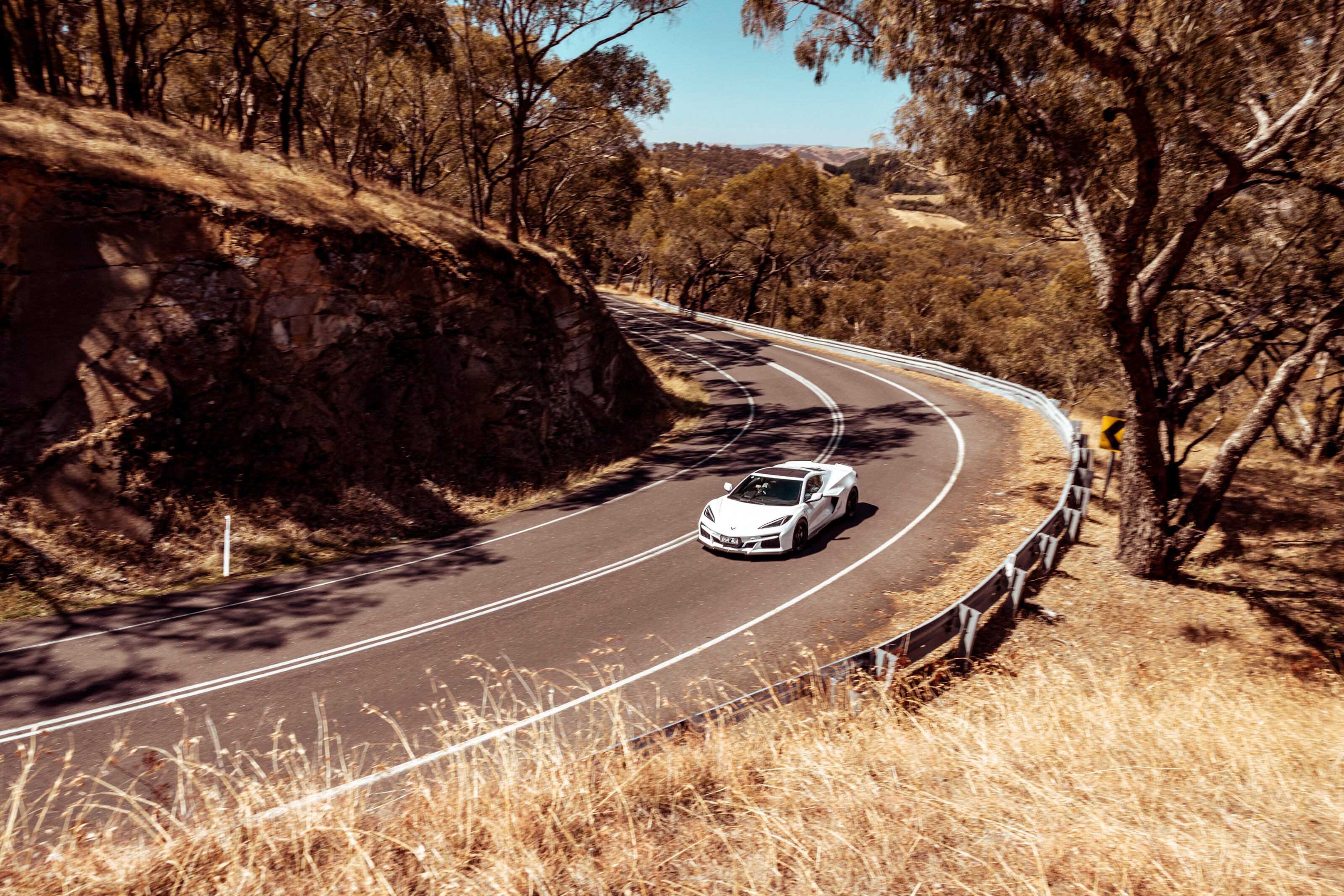
Grip on turn-in is mighty, and you start to take liberties with just how early you can feed in throttle. There’s a small but reassuring measure of roll in the chassis that communicates clearly where the limit of grip resides. In a bid to upset the car, I come into one tightening radius corner and lift sharply. The nose tucks in, and the stability control light gives a flicker, but that’s the extent of the drama. As I start to ease out the stability control assistance in Zora mode, the car gets progressively livelier, but never exhibits the sort of spikiness you might expect from something foursquare, mid-engined and rolling on serious rubber. It’s all very malleable but you need accurate hands and, as I mentioned earlier, the steering doesn’t always deliver the most articulate clues.
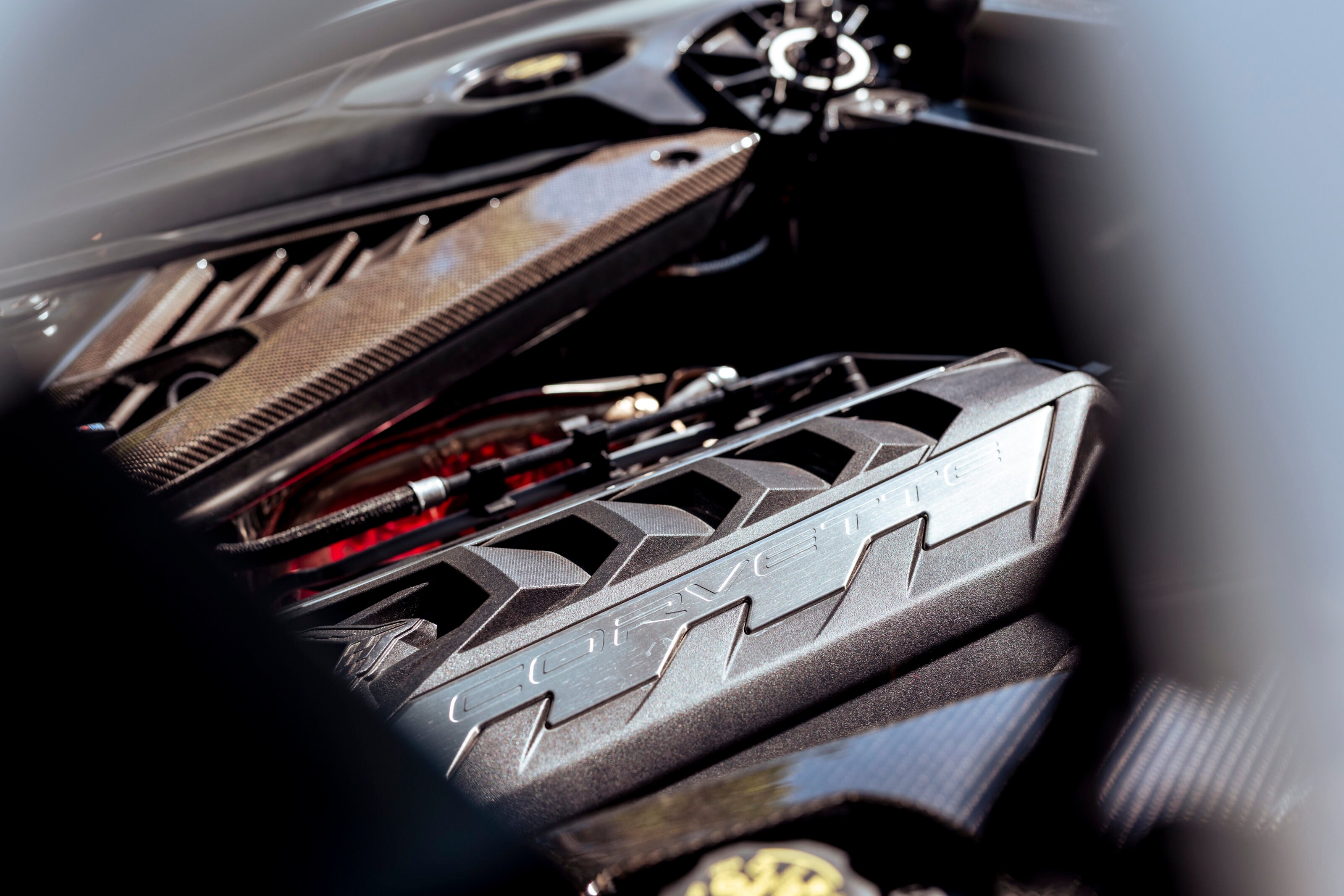
No complaints about the braking power though. The huge carbon ceramic discs (398mm up front and 391mm at the rear) shuck off the 1776kg kerb weight with ease, and the handover from friction braking to re-gen is well handled. The pedal feel is odd, with a gentle initial travel, firming sharply from there. Modulating the brake takes a little getting used to, but once your muscle memory has hard-wired the short pedal travel, it’s no great issue. The bright yellow six-pot Brembo front stoppers look the goods too, peeking through the black alloys.
Perhaps the trickiest thing about the E-Ray is keying into its personality. There’s no doubting its capability, but it diverges so far from the traditional Corvette template that you find yourself transposing the feel of other cars onto it. At times it’s reminiscent of the ‘new’ NC-gen Honda NSX, another mid-engined all-wheel drive hybrid designed with the US market front of mind. At others, it’s a discount Lamborghini Temerario.
Track time. We roll through the gates of the State Motorcycle Sports Complex near Broadford, a fierce little circuit that ought to be a test for the power-down of this otherwise unflappable coupe. Dial the stability control down to zero and you feel a torque response from the front axle as the e-motor ramps quickly to full power. It’s not the feel of torque steer or a bitey diff, it’s something strange and different, almost as if the tyres are tramlining. Trail brake in and it’ll swing the rear controllably. It’s a well-sorted thing, but only when you start flinging it about a bit do you feel its weight. Best of all, it gives you options. It’s easy to get the car moving around, but the drive from the front axle always gives you the get-out-of-jail-free card to pull you out of what seems like unrecoverable yaw gain.
One particularly cool feature is the Performance Data Recorder. Even if you’re not given to driving on track, the PDR can act as an inbuilt high-definition dashcam, recording to an SD card. It’s on track that it really comes into its own though. As well as recording video of your lap, there’s an in-car microphone, GPS telemetry recorder, and because it’s hardwired you get all sorts of data such as throttle position, braking pressure, steering angle and so on.
The E-Ray emerges as a better road car than the angrier Z06. In fact, it’s comfortably the best roadgoing Corvette ever. If you were worried that the addition of electrification would neuter the Vette in some way, think again. It has managed to add several layers of additional talent to the basic Stingray package and does so with a blue-collar common sense that’s somehow very Corvette in its application.
While we’re not about to pretend that $275k is small change, in terms of the ability that the E-Ray delivers and how exploitable it is in accessing those reserves of talent, it’s a bargain. Given that the RRP for a 389kW/610Nm Porsche 911 Carrera 4 GTS t-hybrid coupe is in excess of $400k, the Corvette E-Ray becomes very difficult to look past.
Nobody is looking past it in Broadford, that’s for sure. The local kids are almost hyperventilating when it pulls up outside a cafe. In this quiet country town, it looks like something that has beamed in from another planet, but there’s an approachability that’d likely elude some blue-blooded Euro missile.
Yes, it is strong value for money in the wider concept, but don’t take that as a condescending pat on the head. The E-Ray absolutely stands up on its own right. Perhaps it’s time to retire the old stereotypes about American sports cars that are all firepower and no finesse. As Dewar packs her gear and heads back to Melbourne, there’s no hesitation. I’m retracing my steps. The long and winding route home has rarely looked so appealing.
Things we like
- Stonking performance
- Very well priced
- Excellent claimed EV-only range
Not so much
- Dynamics need revising
- Unintuitive infotainment system
- Lacklustre side and rear visibility
A glance at the sales figures shows Australians have cooled on choosing electric power when purchasing a new vehicle but their advantages remain clear: fuel-free (from the tailpipe) emissions, stronger performance, reduced running costs and in some cases, a similar purchase price.
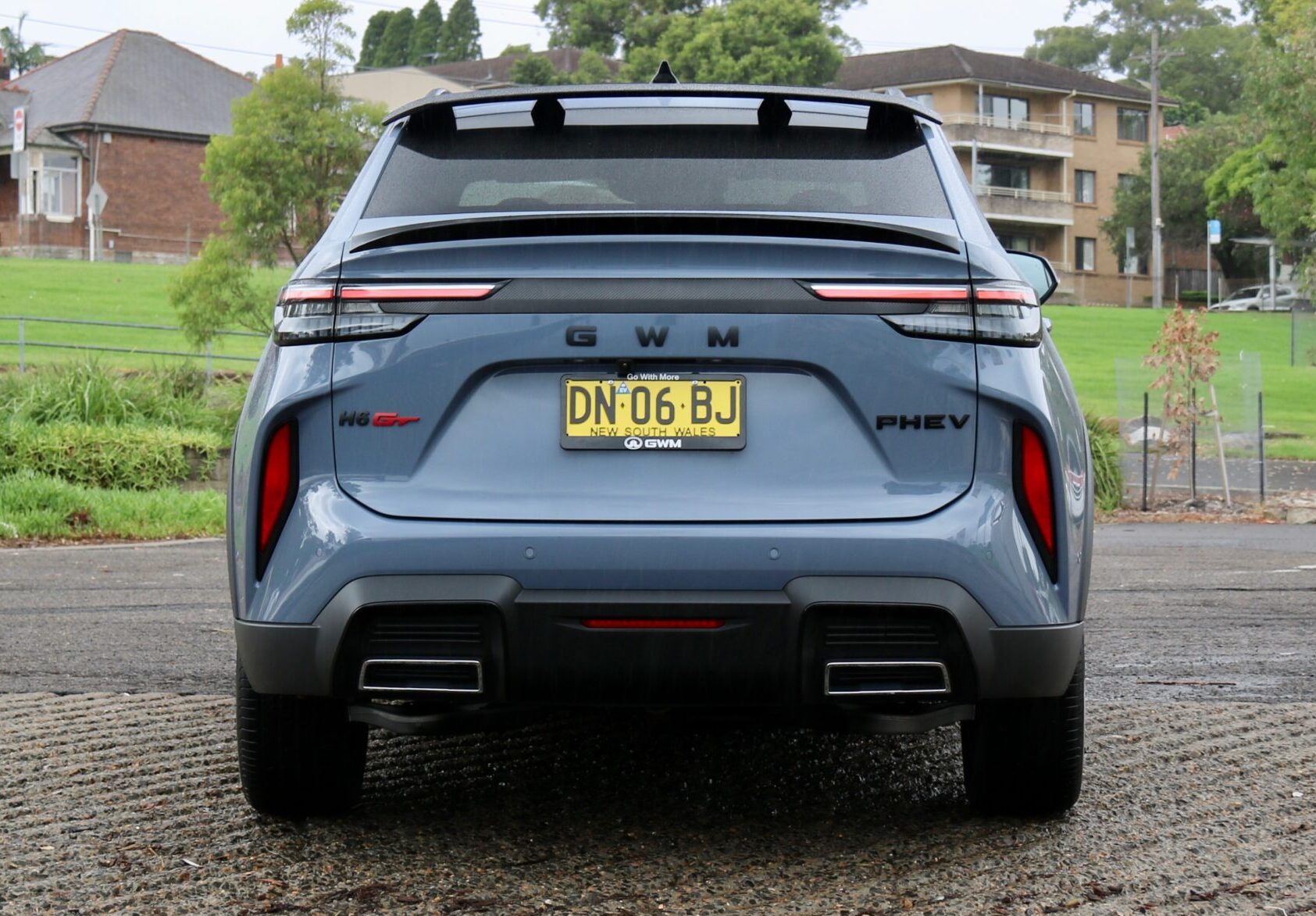
But not everybody has access to effective charging infrastructure and for that reason, plug-in hybrids (PHEVs) can be a great option to lessen emissions and not rely on EV chargers. GWM is the latest to launch a new PHEV locally with the Haval H6GT.
The regular H6 and coupe-styled H6GT mid-size SUVs feature a big cabin, lots of equipment and a low starting price: a RAV4-sized car for just $30,990 drive away has strong appeal. The coupe H6GT is priced from $44,990 drive away – more expensive than the wagon H6 but better equipped and quite unique in the segment.
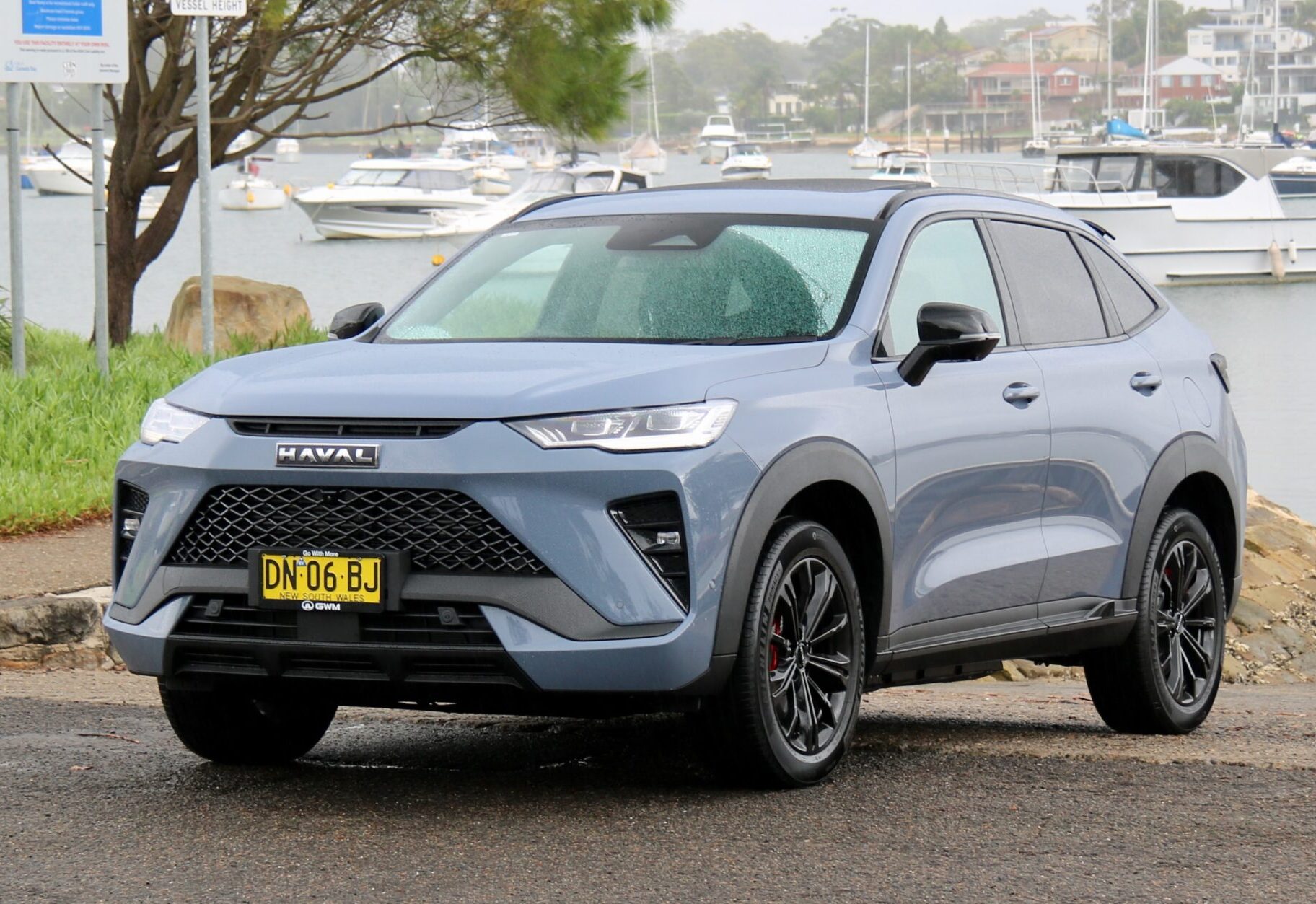
The new plug-in hybrid is priced from $53,990 drive away and uses a turbocharged 1.5-litre four-cylinder petrol engine and electric dual-motor all-wheel drive system for massive outputs, or more than double that of the regular H6. We’ve not seen those sort of numbers for such a reasonable price since the VF Holden Commodore SS, immediately giving the H6GT some appeal to power-hungry Australian motorists.
Standard equipment in the H6GT PHEV is generous with 19-inch alloy wheels, multiple driving modes, launch control, automatic all-LED lighting, a panoramic sunroof, an electric tailgate, electric front seats with heating and ventilation, suede and leather upholstery, a 10.25-inch digital driver’s display, a 12.3-inch touchscreen and a head-up display. Safety kit includes a front centre airbag, AEB, adaptive cruise, blind-spot monitoring and a 360-degree camera. So far, so good.
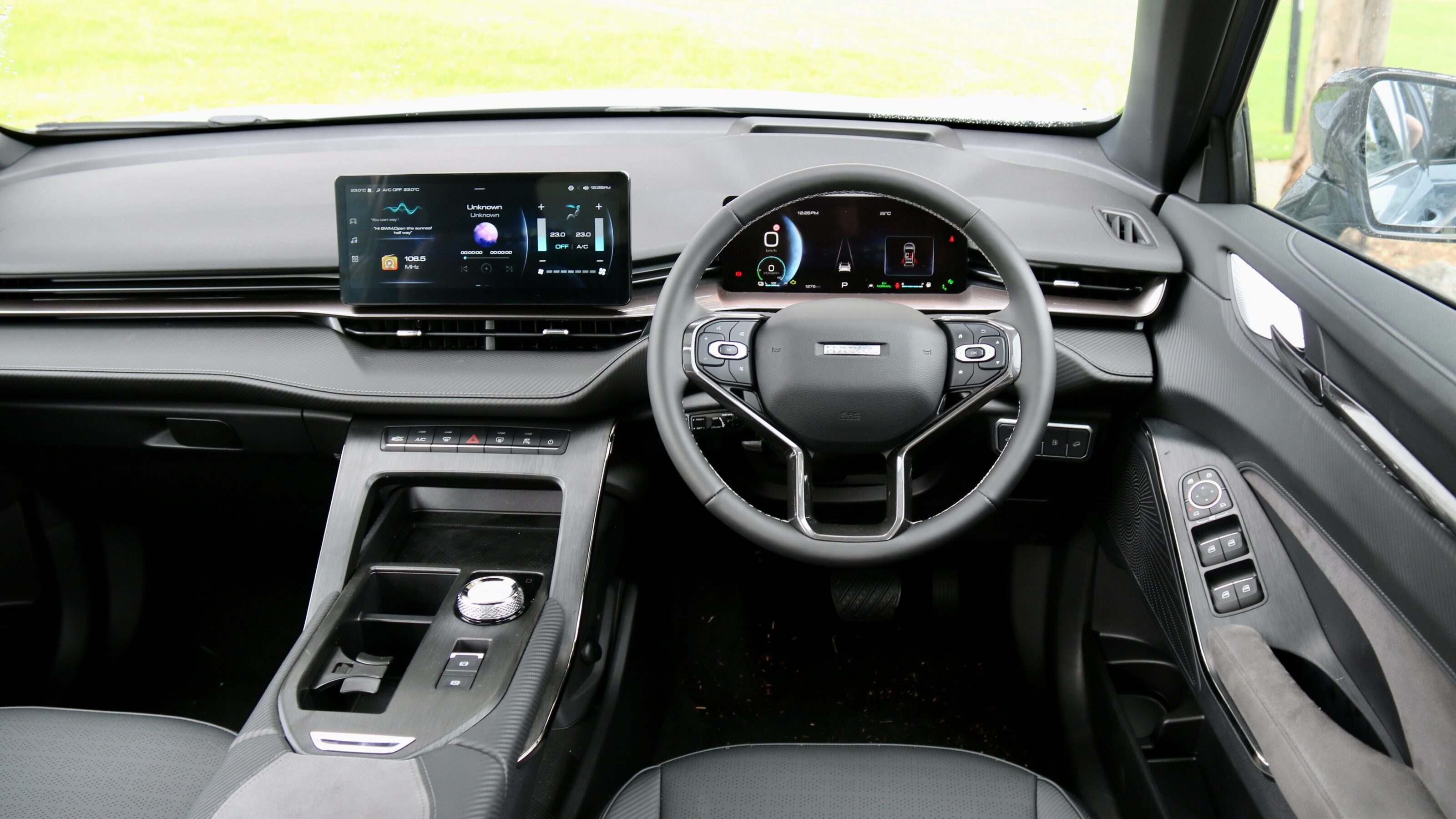
The cabin of the H6GT PHEV makes a positive impression with solid build quality, exotic materials like suede trim and a long list of equipment. The fake carbon trim is a bit gaudy, but it otherwise feels appropriately sporty to match the performance, unlike the petrol H6GT.
The 12.3-inch touchscreen needs a revamp, however, offering confusing menus, dark lighting and small fonts that make it difficult to see on bright days. It also lacks wireless smartphone mirroring and live services – so you can access the charging from your phone – but otherwise features sat-nav and digital radio.
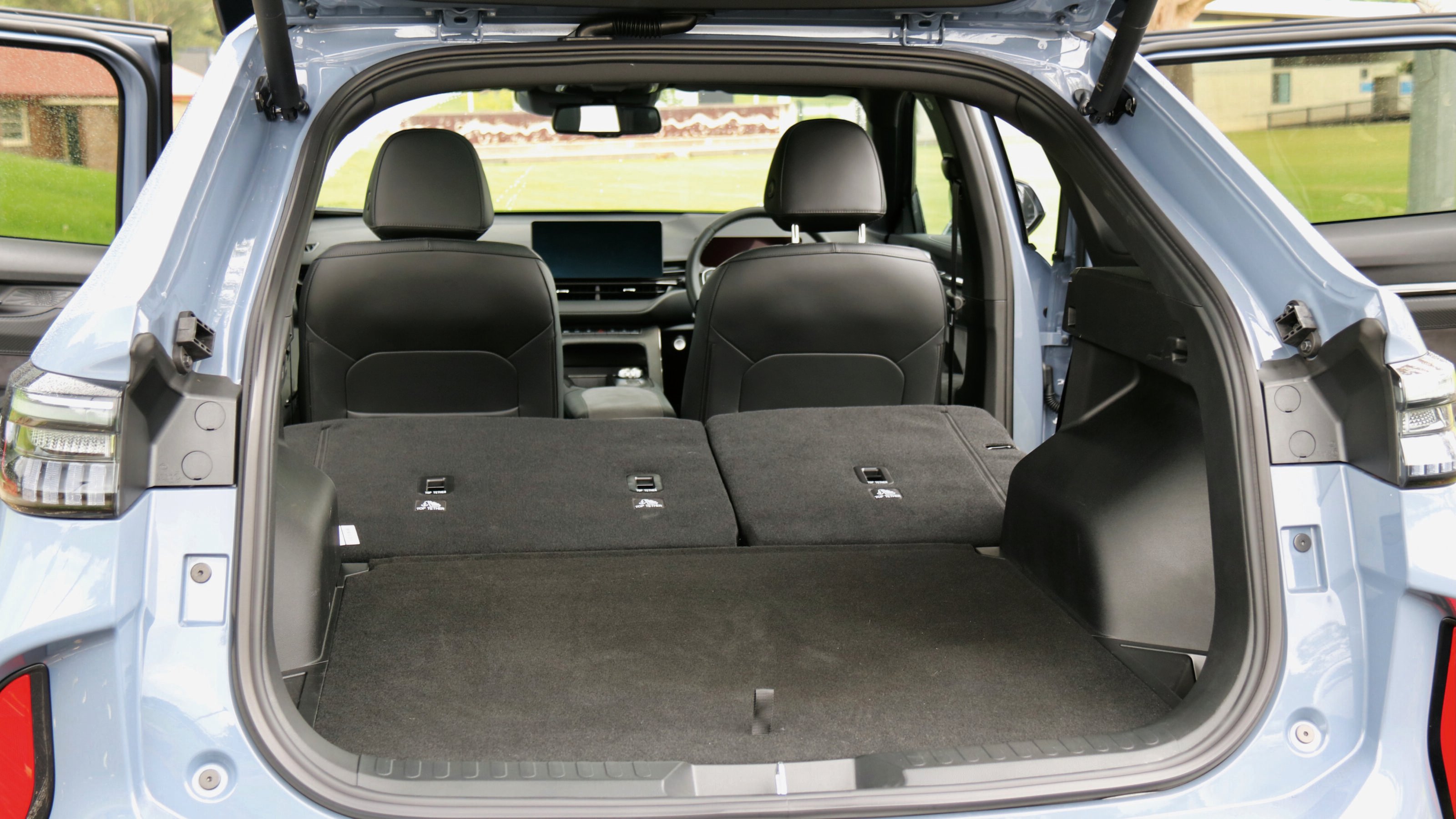
Practicality is excellent with ample storage space in the front cabin and plenty of leg- and headroom for taller occupants in the rear seat. The 392-litre bootspace is well proportioned and opens up a healthy 1,390L with the seats folded, though the boot lip is quite high so loading in heavy luggage can be frustrating.
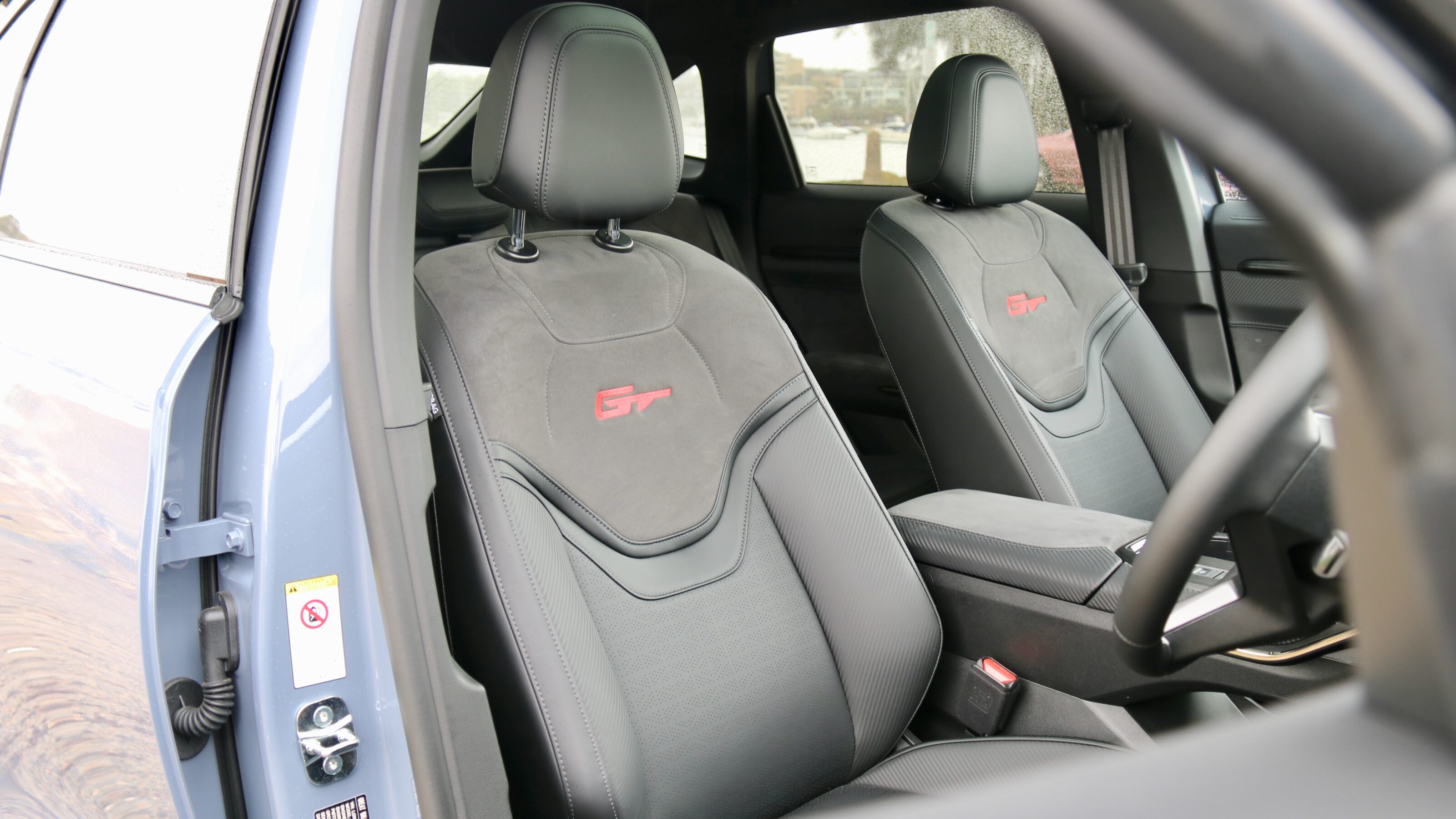
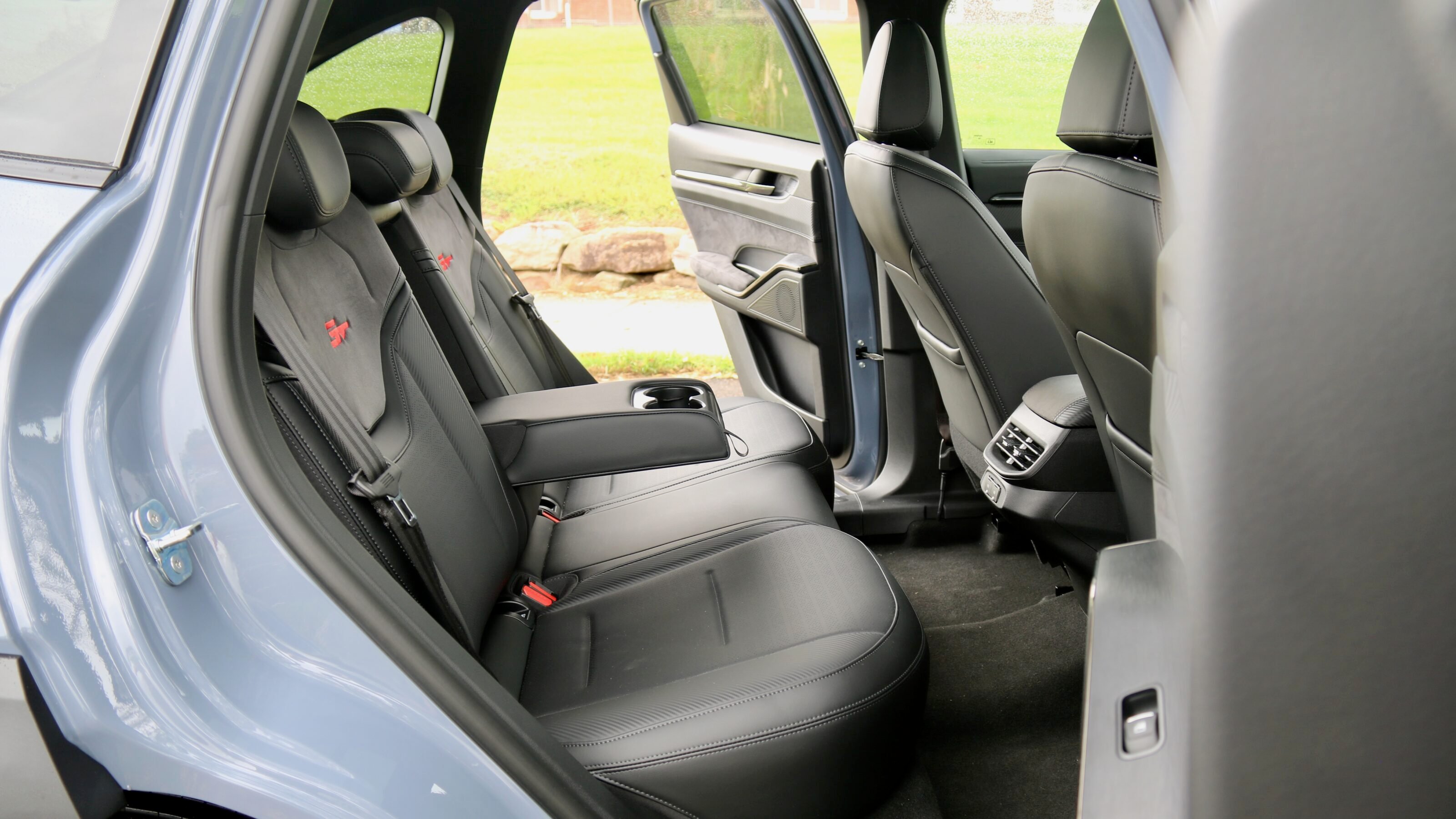
On the road, things are mixed for the H6GT PHEV. Its 395kg weight gain over the regular H6GT can be felt through the suspension – it doesn’t react to bumps quite as quickly and it’s stiff, likely to accommodate for the extra weight. Dynamically, the H6GT is not that fun to drive and the PHEV’s extra weight dulls the fun factor further: it’s far more impressive in a straight line. The steering is quick but offers little feel, and we think that GWM’s incoming Australian suspension tuning program will do wonders for its range.
The drivetrain offers more satisfaction. Combining a 1.5-litre turbo-petrol engine with dual electric motors for 321kW/762Nm total outputs means that it’s fast with a claimed 0-100km/h sprint time of just 4.9 seconds. But it’s also capable of a claimed 180km of electric-only range and can be DC fast charged at up to 48kW for a 30 to 80 per cent charge in as little as 26 minutes. We found the EV range to be fairly accurate in the real world as well, though it’s not that efficient in either electric or hybrid modes, returning around 25kWh/100km and 6.5L/100km respectively.
There’s definite appeal in the H6GT PHEV. It’s still fairly unique – especially for the price – and rivals like the BYD Sealion 6 and Mitsubishi Outlander PHEV are significantly slower. While its dynamics could be improved and the touchscreen is cumbersome, it’s still quick, practical and great value for money. Importantly, it also offers the best of both worlds for some buyers wanting to go green(er): EV driving range and no range anxiety.
| Model | GWM Haval H6GT Ultra PHEV |
|---|---|
| Price as tested | $54,485 drive away |
| Drivetrain | 1.5-litre turbo-petrol plug-in hybrid |
| Peak power/torque | 321kW/762Nm |
| Battery/peak charging speed | 35.4kWh ternary lithium/48kW |
| Transmission | two-speed automatic |
| 0-100km/h | 4.9 seconds |
| Top speed | 200km/h |
| Claimed EV range/fuel consumption | 180km and 0.2L/100km |
As recently as 10 years ago, in-car technology in most vehicles consisted of a radio, Bluetooth and, perhaps, an after-market sat-nav device.
Now, something resembling an automotive arms race is underway to install ever larger, sharper, more sophisticated and feature-rich digital touchscreens on car dashboards, with manufacturers spending billions annually to improve their offering.
But what differentiates the good systems from the bad, and are they becoming too complicated? Here’s WhichCar’s starter guide to what makes a good infotainment display.
User-friendliness, including physical shortcut buttons
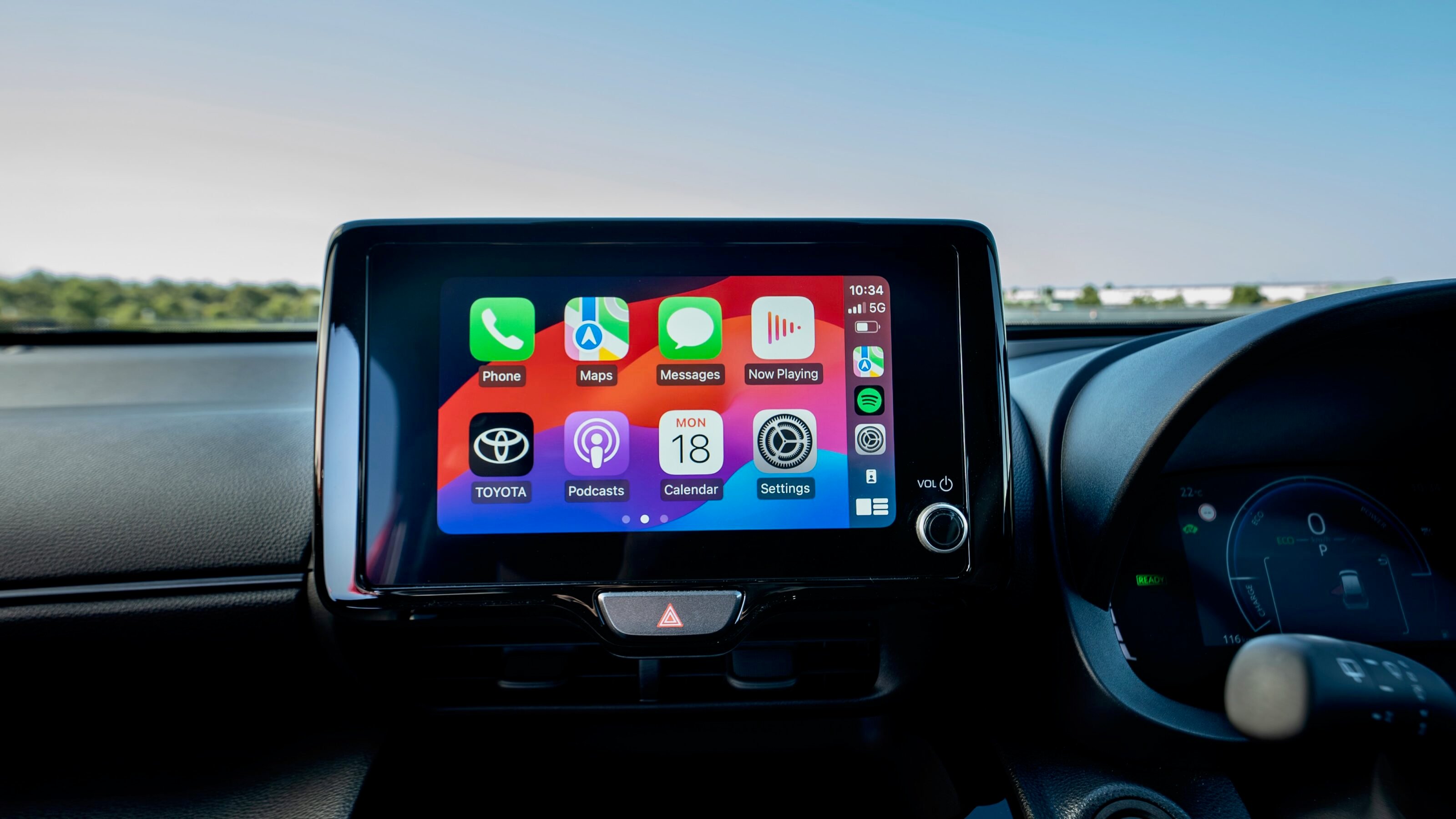
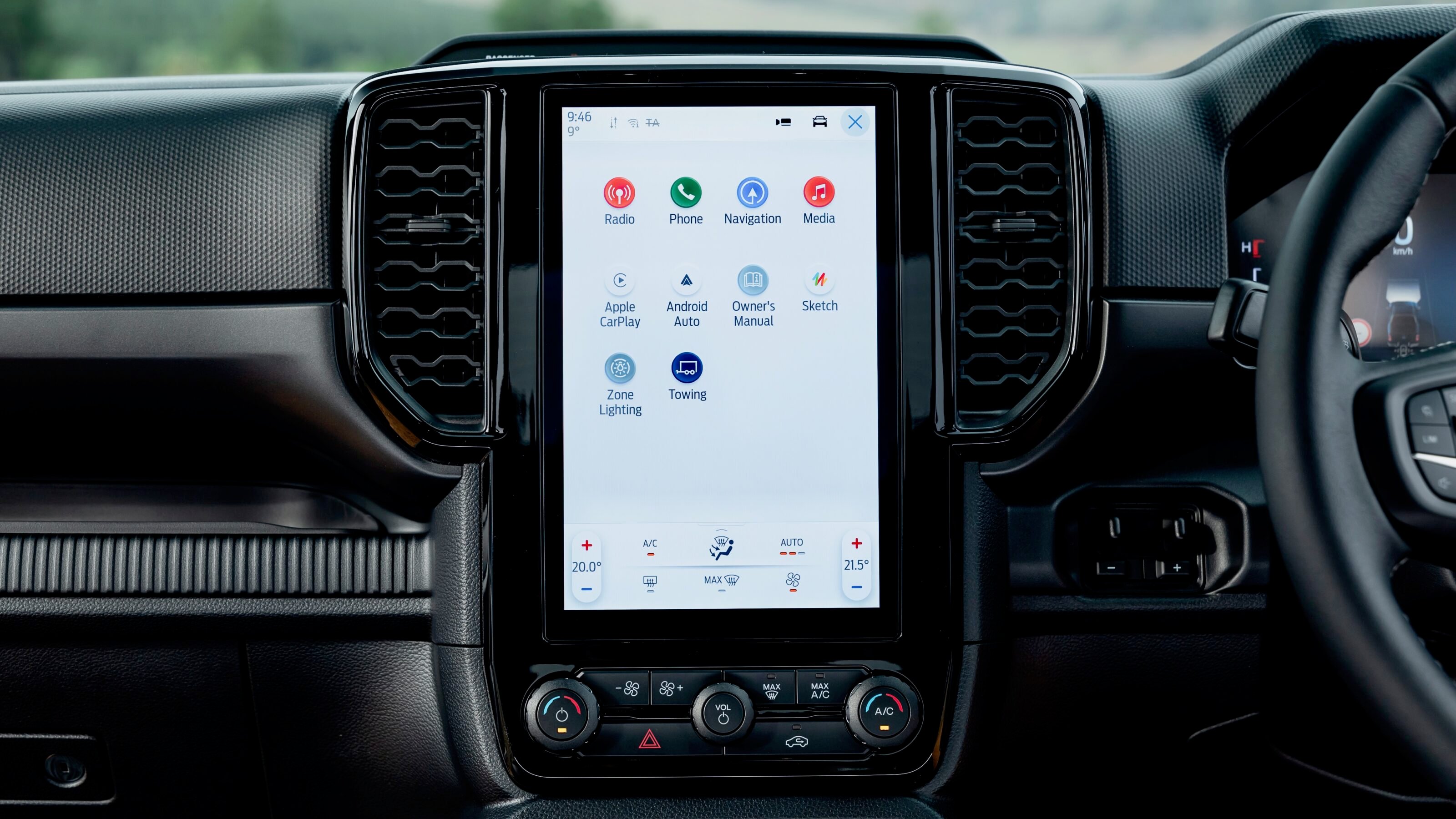
A good screen layout with accompanying shortcut buttons is the answer and companies like Hyundai – which use an easy touchscreen layout and also place a row of shortcut buttons underneath the touchscreen so you can easily access features like the map, radio and settings – are very good at this.
We recently tested a Deepal S07 and aside from the window controls and a few buttons on the steering wheel, every single feature in the car was controlled through the touchscreen, which uses a complicated layout that’s initially difficult to learn. Controlling basic car functions like the headlights was buried in a menu, which is frustrating enough when you’re stopped, let alone at speed.
Worse still, the Deepal’s infuriating safety systems also require a minimum three-button press to alter or switch off, which is distracting and ultimately dangerous. Many car makers are making heating and ventilation controls only accessible through the touchscreen too, without a separate button for adjustment, which is also potentially dangerous.
Wireless Apple CarPlay and Android Auto
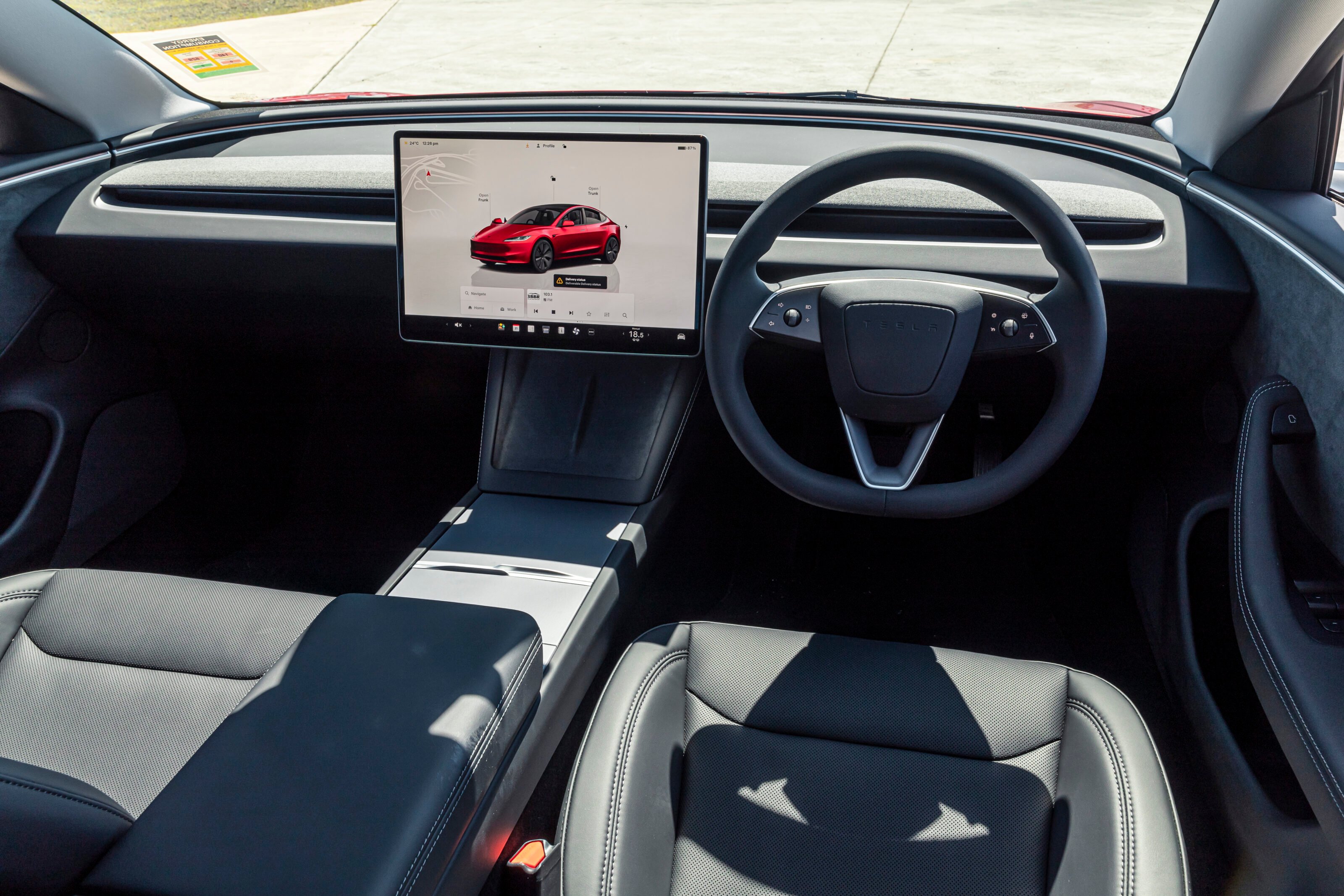
Considering that many people are glued to their smartphones, it’s no surprise to see the inclusion of smartphone mirroring tech included on this list. But why have your phone screen on your car’s screen? Because you’re already familiar with phone’s software, so why learn the car’s as well? Smartphone mirroring ultimately makes driving safer by allowing us to access the phone apps we know and love.
More and more, wireless connection to Apple CarPlay and Android Auto is preferable. Even just a few years ago, most cars’ smartphone mirroring was via cable only, but today a lot of cars include wireless tech as standard. There are still some offenders, and some cars feature wireless CarPlay but wired Android Auto (or vice versa), but generally speaking, over-the-air updates are making cable connection part of yesteryear. It’s very convenient to just hop in the car and your phone pairs automatically.
The vast majority of new cars include this tech, but some car makers – like Tesla and some newer General Motors products in the USA – choose not to. Why? According to them, their infotainment systems are already intuitive and feature-packed, apparently rendering smartphone mirroring useless but we think that cars with these features are easier to navigate.
Screen quality and graphics
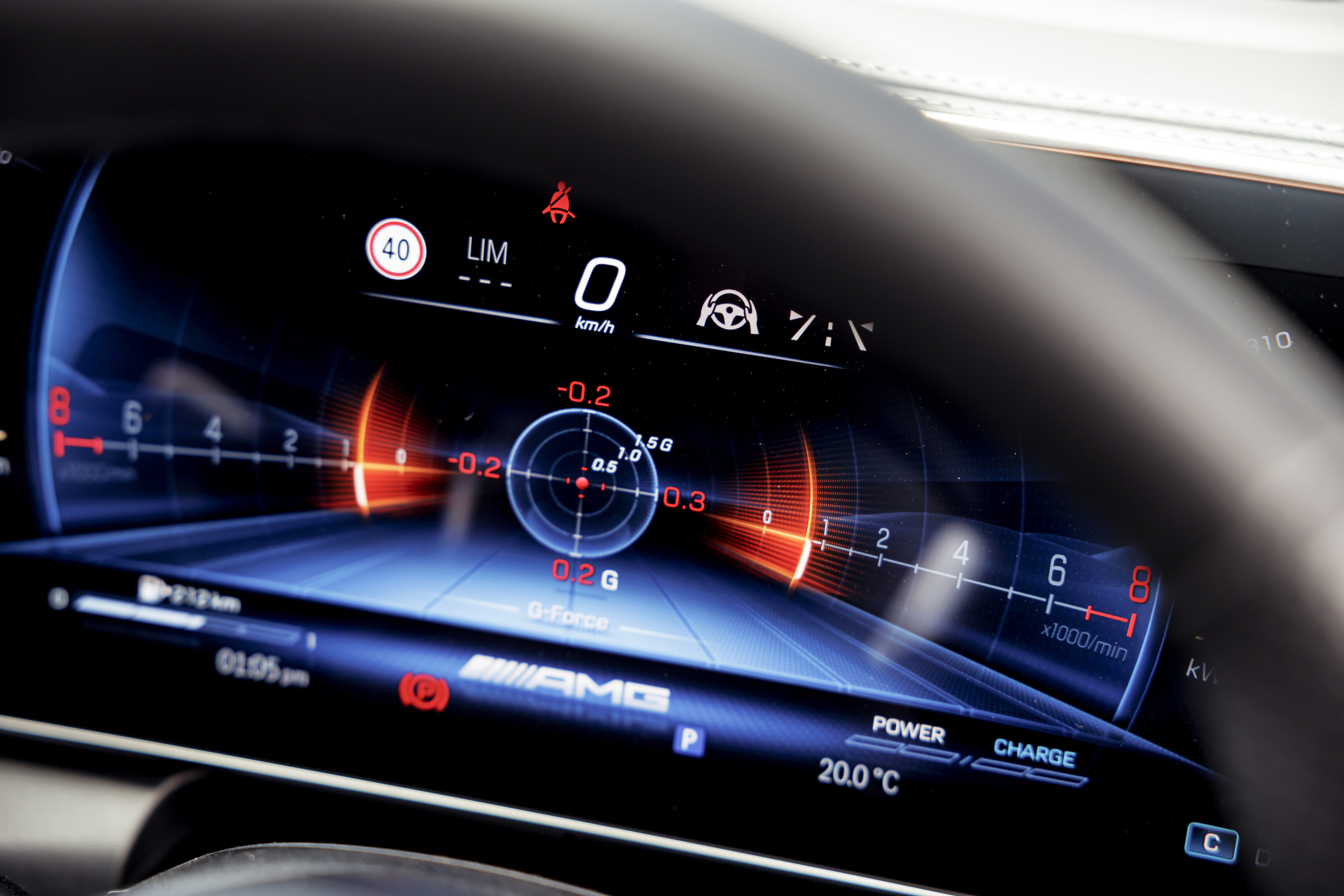
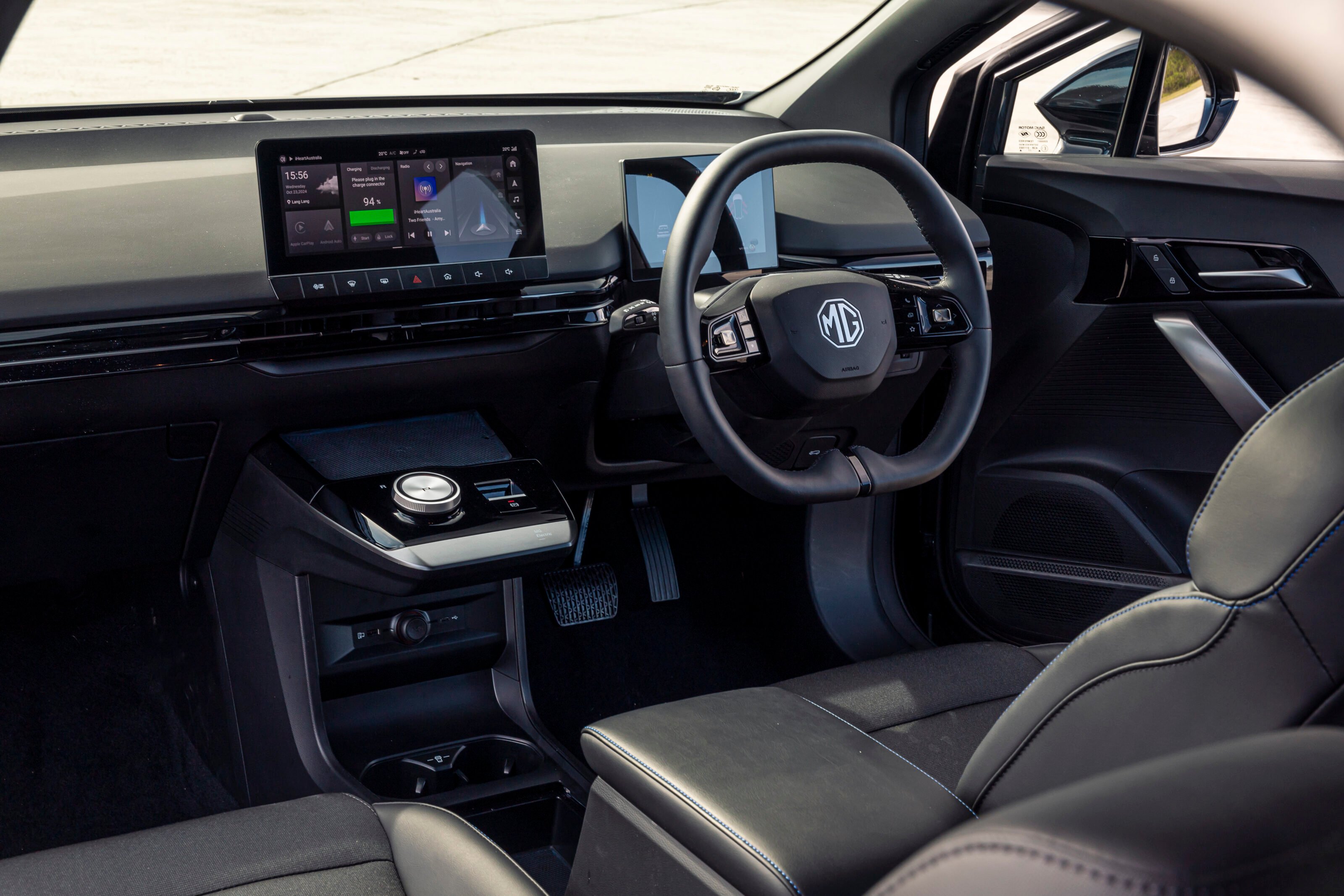
Like televisions, car screens have in recent years grown not only larger but of better quality so that many in-car screens are like watching the latest OLED TV. The latest ‘iSmart’ infotainment system in the MG HS features some of the best screen quality in class, making it easy to read while driving and ultimately safer. Many car makers like Mercedes-Benz and Hyundai also excel at including a high-quality camera system, which is very important in seeing objects while you’re manoeuvring the car.
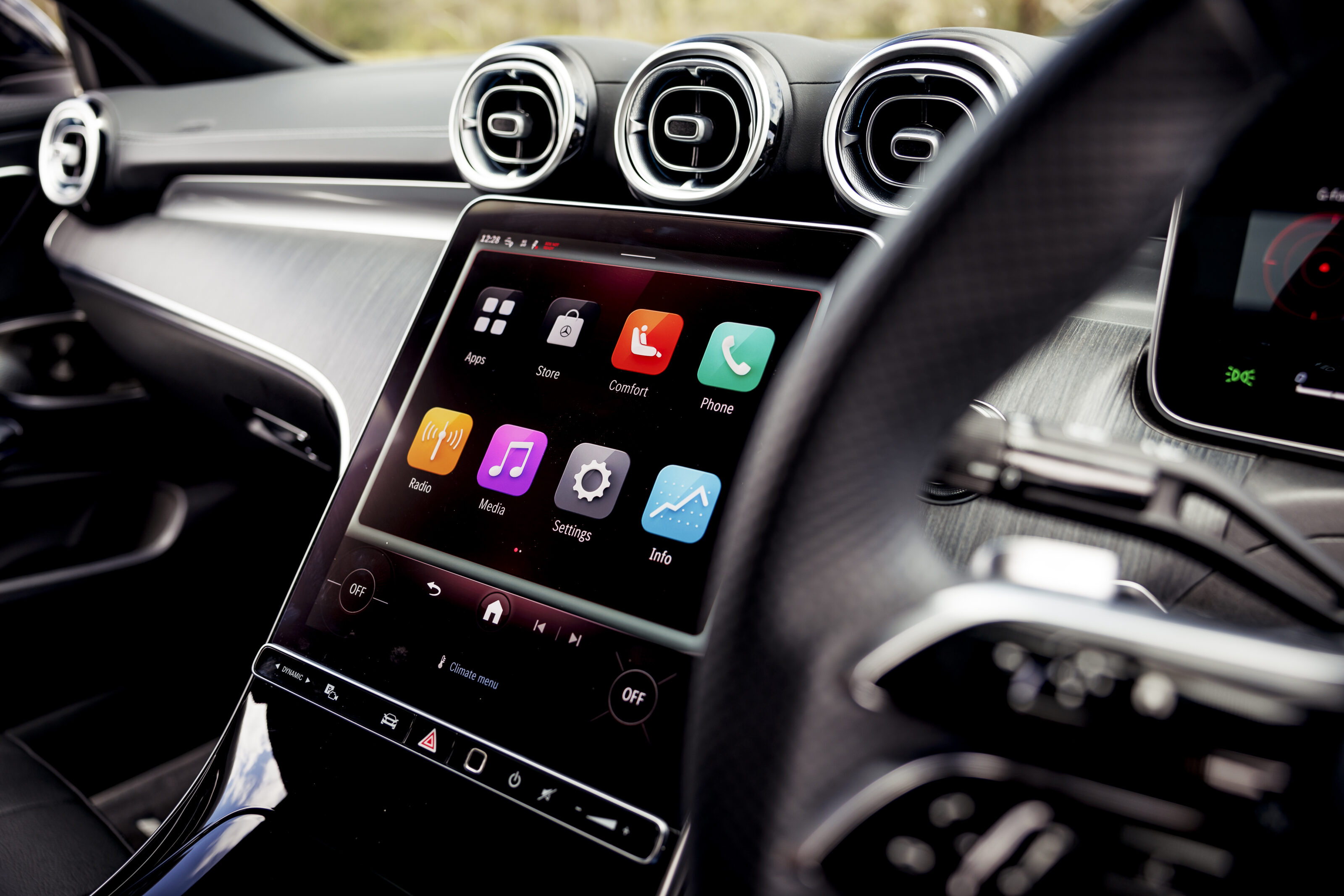
Also important are the icons used on the screen so that drivers can quickly differentiate features while driving. Mercedes-Benz’s MBUX system is an excellent example, with icons that are clear and well differentiated from one another. It’s quick to use with no lag and the screen quality is excellent.
One you can touch… or gesture at
Most infotainment systems these days are touchscreens, but some can also be controlled by a controller wheel like BMW’s iDrive that debuted way back in 2001. Some are touch only like the latest MBUX software and some, like the latest BMW system, can be controlled by both, whereas some Mazda models can only be controlled with the controller wheel unless you’re stopped and using only Apple CarPlay or Android Auto.
Safety while driving is Mazda’s reasoning behind this, but it’s still frustrating trying to use smartphone mirroring and entering destinations with a wheel when touching it would be so much easier. Worse still, some Mazdas like the CX-30 allow drivers to touch the screen for smartphone mirroring at any speed – but the CX-60 can frustratingly only do this when parked.
Some car makers like BMW, Deepal and the Volkswagen Group also feature gesture control on some products as another way of controlling the infotainment system. The idea behind the tech is that you can wave your hand in front of the screen to – for example – change the song you’re listening to and not actually touch the screen. Gesture control can be hit and miss but it can be quite helpful in keeping your eyes on the road.
Live services
While privacy remains an issue with cars that feature live services, the ability to download apps, get the latest software version over the air and in some markets, allow cars to receive information about traffic and accidents on the road ahead and divert are features that buyers increasingly require from their new car.
Tech like this is often hailed as the future of motoring and some car makers are throwing as many features as they can at cars in an effort to stand out. Want to watch YouTube to pass the time while your EV is charging? Volvo and Polestar gives you that option. Or connect your Google Maps account with the car? Many car makers – Honda most recently in Australia – allow you to do that, which is quite handy as you can search for a location before leaving and hop in the car and have it set as your destination.
As the car industry heads more towards heavier tech integration, the needs from consumers are obvious: a simple menu structure with shortcut buttons, good screen quality, features like Apple CarPlay and Android Auto and live services so that cars can keep updated and drivers can download apps like navigational tools if they wish. Designing an effective and safe infotainment system is not difficult, and many leave room for improvement.
“This is the next Commodore, and under that new nose is a Nissan 6 – after 39 years of Aussie-built power.”
Peter Robinson’s hard-earned scoop in the December 1985 issue of Wheels almost cost him his house. Holden took his reveal that the new VL Commodore would feature Nissan’s RB30E engine rather badly, and it was largely due to the wiles of Australian Consolidated Press’ in-house lawyer, one Malcolm Turnbull (yes, him), that Robbo wriggled out of a sticky legal bind. But that’s Peter’s story to tell, not mine.
As the last of a series that had been in production since the 1978 VB, the VL was a car that needed to show customers something new. Holden had learned a painful lesson when the Commodore VC morphed into the VH in 1981 that visual differentiation was key to sales. Although the VL rode on the same 2881mm (105 inches, in old money) wheelbase as that ‘78 VB, there was no doubt that it was a marked diversion in terms of modernity and ambition.
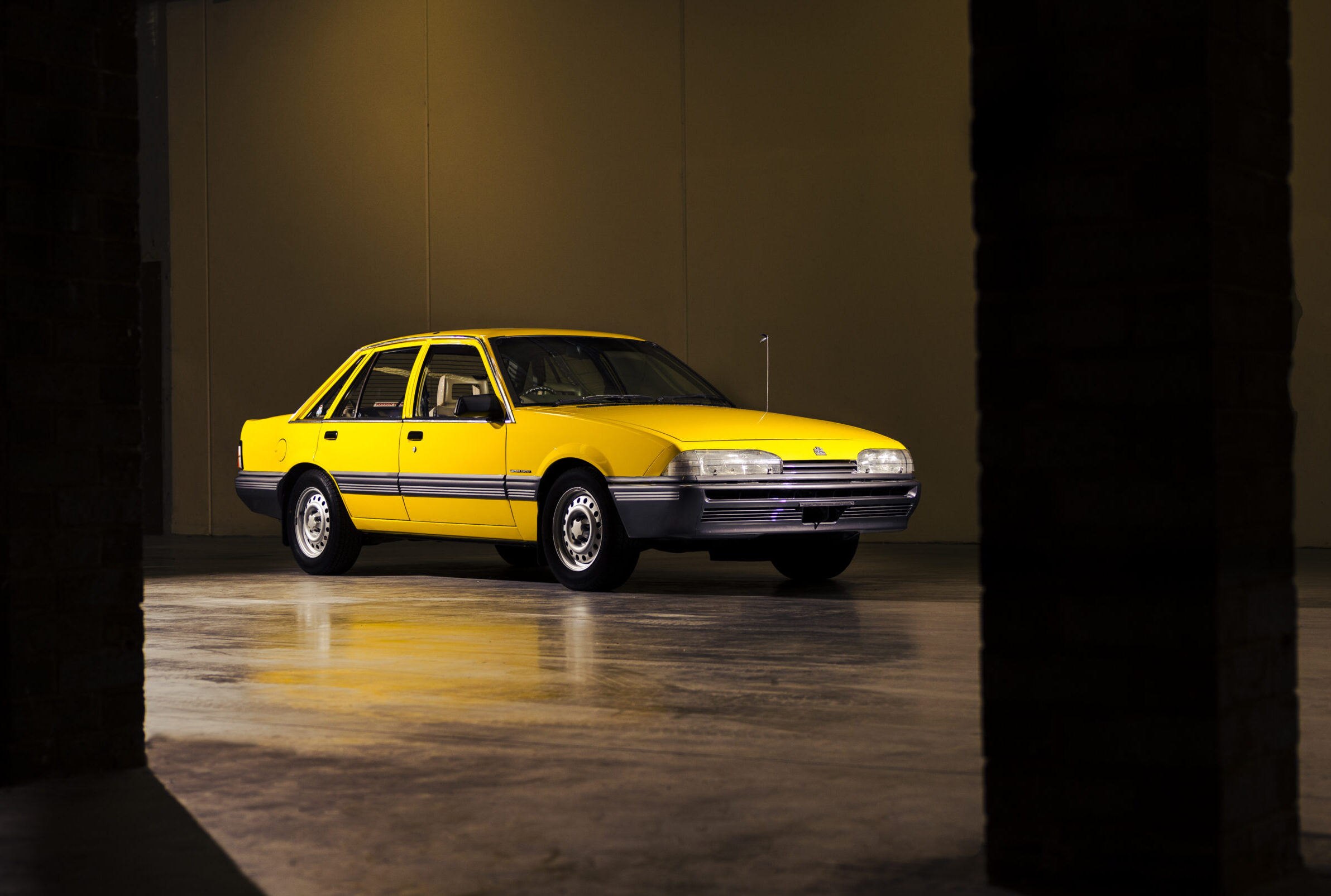
Designer Phil Zmood certainly hadn’t rolled the arm. The bonnet was more aggressively raked, leading to a low-profile nose. The Calais model got a unique nose cone with sleep-eyed semi-retractable covers over the rectangular front lights. Move round to the rear and the flat bootlid kicked up into an inbuilt spoiler and there was a more modern lighting panel. The glasshouse was largely a carry-over from the VK, which introduced the more complex Senator-style side window profile, but every panel ahead of the A-pillars was new.
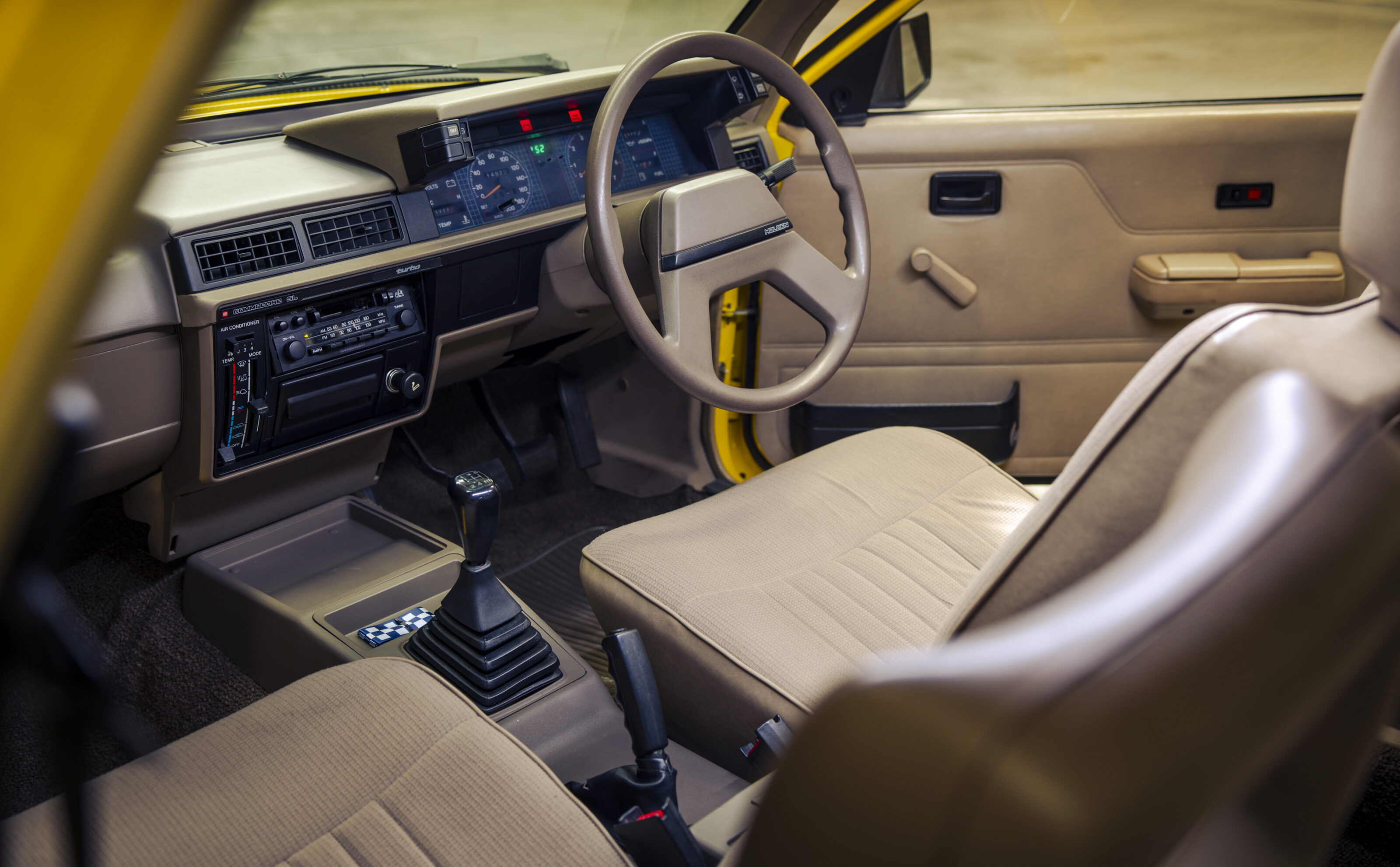
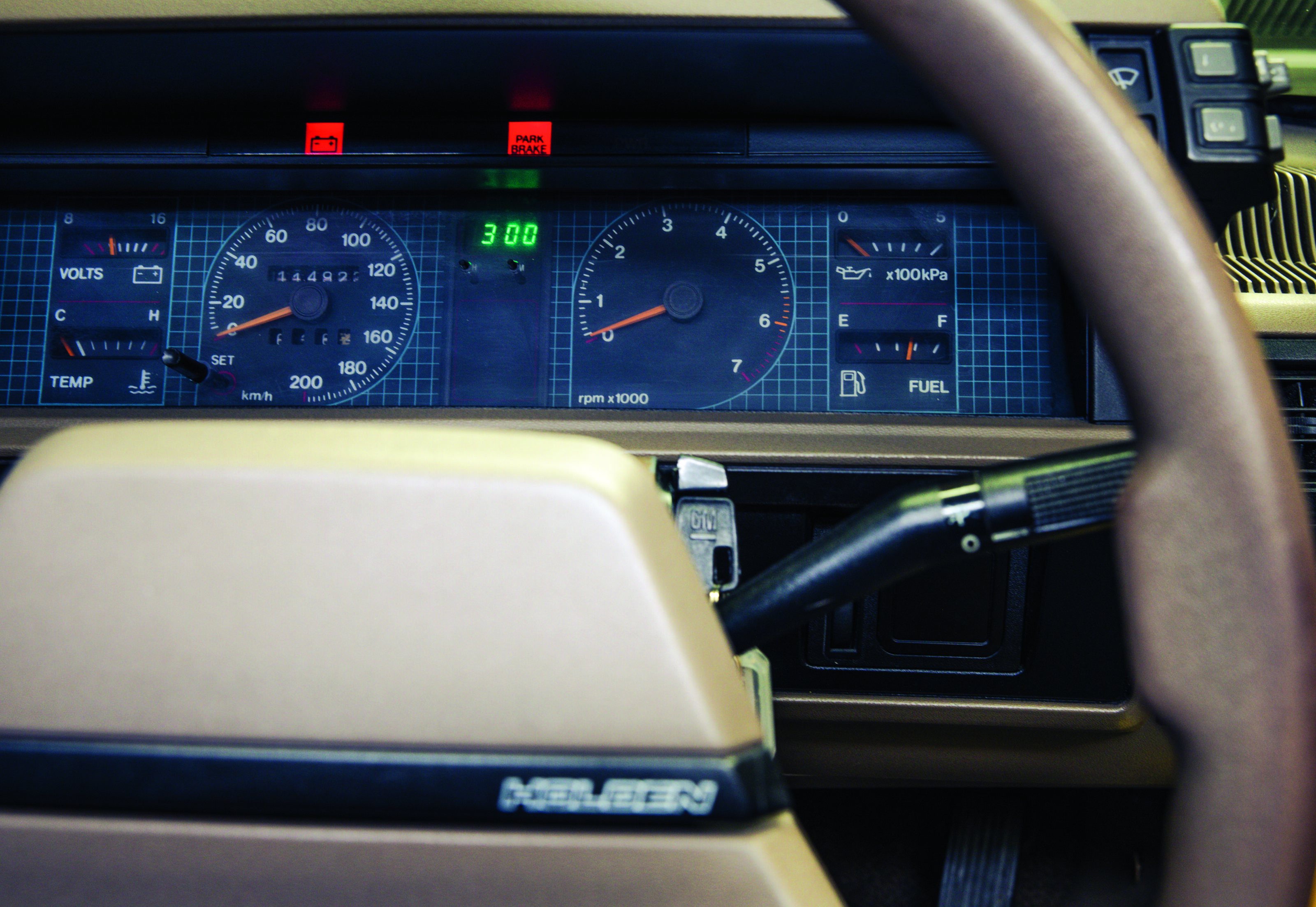
Inside, the driver was greeted by a new dash with round clocks replacing square ones, a repositioning of much of the ancillary switchgear, and the fitment of a two-spoke steering wheel on the SL and Berlina models, with the Calais getting a single-spoke item.
Most importantly, the VL bought Holden time. Despite being a millimetre longer than its erstwhile rival, the Ford Falcon XF, the VL Commodore was some 138mm narrower, which meant that in terms of categorisation, Holden was putting a midsize sedan up against a full-sized item. Holden knew that this would be remedied when its successor, the far heftier VN, would arrive in 1988, so it needed something fresh-looking to tide it over for the two years from 1986 to 1988.
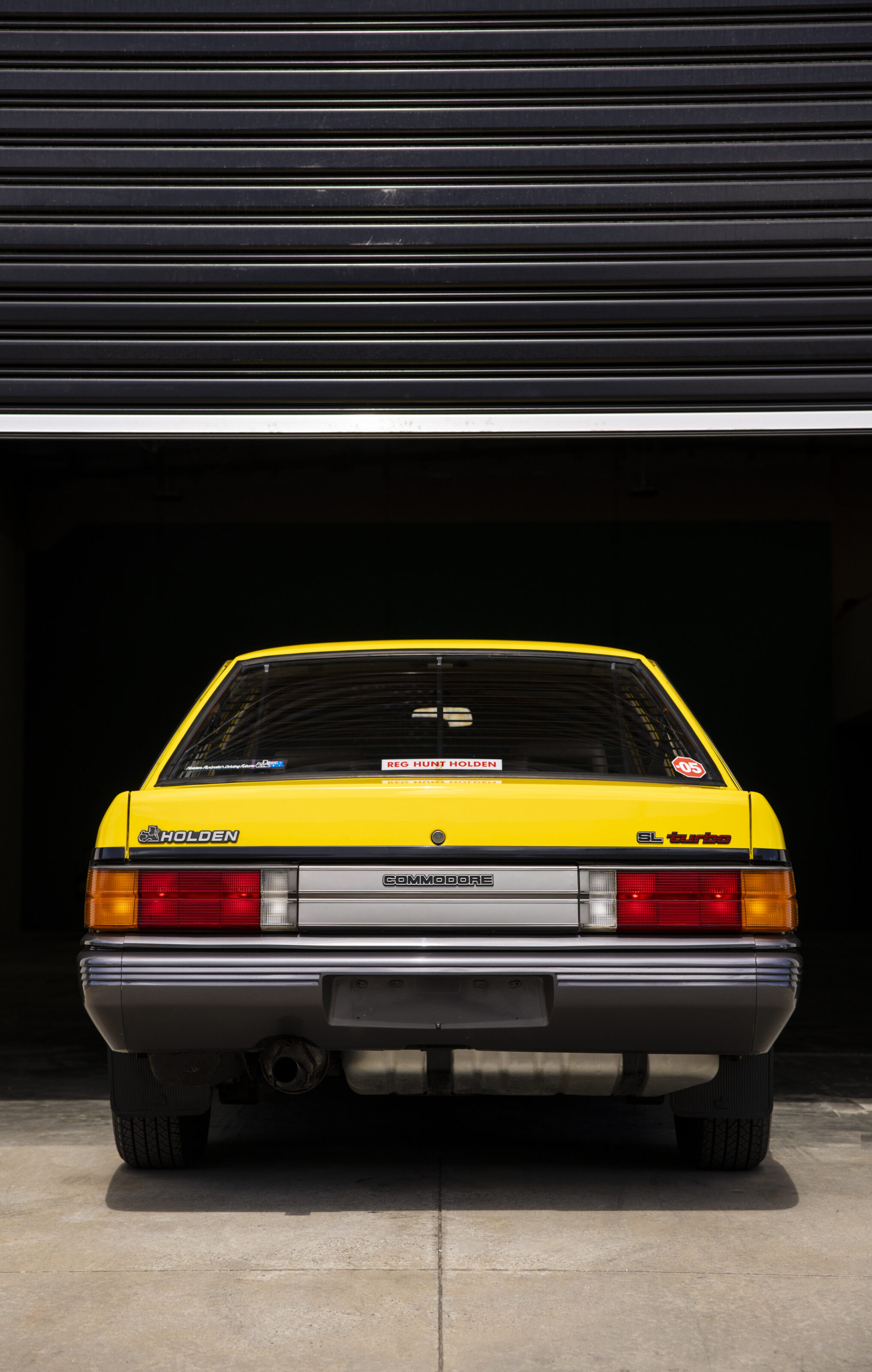
It’s usually the case that these ‘last of the line’ cars are well engineered but conservative. The VL was an odd mix, but it worked. The basic formula prevailed: relatively short wheelbase, a long bonnet capable of housing a straight-six engine and the now familiar struts up front and live axle with Panhard rod rear suspension design, but the key ingredient thrown into the mix for this generation was Australian Design Rule 37, the Federal Government’s decision to ditch leaded fuels and the introduction of 91-octane unleaded fuel on January 1, 1986.
Holden had seen this coming for some time and realised that the old 202ci/3298cc ‘Black’ six – available in the VK Commodore in both carburettored and Bosch LE2 Jetronic fuel injection guises – wasn’t going to cut it without soaking up a stack of engineering budget. The old Iron Lion V8 was similarly hobbled. It cast around for a technical partner and came to an agreement with Nissan for supply of the RB30E, an engine which was smaller, lighter, more powerful and more fuel efficient than Holden’s prior entry-level V8.
The VL had a considerable task on its hands. The ageing platform was up against not only the Falcon, but the reigning Wheels Car of the Year, the wide bodied Mitsubishi Magna. While Ford and Holden locked horns, the Mitsubishi slid in almost unnoticed and aced both of the Aussies in terms of mechanical reliability, refinement and equipment provision.
Put to the test
Wheels ran its first VL comparison in June 1986, pitting a six-pot VL Commodore Executive ($15,160 – and effectively a special edition version of the SL trim) up against a $15,513 Falcon GL and a $16,270 Magna SE, all three fitted with automatic gearboxes. Road tester Mike McCarthy was impressed by the sheer verve of the Holden’s engine. With 300kg less to lug about than the doughty 4.1-litre nat-asp Ford, and a 17kW power advantage to boot, it was always going to feel lively.
“The Commodore’s engine and performance are in utter contrast to the Ford’s,” he wrote. “A real rev-head, the injected three-litre is tractable but gives its best when working in the middle to high end of the rev scale. Its revs and performance prove that this is a sports engine par excellence.”
McCarthy was less impressed by the VL’s ride and handling. “The Commodore’s ride and handling leave something to be desired,” he noted. “Changes to the new model’s suspension succeed in eliminating the former roll-oversteer bogey, but at the cost of increased understeer, reduced responsiveness, more body roll and obvious front tyre scrub. Hard cornering soon reveals that despite its impressive extra speed and acceleration, the new model has lost a bit more of that spirit and balance that once made it the driver’s favourite. Now even the ride is wrong: compliantly comfortable in easy conditions, it is bouncily adrift when rough roads make demands on the damping and axle location. RTS (Radial Tuned Suspension) ain’t what it used to be.”
When summing up, the verdict went to the Magna, with the Commodore in second and the Falcon bringing up the rear. The VL even had the word ‘improved’ couched in quotes. What was clear was that there were the bones of a good car in here, but it was hamstrung by a few issues. Materials quality wasn’t what it should have been. Some of the interior plastics were shockingly cheap, panel fit was often irregular and paint finishes were poor. Then there was the ride and handling.
Holden even managed to offend Nissan Australia with its advertising, dubbing the motor ‘Commodore’s all-new 6-cylinder Powertech 6Ei engine’, which Nissan took as Holden claiming credit for their work. In rebuttal, Nissan Australia ran some snarky advertisements which said, in not so many words, that if you thought the engine was good in a Commodore, why not try it in the car for which it was designed.
Timely turbo
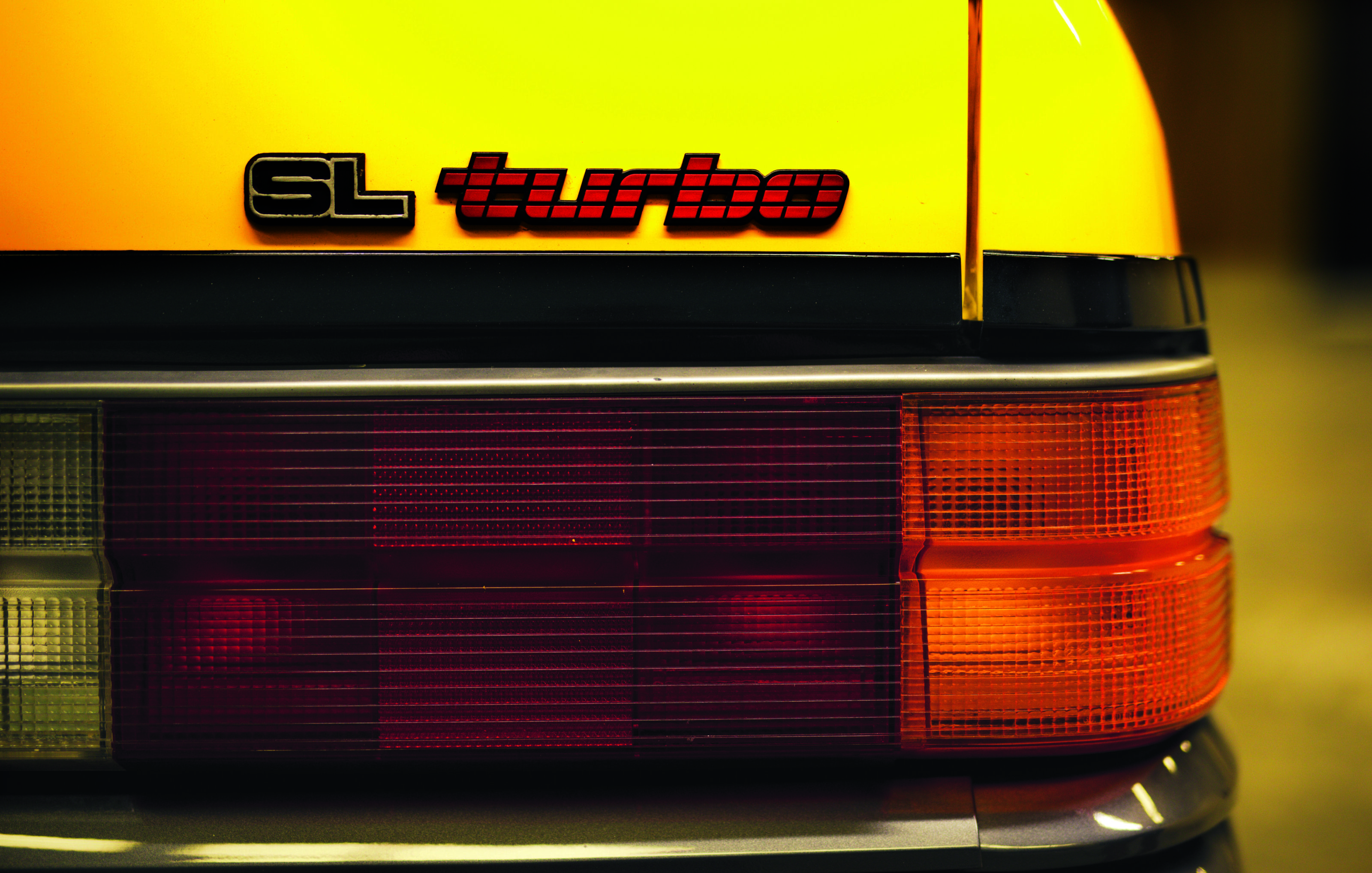
When negotiating with Nissan for the rights to use the RB30E, Holden also secured exclusive rights to a turbocharged version of that engine, which would be dubbed the RB30ET. It was this engine, more than any other, that built the VL’s contemporary reputation, and Holden knew that for keen drivers it would easily eclipse the revised V8 it was working on.
The cover for the August 1986 issue of Wheels ran an “Off the clock” headline, showing the speedometer needle of a VL Turbo pegged way past 200km/h on Lang Lang’s high-speed bowl. Holden claimed to have routinely hit 217km/h on the banked circle and the numbers seemed conservative.
Both Nissan and Holden had worked on the engine. The Japanese had done the lion’s share of the engineering work, with Holden responsible for the in-car calibration. The turbo installation was deeply impressive, the Garrett blower installed inside a water-cooled housing. Refinement was excellent and response was silky-smooth and flexible. Maximum boost was achieved at just 2400rpm, with meaningful pressure building from just 1500rpm. With 150kW at 5600rpm and 296Nm from 3200rpm, it boasted almost 32 per cent more power and nearly 20 per cent more torque than its normally aspirated sibling.
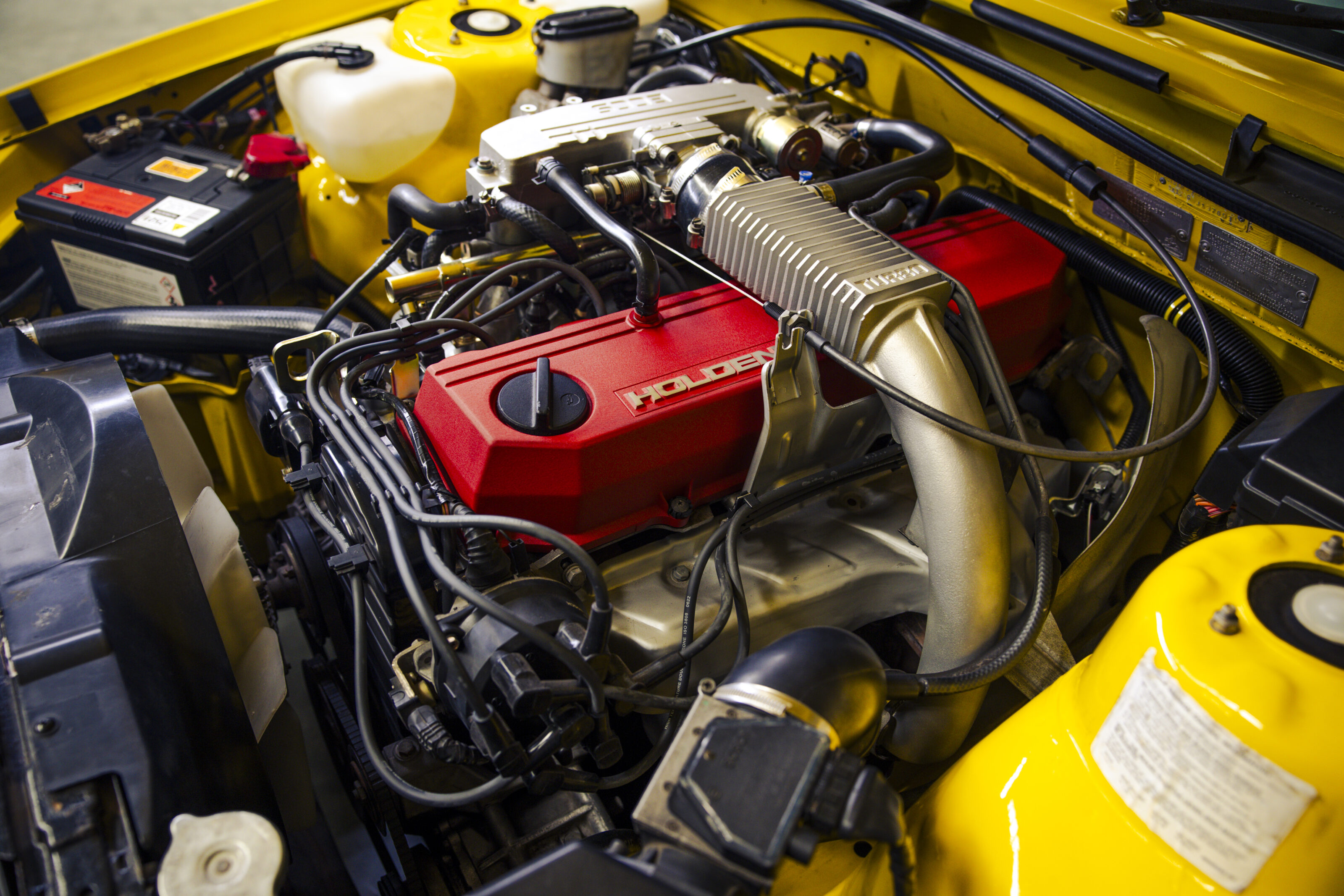
Other changes included new pistons, which lowered the compression ratio from 9:1 to 7.8:1, and a higher lift camshaft with optimised timing for less overlap. It achieved this while adhering to GM’s edict that the engine be ‘non-interference’, in effect meaning that the valves and pistons could not contact each other in the event of a drive belt breaking. The intake, the exhaust, the engine management and the gearbox were also changed for the turbo car. The latter involved a lower ratio for the first three gears, a tougher four-pinion differential.
Holden also made an attempt to rectify the handling issues that had marred the launch of the atmo VL. The FE2 suspension setup included new springs, revised dampers and smaller anti-roll bars (234mm front and 16mm rear, both 2mm less than standard) served to beef up the ride and body control. The brakes were also worthy of mention, with 298mm front discs with local company Girlock supplying the finned alloy calipers, also seen at the time on the C4 Corvette. These necessitated the fitment of 15-inch wheels.
The VL Turbo’s impact is hard to underestimate. Here was a car with a power-to-weight ratio of 120kW/tonne where its Ford Falcon counterpart developed a mere 66. Its acceleration was in an entirely different bracket. Holden claimed an eight-second 0-100km/h time, but that was conservative. Many outlets saw figures more like 7.6 seconds from their independent performance testing.
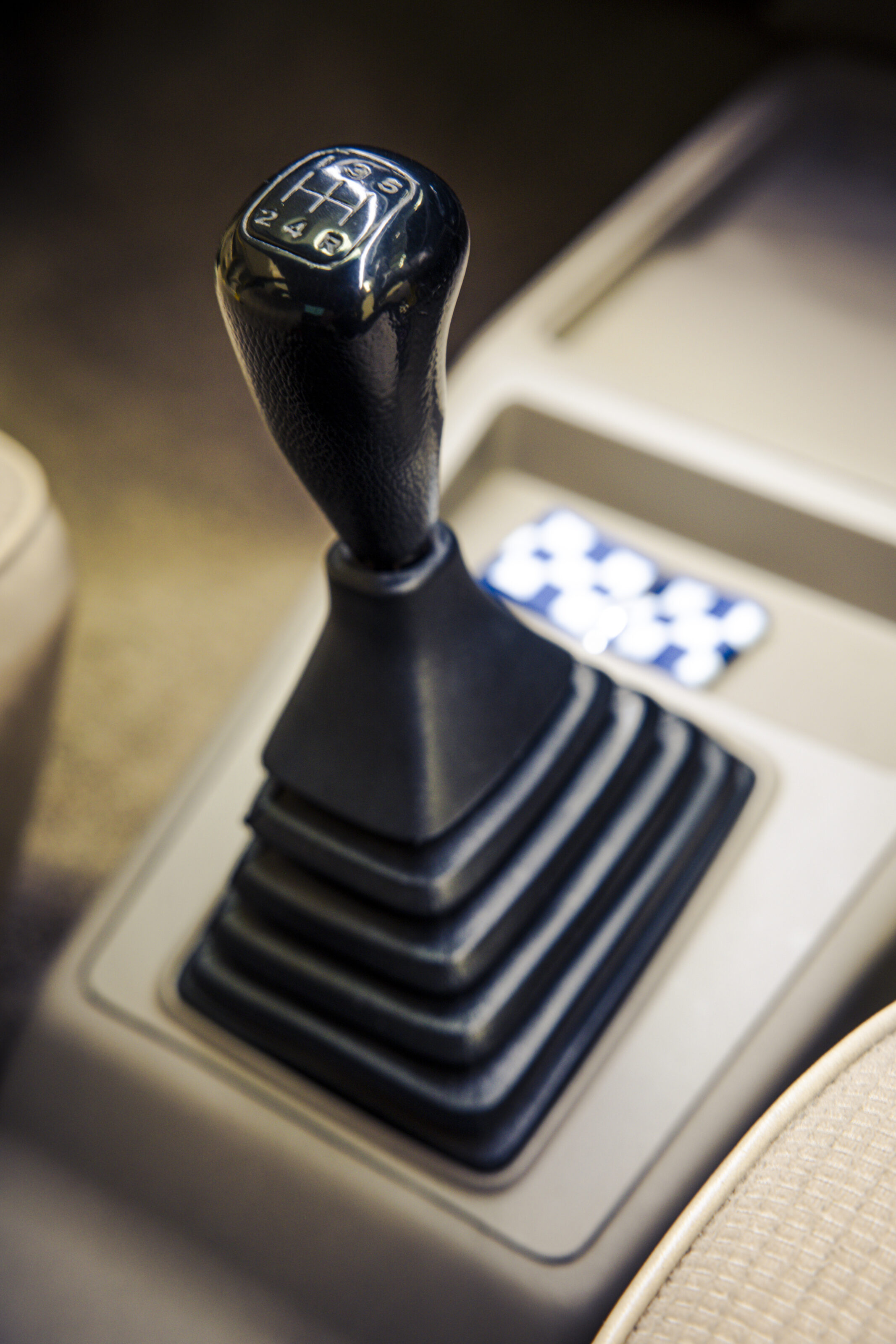
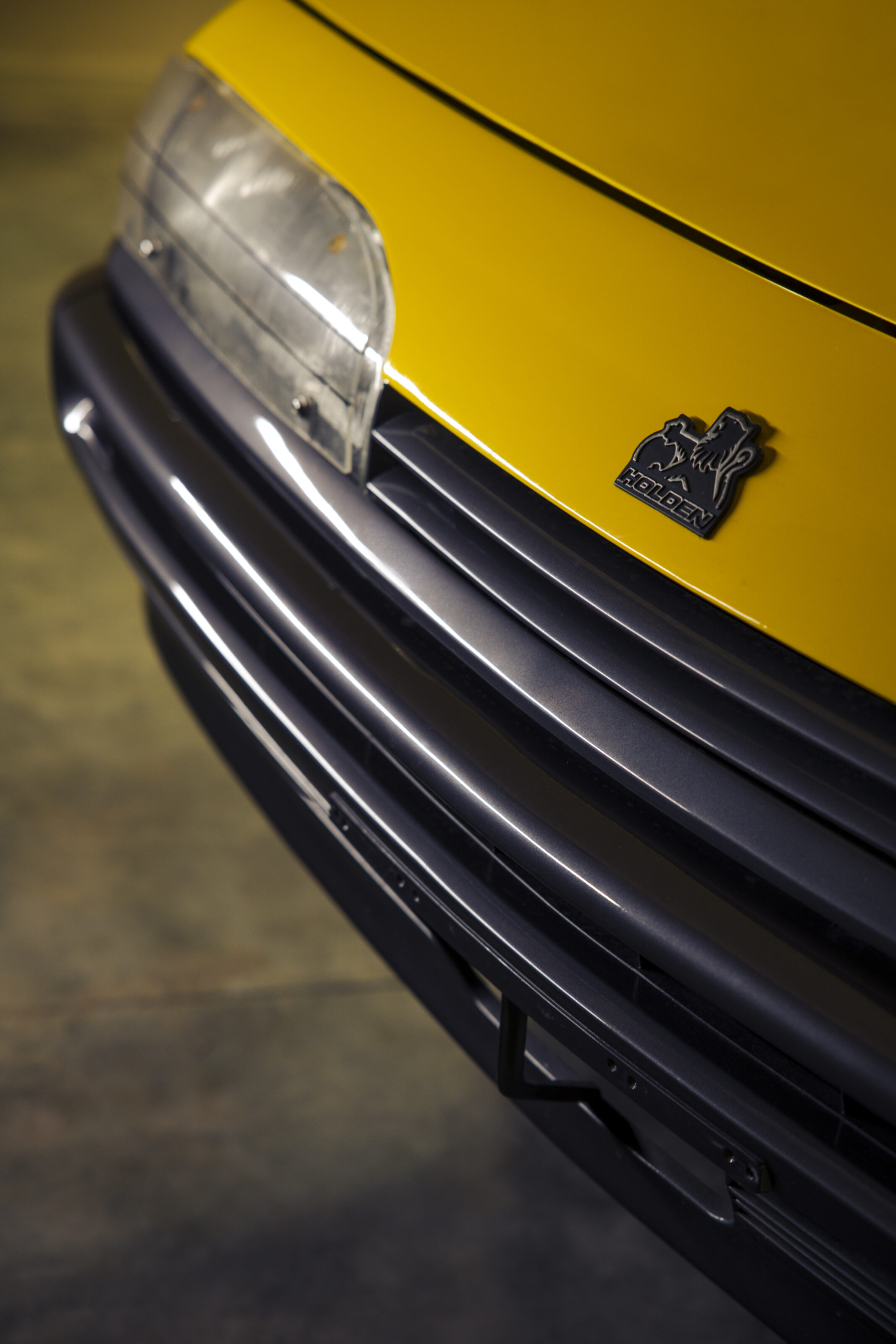
With power like that, it was perhaps unsurprising that police forces the length and breadth of the country pricked up their ears. The police-spec highway pursuit cars, coded BT-1, were based on the entry-level SL trim (the turbocharged engine was offered as an option on all VL trims), but they got the FE2 suspension, multi-slot steel wheels and some were fitted with long-range fuel tanks. White and pale blue were taken up by some forces, but Absinthe Yellow was by far the most popular choice.
Or, if you didn’t want a six, how about that V8? In September of 1986, Holden reintroduced the ‘great Aussie V8’ re-engineering it to develop 122kW at 4400rpm and 323Nm at 3200. The ads spruiked that ‘Only Holden V8 torques your language’ and rather than positioning the vehicle as the sporting flagship, instead claiming that it was “the best engine for towing trailers, boats, horse floats and caravans”.
Even Holden themselves admitted that such was the superiority of the blown six, positioning the V8 as any sort of driver’s choice “would have been marketing suicide”. That was understandable given that it persevered with the ancient Tri-Matic three-speed auto rather than the VL’s much more advanced Nissan four-speed auto. You could even specify it with an optional V5W ‘Country Pack’ suspension option,
which lifted ride height by 25mm, a Dakar-spec before it’s time, if you like.
The Brock effect
That was far from it for the V8. Those who had clamoured for its return in the VL were utterly unsatisfied that it had morphed from angry bastard in VK Group A spec to geriatric spec in the VL. Peter Brock was rumoured to be working on a deal to fit the cracking Borg-Warner T5 manual ‘box to his HDT-improved cars.
At that time Brocky and GM-H were in the thick of a back-and-forth over the controversial (read useless) Energy Polarizer, Australia’s favourite piece of automotive pseudoscience. That’s why you won’t find the racer’s name on many of the original HDT VL SS Group A cars. Holden’s take? “We see no technical merit in the polariser and therefore can’t endorse its use.”
The first 500 homologation cars were all finished in Permanent Red paintwork and assembled at Holden’s Dandenong plant before being fettled at HDT’s Port Melbourne location, the official launch coming in November 1986.
When Wheels put the $29,600 SS Group A up against the $28,366 Calais Turbo back in February 1987, not only were they both fairly evenly matched on price, but they were virtually impossible to separate with a stopwatch. Over 400m, the V8 stopped the timer at 15.41 seconds and the six a mere hundredth later at 15.42 seconds. The massive gulf between the two cars was evident when it came to ride and handling, the V8 better able to deploy its 137kW/245Nm, with more progressive on-limit behaviour, superior body control and more communicative steering.
Most will know the history behind this car and how Brock was subsequently disassociated from Holden, the company rightly feeling that his unscientific beliefs were a threat to their credibility. In the end it proved a useful device, for Holden at least, who were able to cut loose the increasingly maverick HDT business and exercise greater corporate control via its own Holden Special Vehicles outfit.
This bore fruits with the VL SS group A SV – the famous Walky/Plastic Pig/Batmobile. Built in 1988 and available solely in Panorama Silver, this 180kW special was badged as a Holden to satisfy Group A requirements. A run of 500 were built, with another 250 subsequently offered to a public who were a bit slow on the uptake. The controversial styling kit, said to reduce drag by 25 per cent compared with its predecessor, was part of the reason, as was buyer realisation that a brand-new VN-generation Commodore was also arriving in 1988, despite the fact that the SS Group A version wouldn’t appear until 1990.
In most regards, the VL Commodore was a notable success. It sold well, comfortably better than any of the prior ‘compact’ Commodores, scoring 151,801 sales in the 30 months that it was on dealer floors. One thing it could never quite manage was to outsell the overweight and ageing XF Ford Falcon. It seems the Aussie public loved leaf springs, recirculating ball steering and three-speed autos. But Ford’s marketing for this car was clever, with around 70 per cent going to fleet buyers, whereas the VL was more geared towards private customers.
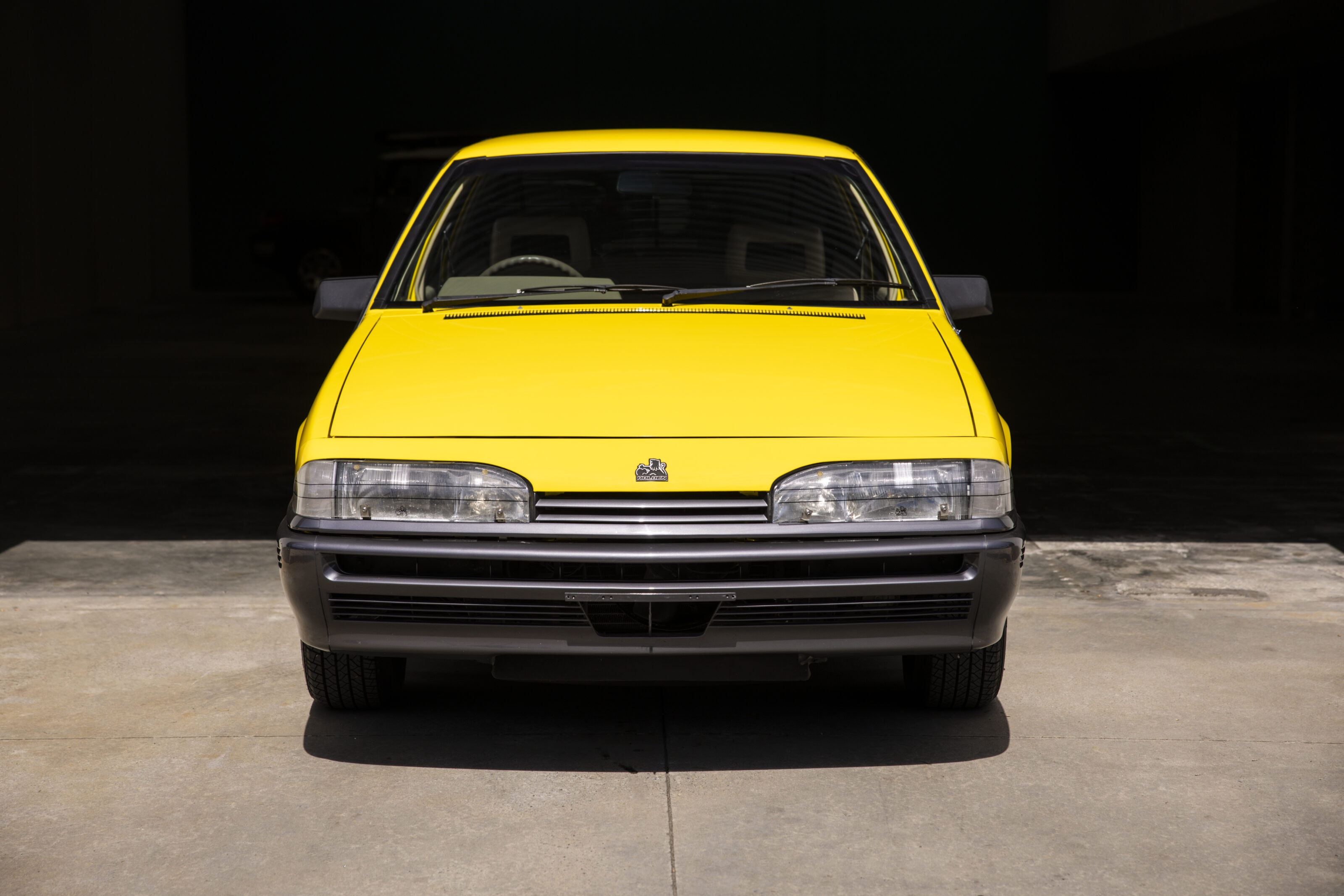
Running a VL today is a reminder that much has changed since the late 1980s. By today’s standards, even the Turbo isn’t a particularly quick car and its dynamics are distinctly period. Even when new there was evidence of significant cost-cutting, largely because between the time when the contract was signed with Nissan for engine supply and the time that engines were delivered and had to be paid for, the pendulum had swung the wrong way for Holden in terms of Aussie dollar versus Japanese yen exchange rates. Therefore, costs had to be taken out of other aspects of the car, such as the single-stage acrylic paint finishes or the flimsy rear end.
On the plus side, both the six and the V8 engines are tough and many of the worst excesses of the VL’s handling are reduced by quality modern tyres. Pay attention to cooling and modify sensibly. There’s a huge resource out there if you want a 1000hp VL Turbo for the drag strips, but please remember that big boost will make these cars a misery to drive on the road.
The VL Holden Commodore marked a specific moment in time. By 1988 the bigger VN generation had arrived, and the costly but lovely Nissan six was ditched for the less delightful Buick-sourced LN3 3.8-litre powerplant. A generation of Aussie youth was inspired by the mighty VL Turbo and, as such, these cars are in exceptionally strong demand by late Millennials and Gen Xers. Tidy cars like the one you see here can change hands into six figures, with SS Group As going up to around $300,000.
You’d do well to get a tenth of that sum for any Ford XF Falcon, so in terms of the longer game, the VL Commodore has emerged victorious. For a car that was expected to upset the true-blue Aussie Holden lovers, that’s quite some achievement.
This article first appeared in the April 2025 issue of Wheels magazine.
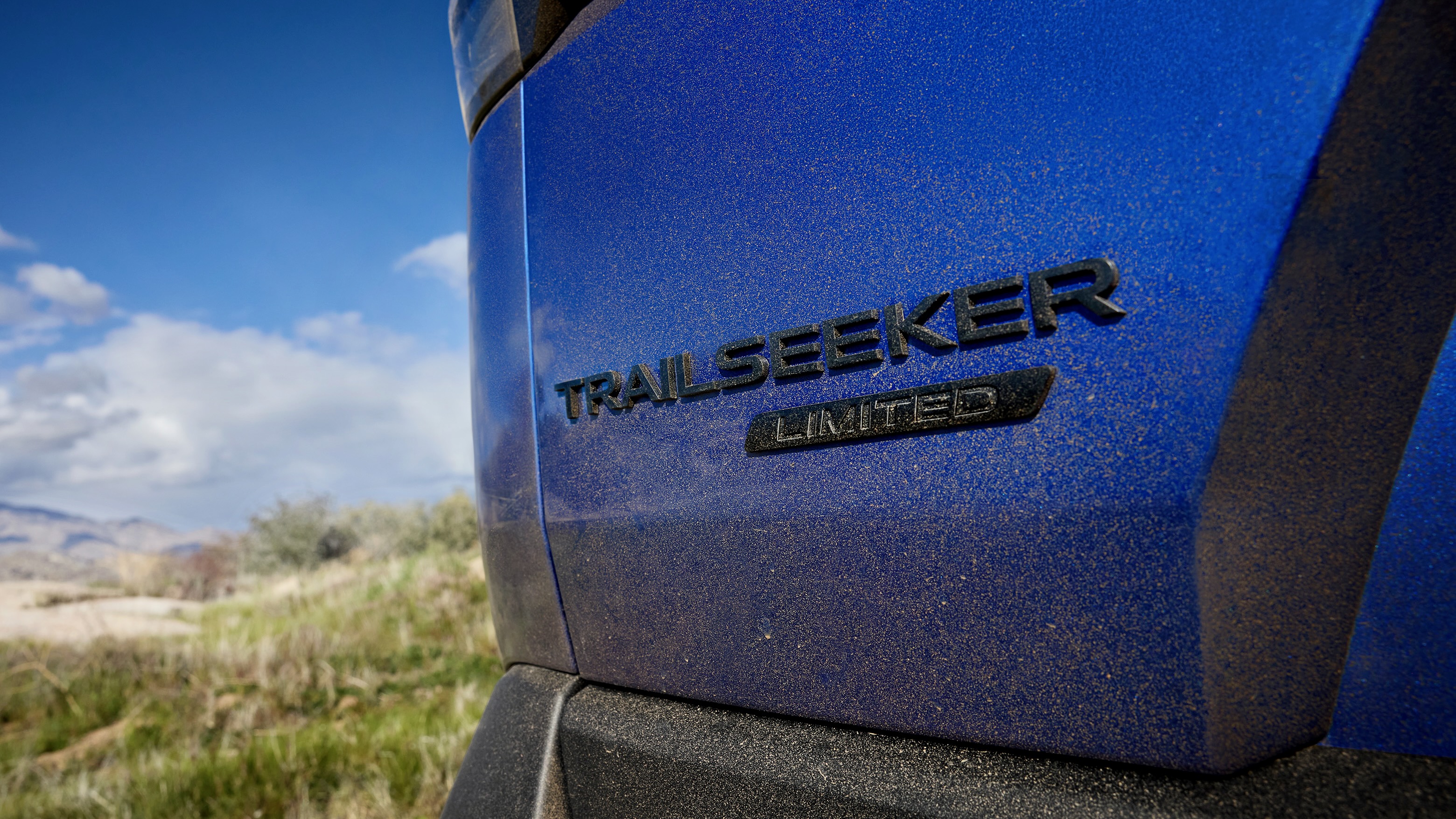
The 2026 Subaru Trailseeker electric SUV has been revealed at the New York Auto Show and appears to be a larger and more practical version of the company’s Solterra electric SUV. Using a dual-motor electric drivetrain with up to 280kW of power, the Trailseeker is the quickest production Subaru ever made with a 0-60mp/h (97km/h) time of just 4.4 seconds.
By comparison Subaru’s enduringly popular WRX STI does the same sprint in about five seconds.
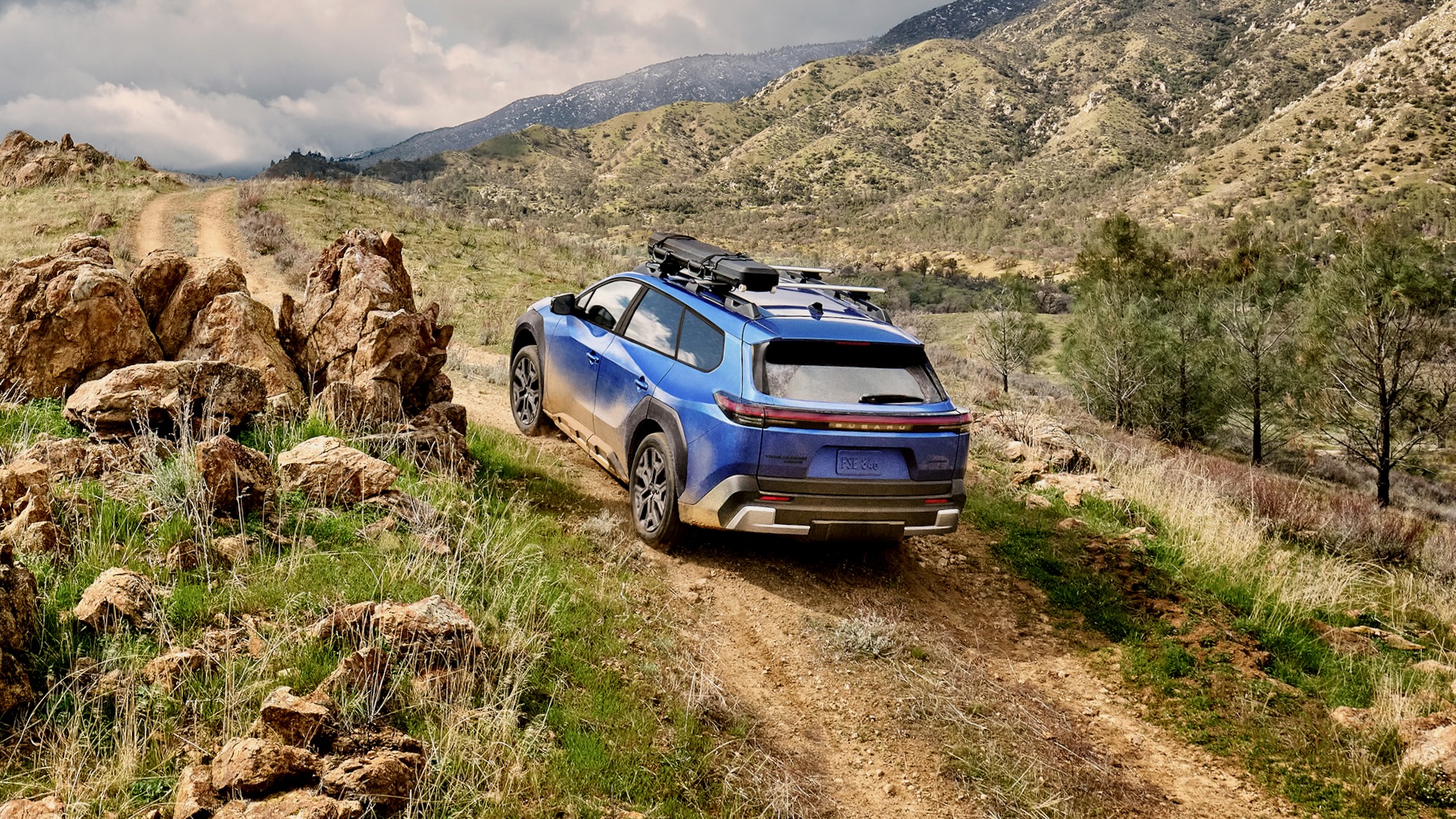
Stylistically, the Trailseeker appears to be picking up the lifted wagon style where the Outback left off: it’s long and not that tall, despite its high-riding stance. Like the new Outback also revealed at the 2025 New York Auto Show, the Trailseeker appears to be ready for off-road use thanks to lots of plastic cladding and tough-looking roof rails.
Like its petrol-powered siblings, the Trailseeker feature’s Subaru’s ‘X-Mode’ drive modes with snow/dirt and deep snow/mud settings, as well as grip control and hill descent control for off-road use. It can also reportedly tow up to 1590kg in the US.
Under the body of the Trailseeker is the same platform as the Solterra that’s shared with Toyota and used underneath the bz4X, with a 74.7kWh battery allowing for “more than” 260 miles (418km) of range – that’s in the US and based on lenient EPA figures. If it’s sold in Australia, the range will likely grow.
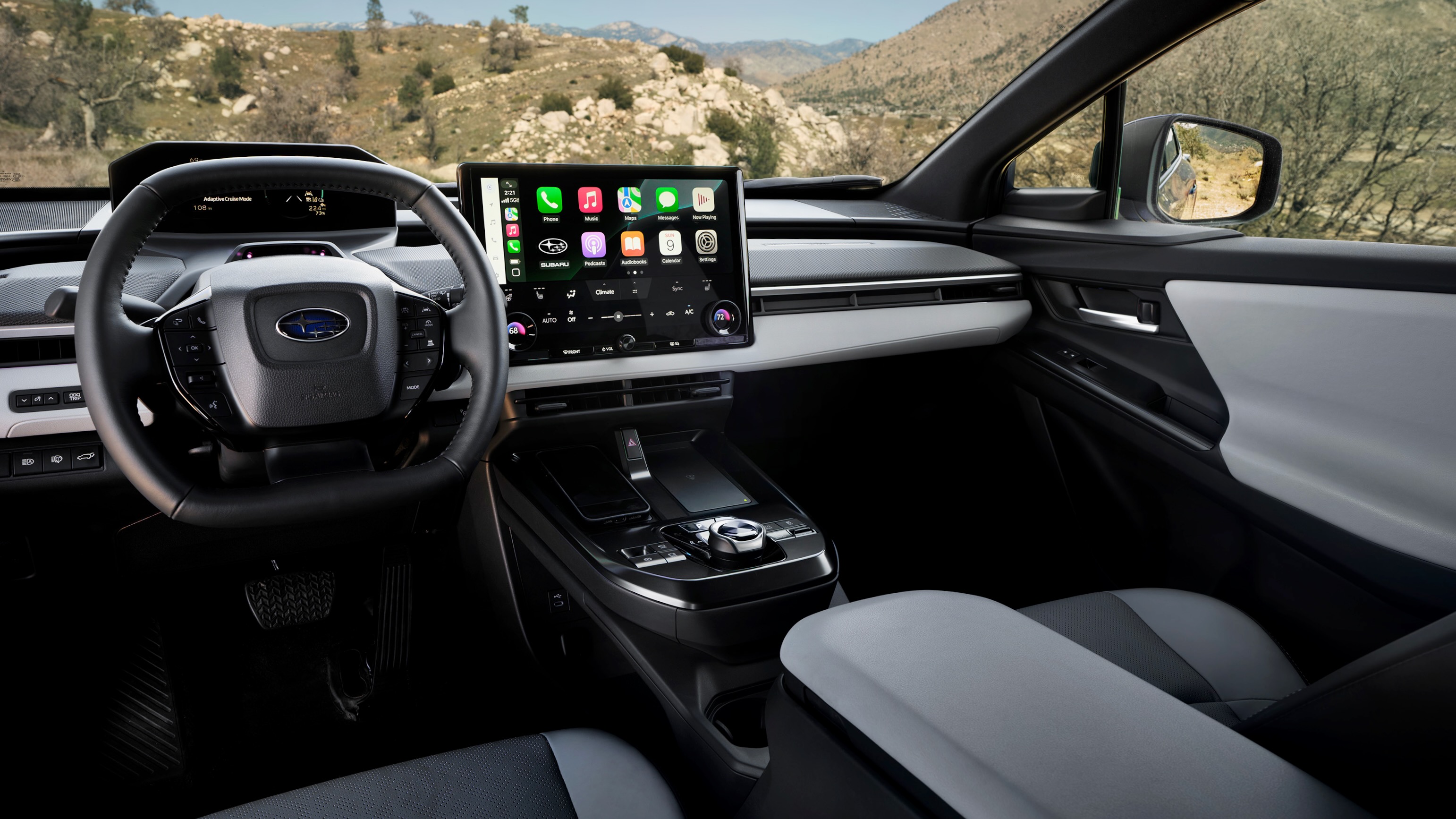
Inside the Trailseeker is a dashboard that’s near identical to the Solterra, with a 14-inch touchscreen using Toyota software and featuring wireless Apple CarPlay and Android Auto.
Subaru Australia is yet to confirm the Trailseeker for local sales, though with the local popularity of electric SUVs and the incoming NVES, it’s likely to be launched here eventually.
Audi Australia has launched the facelifted Audi A3 and S3 range into local showrooms. Armed with styling, technological and drivetrain upgrades, the new A3 and S3 are priced from $54,800 and $78,800 plus on-road costs respectively. Both are available in Audi showrooms now.
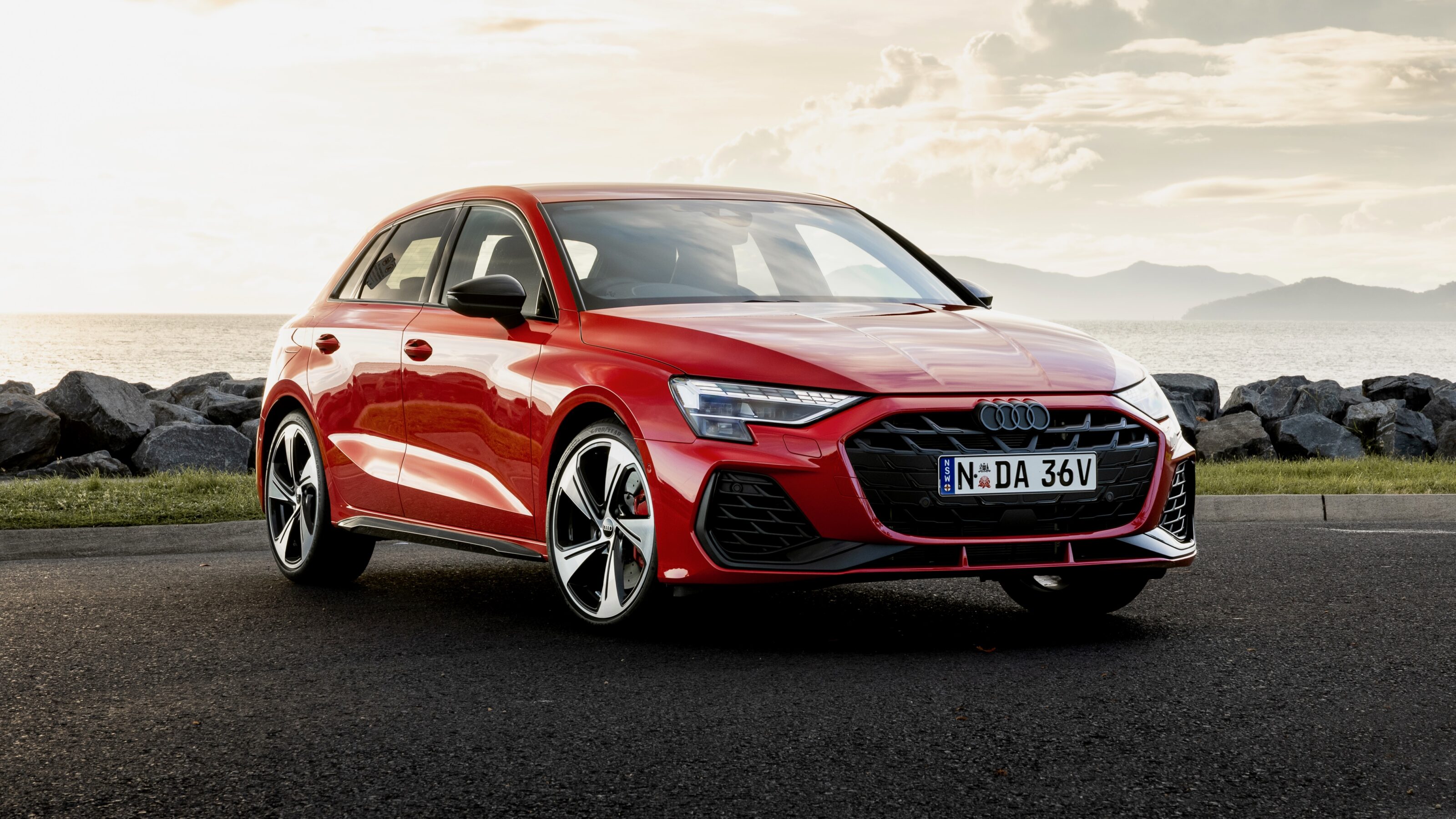
As with the pre-updated A3, there are both regular A3 and hot S3 models available – with the high-performance RS3 due later in the year. The A3 is now offered solely with the ’35 TFSI’ drivetrain: a turbocharged mild-hybrid 1.5-litre four-cylinder petrol engine making 110kW of power and 250Nm of torque. The A3 35 TFSI hits 100km/h in 8.1 seconds and uses 5.3L/100km of fuel on a combined cycle.
The former A3 40 TFSI is no longer available.
The S3 above the A3 uses the same 2.0-litre turbocharged four-cylinder petrol engine as before, though its outputs have increased to 245kW of power and 420Nm of torque – increases of 17kW and 20Nm. It sprints to 100km/h in just 4.7 seconds and its fuel consumption is rated at 7.8-7.9L/100km (sedan-hatchback). All models are mated to a seven-speed dual-clutch transmission, while the A3 is front-wheel drive and the S3, all-wheel drive.
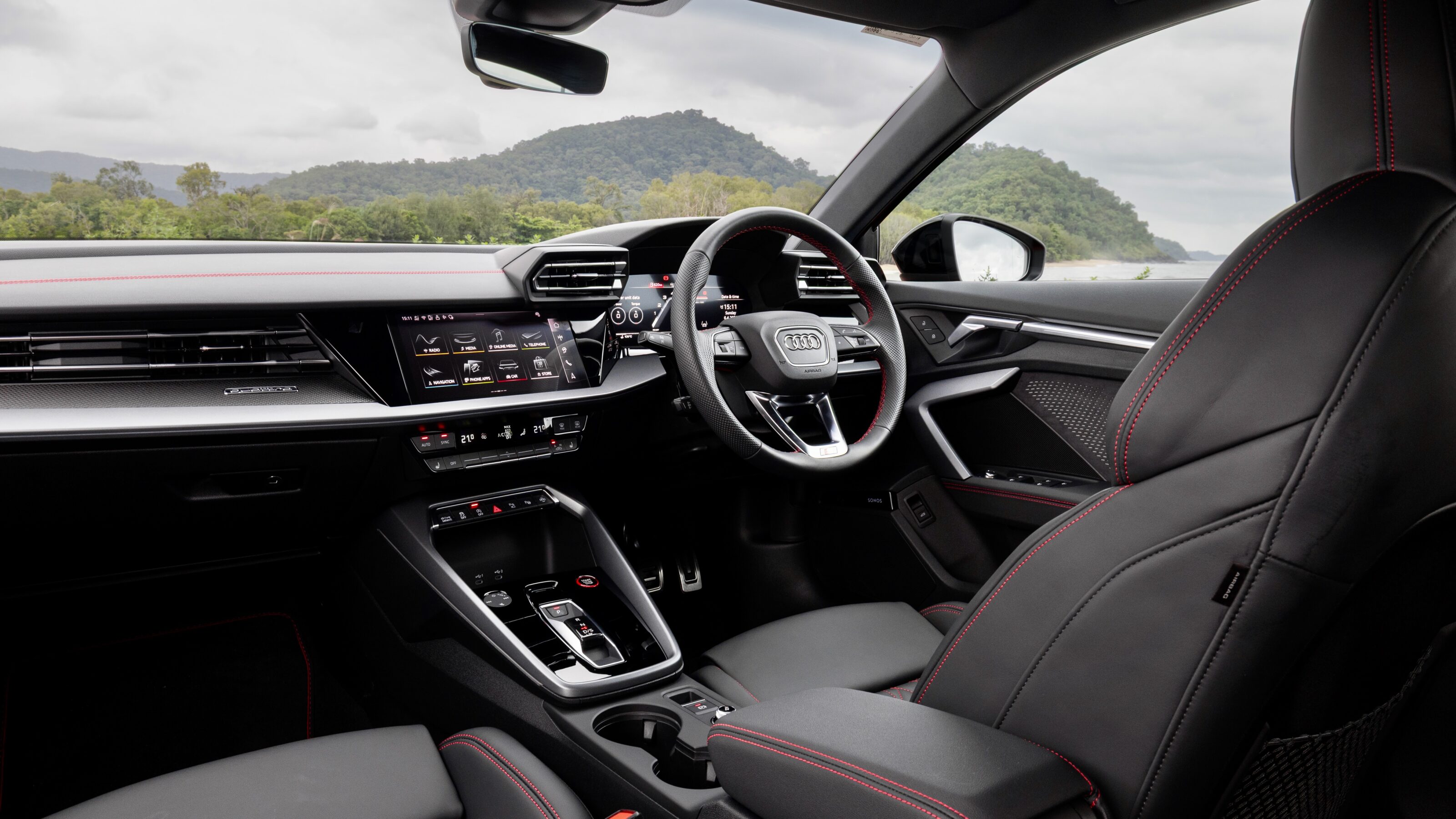
Standard equipment on the A3 35 TFSI includes 18-inch alloy wheels, heated/auto-folding mirrors, cloth and synthetic leather upholstery, sports front seats with heating, an electric driver’s seat, tri-zone climate control, a 10.1-inch touchscreen with live services, wireless Apple CarPlay and Android Auto, satellite navigation, DAB+ digital radio, a 10-speaker sound system and a full suite of active safety tech including AEB, adaptive cruise control, blind-spot monitoring with rear cross-traffic alert, front and rear parking sensors and a reversing camera.
Aside from extra power, sports suspension and all-wheel drive, the S3 further adds 19-inch alloy wheels, adaptive dampers, Matrix adaptive high beam, aluminium-look mirror housings, Nappa leather upholstery, colour ambient lighting and a 680W 15-speaker Sonos sound system.
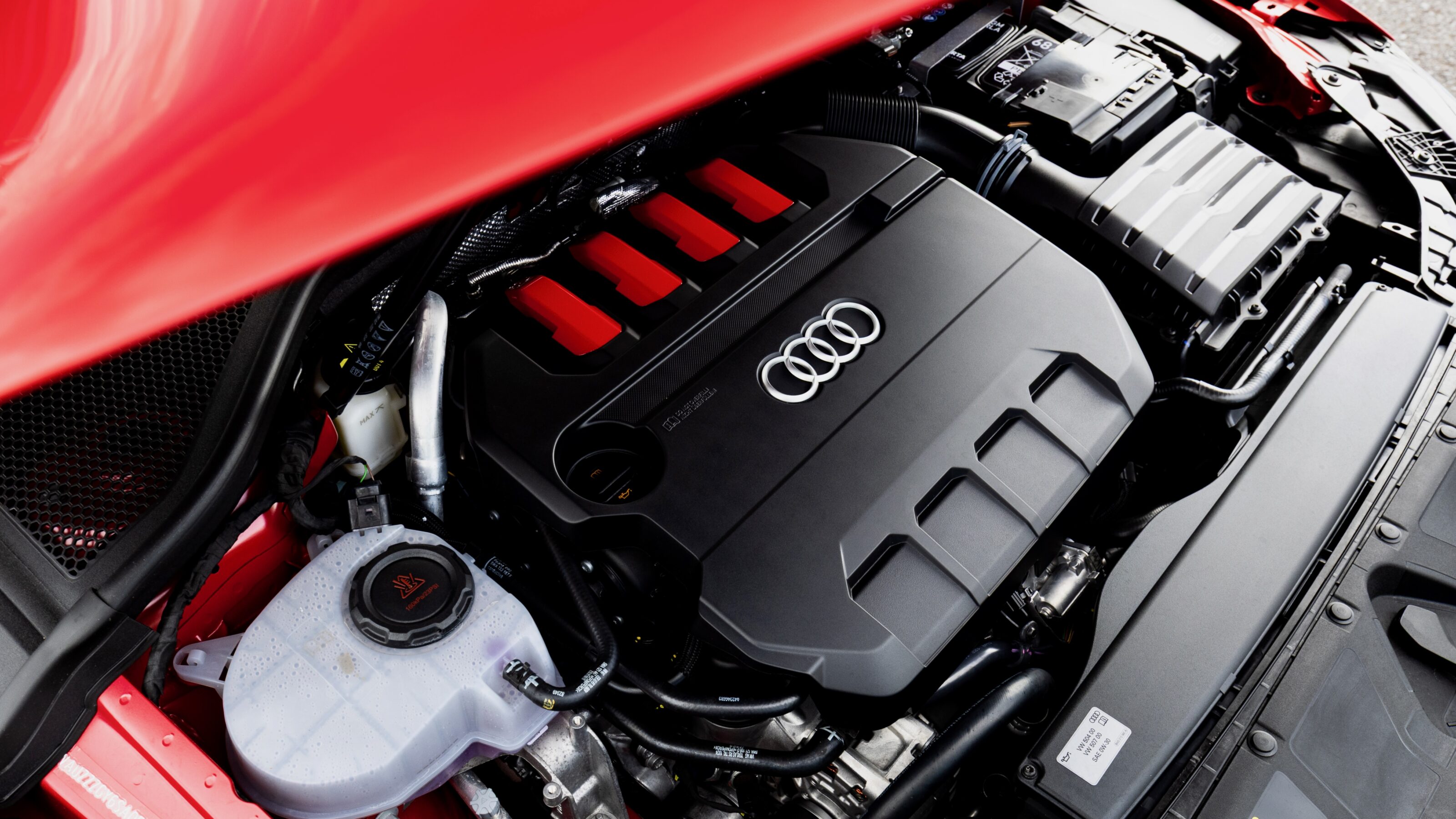
There are option packages available for both the A3 and S3, including the A3’s $2000 Style Package with black 18-inch wheels, black exterior trims, privacy glass and colour ambient lighting. The S3 is available with the $1450 Launch Edition Package with 19-inch wheels, carbon inlays, black tailpipes and exterior styling details and privacy glass and also the $3300 Premium Plus Package with auto-dimming mirrors, memory functionality for the driver’s seat, a head-up display and sunroof.
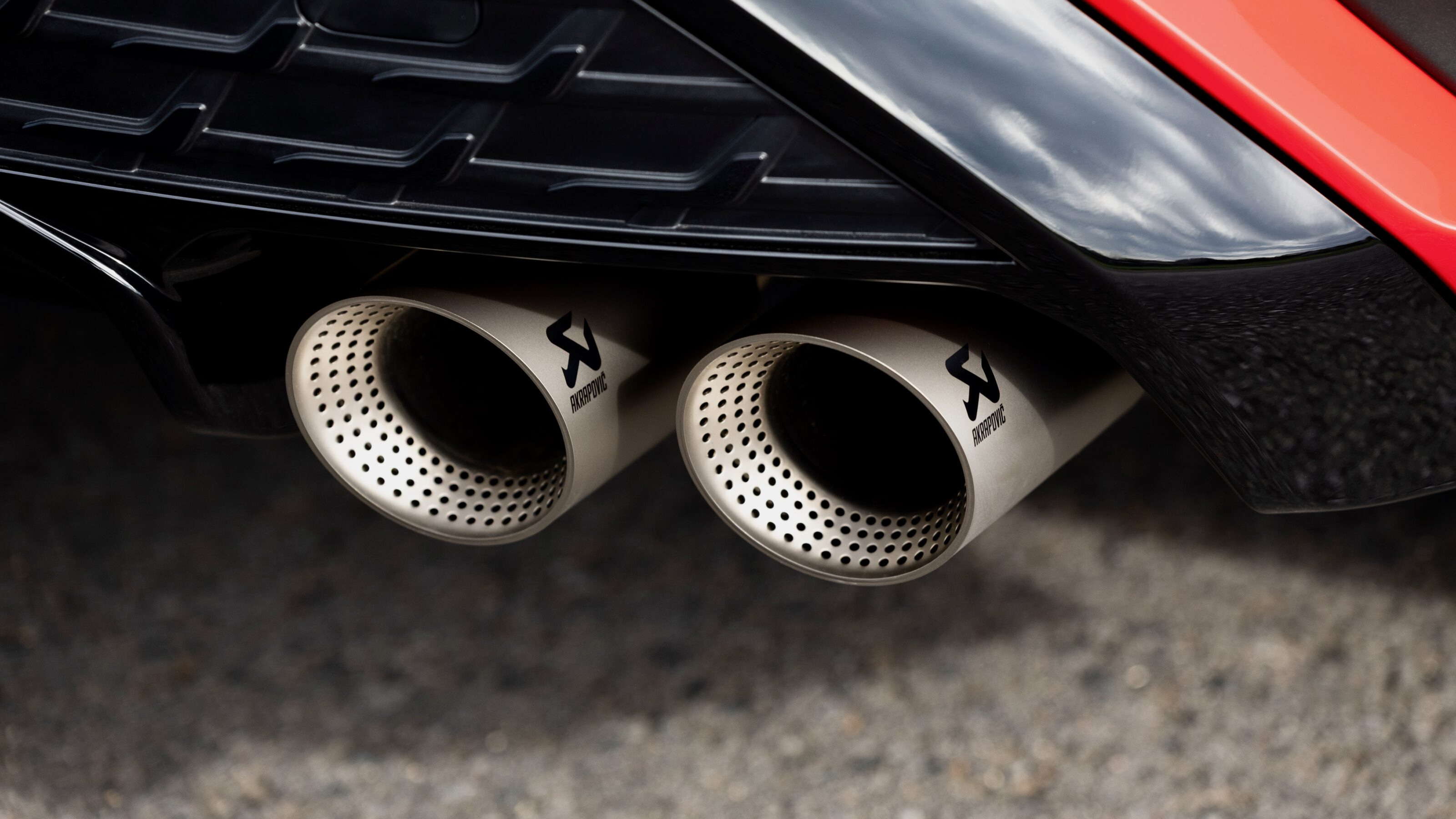
Also available are individual options such as $900-$1850 premium paint, a $9900 Akrapovic sports exhaust system for the S3, a $660-$850 electric bootlid (Sportback), a $2000-$2600 sunroof, $635-$825 rear privacy glass, $550 aluminium roof rails (Sportback), $1100 full leather trim for the 35 TFSI variants and $710 carbon inlays for the S3.
2025 Audi A3 and S3 pricing (plus on-road costs):
| A3 Sportback 35 TFSI | $54,800 |
|---|---|
| A3 sedan 35 TFSI | $57,800 |
| S3 Sportback | $78,800 |
| S3 sedan | $81,800 |
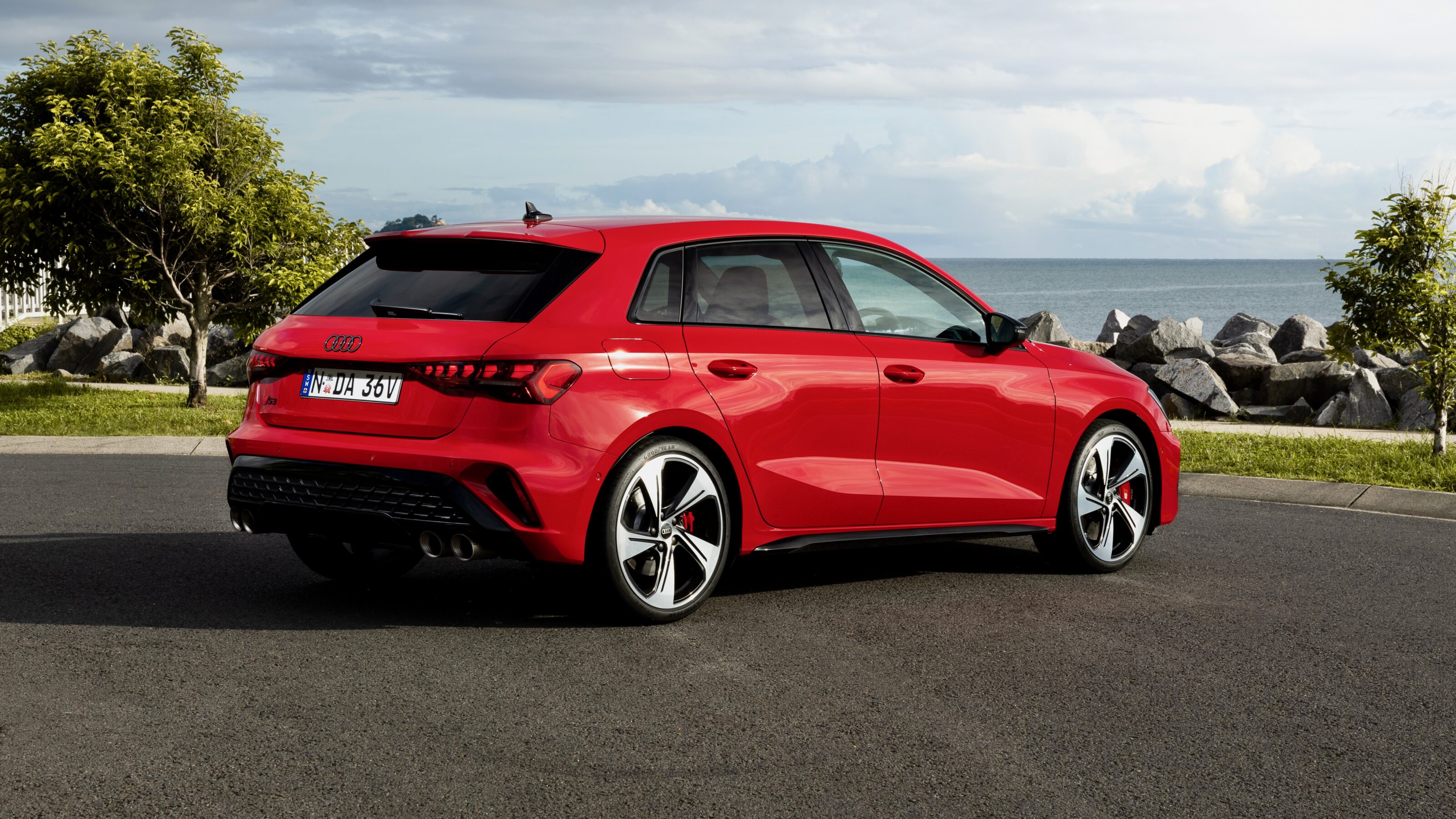
The facelifted Audi A3 and S3 range is now on sale in Australia.
Porsche has revealed its new 911 GT3 has become the fastest production car with a manual transmission to complete a lap on the famous Nürburgring Nordschleife in Germany.
Porsche brand ambassador Jörg Bergmeister beat the previous record by more than 9.5 seconds – a record held by a competitor with a significantly more powerful engine – notching a lap timed at 6:56.294 minutes.
The new 911 GT3 with manual transmission is around 3.6 seconds faster than predecessor model with Porsche Doppelkupplungsgetriebe (PDK, or double-clutch transmission in English).
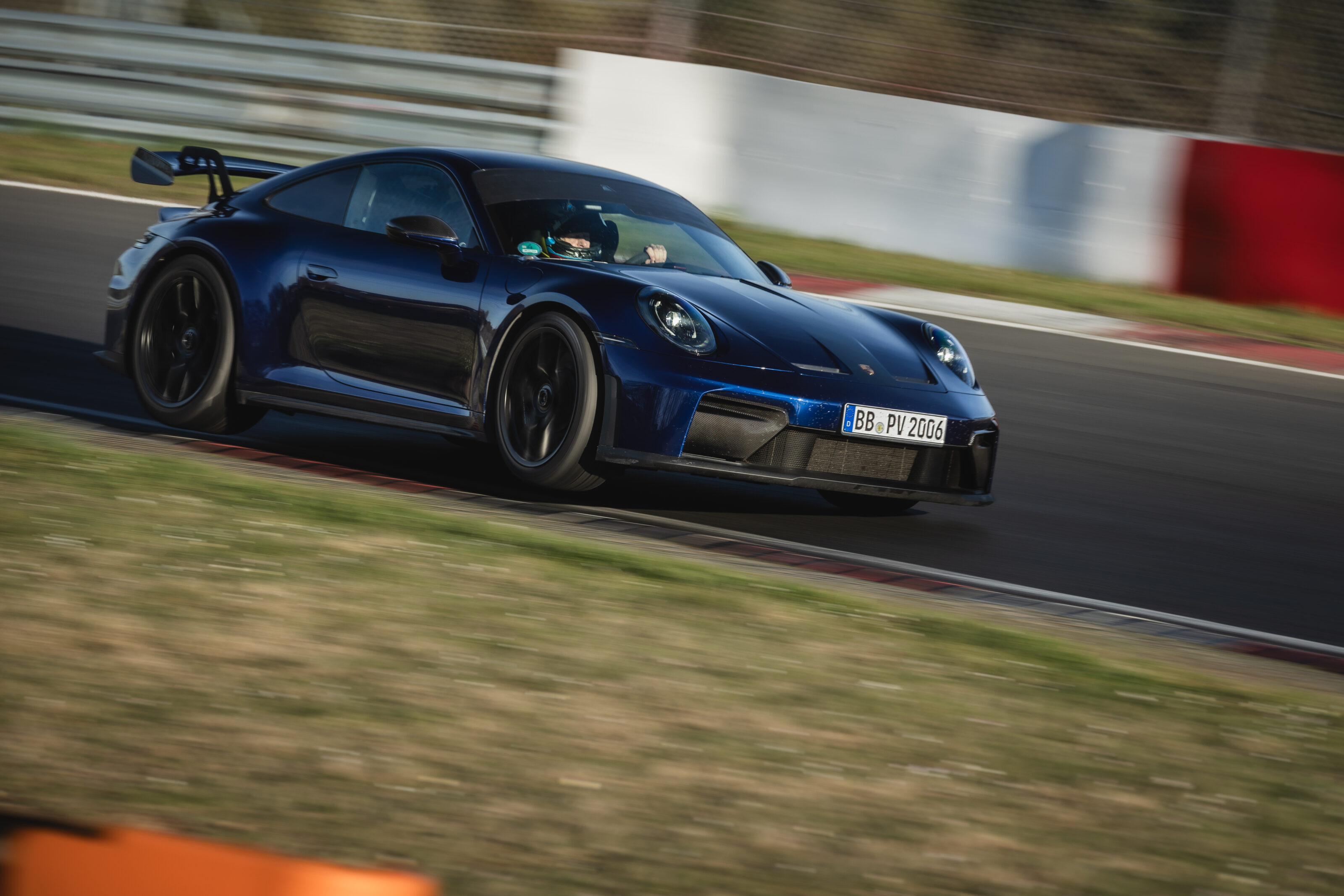
Bergmeister set the new mark on a sunny =afternoon with an ambient temperature of 12 degrees and a track temperature of 27 degrees, taking on the 20.832-kilometre track in the 375 kW (510 PS) 911 GT3 with Weissach package. As with the official lap of the previous model, the car was fitted with road-legal Michelin Pilot Sport Cup2 R tyres (255/35 R20 at the front and 315/30 R21 at the rear).
“The new 911 GT3 inspires even more confidence at the limit than the previous model. I was faster in almost every corner,” said Bergmeister afterwards.
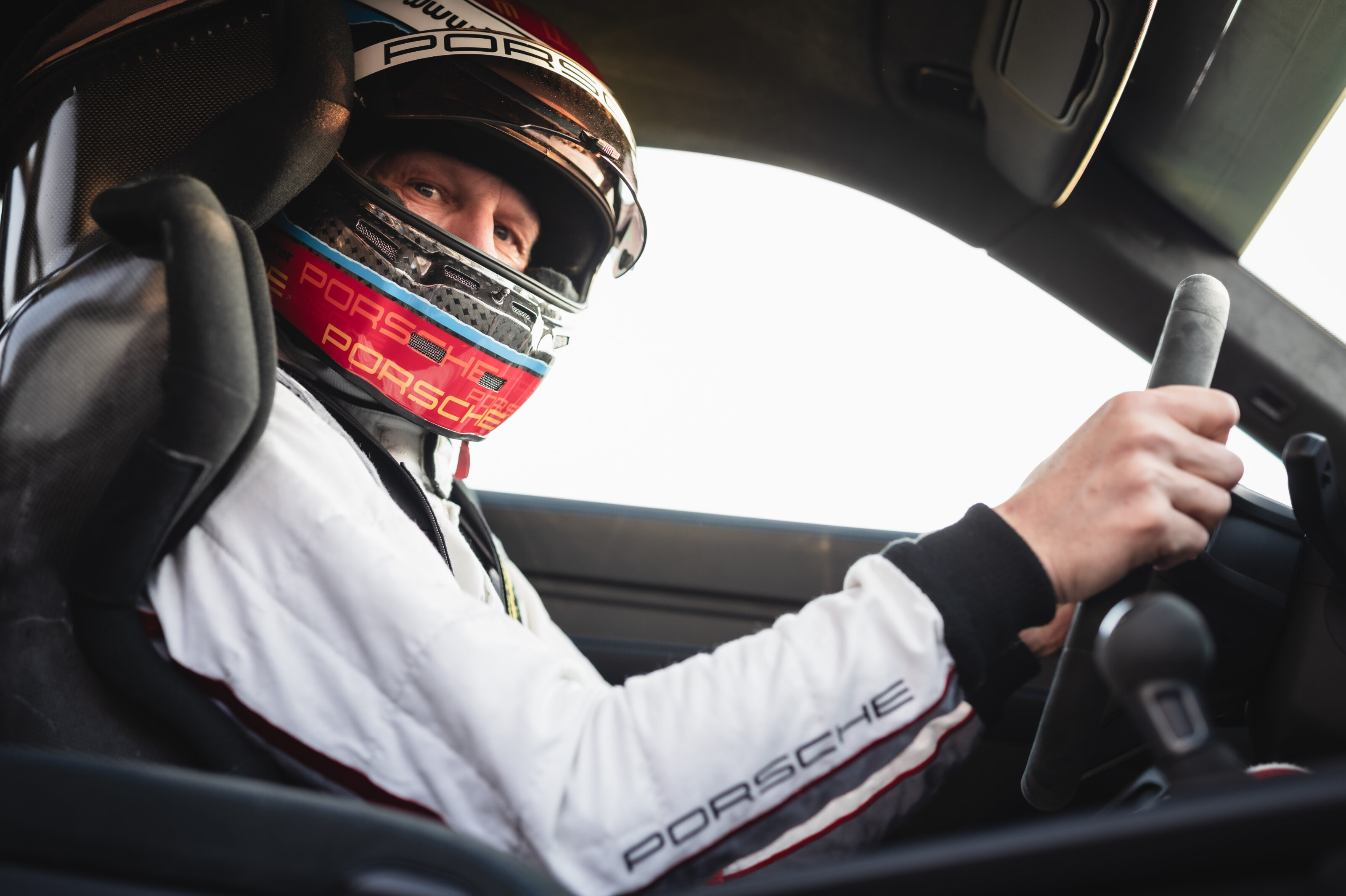
“We learned a lot from the 911 GT3 RS, especially with the chassis. The car is much more stable on bumps and over the curbs. And thanks to the eight-per-cent-shorter gear ratio, there is noticeably more drive from the rear axle when accelerating with the same engine power.
“Even if it would have been a few seconds faster with the seven-speed PDK – with the six-speed manual gearbox I definitely had more to do on the fast lap – and it was therefore even more fun.”
“More and more 911 GT3 customers are opting for the six-speed manual transmission,” said Andreas Preuninger, Director GT Model Line. “And more and more often we are asked by these customers how fast a 911 GT3 with manual transmission would be on the Nordschleife.
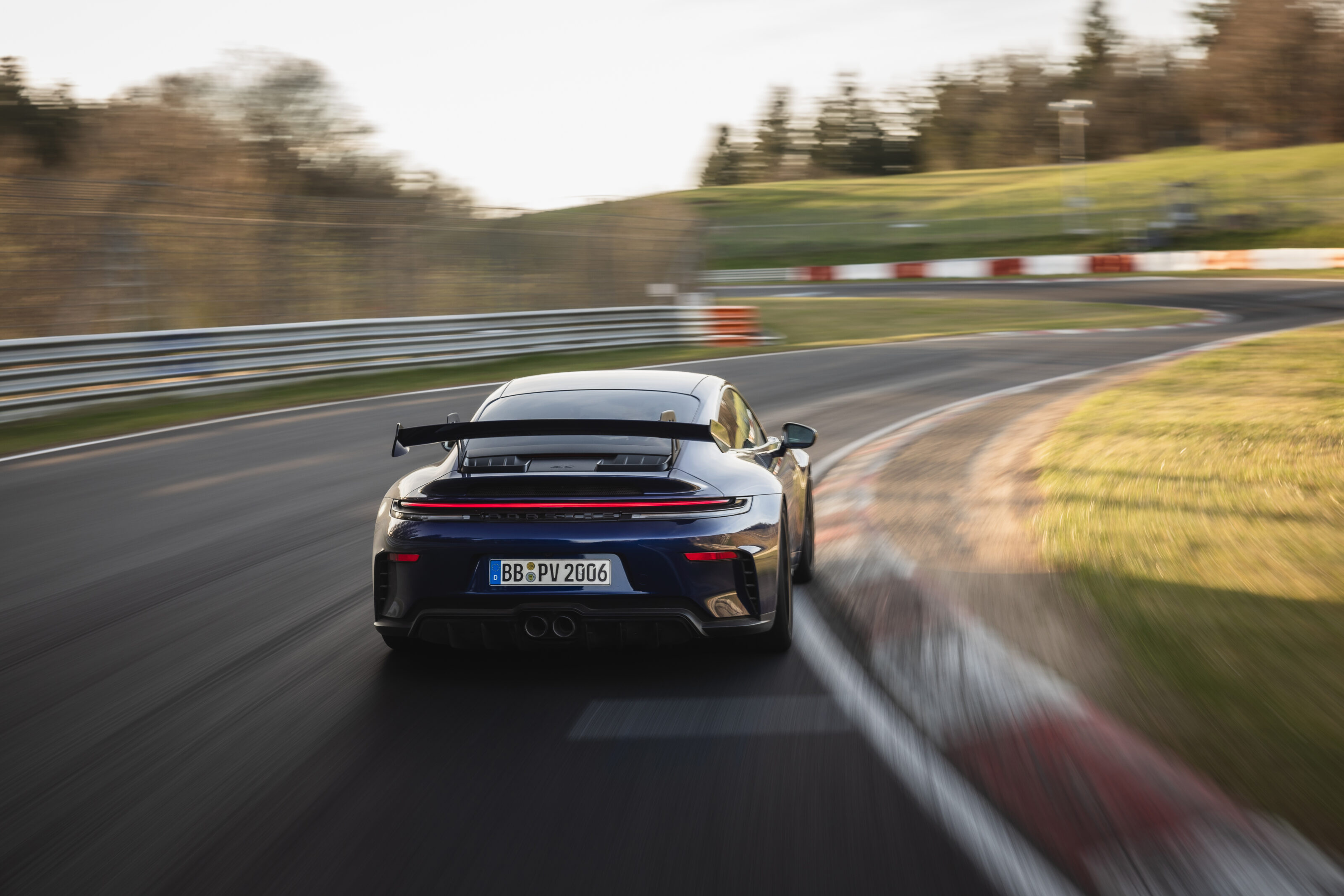
“We have now answered this question and – although we know that the variant with PDK is significantly faster – we drove our official lap time with a manual six-speed gearbox. Even without the automated, super-fast and precise gearshifts of the PDK, and with a conventional instead of electronically controlled limited-slip differential, the new 911 GT3 shaved around 3.6 seconds off the time of its predecessor with PDK.”
Australian deliveries of the new 911 GT3 and 911 GT3 with Touring Package are expected from the 2nd half of 2025.
Debuting overnight at the New York Auto Show, the Subaru Solterra electric mid-size SUV has been given updated exterior styling, added driving range and power, and reduced charging times mirroring that of the upgraded Toyota bZ4x revealed last month. Subaru Australia is yet to confirm local arrival timing.
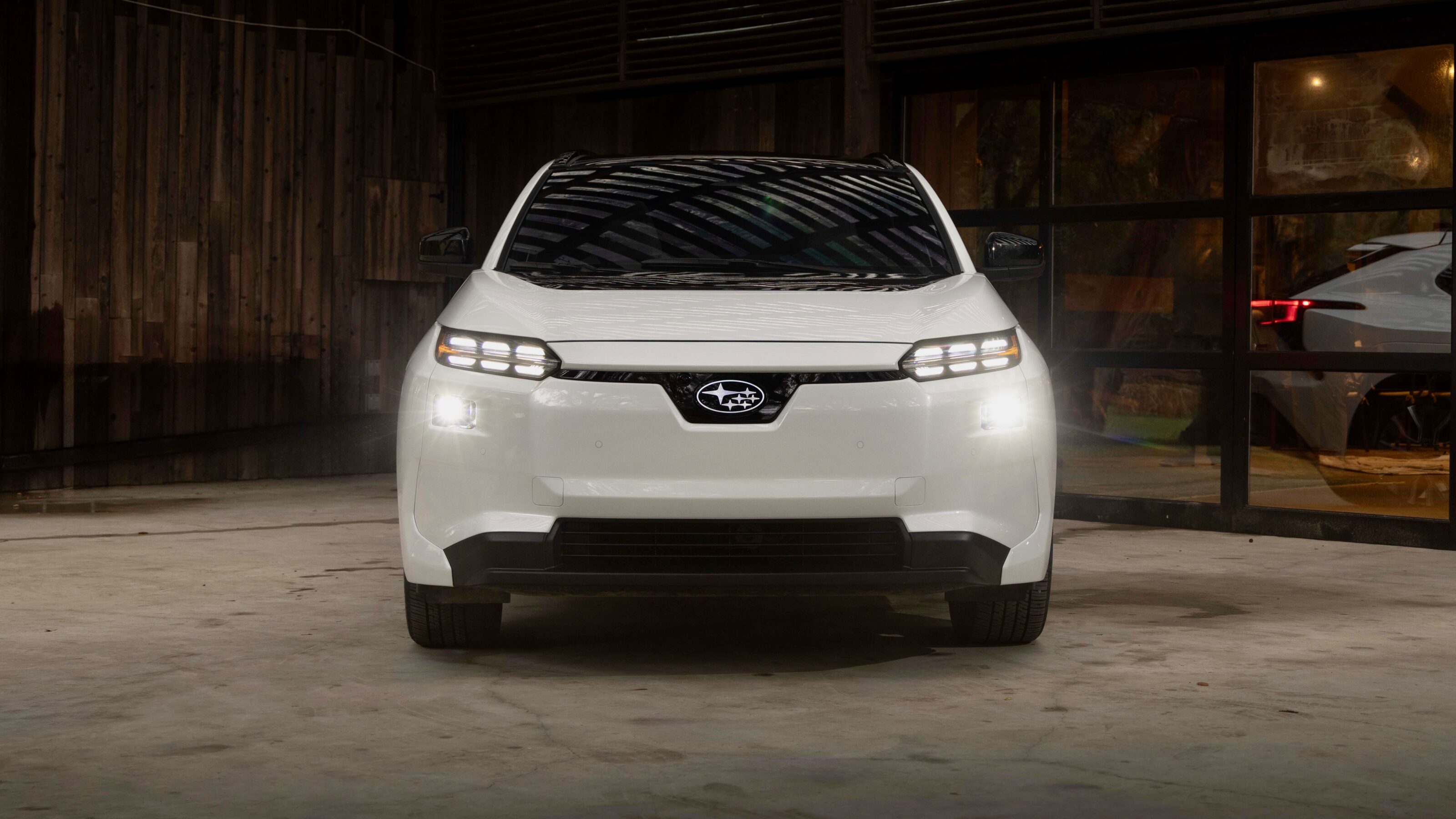
The Solterra has been given an all-new front end design with the cladding of the current model gone and new split-headlights now fitted. The rear has been tidied up and simplified, while there are also new alloy wheel designs in 18- and 20-inch sizing.
Now fitted with a larger 74.4kWh lithium-ion battery – 5 percent more than the current model – the new Solterra’s range has increased by 25 per cent to 459km. The Solterra is also now able to be fast charged at up to 150kW for an approximate 10 to 80 per cent charge in as little as 35 minutes, according to Subaru.
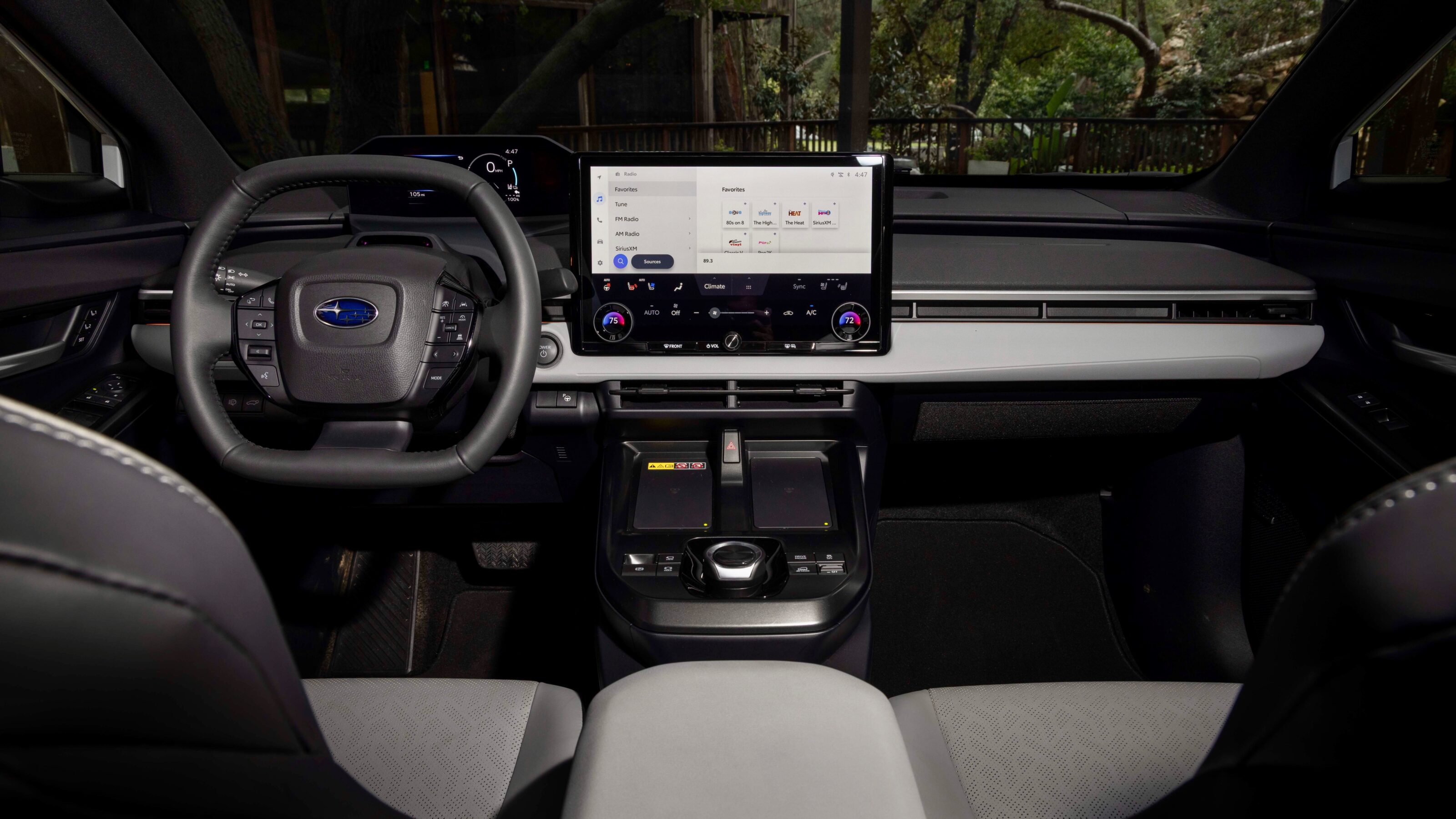
The company has also upgraded its electric motors with the new base model now outputting 174kW and a new higher-performance XT in the US making 252kW – both healthy increases on the 160kW figure in the current model.
There have also been changes to the Solterra’s suspension and power steering tuning, which Subaru promises will improve its handling, and a new all-wheel drive control system has also been fitted.
On the inside, the updated Subaru Solterra’s cabin closely resembles the updated bZ4x’s cabin with a new 14-inch touchscreen with wireless Apple CarPlay and Android Auto and a 15W wireless charger sitting in a new centre console.
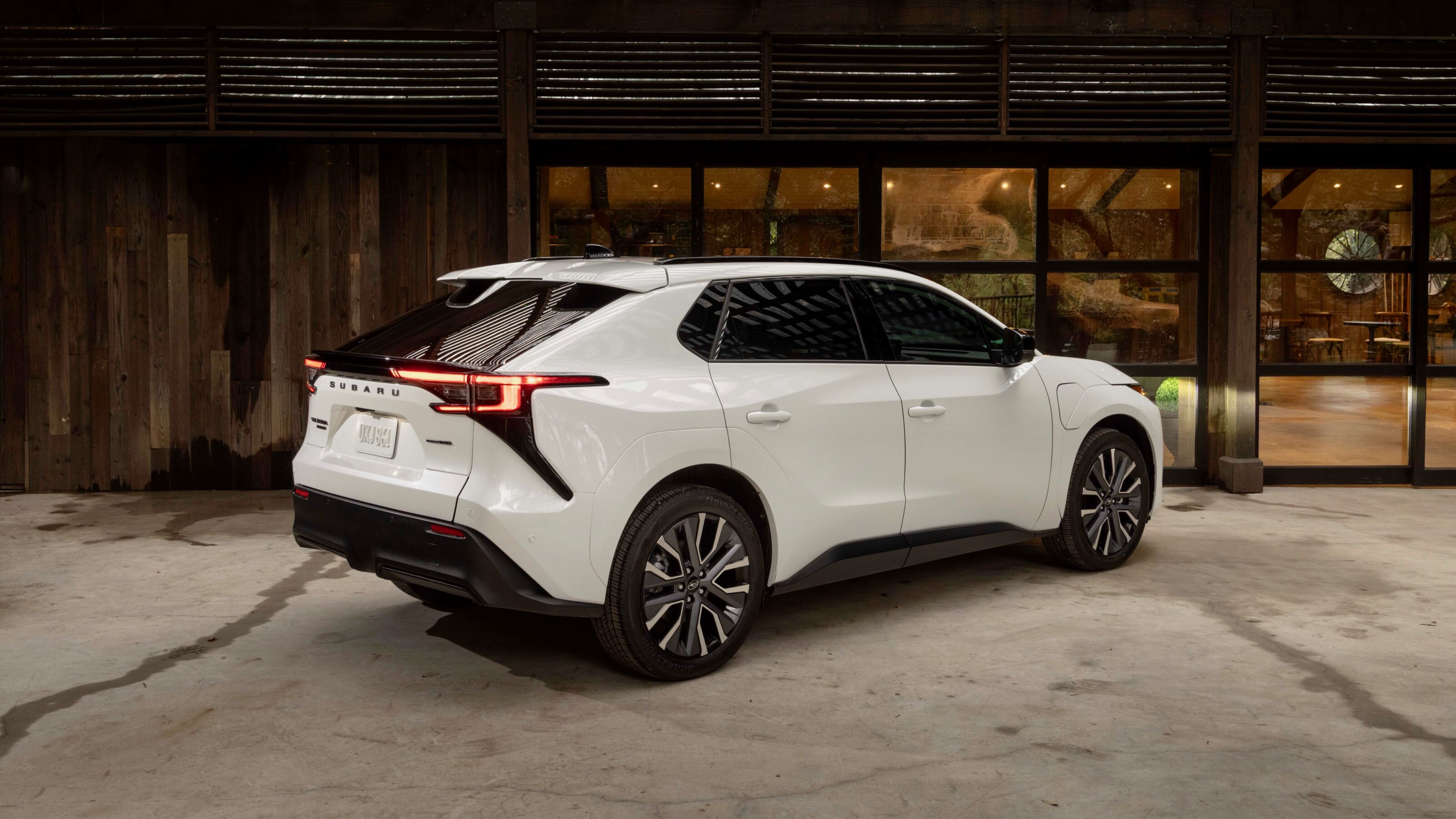
Subaru is yet to confirm local availability for the updated Subaru Solterra, but the updated bZ4x’s arrival in late 2025 may give a clue as to its Australian arrival.
The off-road version of the new Hyundai Palisade large SUV that was revealed back in December 2024 has been confirmed for release in Australia, with the Hyundai Palisade XRT Pro due on local shores in the first half of 2026.
Revealed overnight at the New York Auto Show, the XRT Pro gives the Palisade more off-road ability, ground clearance and styling compared with the more road-focused regular Palisade.
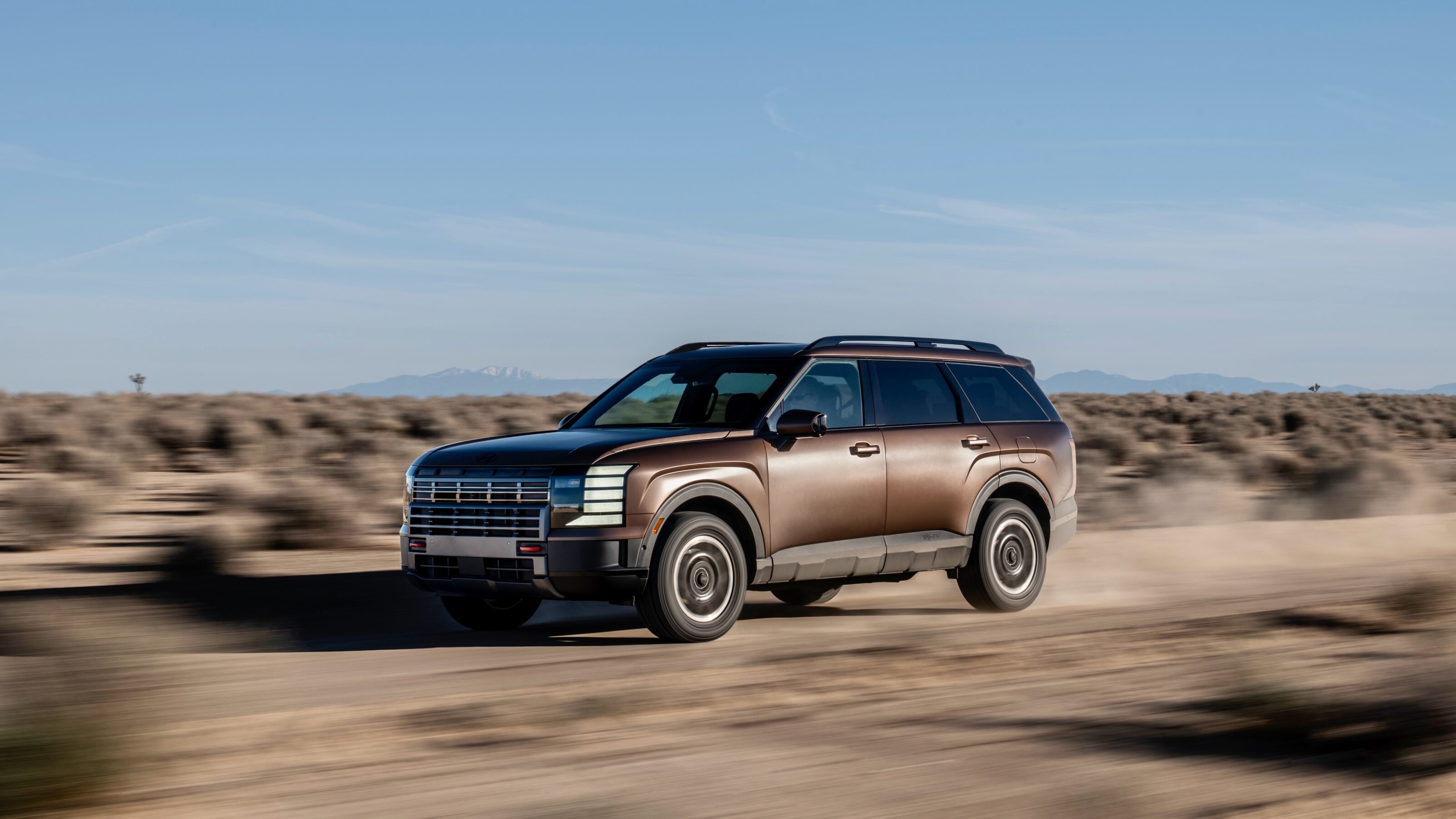
Most noticeable are the new 18-inch alloy wheels with all-terrain tyres giving the Palisade XRT Pro a 25mm boost in ground clearance to 213mm, but there are also new styling details such as unique front and rear bumpers. Hyundai has also fitted a rear electronic limited-slip differential for more off-road ability.
The exterior changes have improved its approach, departure and breakover angles, now at 20.5, 22.4 and 18.3 degrees respectively, while the XRT Pro can display pitch, roll, elevation and compass information in real time. It also features exposed recovery hooks, a factory-installed tow hitch and three new drive modes: mud, sand and snow.
The exterior also features darkened exterior accents, while its 360-degree camera can display a ‘forward ground vision’ mode for enhanced visibility while off-roading.
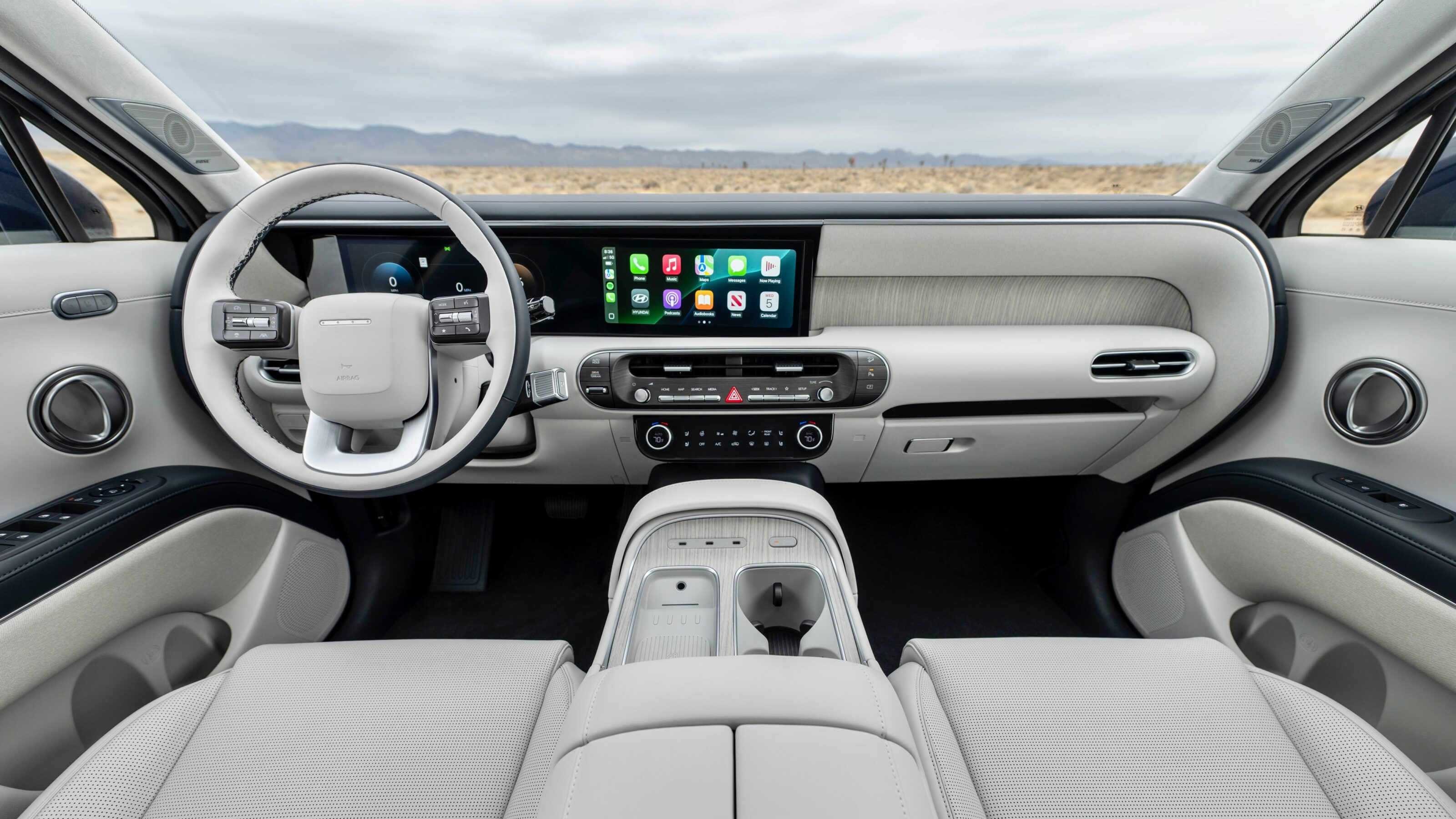
On the inside of the Hyundai Palisade XRT Pro are ‘H-Tex’ leatherette seating surfaces with front heating/ventilation, a heated steering wheel, a 14-speaker Bose sound system, ambient lighting, a 115-volt power outlet and a sunroof.
Though Hyundai has confirmed that all Australian-spec Palisades will feature a new 245kW/450Nm 2.5-litre turbocharged four-cylinder hybrid mated to a six-speed automatic transmission – in the US at least – the Palisade XRT Pro is powered by a 214kW/353Nm 3.5-litre petrol V6 engine mated to an eight-speed auto, potentially opening the door for that drivetrain in Australia.
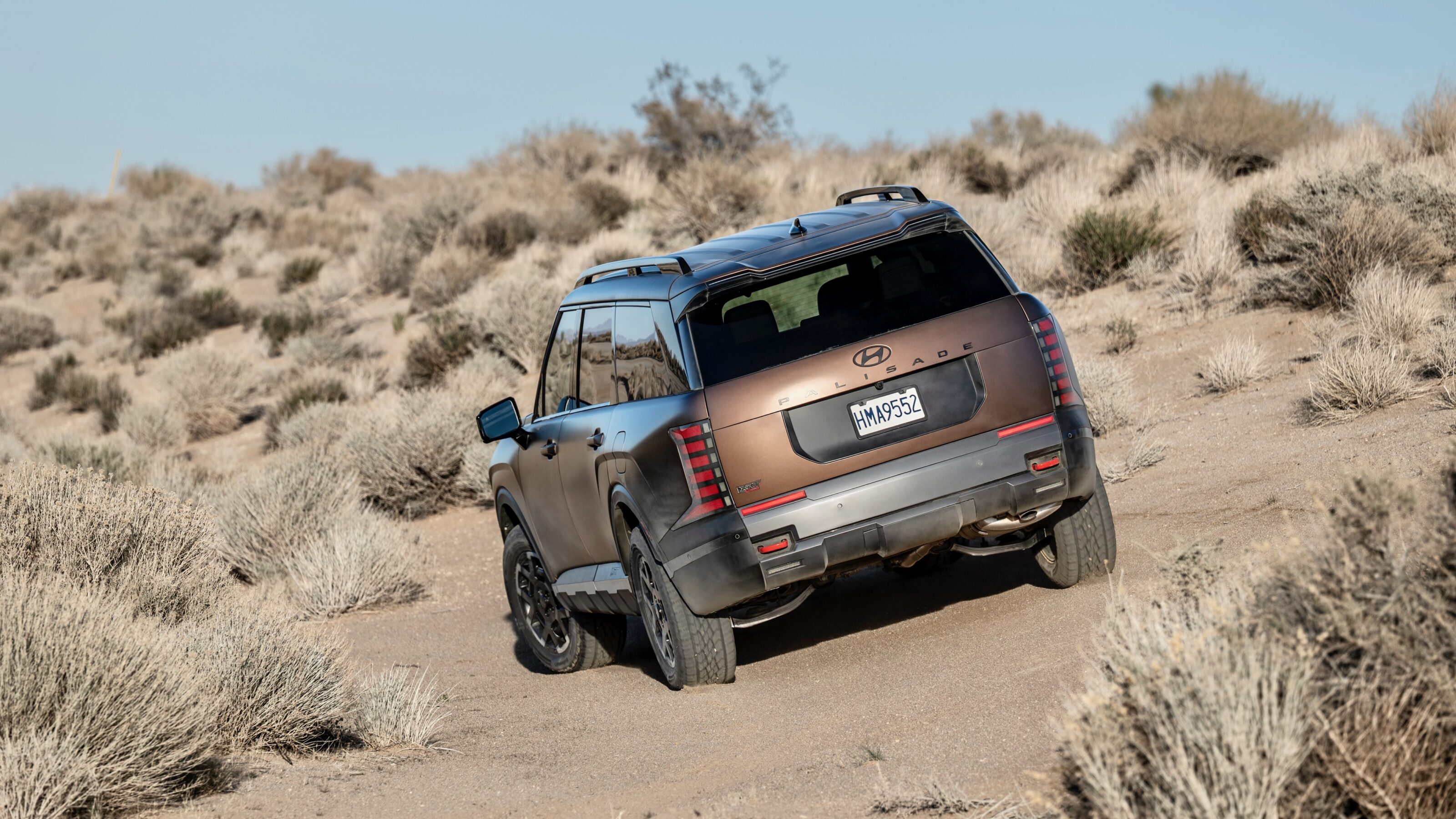
The Hyundai Palisade will go on sale in Australia in late 2025, with the XRT Pro launching in the first half of 2026.
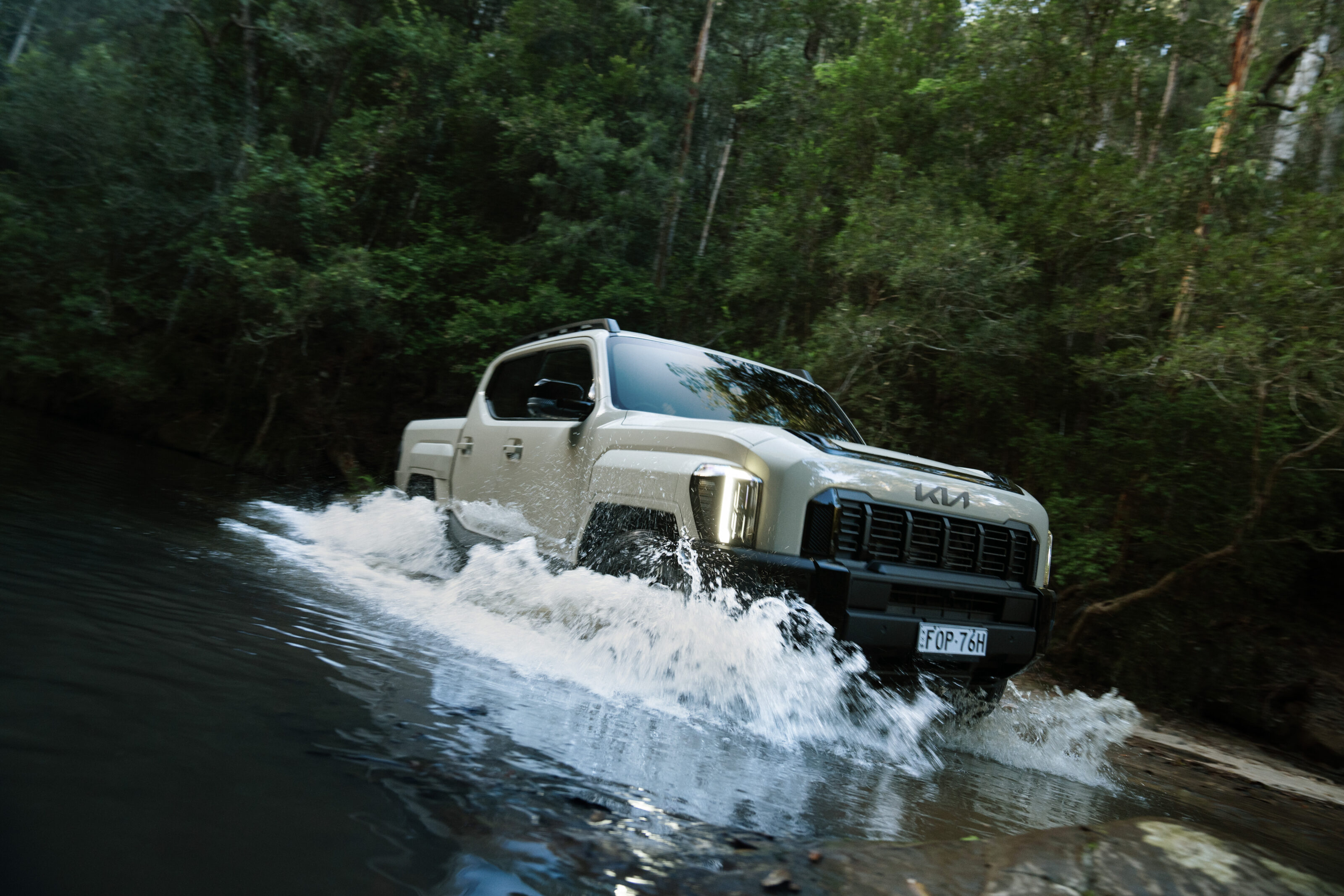
Kia Australia has confirmed pricing for its Dual Cab Pick-Up variant of the heavily promoted Kia Tasman ute, ahead of pre-orders opening before its arrival into dealerships in July.
The Dual Cab Pick-Up range opens at $42,990 RRP for the S 4×2 trim and ramps up to $74,990 RRP for the X-Pro 4×4 flagship that has been specifically engineered for enhanced off-road performance characteristics.
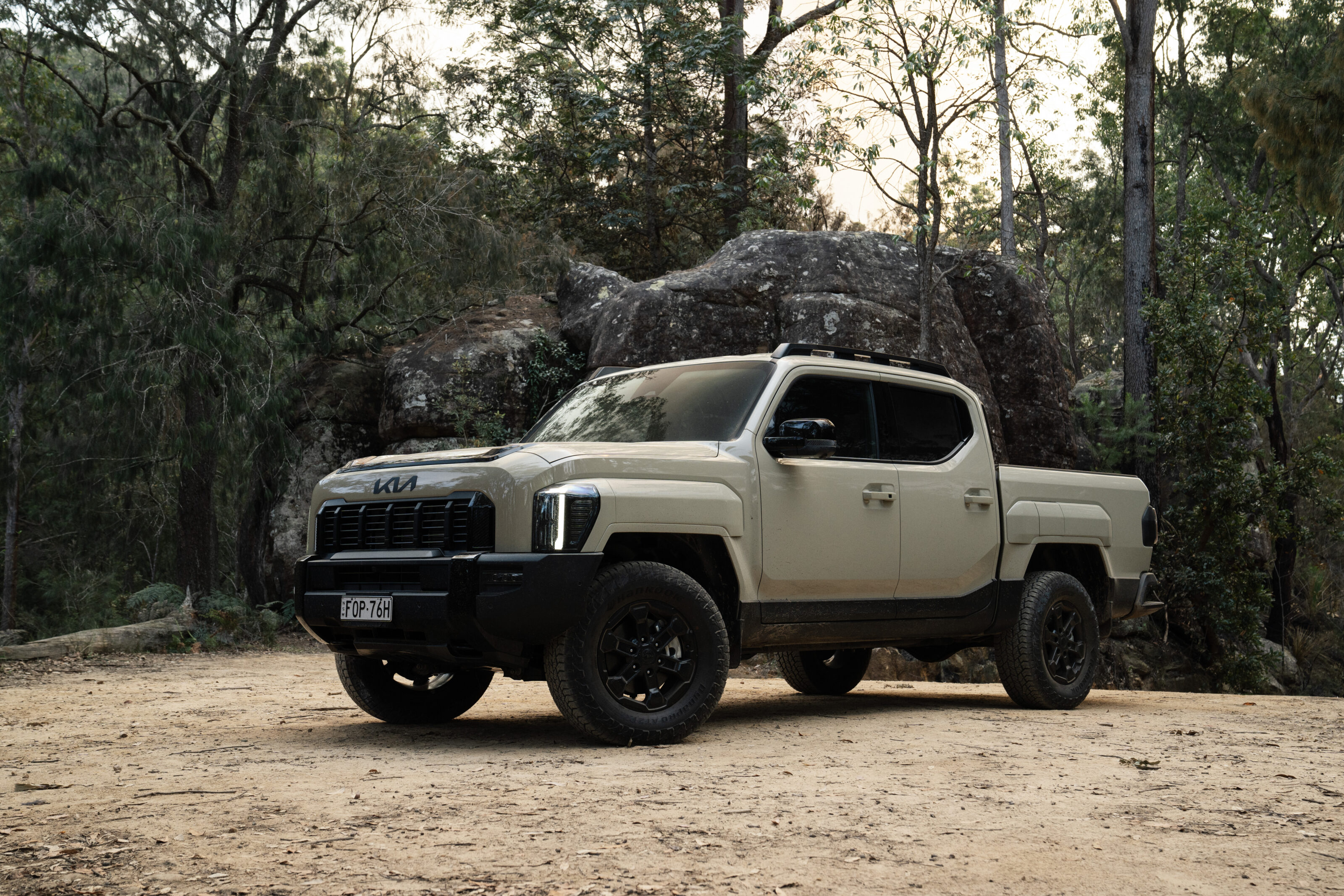
Dual Cab Pick-Up trims will launch concurrently in July. The Dual Cab Chassis will arrive approximately one month later followed by the Single Cab Chassis in late 2025.
Pricing for these two variants will be announced at a later date.
Australian pricing
| S 4×2 | $42,990 |
|---|---|
| S 4×4 | $49,990 |
| SX 4×4 | $54,490 |
| SX+ 4×4 | $62,390 |
| X-Line | $67,990 |
| X-Pro | $74,990 |
“The Tasman is by far Kia Australia’s most anticipated model yet, reflecting the scale of Australia’s ute market and the passion of these owners,” said Kia Australia Chief Executive Officer, Damien Meredith.
“We are confident the input from Kia Australia at each stage of its development, along with its competitive value and versatility, will make it a very strong contender in the local market.”
Under the bonnet of all Kia Tasman models in Australia is a 2.2-litre four-cylinder turbo-diesel
engine making 154kW of power and 440Nm of torque that’s mated to an eight-speed torque
converter automatic transmission. The base Tasman S is available in two-wheel drive form, but all
other models are four-wheel drive.
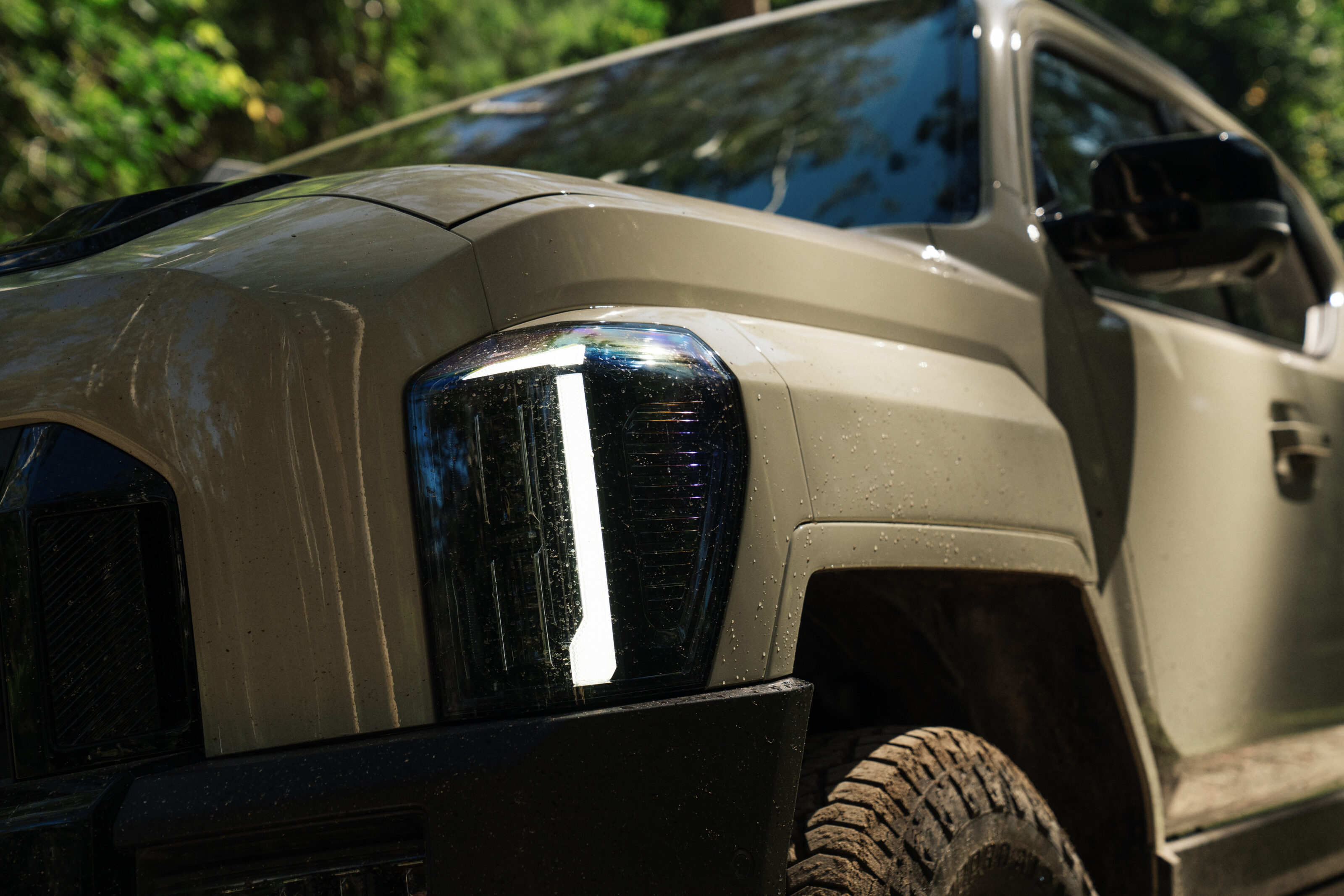
All Tasman models can tow a 3,500kg braked trailer and are available with payload ratings
exceeding 1,000kg, with even the best equipped X-Pro capable of carrying 1,013kg – the highest
possible payload is with the base S 4×2 single cab chassis, which is rated for 1,124kg. All payloads
exceed 1,000kg based on a gross vehicle mass (GVM) rating of 3,250kg across all variants,
contributing to a gross combination mass (GCM) of 6,200kg.
Importantly for some buyers however, all dual cab pick-up variants are also available with a
reduced payload option specifically at meeting the criteria for novated leases, which often require a
payload of under 1,000kg. For now, the Kia Tasman will only be available in dual-cab form, but in
late 2025, Kia will launch a single cab chassis bodystyle as well.
Kia Tasman S standard equipment:
- Kia Tasman S standard equipment:
- 17-inch black steel wheels with a full-size spare wheel
- Keyless entry with push button start
- 12.3-inch + 5-inch + 12.3-inch screen set up
- Dual-zone automatic climate control
- Wireless Android Auto and Apple CarPlay
- MFR LED headlights
- Cloth upholstery
- AEB with pedestrian and cyclist monitoring
- Adaptive cruise control
- Rear parking sensors
- Reversing camera (pick-up only)
- Tailgate with lift assistance (pick-up only)
- Integrated trailer brake controller
- Mechanical locking differential (all 4×4 models)
Tasman SX model adds:
- 17-inch alloy wheels
- Snow, sand and mud drive modes
- Satellite navigation
- Auto-folding mirrors
- Adaptive lane guidance
Tasman SX+ model adds:
- 18-inch alloy wheels
- Cloth/synthetic leather trim
- Ambient mood lighting
- Rear air vents
- 2x 240V power outlets
- Wireless phone charger
Tasman X-Line model adds
- Column shifter
- Paddle shifters
- Privacy glass
- Roof rails
- Double wireless phone charger
- Projector LED headlights
- 360-degree camera
- Blind-spot camera
- Synthetic leather trim
- Heated front seats
- Slide/recline rear seats
- 8-way electric driver’s seat
- Rear auto braking
- Rear fender flare storage
Tasman X-Pro model adds:
- Black 17-inch wheels with all terrain tyres
- Electronic locking differential
- X-Trek mode
- Rock mode
- Ground view monitor
- Harman Kardon sound system
- Heated steering wheel
- Heated rear seats
- Ventilated front seats
- 8-way electric front passenger seat
- Sunroof
- Off-road screen page
- Fuel tank undercover protection