
Twice in the past month I’ve had emails from people who bought the wrong car.
I know this because they each confessed their mistake. One was complaining that the driver’s seat was massively uncomfortable for her when she ventured beyond her daily commute, and the other admitted there was not enough space inside for his kids and all their stuff.
One was going to live with the mistake while the other intended to take a giant financial hit and switch cars. Neither was happy with their sub-optimal outcome.

Yet, as I advised them, it would have been easy to avoid their mistake by using one of the most basic and old-school methods in motoring – a test drive. Online shopping might be great for a quick dinner delivery, and only a small risk for a sub-$100 impulse buy, but it’s not the way to purchase a new car.
Yes, the interweb can supply you with all the basic facts and figures, then even calculate the all-important drive-away pricing. But… how does it look, how does it feel, will the kids and their stuff fit in the back? Is it better or worse than what you are already driving, and how does it compare against the other shiny newbies in the car world?
A test drive – or two – should answer every question. Just as it does for the team at Wheels.
The basic process is always the same and, like every major purchase in your life, should begin with research.
Firstly, set the budget. Then the size. Then a couple of potential makes and models. Colour should come last. When it’s time to start the test drives, never go alone. If it’s going to be a family car, take the family. Even if it’s just a car for one, a second opinion never hurts.

Start the test drive the way a pilot would begin – with a walk-around – and then begin in… the boot. That’s where you discover if there is a spare tyre, how much space is available – don’t forget to fold the back seats – and how easy it is to load and unload. Move forward through the back seat, having a serious sit and a good look around. Are there air vents, USB sockets and easy- to-use seat belts? What is the view like?
The best measure of space is to set the driver’s seat in your normal position, then sit behind ‘yourself’. How good’s the legroom now?
Finally, jump into the front and do not be distracted – or impressed – by ‘all the bells and whistles’. Virtually every car has them now, even if a giant infotainment screen is massively advanced compared with the basic radio display in your 20-year-old runabout. Check the view, operate the controls, settle into the seat, get a briefing on the standard driver-assistance systems – so you can anticipate any bings, bongs, bells or flashing lights – and head out.
You should be driving on a road you know, for a genuine assessment of the comfort, the ride quality and the cabin noise. Do not be blustered into a five-minute race around the block, often in the top-line model and not the one you had in mind to buy.
When you are serious about buying, demand extra time and go to a shopping centre you know. How easy is it to park and see out of, and how is the loading and unloading?
Finally, drive it home, park it in the driveway, see if it fits comfortably in the garage – you might be surprised – and if you walk out the front door and it makes you smile, then it’s a winner.
This piece first appeared in the May issue of Wheels, on sale now.
Ah, that new car feel. It’s a memory that never leaves you, really, getting behind the wheel of a fresh-out-of-the-factory vehicle.
The sheer pleasure of that experience is perhaps part of the reason for the growing popularity of novated leasing. The option of driving a new car – and then another new one a few short years down the track – is made possible by this convenient means of financing, which differs from personal car finance in some significant ways, offering both tax and lifestyle benefits.
Hassle-free buying
While theoretically anyone can negotiate a novated lease, the most common arrangement in Australia is a three-way agreement between an employee, their employer and a lease finance company such as Smart, who handle all aspects of organising the new vehicle. In this set-up the employee pays for the lease of the car through instalments from their pre-tax earnings, reducing their overall taxable income.
It’s also important to note that a novated lease can be taken out for more than a new car as Mike Daly, consumer education specialist for Smart, told WhichCar.
“A novated lease can be taken out on a brand new or used car, and it can also be purchased through a dealership, through private sale or even an auction,” says Daly. “It’s quite open to the type of car you get, and how you come across it.”

Convenience is a key attraction of taking a novated lease.
“Most people find the worst part of buying a car is the process of dealing with car dealers and buying the car,” says Daly. “But we can take care of that whole process and do it internally – find the right car for the customer at the best possible price, leveraged through our relationships with dealers, and then the whole process is handled by one person all the way through.”
That means registration, insurance, servicing and other maintenance can all be handled by the lease company.
“A budget is agreed upon with the customer when the lease is set up,” says Daly. “We base that on the length of the lease, how far the customer thinks they’re going to be driving, and also the type or car they’re buying – how much fuel it uses, how many replacement sets of tyres they’re going to need, what the servicing schedule is going to be – all those details are tailored and managed for each individual customer.”
Depending on a person’s circumstances, novated lease contracts run for between one to five years.
“Some people drive a lot so they might want to turn their cars over regularly,” says Daly. “Other people might be at the time of life where they have three kids and they need a seven-seater and that’s not going to change for the next five to six years, so they might feel very comfortable entering into a five-year lease.”
Tax benefits
A key advantage of a novated lease is its tax effectiveness. Novated leasing is approved by the Australian Tax Office as a means of car finance. By making a monthly payment from their pre-tax pay to lease the vehicle, the lessee reduces their total taxable income, potentially reducing their income tax bill by a substantial amount. The self-employed can also take advantage of this benefit.

“A lot of people focus on the pre-tax savings but that’s only one of the [tax benefits],” says Daly (above). “The other benefit is that you don’t pay GST on any of the running costs you have through a novated lease, so your fuel is 10 per cent cheaper just because you’re running your car through a novated lease. You also don’t pay GST on the purchase price.
“It’s one of those things – you don’t think 10 per cent off your fuel is that much but when you multiply it over every tank of fuel during a five-year lease, it’s going to add up to a significantly higher figure.”
Electric vehicles have proved particularly popular for those entering a novated lease because of the Federal government’s 2022 Electric Car Discount Bill, which allowed eligible electric vehicles (i.e. those under the luxury car tax threshold) to be paid for 100 per cent from pre-tax earnings and exempt from Fringe Benefits Tax. Plug-in hybrid vehicles (PHEVS) were also included in the concession, but that expires on March 31, 2025.
“From March 31 PHEVs will no longer have that exemption available, so they will go back to normal – the lease paid from a mixture of pre and post-tax earnings,” says Daly. “EVs will continue as normal until at least 2027 when the government’s committed to review the program.”
Lease expenses for petrol or diesel cars need to be paid from a mixture of pre-tax and post-tax money, usually divided about 50 per cent each.
A word of caution
It’s important to remember a novated lease is a type of loan and so the company providing the finance will assess your ability to manage and repay the amounts involved just like any other loan. This means consumers should do a proper assessment of their financial situation and their current commitments, before embarking on a novated lease.
“A really important thing for people when they’re first looking into a novated lease is to have an idea of the costs they’re paying at the moment,” says Daly. “Normally when you run a car, you don’t think of your registration as 26 instalments of $45 dollars… so sometimes when you first look at a novated lease, the price can seem quite high because we’re not used to thinking of it in that way.
“One suggestion is to jot down what your costs are currently, and that might help highlight the value of a novated lease.”
Things we like
- Genius Magic Seats in the rear
Not so much
- Only a four-seater; underpowered petrol engine
Standing for “[H]igh-riding [R]evolutionary [V]ehicle”, the Honda HR-V was one of the first small SUVs on the Australian market when it made its debut in 1999. Now in its third generation, the HR-V has just been given a light mid-life update focusing on styling tweaks, some new equipment and – to address criticism about the pre-updated model – a new, cheaper mid-range hybrid trim level.
Pricing kicks off from $32,900 -– that’s drive away across Australia under Honda’s ‘one price promise’ program – for the only petrol model Vi X, with the new hybrid e:HEV X just sneaking under the $40k barrier at $39,900 drive away. The top-trim hybrid e:HEV L completes the lineup at $42,900 drive away and compared to the pre-updated car, pricing has fallen by up to $2,000.
Despite the price drop, the update delivered new features including wider-ranging safety features like traffic jam assist, live services with the ‘Honda Connect’ smartphone app, a leather steering wheel for the Vi X and Matrix adaptive high beam for hybrids.
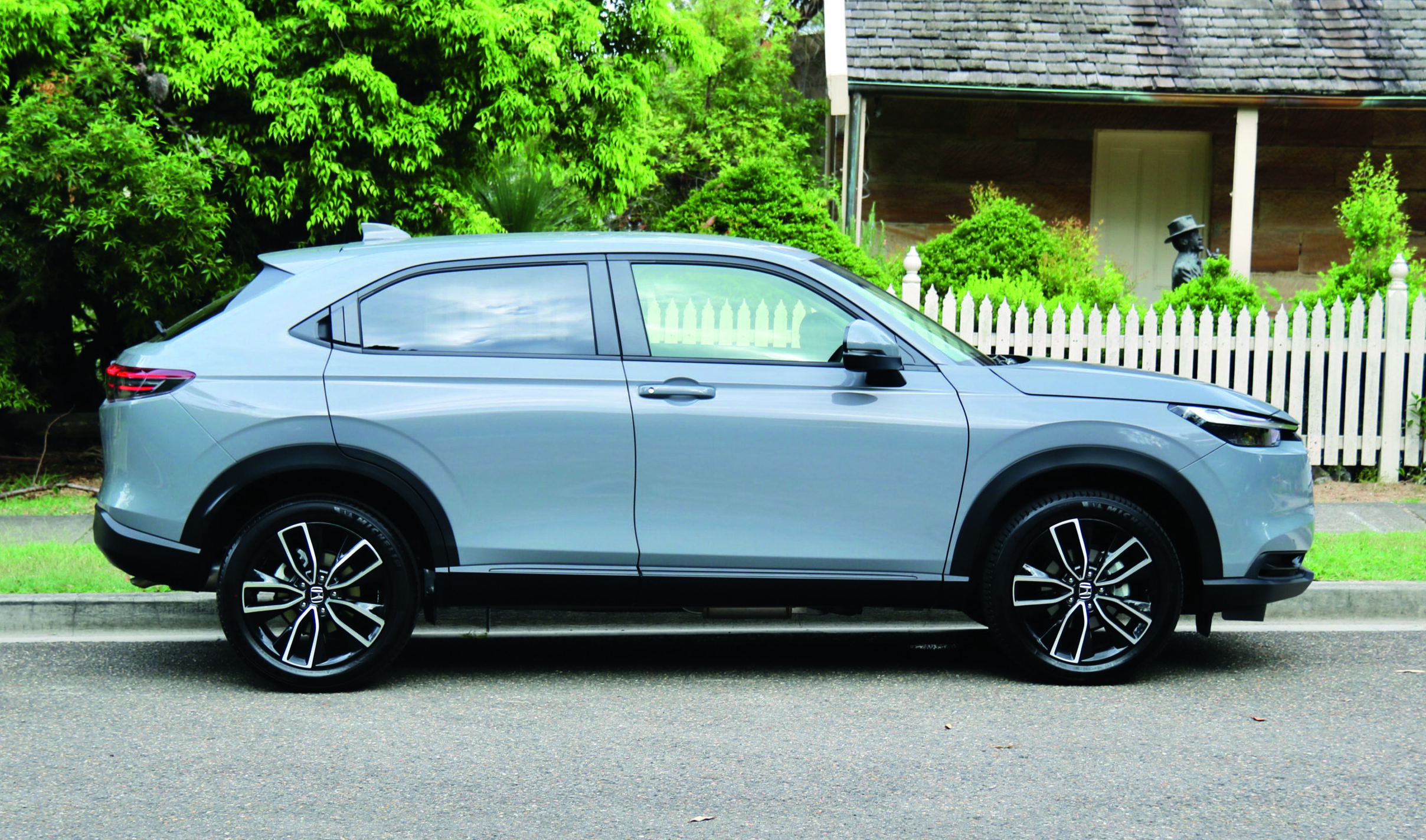
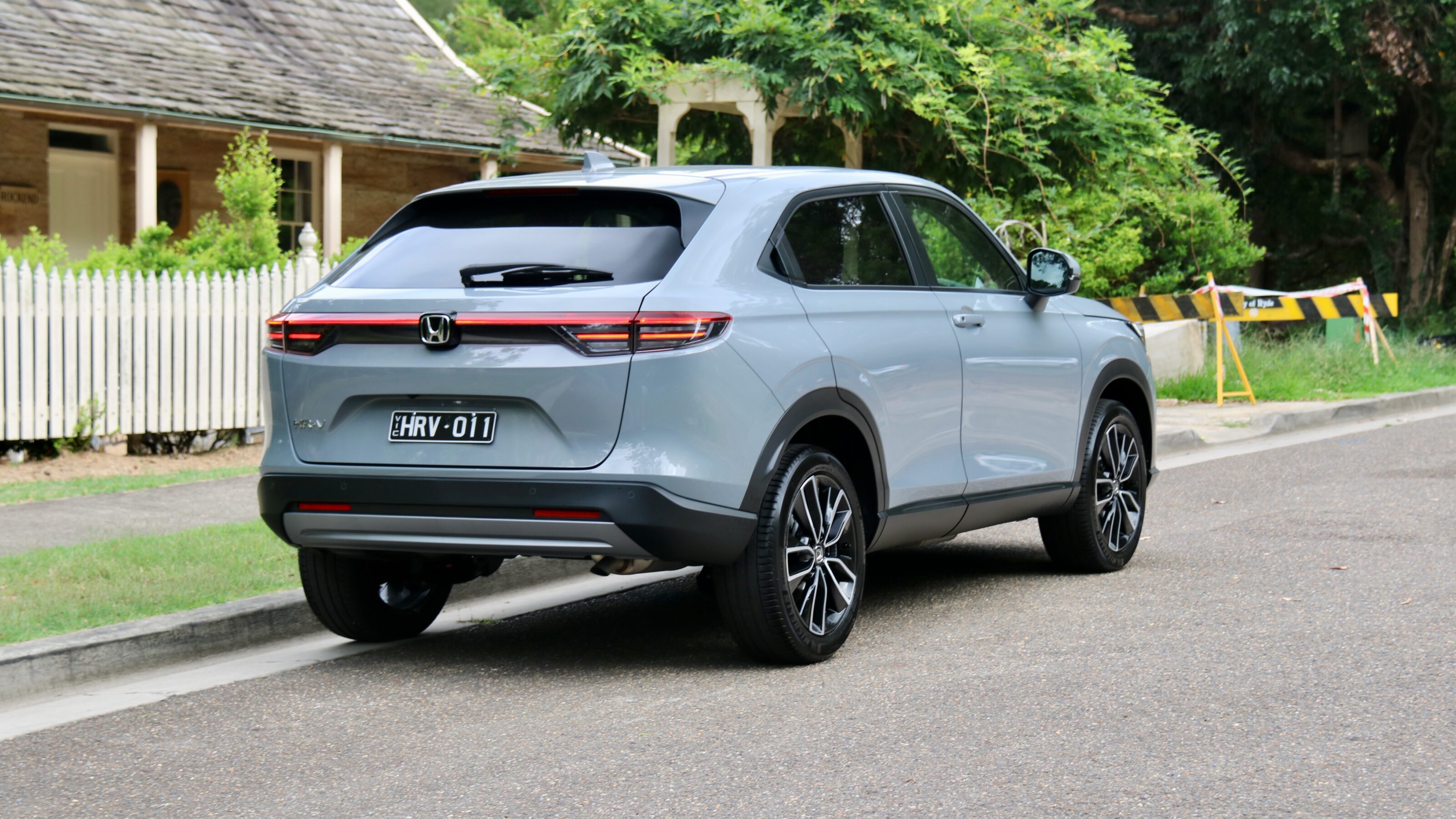
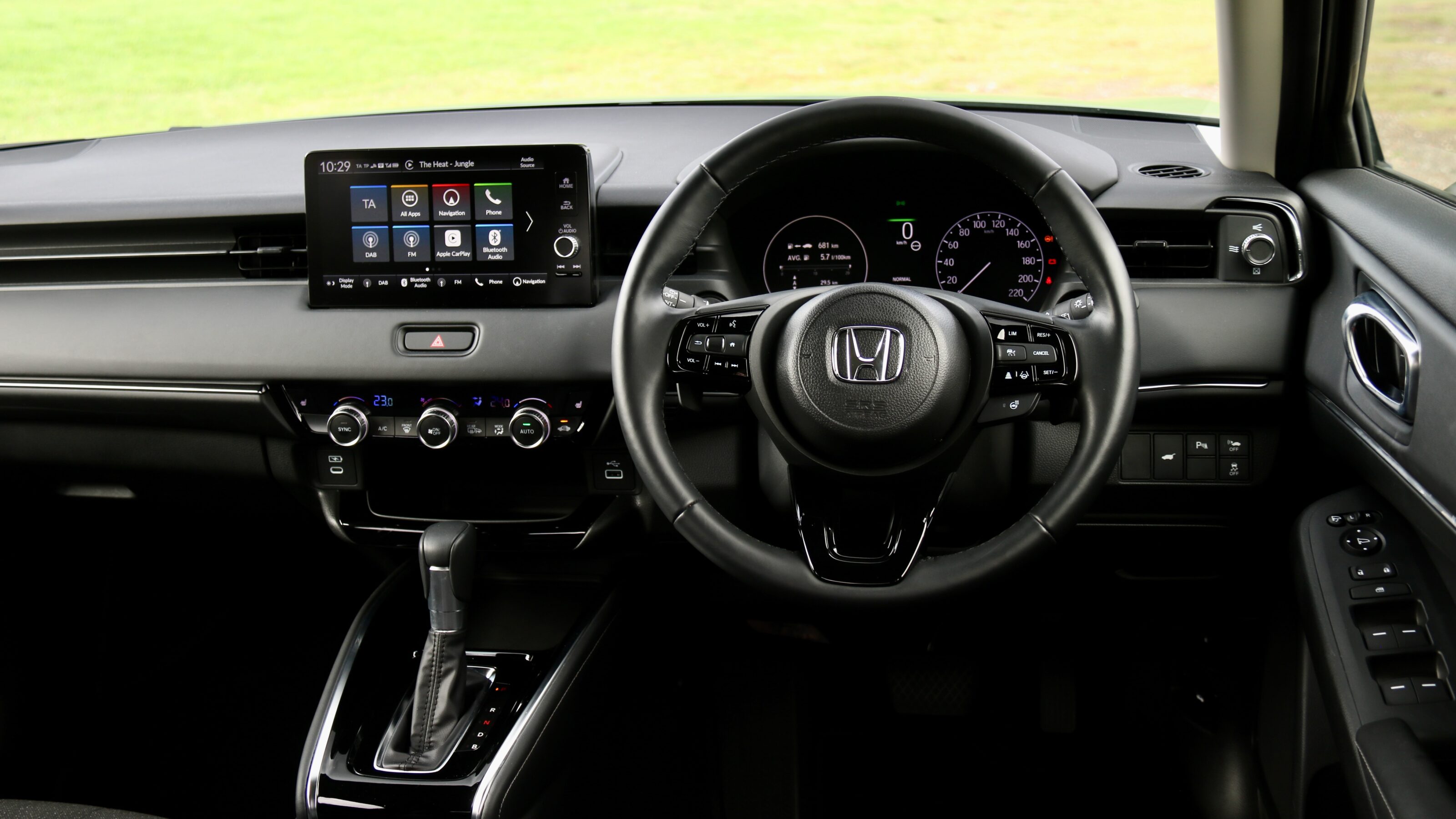
Equipment levels are otherwise healthy with kit such as 18-inch wheels, keyless entry and push button start, automatic climate control, a 9.0-inch touchscreen with sat-nav, wireless Apple CarPlay (though Android Auto is curiously still only wired) and safety kit like AEB, adaptive cruise control, adaptive lane guidance and a reversing camera.
The new e:HEV X adds blind-spot monitoring with rear cross-traffic alert, adaptive high beam, leatherette and cloth seat trim and heated front seats with the e:HEV L adding dual-zone climate control, rear air vents, auto-folding mirrors, auto wipers, an electric bootlid and a heated steering wheel. All up, it’s now better value for money though some features like a sunroof, electric seat adjustment and premium audio are still missing.
Like the pre-updated model, the facelifted HR-V is still a four-seater, which may or may not matter to you. While we’re moaning, there’s no spare wheel across the range either.
Under the bonnet are two 1.5-litre drivetrains: an 89kW/145Nm petrol or a 96kW/253Nm hybrid. Both are mated to a CVT automatic transmission, with claimed combined fuel consumption of 6.2L/100km for the petrol and 4.3L/100km for the hybrid – in the real world, we averaged 7.4L/100km in the petrol and 4.7L/100km in the hybrid.
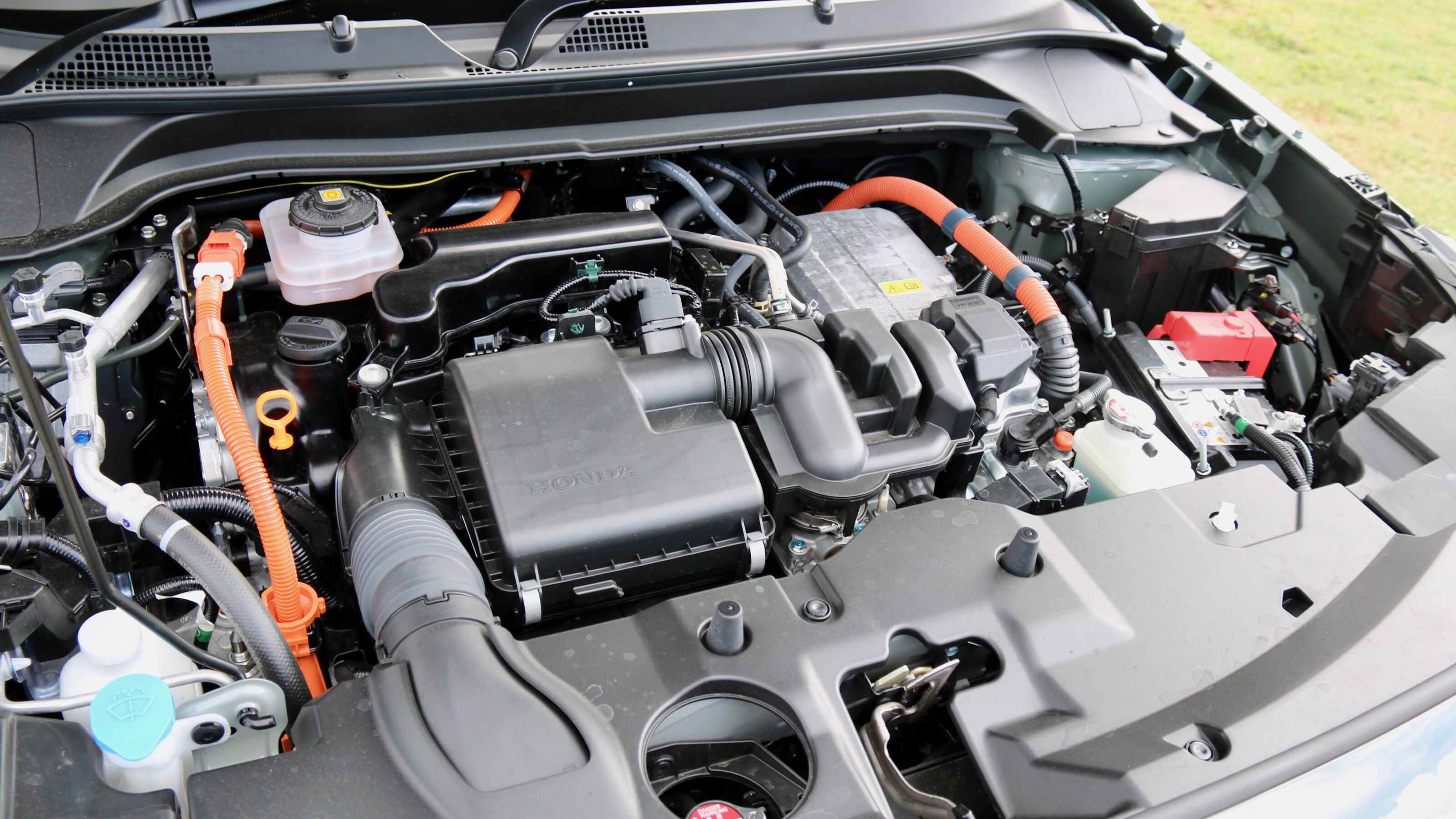
For more than just its excellent fuel efficiency, the hybrid is the clear pick of the updated HR-V range: it’s more refined and punchier, justifying the extra cost (which also includes extra features).
According to Honda, the hybrid drivetrain has been improved with better refinement and a smoother handover between petrol and electric power. In reality, the changes are barely noticeable but it remains one of the best hybrid systems on the market, especially with the transmission’s stepped ratios. Because of that – and unlike a Toyota hybrid – mashing the throttle in the HR-V hybrid doesn’t result in constant high-rev noise until you’re up to speed.
Honda also says that the HR-V hybrid’s dampers have been retuned and it’s not wrong as there’s a greater degree of compliance compared with the pre-updated model, though larger bumps can still upset it a bit. It’s a good handler for the segment, with nicely-weighted steering and a tight chassis.
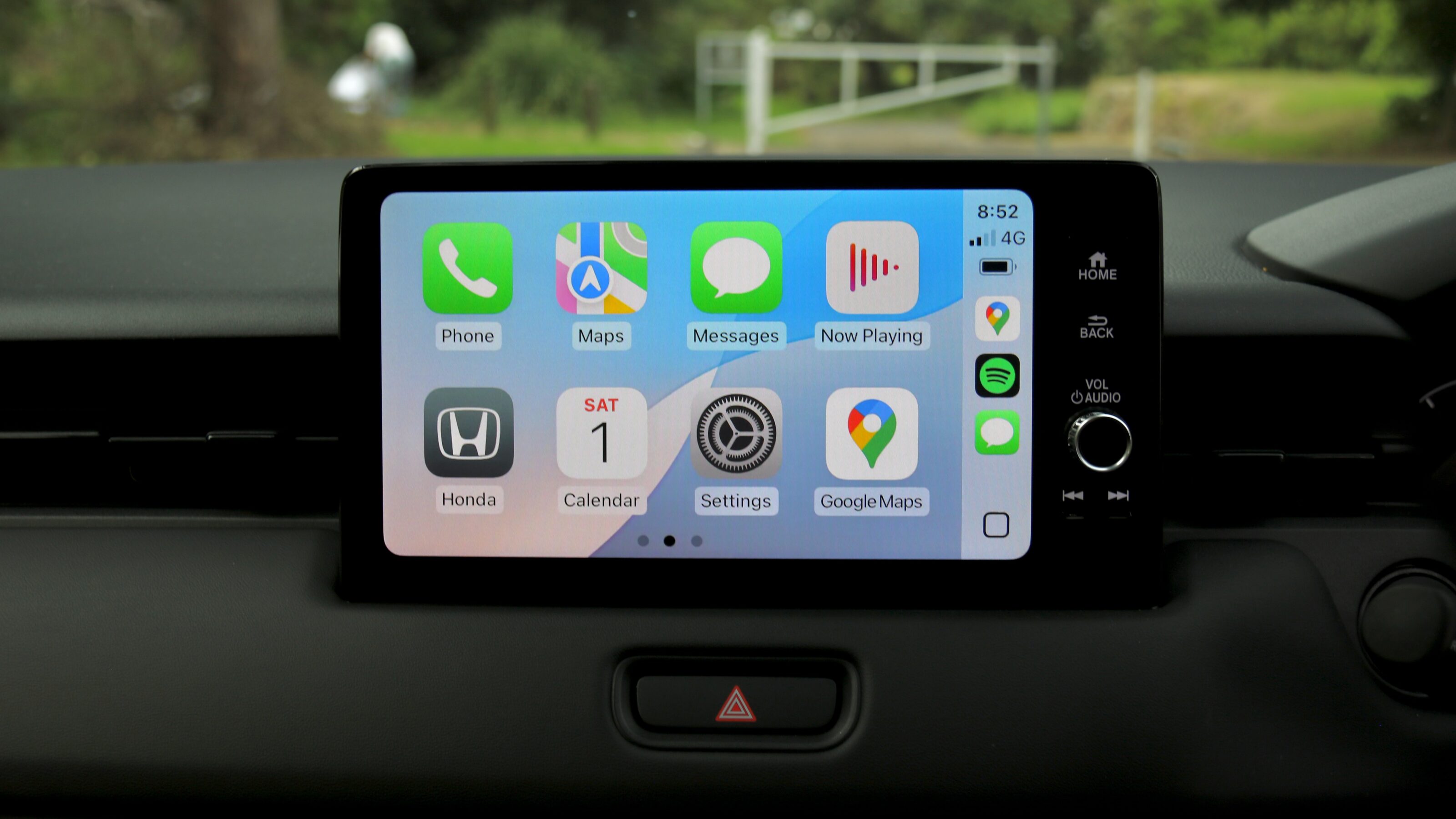
The cabin of the HR-V hasn’t changed much, but it didn’t really need to: there’s a new centre console tray design for a smartphone – though a wireless charger remains a dealer-fit accessory – and new faster-charging USB-C ports have also been fitted. The 9.0-inch touchscreen adopts live services and remains breathtakingly easy to use. Quality is solid with soft touch dashboard and door trims and lovely switchgear like the leather steering wheel.
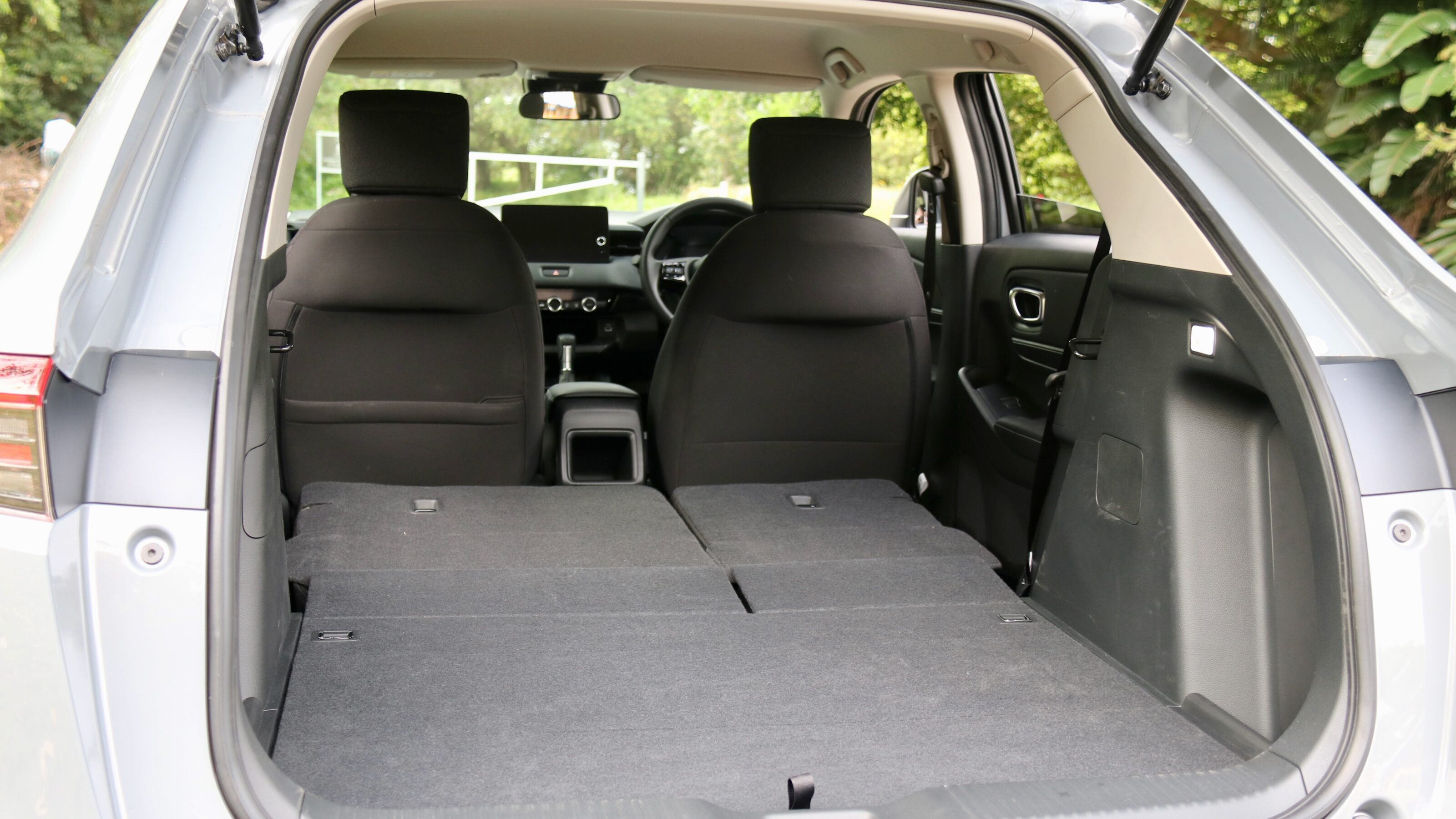
Aside from the lack of a fifth seat locally, the HR-V’s rear seat is arguably the best in class with ample legroom and headroom, and amenities like a central arm rest, bottle holders in the doors and – unfortunately in the top-spec hybrid only – rear air vents and two USB-C ports. But uniquely, Honda’s ‘Magic Seats’ allow the seat base to fold up or fold completely flat for trips to Ikea, expanding the average 304-litre boot to a large 1,274L, or more than Kona and CX-30.
All things considered, the updated Honda HR-V remains one of the best choices in the small SUV segment. Subtle updates have made it safer, better equipped and more refined to drive than before, while the hybrid’s real-world efficiency, stepped ratio gearbox and peppy performance are awesome. The lack of a fifth seat and spare wheel grates, but it’s otherwise very practical and if they’re a non-issue to you, the HR-V still presents great buying in the small SUV segment.
Essential specs
- Engine: 1498cc 4-cyl, DOHC, petrol or hybrid
- Max power: 89kW (petrol); 96kW (hybrid)
- Max torque: 145Nm (petrol); 253Nm (hybrid)
- Transmission: CVT automatic
- Economy: 4.3L/100km (hybrid); 6.2L/100km (petrol)
- Weight: 1267kg (petrol); 1382kg (hybrid)
- Price: from $32,900 drive away (Vi X); $42,900 (e:HEV L)
- On sale: Now
This article appears in the May 2025 issue of Wheels, on sale now.
Ford F-150
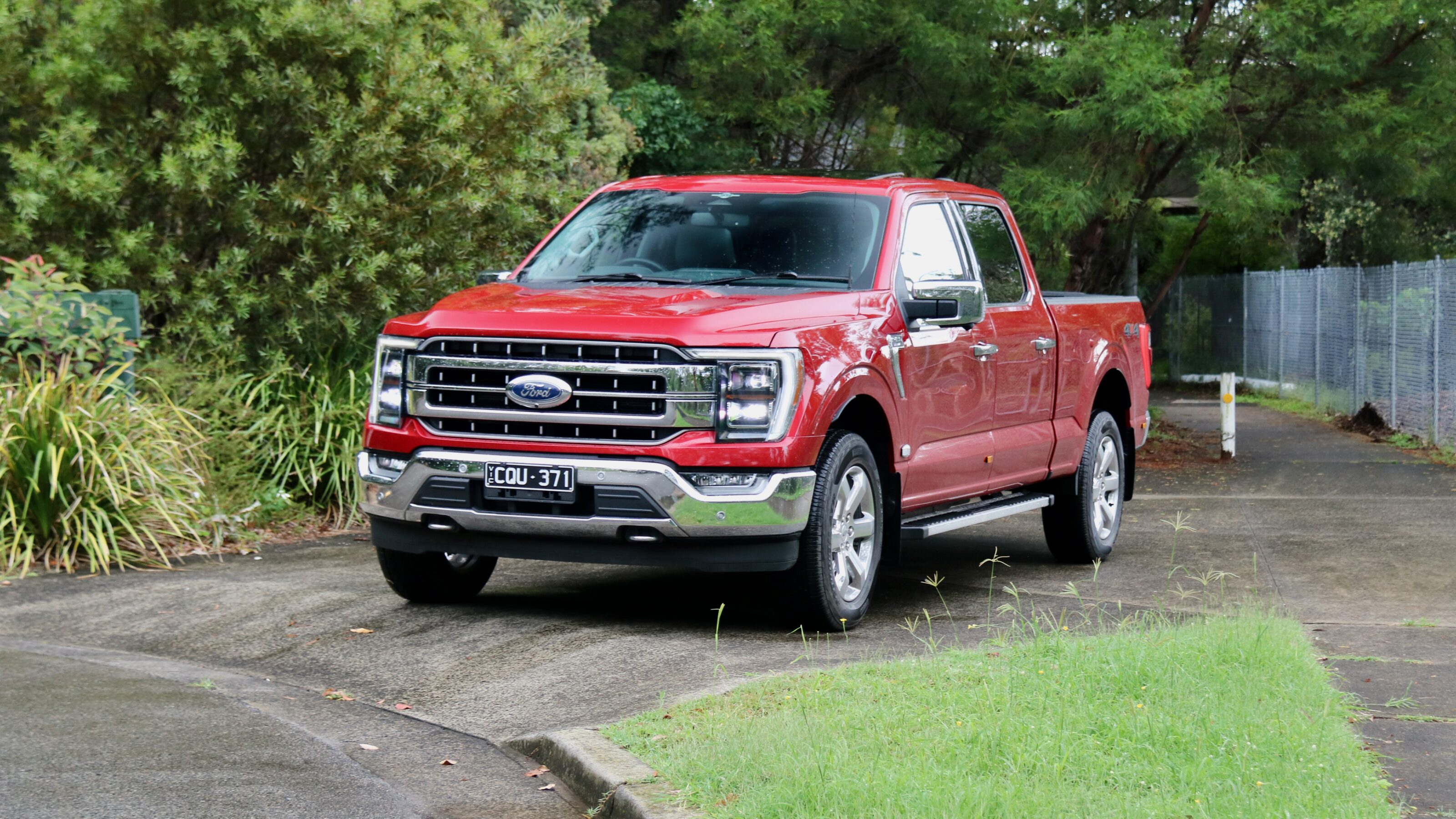
It’s been delayed until mid-2025, but the facelifted Ford F-150 will hit local shores this year. As before, it’ll be converted to right-hand drive locally by RMA Automotive and continue to feature a 298kW/678Nm 3.5-litre twin-turbo V6 as the only available engine.
Changes include a restyled front and rear and 12.0-inch infotainment and instrument screens right across the range (currently 8.0-inch in XLT). Speaking of the range, it’s yet to be confirmed but expect a flagship Platinum to join the current XLT and Lariat.
Another new option is the Pro Access Tailgate, which incorporates a swing door into the fold-down tailgate to allow easy access to the bed. Pricing will be revealed closer to launch.
Ford Ranger PHEV
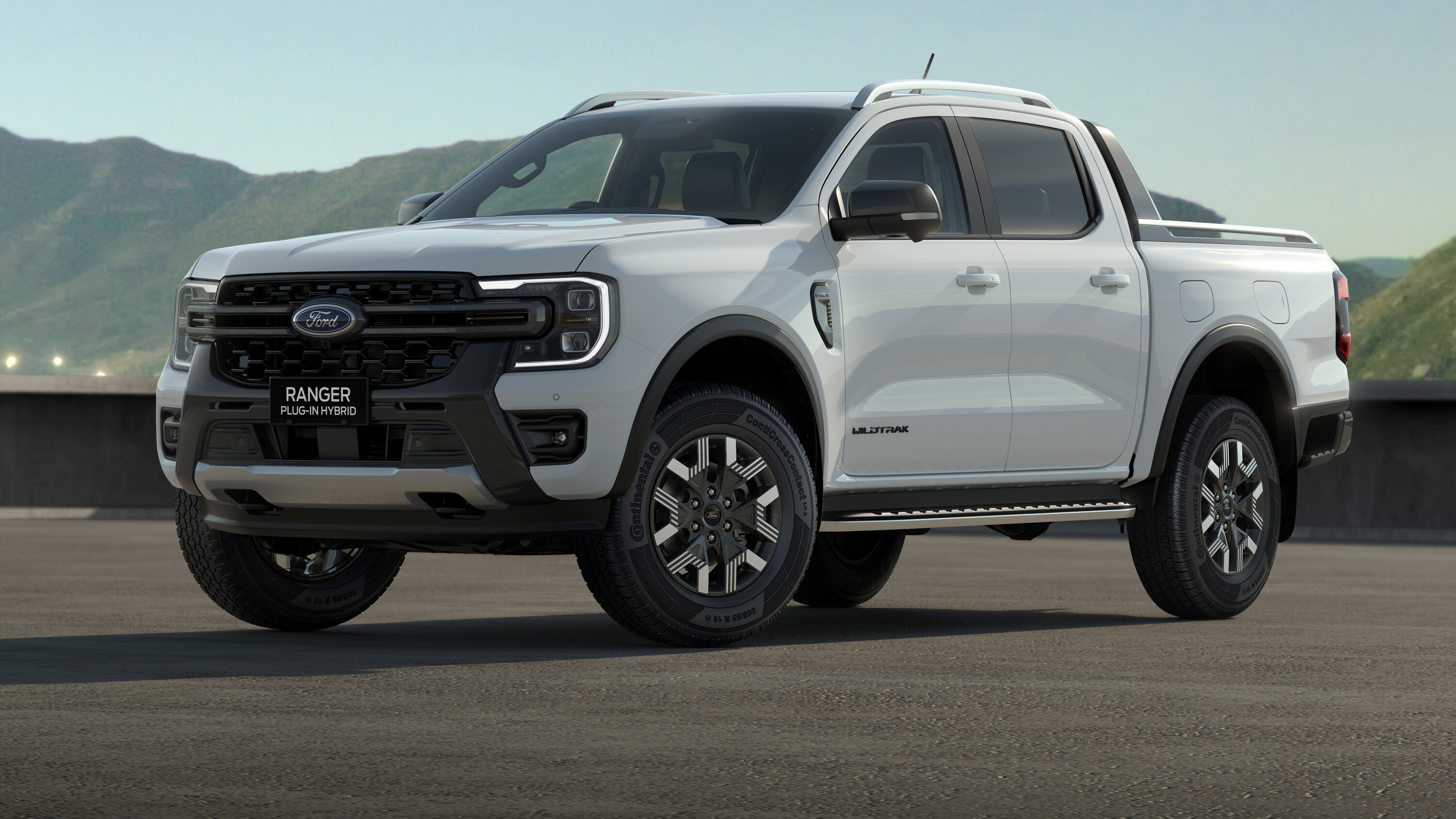
The Ford Ranger PHEV will join Australia’s growing electrified dual-cab segment in 2025 and we can now put a price to it. A four-strong line-up starts at $71,990 plus on-road costs for the XLT, raising in $4000 increments for the Sport and Wildtrak then jumping to $86,990 for the range-topping Stormtrak.
Equipment levels essentially mirror each variant’s diesel equivalent, with the obvious exception of the powertrain. The Ranger PHEV combines a 138kW/411Nm 2.3-litre turbocharged four-cylinder petrol engine with a 75kW electric motor for a total system output of 207kW/697Nm.
Claimed combined fuel consumption is 2.9L/100km and an 11.8kWh battery (usable) provides a maximum electric-only range of 49km. Charge time is four hours at the maximum AC rate of 3.5kW or just under seven hours on your typical powerpoint. The battery also feeds a trio of power outlets, a 2.3kW cabin outlet and a pair of 3.45kW outlets in the tray.
Maximum towing remains 3500kg and payload varies between 808-973kg depending on variant. The only question left now is how it drives.
Foton Tunland
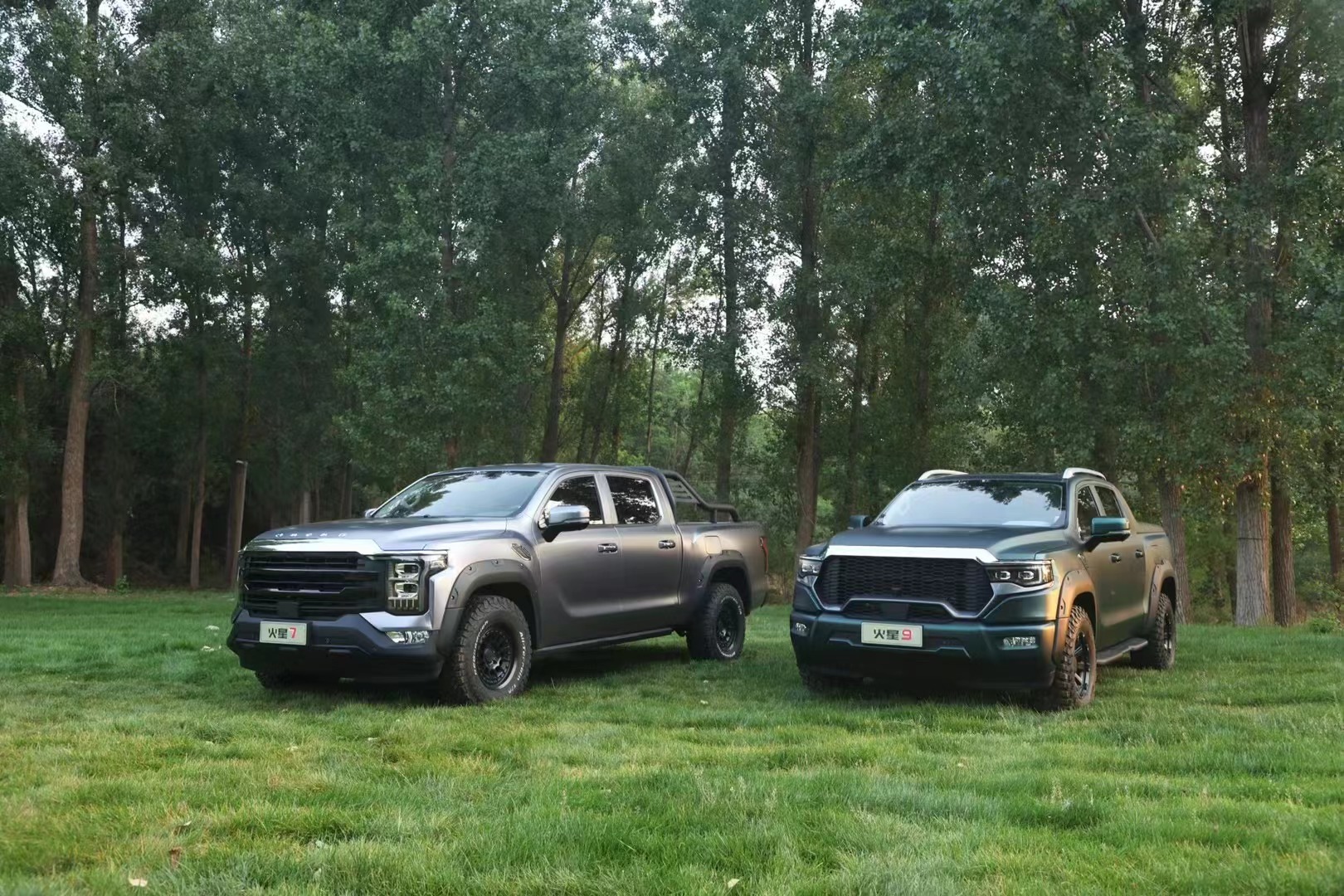
The Foton Tunland is a familiar nameplate in Australia but the new-generation dual-cab, offered in V7 and V9 variants, couldn’t be further from the bargain basement ute that was previously available a decade or so ago.
Concrete local details are currently scarce, but we do have some information. For starters, the V7 and V9 – the utes appear to be differentiated only by their exterior styling – are enormous.
Even the smaller versions measure 5517mm long with a 3355mm wheelbase, substantially longer than a Ford Ranger in both dimensions, while the larger versions expected to be offered locally are much closer to the Ford F-150, Toyota Tundra et al at 5797mm long on a 3505mm wheelbase.
The interiors are packed with leather, giant screens and extensive equipment lists, Foton claiming in a statement “an intelligent cockpit, plush seating and luxurious finishes that prioritise occupant’s comfort on every journey”.
Powertrains are currently the big unknown, the Tunlands offered with a 2.0-litre four-cylinder mild-hybrid turbodiesel in South Africa but with electrically-assisted petrols in its Chinese homeland. Expect pricing to significantly undercut the established players.
Geely Radar
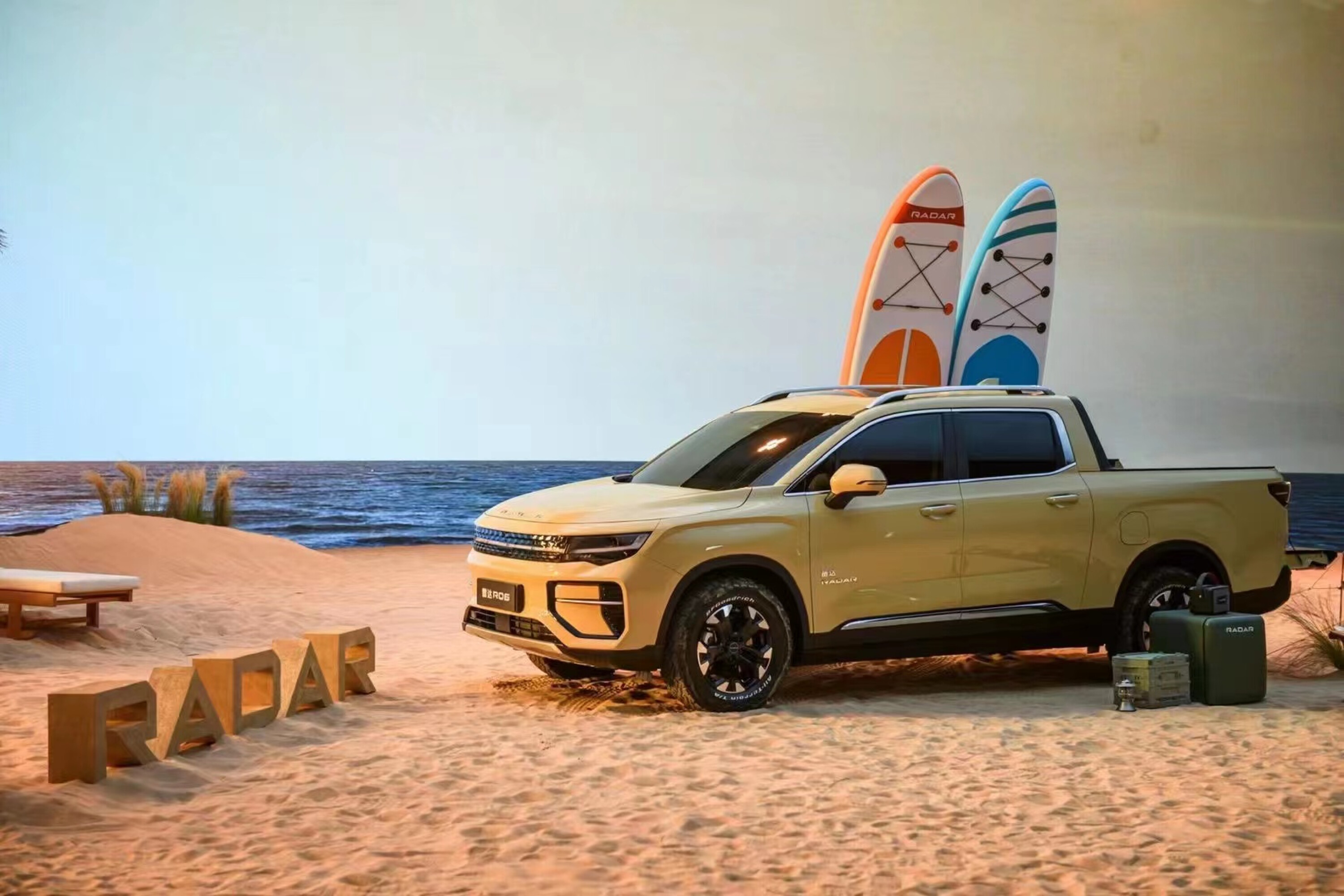
Geely has reestablished an Australian presence with the EX5 SUV, but it’s already confirmed plans to expand its local lineup with a ute. A ute with a difference, however.
The most likely candidate is the Radar RD6, known as the Riddara RD6 in export markets, an all-electric dual-cab built on a monocoque platform rather than a more traditional ladder-frame chassis.
Despite this, the RD6 4×4 claims a maximum towing capacity of 3000kg and 865kg payload along with an 815mm wading depth and 225mm of ground clearance, making it more than just a city slicker.
The Riddara RD6 – which would likely be rebadged a Geely in Australia – is already produced in right-hand drive for Thailand, where it’s also offered in rear-wheel drive form with a choice of 63kWh or 86kWh battery packs.
GWM Cannon Alpha – Out Now
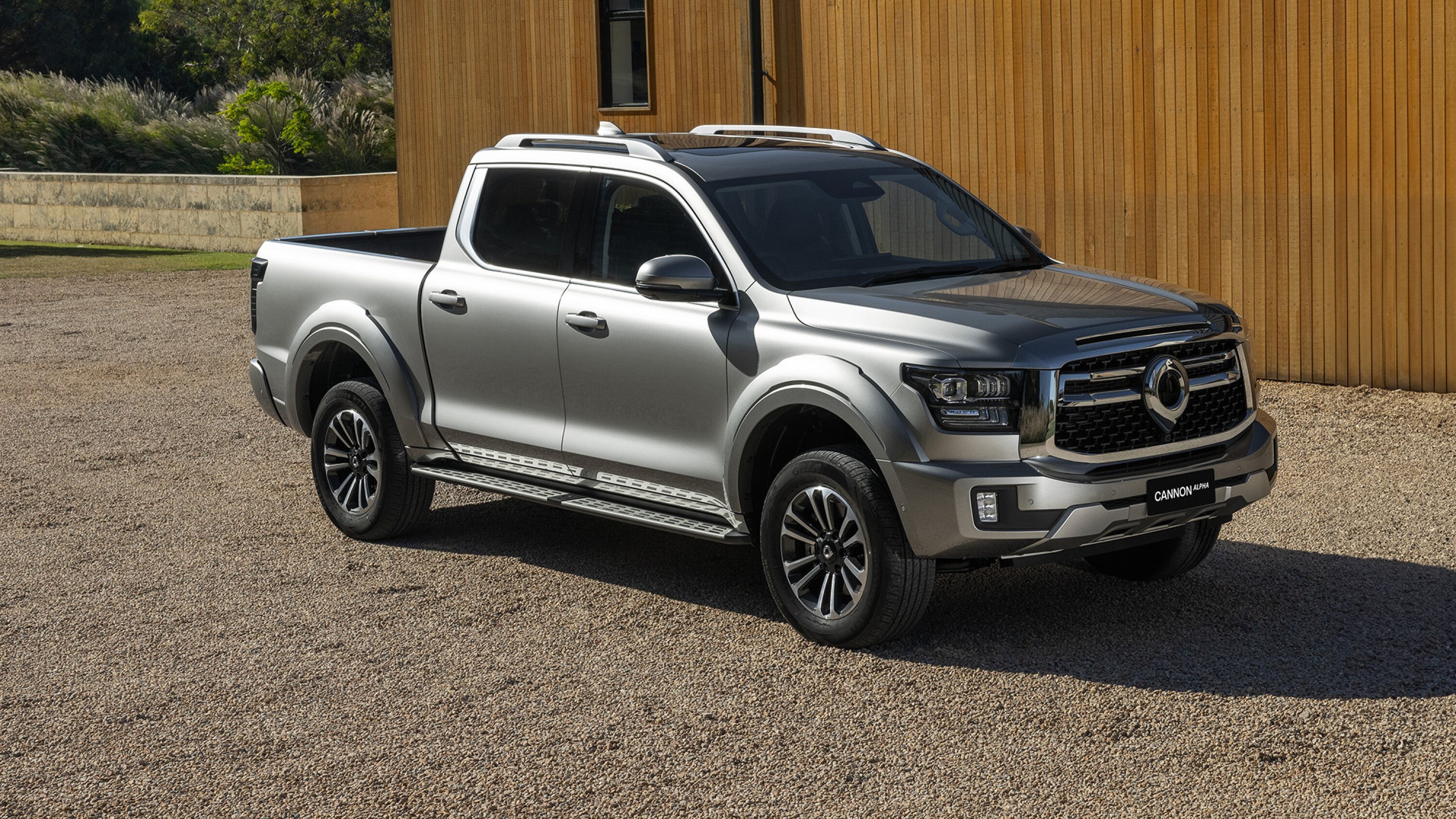
A bigger brother to the existing Cannon, the GWM Cannon Alpha is a two-tier proposition. The big rig – measuring 5455mm long, 1991mm wide and 1924mm tall – is offered from $51,990 driveaway with a 135kW/480Nm 2.4-litre four-cylinder turbodiesel, but it’s also part of the new wave of electrified utes arriving in Australia.
The Cannon Alpha Hybrid is $64,990 driveaway and teams a 2.0-litre four-cylinder turbo-petrol engine with an electric motor and small lithium-ion battery for combined outputs of 255kW/648Nm. Claimed combined fuel consumption is 9.8L/100km.
There’s plenty of equipment, diff locks front and rear and 3500kg towing capacity, but maximum payload is only 735kg. It’s triple sevens in terms of aftersales, with seven years’ coverage for warranty, roadside assistance and capped-price servicing.
GWM Cannon Facelift – Out Now
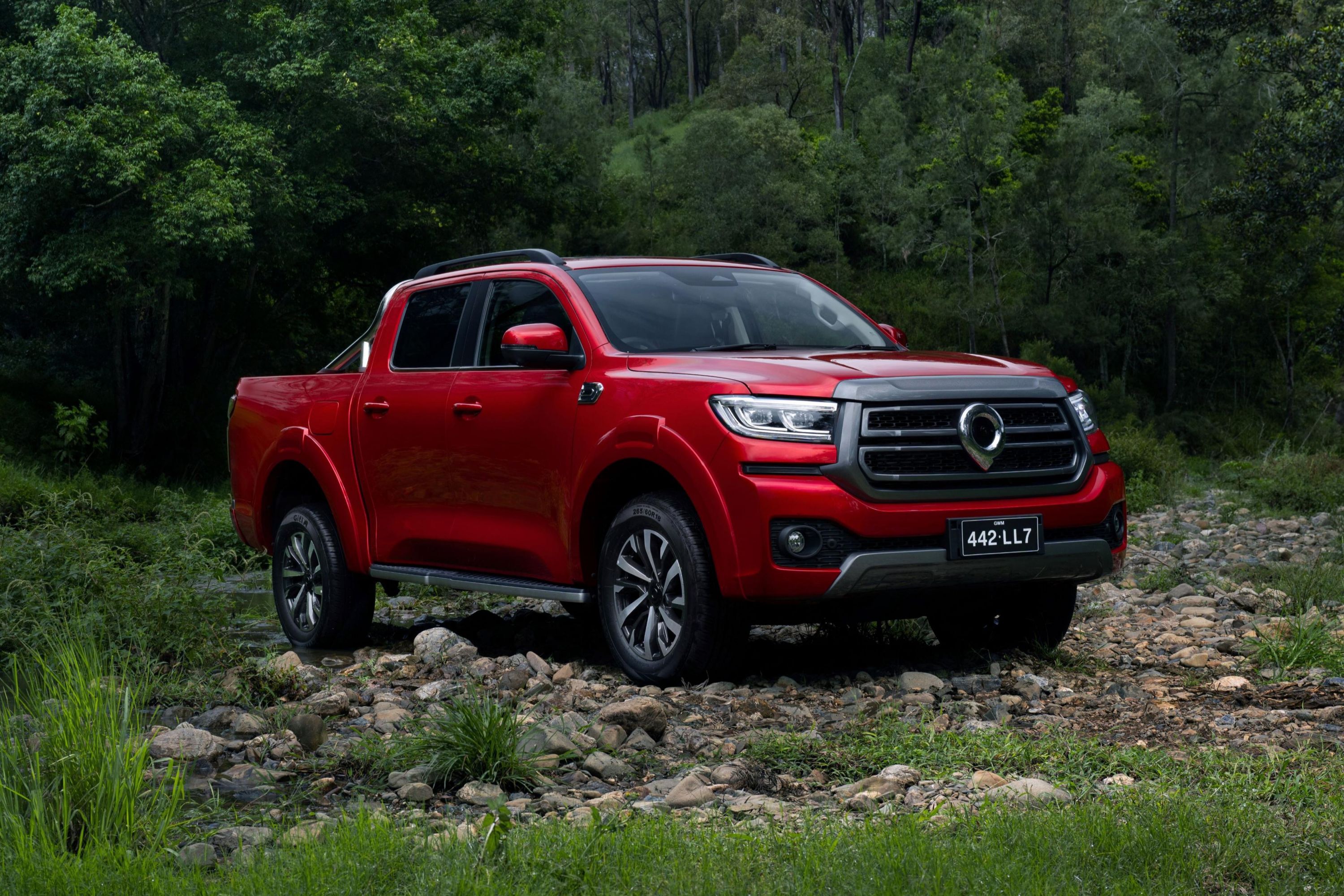
The upgrades for the new GWM Cannon have been comprehensive to say the least. As well as visual revisions that eliminate a lot of the gaudy chrome, there’s now a 2.4-litre turbodiesel and nine-speed auto combo, increasing outputs from 120kW/400Nm to 135kW/480Nm.
Inside there are new screens, a flip-or-fold rear seat, cooled wireless phone charger and plenty of kit, especially towards the top of the range, while maximum towing capacity has increased to 3500kg and the seven-year warranty/five-year roadside assistance combo carries over.
One thing that hasn’t changed – or at least not much – is the pricing. The rationalised four-tier range starts at $40,490 driveaway for the Lux, rising to $43,490 for the Ultra, $45,490 for the Vanta and $49,990 for the off-road focused XSR.
Ineos Grenadier Quartermaster – Out Now
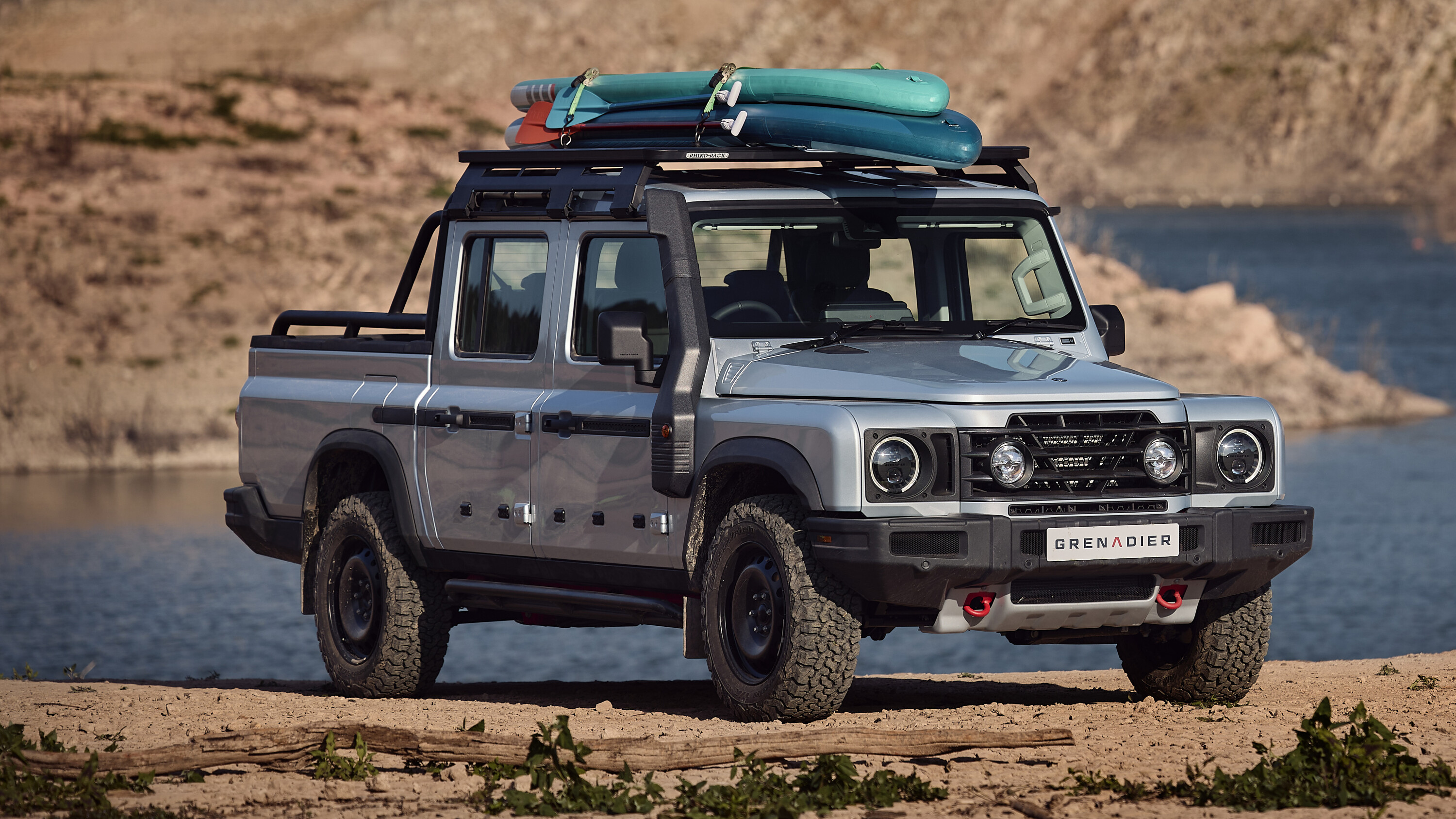
The Ineos Grenadier lineup has doubled with the arrival of the Quartermaster ute. It lengthens the wheelbase by 305mm and adds a tray capable of accommodating a 1200 x 800mm European pallet. Maximum payload is 907kg for the petrol and 832kg for the diesel.
Pricing is very similar to the wagon starting at $102,000 plus on-road costs for the cab-chassis or $105,000 with a tray fitted, rising to $118,000 (+ORCs) for the Trialmaster and Fieldmaster variants.
Mechanically, the ute mirrors the wagon, with coil-sprung live axles front and rear and a choice of BMW-sourced 3.0-litre inline-six petrol (210kW/450Nm) or diesel (183kW/550Nm) engines with a ZF eight-speed automatic gearbox.
JAC T9 – Out Now
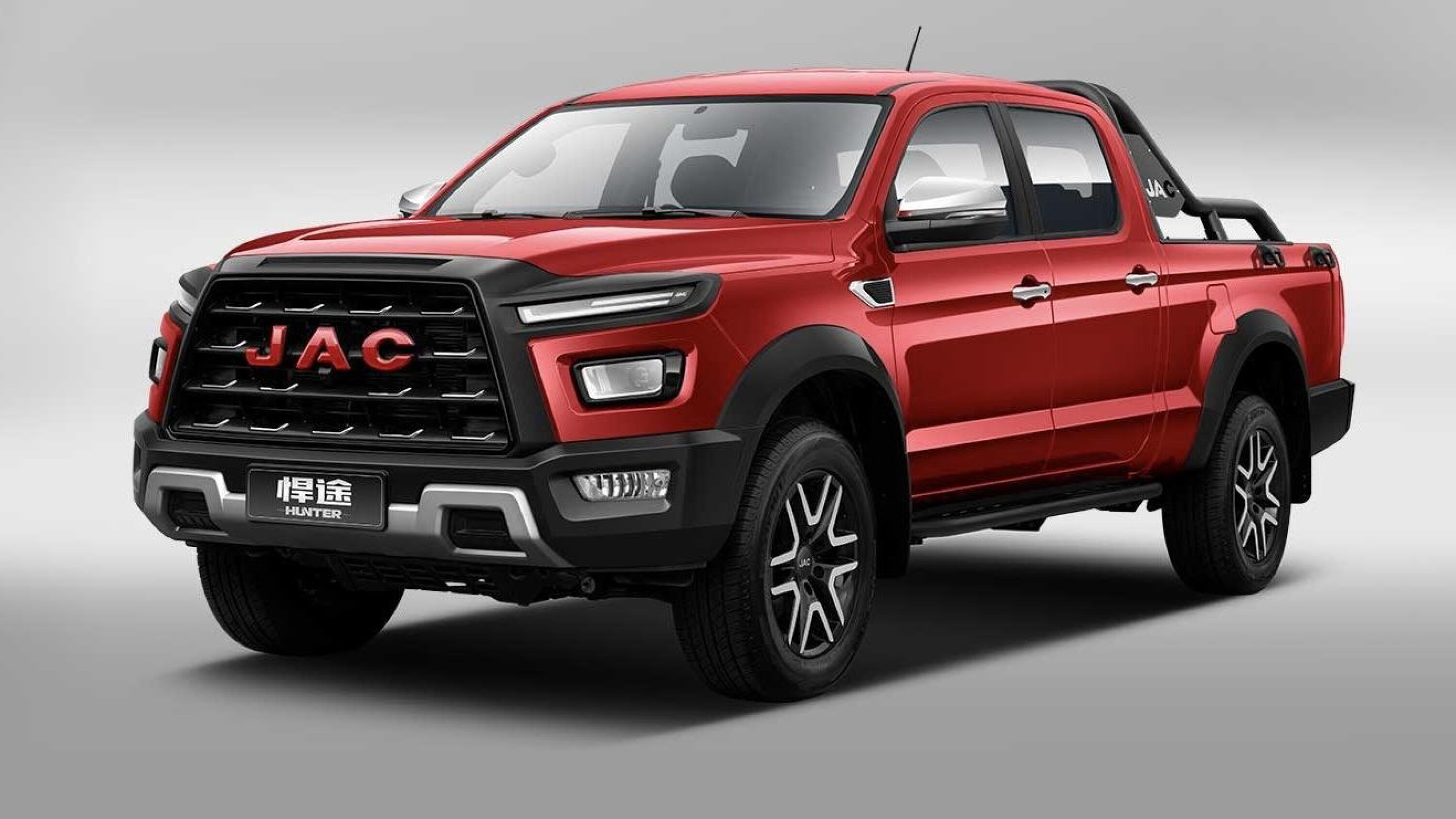
As the established dual-cab players have increased in price, it’s created space for new entrants to slot in underneath, like the GWM Cannon, LDV T60 and new JAC T9. It’s landed in Australia starting at $42,662 plus on-road costs rising to $45,630 (+ORCs) for the up-spec Haven.
There’s no arguing with the value proposition, with plenty of equipment, a five-star ANCAP safety rating, seven-year warranty and roadside assistance and a large tub. Max towing is slightly below the class leaders at 3200kg but there’s up to 1045kg of payload available.
Under the bonnet is a 120kW/410Nm 2.0-litre four-cylinder turbodiesel attached to an eight-speed automatic with claimed combined fuel consumption of 7.6L/100km. There’s disc brakes front and rear and a locking rear differential for added traction off road.
Jeep Gladiator
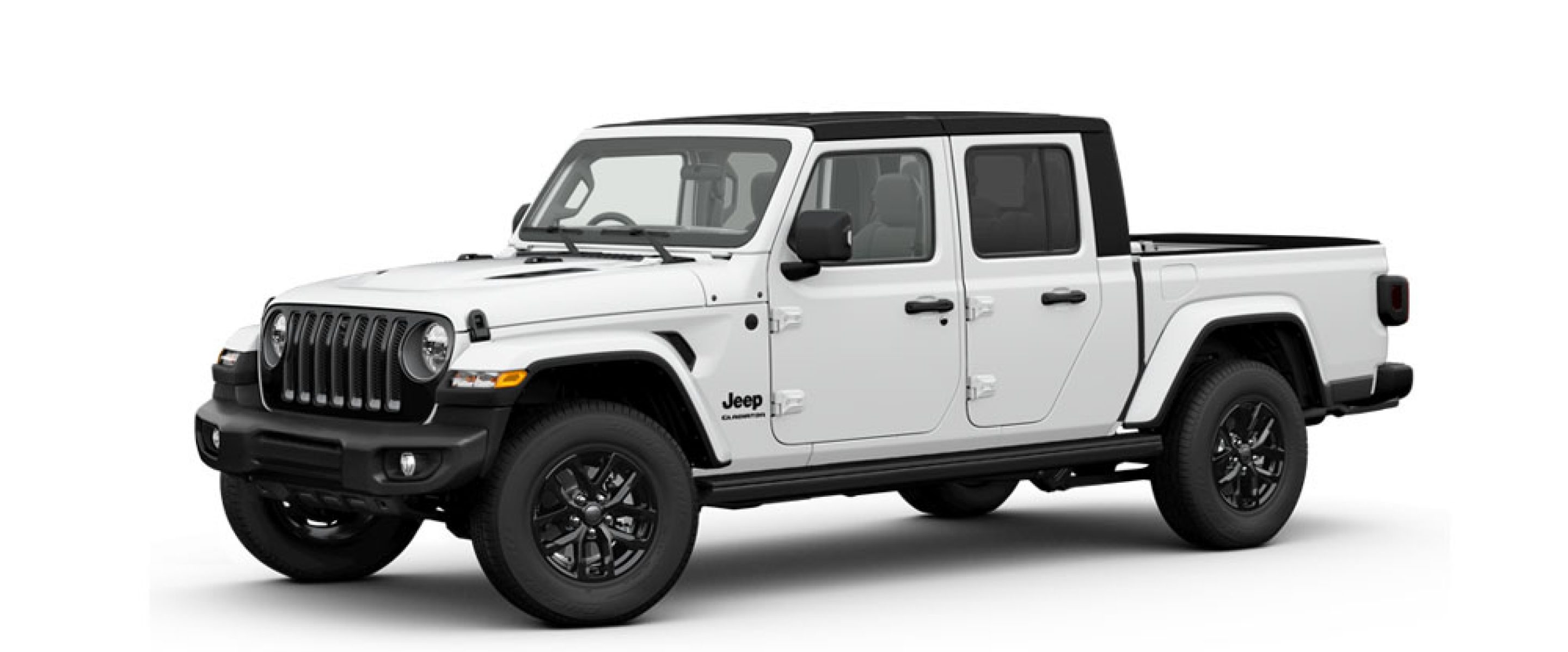
Unlike its Wrangler sibling, the facelifted Jeep Gladiator will continue with the 209kW/347Nm 3.6-litre Pentastar V6 rather than downsizing to a 2.0-litre four-cylinder turbo-petrol.
It does, however, score the revised styling, updated interior with much larger (12.3-inch) infotainment system and additional safety equipment.
Kia Tasman
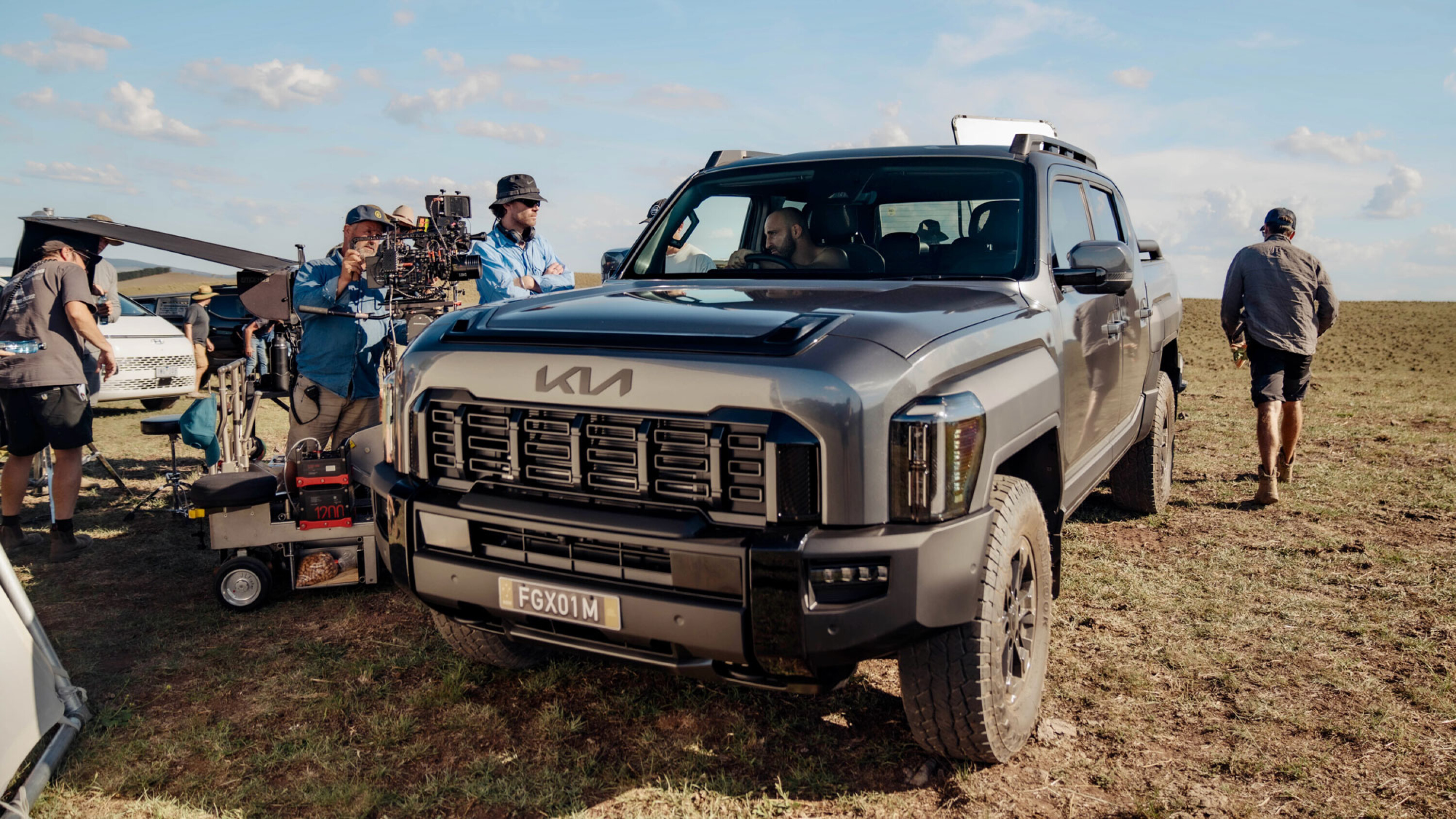
One of the most anticipated and hyped vehicle releases in recent memory, if all goes to plan the Kia Tasman will quickly entrench itself as one of Australia’s top 10 selling vehicles.
Kia hasn’t strayed too far from the class norm with the Tasman’s fundamentals, with a ladder-frame chassis, leaf-sprung, live axle rear end and a 2.2-litre four-cylinder turbodiesel engine producing 154kW/441Nm.
Three variants will be available, the base, X-Line and off-road focused X-Pro, the latter featuring 17-inch wheels with more aggressive tyres, extra ground clearance and an electronically locking rear differential.
Inside, Kia looks to offer a more car-like experience, with its familiar dual widescreen arrangement, extra storage bins, dual wireless charging pads and optional Harmon/Kardon stereo.
LDV eTerron 9 and Terron 9

The LDV eT60 was Australia’s first all-electric ute, but its forthcoming eTerron 9 will be a much more convincing proposition. Government approval documents have given us our first look at the specifications, with a rear-wheel drive model offering a single 200kW motor, while the all-wheel drive adds another 125kW on the front axle.
A more conventional Terron 9 will also be available using a 164kW 2.5-litre four-cylinder turbodiesel. Both Terrons will sit towards the larger end of the typical dual-cab sector, measuring 5500mm long, 1997mm wide and 1860mm tall on a 3300mm wheelbase.
Both models are expected to arrive in Q2, 2025 and will be sold alongside the existing T60.
Mazda BT-50 – Out Now
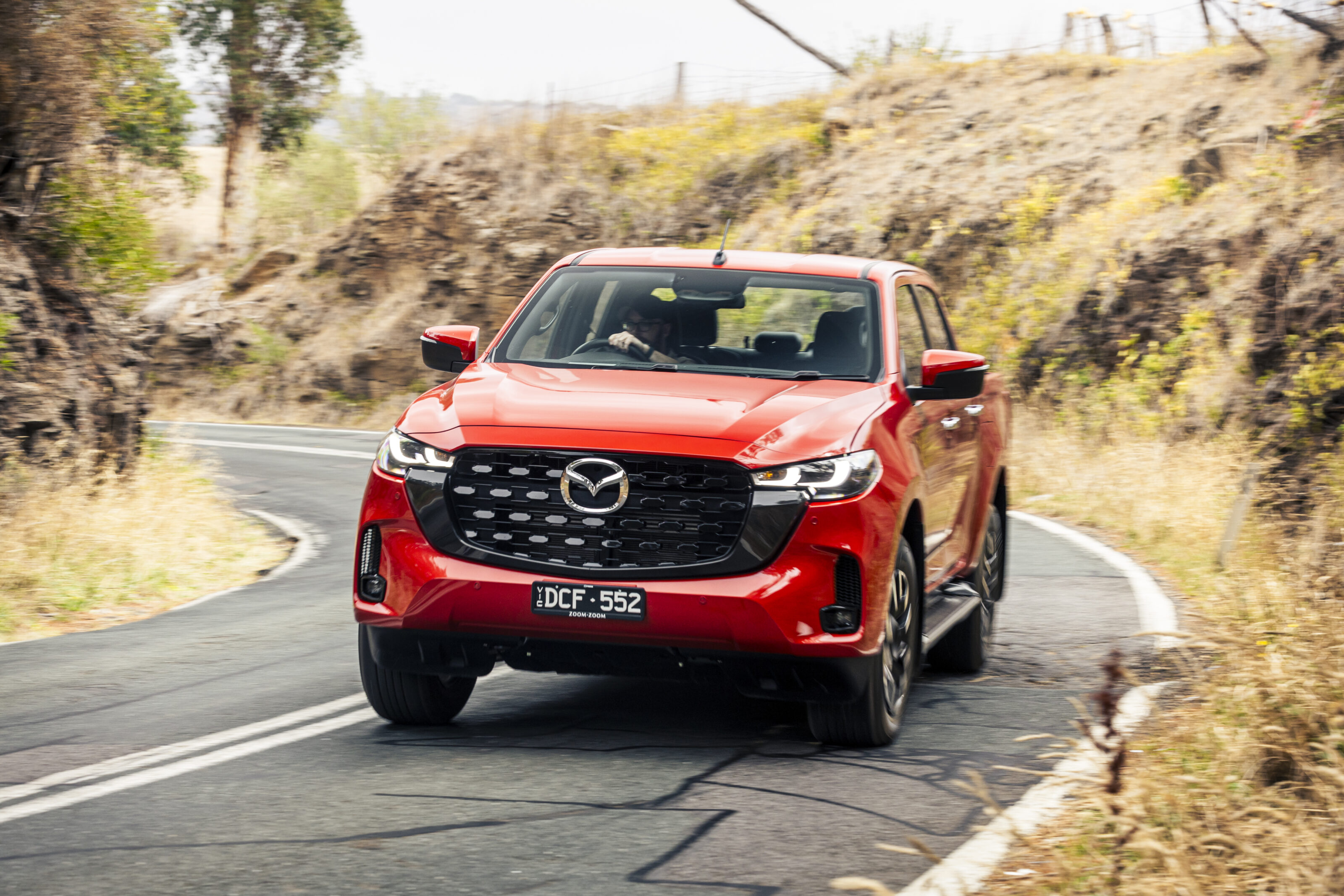
It’s nip-and-tuck time for the Mazda BT-50 with a mild exterior refresh covering bigger changes inside. Larger infotainment and instrument screens, wireless Android Auto (joining Apple CarPlay) and USB-C rather than -A ports headline the interior updates, while new stereo cameras enhance the ability of its active safety features.
Mechanically, it’s business as usual bar the addition of a ‘Rough Terrain’ mode that retains traction control when in low-range. Speaking of range, the BT-50 offering is extensive, from $36,400 (+ORCs) for a 1.9-litre 4×2 XS cab-chassis, right up to $71,500 (+ORCs) for the flagship SP.
Mitsubishi Triton Cab-Chassis
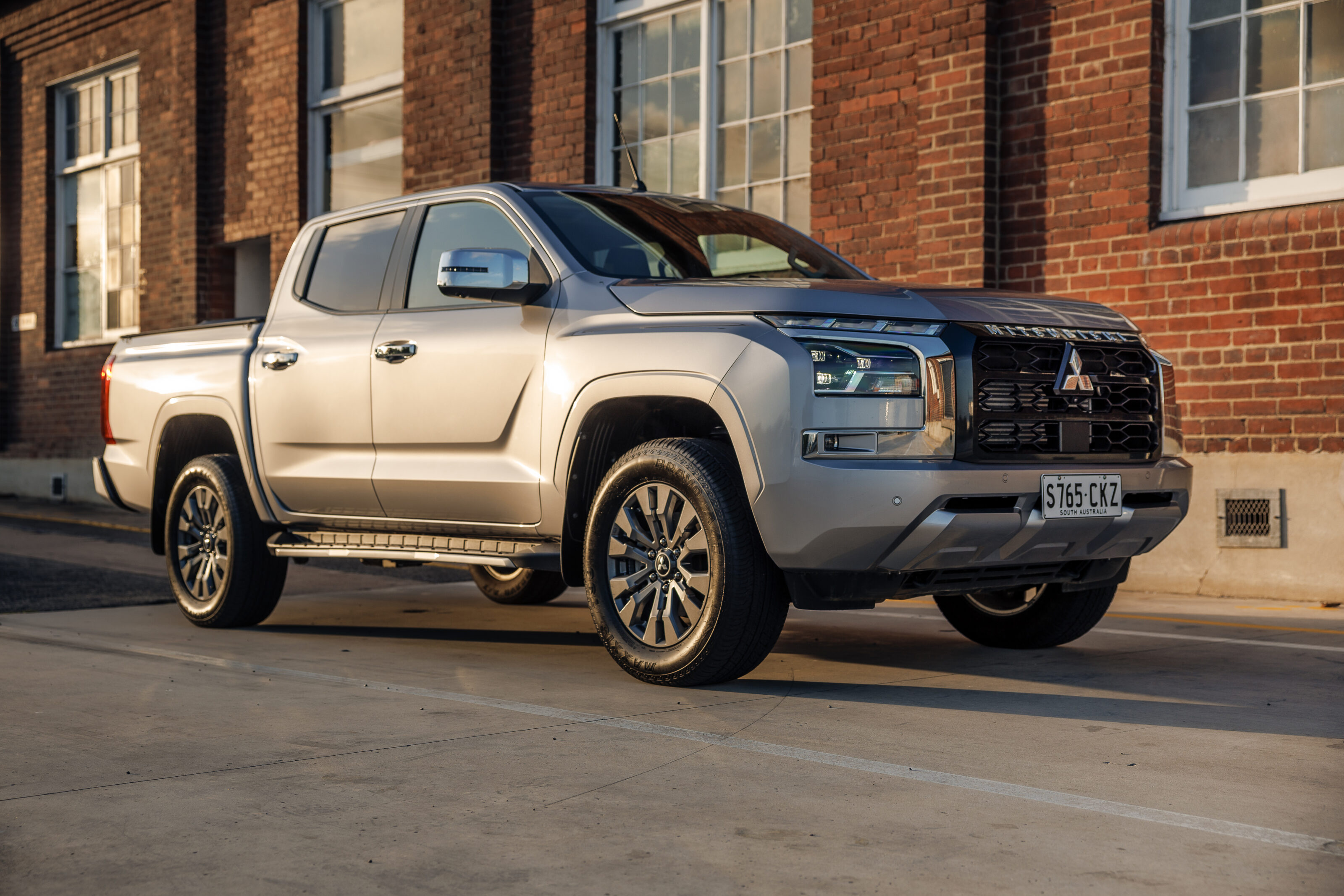
The Mitsubishi Triton range will expand with the arrival of cab-chassis variants towards the end of Q1, 2025. While officially unconfirmed, the range has been supplied to Redbook with the cab-chassis to be offered in GLX, GLX+, GLS and GSR guises.
Only 4×4 will be offered, with the GLX also introducing a six-speed manual to the range. This is the entry-level cab-chassis at $47,240 (+ORCs), with the GLX auto, GLX+, GLS and GSR offered at $49,490, $51,990, $57,540 and $61,540 respectively, with all prices exclusive of on-road costs.
MG U9
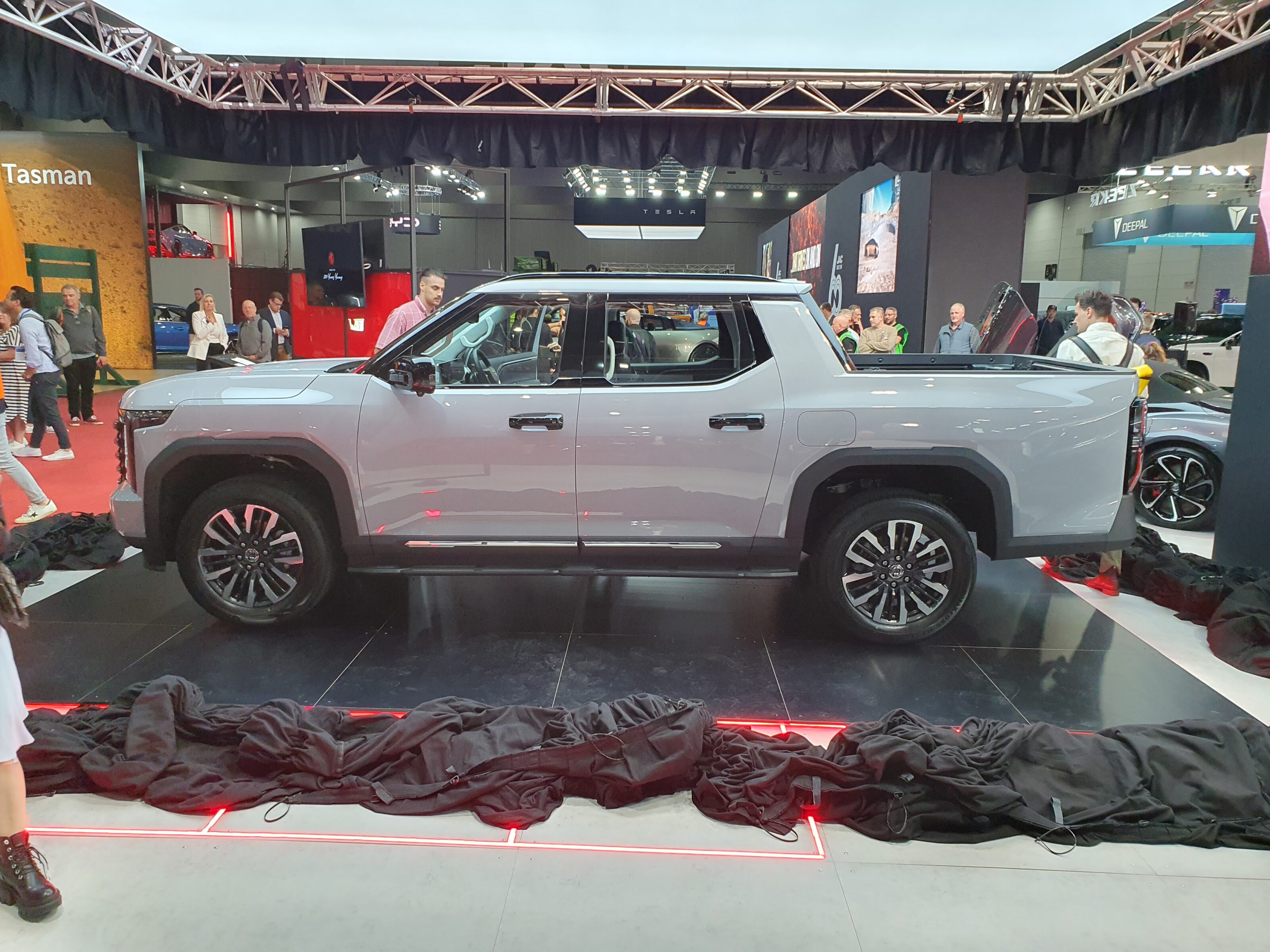
Announced at the Melbourne Motor Show, MG Motor Australia launch its highly anticipated U9 ute to arrive in Australian later in 2025.
The dual-cab, 2.5-litre, four-cylinder turbo-diesel U9, producing 160kW power and 520Nm of torque, is a milestone for the rejuvenated marque, which understands any self-respecting car brand in the Australian market must offer a commercial ute – the second-highest selling category in Australia.
The U9 will also be sold under the LDV brand as the Terron 9.
It will be backed by MG’s impressive 10-year/250,000km warranty.
RAM 1500
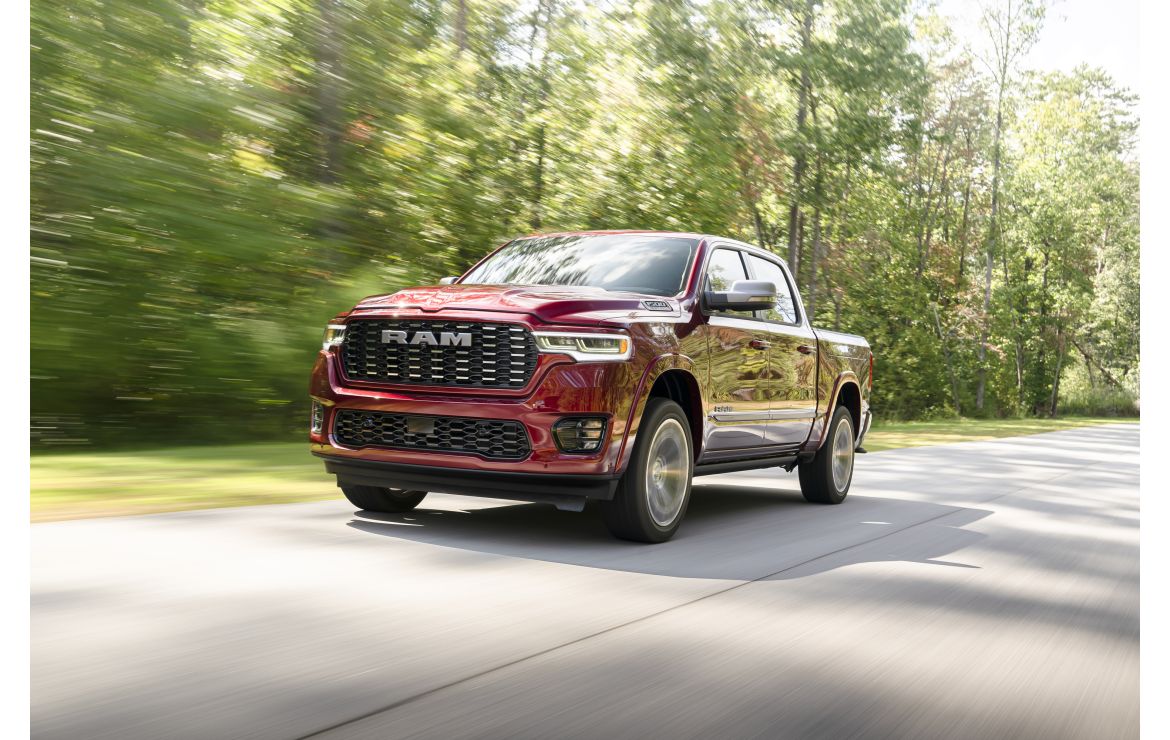
The big change with the arrival of the facelifted 2025 RAM 1500 will be under the bonnet. The long-serving and much-loved V8 is gone, replaced by the ‘Hurricane’ 3.0-litre twin-turbo V6, driving all four wheels via an eight-speed automatic gearbox.
In Big Horn (short- or long-wheelbase) and Laramie guise, it will produce 313kW/636Nm, while the flagship Limited will receive a high-output version of the engine developing 403kW/706Nm.
Pricing and exact specifications will not appear until closer to its local release, but the facelifted 1500 will be identifiable by revised styling and a new interior with a giant portrait infotainment screen of up to 14.5 inches and an optional 10.25-inch passenger display.
Toyota HiLux
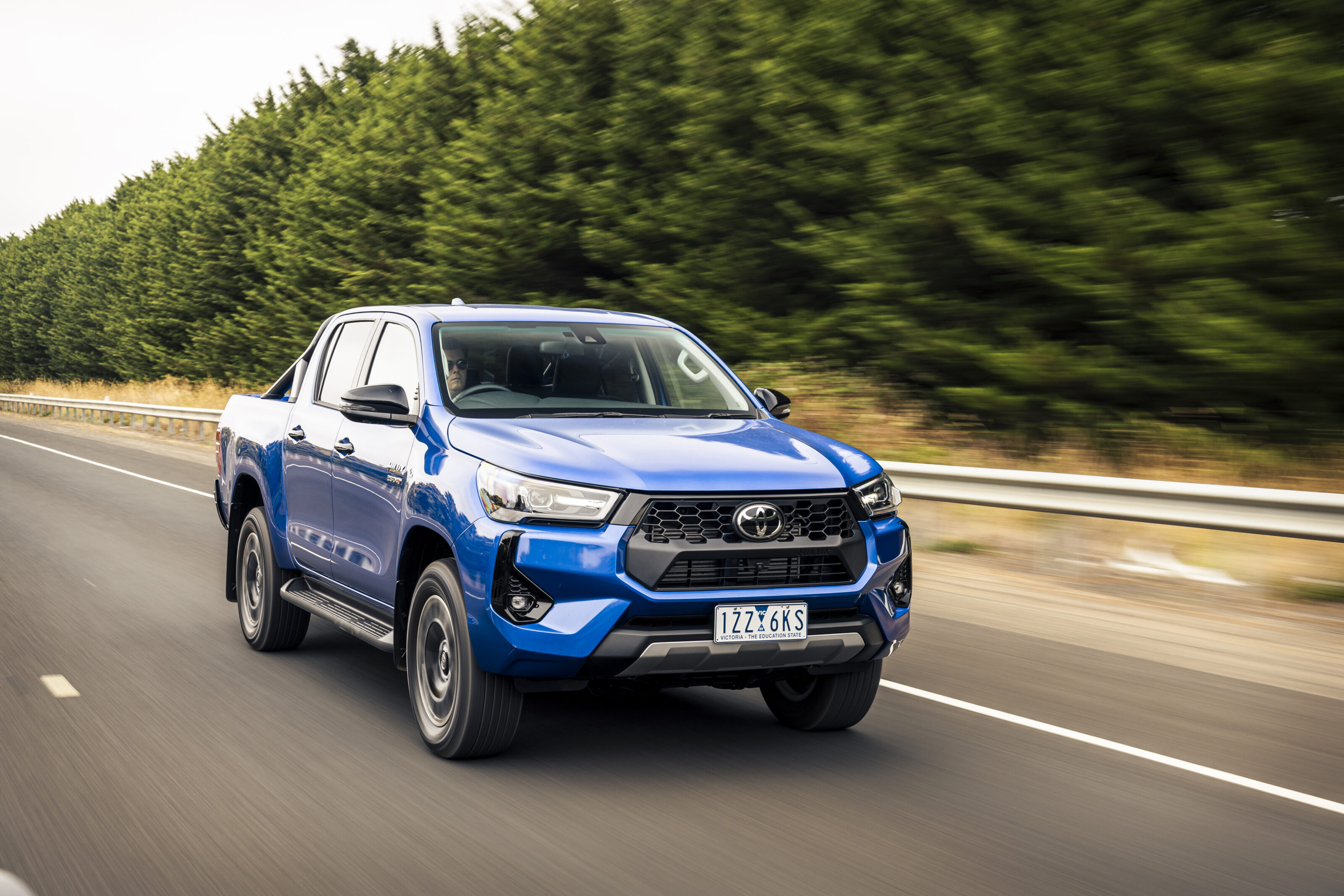
It’s unlikely to hit local shores until 2026, but 2025 should give us our first look at the new generation Toyota HiLux, replacing the eighth-generation that’s now been on-sale for a decade.
At this stage information is scarce but reports out of Japan suggest the new HiLux may actually be a heavily-revised version of the current car, retaining the IMV platform, rather than adopting the new TNGA chassis that underpins everything from the 300 Series to the Prado to the Tundra.
It’s likely to be a similar story under the bonnet, with the mild-hybrid version of the 2.8-litre four-cylinder turbodiesel continuing to do service, albeit with an eight-speed automatic rather than the current six-speeder.
Regardless, with another decade-long lifecycle, the ninth-generation HiLux will certainly adopt alternative powertrains, whether that be greater hybrid assistance, all-electric, hydrogen or all of the above.
Toyota Tundra – Out Now
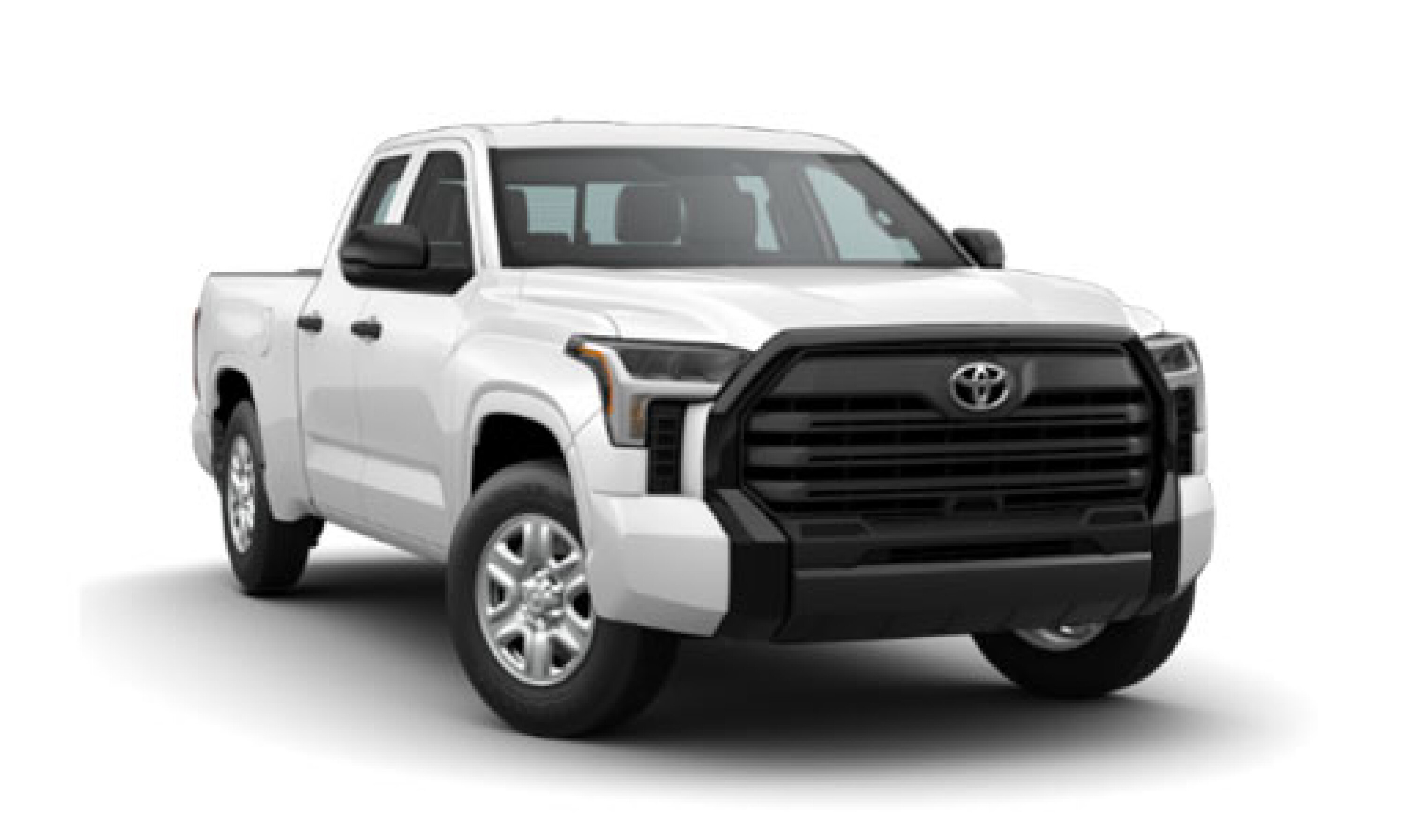
It’s had a protracted gestation, but the Toyota Tundra is now available to Australian customers, priced at $155,990 plus on-road costs.
Converted to right-hand drive by Walkinshaw Automotive using componentry from the 300-Series LandCruiser, the Tundra uses a hybrid-assisted 3.5-litre twin-turbo V6 to produce a combined 326kW/790Nm through a 10-speed automatic.
Its key advantage over smaller utes like the Toyota Hilux, Ford Ranger and Isuzu D-Max is a maximum braked towing capacity of 4500kg, though payload is limited to 736kg.
Inside, heated and ventilated leather seats, a 12-speaker stereo, dual-zone climate control, digital rear-view mirror and a pair of giant screens for the infotainment and instruments help justify the substantial price tag.
Things we like
- Spacious and practical
- Big model range
- Unique hybrid system
Not so much
- Average petrol engine
- Limited hybrid availability
- Short service intervals
The Nissan X-Trail, now in its fourth generation, remains hugely popular as a medium SUV option in Australia, selling 17,494 vehicles in 2024 – a 36 percent increase on 2023.
Initially launched in petrol-only form, Nissan added ‘e-Power’ hybrid models in 2023 to capitalise on Australia’s growing love for hybrid drivetrains. With a wide variety of available models and drivetrains, is the X-Trail the best option for a medium SUV?
How much does the Nissan X-Trail cost?
- ST 2WD 5-seat: $38,025
- ST AWD 7-seat: $41,065
- ST-L 2WD 5-seat: $44,465
- ST-L AWD 7-seat: $47,565
- ST-L e-Power hybrid AWD 5-seat: $50,765
- N-Trek 2WD 5-seat: $48,065
- N-Trek AWD 7-seat: $51,165
- Ti AWD 5-seat: $51,265
- Ti e-Power hybrid AWD 5-seat: $55,465
- Ti-L AWD 5-seat: $54,265
- Ti-L e-Power AWD 5-seat: $59,265
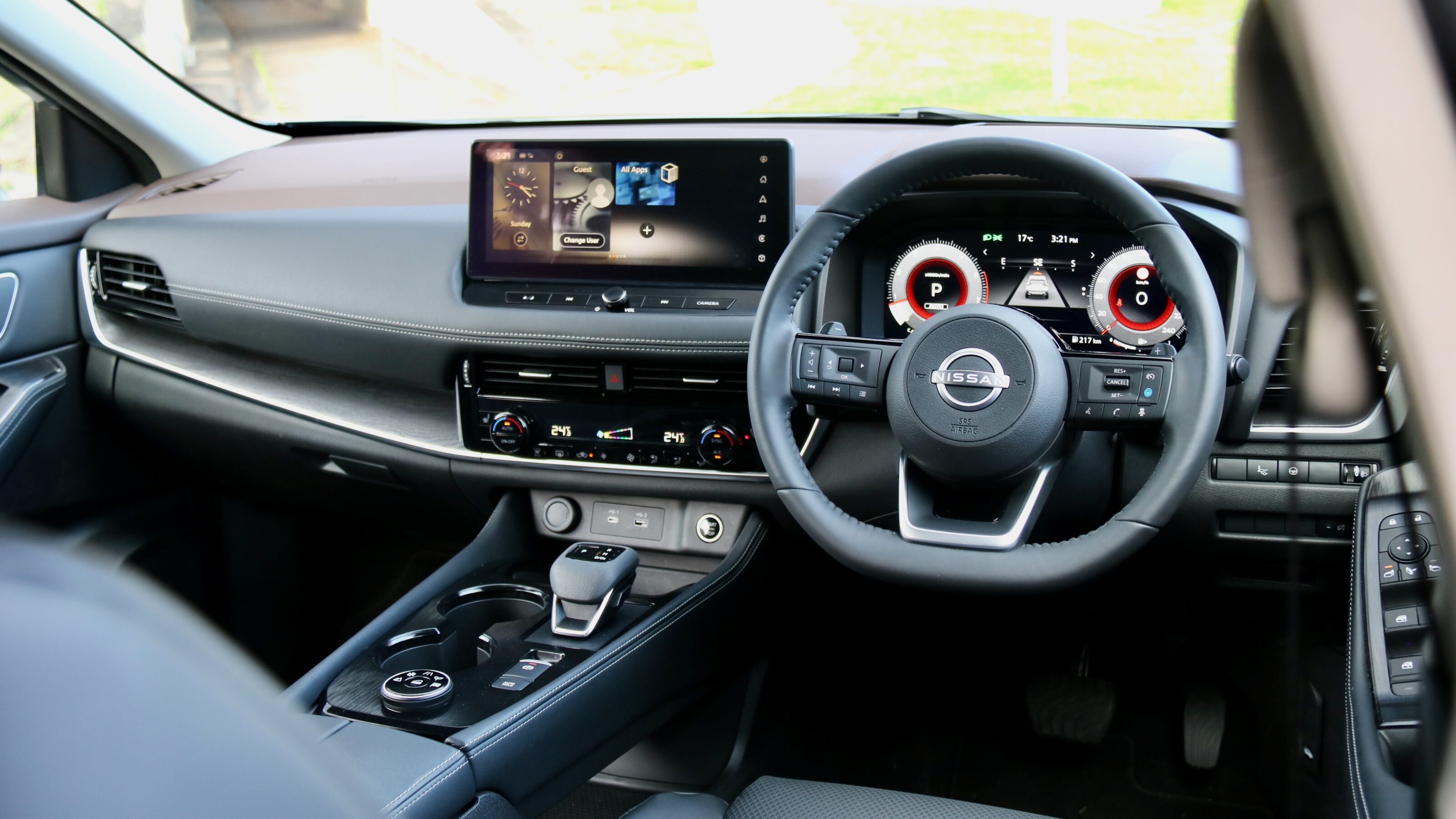
What features are standard in the Nissan X-Trail range?
X-Trail ST standard equipment:
- 17-inch alloy wheels
- Dusk- and rain-activated automatic LED headlights
- Roof rails
- Heated and auto-folding mirrors
- Keyless entry and push button start
- Cloth upholstery
- Lumbar adjustment for the driver’s seat
- Manual air-conditioning with rear air vents
- 8.0-inch touchscreen
- 7.0-inch digital driver’s display
- Wired Apple CarPlay and Android Auto
- Six-speaker sound system
- 4x USB ports
Safety features:
- Seven airbags (including a front centre unit)
- Autonomous emergency braking with pedestrian, cyclist and intersection assist
- Lane keep assist with lane departure warning
- Adaptive cruise control
- Rear auto braking
- Traffic sign recognition
- Rear exit alert
- Driver attention monitoring
- Blind-spot monitoring
- Rear cross-traffic alert
- Rear parking sensors
- Reversing camera
- Auto high beam
- Hill descent control (all-wheel drive only)
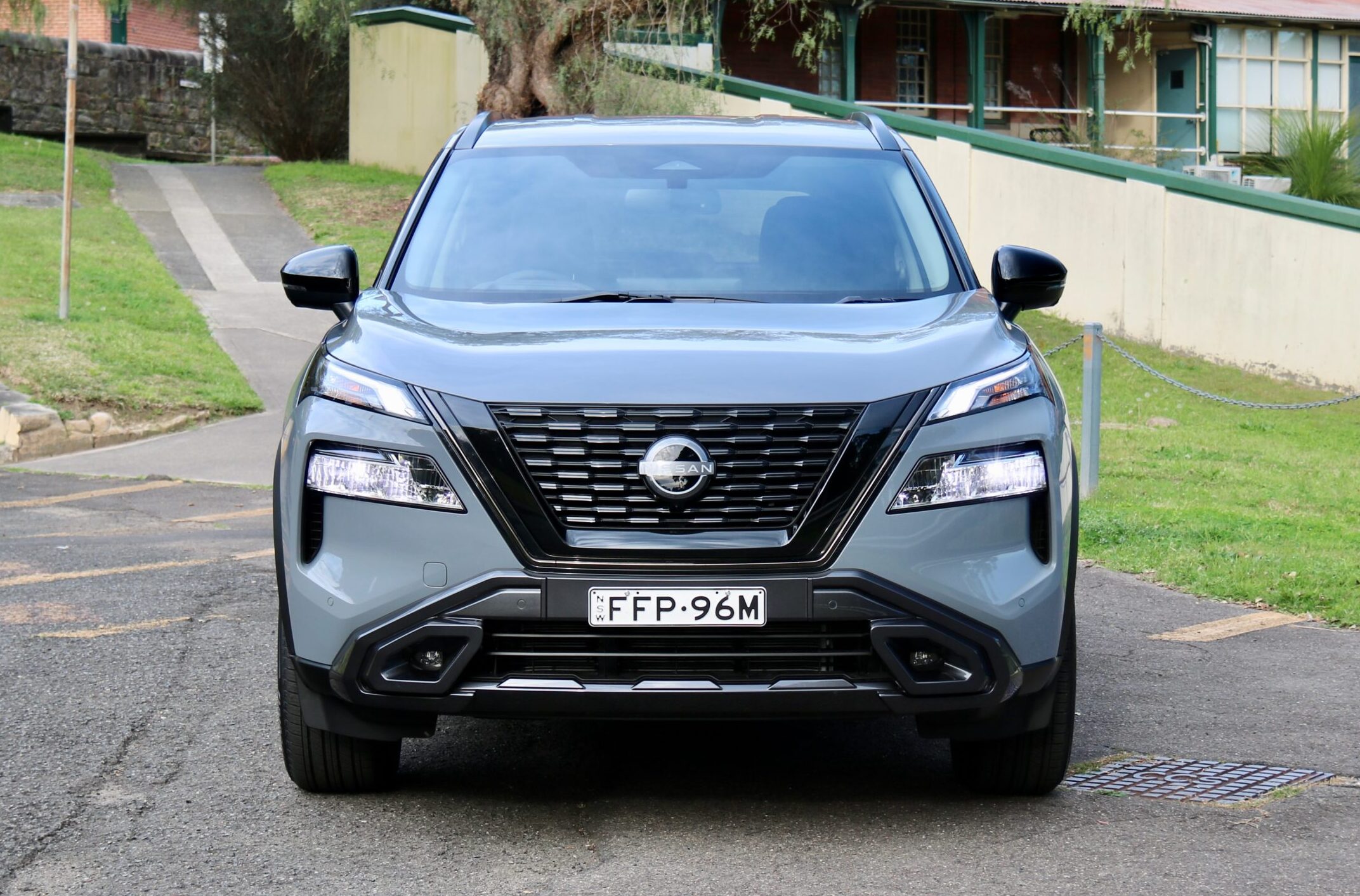
The X-Trail range achieved a five-star ANCAP safety rating in 2021 with scores of 91% in adult occupancy protection, 90% for child occupancy protection, 74% in vulnerable road user protection and 97% in safety assist.
X-Trail ST-L model adds:
- Larger 18-inch alloy wheels
- Dual-zone automatic climate control
- Leather steering wheel and upholstery
- Heated front seats
- 10-way electric driver’s seat
- 12.3-inch touchscreen
- Wireless Apple CarPlay and Android Auto
- LED front fog lights
- Front parking sensors
- 360-degree camera
- Sliding 40:20:40-split rear seat bench
- Adaptive lane guidance
- Tyre pressure monitoring
- Auto-dimming rear mirror
- Satellite navigation
- ‘Divide-N-Hide’ cargo management system (five-seat)
- Rear privacy glass
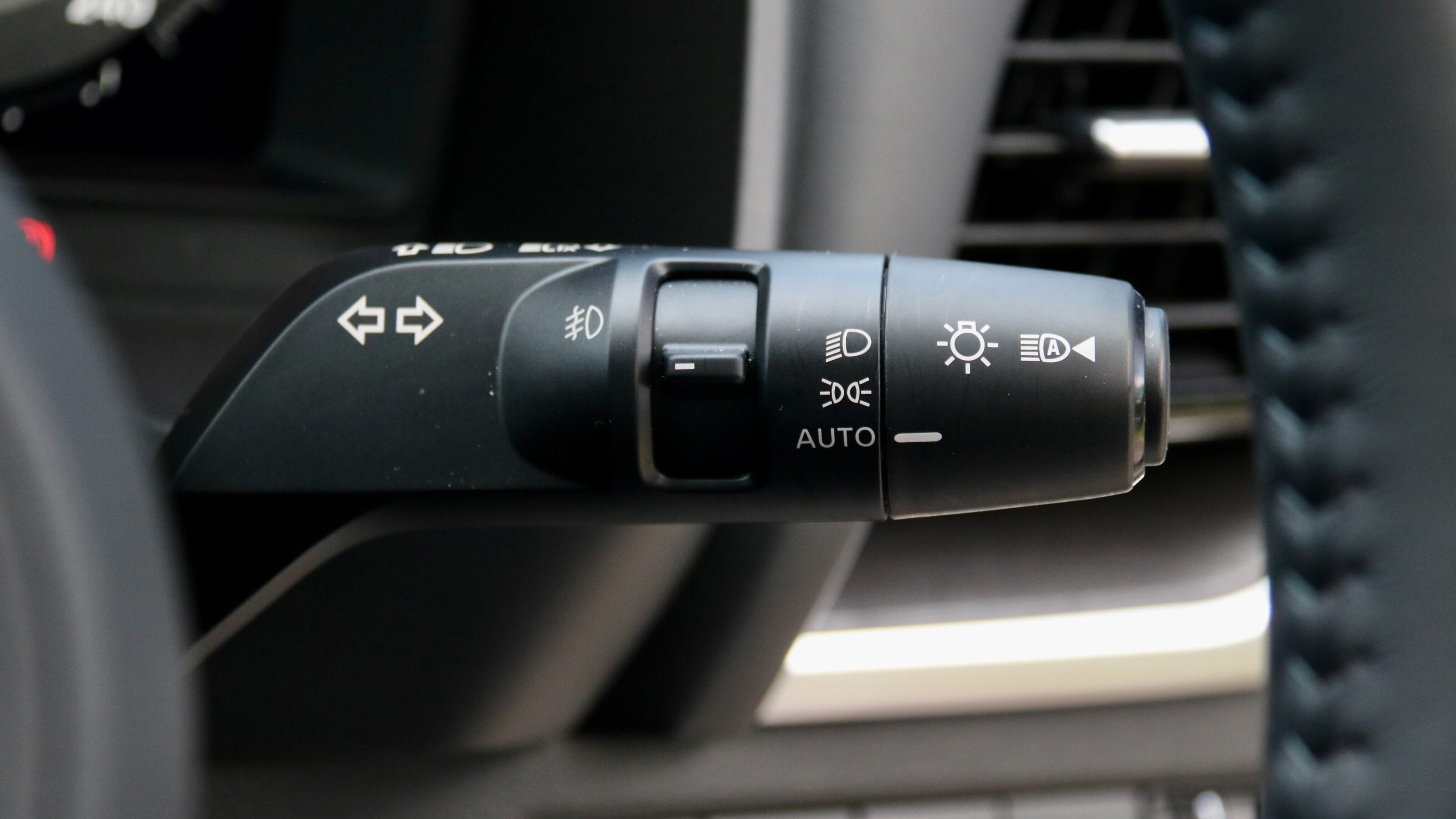
X-Trail N-Trek model (shown in photos) adds:
- Off-road wheels and bumpers
- 10.8-inch head-up display
- Water-resistant upholstery
- 12.3-inch digital driver’s display
- Automatic wipers
X-Trail Ti model adds:
- Adaptive high beam
- Panoramic sunroof
- Power tailgate
- 10-way electric front passenger seat
- Ambient lighting
- Tri-zone automatic climate control
- Camera rear mirror
X-Trail Ti-L model adds:
- Nappa leather upholstery
- Heated steering wheel and rear seats
- 10-speaker Bose sound system
- Rear door sunshades
- Hands-free tailgate functionality
- Memory for the driver’s seat and mirrors
- Remote start
- 20-inch alloy wheels (hybrid only)
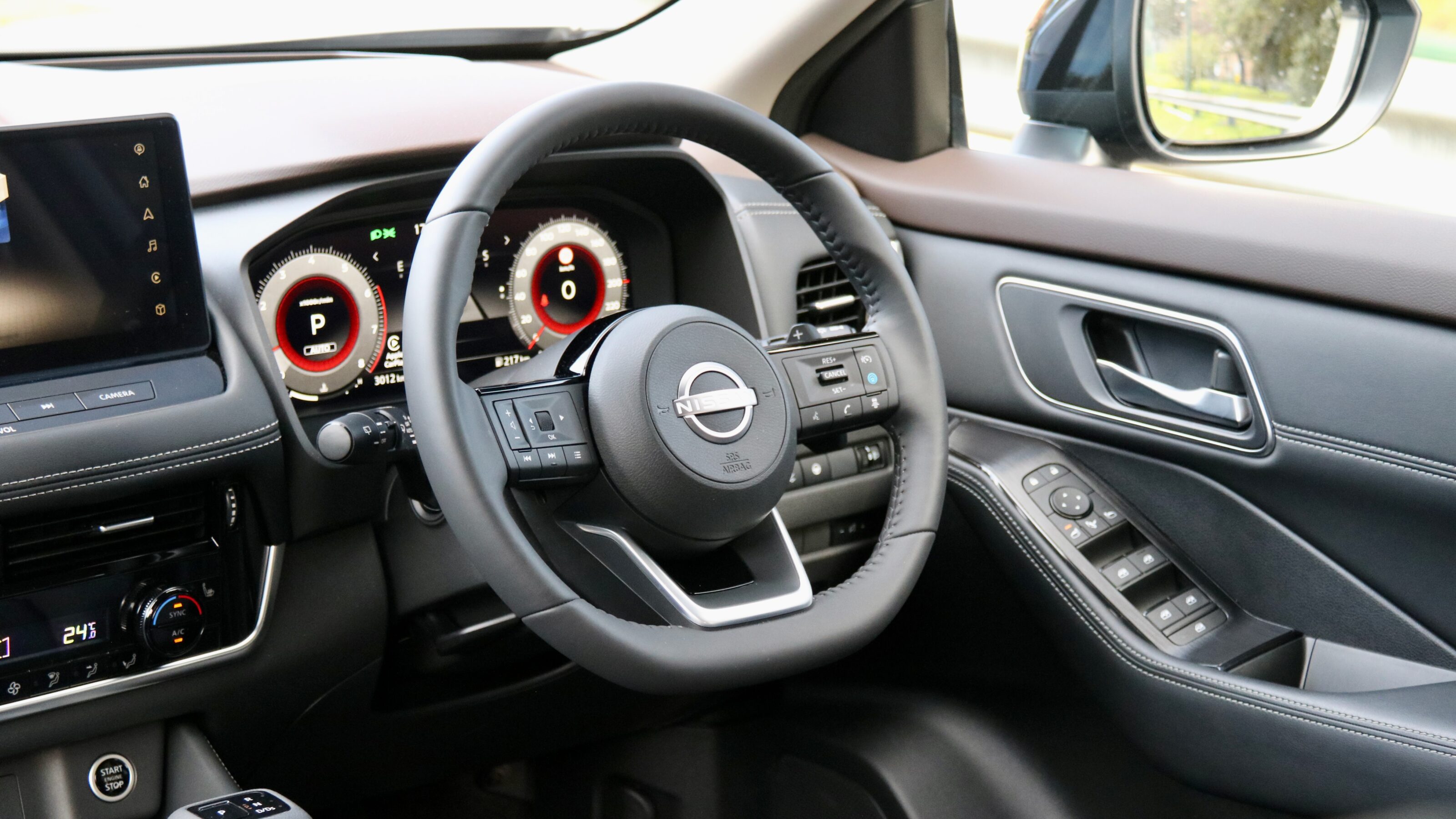
How comfortable and practical is the Nissan X-Trail?
The X-Trail offers buyers an impressively high-quality interior and levels of comfort among the best in this category – even the entry-level ST includes lots of soft touch surfaces across its cabin, while the top-spec Ti L is downright plush thanks to its quilted Nappa leather and quality stitching.
The X-Trail’s cabin is also quite practical with plenty of storage, including a tray underneath the centre console, a large tray (with a wireless charger on the ST-L and upwards) ahead of the gear selector, large door bins and cup holders and a big box underneath the centre armrest.
The X-Trail ST uses a 8.0-inch touchscreen that uses Nissan’s older infotainment software, but the ST-L and above use a larger 12.3-inch screen that’s more intuitive and better featured with wireless smartphone mirroring and satellite navigation.
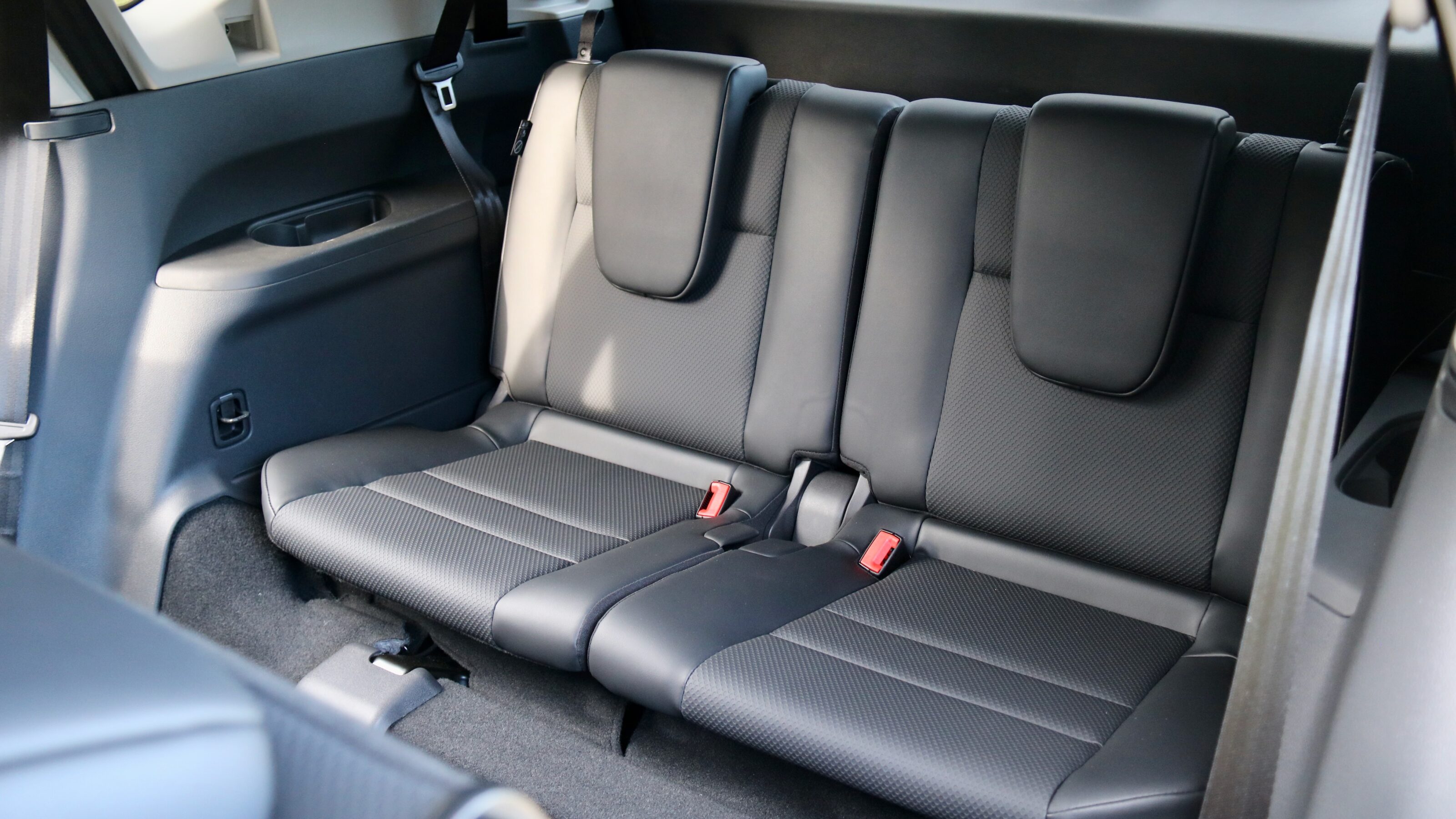
The middle seat of the X-Trail is impressively spacious and it’s well featured as even the base ST has charging ports, a centre armrest with cup holders and air vents. Move to the top-spec Ti-L and features like heated seats, a separate climate zone and even sunshades in the doors are standard kit.
If equipped, the third row in the X-Trail range is best described as ‘kids only’ as it’s a tight space for anybody over five feet tall. There are cup holders but no air vents. The X-Trail is better as a five-seater, in our opinion – if you need a more spacious third row of seating, Nissan will happily sell you a larger Pathfinder.
How big is the Nissan X-Trail?
The X-Trail measures 4,680mm long, 1,840mm wide, 1,725mm tall and rides on a 2,705mm long wheelbase – that makes it 80mm longer, 25mm narrower and 35mm taller than the RAV4. The X-Trail’s tare weight is a minimum 1,540kg for the base ST to 1,911kg for the Ti-L hybrid.
In seven-seat models, 177 litres of space is available behind the third row, which opens to 465L with the third row folded. Five-seat models expand that to 575L in hybrid models and 585L in the petrols. With all the seats down, that swells to 1,308L of capacity.
All petrol X-Trails are equipped with a space-saver spare, while all hybrids feature a tyre repair kit instead.
Will I enjoy driving the Nissan X-Trail?
If you’re looking for the best dynamics in the medium SUV space, a Mazda CX-5 fits that bill. The X-Trail is not sporty but instead, it’s very comfortable and rides quite well. It’s a relaxing drive – bumps rarely upset the suspension, the steering is pleasingly direct and road noise levels are low.
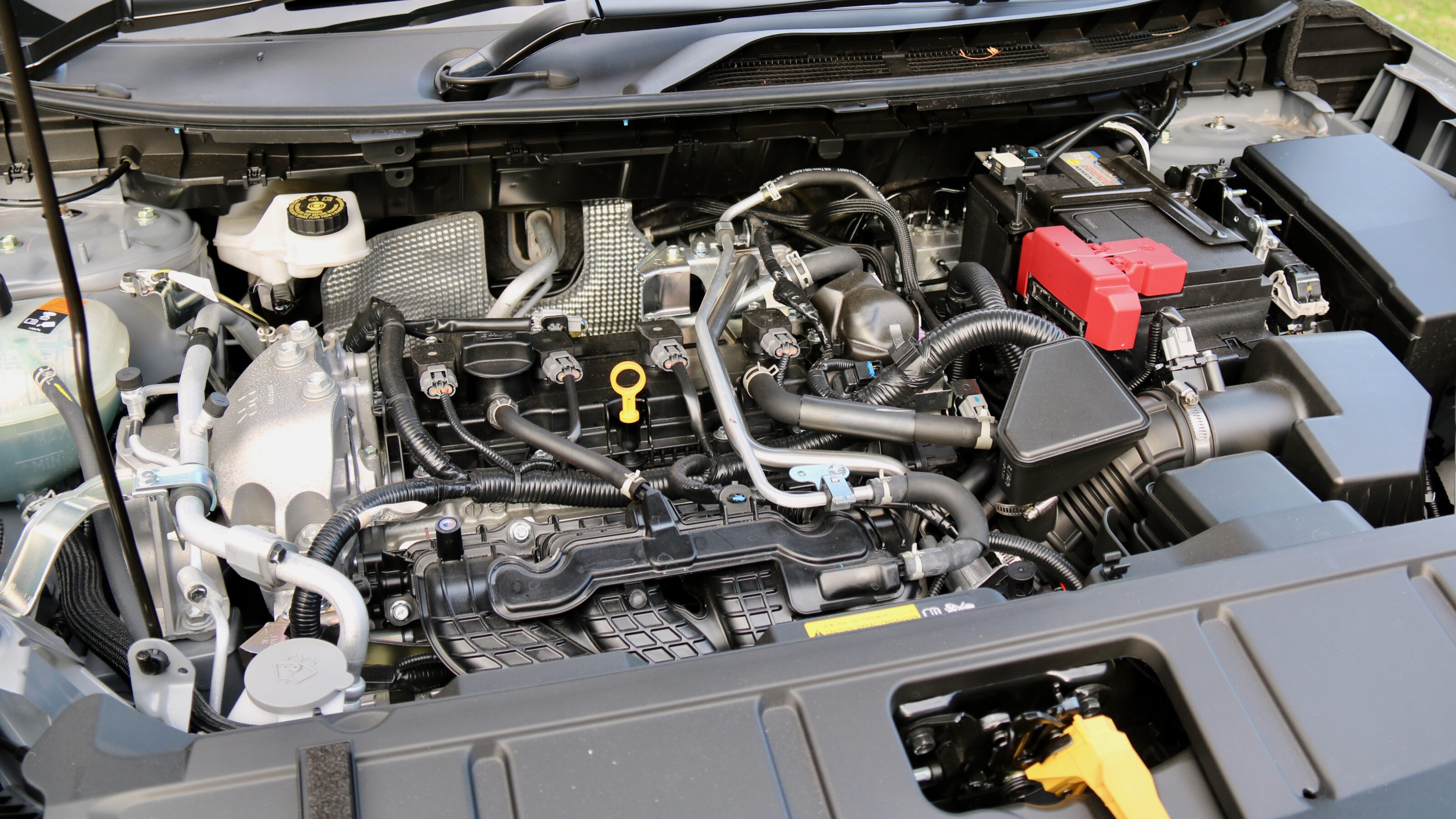
There are two drivetrain choices for the X-Trail: a naturally aspirated 135kW/244Nm 2.5-litre petrol engine, or a 157kW hybrid combining a turbocharged 1.5-litre three-cylinder engine with two electric motors. Both drivetrains use a CVT automatic transmission and while two- or all-wheel drive is available with the petrol engine, the hybrid is exclusively all-wheel drive.
The petrol engine is refined and perfectly adequate for most buyers, but the hybrid is more efficient, more powerful and – thanks to the unique set up of the e-Power system where only the electric motors drive the wheels and not the engine – smoother as well. That’s because unlike hybrid competitors, there’s no transition between the electric motor and petrol engine powering the wheels.
Is the Nissan X-Trail expensive to run?
The claimed fuel consumption for the X-Trail range ranges from 6.1L/100km for the e-Power hybrid to 7.8L/100km for all-wheel drive petrol variants with claimed CO2 emissions of between 139g/km to 183g/km. A 55-litre fuel tank is standard and the X-Trail can run on 91RON regular unleaded fuel, though Nissan recommends that the hybrid runs on minimum 95RON premium unleaded.
The X-Trail range is covered by a five-year/unlimited km warranty with five years of roadside assistance that can be extended up to 10-years/300,000km if serviced through a Nissan dealership. For hybrids, there is also an eight-year/160,000km warranty for the battery. All X-Trails use annual or 10,000km (whichever comes first) service intervals and the capped service cost for five years or 50,000km of servicing costs $1,995 ($399 per service).
How much can the Nissan X-Trail tow?
The braked towing capacity for petrol X-Trail models is 2,000kg, with hybrids rated at 1,650kg. Both drivetrains can tow a 650kg unbraked trailer.
Which Nissan X-Trail variant is best?
Our money would be going towards the $50,765 +ORC ST-L e-Power hybrid. The ST-L is well equipped with features like leather trim, an electric driver’s seat, heated front seats and a comprehensive suite of active safety features including a 360-degree camera.
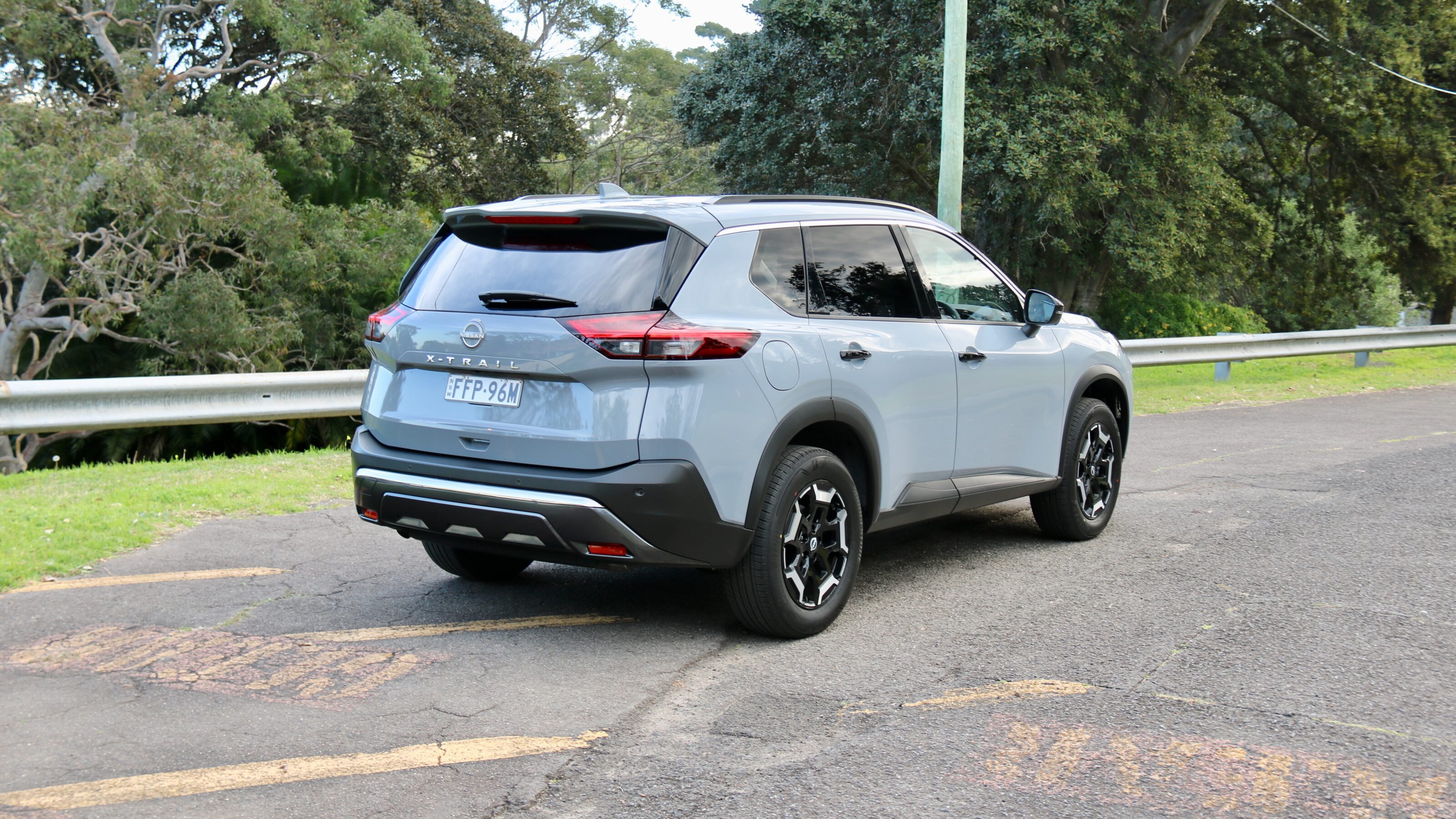
The e-Power hybrid drivetrain is also worth spending the extra money for, in our opinion. Although it’s only available with five seats in Australia, it’s considerably punchier and more efficient than the petrol engine. It also gives the X-Trail a USP in the segment thanks to its clever hybrid set up.
Which vehicles rival the Nissan X-Trail?
MG Motor Australia has taken the opportunity of a restored Australian motor show to announce it will launch its highly anticipated U9 ute in the Australian market later in 2025.
The dual-cab, 2.5-litre turbo-diesel U9 was revealed at the Melbourne Motor Show in a milestone for the rejuvenated marque, which understands any self-respecting car brand in the Australian market must offer a commercial ute – the second-highest selling category in Australia.
Powered by a 164kW four-cylinder engine and promising toughness and durability, the U9 is expected to offer serious value in the category, which is MG’s proposition with each new product. It could also move the brand into the top echelon of carmakers in Australia if successful.
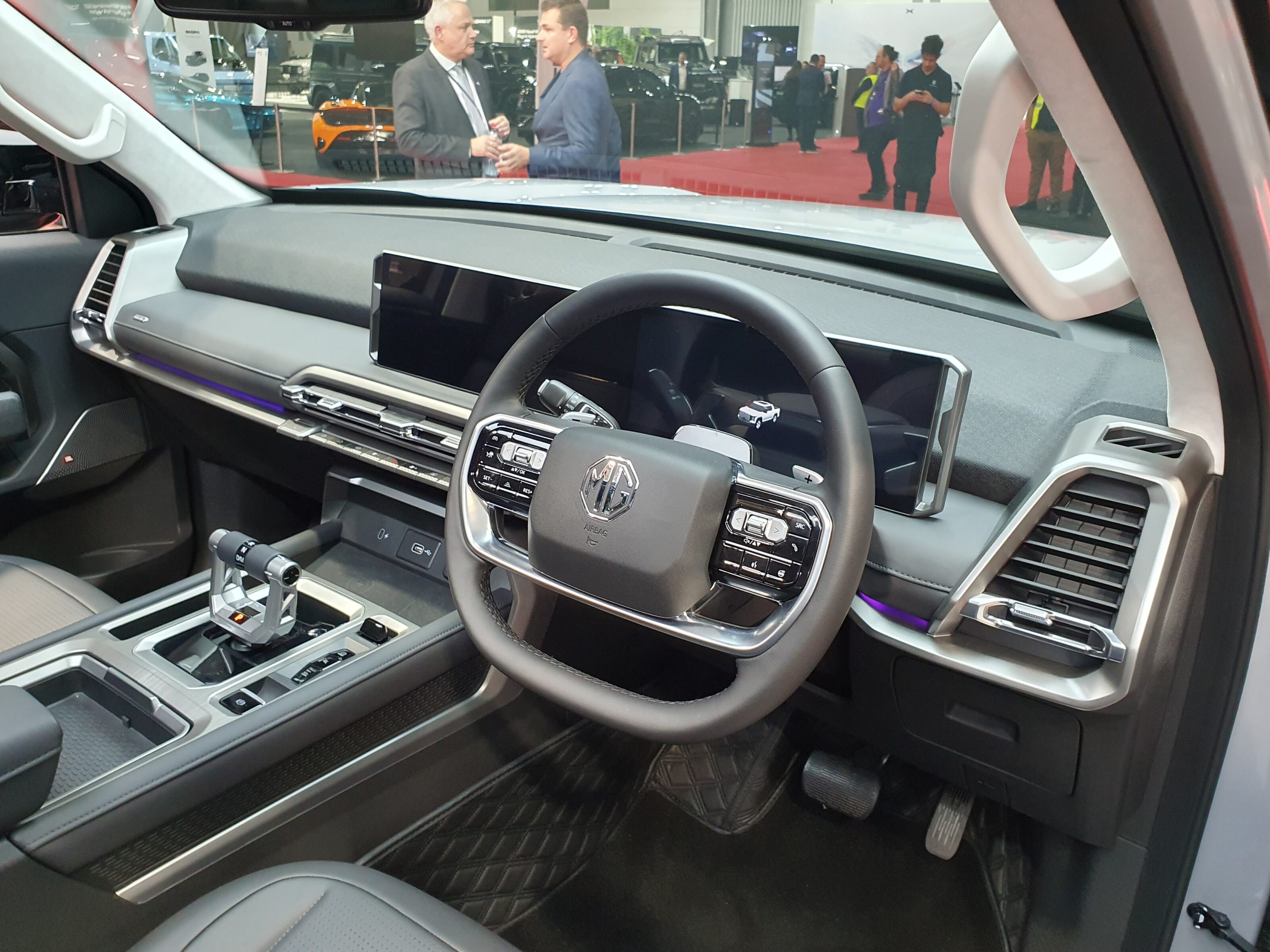
“The U9 isn’t just a new model – it’s a turning point for us,” said MG Motor Australia’s Chief Executive Officer, Peter Ciao “We’ve built our reputation on delivering unmatched value, and now we’re bringing that same promise to one of Australia’s most competitive segments. If we want to be a top-three brand in this country, we need a ute that punches above its weight – and the U9 does exactly that. It’s tough, capable, and built for the way Australians drive. We know the demand is there, and we’re ready for it.”
The U9 will also be sold under the LDV brand as the Terron 9.
It will be backed by MG’s impressive 10-year/250,000km warranty.
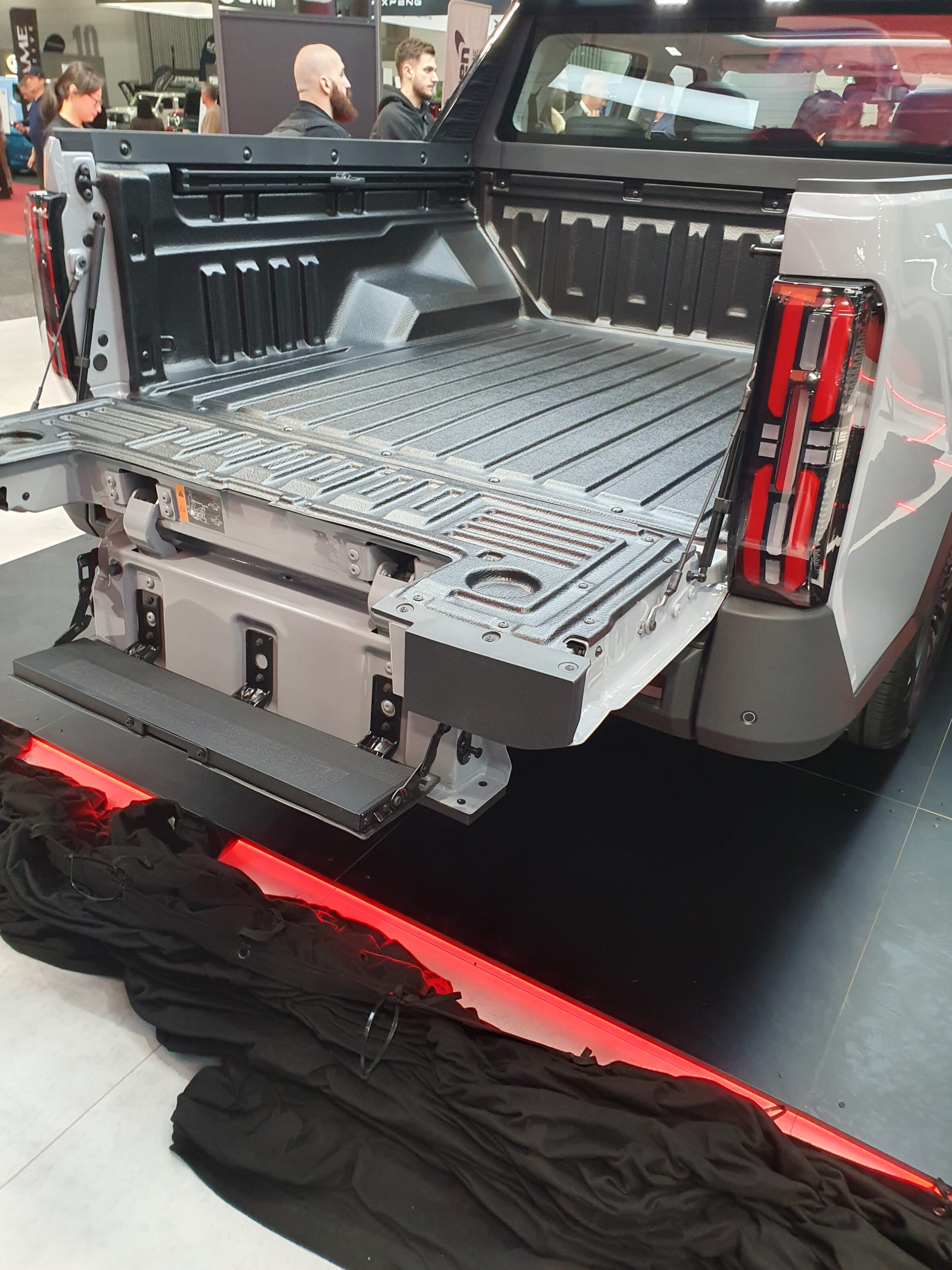
The ute is the headline act of a big Melbourne Motor Show for the brand, which will also unveil a number of other models, including:
- the MGS5 EV compact rear-wheel drive SUV, the next MG model to be introduced in Australia;
- the seven-seat QS, powered by a 2.0-litre turbocharged four-cylinder petrol engine and expected to be launched as MG’s first entrant in this segment in Australia later in 2025;
- a new MG HS HYBRID+ SUV will complete MG’s reveals at the Melbourne Motor Show, a new generation plug-in hybrid for the fuel-conscious family.
“We didn’t want to introduce a ute that was the same as everyone else’s,” MG’s Chief Commercial Officer Giles Belcher told WhichCar. ‘Visually the U9 is very striking, it ticks all the boxes you need to tick to be a player, with safety and 3.5-tonne towing, it’s got plenty of power and torque… then you add in its dimensions, it’s a car that will really stand out in the market.”
“It has great features for long drives, massage seat for the driver, heated ands ventilated seats, and a lot of flexibility in terms of cabin space,” said Kevin Kou, Product Planning Manager at MG Motor Australia. “The rear seat can fully fold down so you can put extra gear in there. The front passenger side can also fully fold down so it creates a lot of practicality to use.
“The ute will also go through extensive testing here for Australian conditions before launch – and that it’s 4X4 capabilities are well suited to the Australian conditions.”
JAC Motors has revealed its JAC Hunter plug-in hybrid Dual-Cab 4X4 Ute to the world at the Melbourne Motor Show.
Not expected in Australia until 2026, the JAC Hunter is described by the brand as its “most powerful and technologically advanced production vehicle”, with series production commencing later this year.
The plug-in hybrid petrol-electric utility combines an efficient all-new 2.0-litre turbocharged petrol engine with front and rear electric motors to deliver an impressive 385kW of power and 1000Nm of torque.
That makes it a serious contender in the growing electrified ute segment, outpowering many rivals.
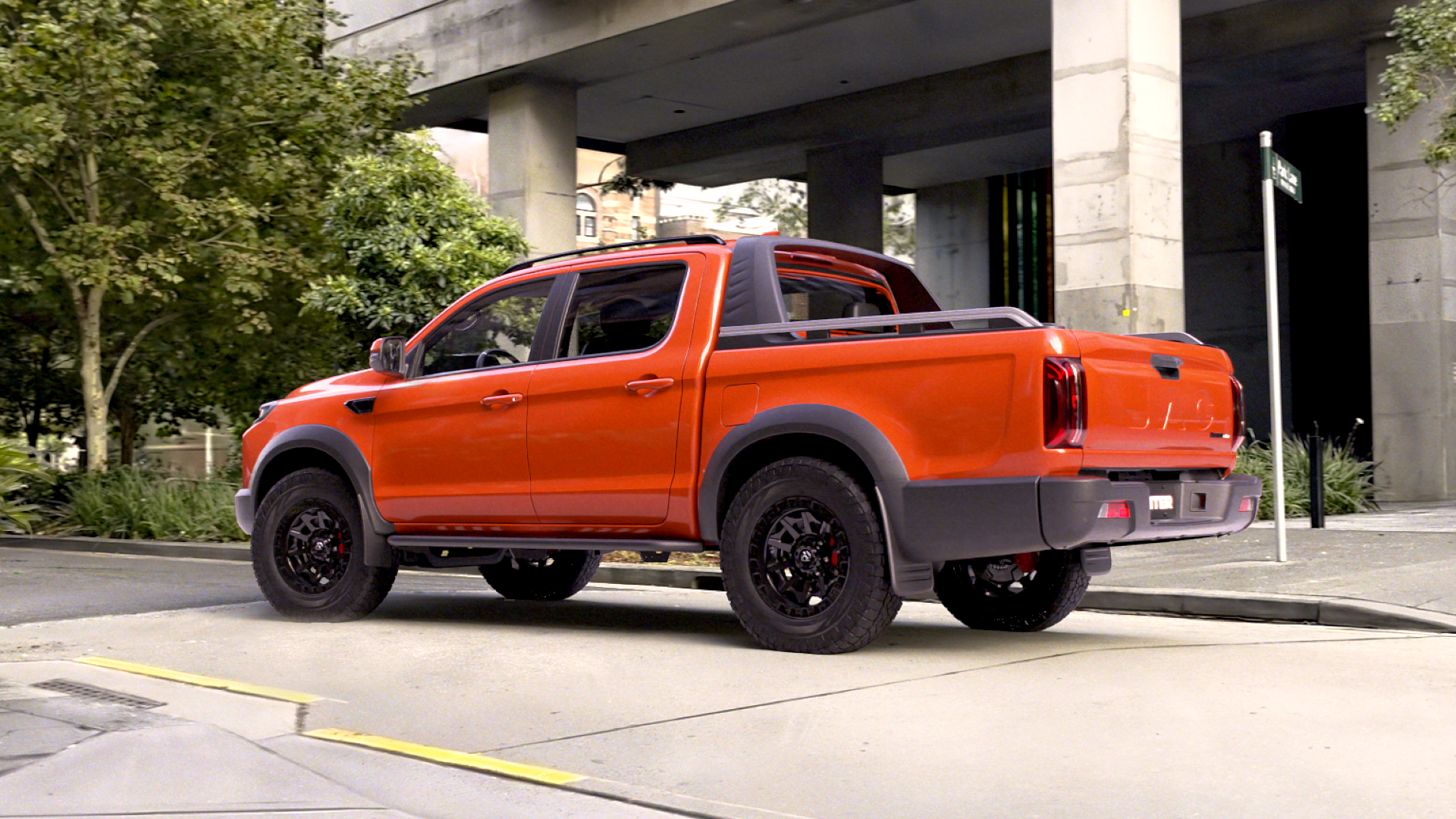
The four-door ute will aim for an electric-only driving range of at least 100km from its lithium-iron phosphate battery pack. It will also boast a Vehicle-to-Load (V2L) system that allows owners to power tools, appliances, and even provide emergency backup power from the vehicle’s battery.
Inside, owners of the JAC T9 turbodiesel sibling will recognise some features including a10.4-inch portrait touchscreen infotainment system with Apple CarPlay and Android Auto integration, alongside a fully digital 10.25-inch instrument cluster.
Driver assistance will include enhanced autonomous emergency braking, adaptive cruise control with stop-and-go functionality, and a 360-degree camera system.
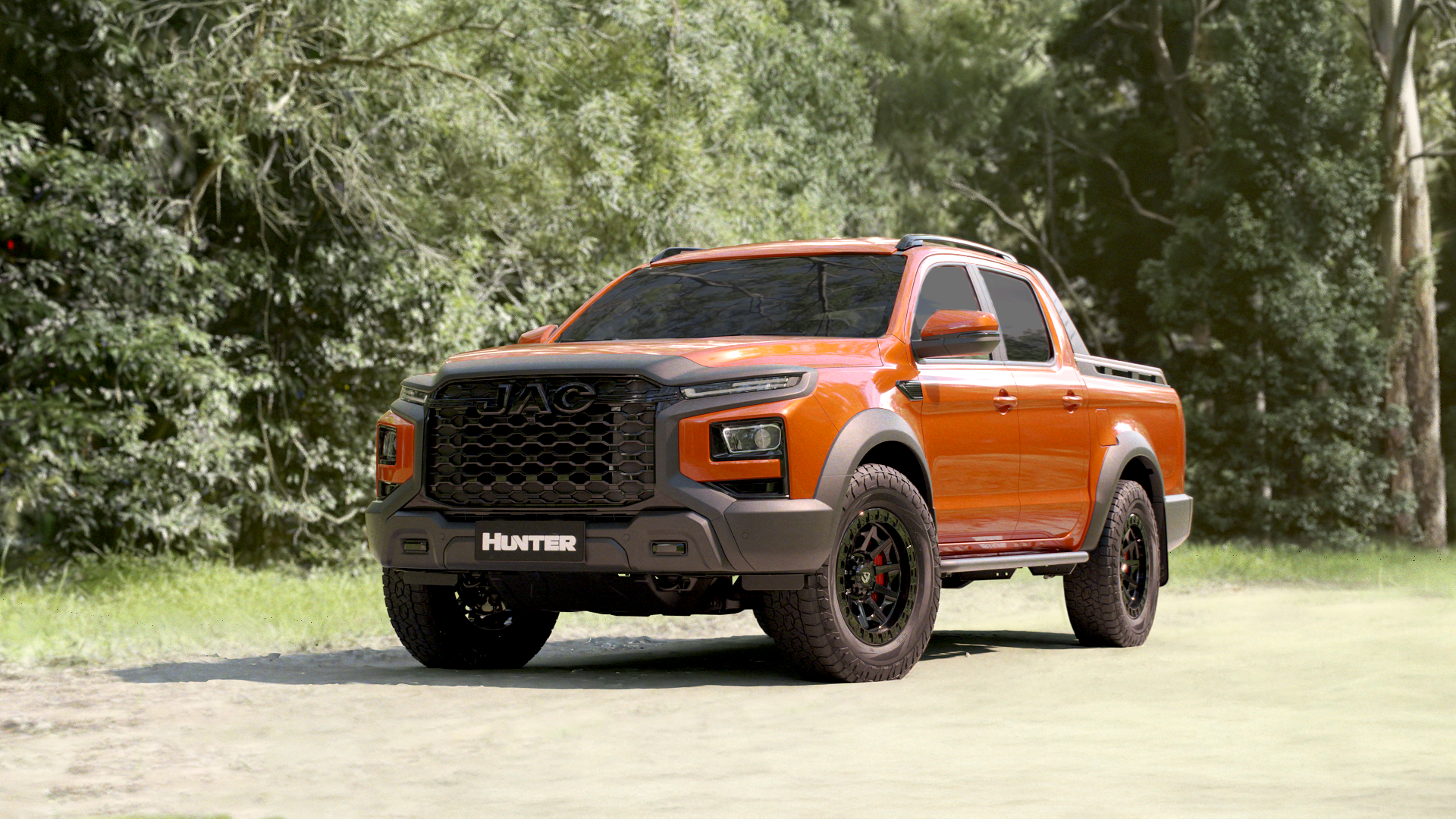
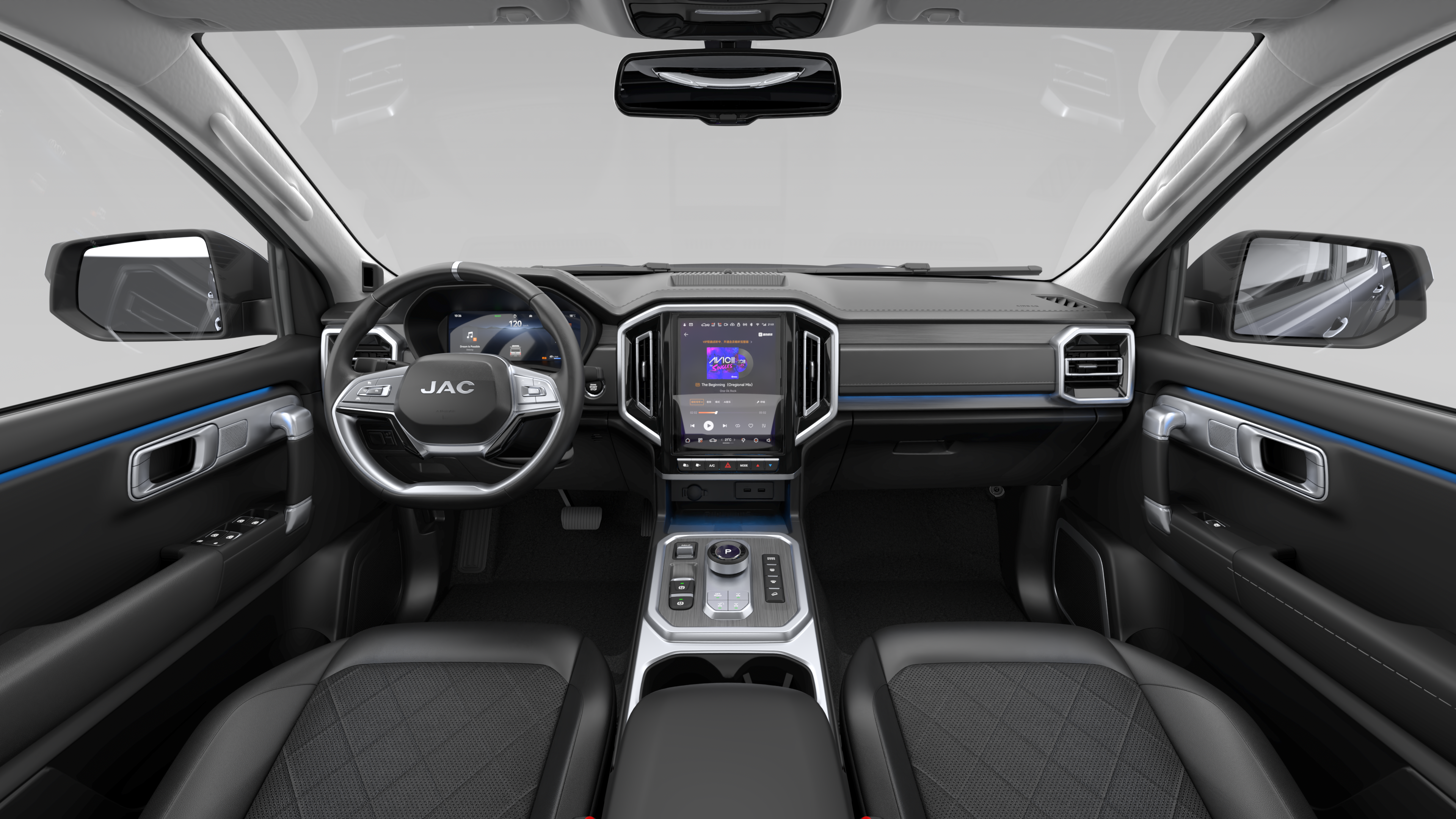
The brand conducted extensive Australian testing of the T9 on which the Hunter is based to ensure the T9’s suspension, ADAS, powertrain and cooling systems were all validated for Australia’s harsh climate and demanding conditions.
The JAC Hunter will arrive in Australian showrooms in the first quarter of 2026. Australian pricing and specifications will be announced closer to that time.
Subaru has announced that the sixth-generation Forester is due to debut at the Melbourne Motor Show ahead of a mid-year launch, with trim levels and equipment also detailed.
To be offered in seven individual models with both petrol and hybrid drivetrains, the new Forester compact SUV will be available with either a 2.5-litre petrol engine or a new ‘strong’ hybrid drivetrain that combines a 2.5-litre petrol engine with an 88kW electric motor and a 1.1kWh battery.
Subaru says the Forester hybrid is capable of travelling over 1000km on a tank of fuel, though outputs and fuel economy figures are yet to be revealed. The hybrid makes 145kW in the US.
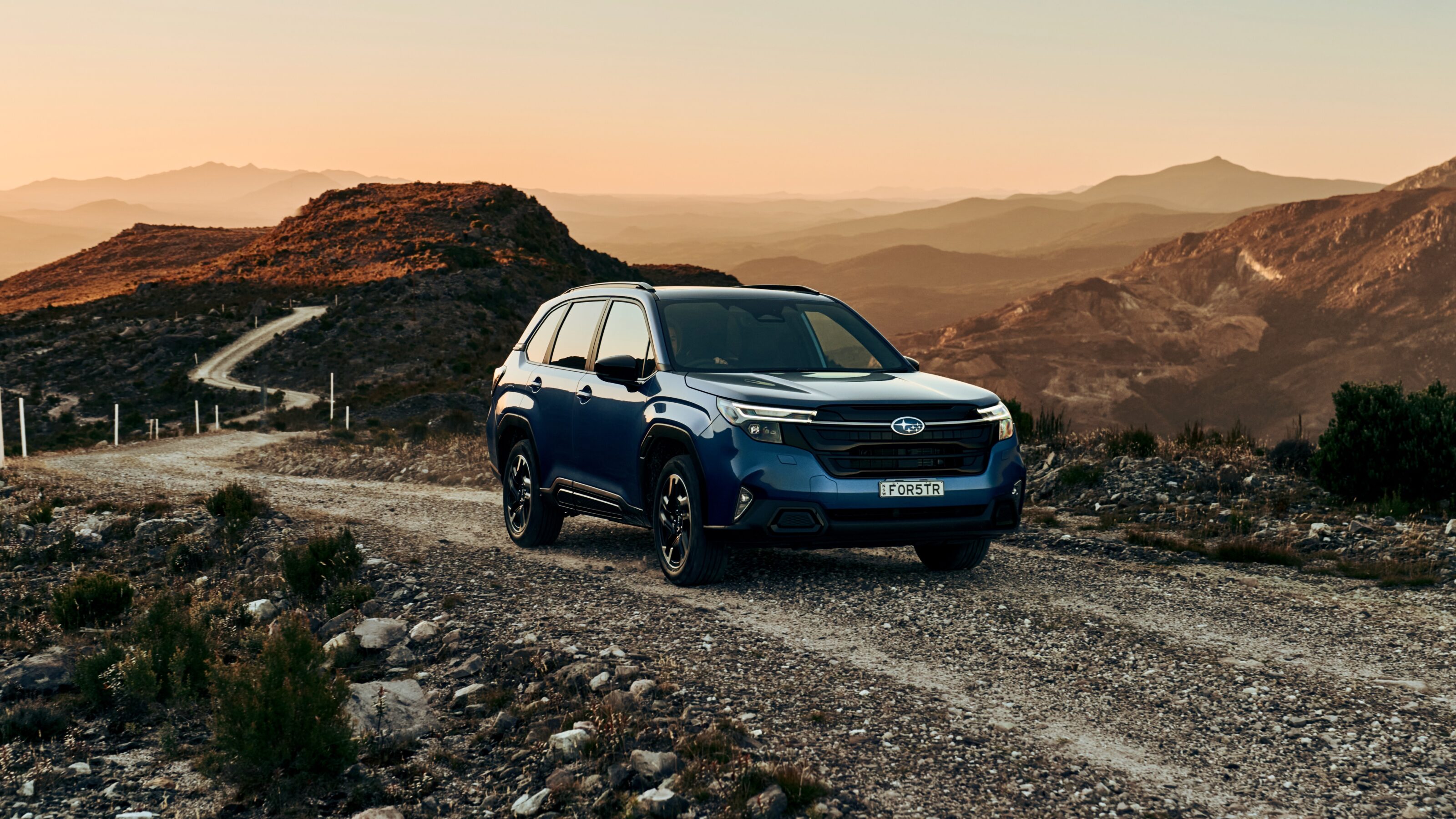
While Subaru is yet to detail pricing, it has revealed that the Forester line-up is better equipped this time around with a widened range of ability for the active safety tech thanks to a three-camera set up, including a new emergency driving stop function that automatically stops the car slowly if the driver becomes unresponsive.
A new 11.6-inch touchscreen is standard across the range, as is wireless phone charging, and a 12.3-inch digital driver’s display is standard in the Sport hybrid and Touring hybrid models.
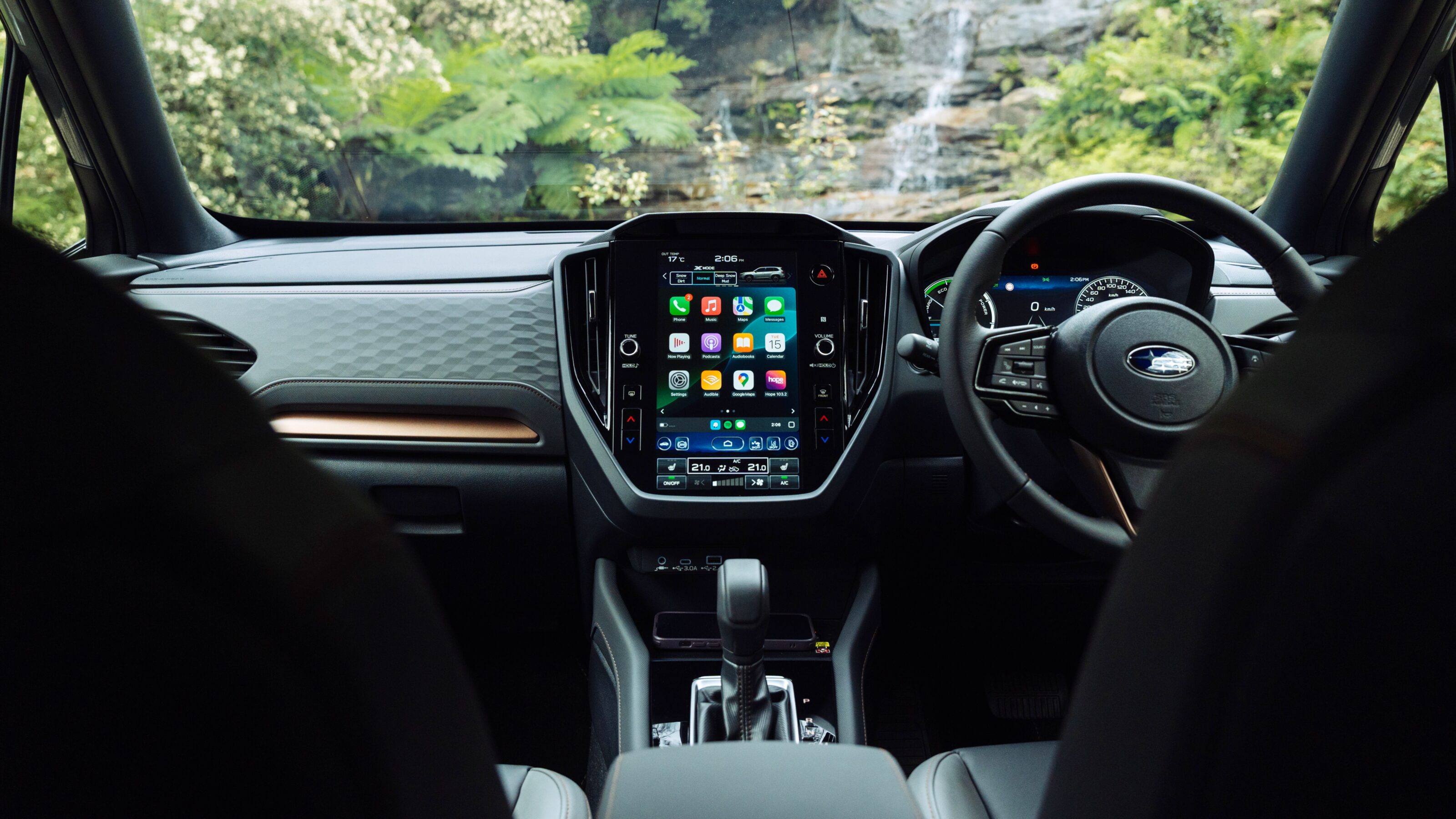
Subaru Forester AWD standard equipment:
- 18-inch alloy wheels
- X-Mode all-wheel drive traction system
- SI-Drive driving modes
- Ladder-style roof rails
- Heated front seats
- Dual-zone automatic climate control
- 11.6-inch touchscreen
- Wireless Apple CarPlay and Android Auto
- Wireless phone charger
- Nine airbags
- Wider-angle monocular camera with emergency driving stop system
- Front side radar
- Reverse automatic braking
- 360-degree camera (hybrid only)
Forester Premium adds:
- Satellite navigation
- Electric tailgate with kick sensor
- 8-way electric front seats with driver’s memory and lumbar adjustment
- Auto-folding mirrors with auto-dipping passenger mirror
- Driver monitoring system including automatic seat and mirror adjustment
Forester Sport adds:
- Water repellent synthetic leather upholstery
- Sunroof
- Dark metallic wheels
- Black grille and green exterior and interior detailing
- 12.3-inch digital instrument cluster (hybrid only)
- Enhanced suspension (hybrid only)
- 10-speaker Harman Kardon sound system (hybrid only)
- Bronze 19-inch alloy wheels (hybrid only)
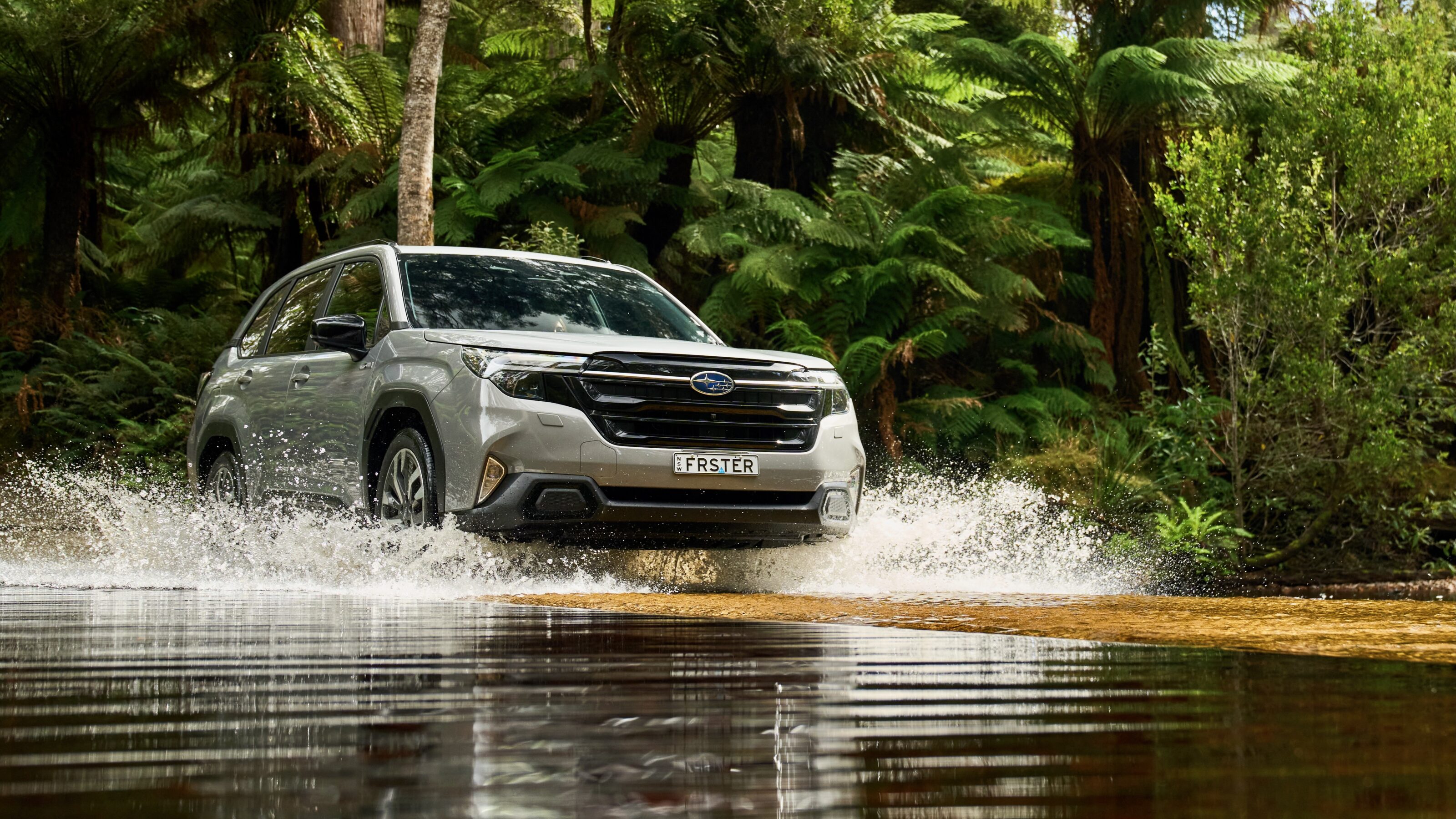
Forester Touring adds:
- 10-speaker Harman Kardon sound system
- Leather and suede upholstery (black or tan)
- Front seat ventilation
- Gloss black exterior highlights
- Low profile roof rails
- Dark machined 19-inch alloy wheels (hybrid only)
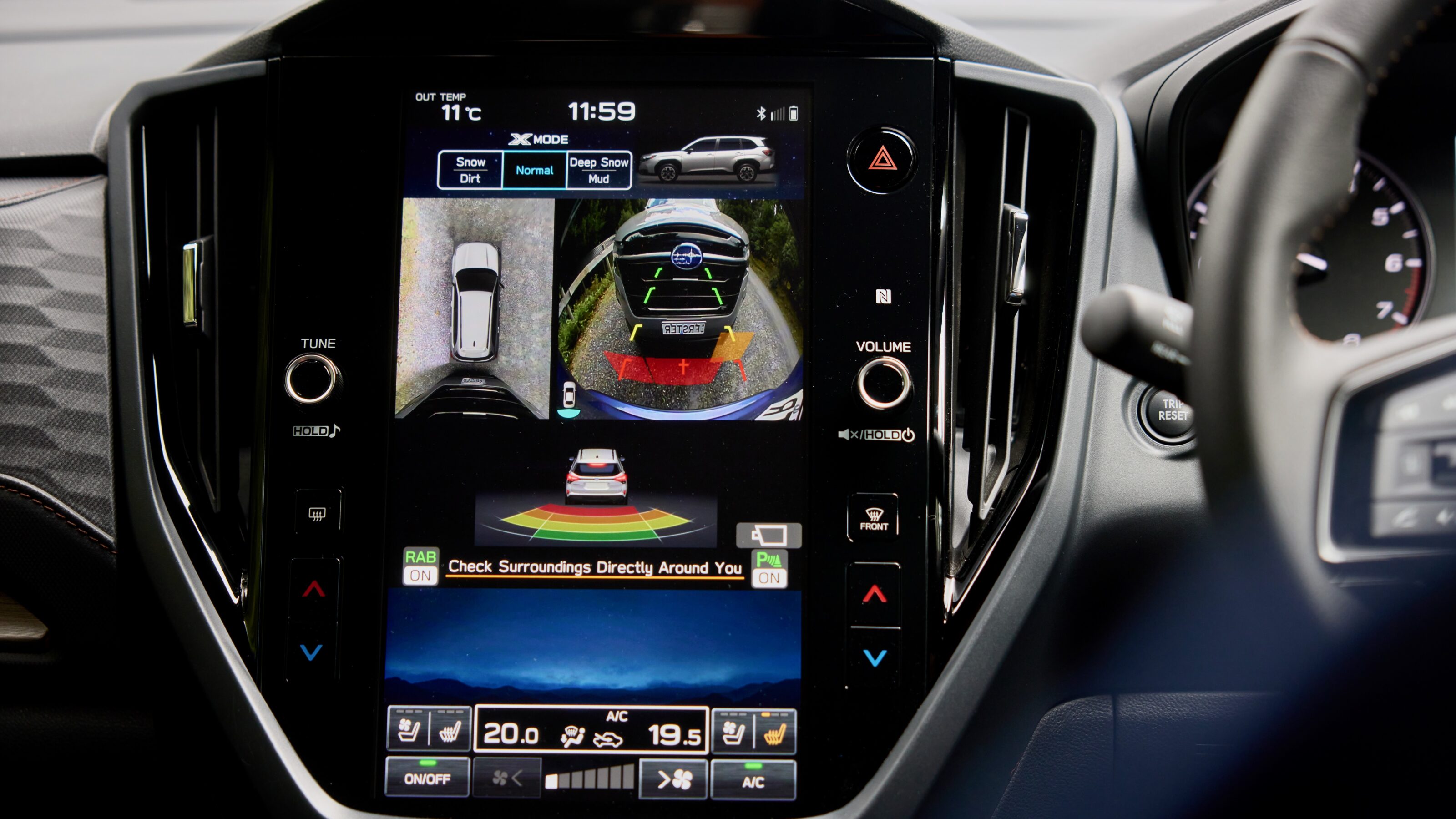
The new Subaru Forester will go on sale in Australia at the half way point of the year, with local pricing yet to be confirmed.
Like all groundbreaking concepts, understanding exactly what the Ford Ranger Super Duty is takes a moment or so. It’s tempting to think of it as a Ranger that can tow 4500kg, but to merely position it in such a way does the engineering behind this vehicle an injustice. And besides, Ford already had a vehicle in its line-up, the F-150, that performs that function quite adequately.
What no other vehicle in the Aussie market does right now is combine three particular attributes: the ability to tow 4.5 tonnes, rugged off-road ability and all of that while retaining a useful payload. Plenty of utes offer two of those qualities but nothing delivers on all three. Ford knew this because numerous fleet operators in forestry, in mining, in rail and in firefighting told them so.
To date, in order to fulfil those requirements, fleet operators had to go to the aftermarket, utilising multiple third-parties in order to custom build a vehicle that fitted their demands. This increased the cost of the vehicles and the complexity of fleet management, so it made all sorts of sense for Ford to offer them a single point of contact.
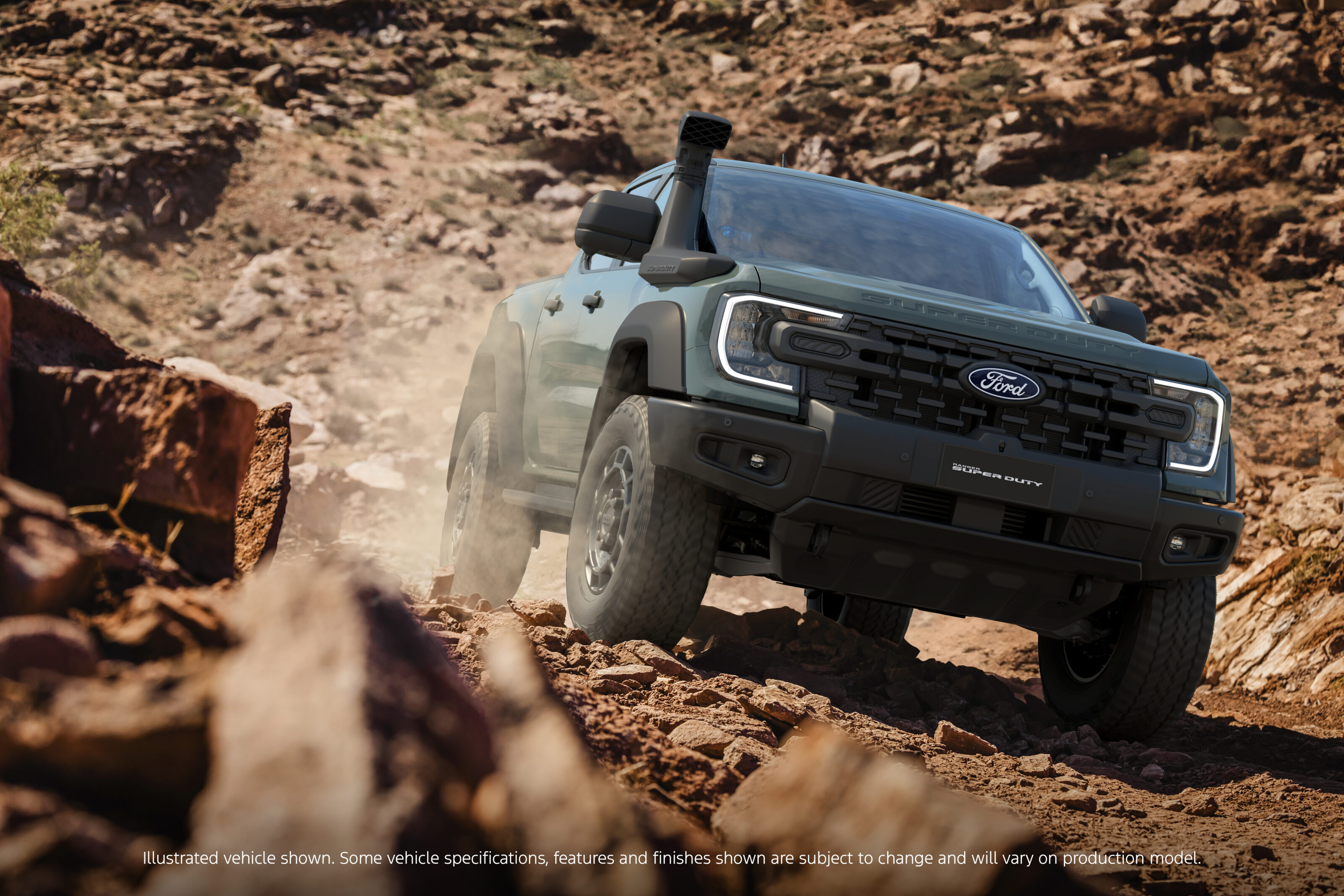
As the concept for the Ranger Super Duty was fleshed out, Ford also realised that a vehicle of this ilk would likely appeal to private buyers, especially those who were into overlanding or adventure touring, at the same time avoiding stepping on the toes of the existing Ranger Raptor or the facelifted F-150.
We got the chance to look at a pre-production prototype at Ford’s Broadmeadows facility but, given that the Super Duty’s not set to be released until next year, full specifications, especially around power, torque and pricing, were not available.
The first thing that strikes you is that it has some serious presence, and looks like no existing Ranger. The squared-off wheelarches smack more of a Hilux special edition than the rounded treatment we’ve become used to on the P703 Ranger, and the Raptor’s track width and added ride height give it a no-nonsense stance. The standard-fit snorkel is part of a whole suite of changes to bring wading depth up to 850mm (50mm above the normal Ranger), while the eight-stud 18-inch wheels – shod with 33-inch all-terrain tyres – are increased in size to house the bigger brake discs and calipers.
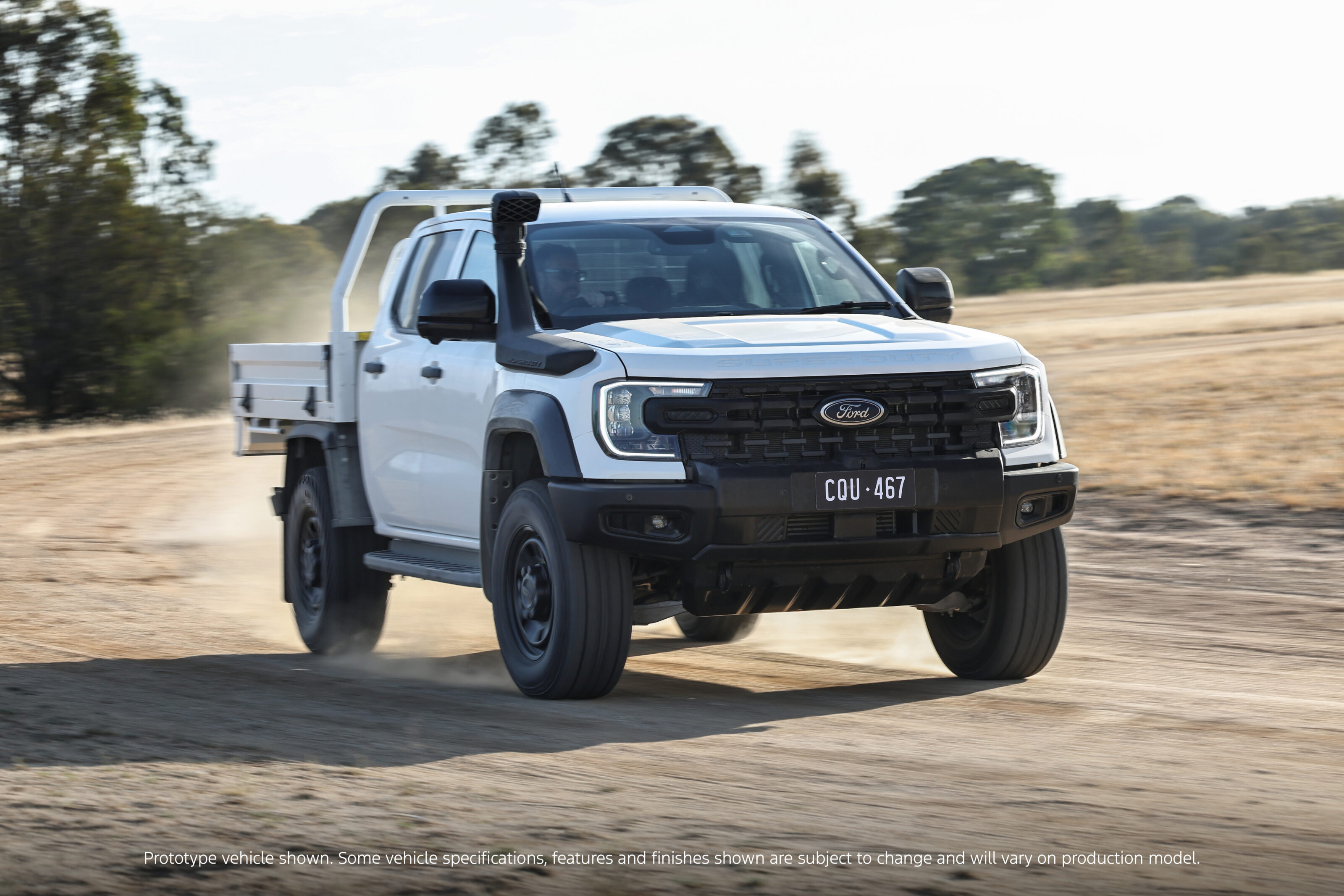
The grille has been redesigned to allow better through-flow of air, there’s a meaty steel front bumper, dual-rated, frame-mounted front and rear recovery hooks, bigger door mirrors, a unique steel tray, composite heavy duty side steps and screw-fitted mud flaps. The bonnet has been redesigned for the Super Duty – the first non-F truck to wear that particular badge – and features more contoured shaping and a raised leading edge with the Super Duty badging embossed into it.
It’s under the skin that the serious work has been done though. Ford targeted a Gross Vehicle Mass (GVM) of 4500kg, a braked towing capacity of 4500kg and a Gross Combination Mass (GCM) of 8000kg. What this means in practice is that the Ranger Super Duty can tow its full 4.5-tonne quota and still retain a tonne of available payload. A real world application of the massive GCM rating is that the Country Fire Authority’s Land Cruiser firefighting water tanker is rated to carry 400 litres, whereas a Ranger Super Duty build is capable of hauling a tonne of water to hard-to-reach off-road fire hotspots.
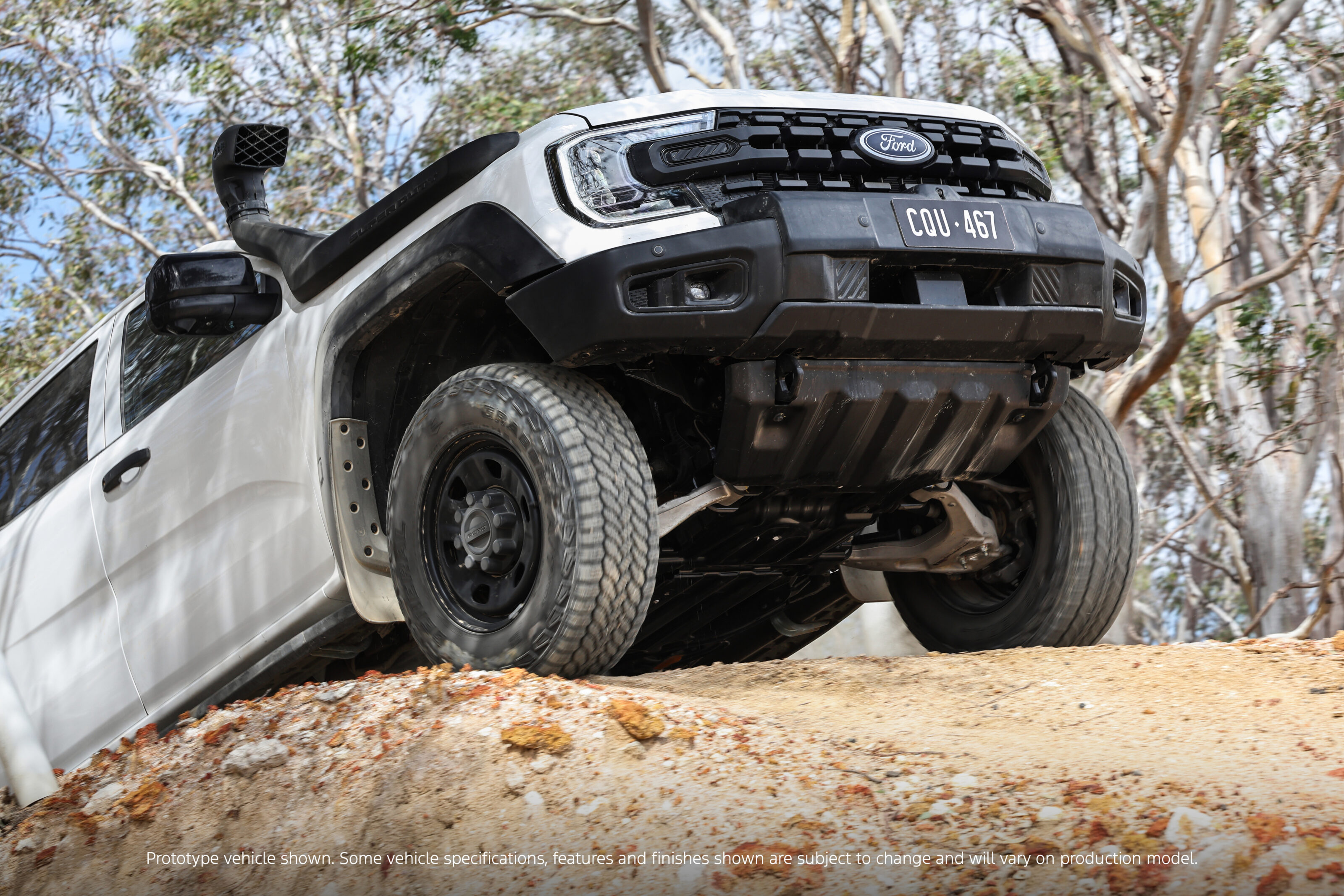
As well as heavier duty suspension, the Ranger Super Duty has better ground clearance and improved approach and departure angles compared with normal Ranger models. There’s a long range 130-litre fuel tank and extensive steel underbody protection that runs from the engine to the rear differential. Front and rear diff locks, an upgraded ‘jumbo’ diff, new transfer case, axles and driveshafts, redesigned engine mounts, reinforced wheelarch liners and a 25 per cent more effective cooling fan are all standard-fit items.
The Super Duty also features four-wheel on-board scales so that users can monitor how close they’re coming to Gross Vehicle Weight Rating, and a smart hitch also displays downball load, allowing those who tow to redistribute loads for increased safety.
Ford’s being somewhat coy about power and torque, but the existing 3.0-litre V6 turbodiesel and 10-speed automatic transmission carry over, albeit with new calibrations that prioritise torque response. The prodigious wheelslip torque of the Super Duty required the upgrading of the rear differential.
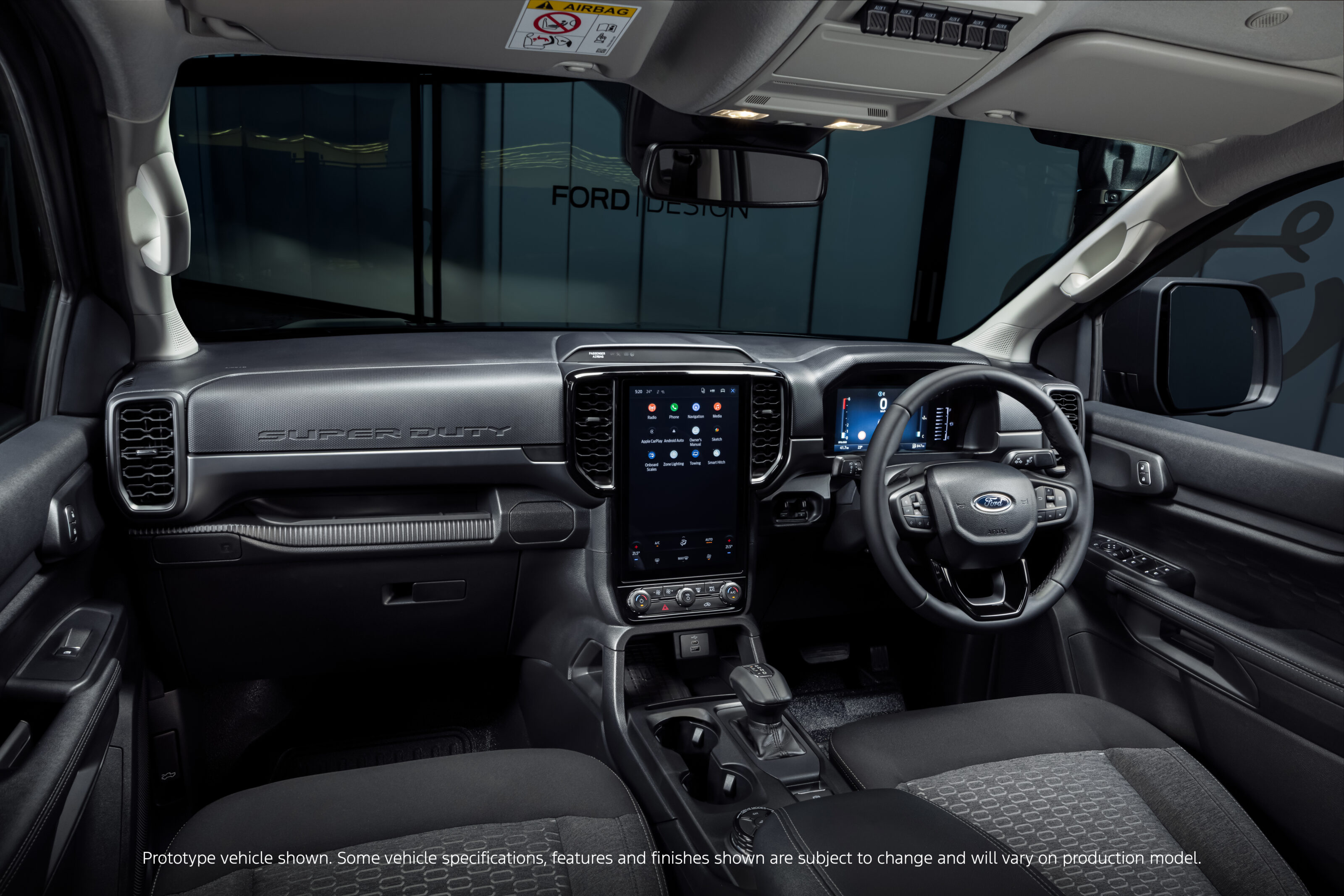
Ford has endeavoured to transfer as much of the Ranger’s safety tech to the Super Duty and the rear end features a Driver Assist Technology bar, enabling rear park assist, blind spot detection with and without trailers and a 360-degree camera. The cabin features vinyl flooring (a luxury pack will be offered to retail customers) and a bank of auxiliary switches.
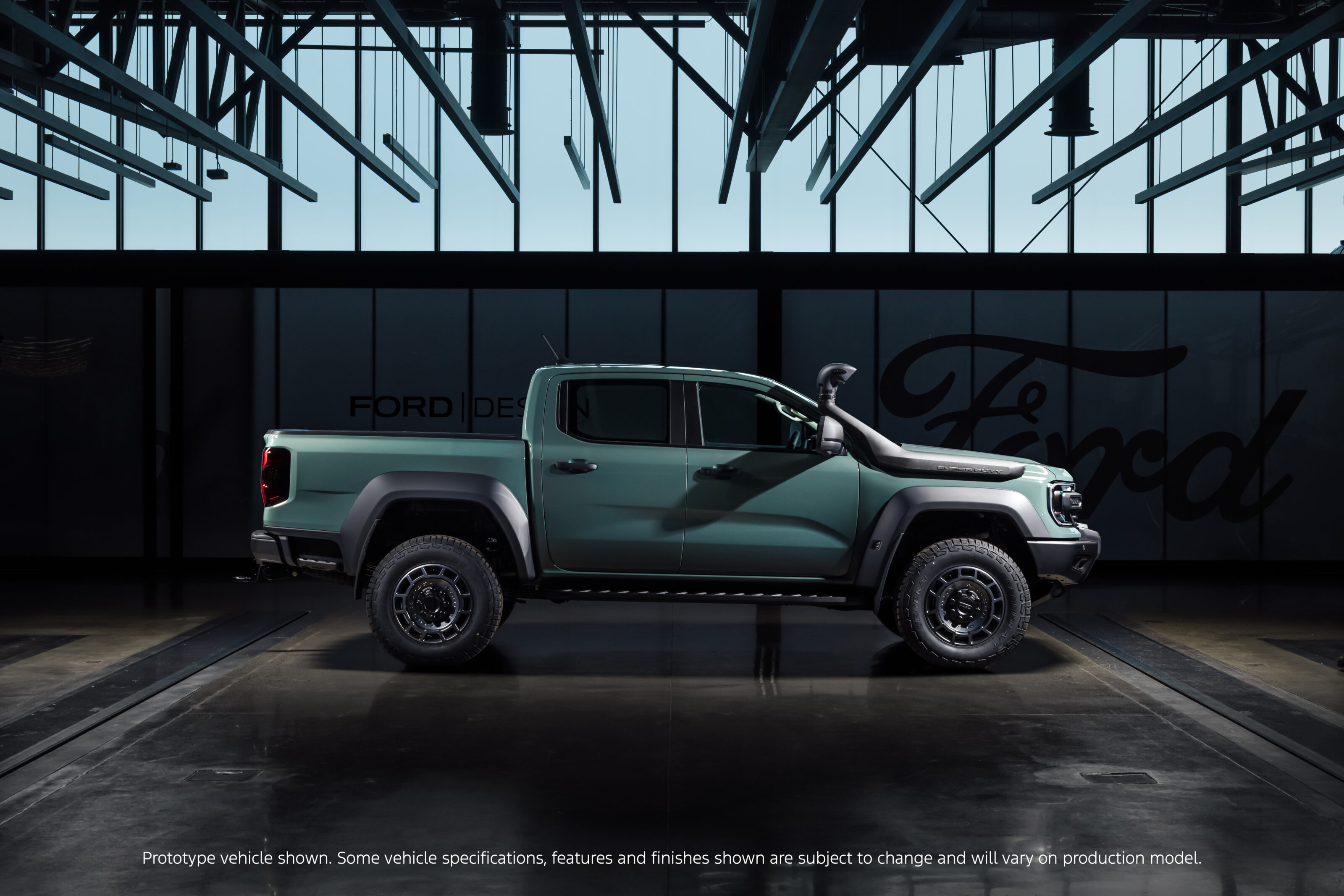
The company has worked hand-in-hand with Australian suppliers, with an ARB front bar to be offered and a 12,000kg rated winch. Conversion warranty periods will be aligned to Ford’s warranty duration. Existing Ranger canopies will fit on an identical rear box line, and the Thai-built Super Duty is set to be offered in single cab chassis, super cab chassis, double cab chassis and double-cab pick-up bodies. Buyers will get a choice of three colours: Arctic White, Seismic Tan and Traction Green.
Pricing? We suspect this one’s not going to be cheap, given the amount of work that has gone into it and the niche nature of the market, but then most expected the Ranger Raptor to be a niche product before it burst into the mainstream. The Ranger Super Duty could well follow suit. We’ll learn more when we get behind the wheel of it later in the year.
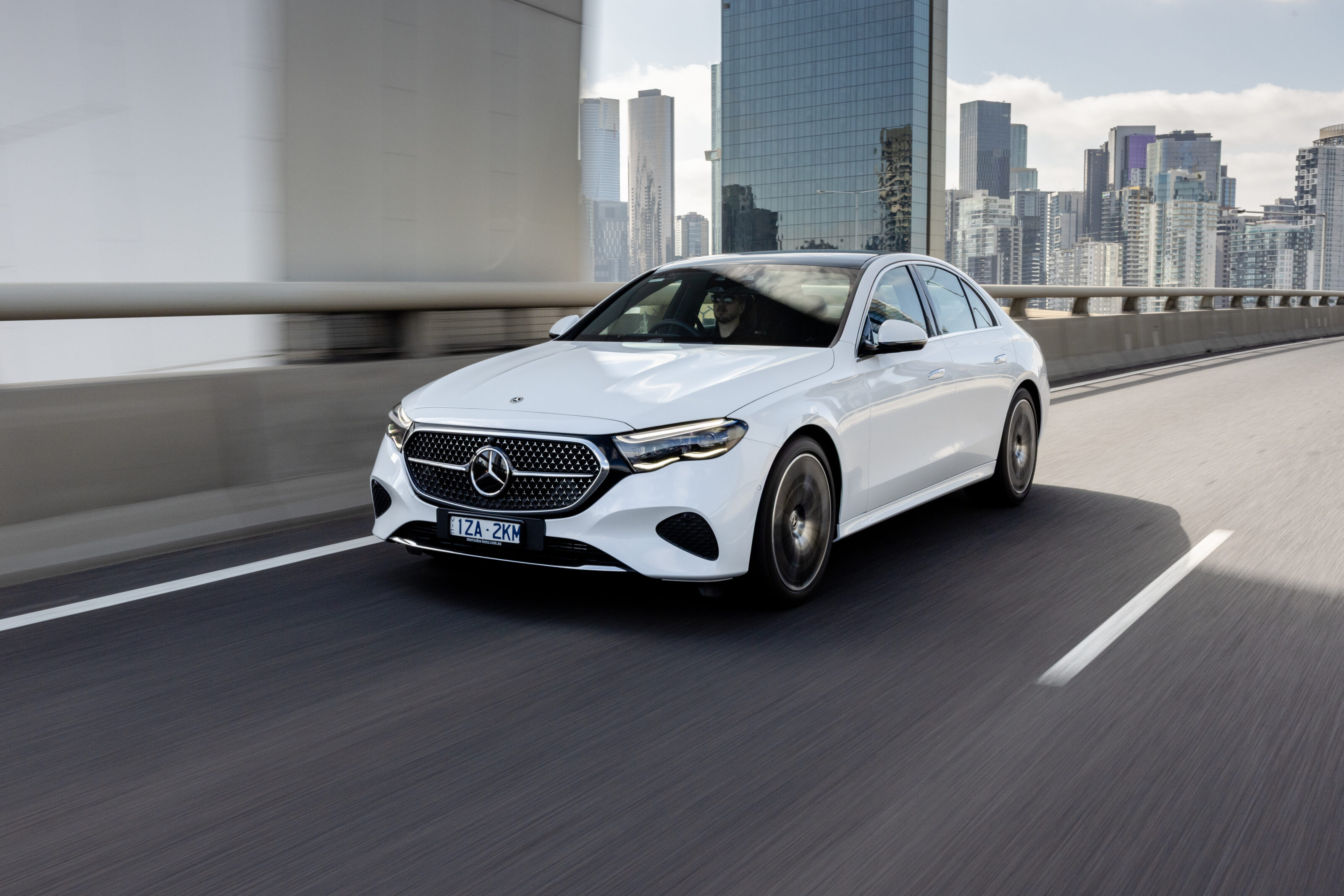
Mercedes-Benz has added a new entry point to the E-Class large sedan range, with the E 200 now on sale in Australia and sitting below the E 300 and AMG E 53 variants already on sale.
Priced from $117,900 plus on-road costs, the E 200 is priced $14,100 less than the previous entry point E 300, which is now the mid-range variant in the E-Class range.
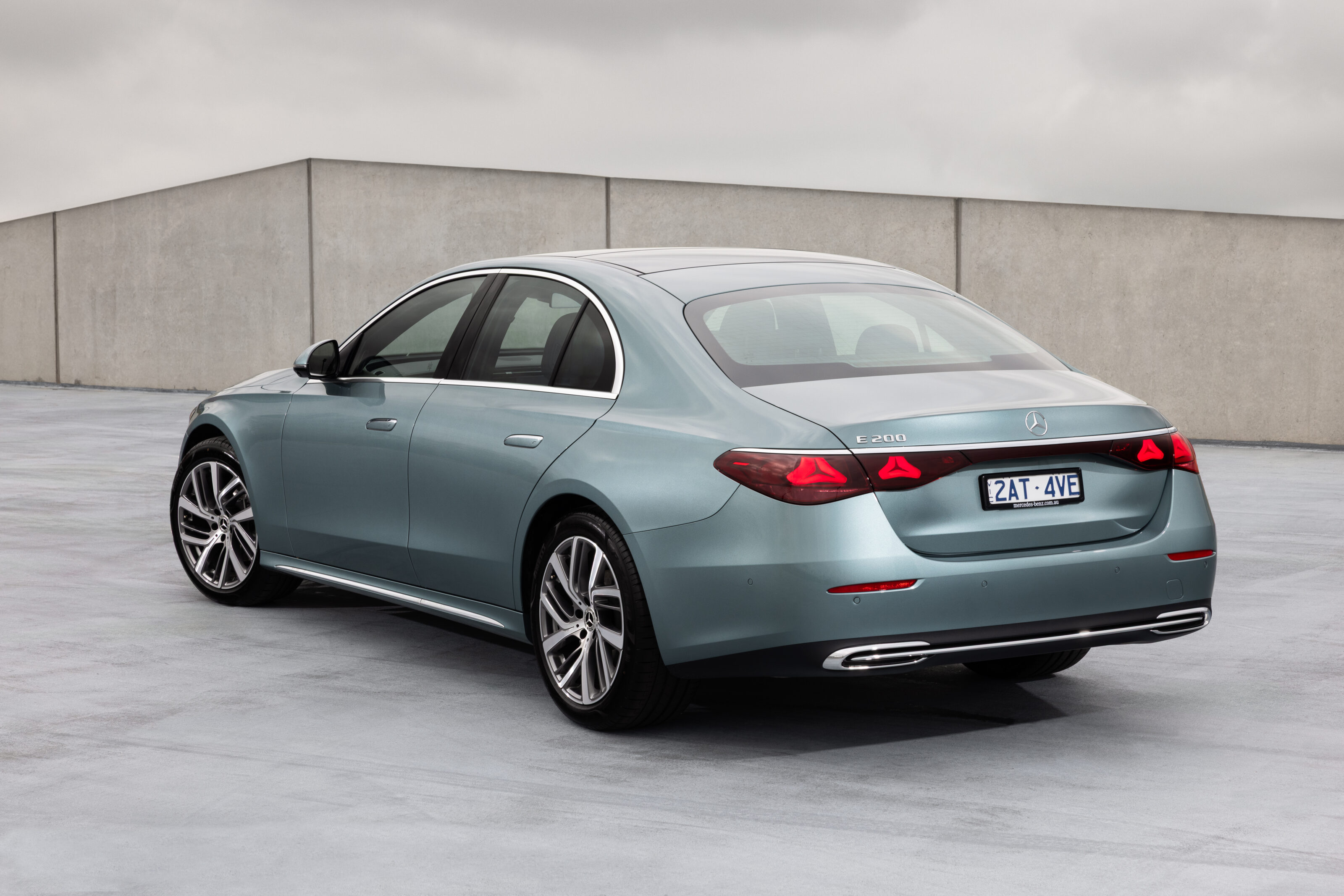
Despite being the entry point to the E-Class range, standard equipment in the E 200 is healthy with features such as the Avantgarde exterior with 20-inch AMG wheels, digital light headlights with adaptive high beam, open pore black ash wood trim and the brand’s ‘Artico’ synthetic leather trim in black.
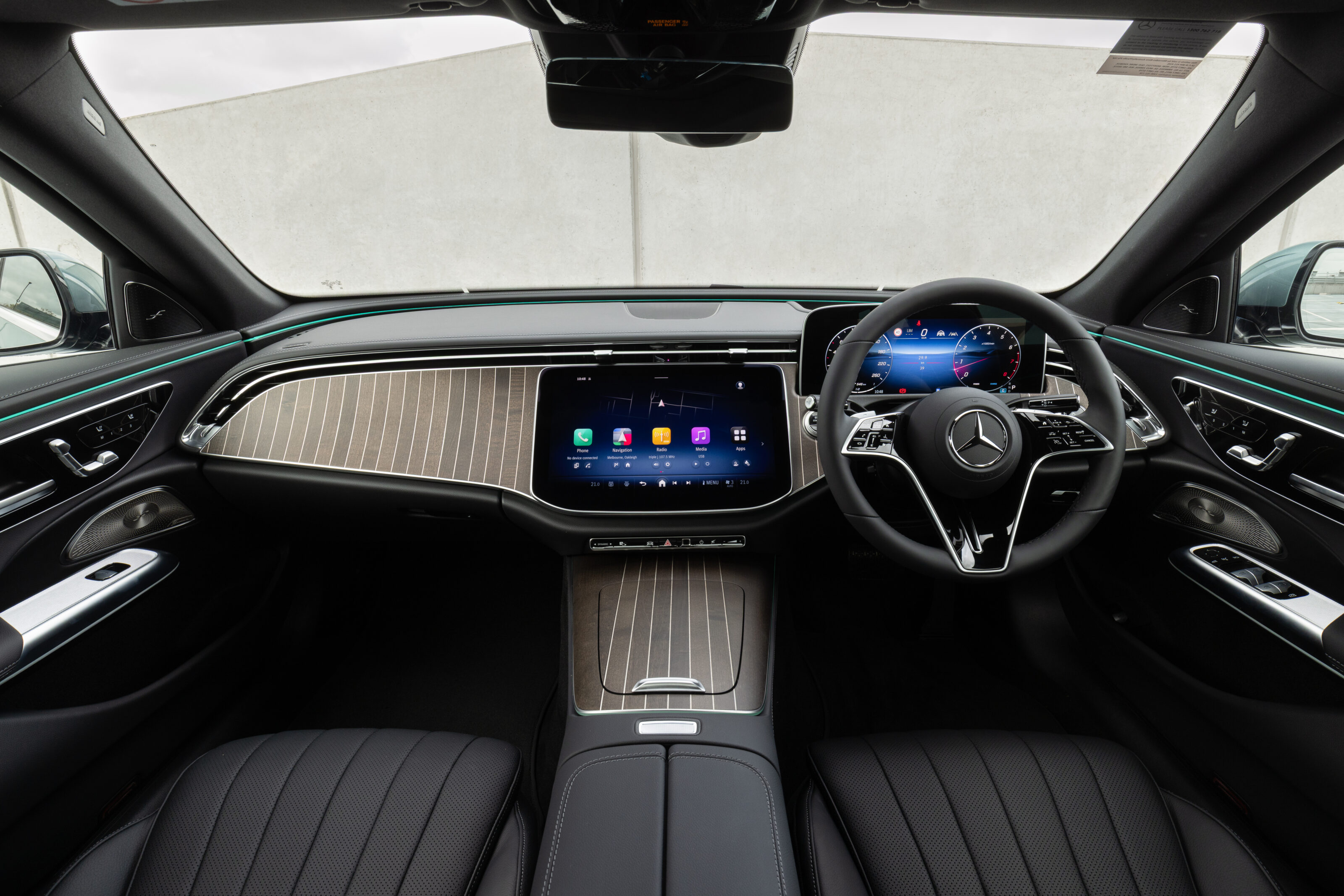
Inside, the cabin further features electric front seats with lumbar adjustment, a nappa leather steering wheel and dual-zone automatic climate control.
A 14.4-inch touchscreen with the brand’s ‘MBUX’ infotainment system is supplemented by a 12.30-inch digital driver’s display. The touchscreen features an inbuilt eSIM for live services, as well as Apple CarPlay and Android Auto and augmented reality satellite navigation. A 730 watt 17-speaker Burmeister sound system is also standard equipment.
The E 200 is also well equipped for safety features including 10 airbags, adaptive cruise control and blind-spot monitoring.
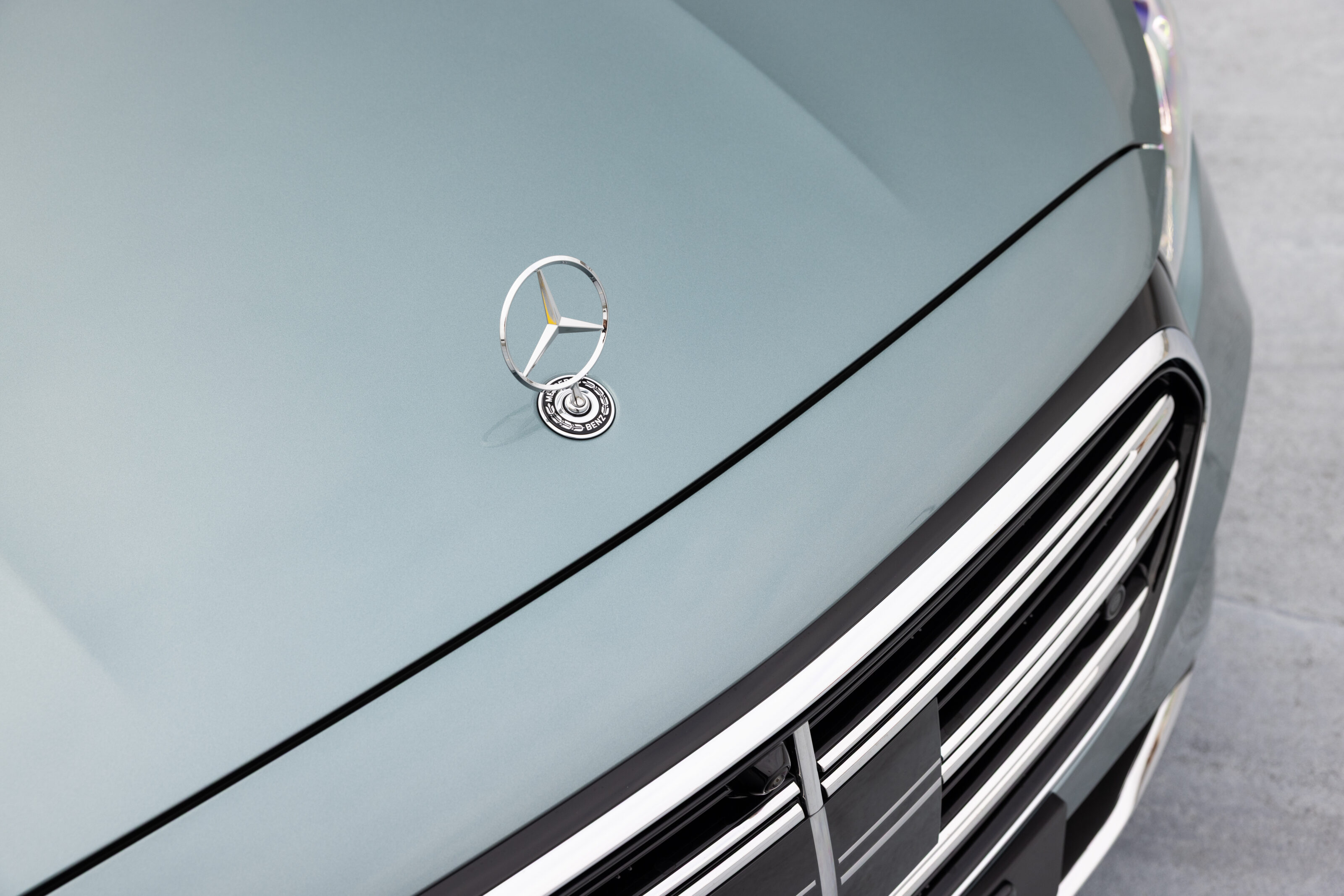
Buyers wanting more personalisation for the E 200 can choose the no-cost extra Exclusive Line with the upright Mercedes star on the bonnet, classic Mercedes radiator grille with three horizontal double louvres and grey 19-inch multi-spoke light-alloy wheels painted in grey. On the inside, brown open-pore maple wood trim element with aluminium lines features.
There is also an available Comfort Package with leather upholstery in three colour options – black, beige and brown – and ventilation and heating for the front seats.
Under the bonnet of the E 200 is a 2.0-litre turbocharged four-cylinder petrol engine mated to a 48V mild-hybrid system that can contribute an extra 17kW/205Nm when needed for total outputs of 150kW of power and 320Nm of torque – 40kW/80Nm less than the E 300.
As with the more powerful E 300, the E 200’s power is sent to the rear wheels via a nine-speed automatic transmission and the NEDC claimed fuel consumption is 7.2L/100km.
The E 200 is on sale now, with local deliveries to commence soon.
